Grandhomme & Bennani
Work
- Title
- Author, Ed., Dir.
- Commissioner, Publ.
- Category
- Year
-
J.A.P.
Jeunesse et Arts Plastiques Graphics, Ephemera 2026 -
Canis Lupus
Les disques du Condor Graphics, Album cover 2026Canis Lupus est un spectacle de la Compagnie Victor B. créé au Théâtre des Martyrs (Bruxelles) le 21 avril 2026.
Texte : Adeline Dieudonné
Mise en scène : Jean-Michel FrèreCanis Lupus is a very loose reinterpretation of Peter and the Wolf bringing Prokofiev’s iconic work into a contemporary pop musical universe. Belgian Writer Adeline Dieudonné tranforms the original tale into a story where predation and incest dominate, but she does it with raw energy and a fierce vitality. We laugh, but from fear.
-
Humboldt
Humpty Dumpty Records Graphics, Album cover 2026 -
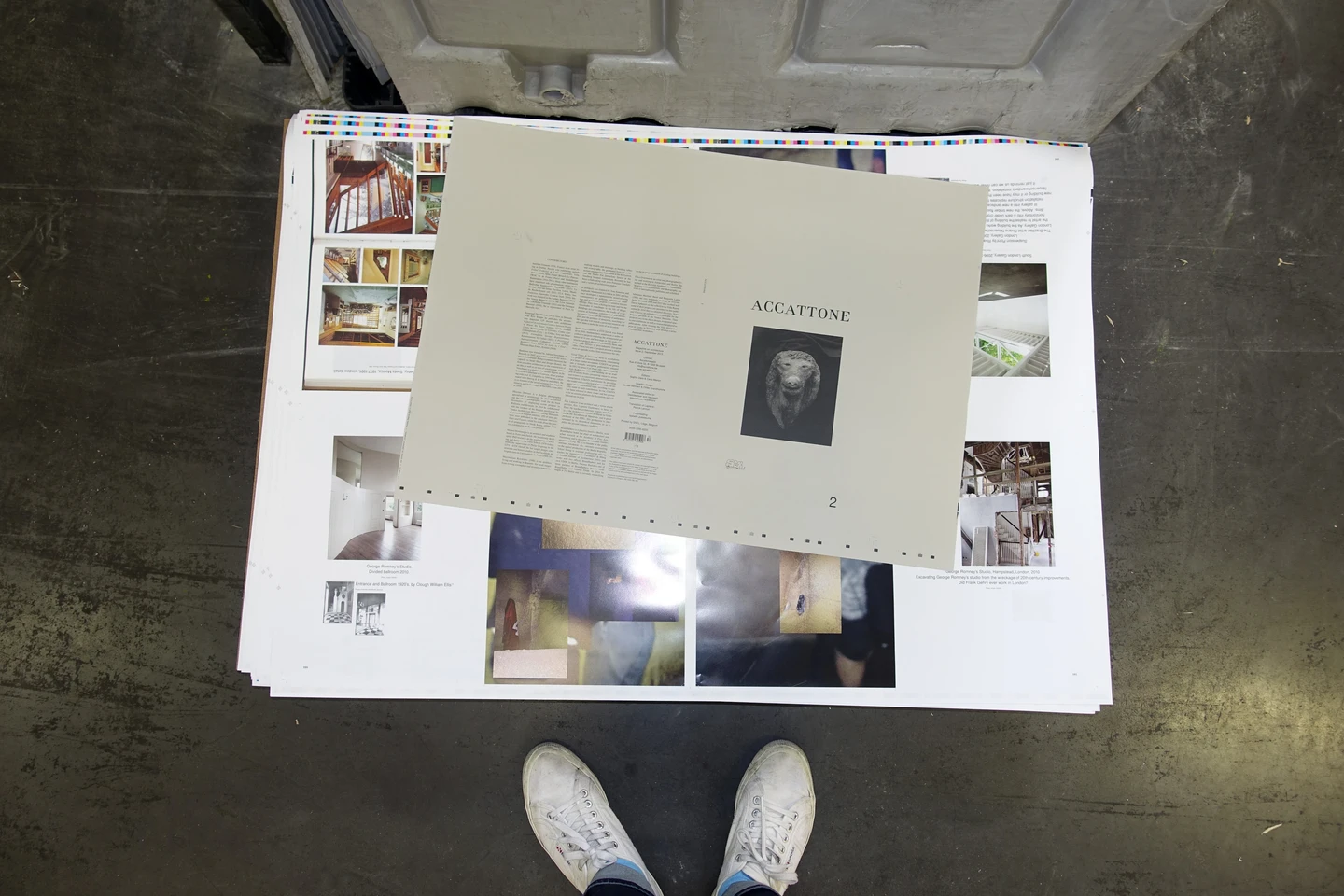
ACCATTONE 9
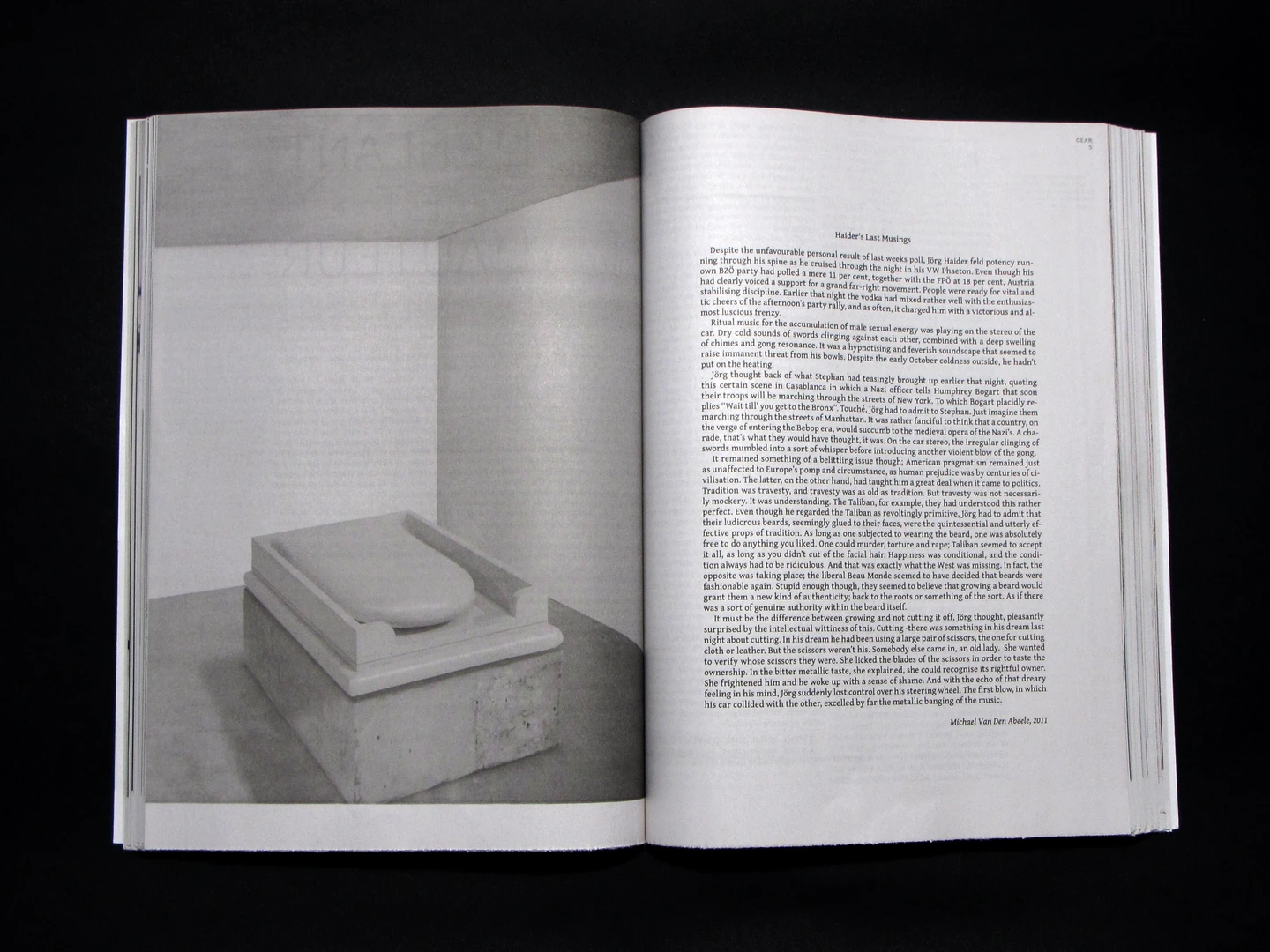
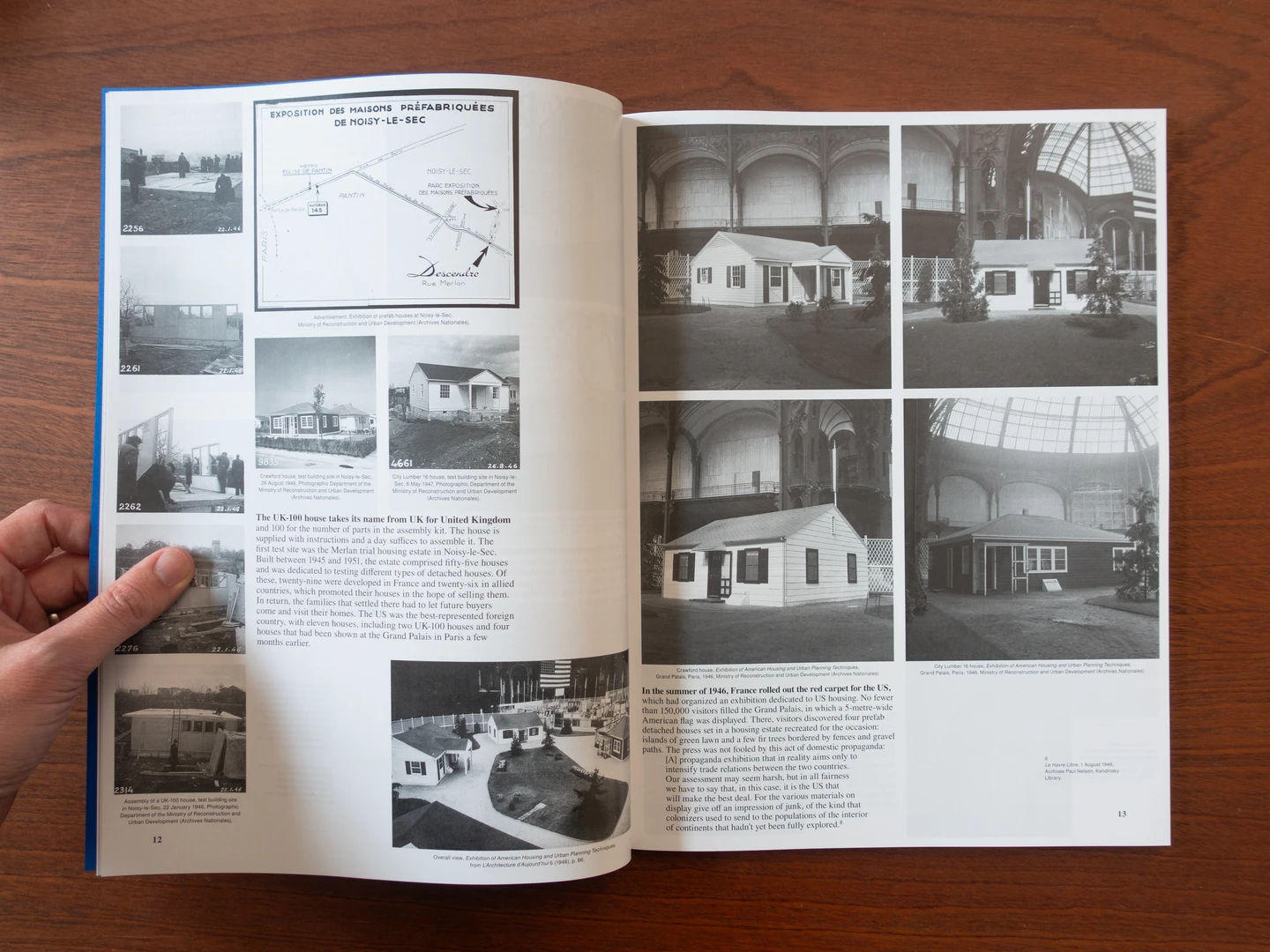
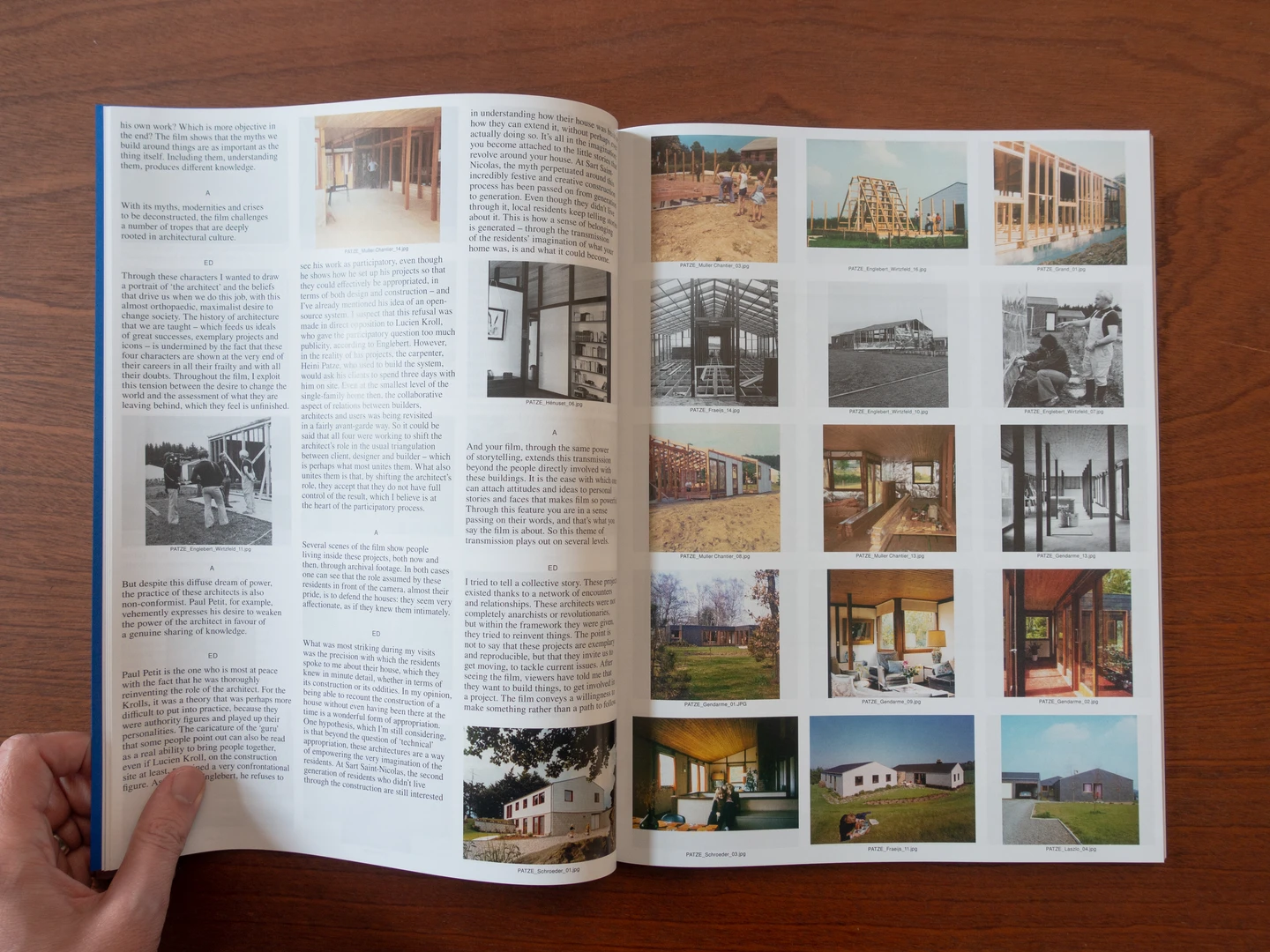
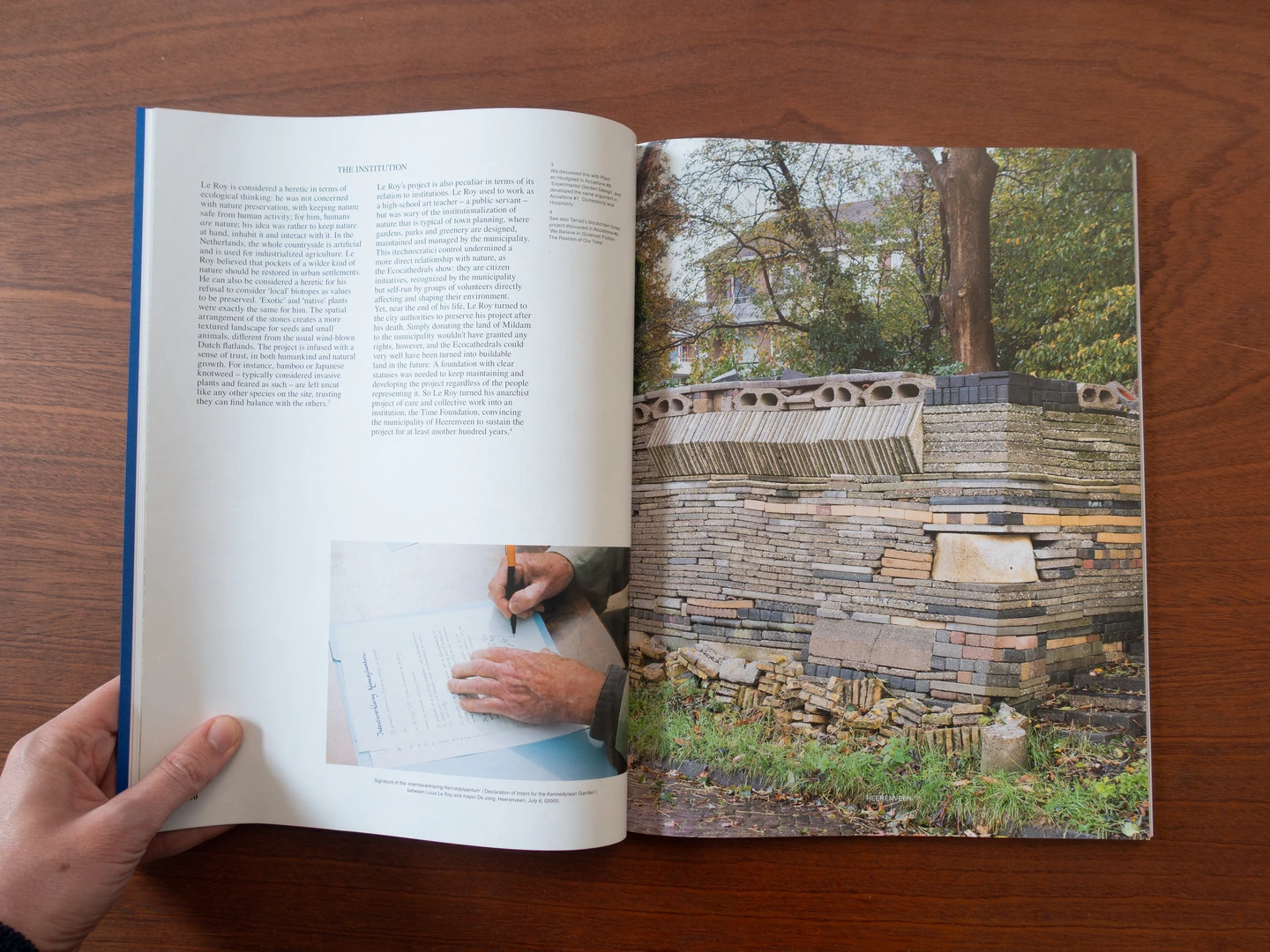
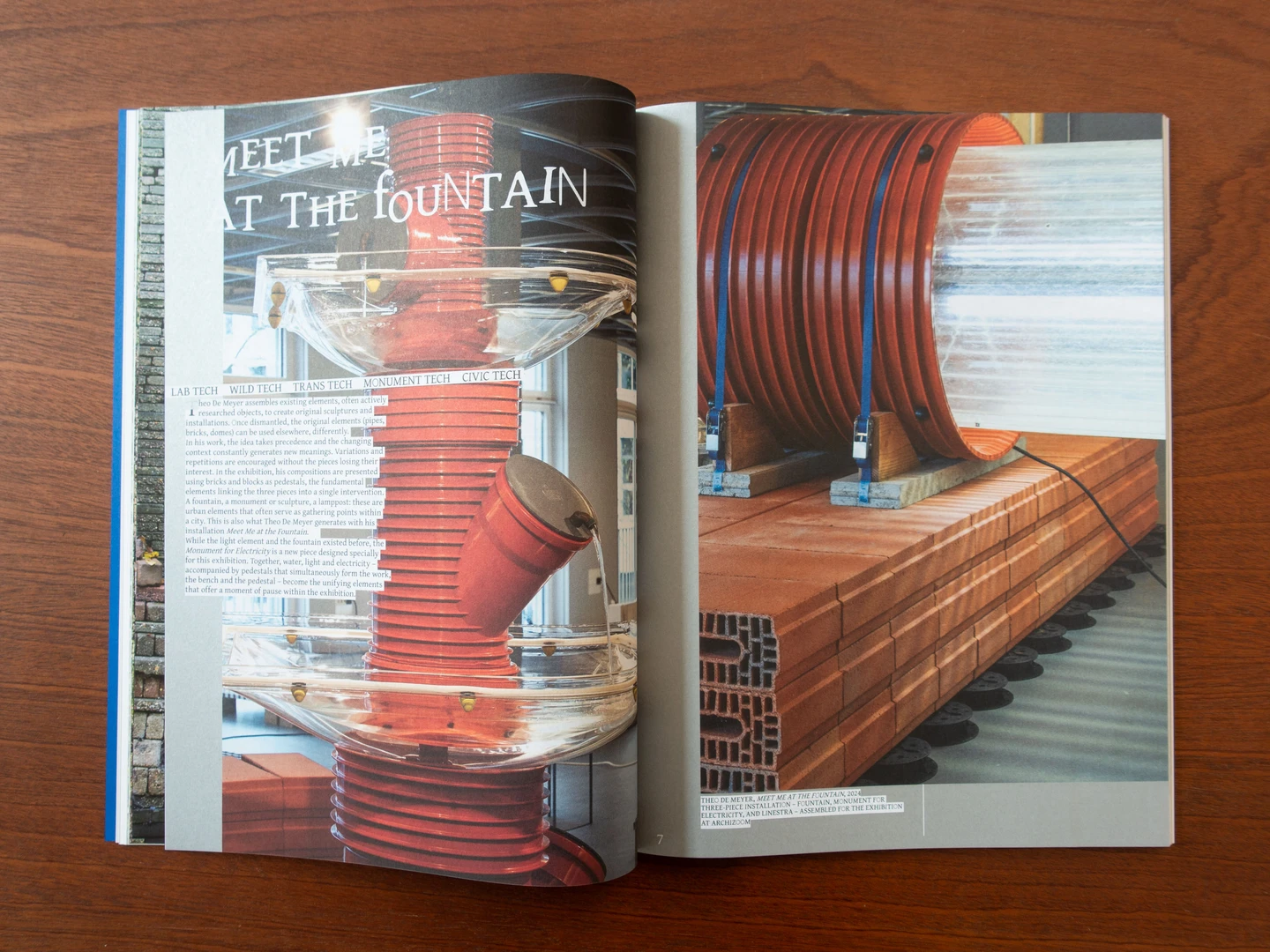
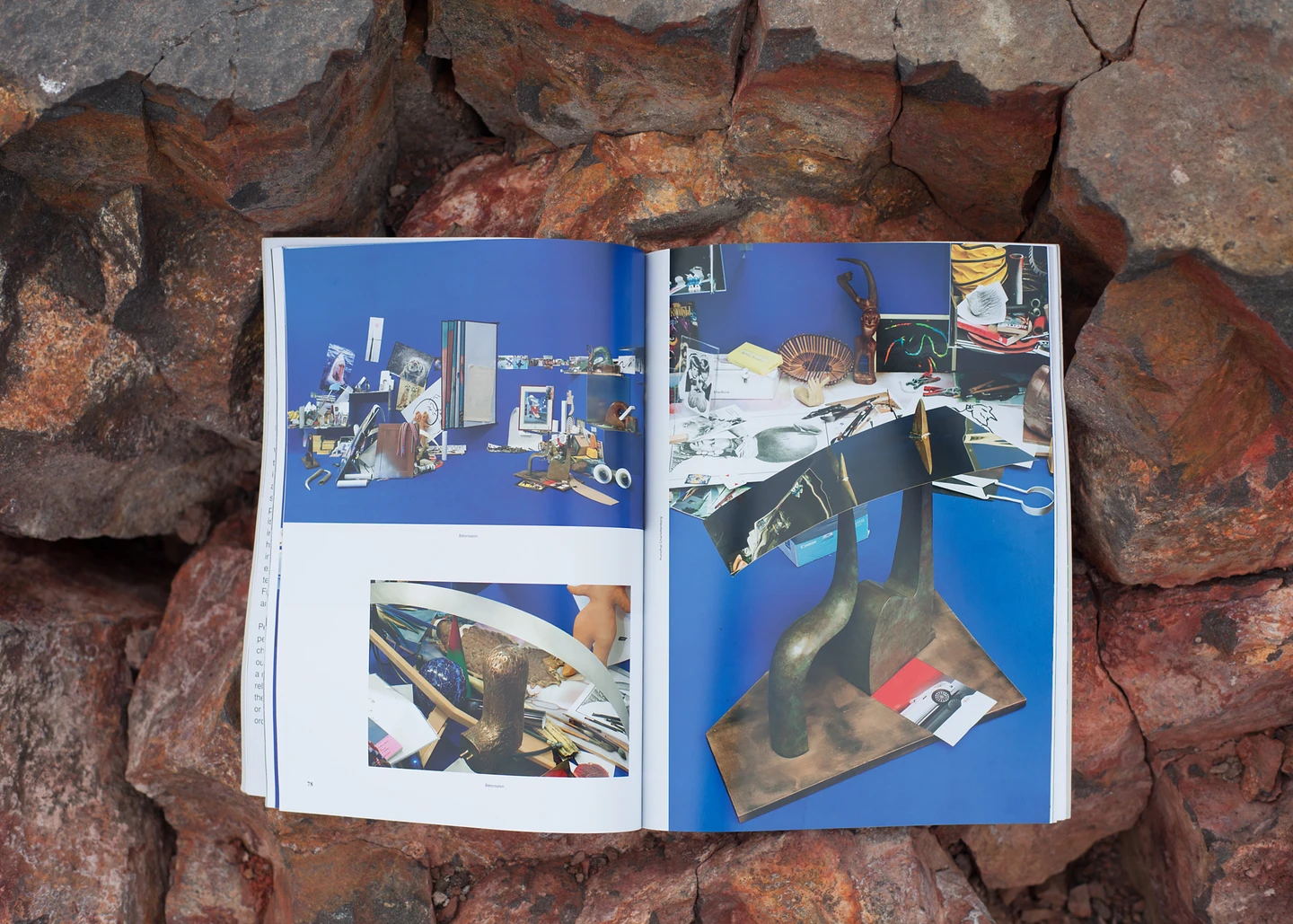
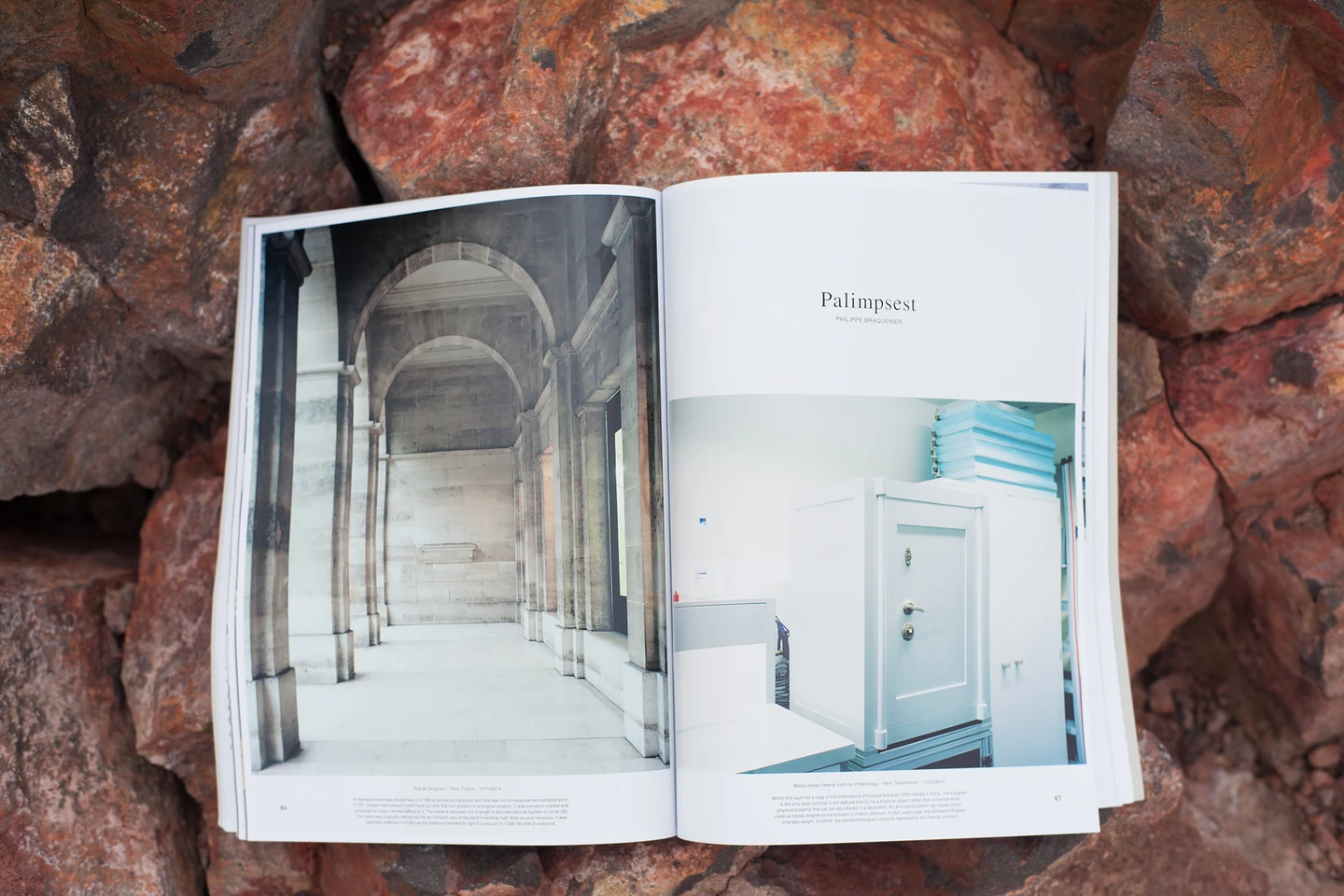
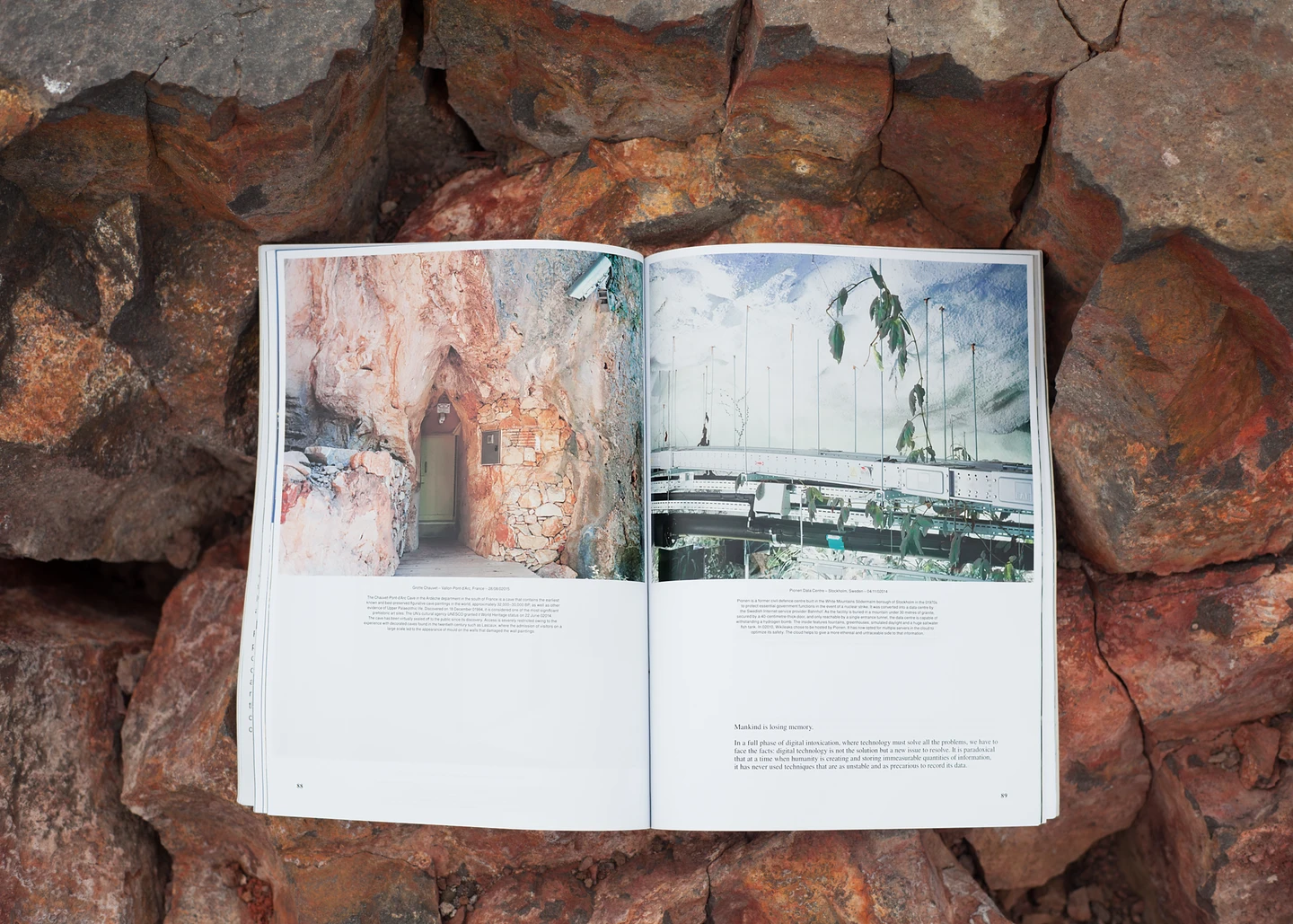
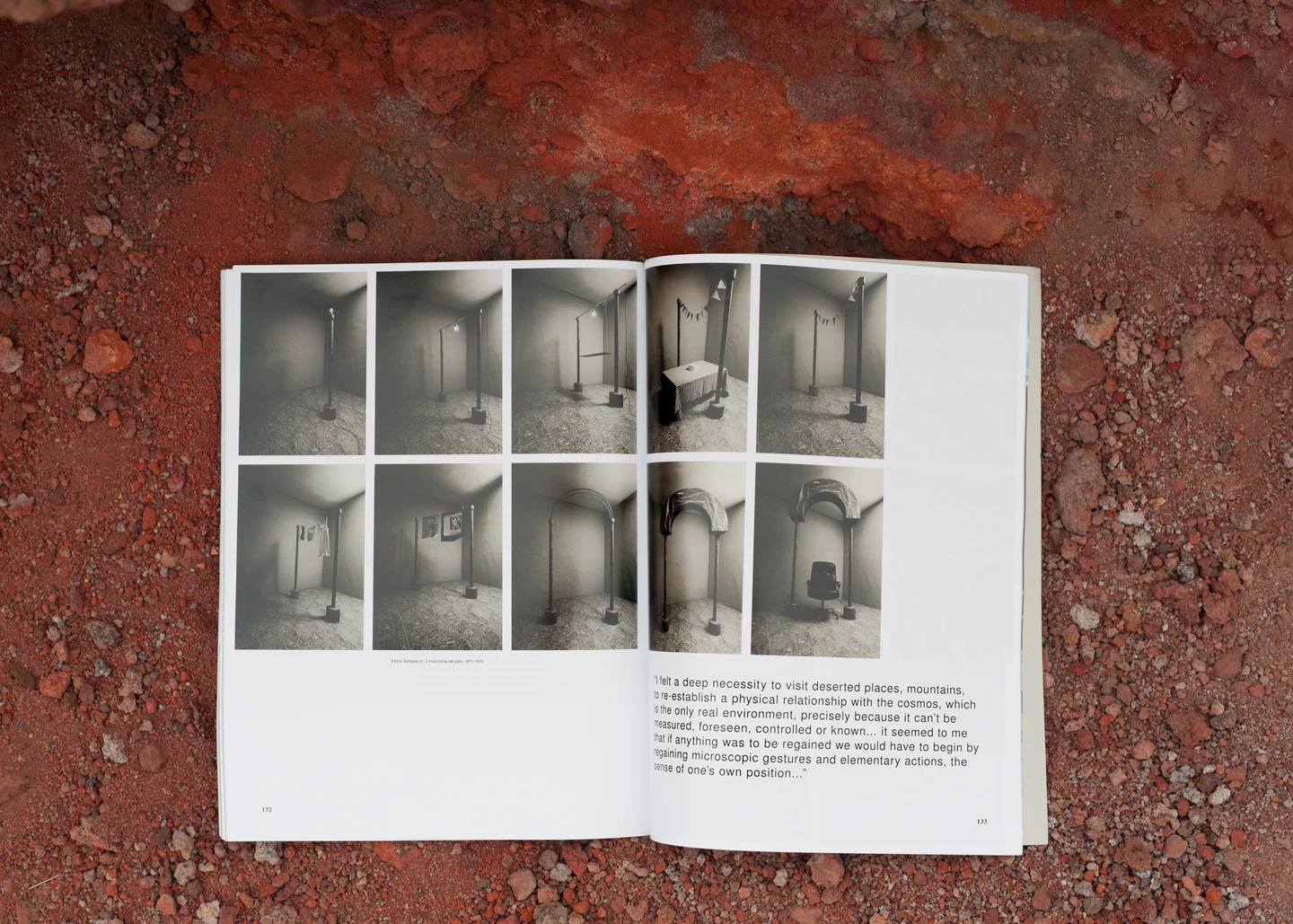
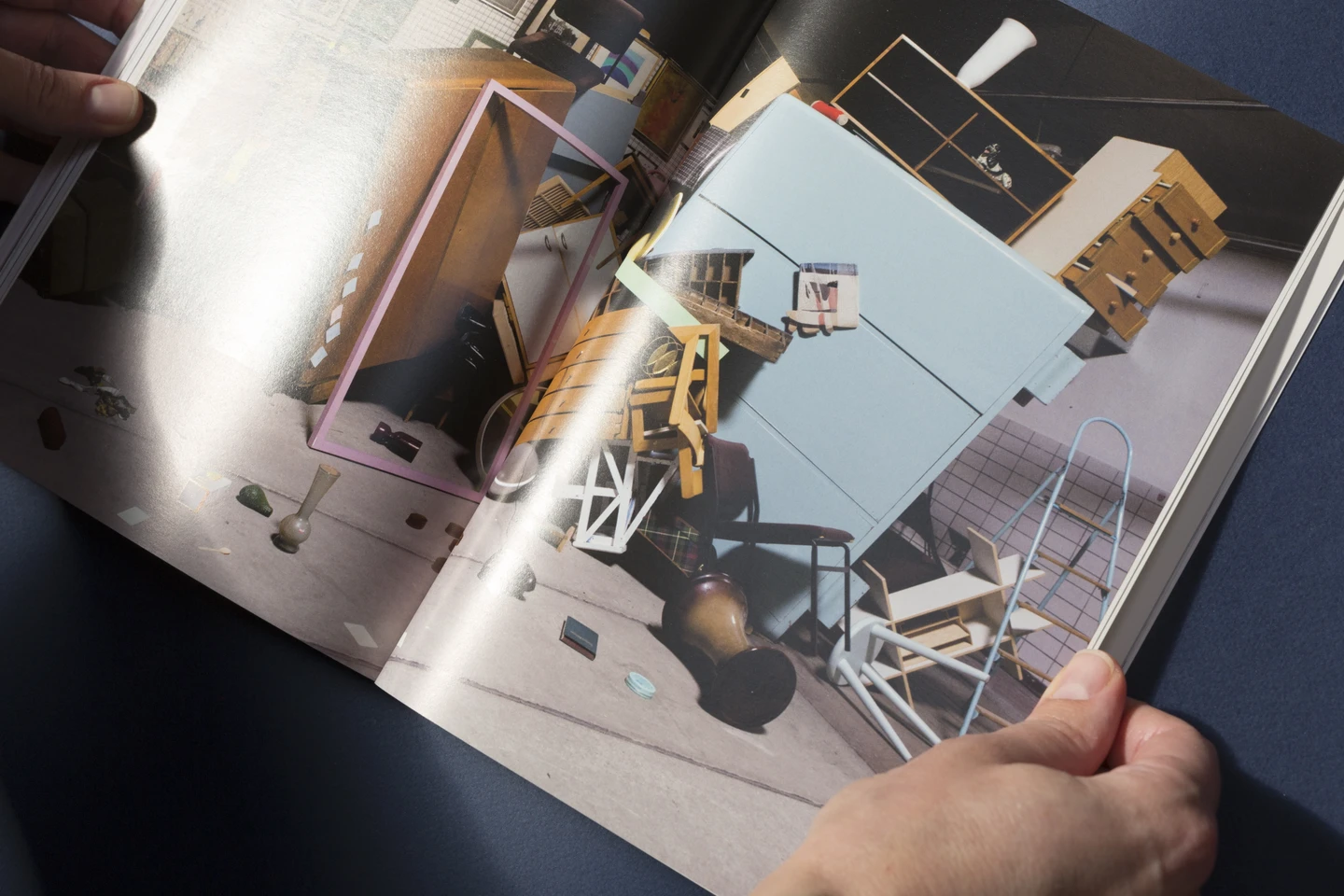
Accattone Editorial, Magazine 2025Accattone #9 brings together a reflection on the ebb and flow between affirmation and denial as well as material- conceptual operations with dirt. It features a reassembled art residency, furniture made from salvaged materials (and new bolts), drywall marquetry, a punk farm, the earliest cave construction, a lavatory covered in goose feathers, cars buried under asphalt, fake nails, gabion walls, hairy stuff, mud, a recipe for concrete rubble walls and slabs, a sandbag façade, theory fed to worms, a leaking fountain, theoretical fatbergs and the yes of the no.
-
-
In a way, it is also more primitive
Accattone Editorial, Book 2025Discussing with Accattone the four solo exhibitions they held in Brussels, Paris, Lisbon and Berlin between 2019 and 2023, Baukunst explain the singular logics behind their projects in an interweaving of architecture, philosophy, representation and technology.
-
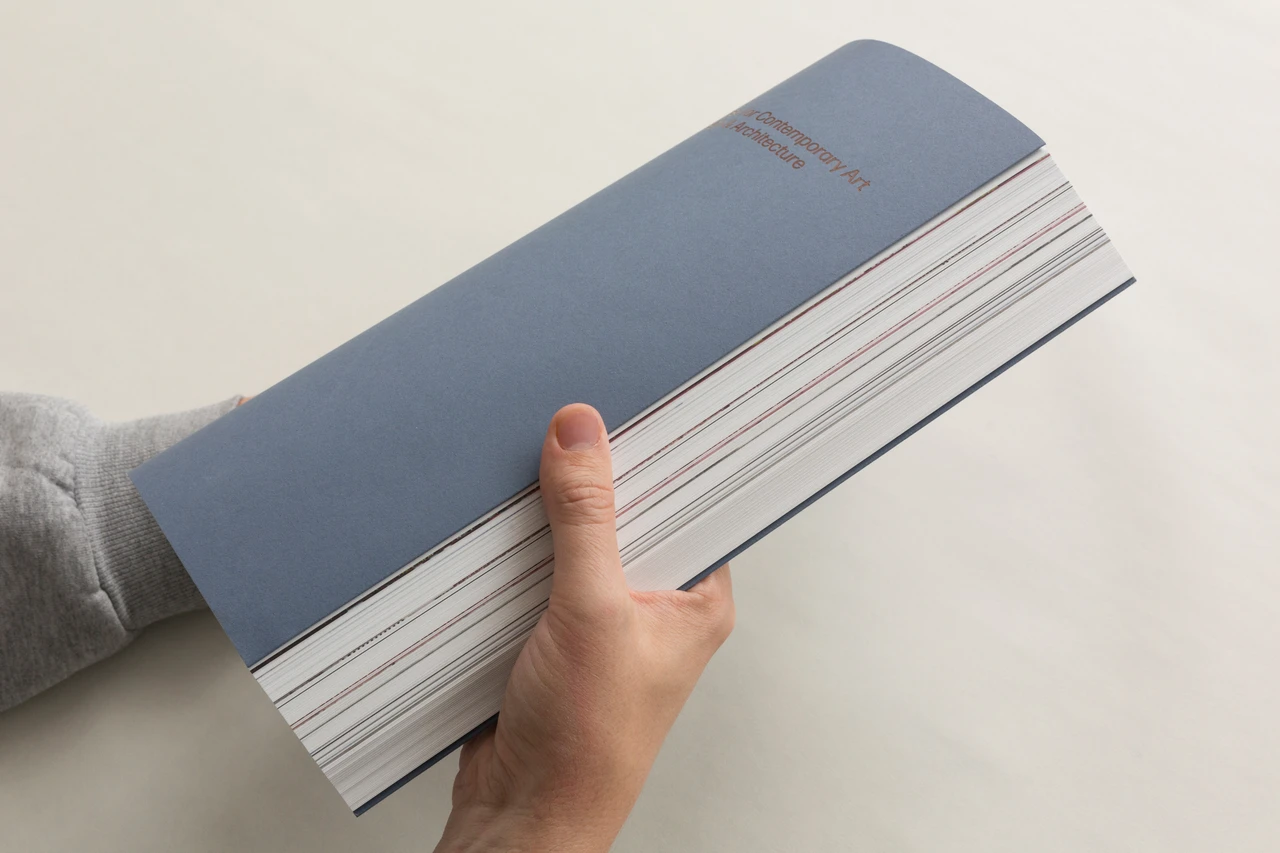
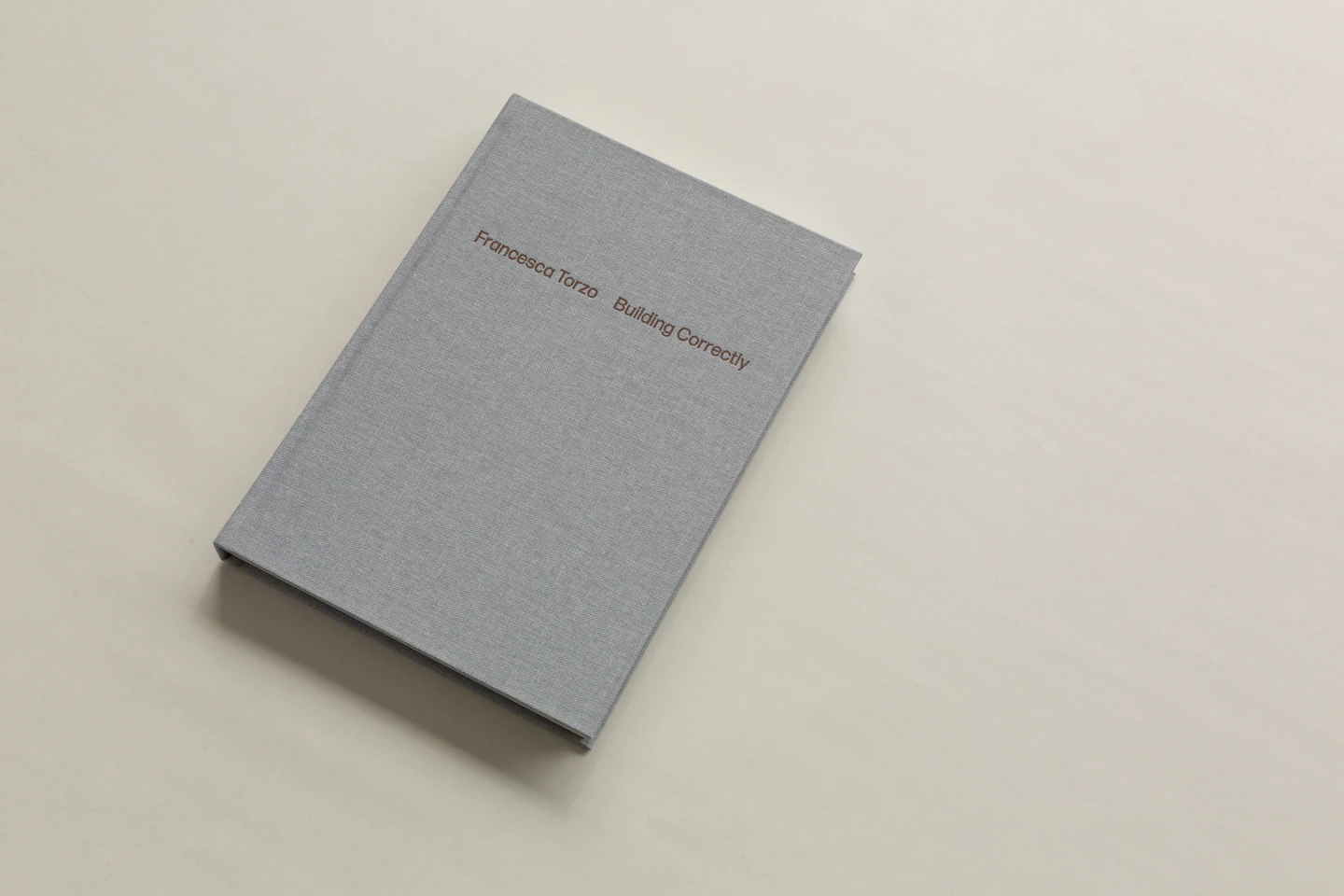
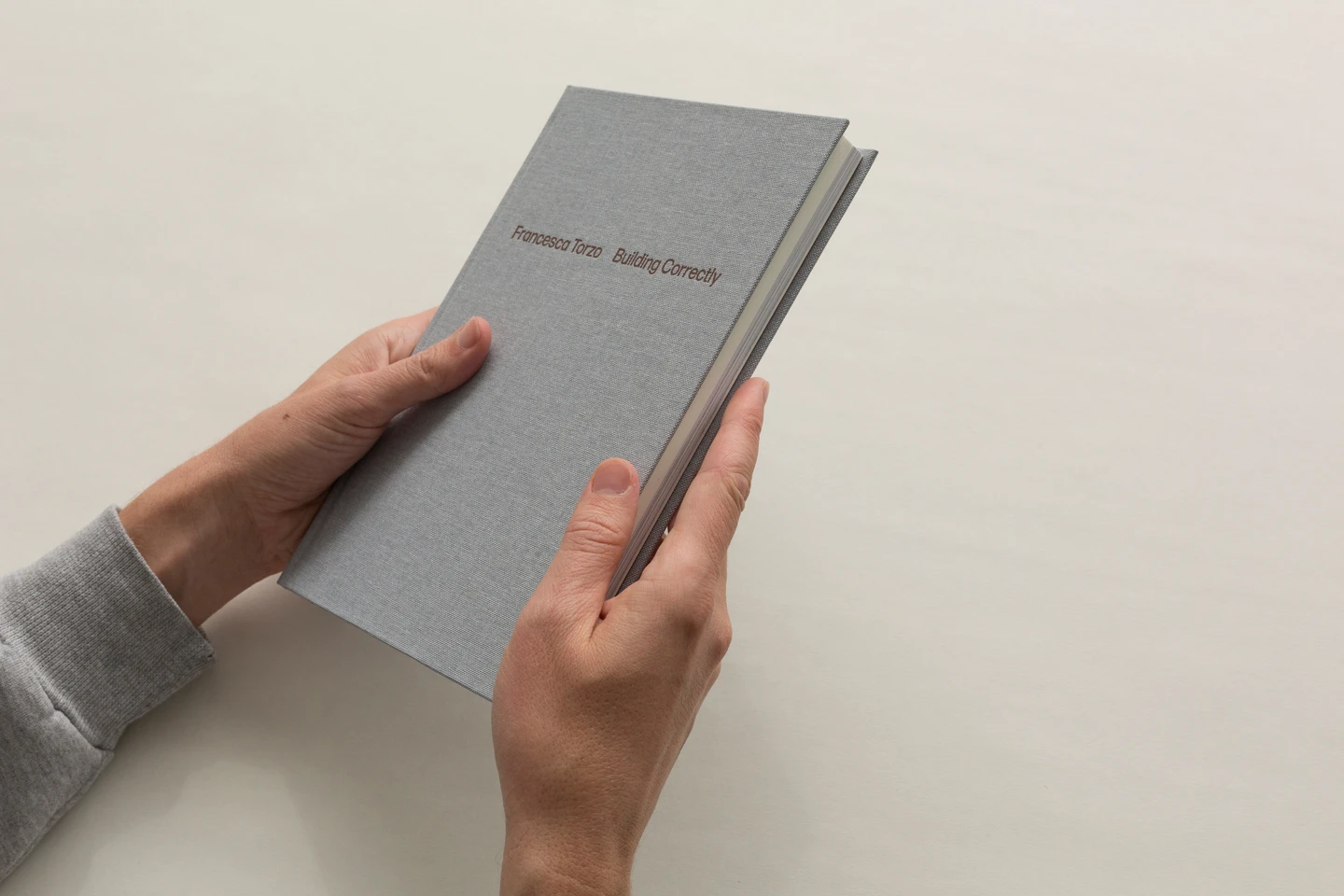
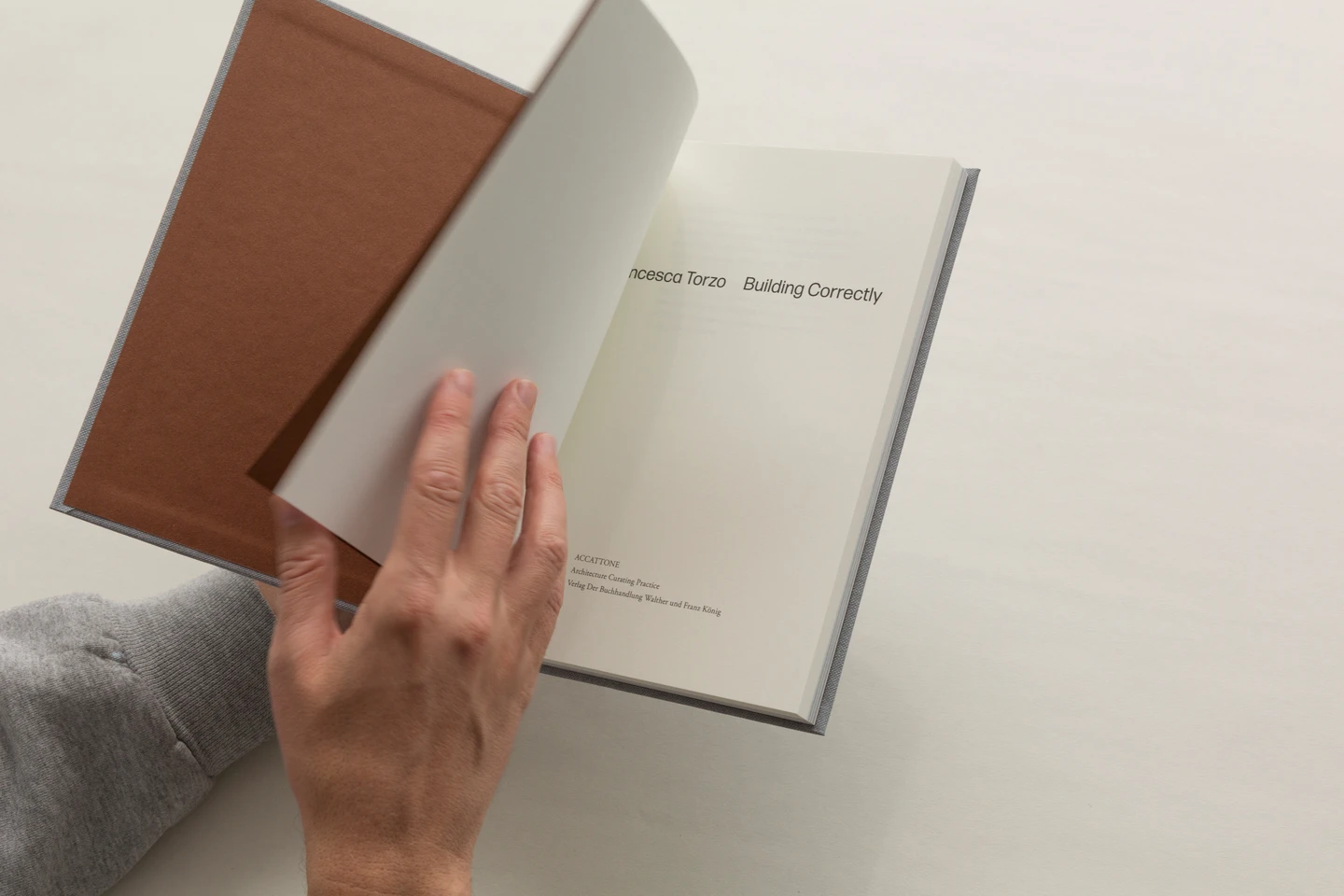
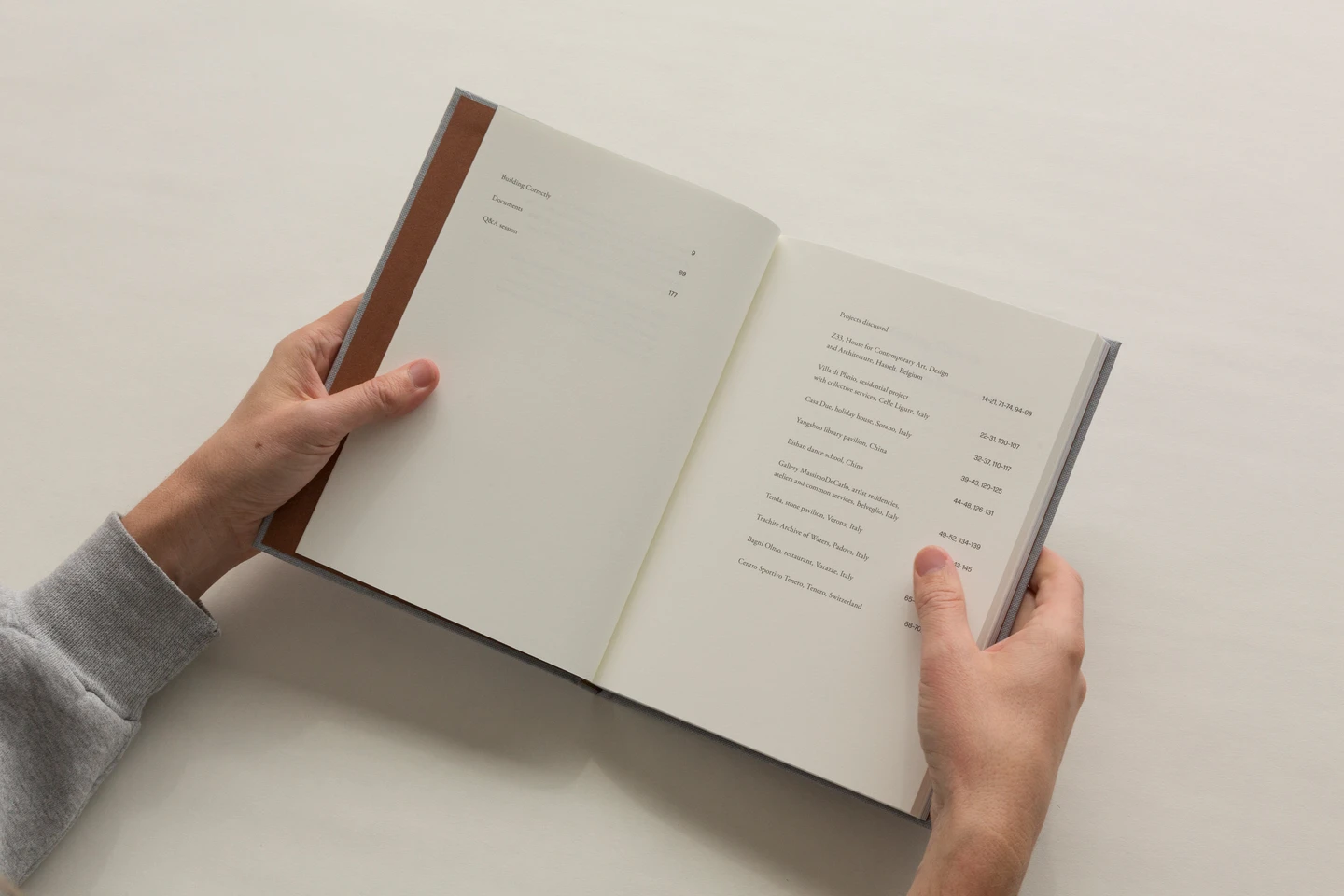
Building Correctly
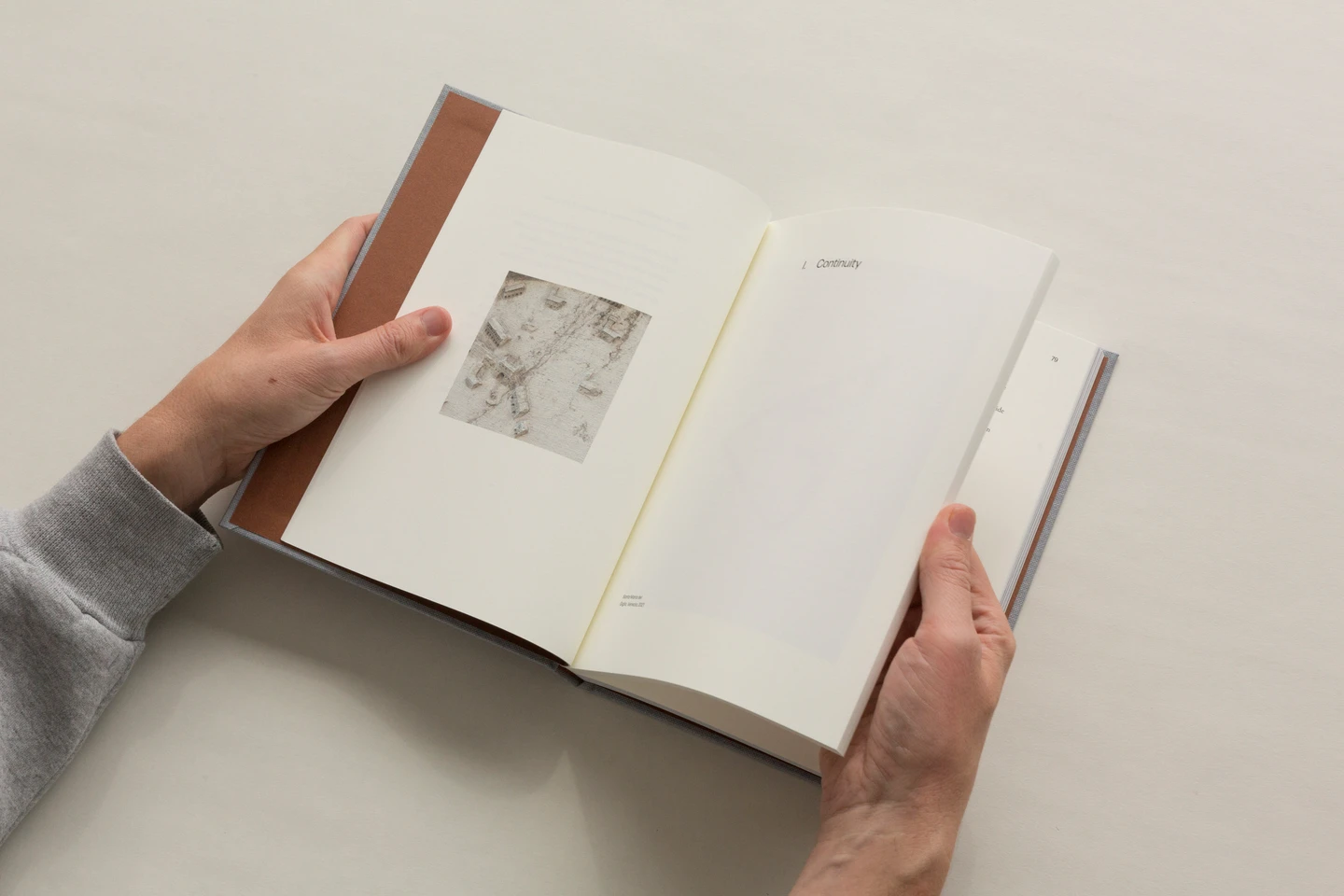
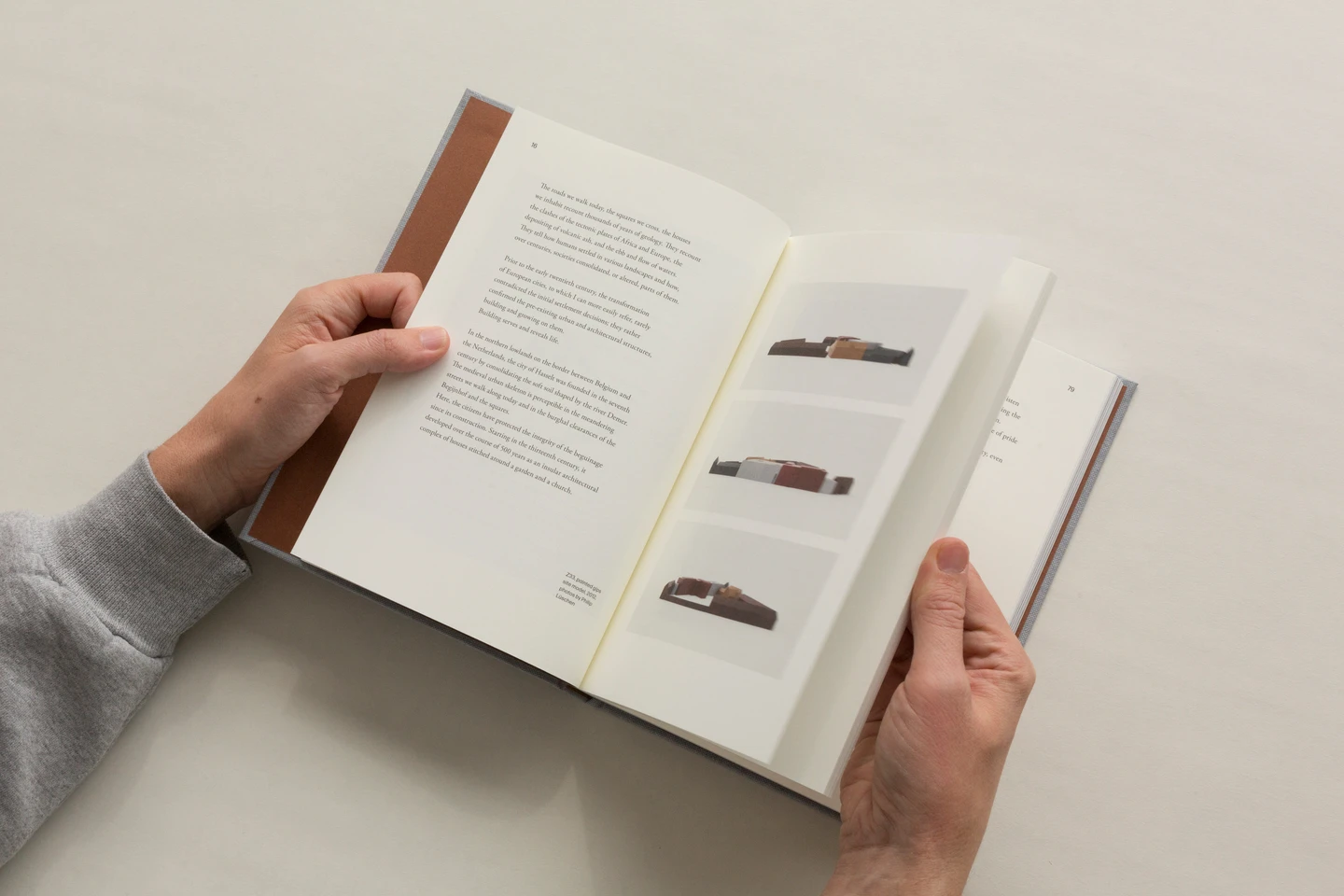
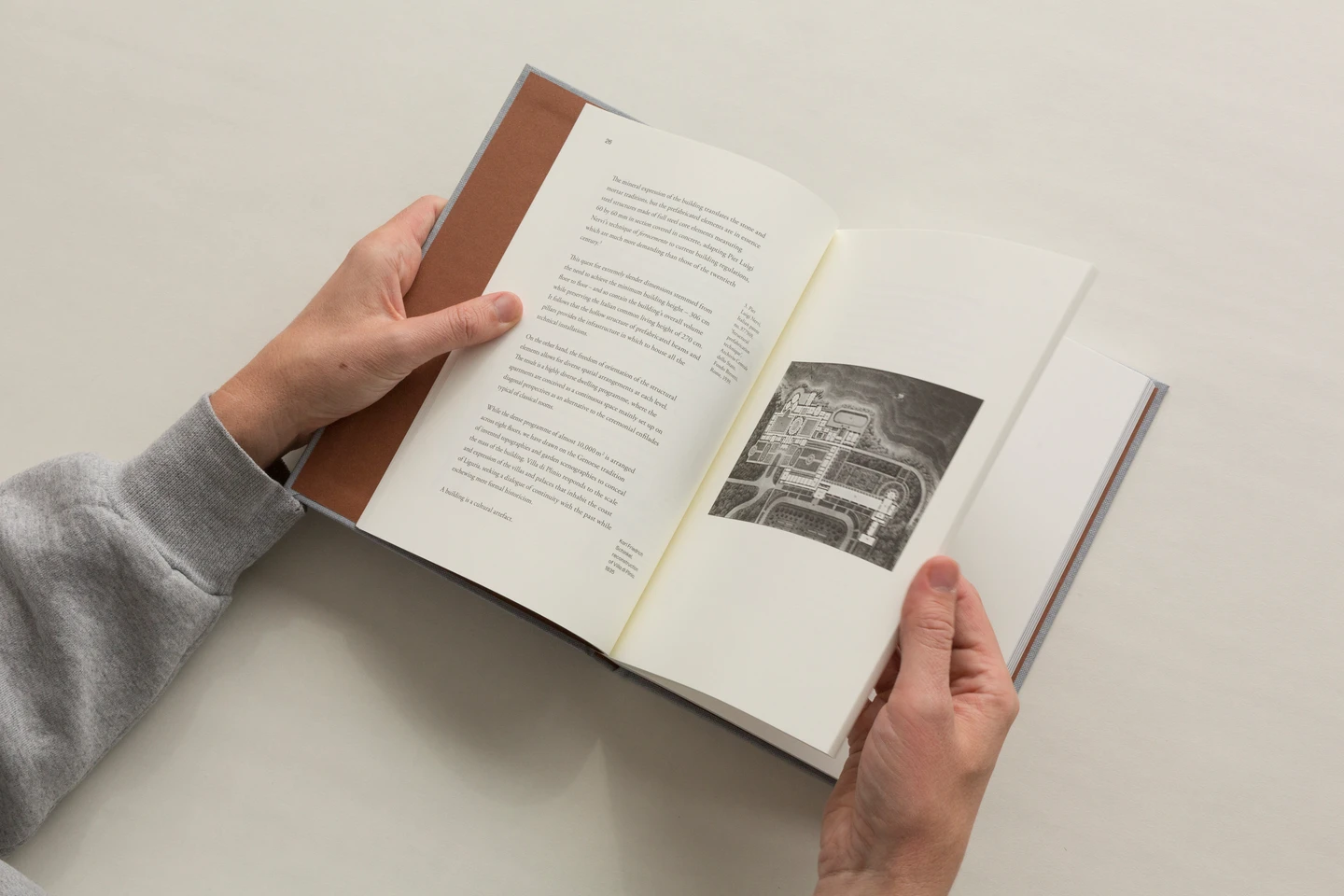
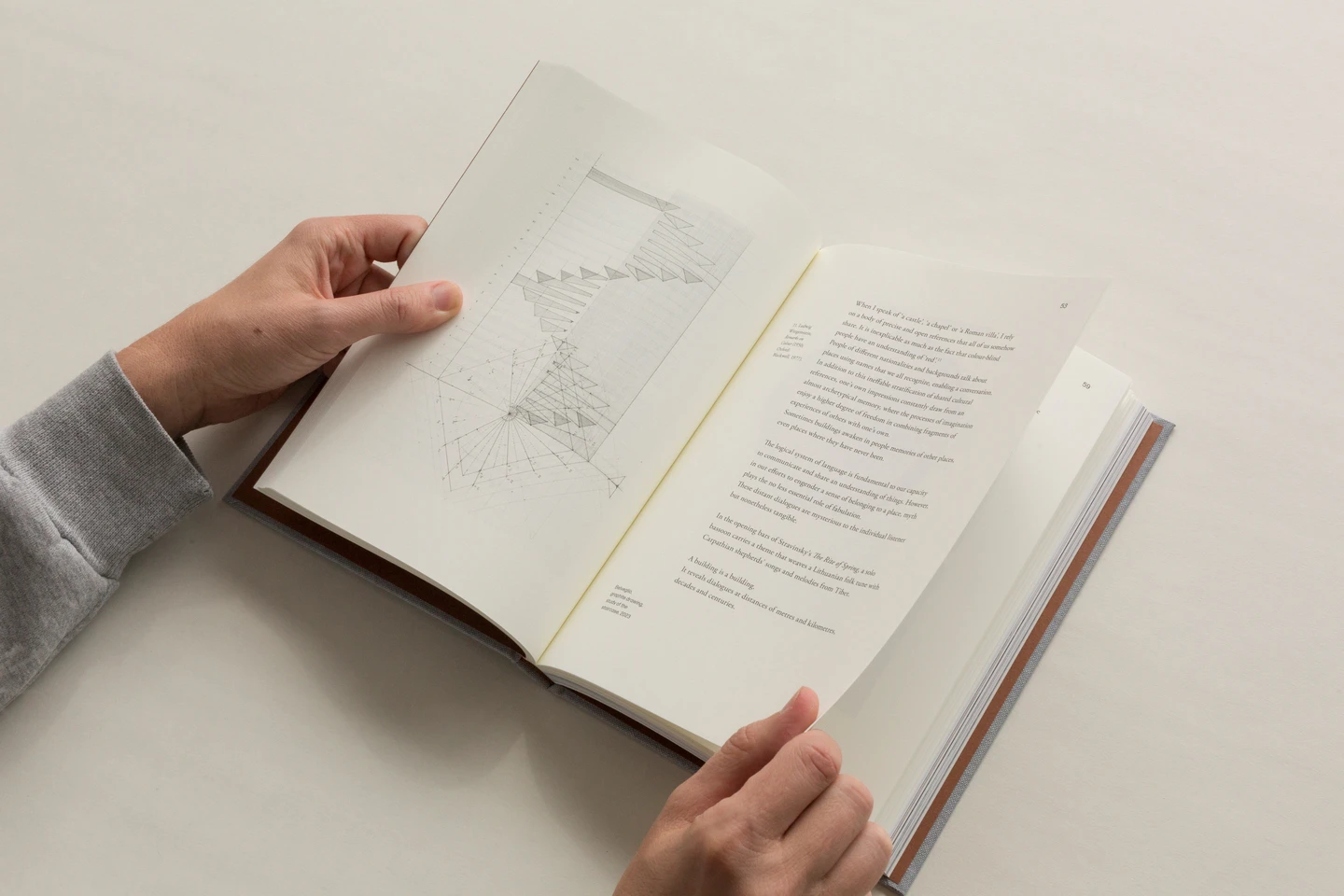
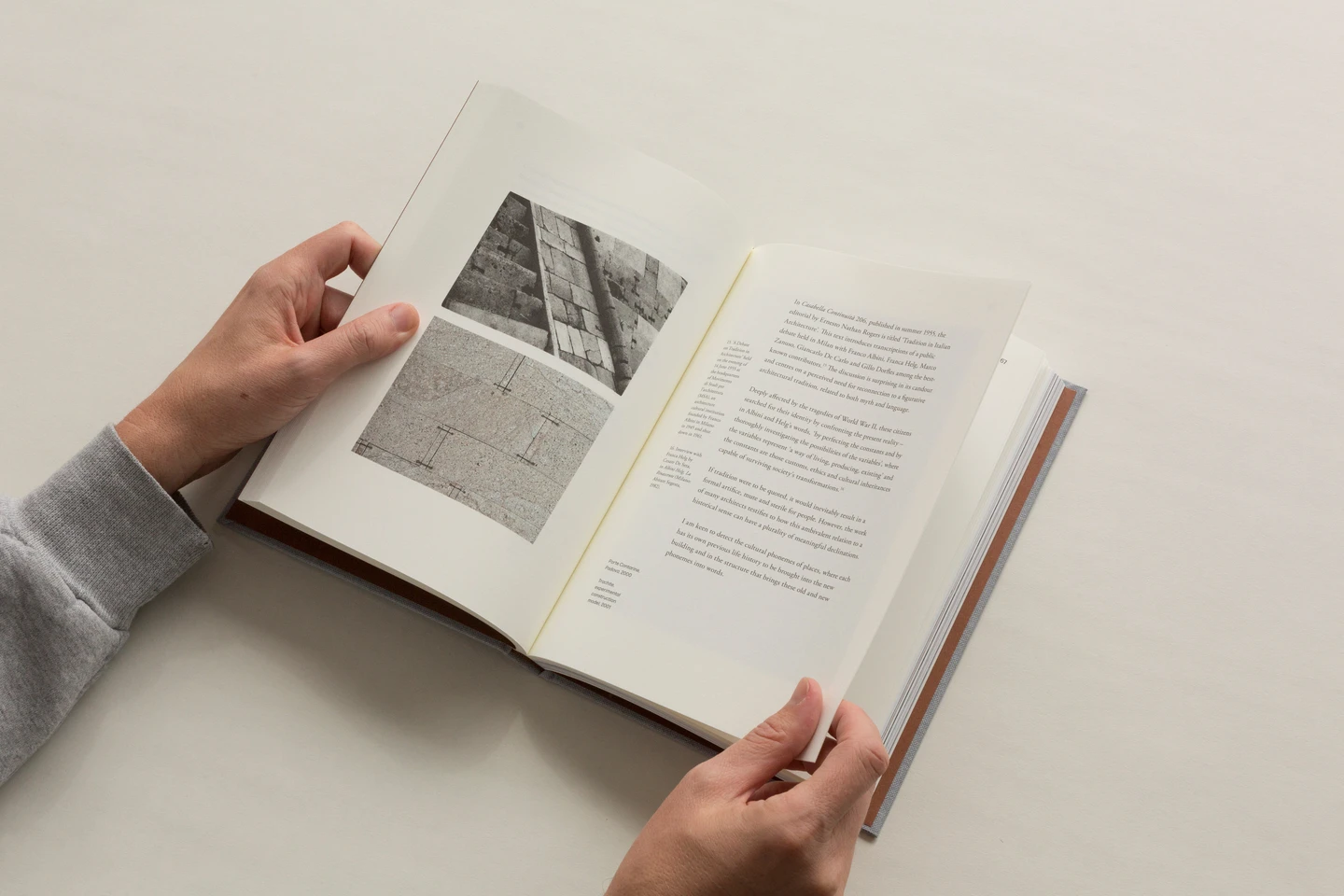
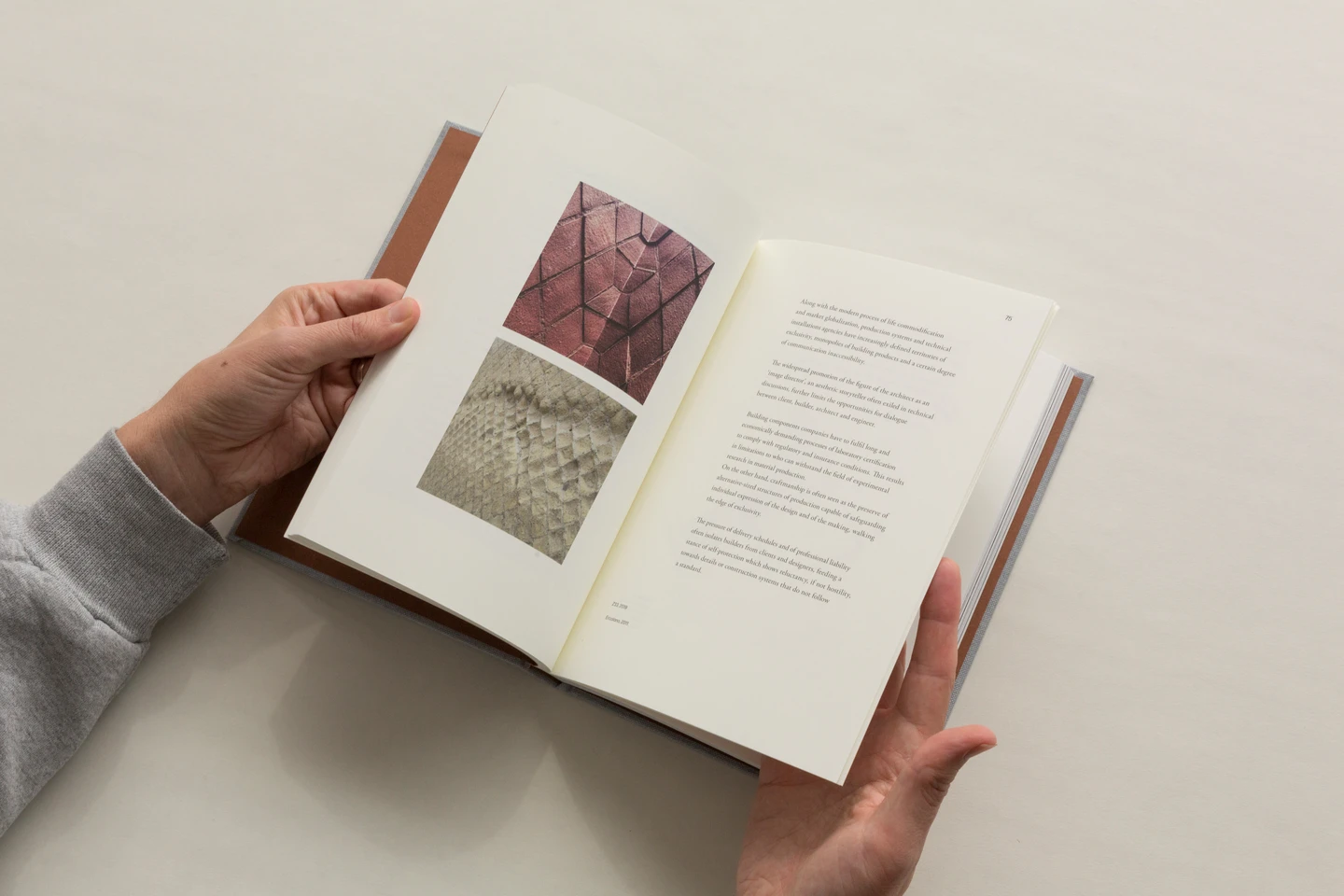
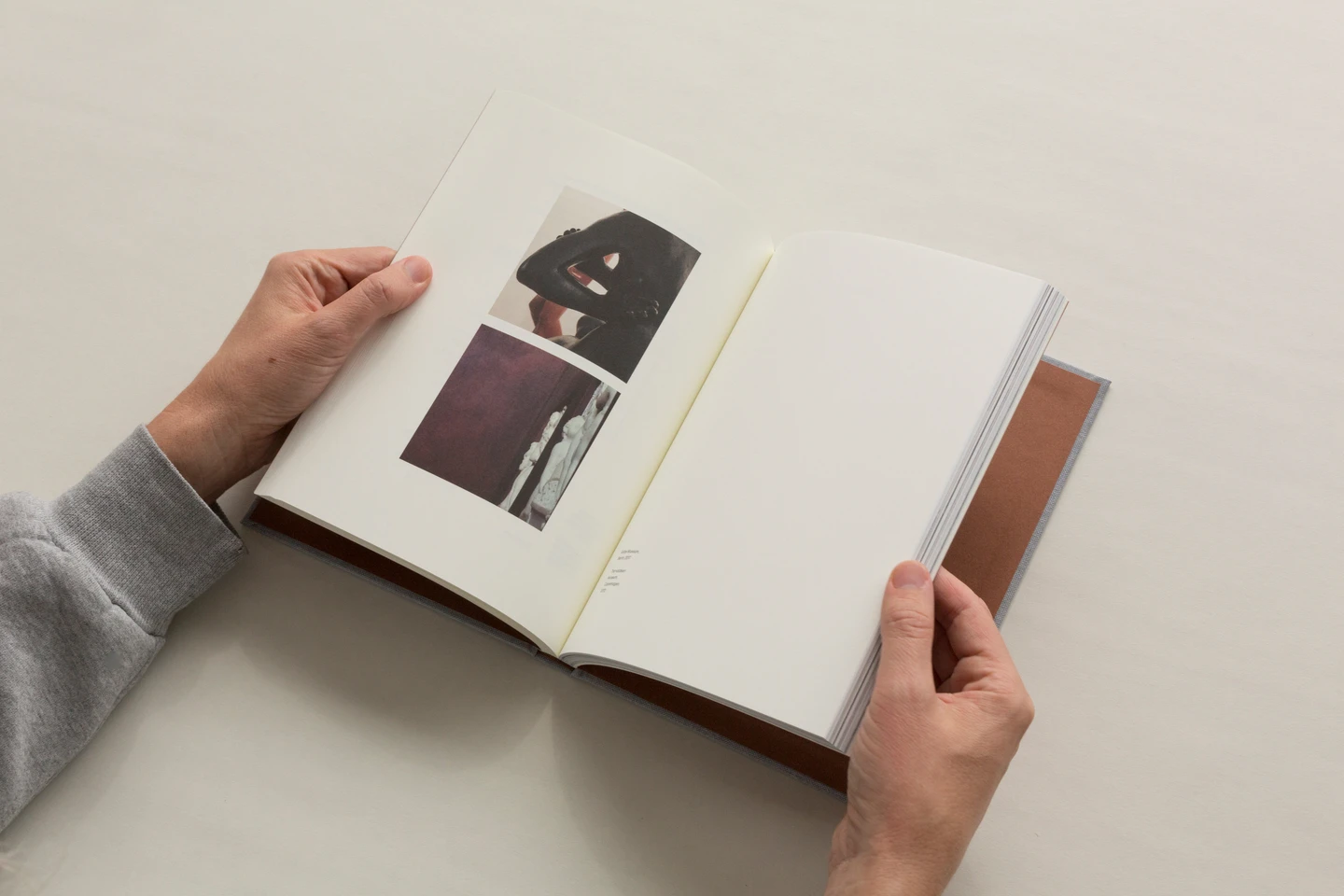
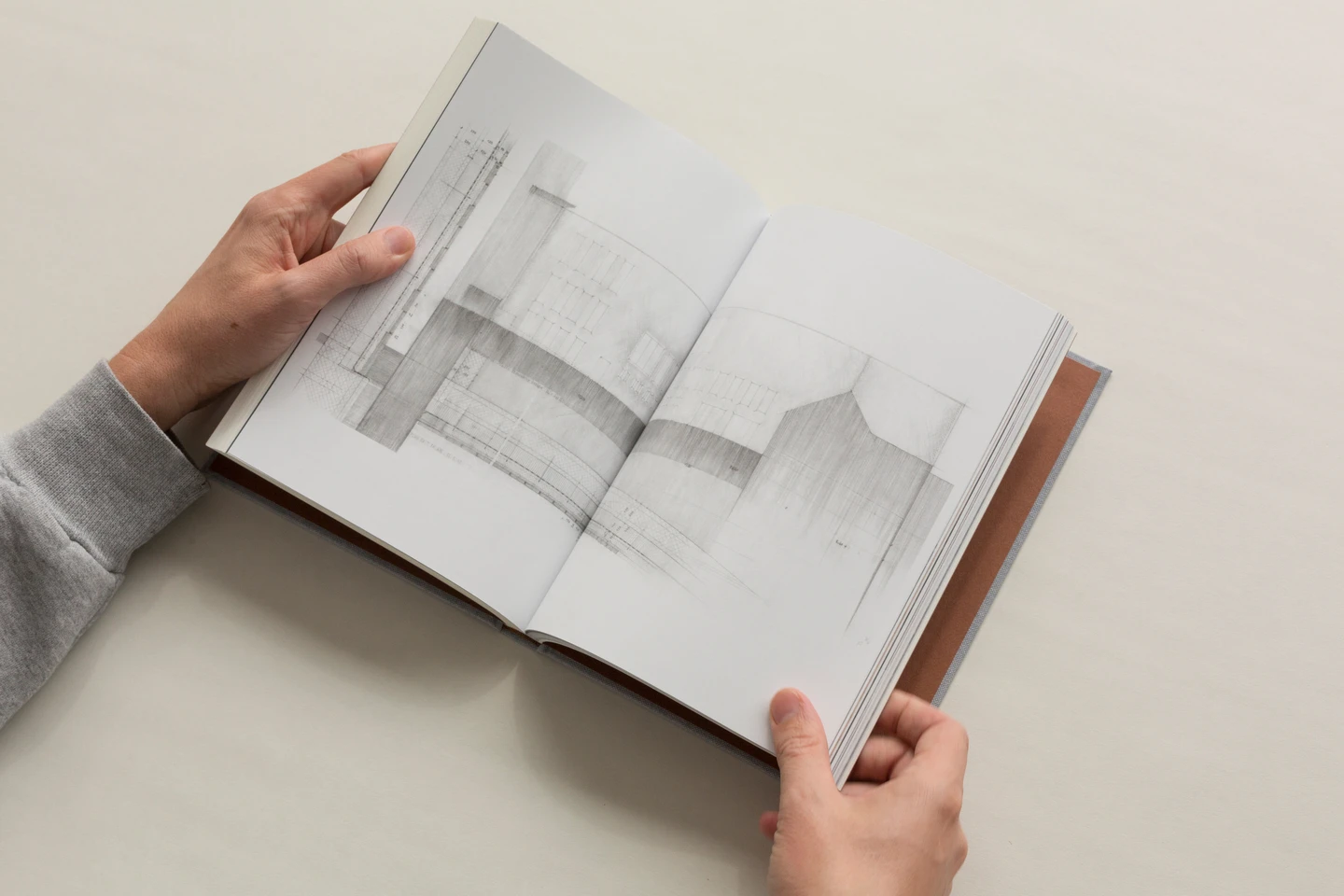
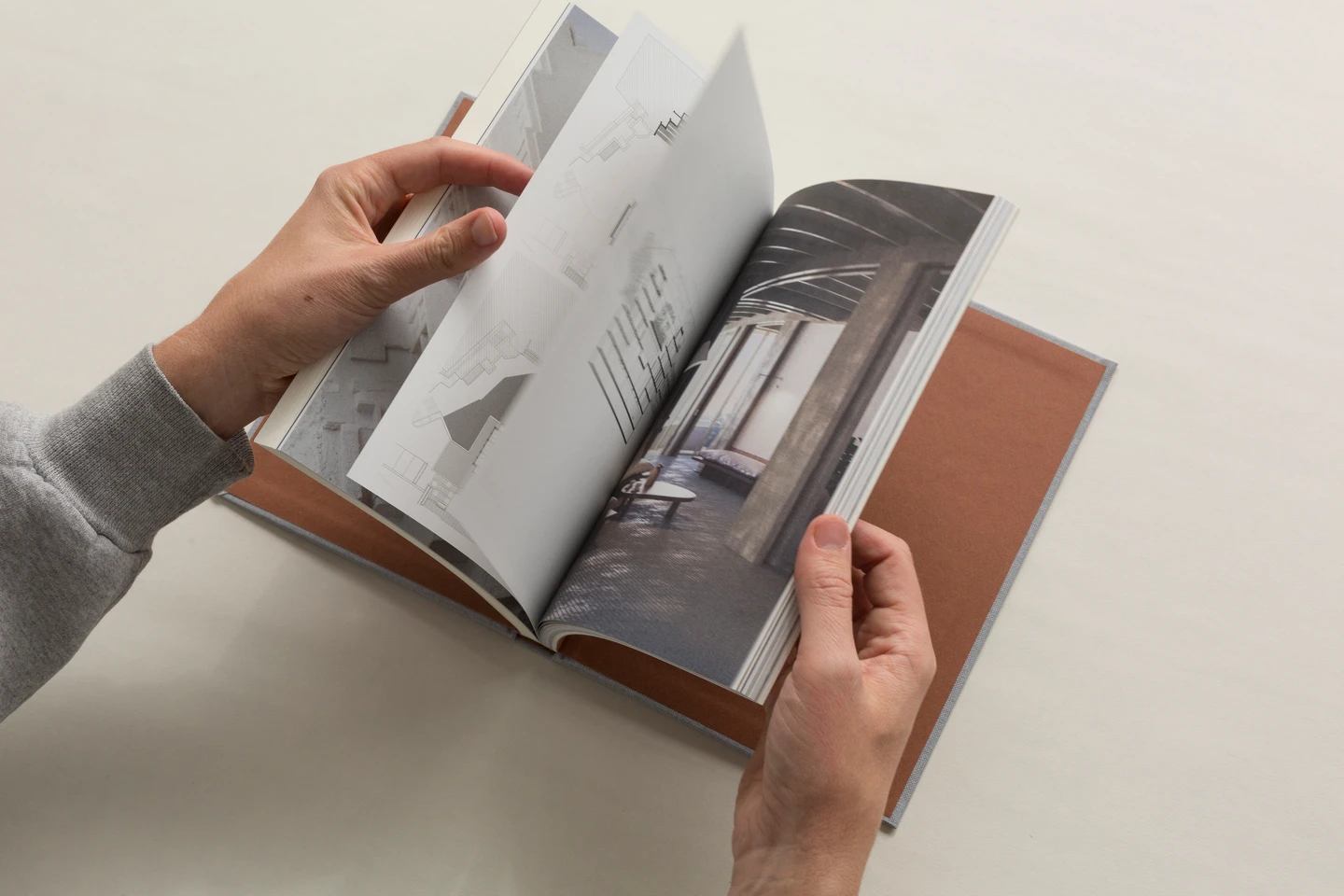
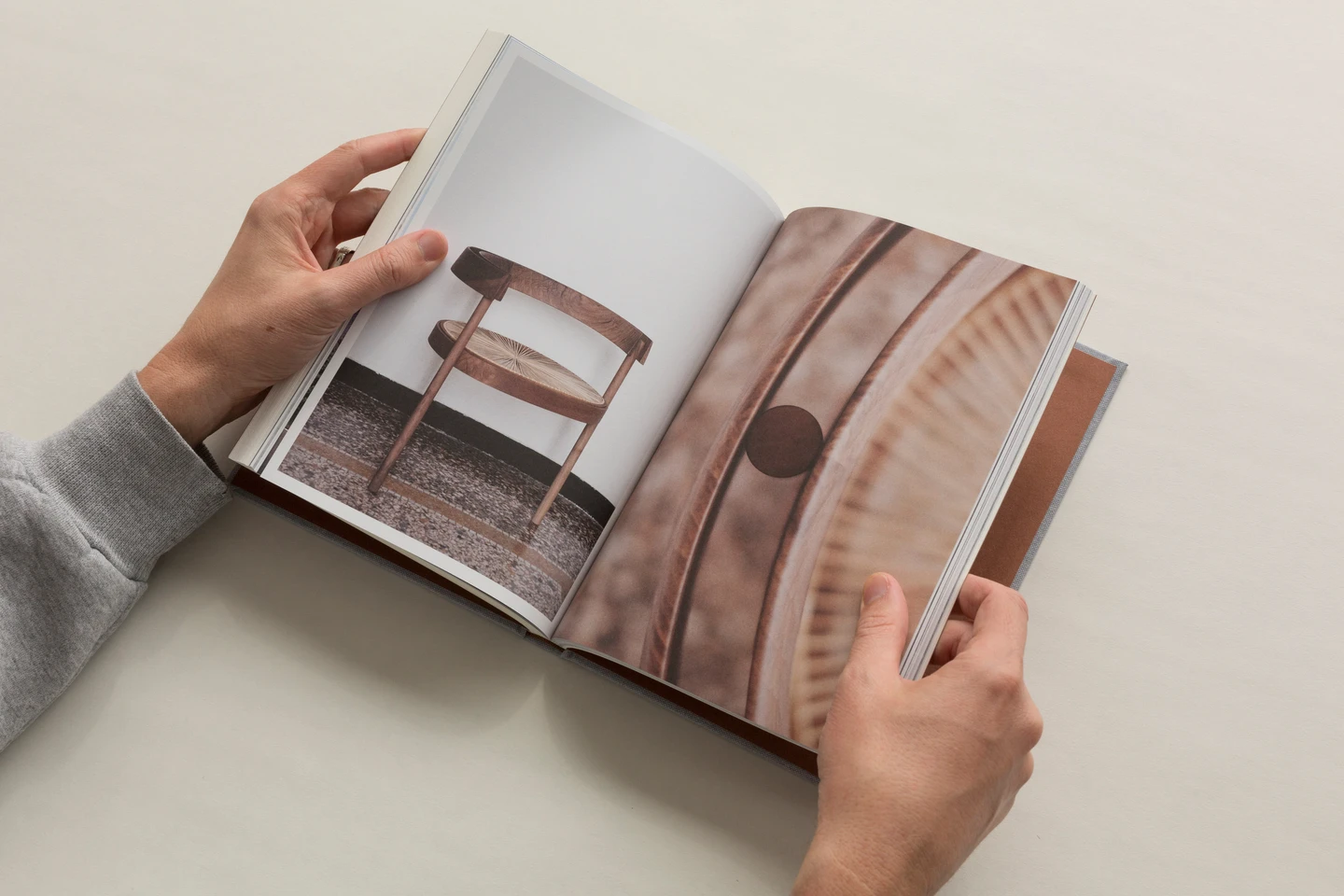
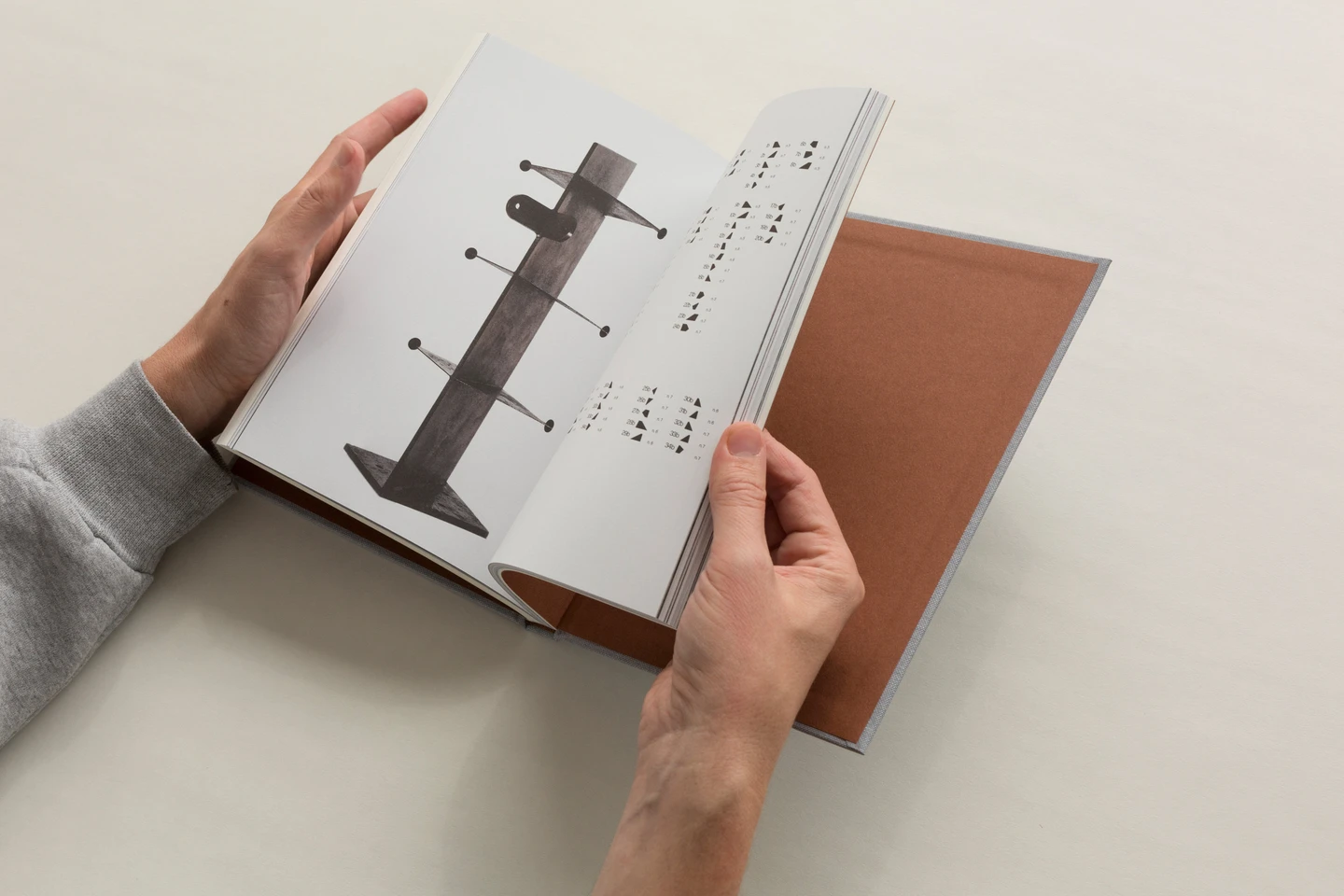
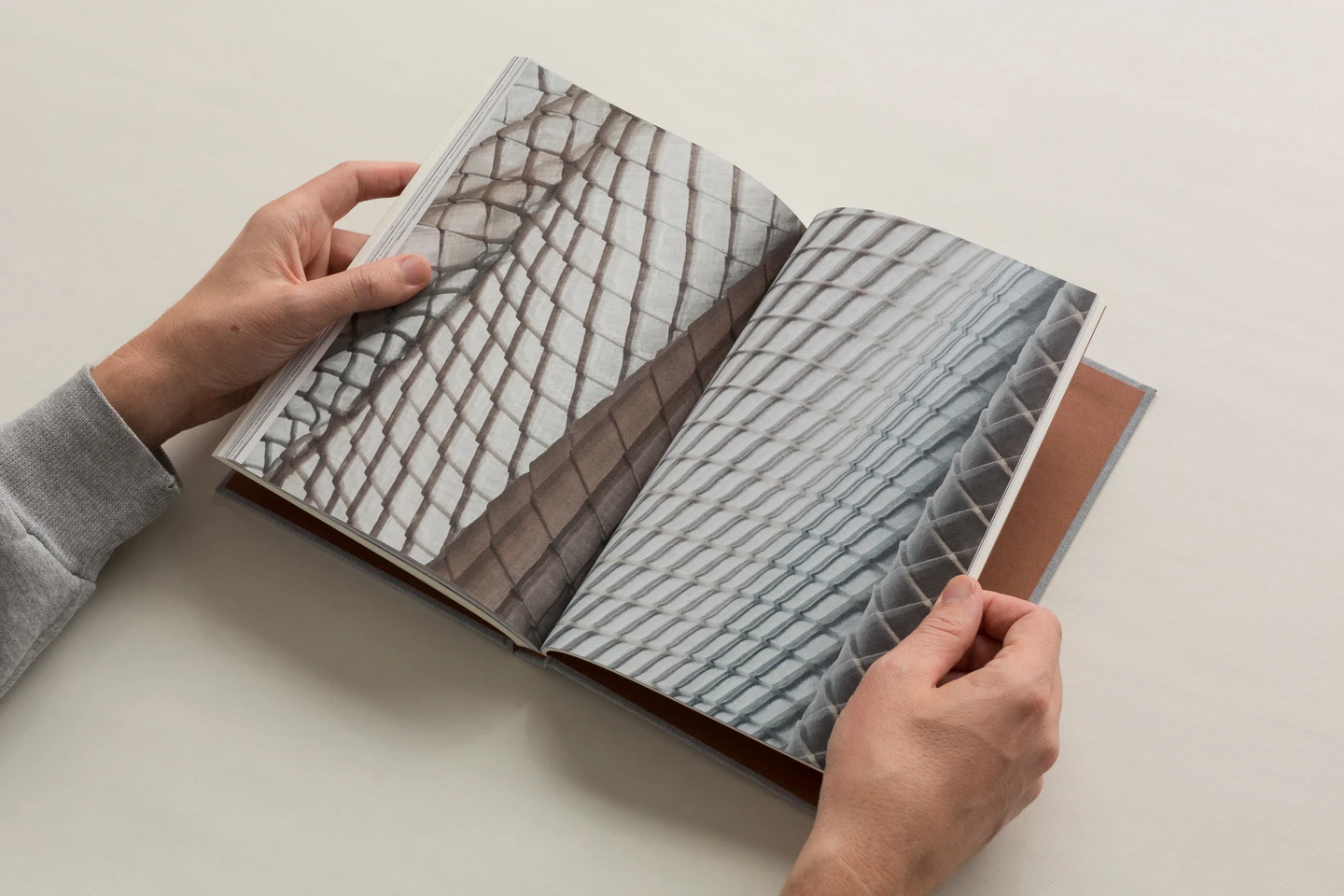
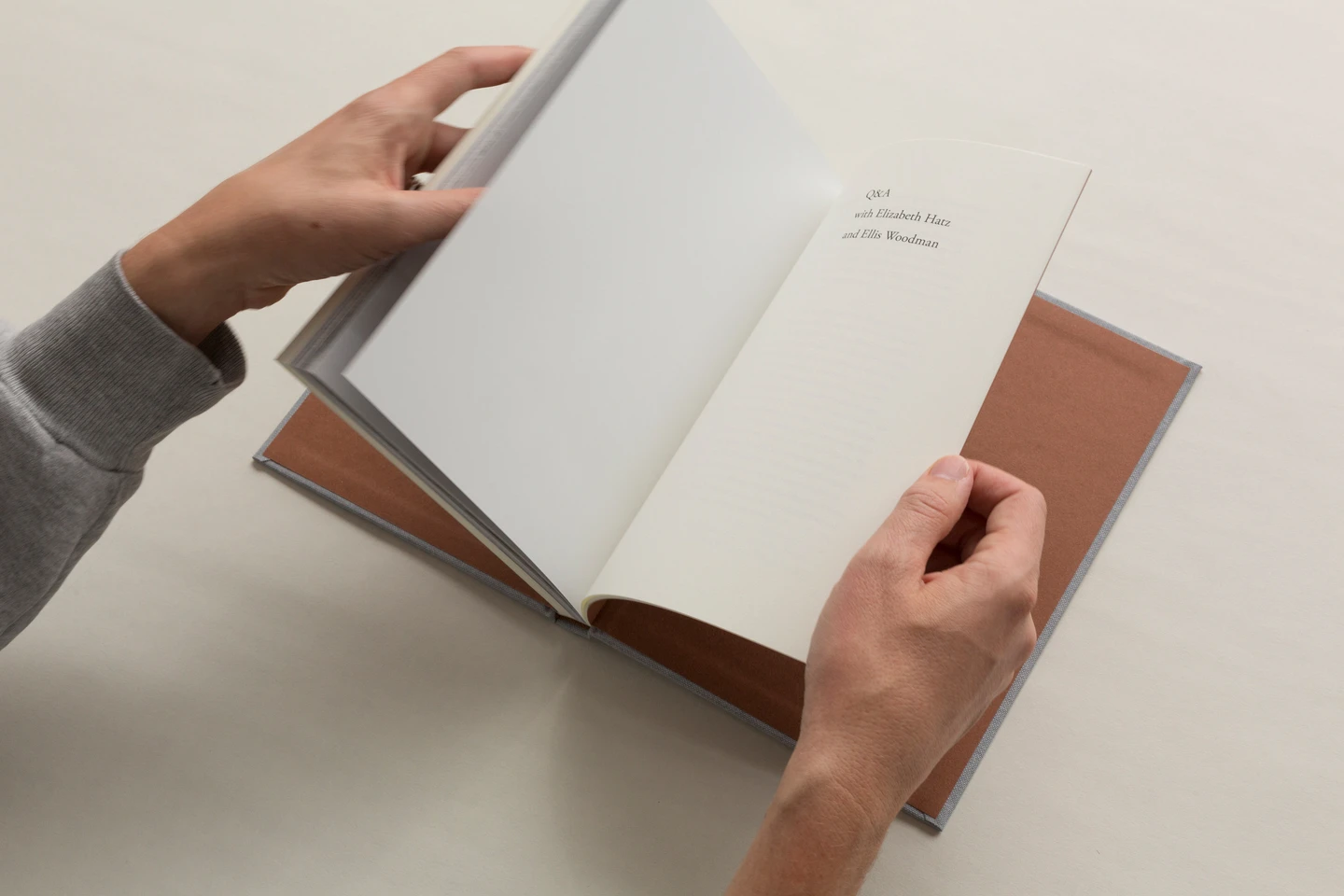
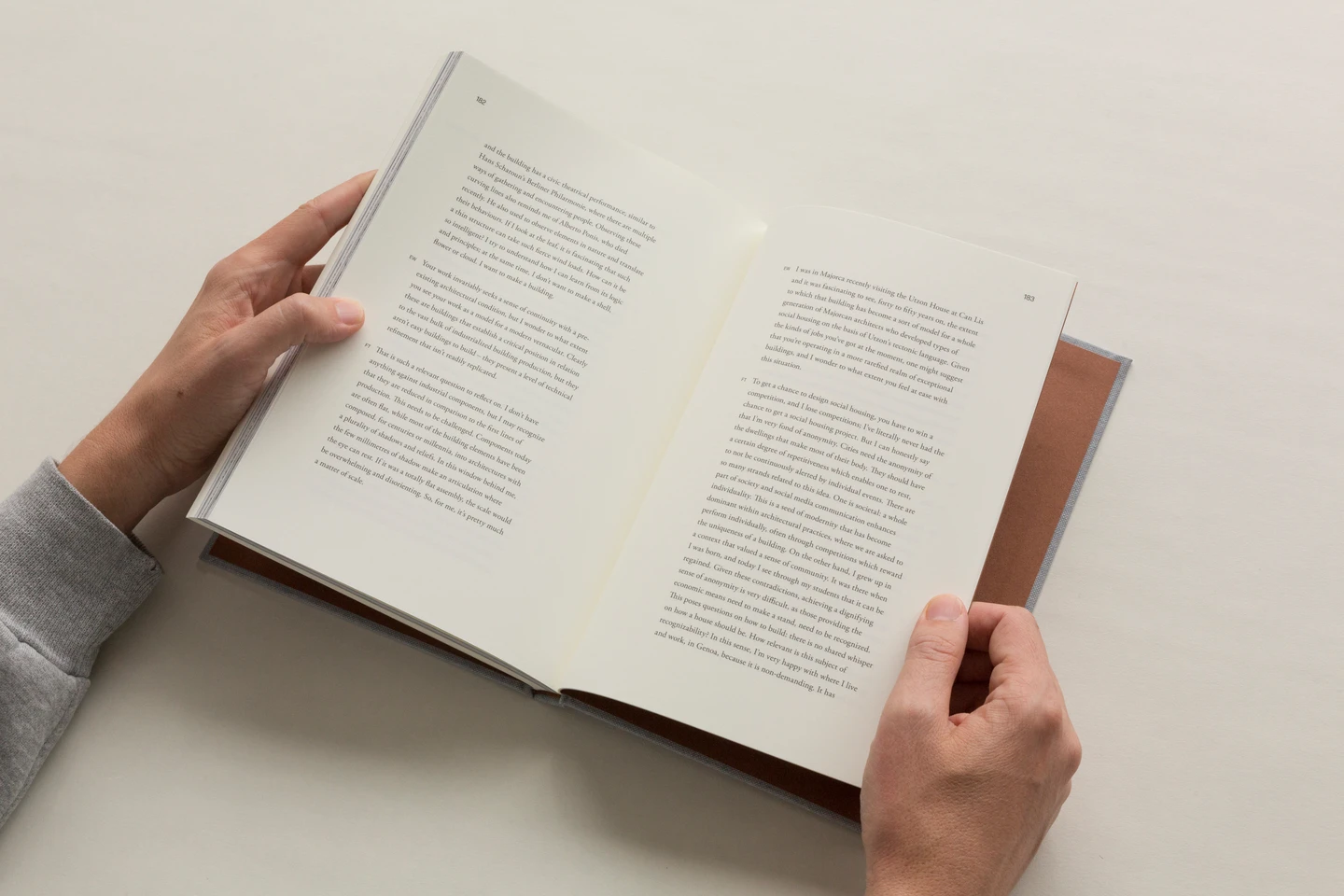
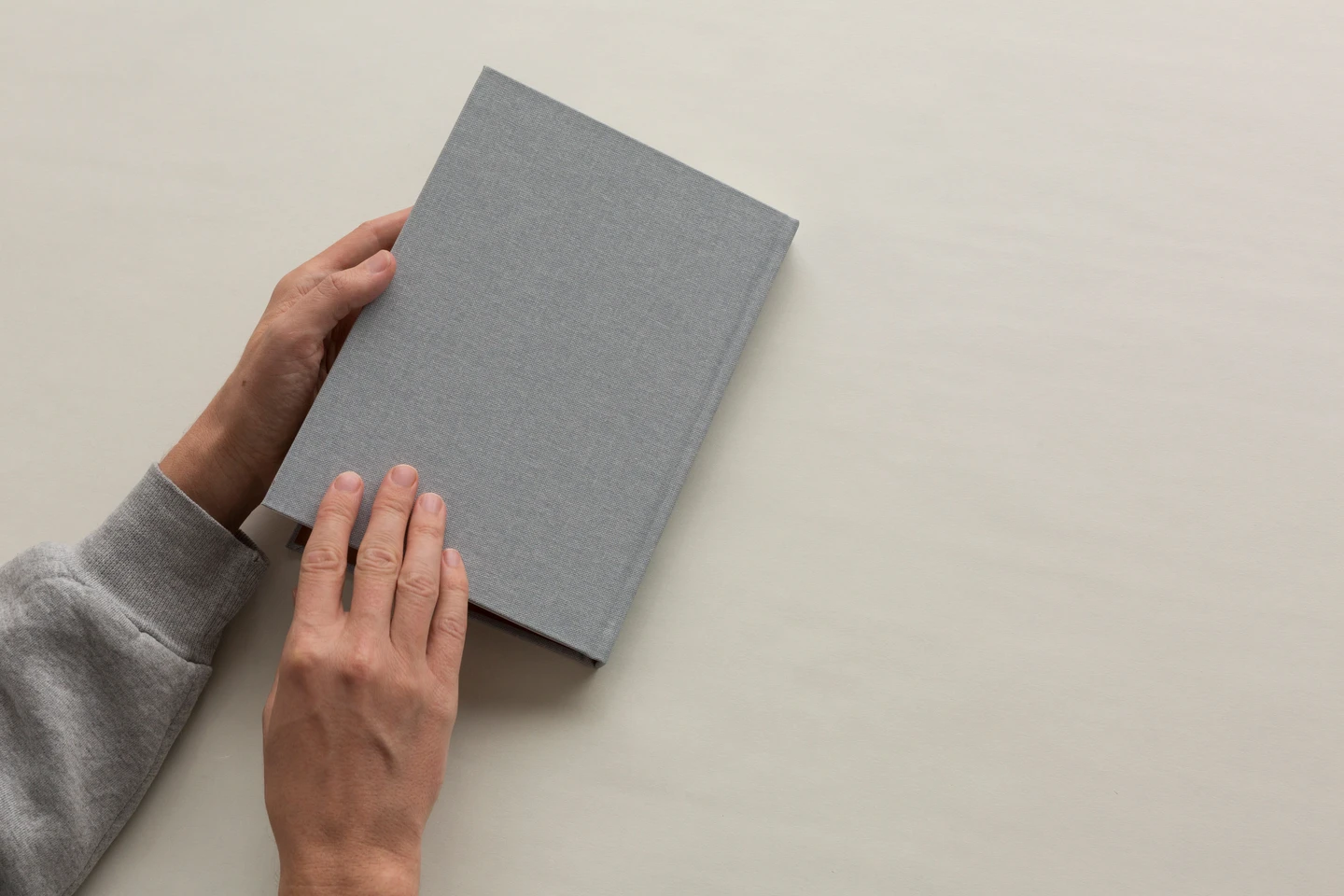
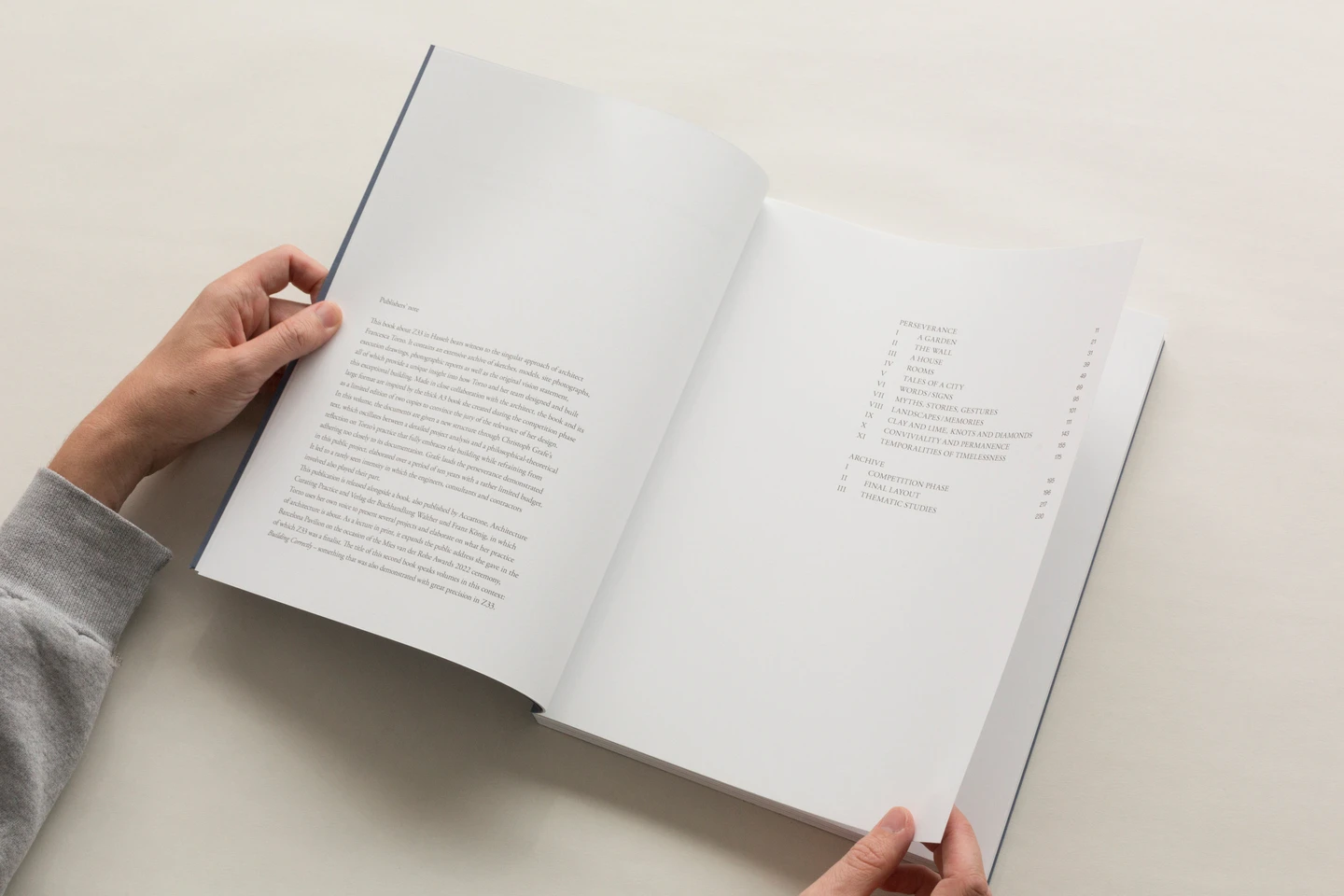
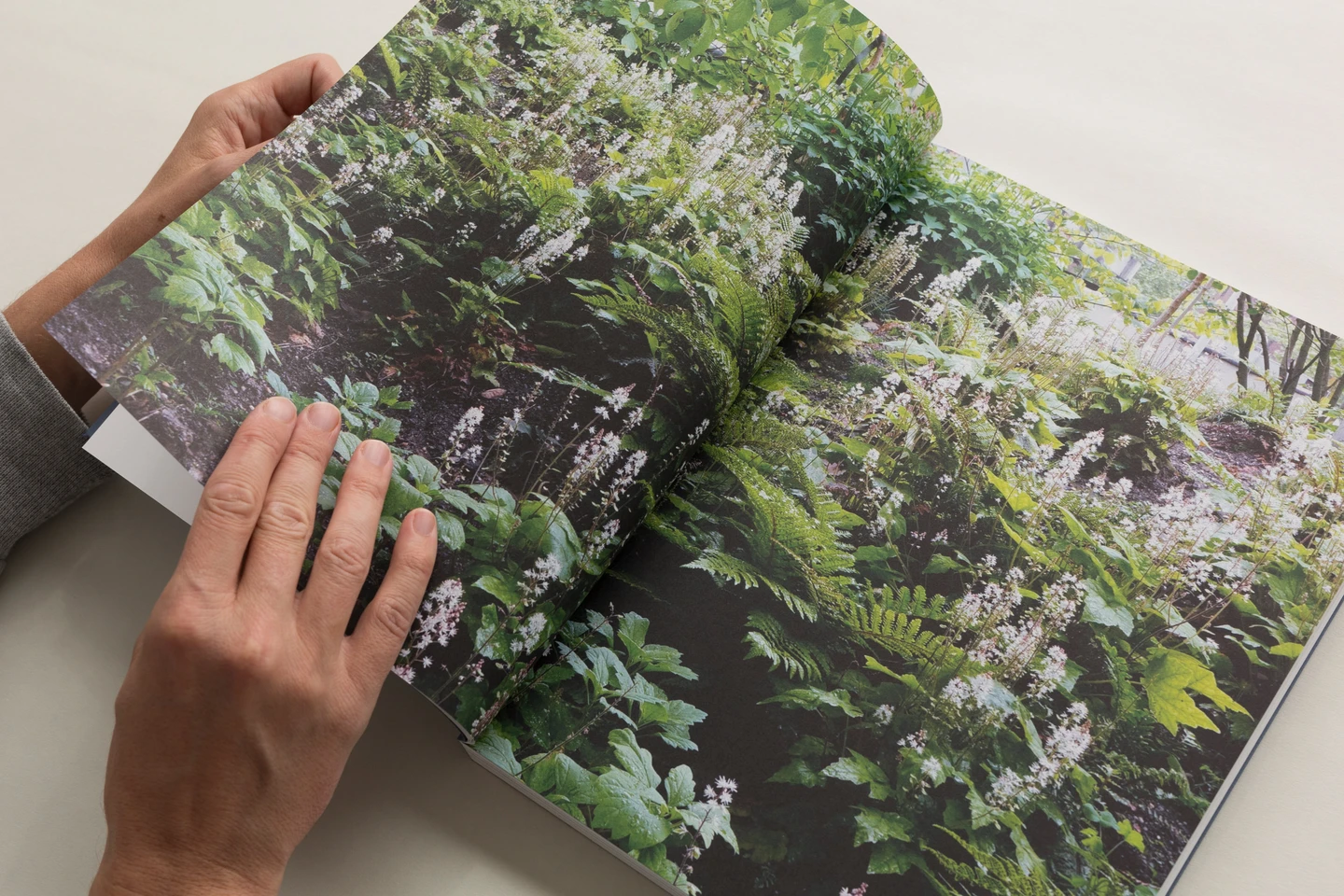
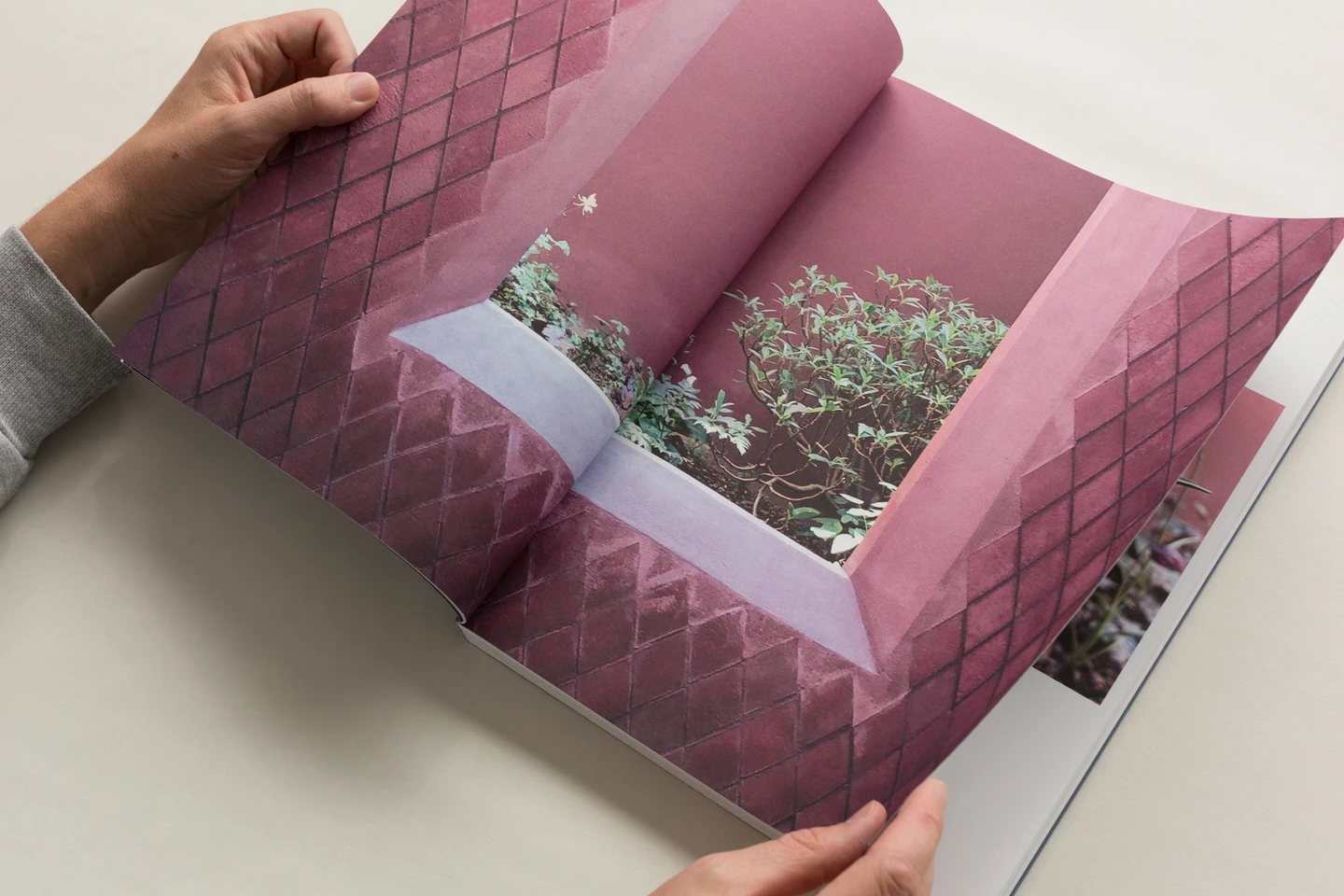
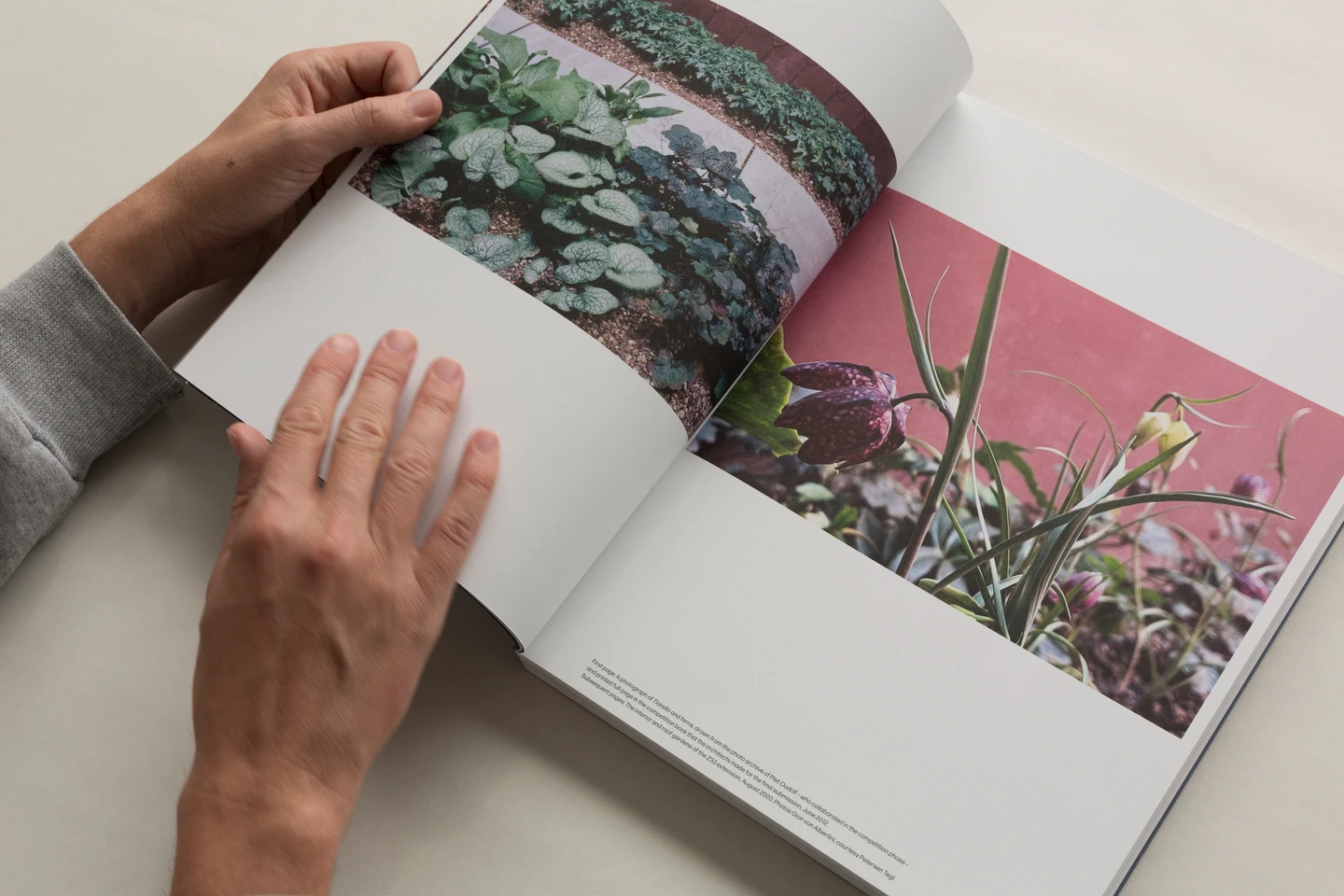
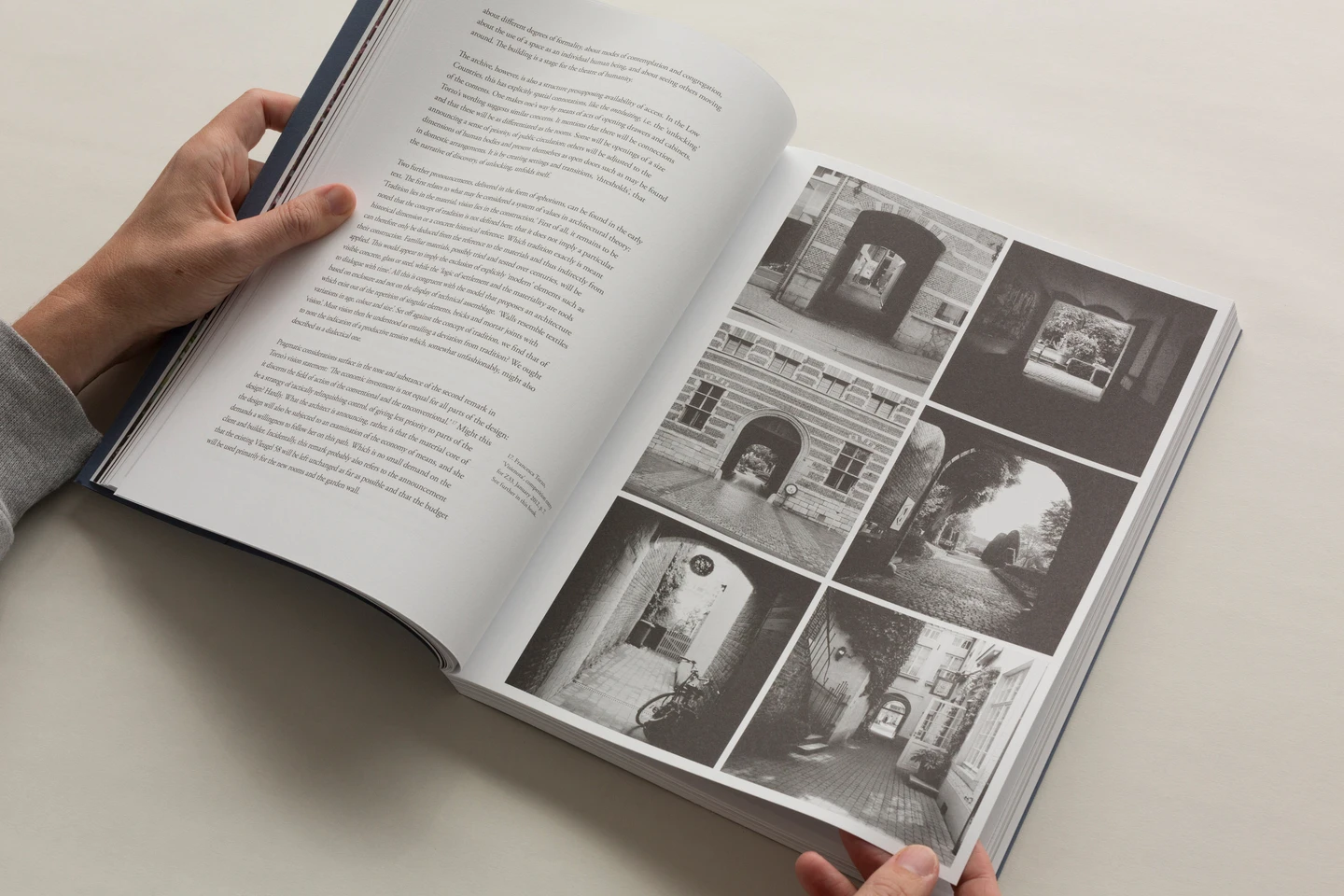
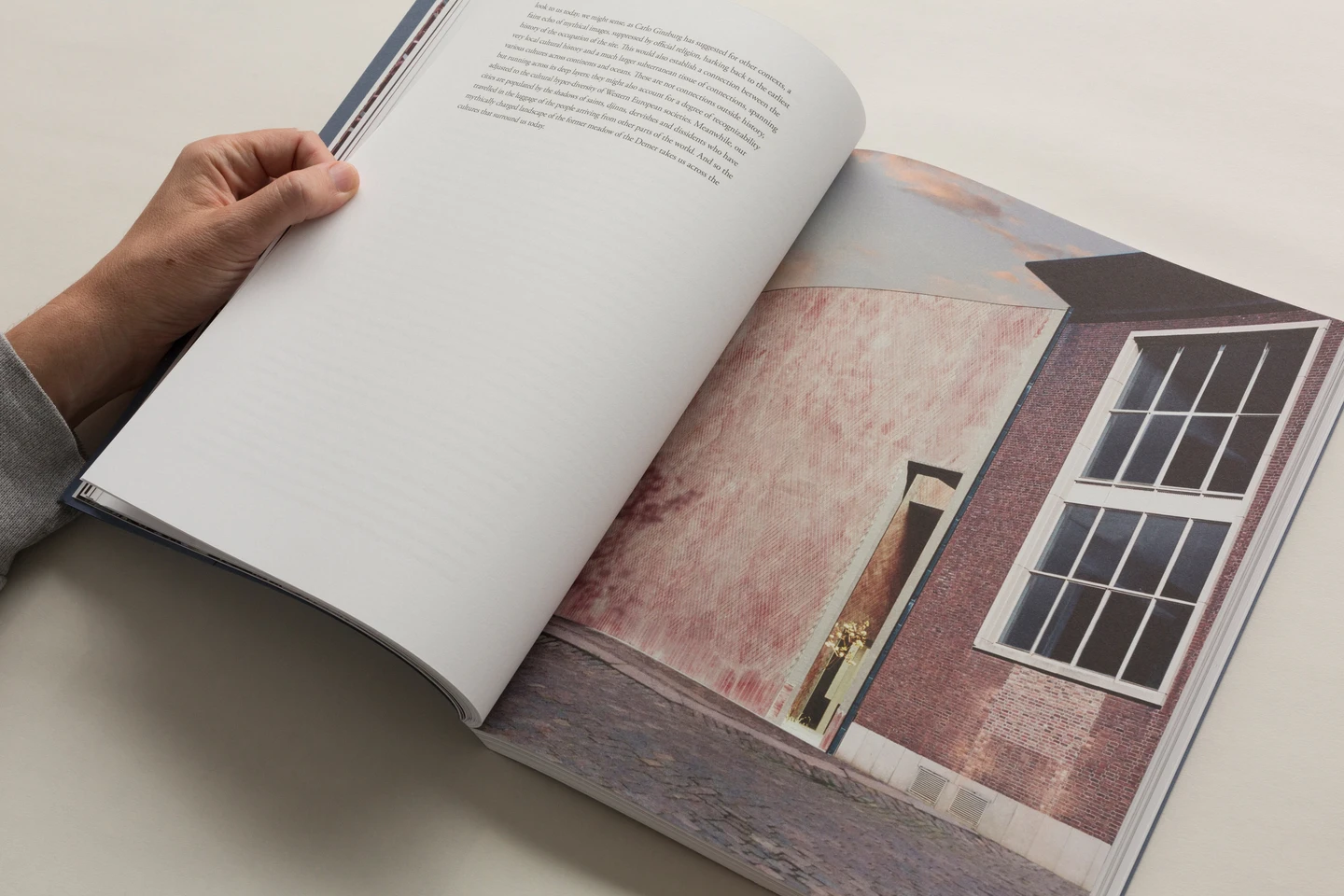
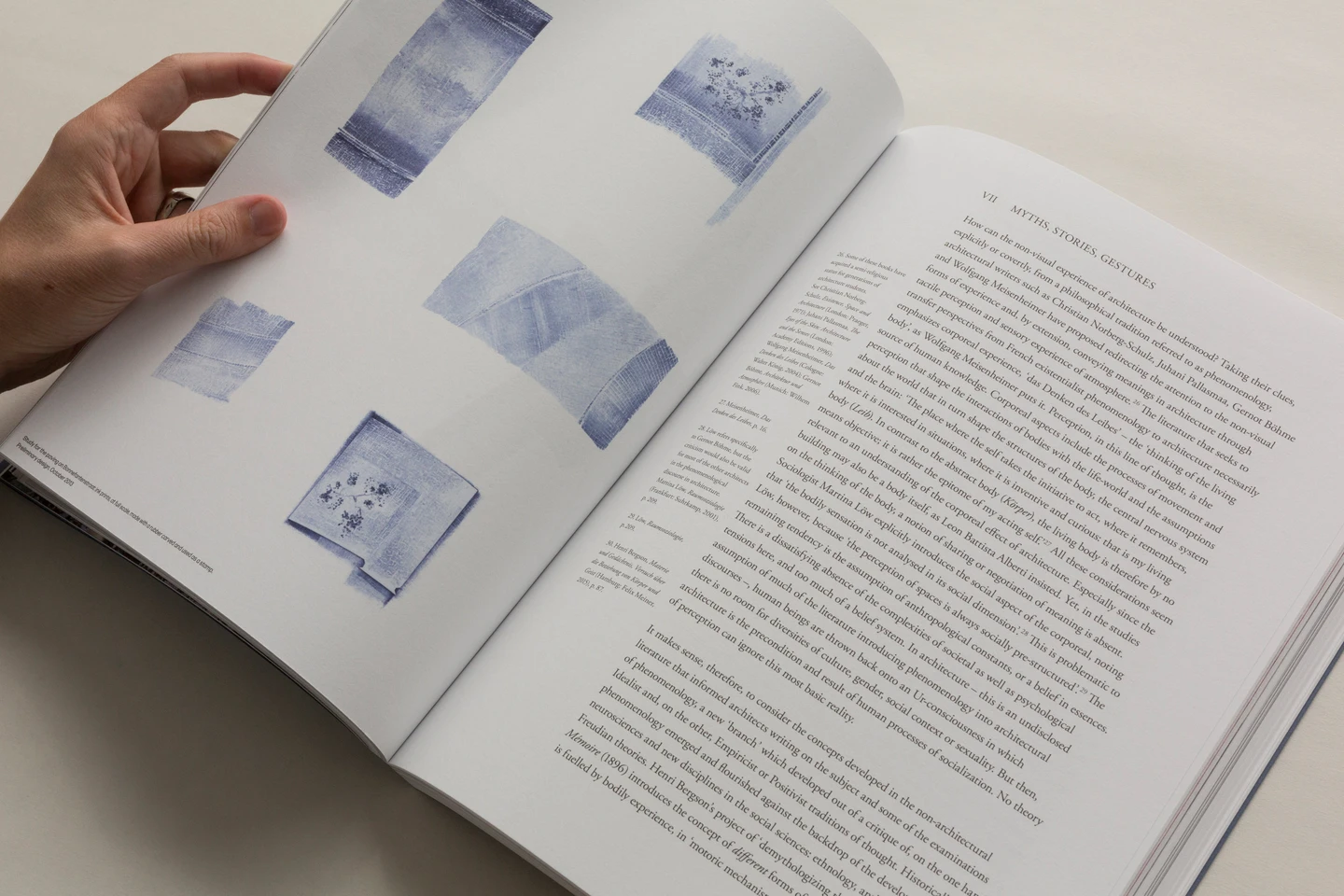
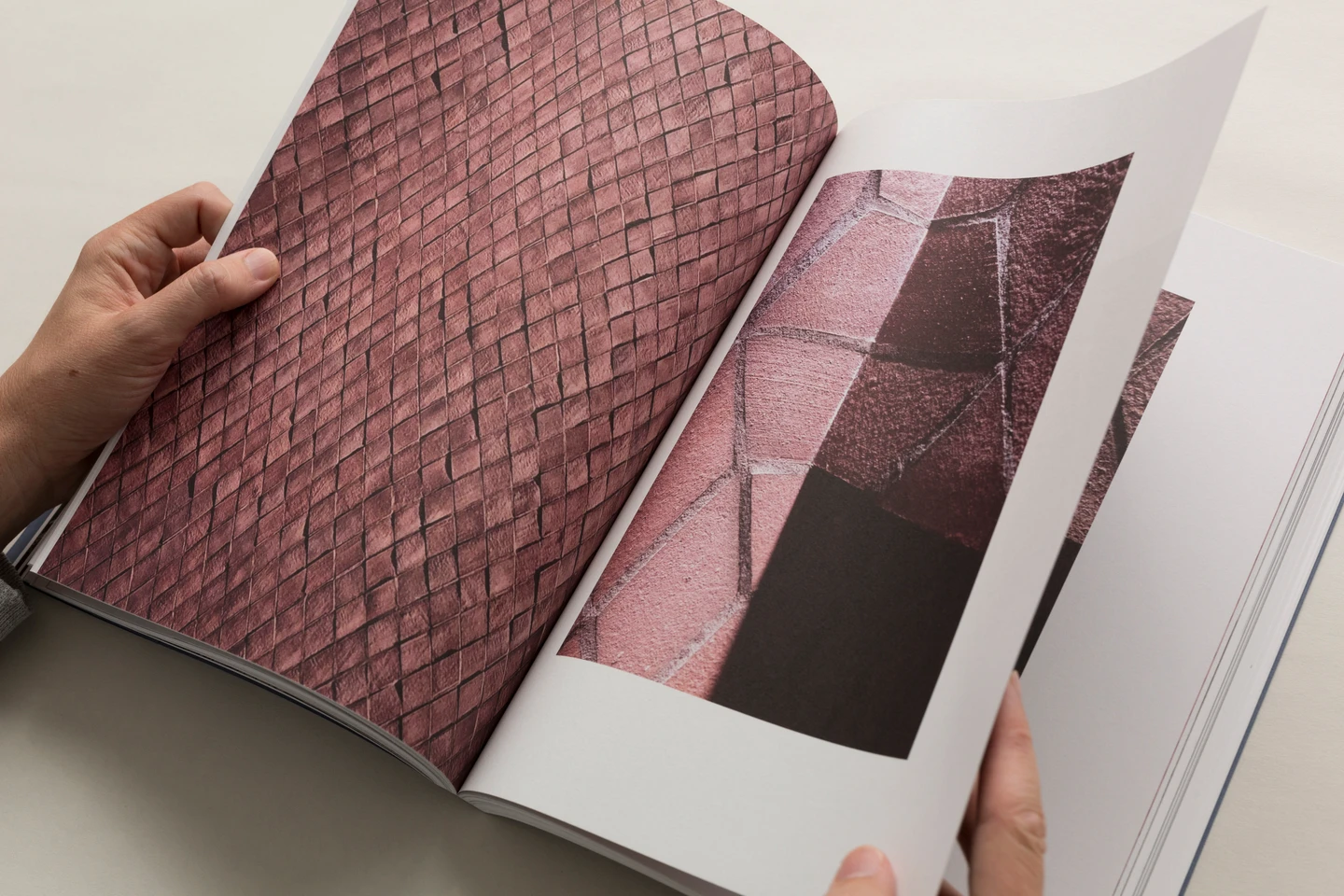
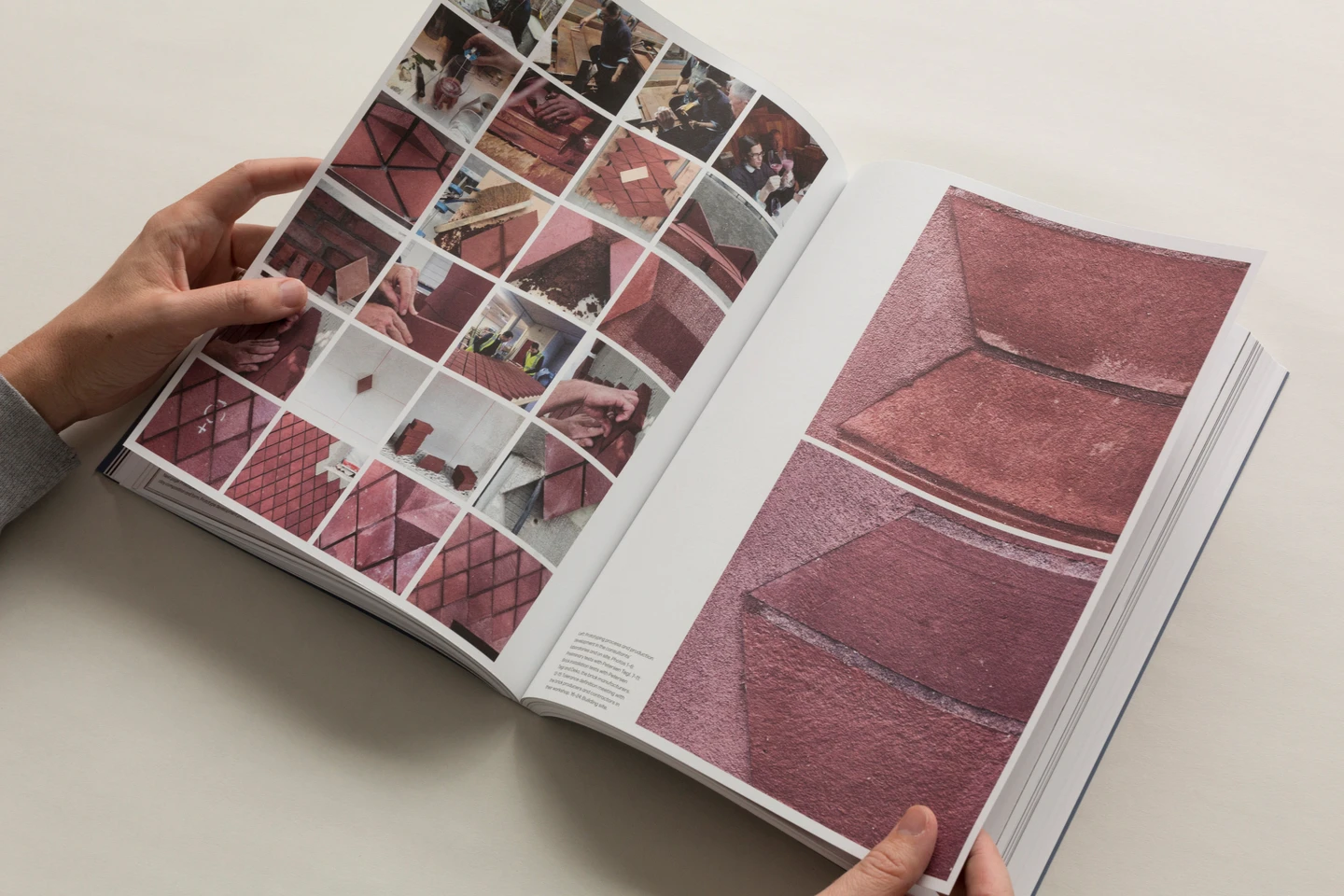
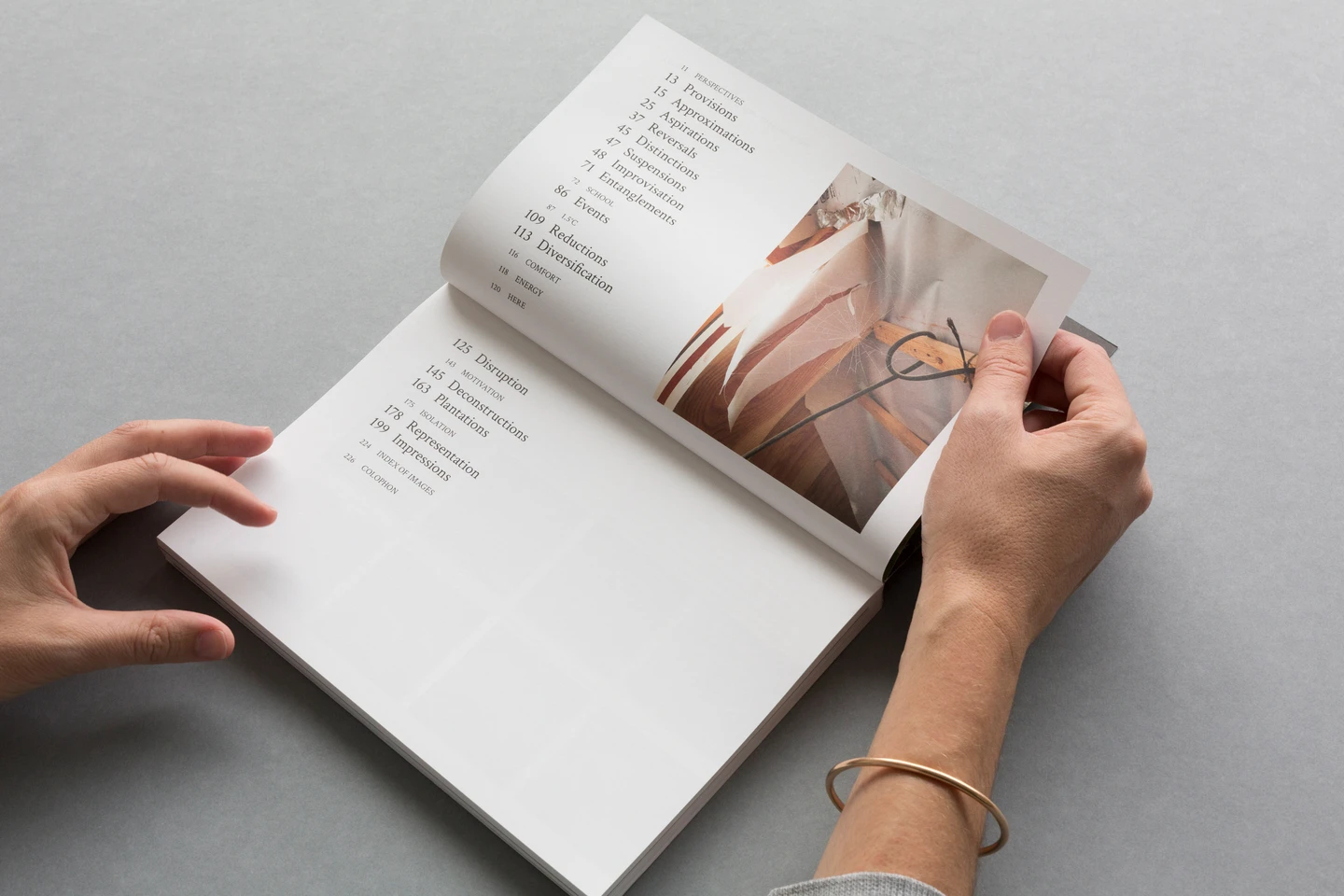
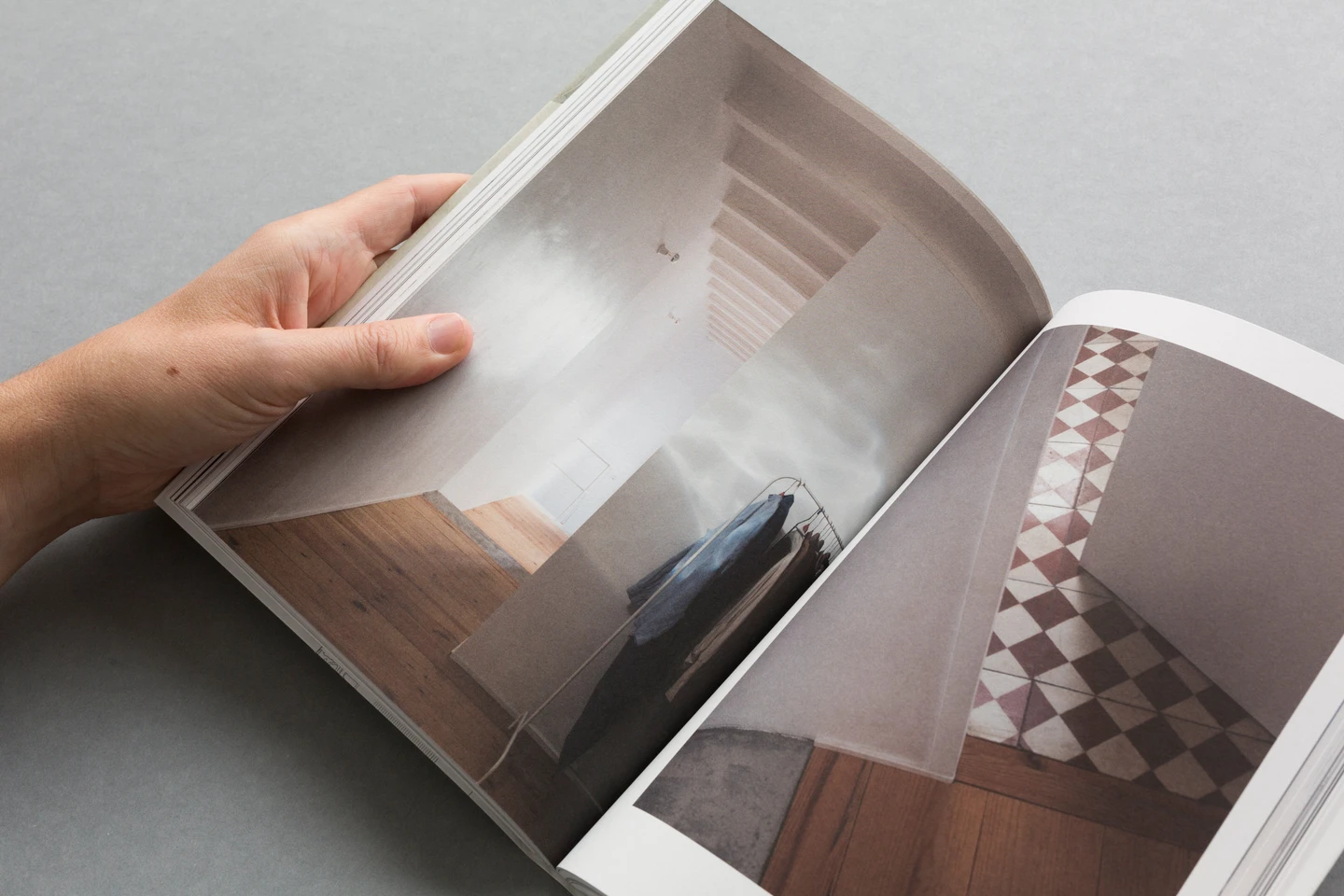
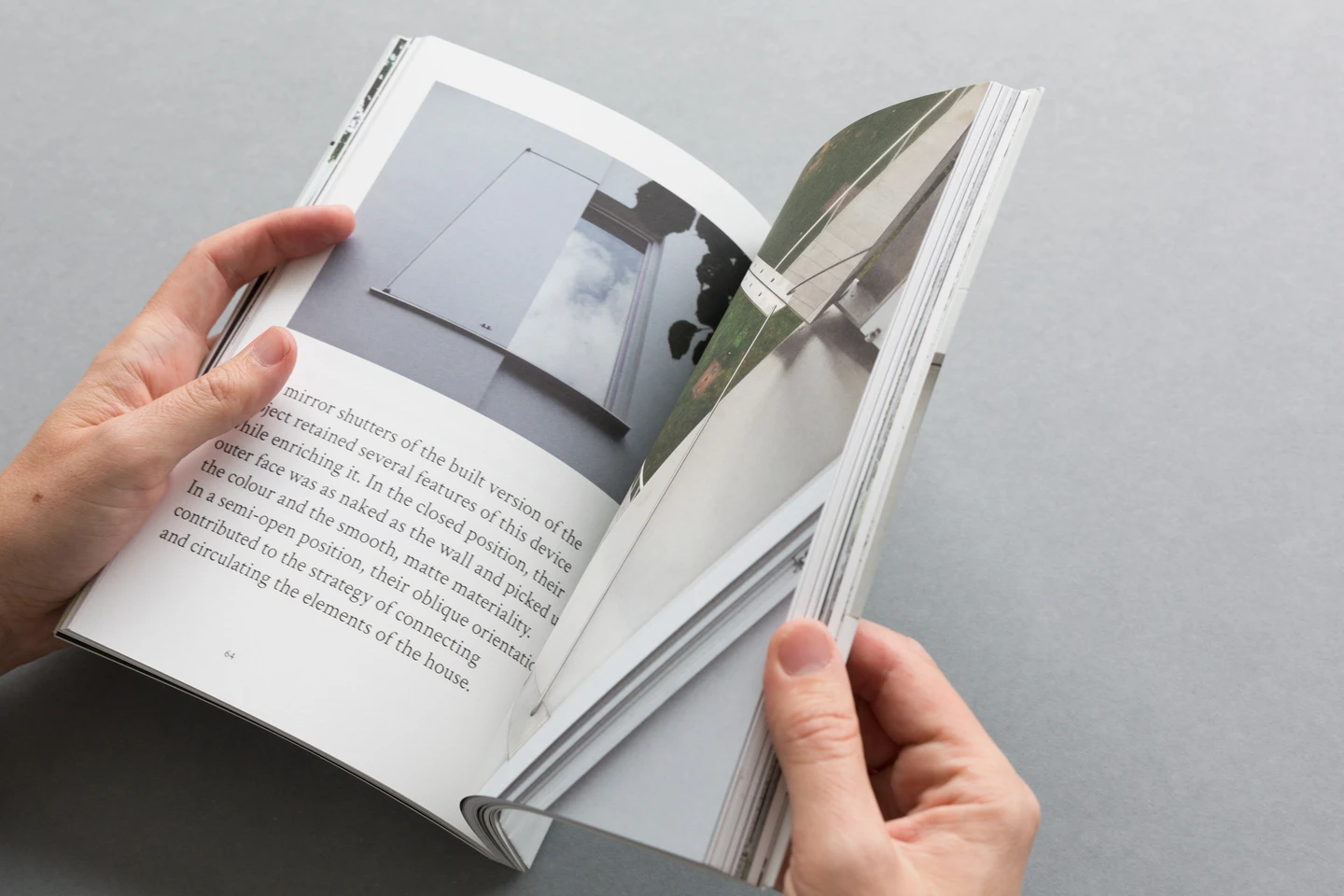
Accattone, ACP, Verlag Der Buchhandlung Walther und Franz König Editorial, Book 2025Building Correctly is the first overview of the recent work of Francesca Torzo, illustrating a written and expanded version of a lecture she delivered at the 2022 Mies van der Rohe Award ceremony in Barcelona. The book includes a Q&A with Ellis Woodman and Elizabeth Hatz. Its title is taken from Pier Luigi Nervi’s book Costruire correttamente (Milan: Hoepli, 1955) and offers a privileged insight in the conceptual framework of her built work.
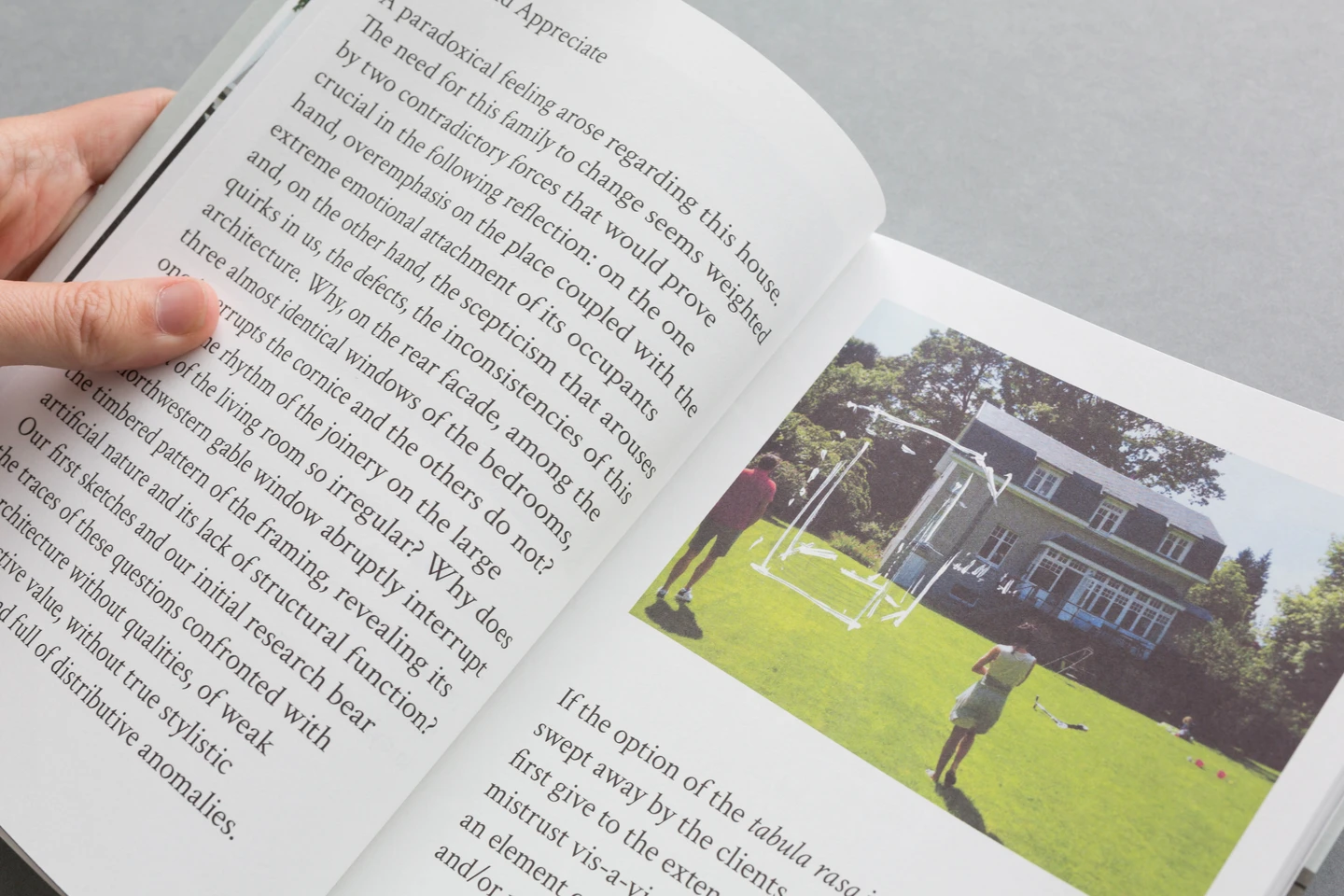
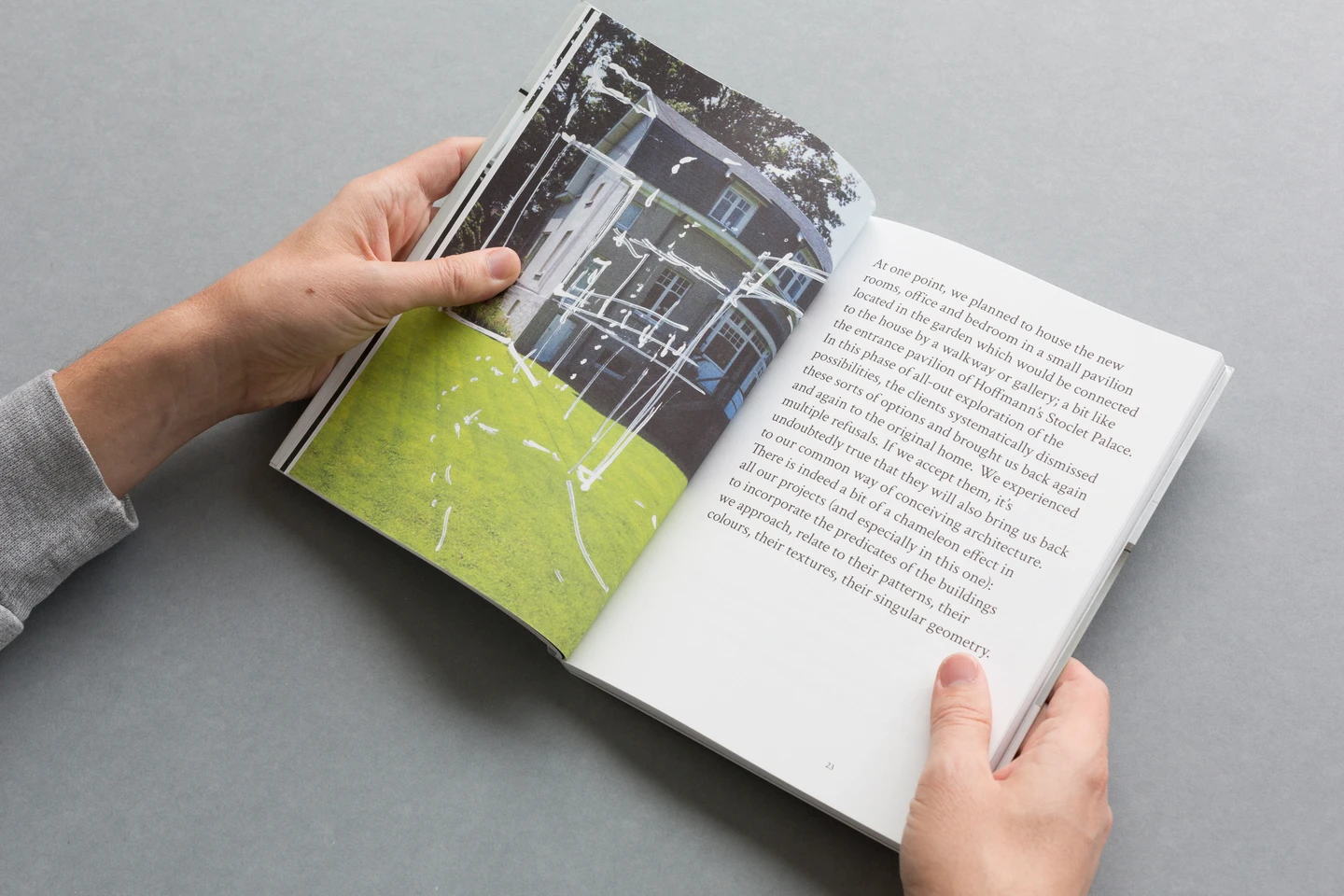
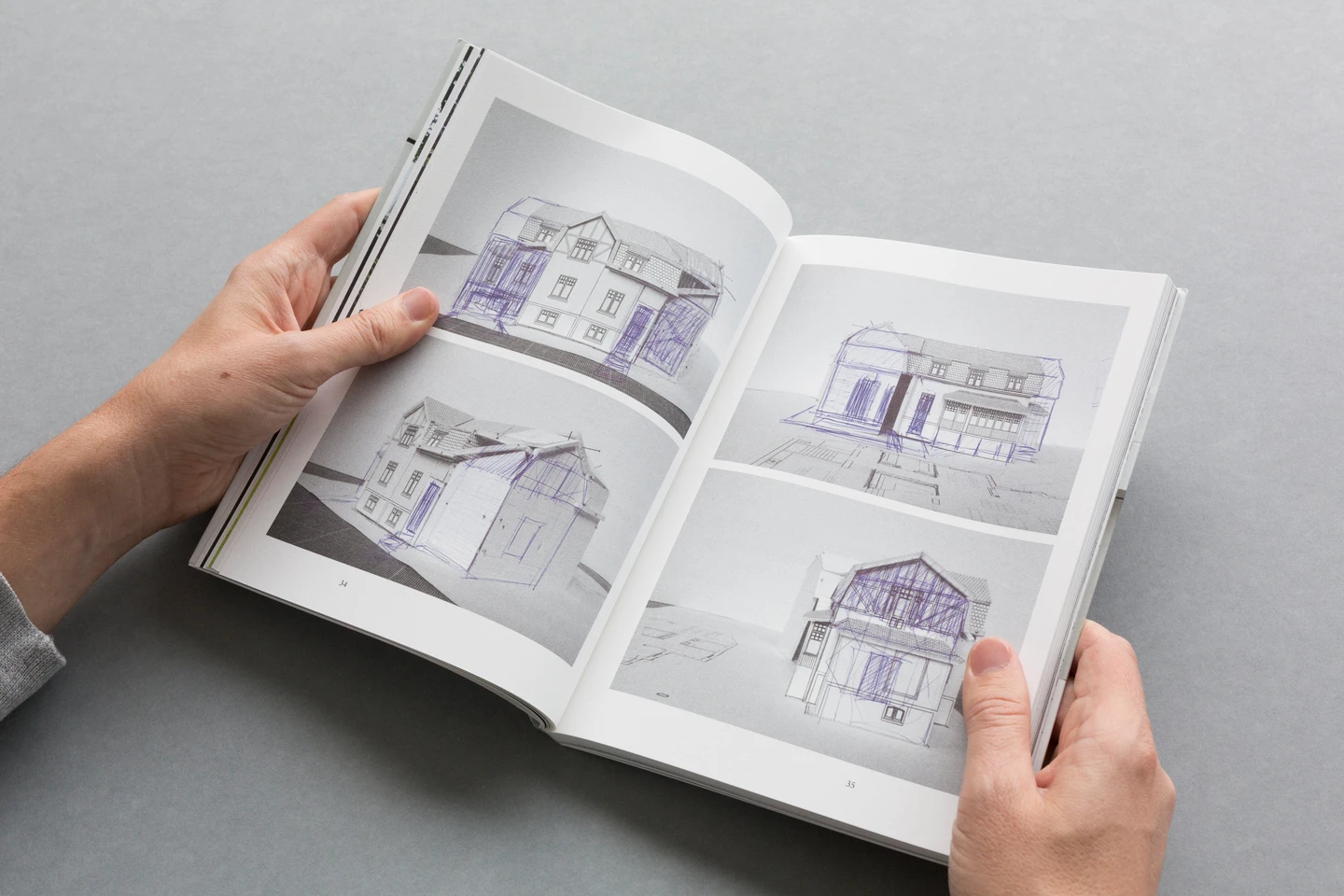
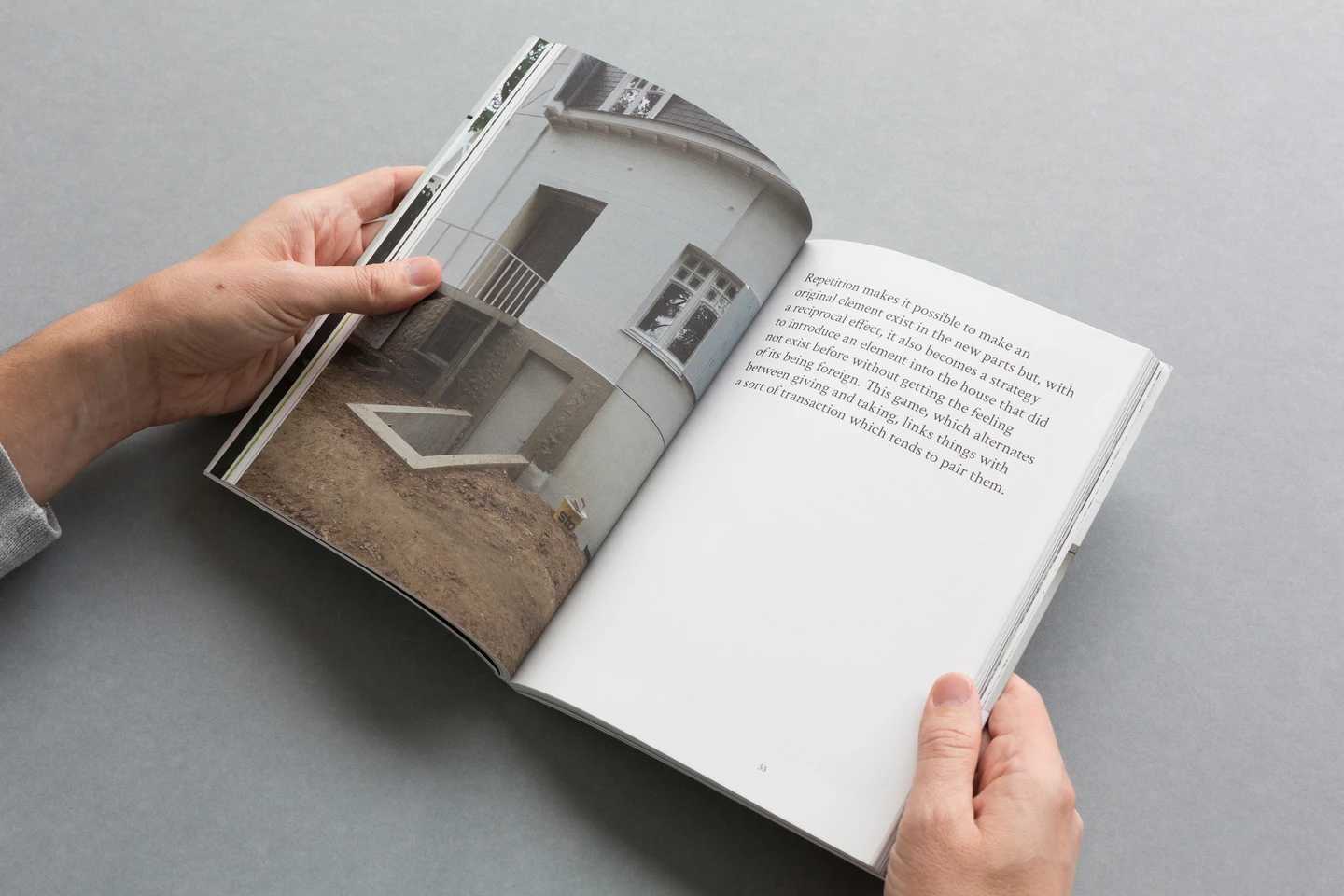
To emphase the book's title and tone, its classic design combines caracteristics such as an airy grid type set in Garamond, two tones of white high bulk paper, mass tinted cover pages and matching hotfoil on waxed linen hardcover.
-
-
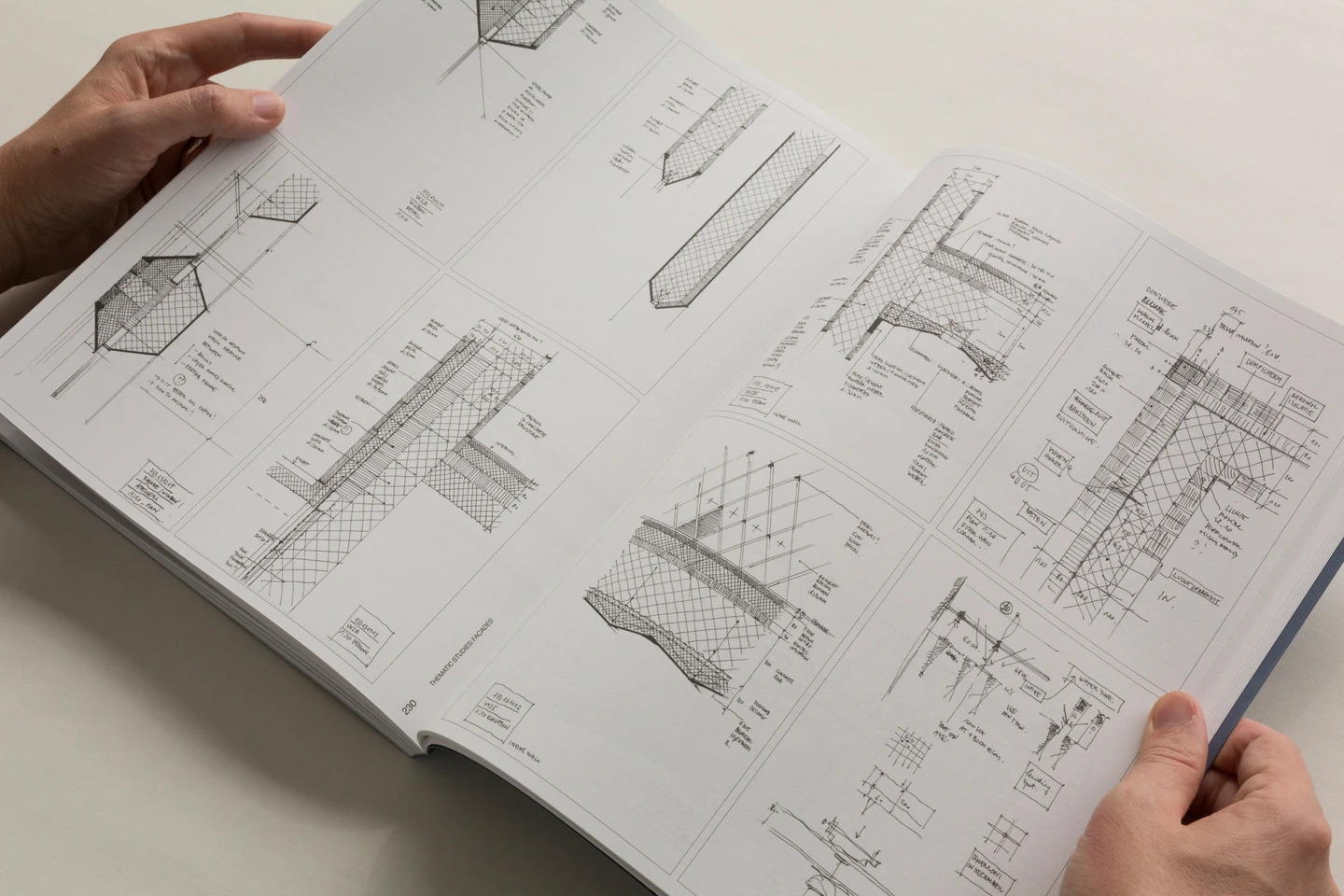
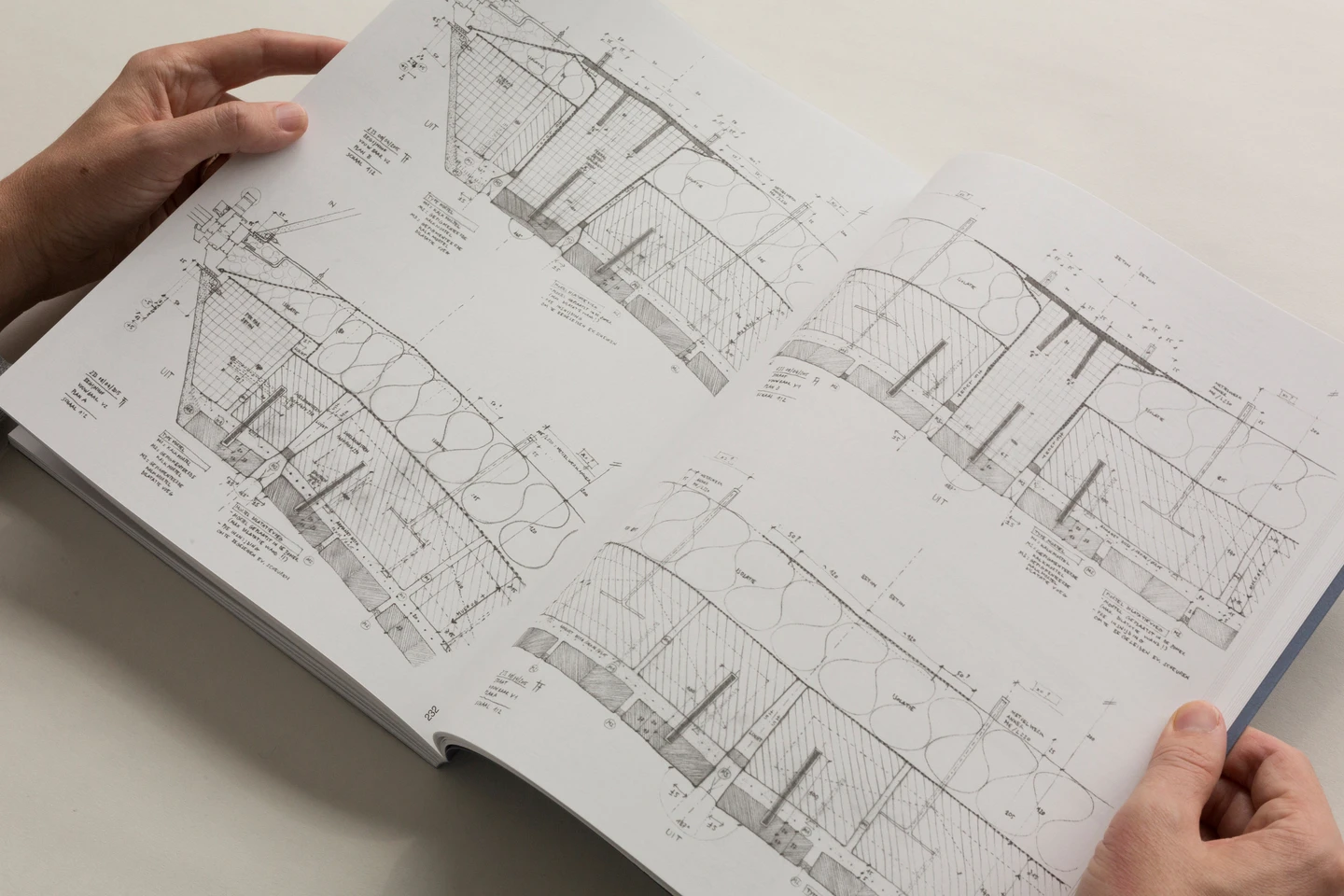
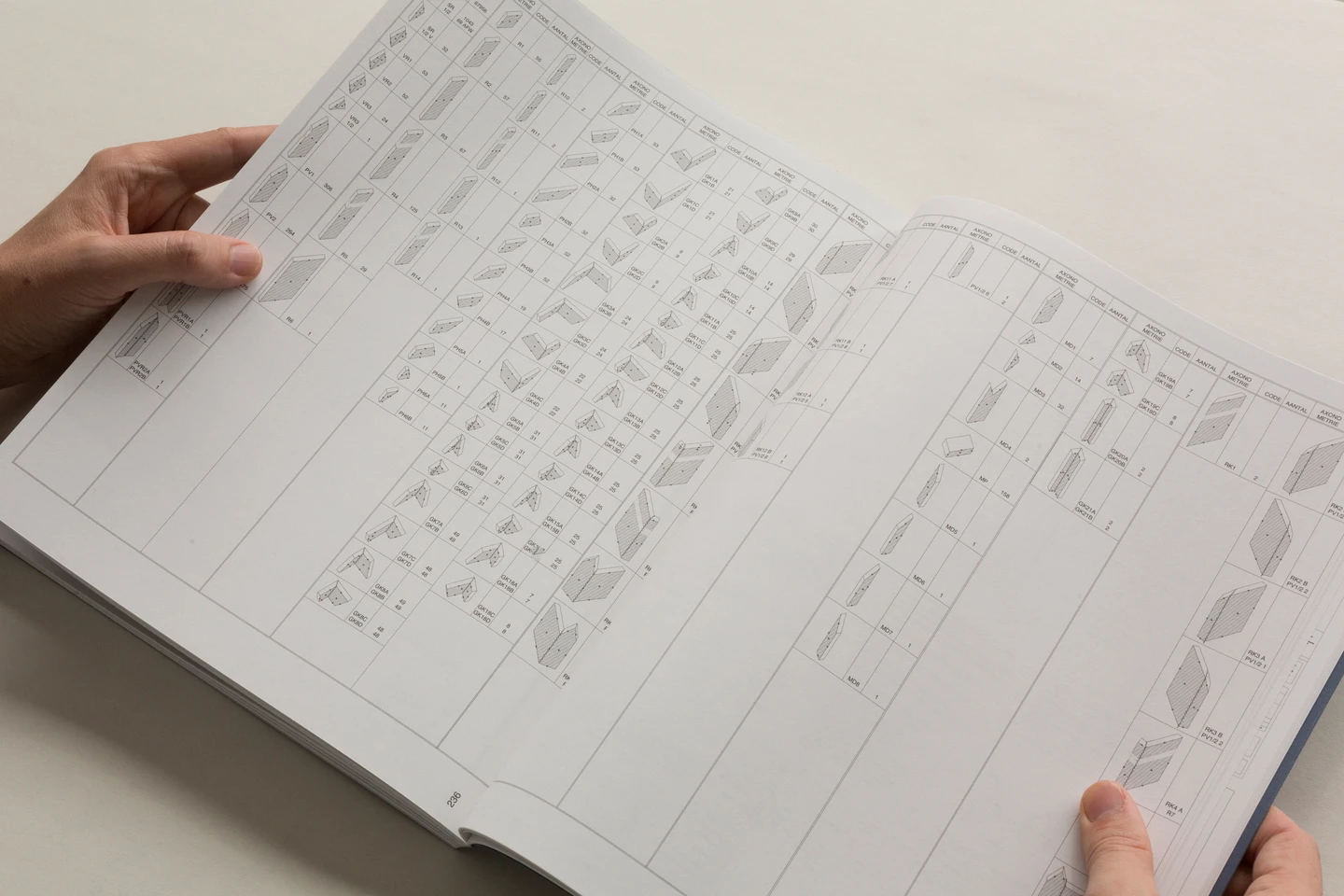
Z33
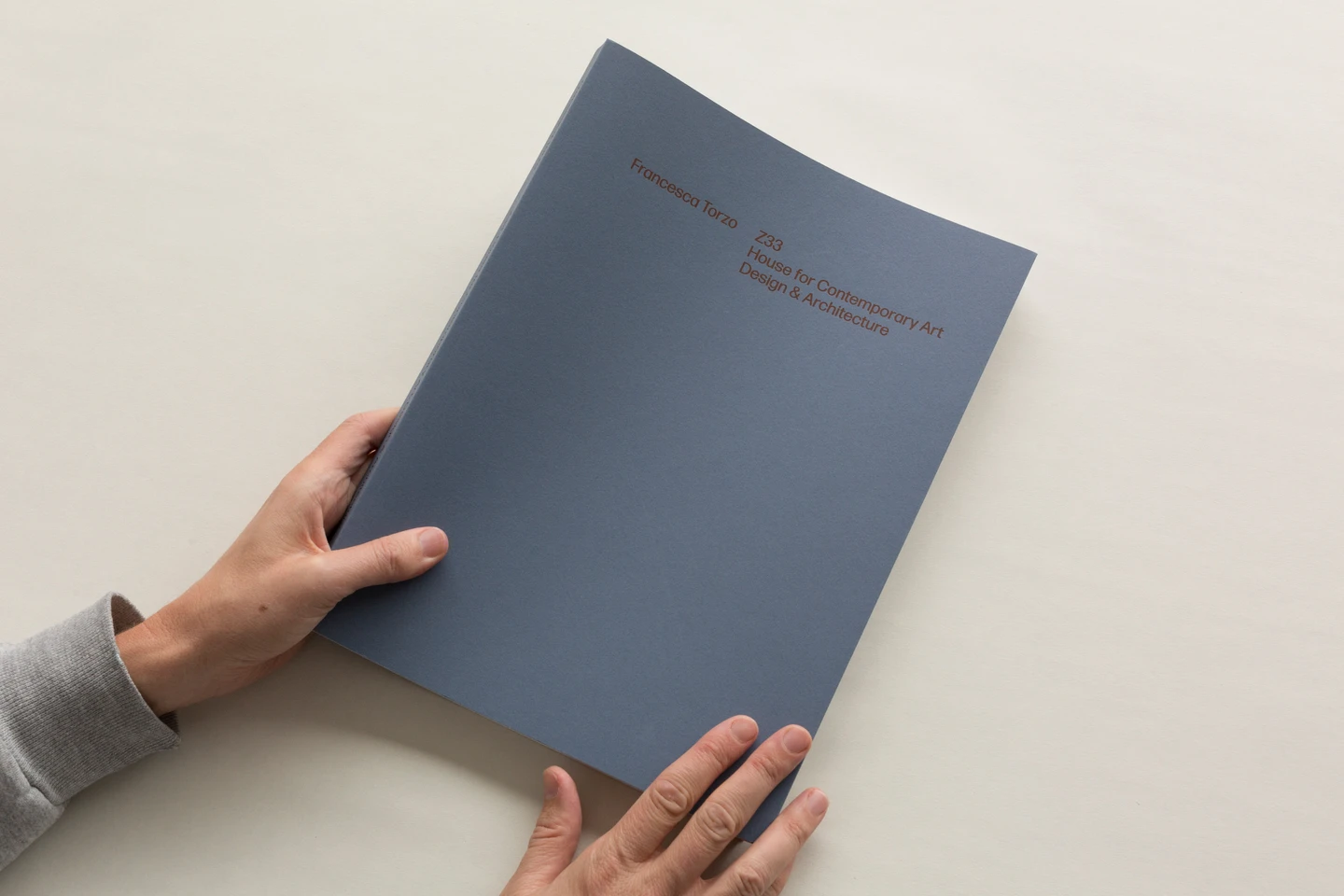
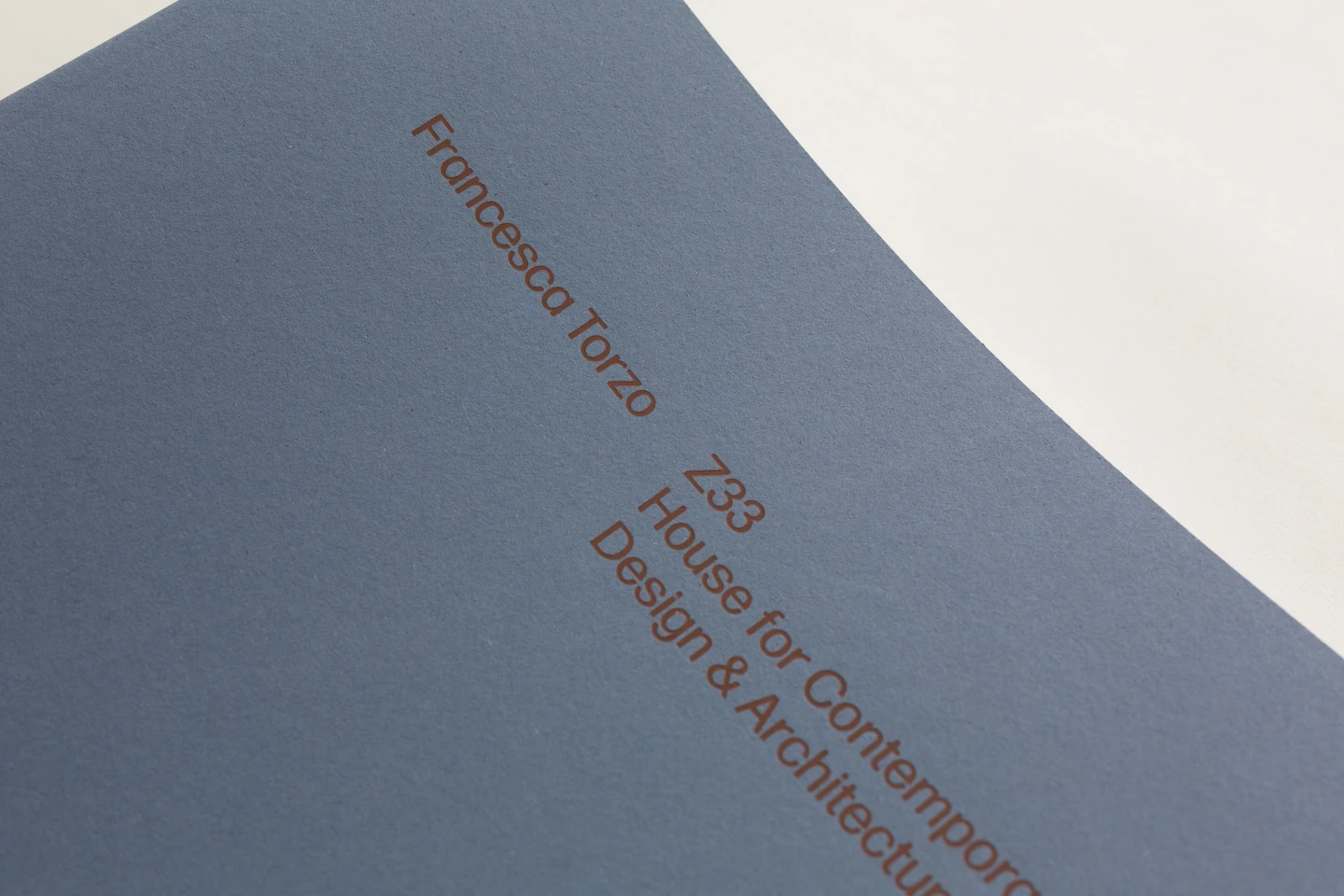
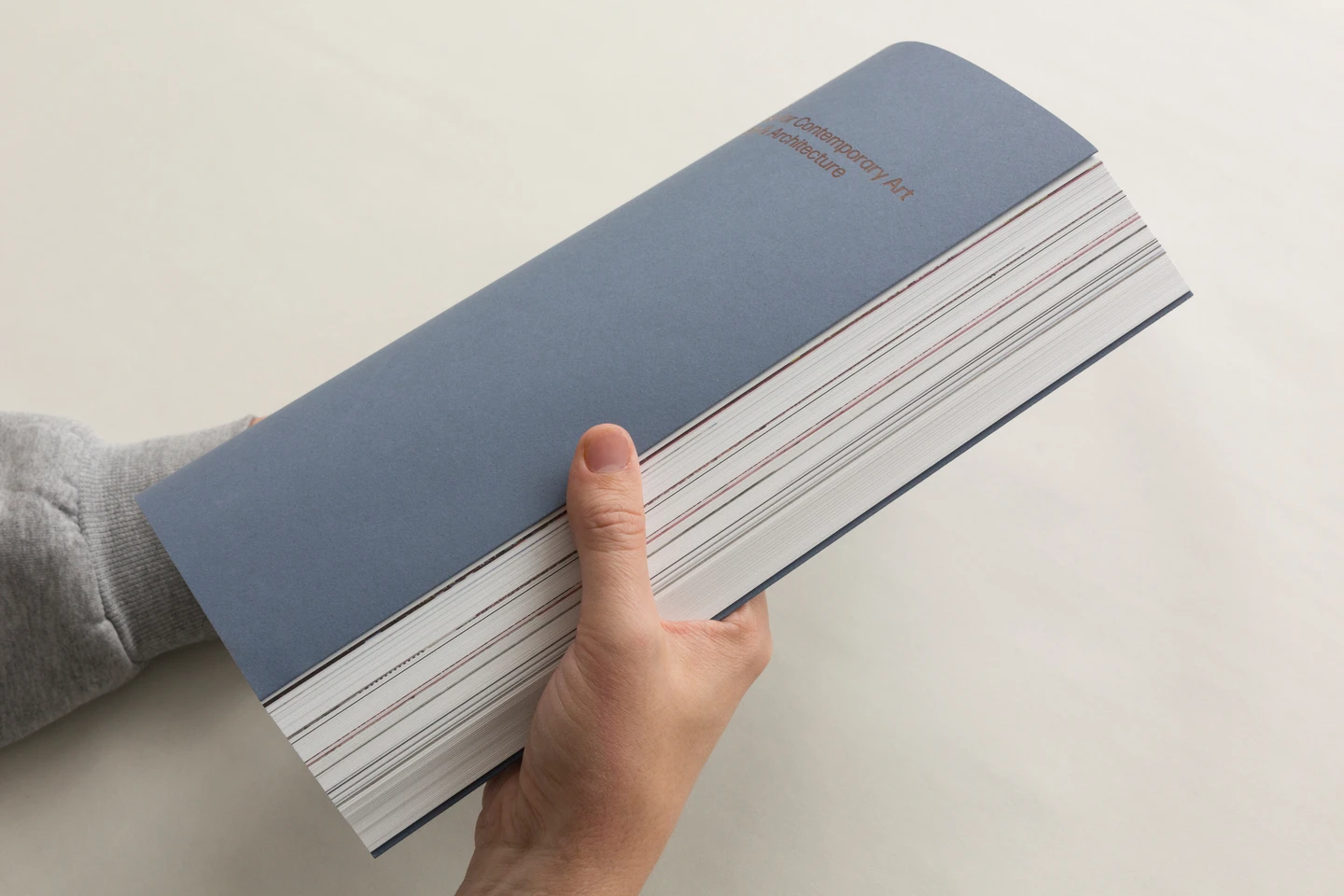
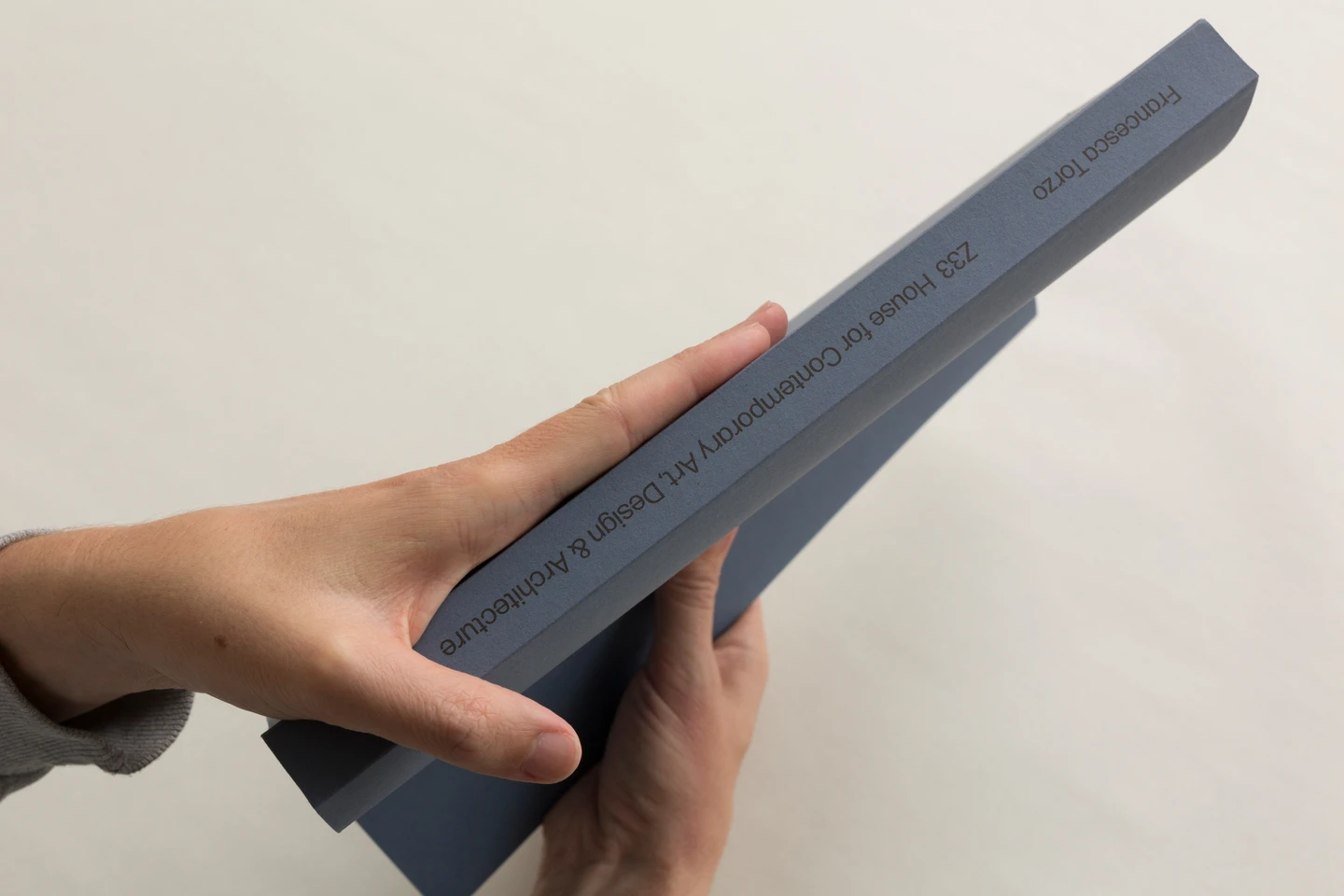
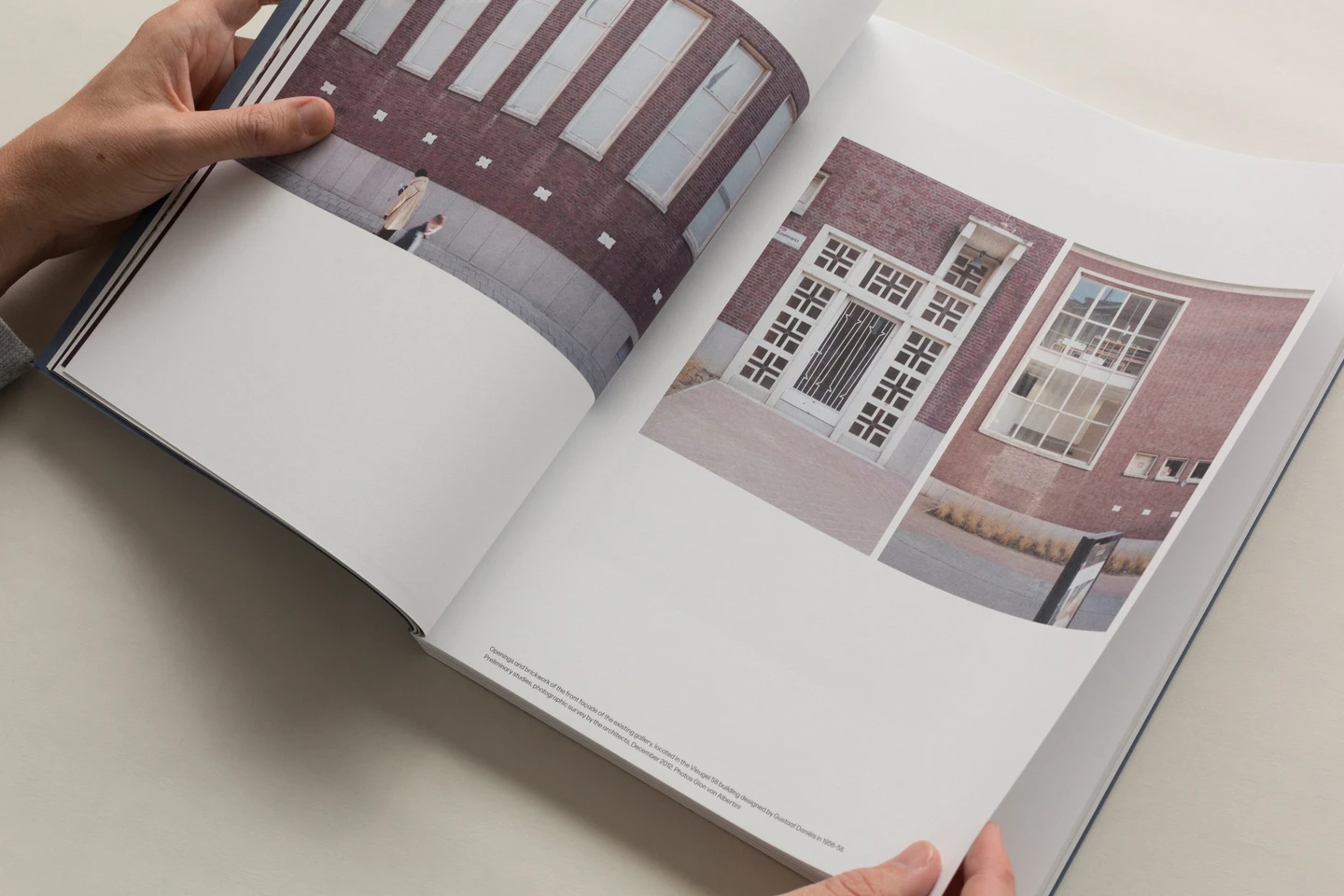
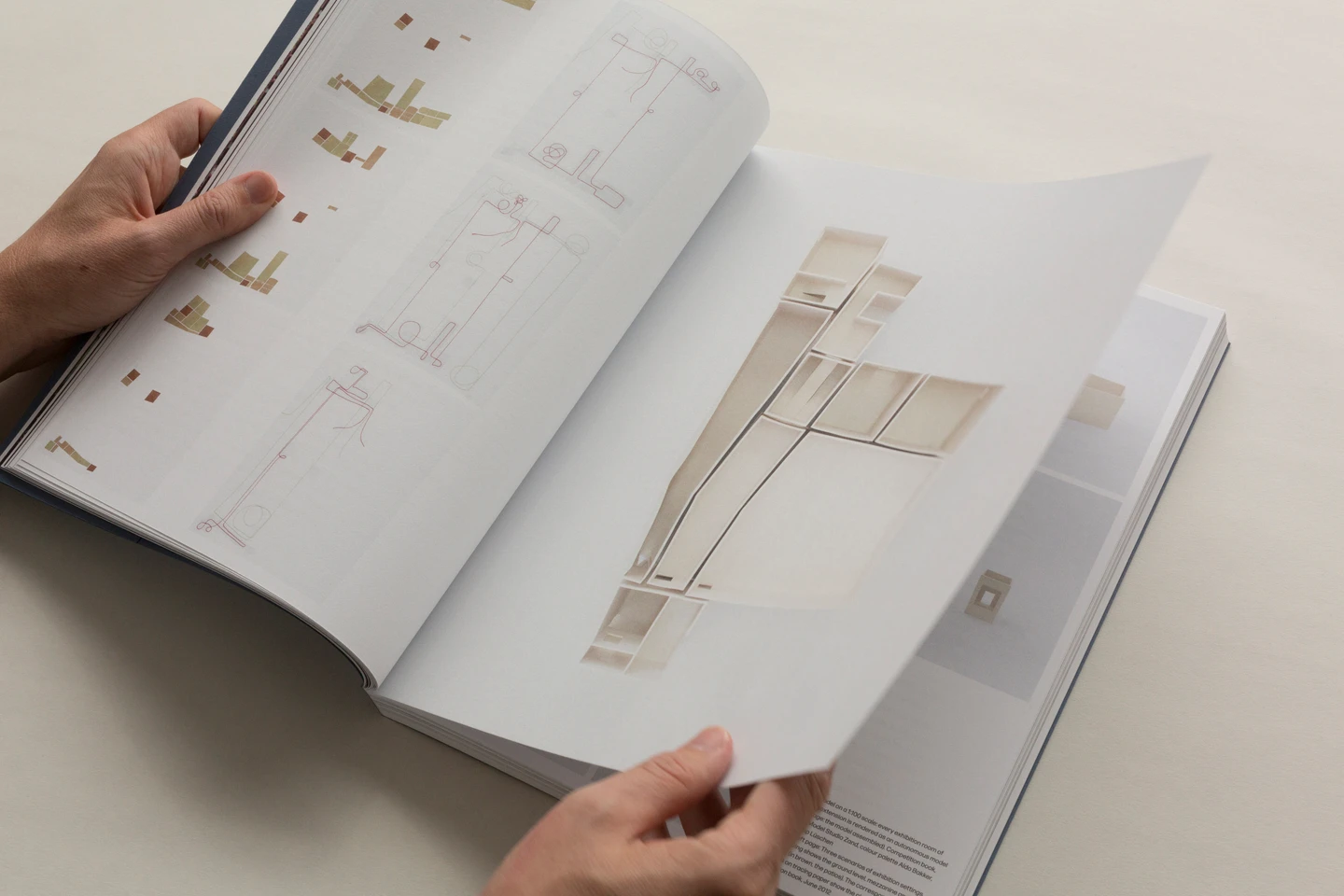
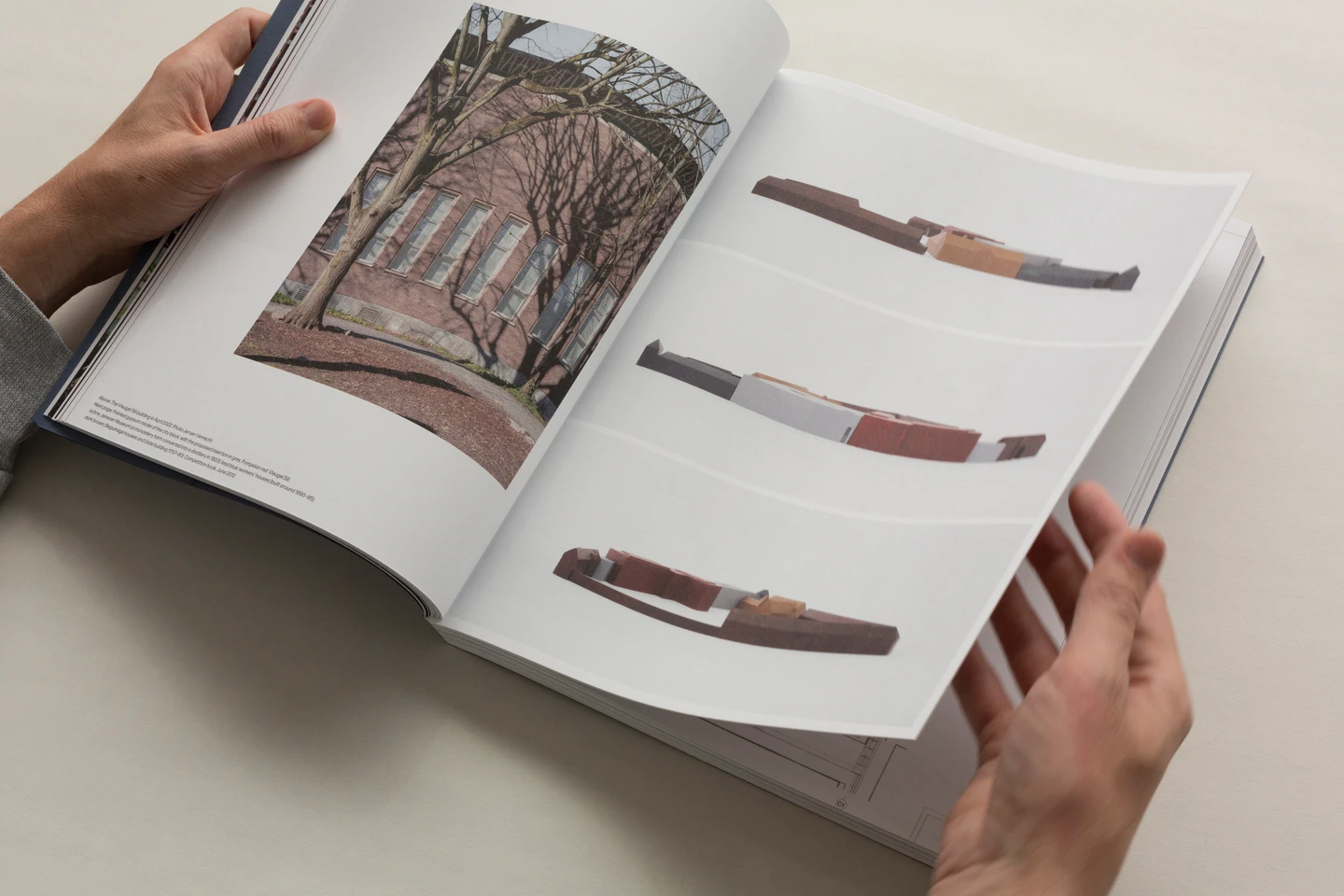
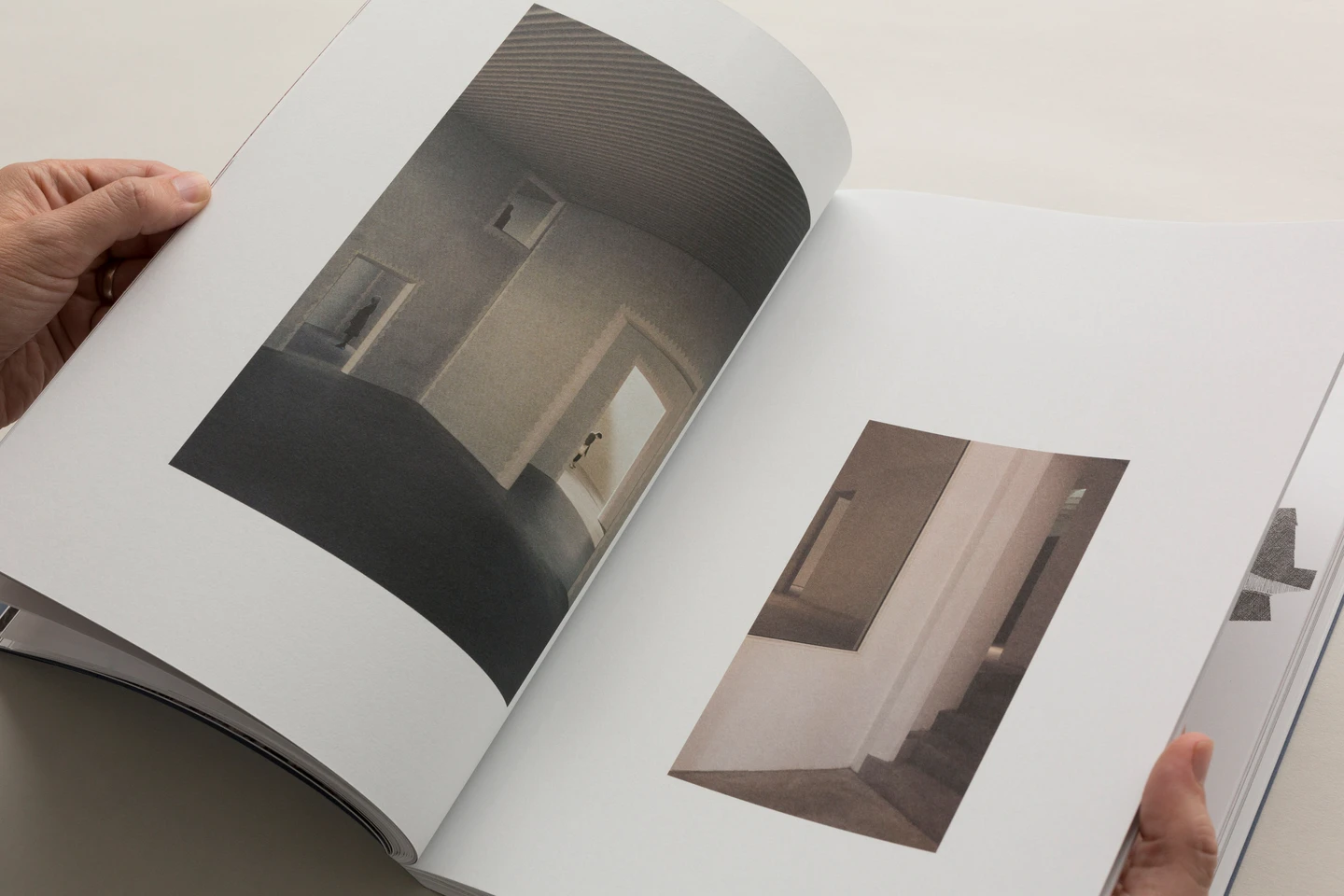
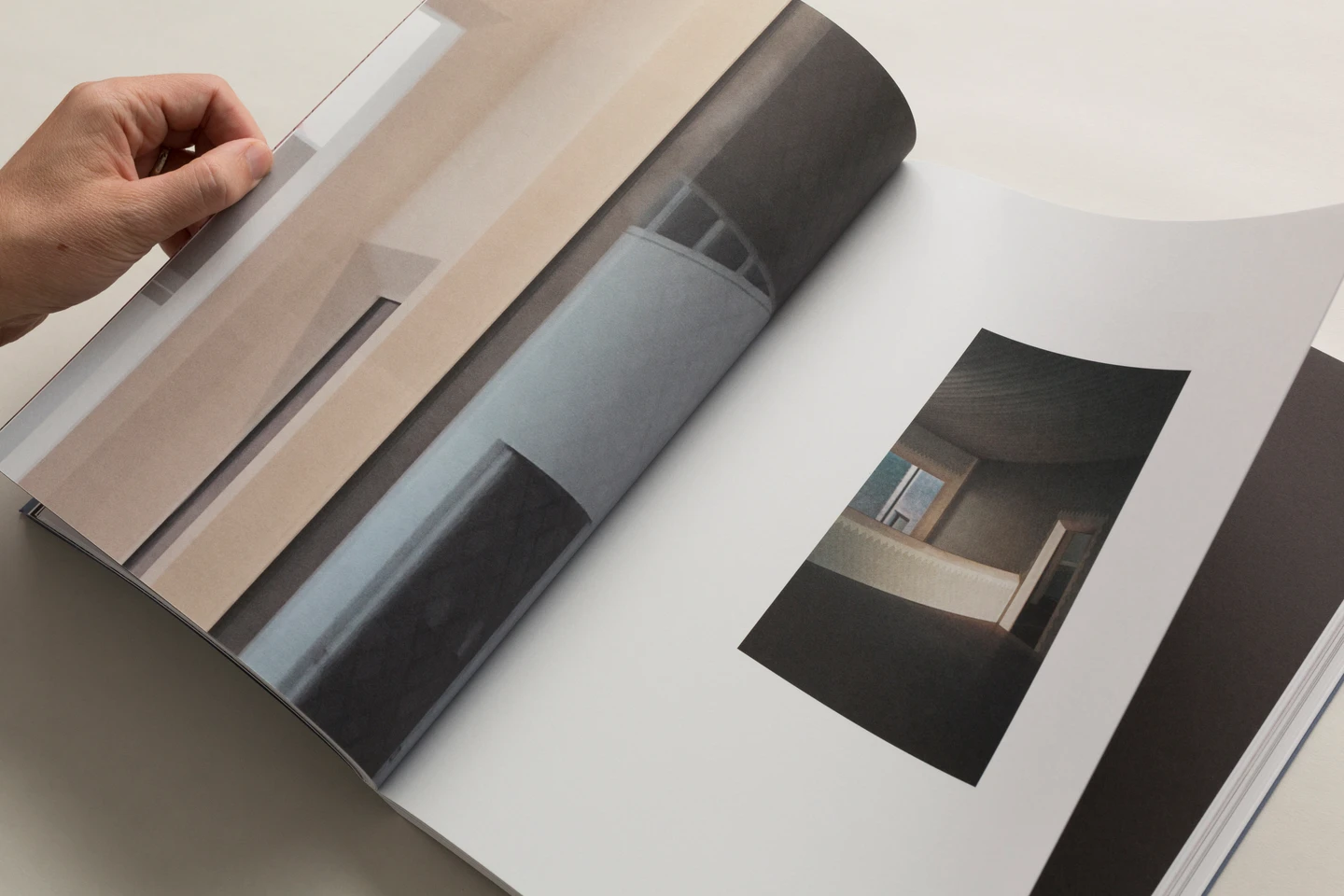
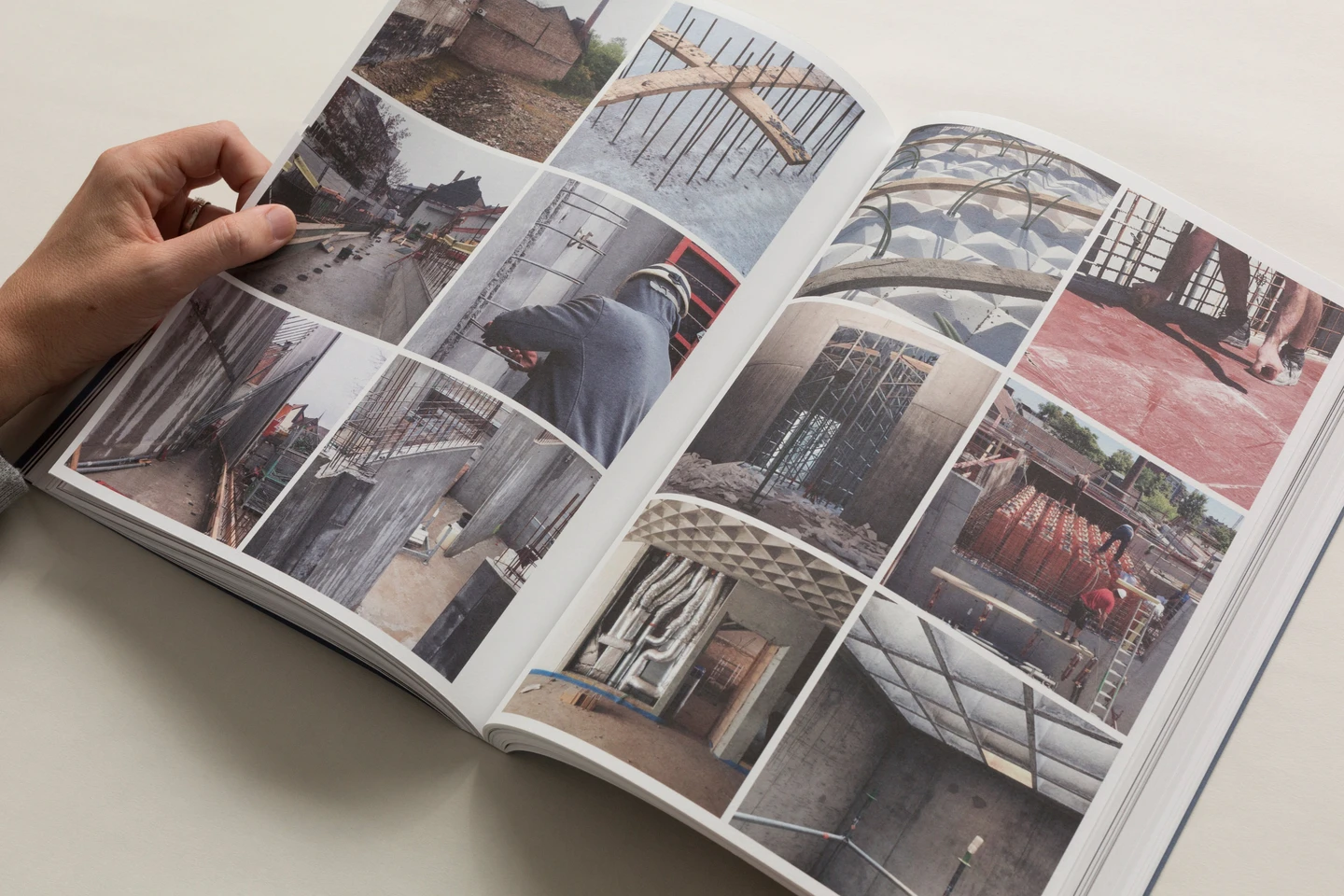
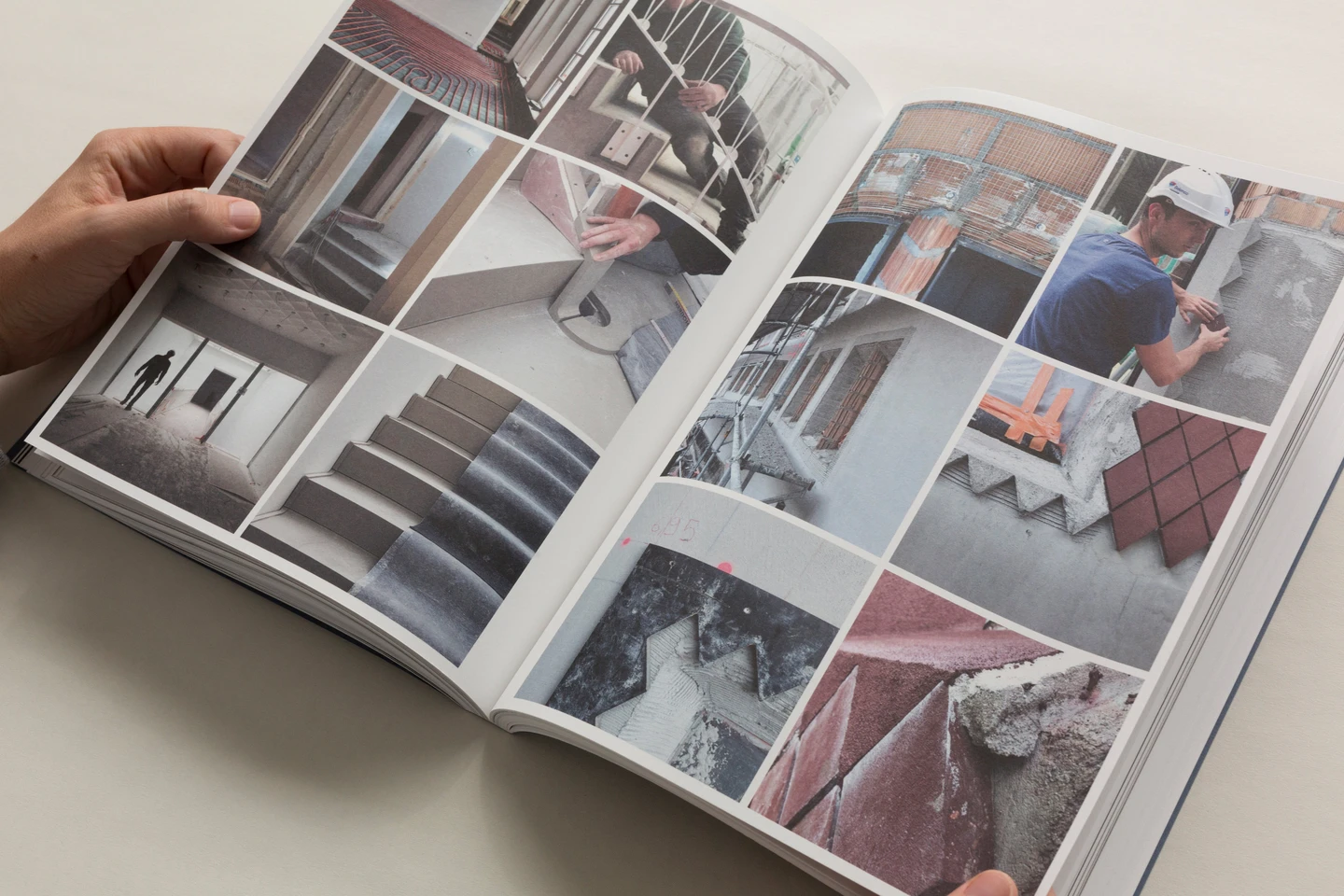
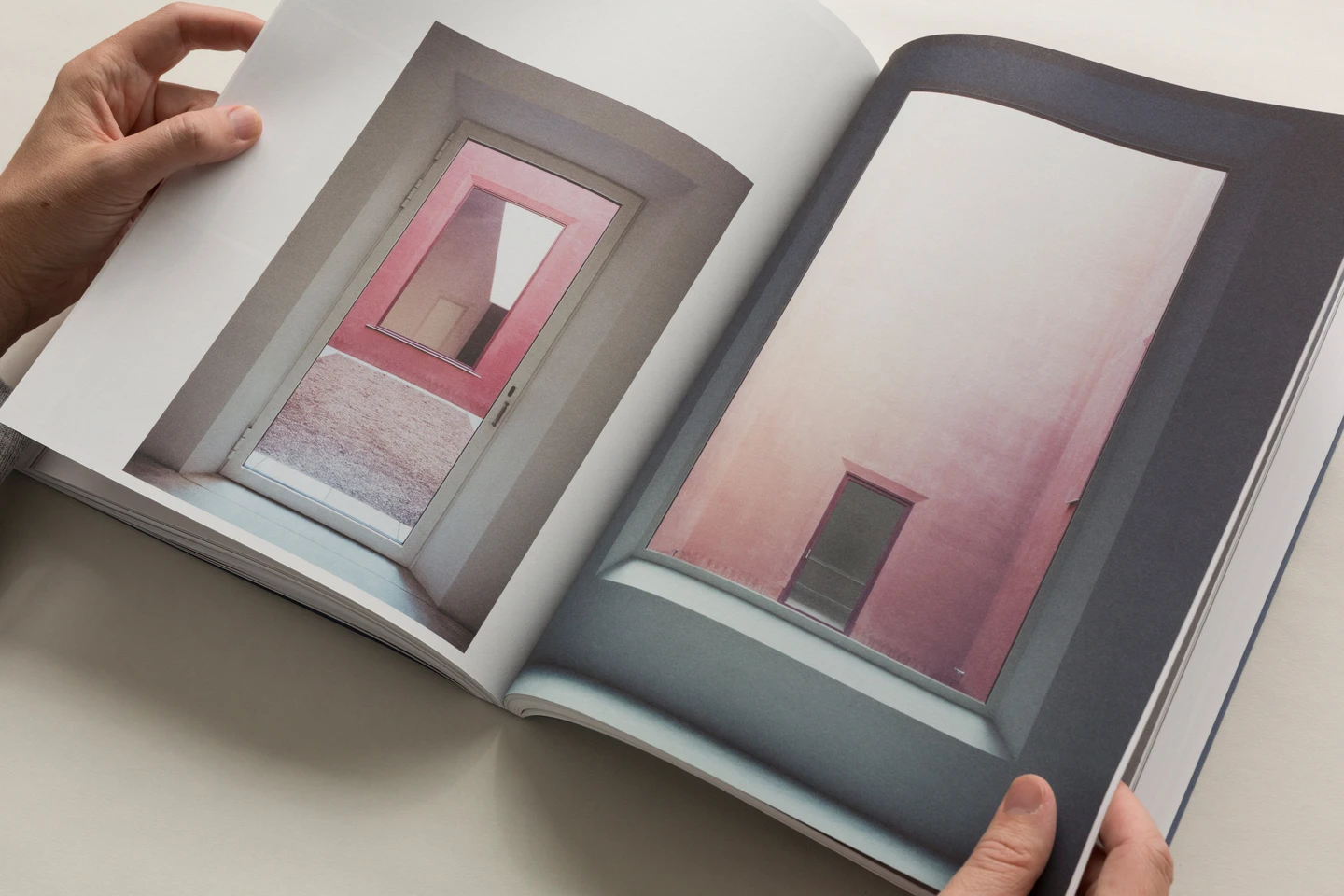
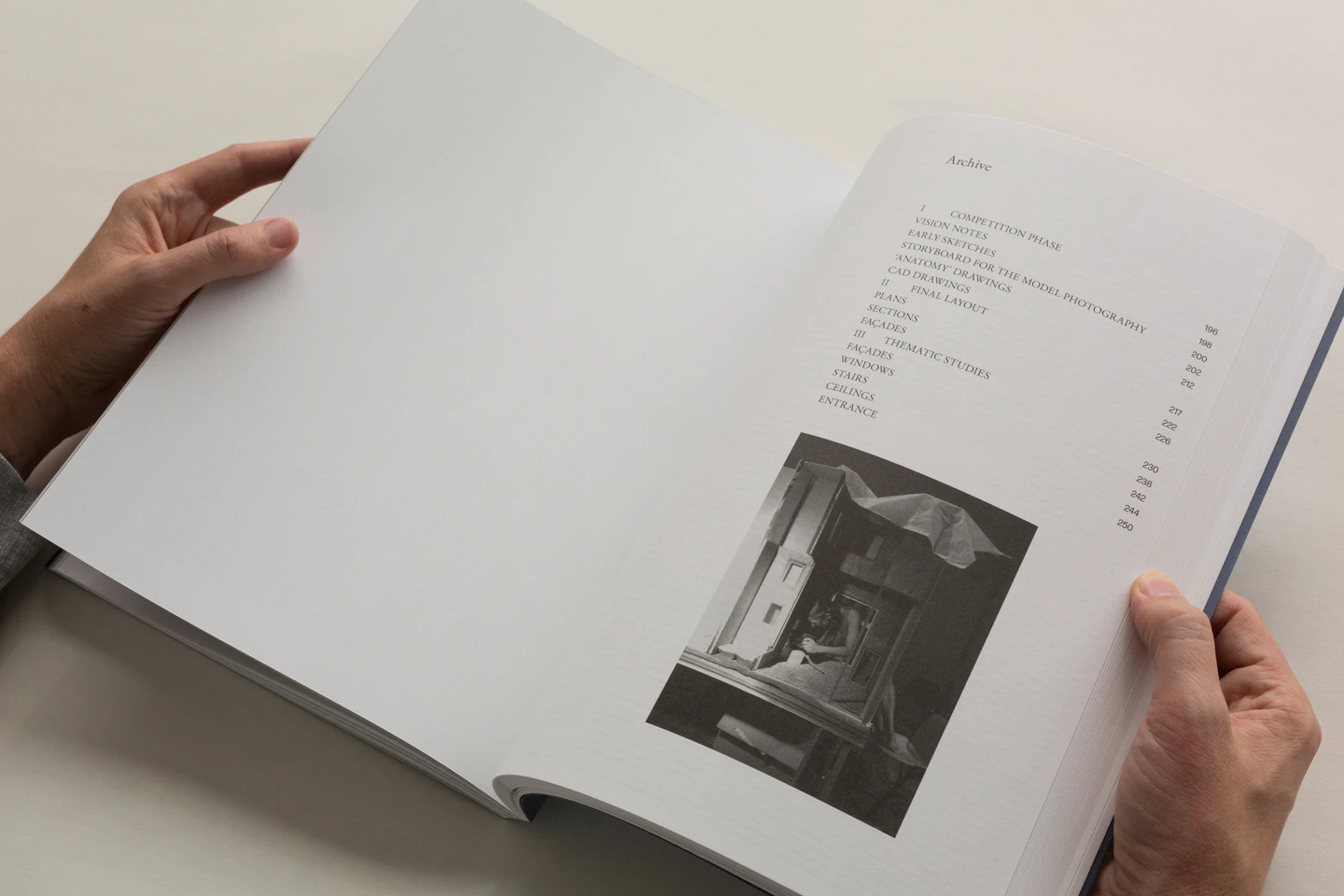
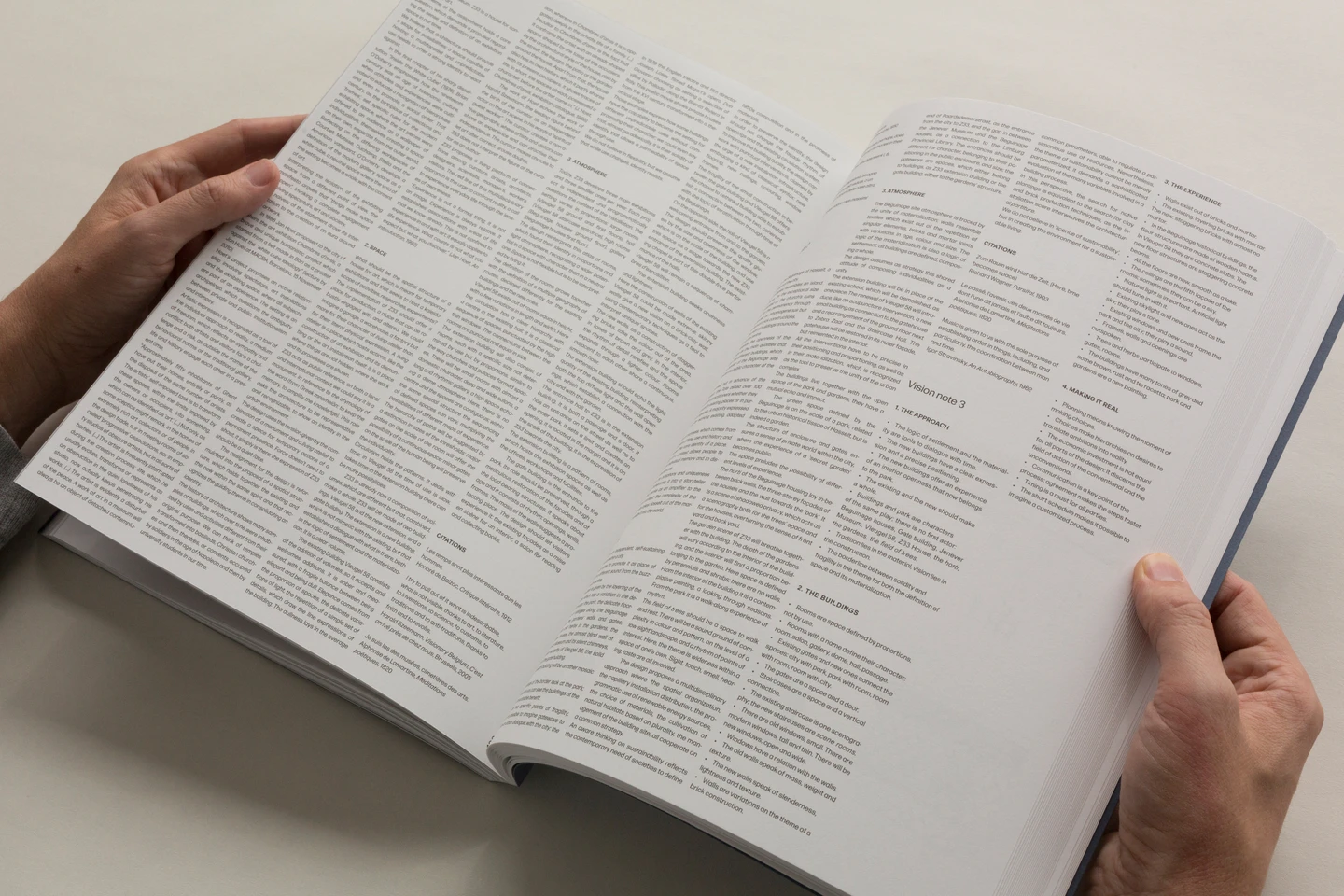
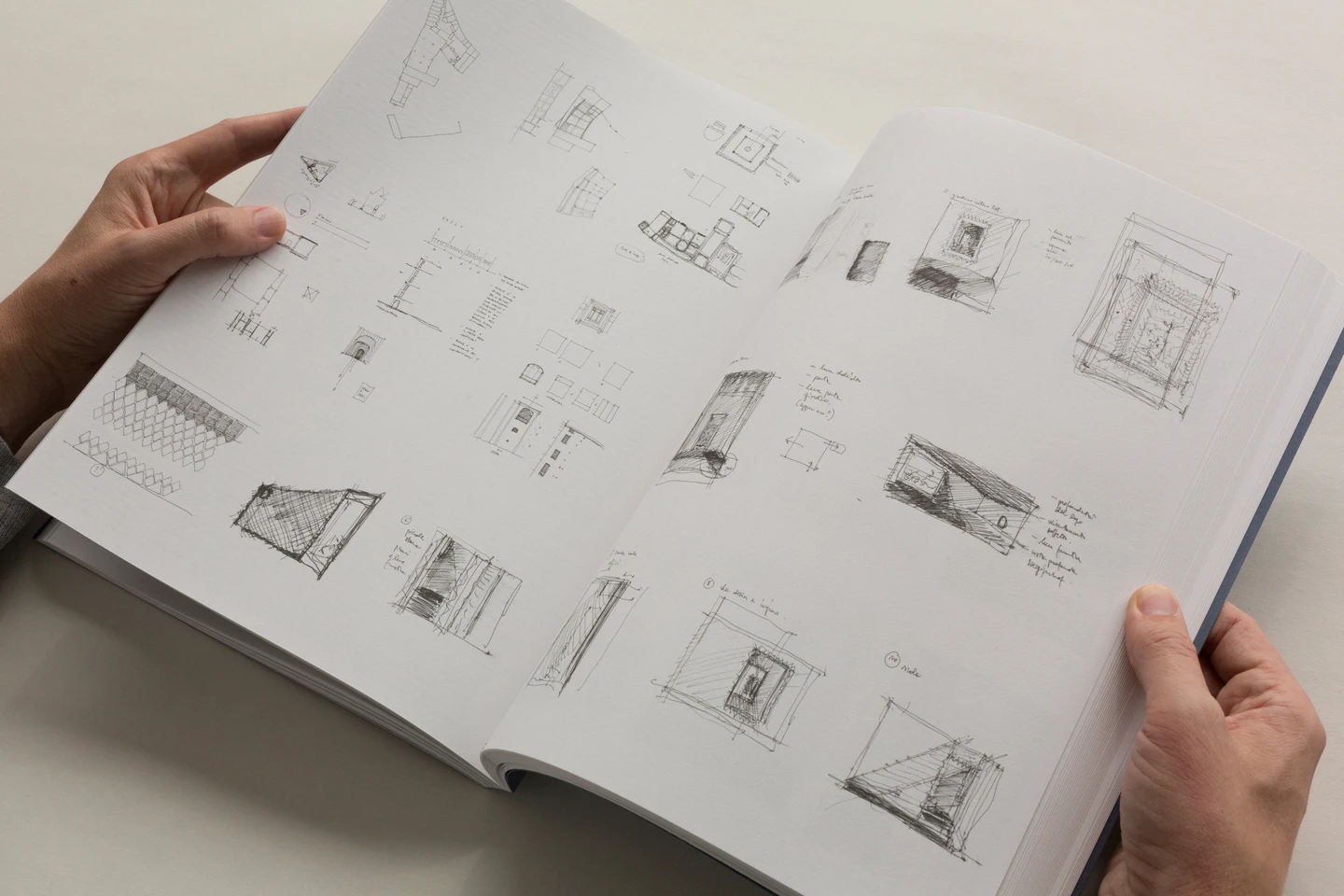
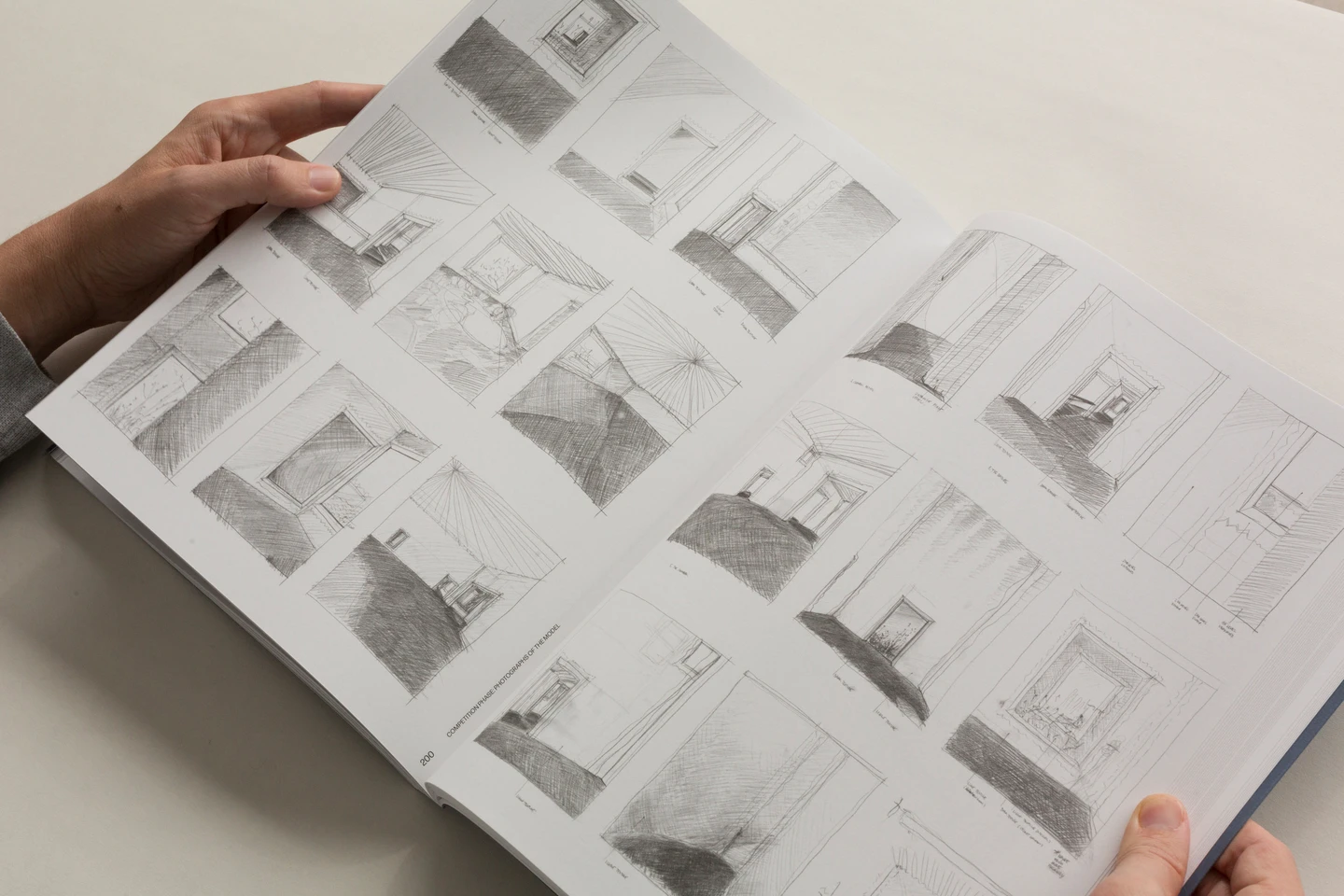
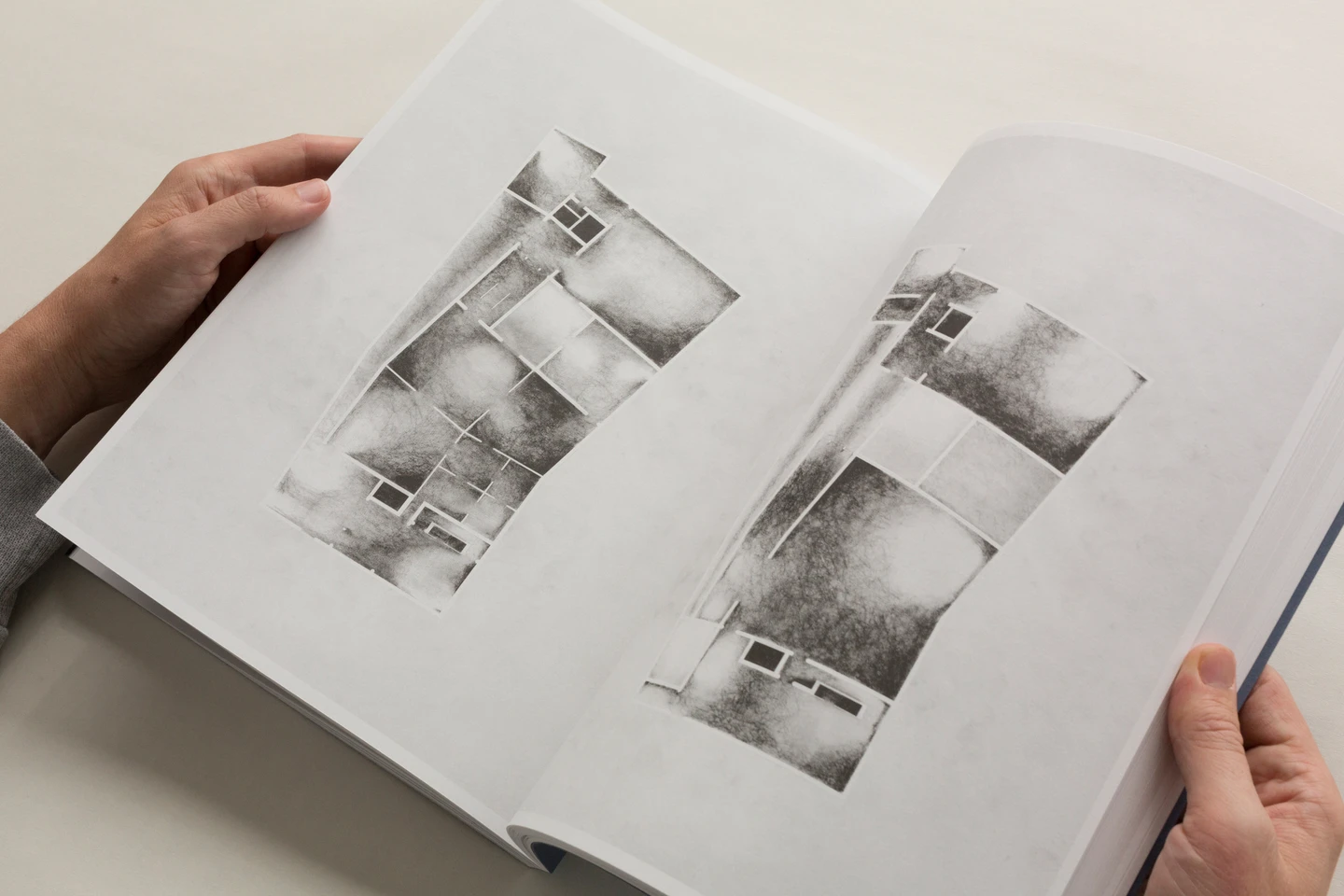
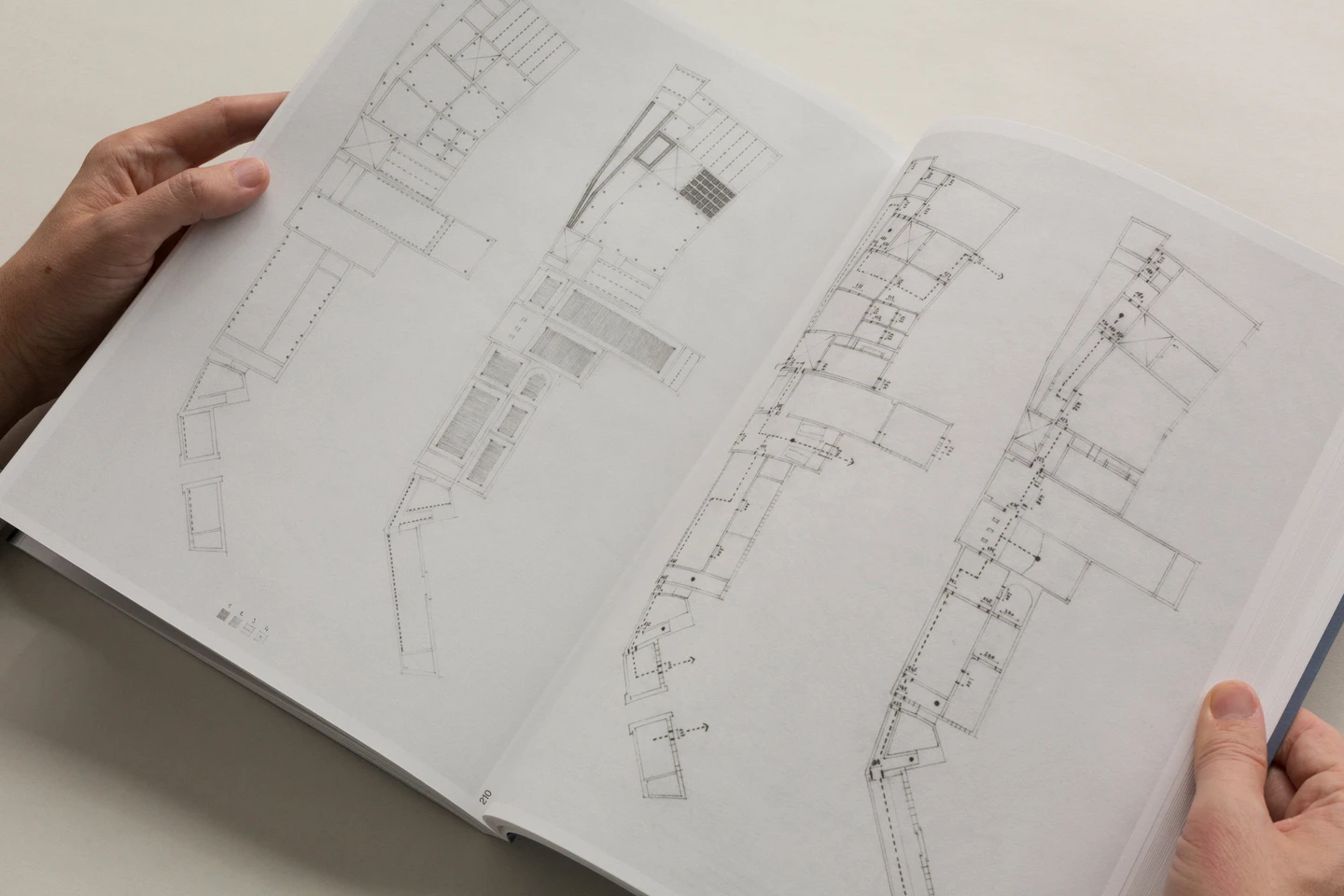
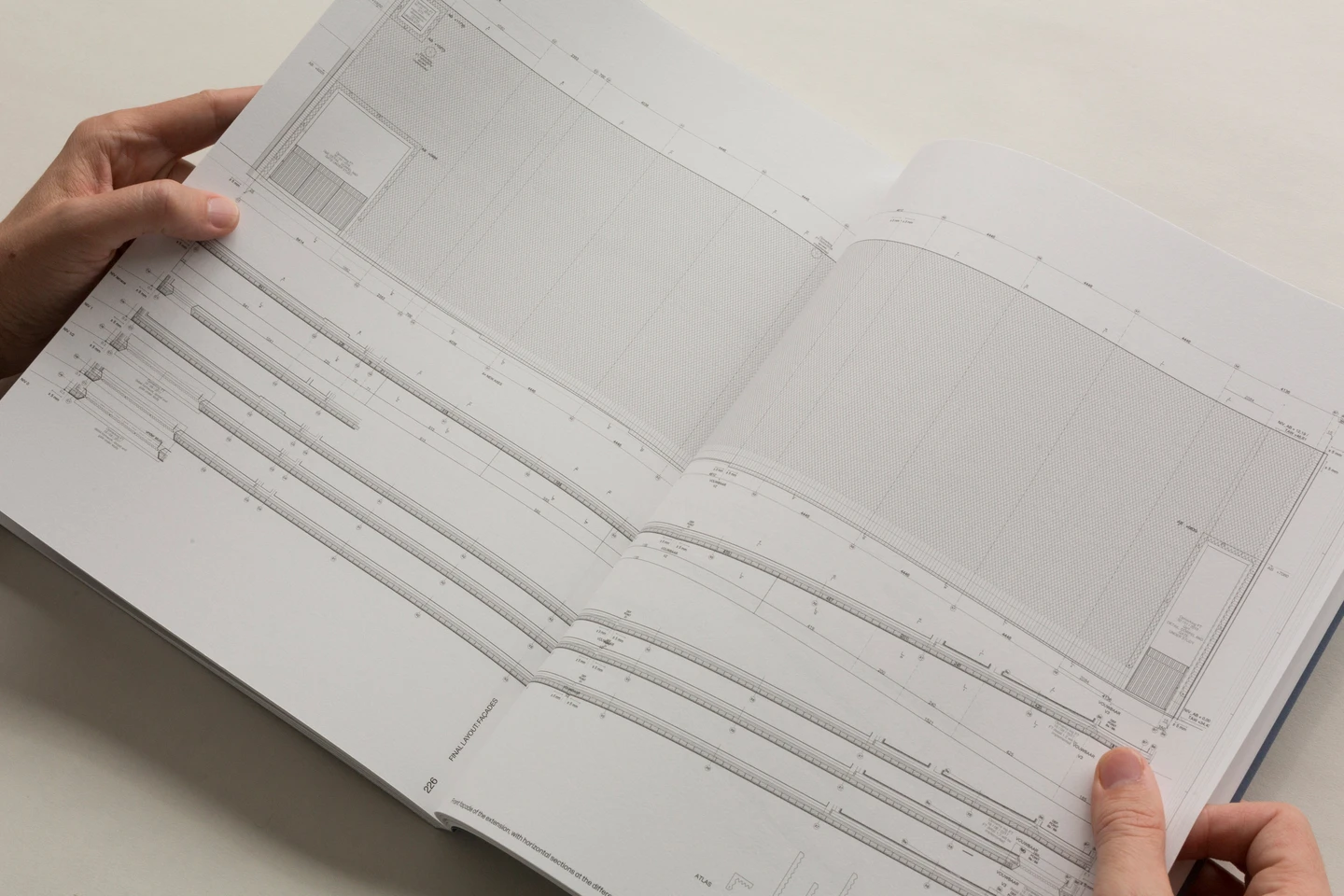
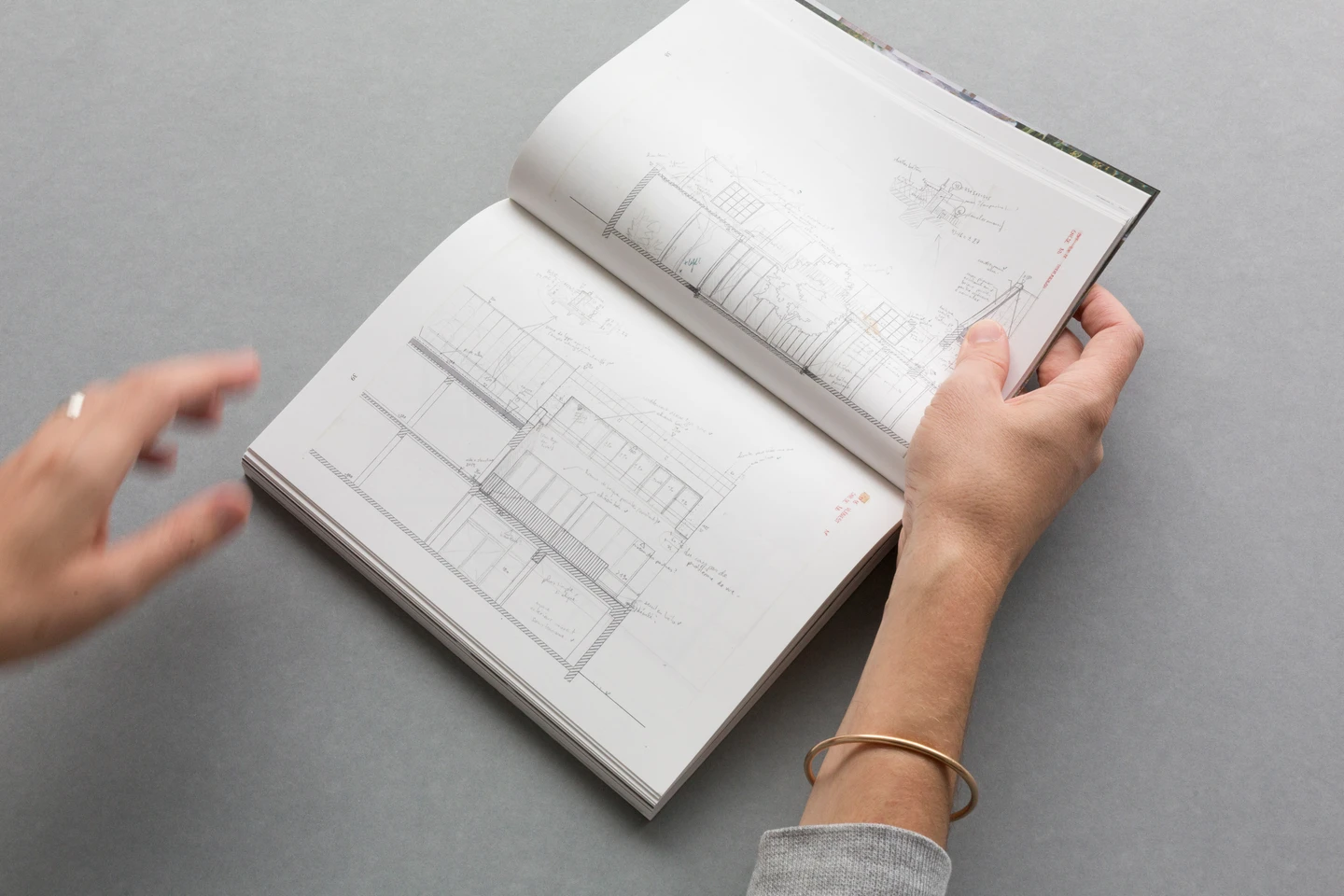
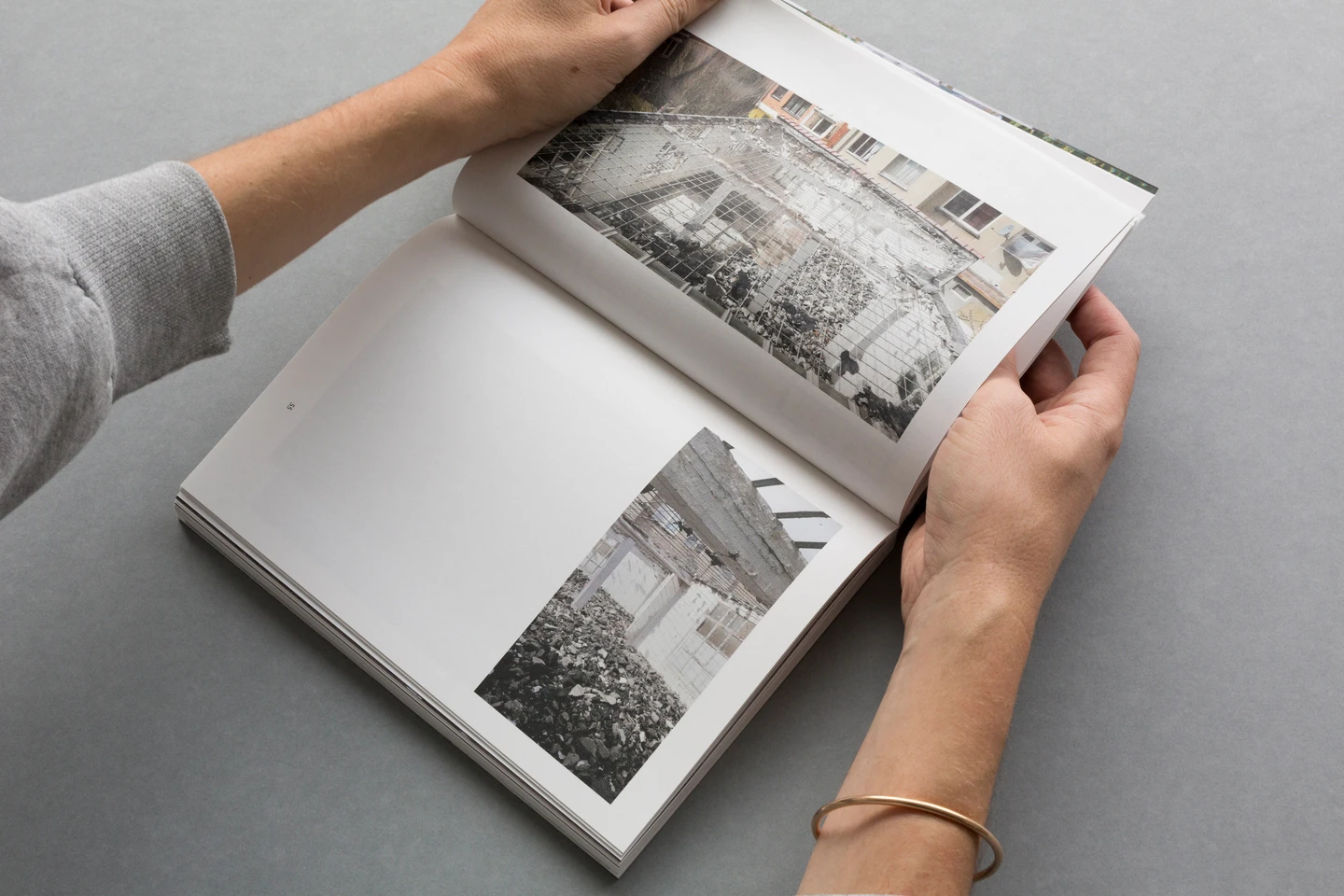
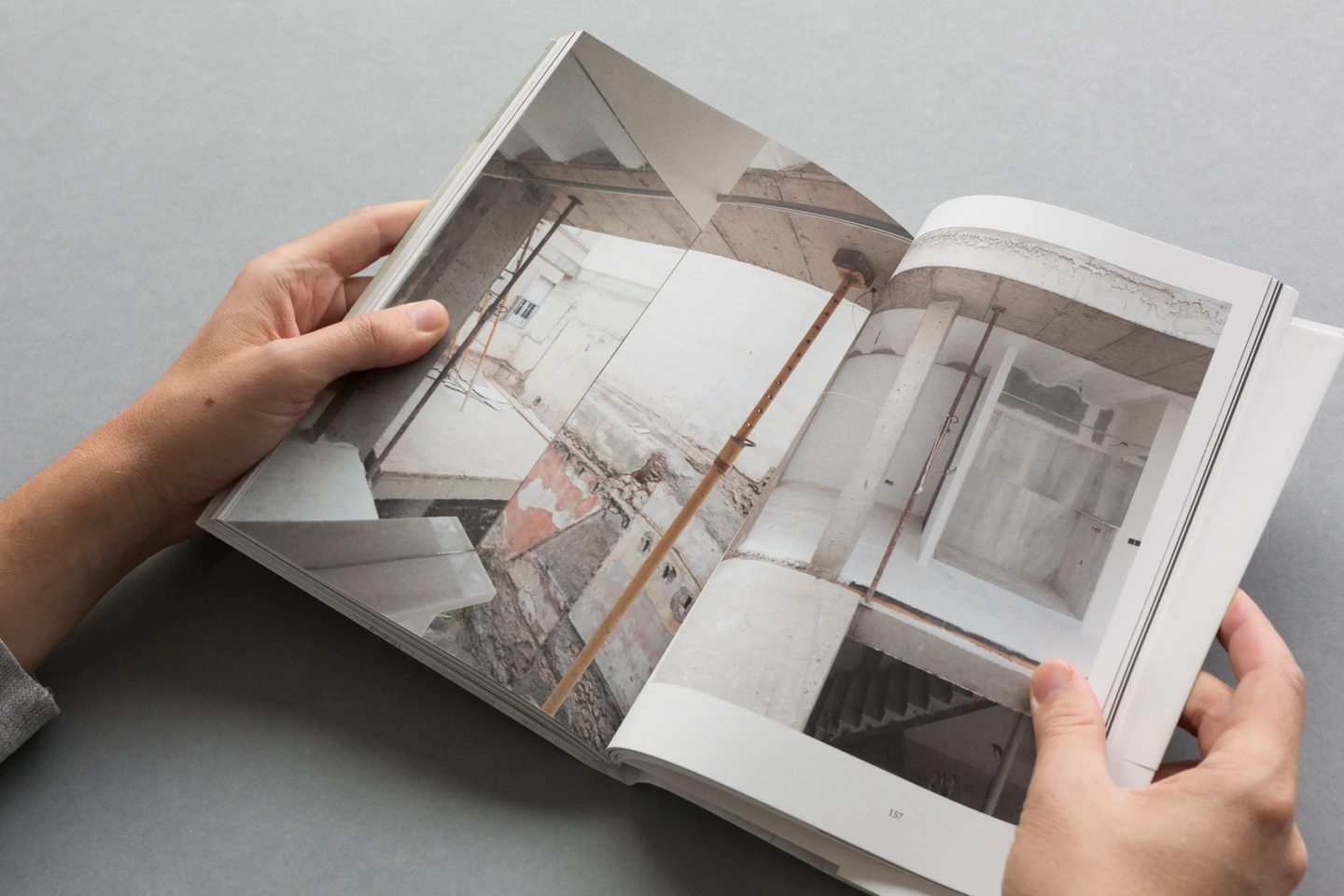
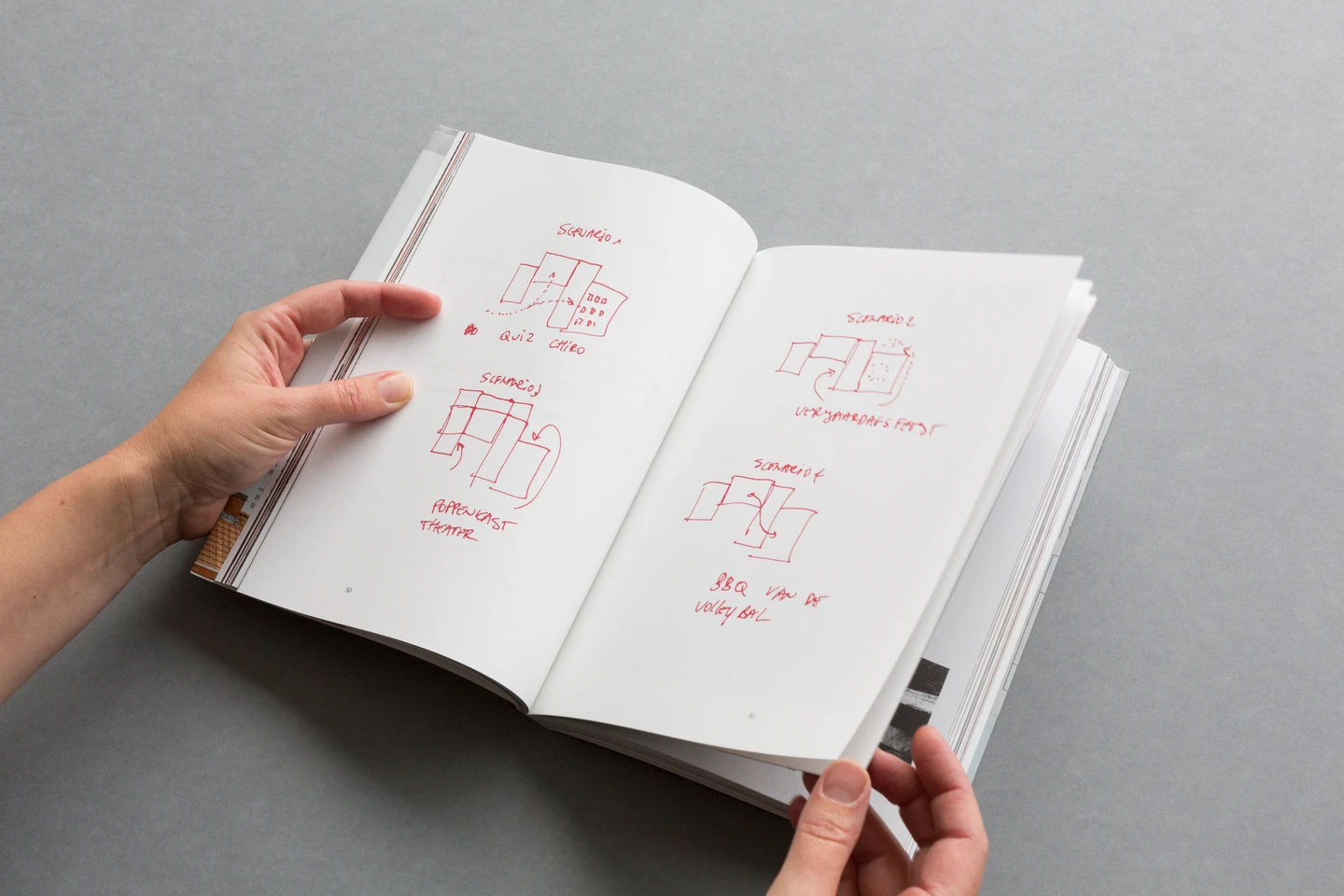
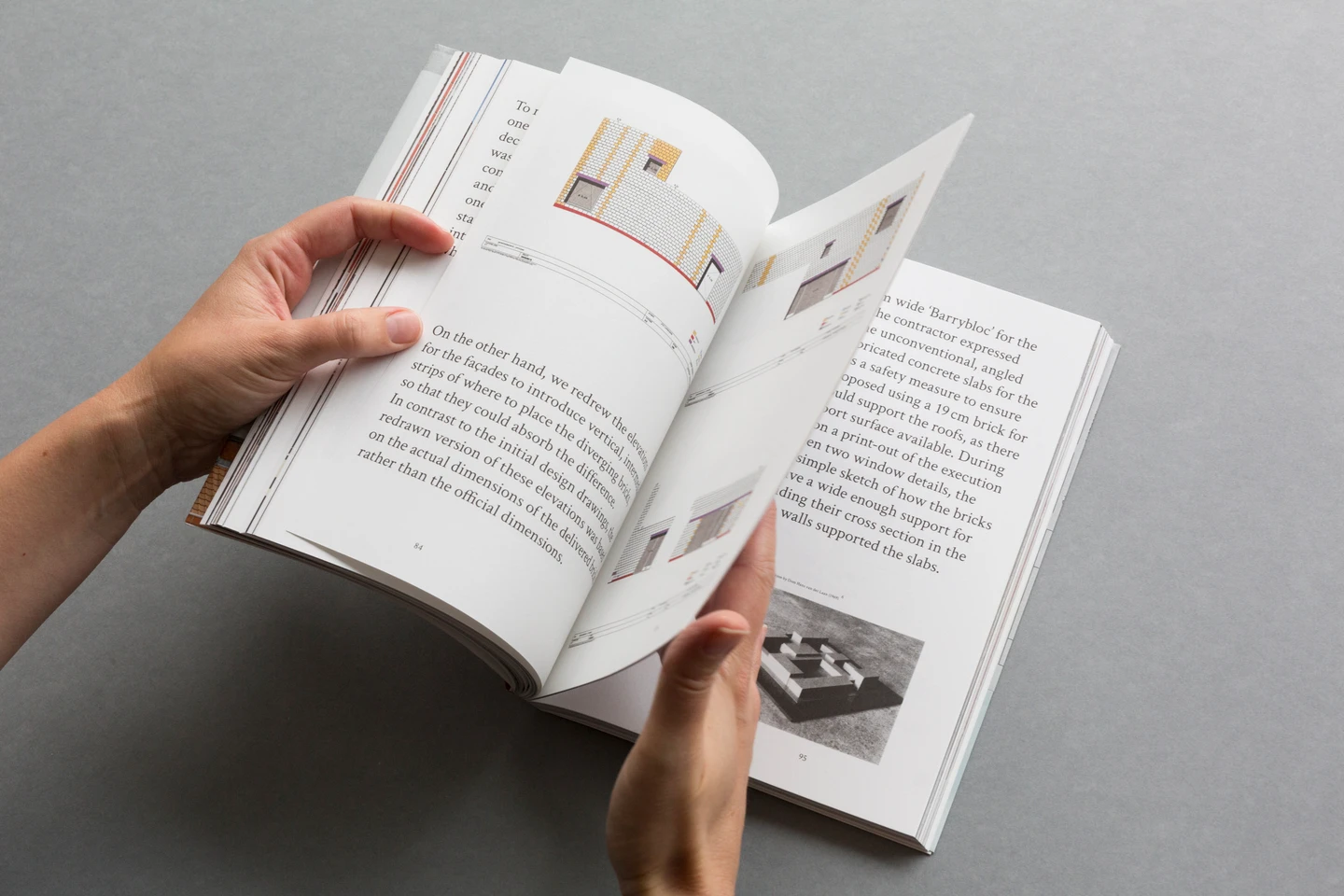
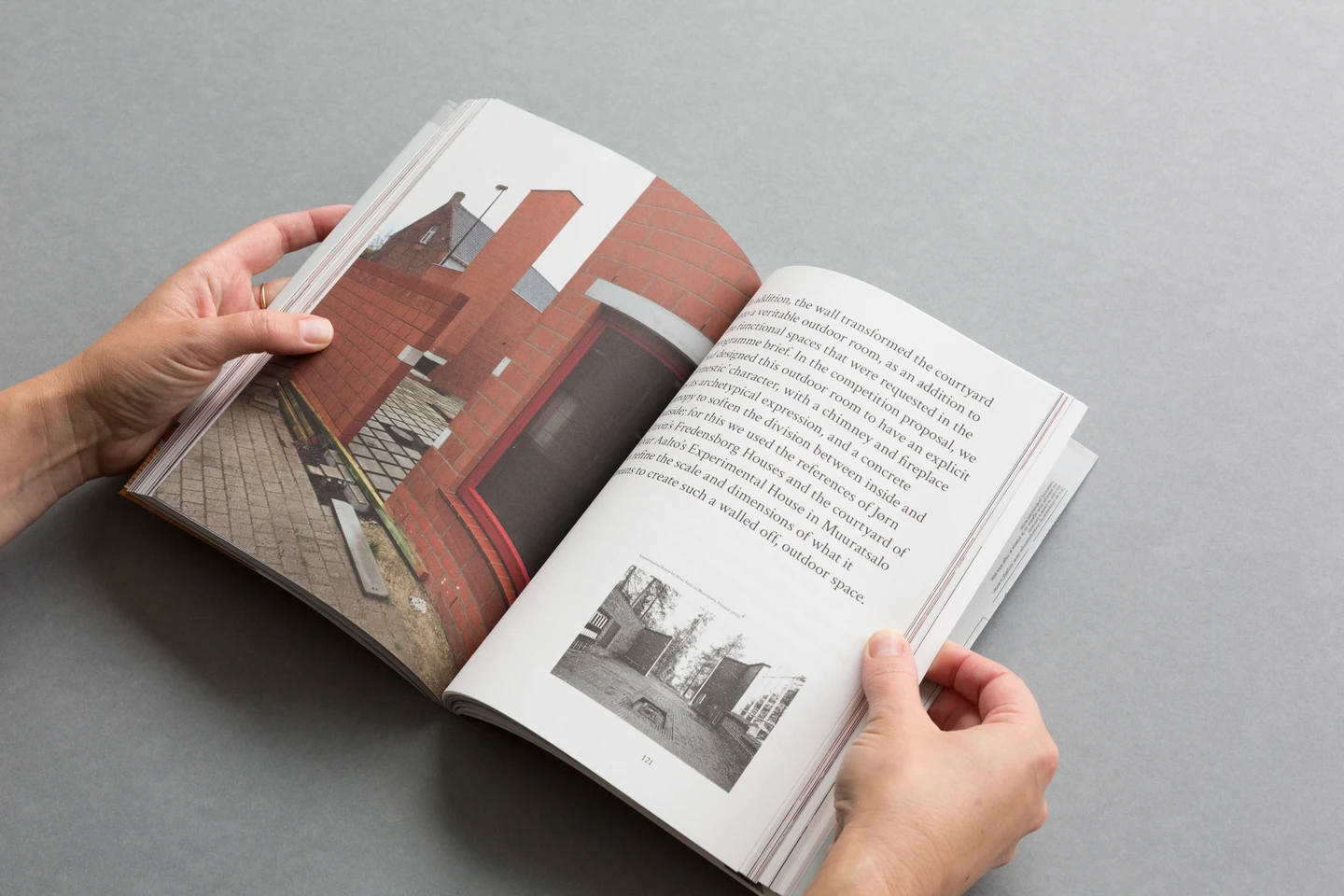
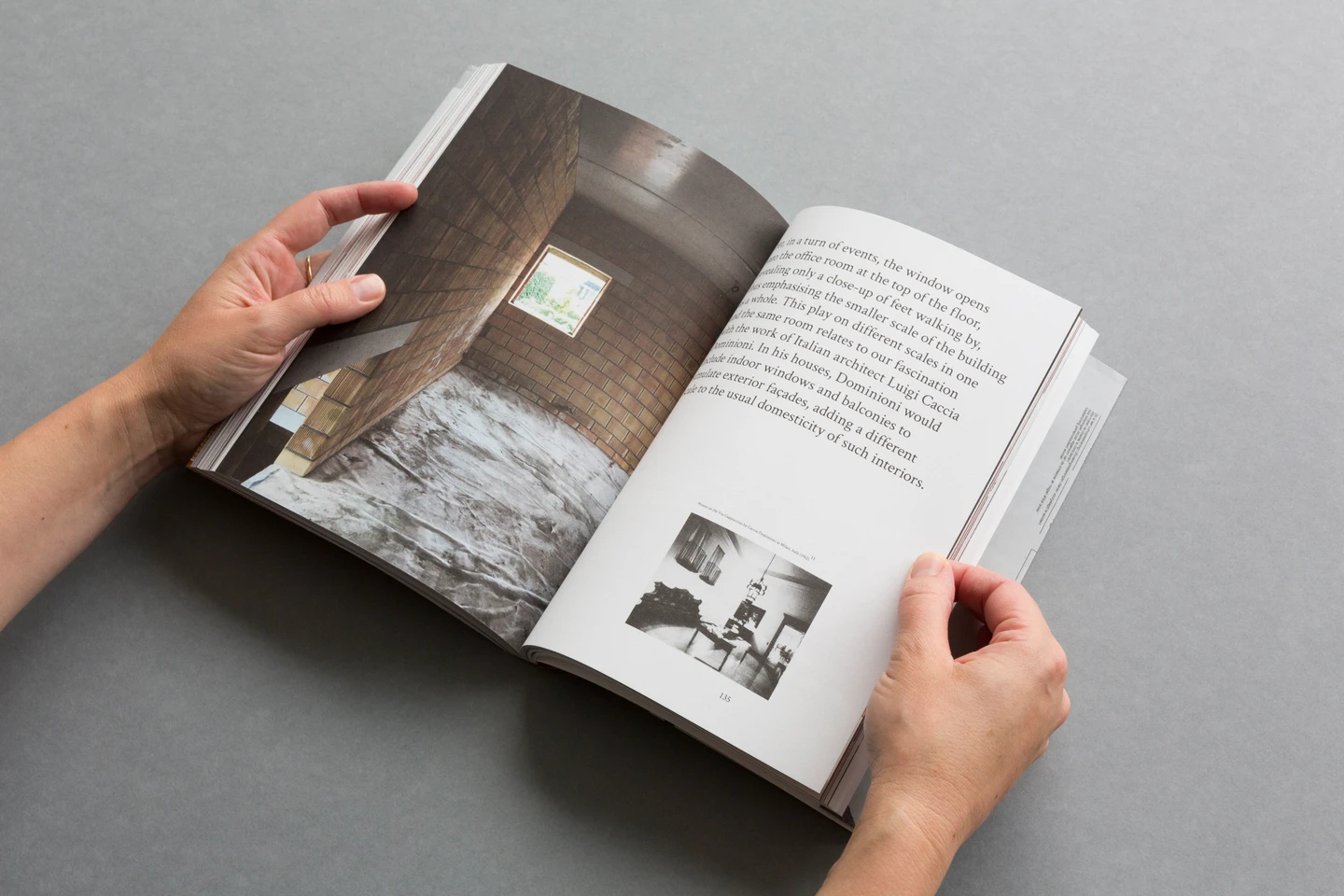
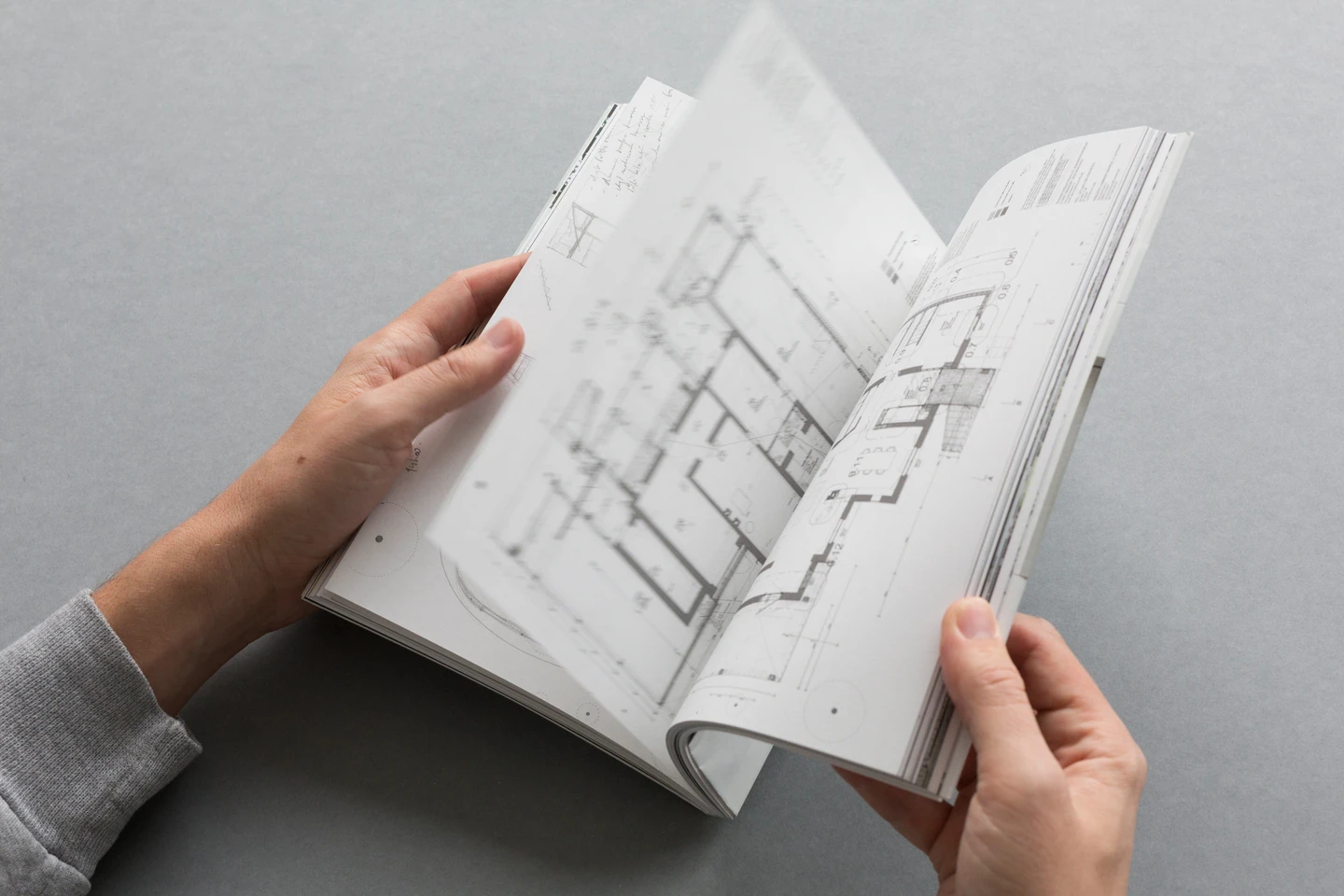
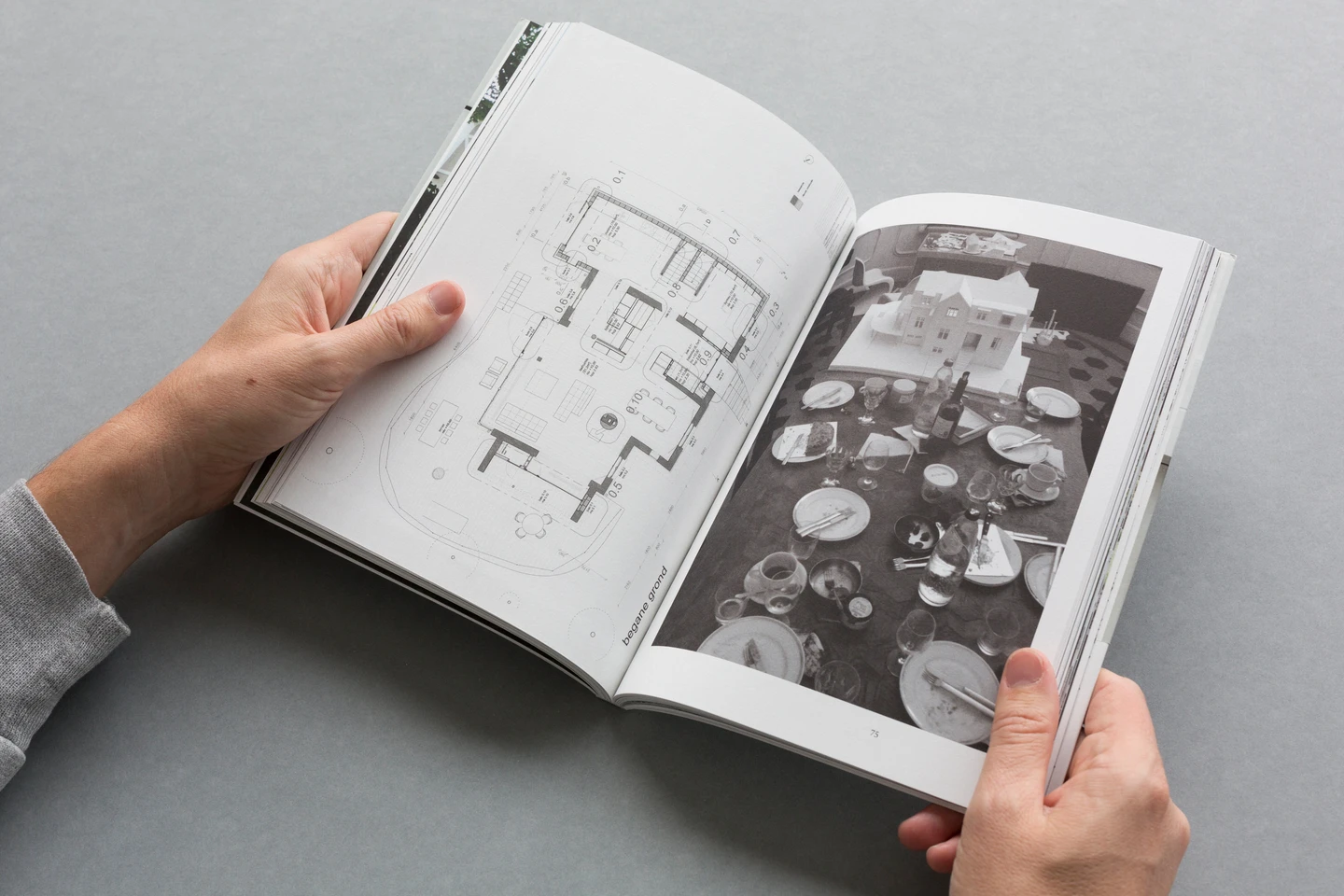
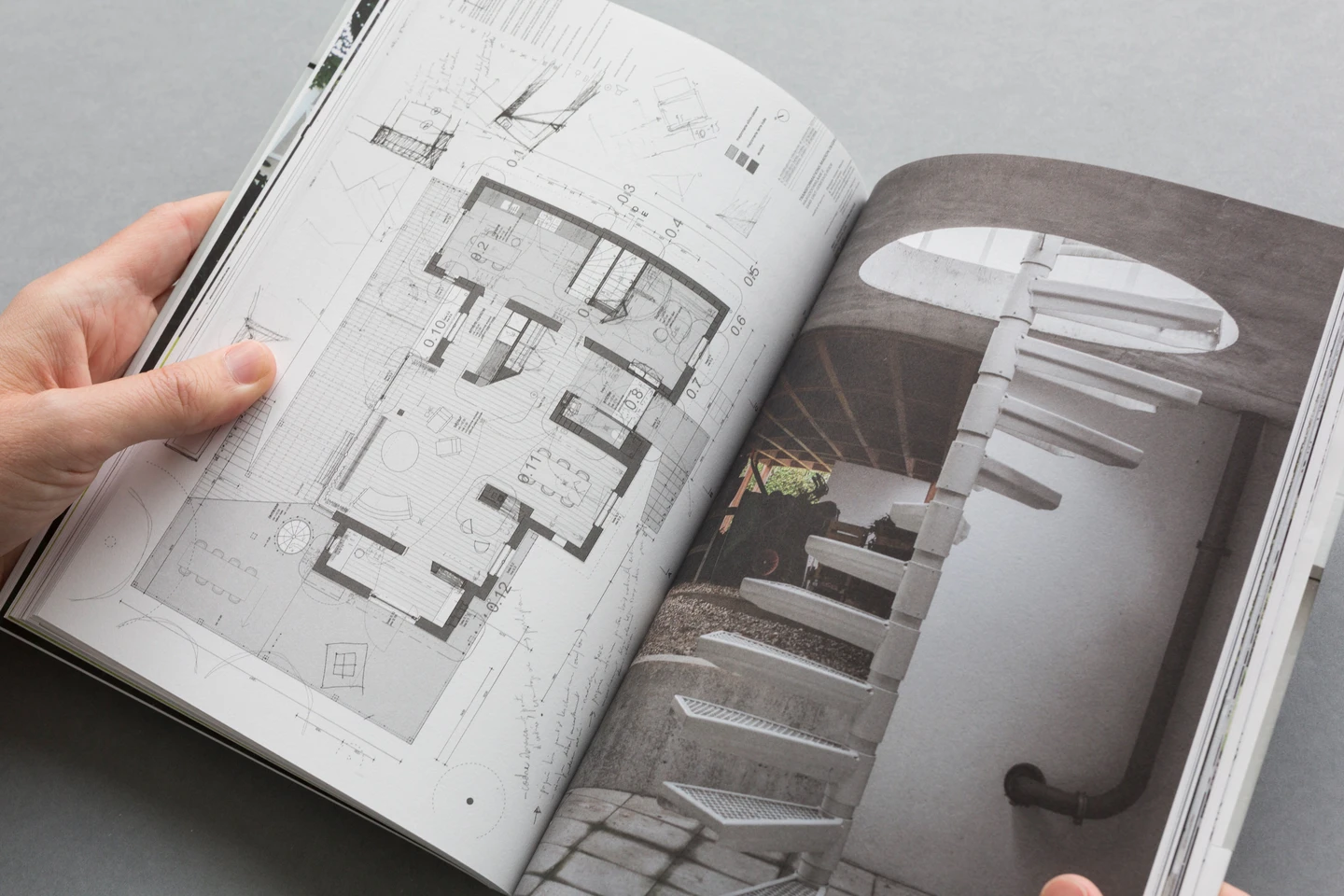
Accattone, ACP, Verlag Der Buchhandlung Walther und Franz König Editorial, Book 2025In 2012, Francesca Torzo won the international competition for the renovation and extension of Z33 House for Contemporary Art Design and Architecture in Hasselt, completed in 2020. The book features an extensive archive of sketches, models, site photographs, execution drawings, photographic reports, and vision statements by the architect, woven together with a critical essay by Christoph Grafe. It is published in conjunction with Building Correctly, a lecture by Francesca Torzo which offers a privileged insight in her conceptual world of references.
-
-
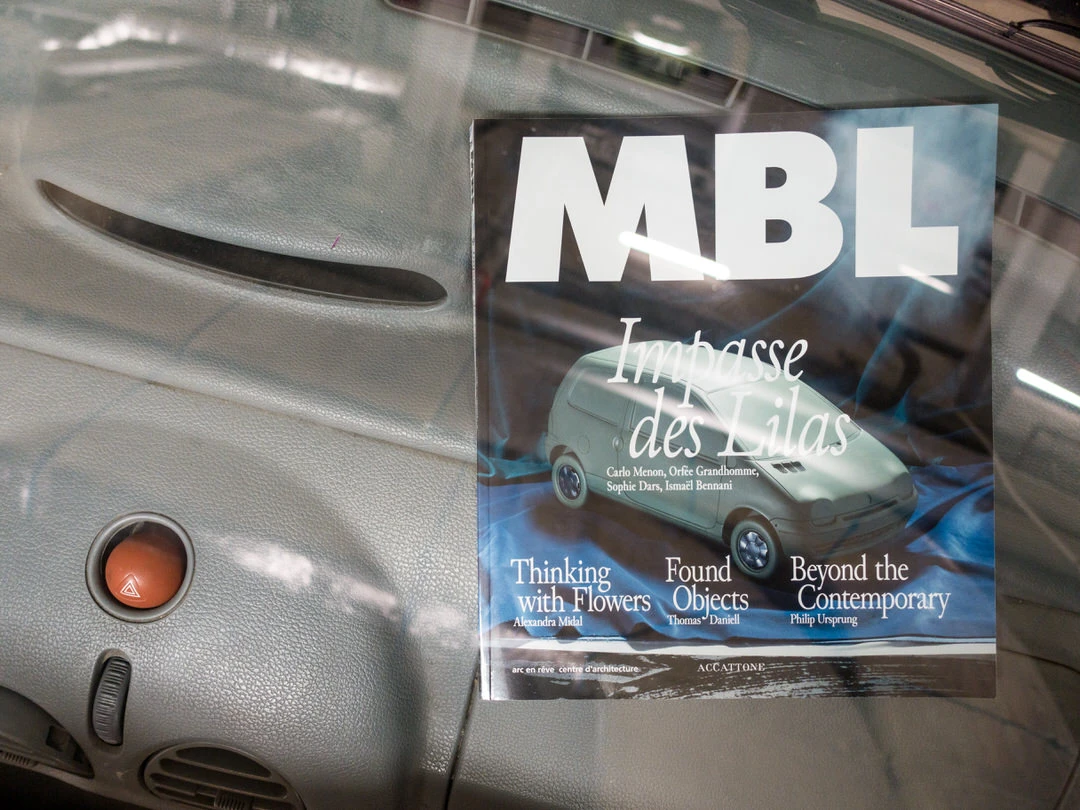
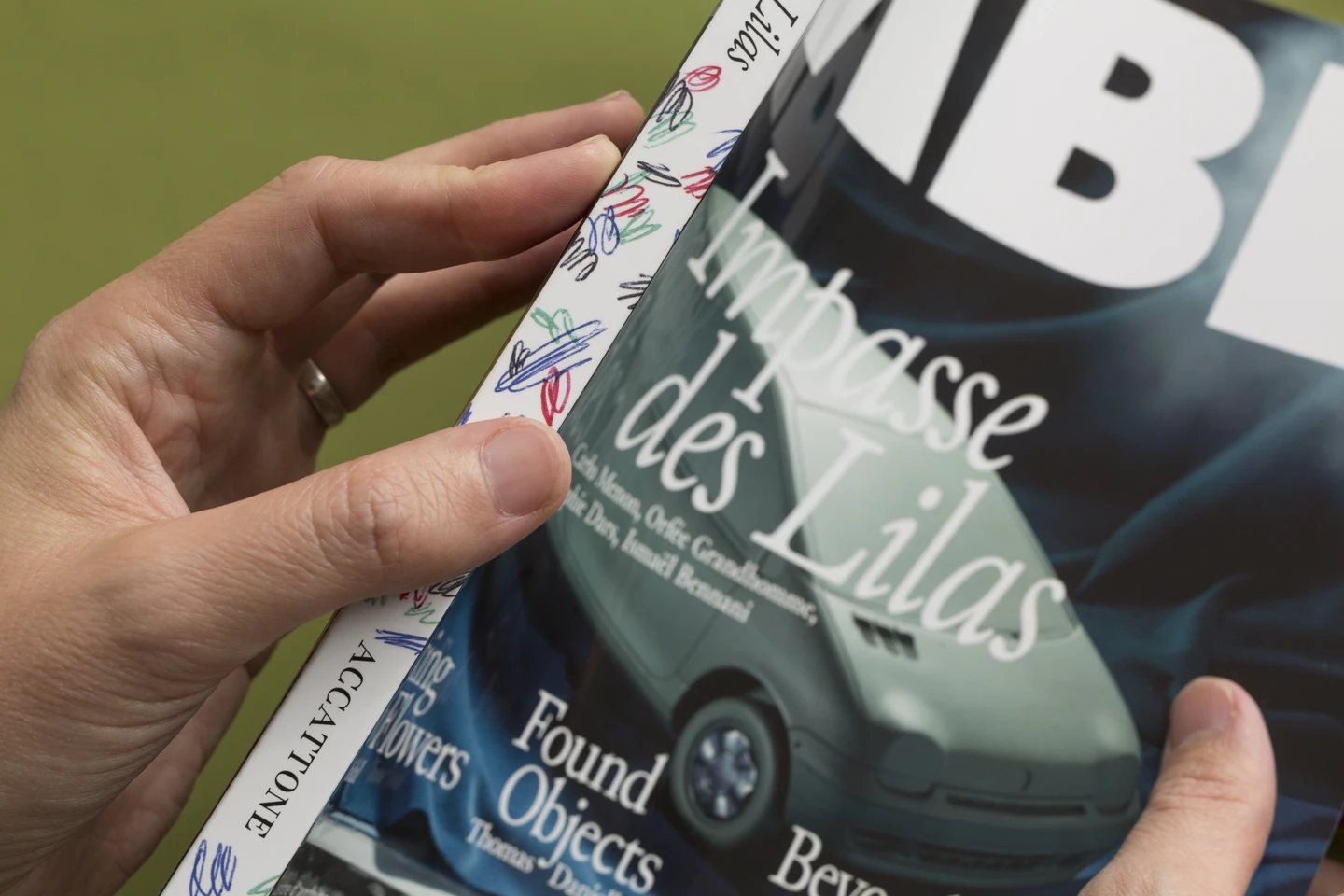
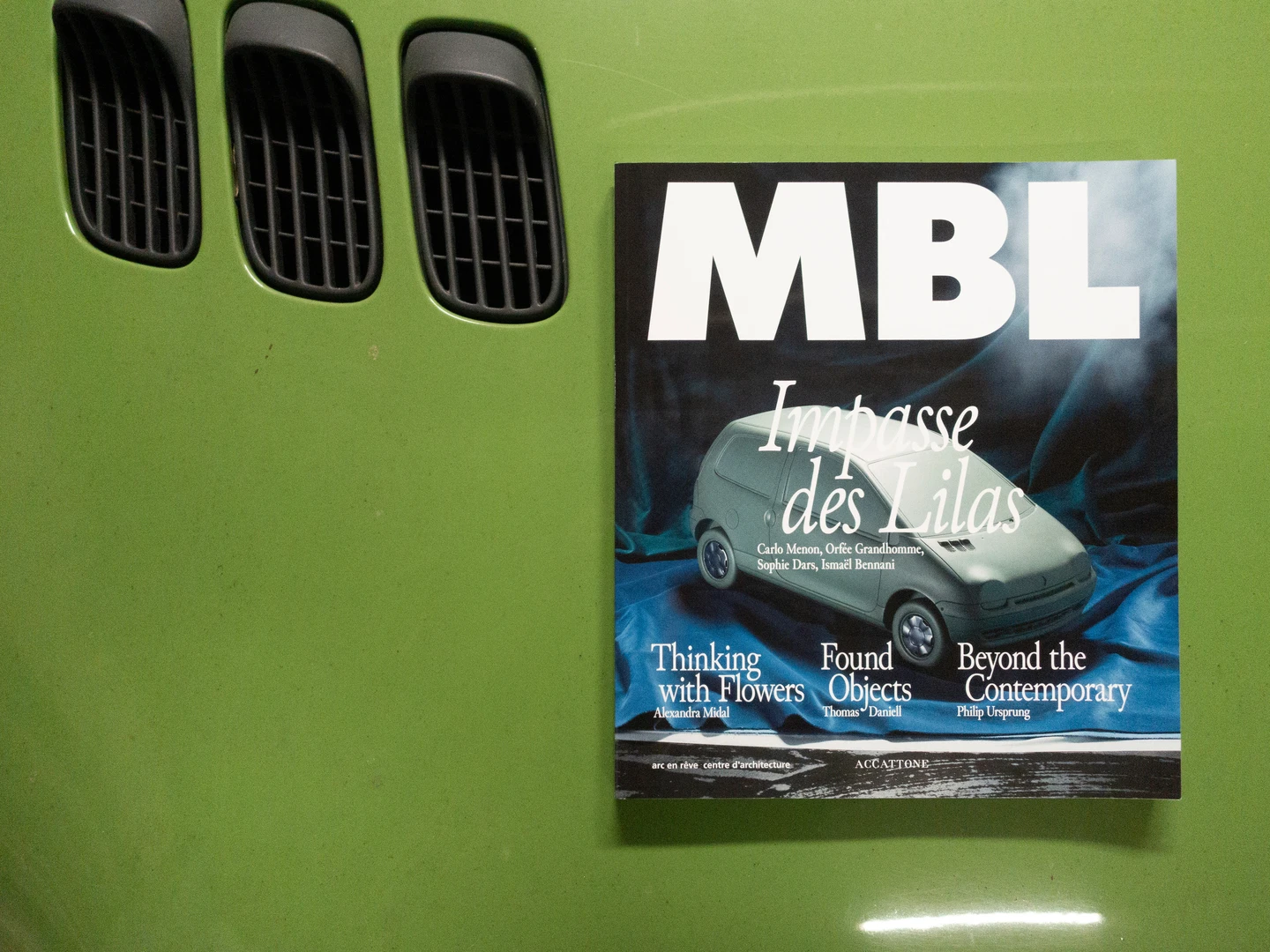
Impasse des Lilas
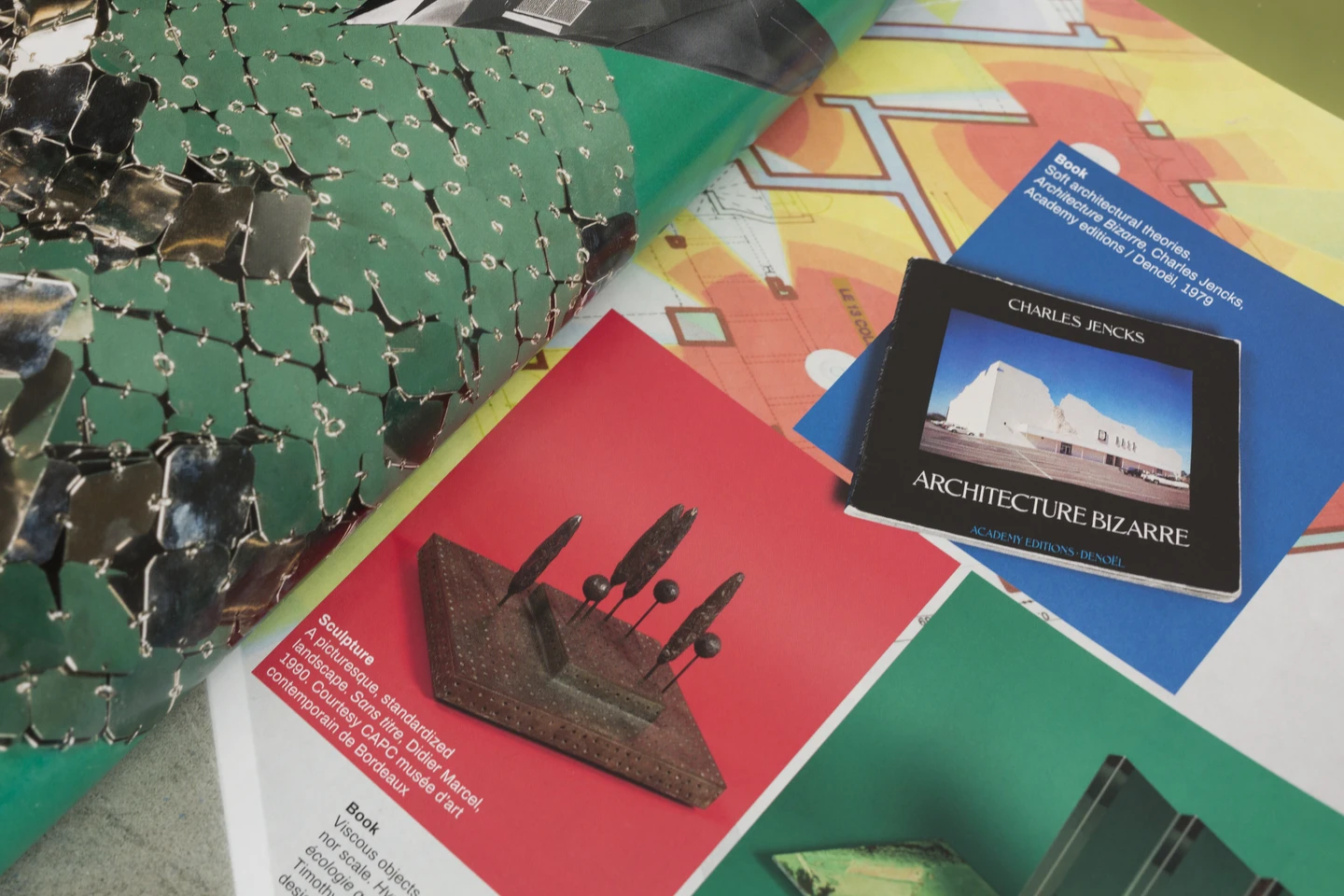
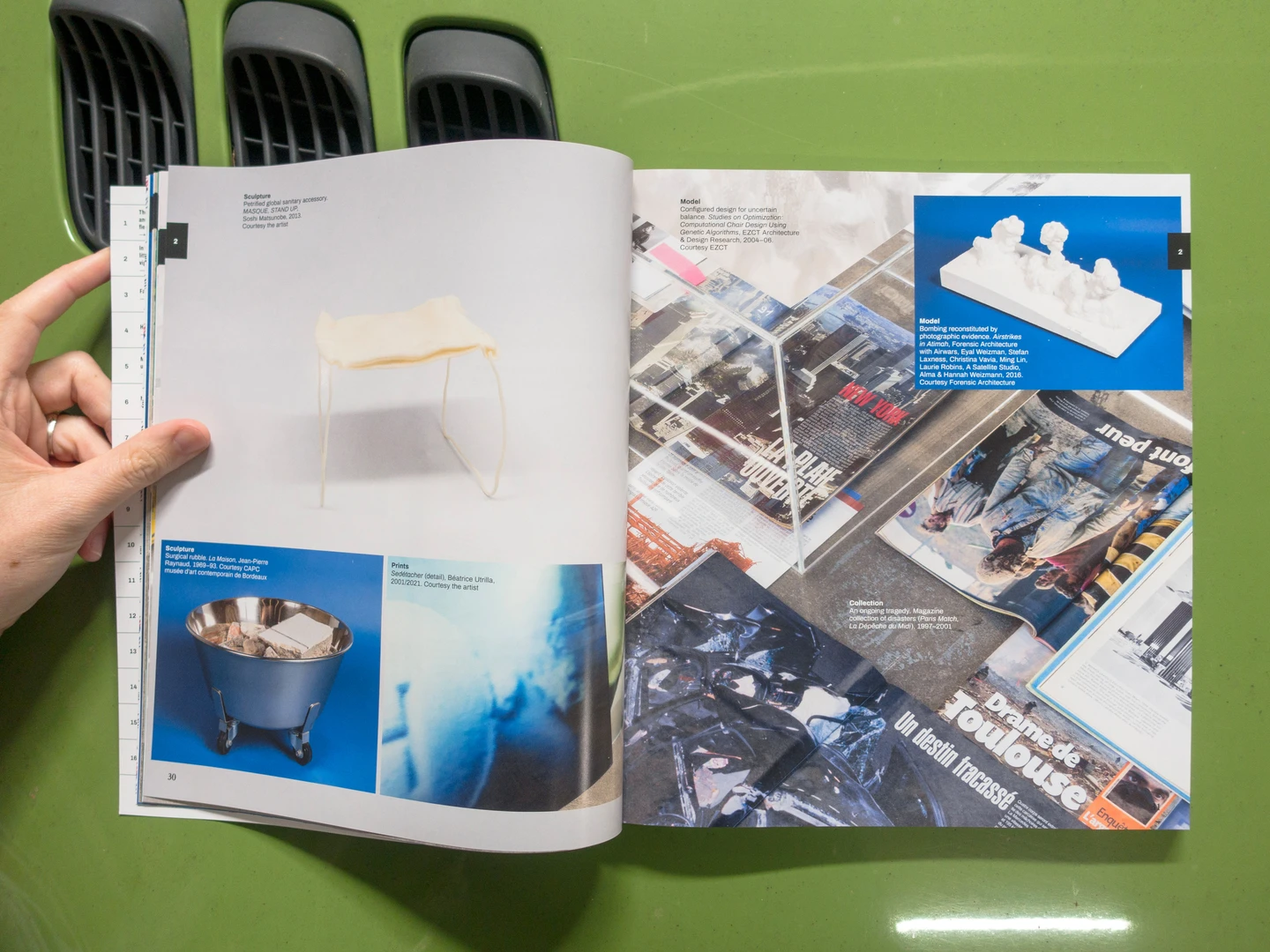
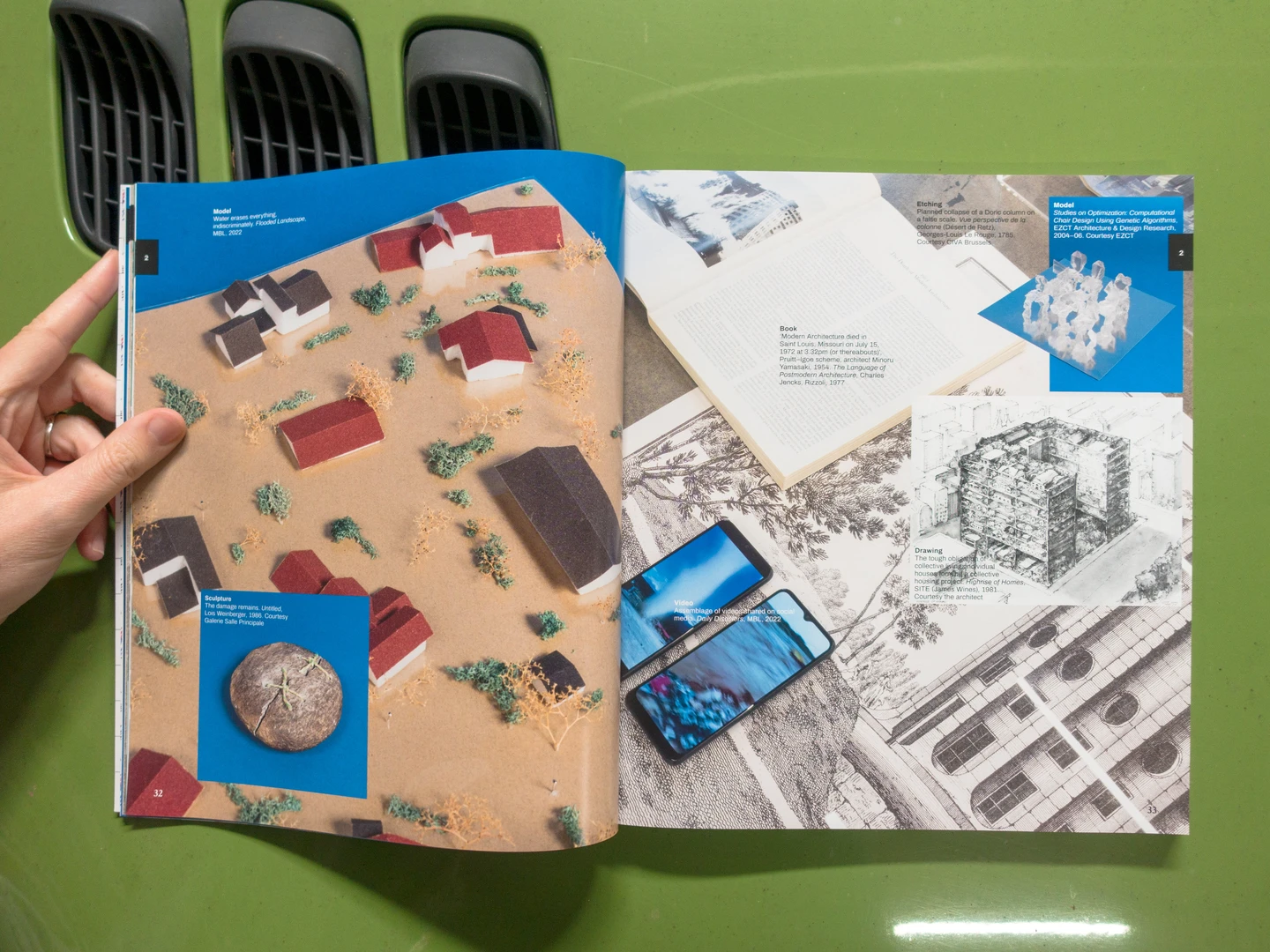
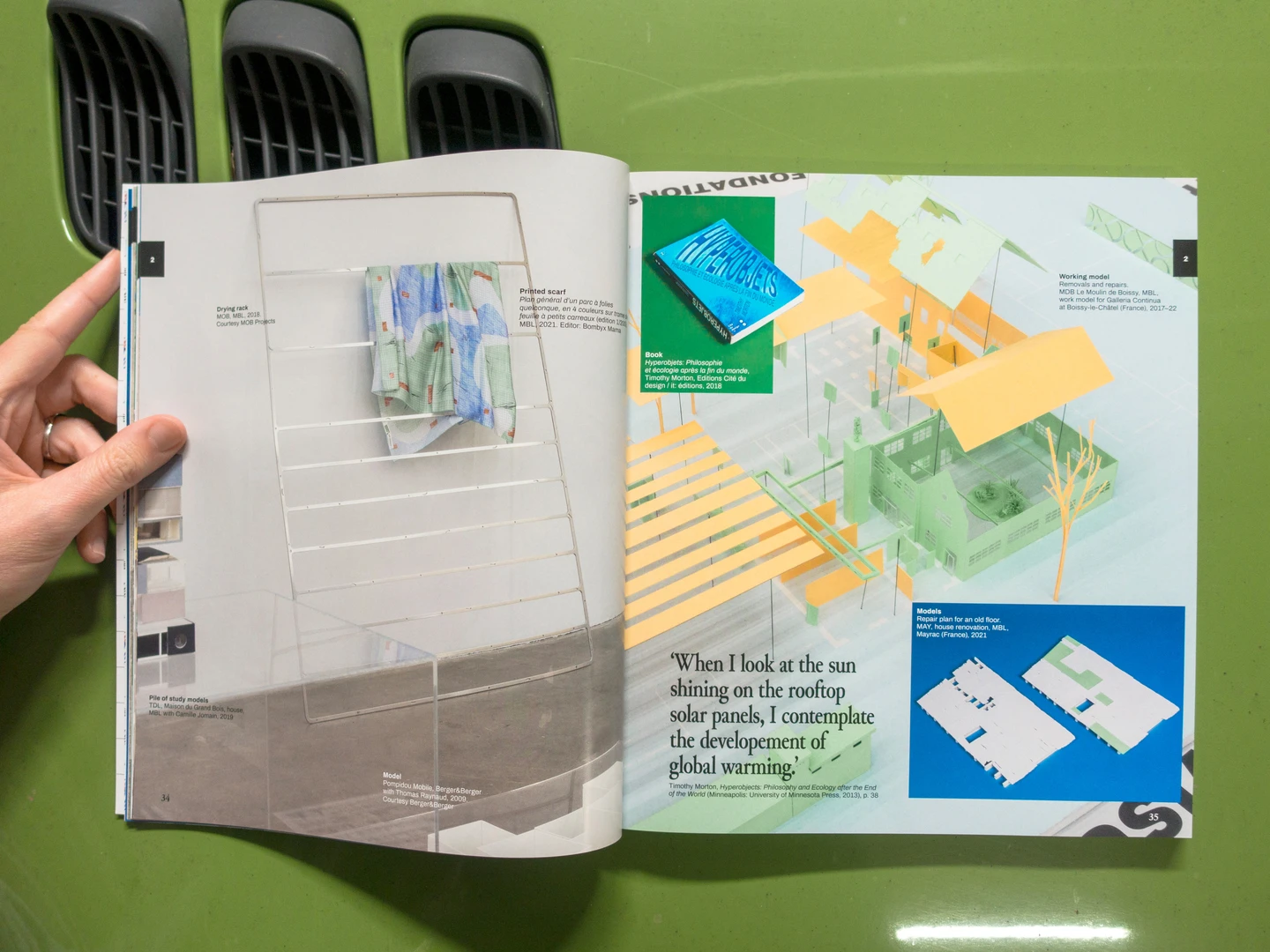
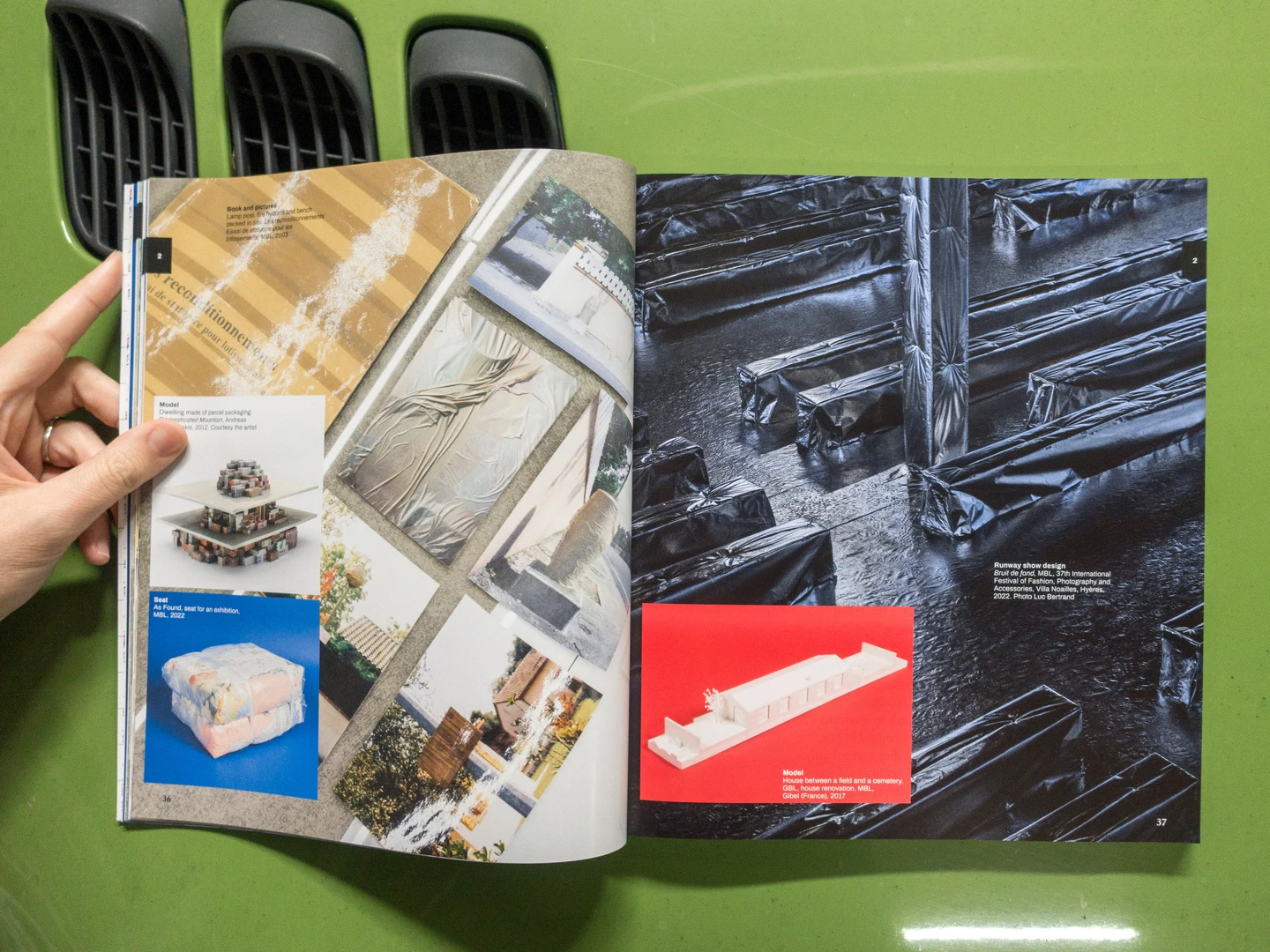
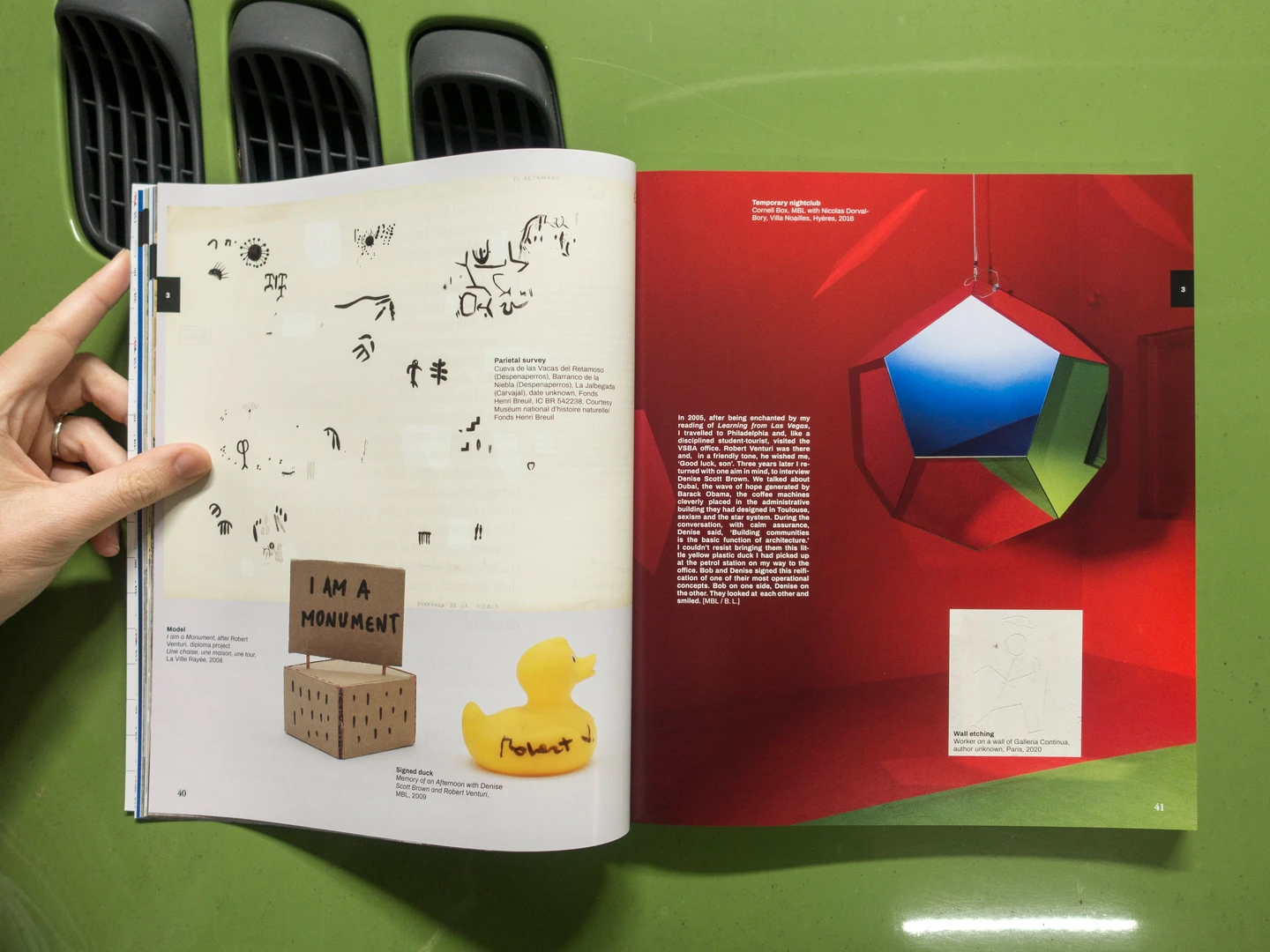
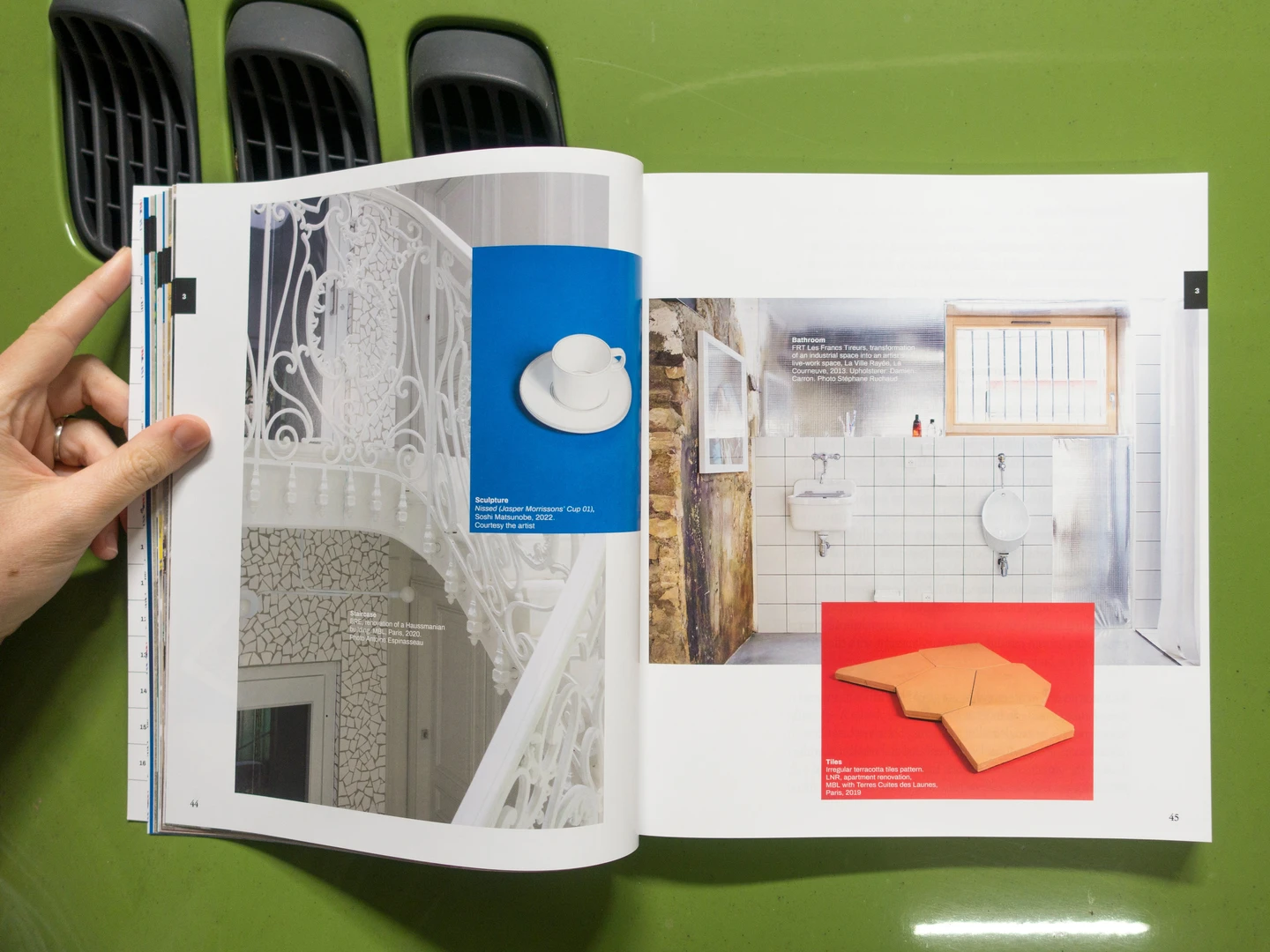
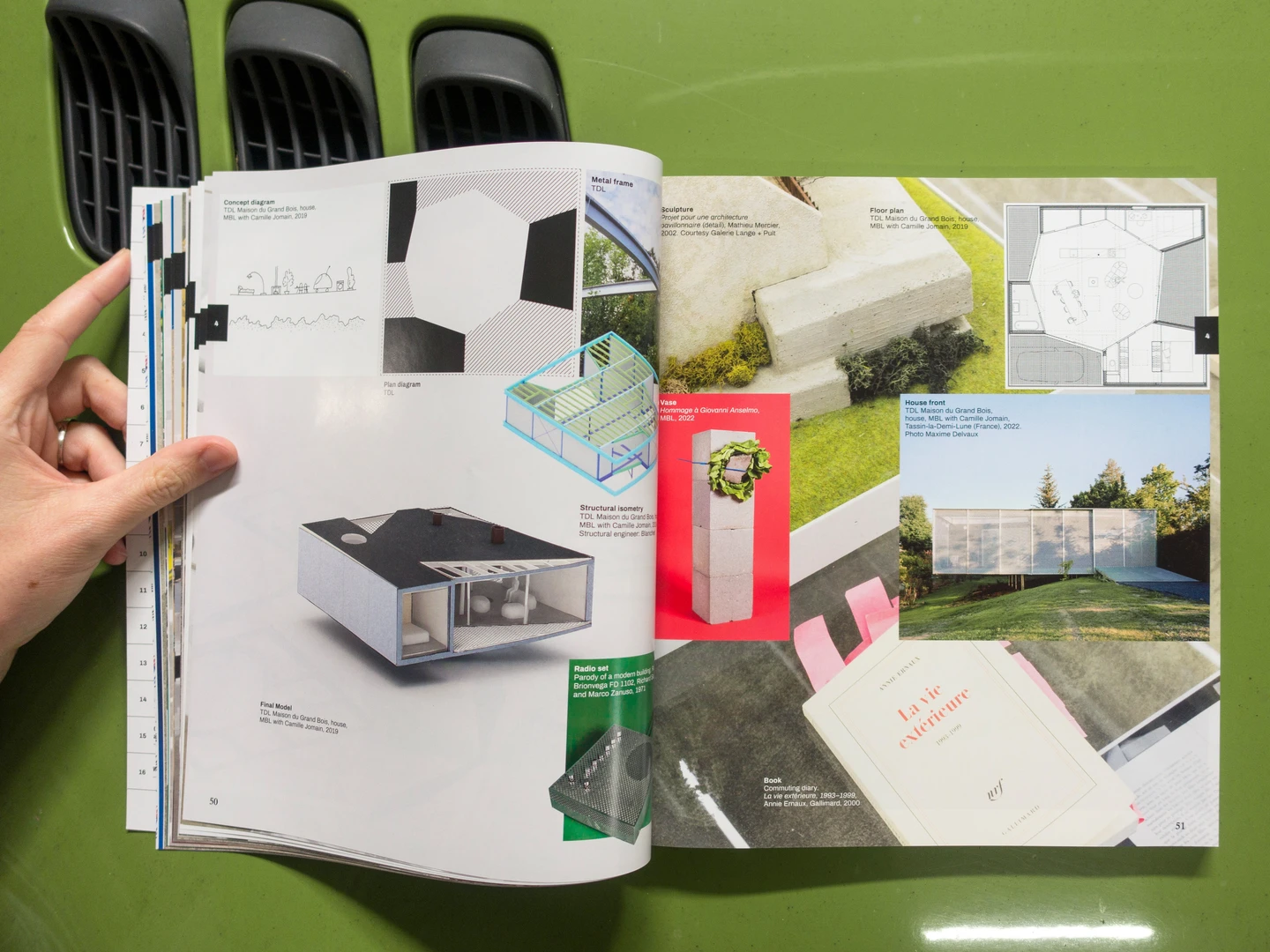
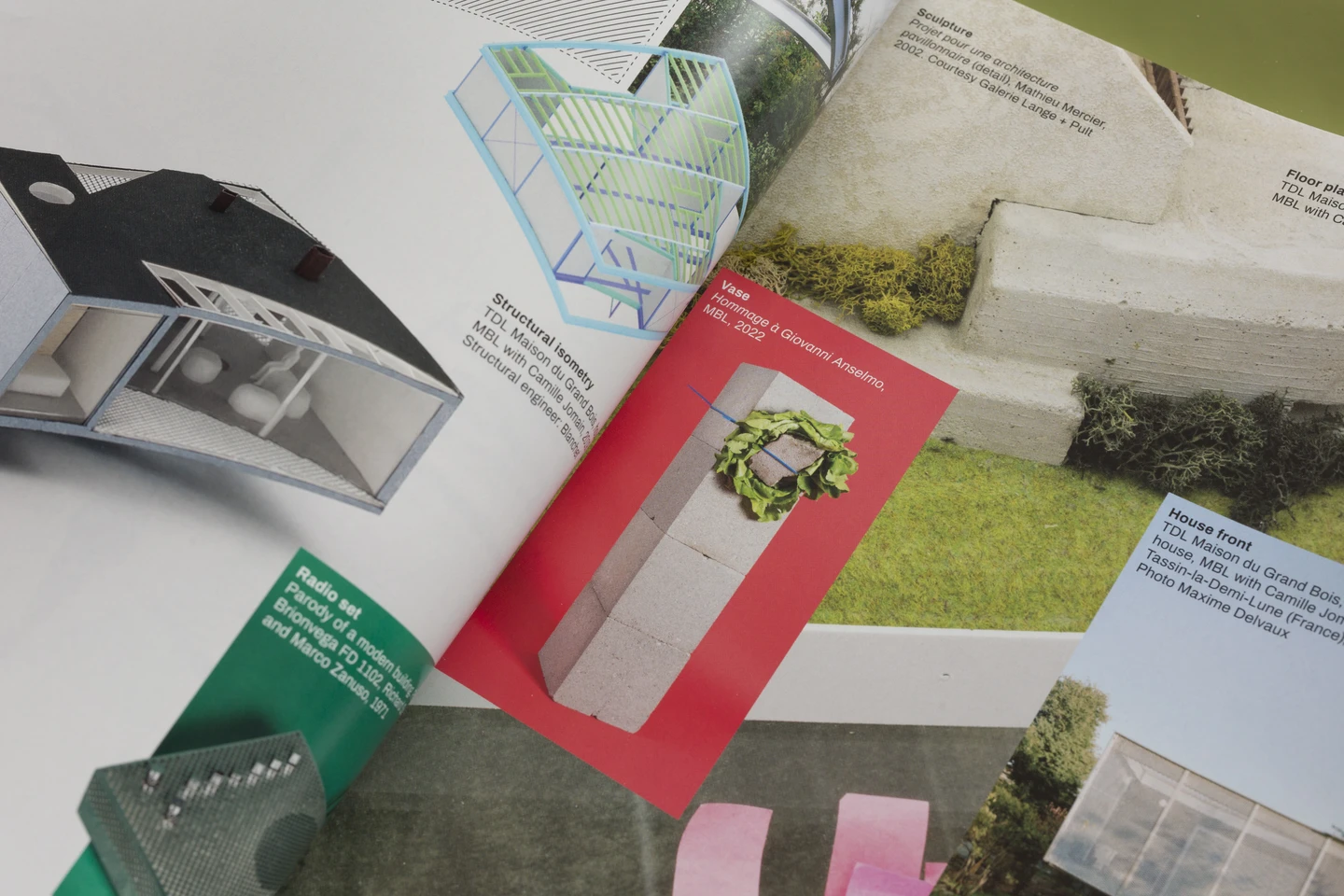
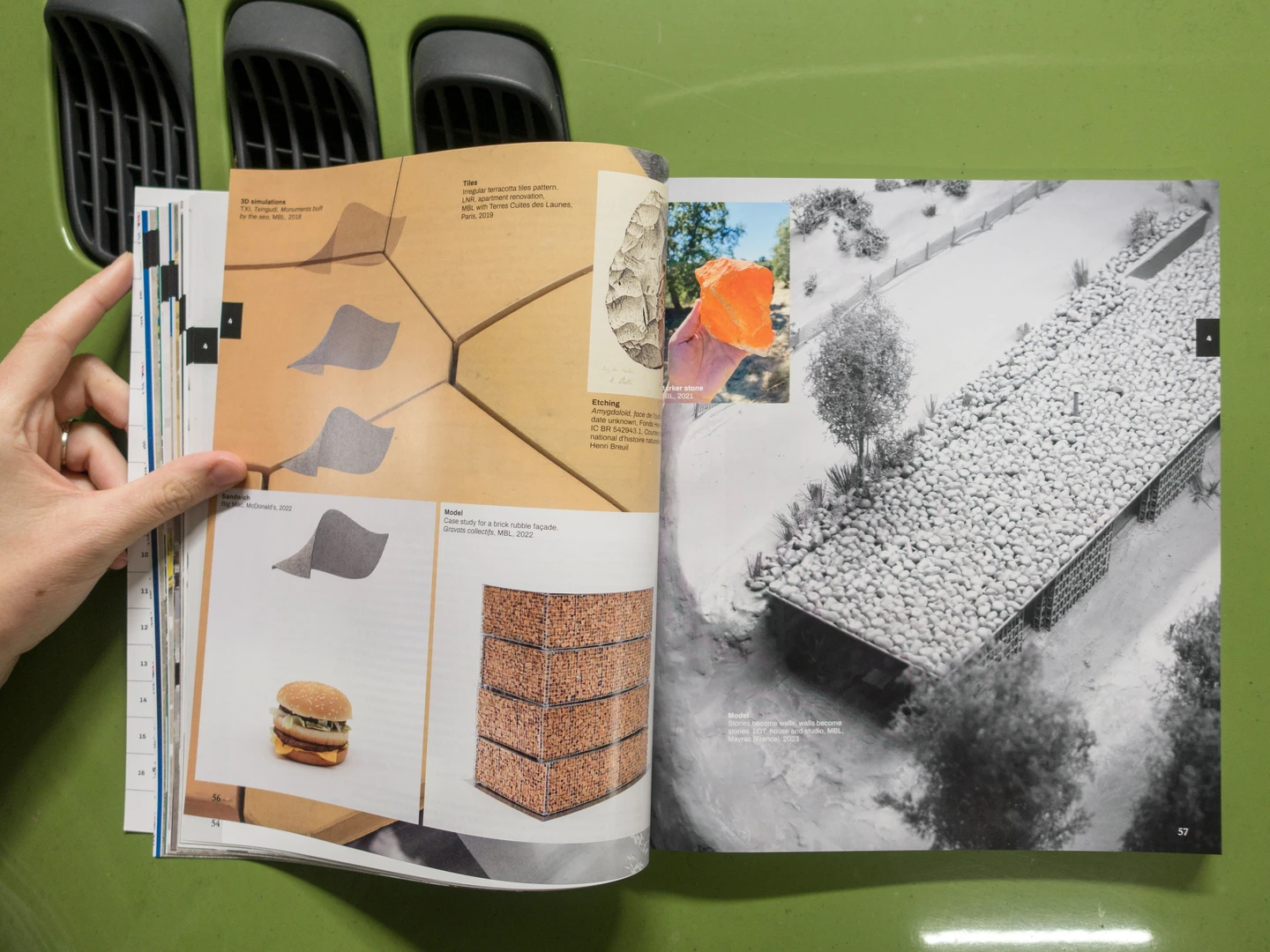
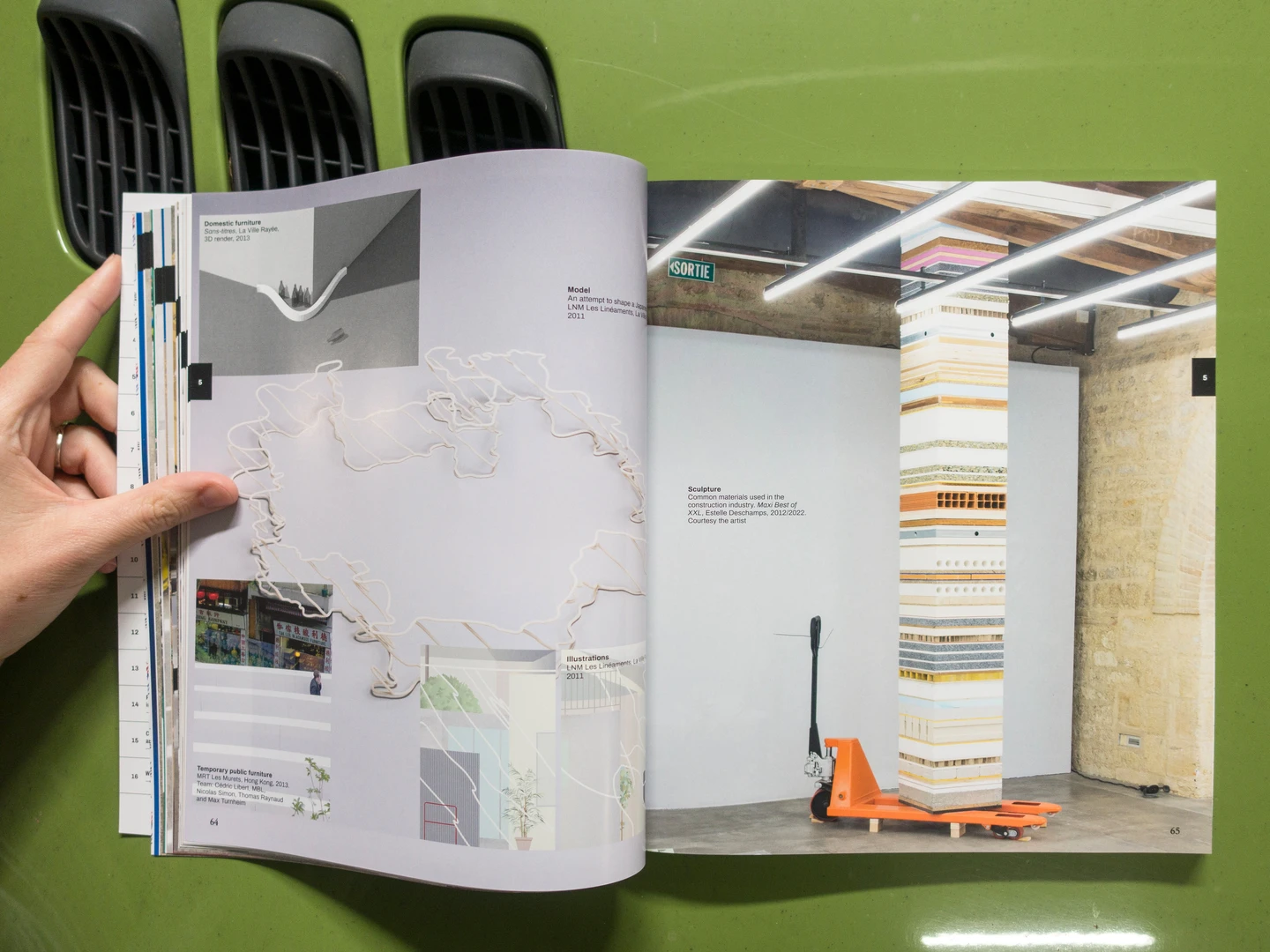
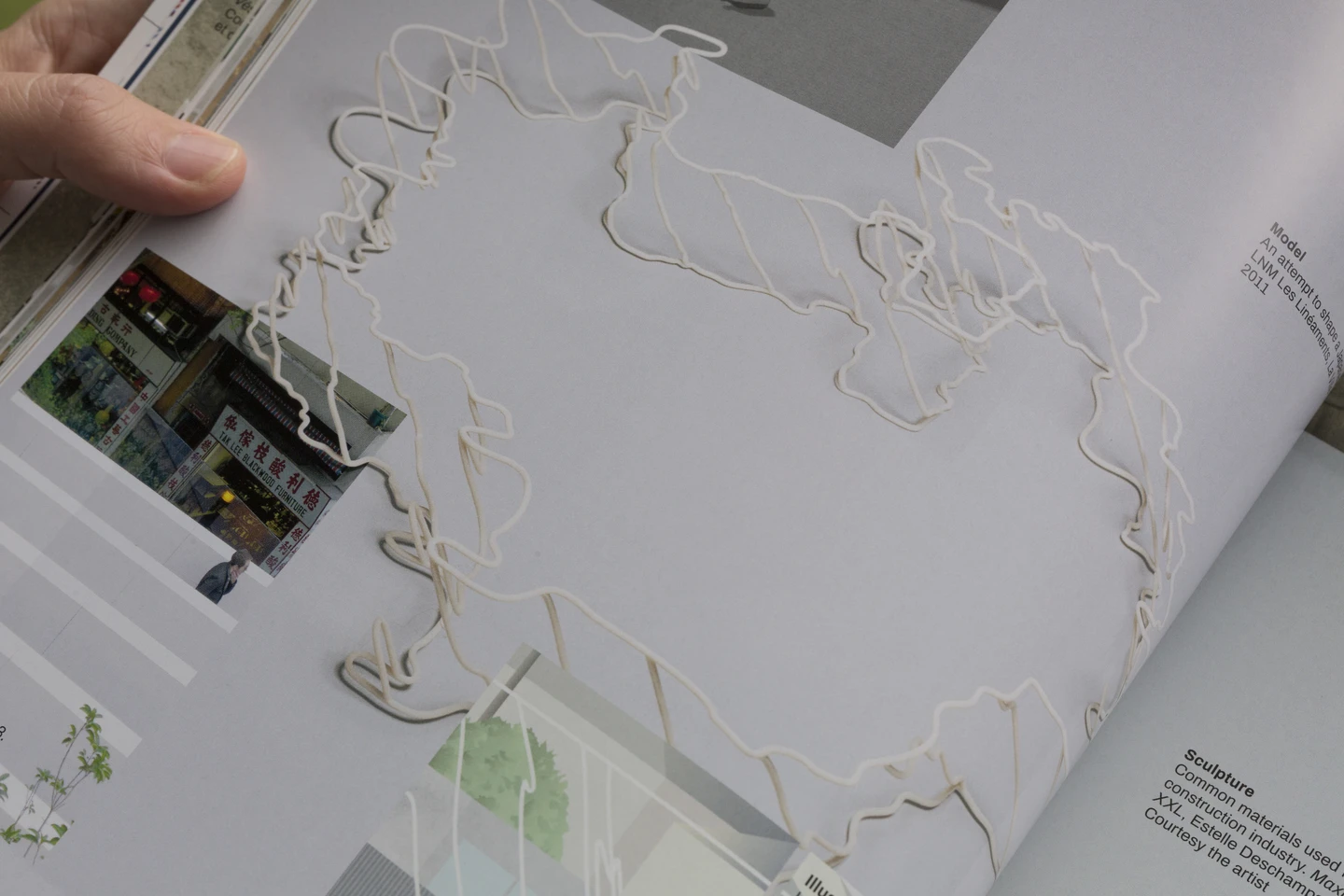
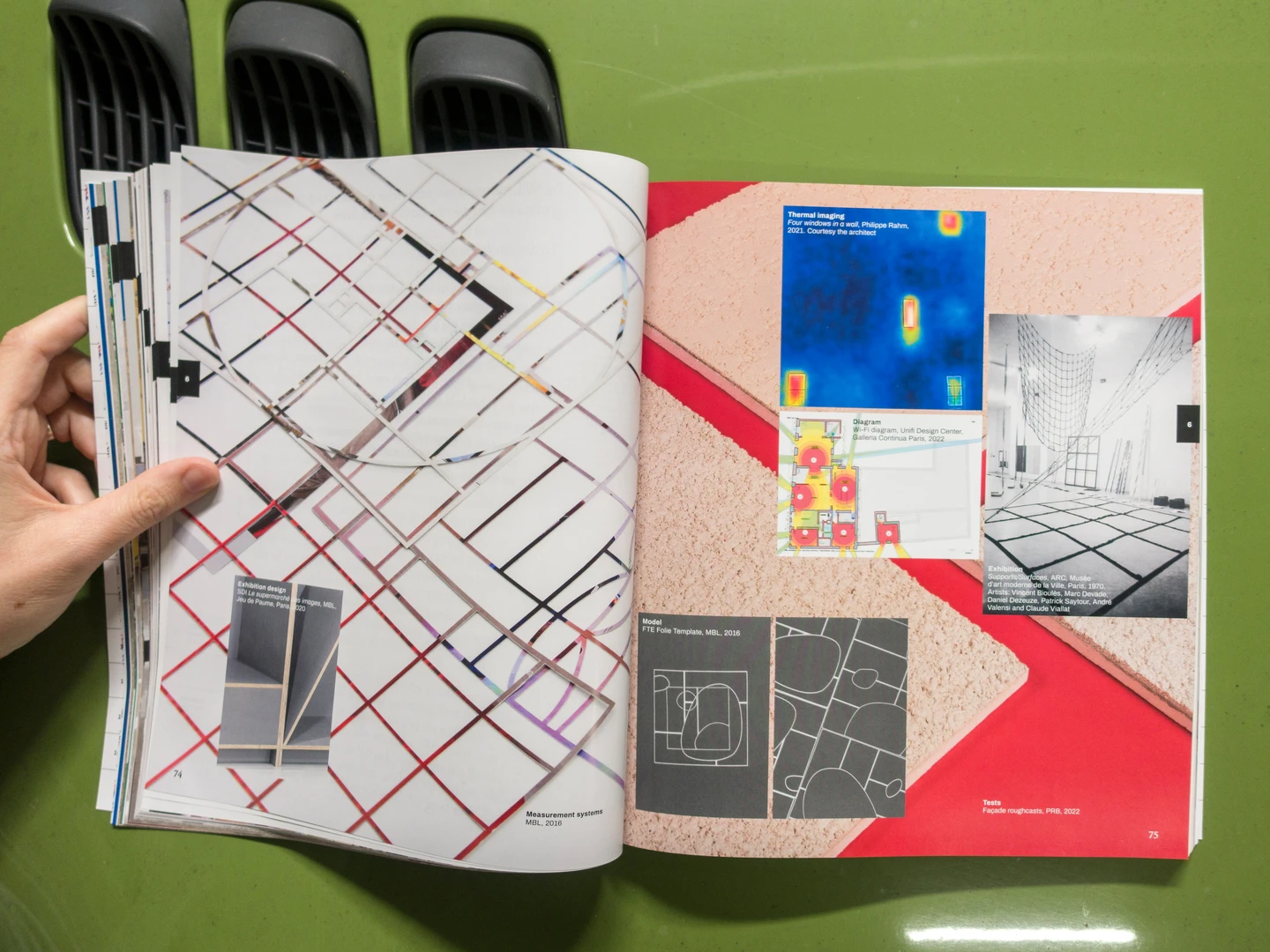
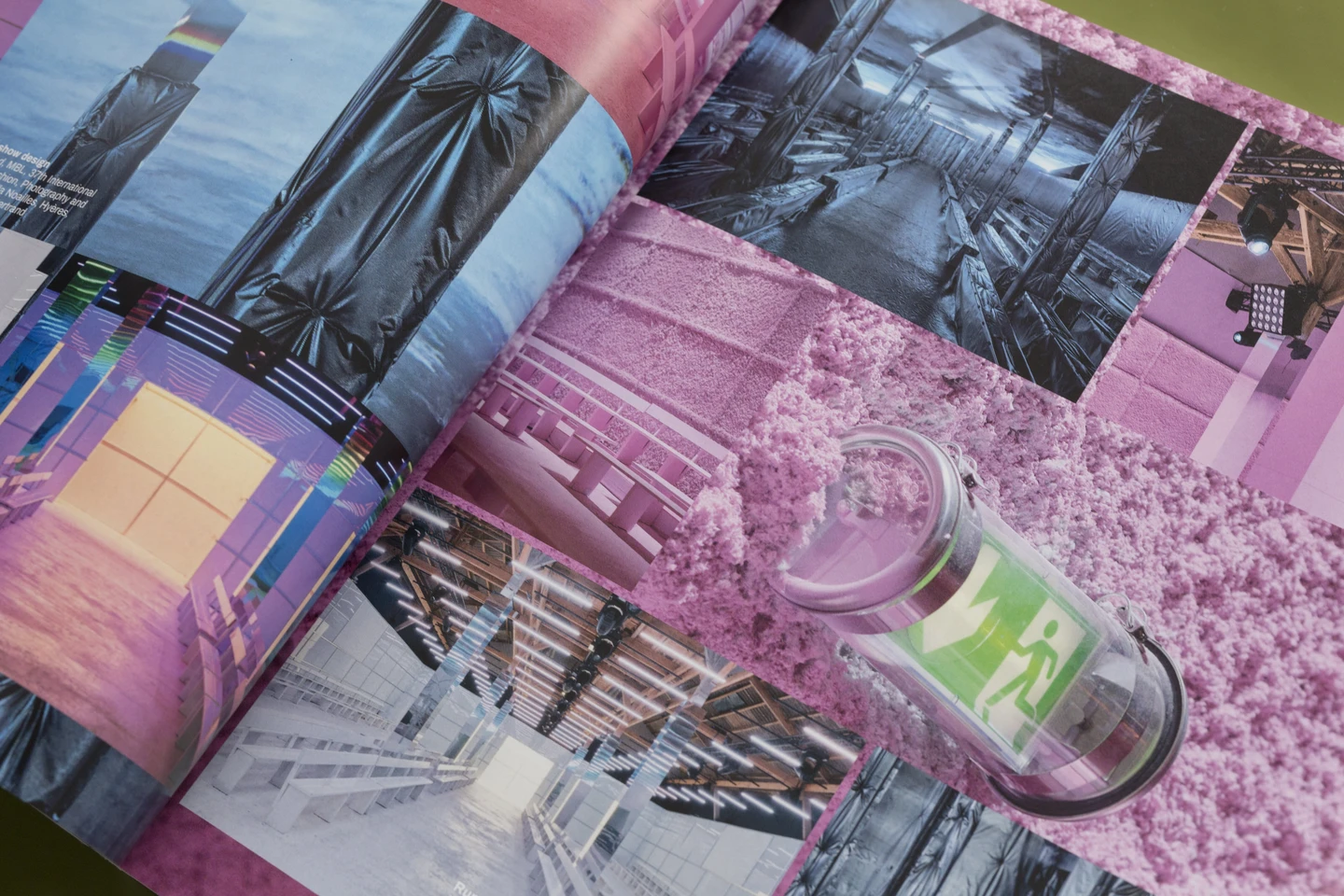
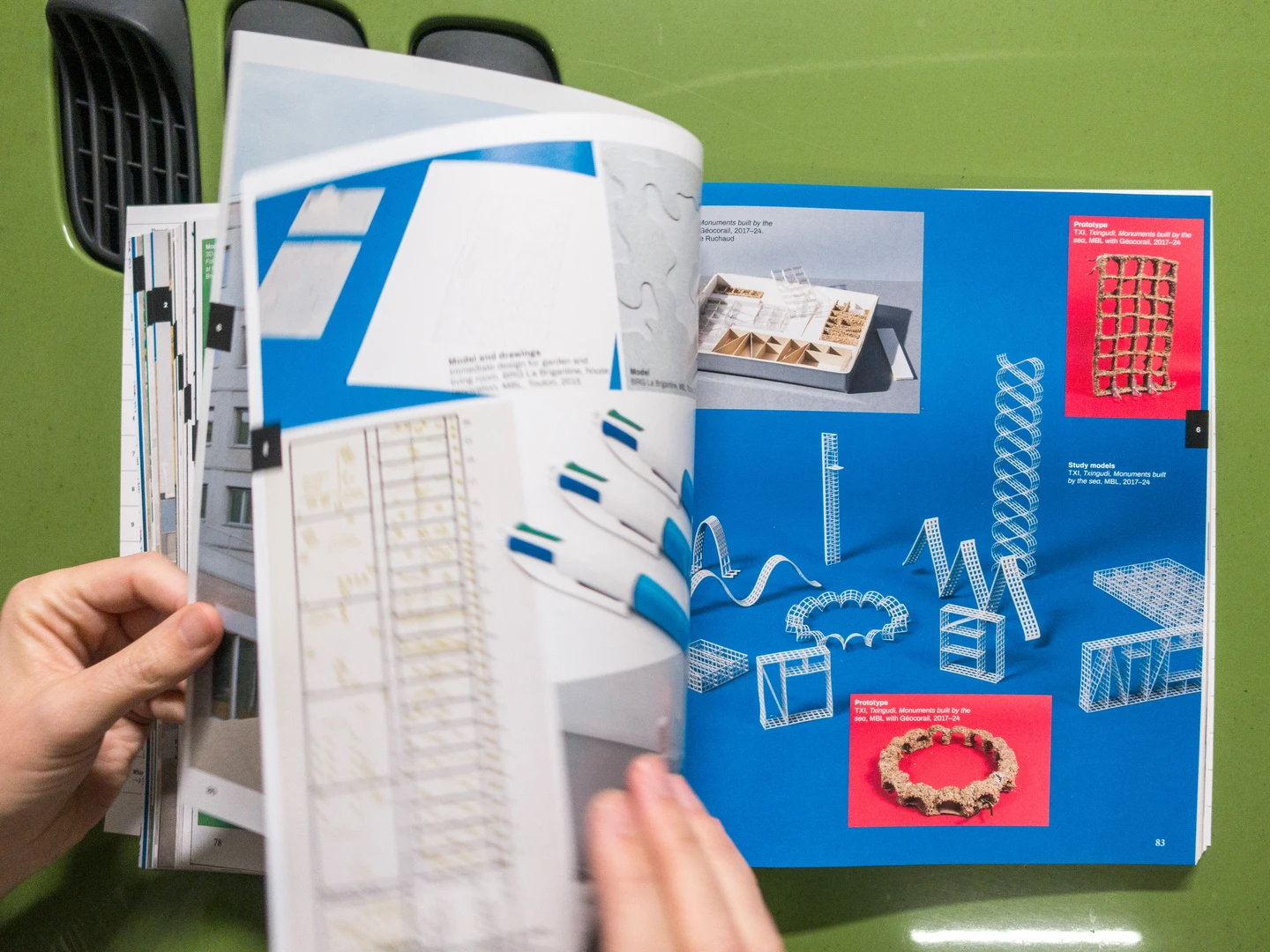
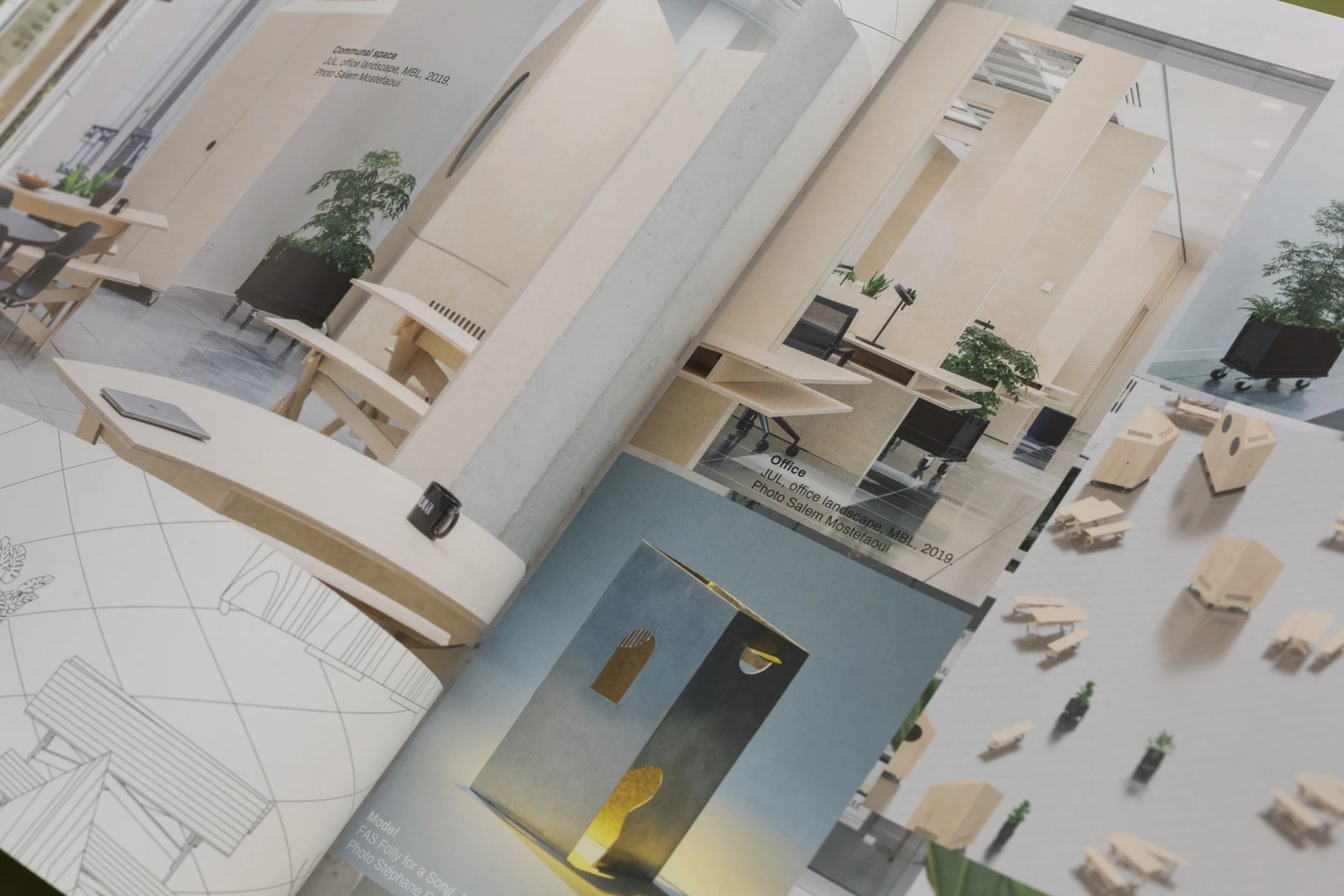
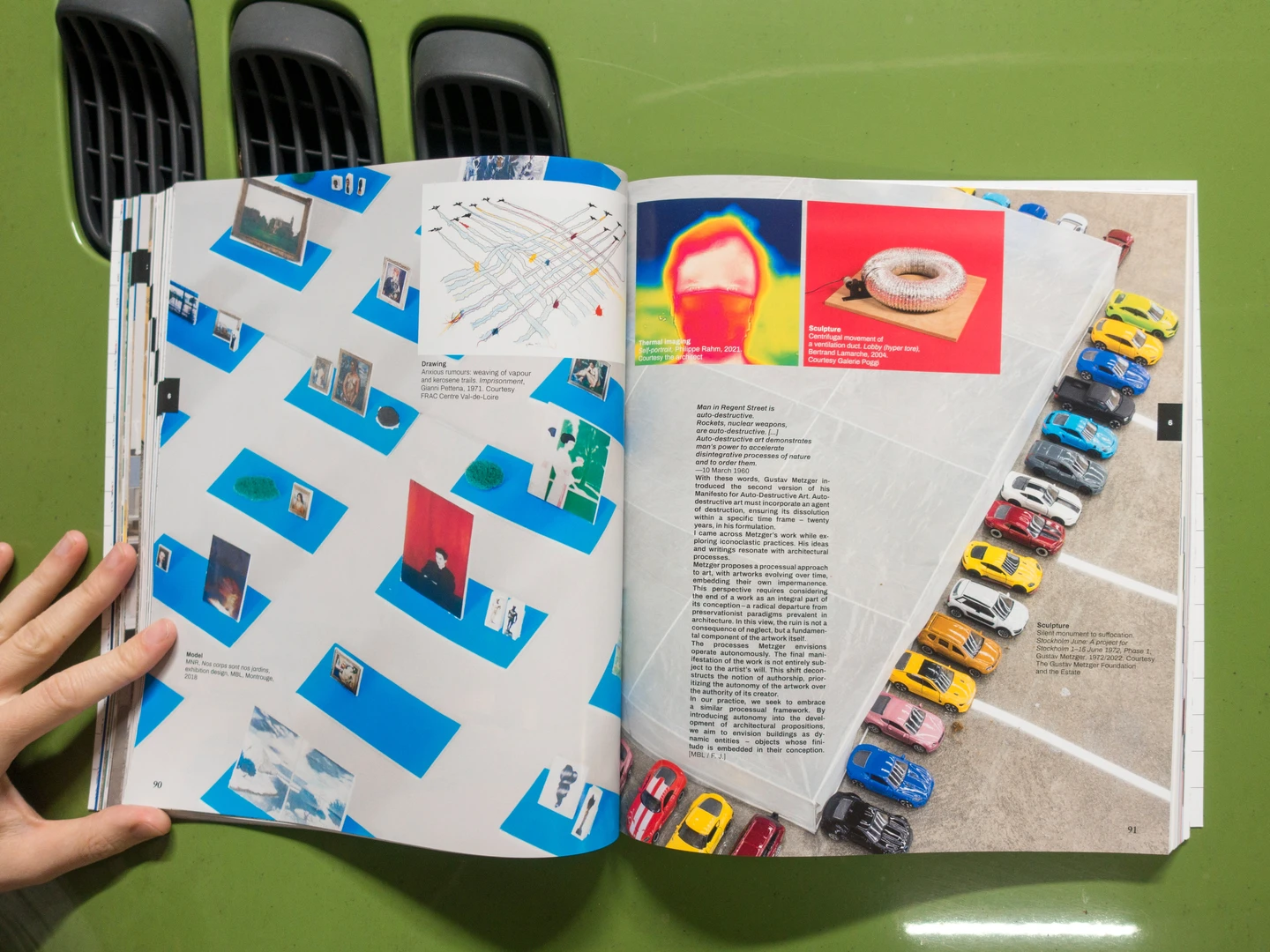
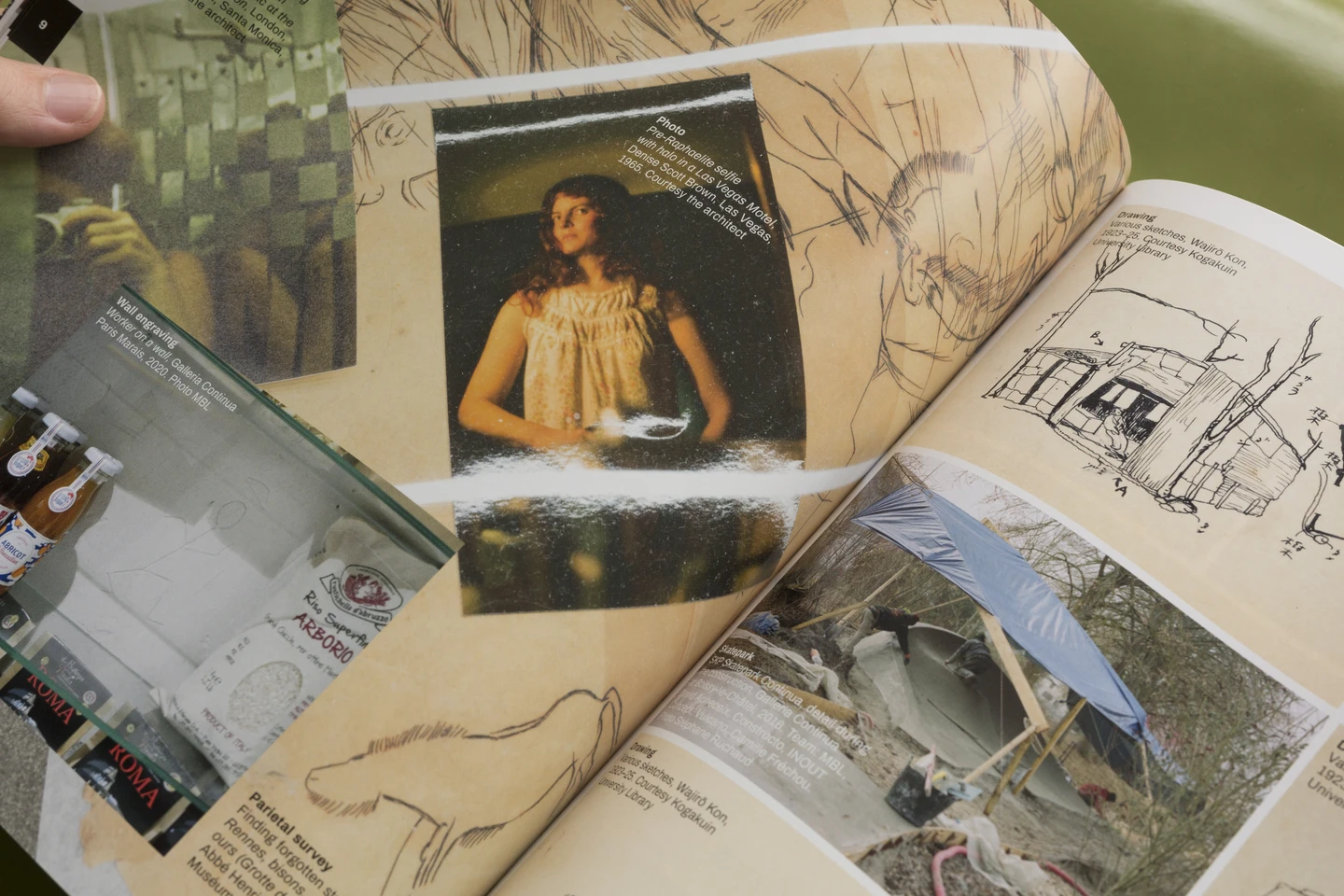
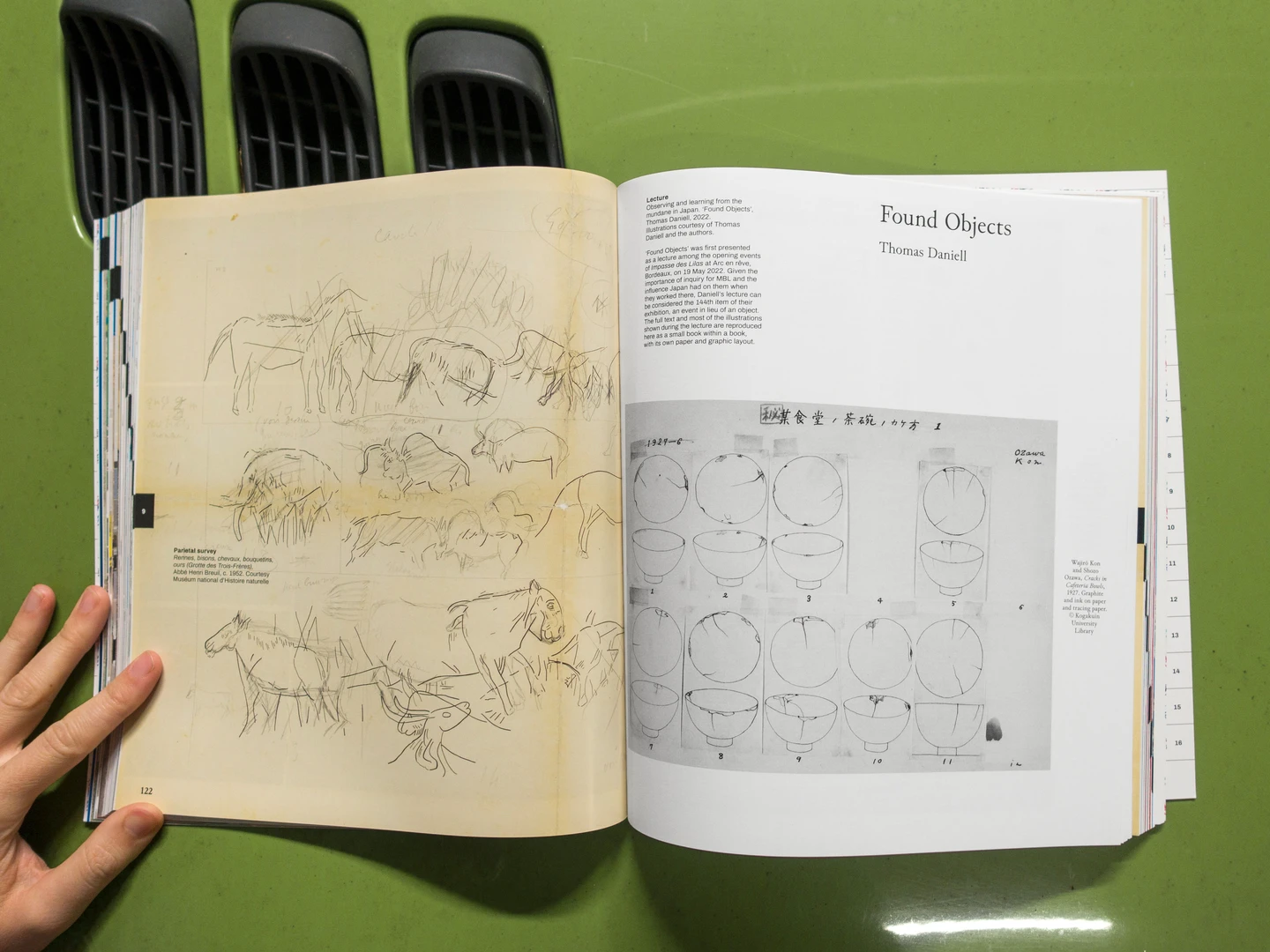
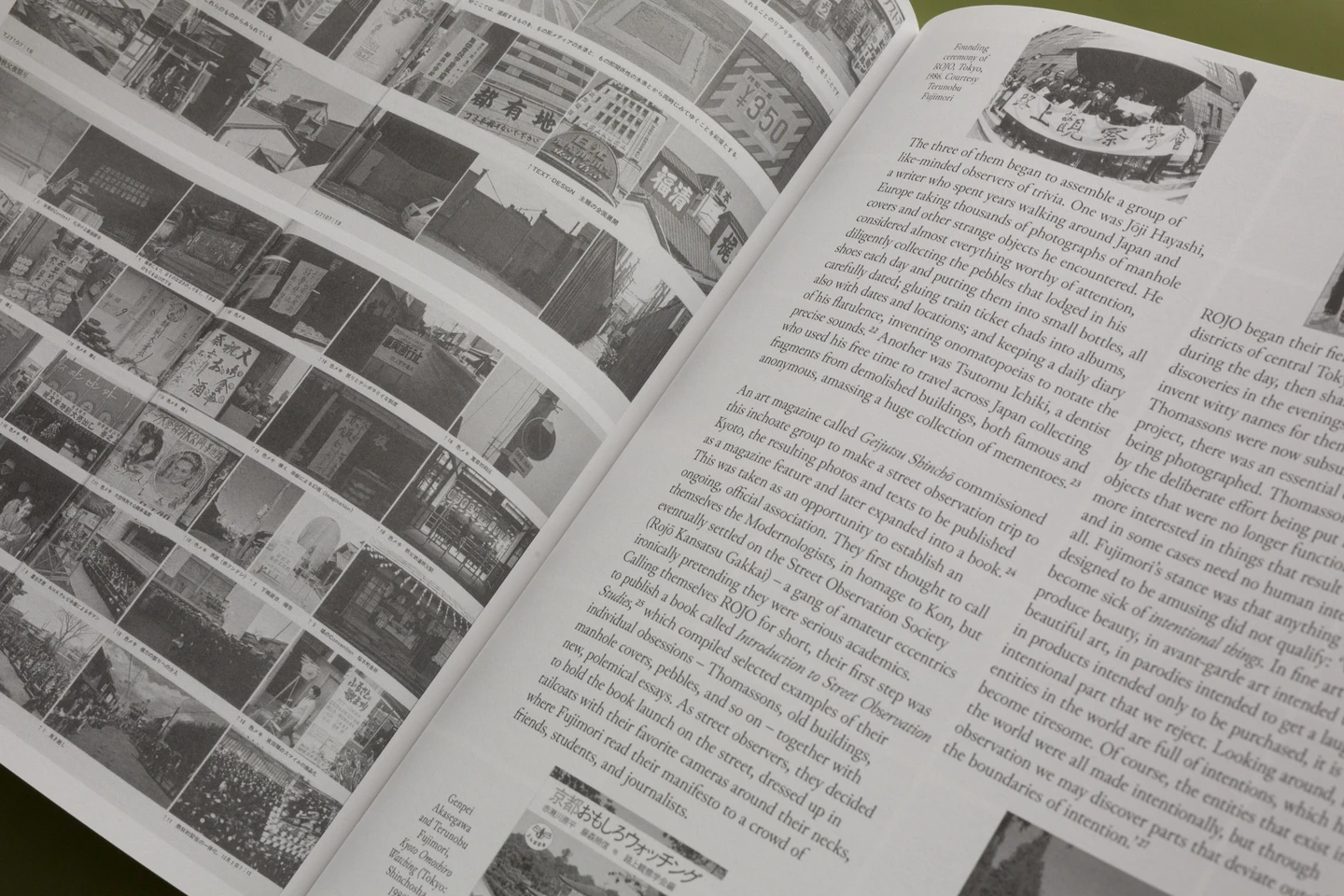
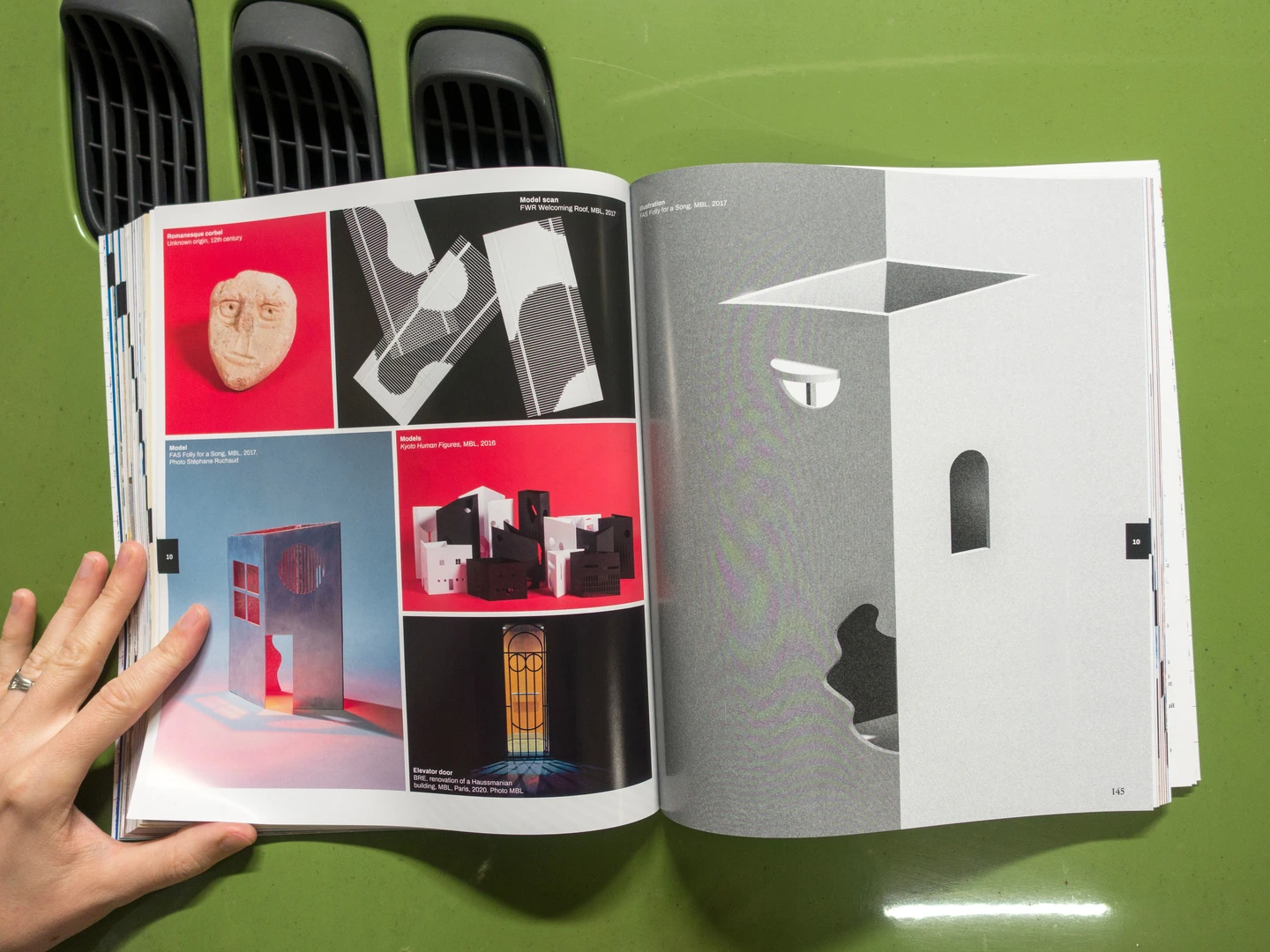
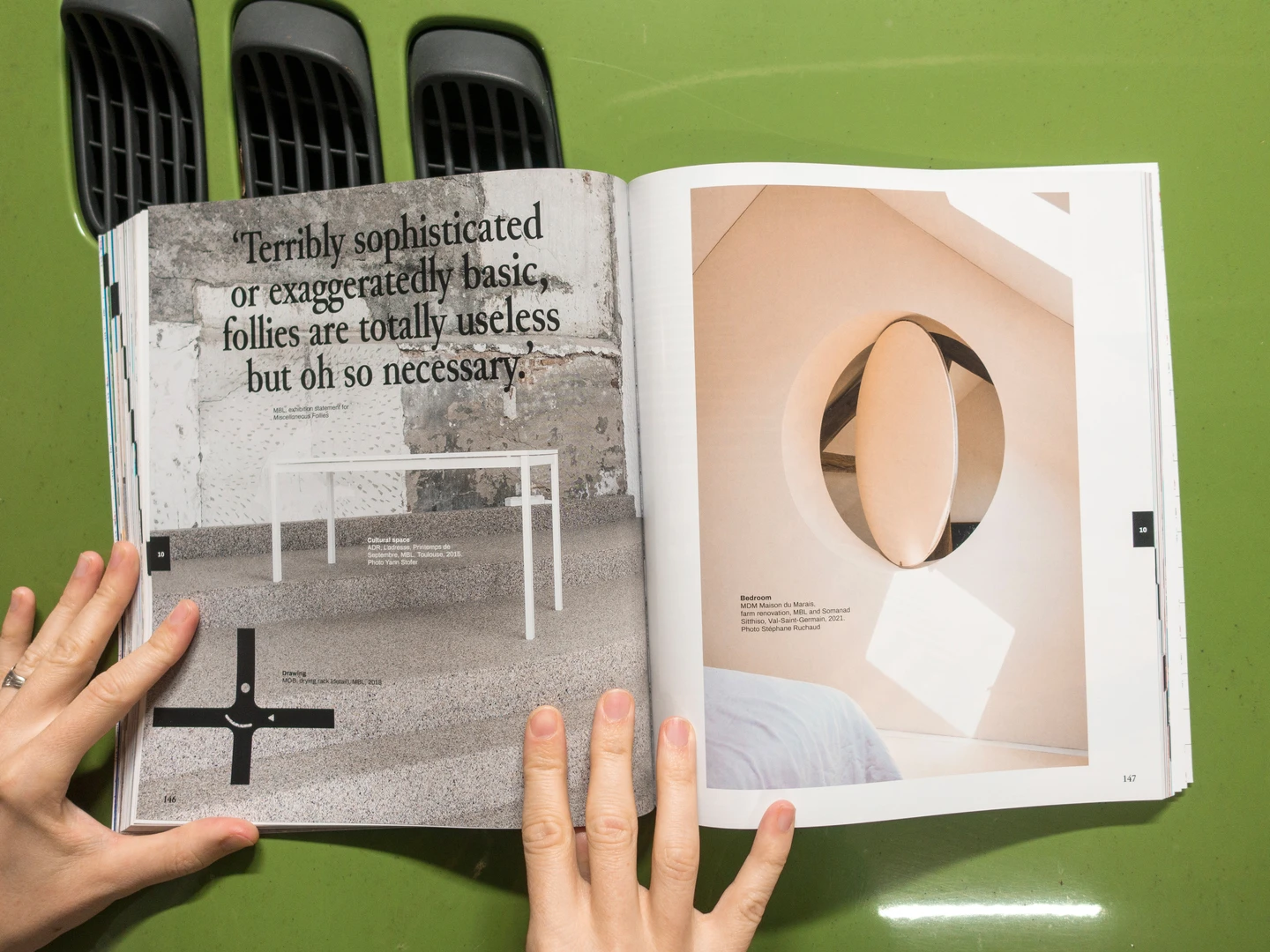
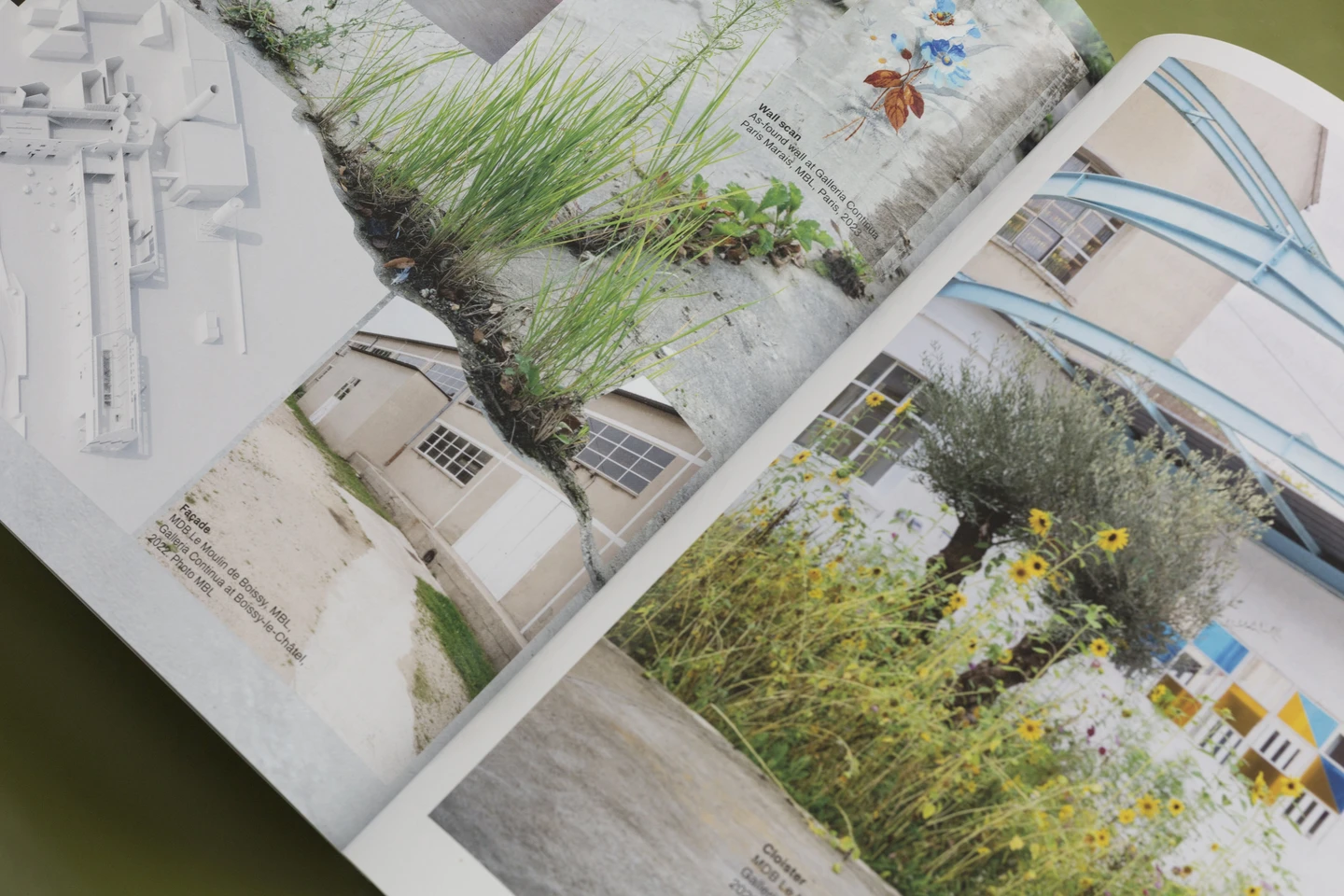
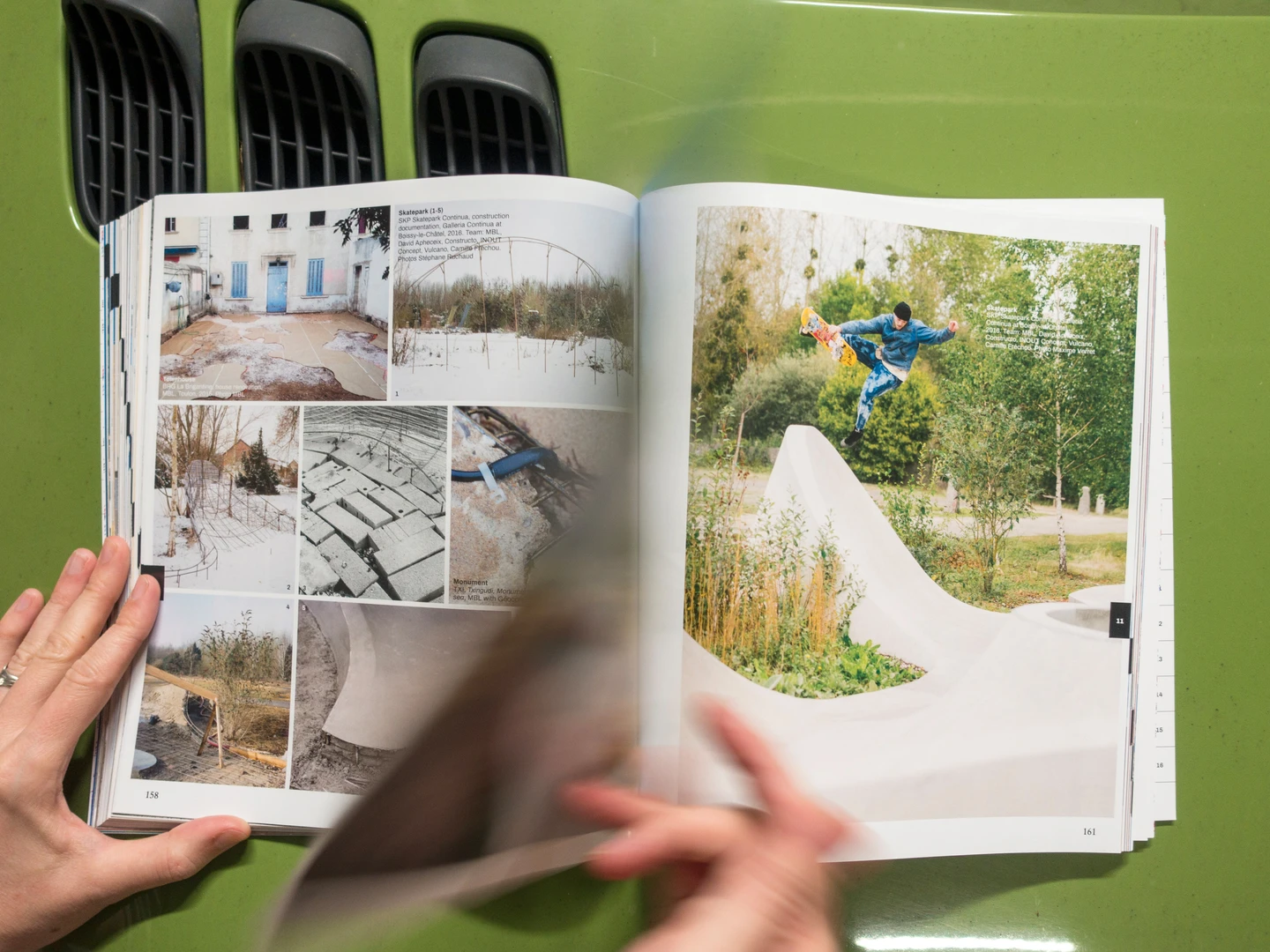
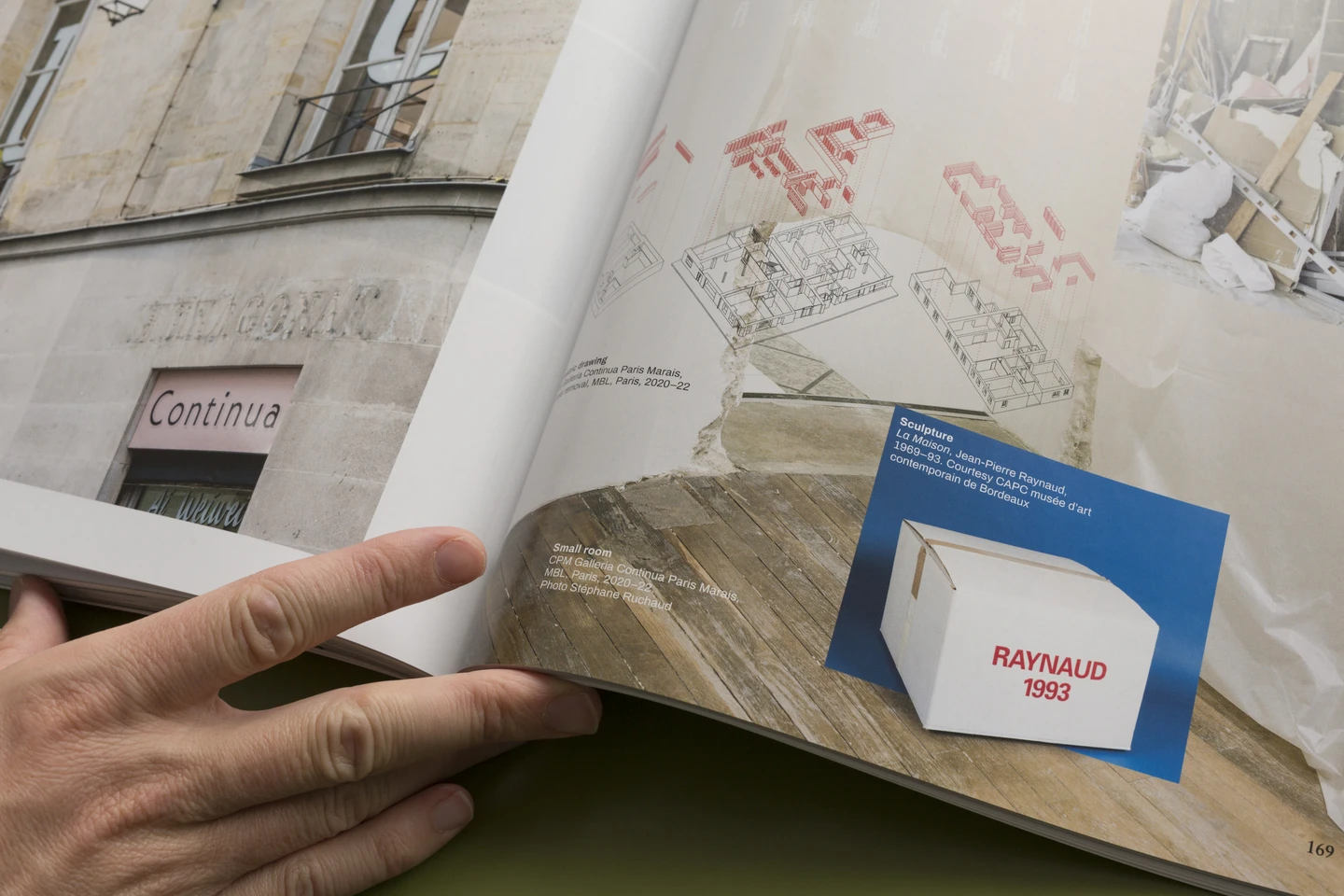
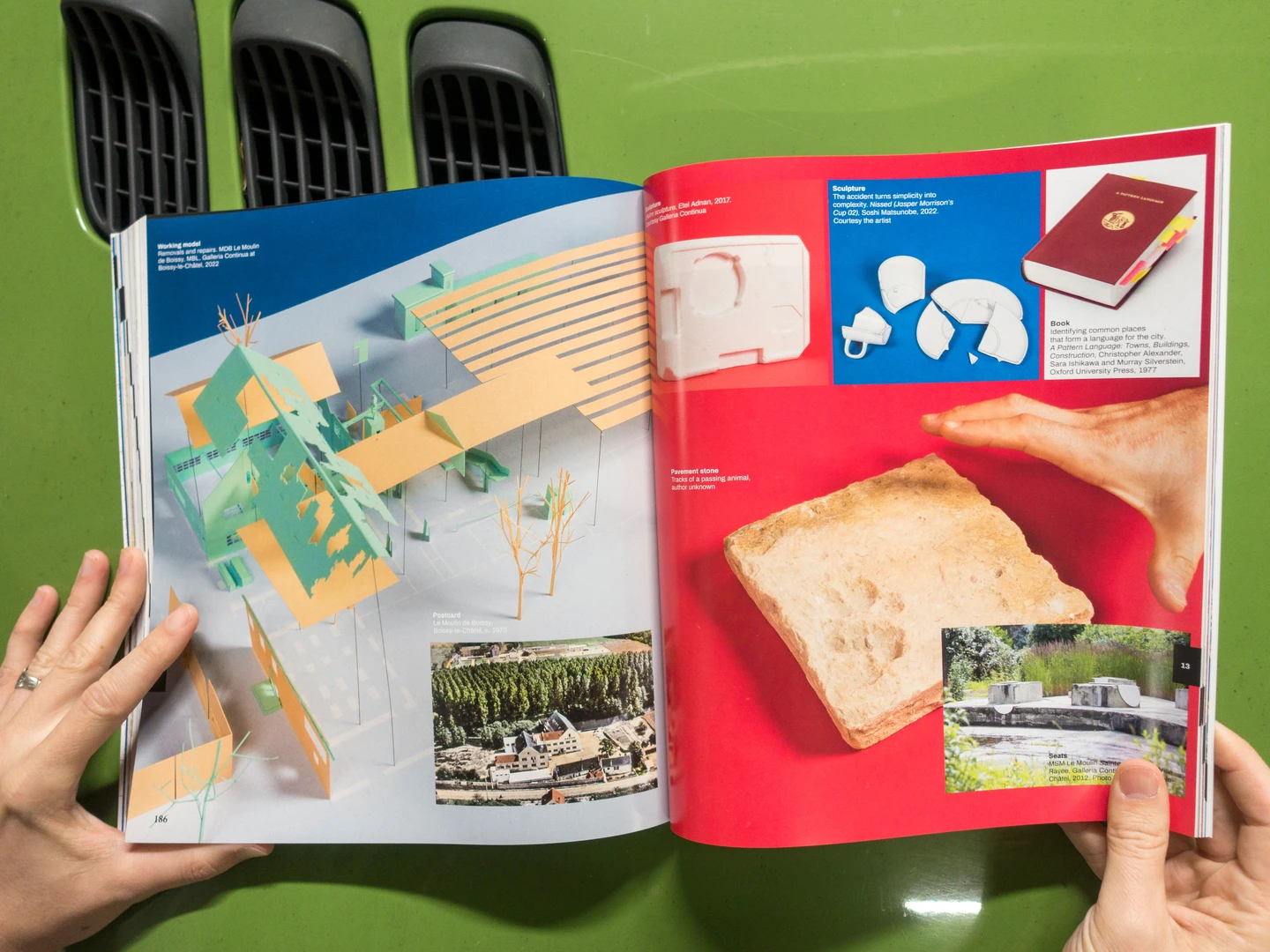
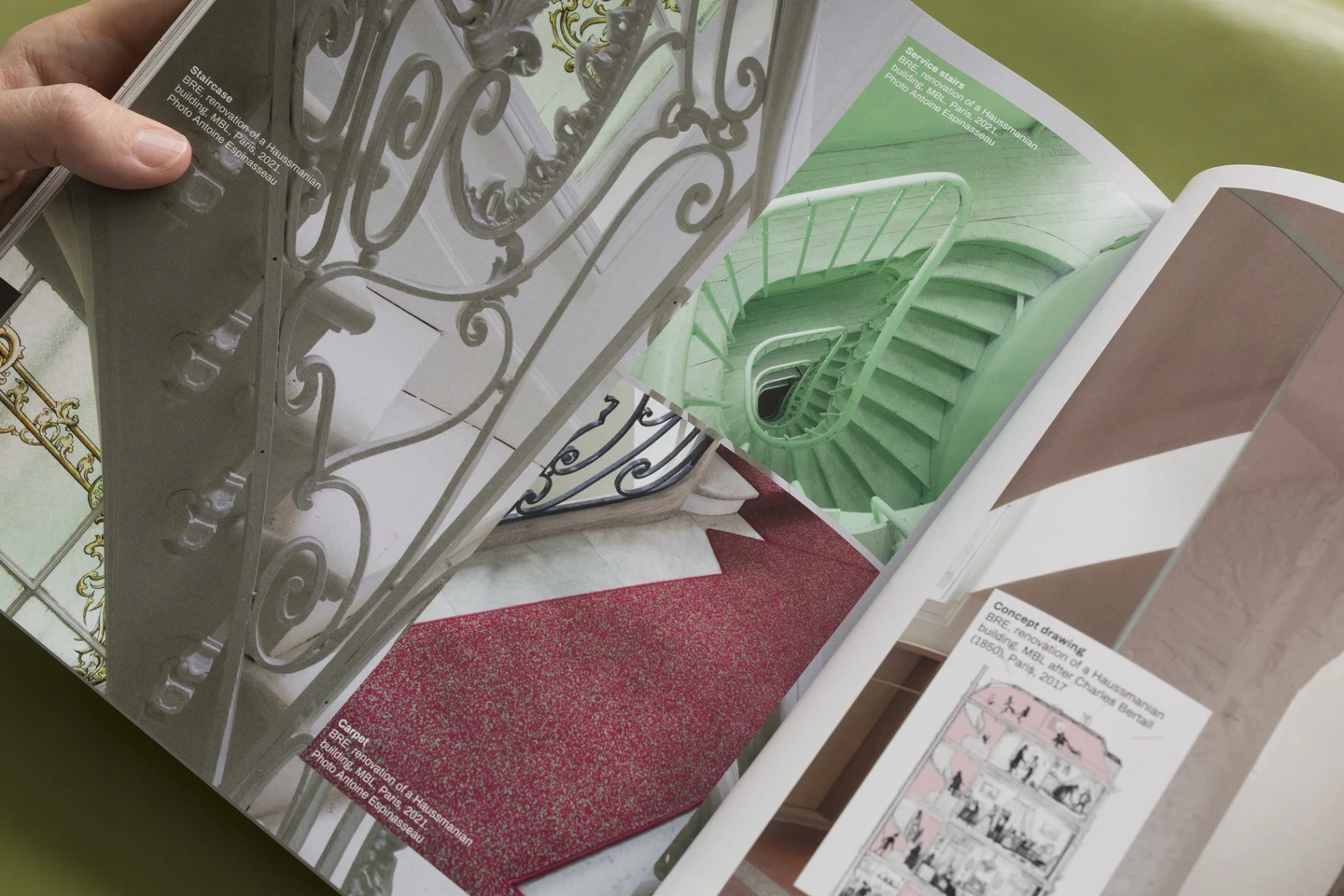
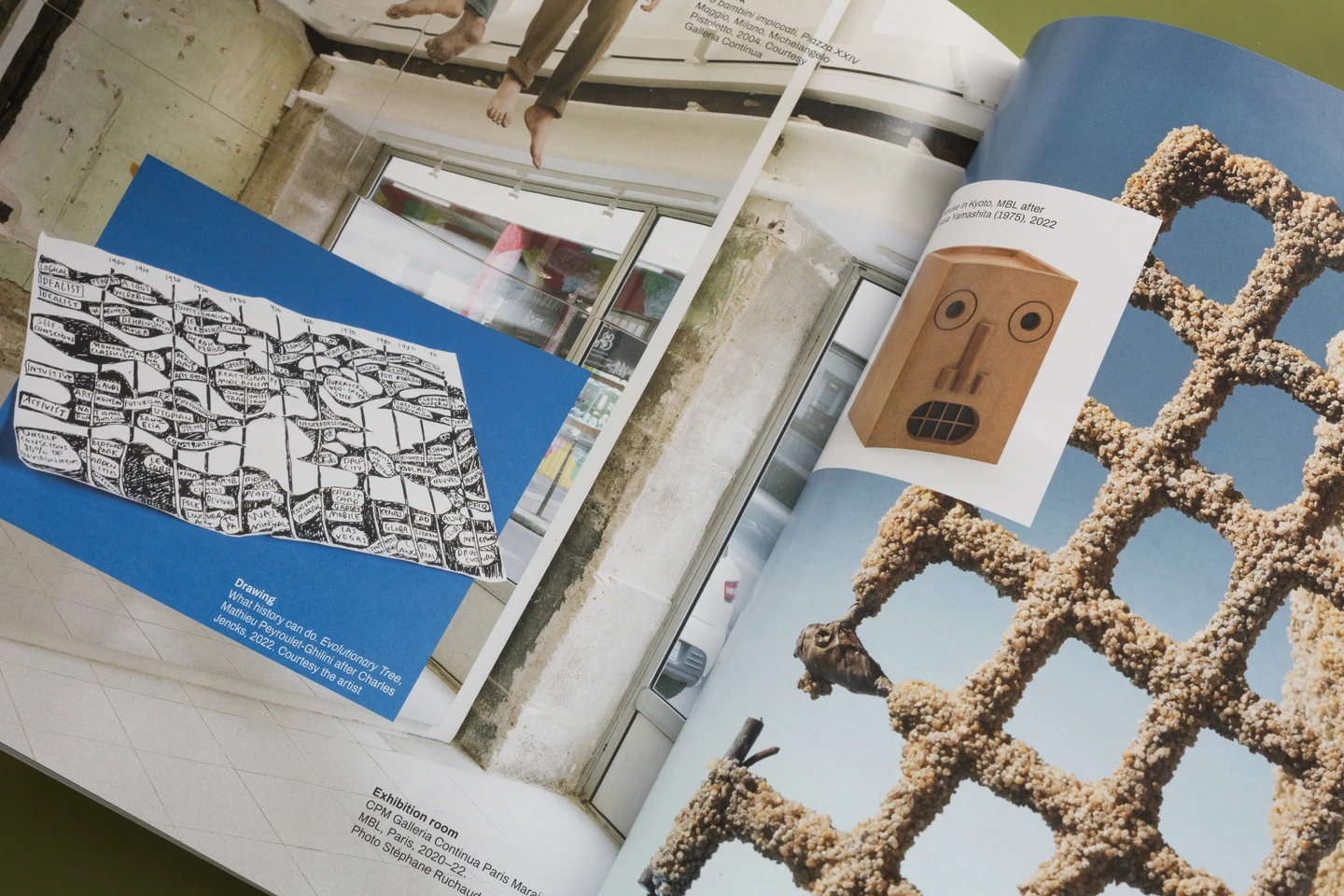
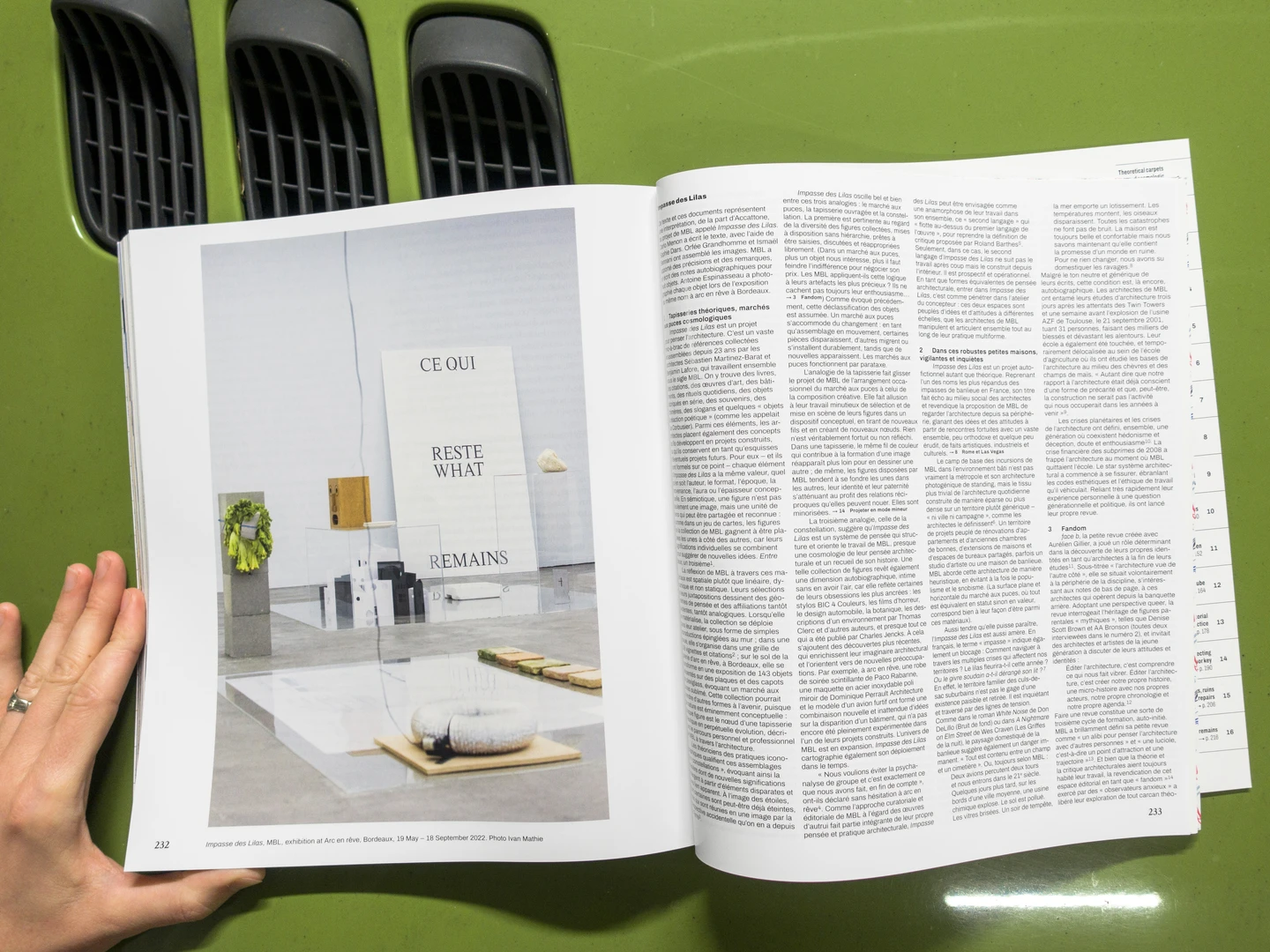
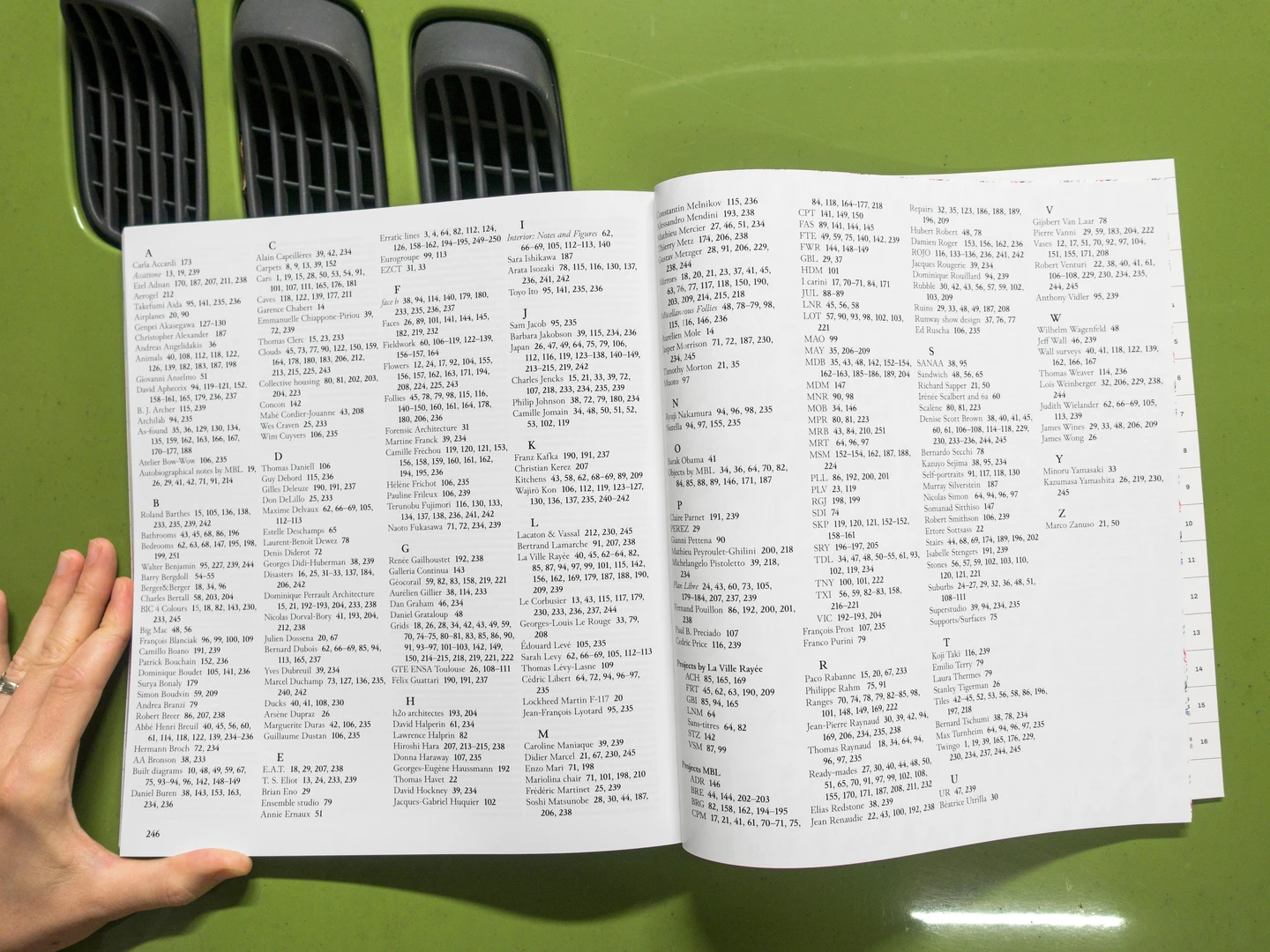
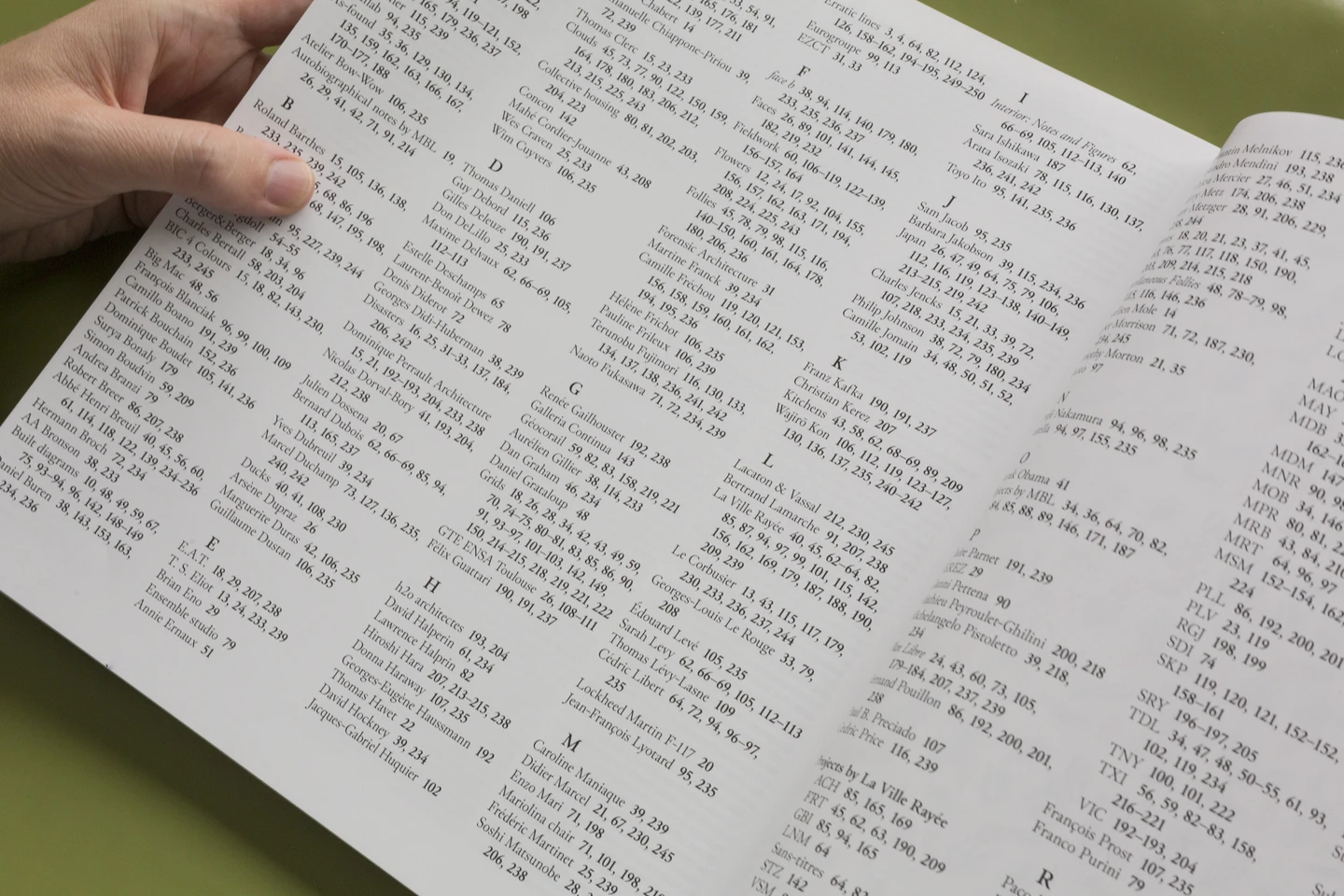
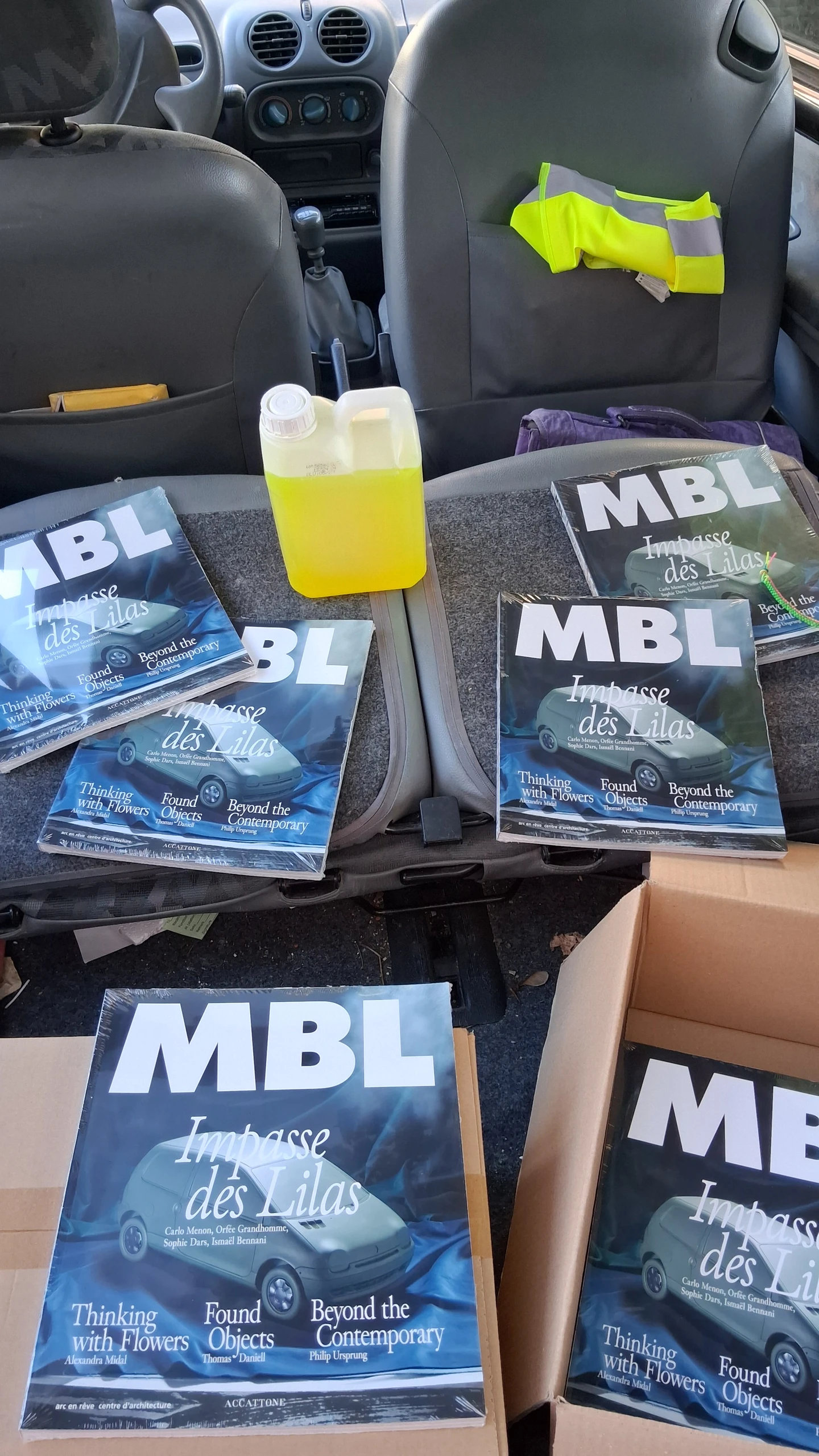
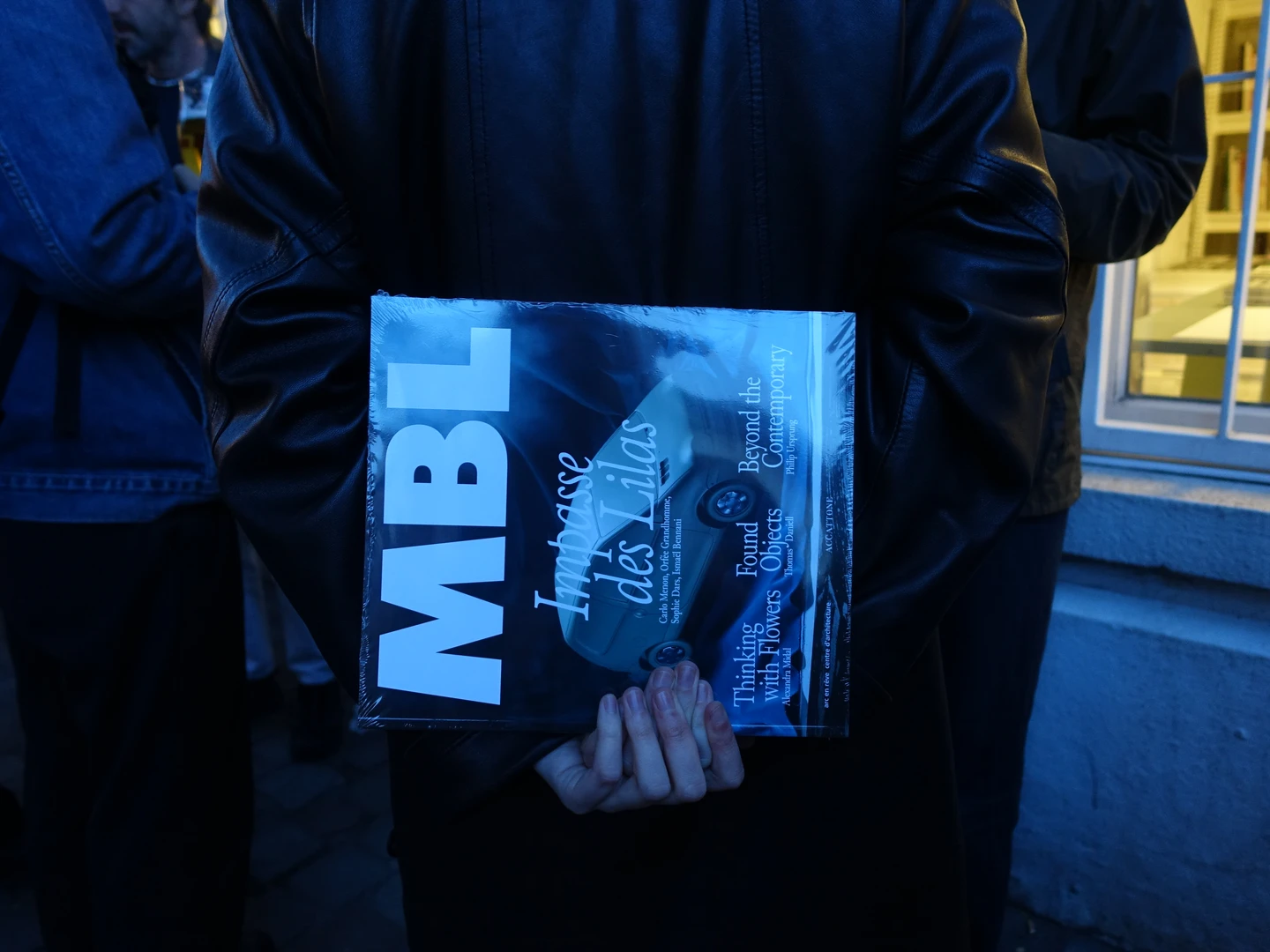
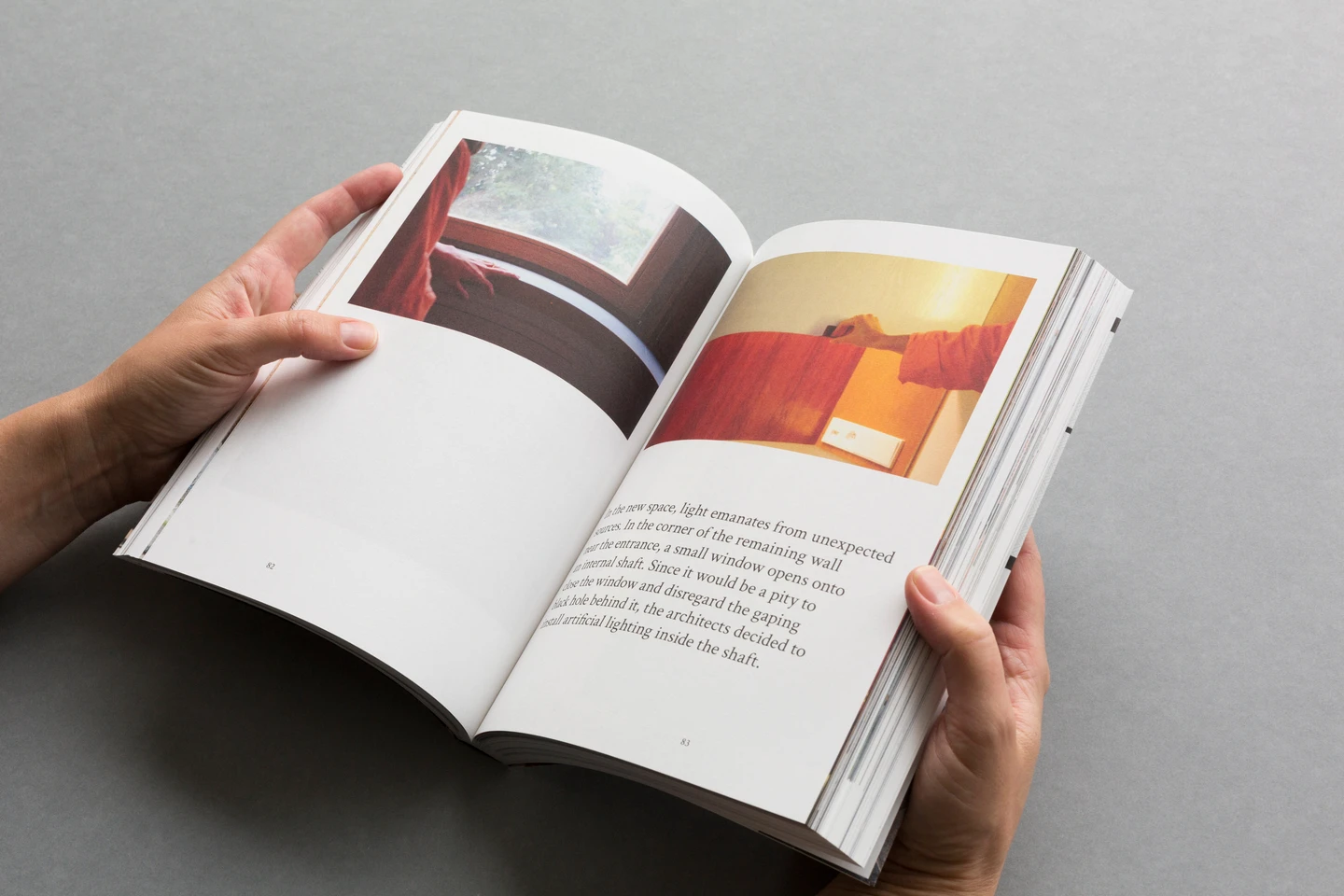
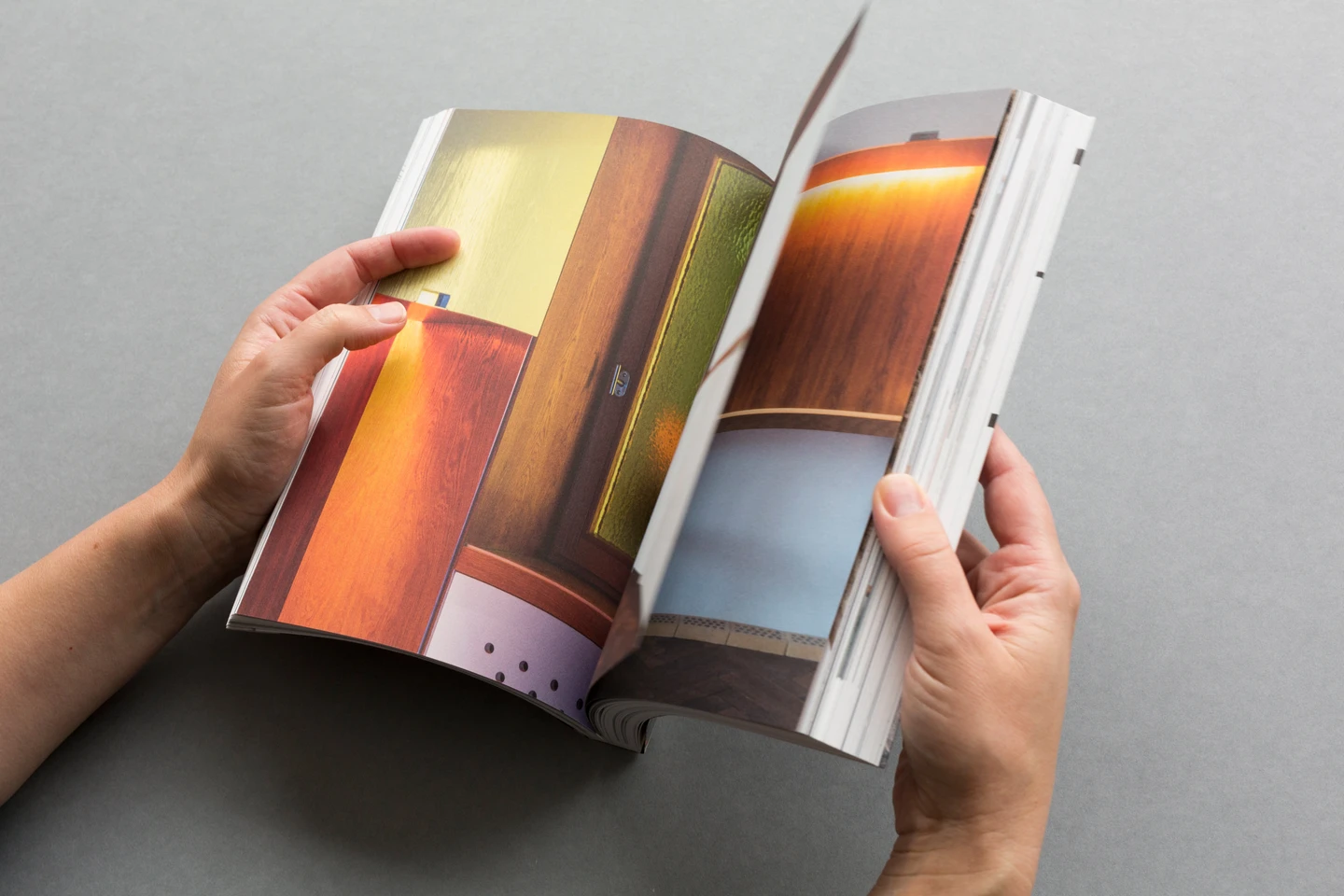
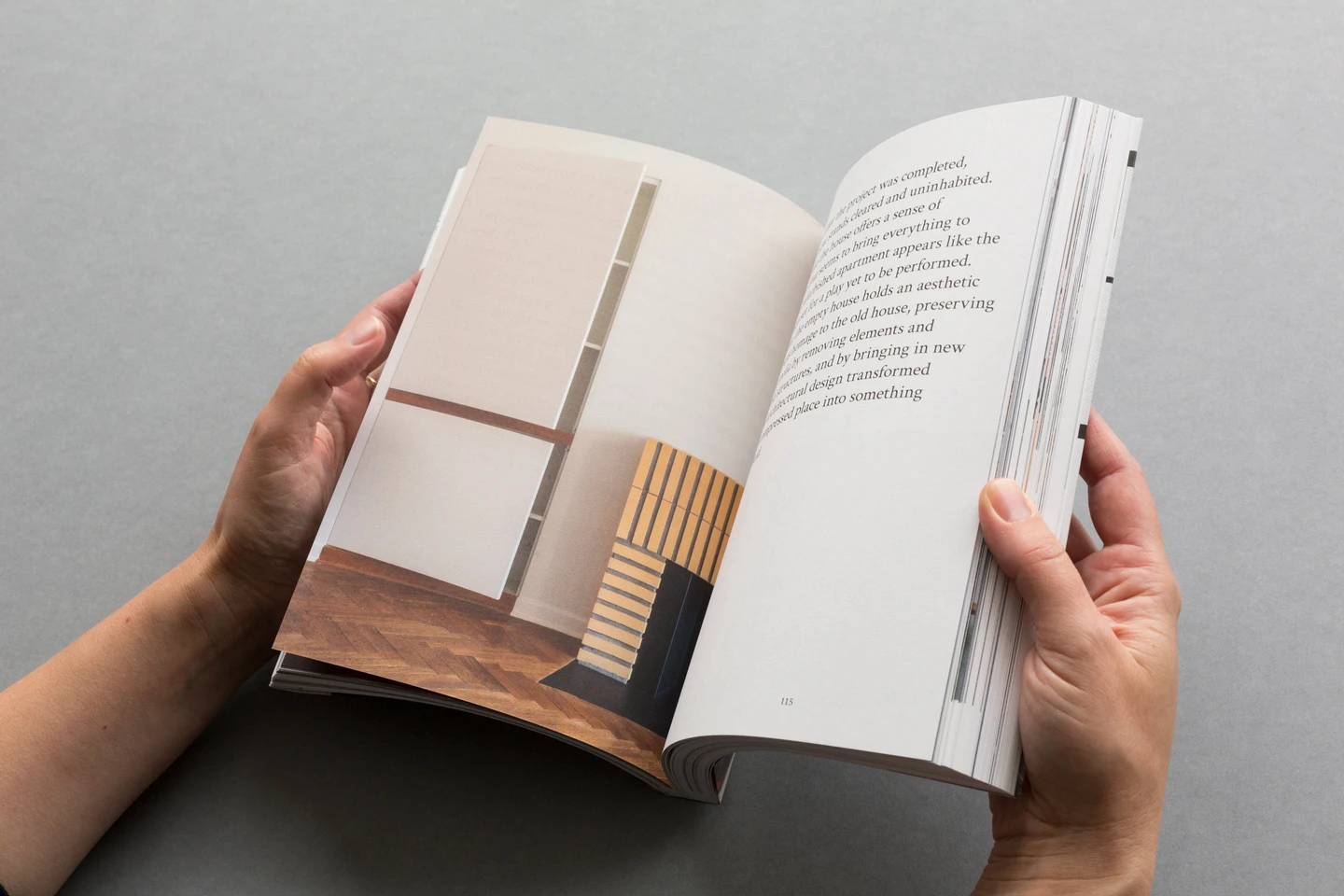
Accattone, Arc en rêve Editorial, Book 2025MBL is an architecture studio founded by Sébastien Martinez-Barat and Benjamin Lafore, later joined by Florian Jomain. Their work explores various fields of architectural culture through buildings, publications, teaching, object design and curating. MBL is committed to a practice of architecture as an investigation and an eclectic production.
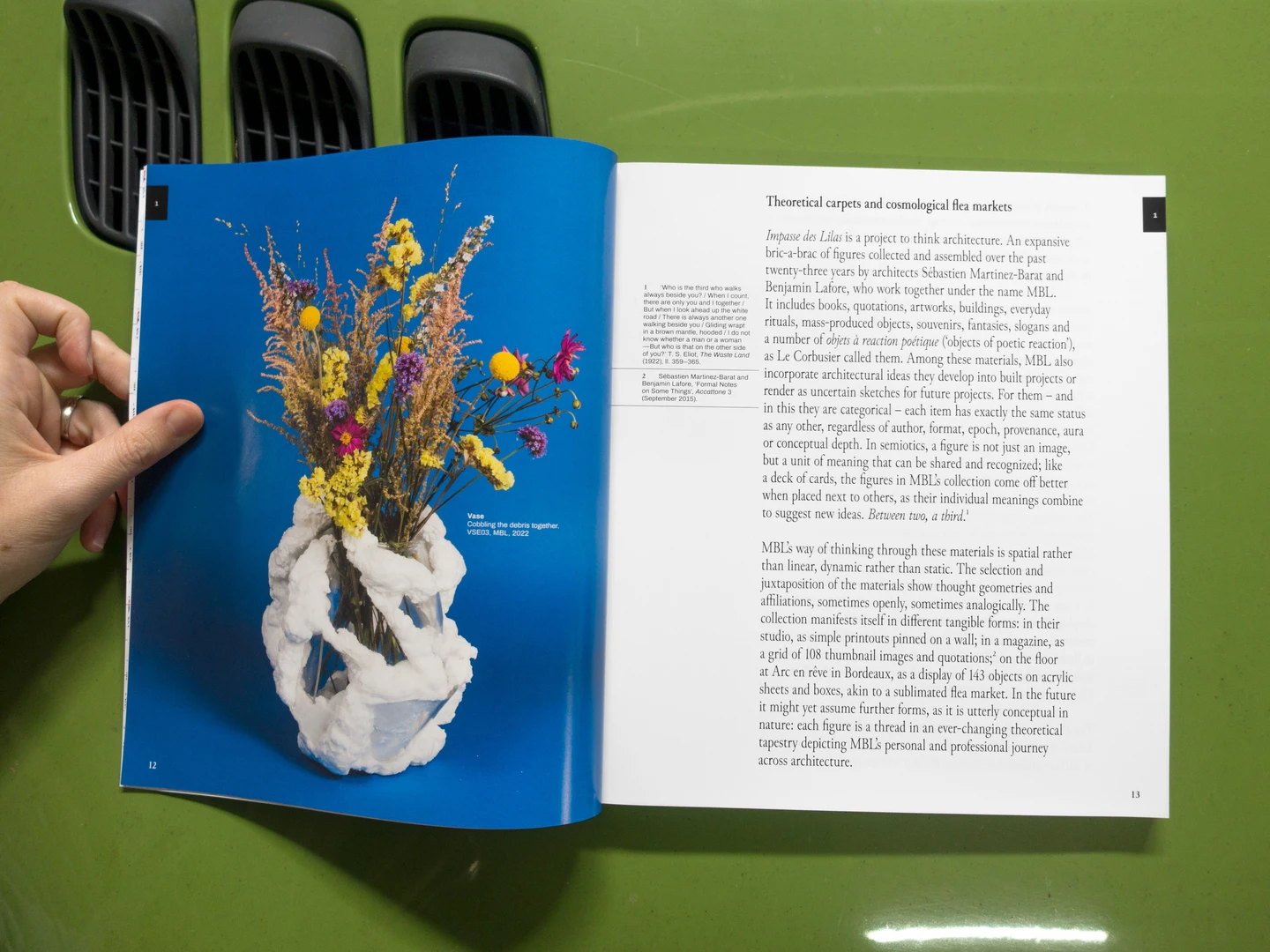
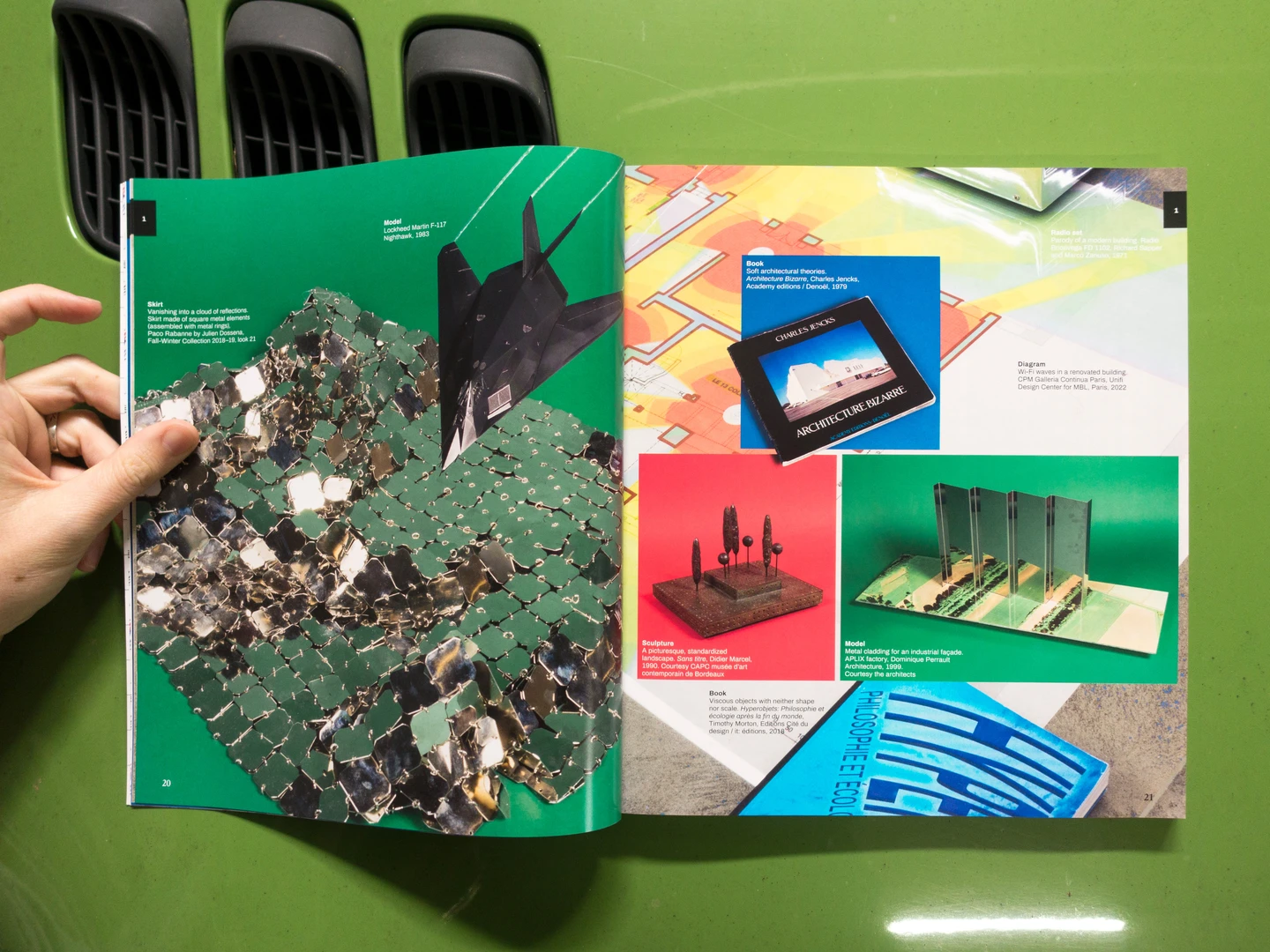
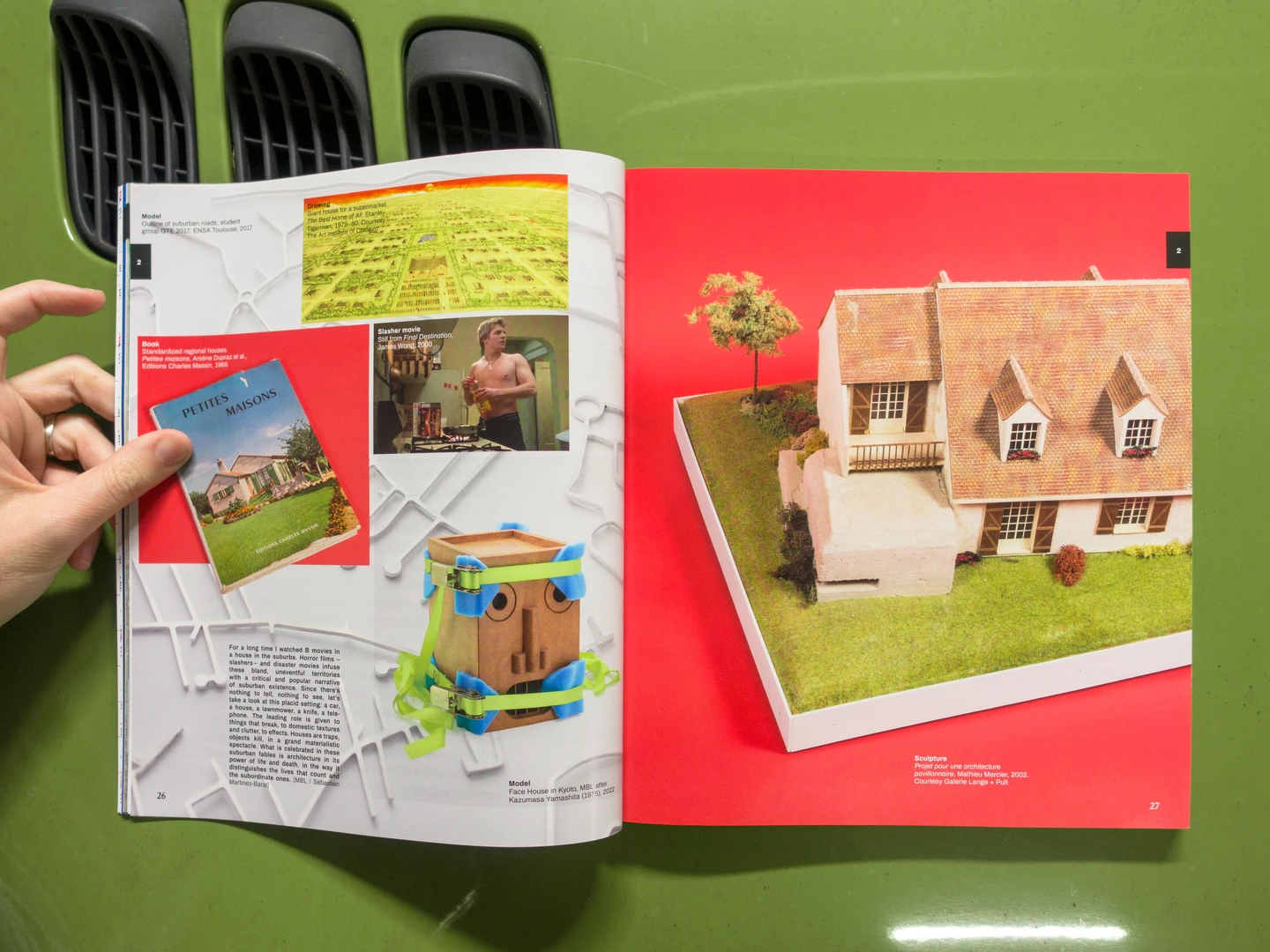
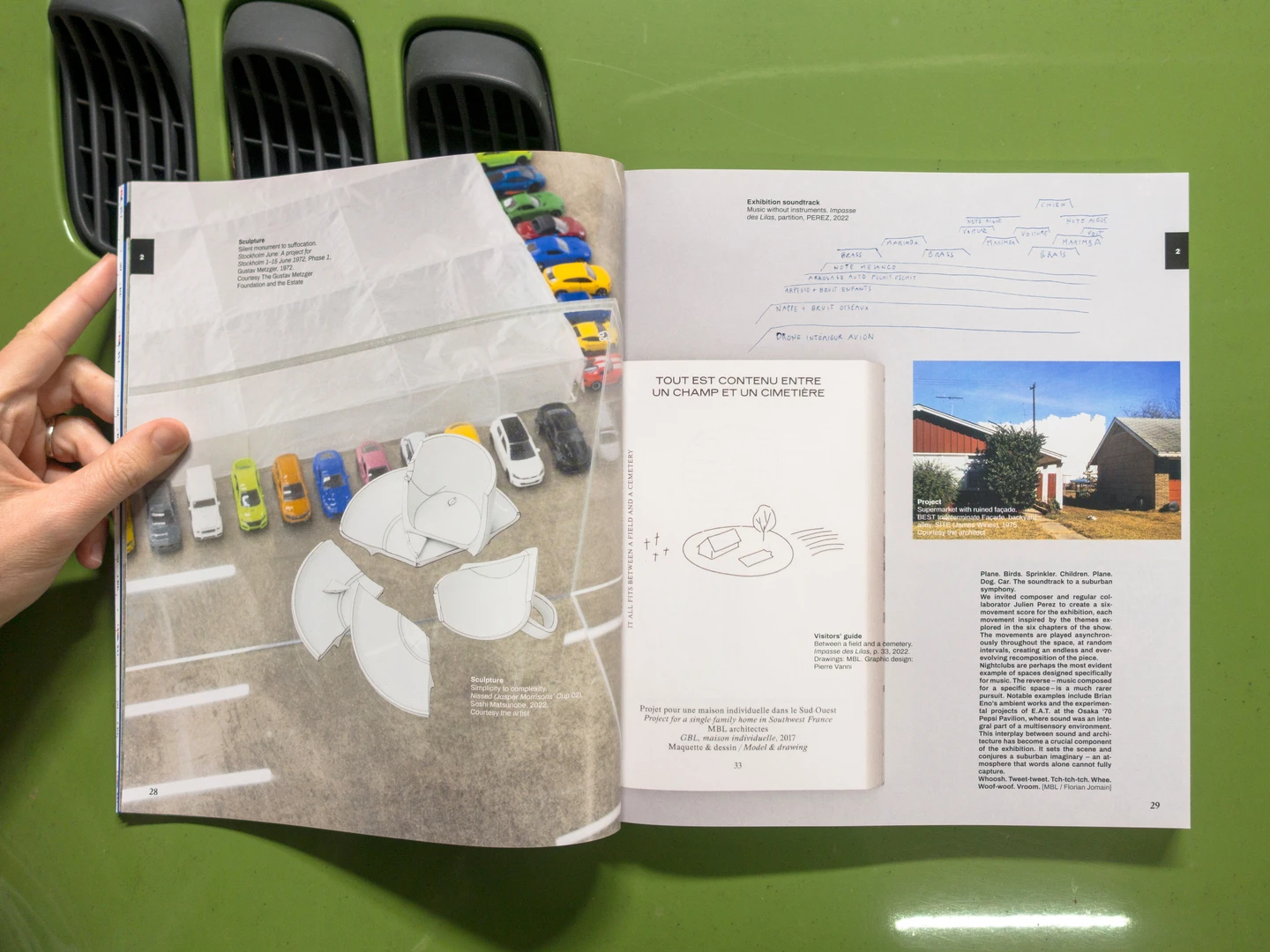
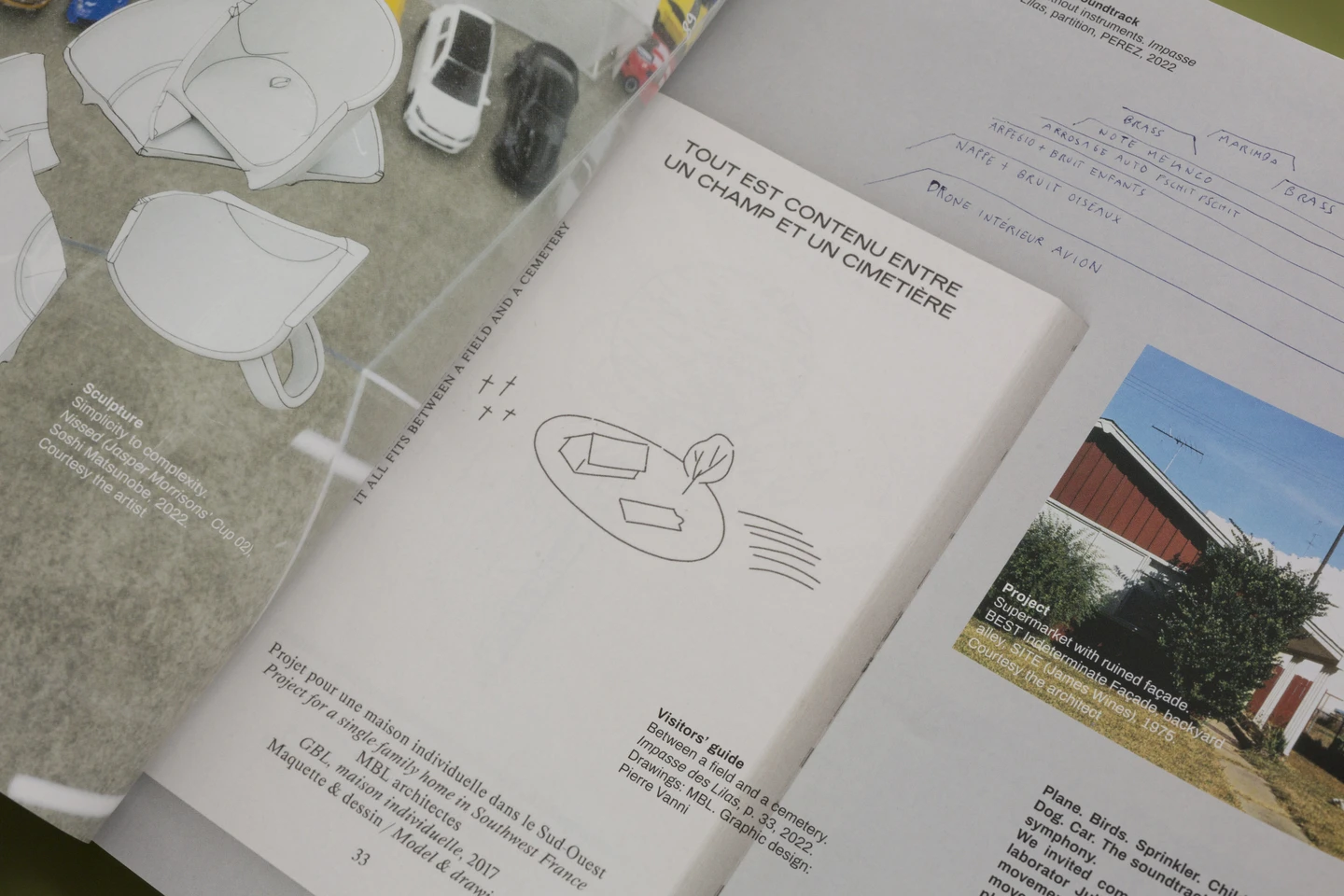
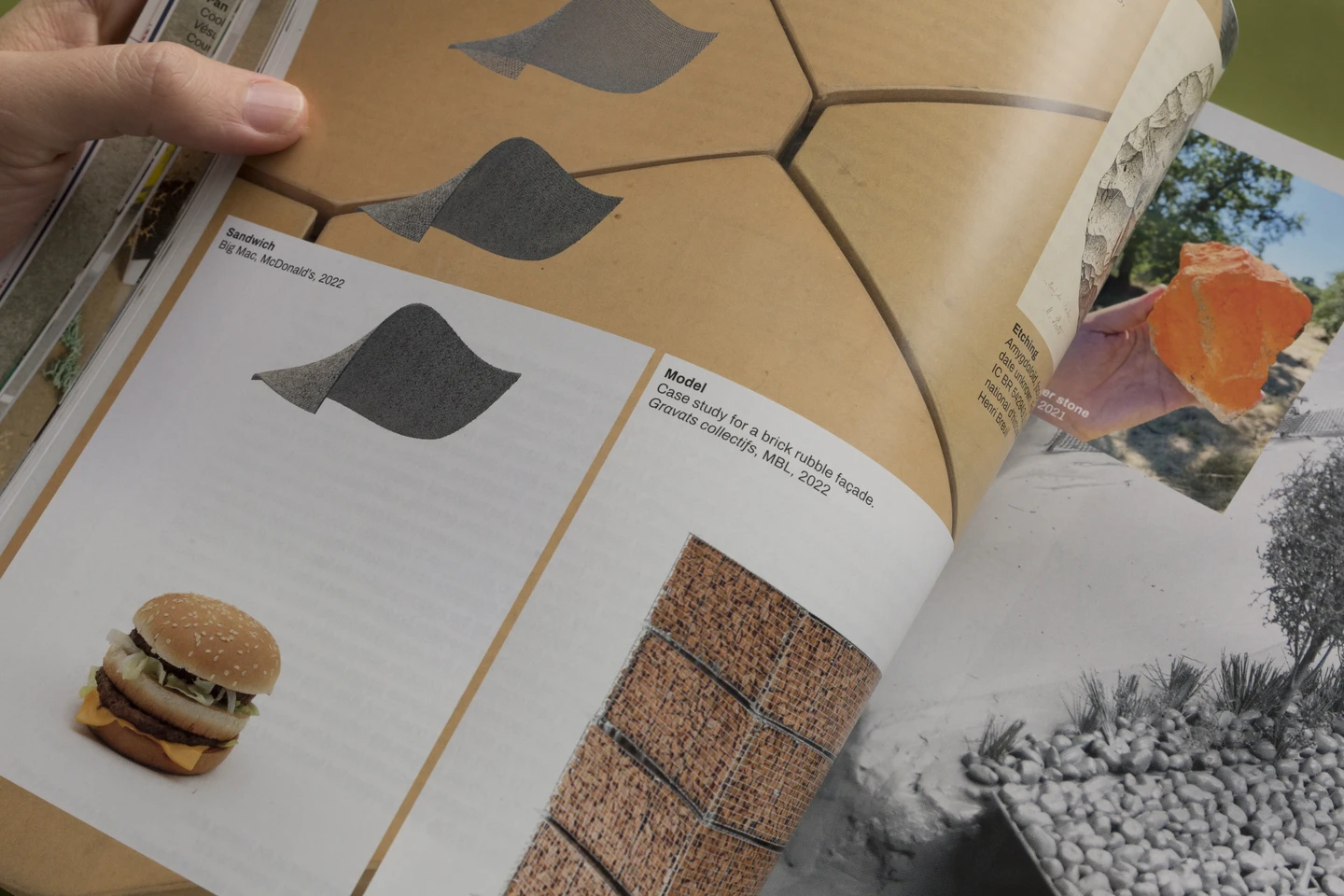
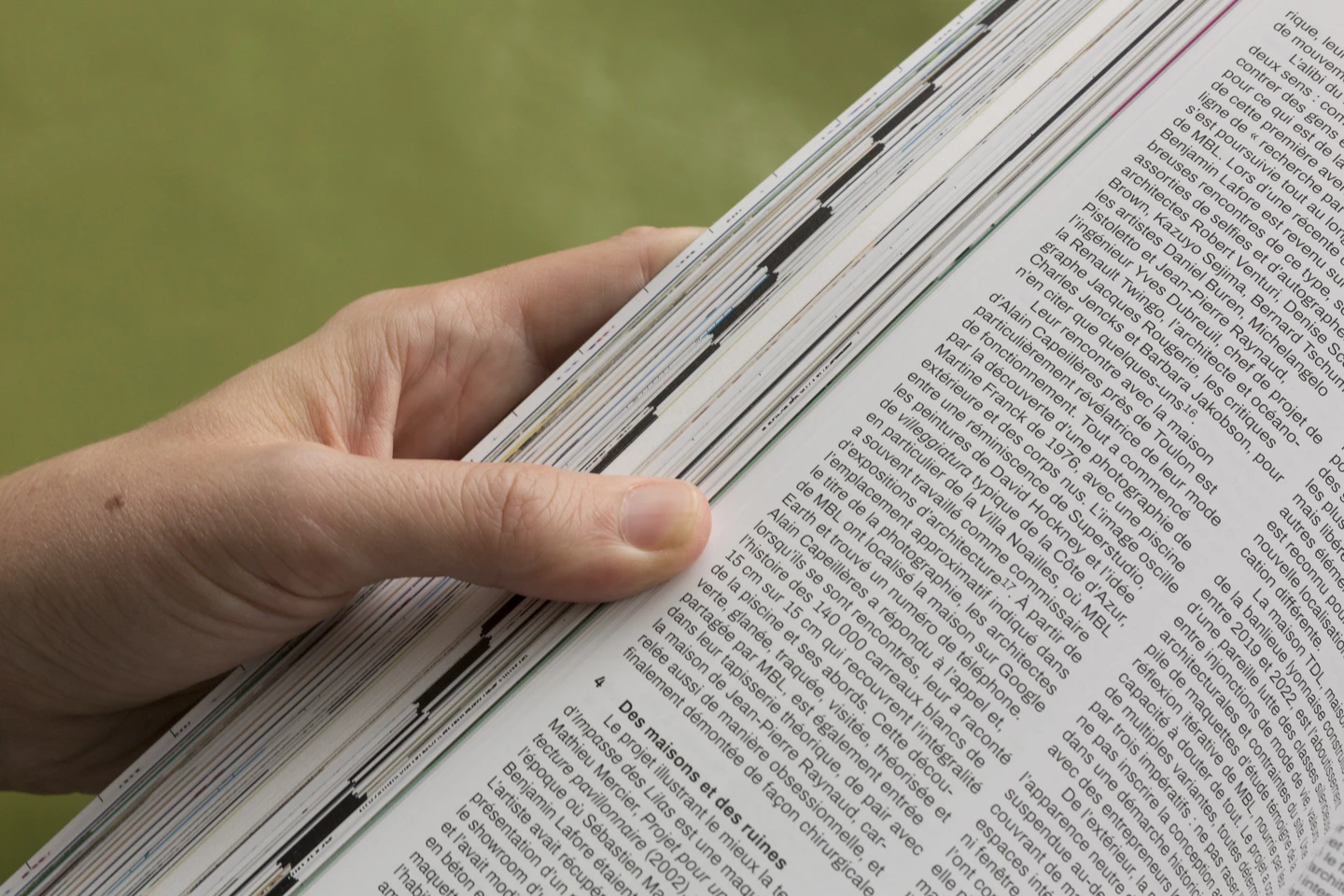
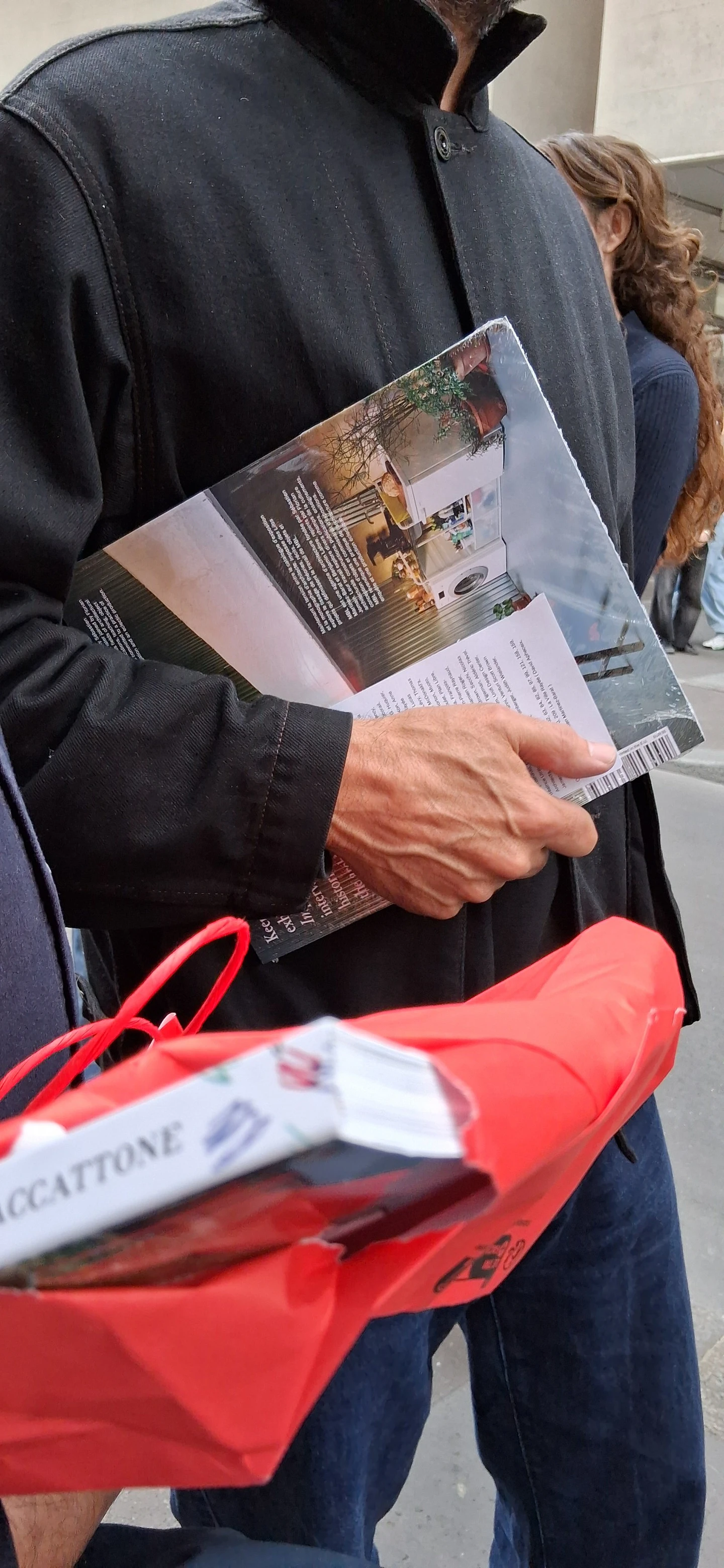
Keeping up the tension between exhibition catalogue and monograph, Impasse des Lilas explores the interweaving of theories, personal histories, objects and projects that define the architectural practice of MBL.
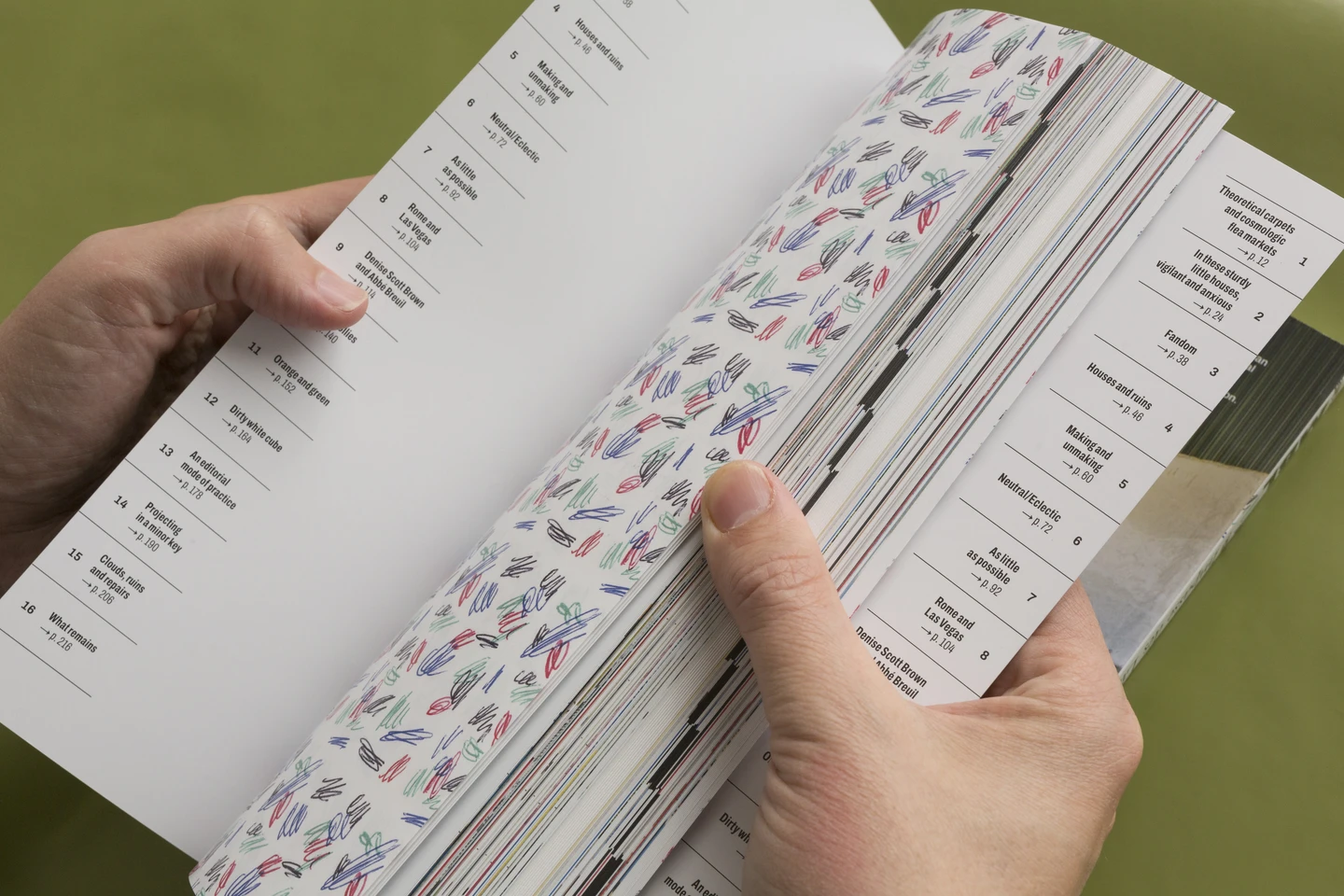
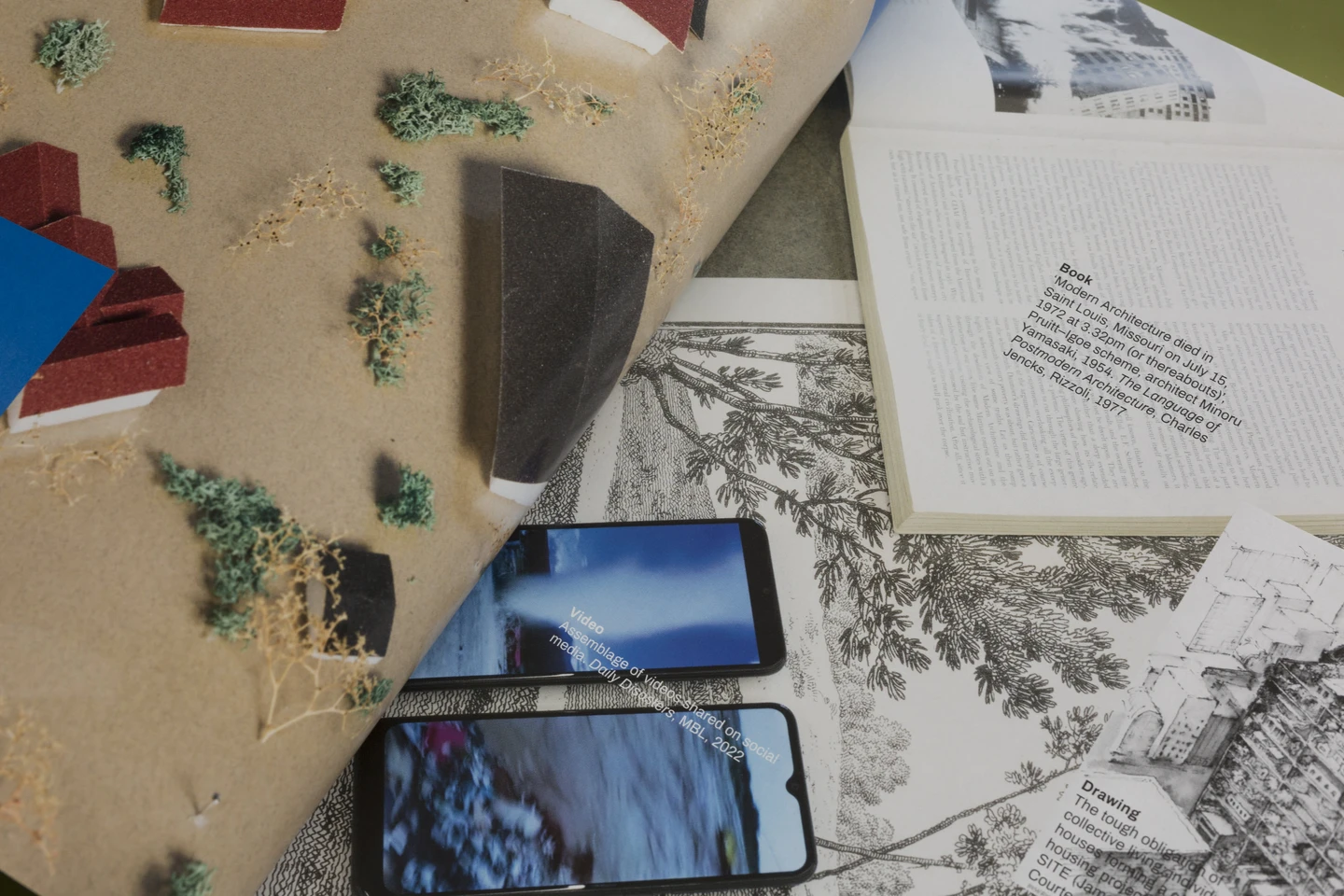
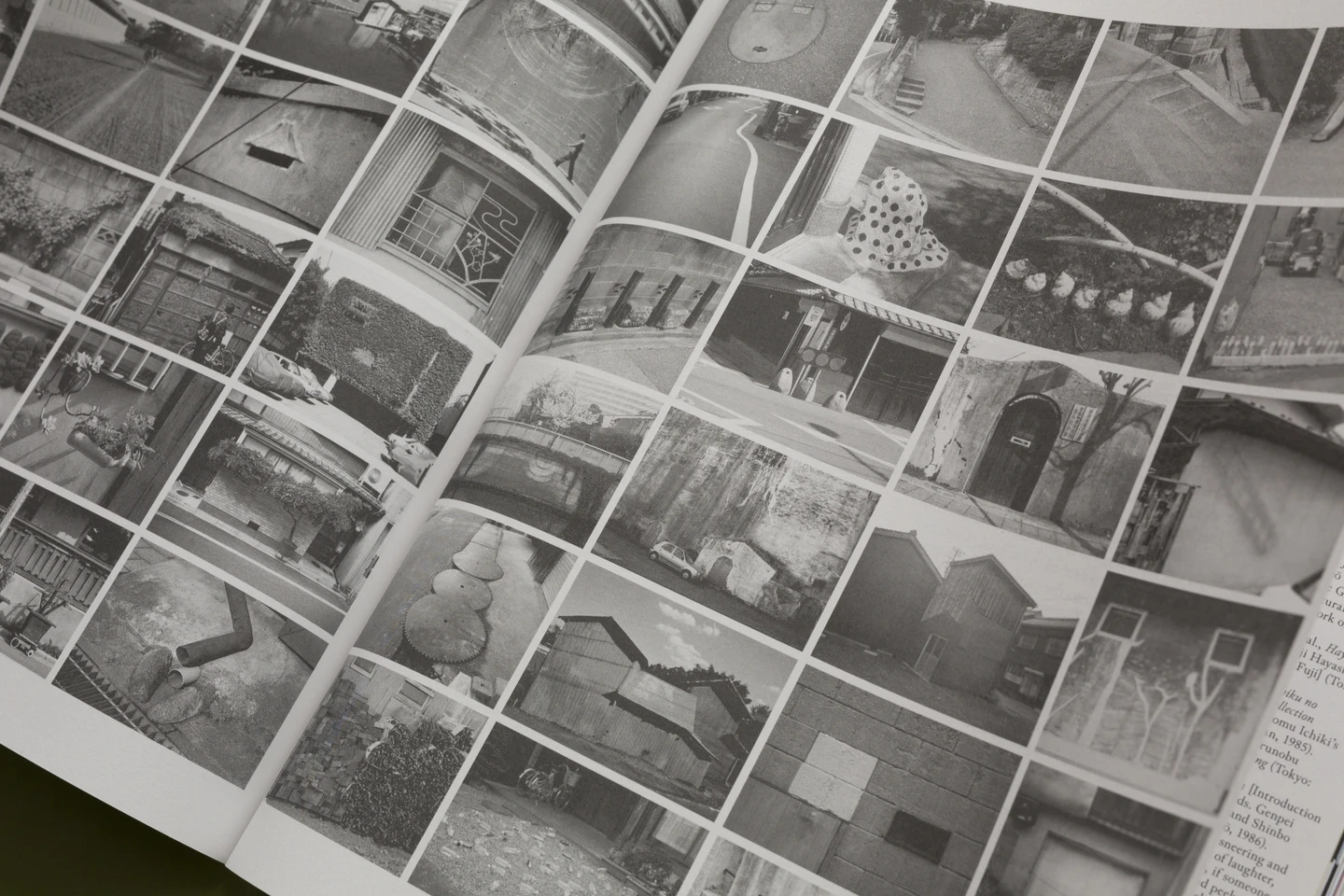
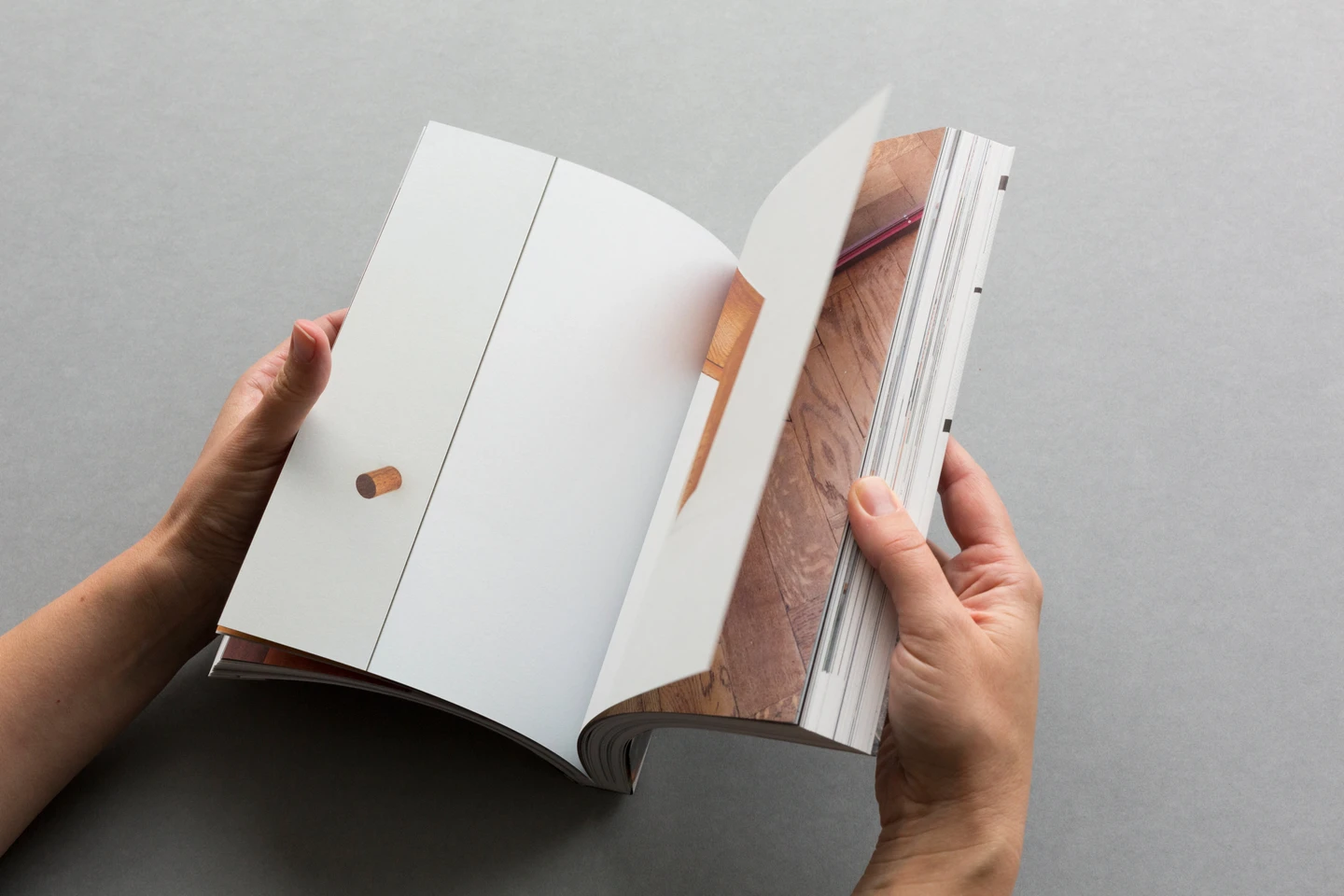
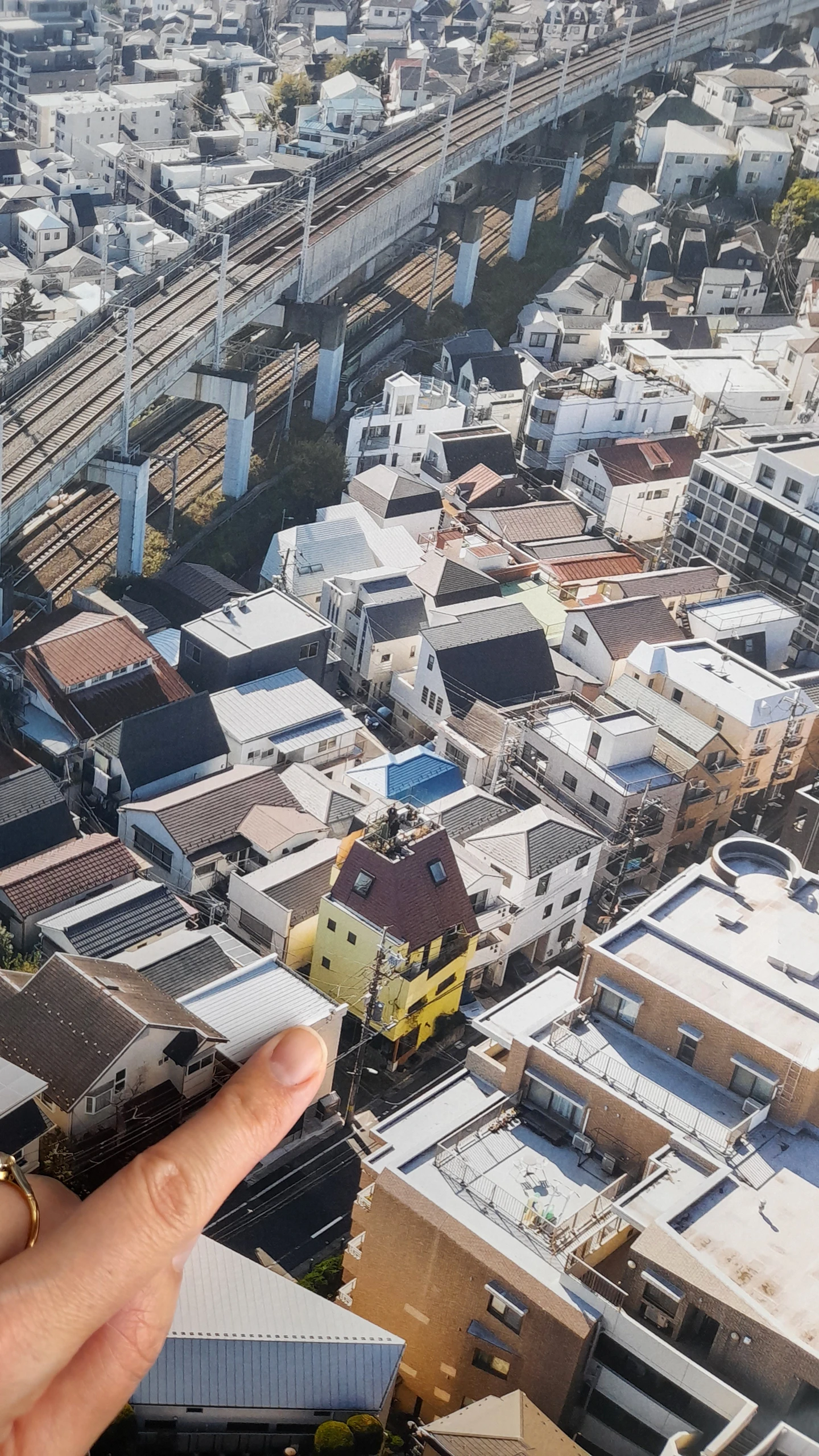
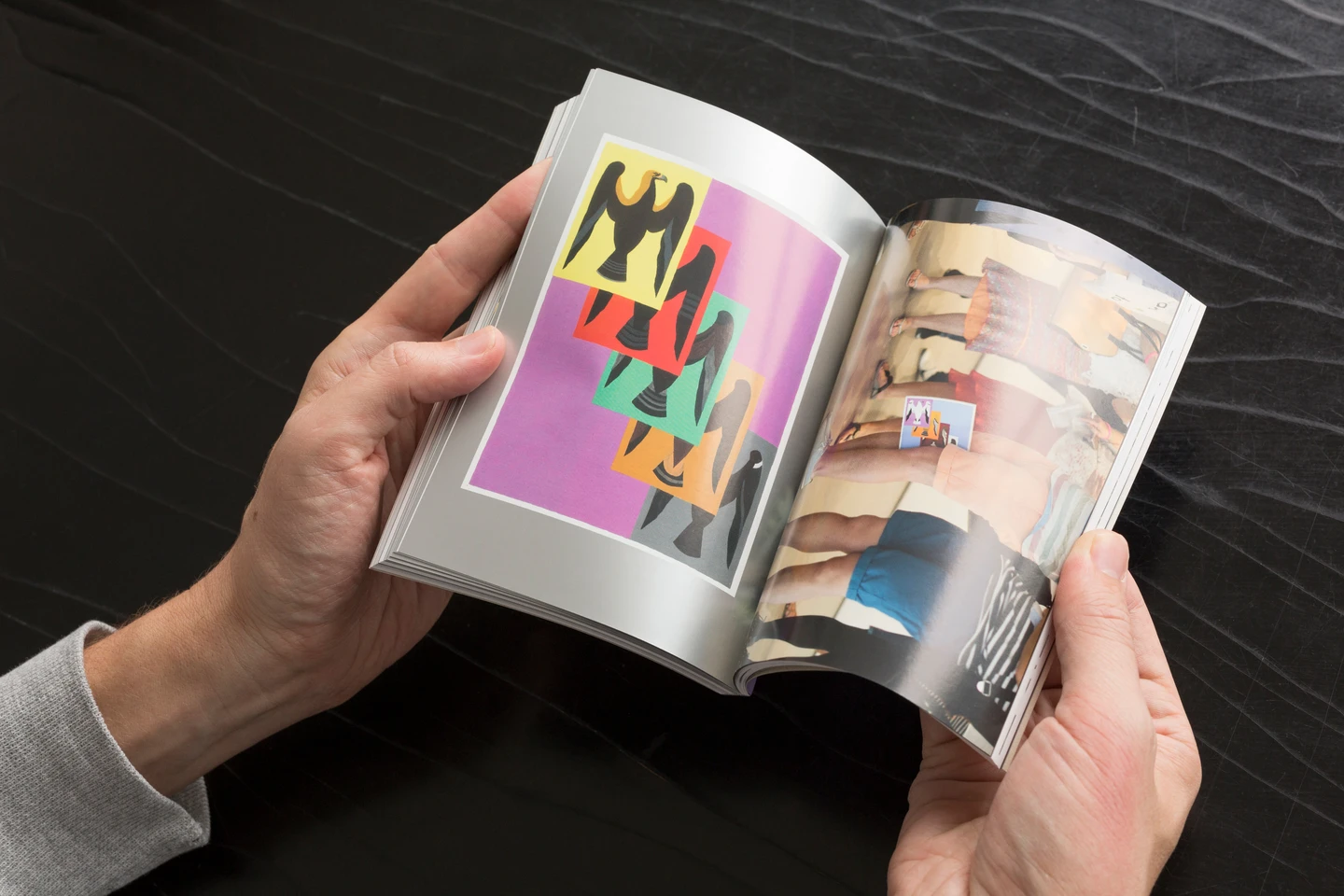
The book plays with the codes of various popular types of publications such as the mail-order and household goods catalogues, fashion magazines, choose-your-own-adventure books, sciences outreach ; in the rich iconographic compositions as well as in its ergonomy with wider pages and specific insert, or in the multiple options of navigation through the content. It features as a central insert Found Objects an illustrated essay subtitled Observing and learning from the mundane in Japan by Thomas Daniell which we edited and designed as a book within the book.
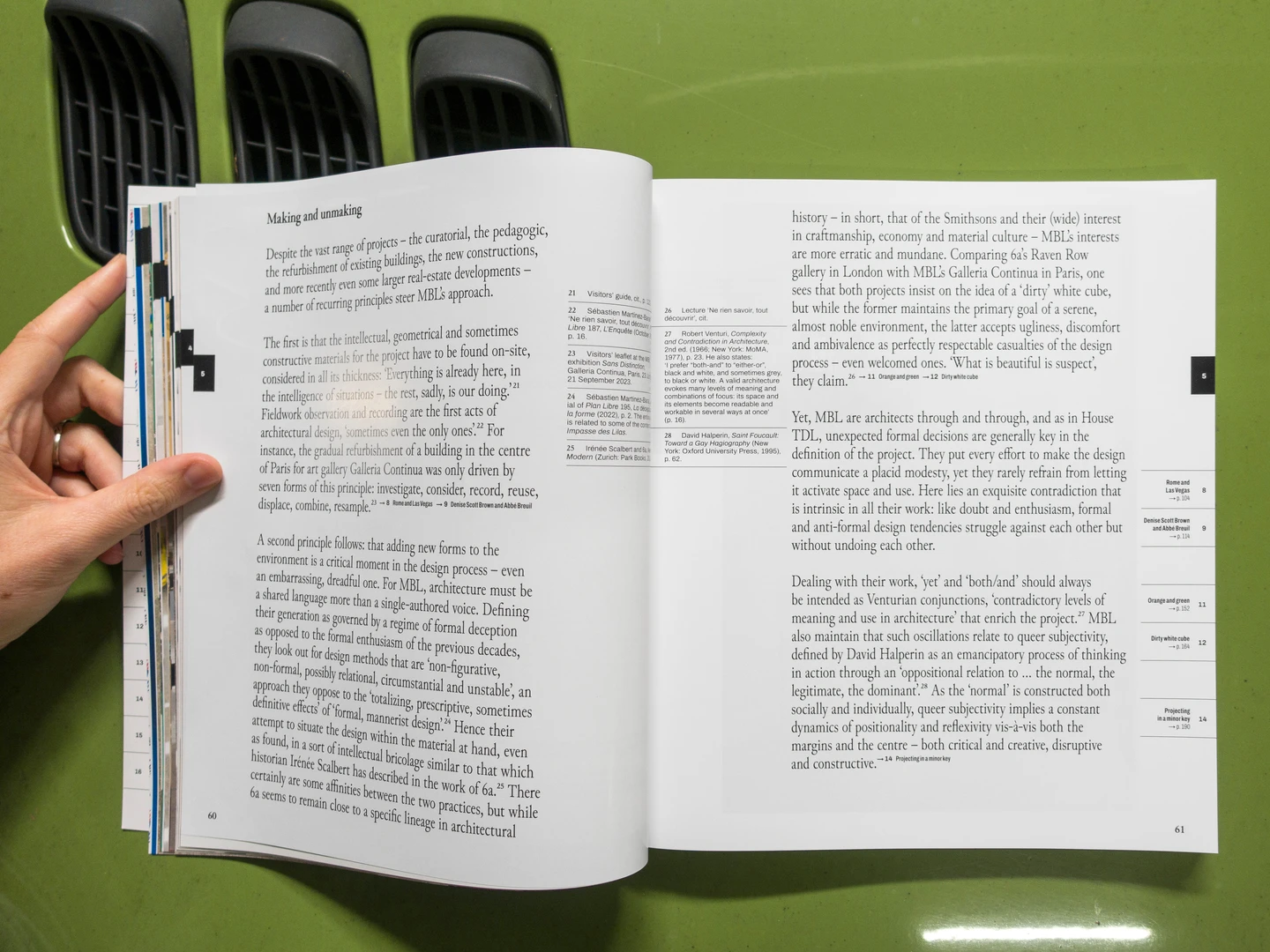
A process specificity of Impasse des Lilas resides in the fact that its writing and editing both with words and images were thought and happened as a (long lasting) exchange between MBL associates and Accattone team.
-
-
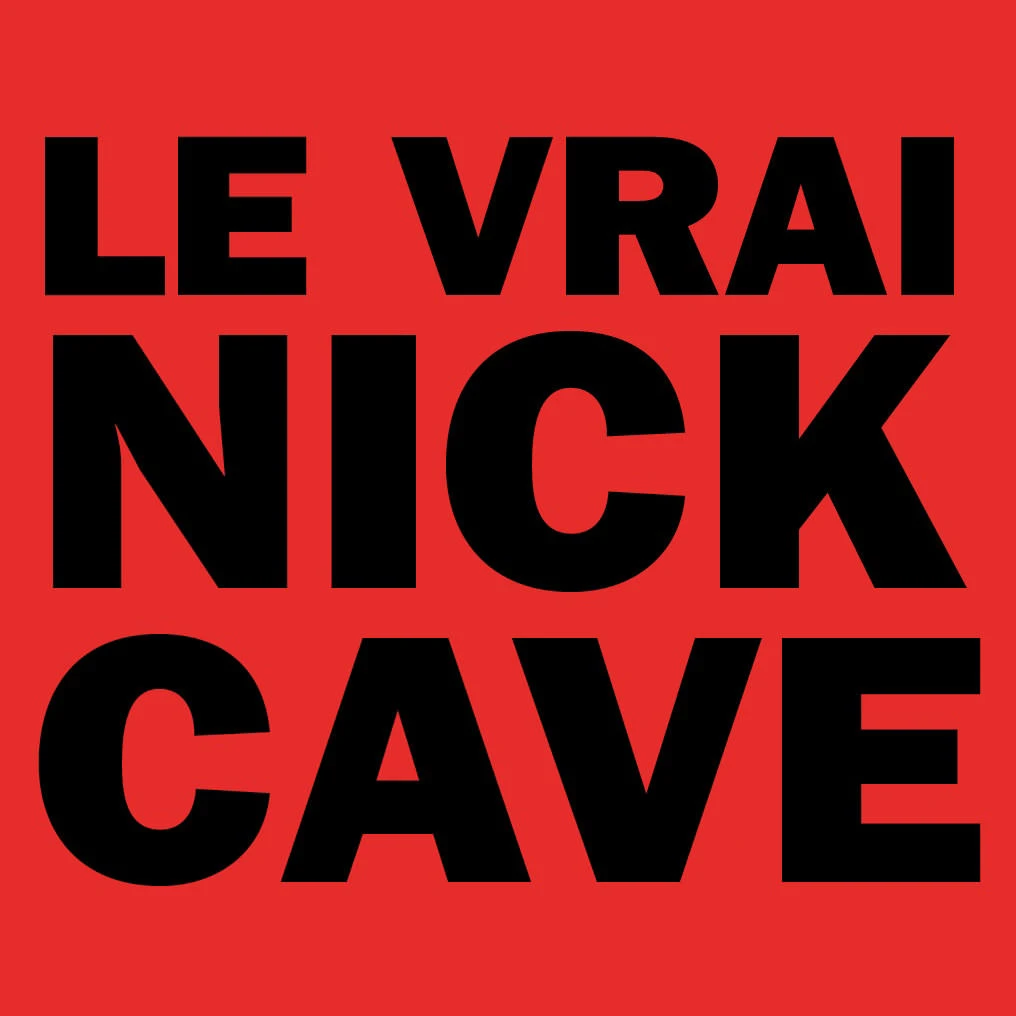
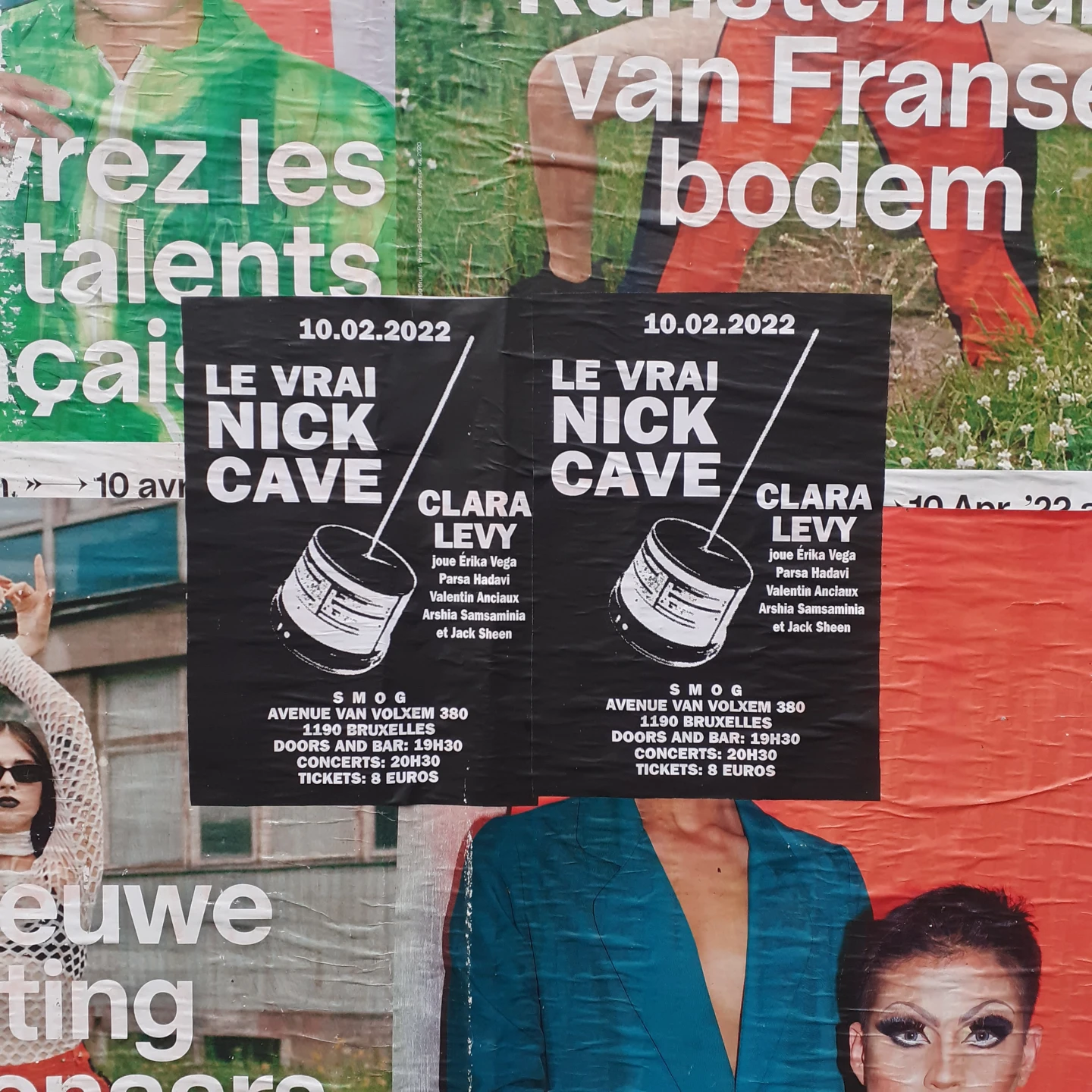
Le Vrai Nick Cave
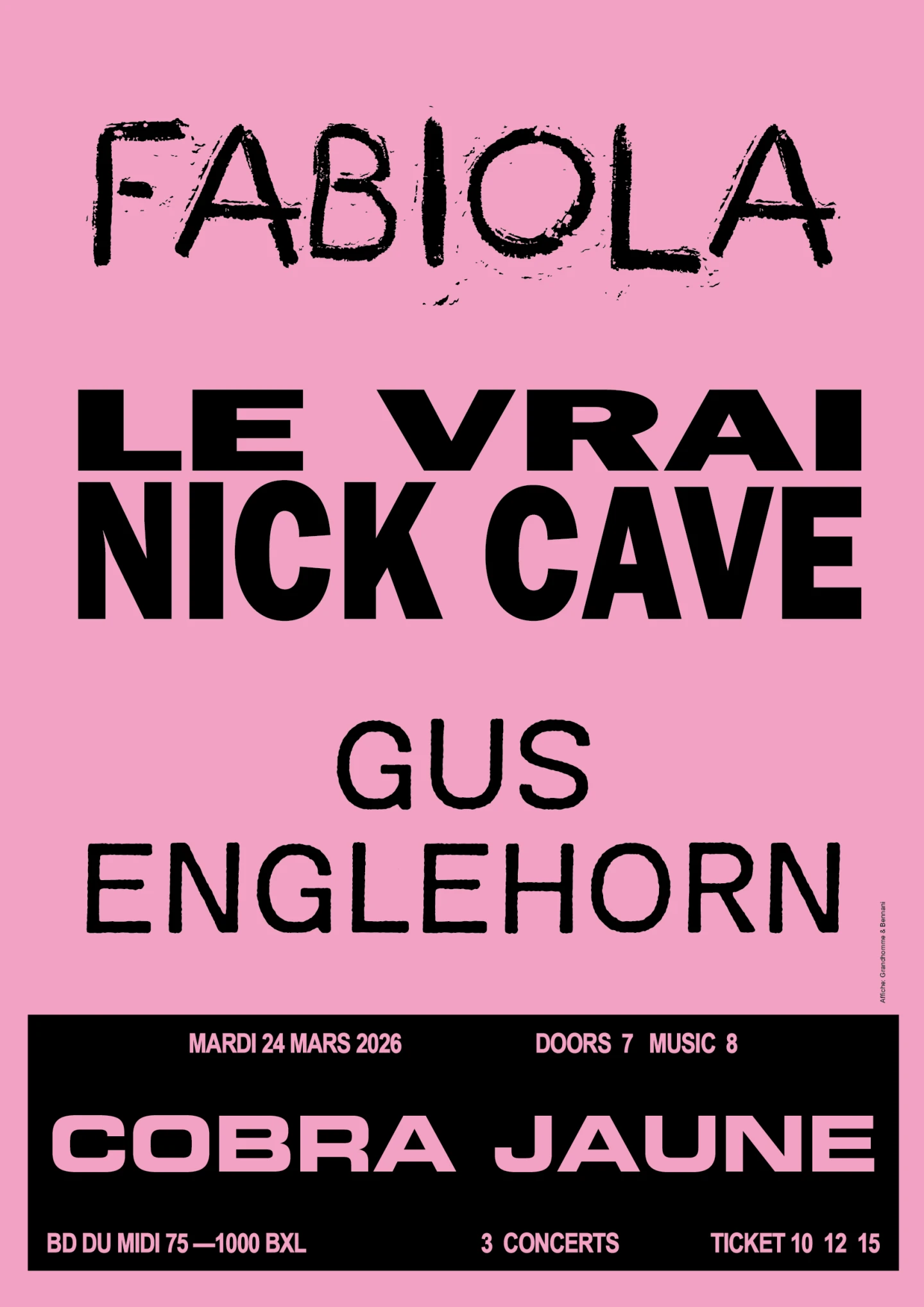
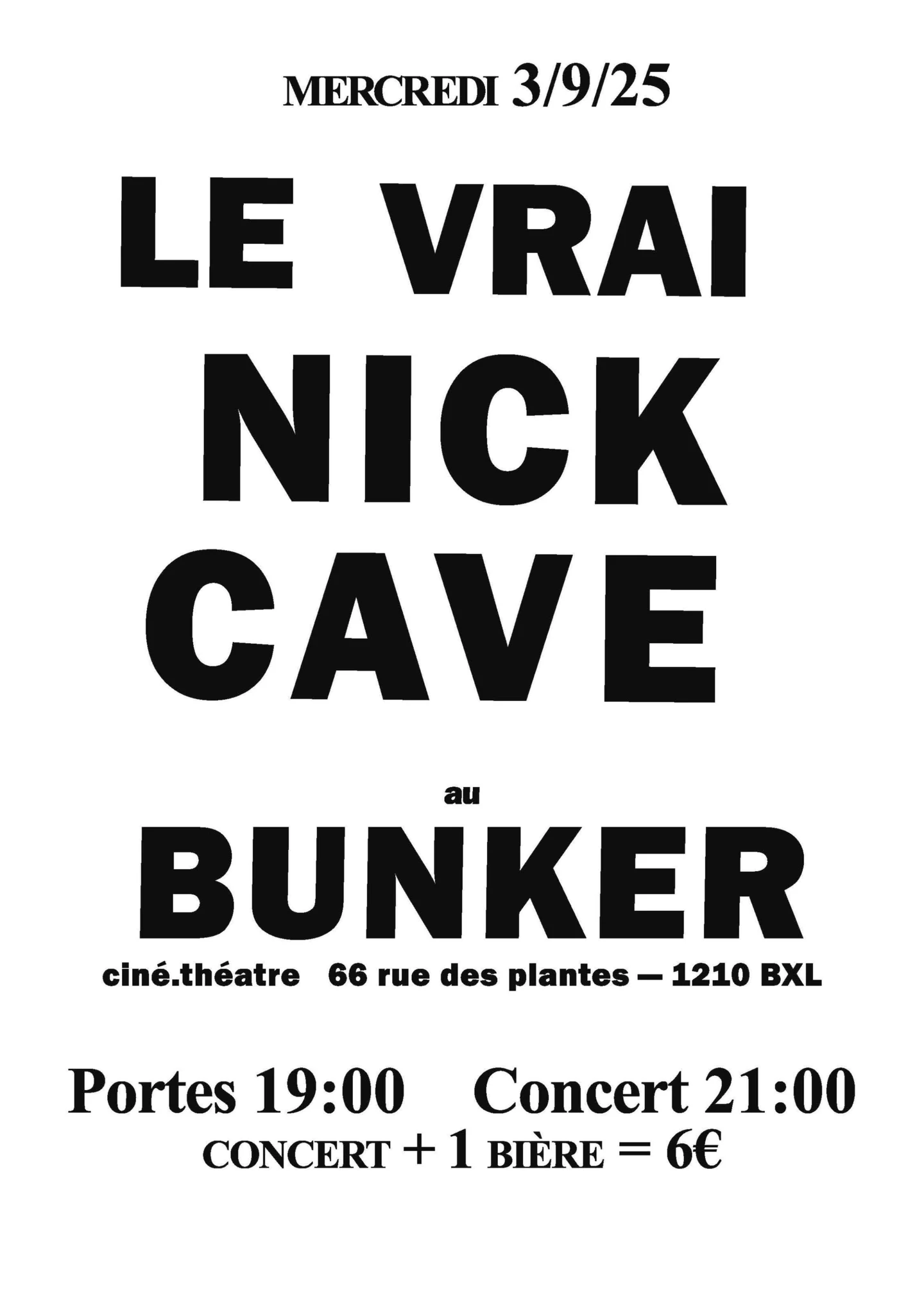
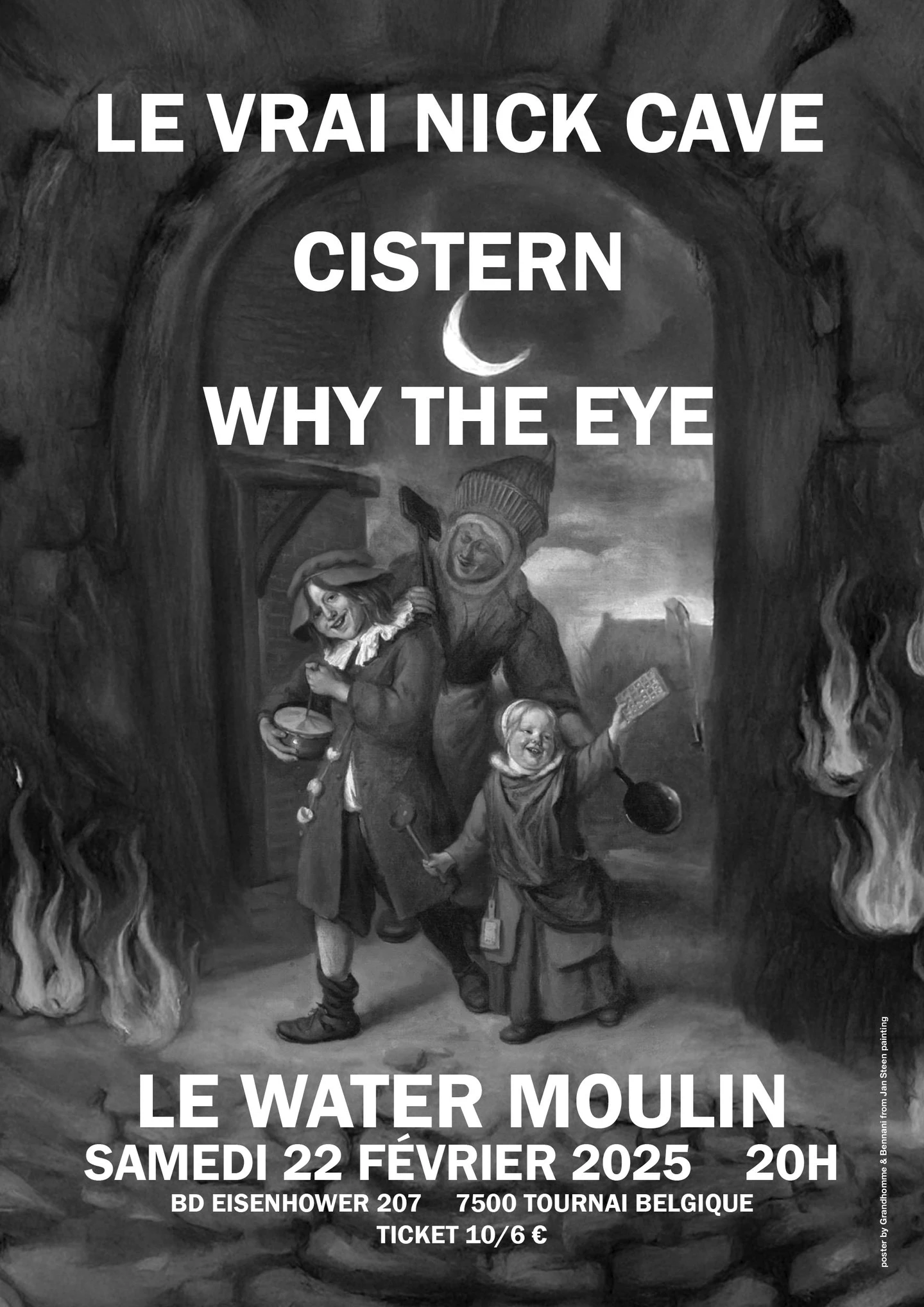
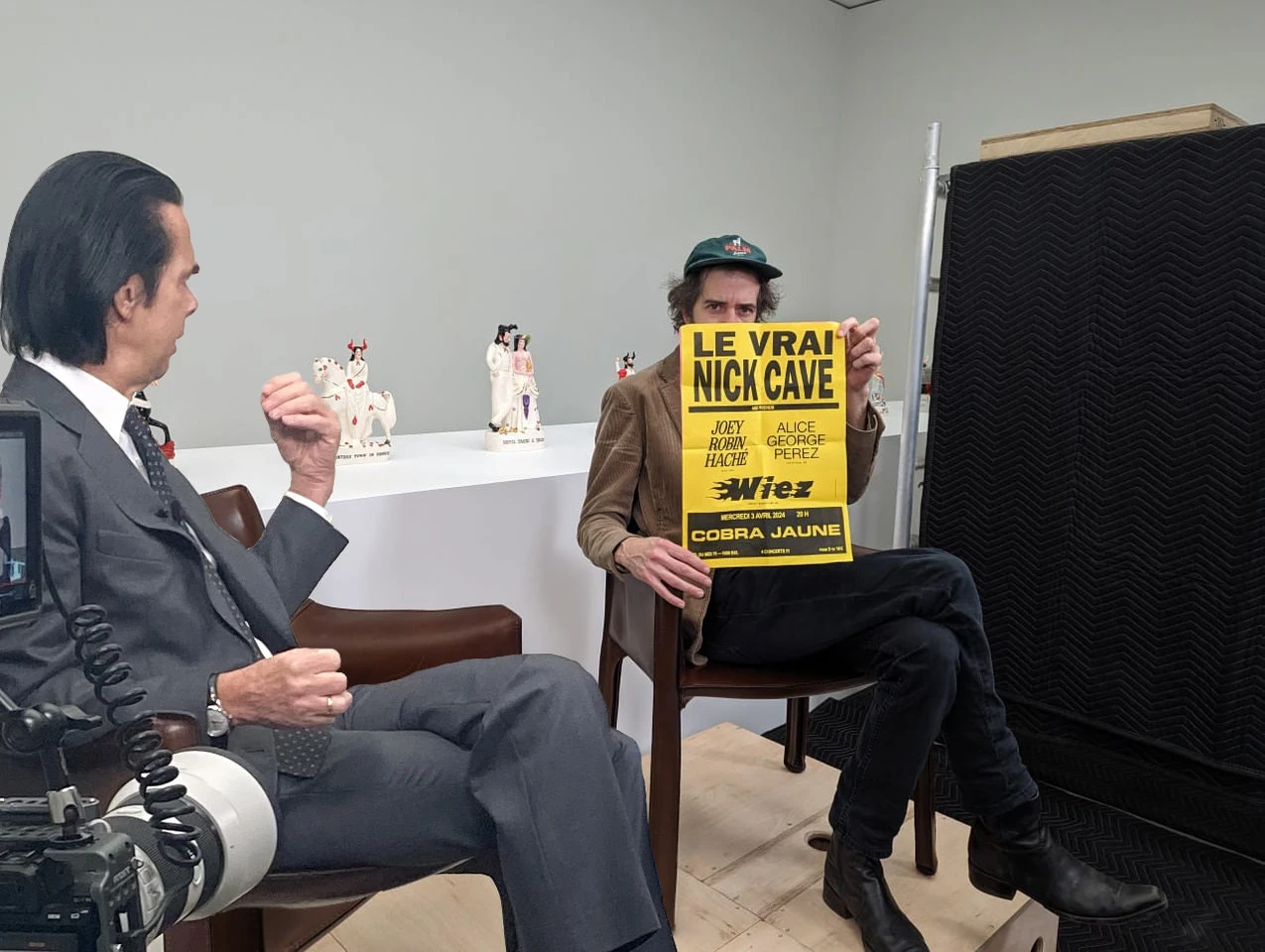
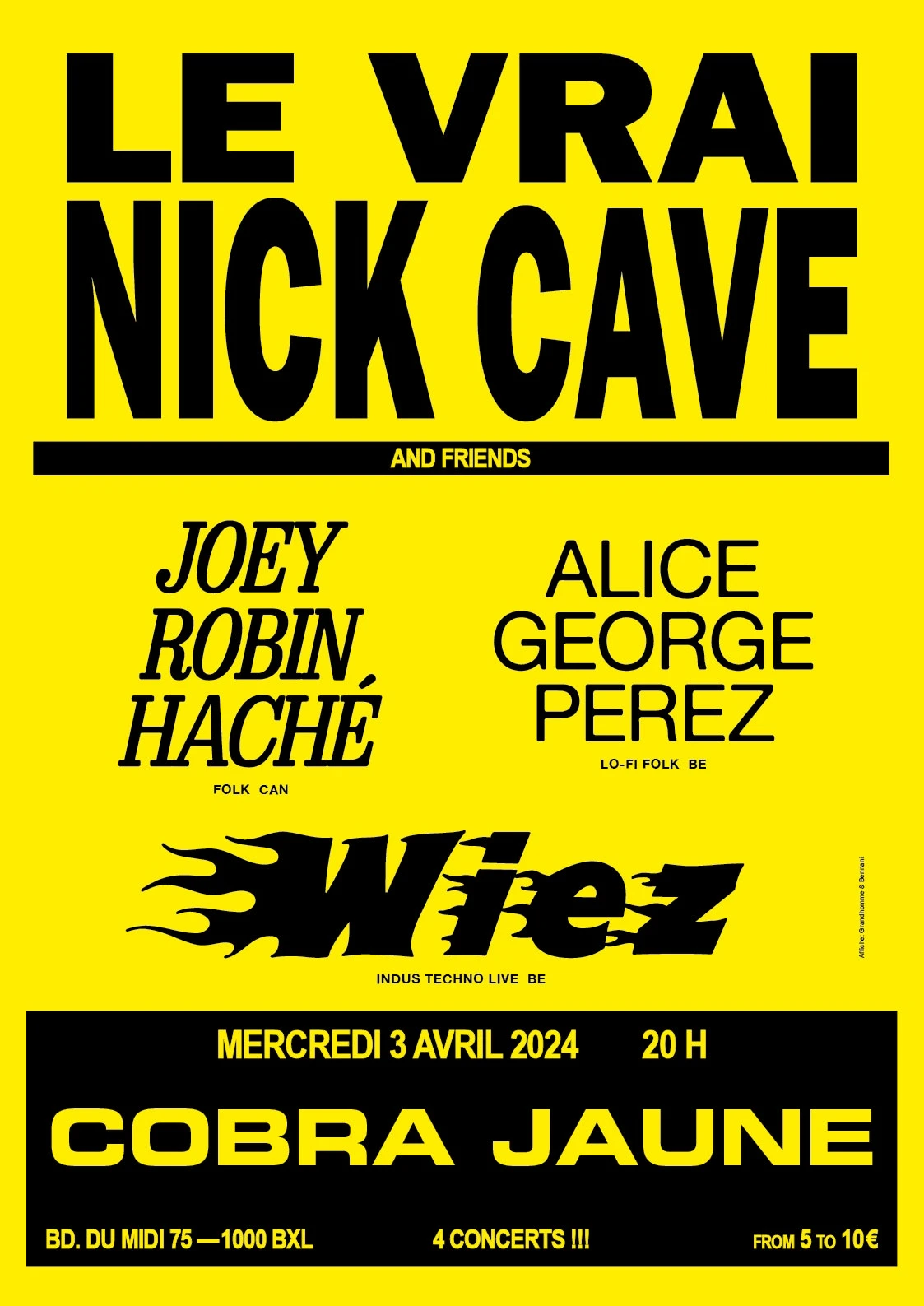
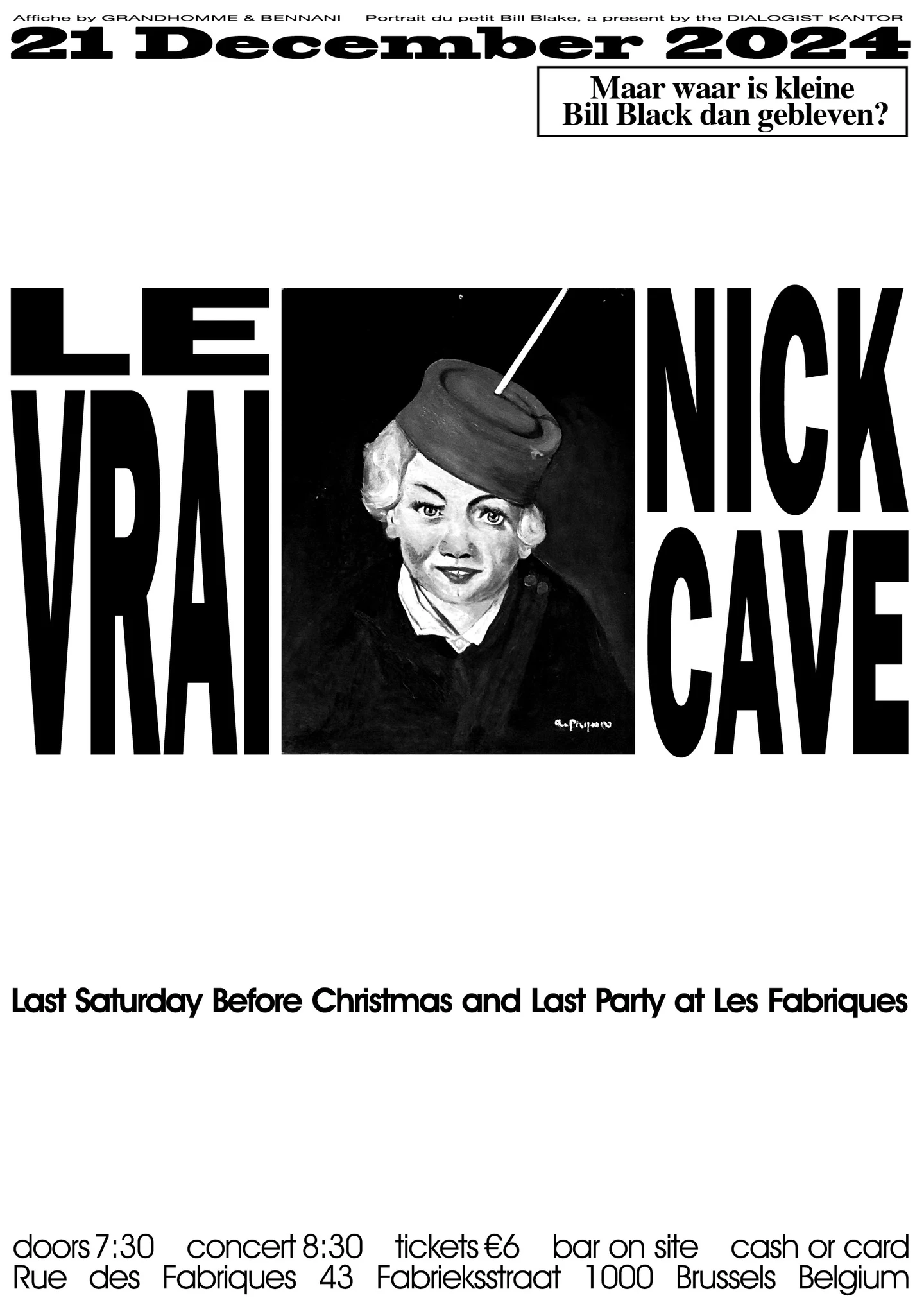
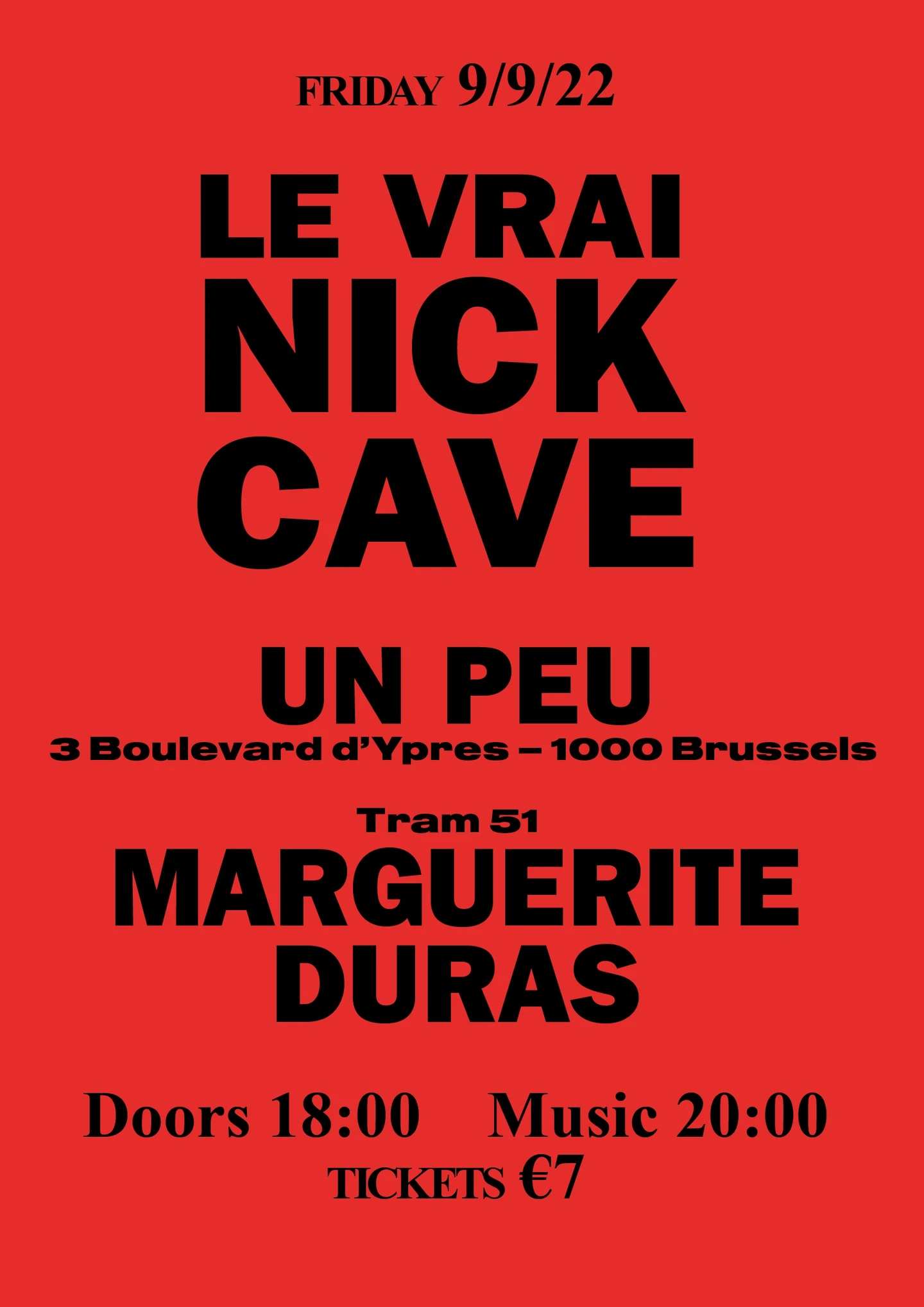
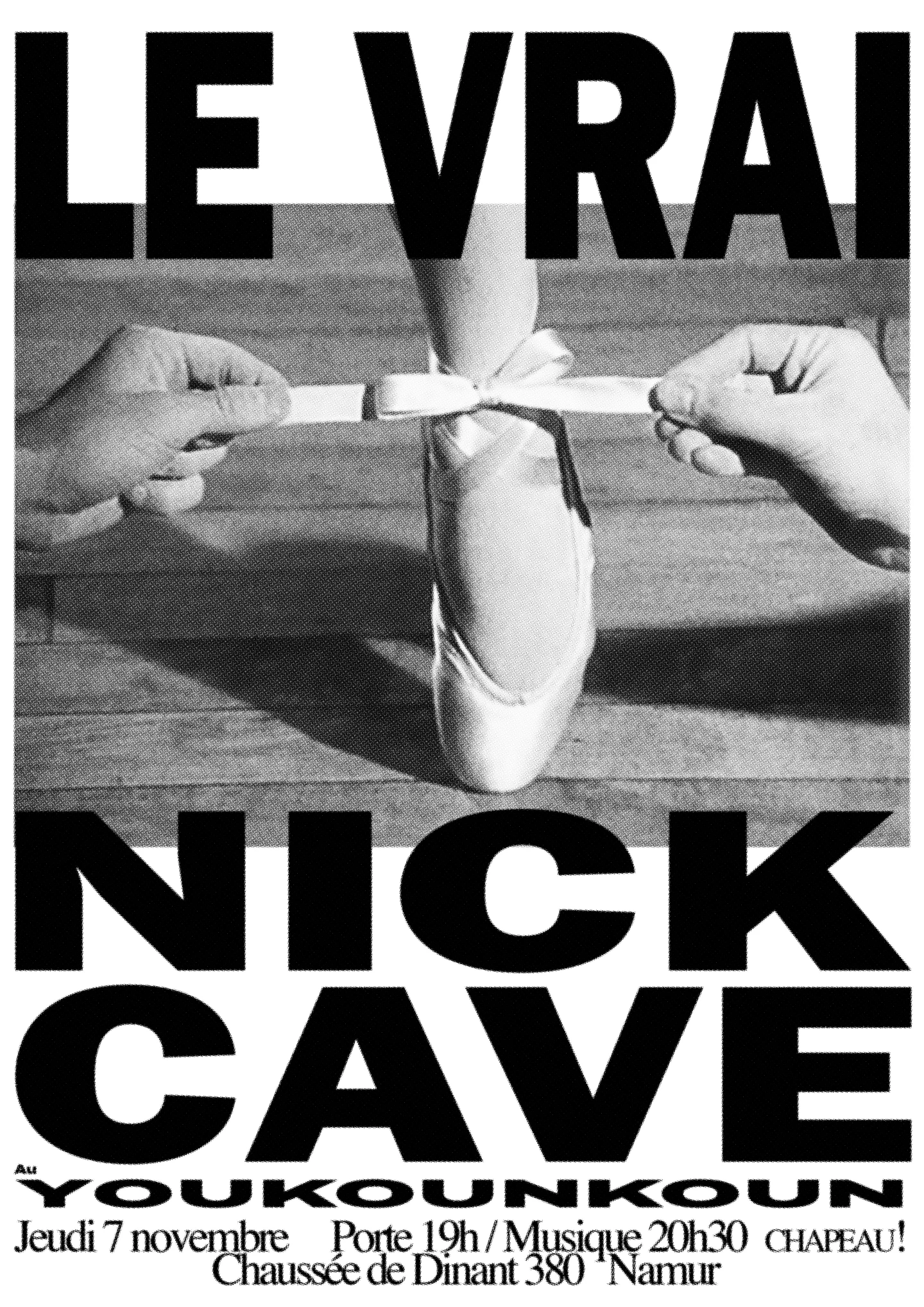
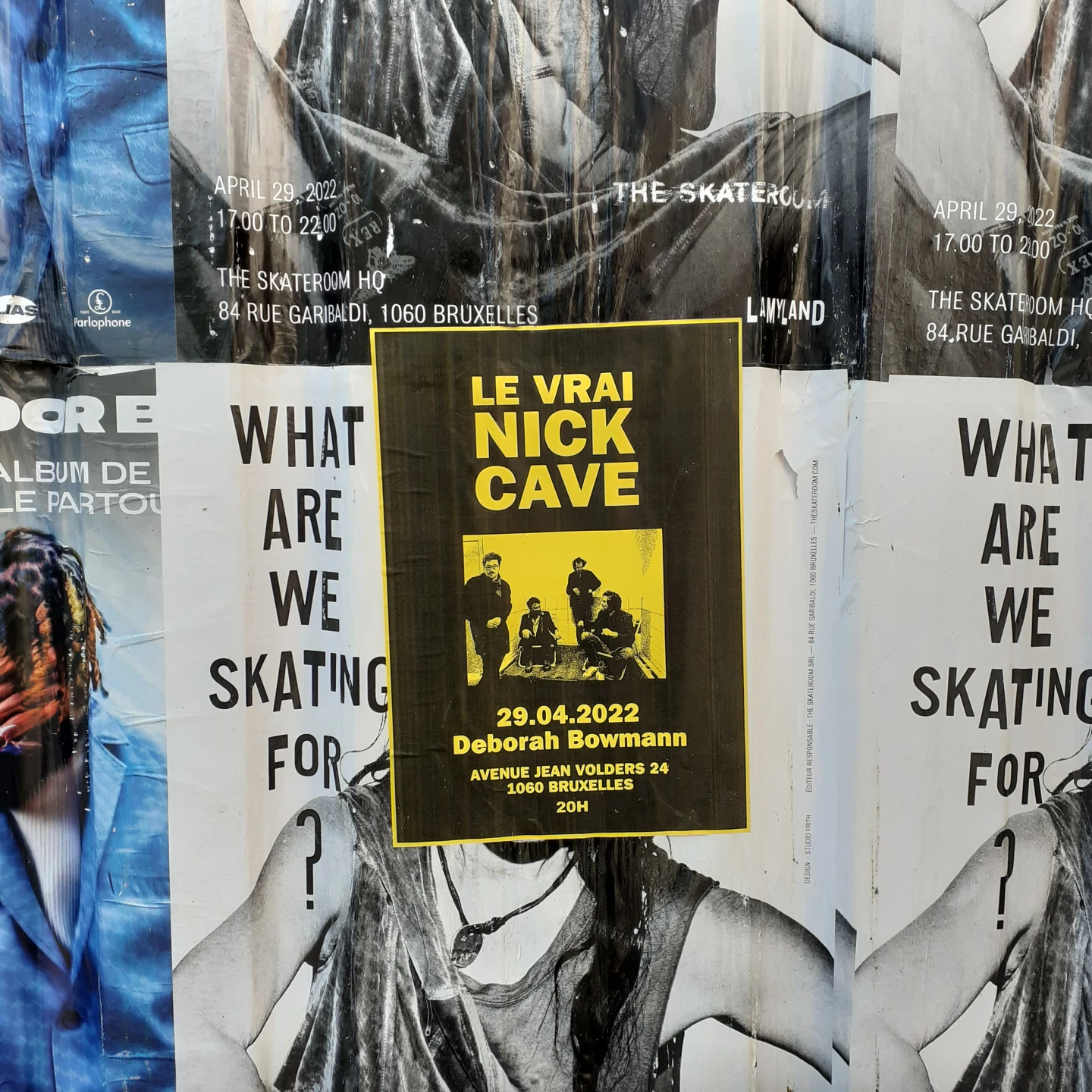
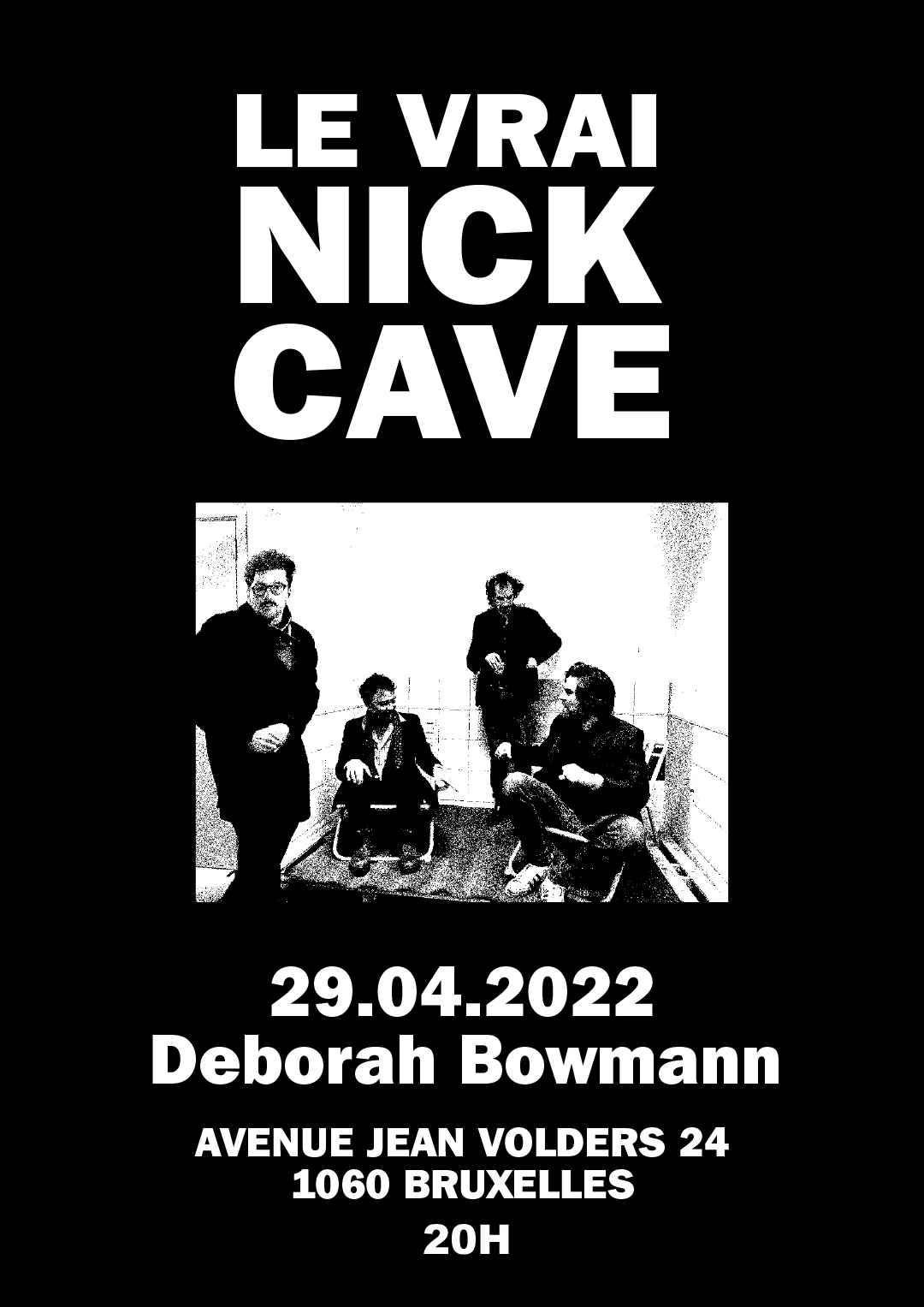
Grégoire Motte Graphics, Poster 2025In the year 2000, in a nightclub in Pecq (7740, BE), a girl tells a boy how strikingly much he resembles an Australian singer. Before leaving him, she writes her phone number on his packet of cigarettes. Of course, the boy loses the packet, and so he is doomed to wander alone – unable to remember which singer he looks like. Luckily, his mother stumbles across the CD Kicking Against the Pricks at la Fnac. She is adamant: the singer is Nick Cave; the resemblance is striking. Years later, the boy meets Yannick Dupont Condor in Brussels, who forces him onto the stage. It’s a hit!
Yannick, Aurélie, Eric, Gil and Grégoire are THE REAL NICK CAVE. They perform Nick Cave songs in French and it works: tracks by the Bad Seeds, the Boys Next Door, songs by former collaborators such as the exquisite Roland S. Howard… but also covers from the many and varied songs sung by Cave throughout his career.
Within our long lasting collaboration with Grégoire Motte, we design posters and overall art direction for the band in an assumed spirit of the Australian singer early covers and merch.
-
-
Mother
Sisters & Brother Mitevski, Entre Chien et Loup, Frau film & Spark Film Graphics, Movie 2025 -
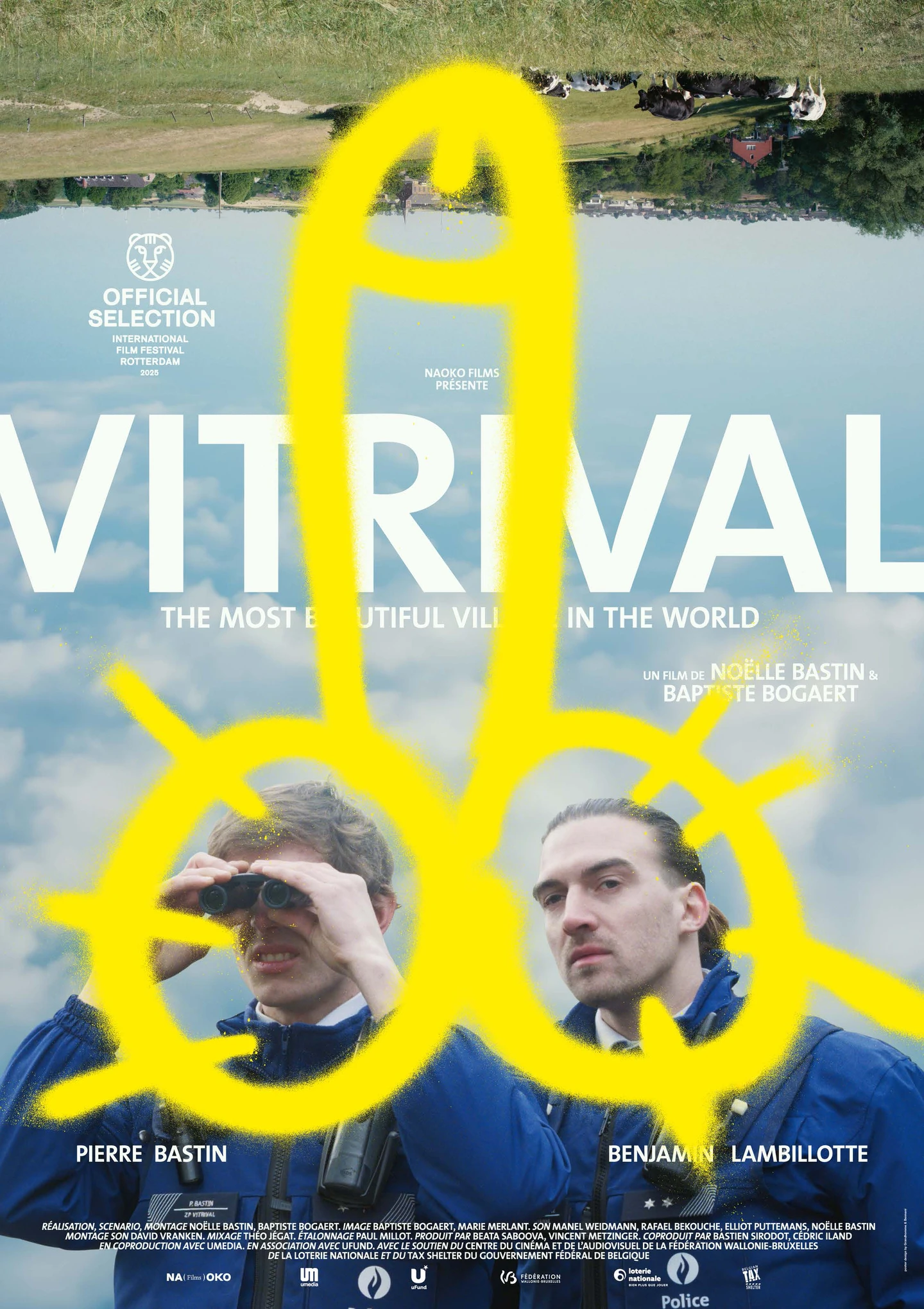
Vitrival
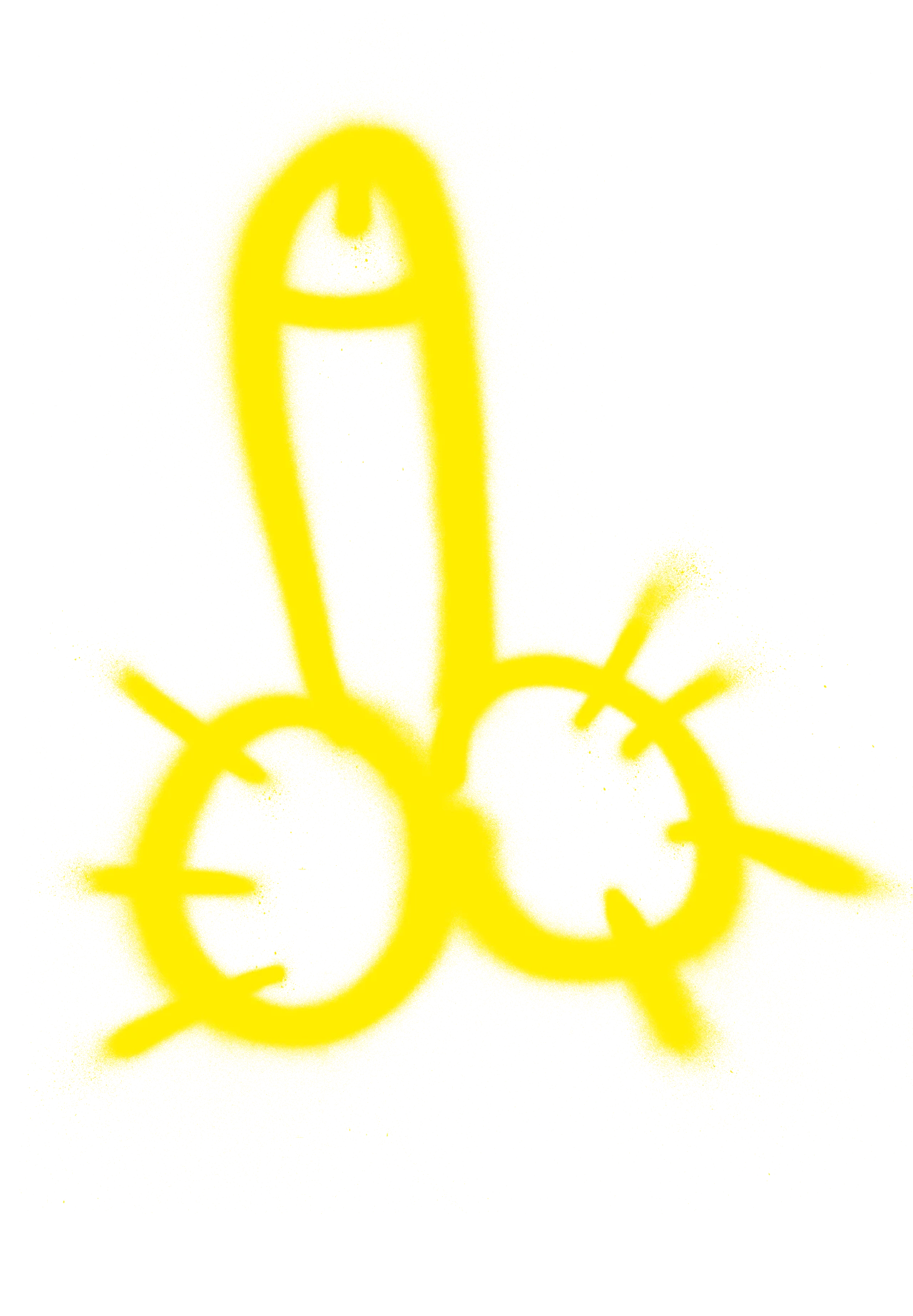
Naoko Films Graphics, Movie 2025Synopsis: Benjamin and Little Pierre, cousins and local policemen, patrol Vitrival while listening to Radio Chevauchoir. They have a lot to do: dick graffitis are popping up on the village walls. Of course, no one has seen or heard anything. At the same time, one villager commits suicide, then two, then three. Season after season, dick graffitis and suicides proliferate. What can Benjamin and Pierre do about it? Days and celebrations will keep flowing, no matter what.
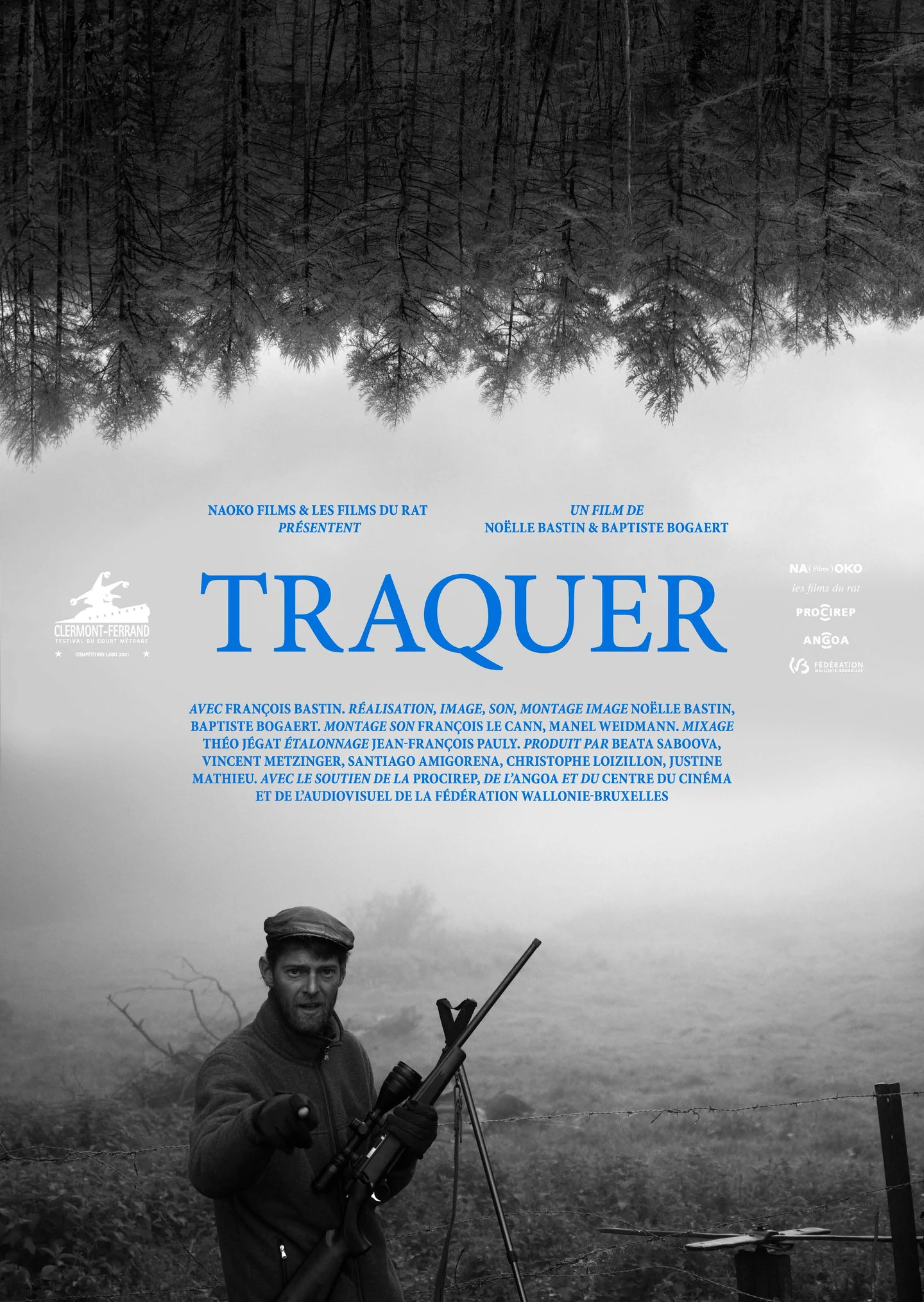
Vitrival movie poster is our second collaboration with directors Noëlle Bastin and Baptiste Bogaert. We created a very straight-forward poster where an ad hoc graffiti overlay a more classic composition which refers to Traquer the first poster we designed for the film-makers duo.
-
-
Witloof & Witty
Les Commissaires Annonymes Editorial, Score 2025Première et troisième parties de La Trilogie de la chicorée, l'ouvrage Witloof & Witty constitue un livret-partition en deux parties tête-bêche, venant compléter le premier drame lyrique de Grégoire Motte et Gabriel Mattei, Blanche Endive.
La pièce musicale Witloof prend pour motif principal l'apparition mythique de la première endive, dans une cave sombre, en pleine révolution belge de 1830 et le ravissement du paysan qui la découvre. Witty conclut cette épopée historique et fantaisiste par le crash d'un avion américain dans un champ d'endive en Belgique flamande en 1961. Subsiste « la lyrique », l'essence poétique des êtres et des objets dans l'effervescence de la société industrielle occidentale.
Witloof (de « blanche feuille » en flamand, désignant une endive) et Witty (le diminutif affectueux de « witloof ») sont composées pour une instrumentation très inattendue offrant une grande place à l'art vocal.
Le livre contient les textes (récits, chansons et notes d'interprétations) de Grégoire Motte, les partitions de l'ouverture et des chants de Gabriel Mattei, et un texte d'analyse de l'œuvre par le curateur et critique d'art Damien Airault. -
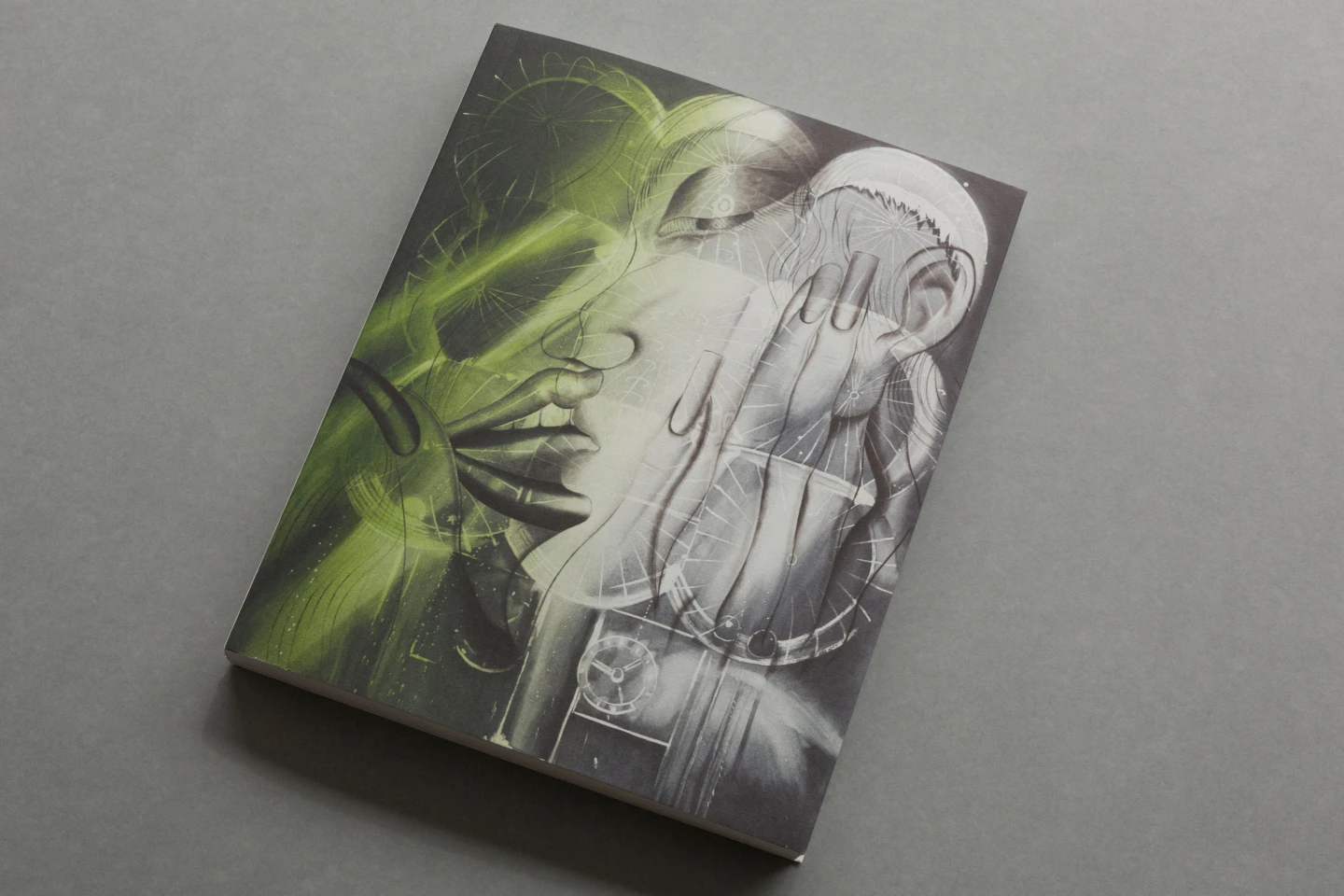
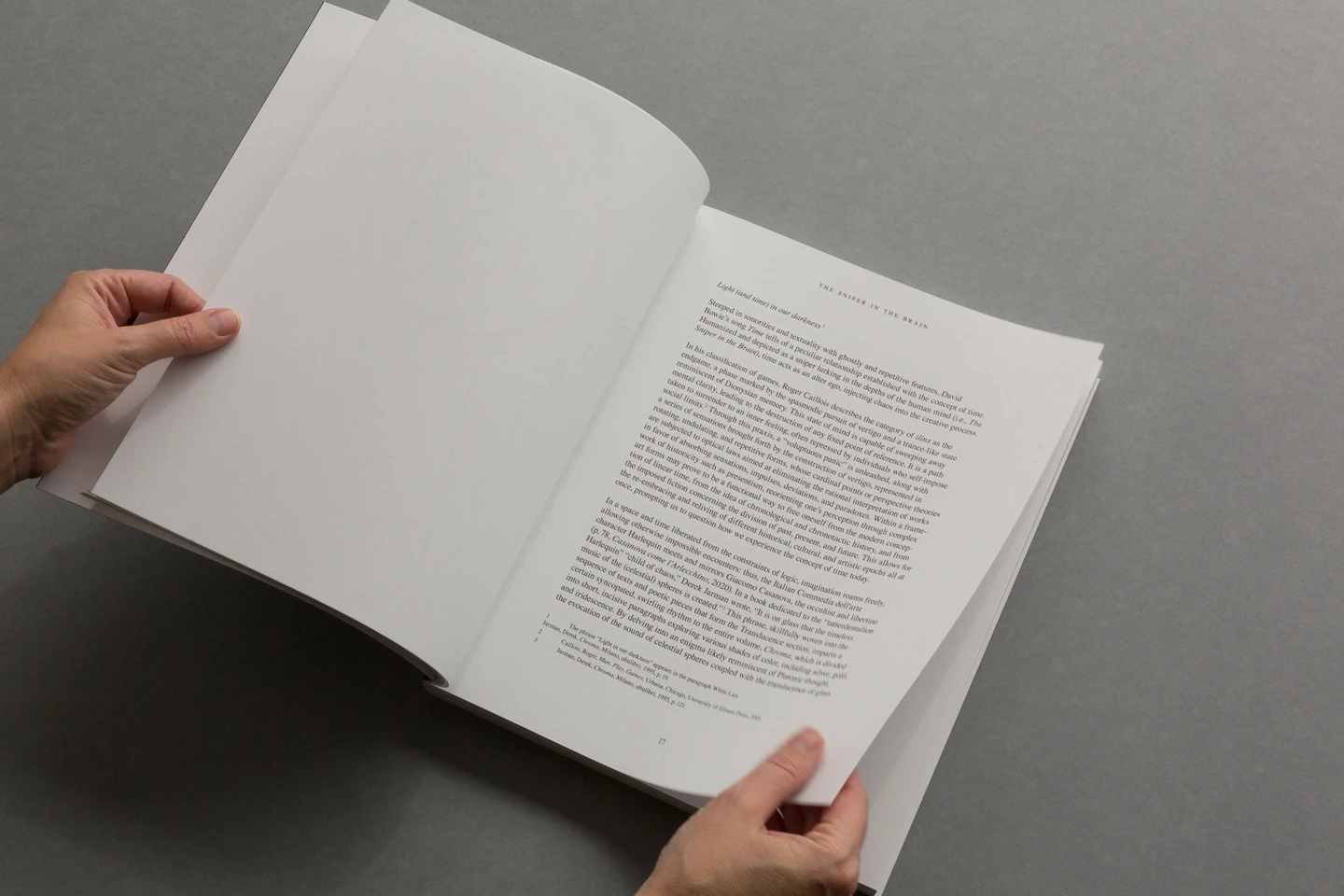
The Sniper in the Brain
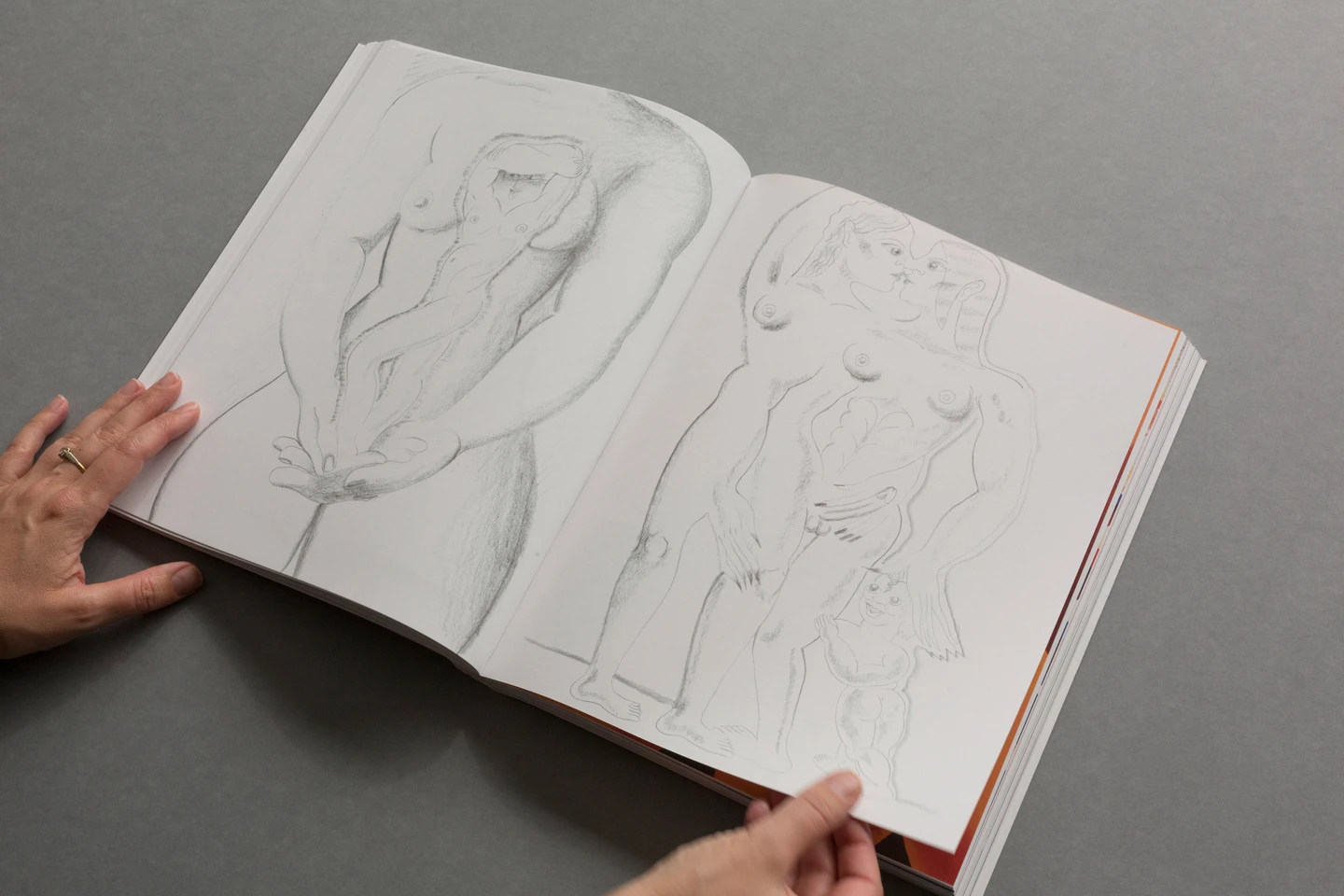
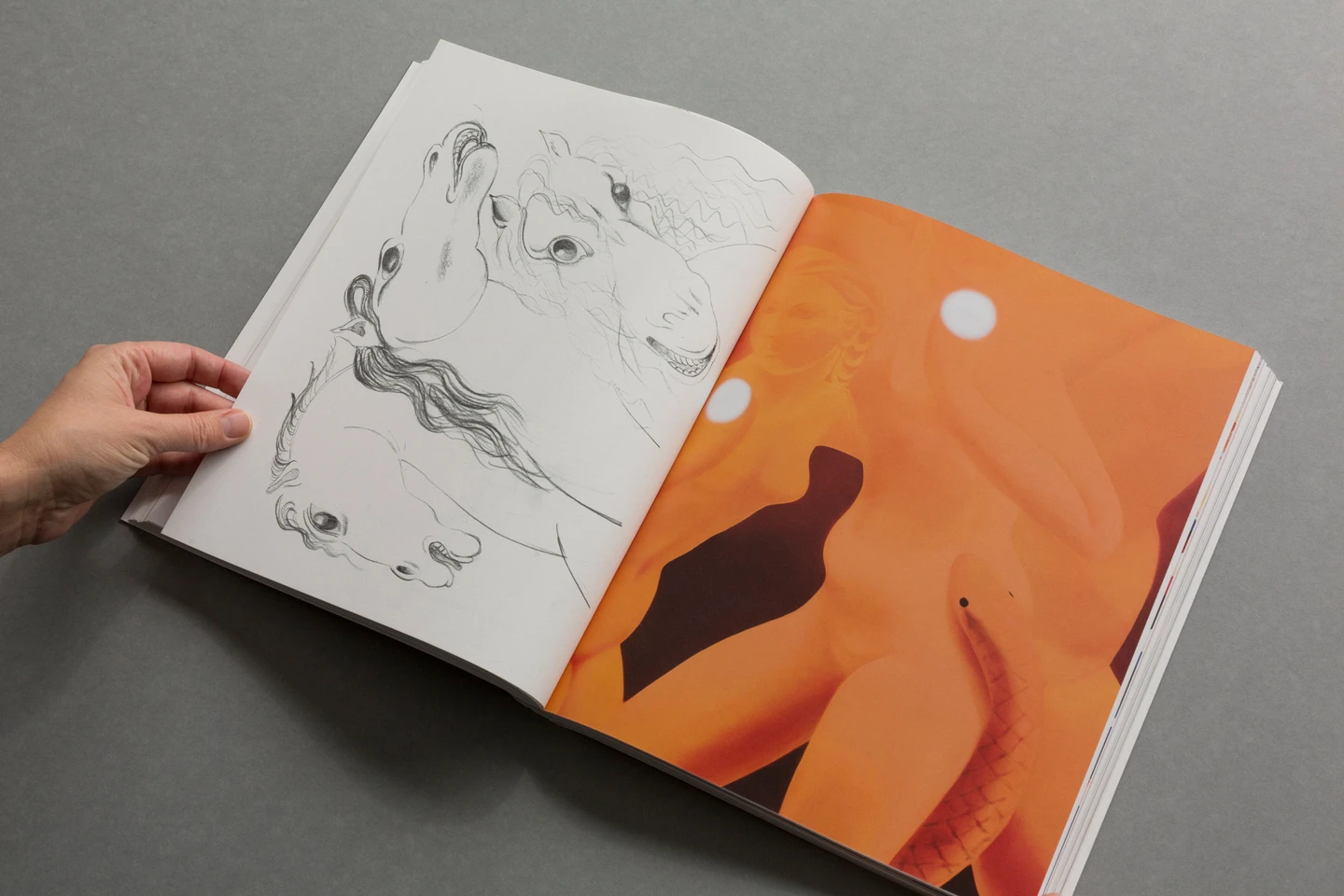
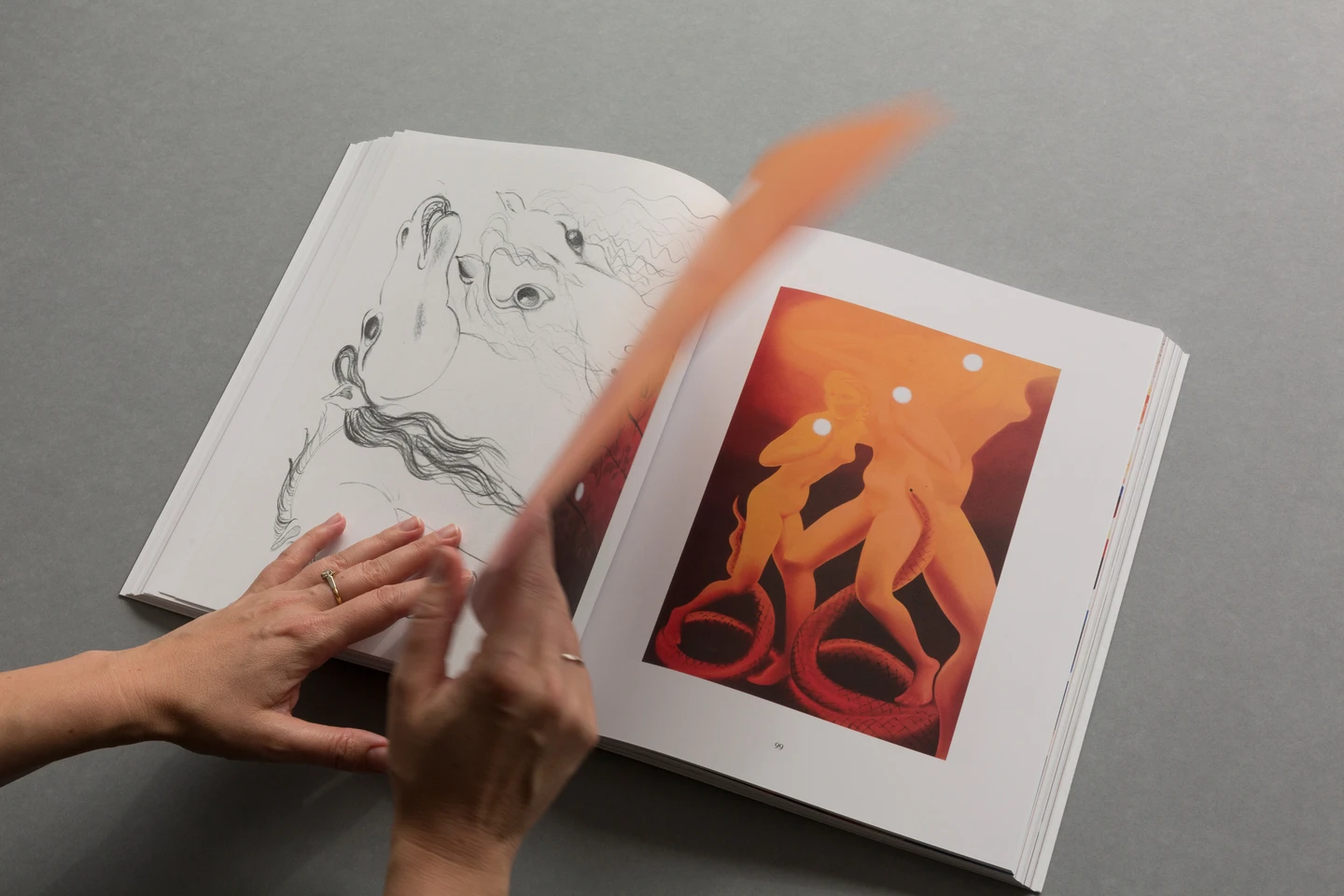
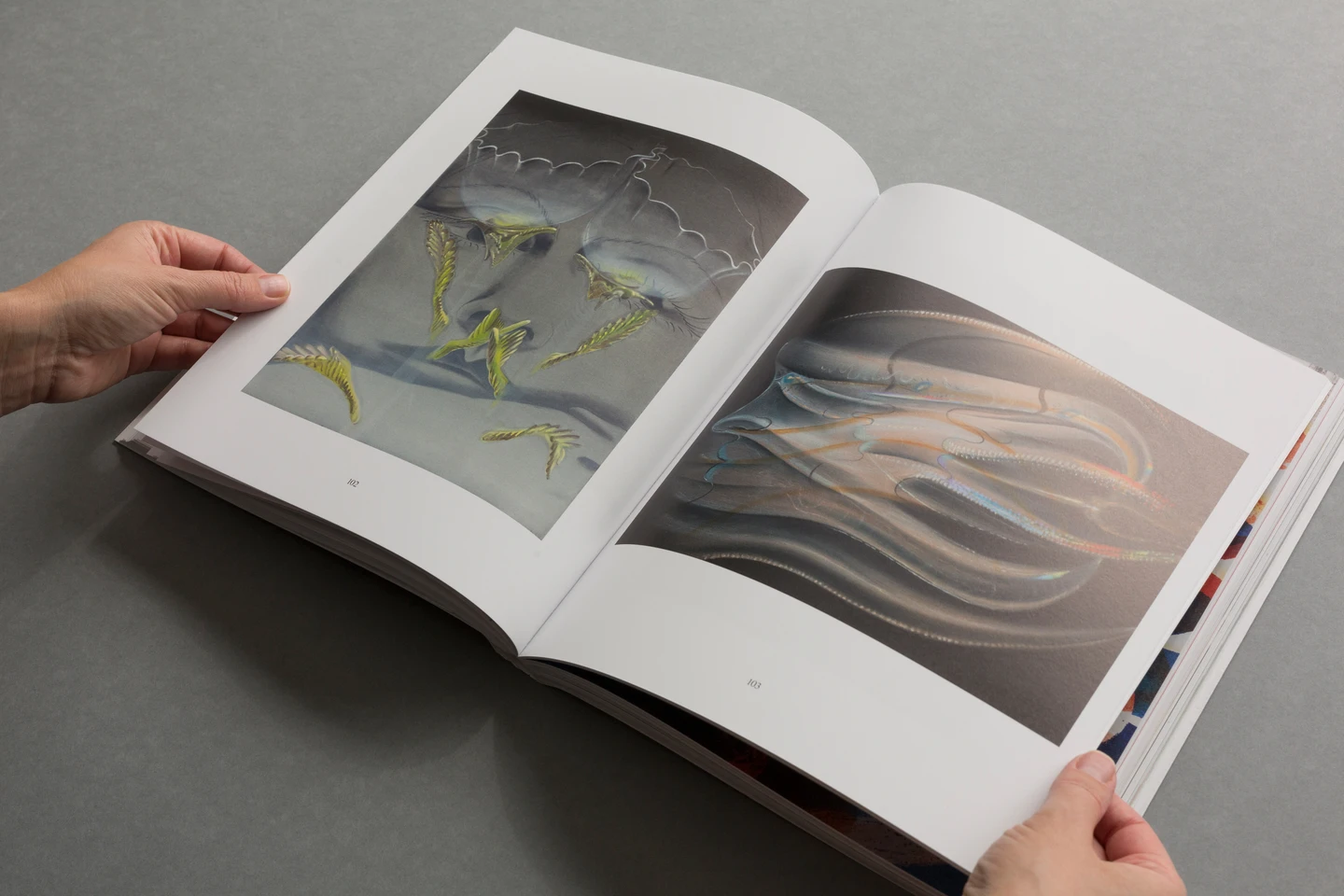
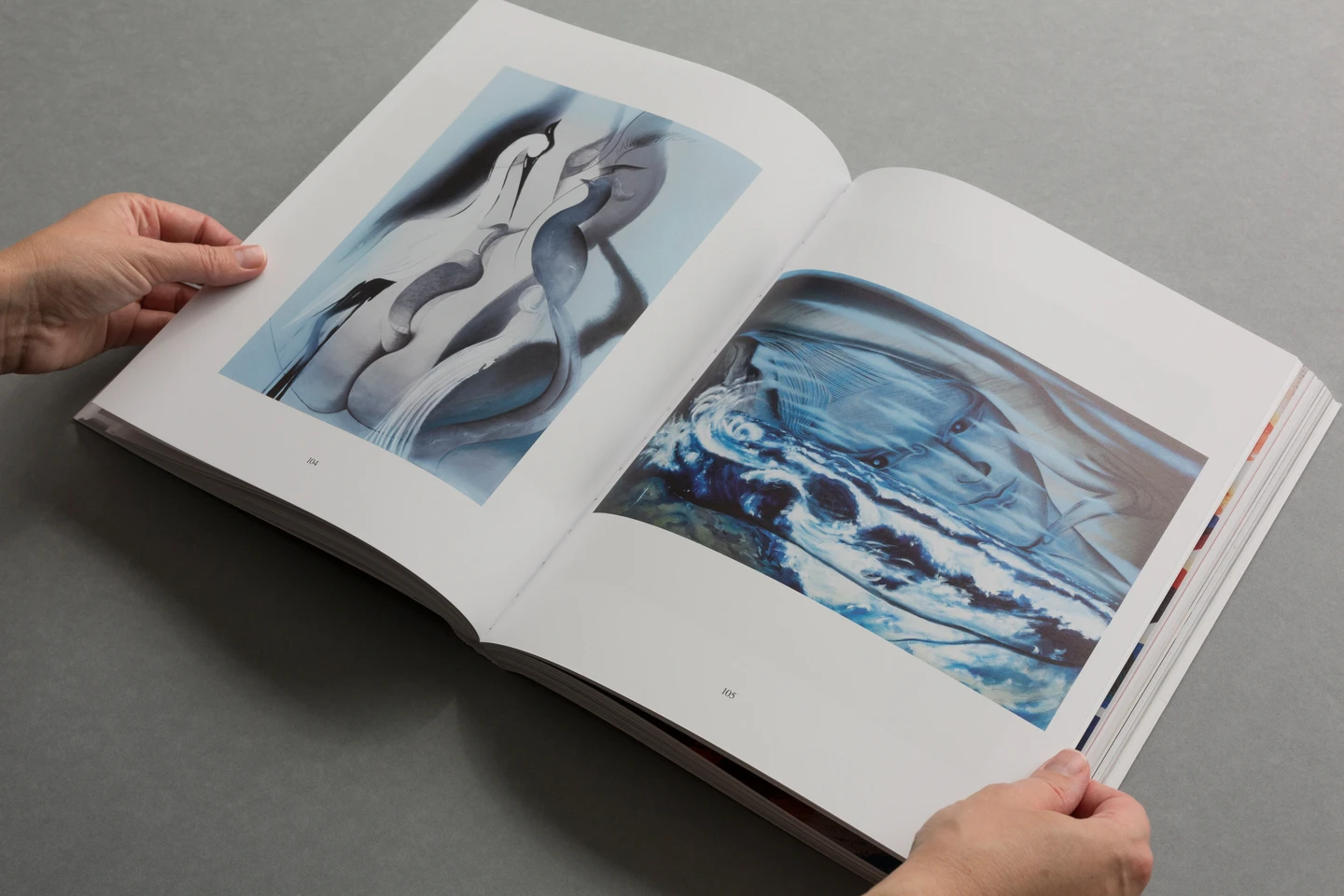
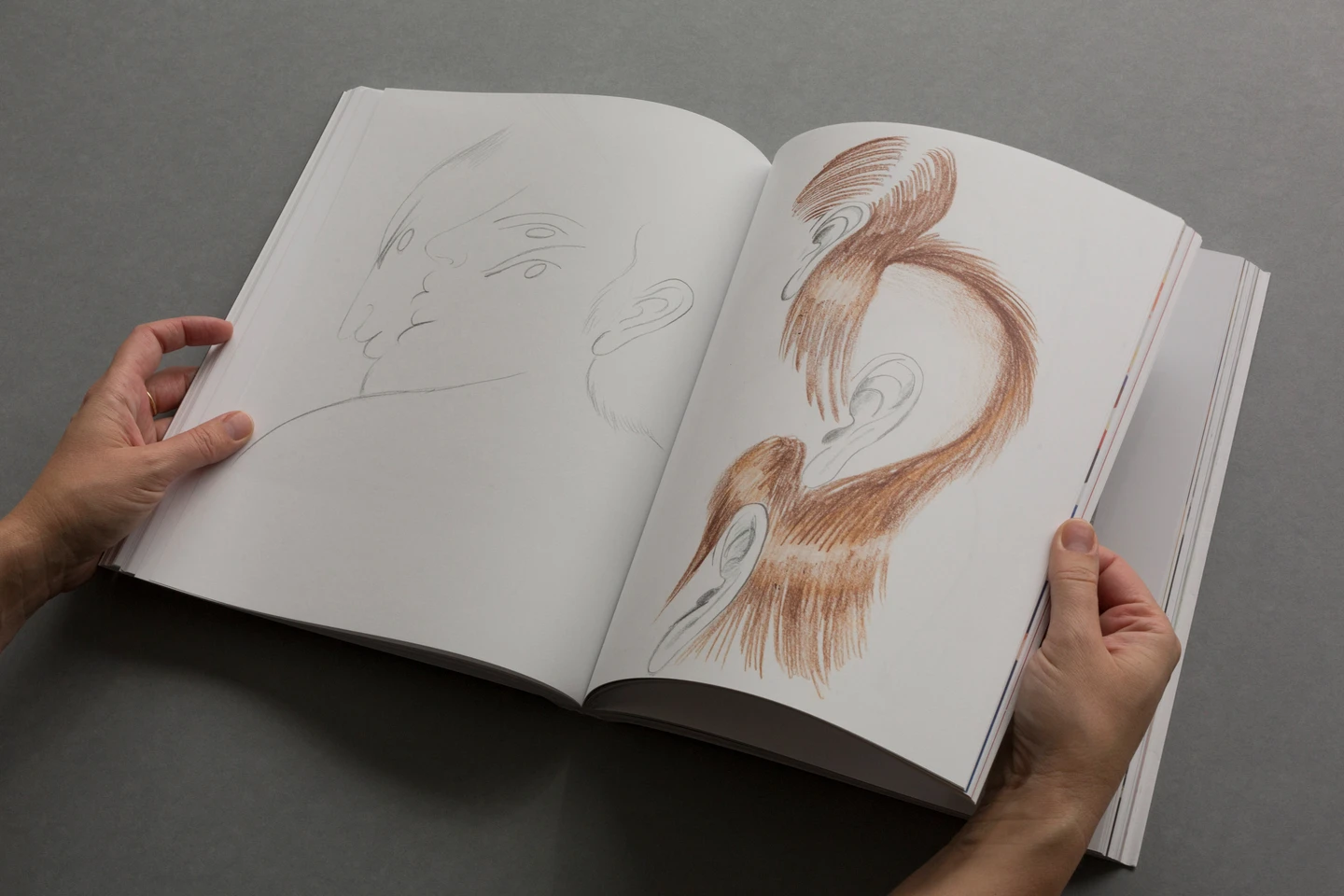
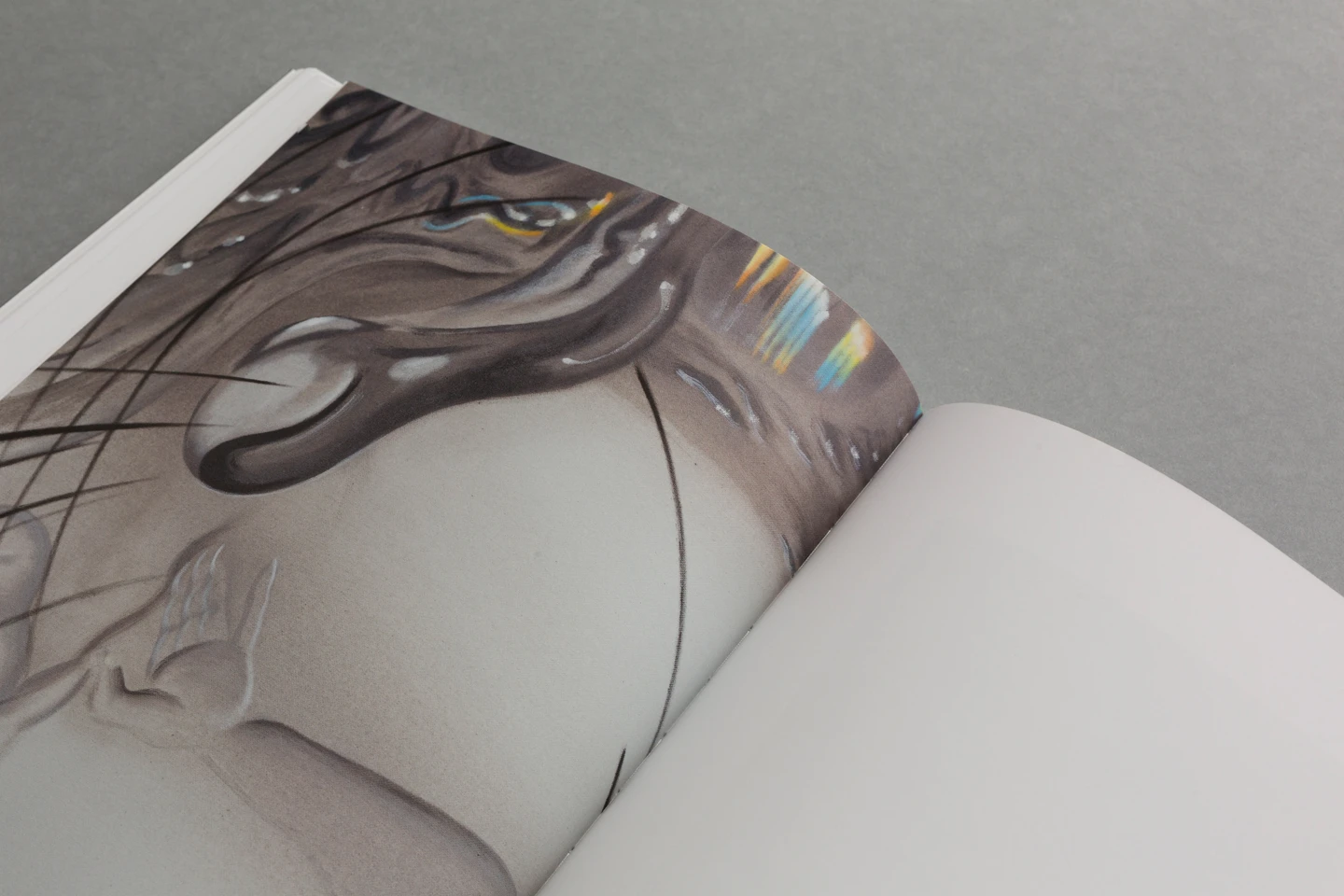
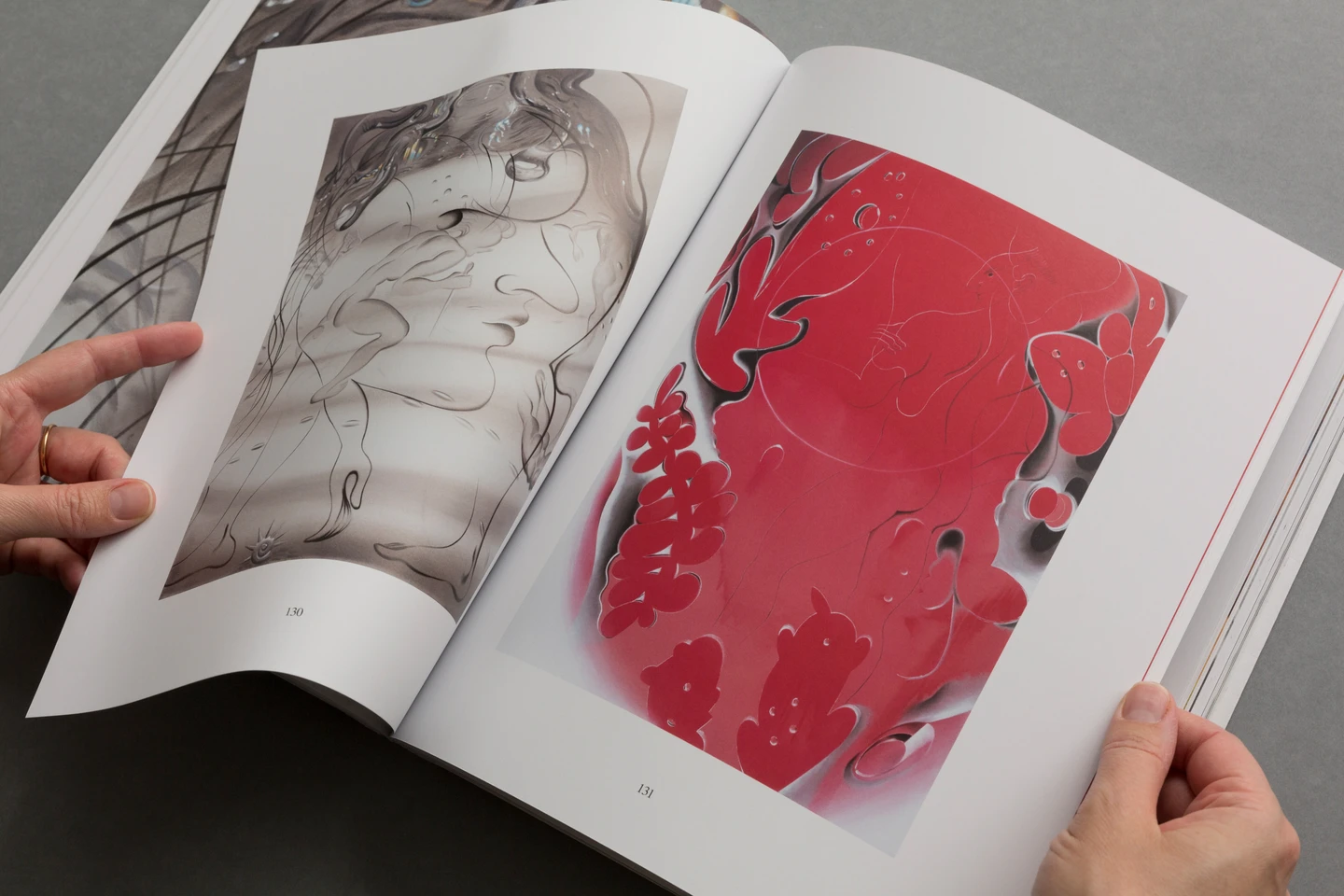
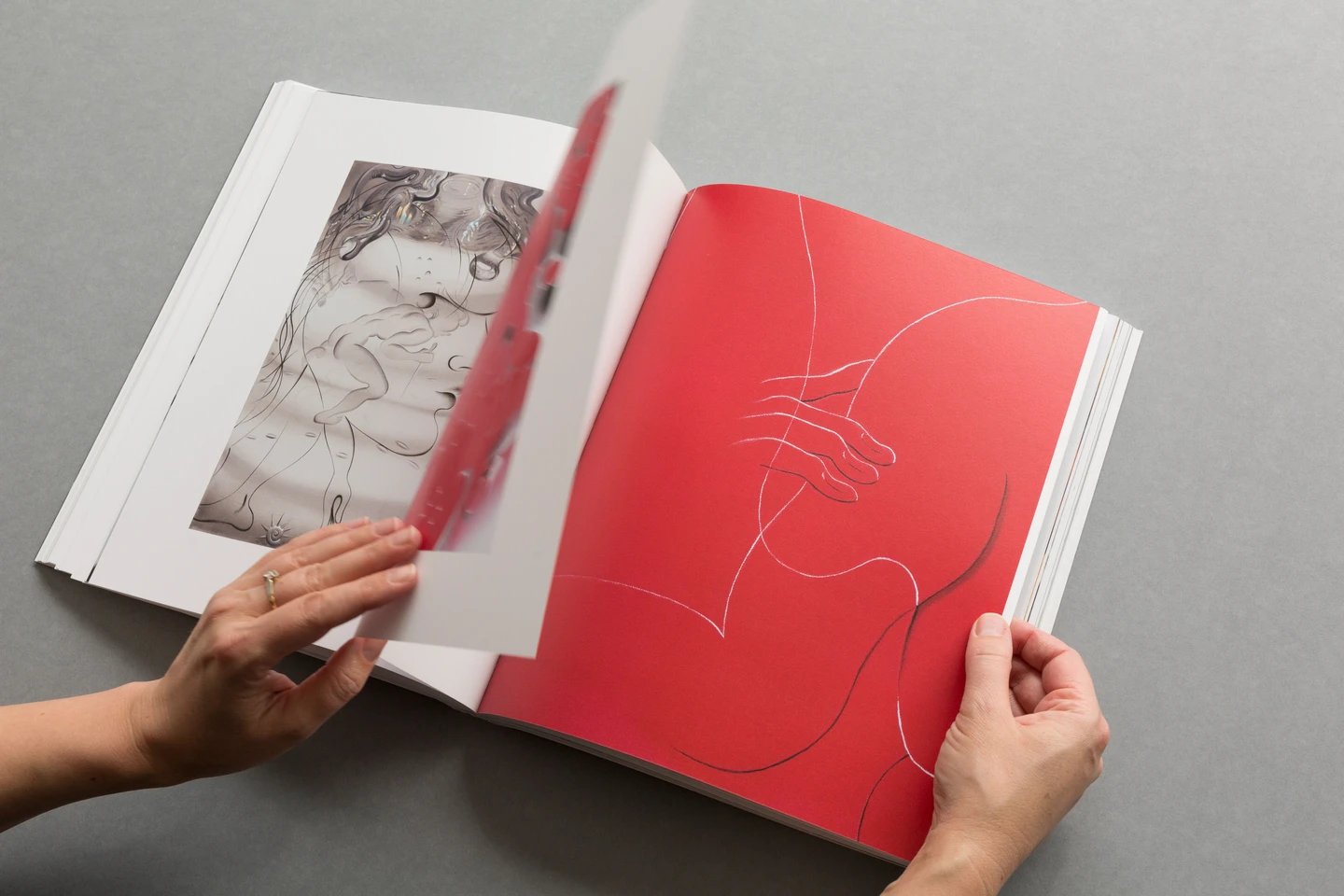
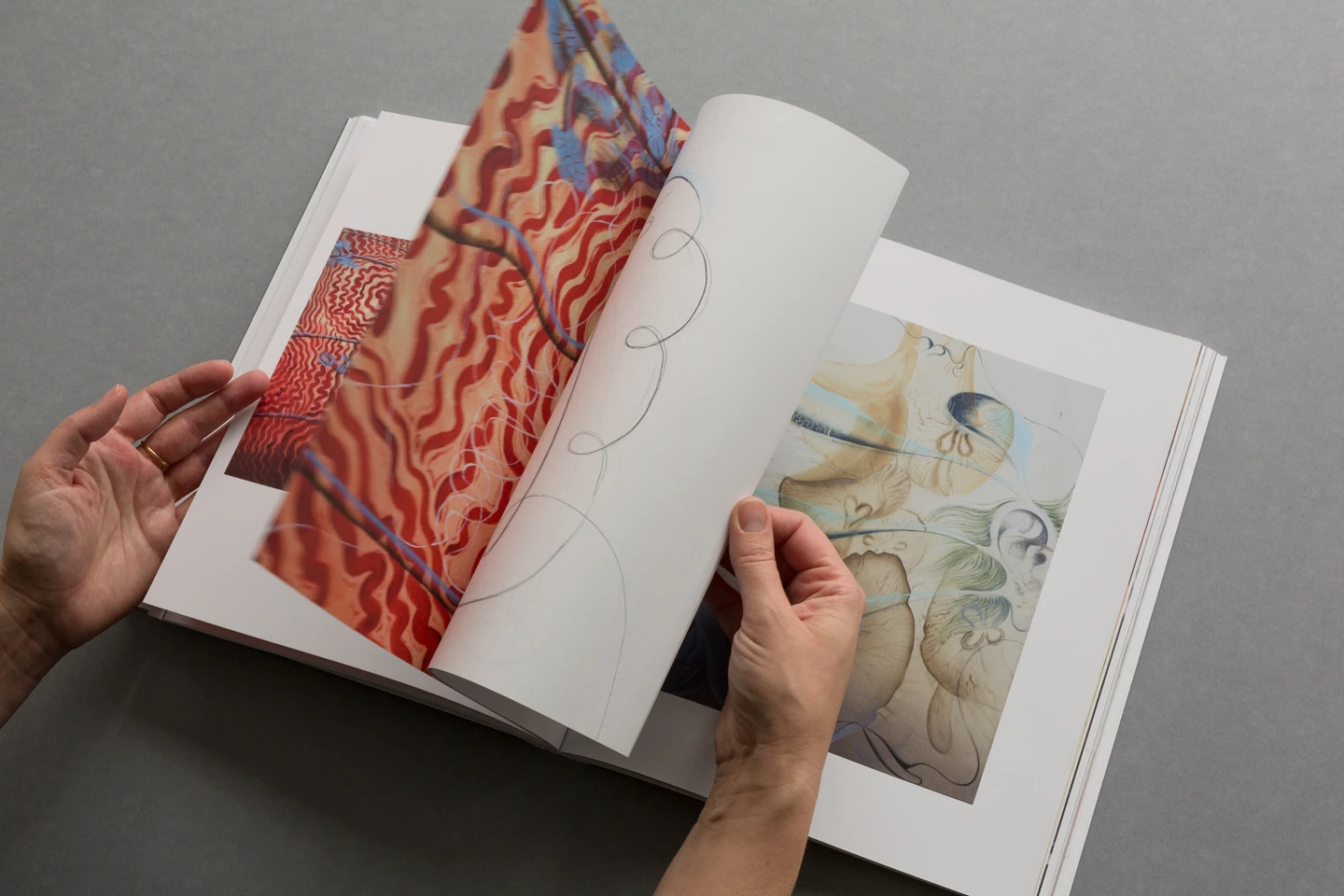
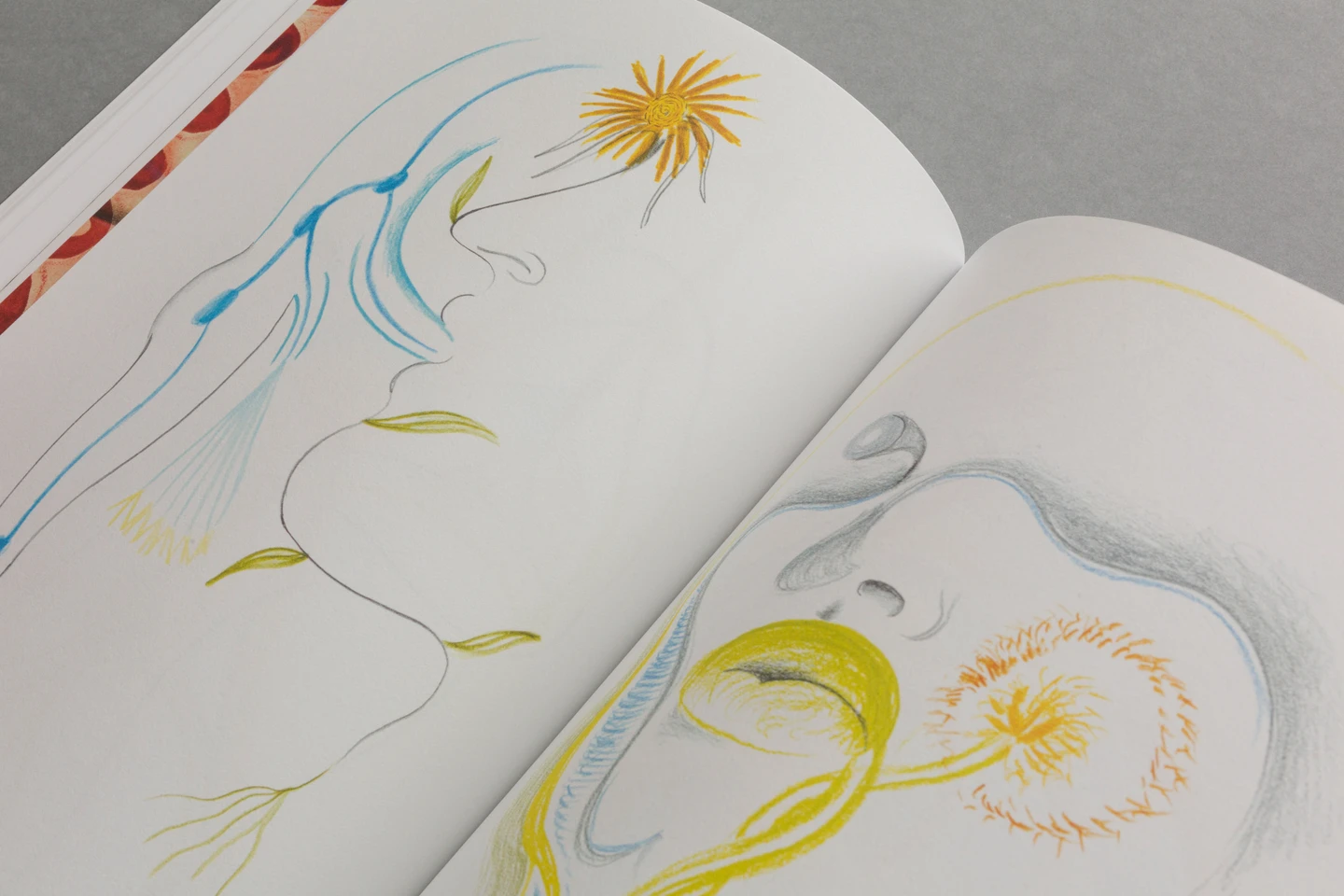
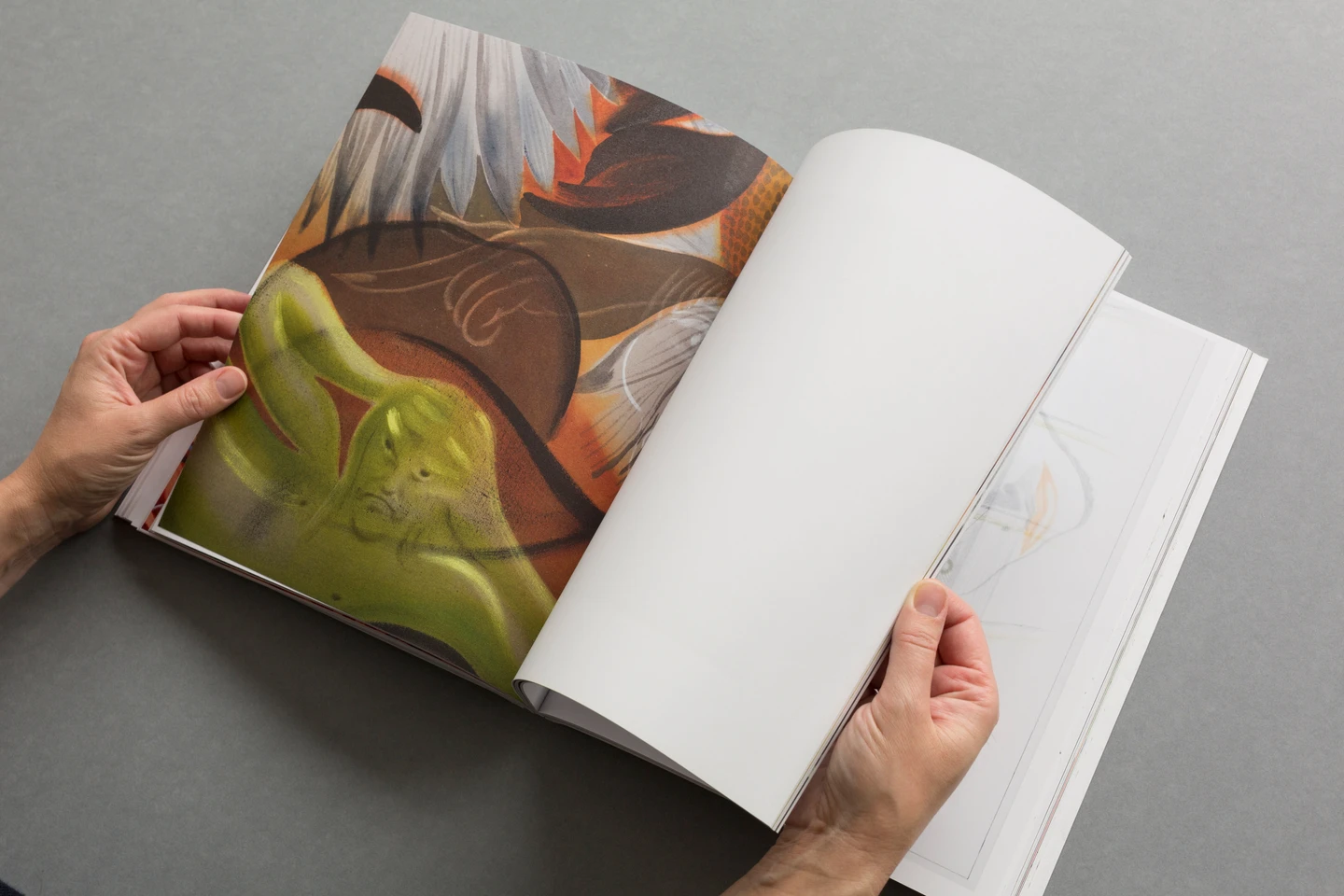
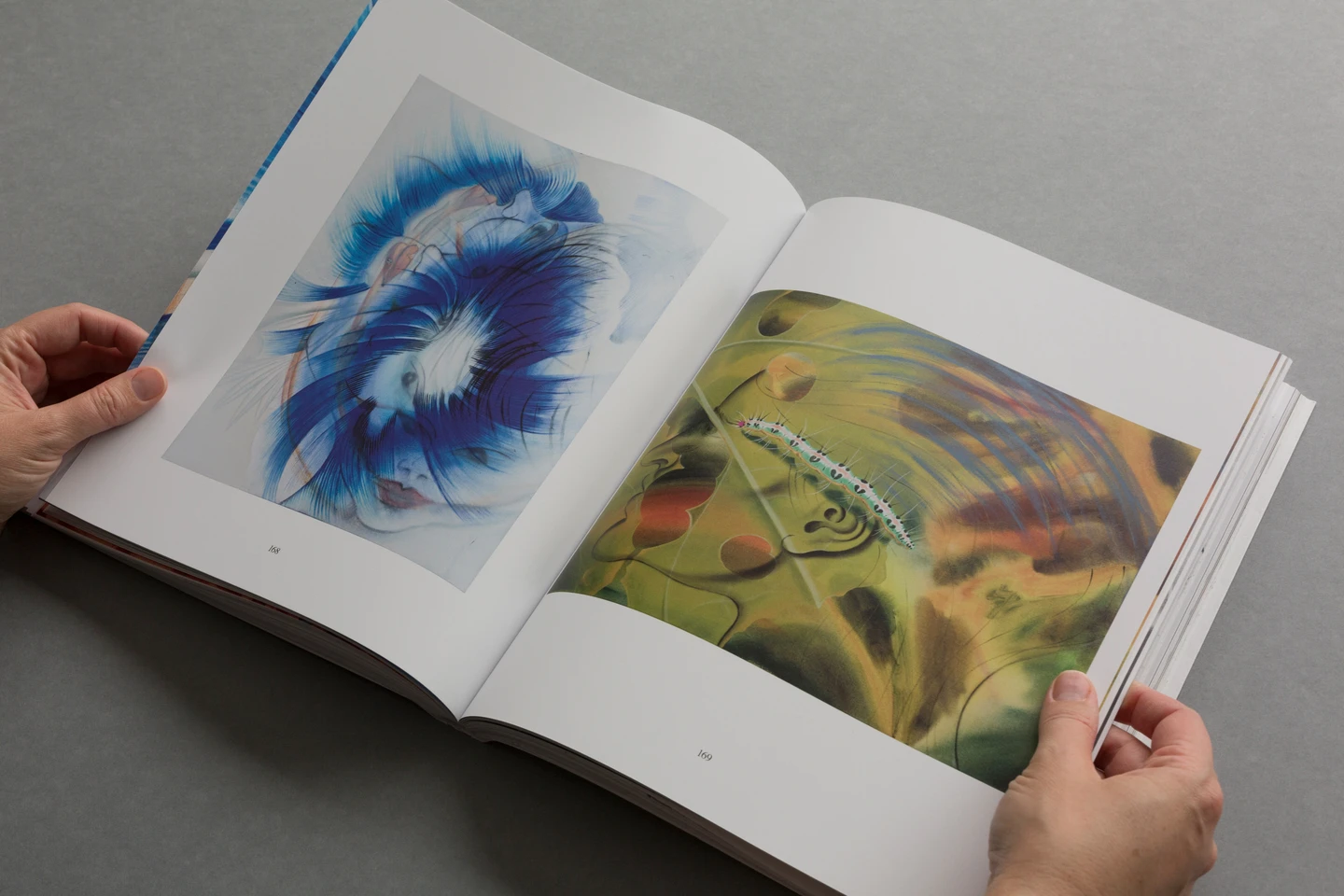
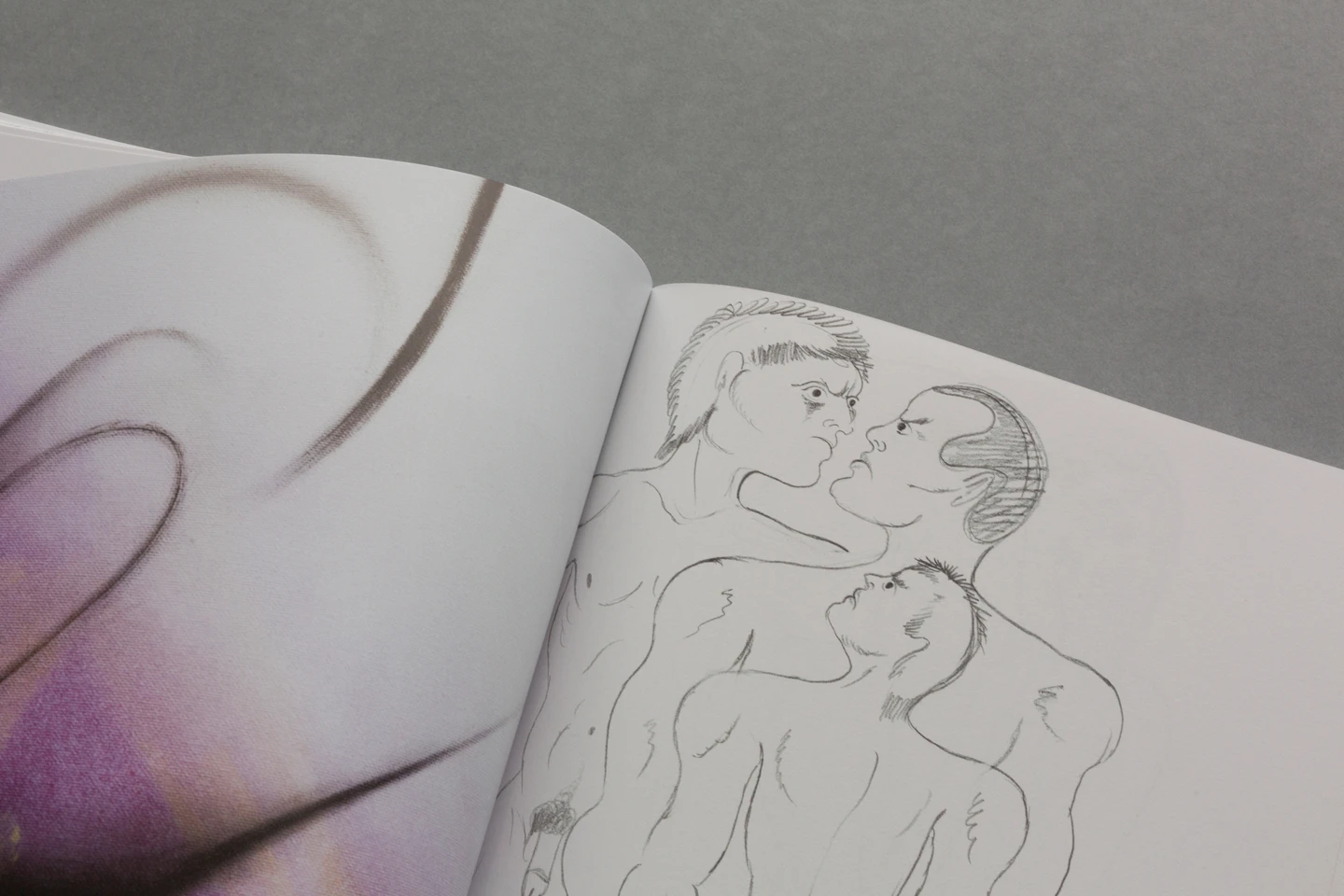
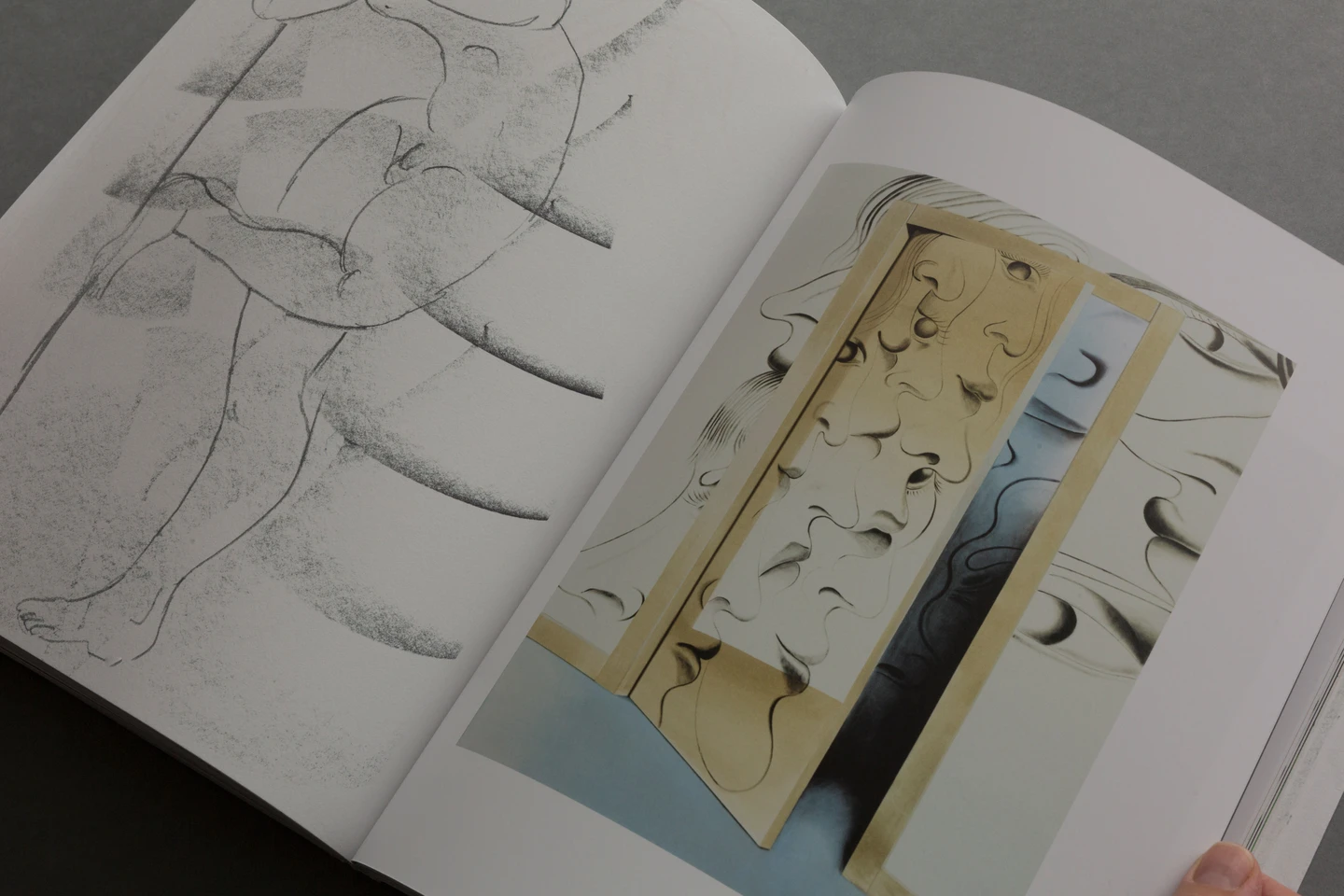
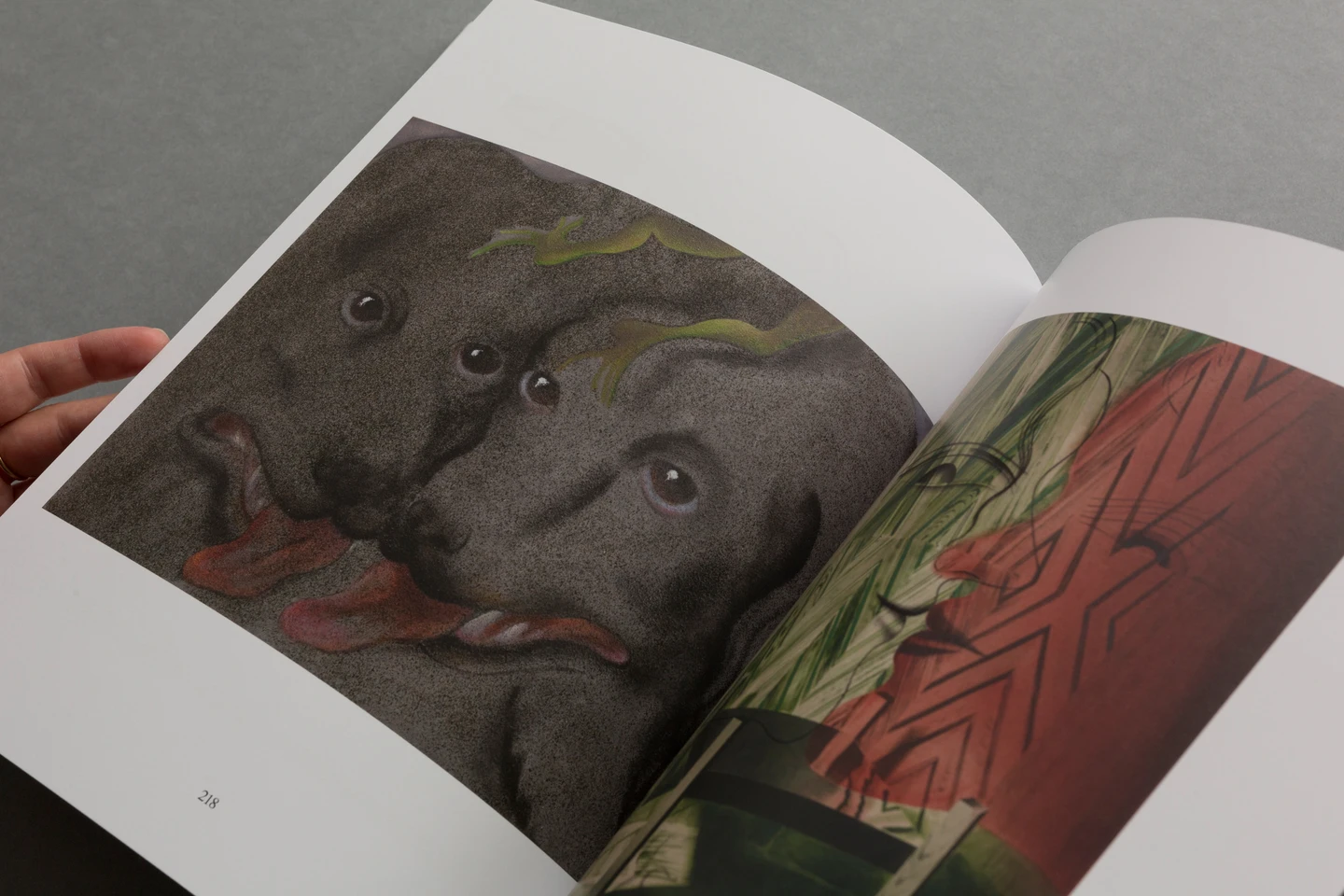
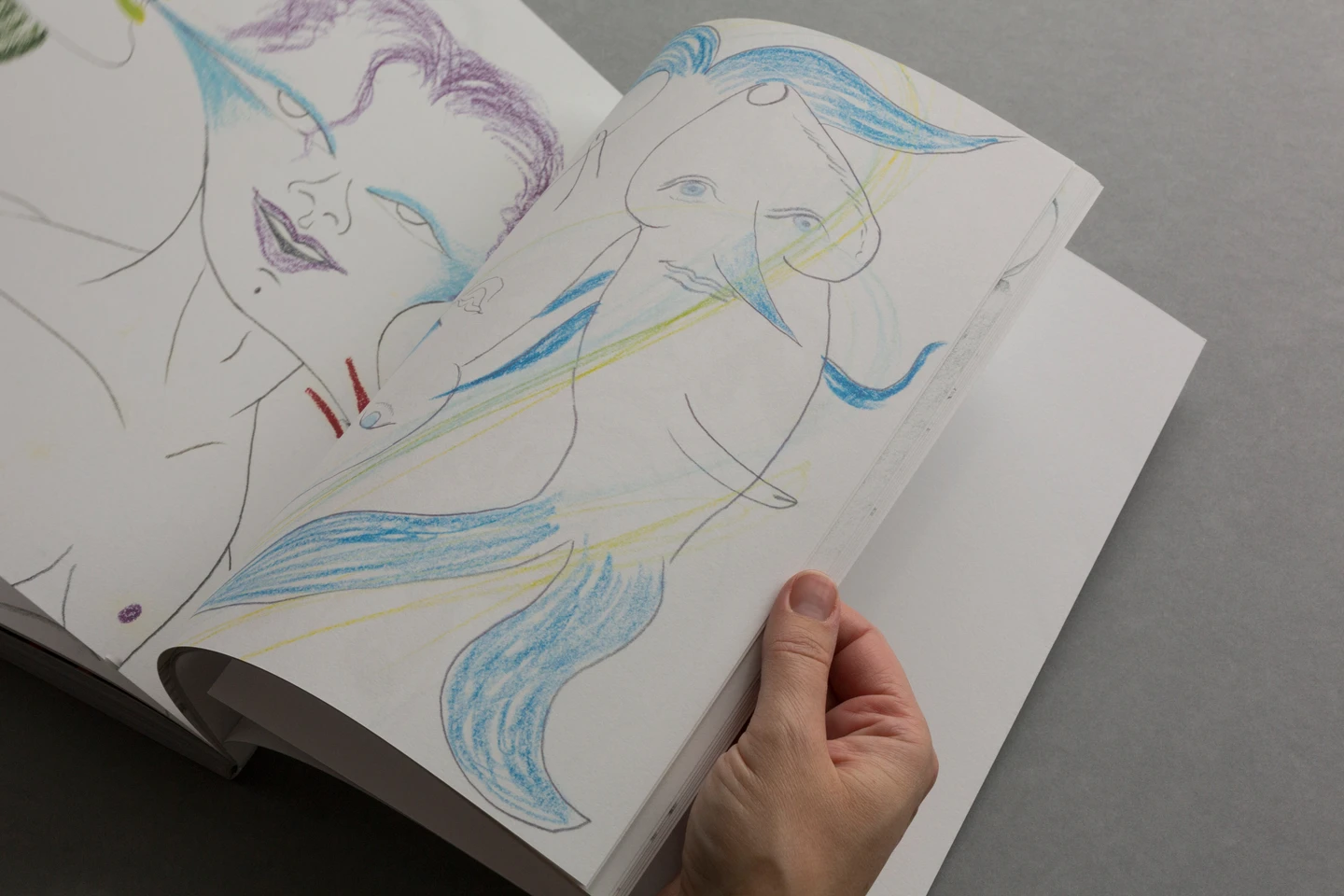
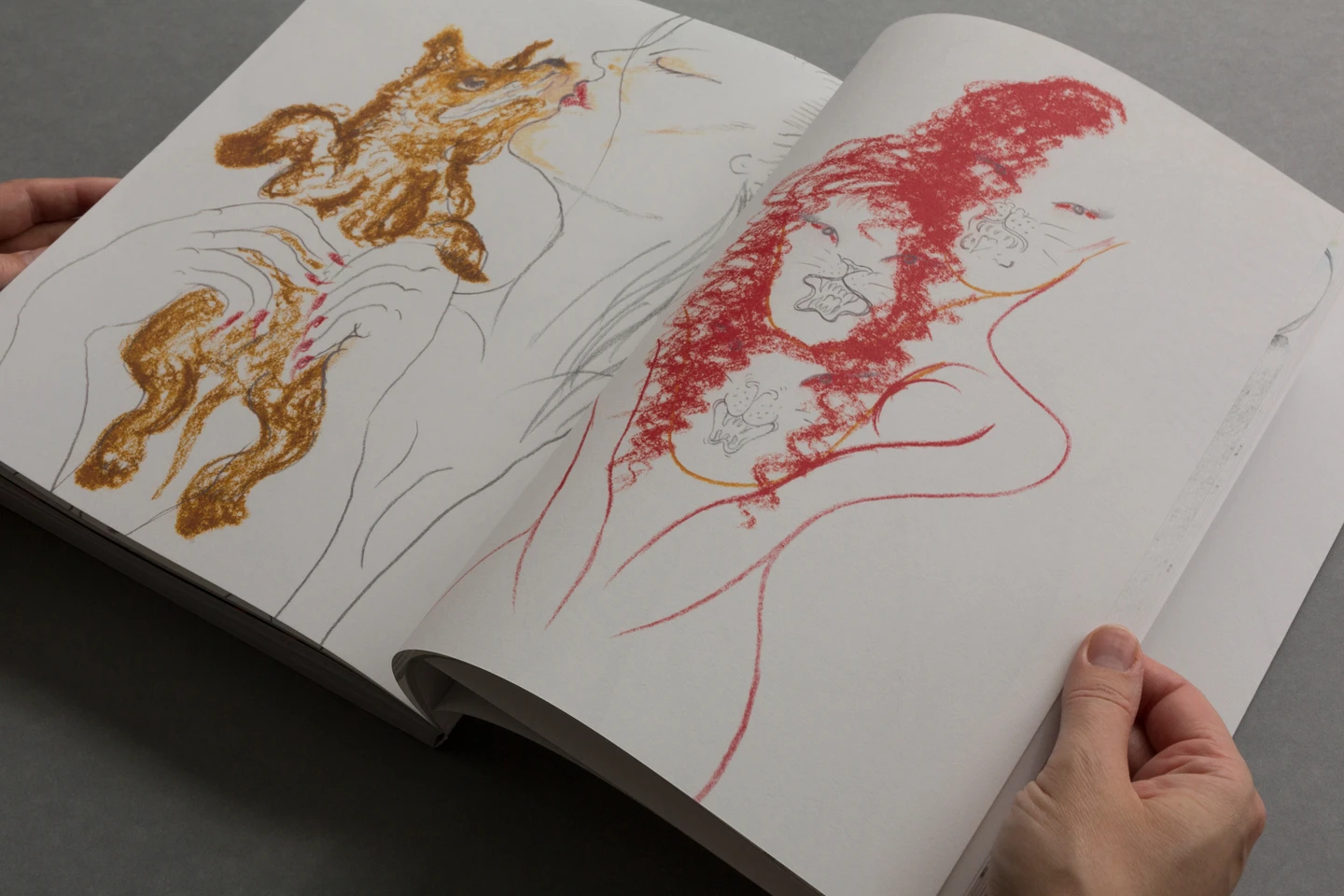
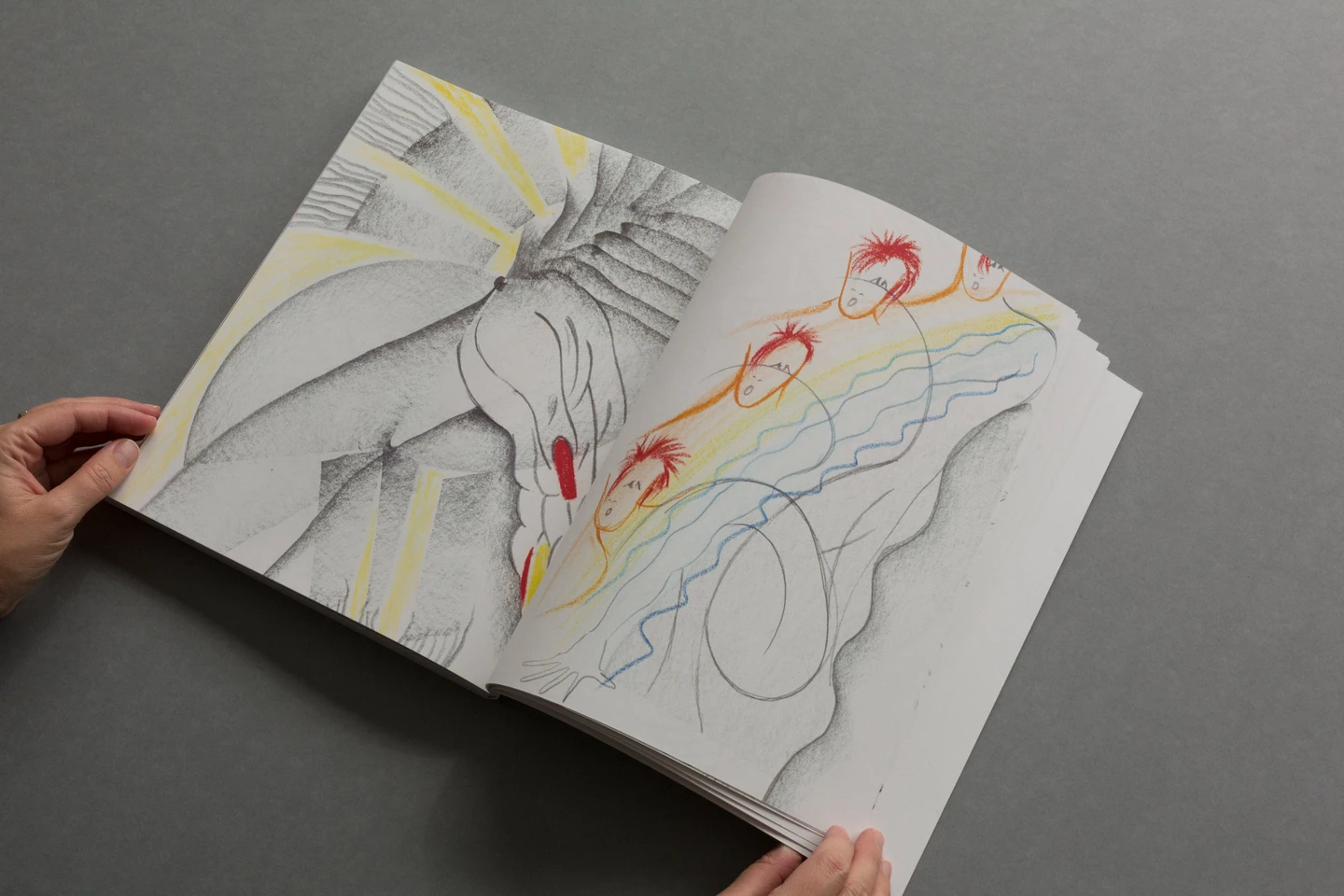
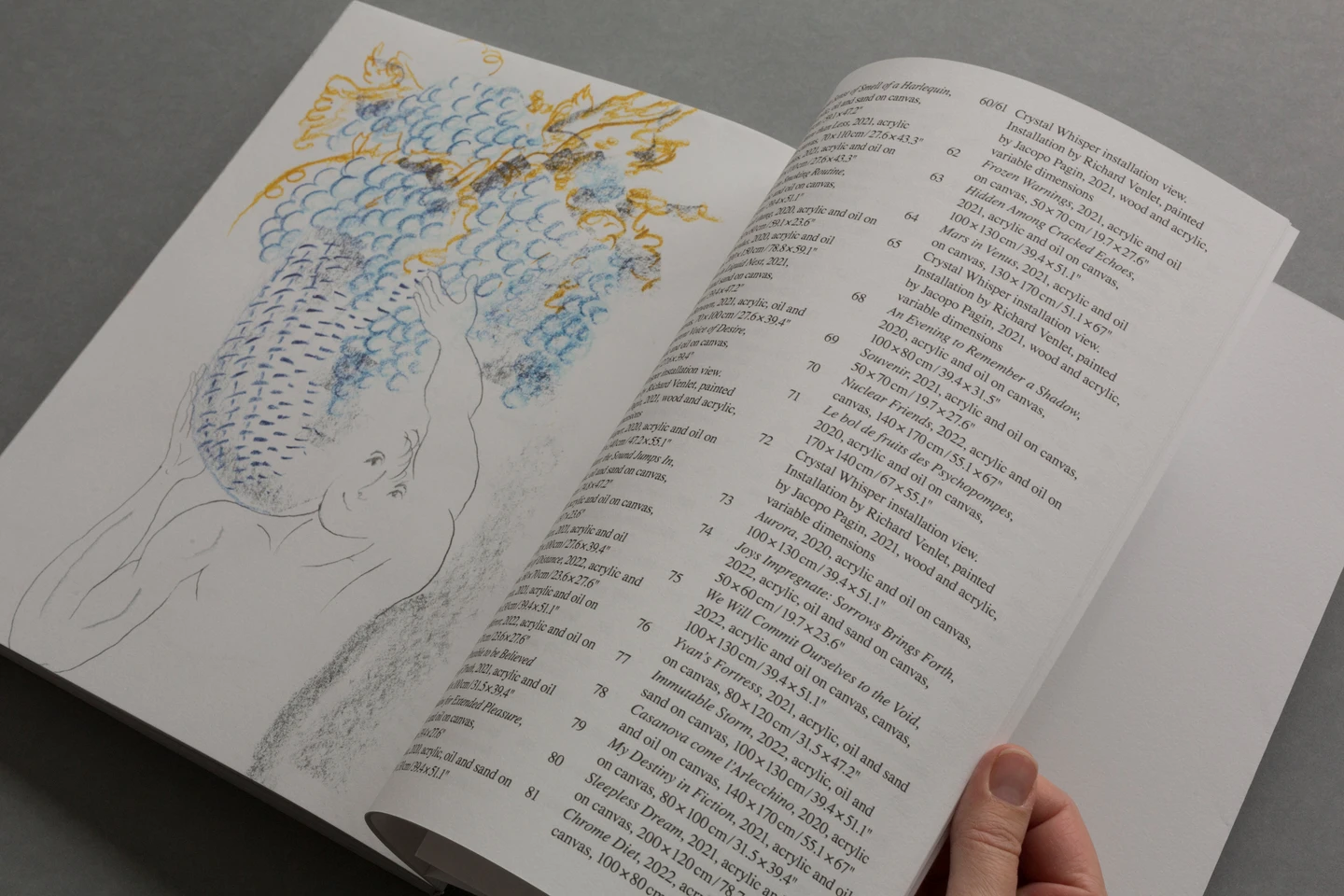
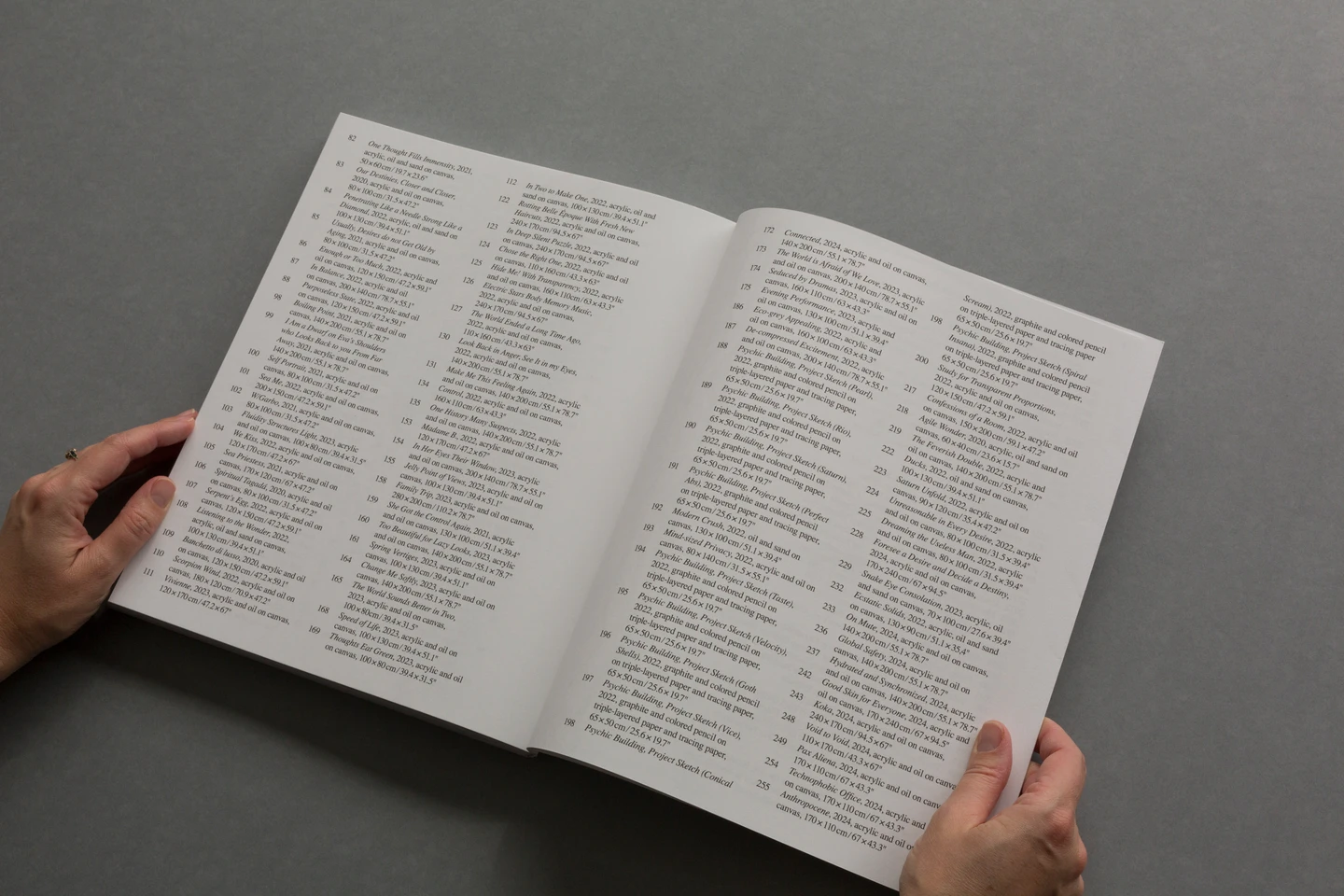
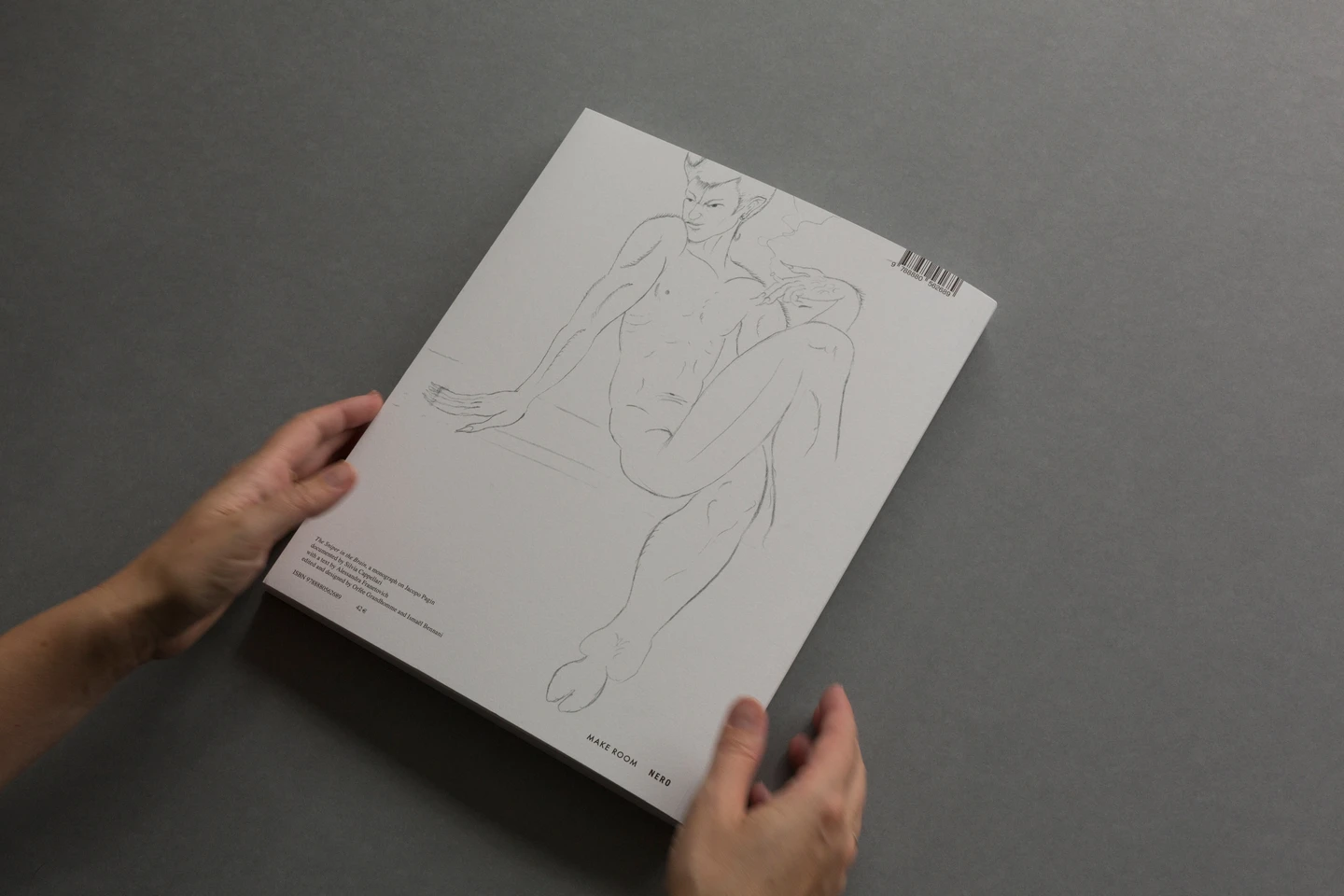
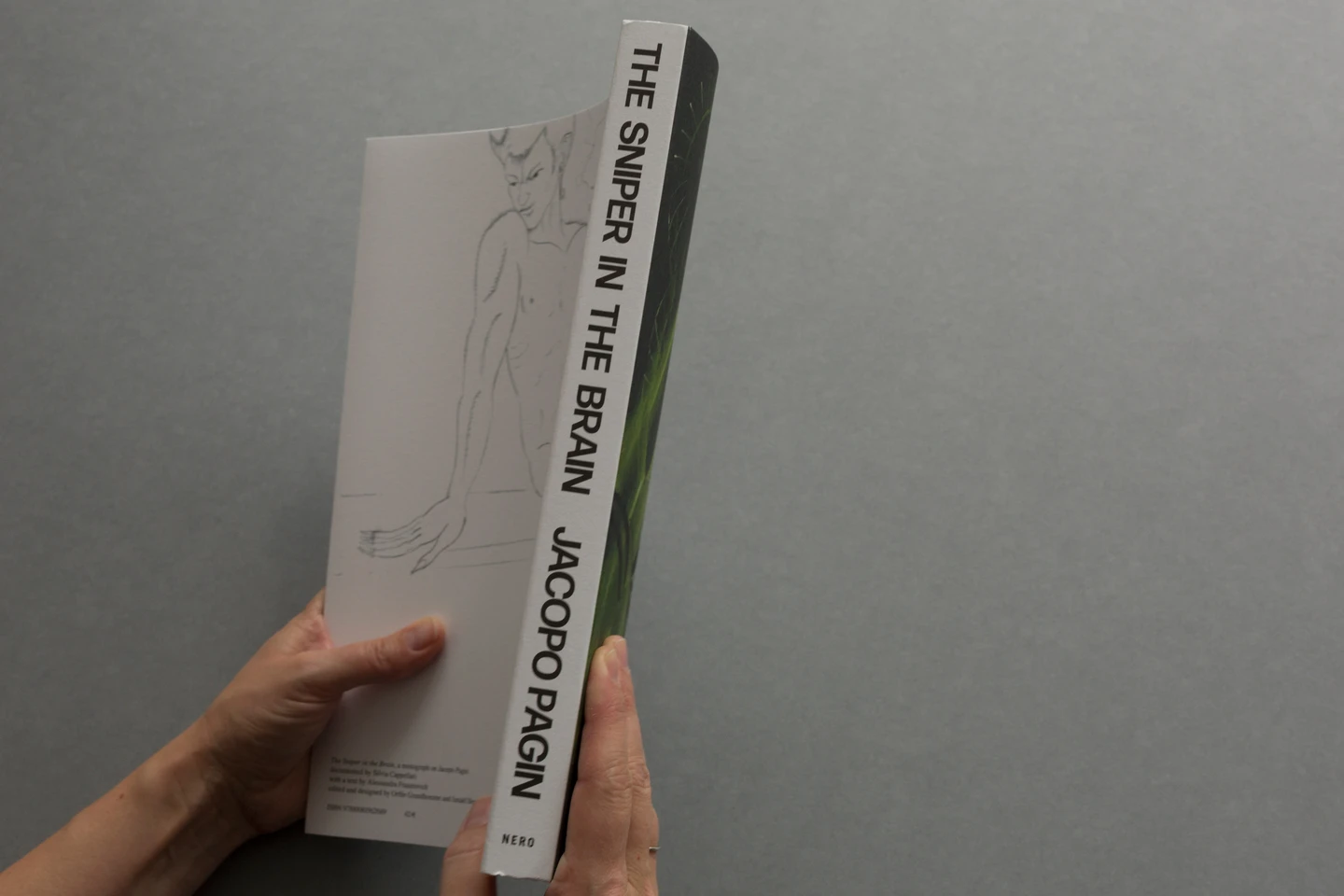
Make Room, Nero Editorial, Book 2024Fascinated by Jacopo's work from his debut in Brussels, we were glad to edit an design his first monograph. In this collaboration, Orfée went through the hundreds of sketches to assemble a selection of them in chapters of drawings partitioning the painting series. The latest are displayed in the book freely following a chronological order and Jacopo's obsessions to propose a narrative that breaks the exhibitions timeline.
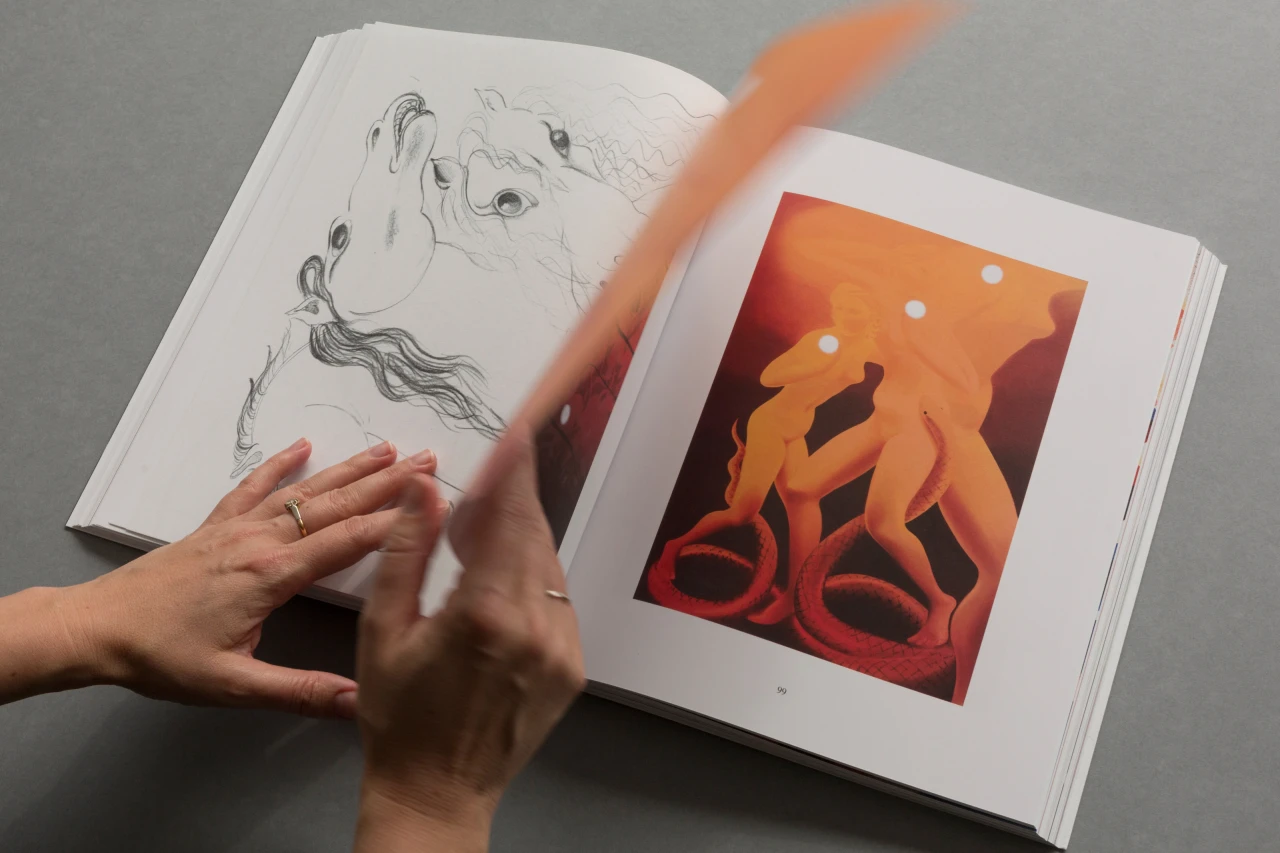
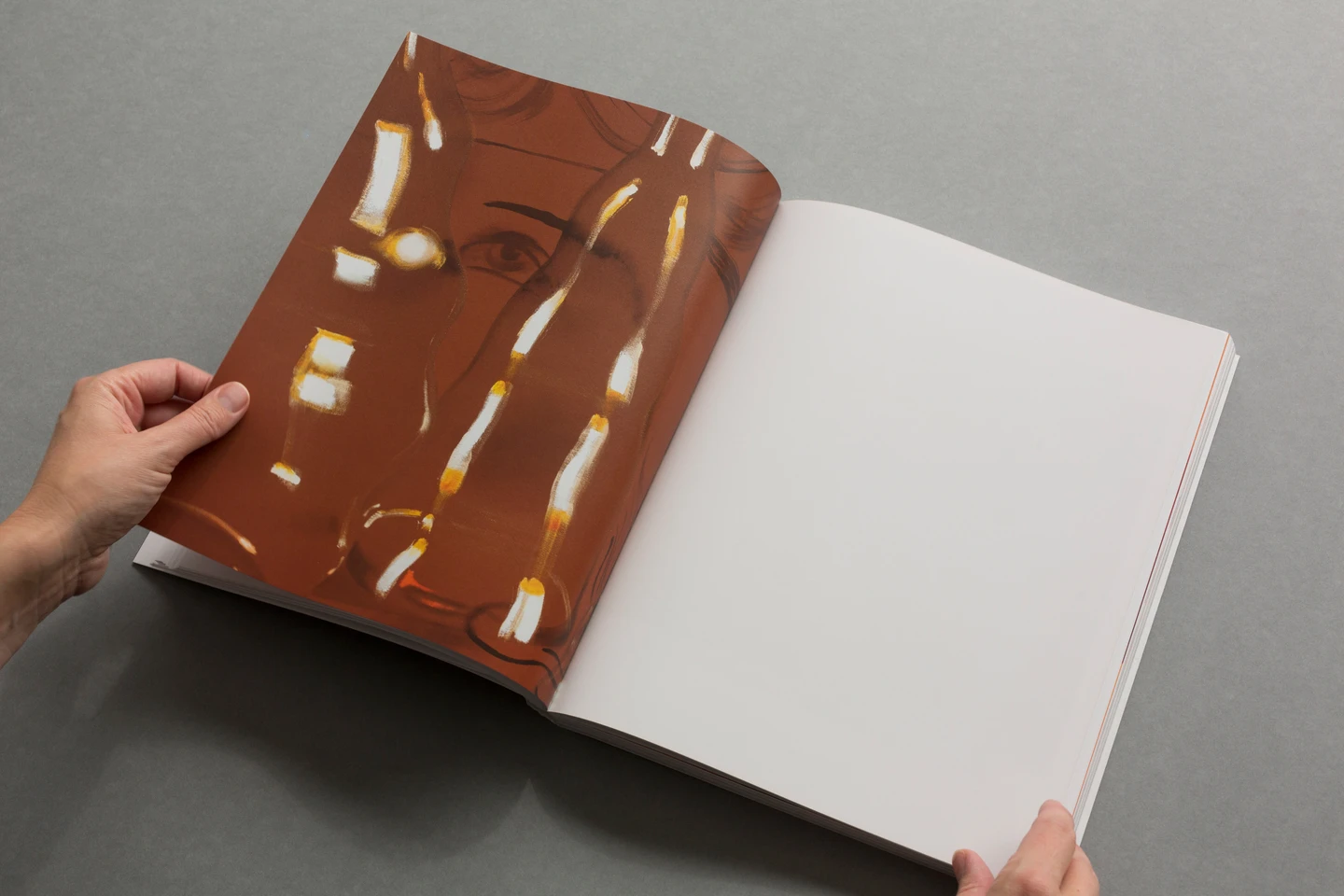
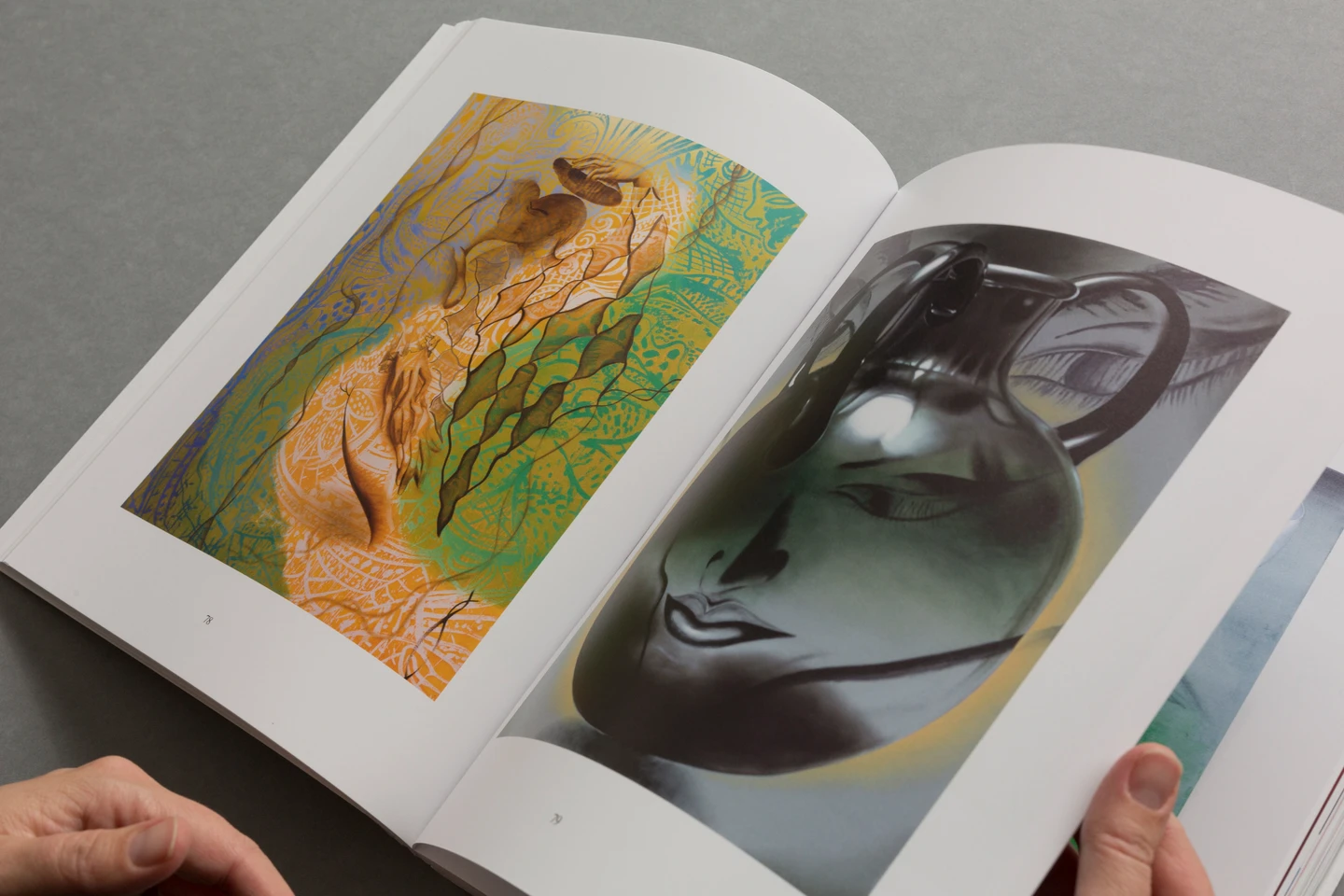
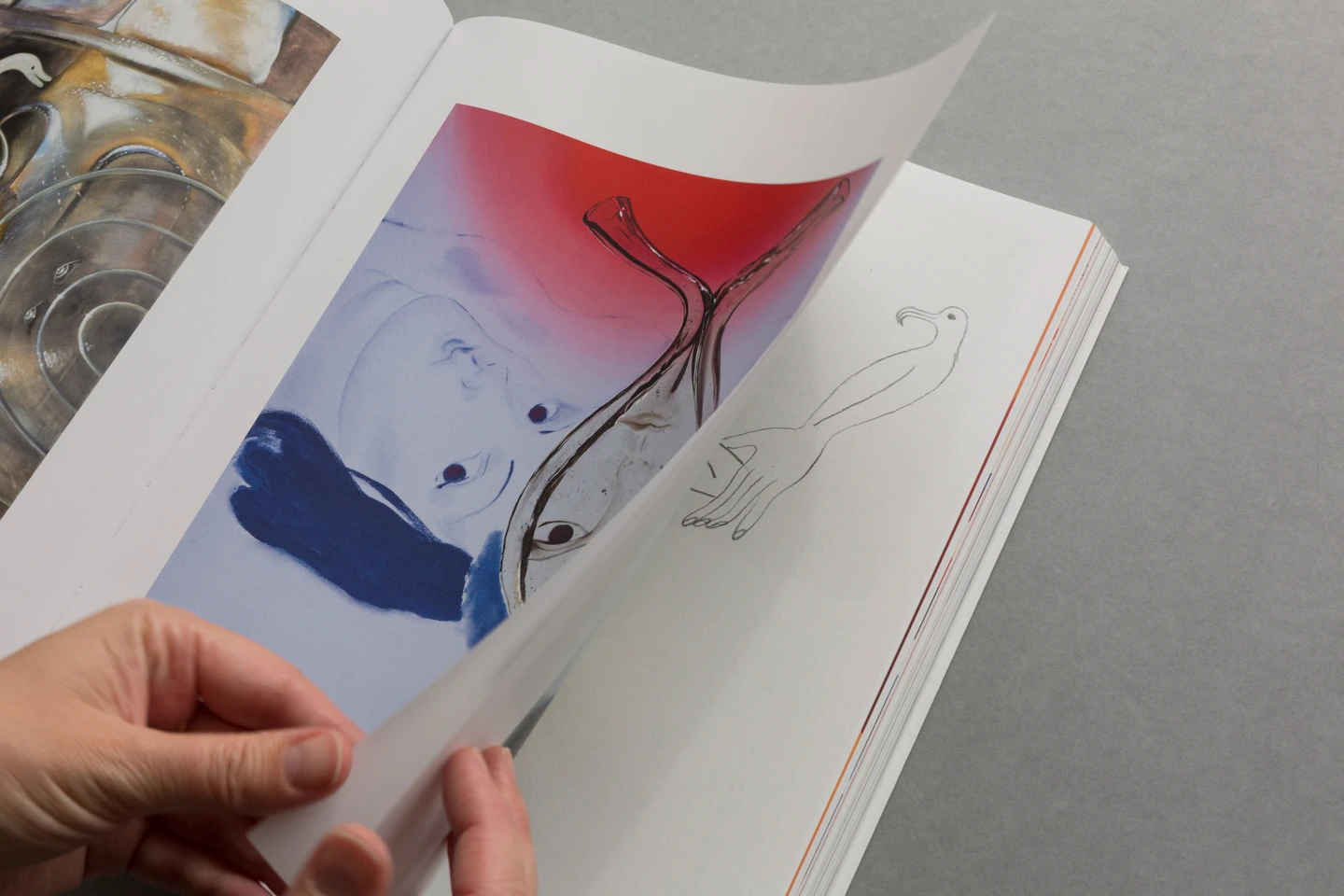
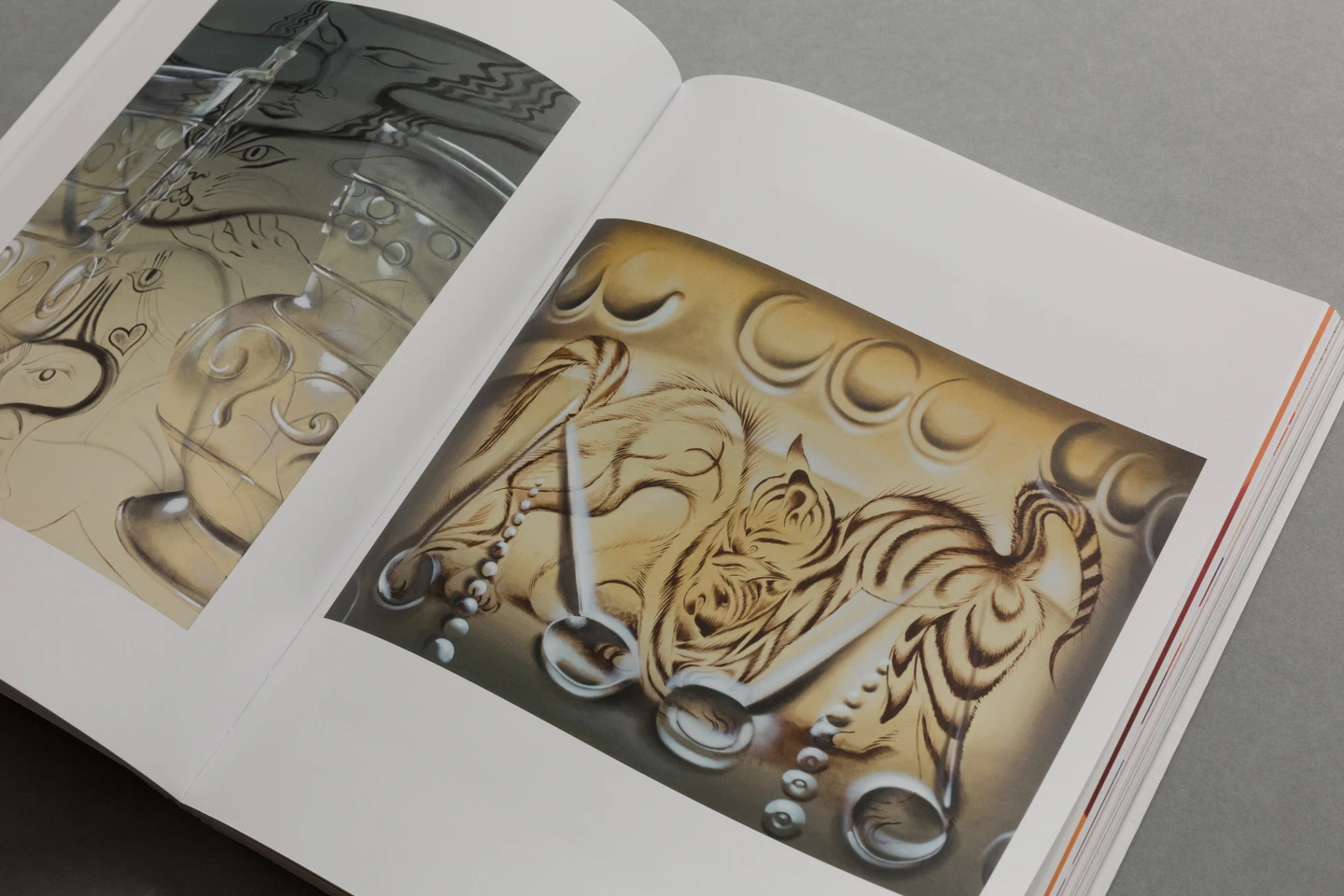
The monograph features a critical contribution by Alessandra Franetovich and brings together over 200 drawings and paintings to explore the visionary, obsessive, and hypnotic qualities of the artist’s work and its profound connections with exotic, mediumistic, and new-age practices.
-
-
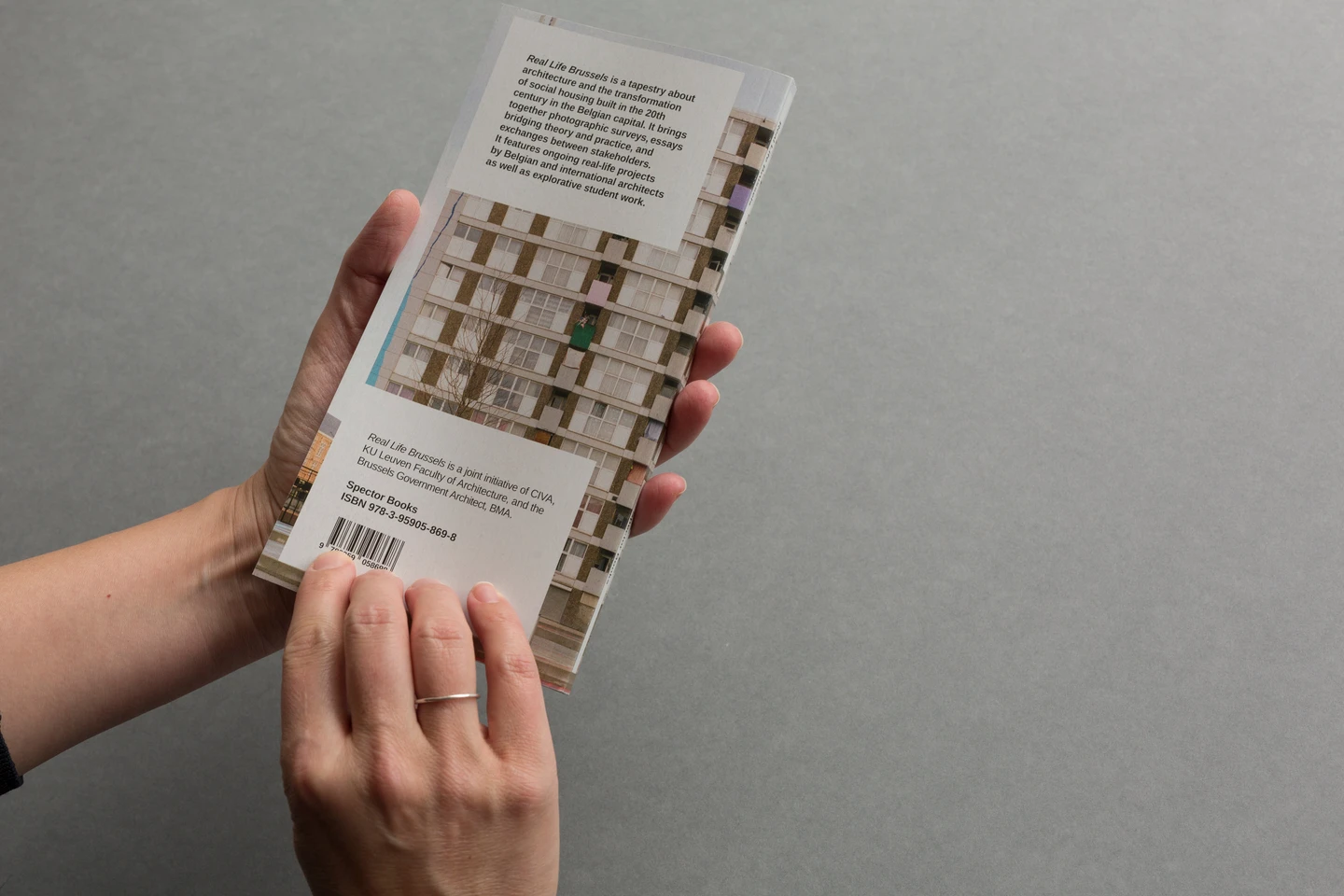
Real Life Brussels
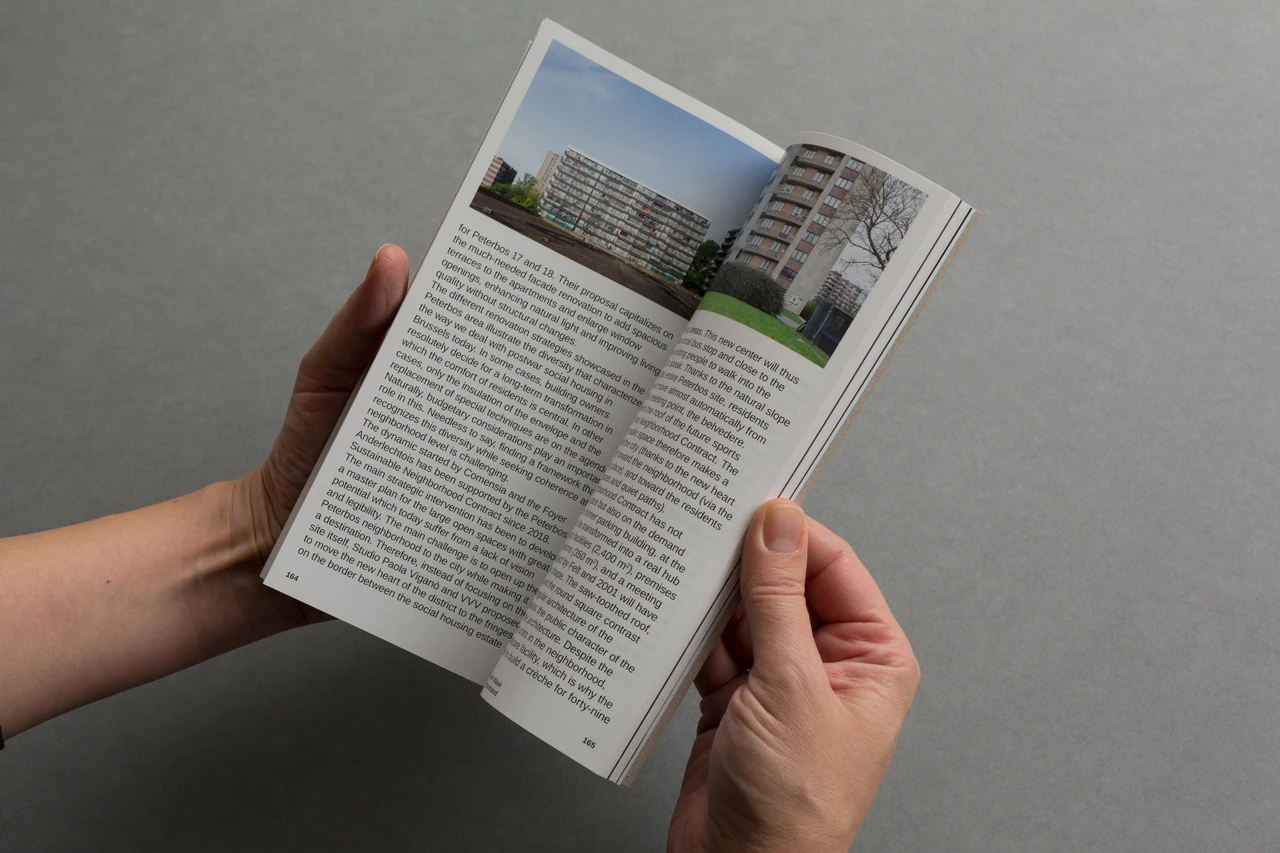
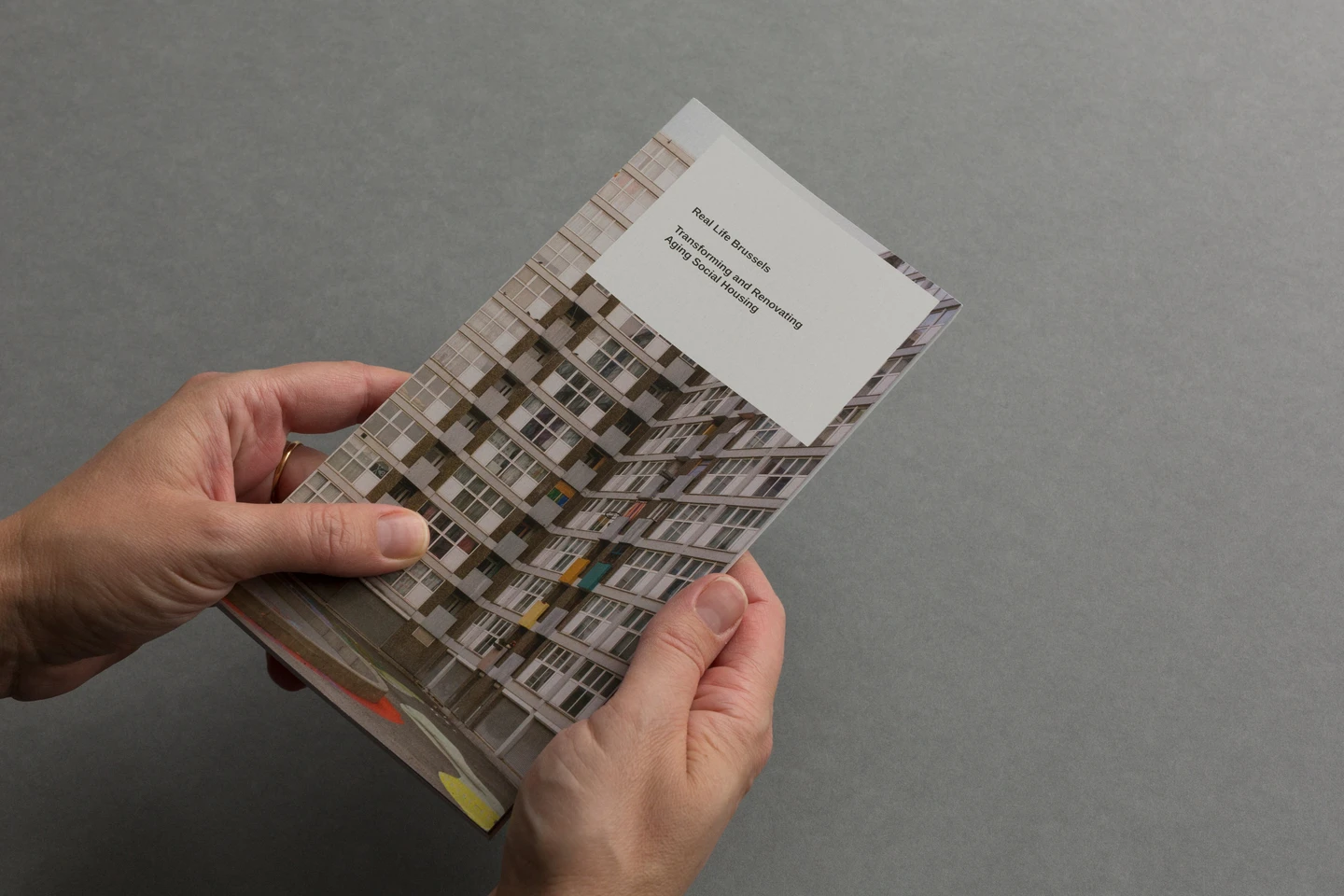
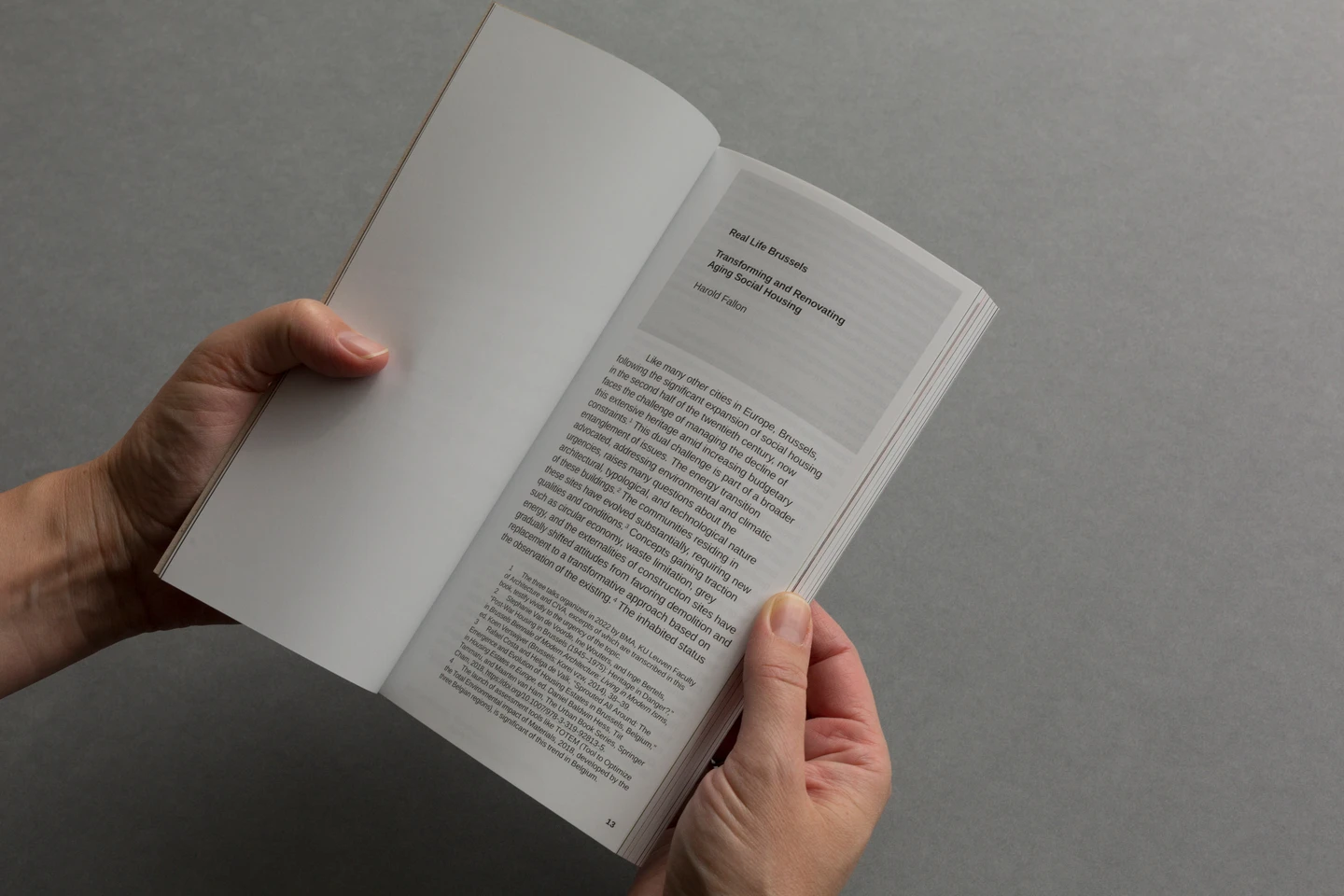
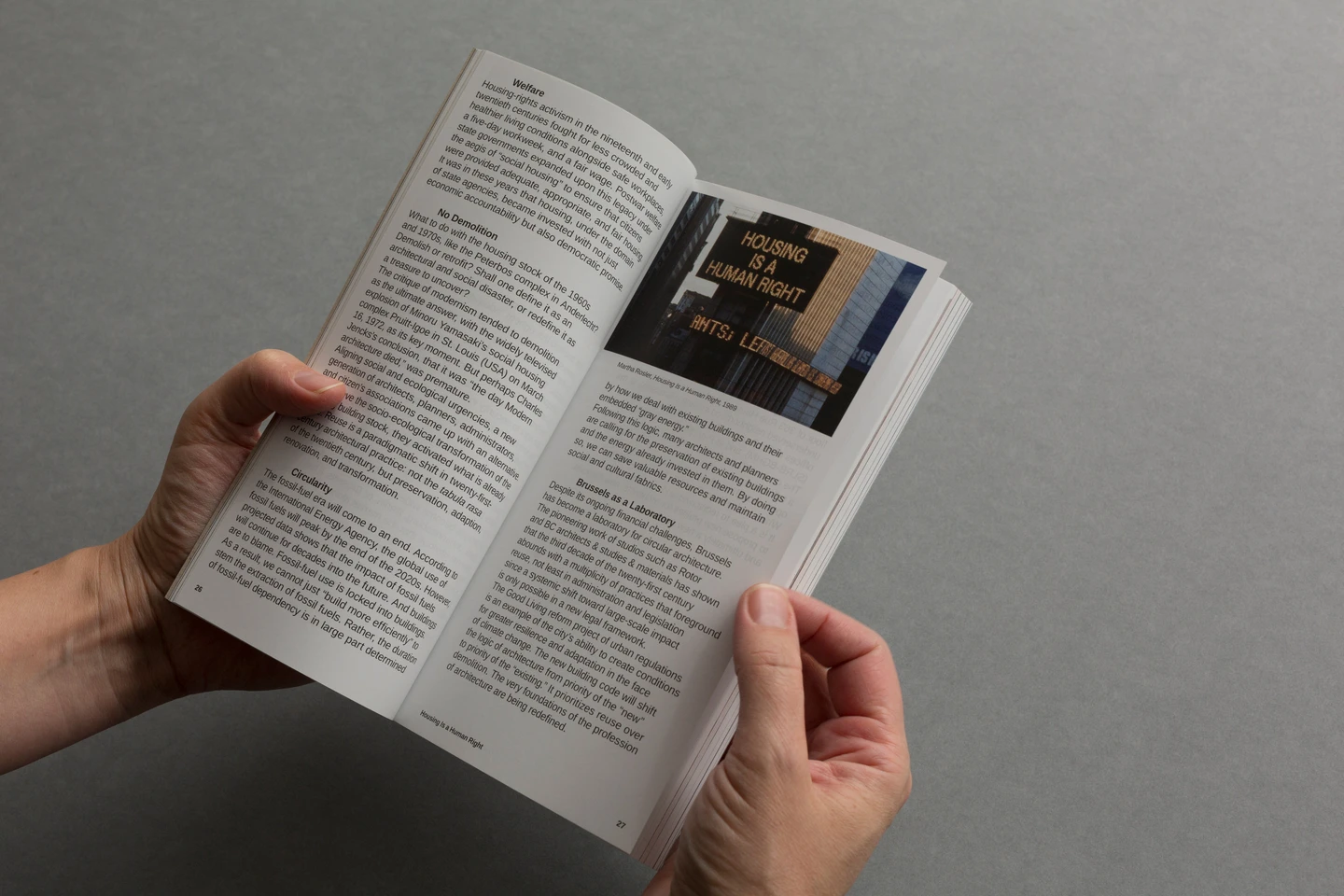
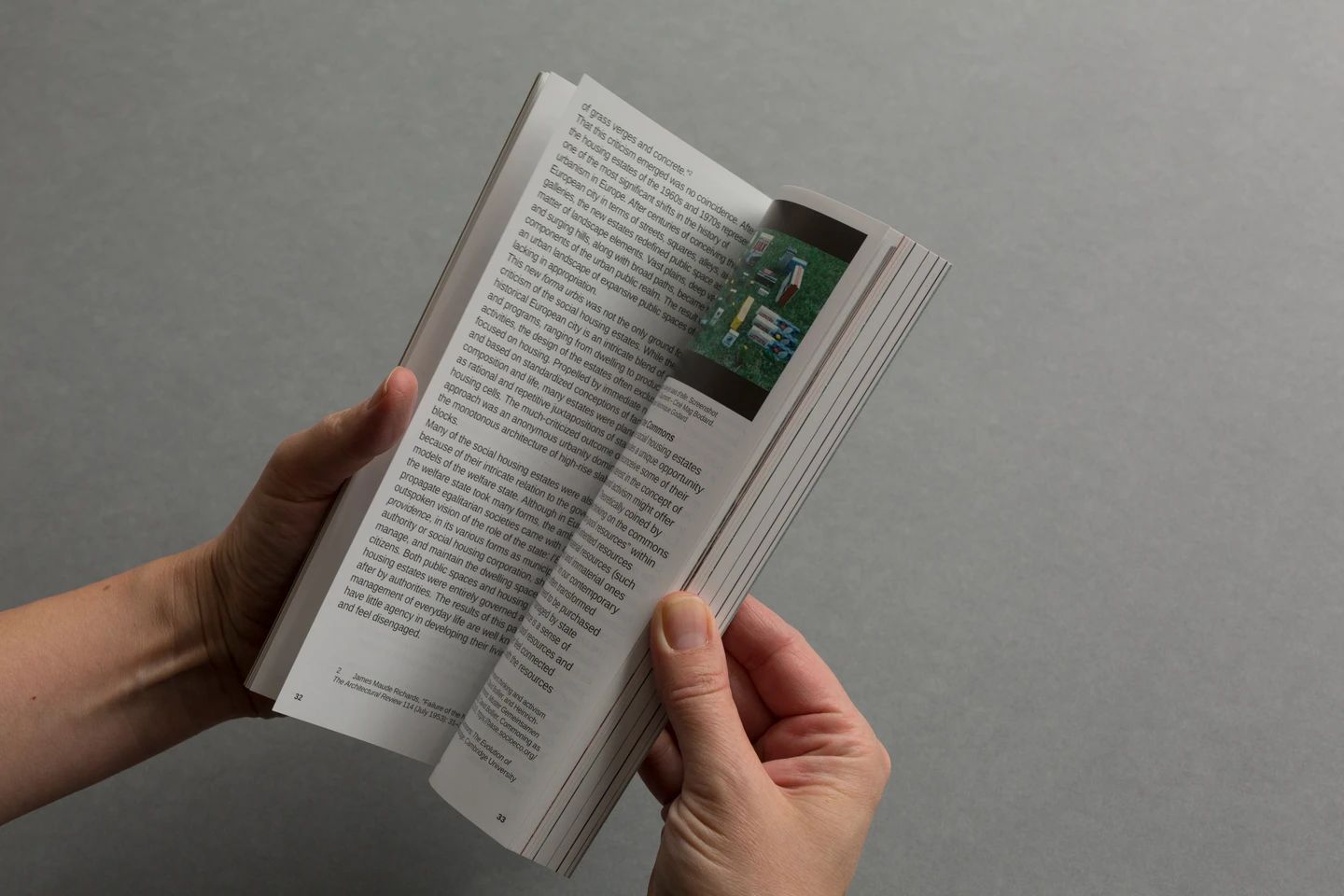
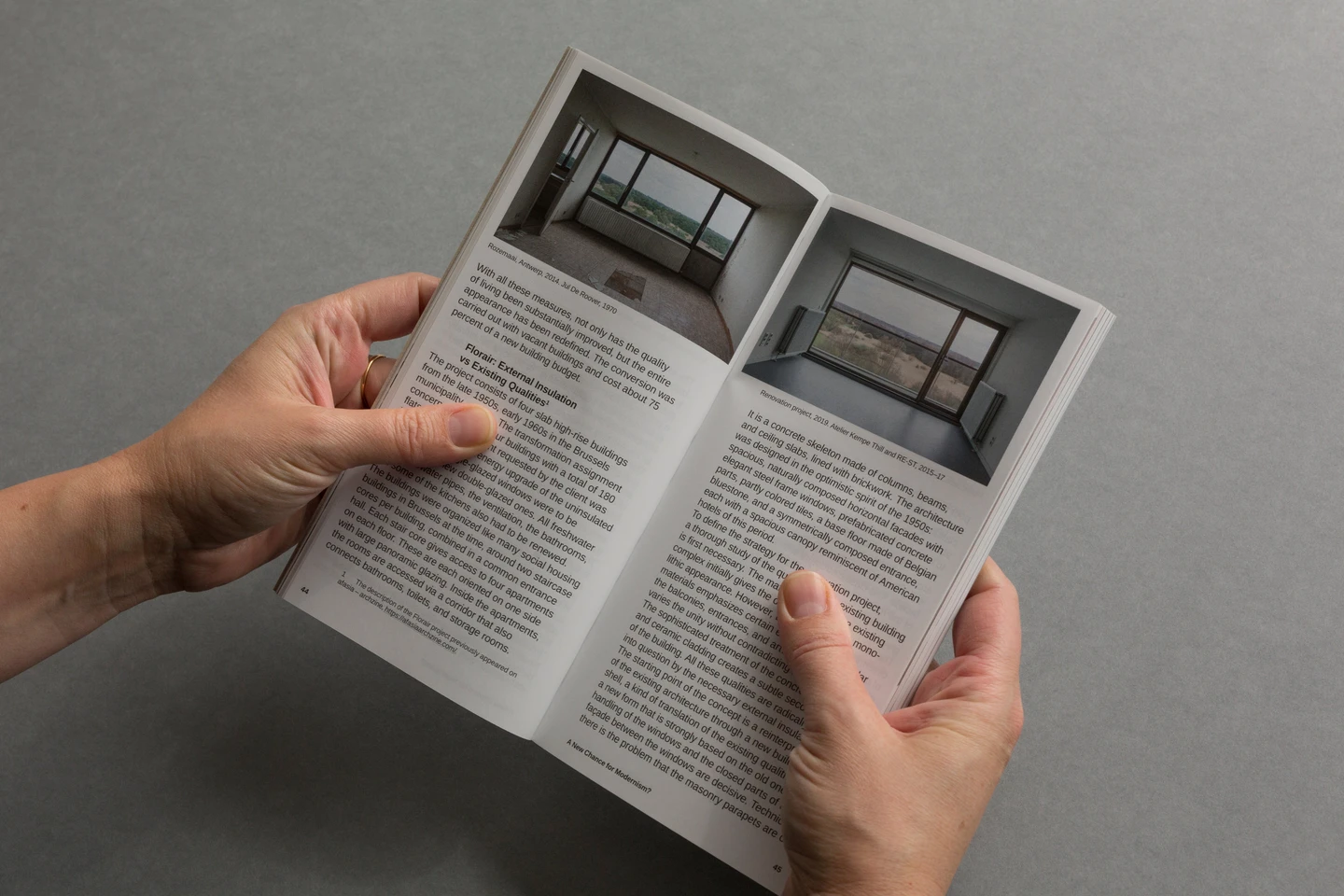
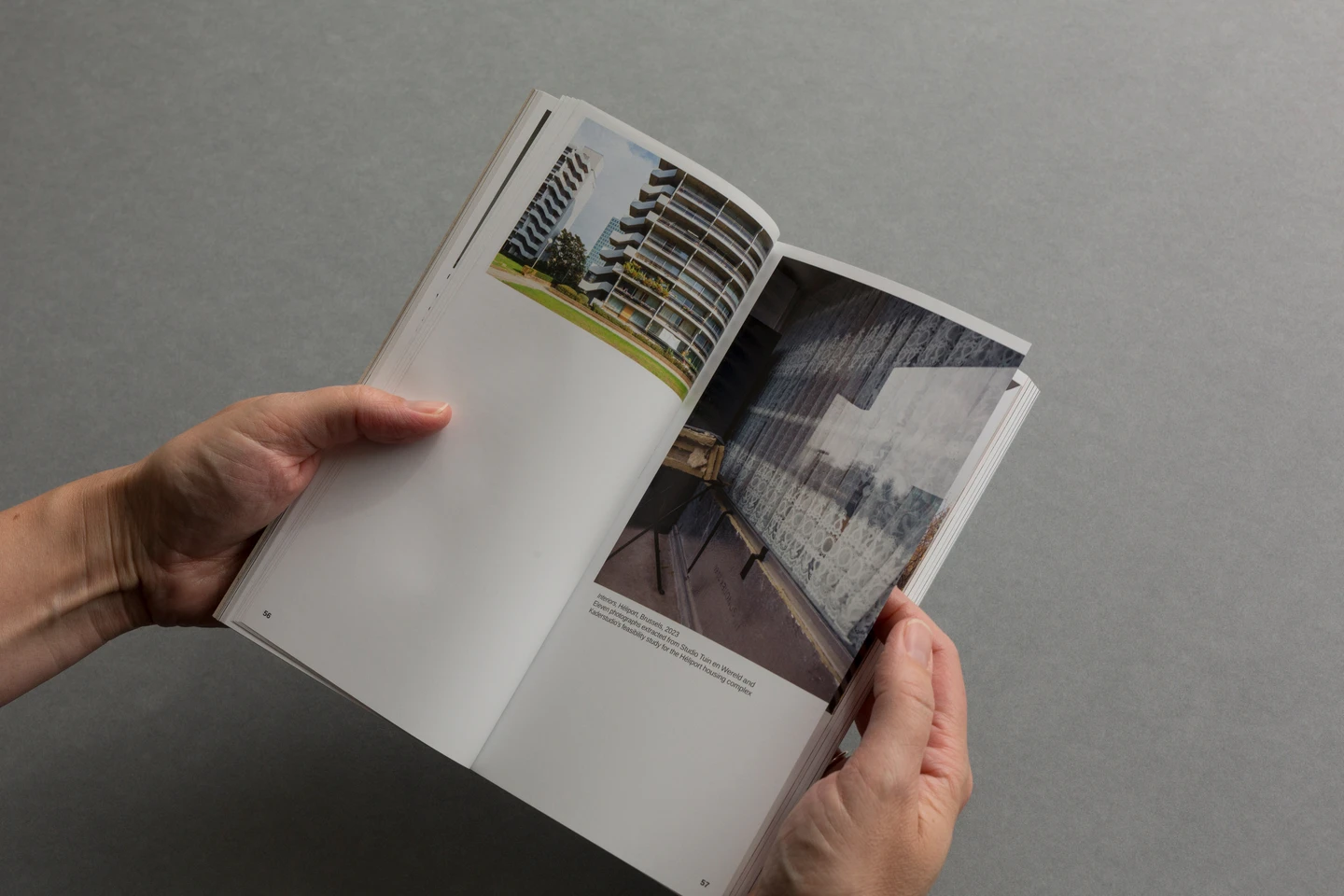
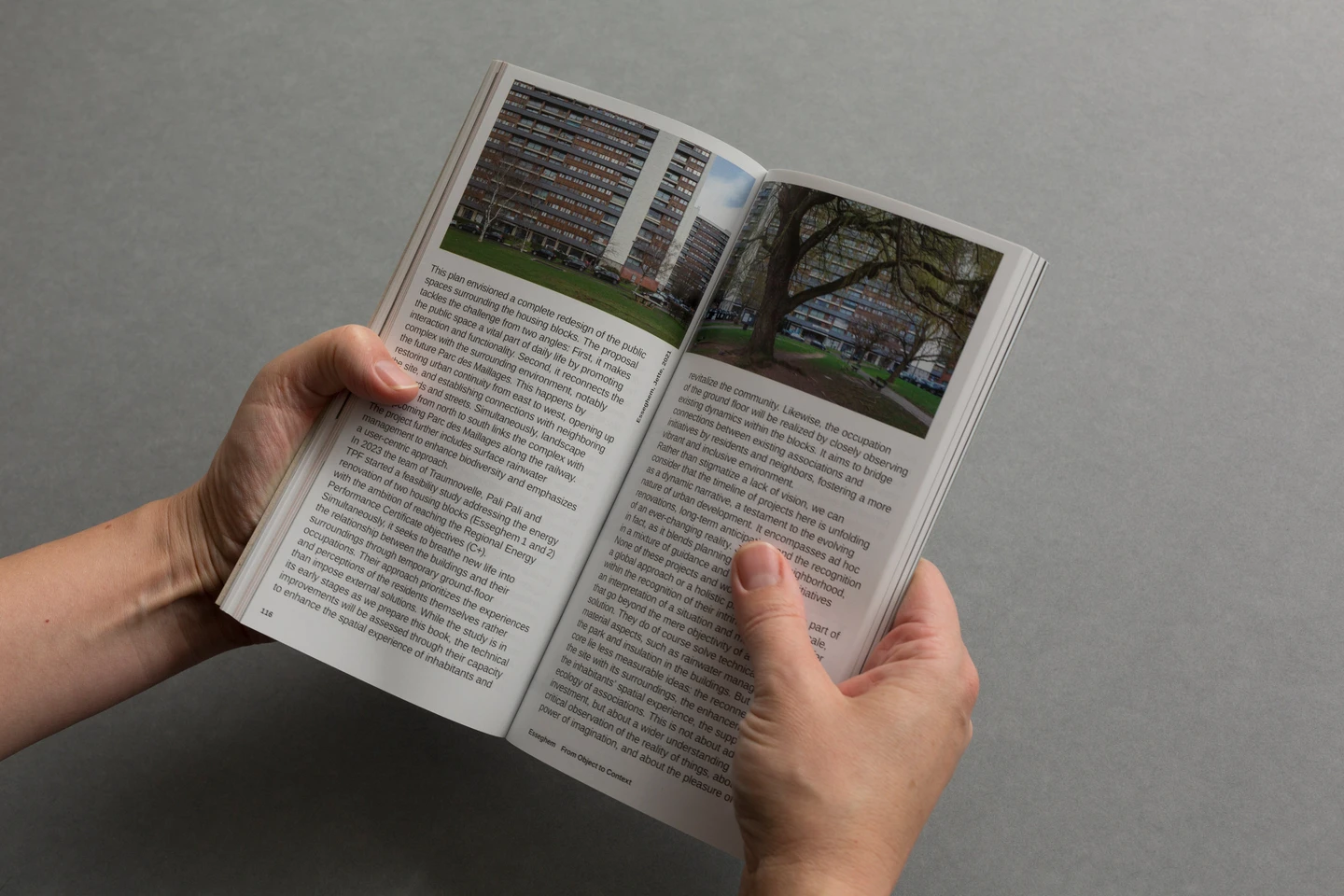
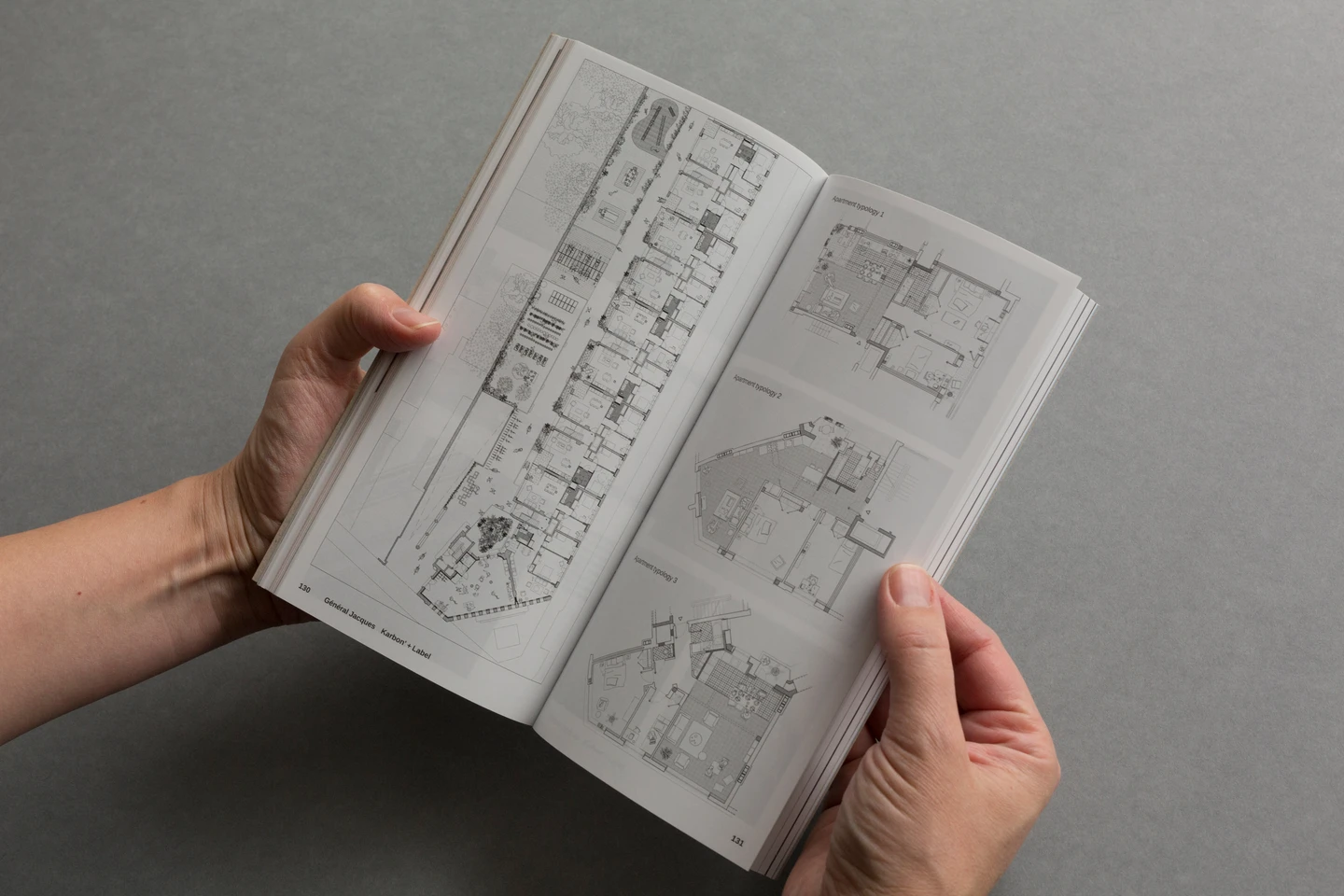
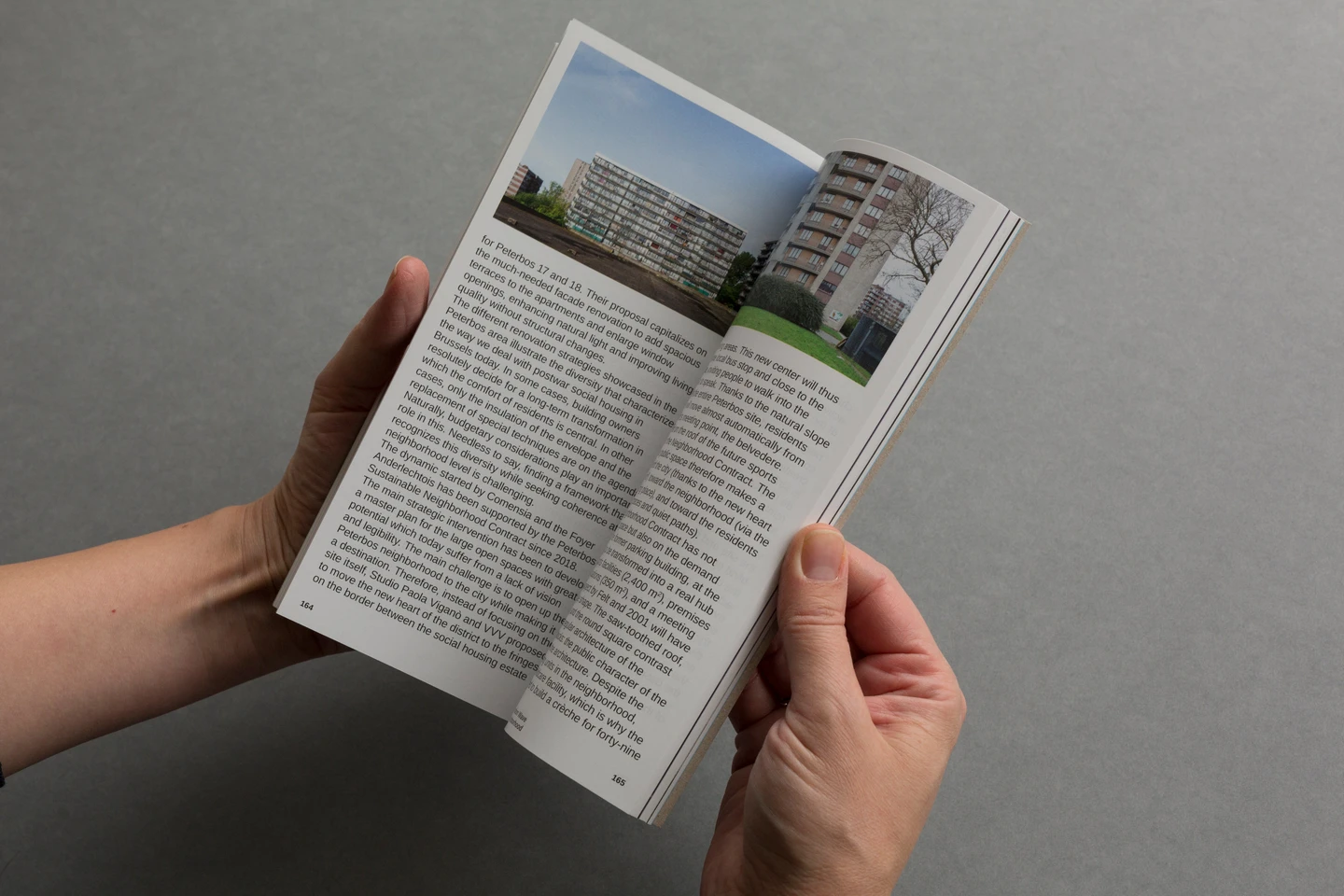
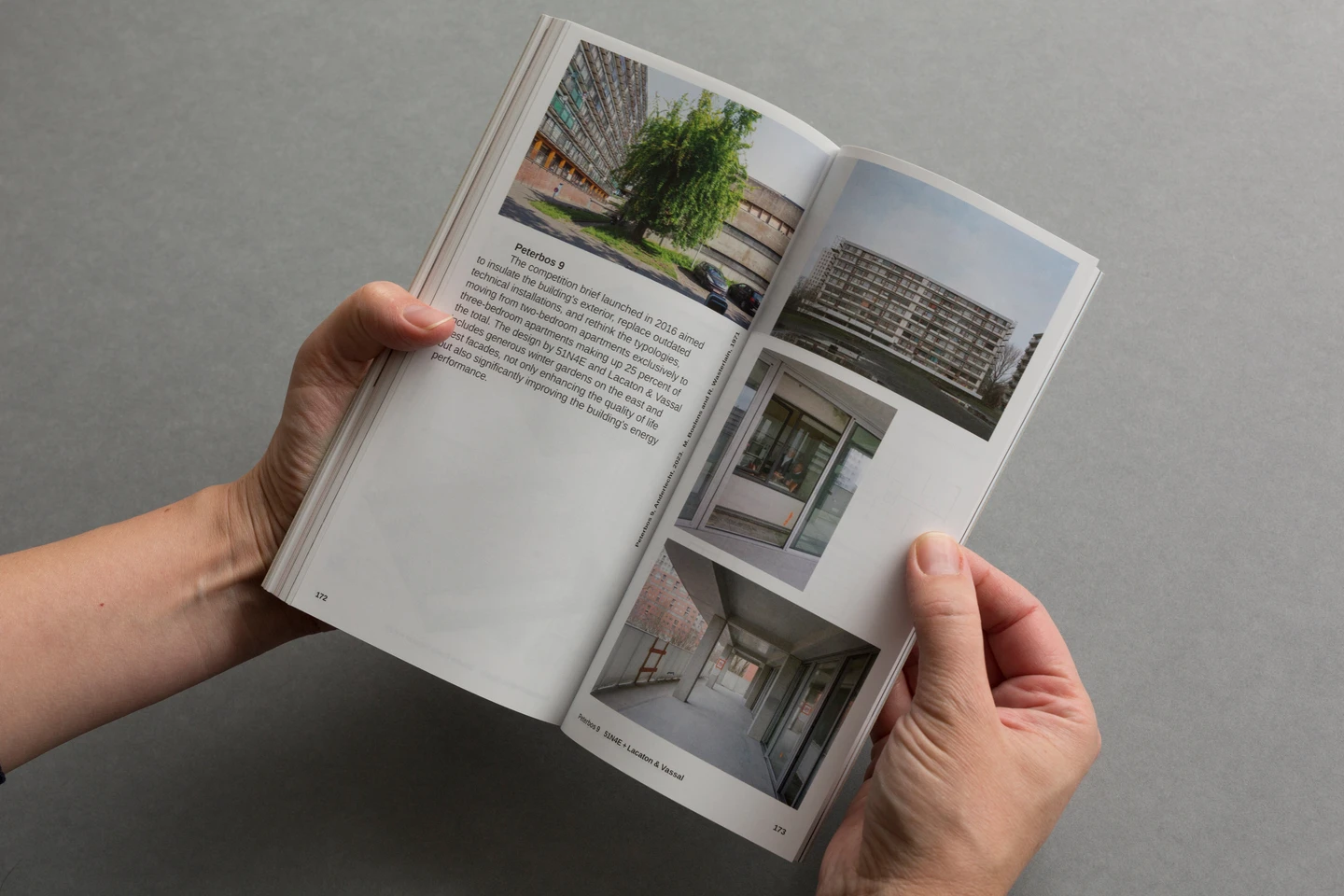
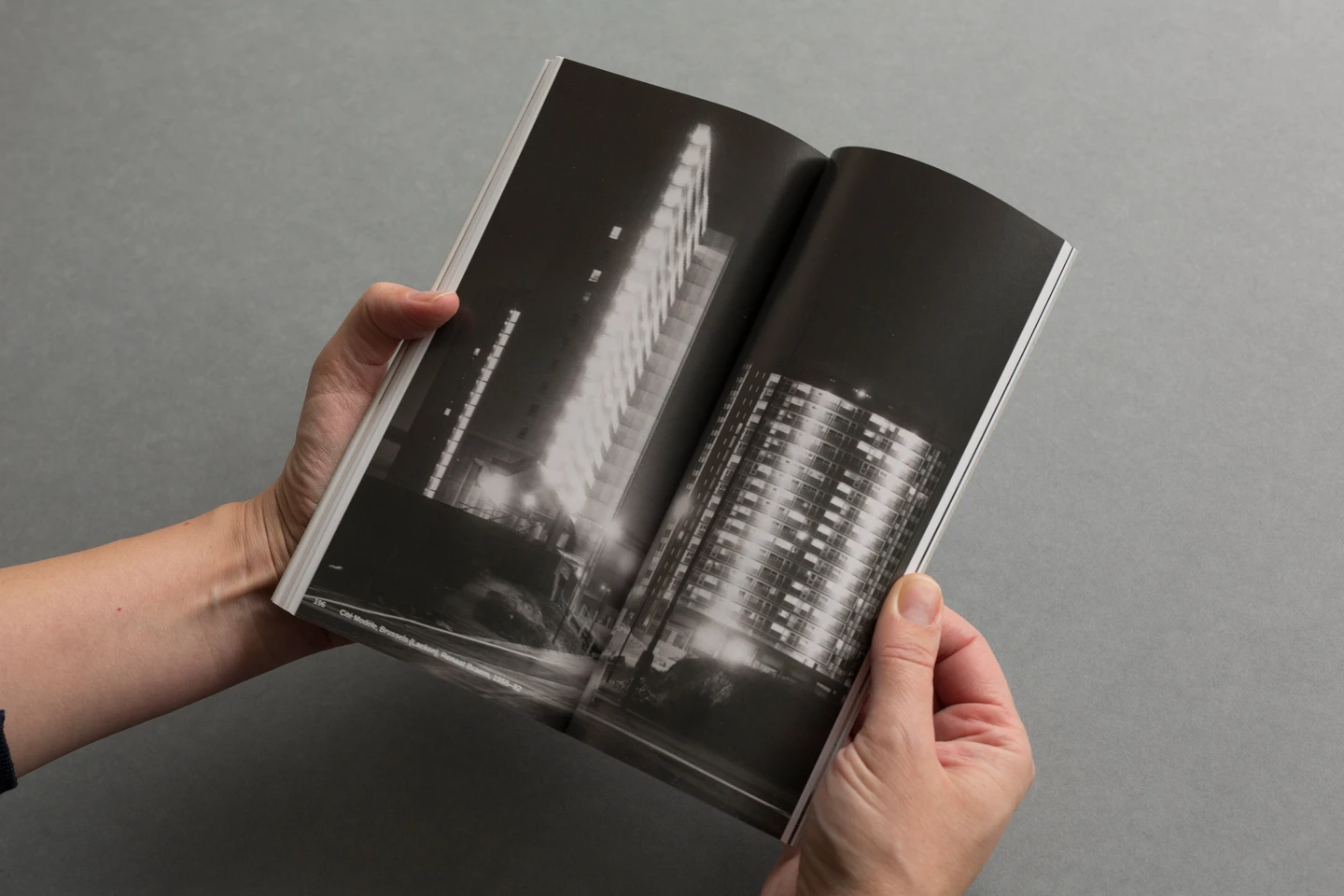
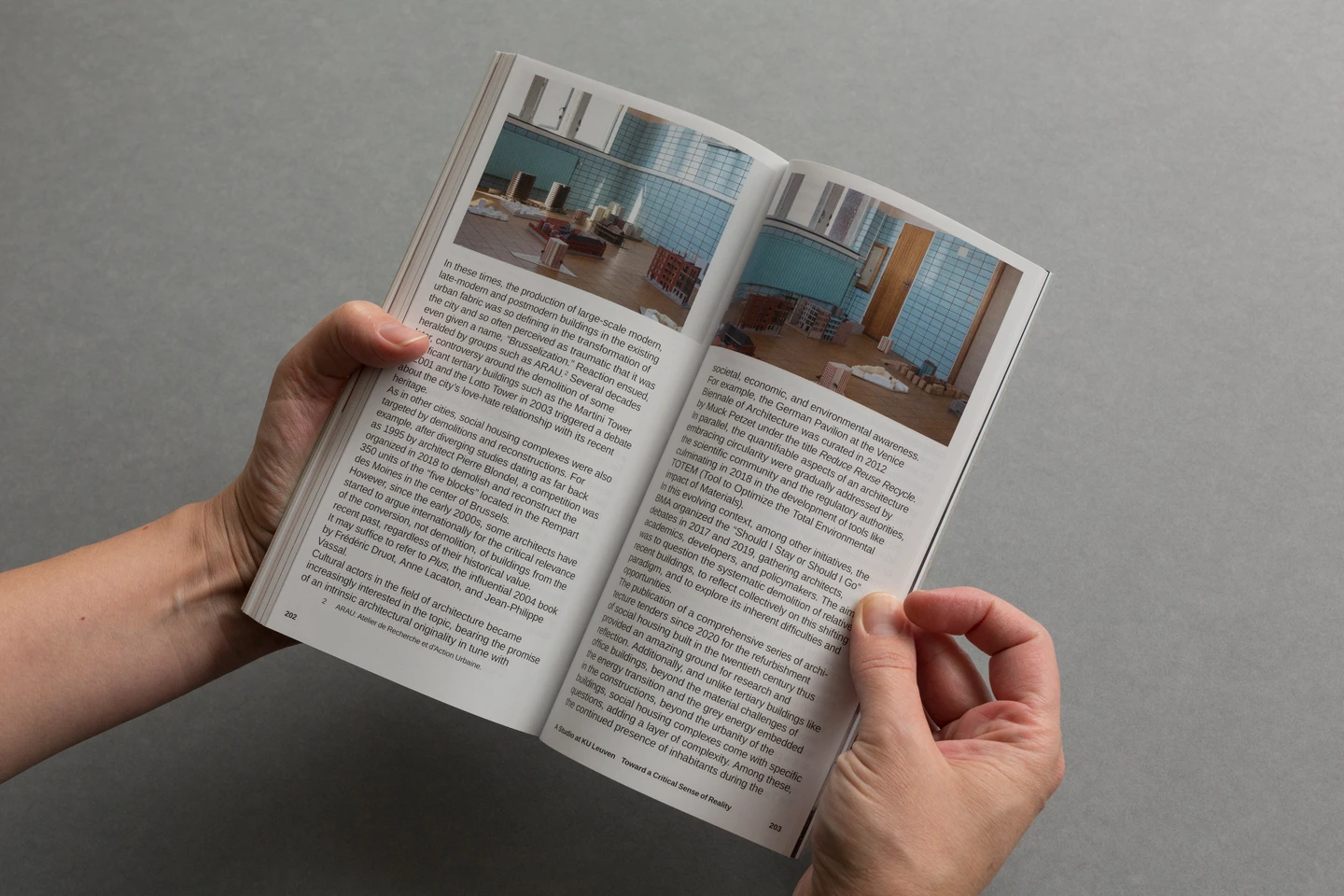
CIVA, BMA, KU Leuven, Spector Books Editorial, Book 2024Like many other cities in Europe, Brussels, following the significant expansion of social housing in the second half of the twentieth century, now faces the challenge of managing the decline of this extensive heritage amid increasing budgetary constraints. In this context, CIVA collaborated with KU Leuven and BMA to organise a series of three talks in 2022, hosted at various locations. This book stands as the culmination of these initiatives.
Real Life Brussels: Transforming and Renovating Aging Social Housing attempts to transcend disciplinary boundaries, encompassing architectural, historical, social, and environmental dimensions. It is largely based on content, projects, and reflections of the last years. In phase with its contents, it avoids the temptation of the tabula rasa and the illusion of original novelty. By curating a diverse array of contributions, visual surveys, improvised talks, student works, and ongoing projects, Real Life Brussels is an invitation to discover a tapestry of concerns and opportunities. it states the intrinsic complexity of the subject, suggesting that no single solution or perspective can fully encapsulate its entirety. The book’s ambition is to encourage an open-ended and collaborative dialogue among architects, scholars, policymakers, and the community. The true value of this book may not lie in providing ready-made solutions, but rather in inspiring stakeholders and observers with open-ended explorations and reflections.
-
-
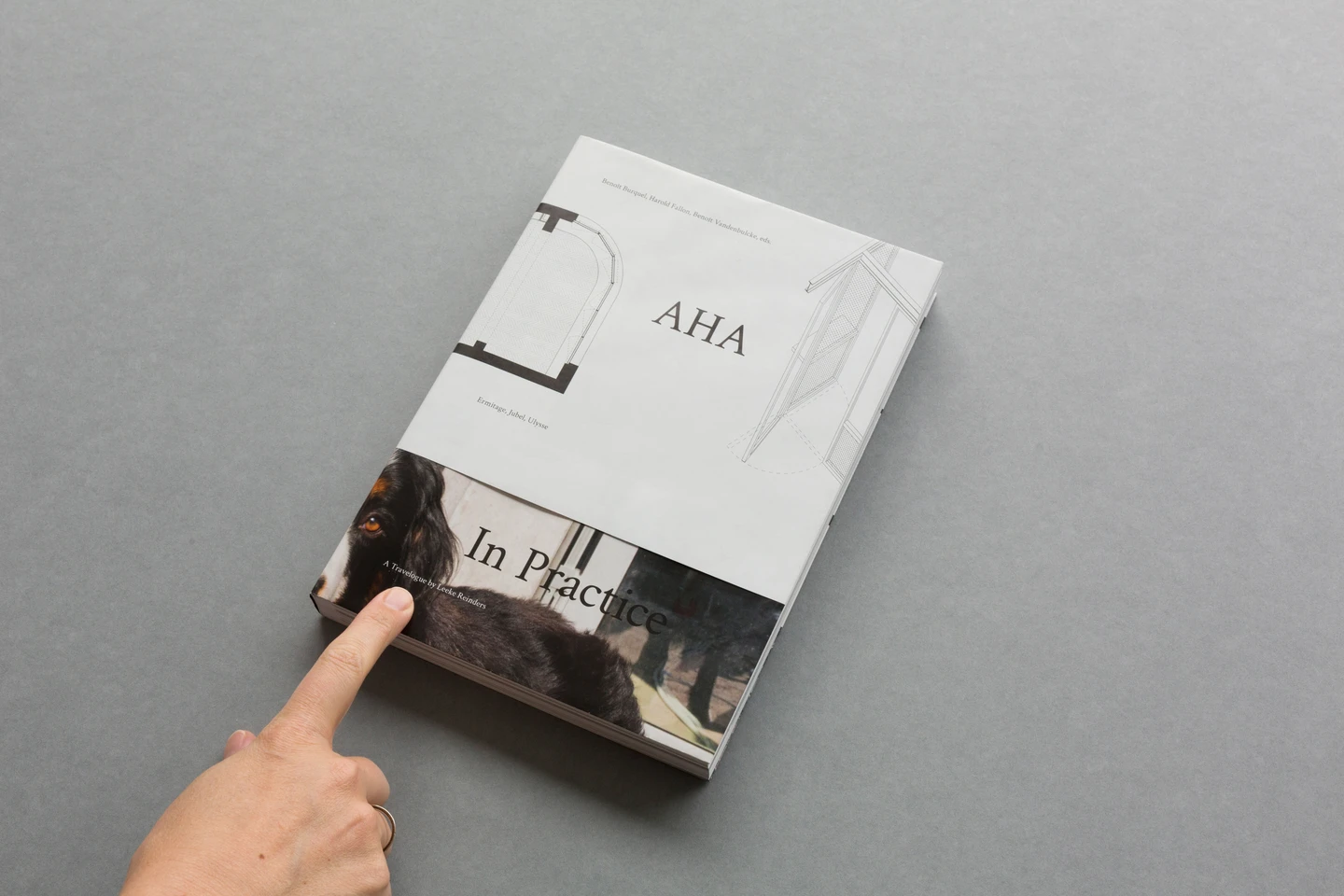
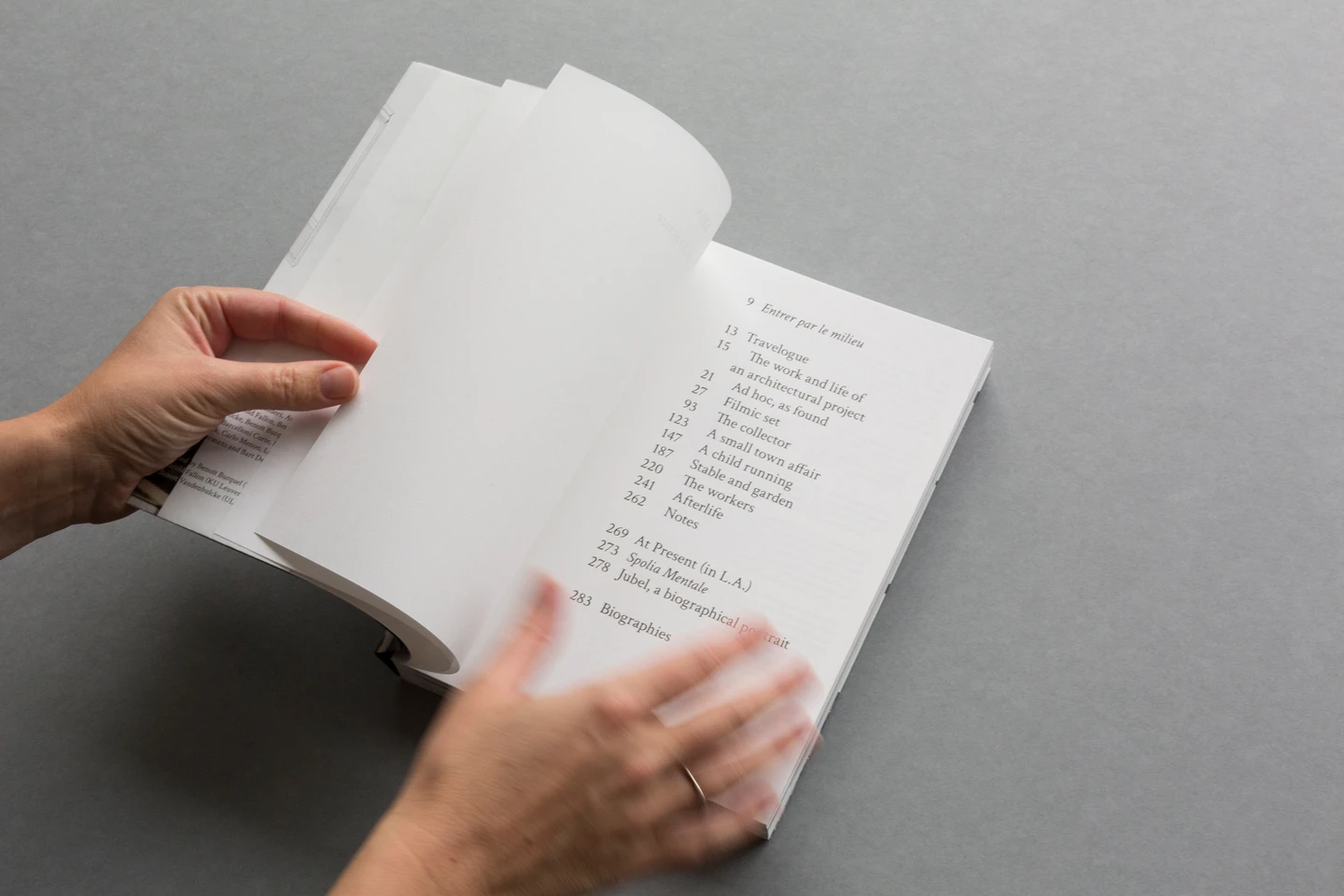
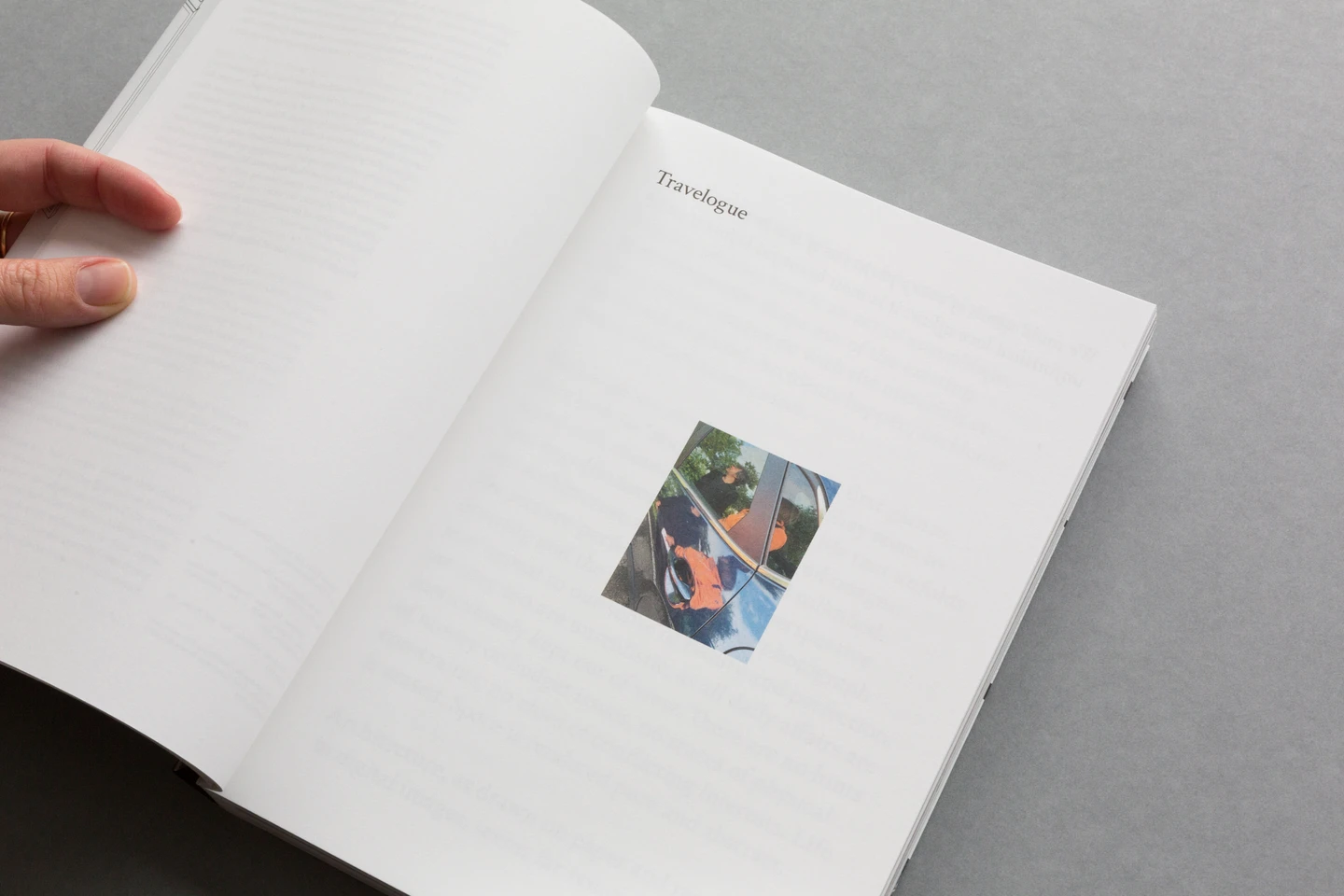
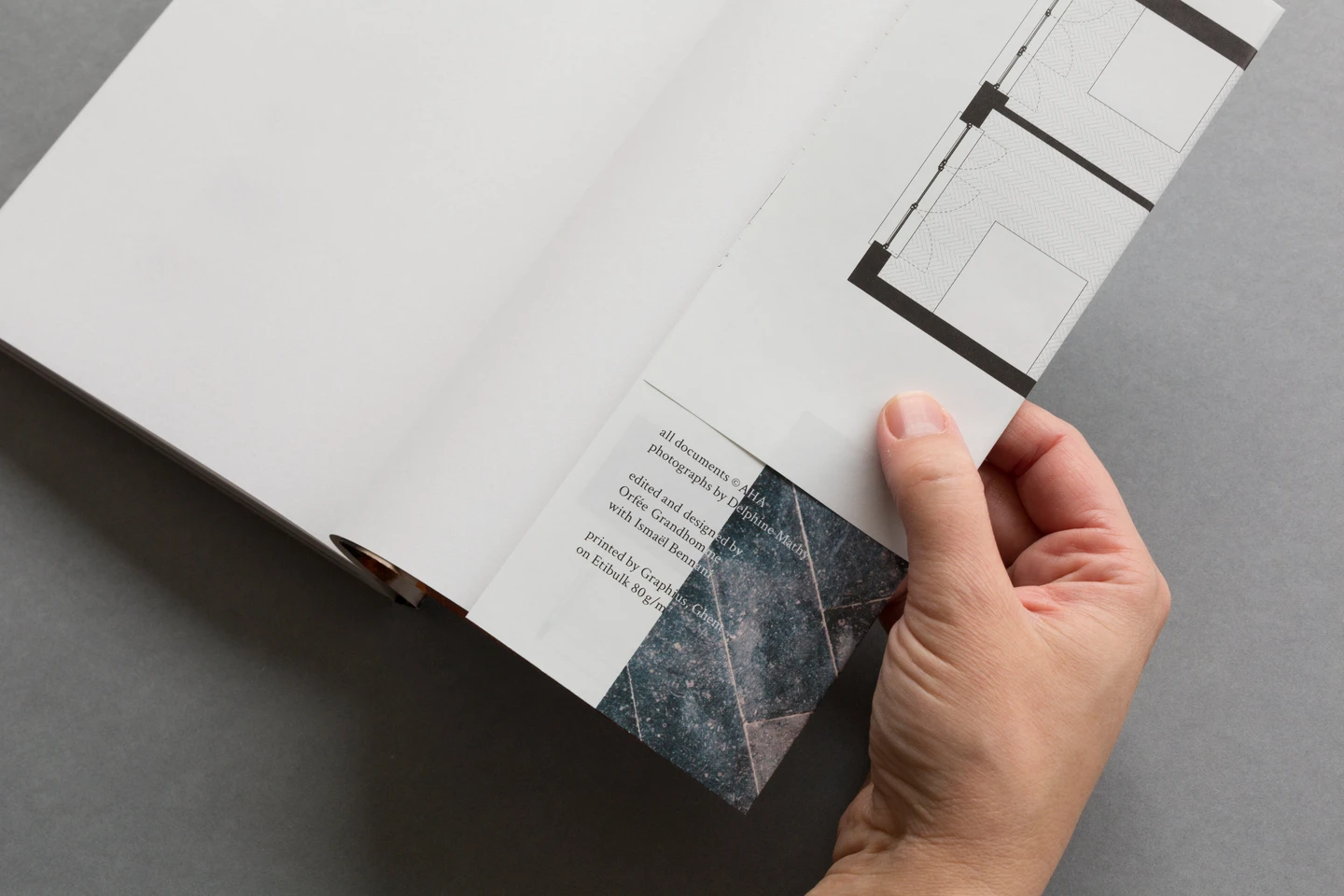
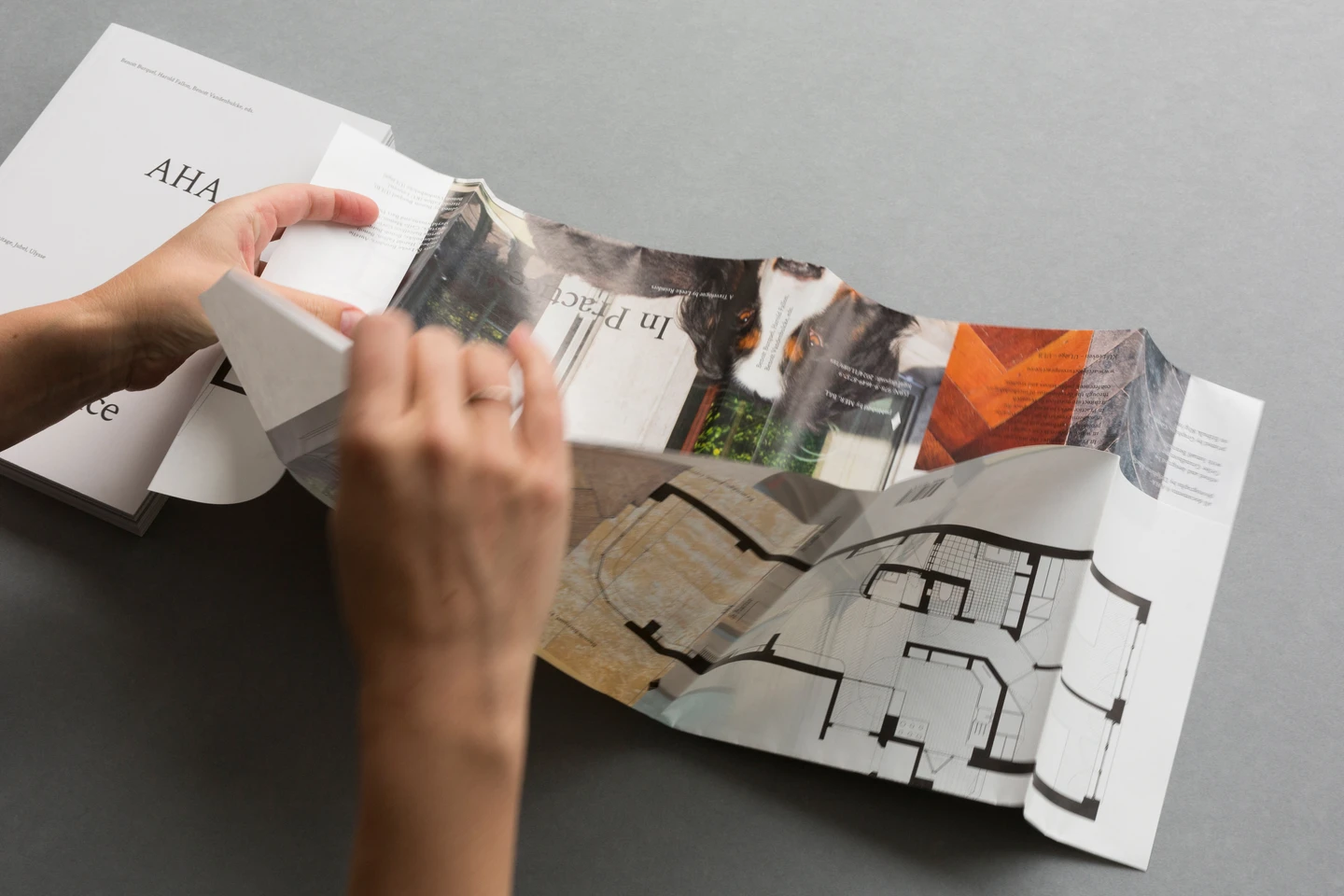
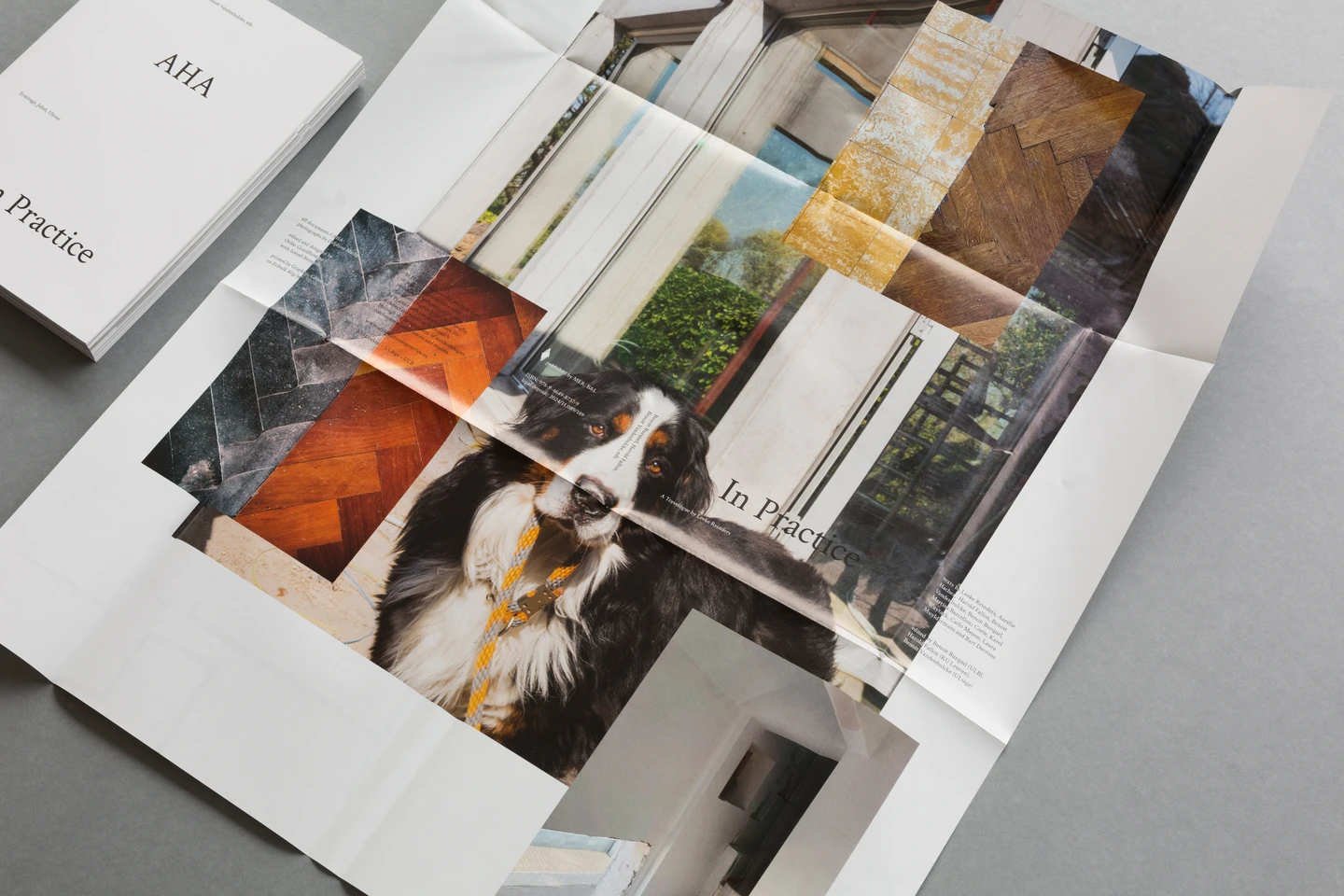
AHA in Practice
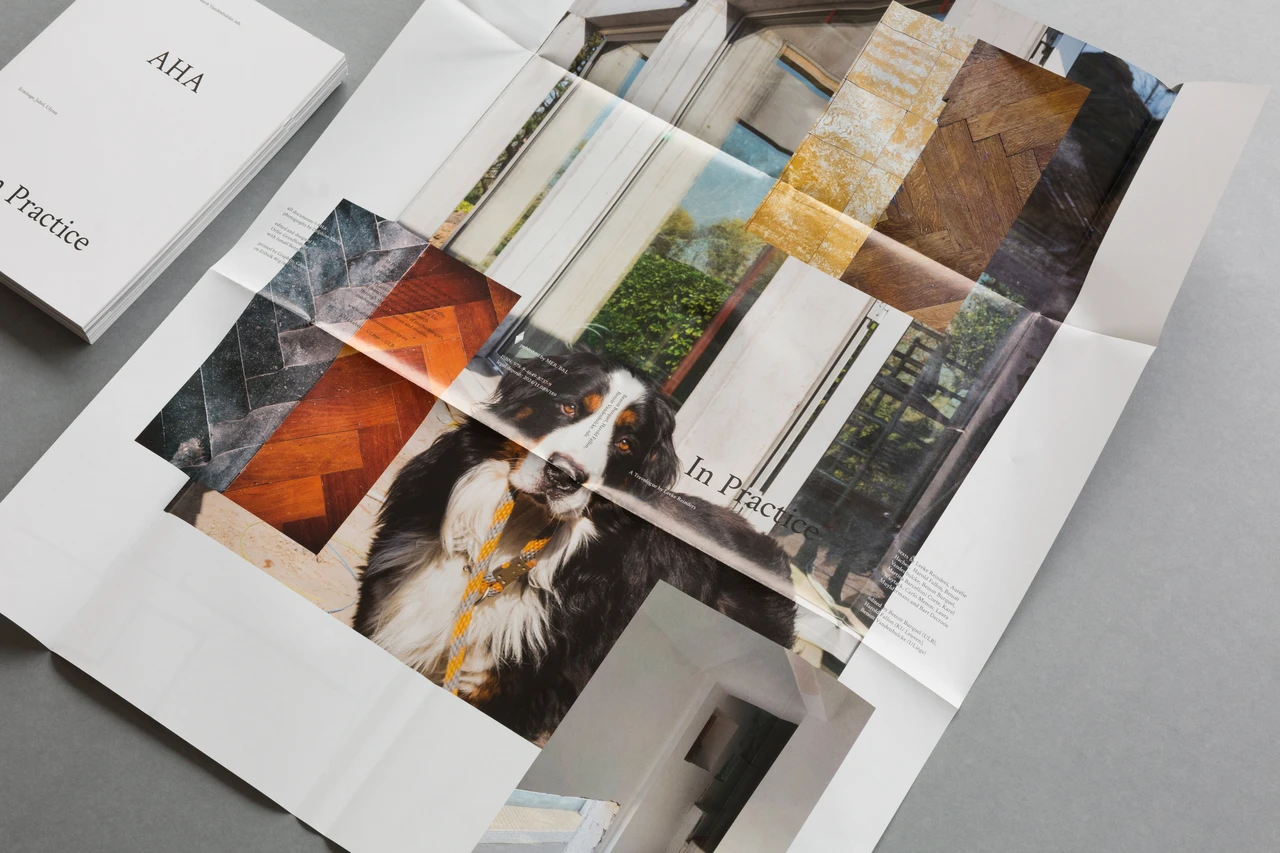
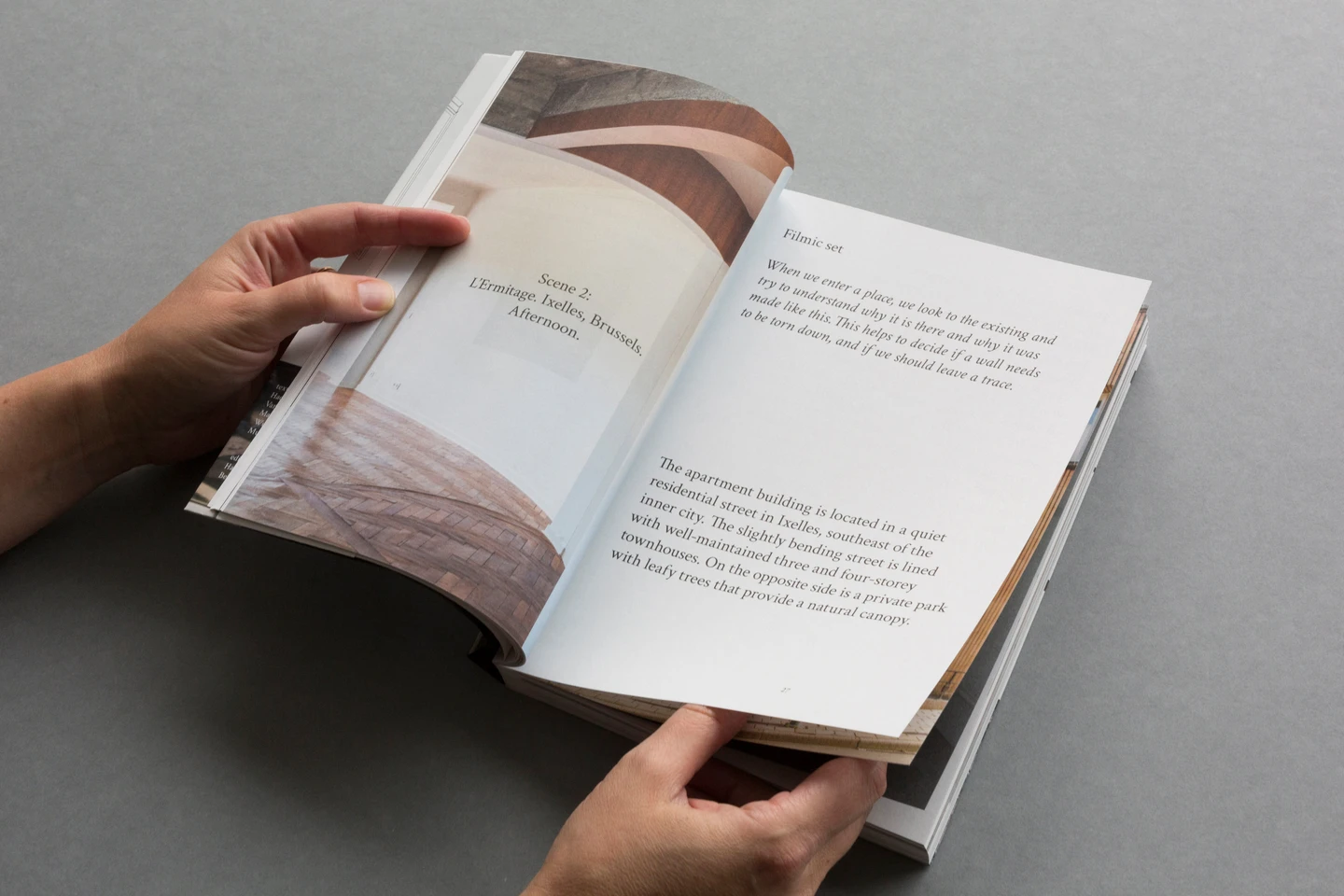
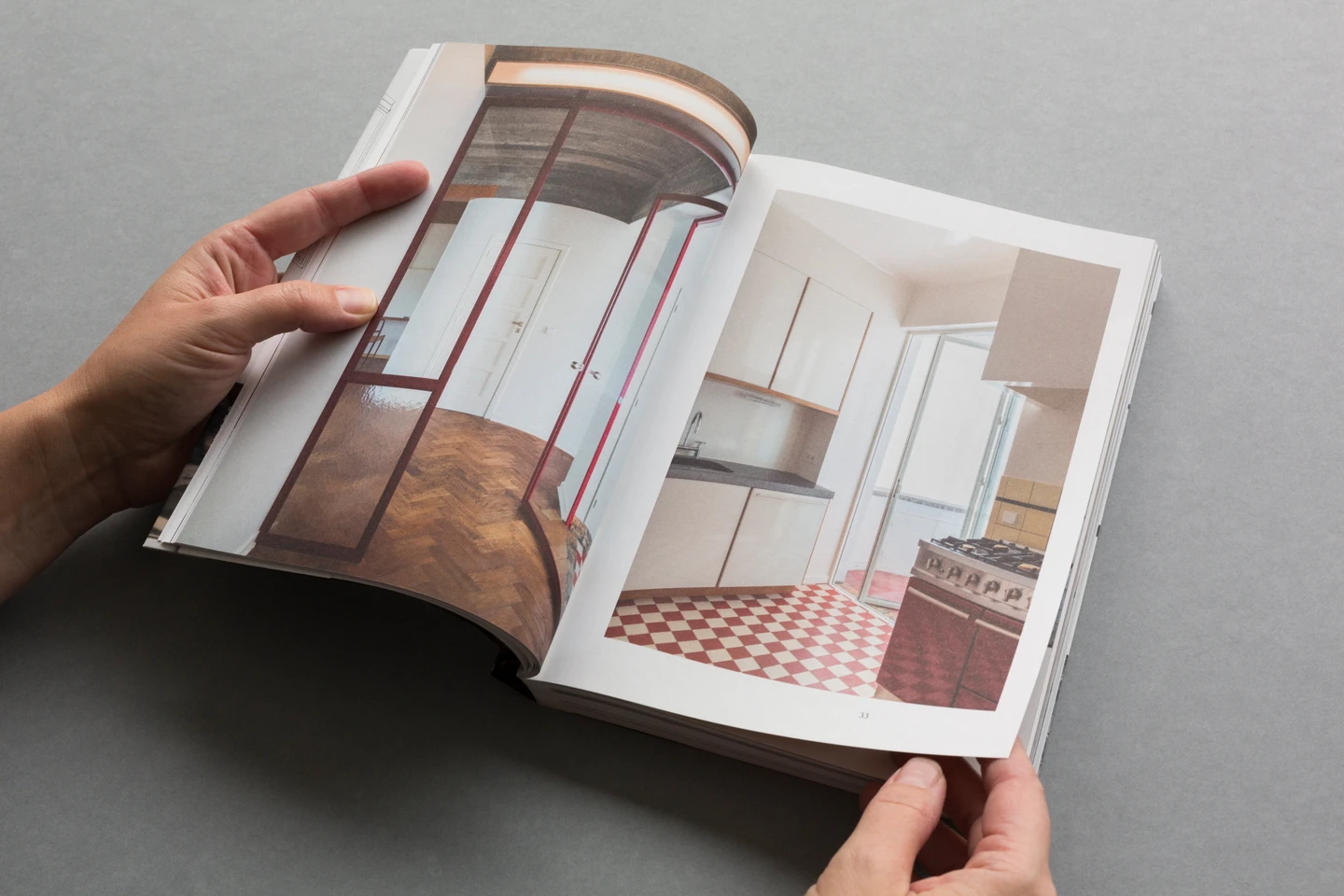
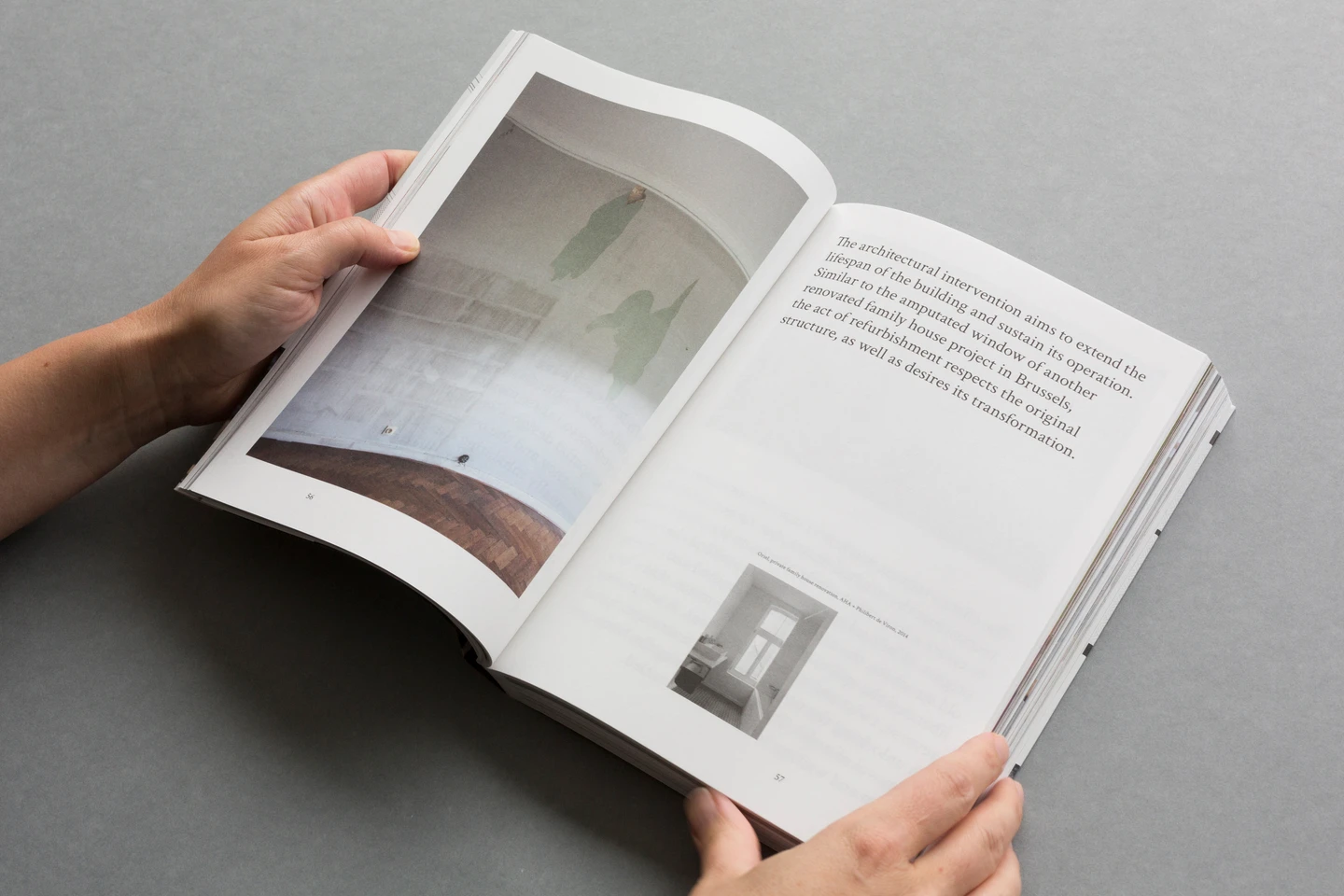
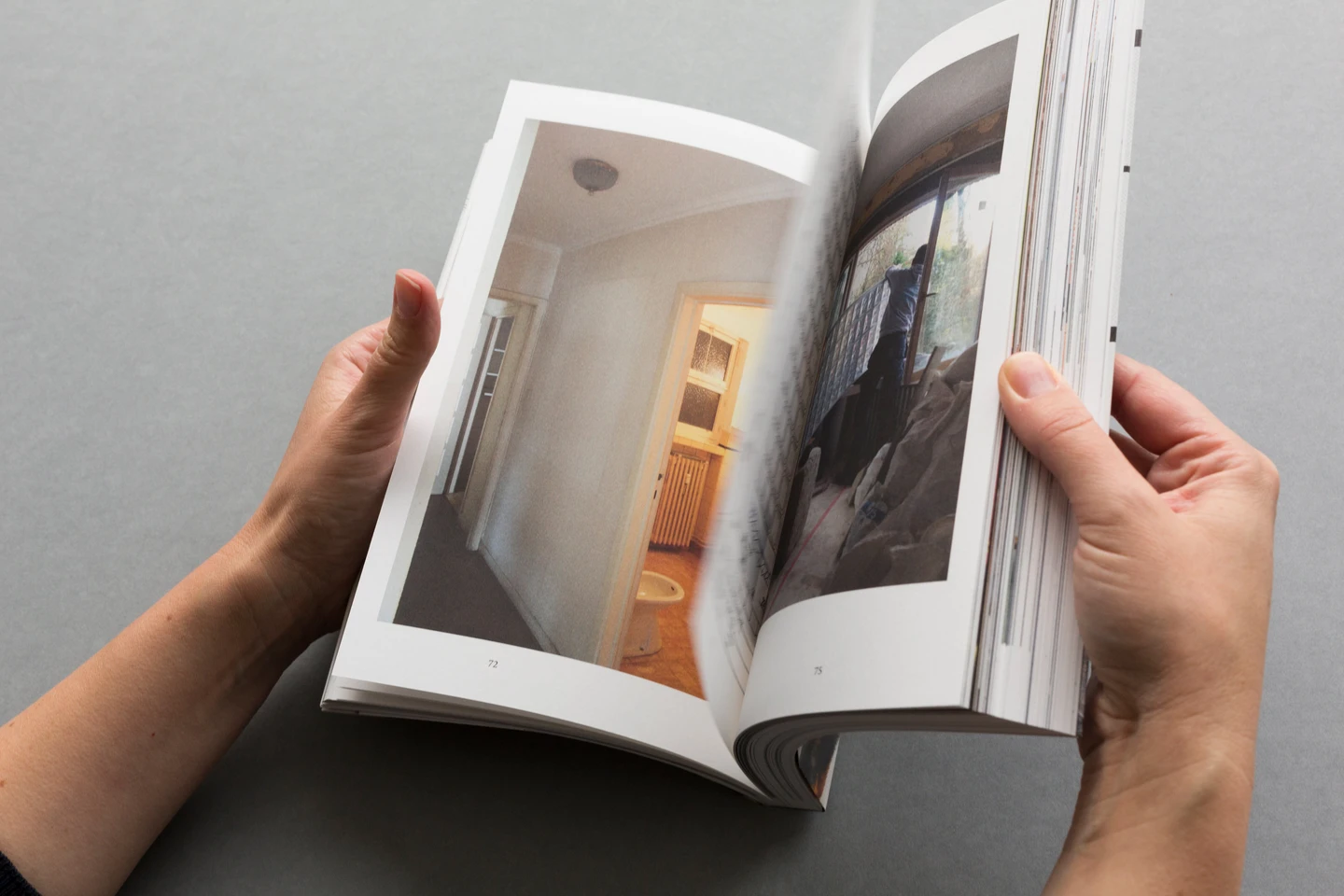
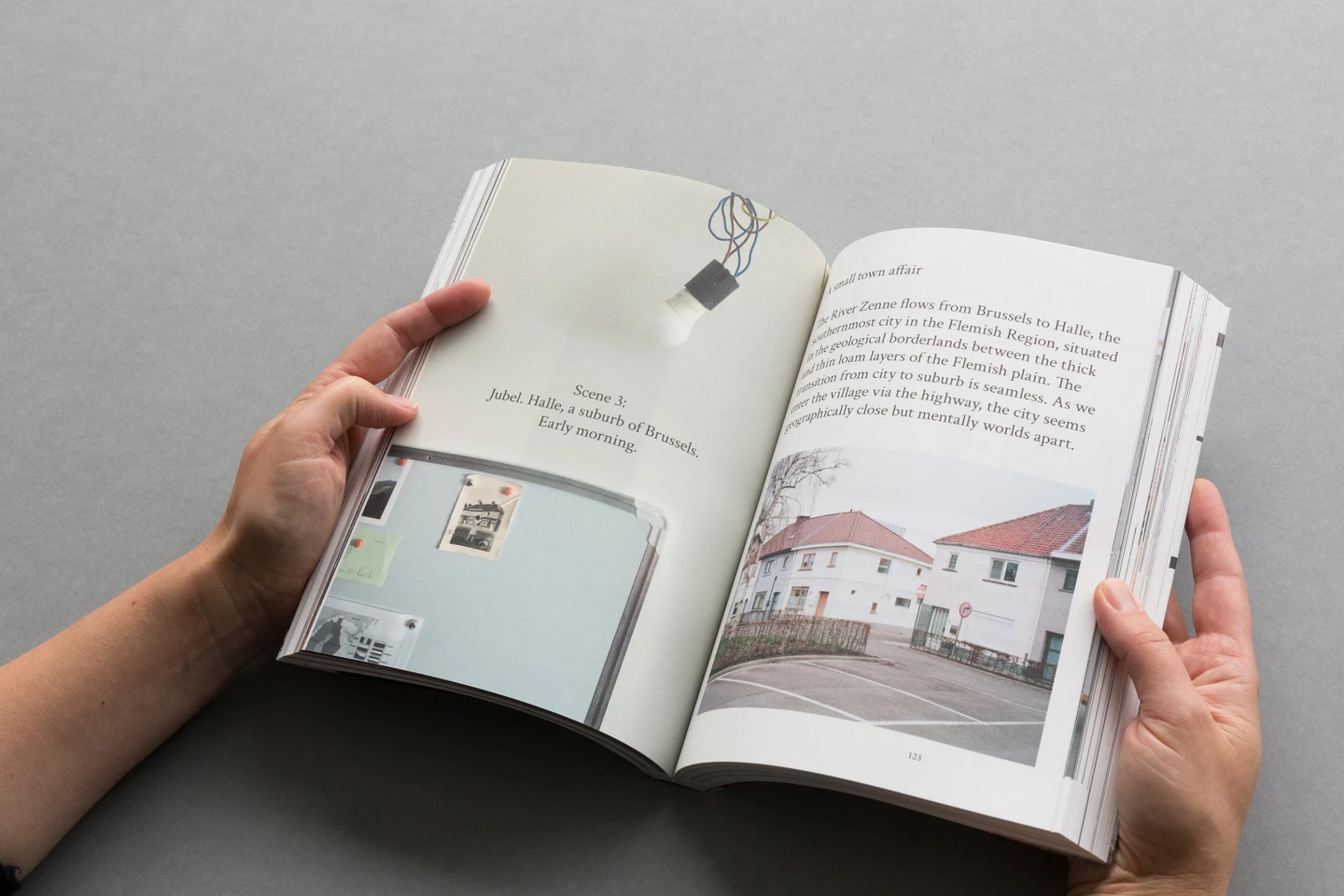
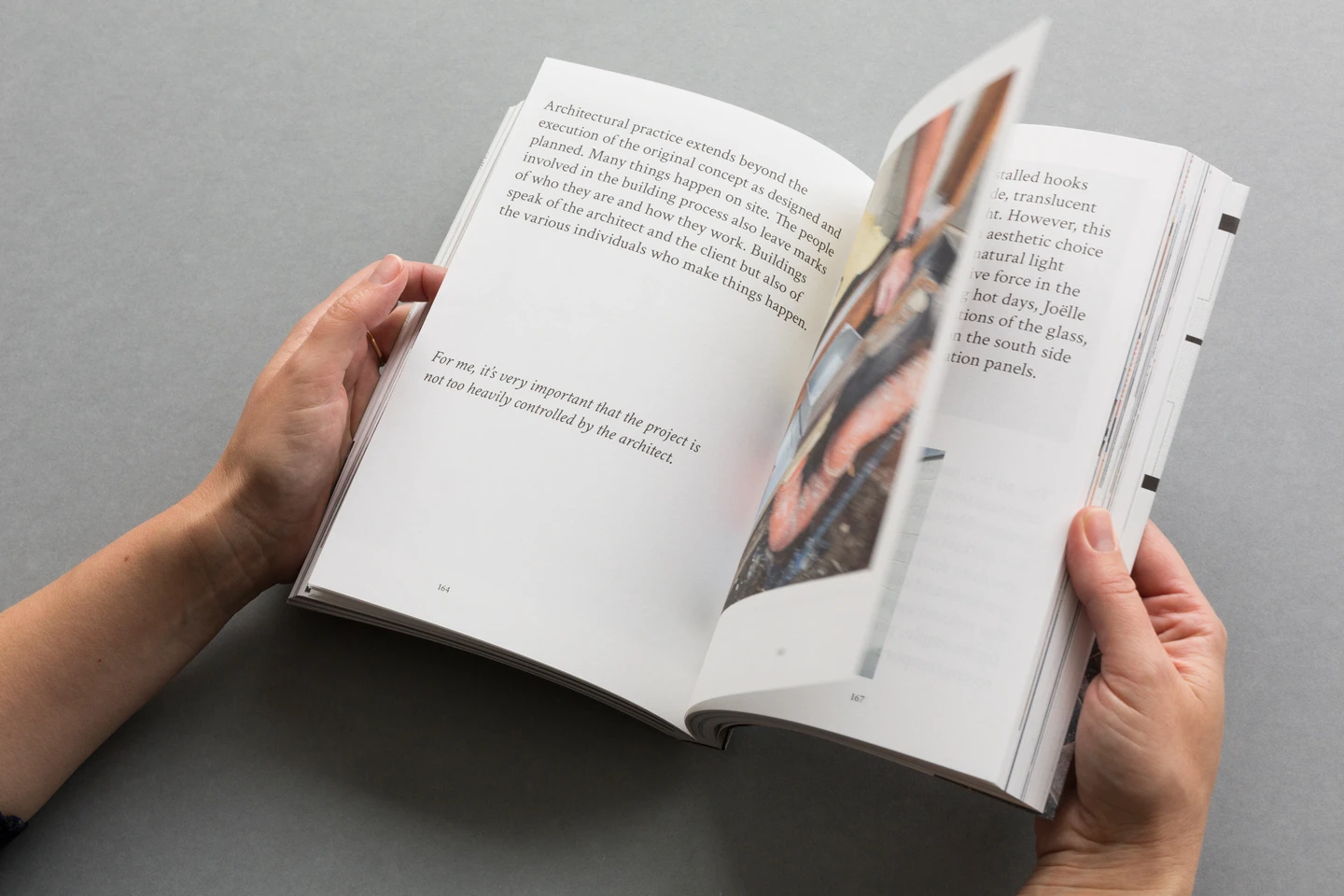
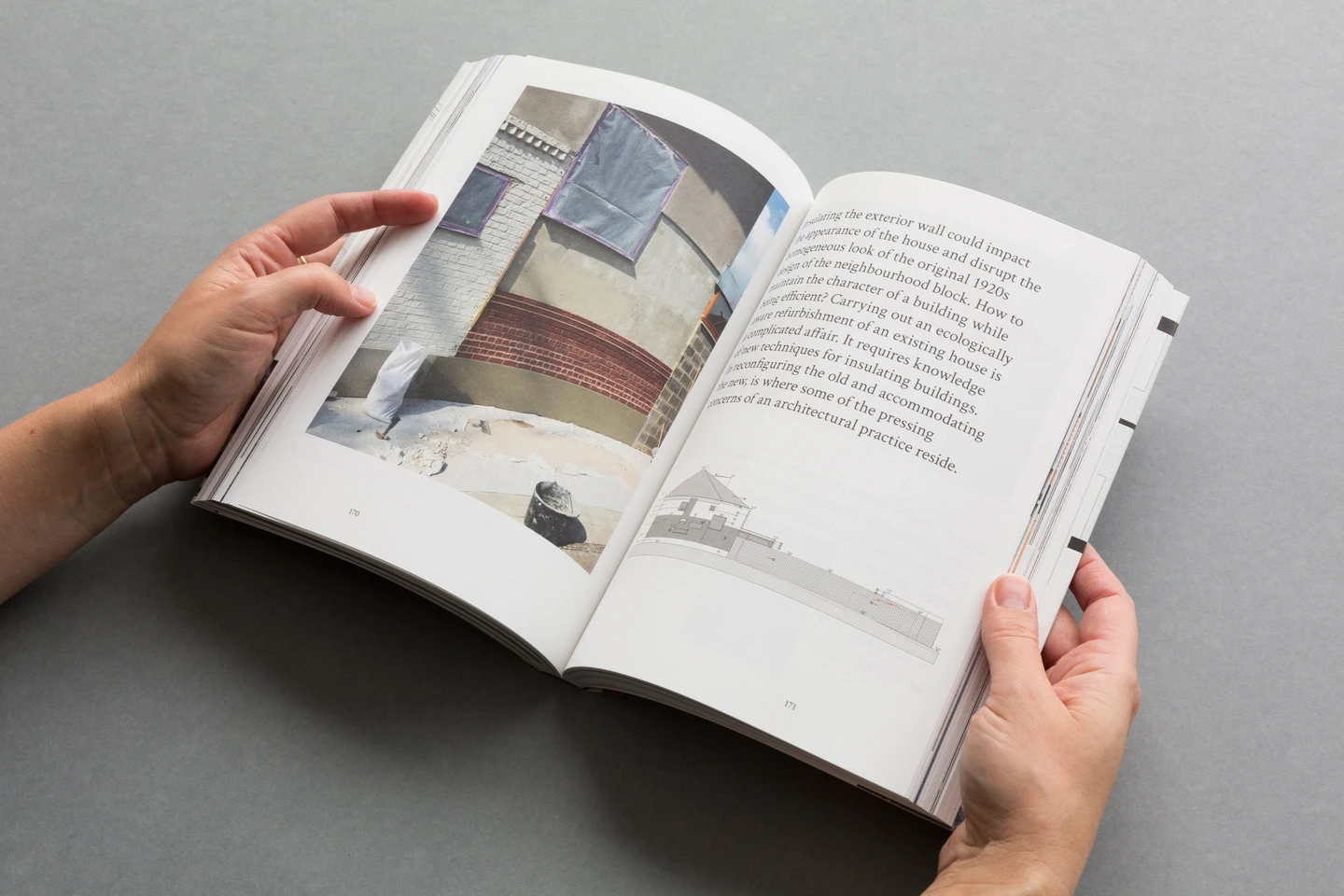
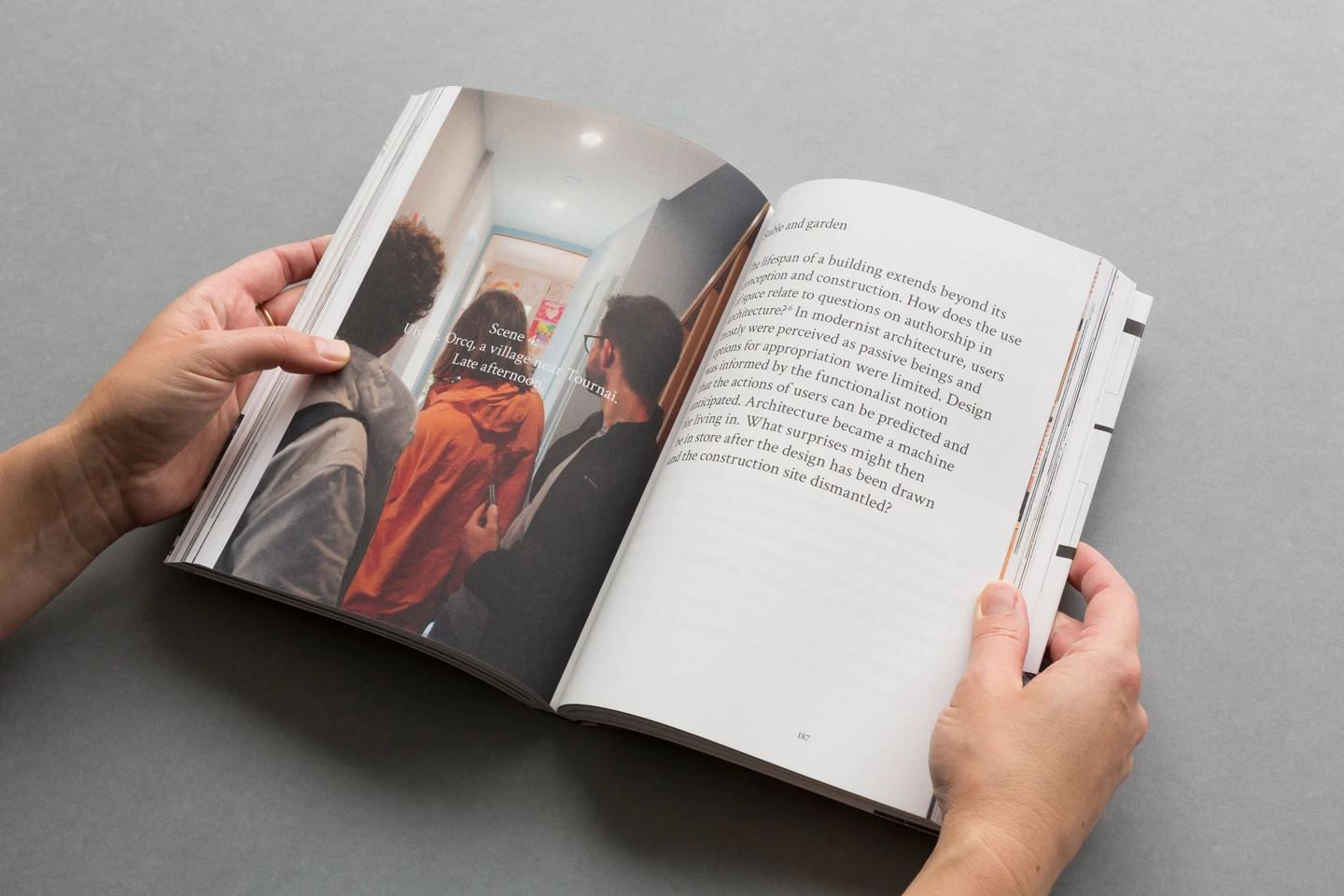
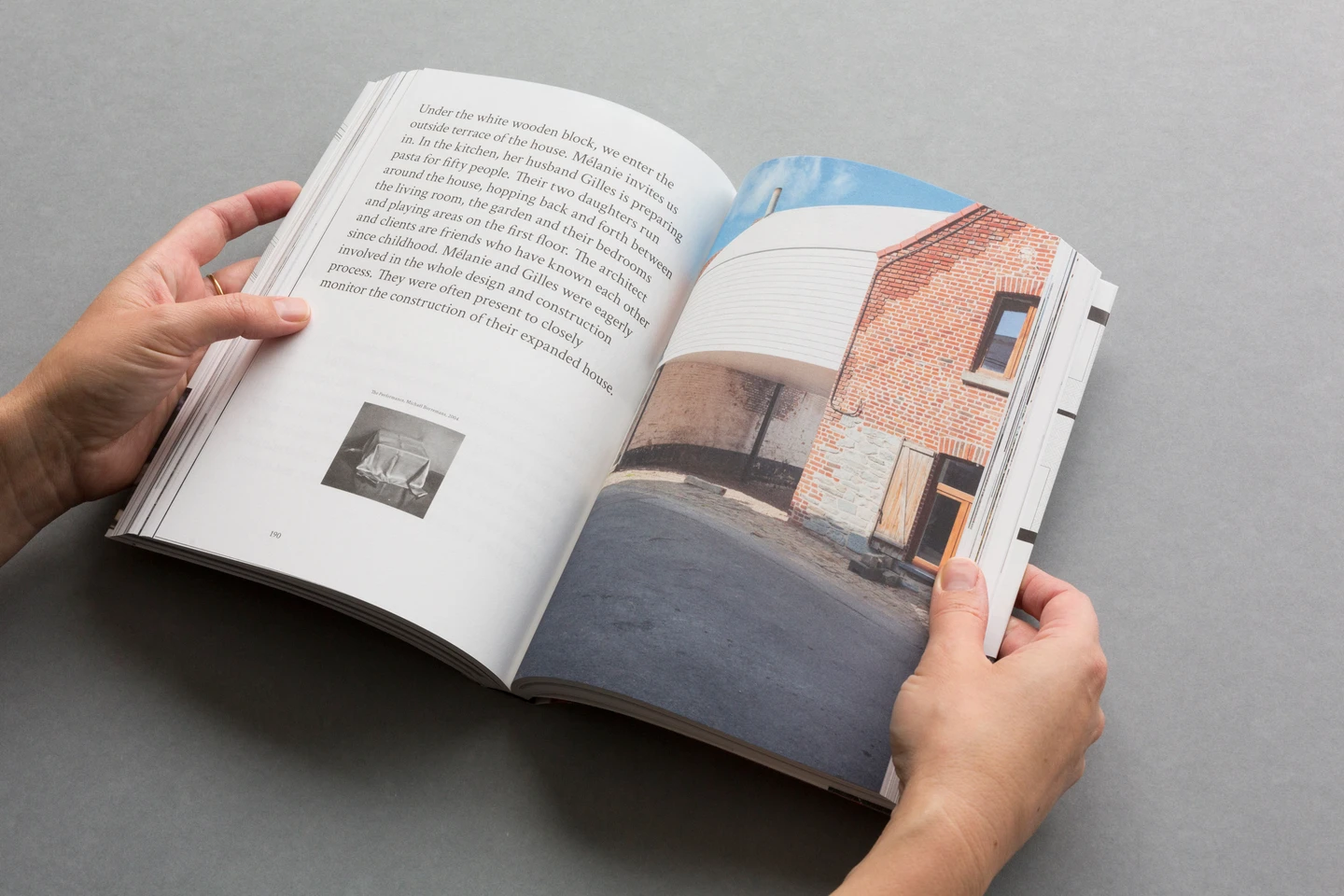
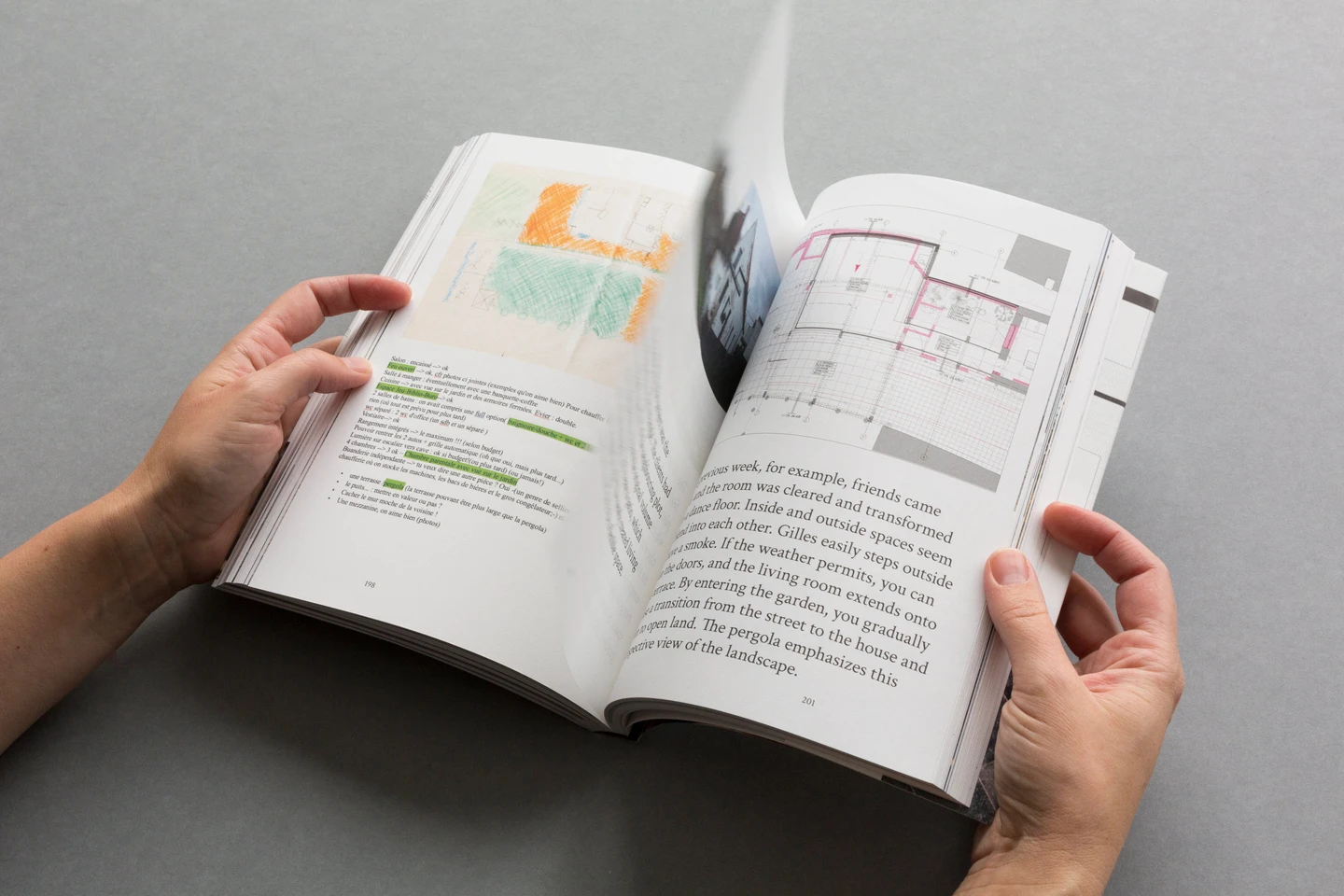
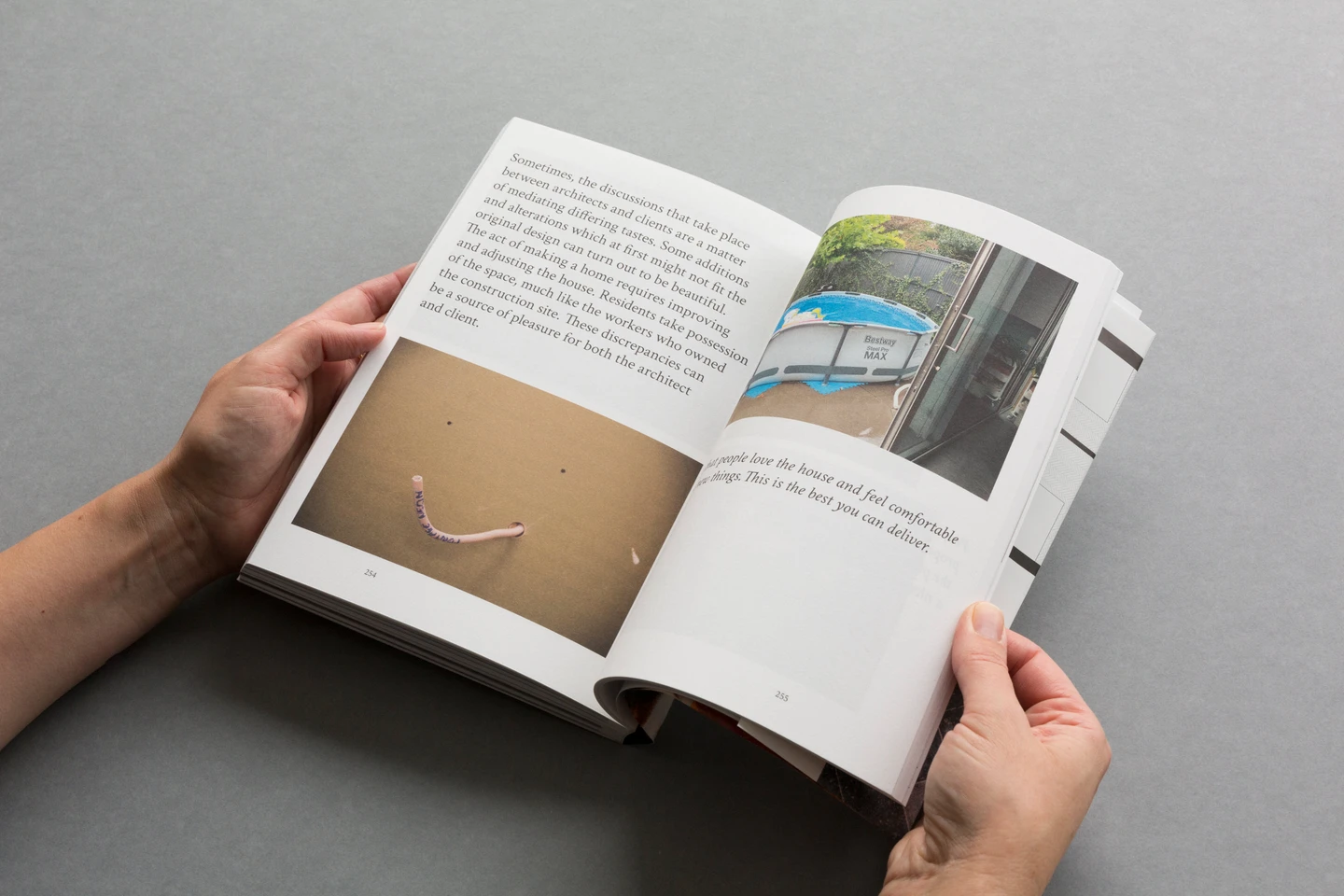
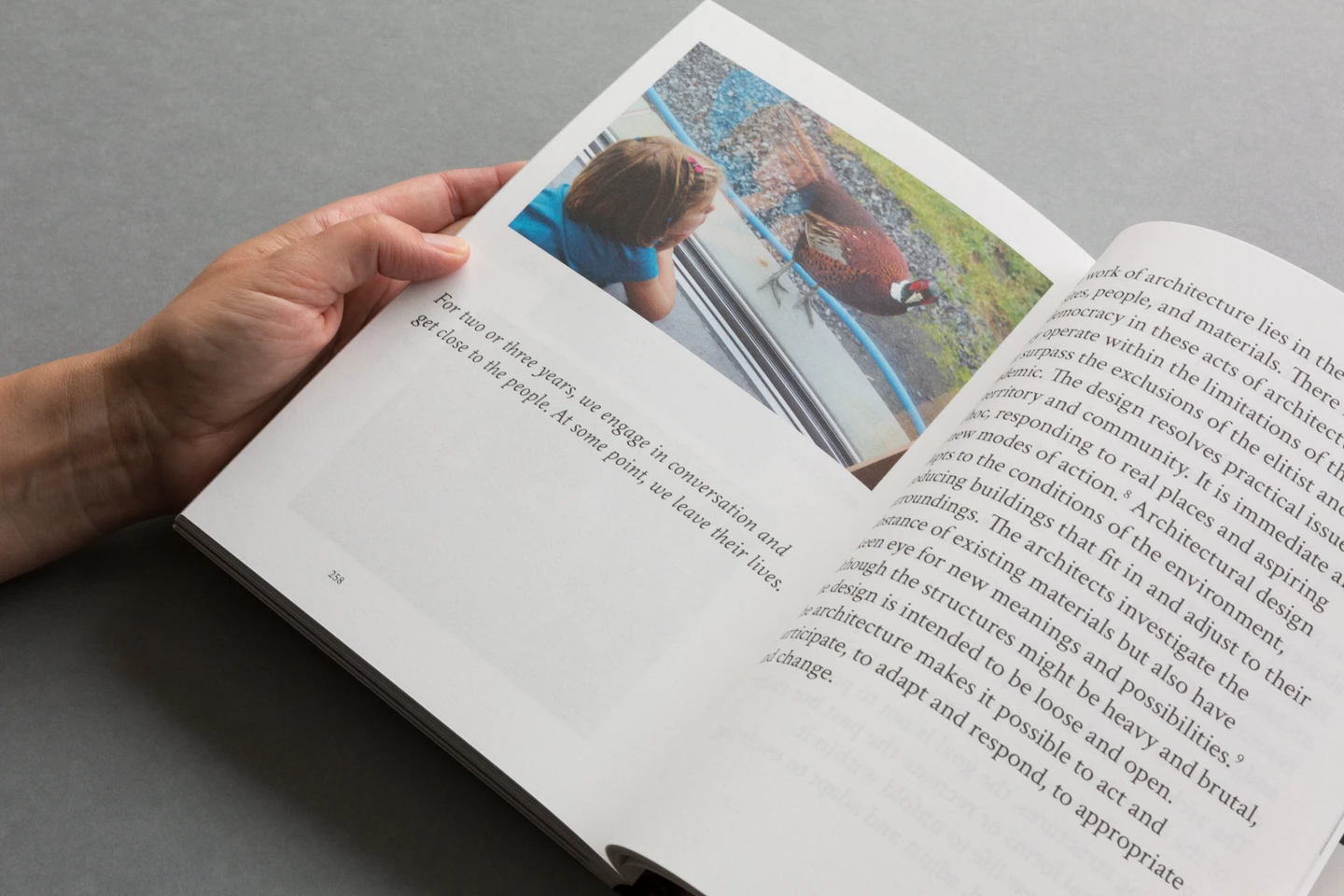
KULeuven, Uliège, ULB, MER. B&L Editorial, Book 2024For the fifth book in the In Practice series, architect Aurélie Hachez and cultural anthropologist Leeke Reinders invite readers on a road journey through three transformative projects: L'Ermitage in urban Brussels, suburban Jubel, and rural Ulysse. This volume not only explores the design process and its subsequent adoption by inhabitants but also delves into the theoretical implications of object agency in AHA's work, the strategic day-to-day work ethic, and the creative portrayal of buildings as entities with their own narratives.
The In Practice series explores the multiple ways in which architects can engage their professional architecture practice in academic research and reciprocally. In Practice seeks to open a space for architecture practices in research through the development of methodologies, conferences, publications and studios.
-
-
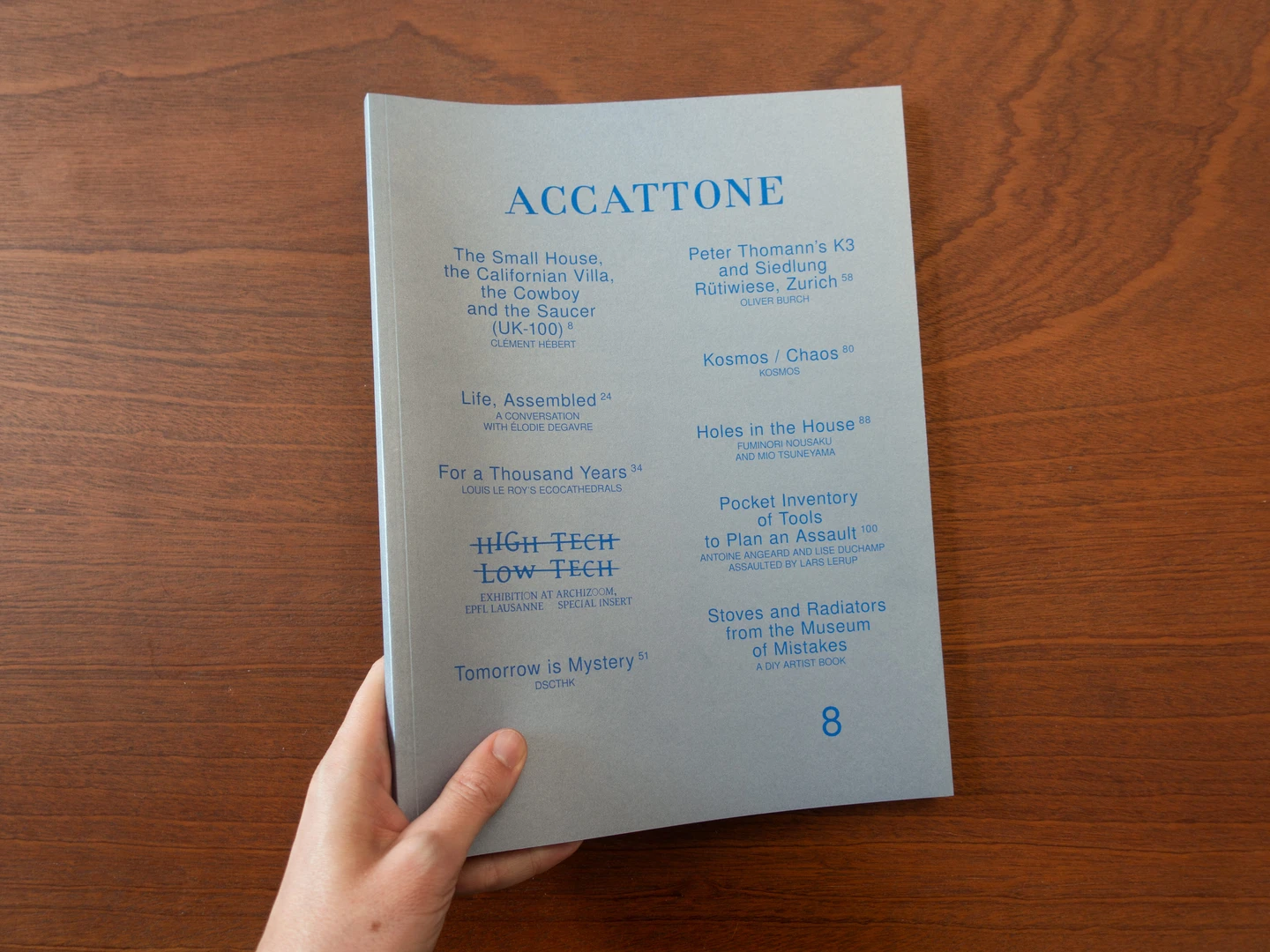
ACCATTONE 8
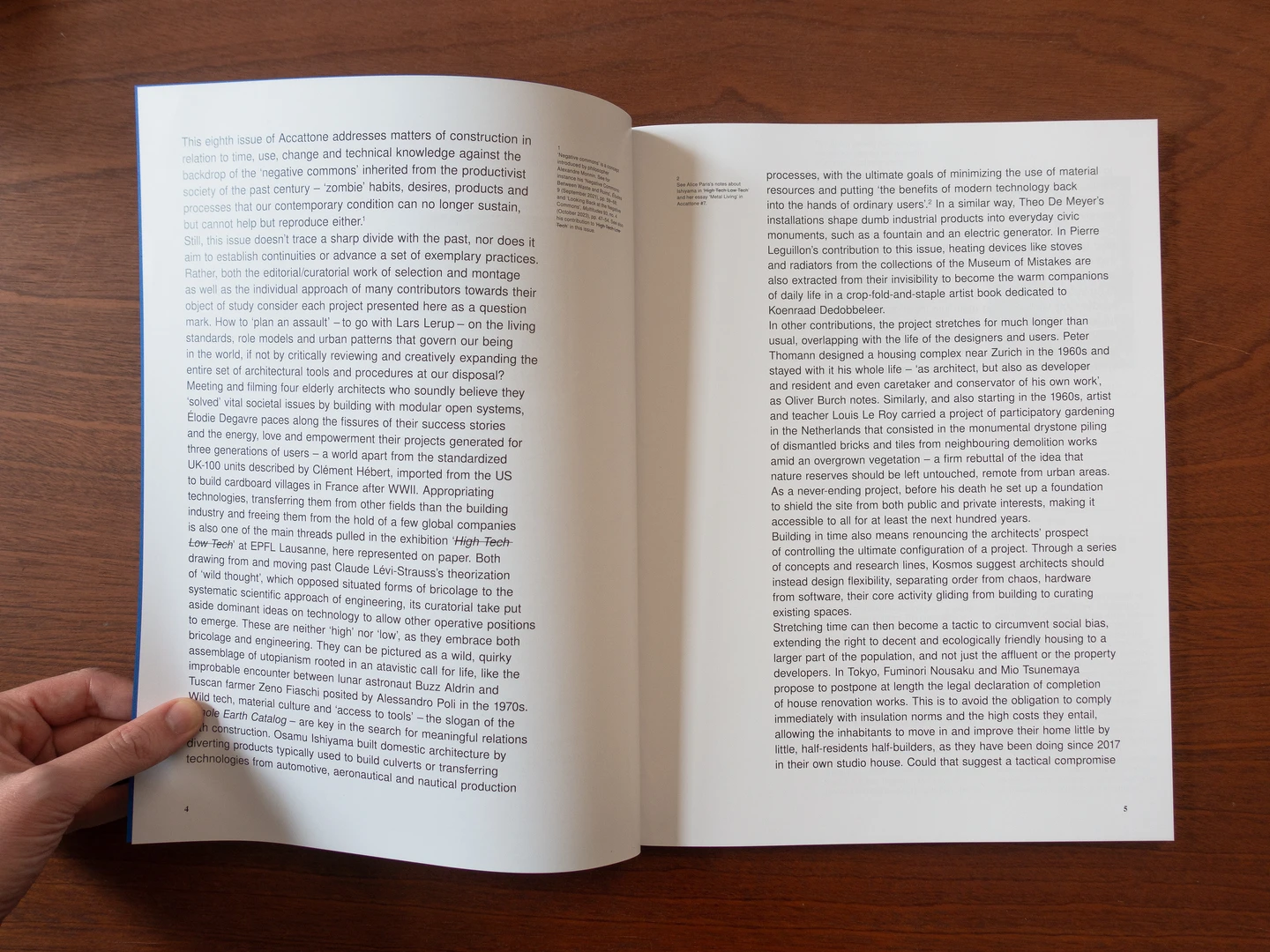
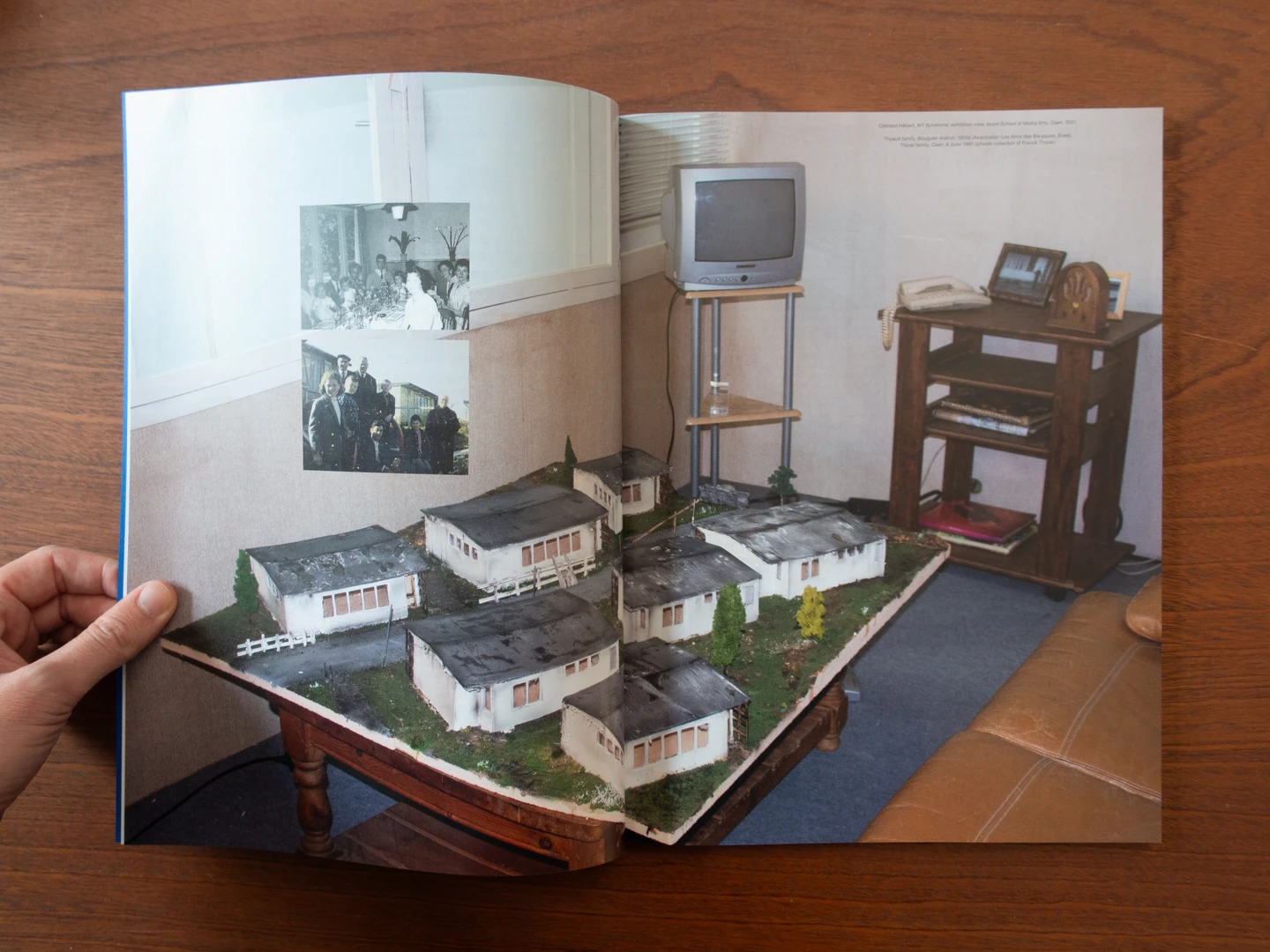
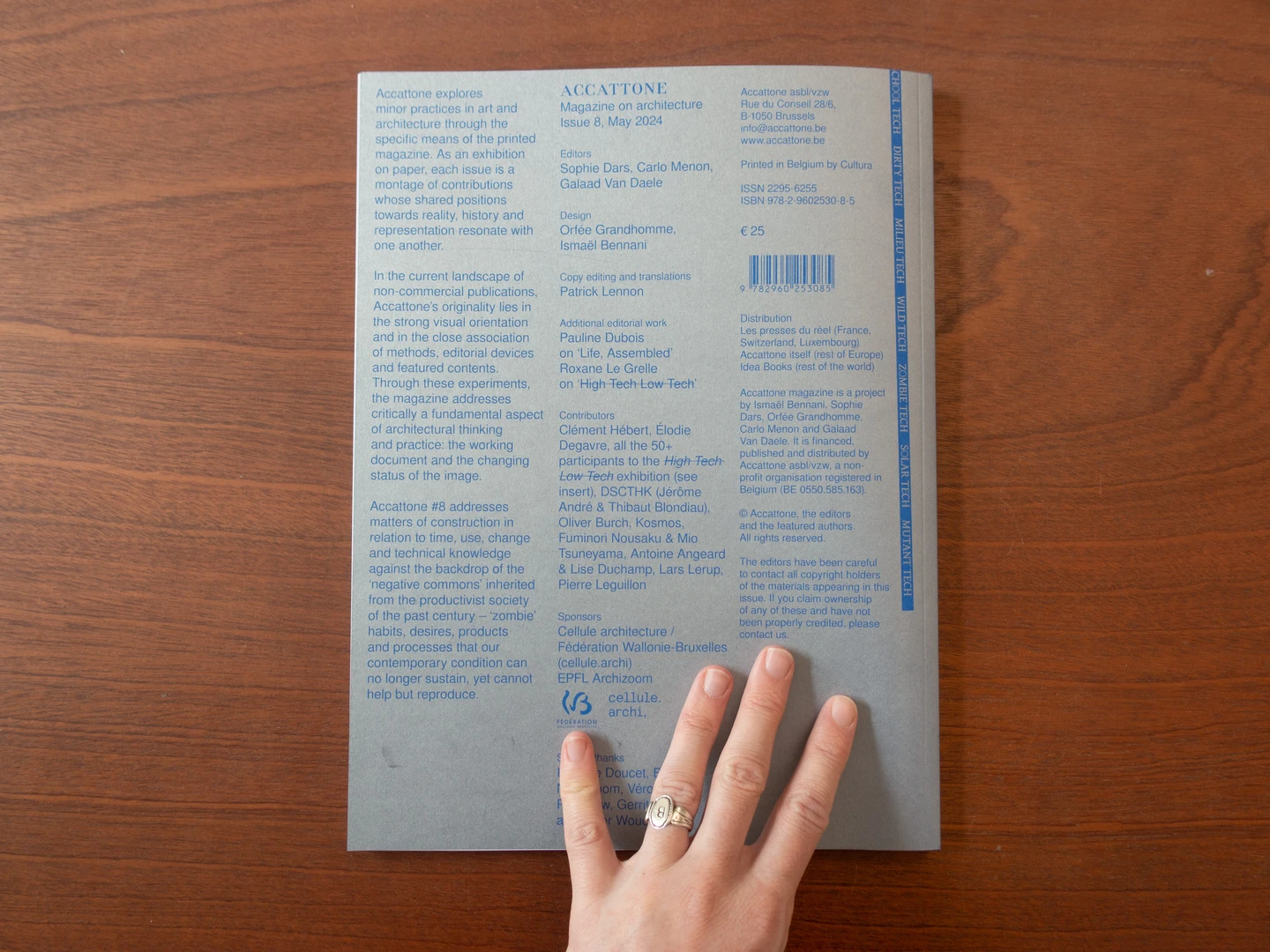
Accattone Editorial, Magazine 2024Accattone 8 addresses matters of construction in relation to time, use, change and technical knowledge against the backdrop of the ‘negative commons’ inherited from the productivist society of the past century – ‘zombie’ habits, desires, products and processes that our contemporary condition can no longer sustain, yet cannot help but reproduce.
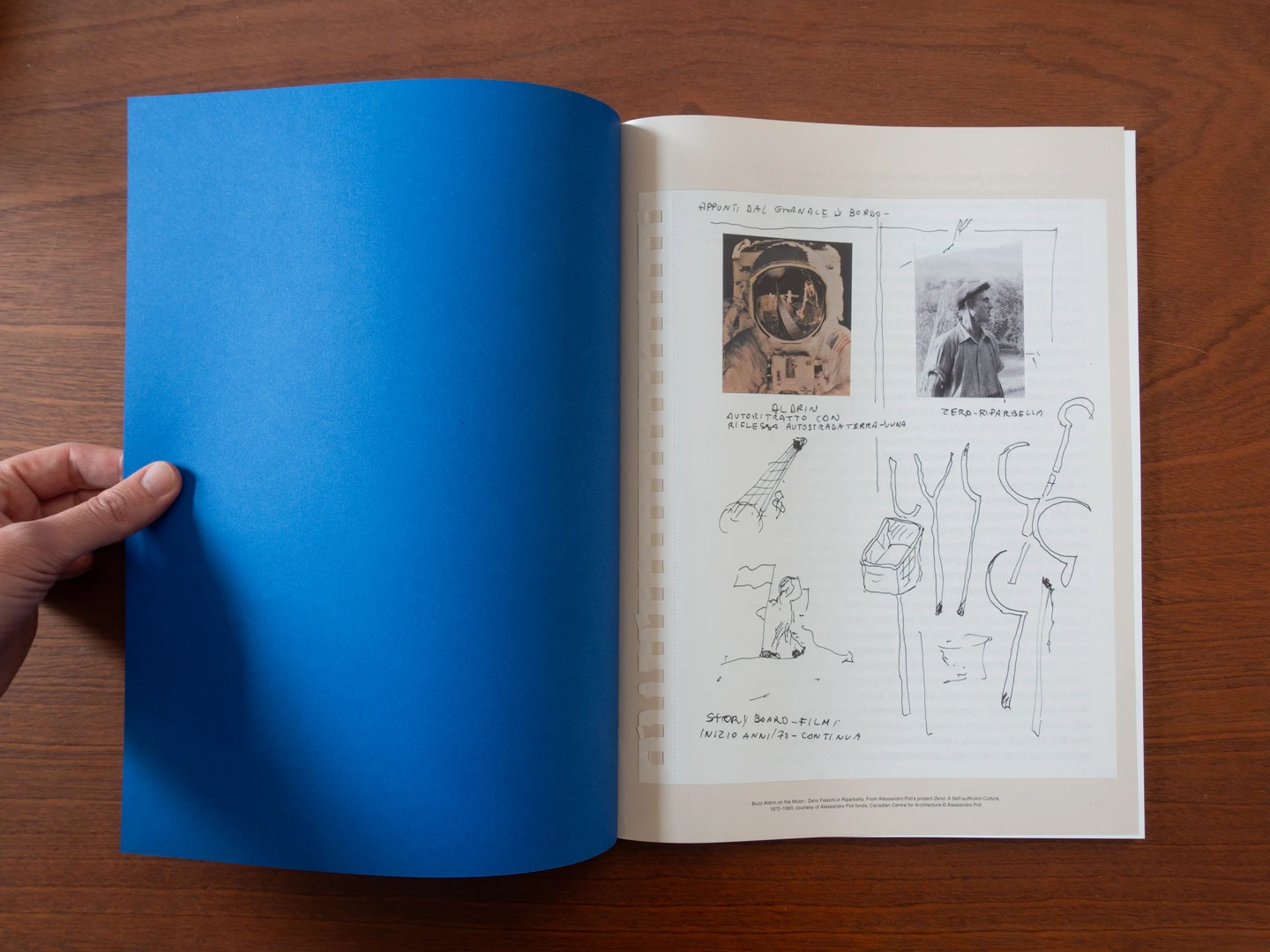
This issue features a special 48p insert documenting the High Tech Low Tech exhibition curated by Sophie Dars (Accattone) and Roxanne Legrelle (Archizoom) at EPFL.
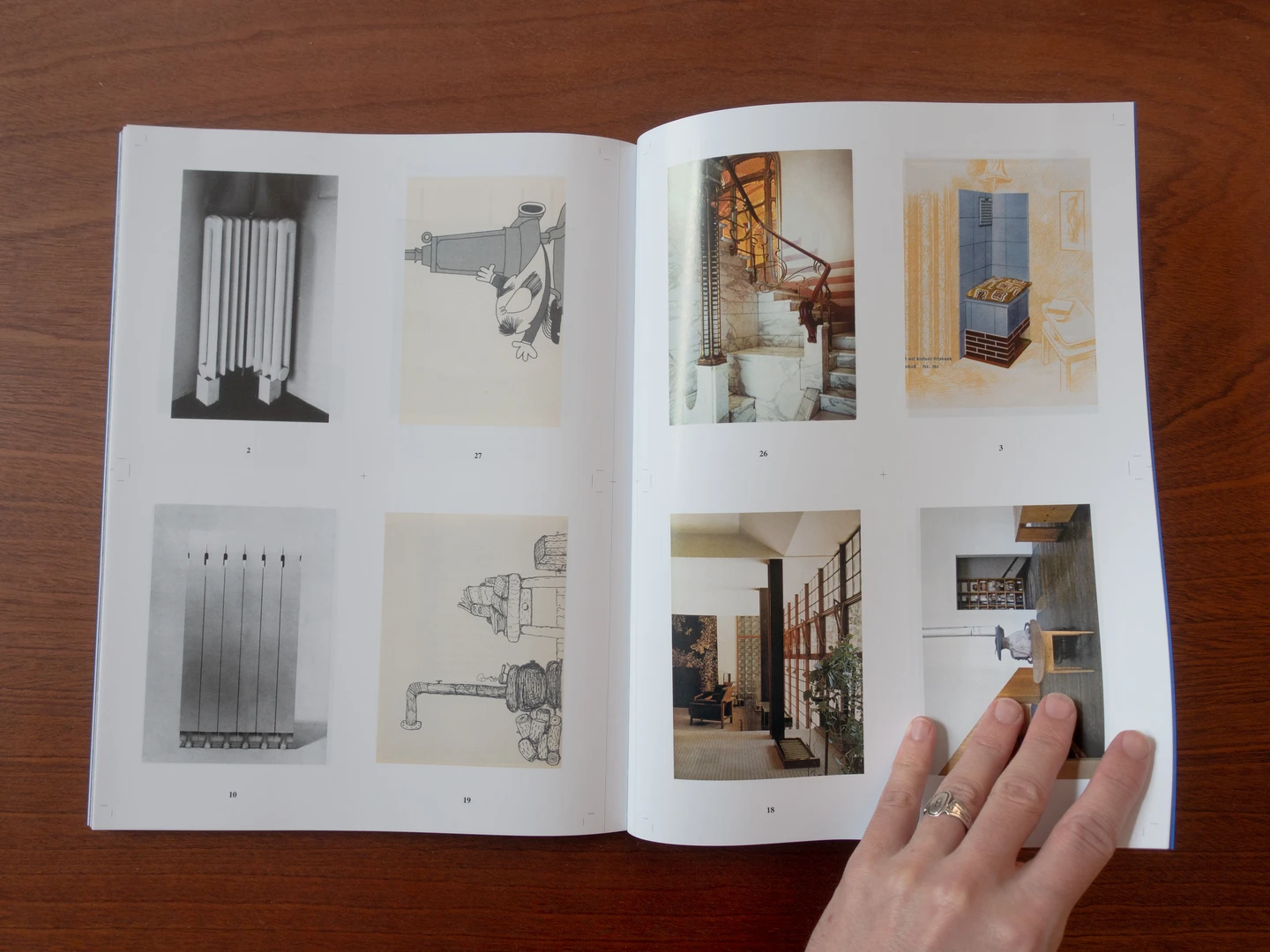
It also include Warmly, an artist book compiling a range of stoves and radiators gleaned from The Museum of Mistakes. The DIY version within the magazine also exists as a hand sewn stand-alone publication in a very limited edition.
-
-
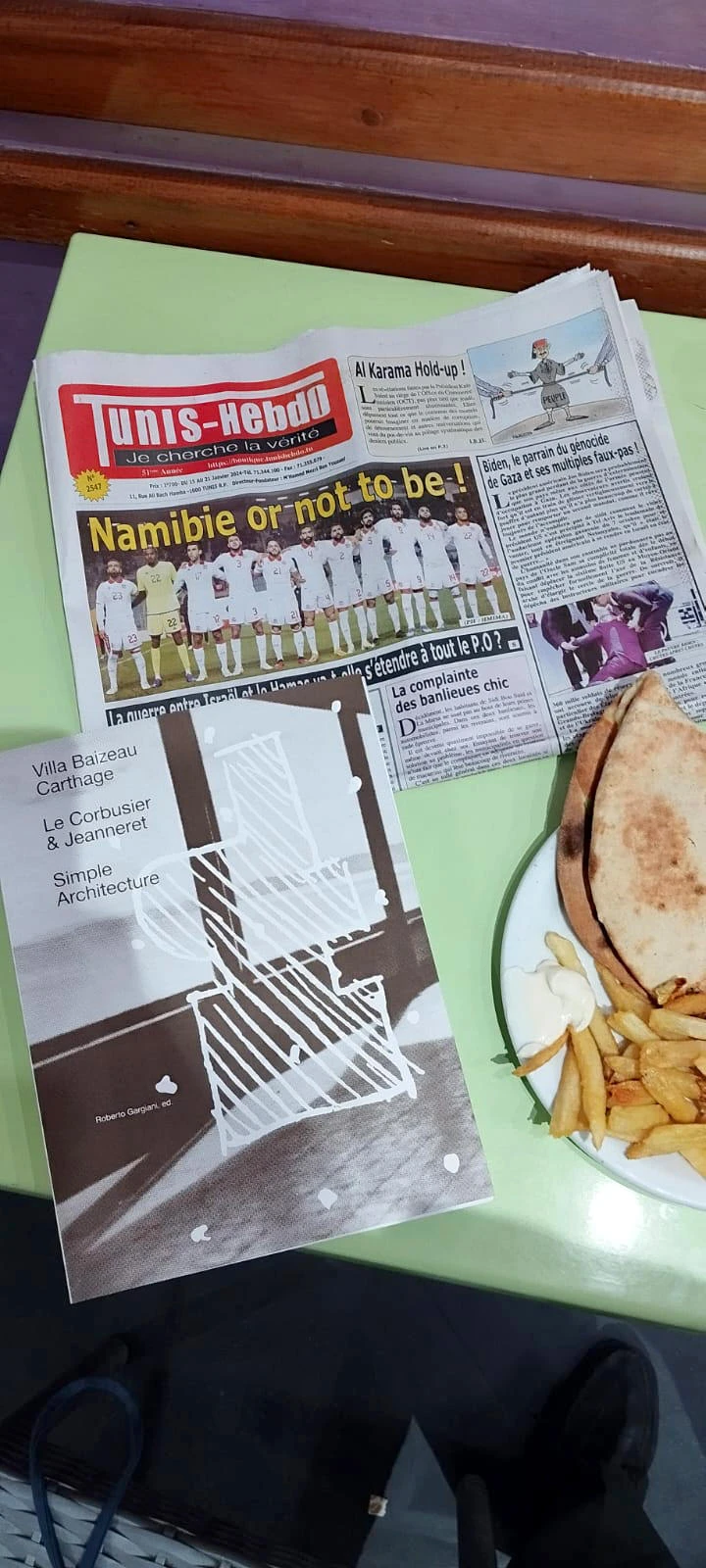
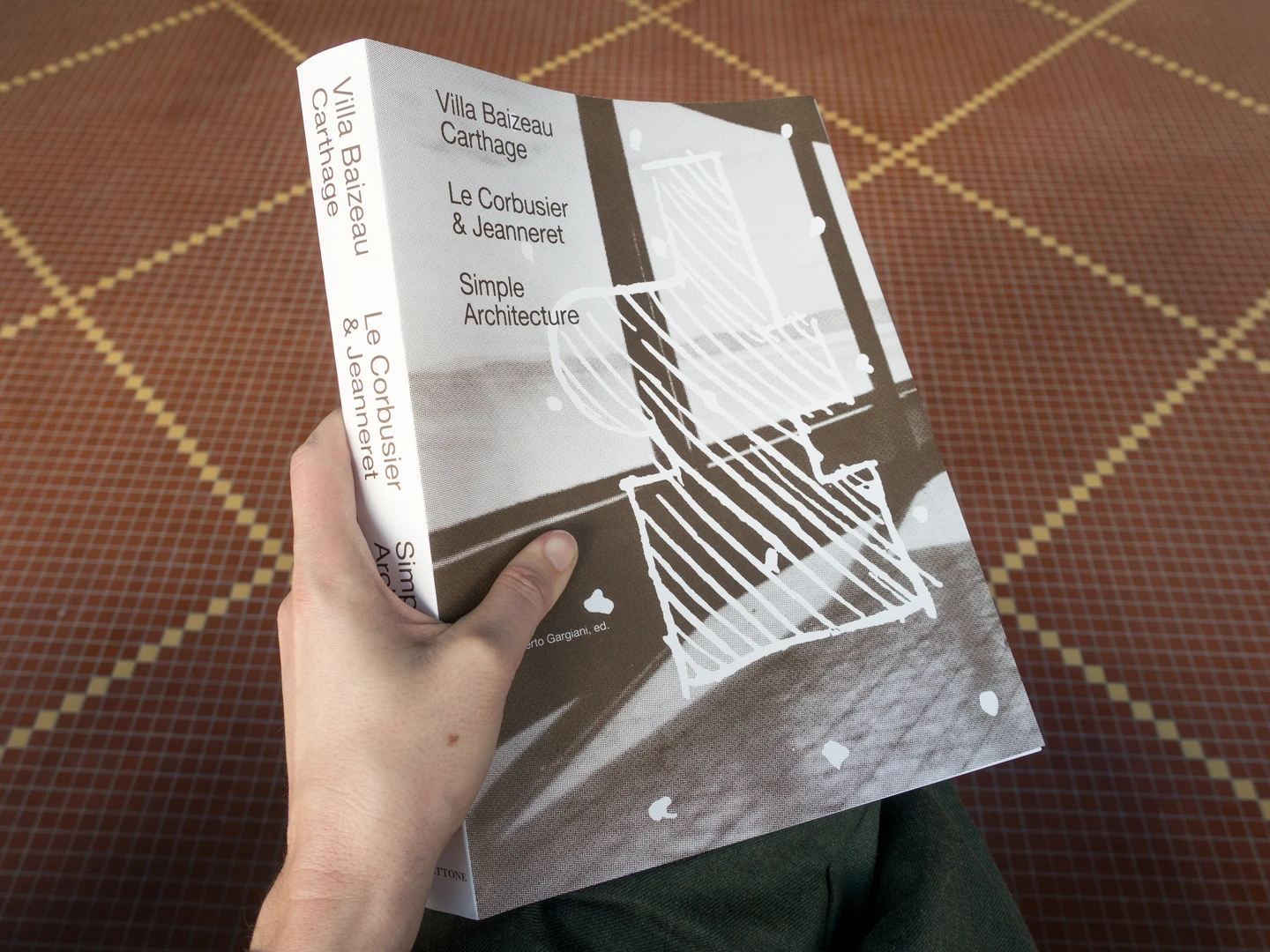
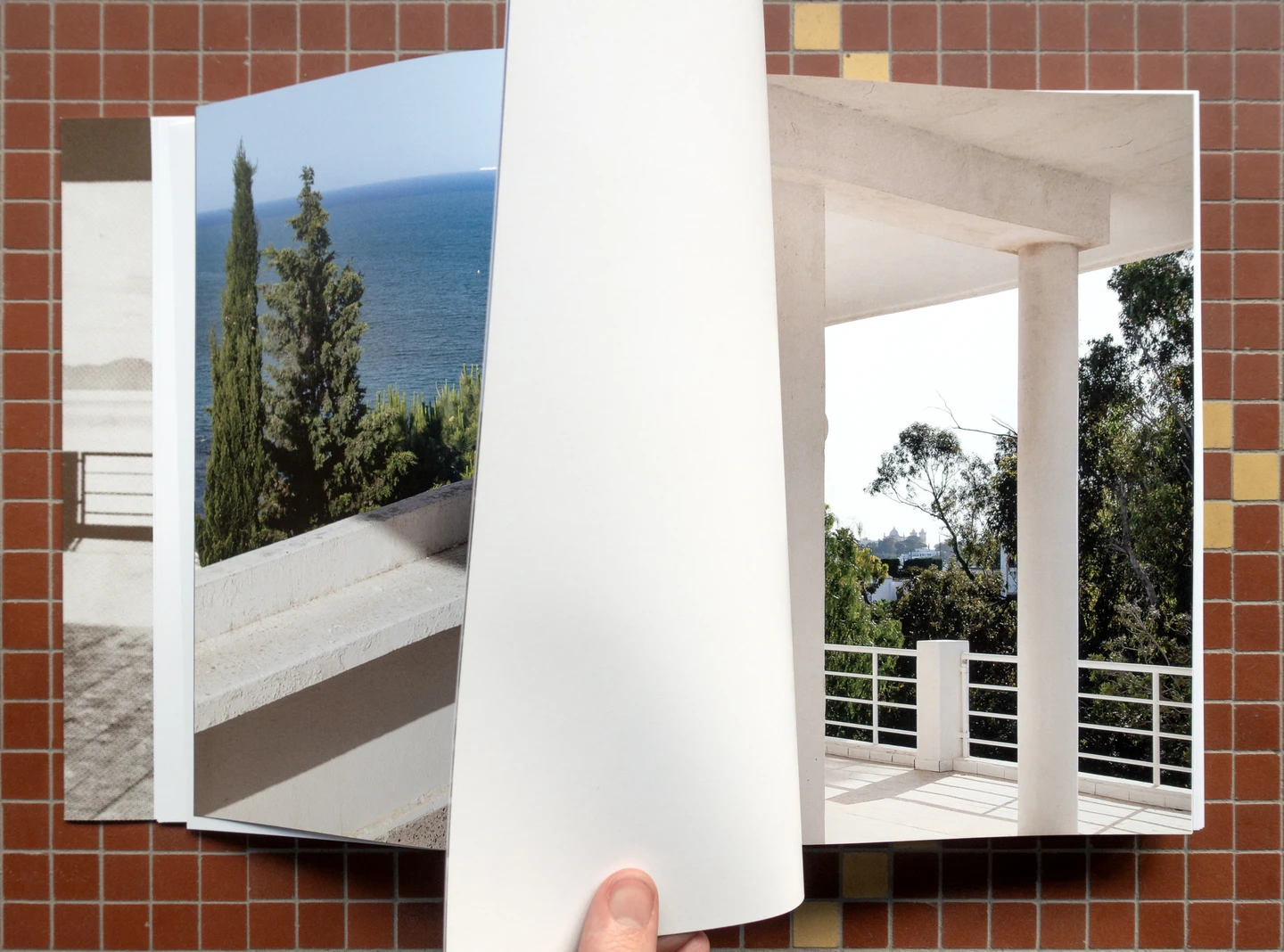
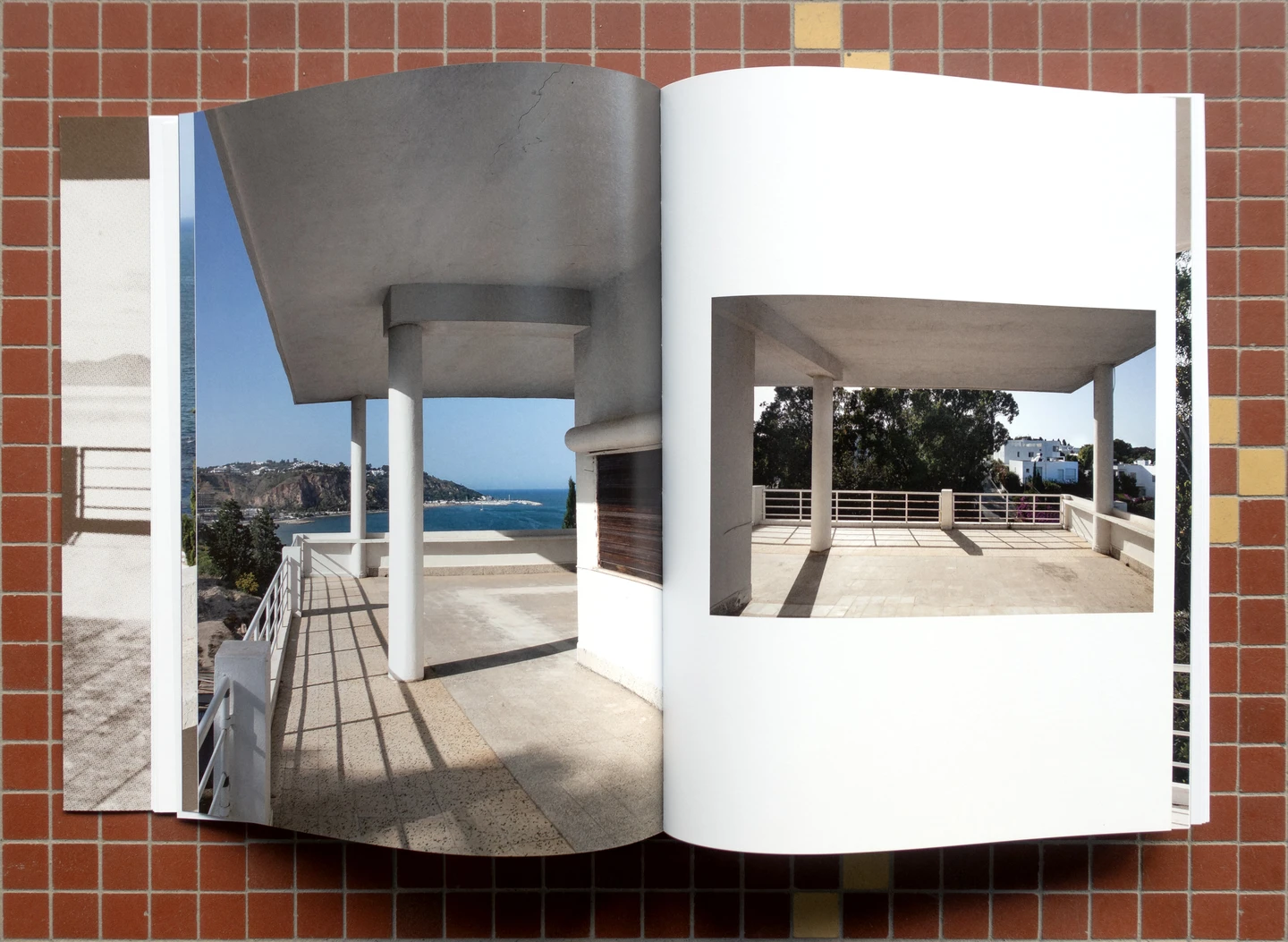
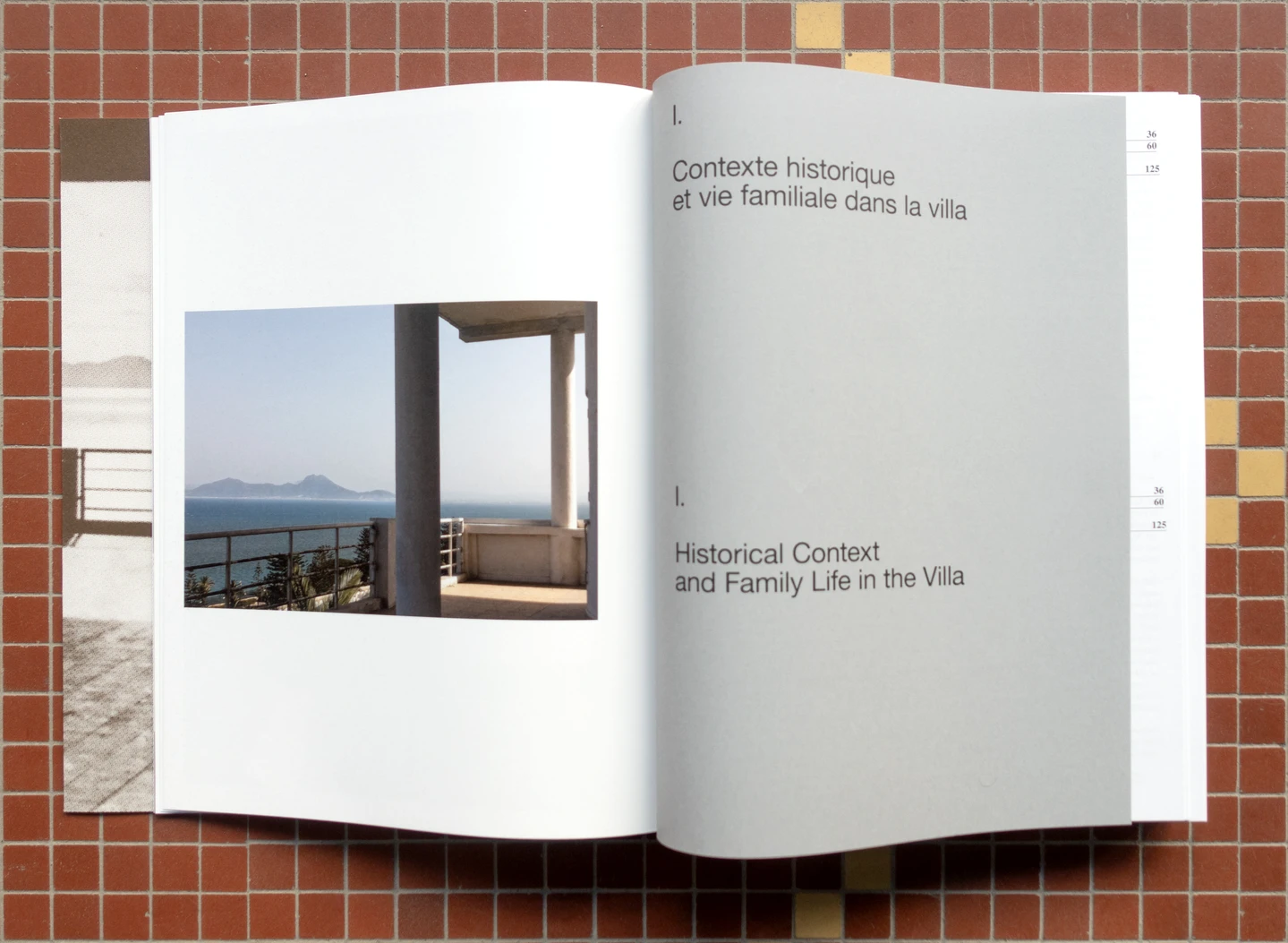
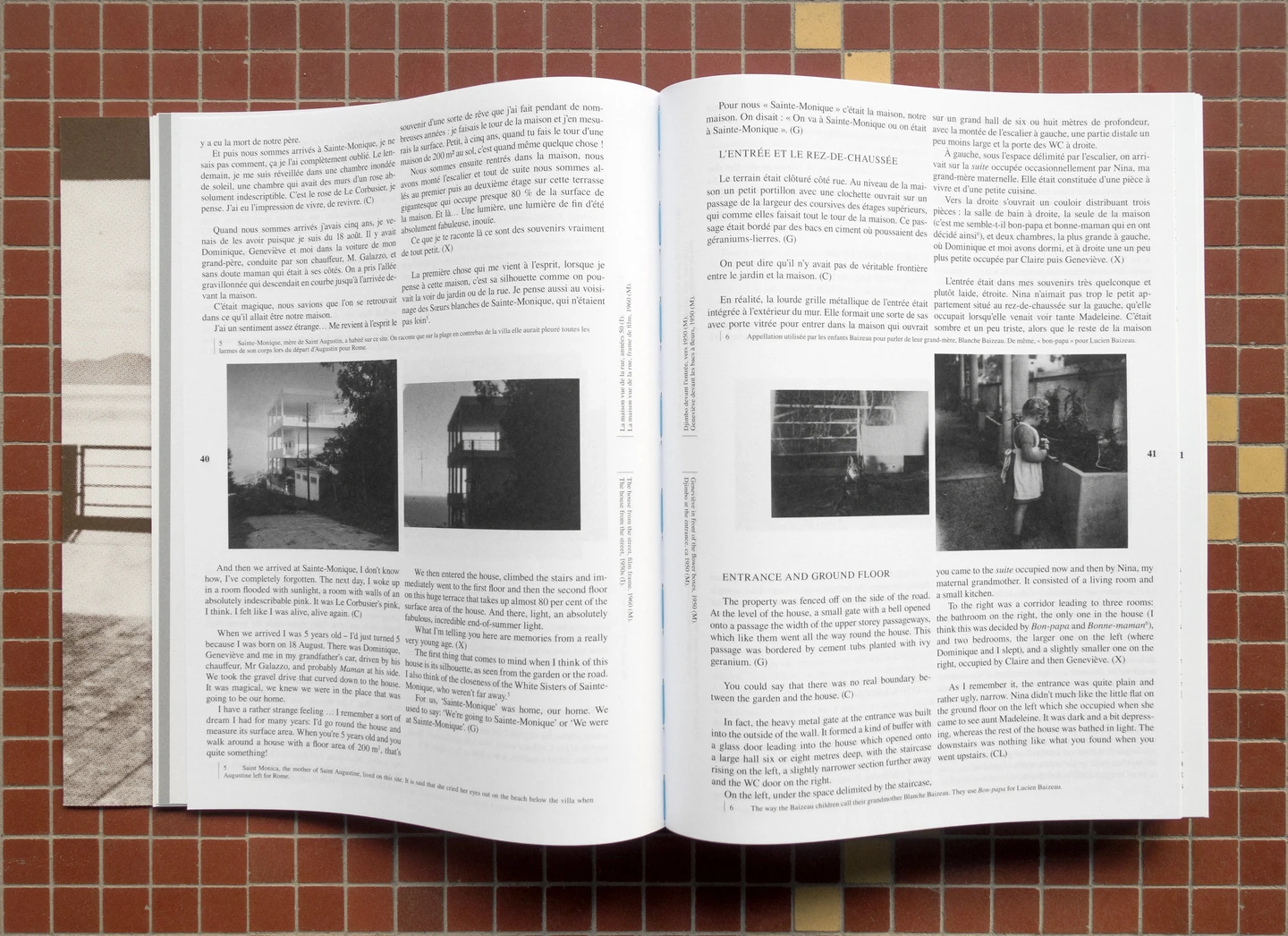
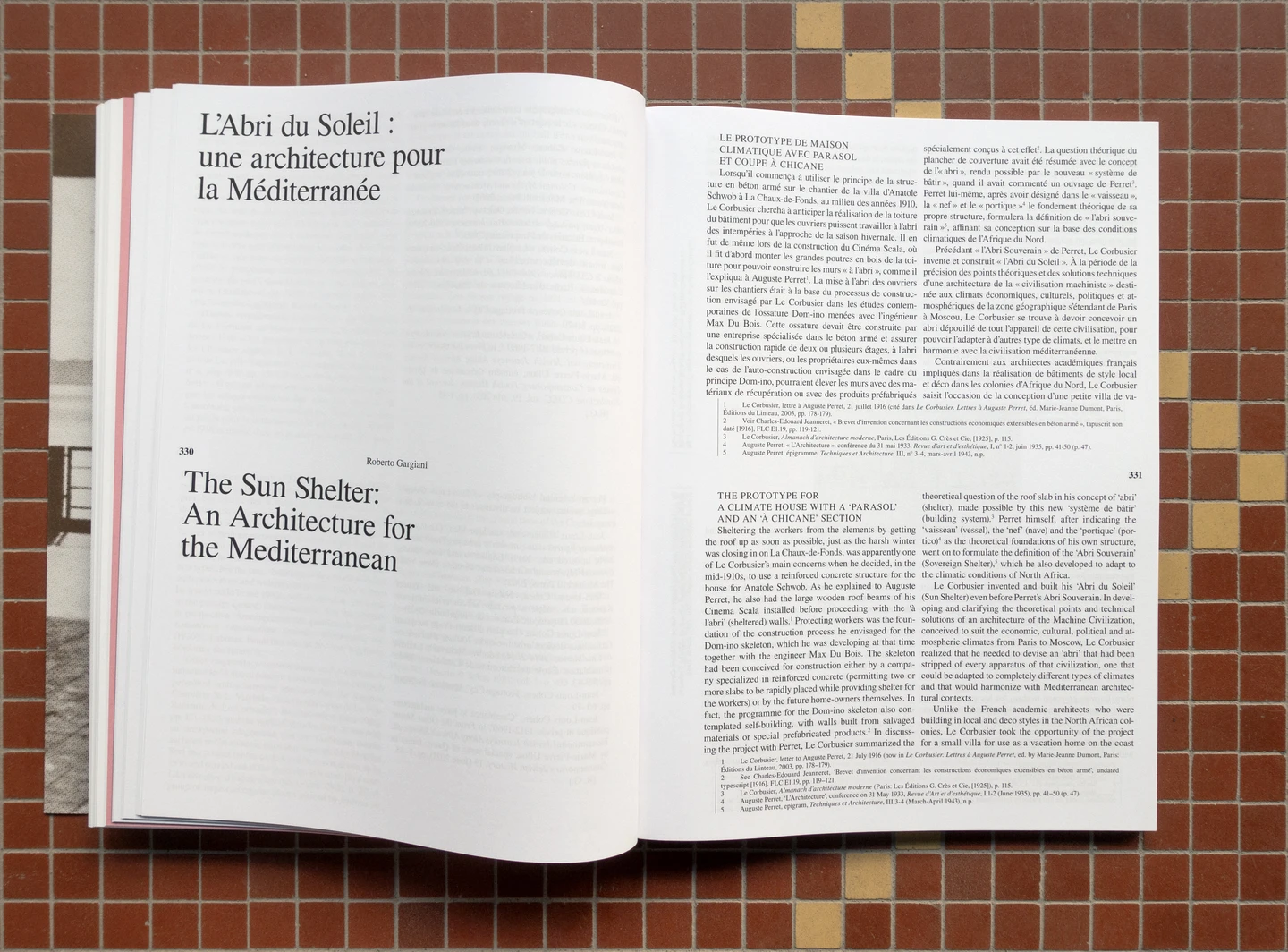
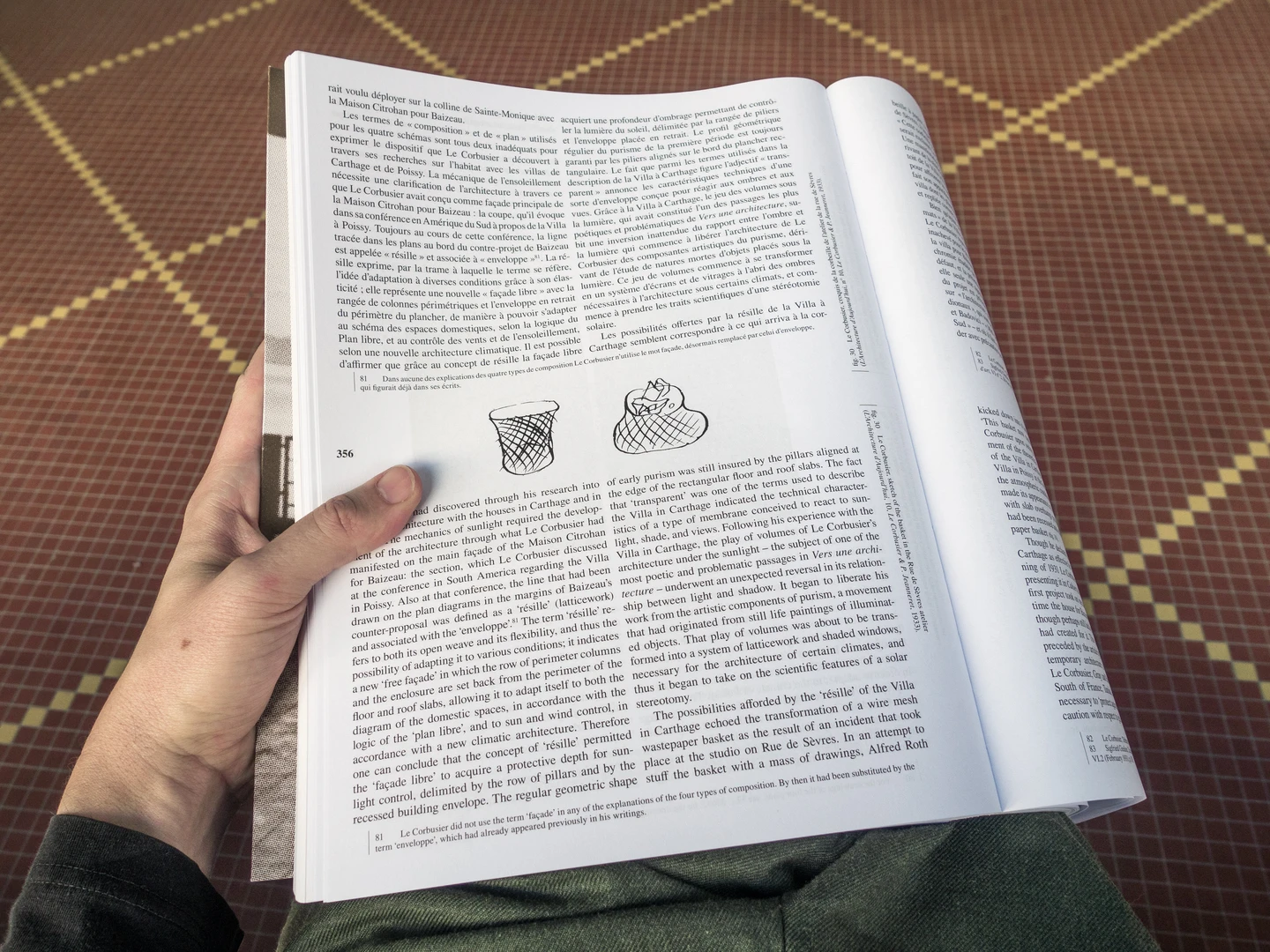
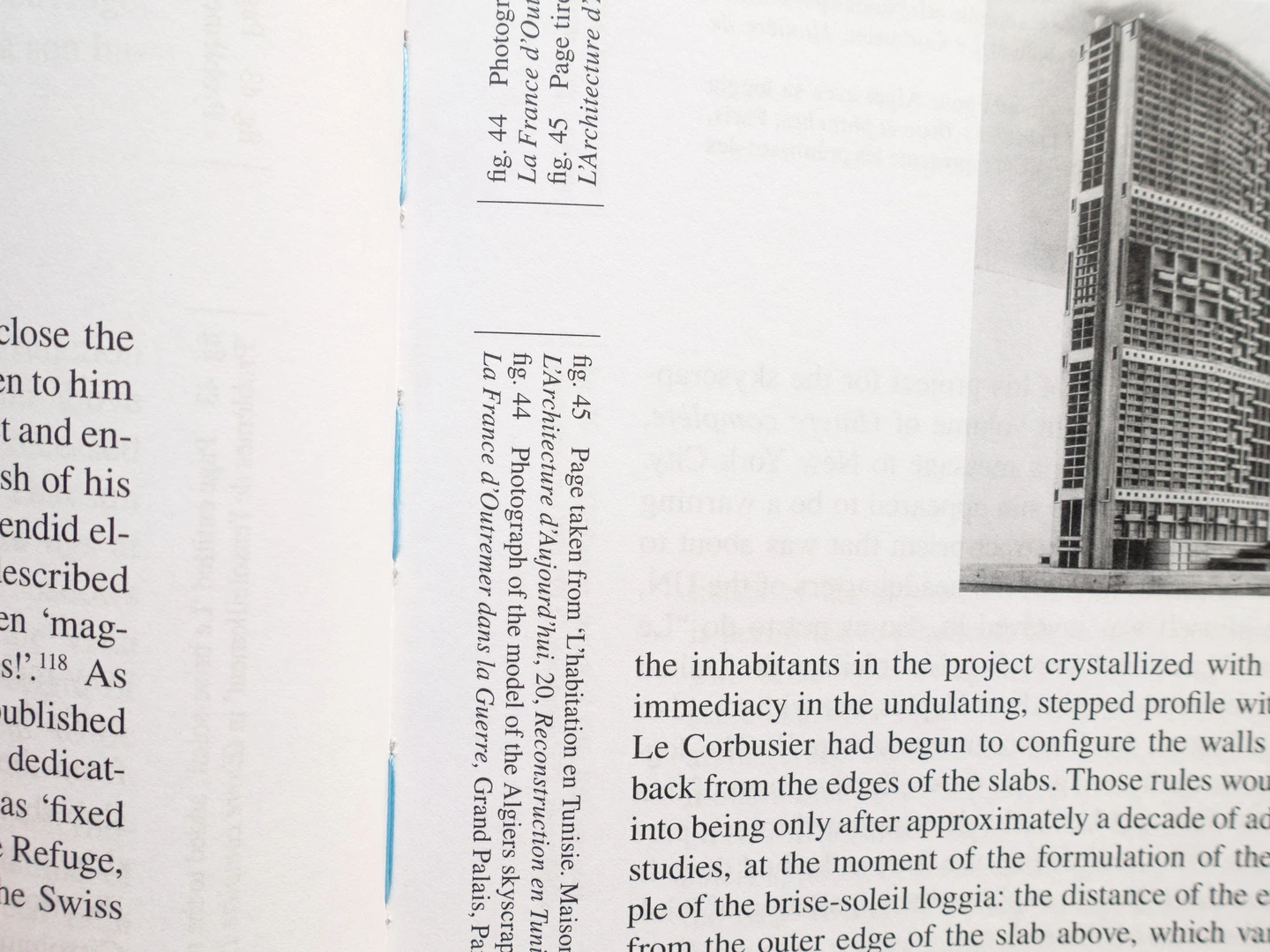
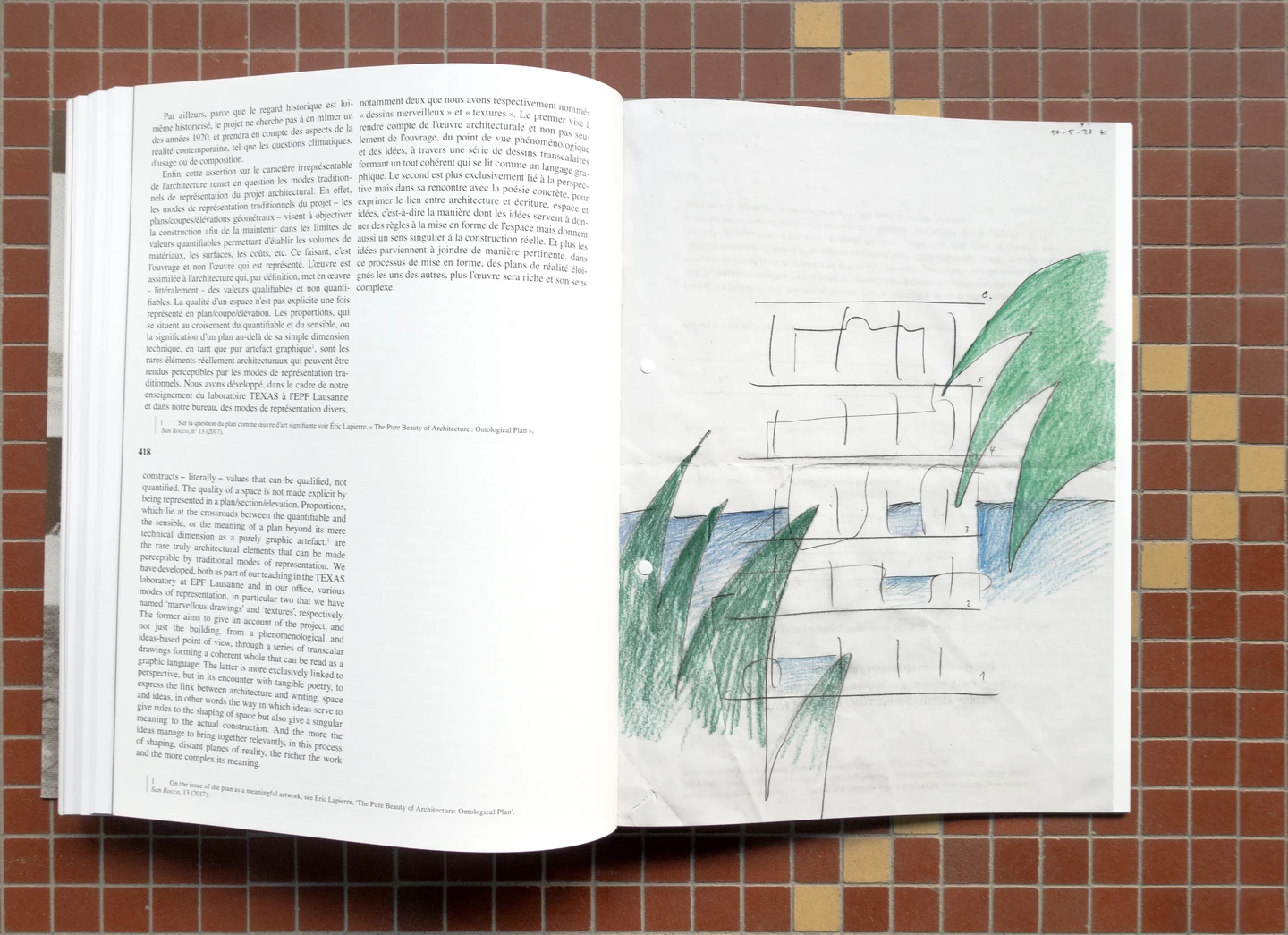
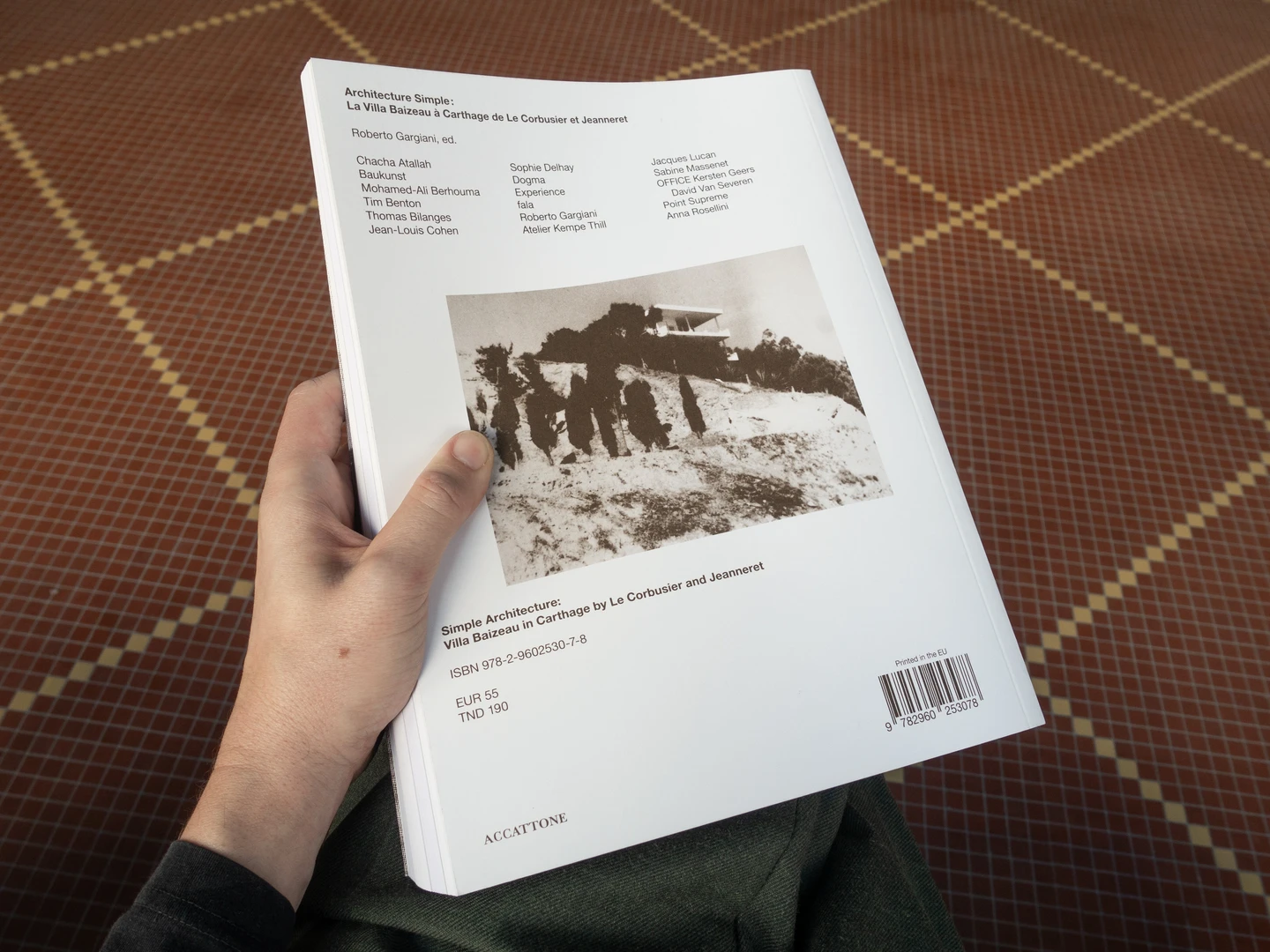
Simple Architecture: Villa Baizeau, Carthage
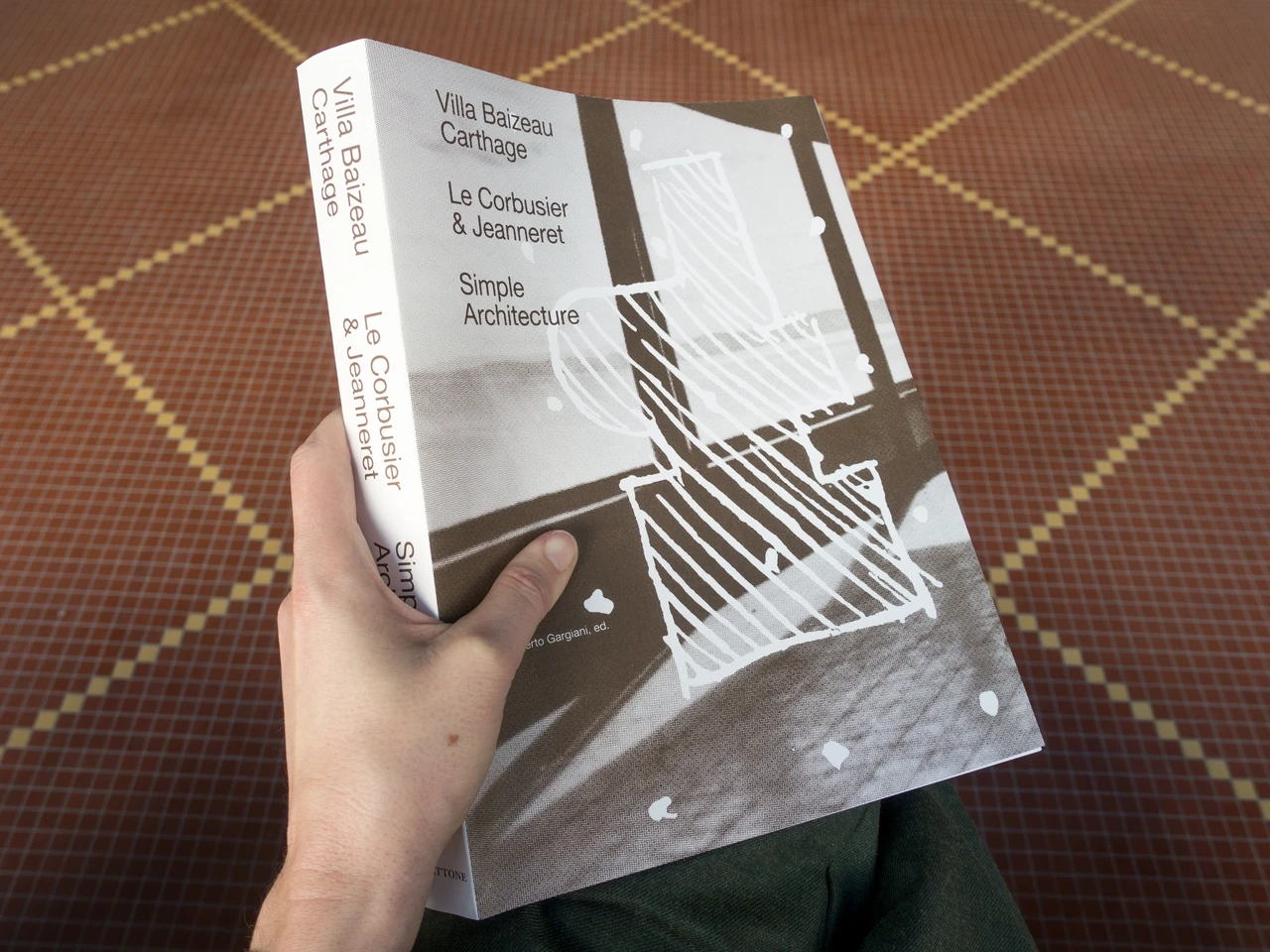
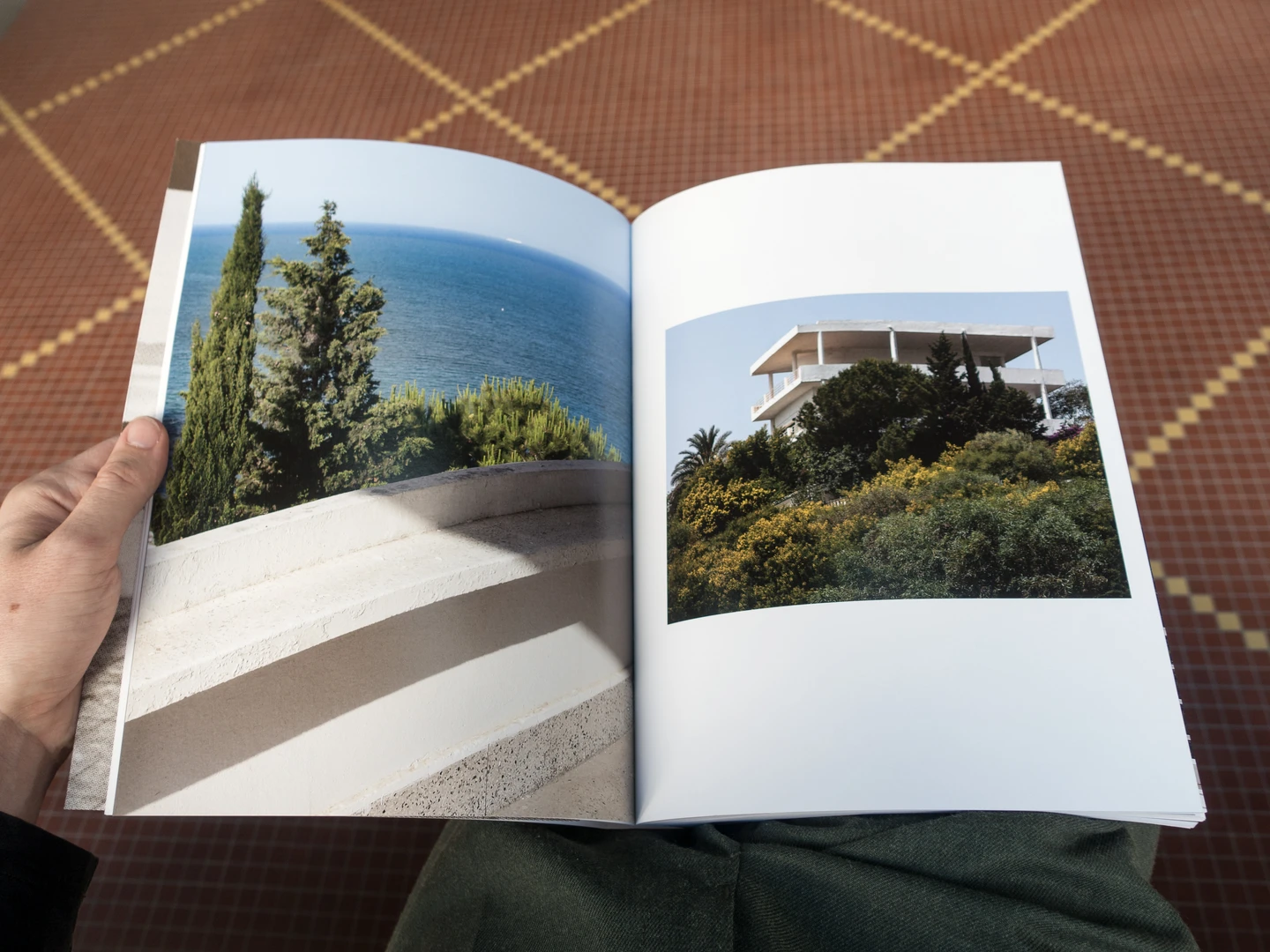
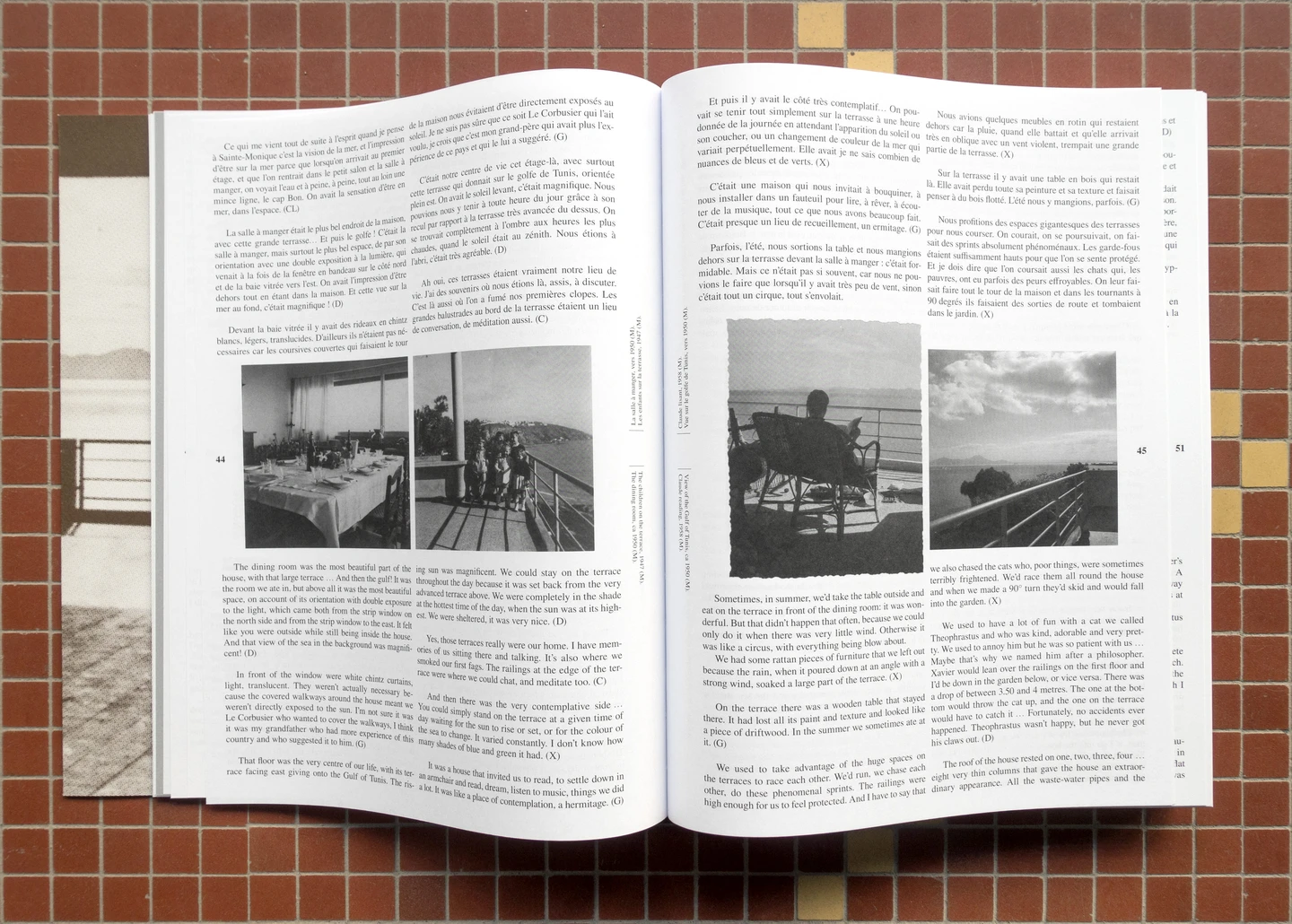
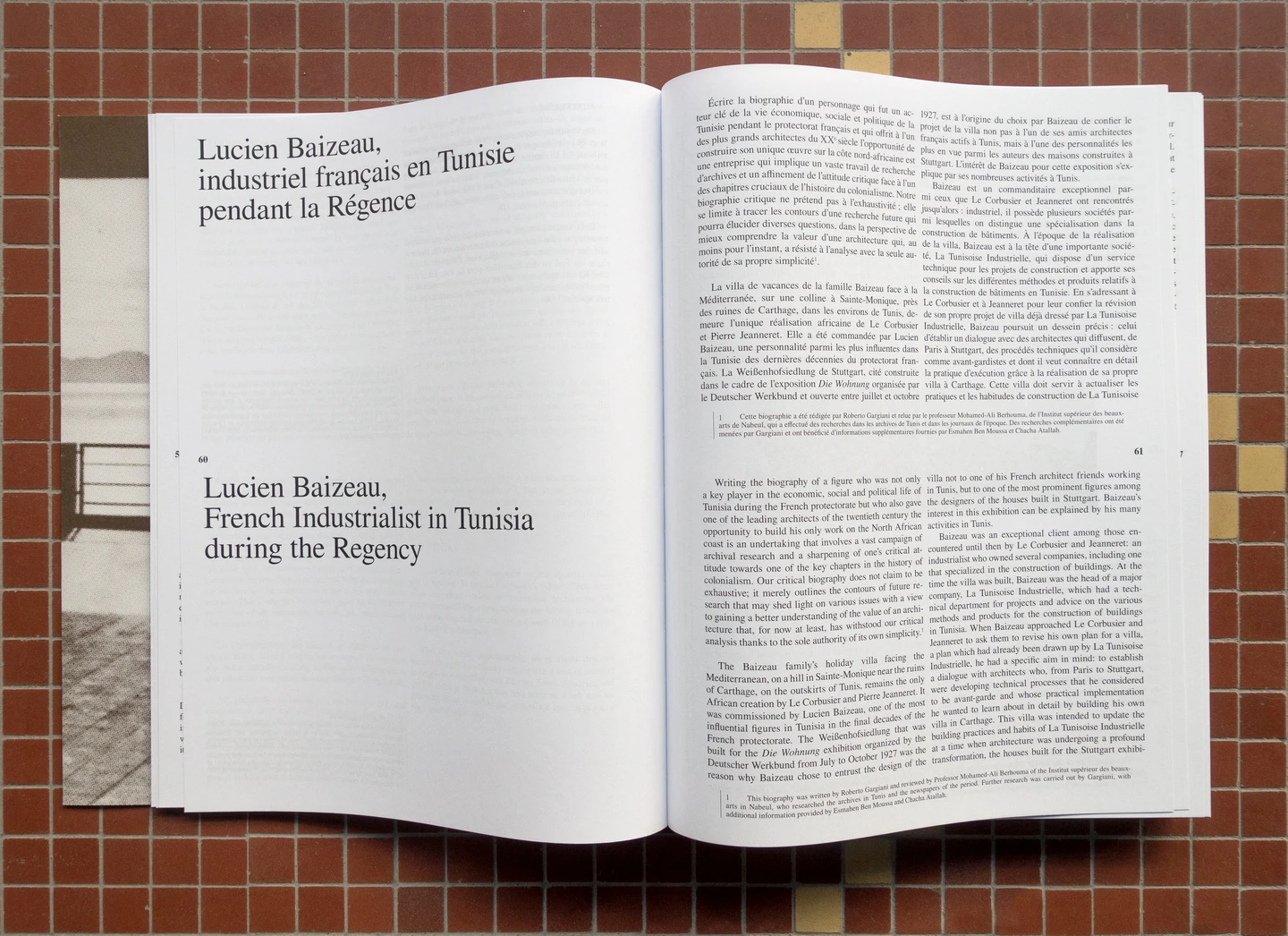
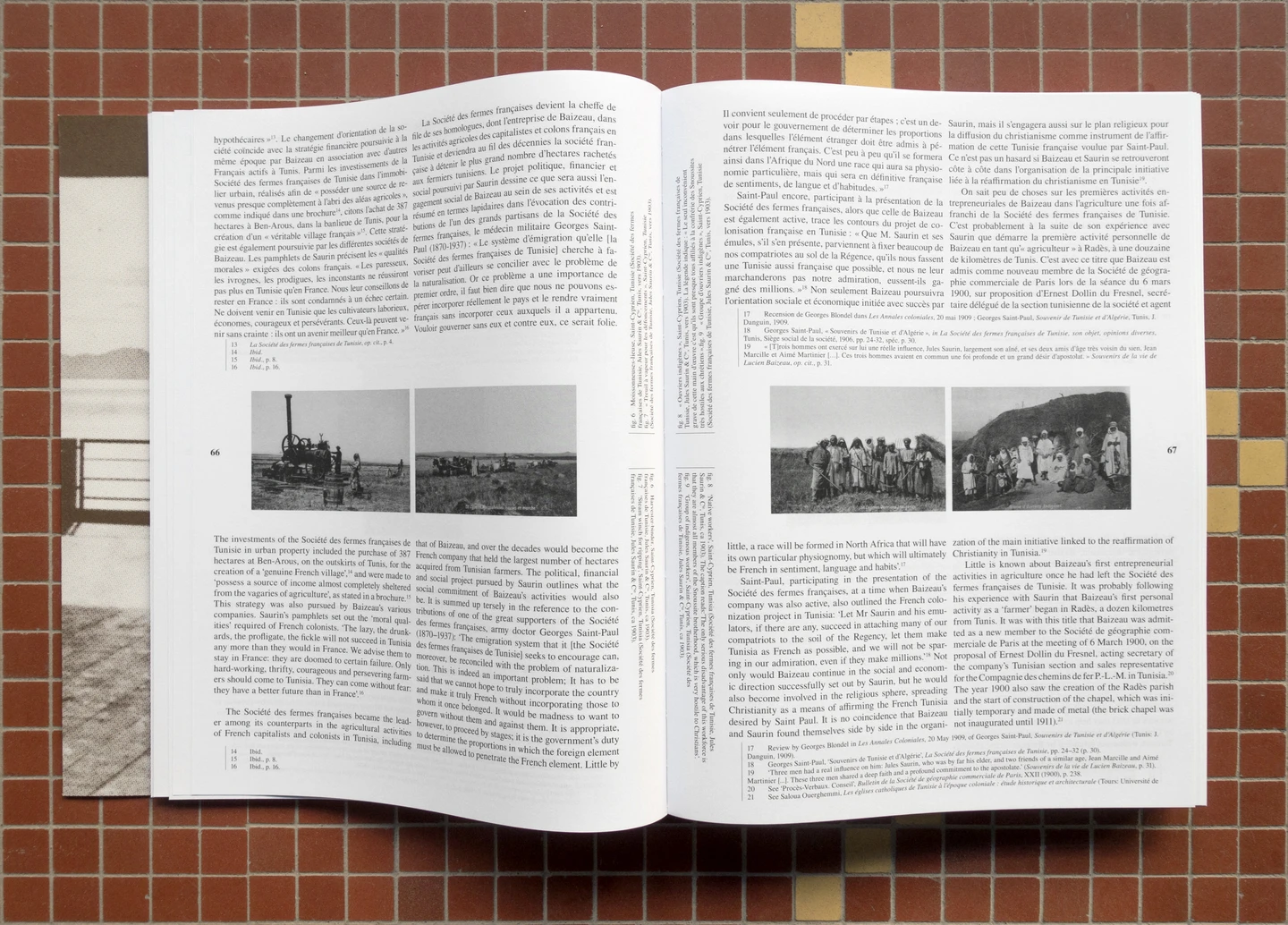
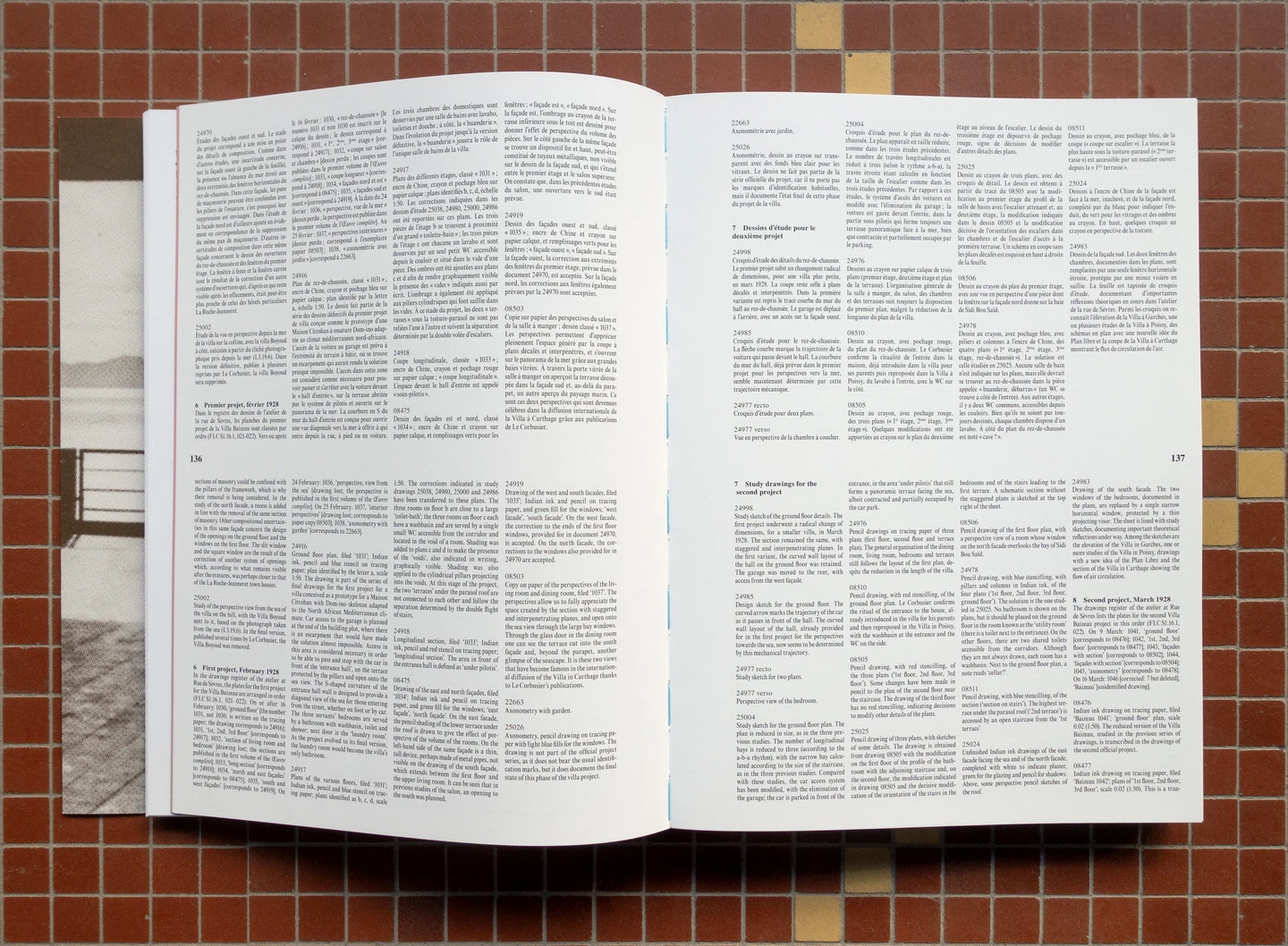
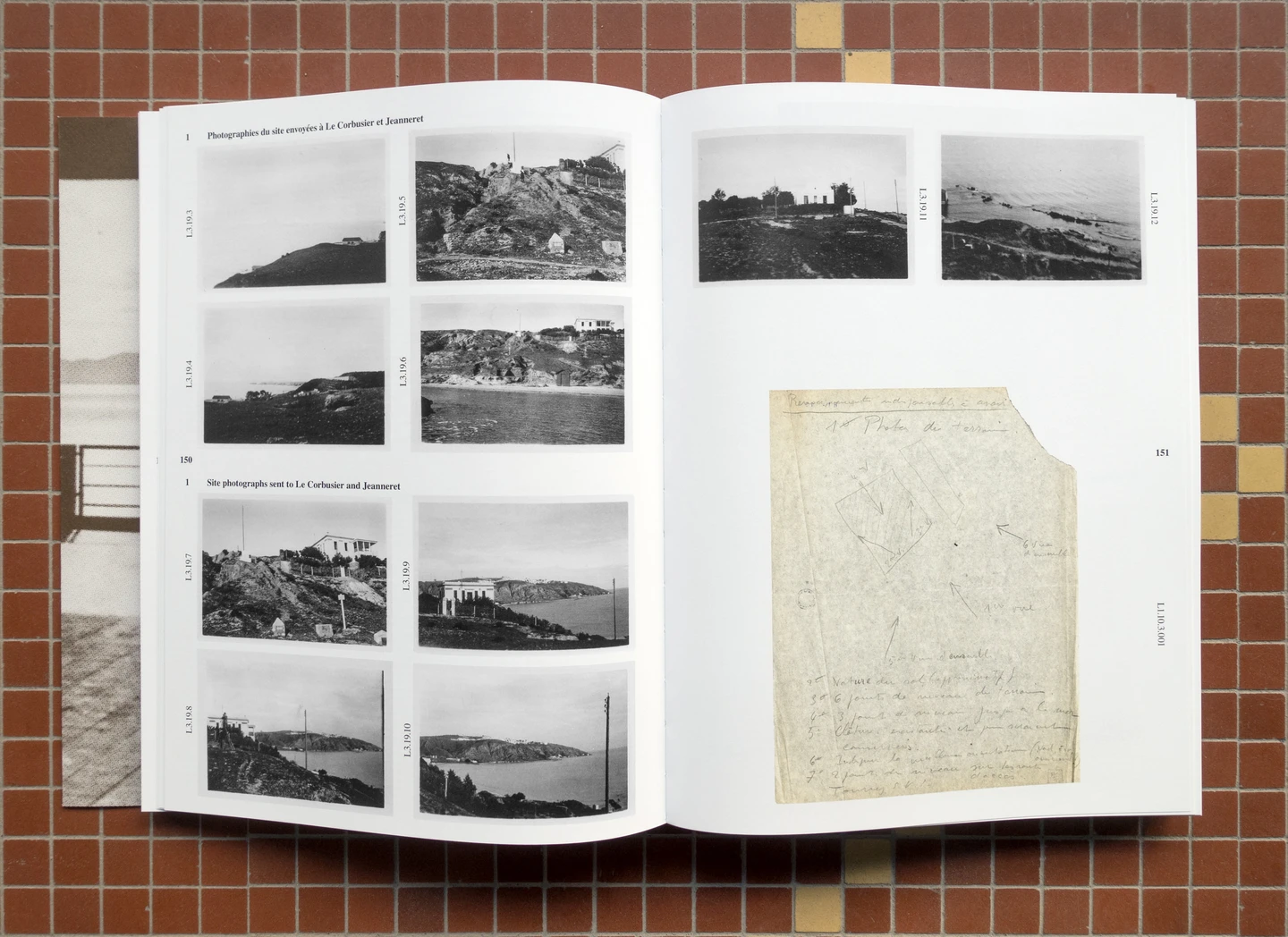
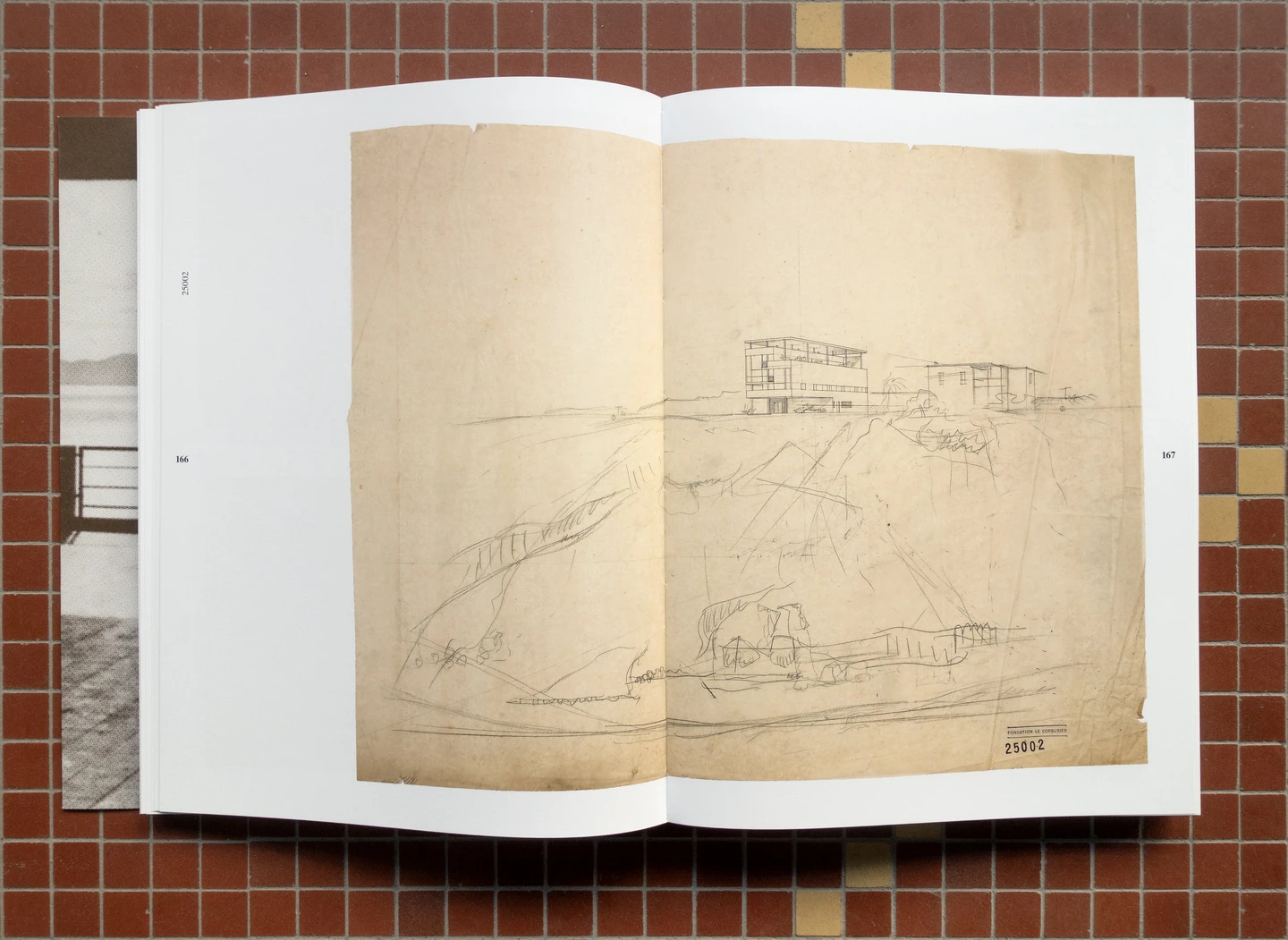
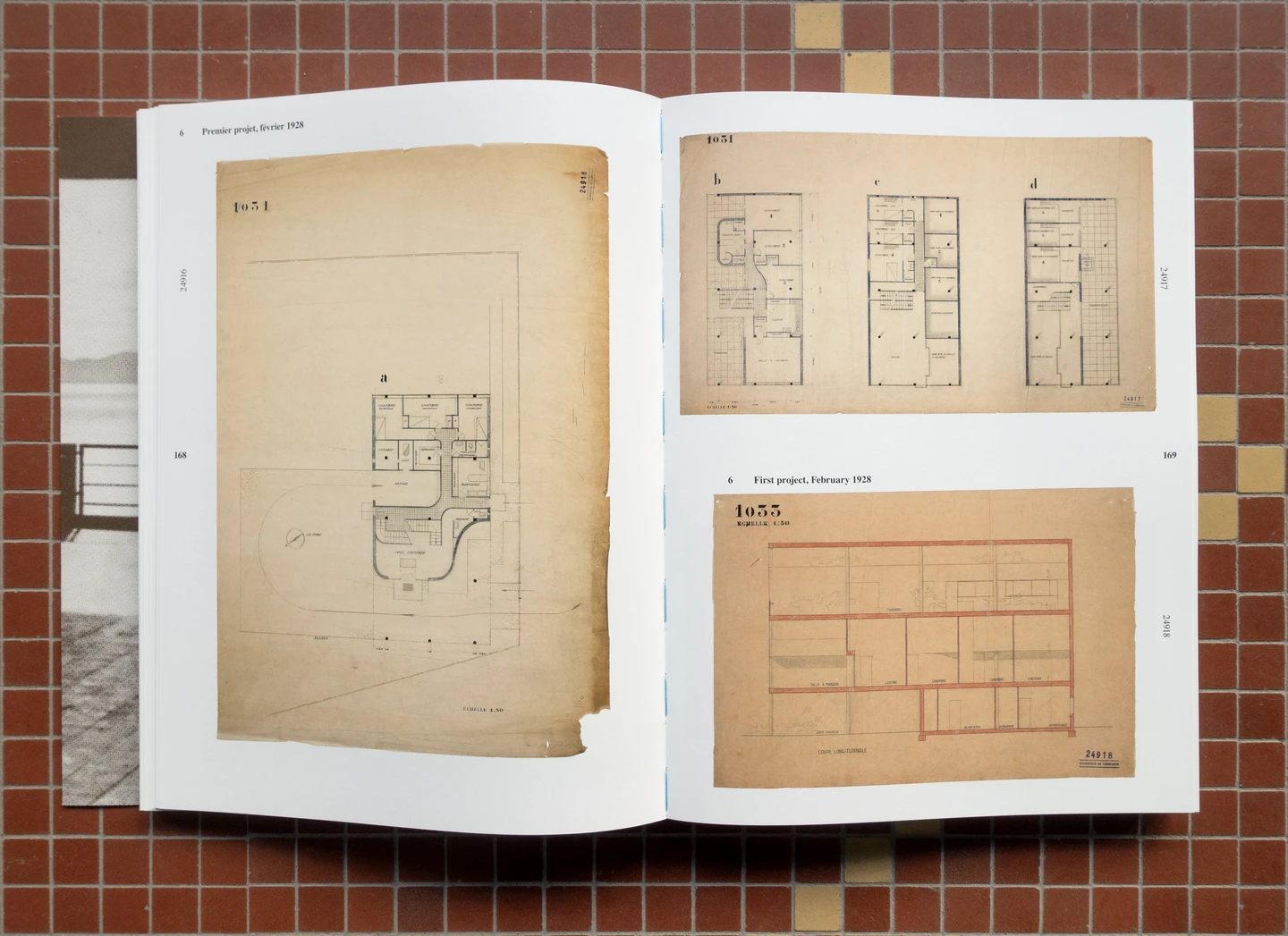
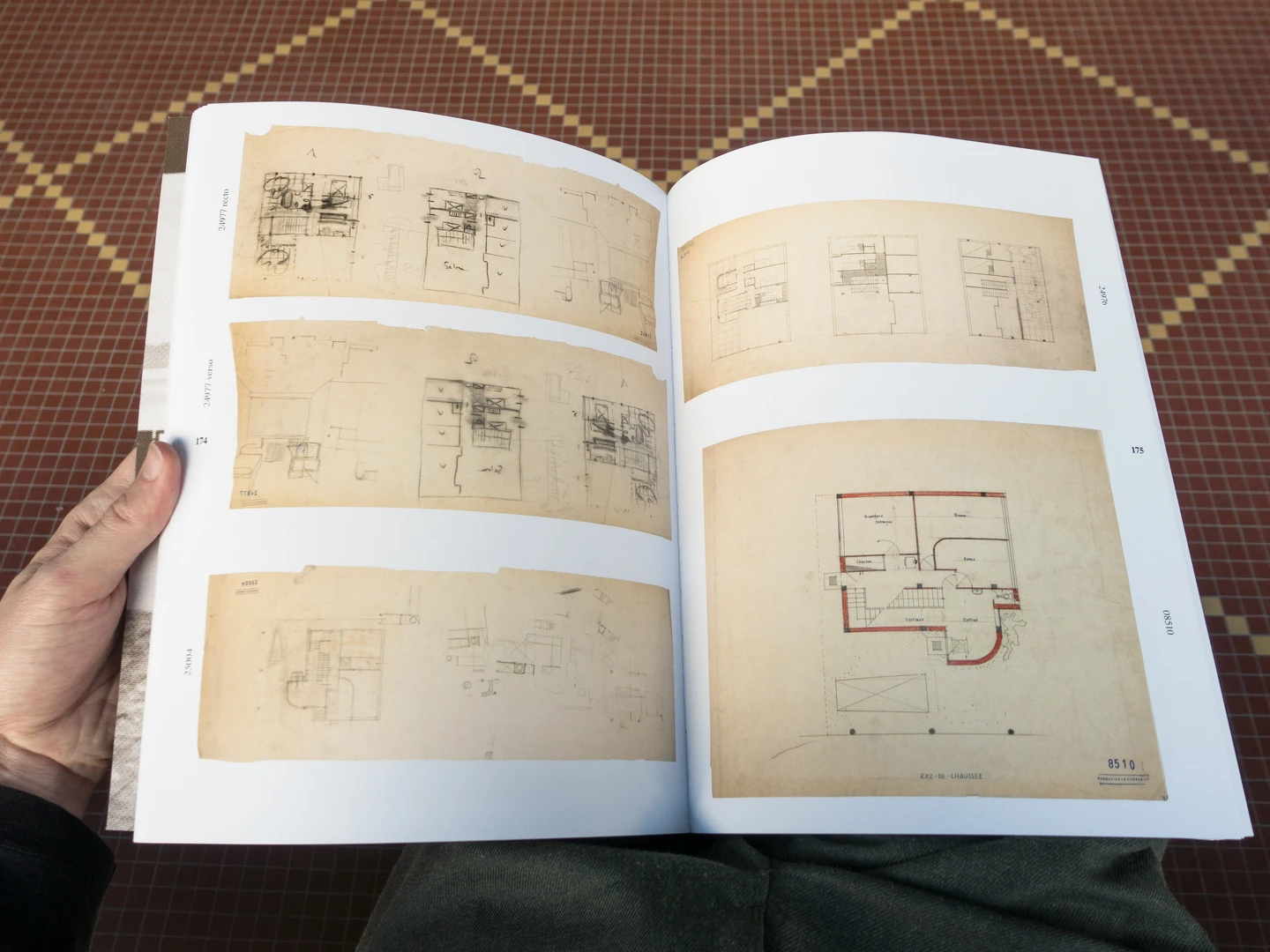
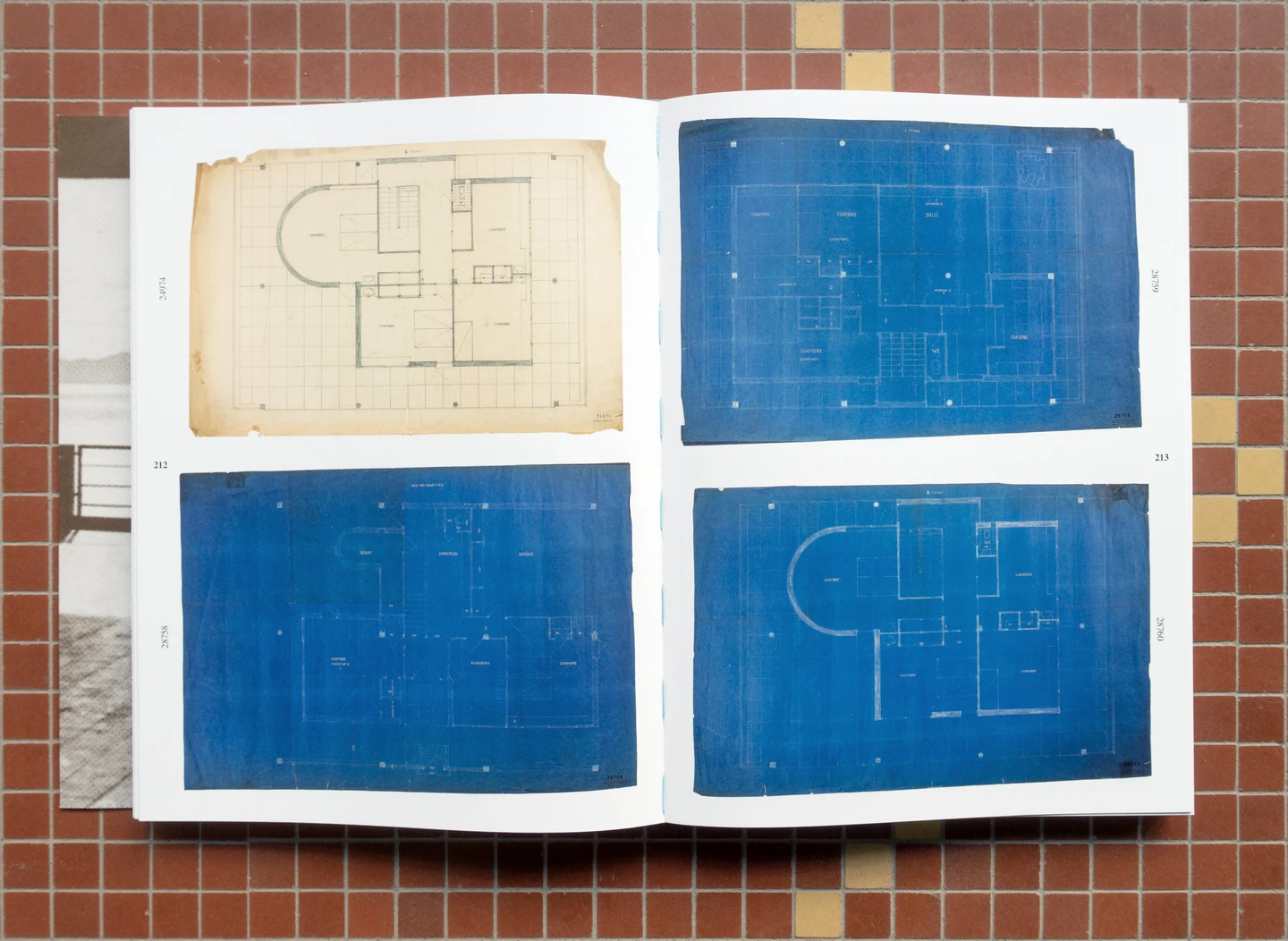
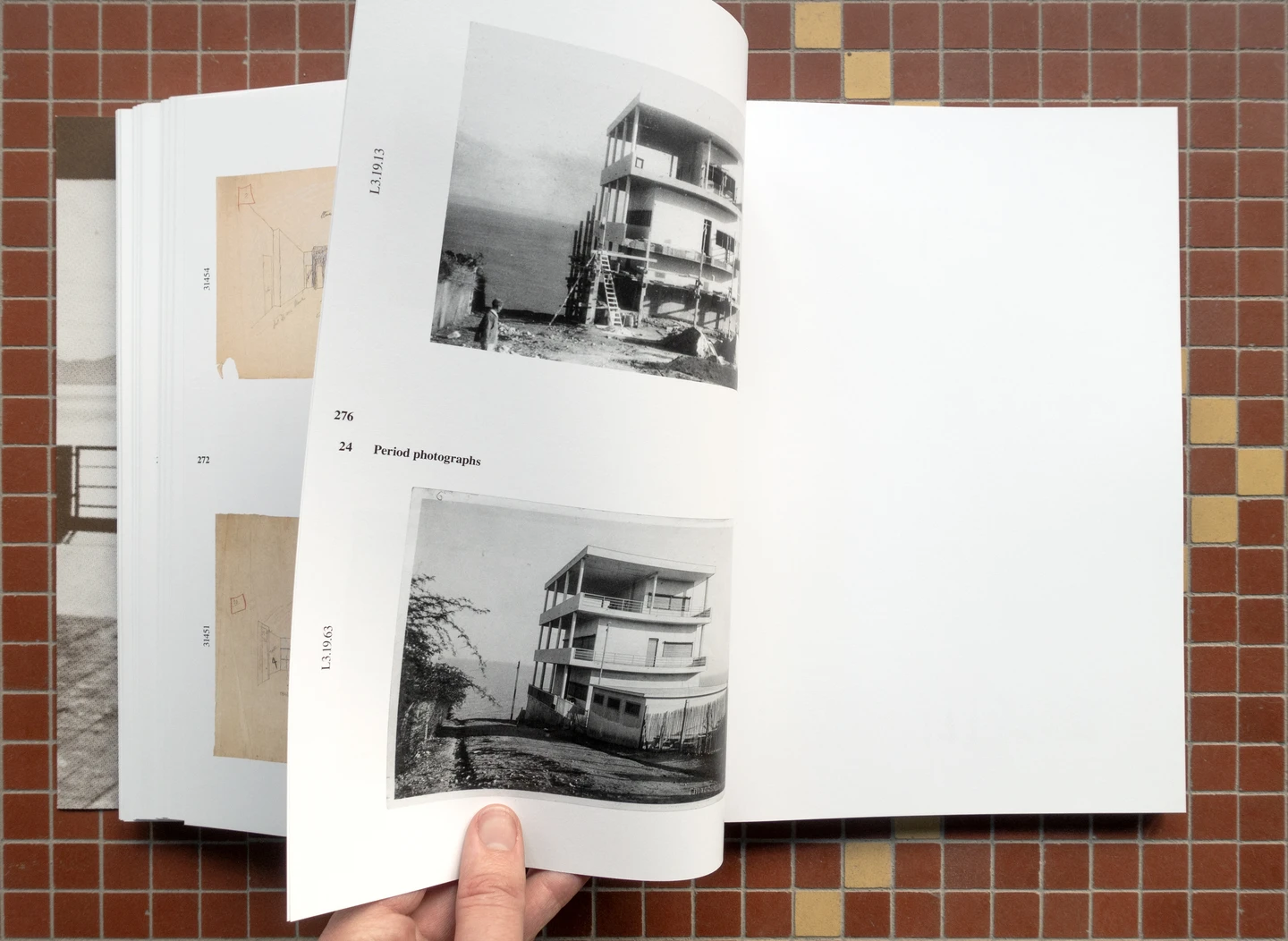
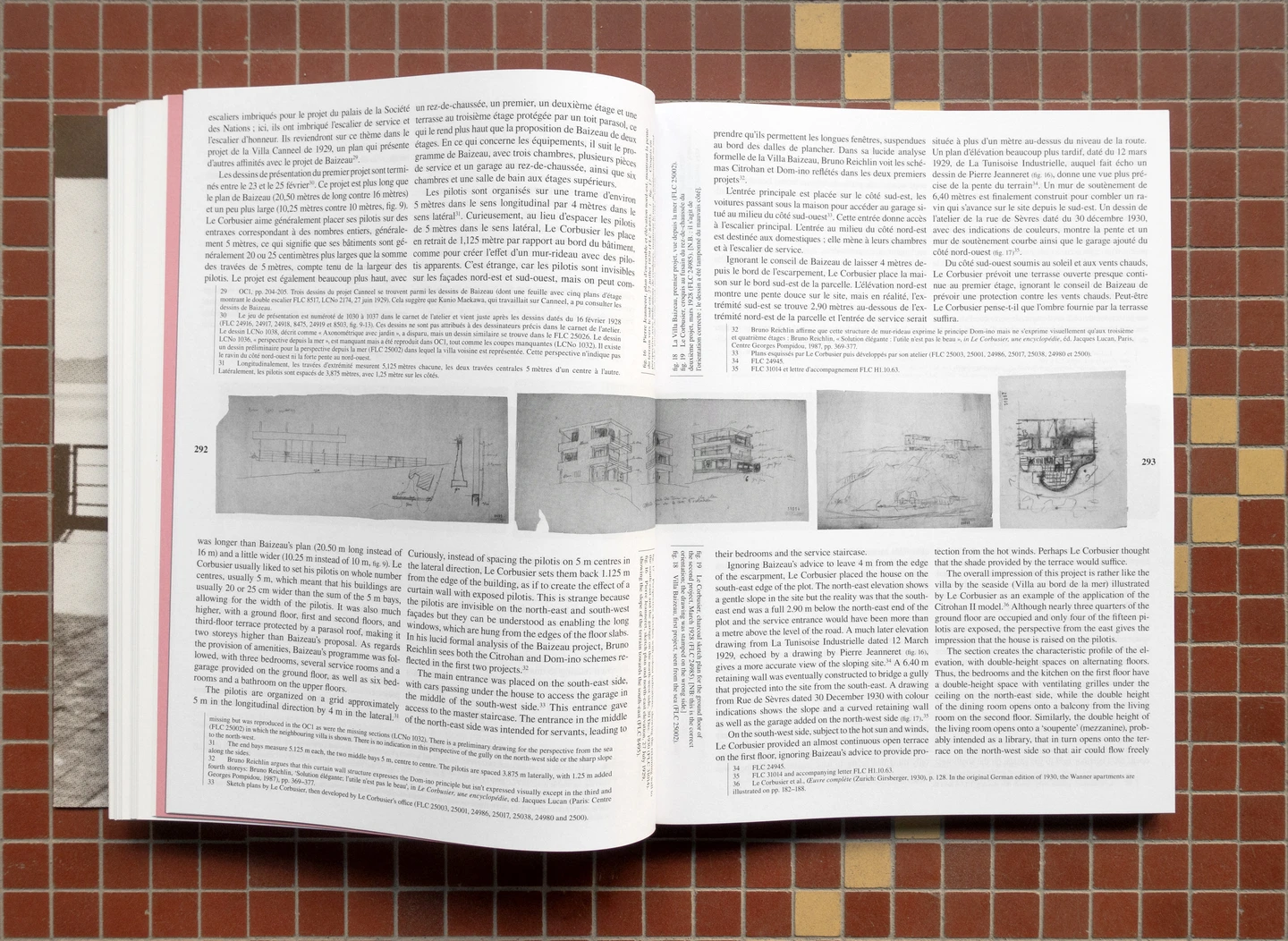
Accattone, La Boîte Editorial, Book 2024The social, economic, constructional, environmental and climatic issues that, at the start of the twenty-first century, have called into question the foundations of the architectural project make up the theoretical background to the book devoted to the villa that Le Corbusier and Pierre Jeanneret built in Carthage for Lucien Baizeau, Blanche Thiéblin and their family.
The book is organised around two complementary analytical perspectives. The first is devoted to the history of Villa Baizeau, providing a full understanding of its reasons and meanings, its genesis, its theoretical importance, the role of the client and the joy provided by the house to the family, with the aim also of gathering the knowledge necessary for its restoration as a fundamental architecture of the twentieth century. The second is open to some of the greatest protagonists of architecture today and is in line with the cultural strategy of Le Corbusier, who was always able to reconsider his works in the light of contemporary phenomena, even through graphic manipulations, inverted plans and reversed photographs, in order to discover their unexpected potential. Thanks to these two lines of thought, history and architectural design engage in a dialogue that pays homage to Le Corbusier’s theoretical vision.
-
-
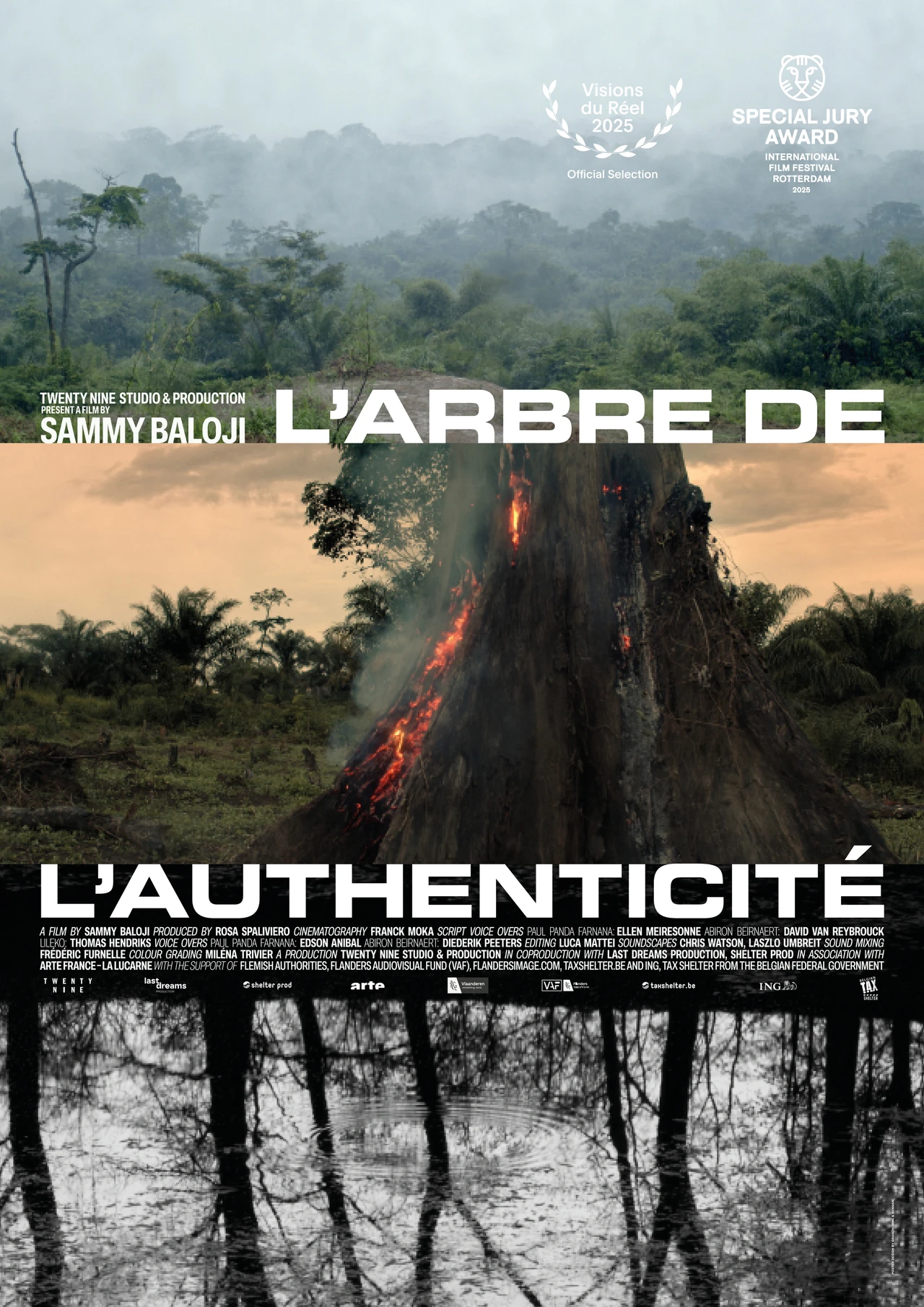
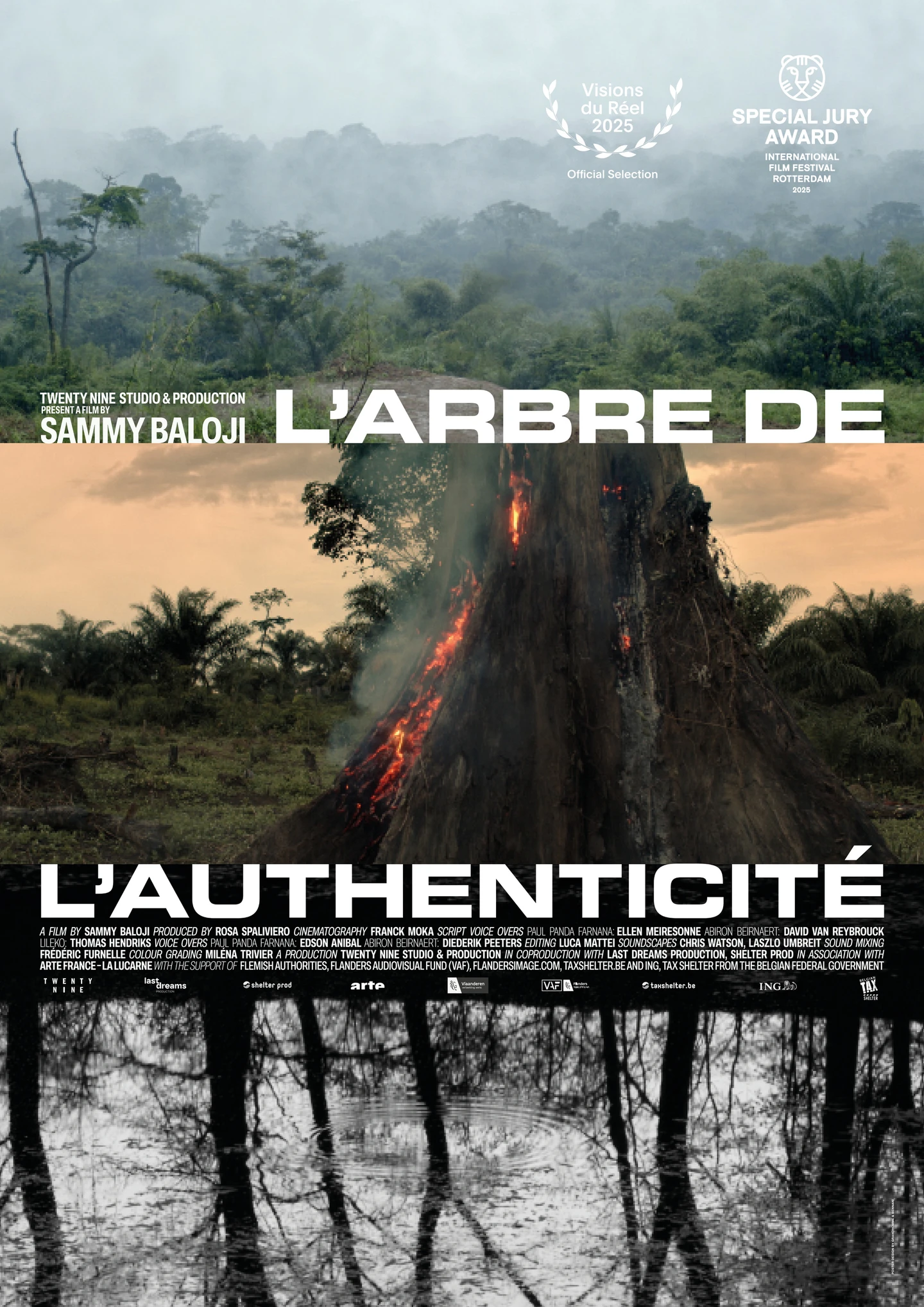
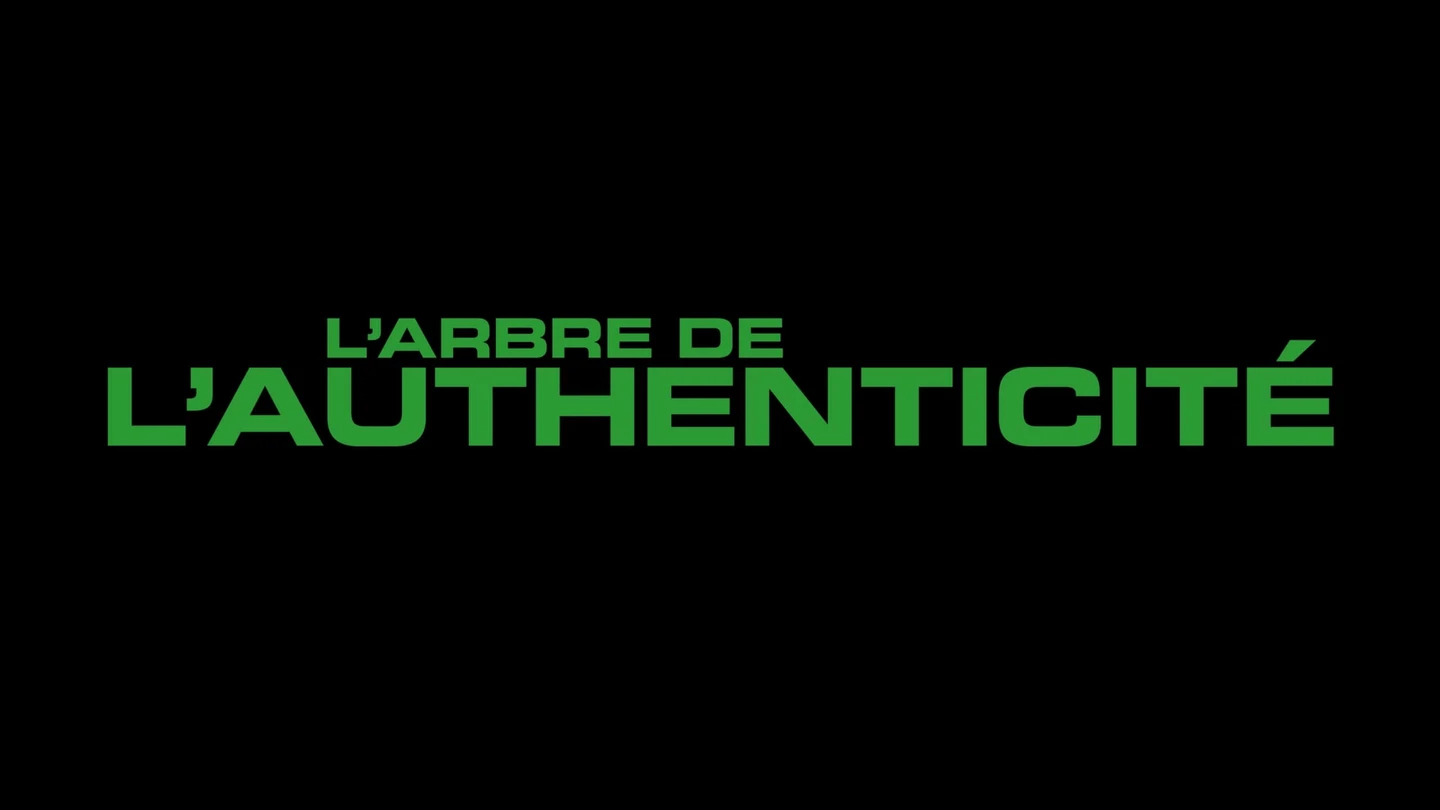
L'Arbre de l'Authenticité
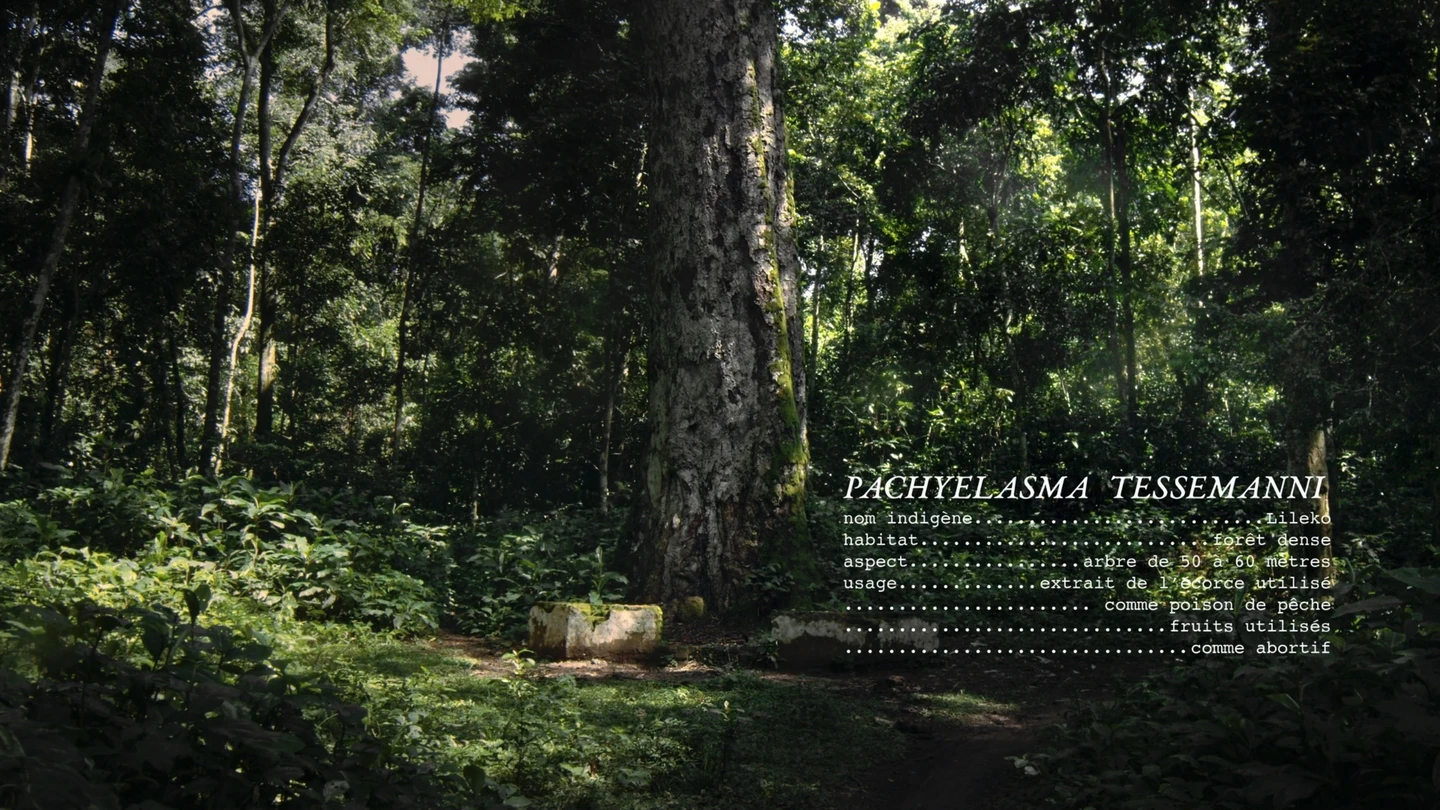
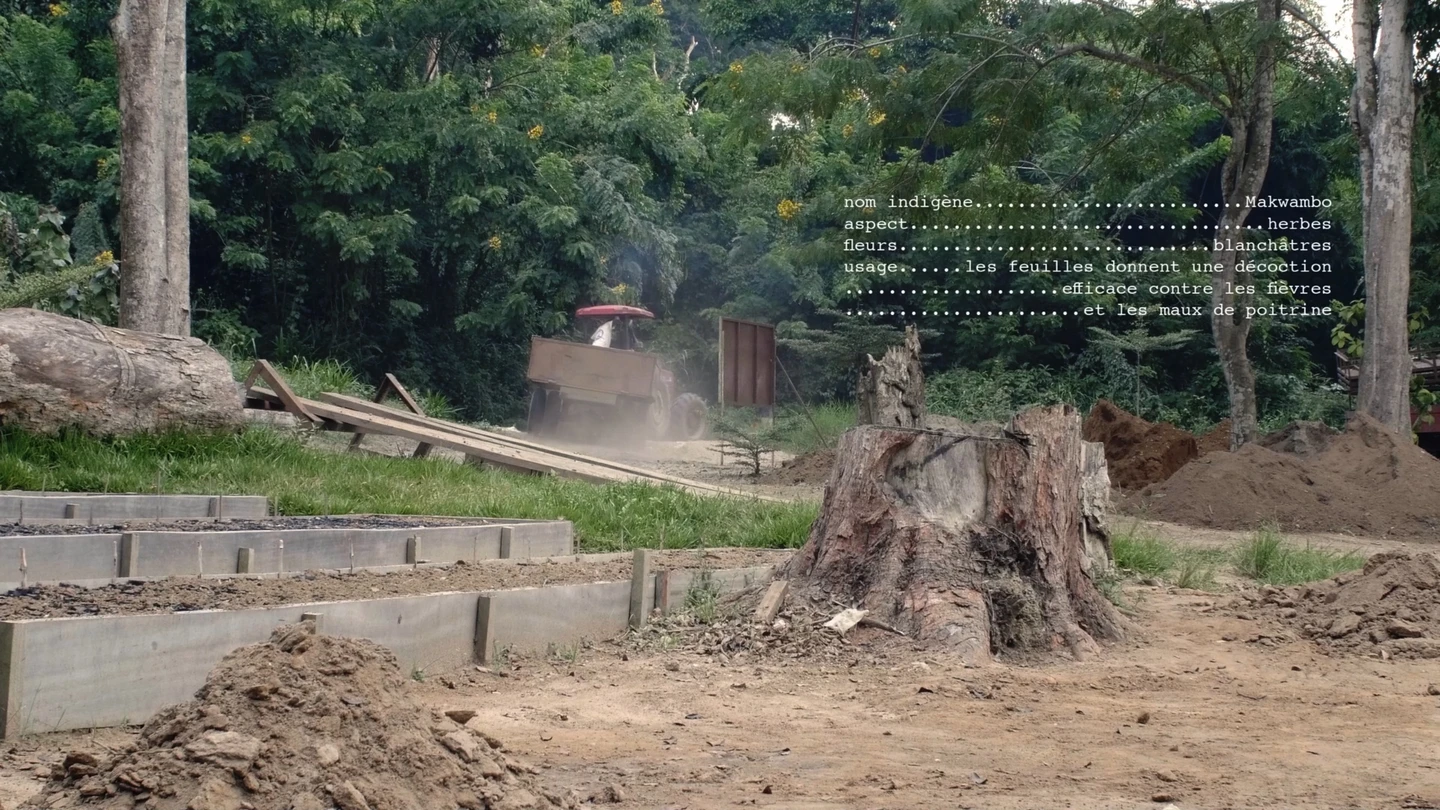
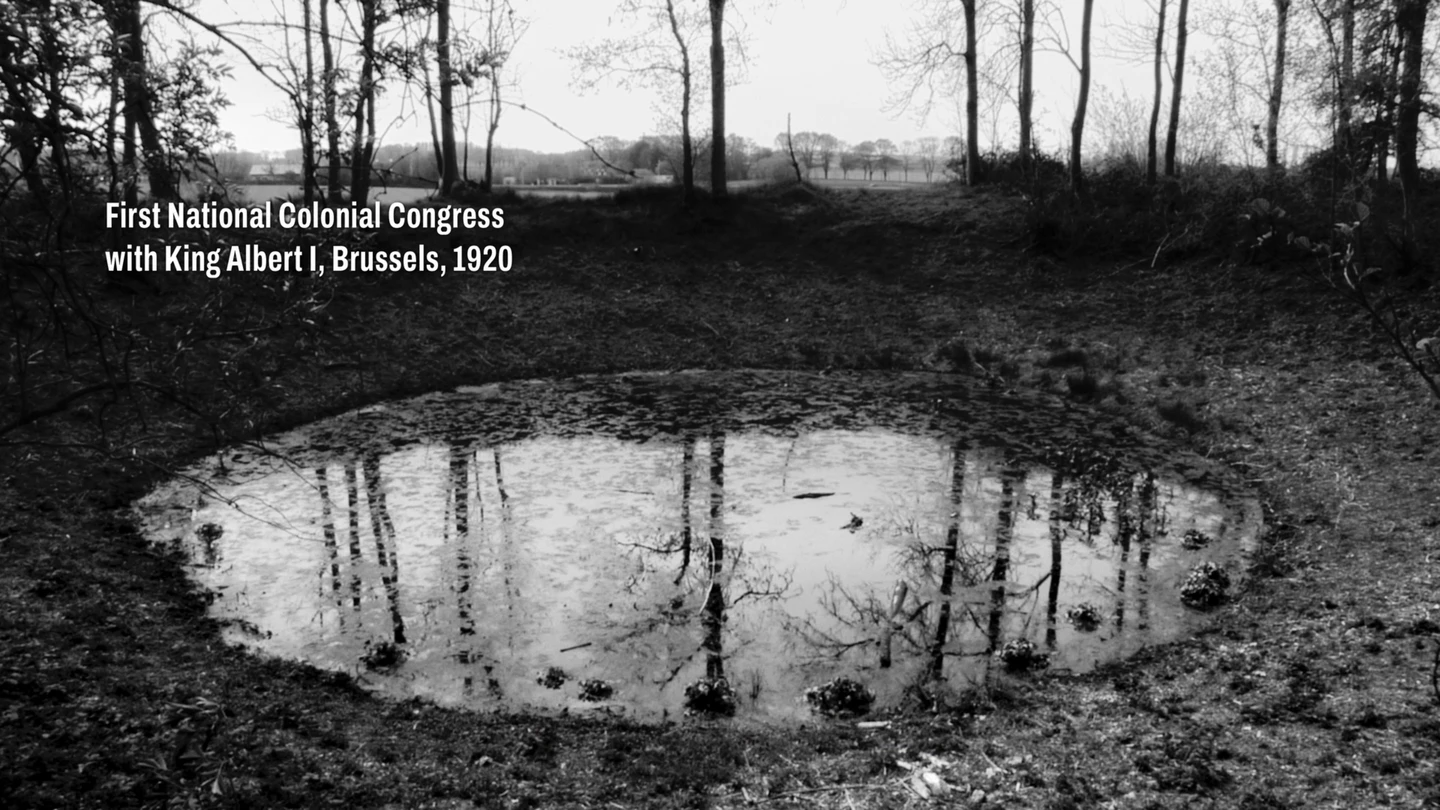
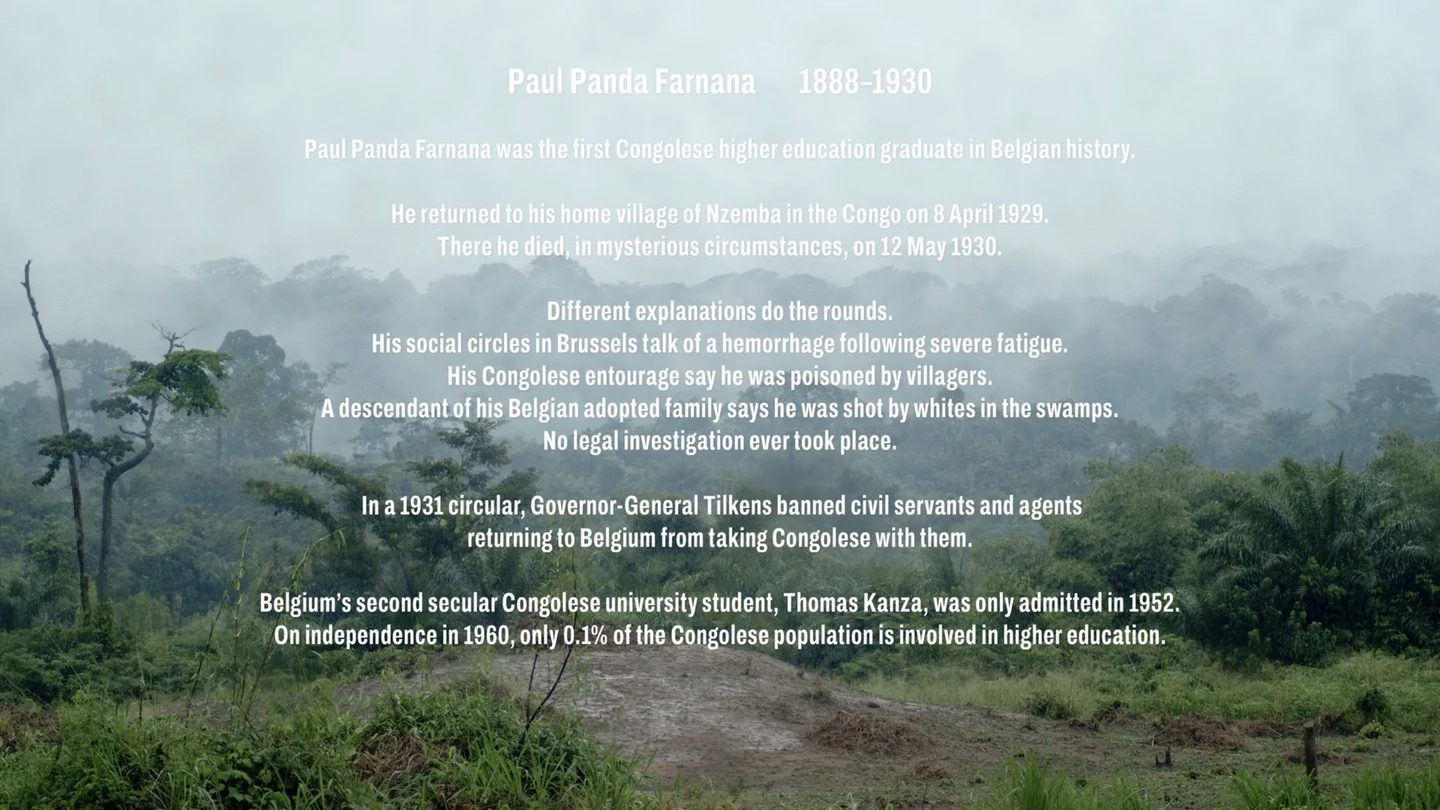
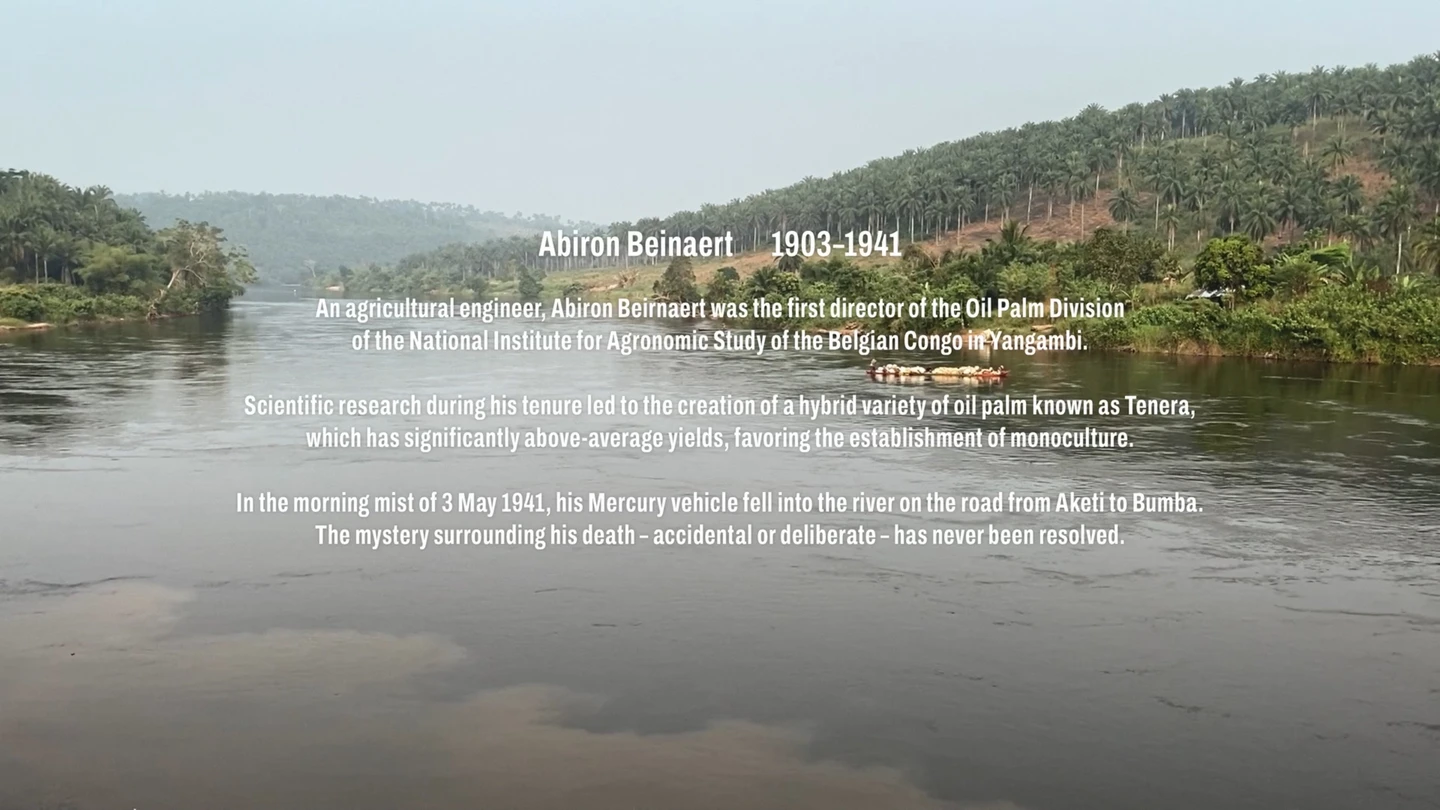
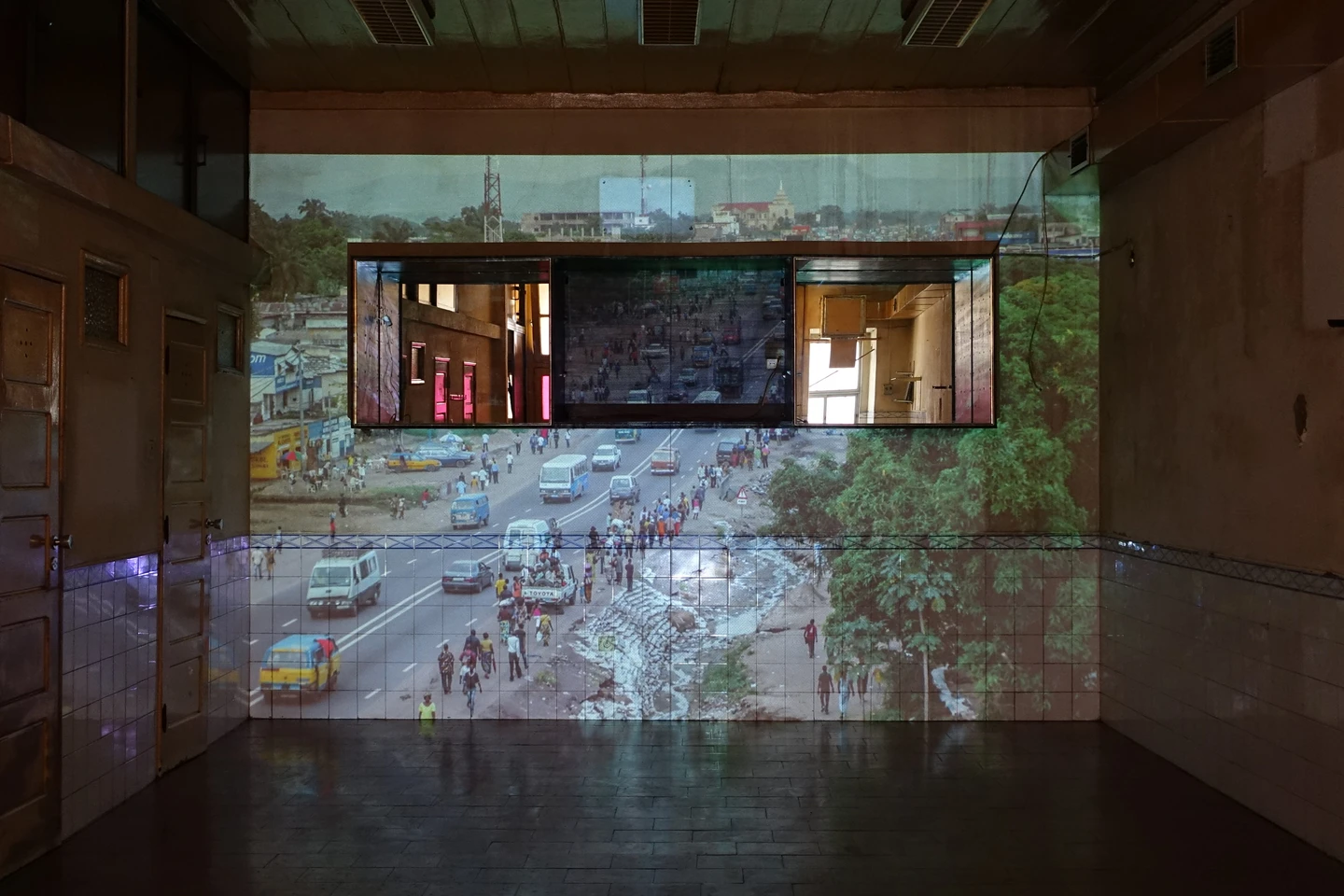
Twenty Nine Studio & Production, Last Dreams Production Graphics, Movie 2024In the heart of the Congo rainforest the remains of the Yangambi INERA Research Station, that was dedicated to tropical agriculture, reveal the burden of the colonial past and its inextricable links to contemporary climate change. Through the voices of Paul Panda Farnana and Abiron Beirnaert - two scientists who worked at Yangambi between 1910 and 1950 - The Tree of Authenticity recounts the ecological destruction that began at the time of the Belgian colonisation.
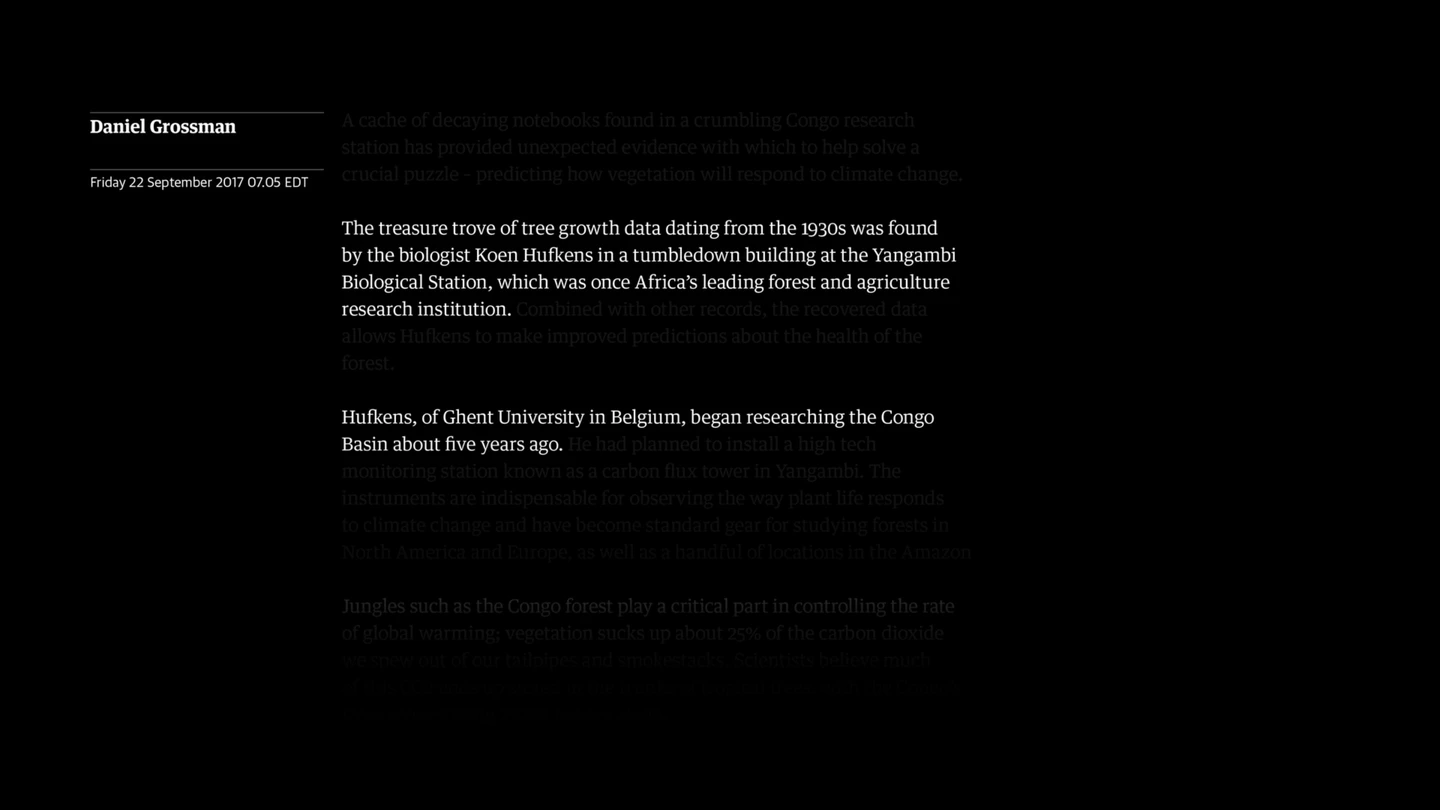
Structured in three parts, the film combines personal testimonies with scientific findings to trace the legacy of Belgian colonisation – not only its profound impact on human lives but also on the natural world. A riveting historical document, L’arbre de l’authenticité is also a compelling portrait of lives across cultures and backgrounds, and a chilling reminder of what lies ahead if we fail to change our relationship with the environment.The type design choices followed our conversations with Sammy and Rosa, the sharing of references of movies and major cultural events posters —such as Muhammad ad Ali VS. George Forman boxe fight that happened in Kinshasa in 1974— and discussing the sources of the documents displayed in the movie —from the typed weather reports to the 2017 layout of the Guardian website.
-
-
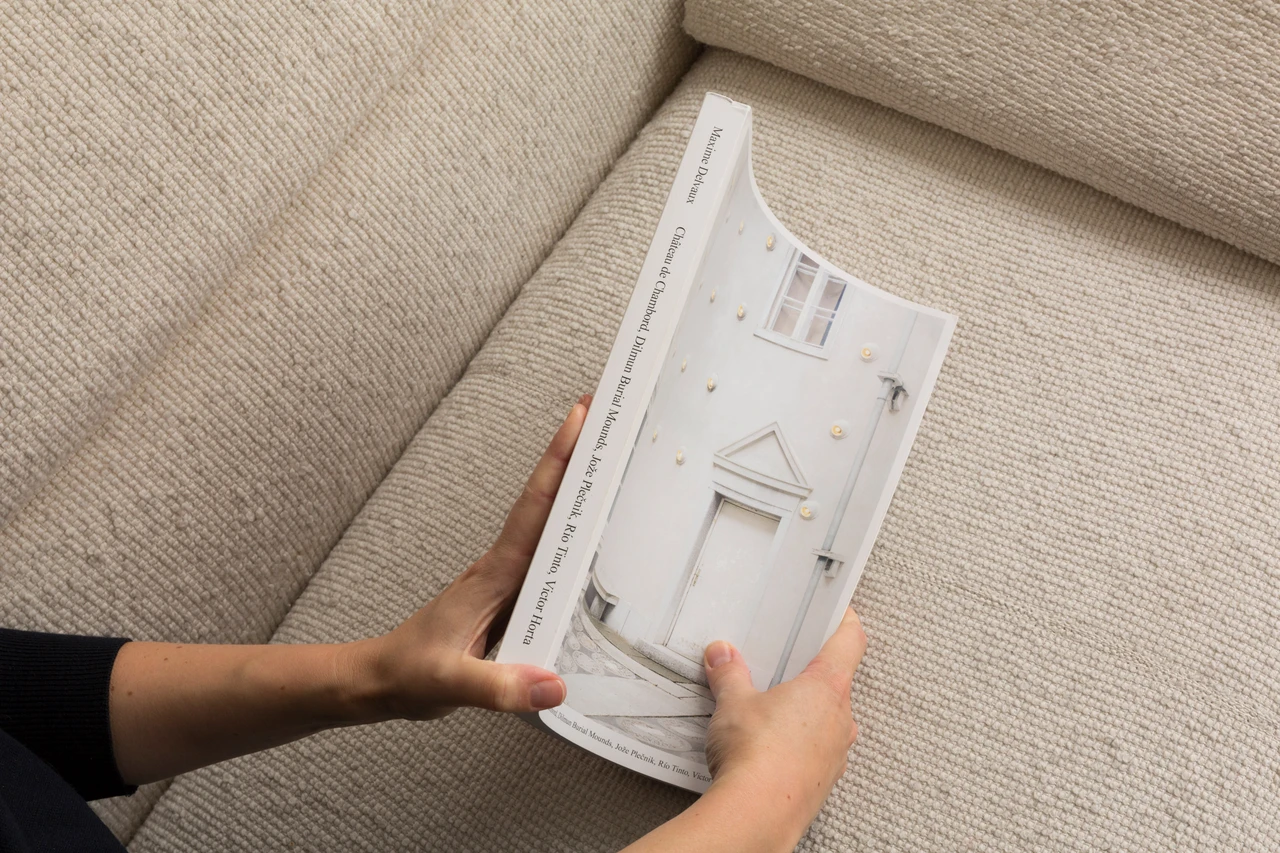
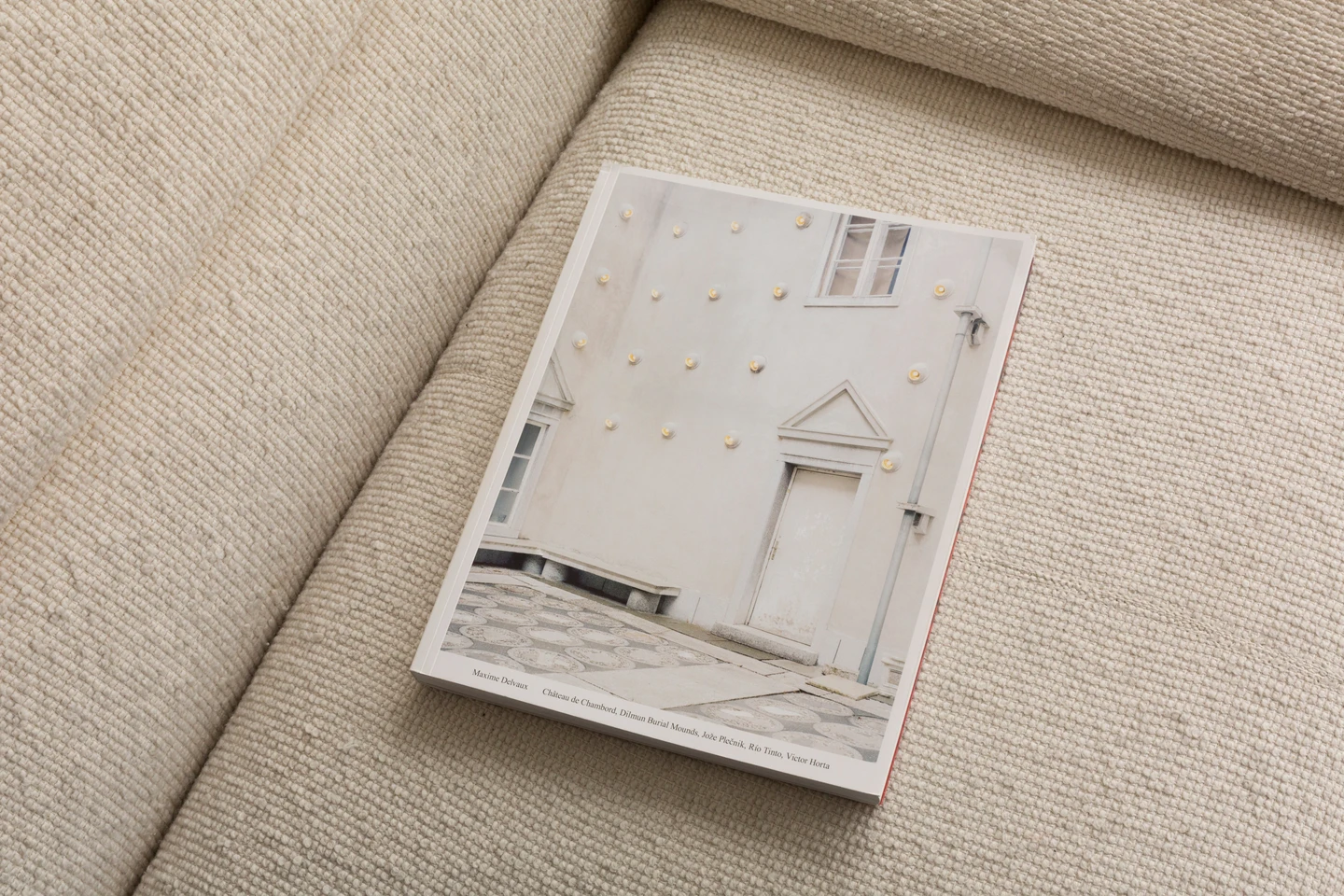
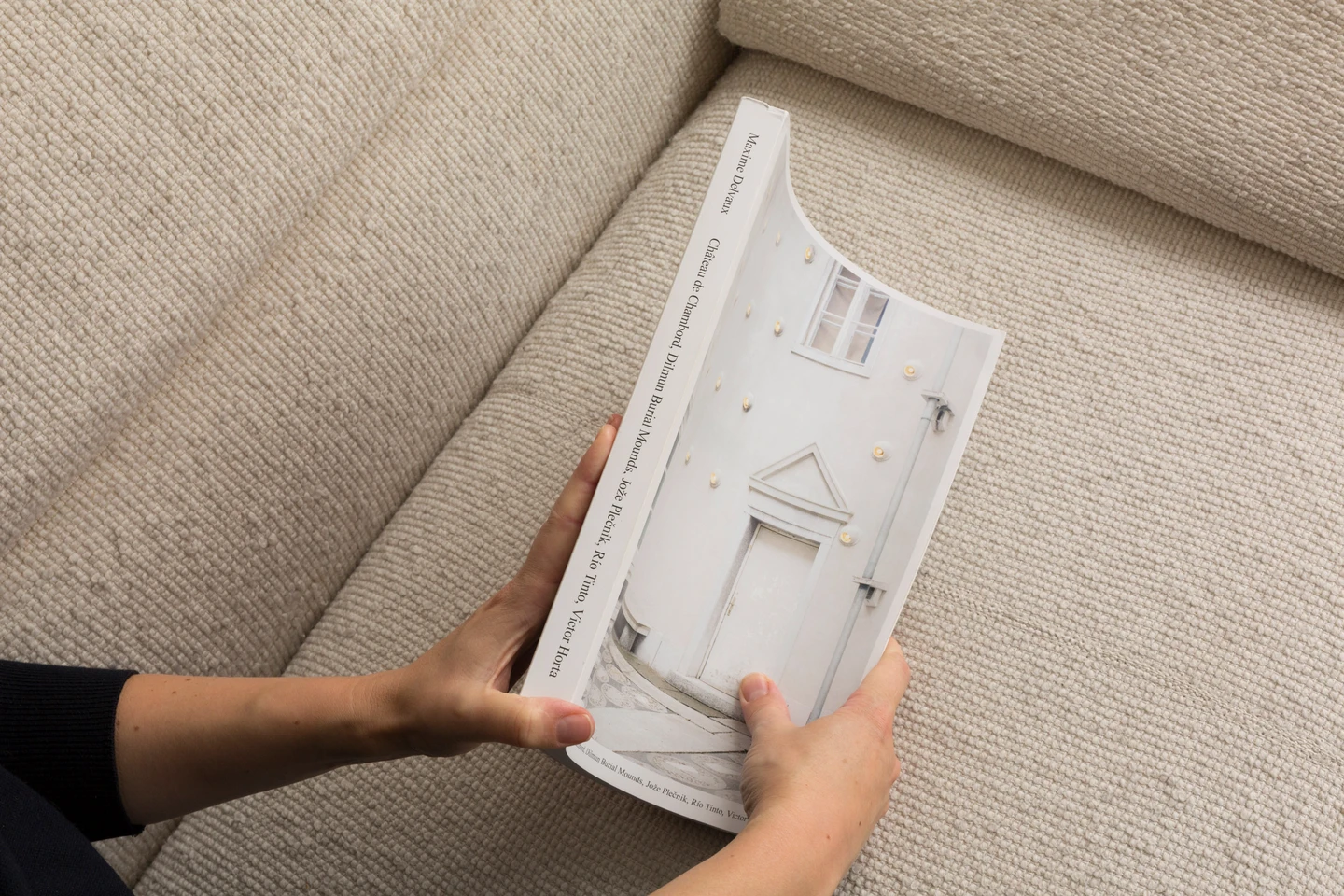
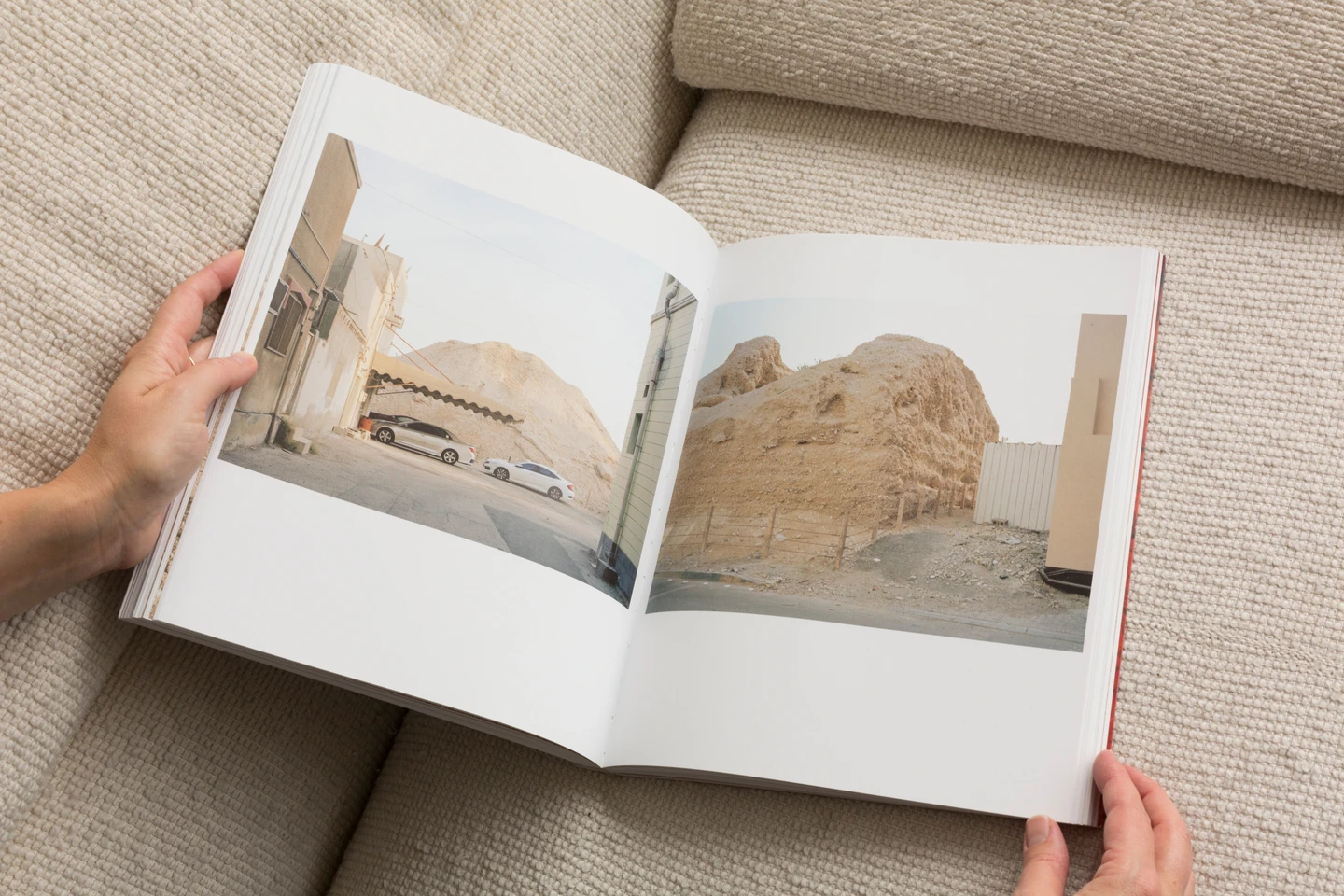
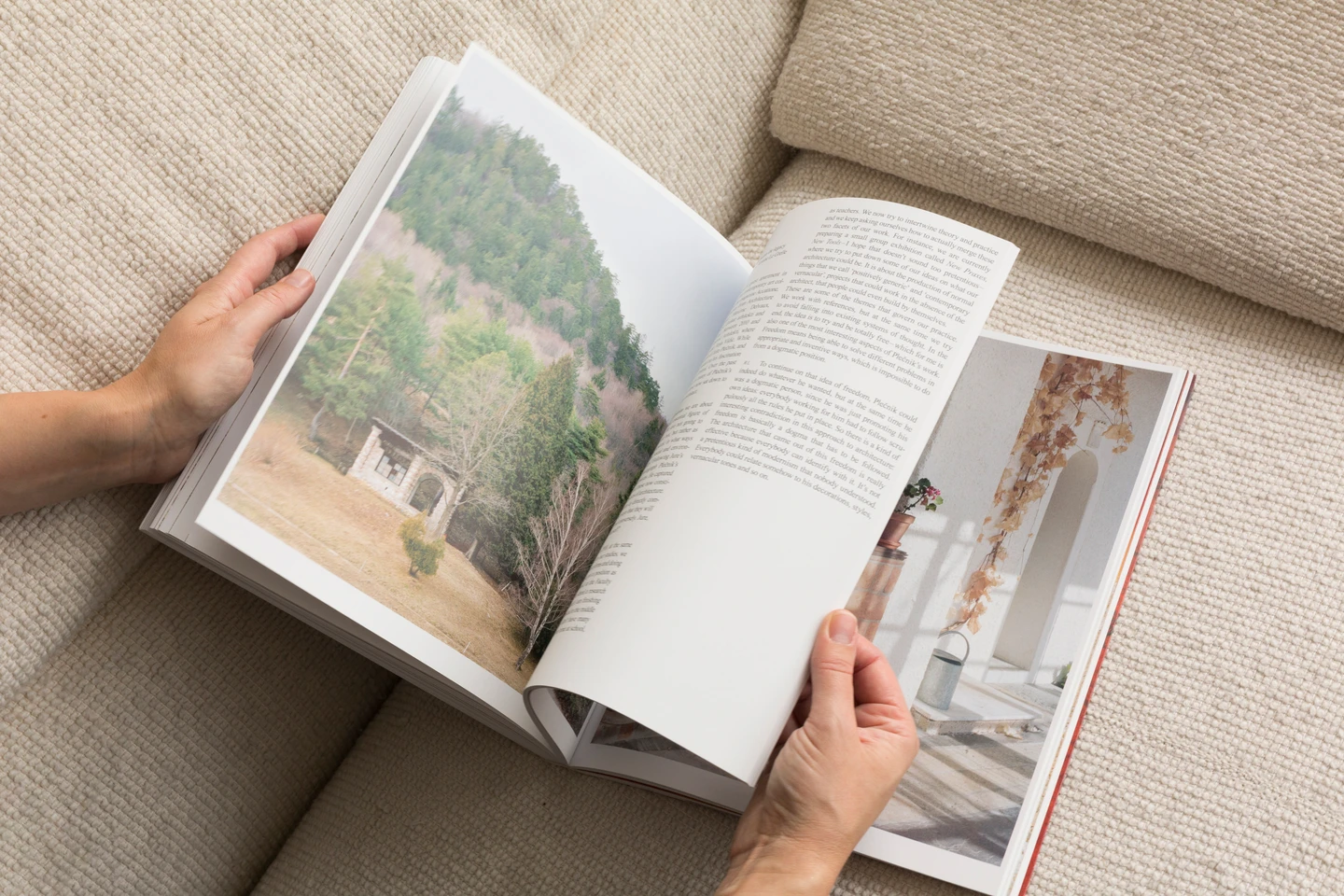
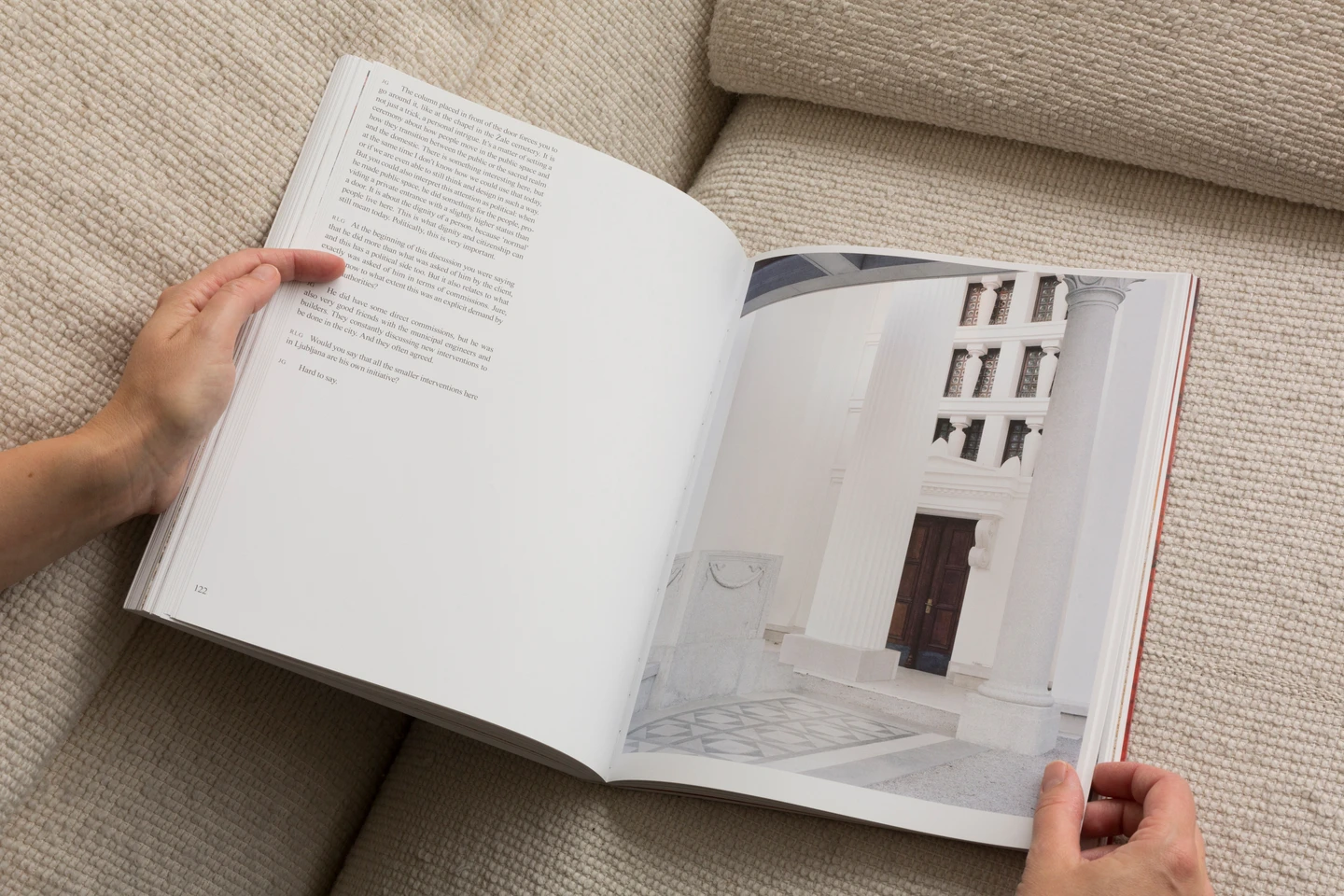
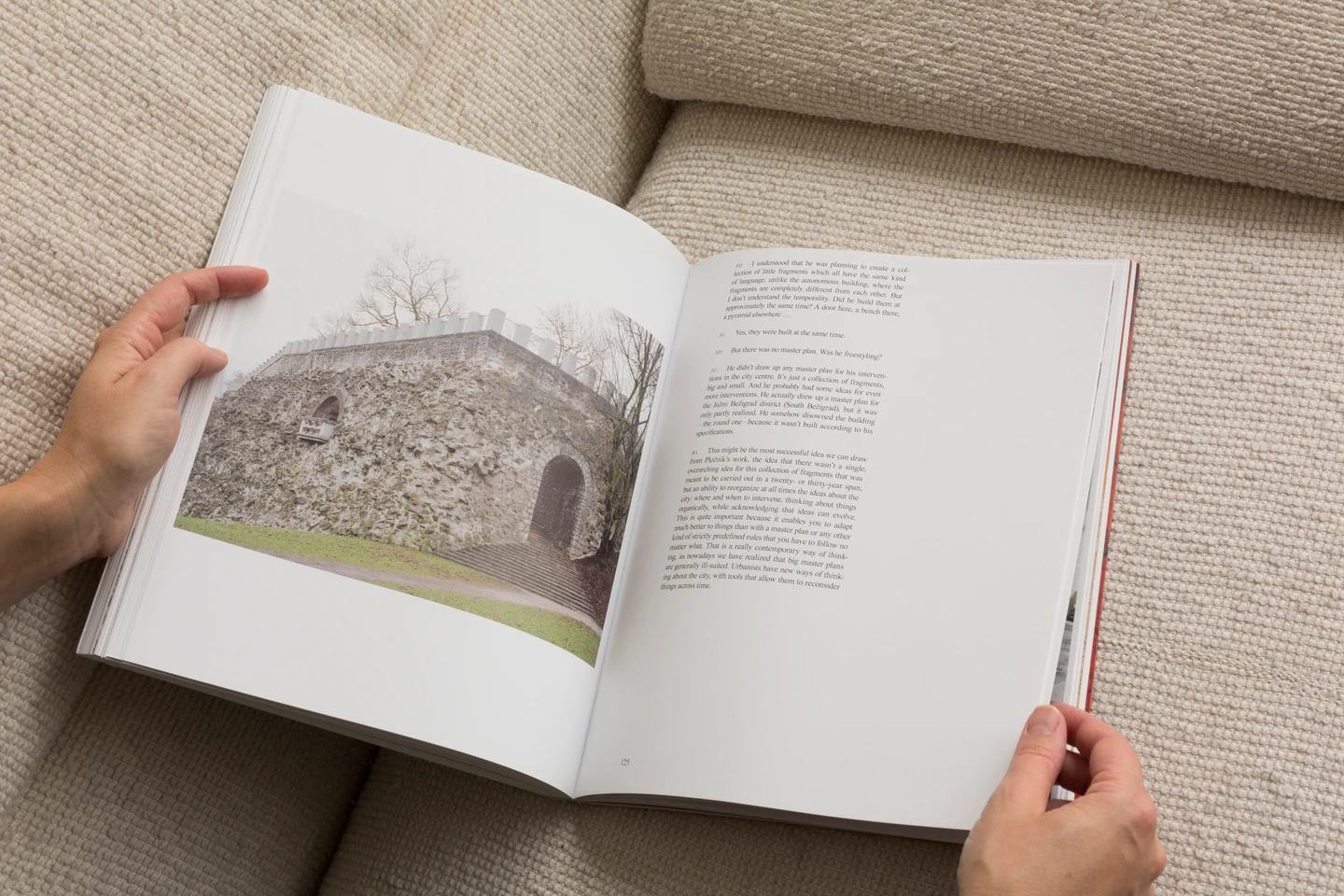
Château de Chambord, Dilmun Burial Mounds, Jože Plečnik, Río Tinto, Victor Horta
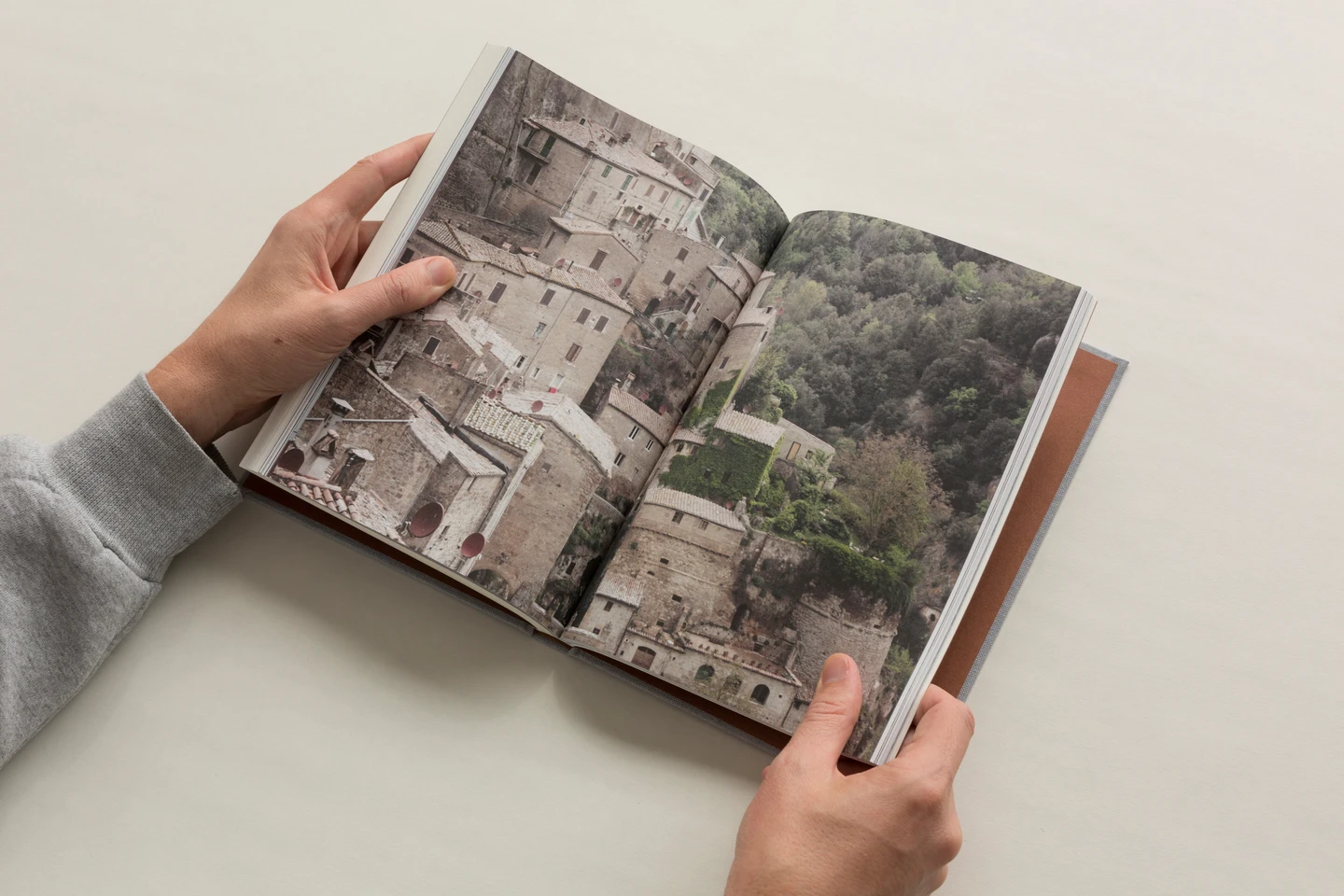
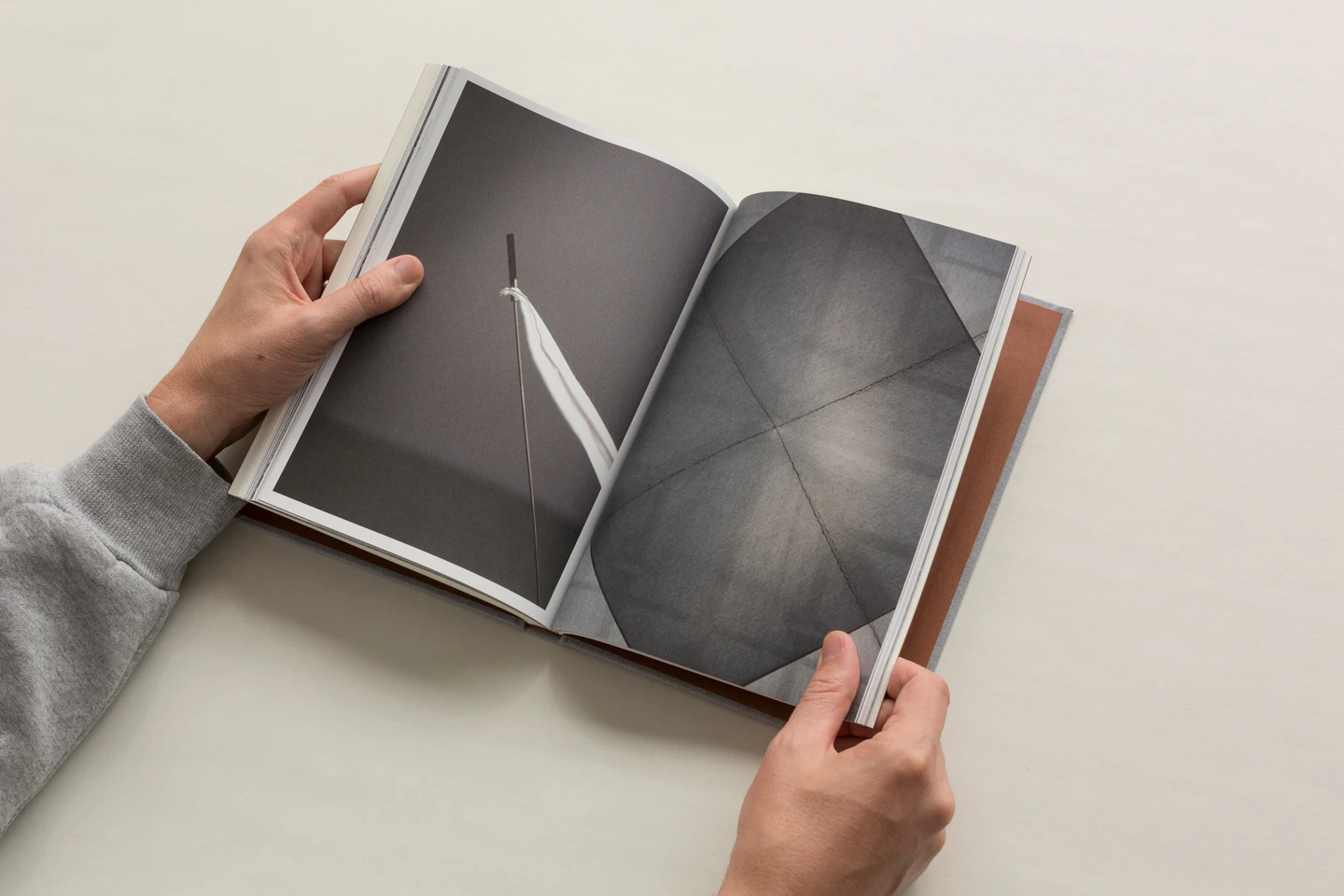
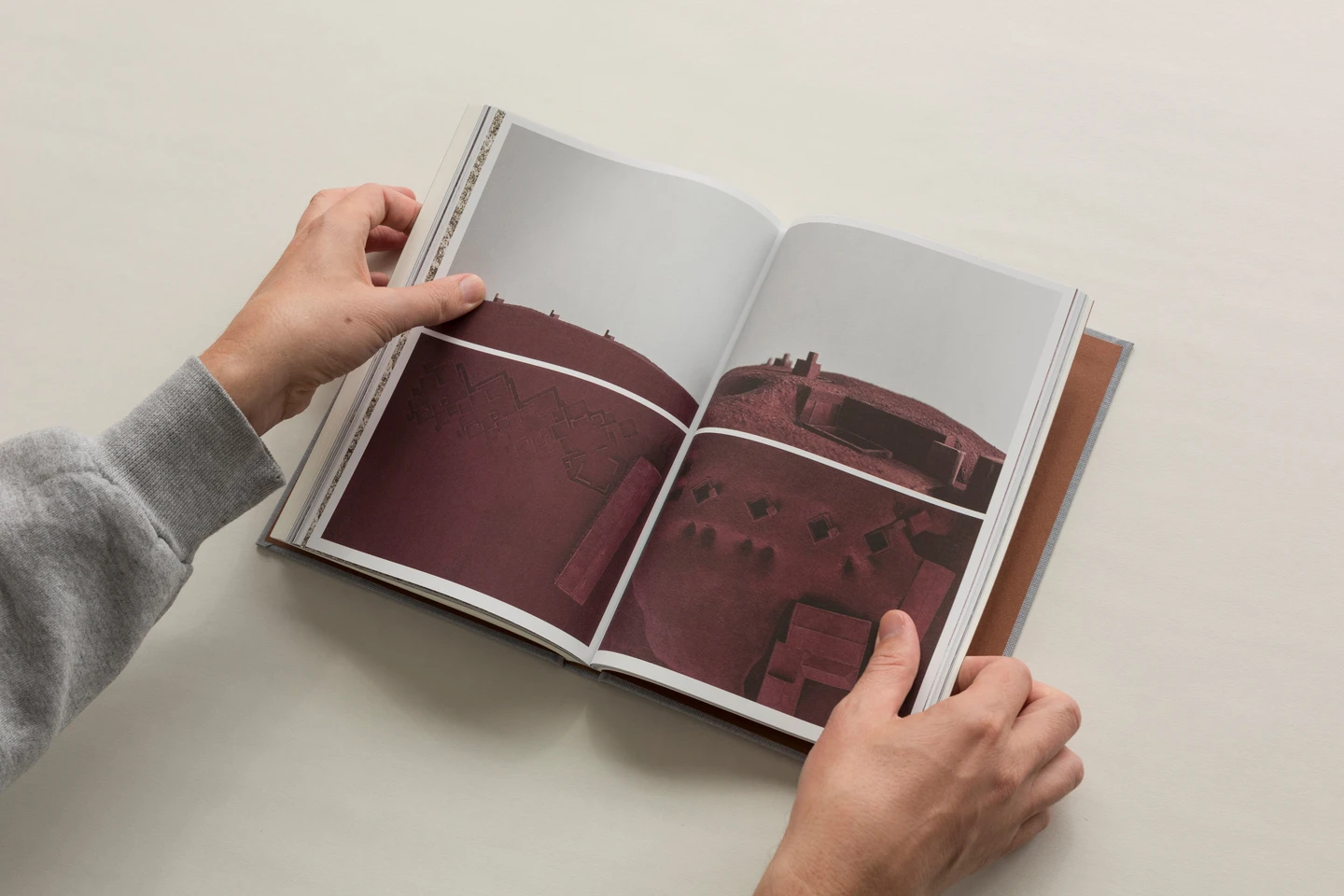
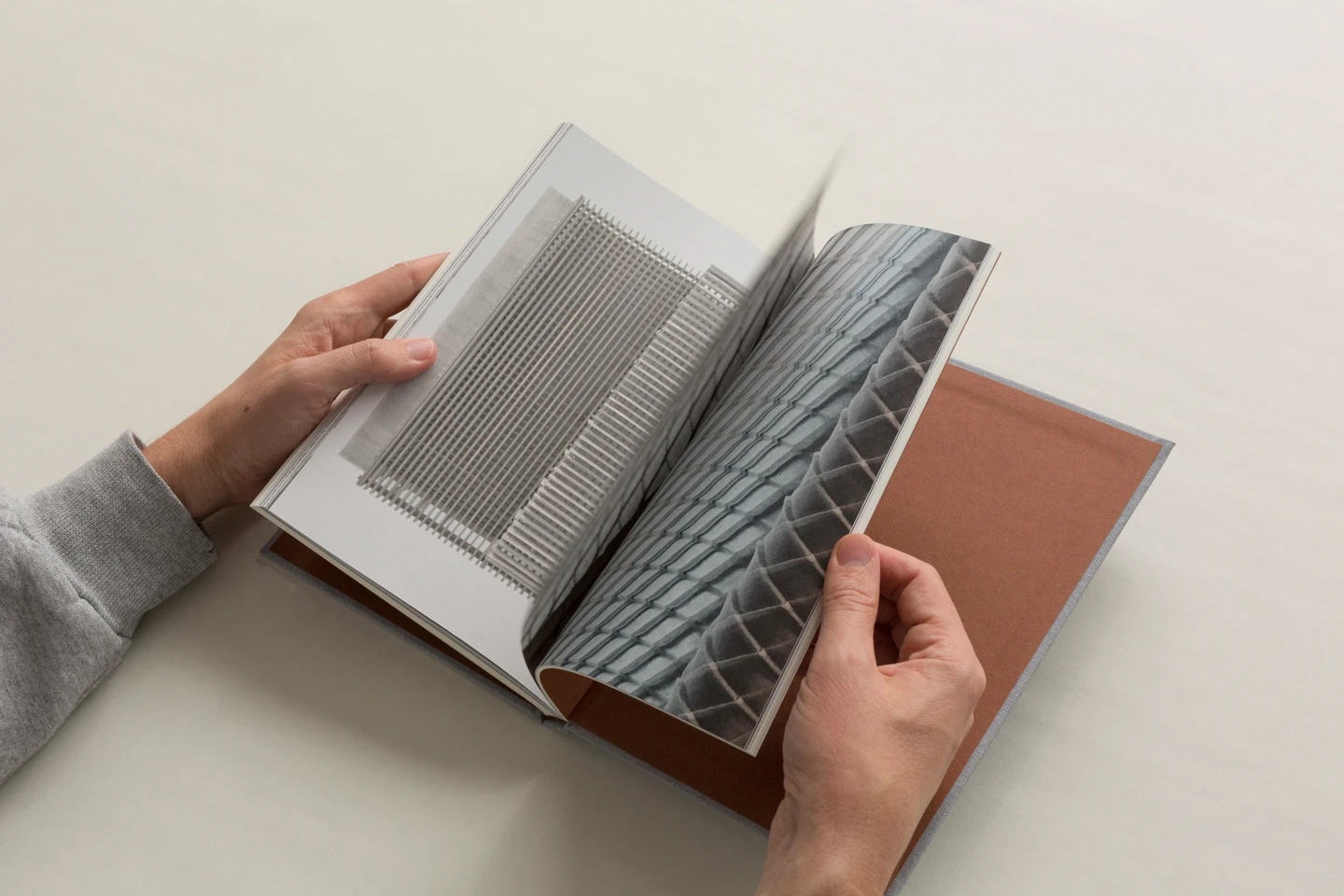
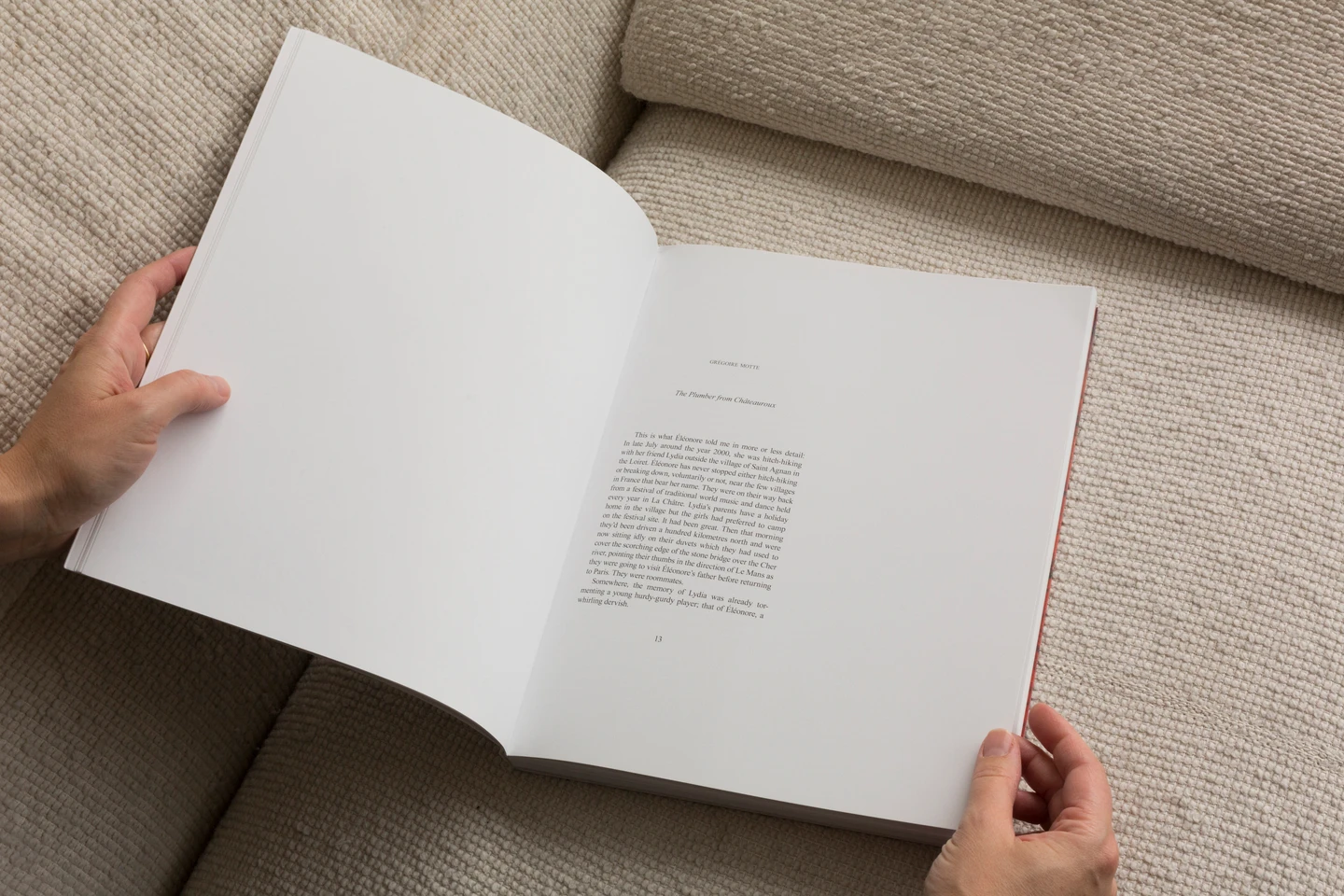
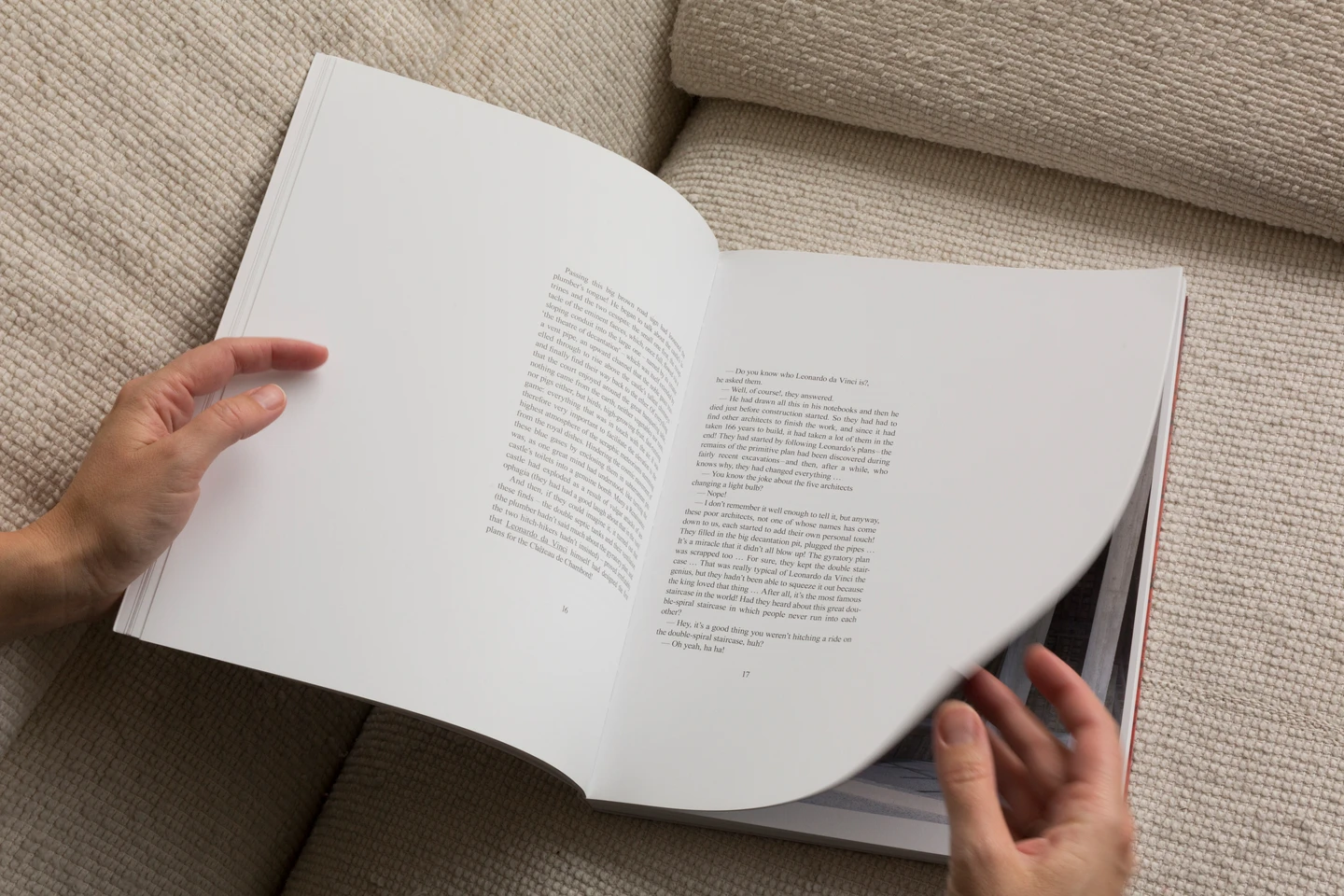
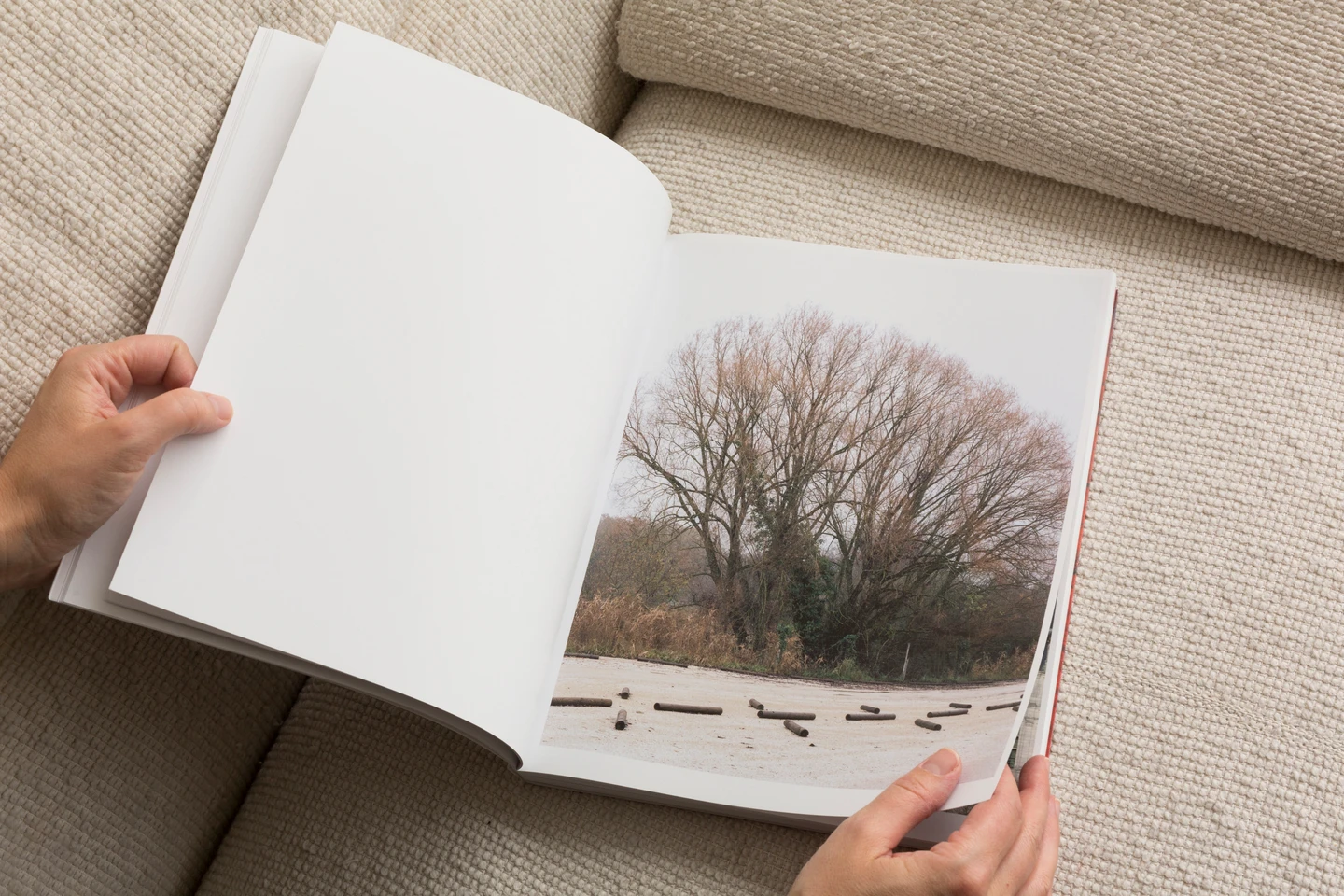
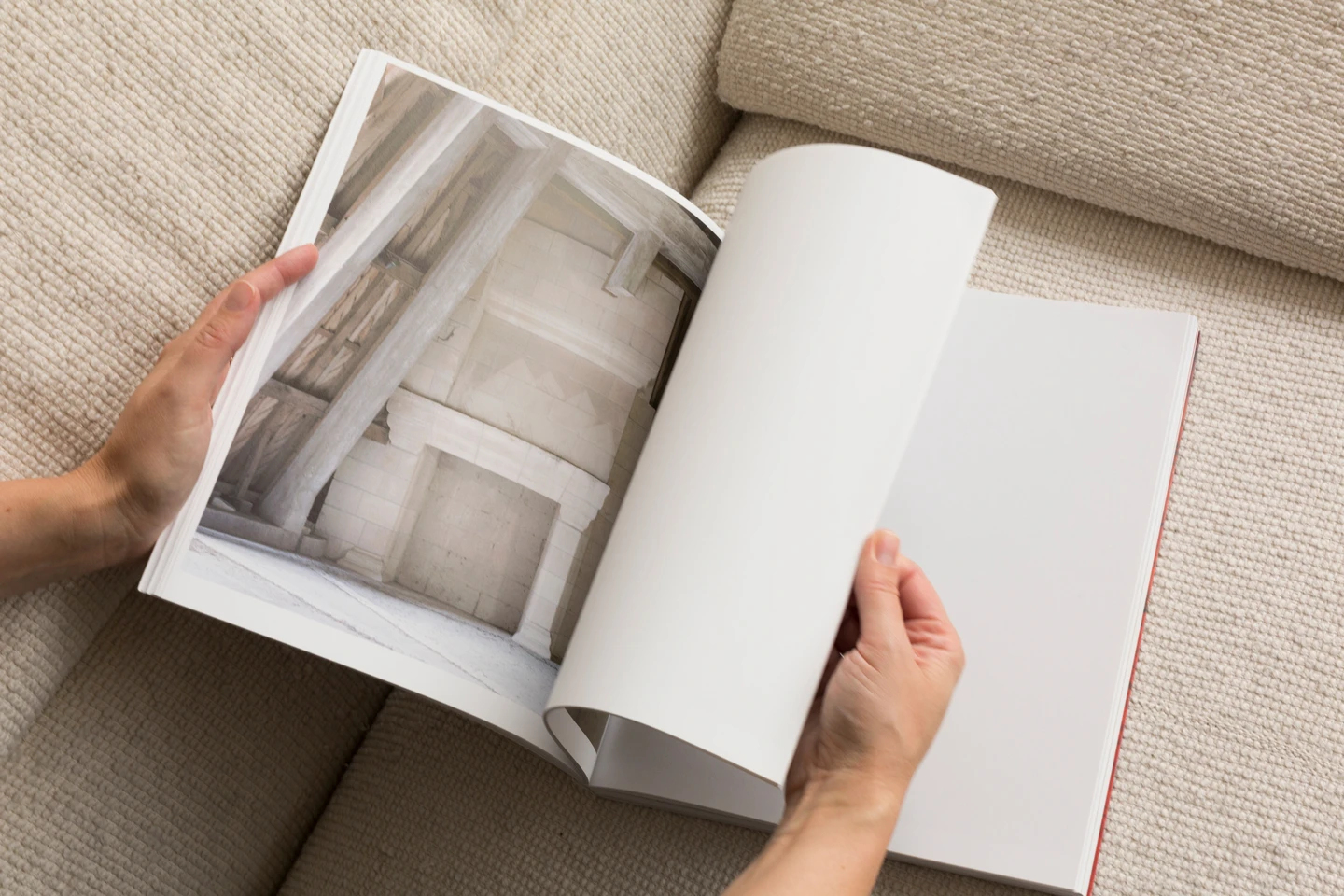
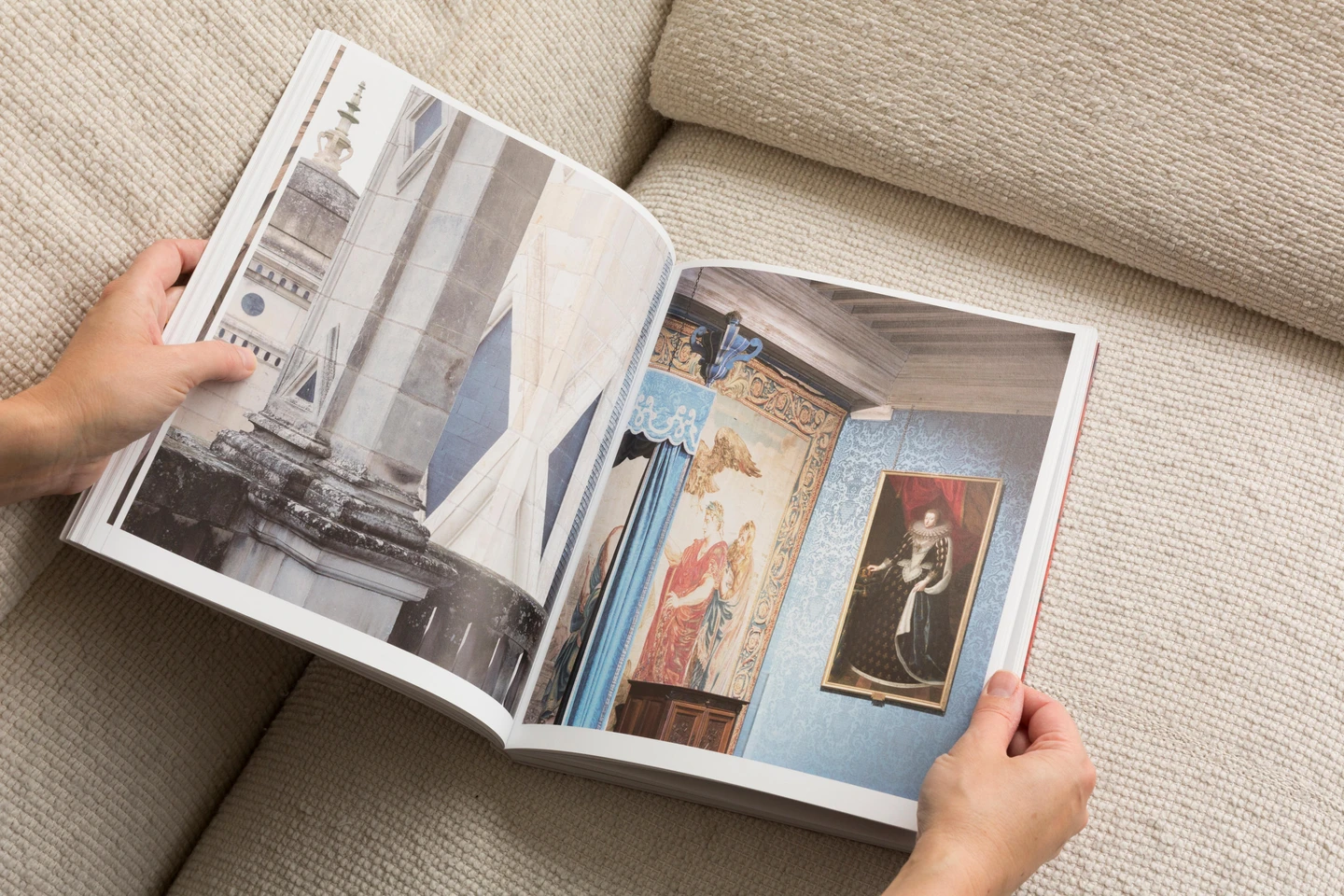
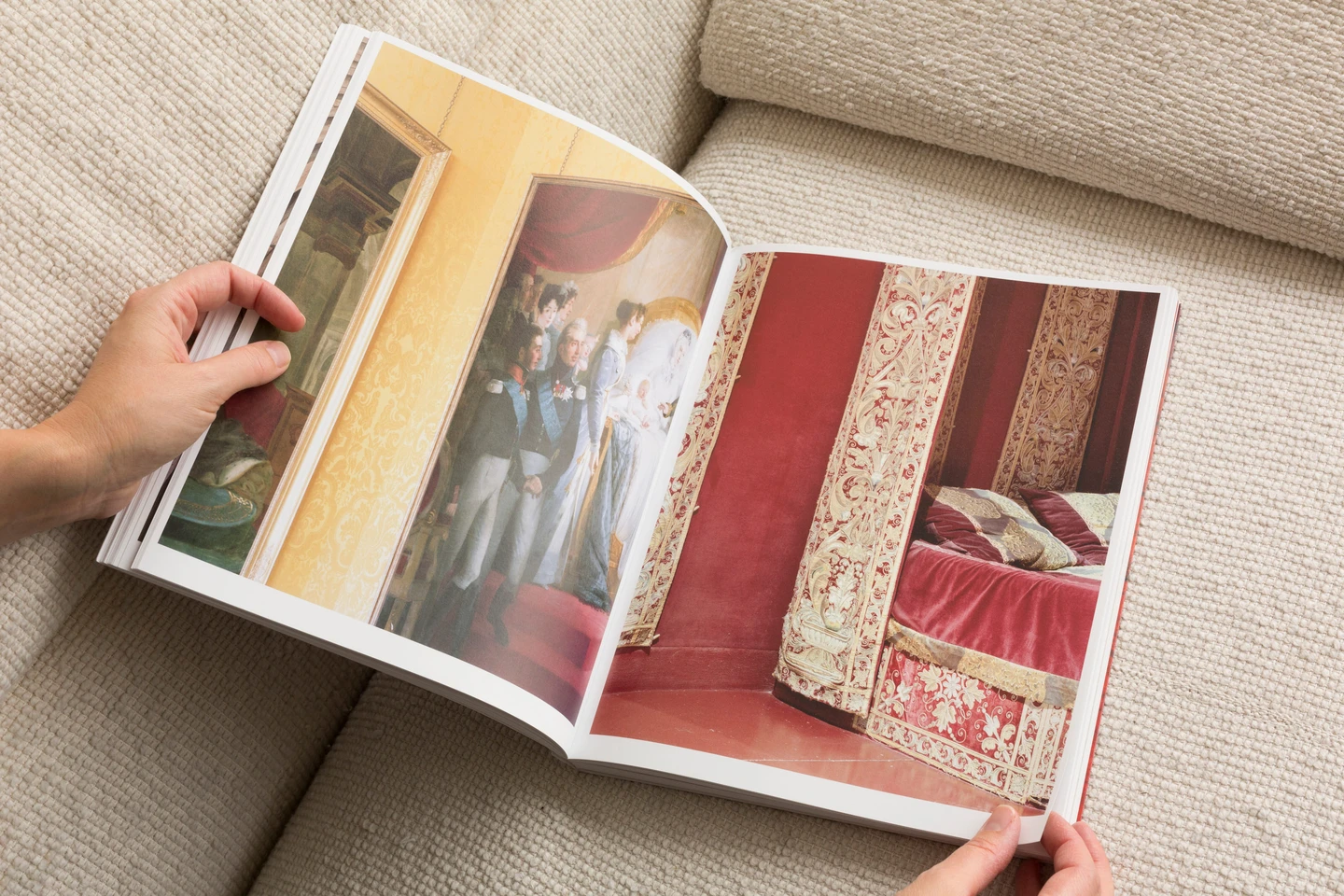
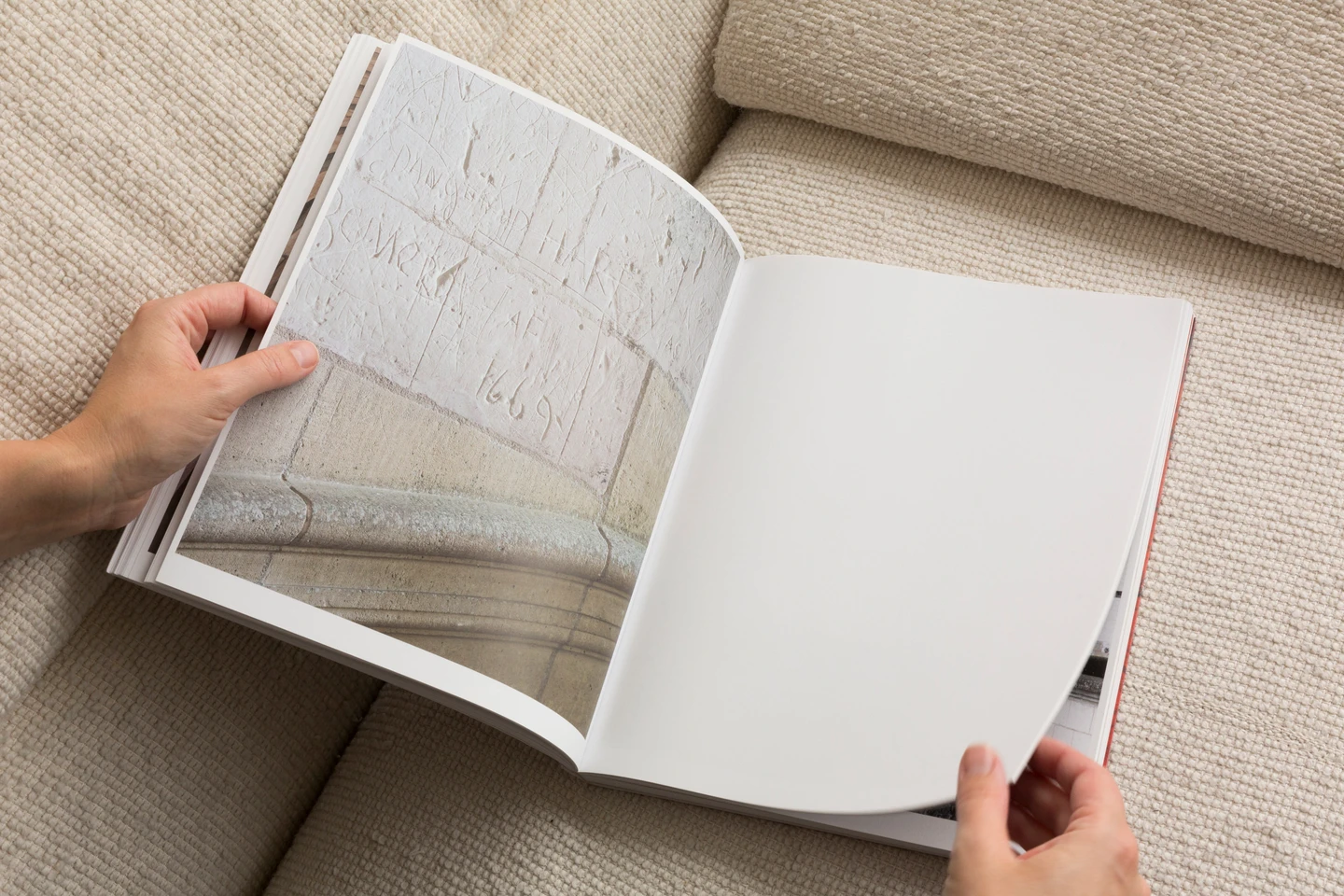
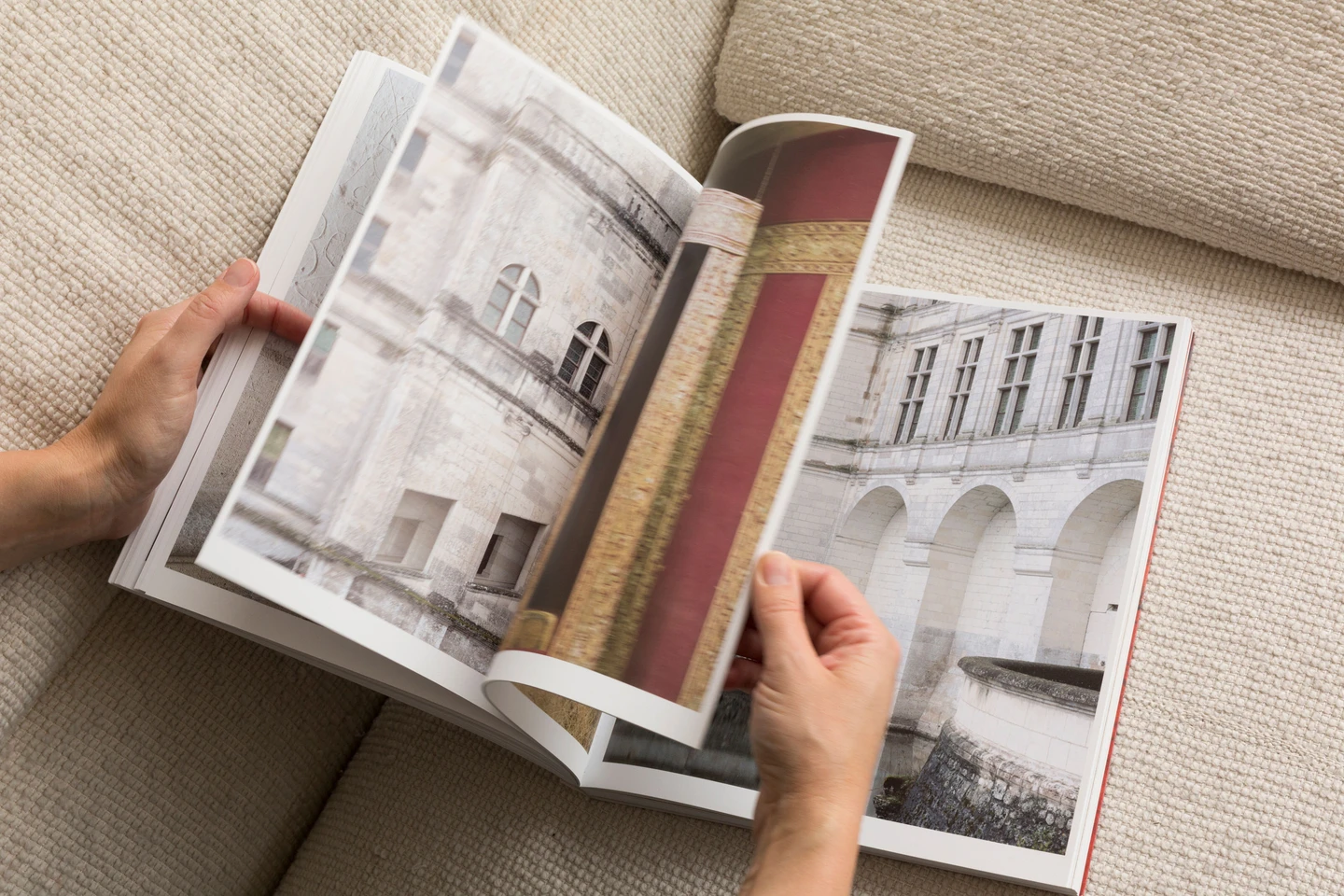
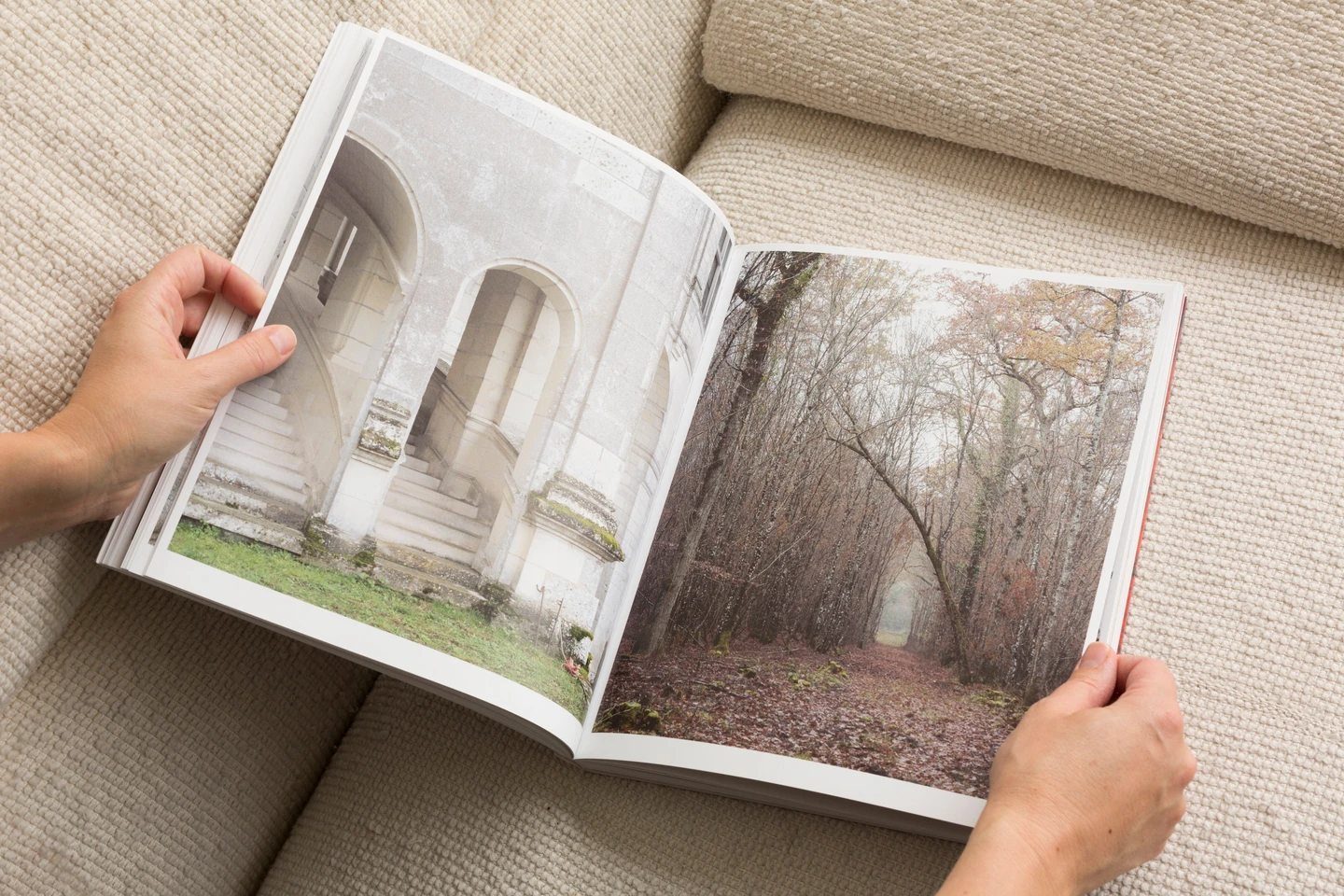
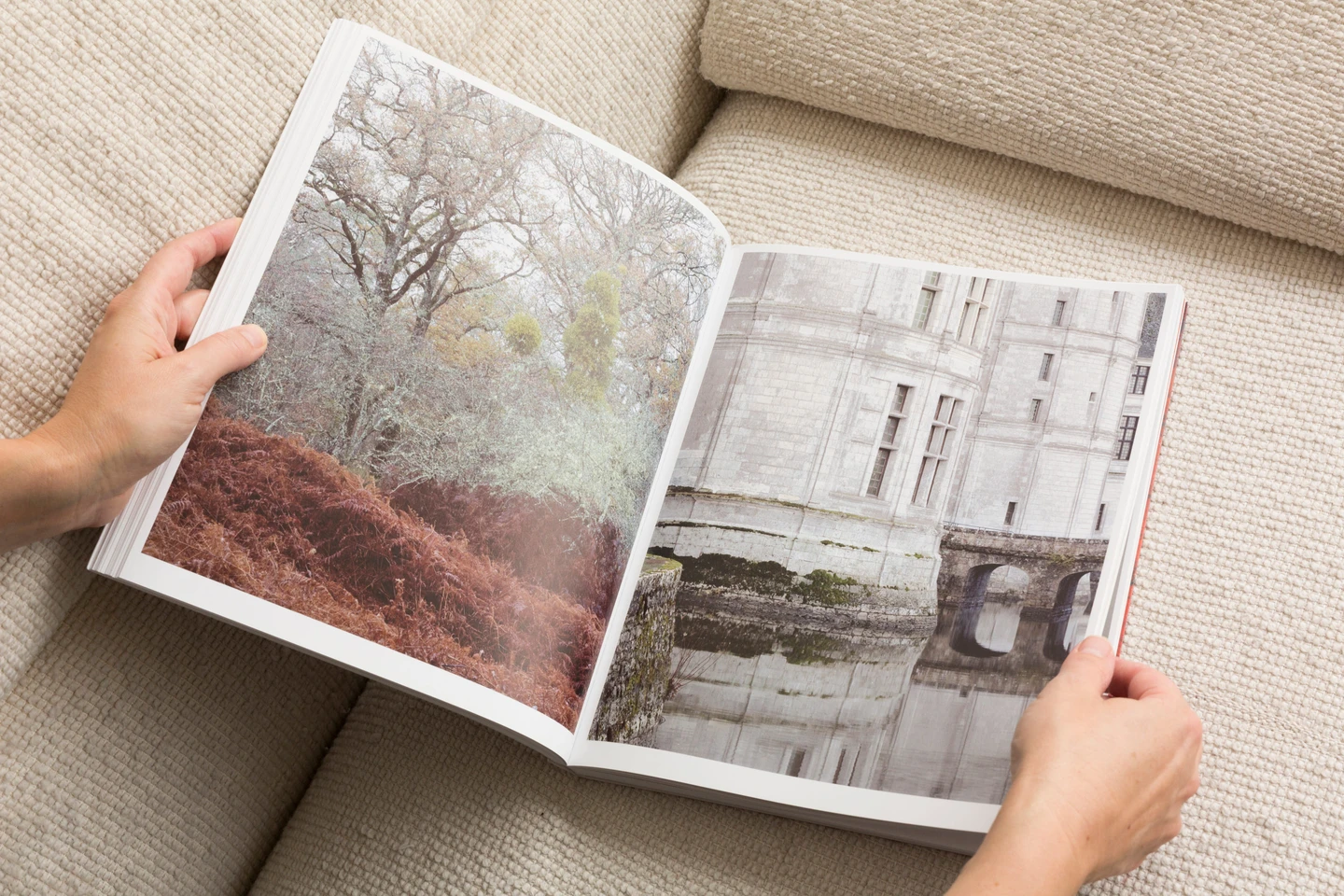
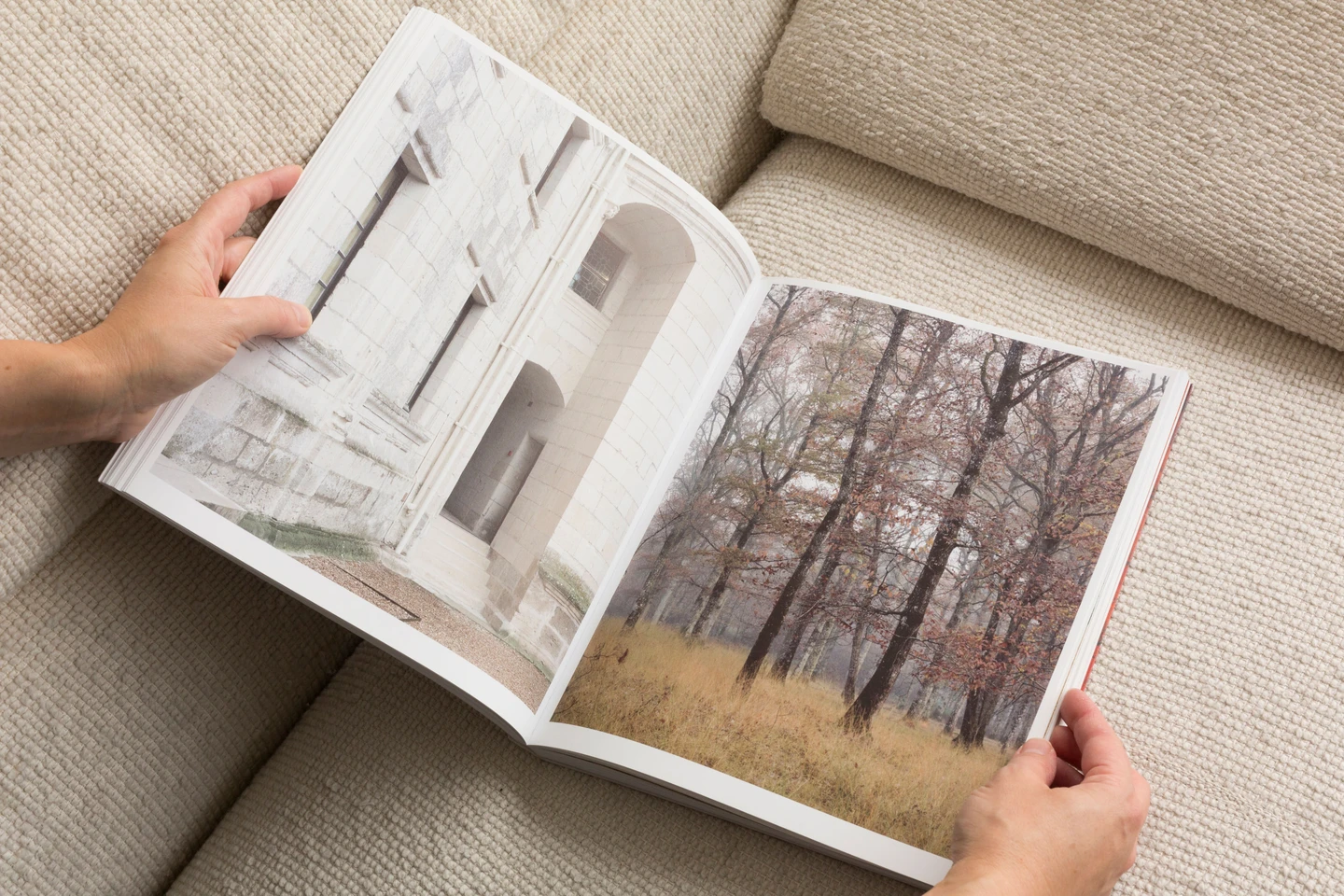
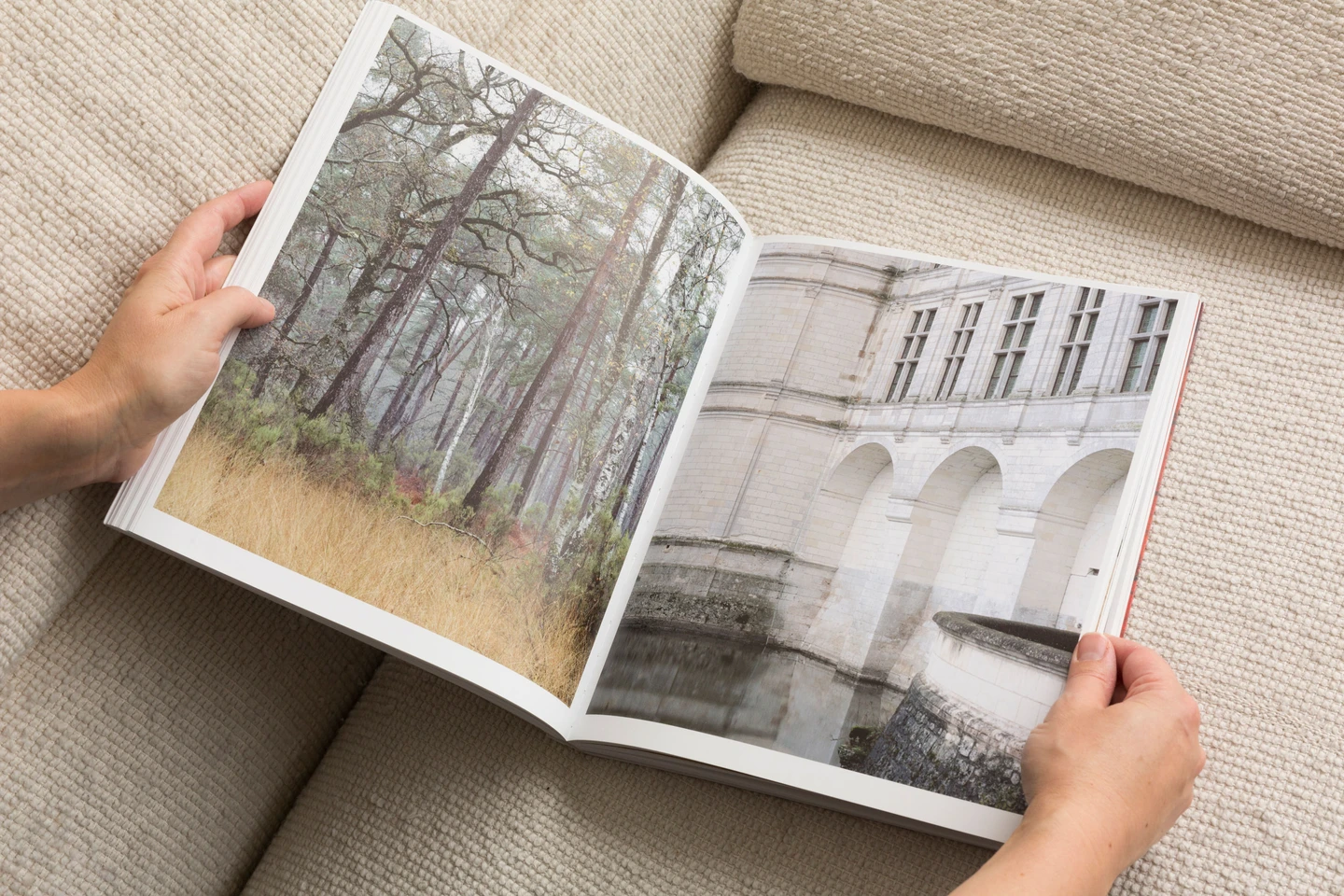
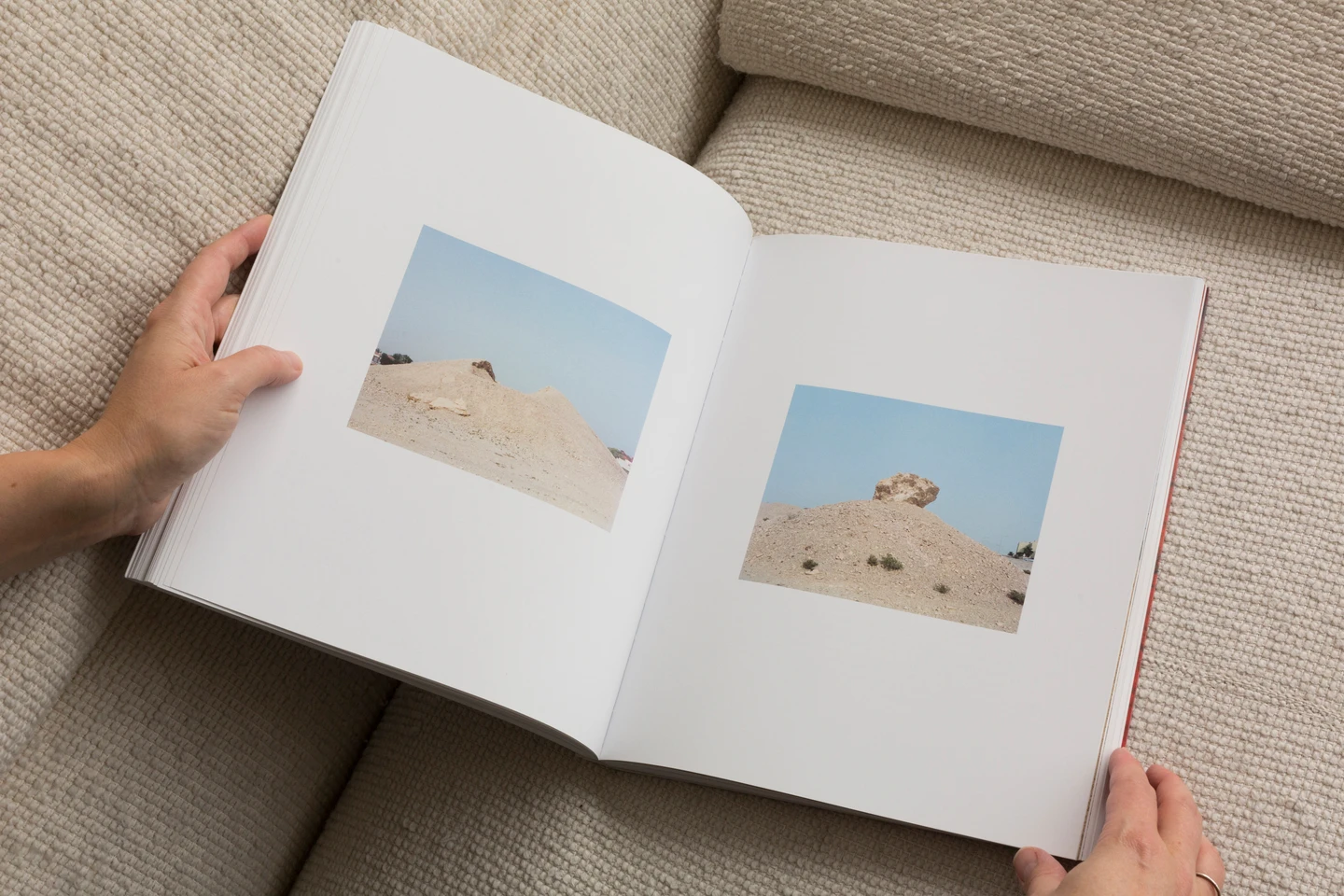
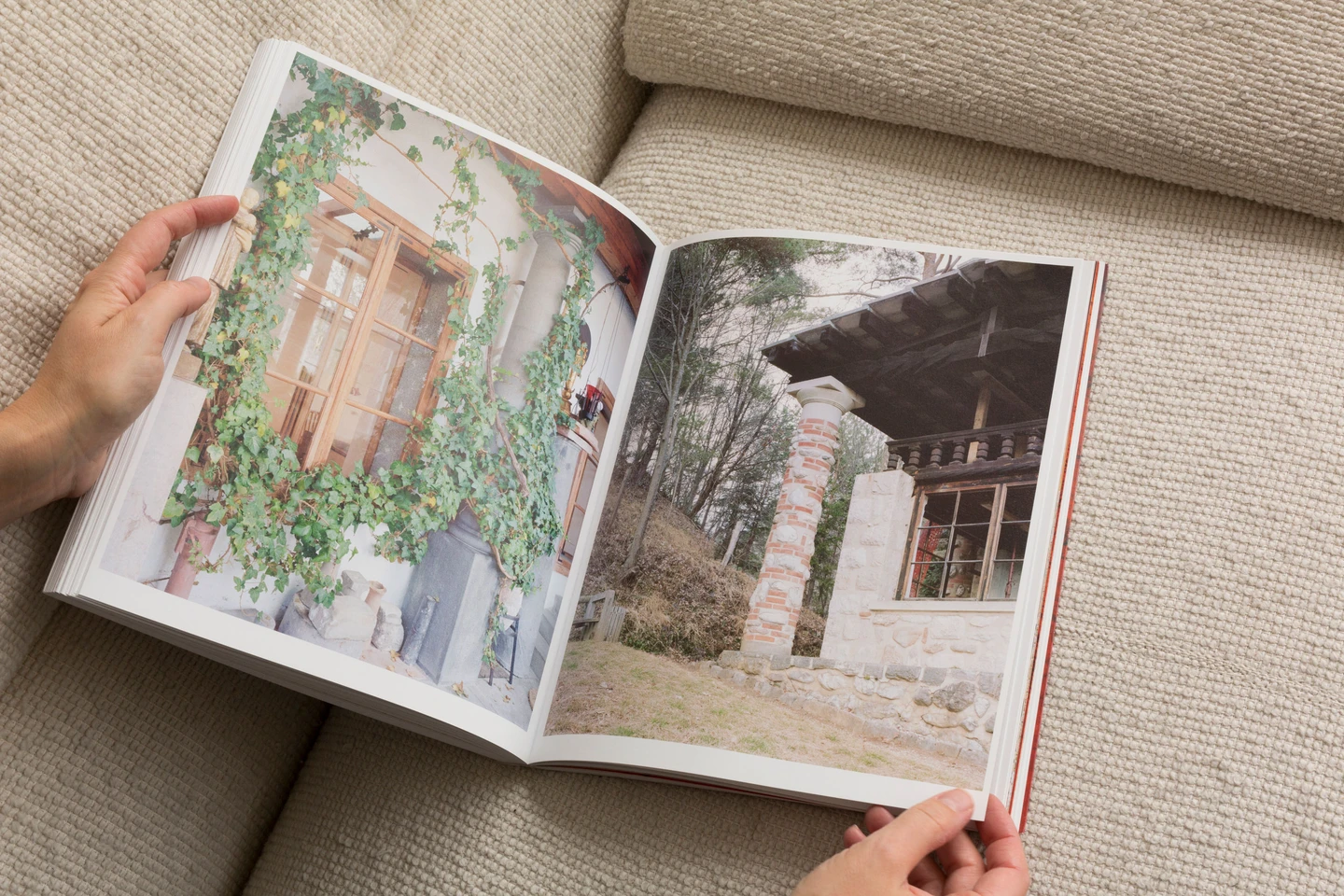
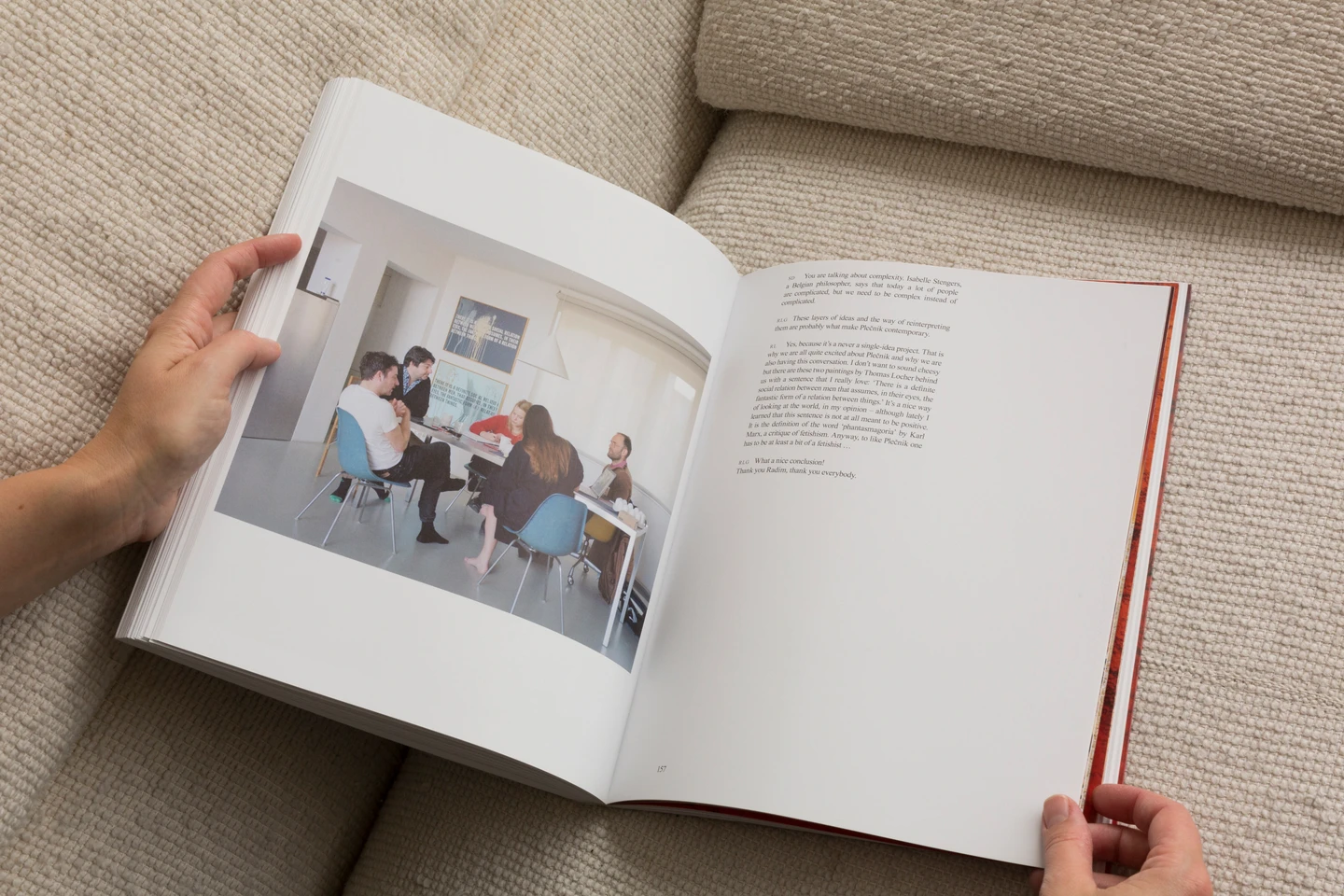
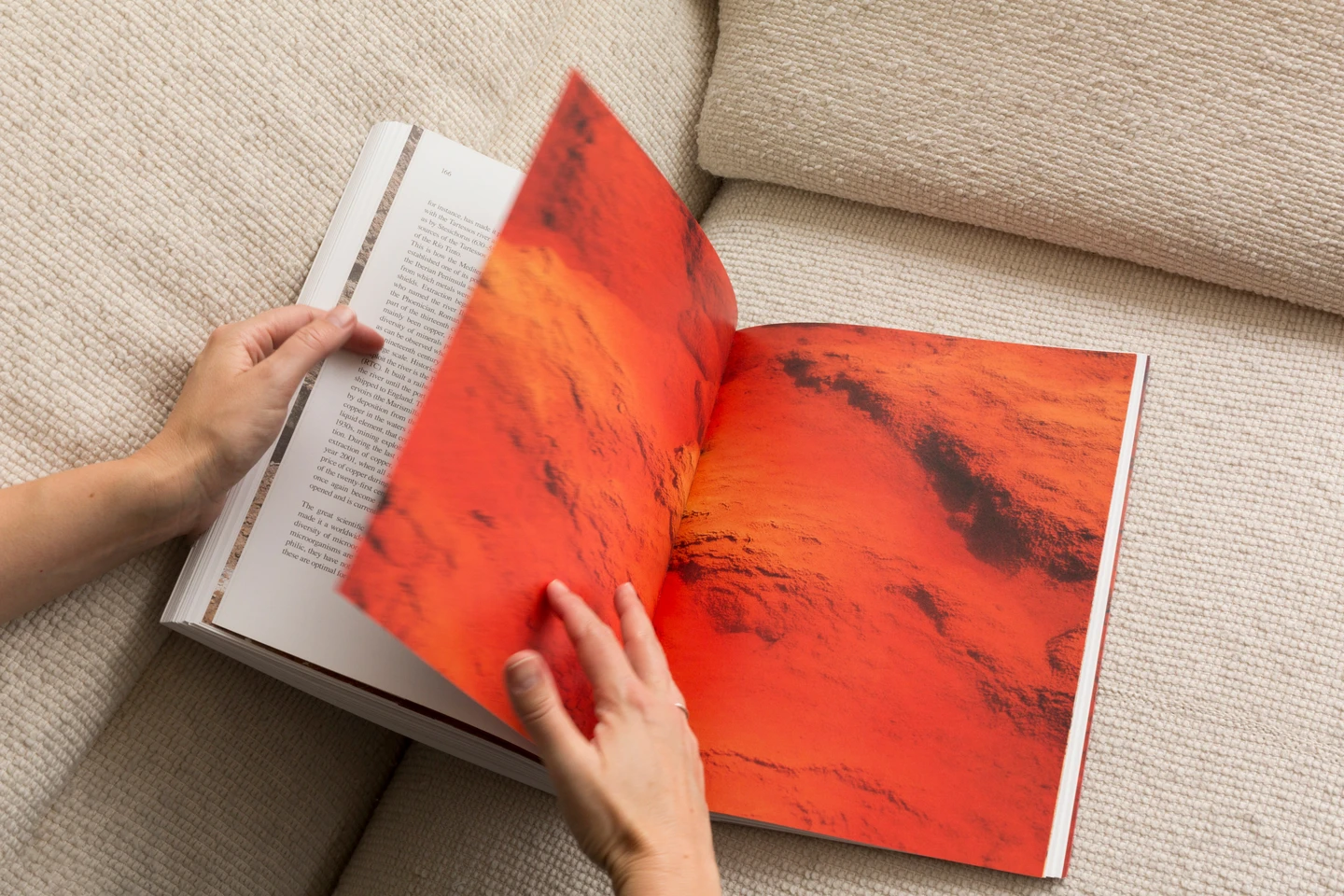
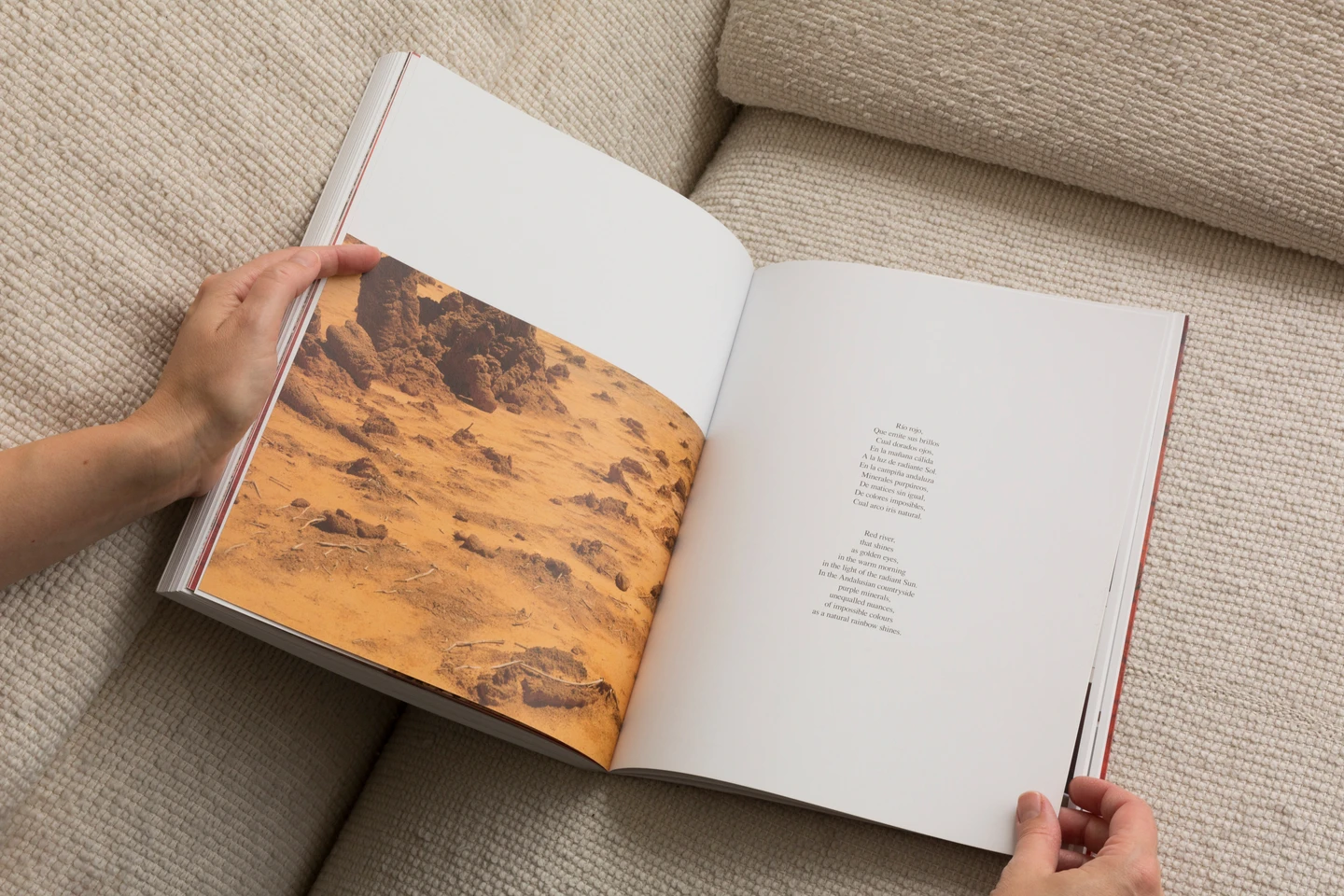
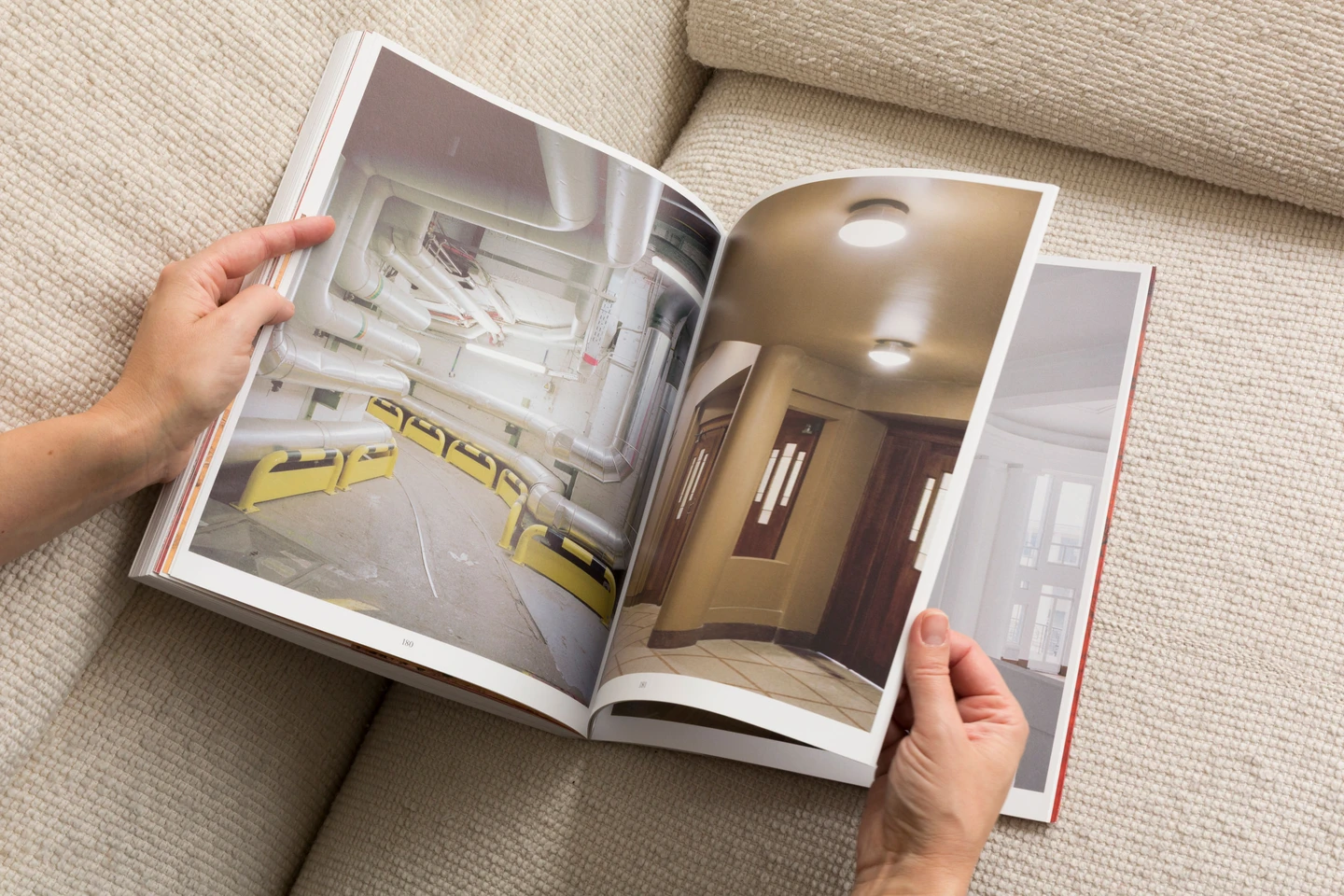
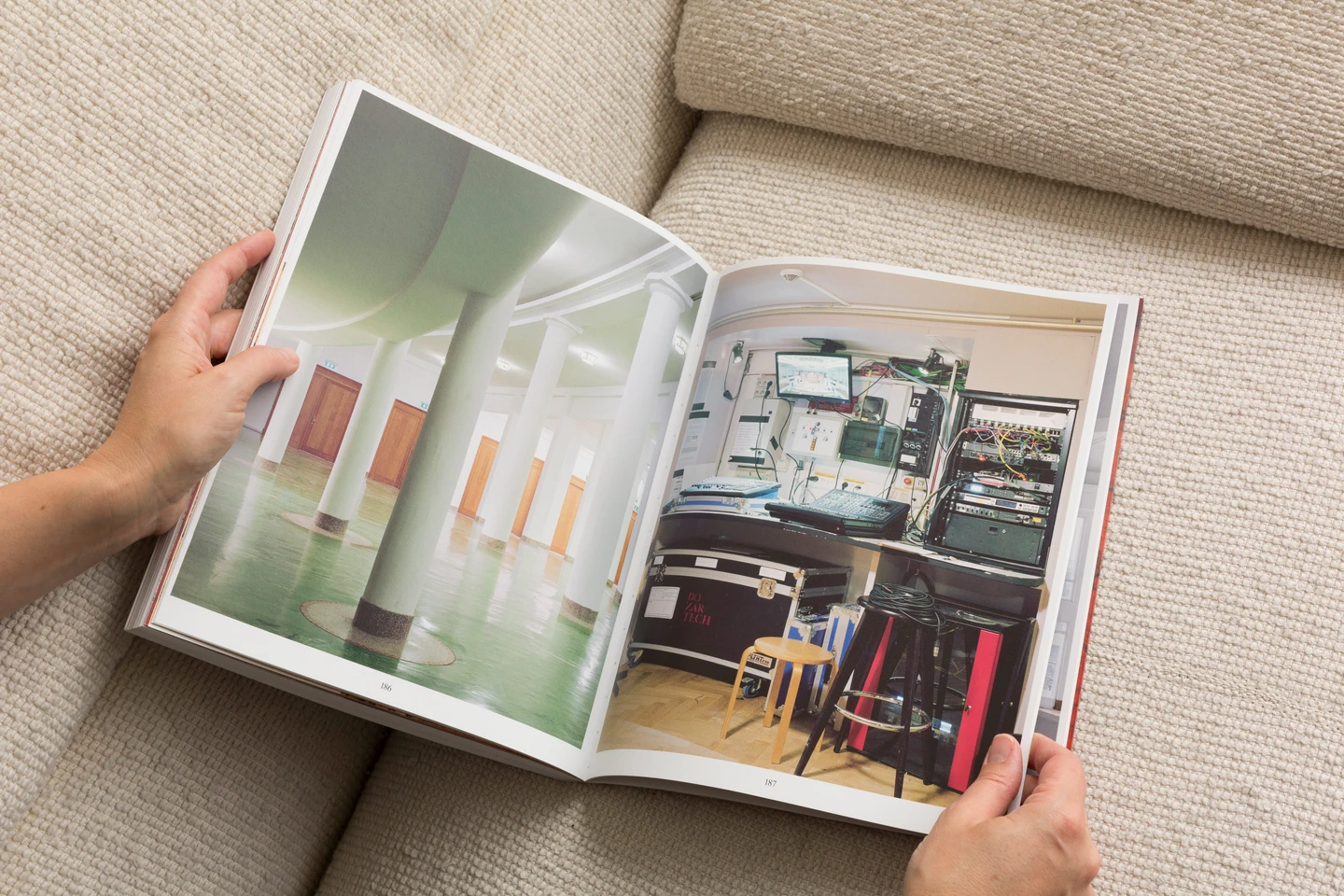
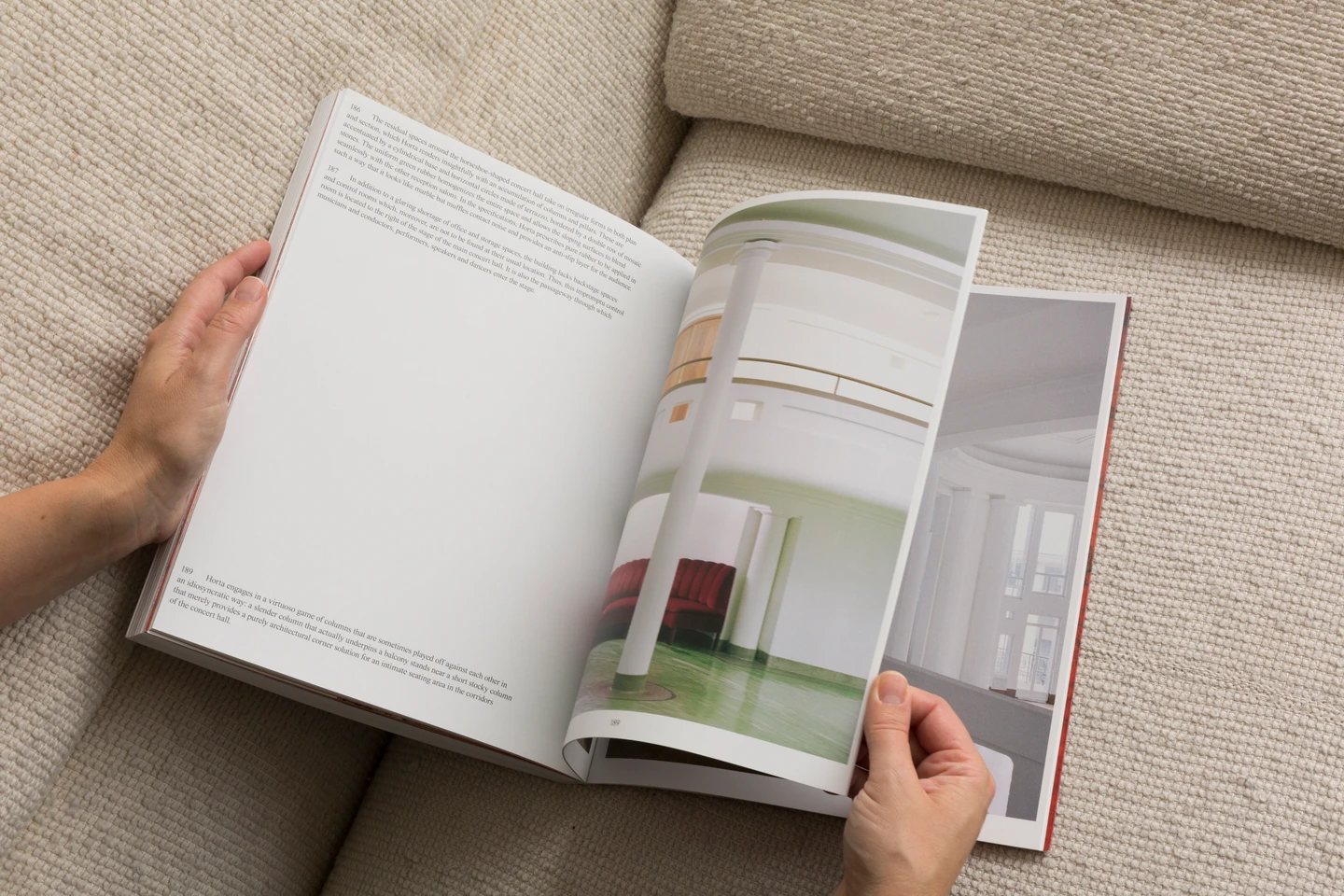
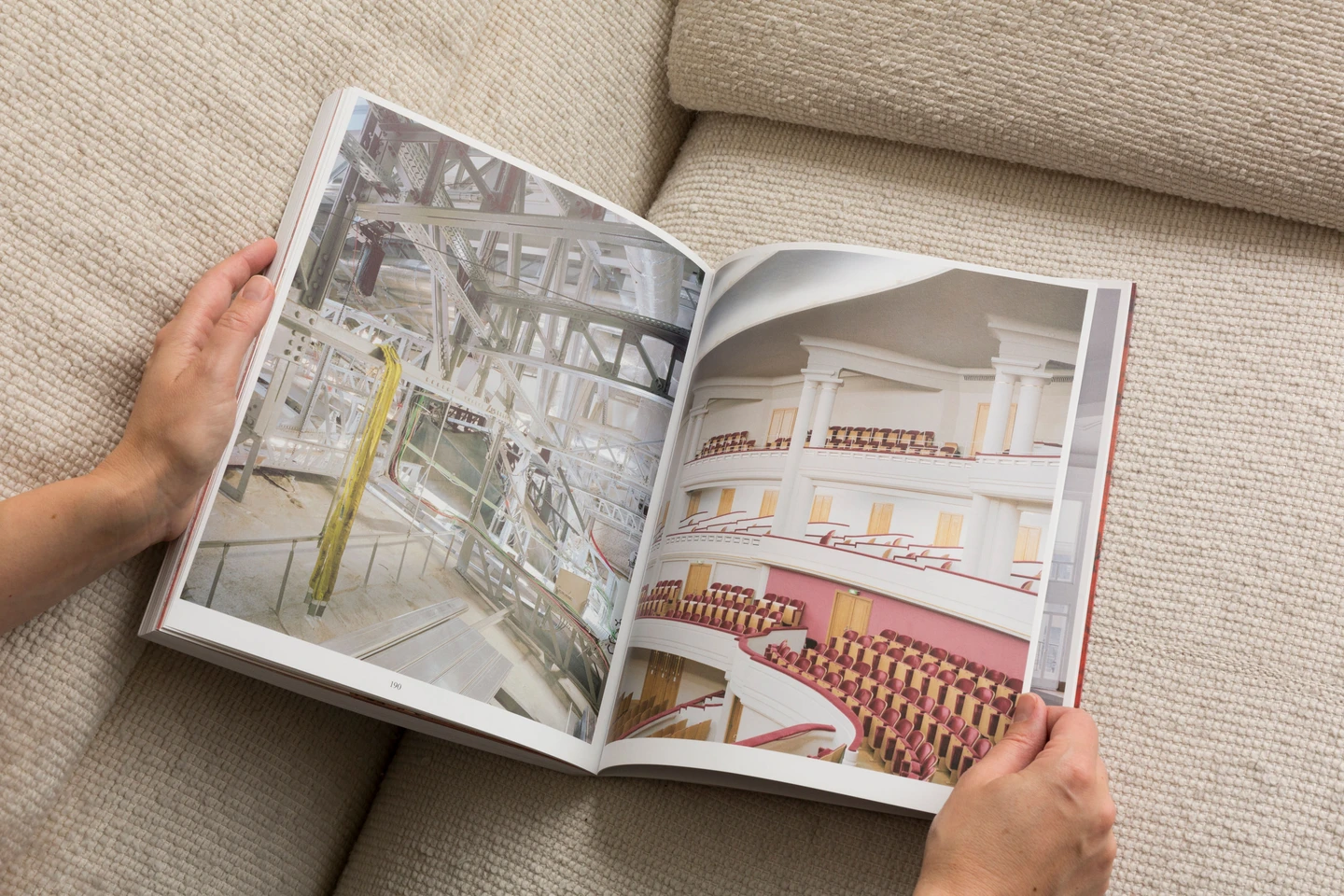
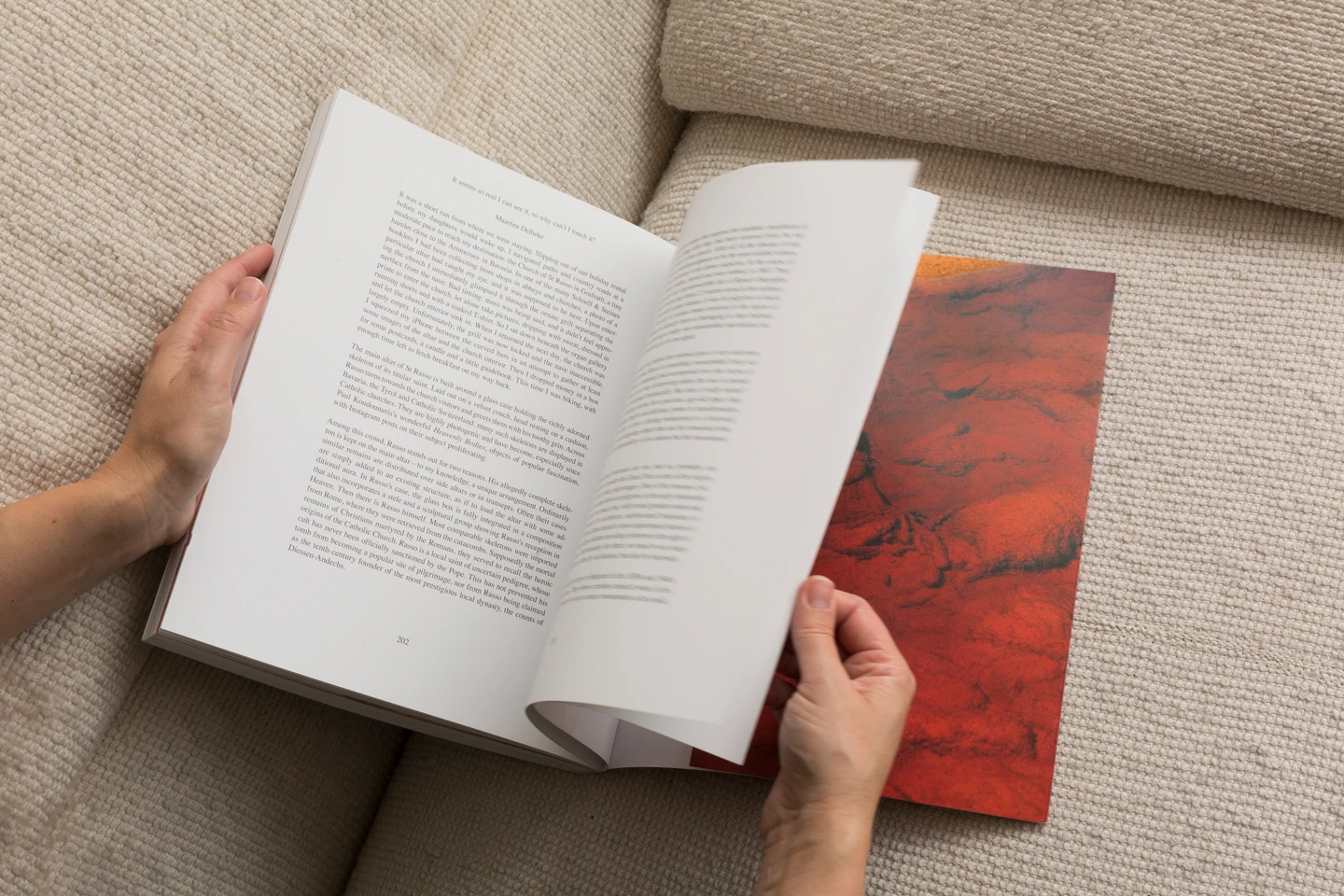
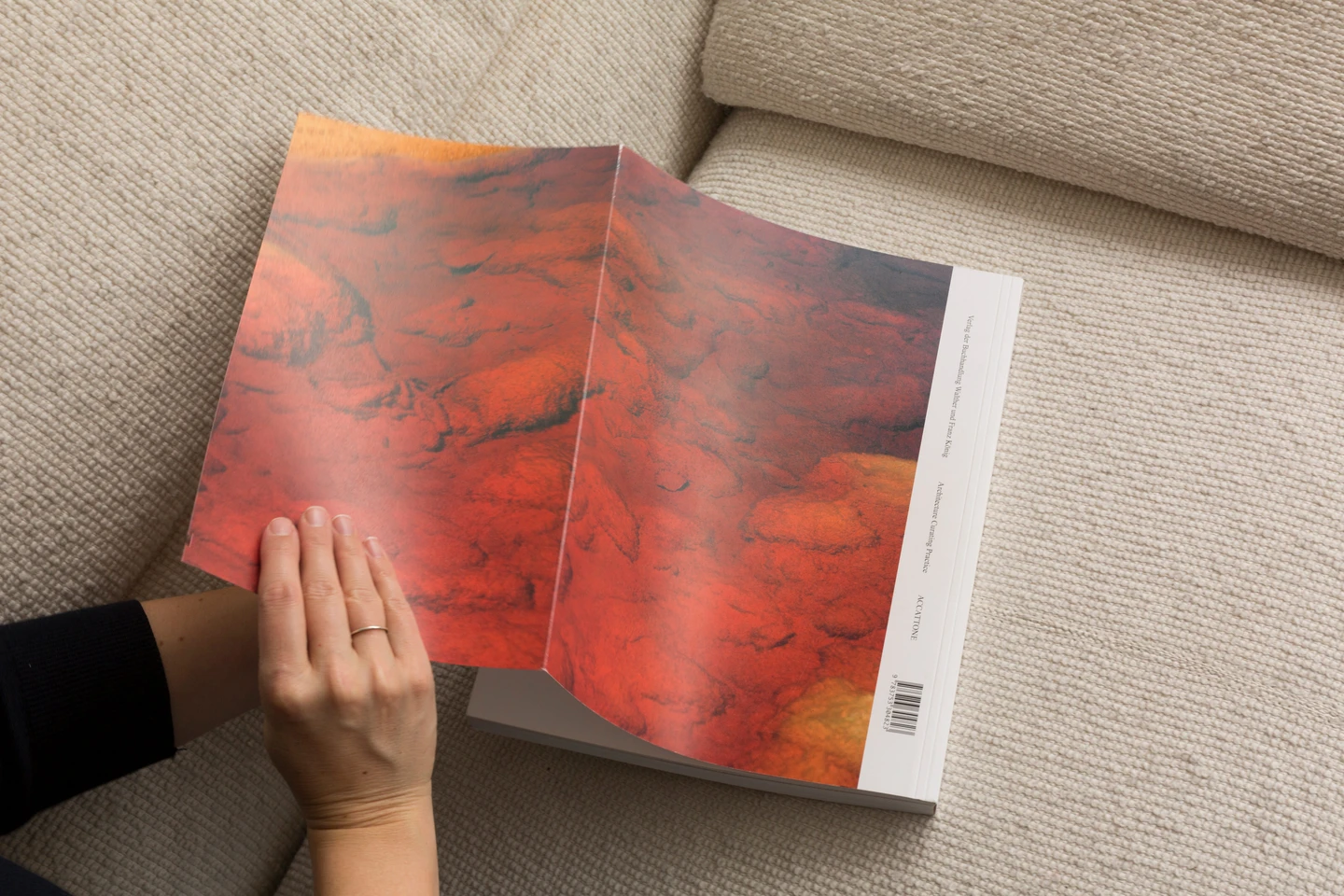
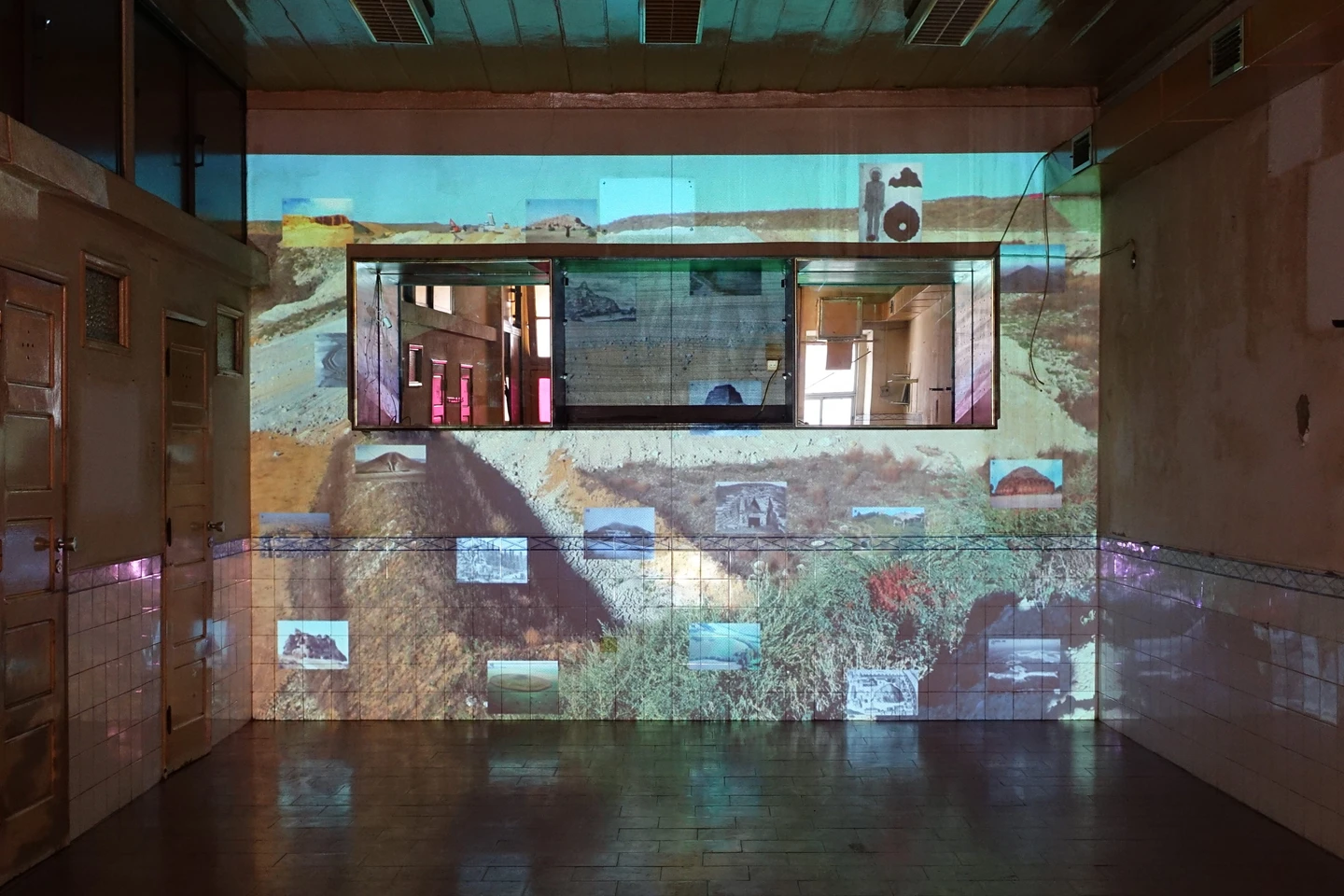
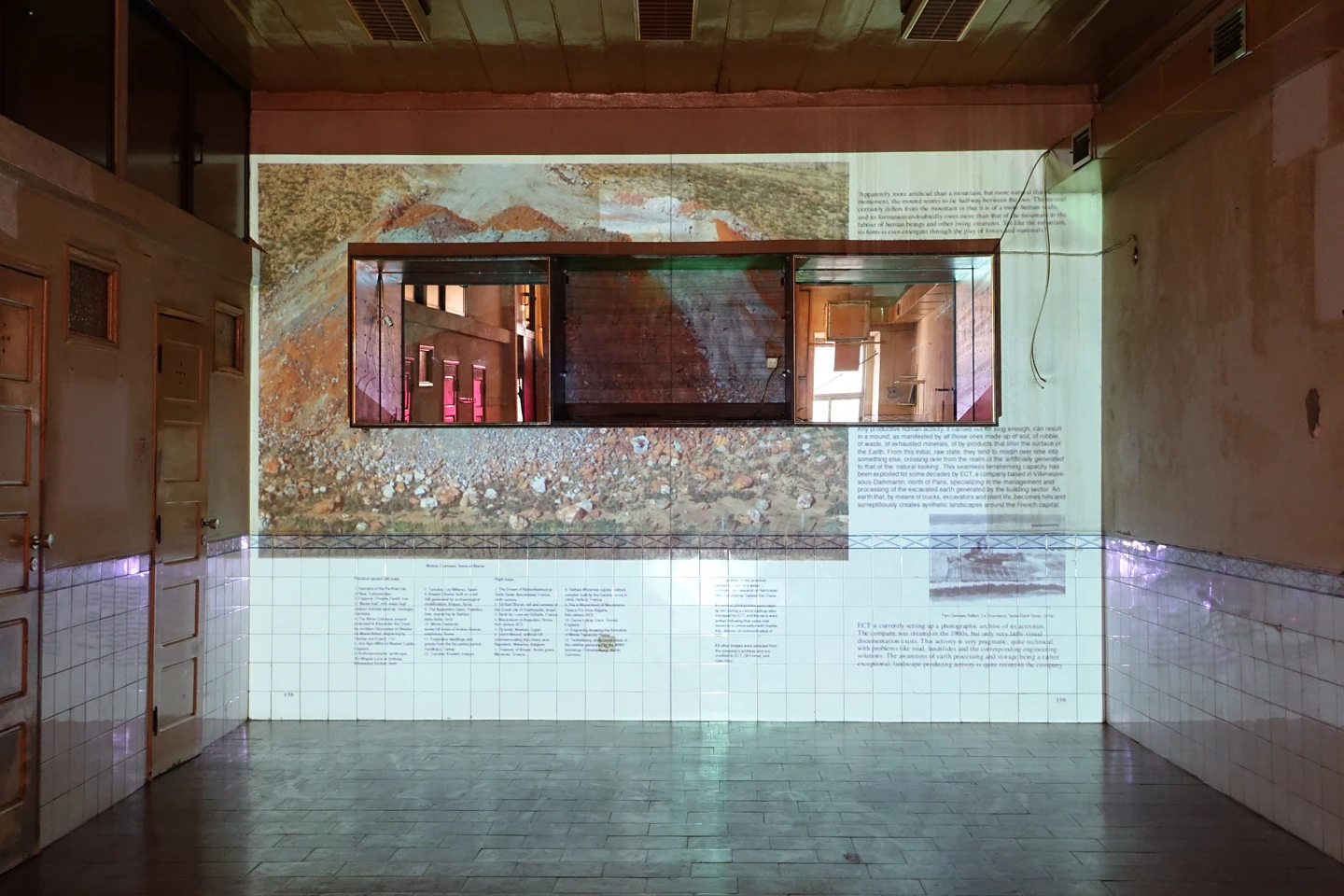
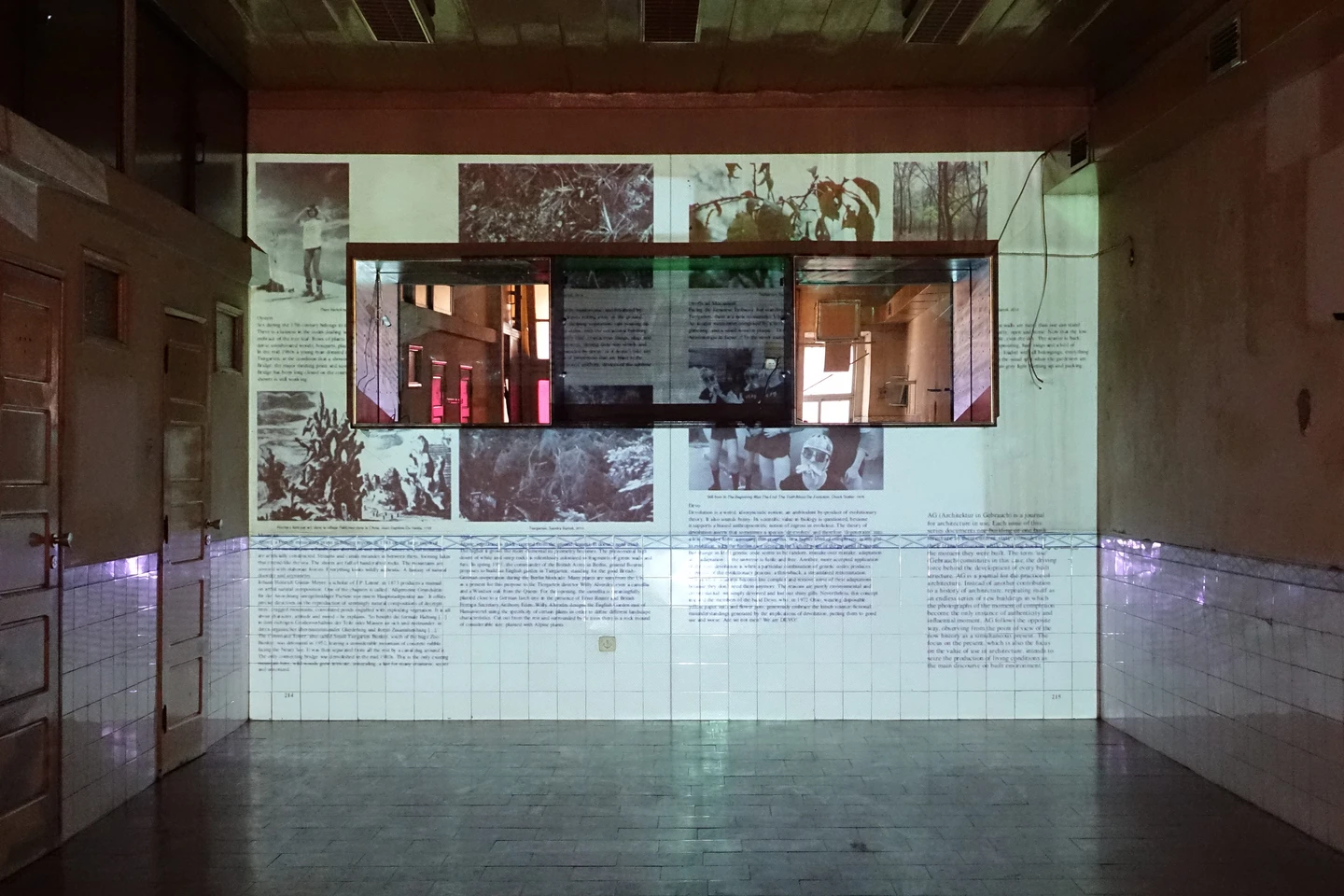
Accattone, ACP, Verlag Der Buchhandlung Walther und Franz König Editorial, Book 2023The story of this book was built over time, through the many exchanges that took place between a photographer, the editors, graphic designers and authors.
Maxime Delvaux is best known for his commissioned photographs of contemporary buildings by architects such as Christian Kerez, Herzog & de Meuron, Bruther, Muoto, Baukunst and 51N4E. As a photographer, he also accompanies architects in the research process to design buildings and urban spaces, exhibitions and pedagogical experiments, as demonstrated by his long-lasting collaborations with Central ofaau and MBL architects. In this book, Delvaux pursues a more solitary trajectory, visiting buildings and sites which cover a much wider historical span and resonate with his personal fascinations.
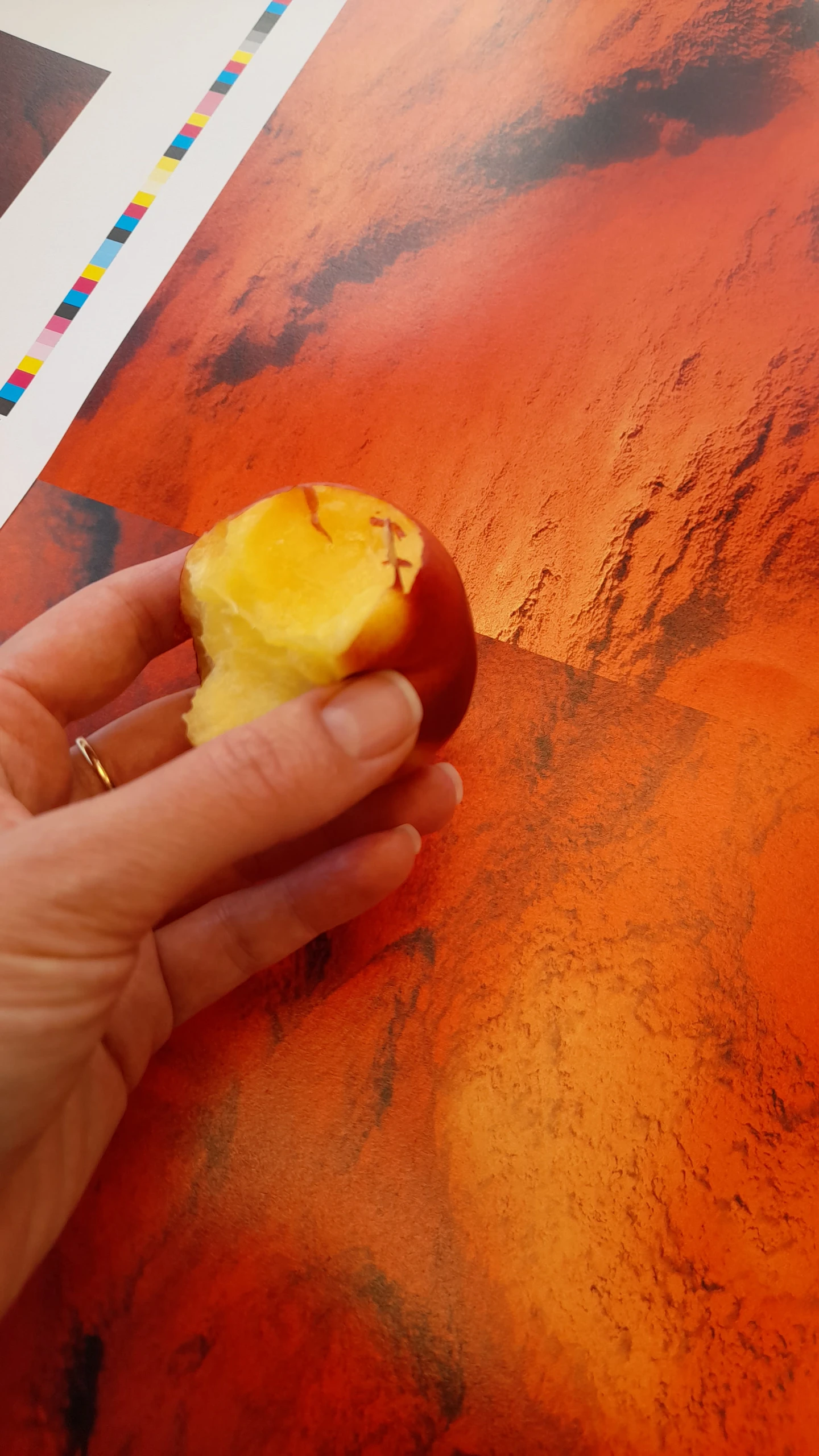
The publication is structured around five photographic series, each devoted to a particular building, site or architect: Château de Chambord in France, Dilmun Burial Mounds in Bahrain, Jože Plečnik’s buildings in and around Ljubljana, Río Tinto in Spain, and Victor Horta’s Centre for Fine Arts in Brussels. It is, especially, a book of (hi)stories in which the series by Maxime Delvaux are accompanied by texts. For these, various authors have been invited to react to the images with the idea of experimenting with the text: fiction, historical essay, round-table discussion, scientific text and photonovel. Graphic designers played with text and images to give them form. The reader is in turn invited to create possible alliances between images and texts. Like Maxime Delvaux’s photographic approach, these texts and their articulation with the photographs are specific to each subject, illustrating five ways of showing and telling about places near and far.
-
-
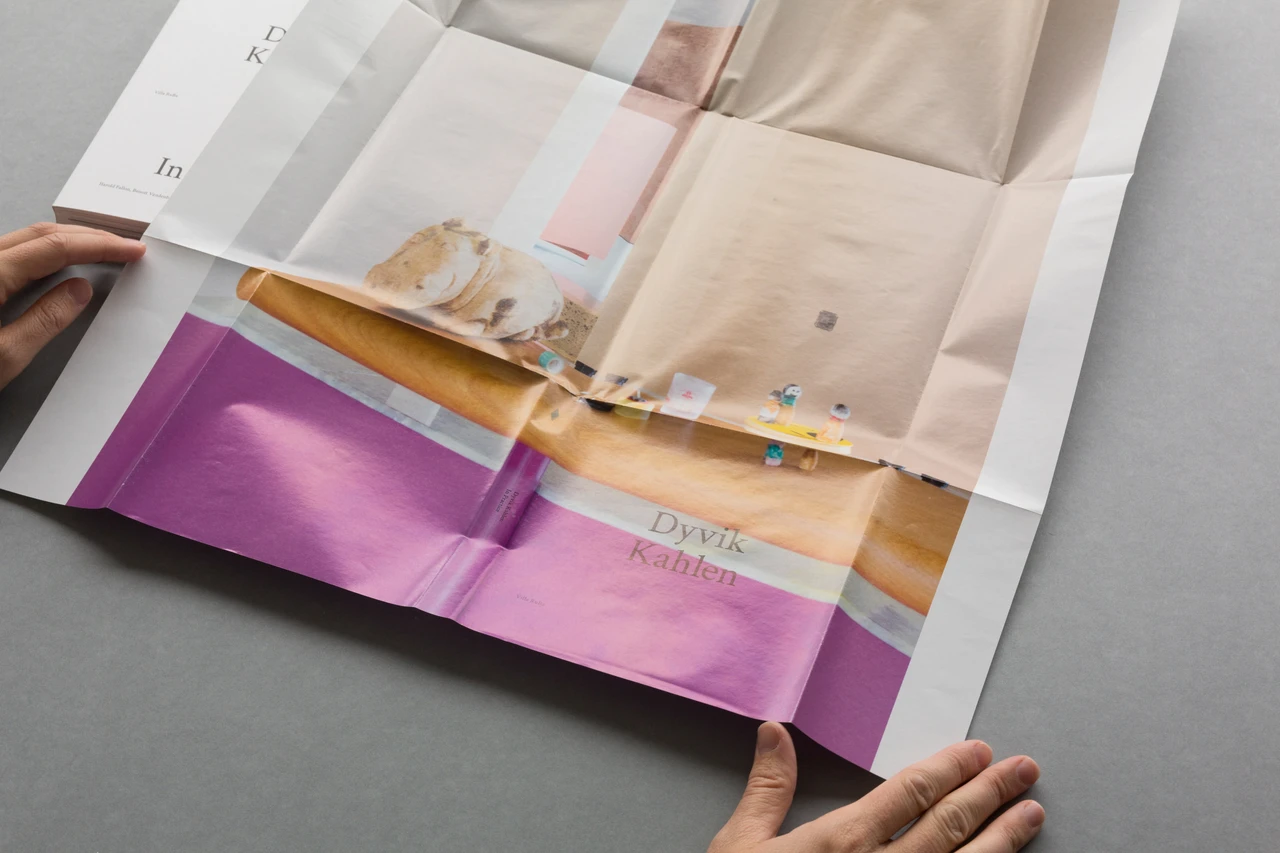
Dyvik Kahlen in Practice
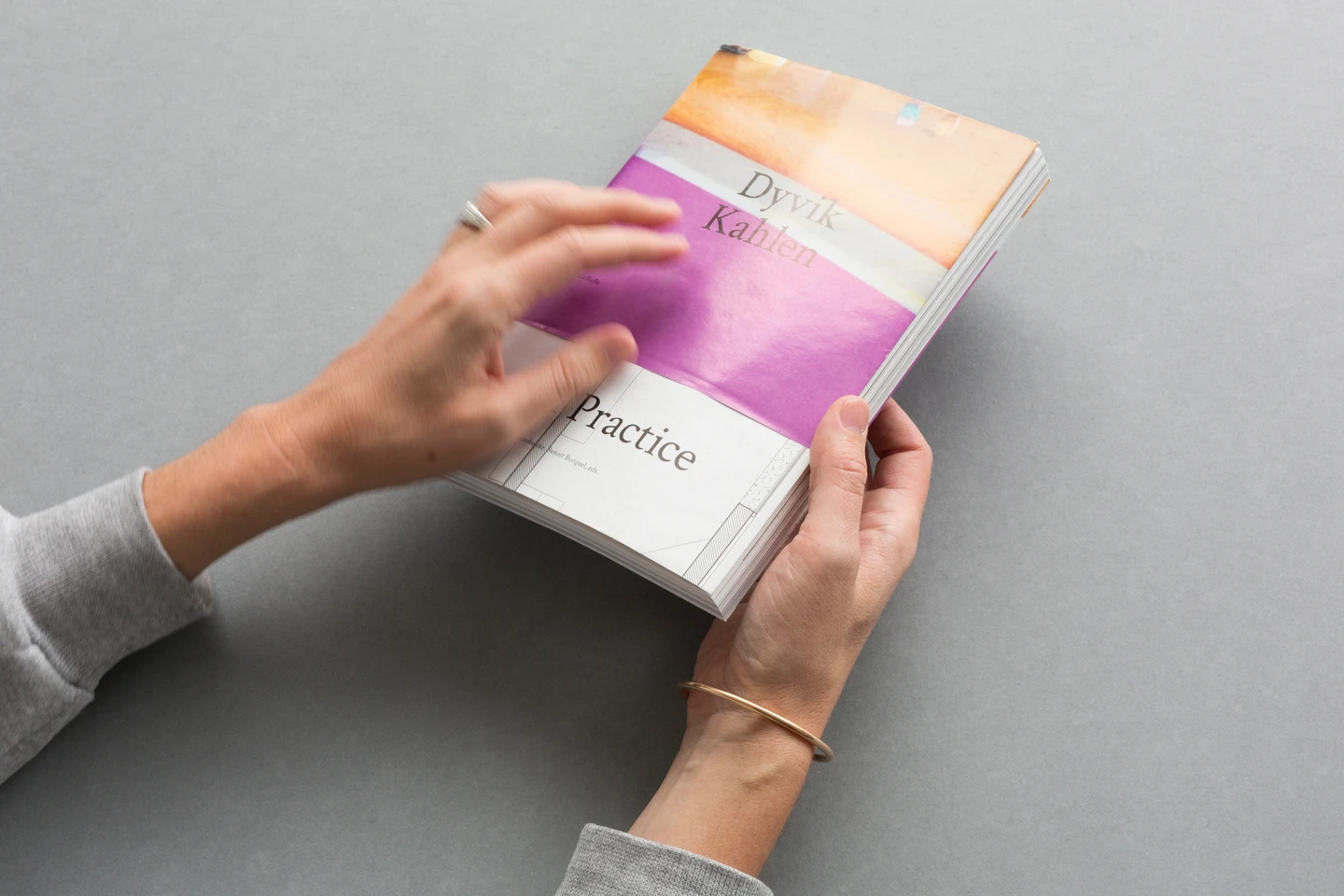
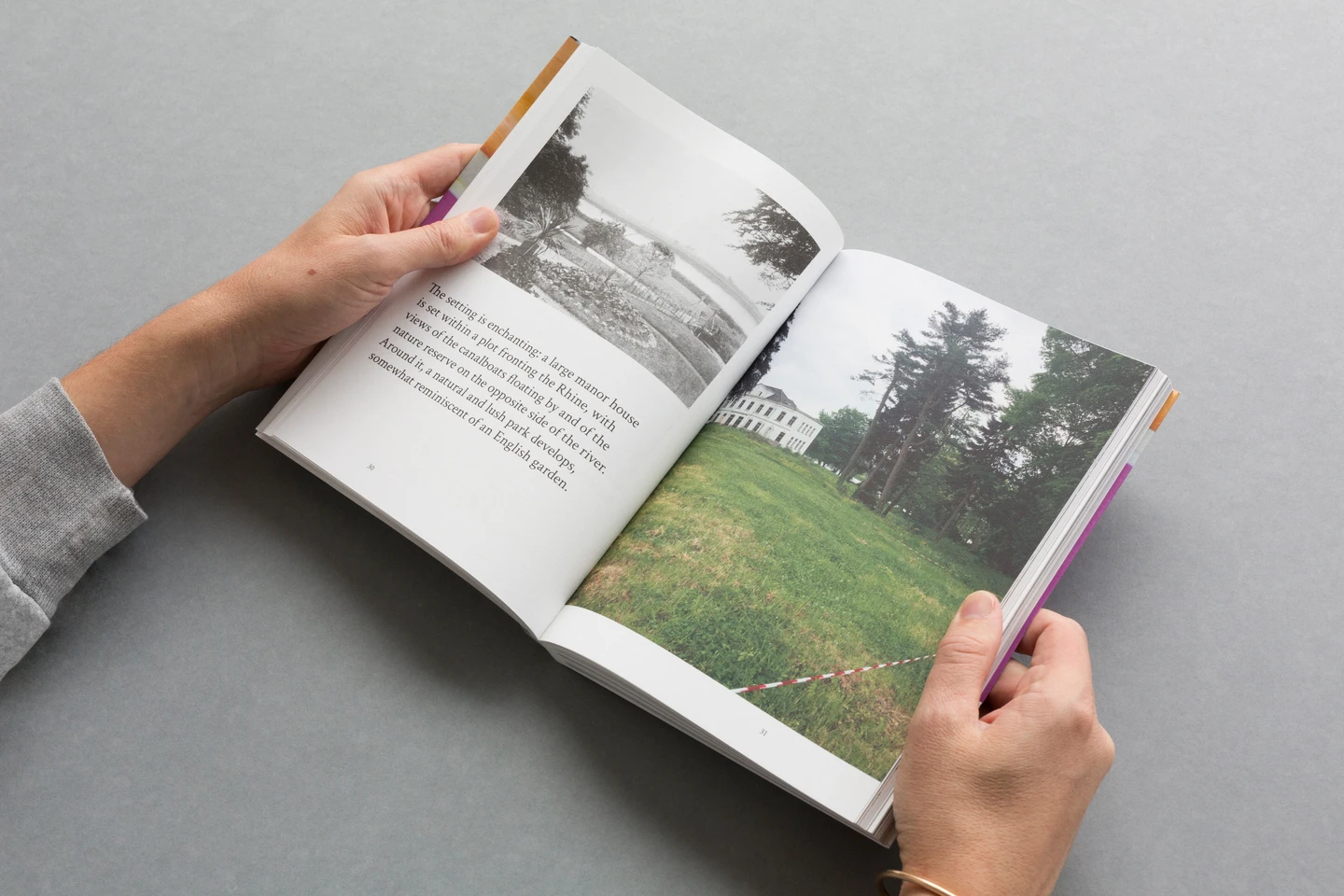
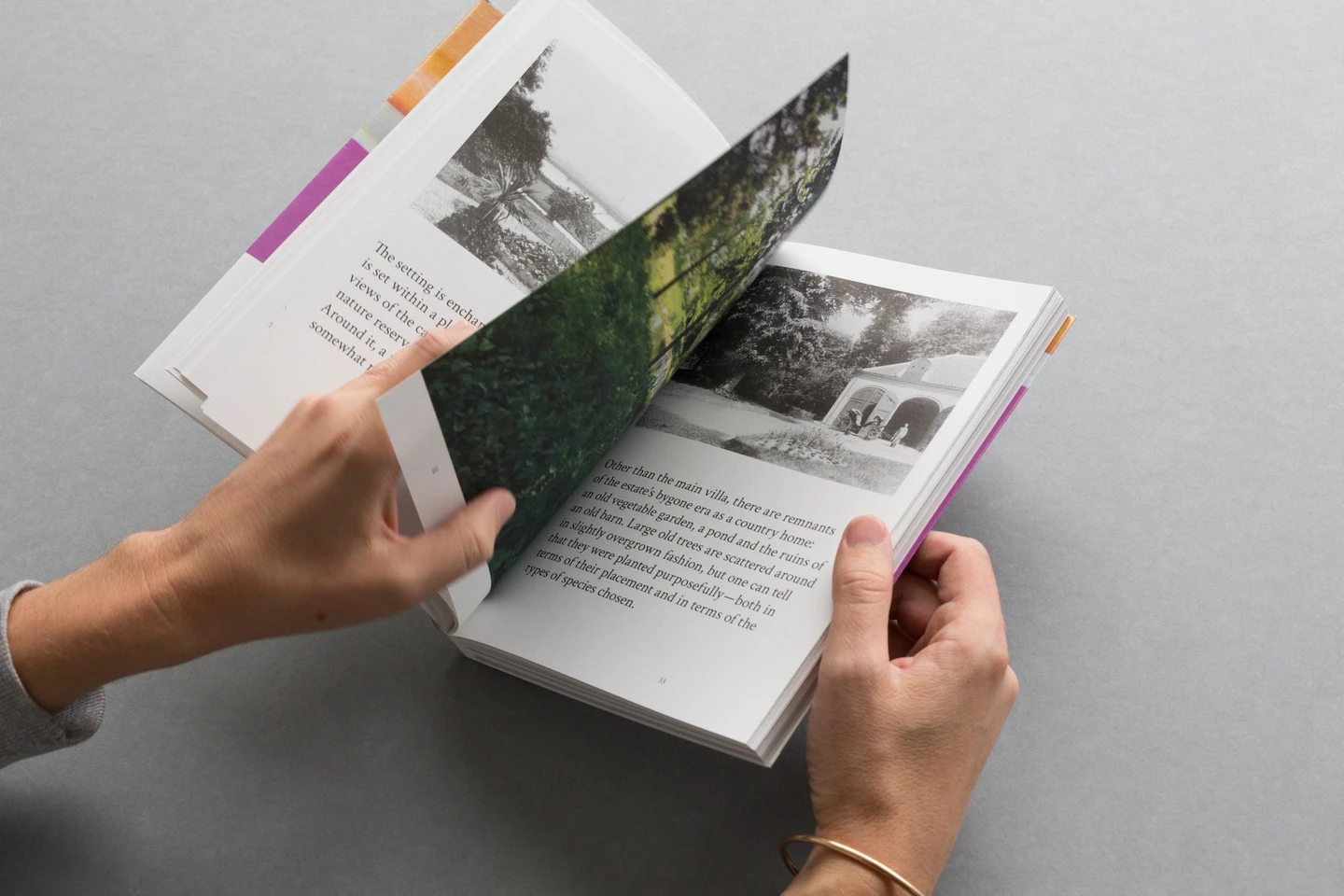
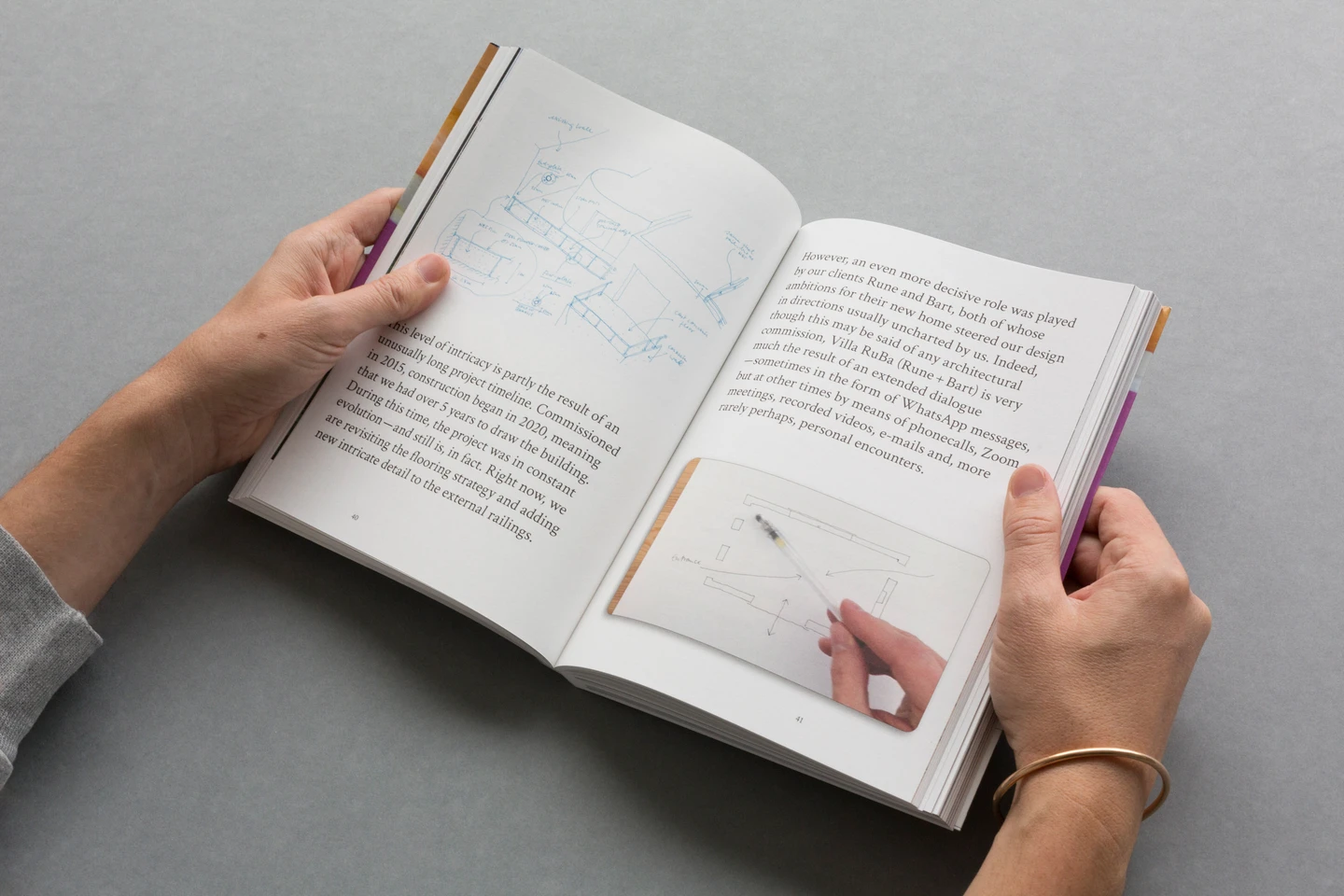
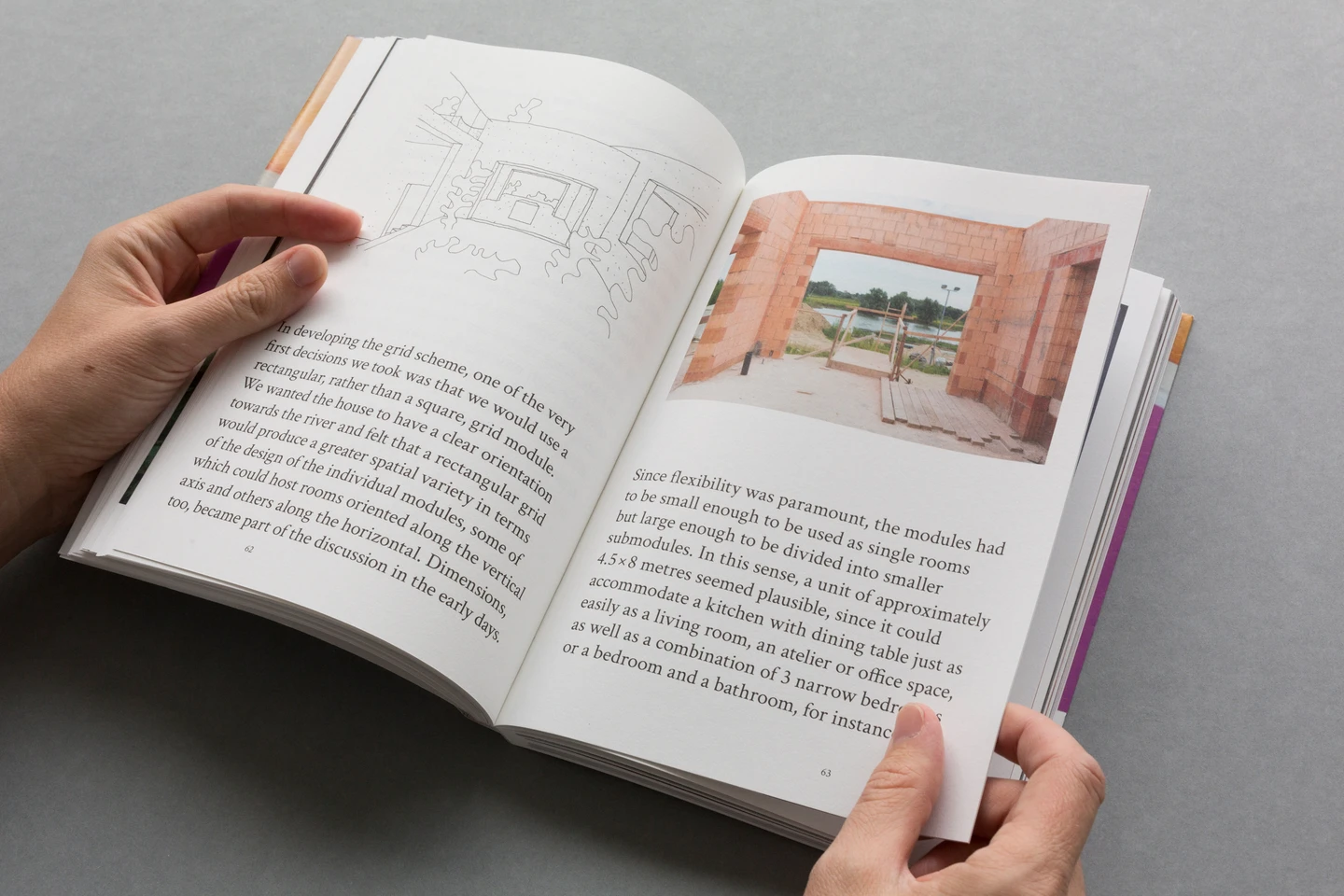
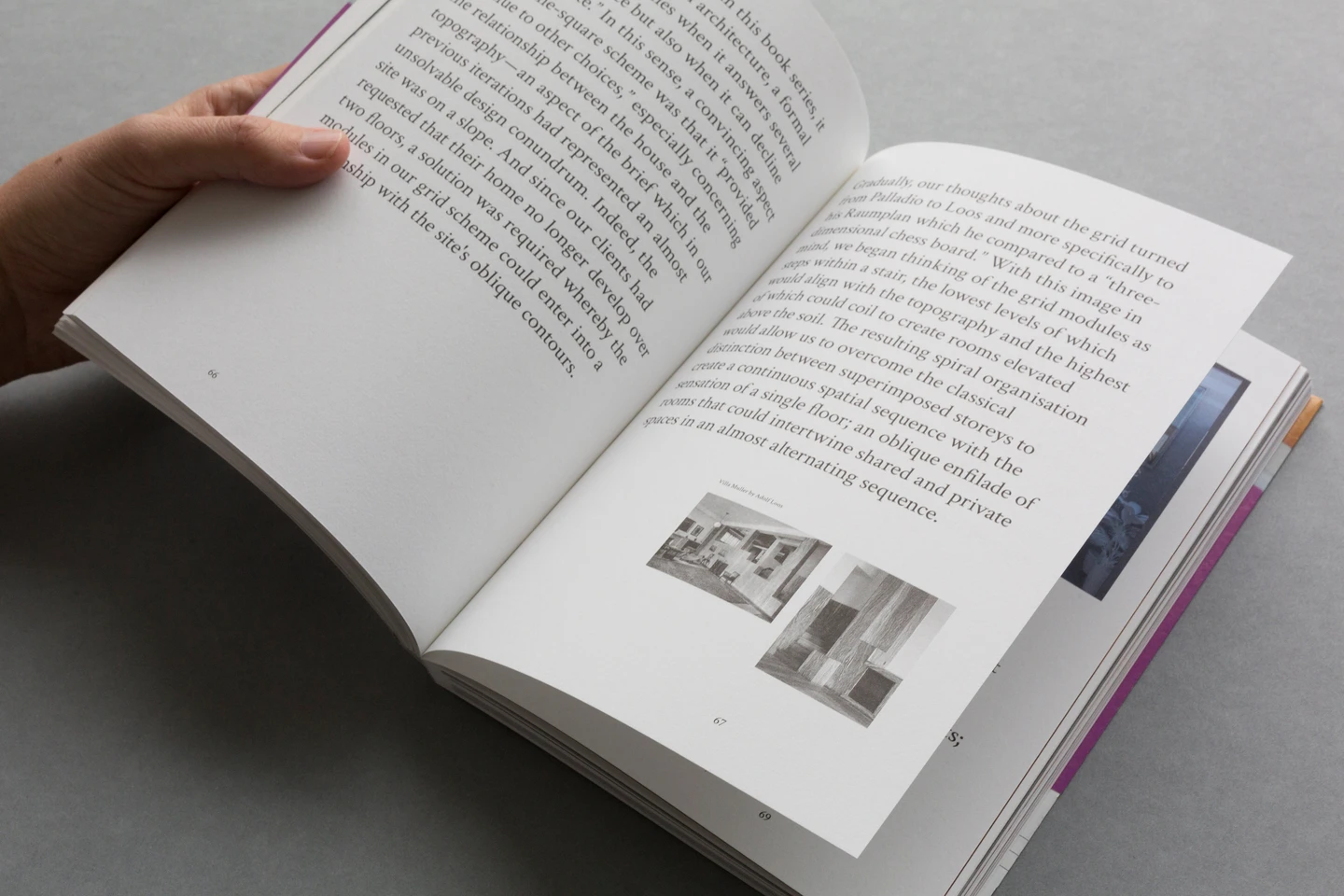
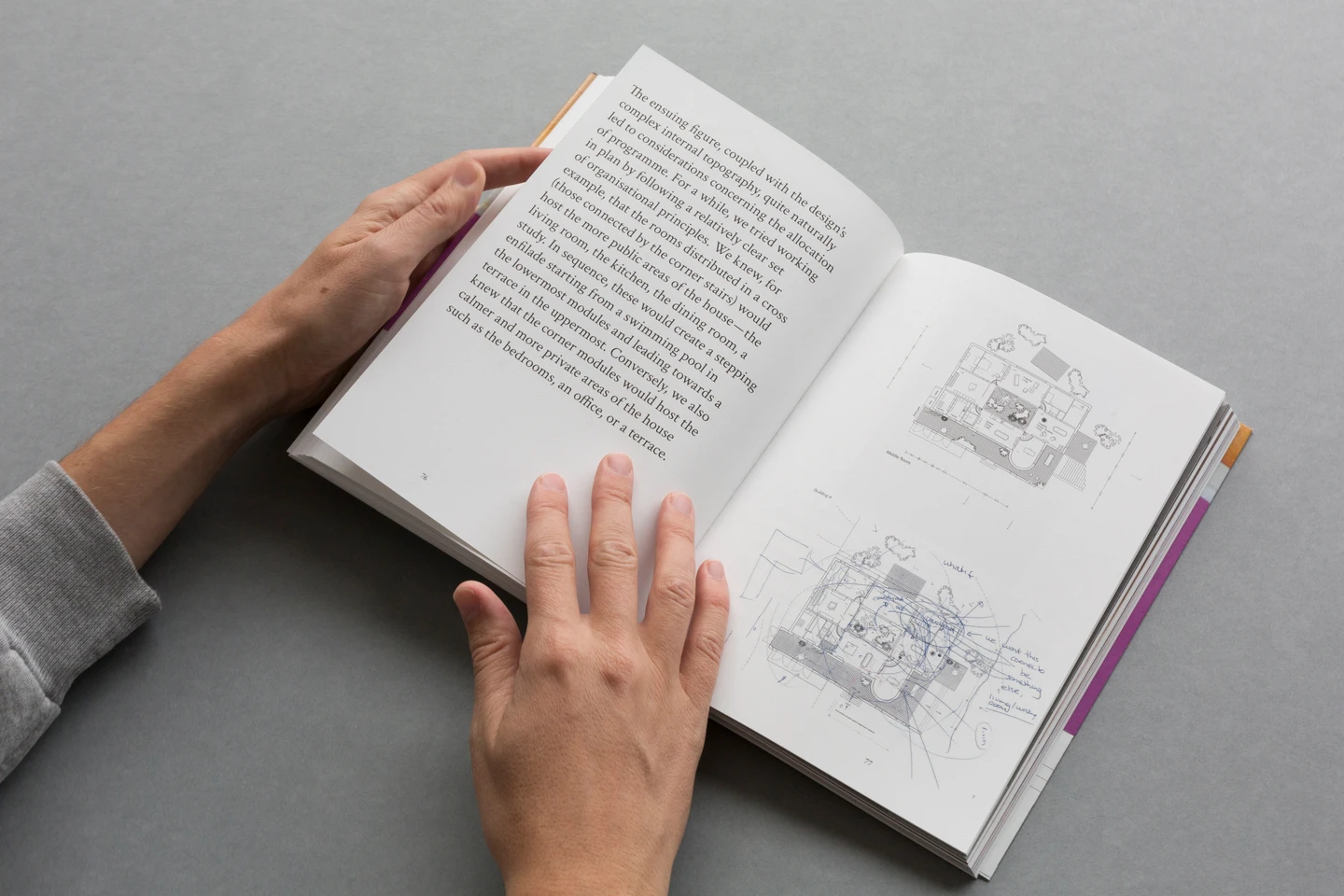
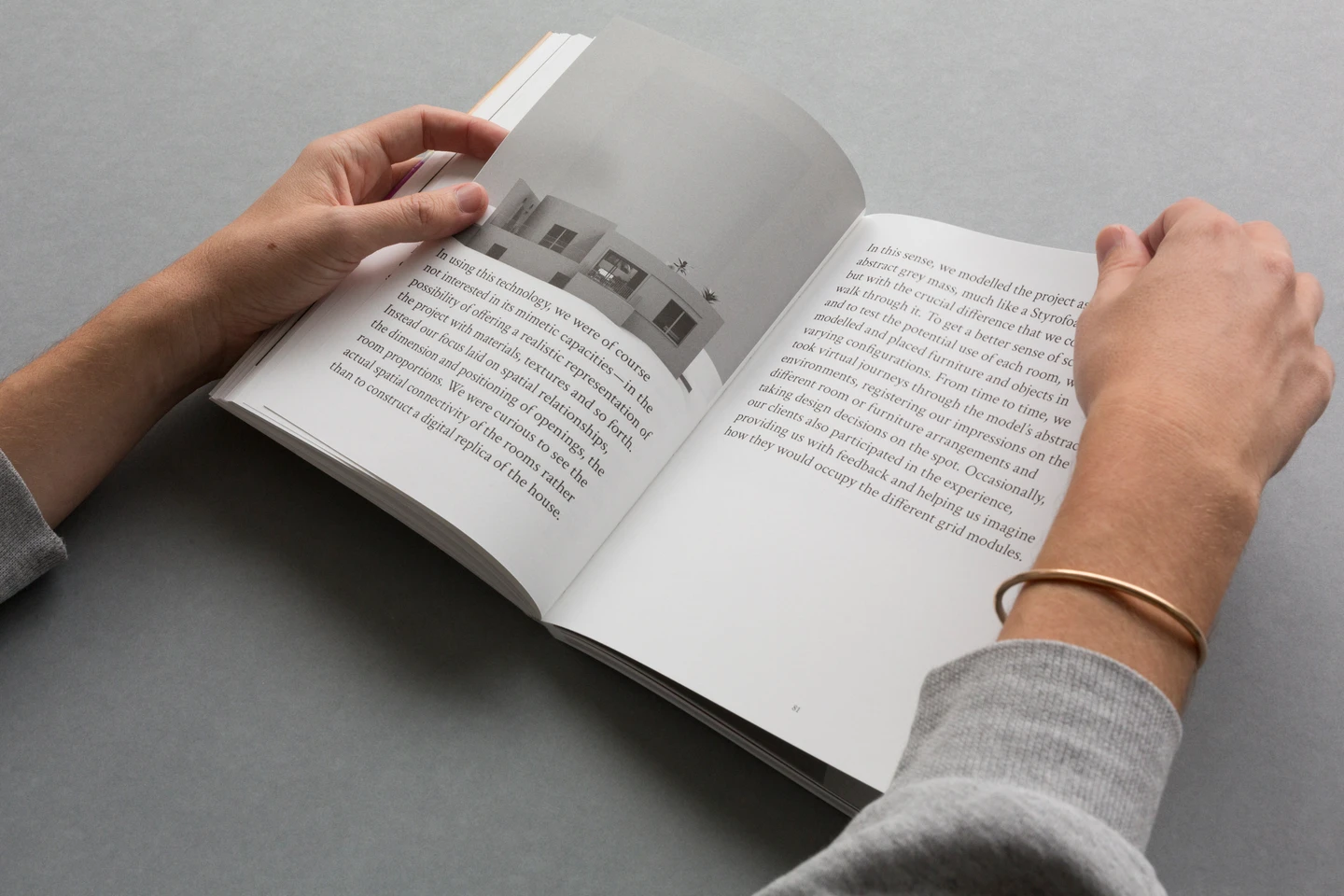
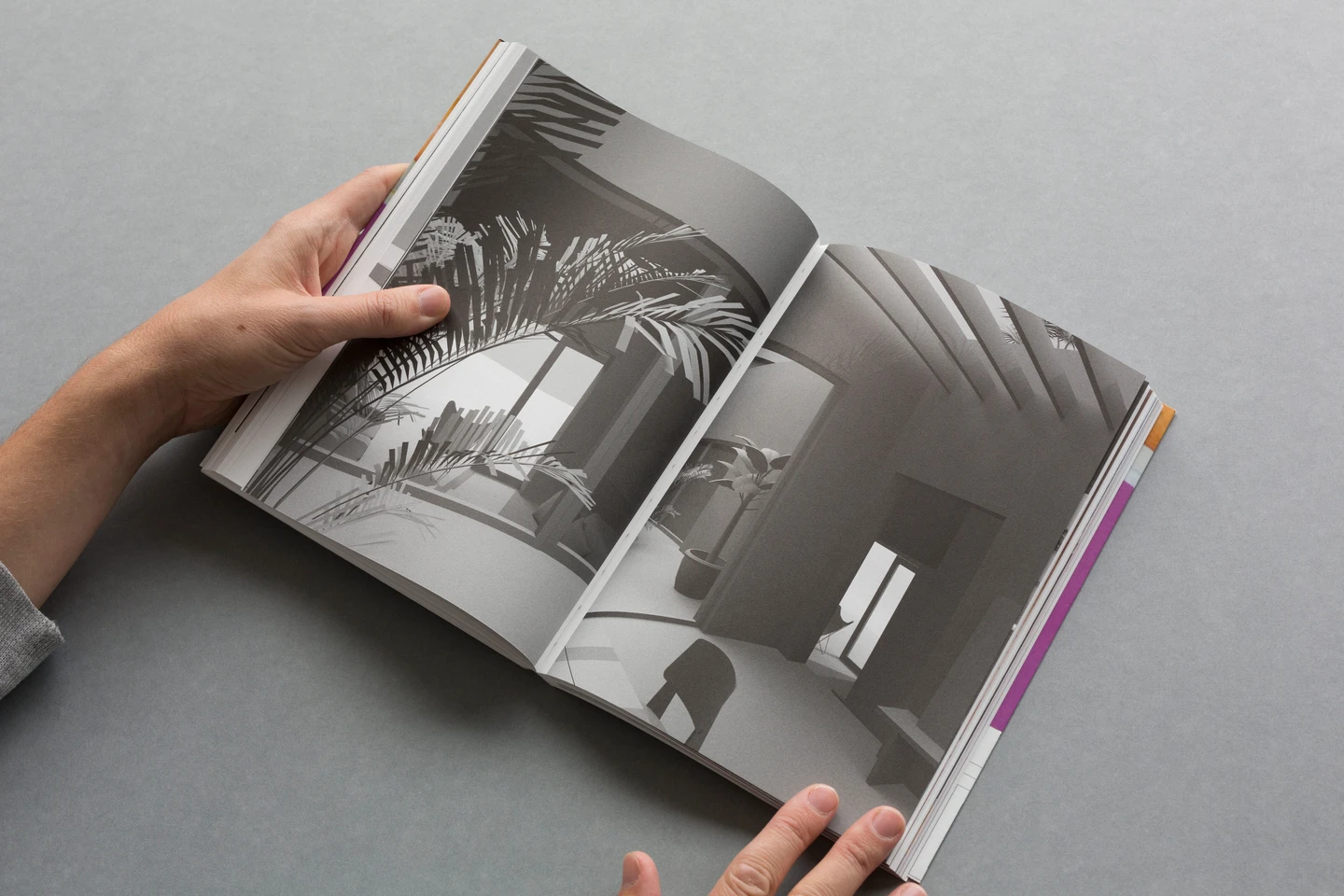
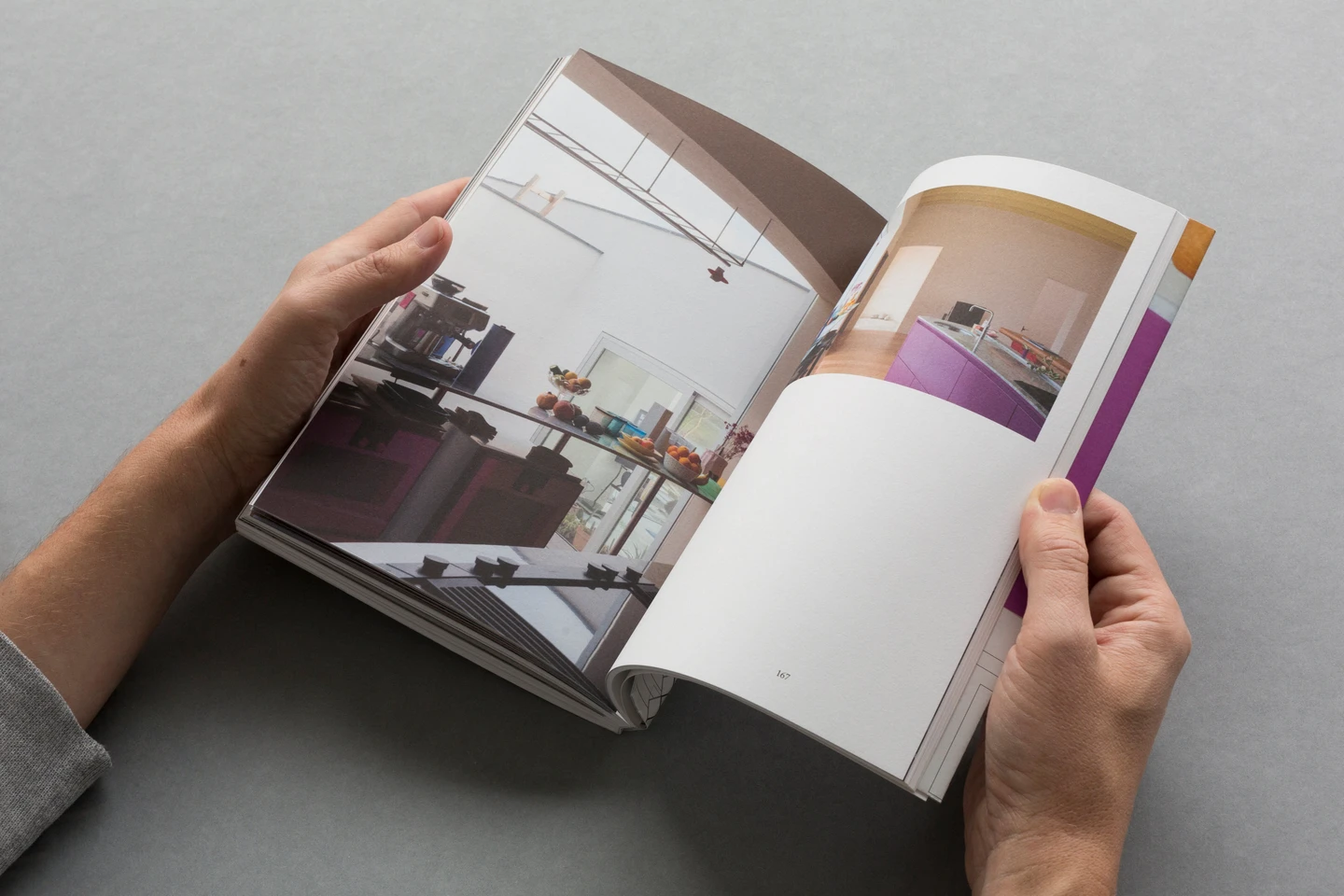
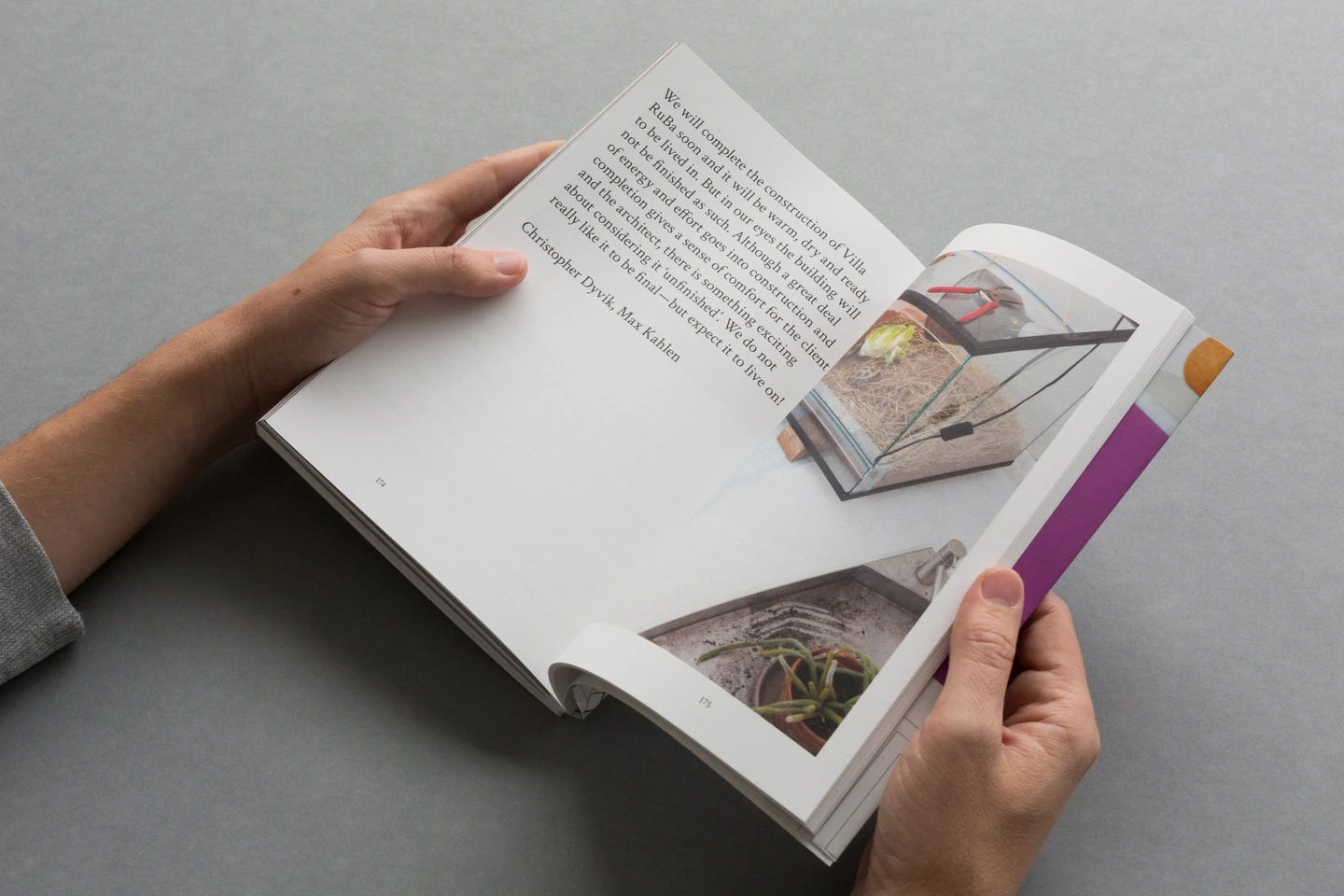
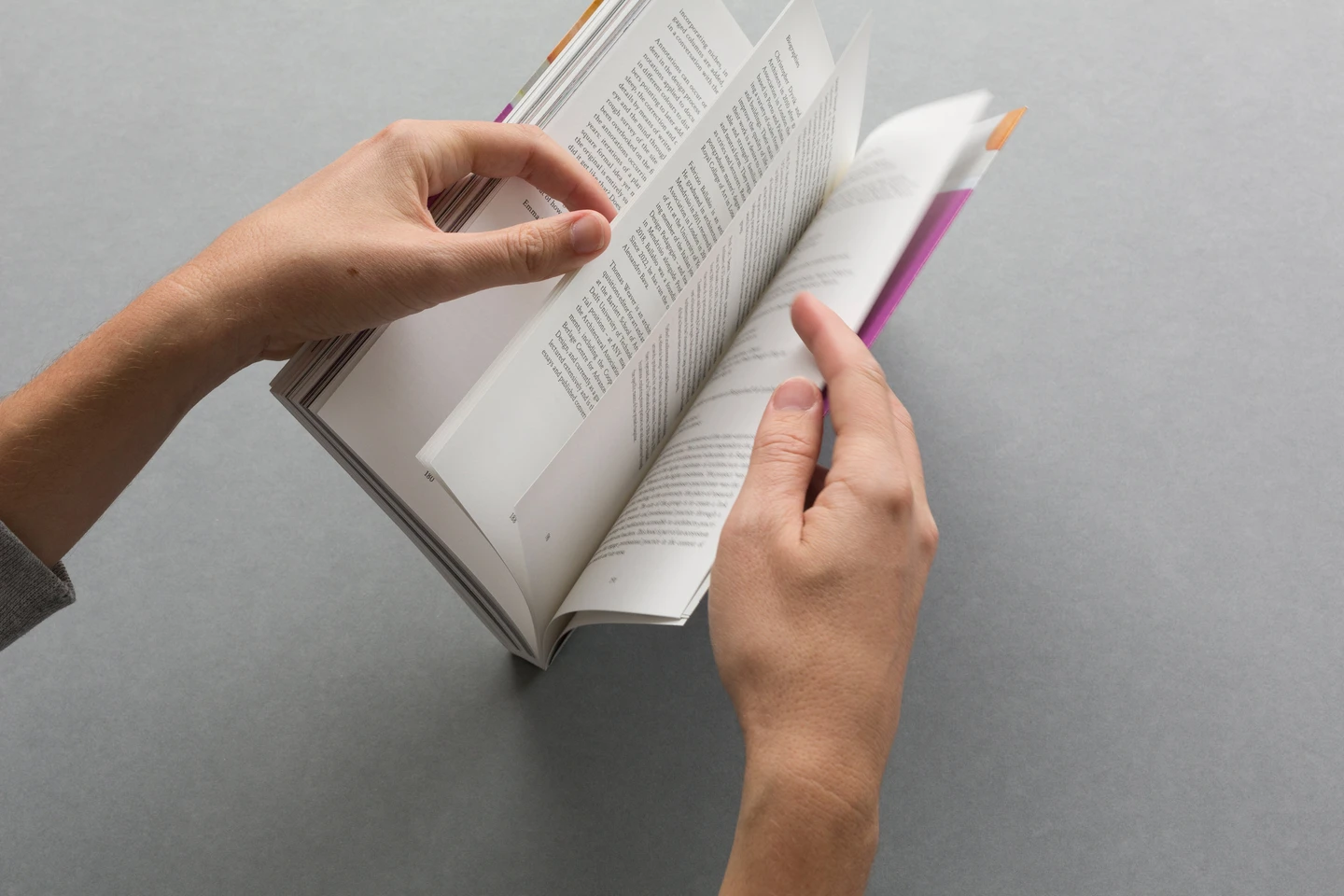
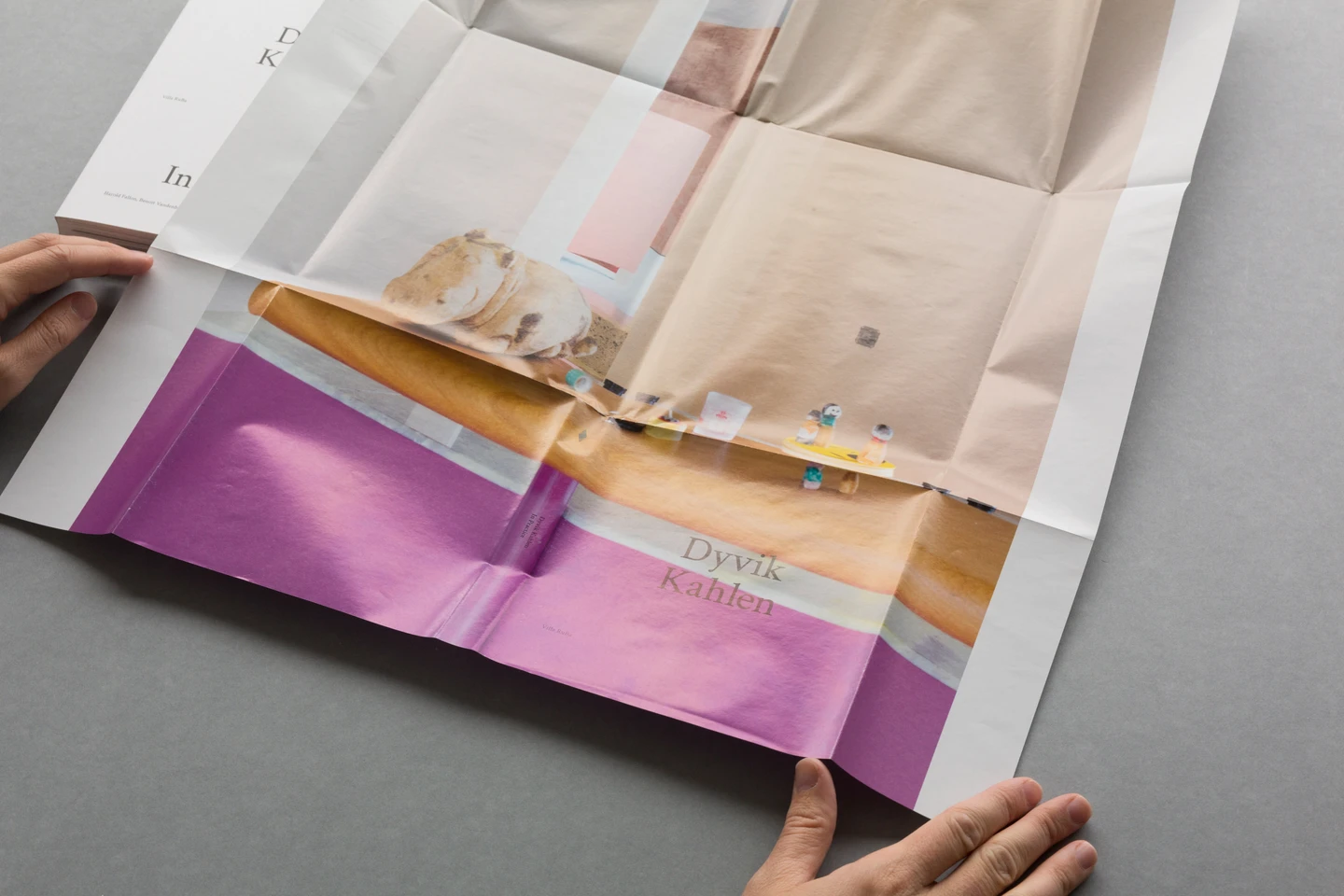
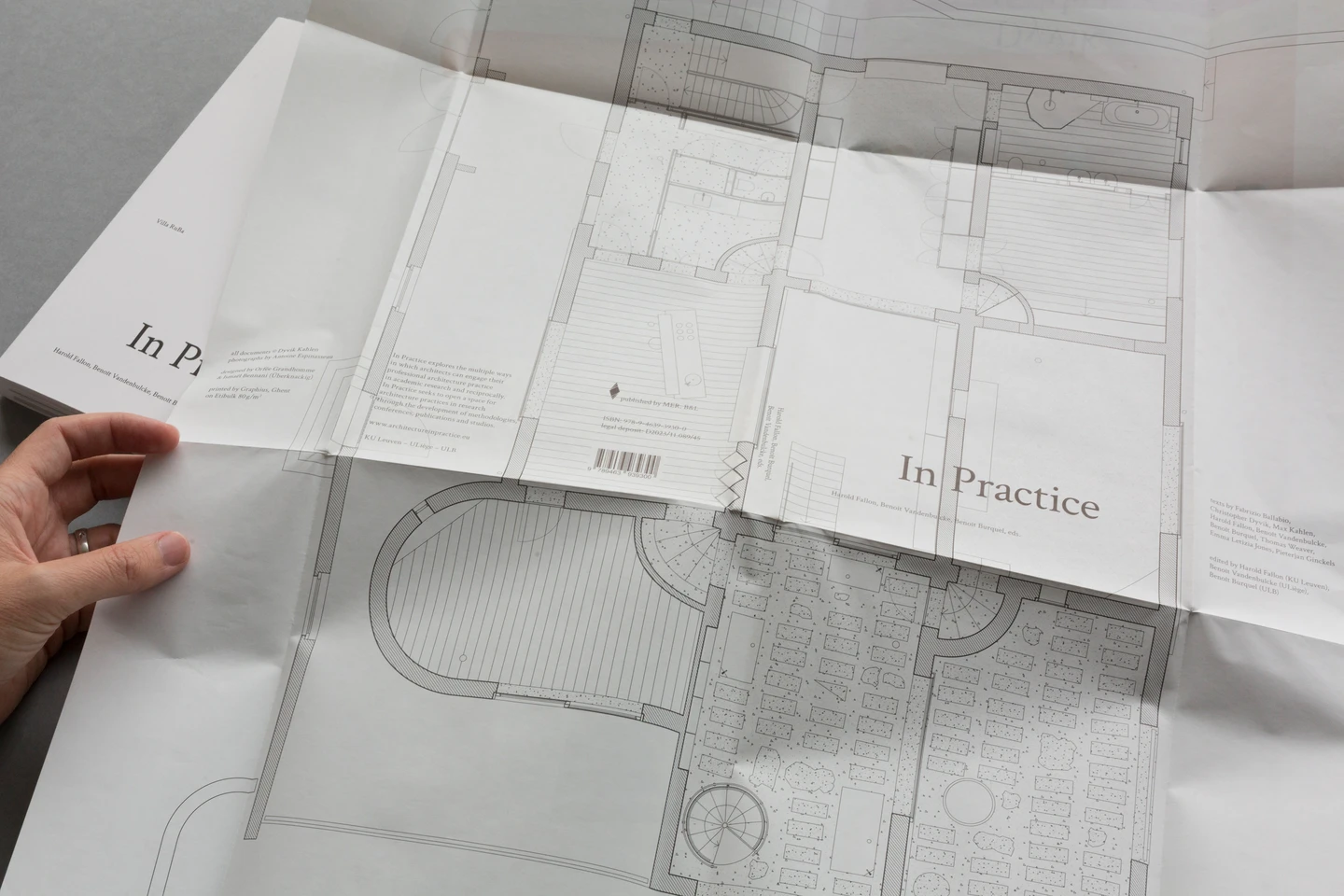
KULeuven, Uliège, ULB, MER. B&L Editorial, Book 2023For the fourth book in the In Practice series, Dyvik Kahlen architects explore the design process of the Villa RuBa, located near Utrecht. Together with Fabrizio Ballabio, they develop the compositional research related to the historic typology of the villa and to the specificities of the sloping park in which it is located, and reveal how Virtual Reality is used to investigate the spatiality of the project before its realization on the construction site. Additional contributions evoke the role of annotation as a design tool, the ambivalence of a classical and vernacular project, and the entanglement of contemporary architecture with pop culture.
-
-
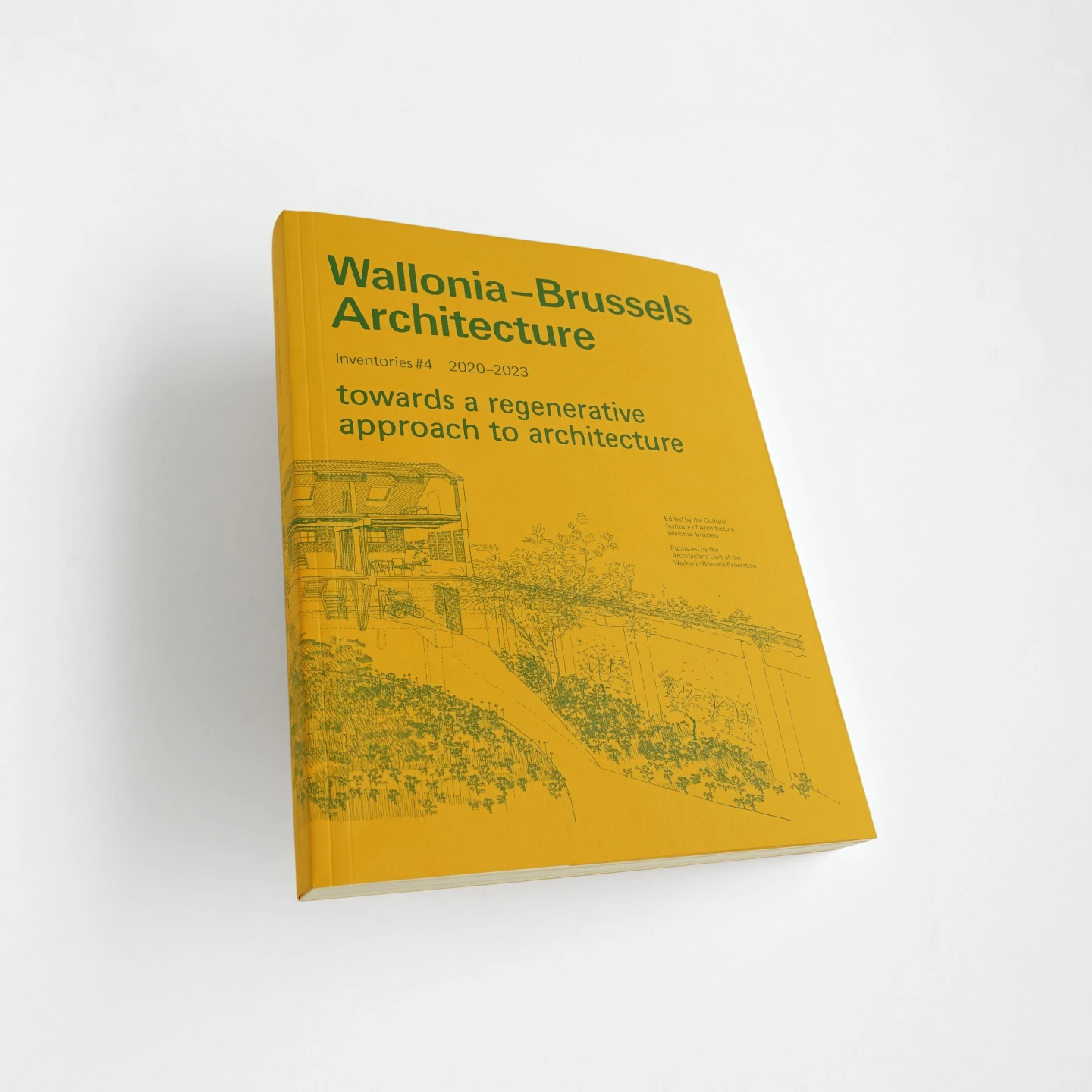
Inventaires #4
cellule.archi, FWB Editorial, Book 2023Initiated in 2010, the collection Architectures Wallonie-Bruxelles Inventaires # Inventories aims to draw a portrait of recent architecture in Wallonia and Brussels every three years and to illustrate the commitment of the public authorities and private building owners in the search for architecture that is in tune with the times and contributes to improving the living environment. An edition of the Architecture Unit, produced by the Wallonia-Brussels Cultural Institute of Architecture (ICA-WB) and supported for export by the Wallonia-Brussels Architectures agency (WBA).
The spectre of climate change and its social, economic and ecological implications is haunting the Planet. The energy issue, the drought, the floods and other climatic disasters confront us with the challenges of governance and more specifically, with the lack of political interest in architecture and land planning. In order to try to change the course of this situation, any spatial intervention on our environment, whatever its scale, can no longer fail to meet the challenges of environmental, societal and economic transition by integrating public, collective and private dimensions. With this in mind, Architectures Wallonie-Bruxelles Inventaires # Inventories highlights around one hundred spatial approaches (projects or actions) capable of initiating this transition. They are all located in the French-speaking part of Belgium and abroad and built over the last three years. Different experts point of views in the fields of architecture, urban planning, landscape and sociology unveil some lines of thought following six themes: new rurality, frugality in construction methods, governance, re-appropriation, the role of open spaces and finally, the mutation of architectural practices in relation to the evolution of uses. Those reflections are complemented by the incisive work of the artist Aurélie William-Levaux.
-
-
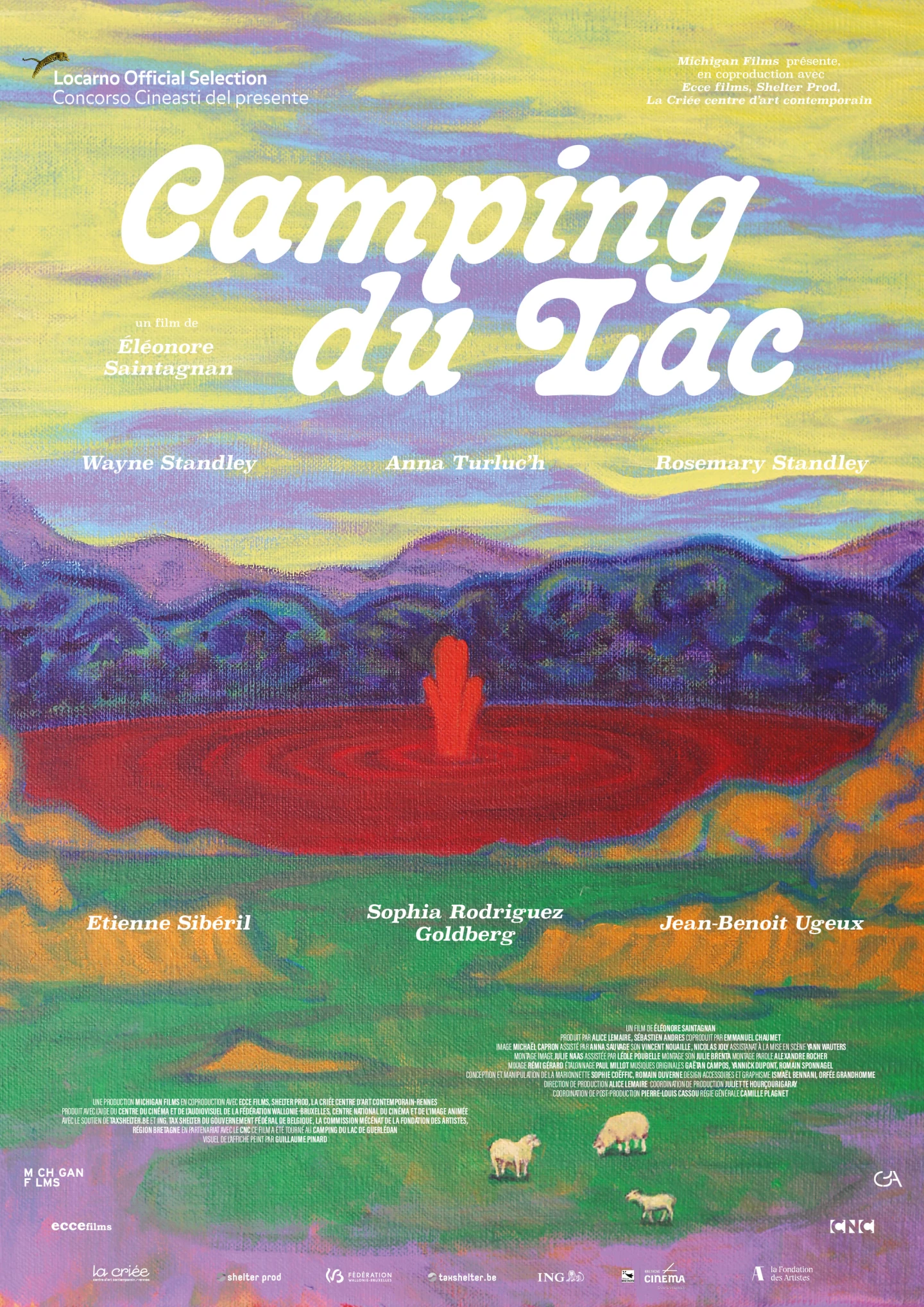
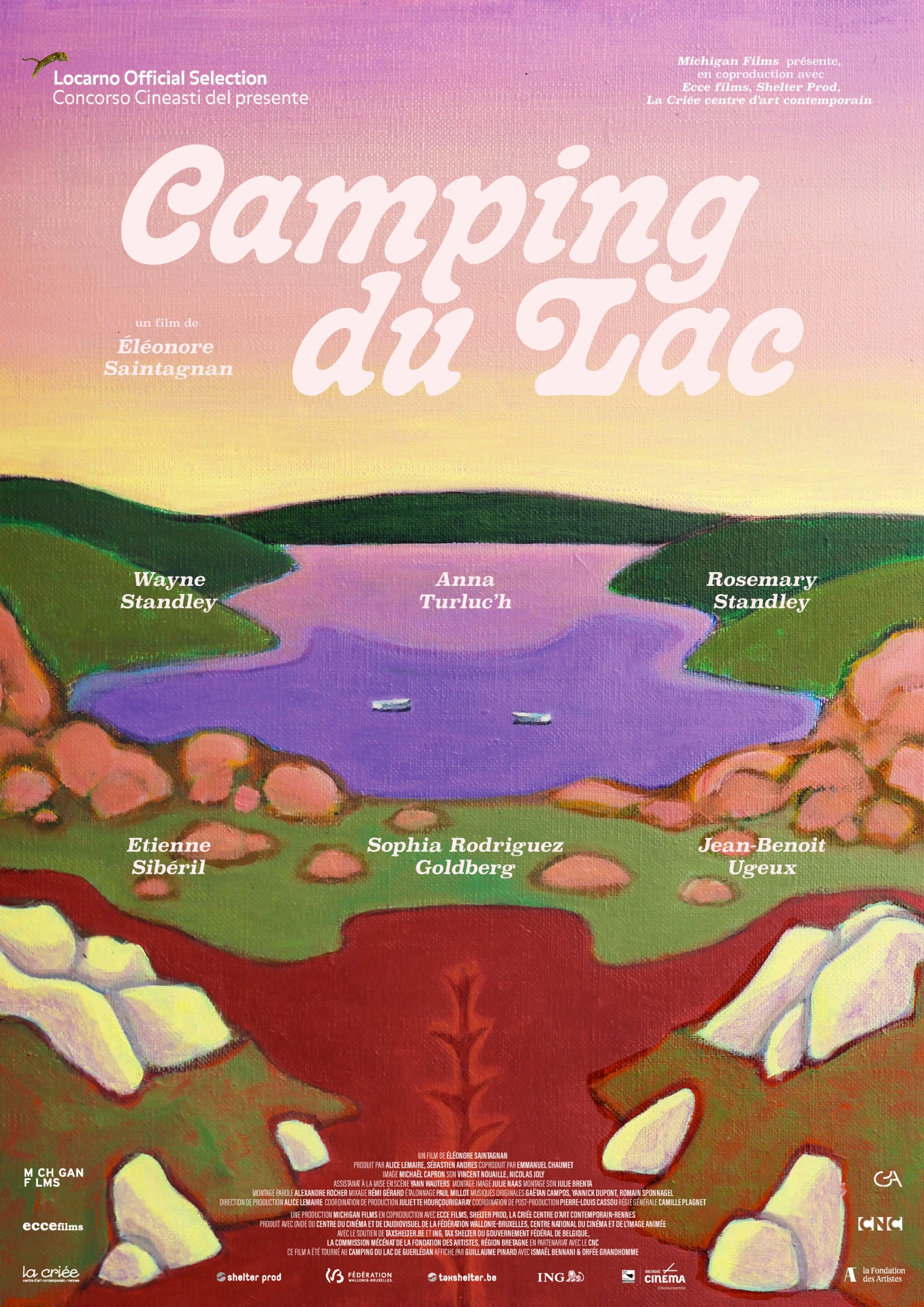
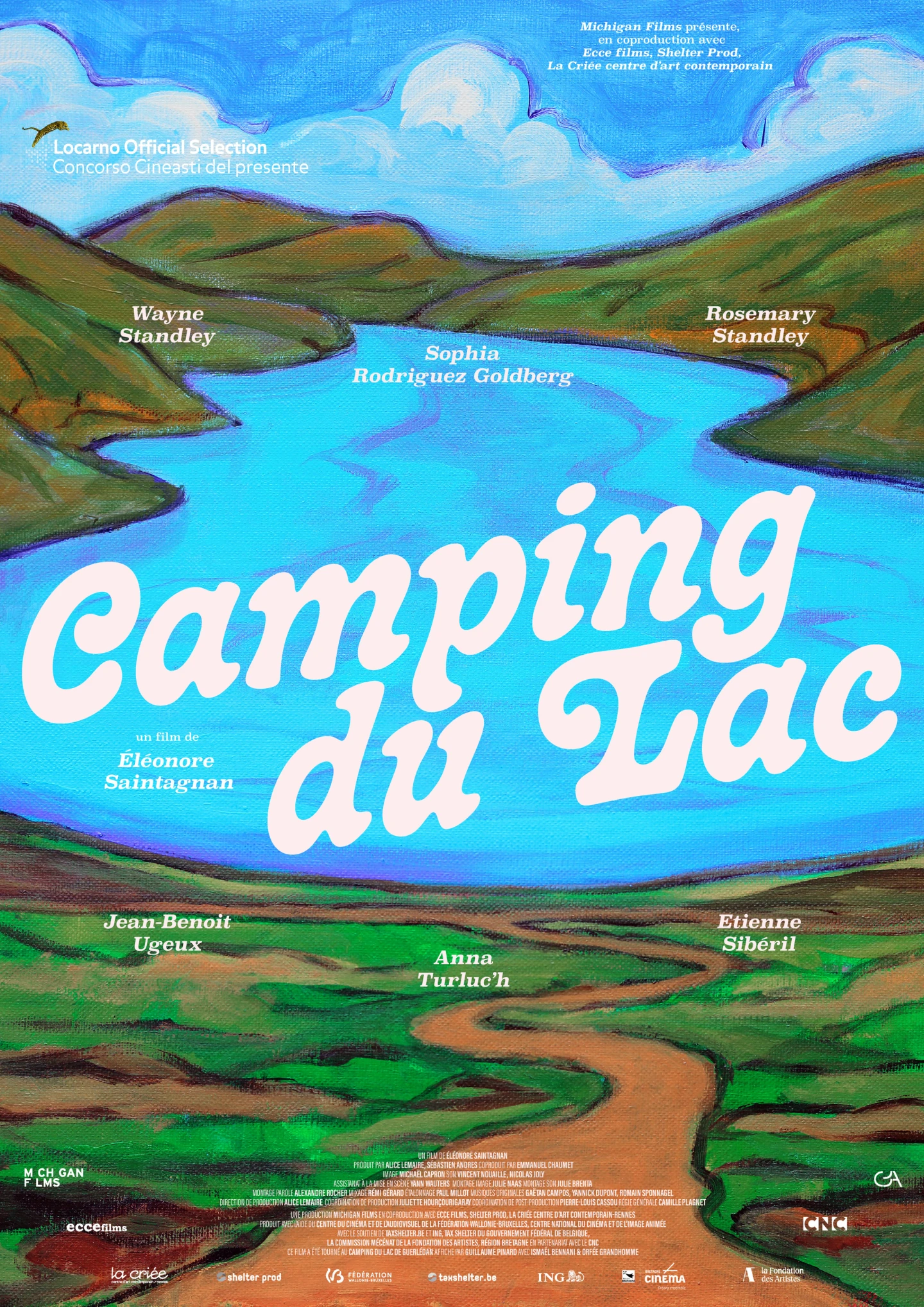
Camping du Lac
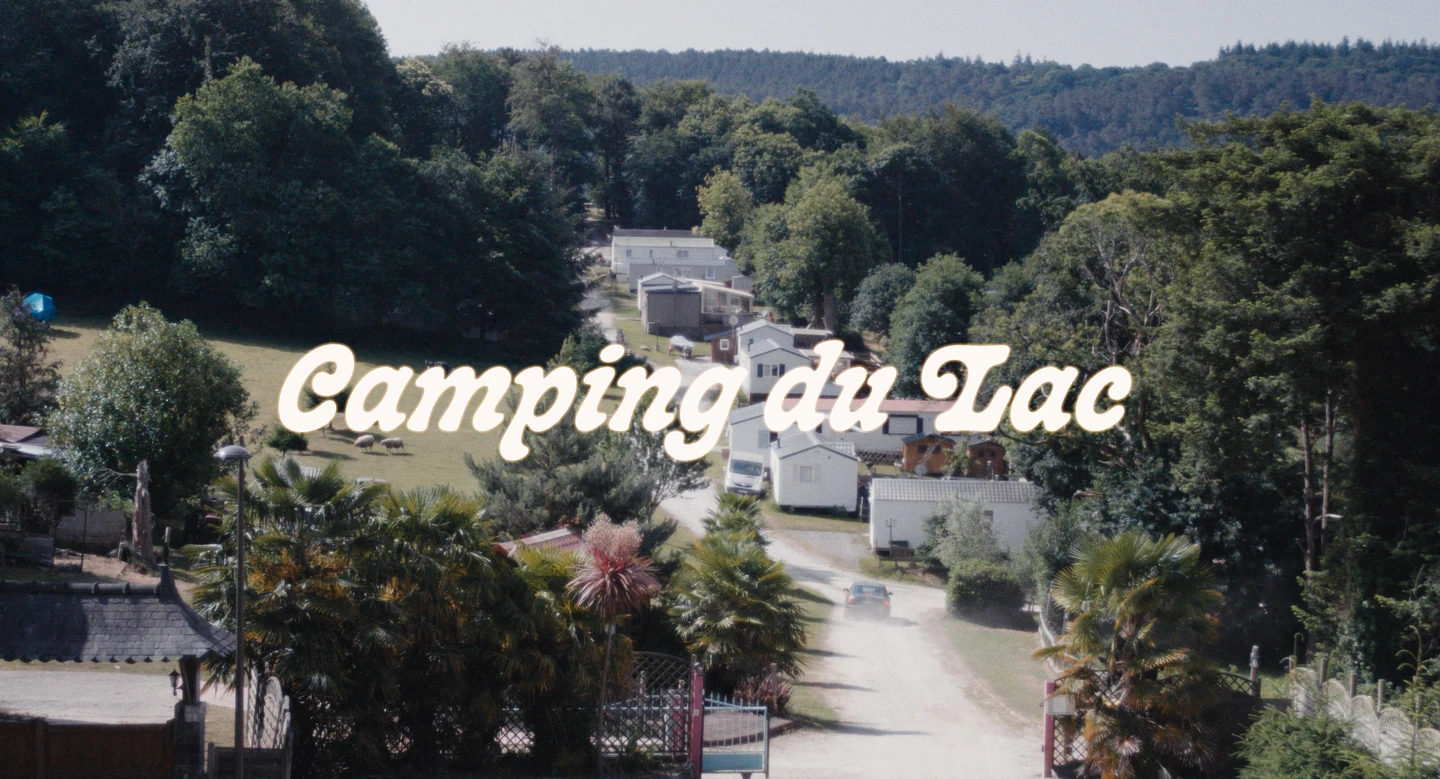
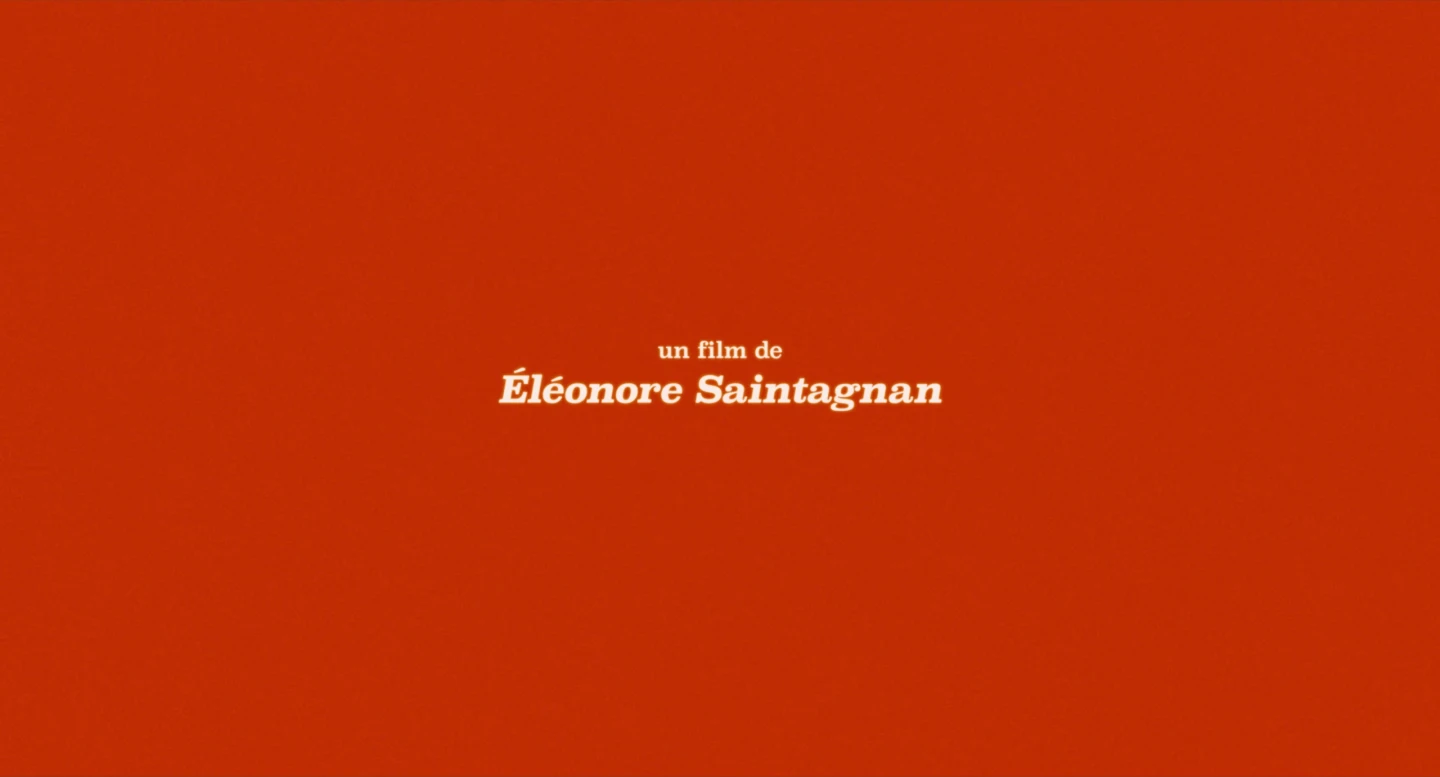
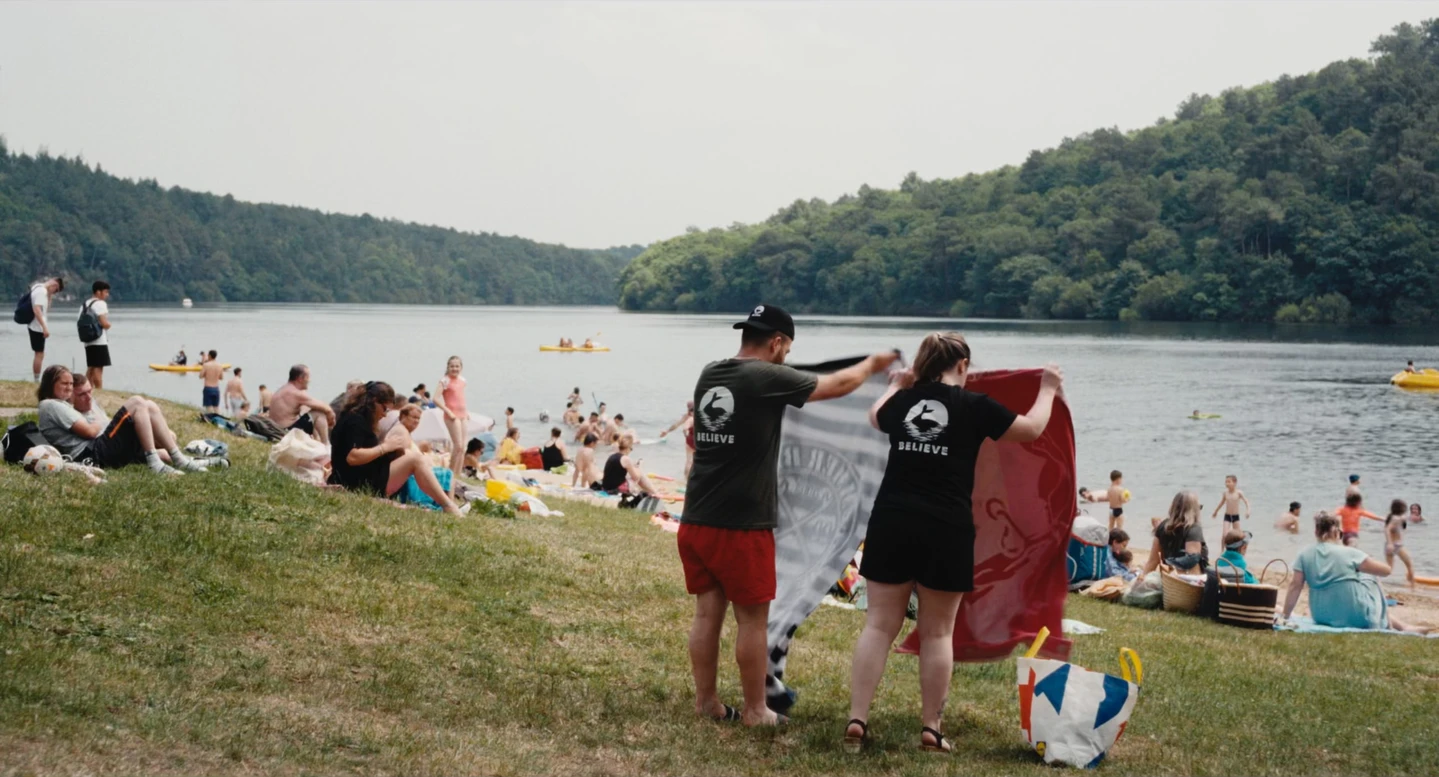
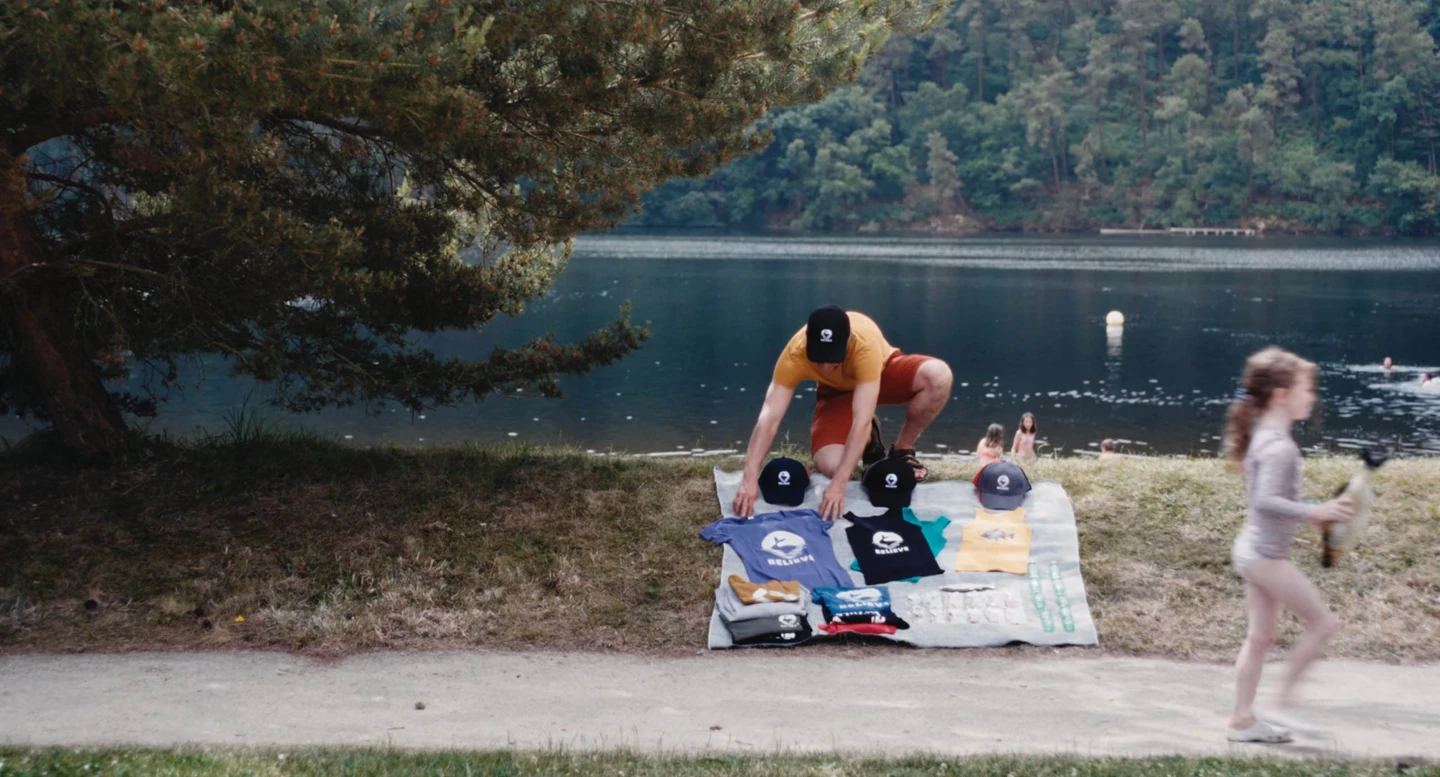
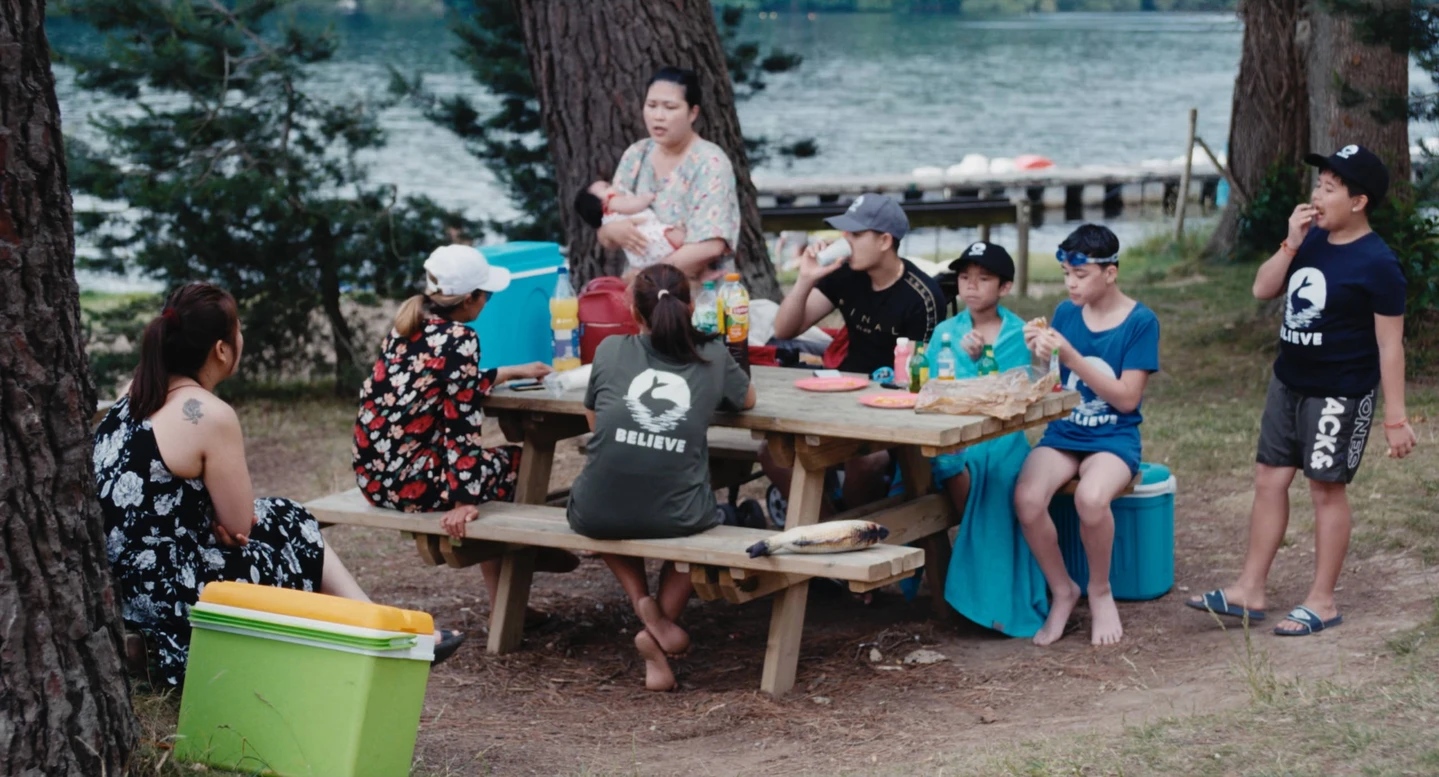
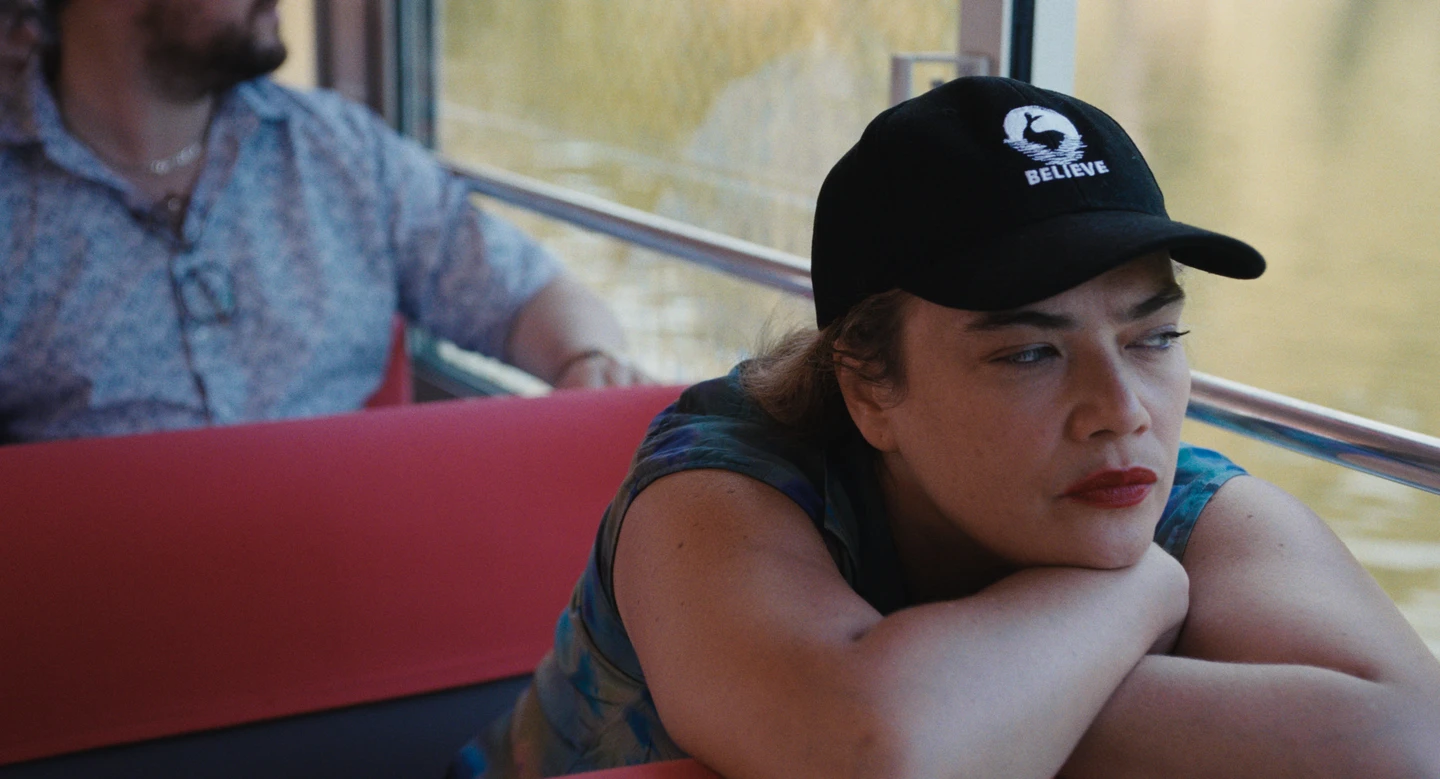
Michigan Films Graphics, Movie 2023Synopsis: Éléonore drives west. Her car breaks down in the middle of Brittany, France. She rents a bungalow there in a camping with a view of the lake, in which, it is said, lives a legendary beast. From mobile home to mobile home, she observes the present, summons the past and lets herself be invaded by fiction.
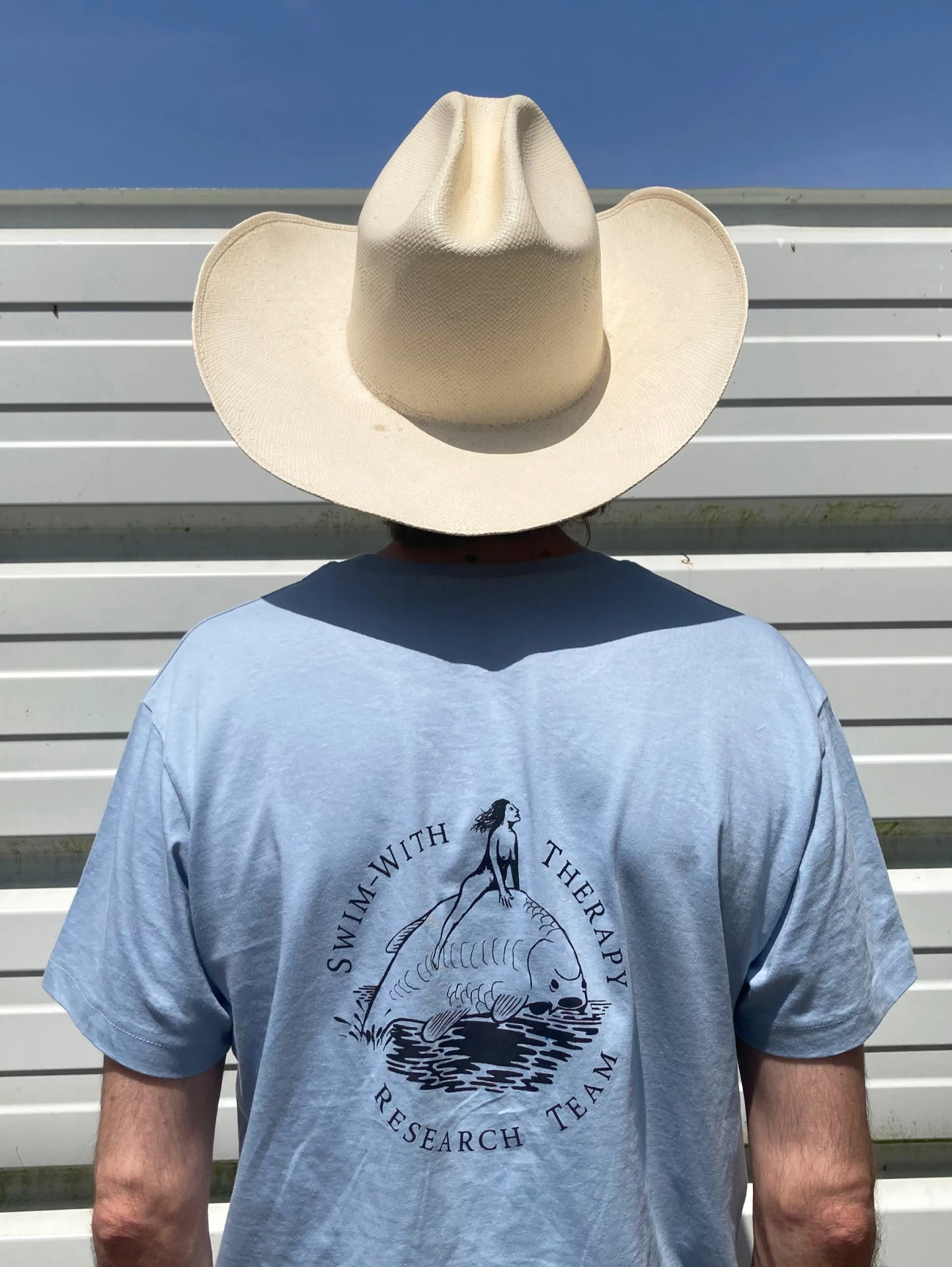
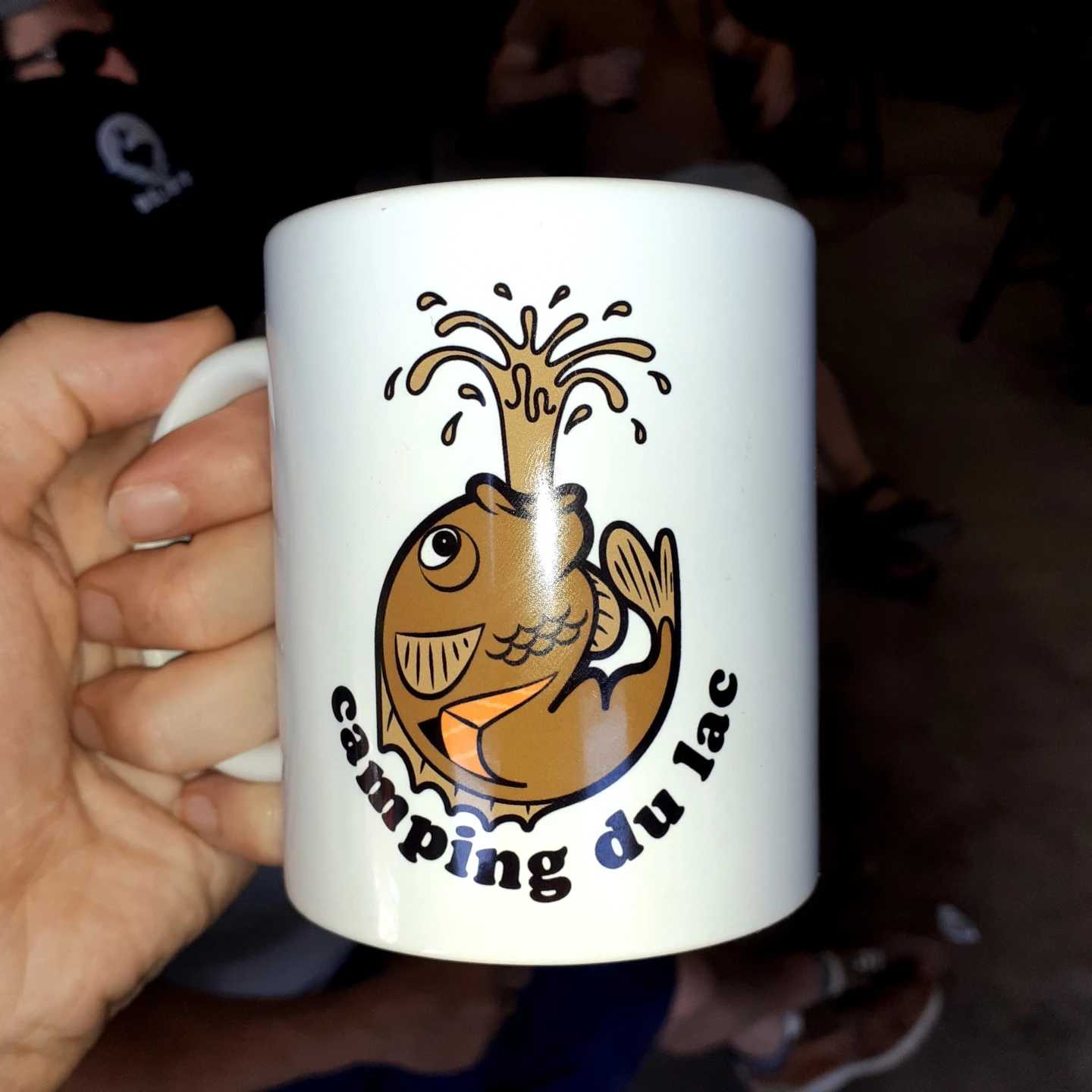
We chose to emphase both the magical realism of the scenario and naturalism of the cinematography with the use of 60's typefaces and candid colours, blurring the movie depiction of a particular era. We also designed several props and pieces of clothing in reference to the legendary fish, hero of the film.
Rejected posters feature paintings by Guillaume Pinard.
-
-
Tongo Saa
Twenty Nine Studio & Production Graphics, Movie 2023 -
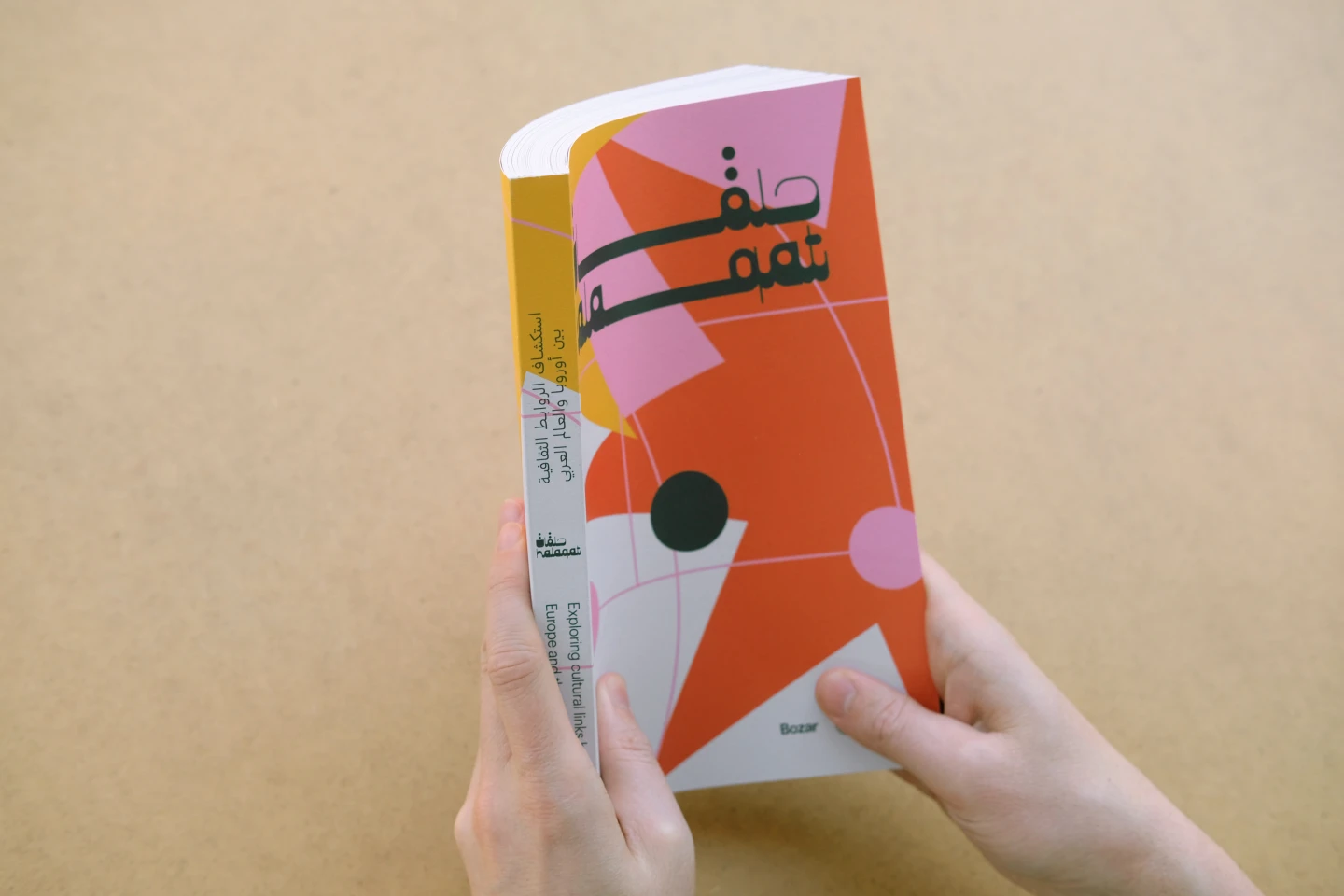
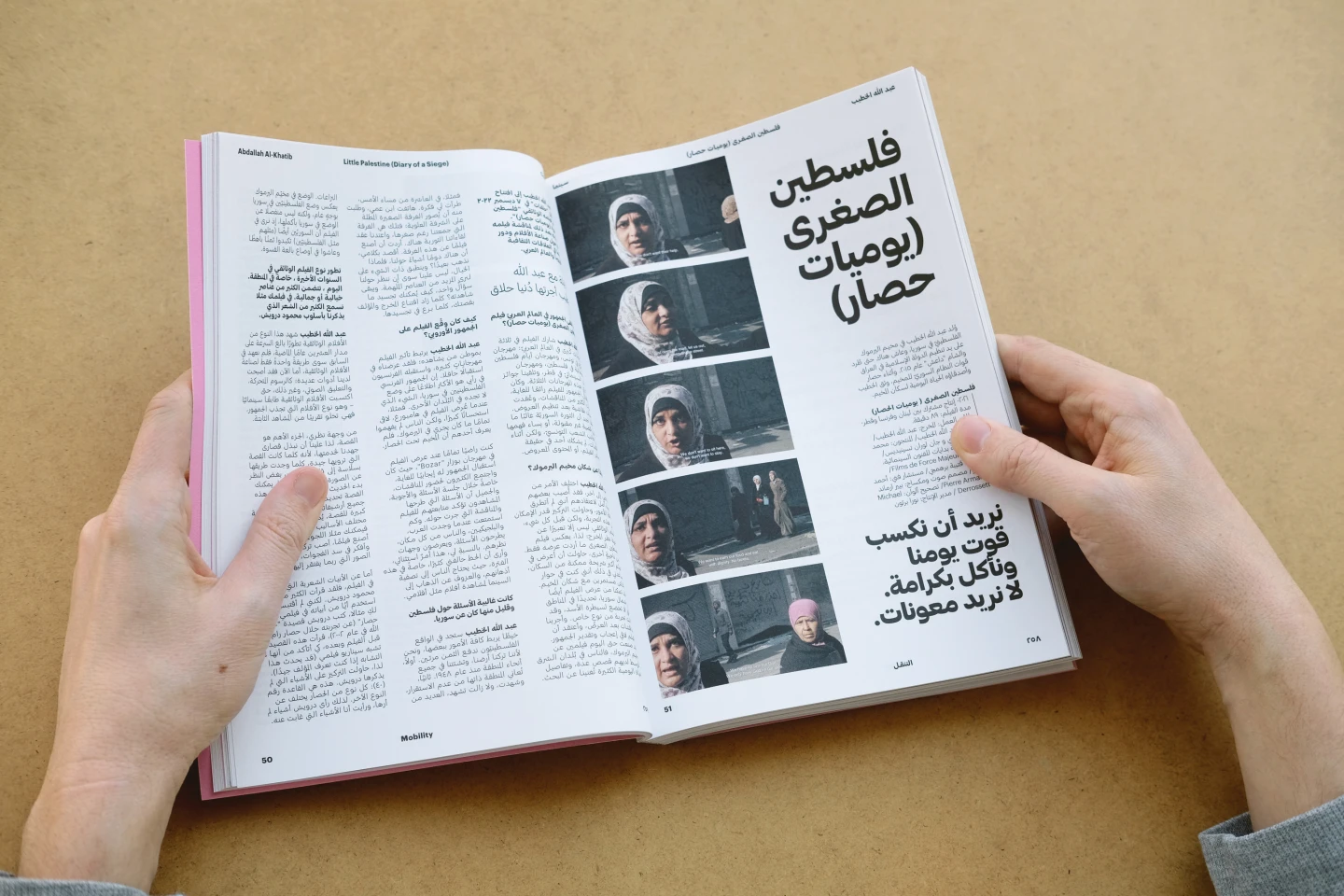
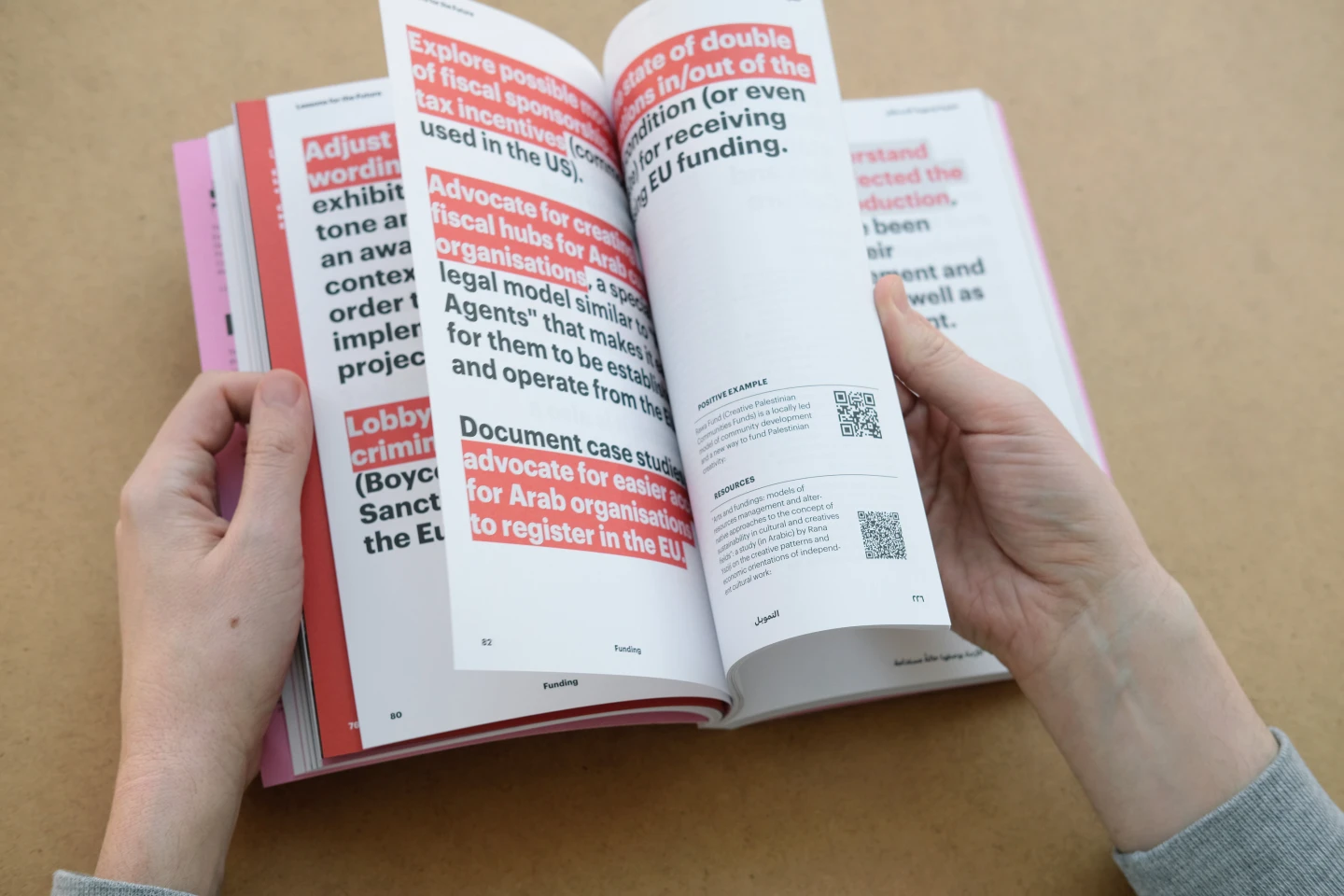
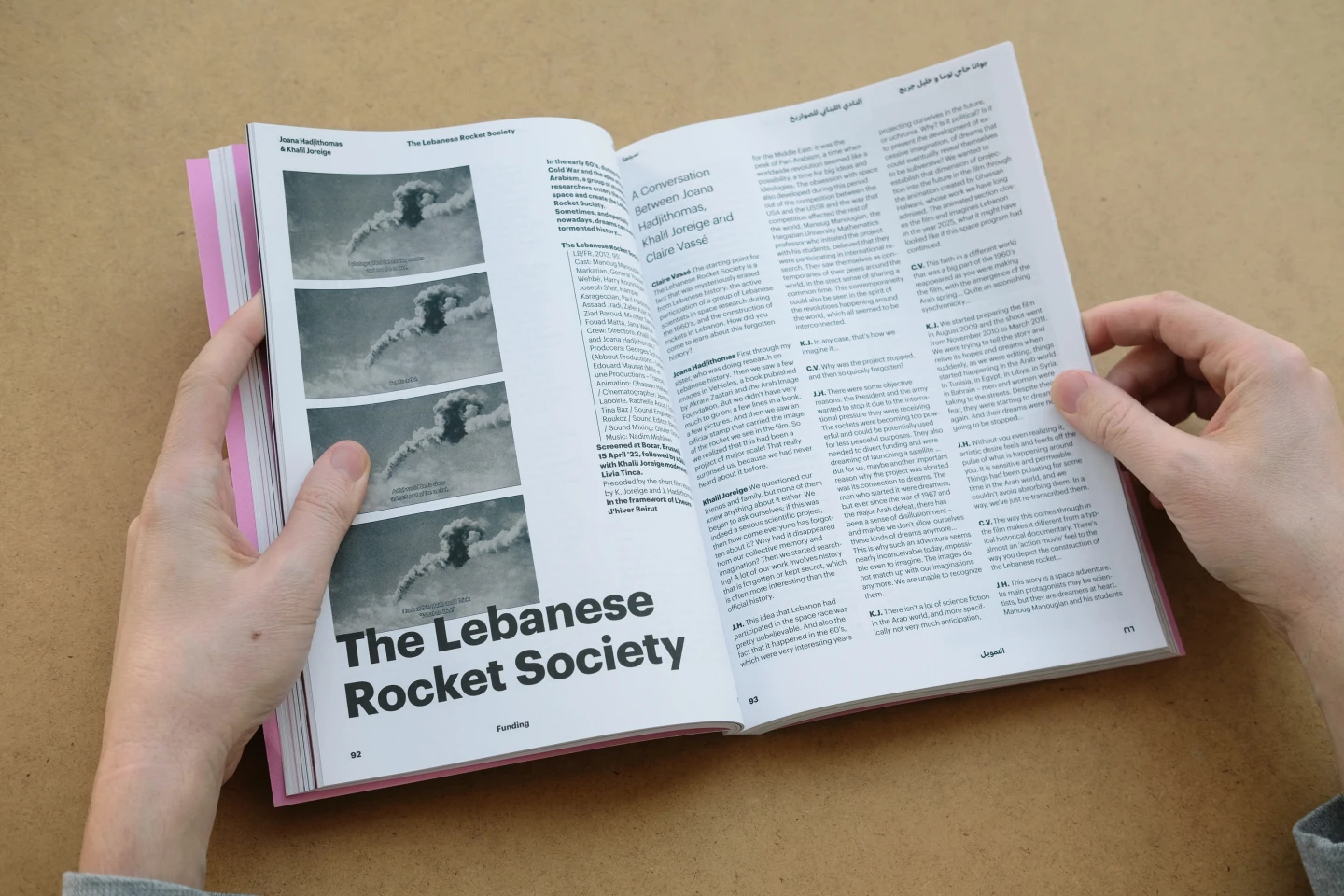
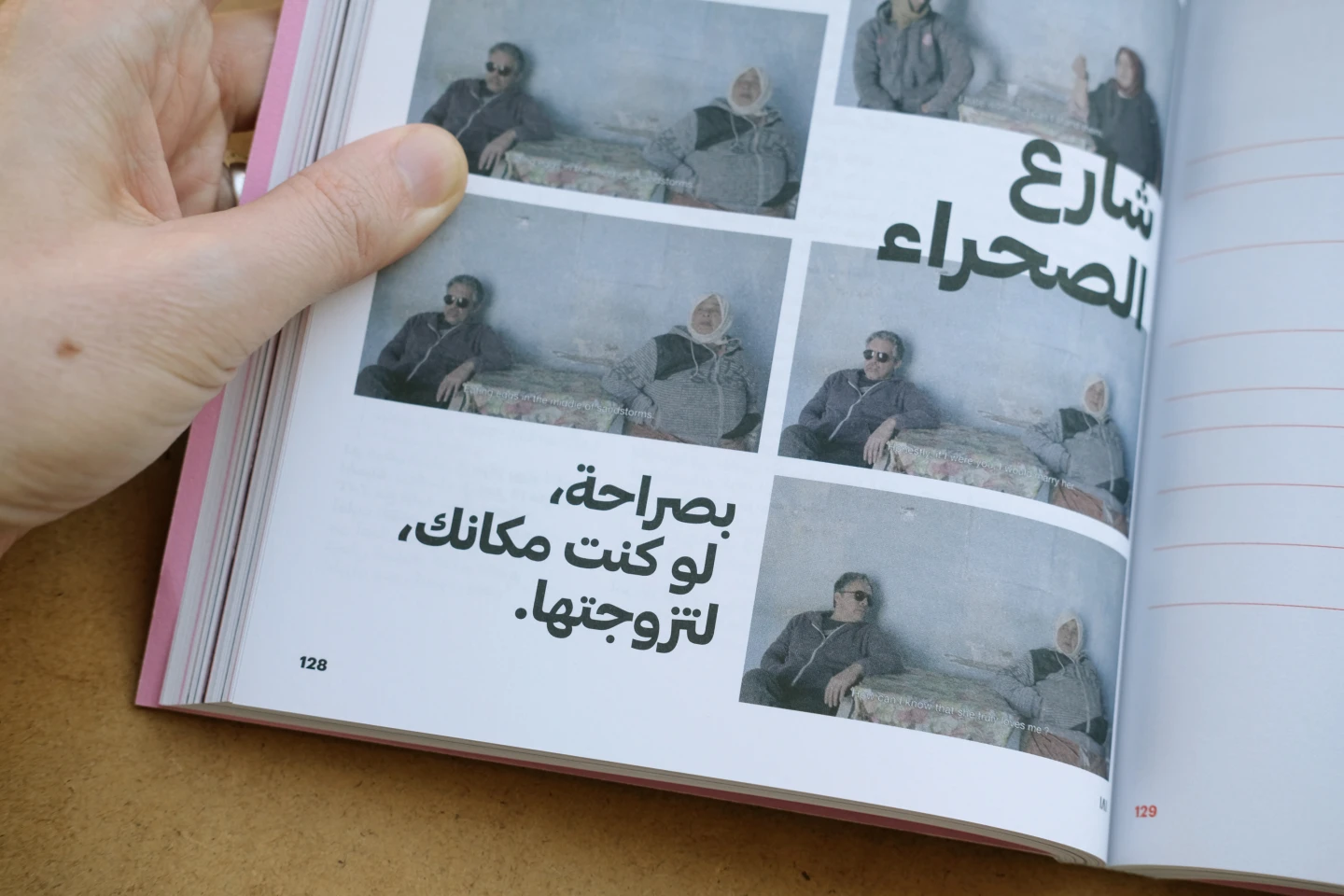
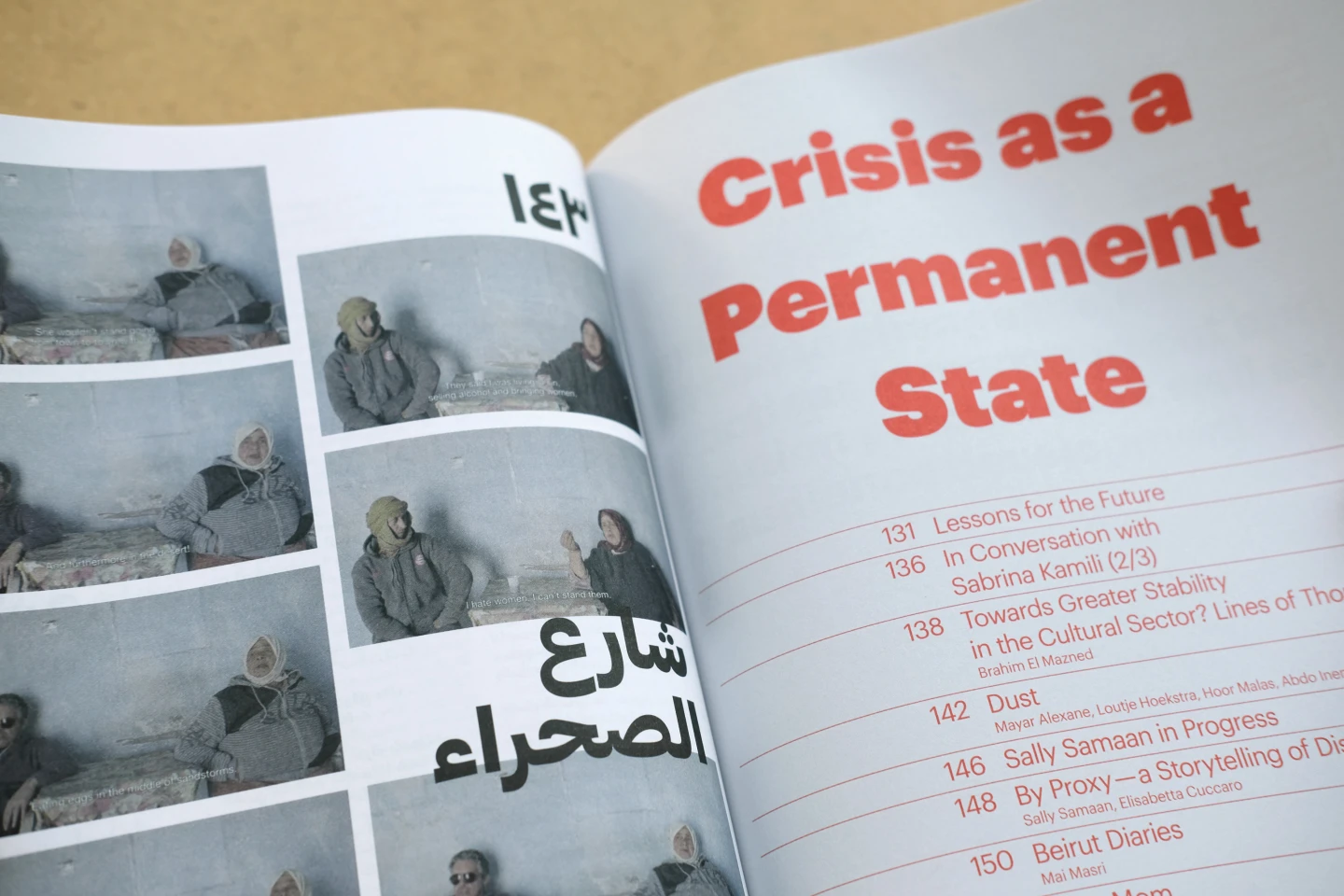
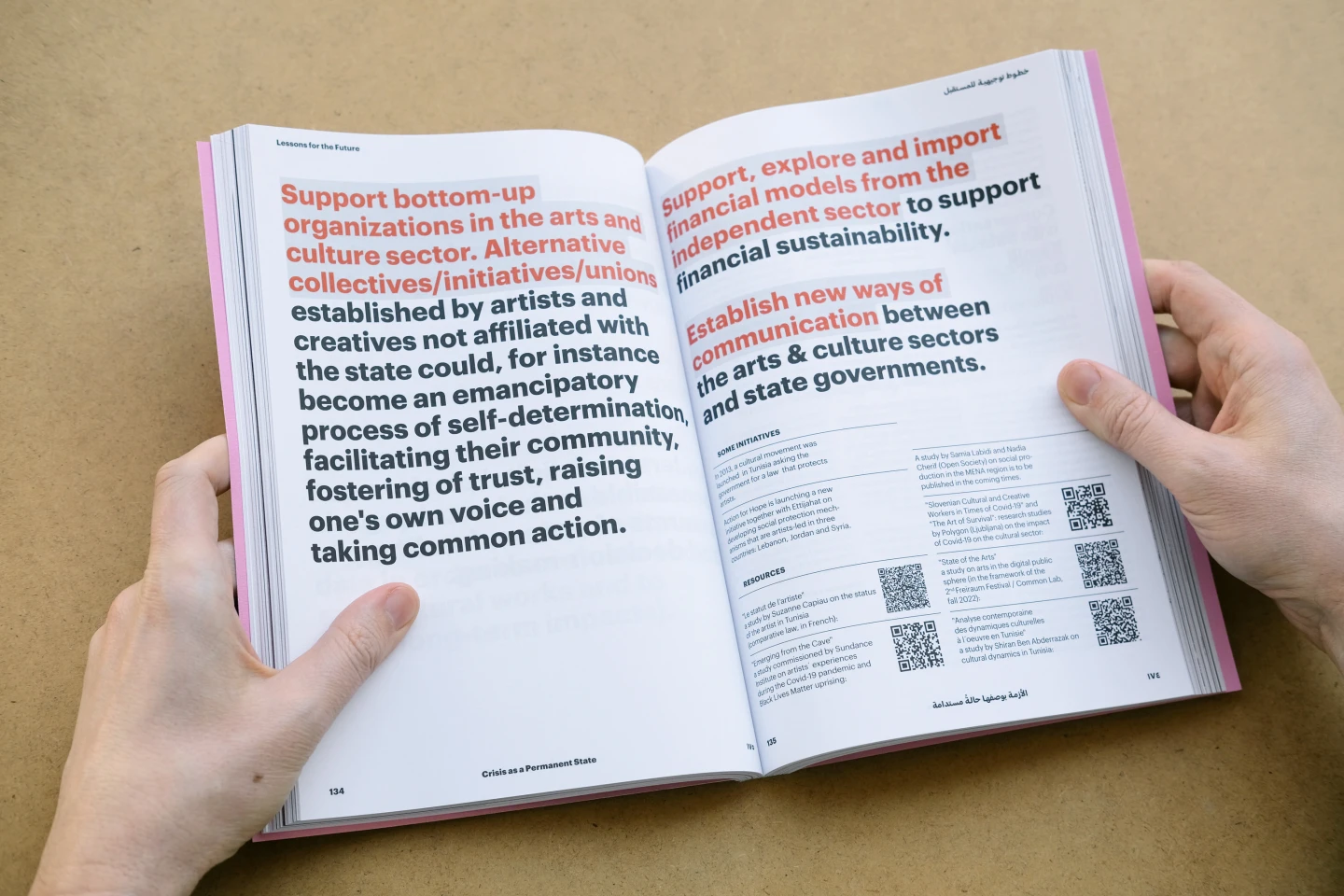
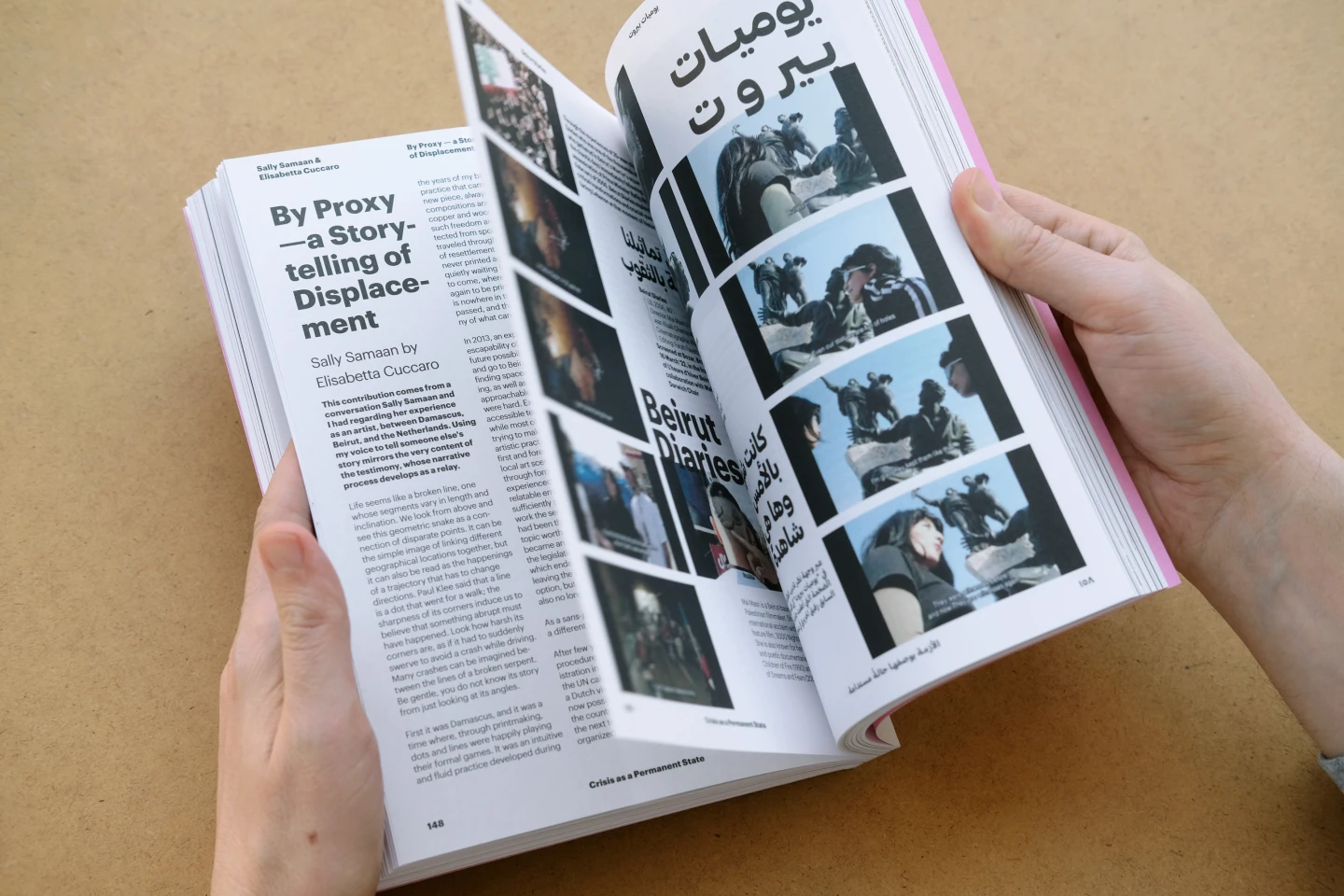
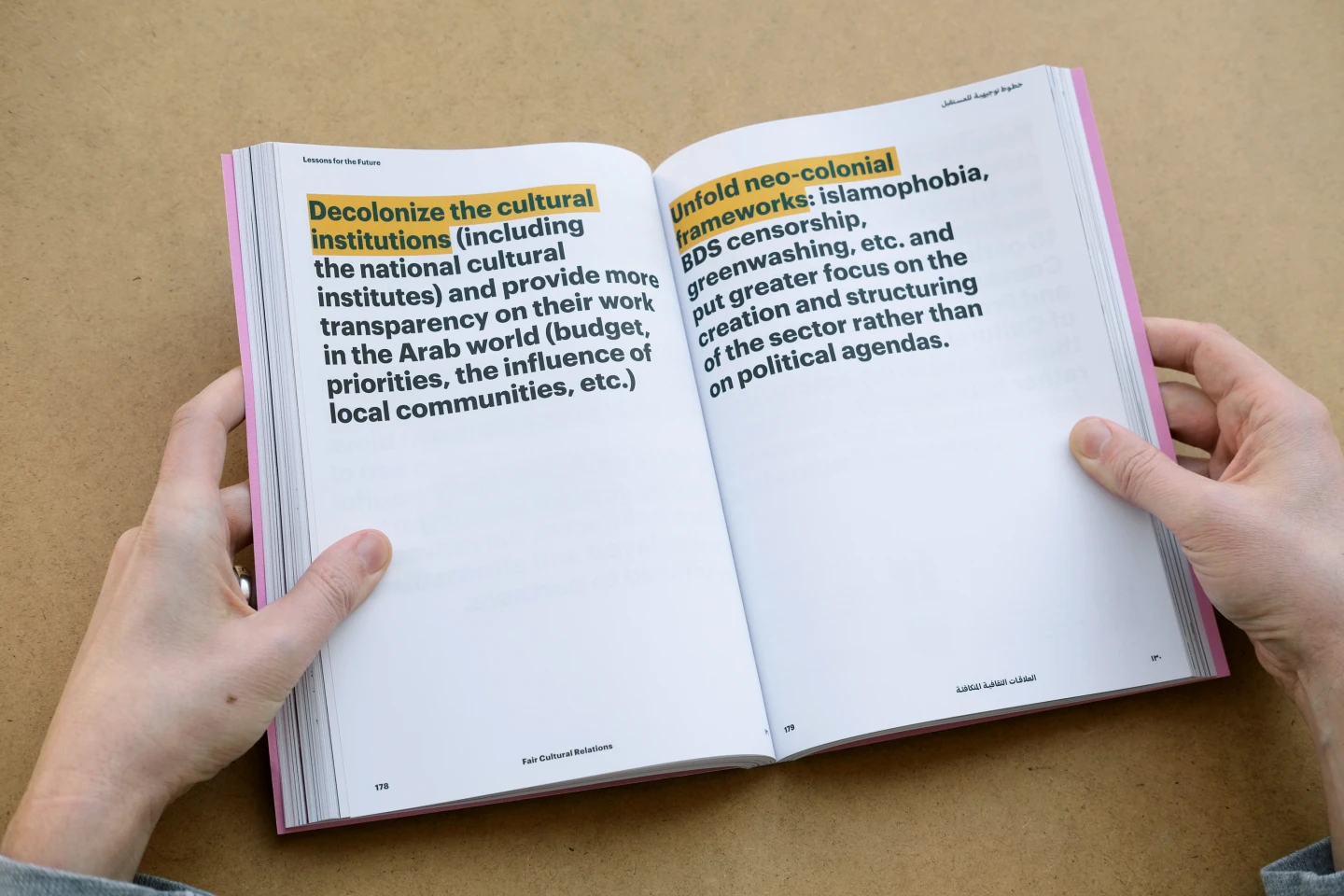
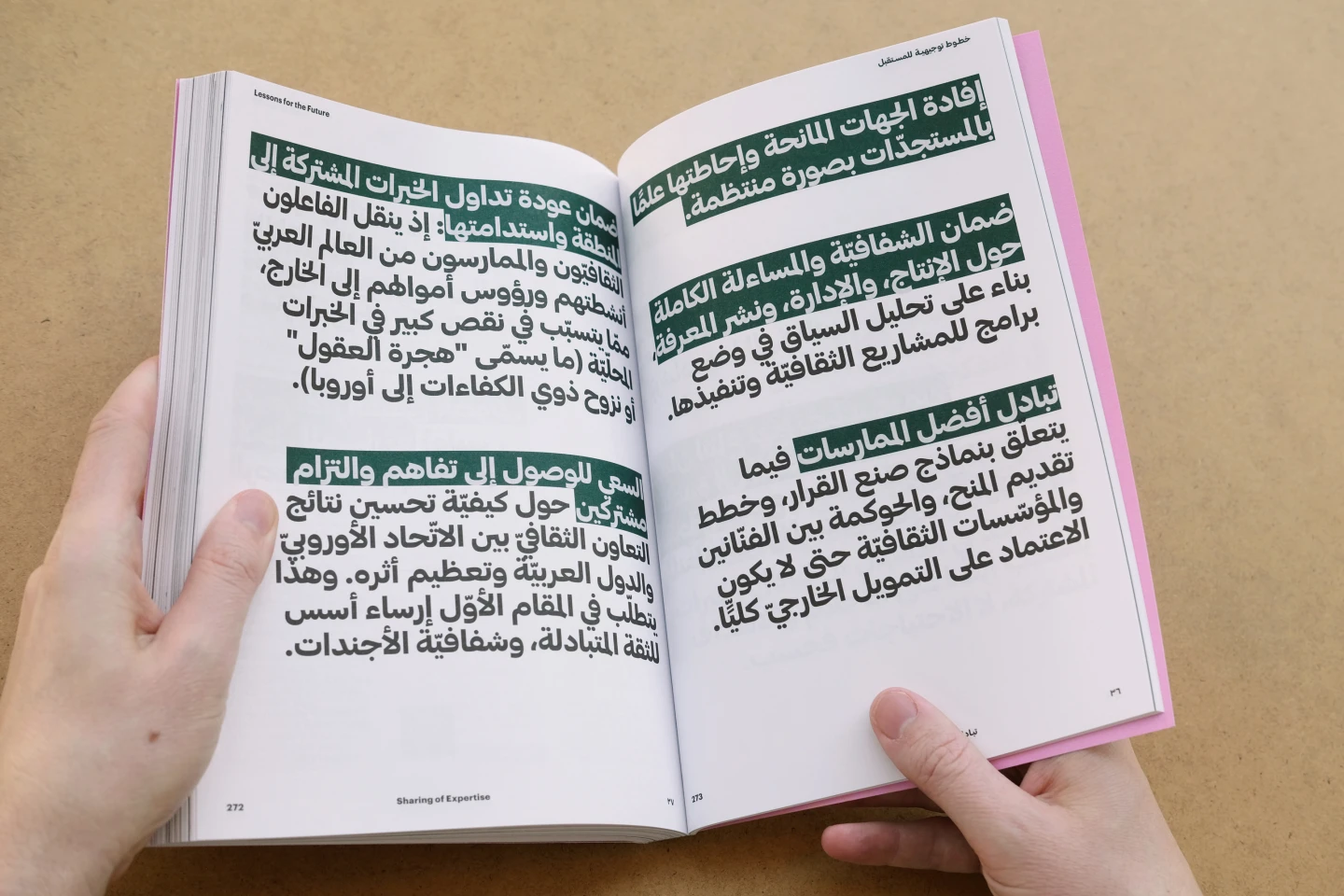
Halaqat, Lessons for the Future
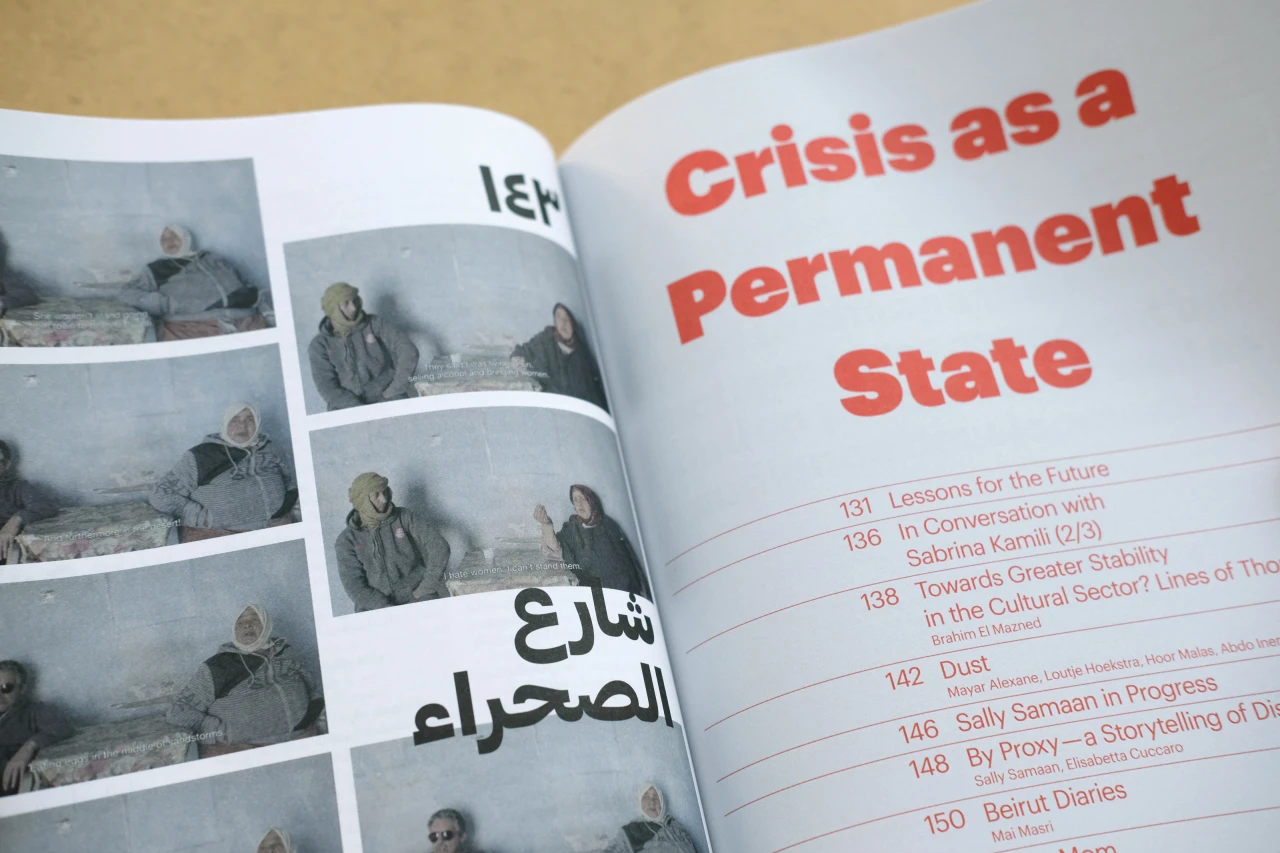
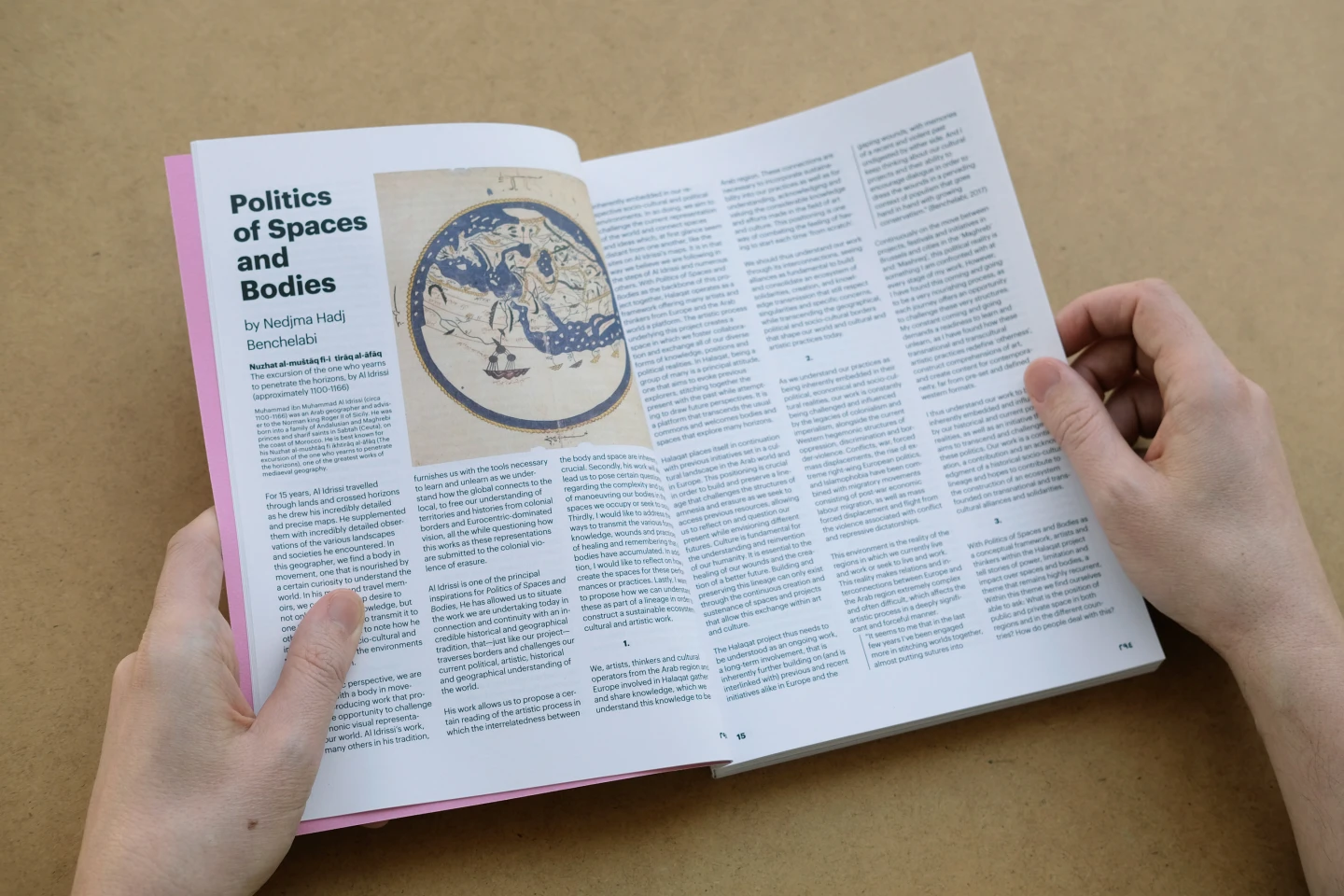
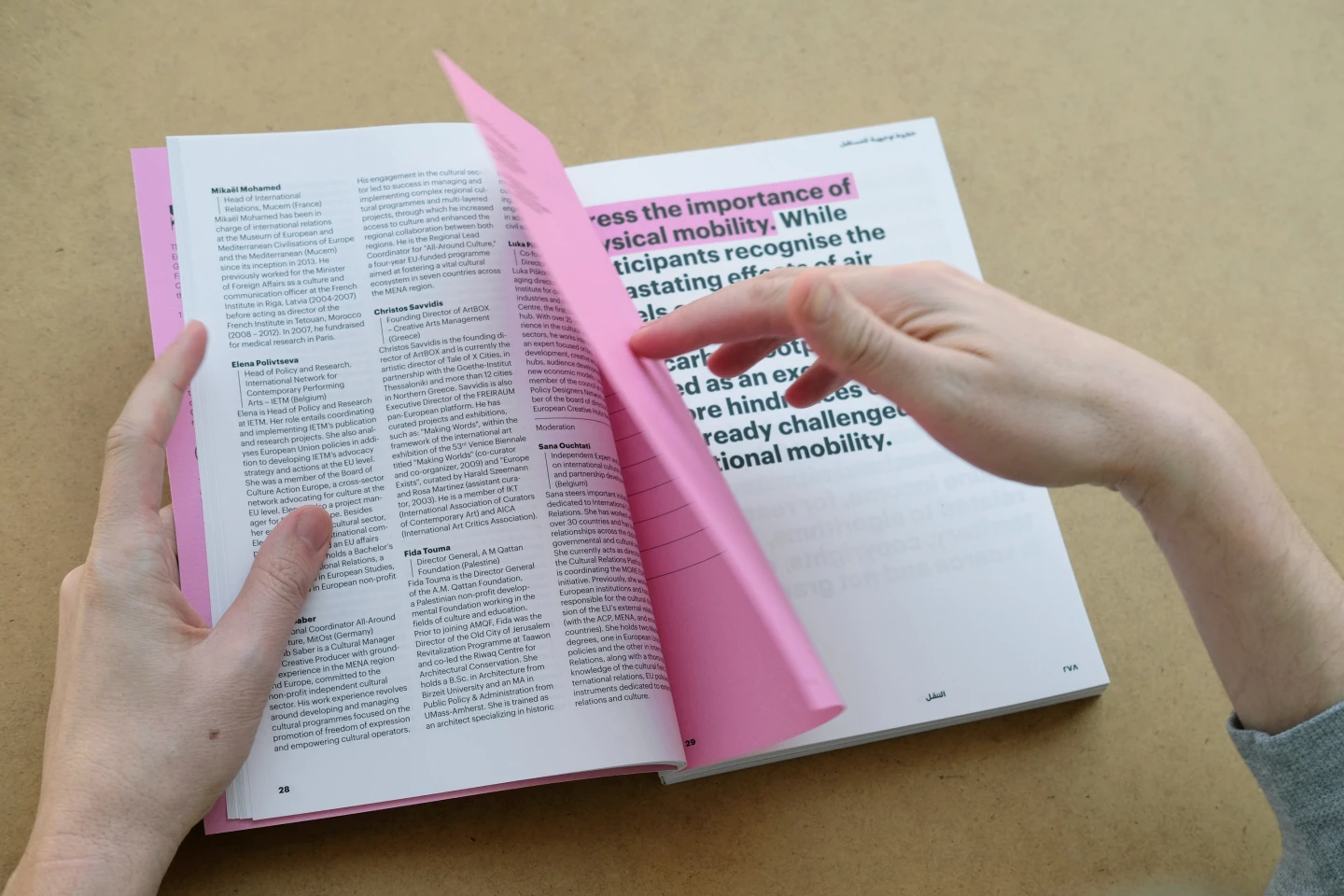
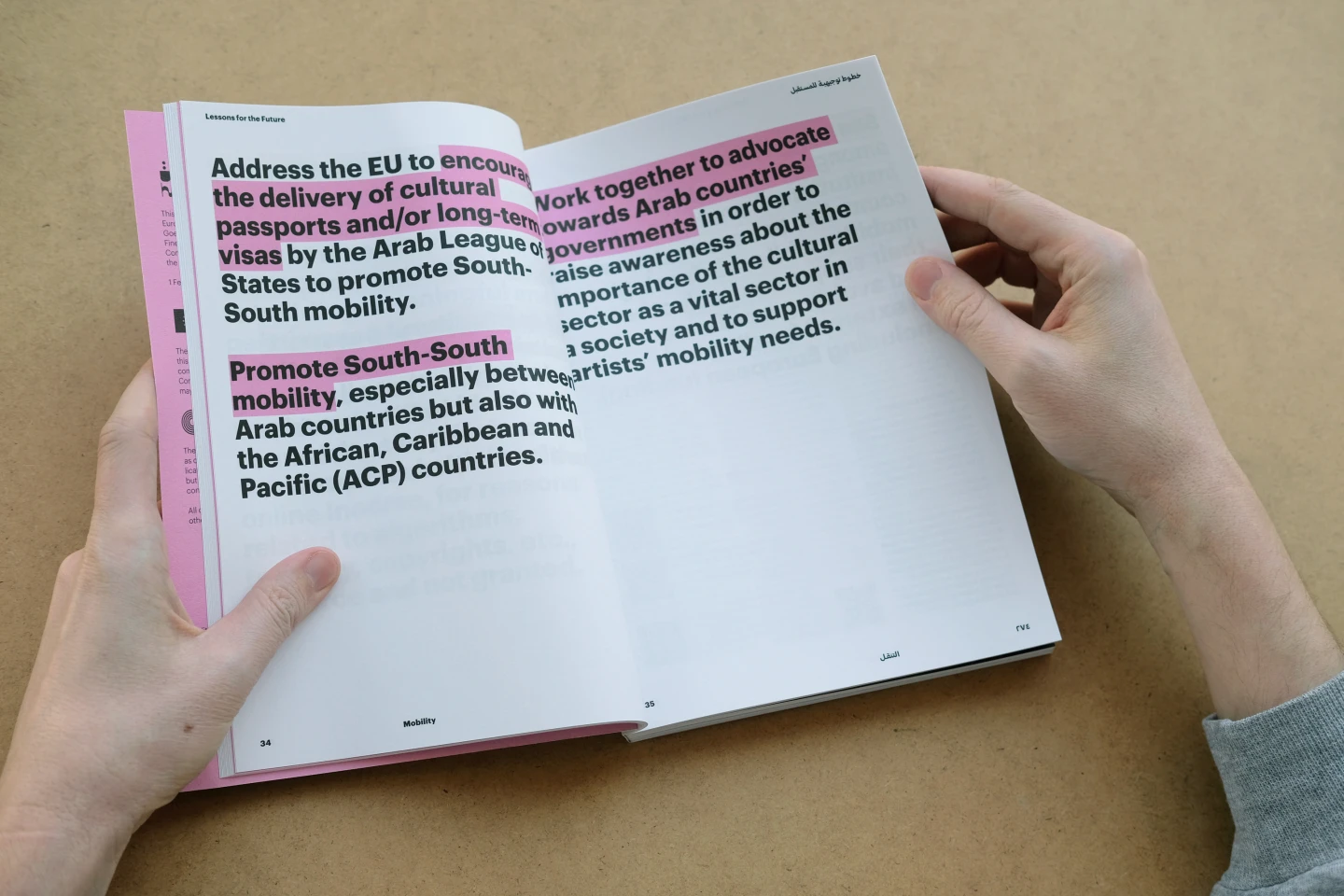
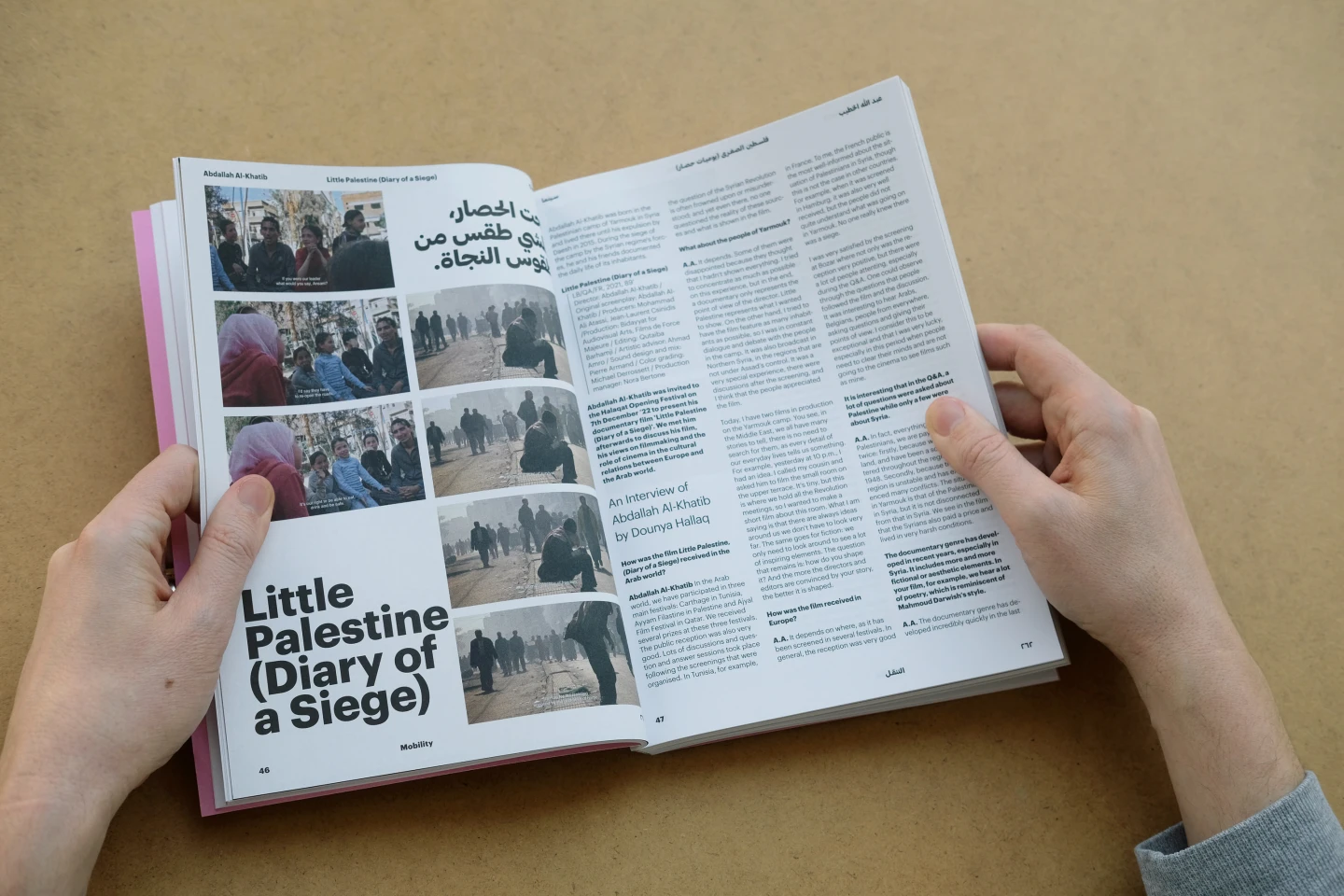
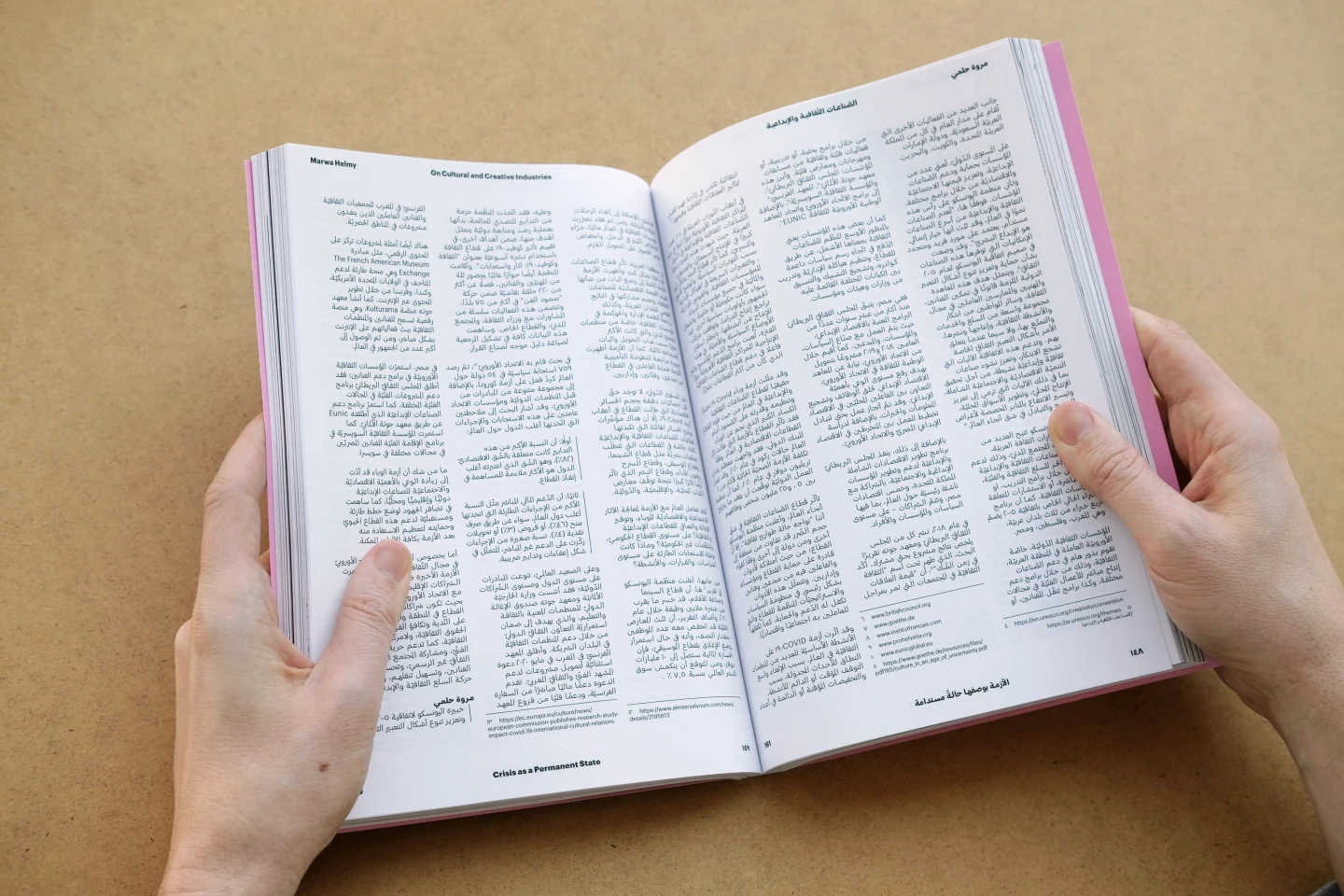
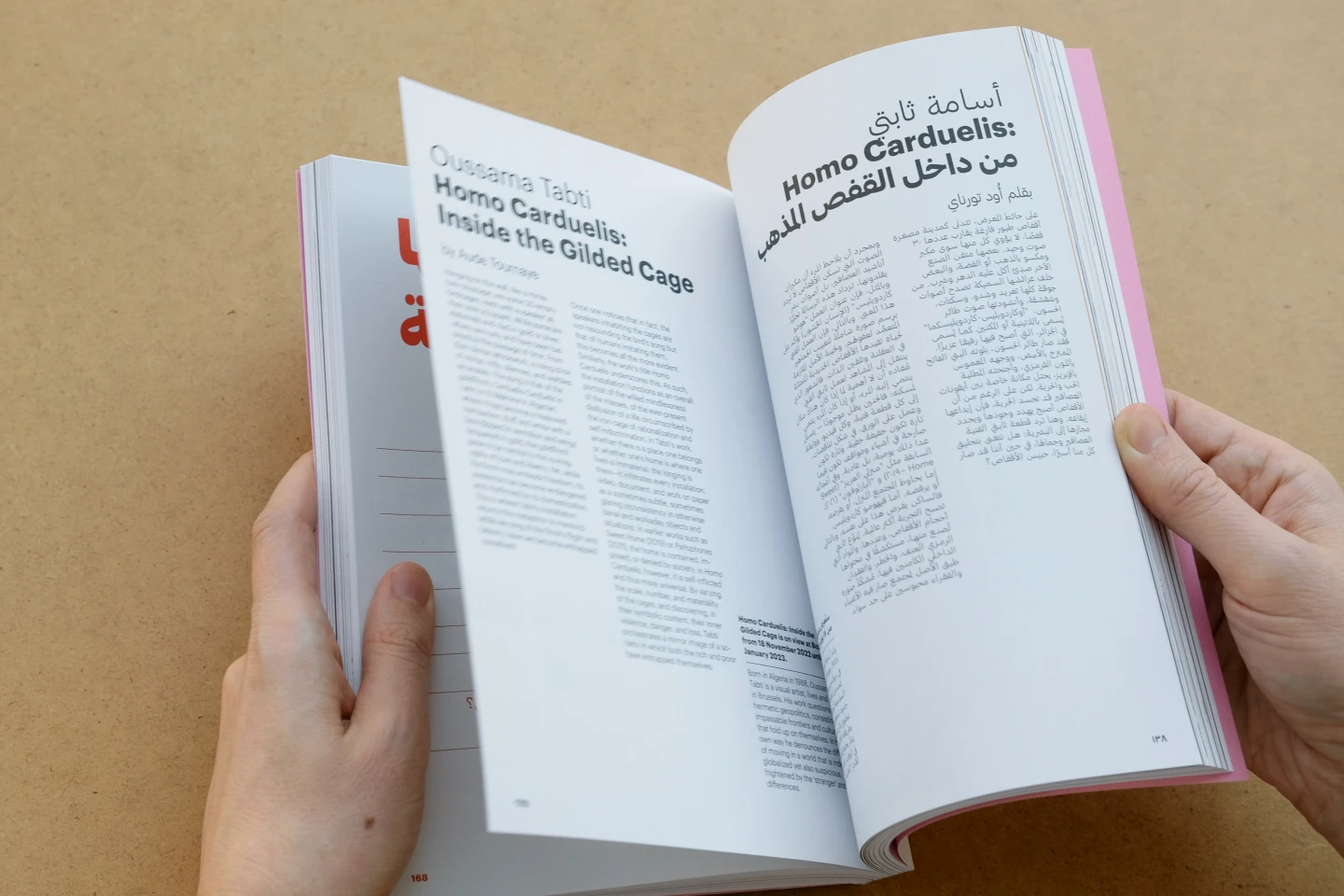
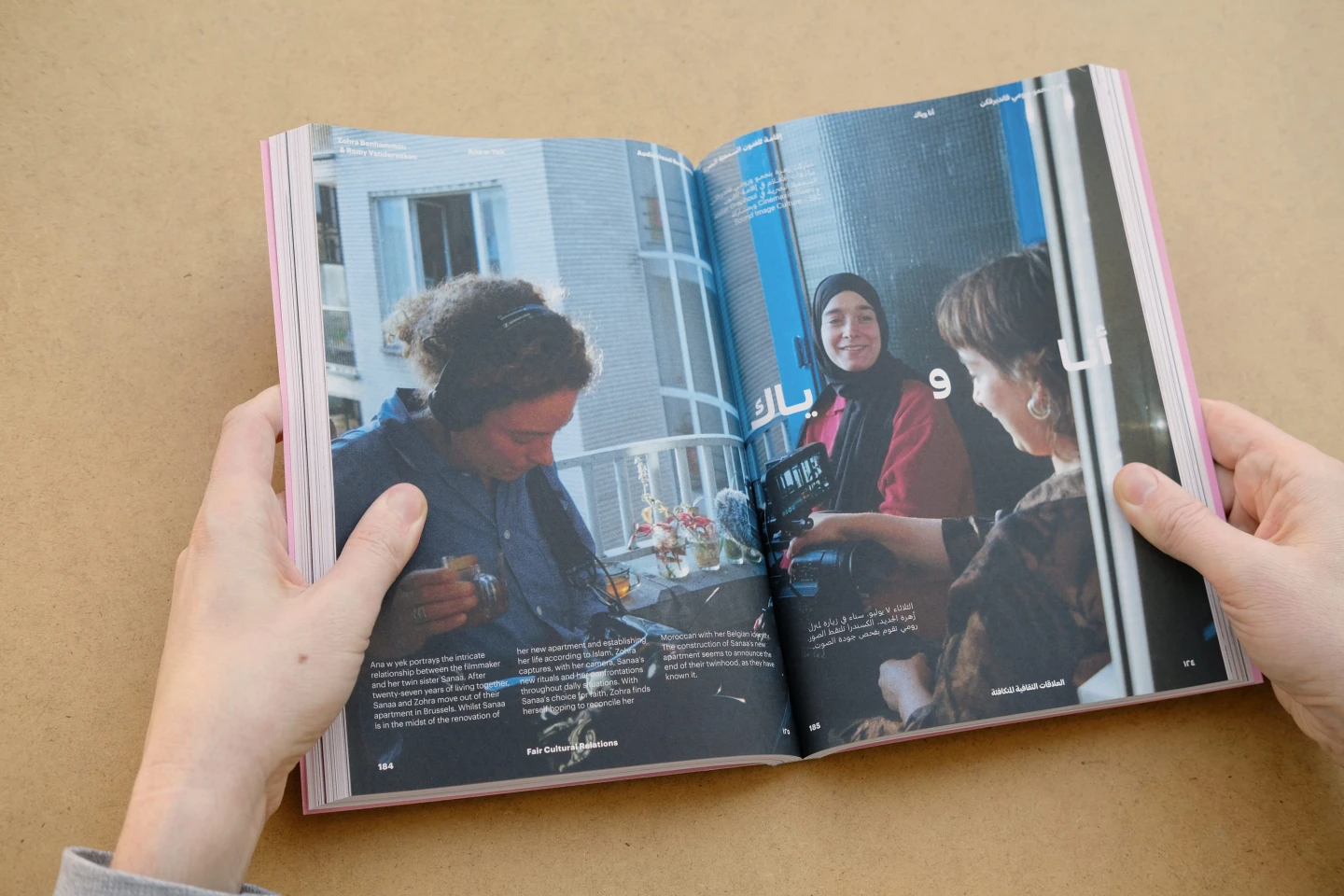
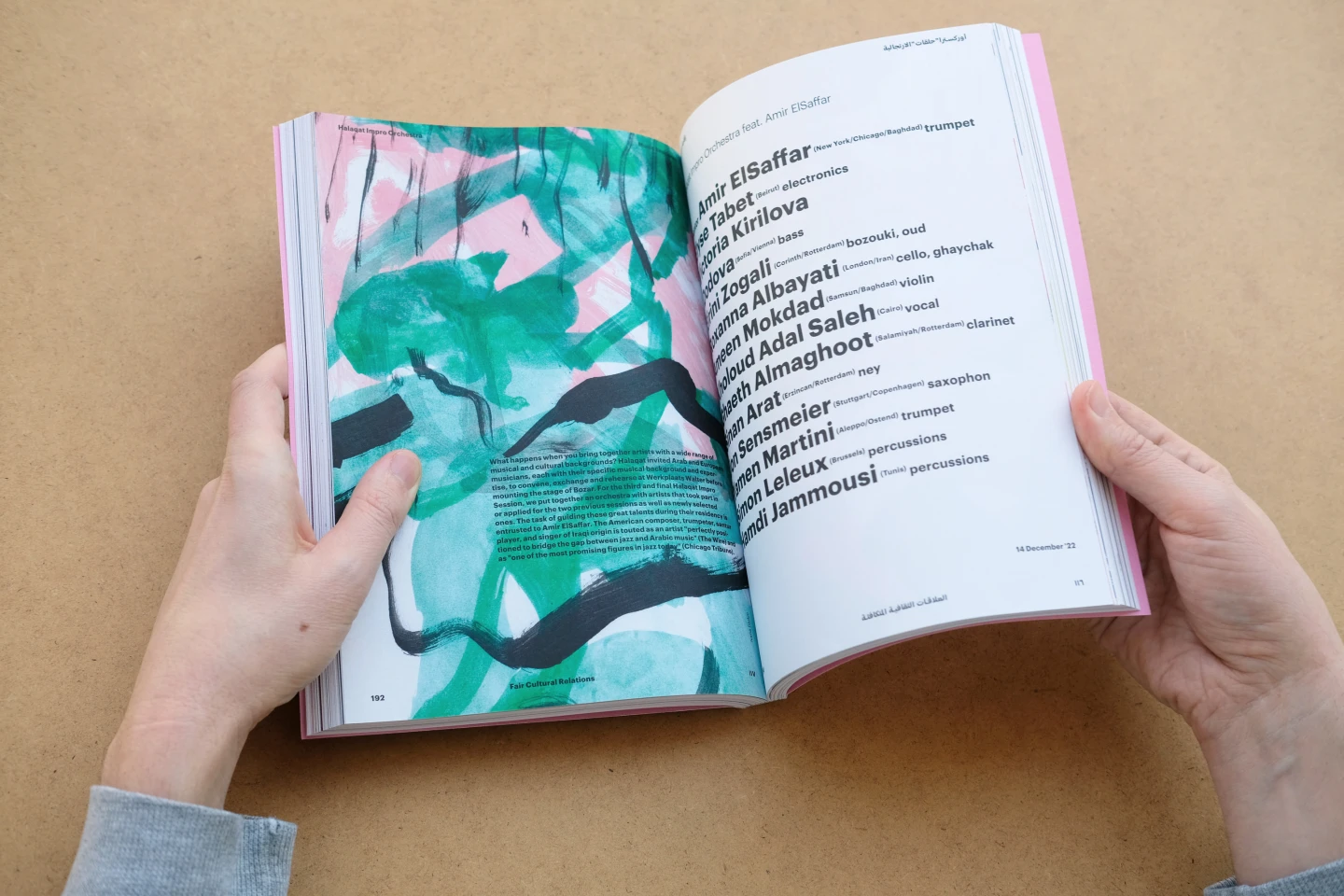
Goethe Institute, Bozar Editorial, Book 2022Halaqat is a supraregional project connecting and supporting artists and cultural practitioners from European and Arab countries through residencies, public events, grants and exchanges focused on care and gender. Its first programme held between 2021 and 2023 also included experts round tables on thee following themes: Mobility, financing, crisis as a permanent state, fair cultural relations, and exchange of expertise.
To convey all aspects of the Politics of Spaces and Bodies subject addressed by Halaqat in a limited number of pages and tell the story of a project in the making we decided to merge together what could have been individual publications: An institutional report, an almanac, a programme, a manifesto, a magazine with interviews, cartes blanches, and reviews... The five themes of the 'Lessons for the future' became chapters in which every other content, out of its chronology in Halaqat, were included by conceptual correspondance.
-
-
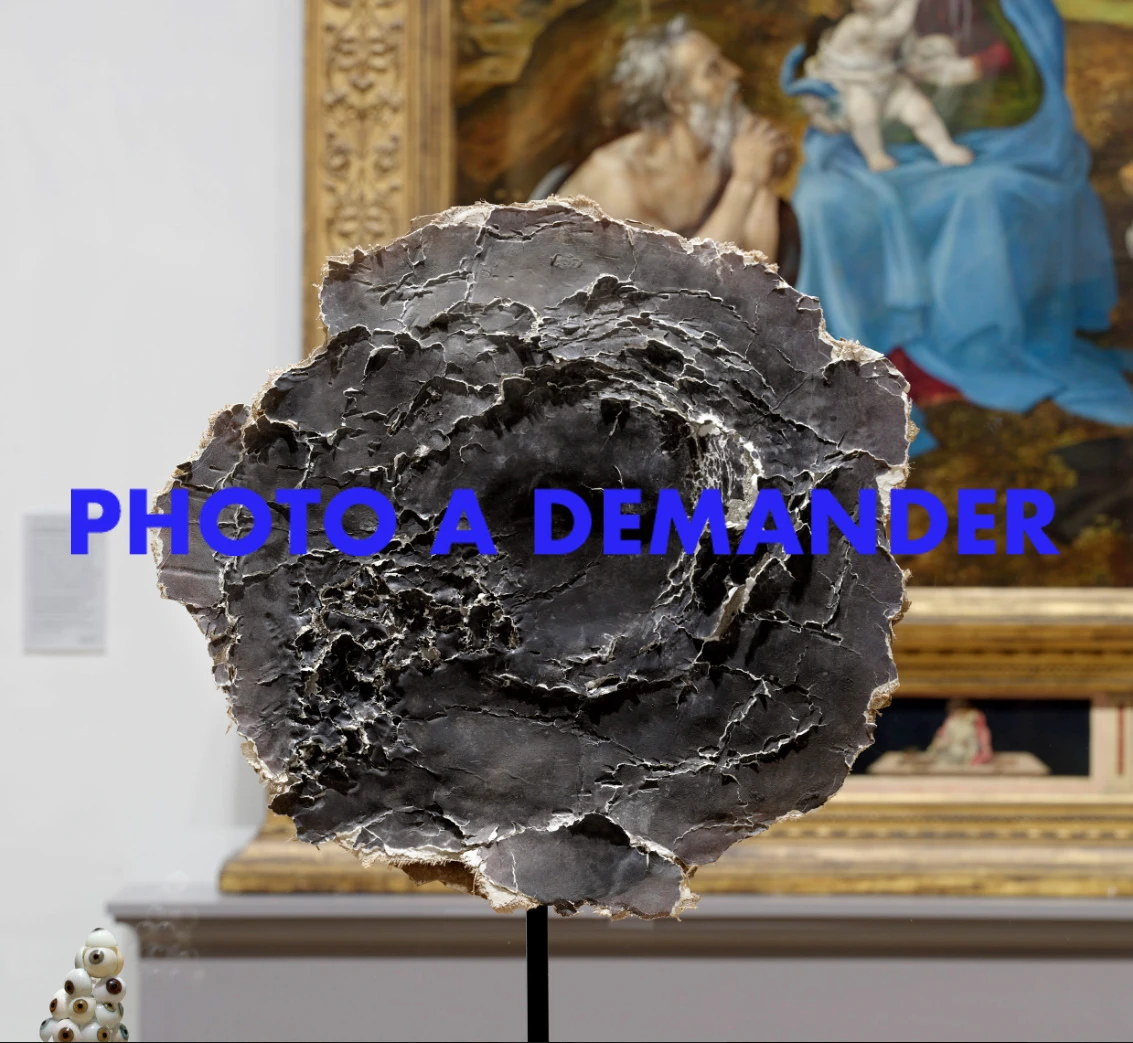
Da Vinci
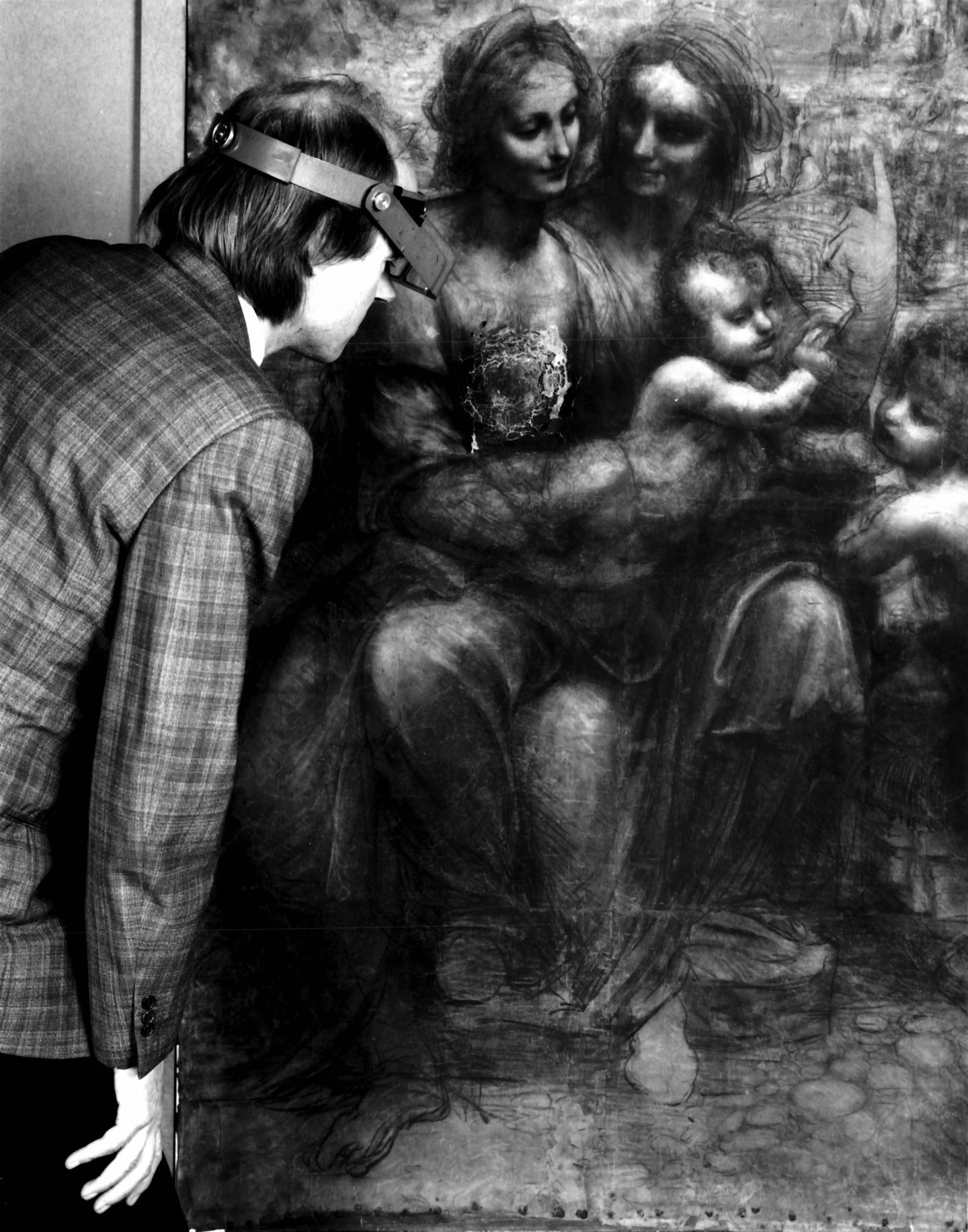
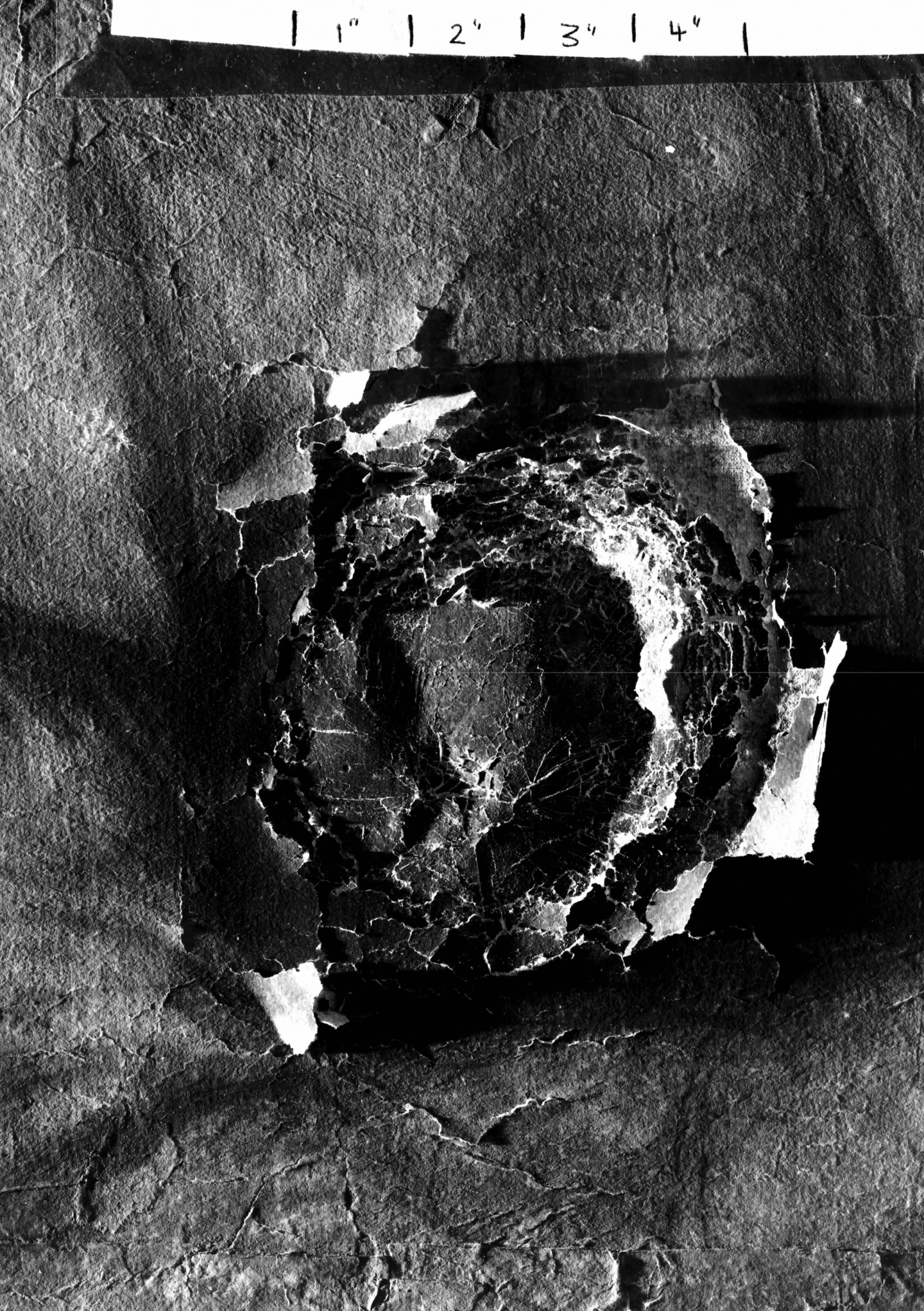
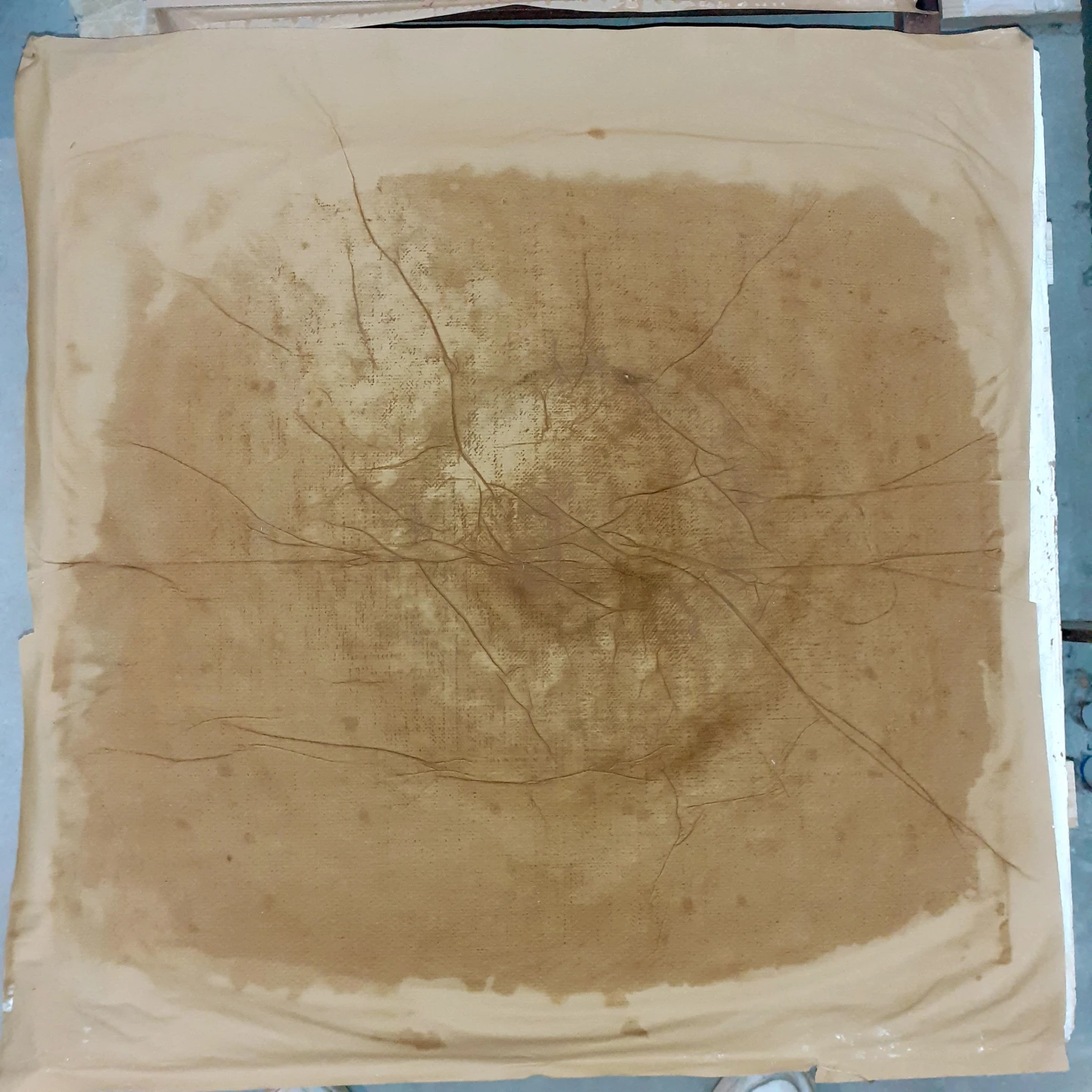
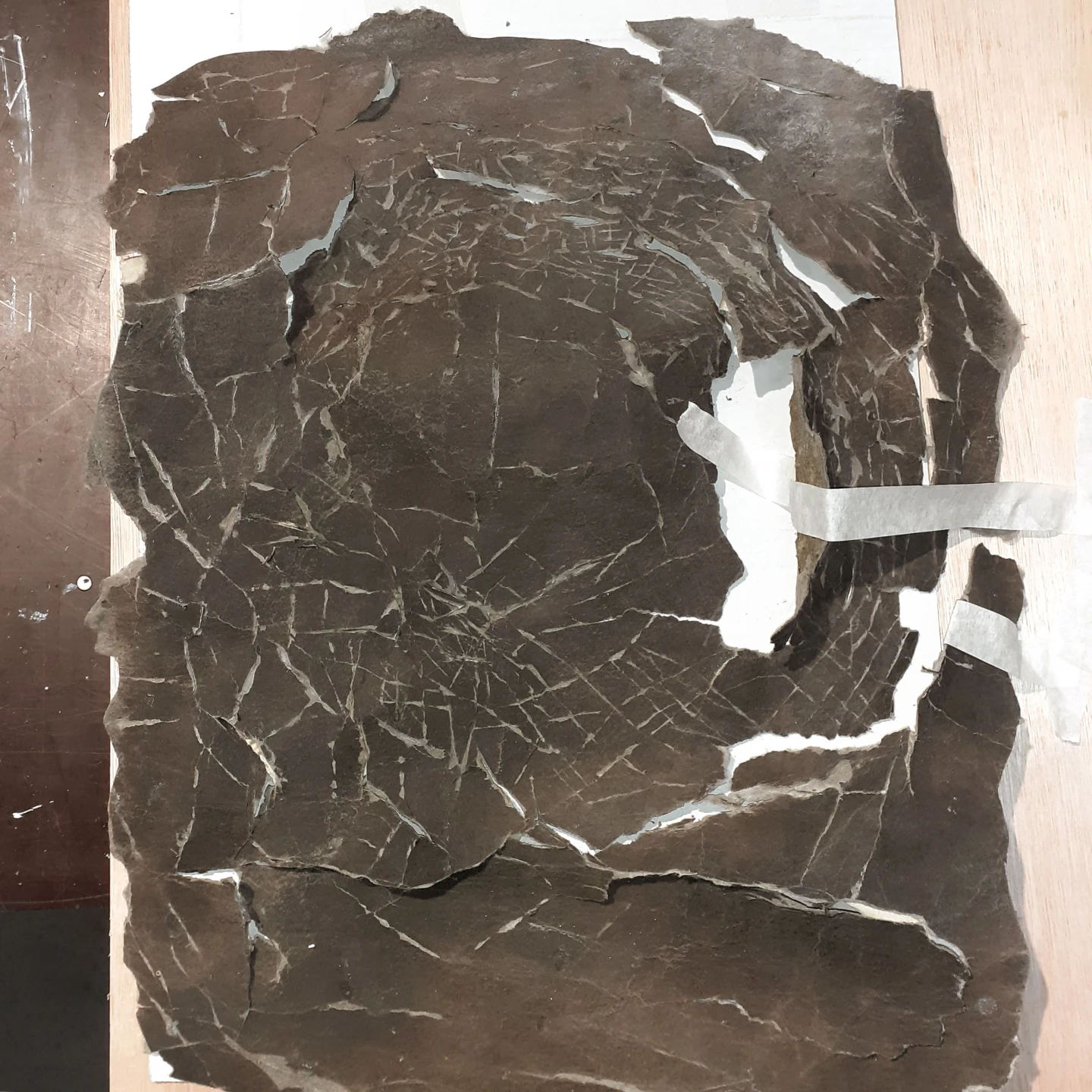
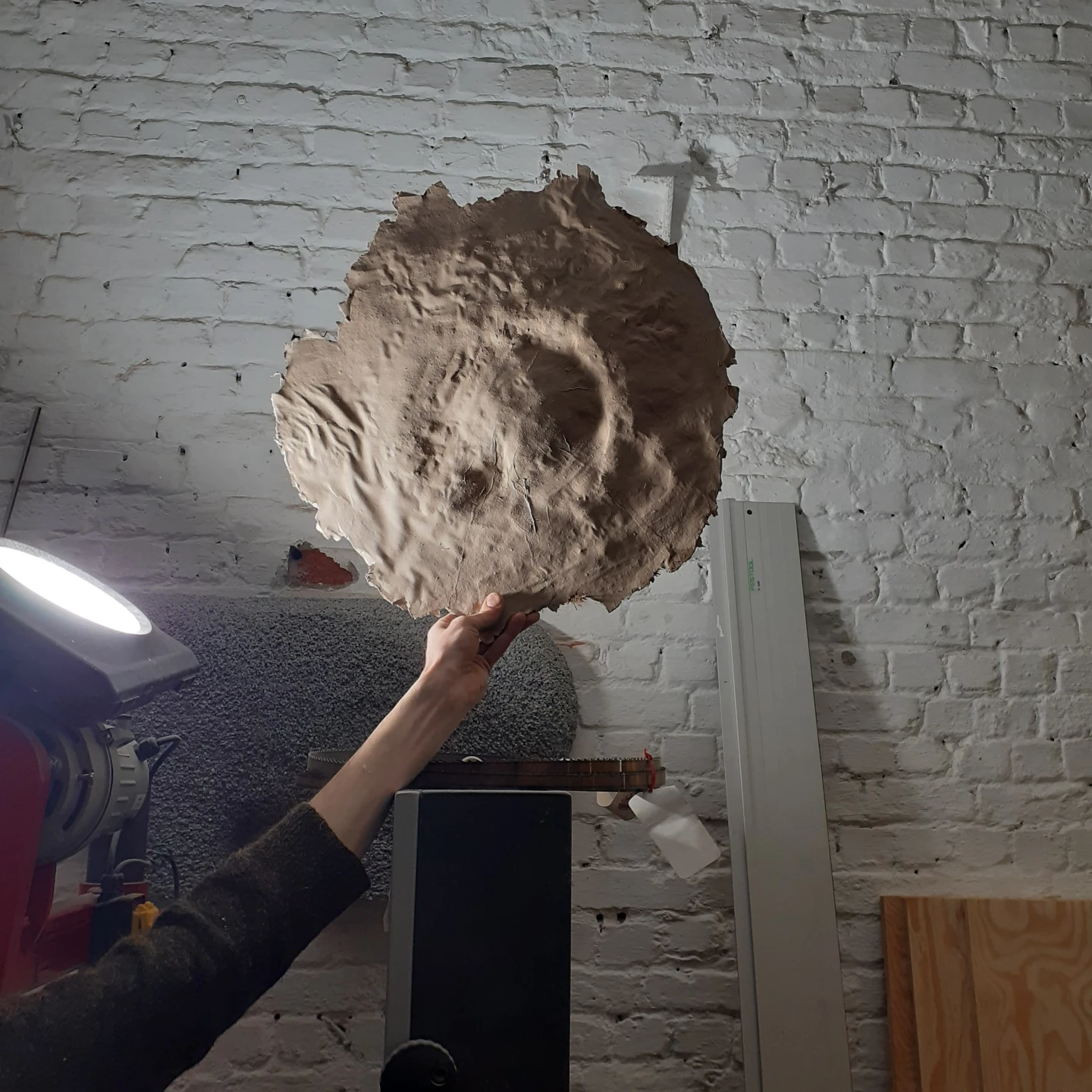
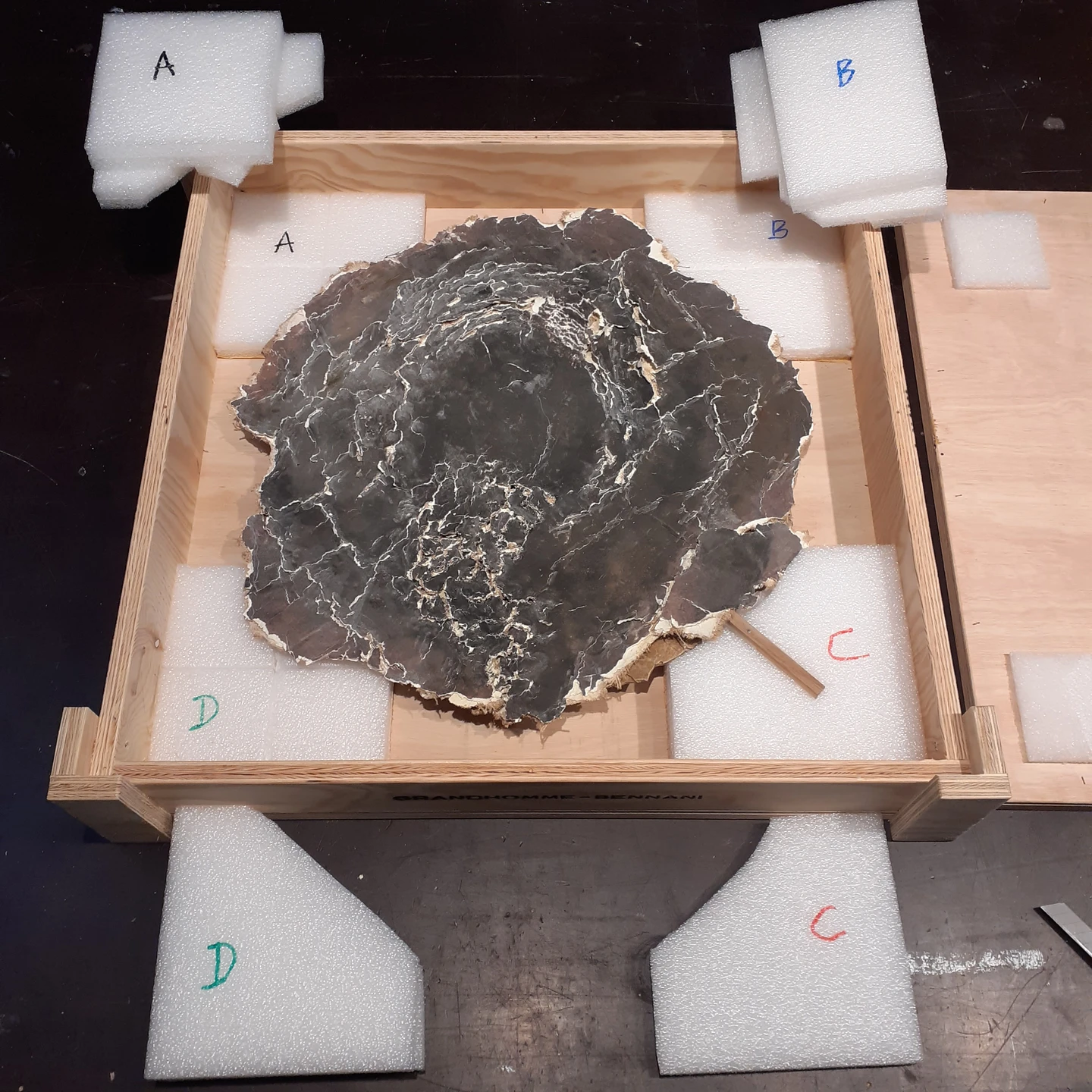
The National Gallery, London Production 2022In the exhibition If you prick us, do we not bleed?, Ali Cherri presents work that considers how histories of trauma can be explored through a response to museum and gallery collections. Starting with research in the Gallery’s archive, Ali uncovered accounts of five paintings that were vandalised while on display. He was struck by the public’s highly emotional response to these attacks, finding that newspaper articles would describe the damages as if they were wounds inflicted on a living being – even referring to the Gallery’s conservators as surgeons. He also noticed an overwhelming urge to ‘heal’, make good and hide the damage.
In response, Ali Cherri presented a series of mixed media, sculptural installations that recall aspects of each painting and that imagine its life following the vandalism. They bring into question what he calls the ‘politics of visibility’; the decisions we make about how, and to what extent, we accept trauma within museums. By translating each damaged work into a series of strange objects, it reminds us that we are never truly the same after experiencing violence.
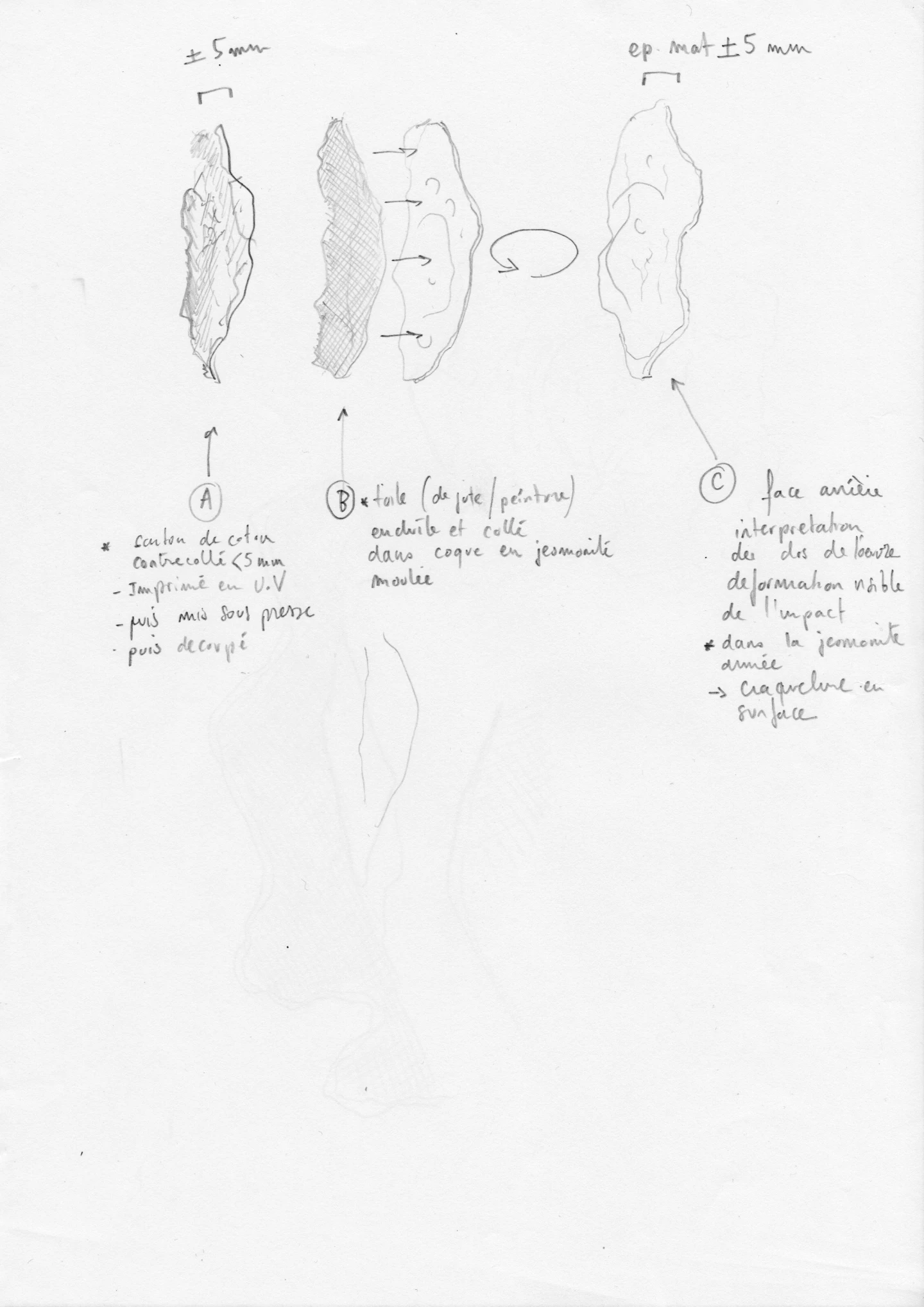
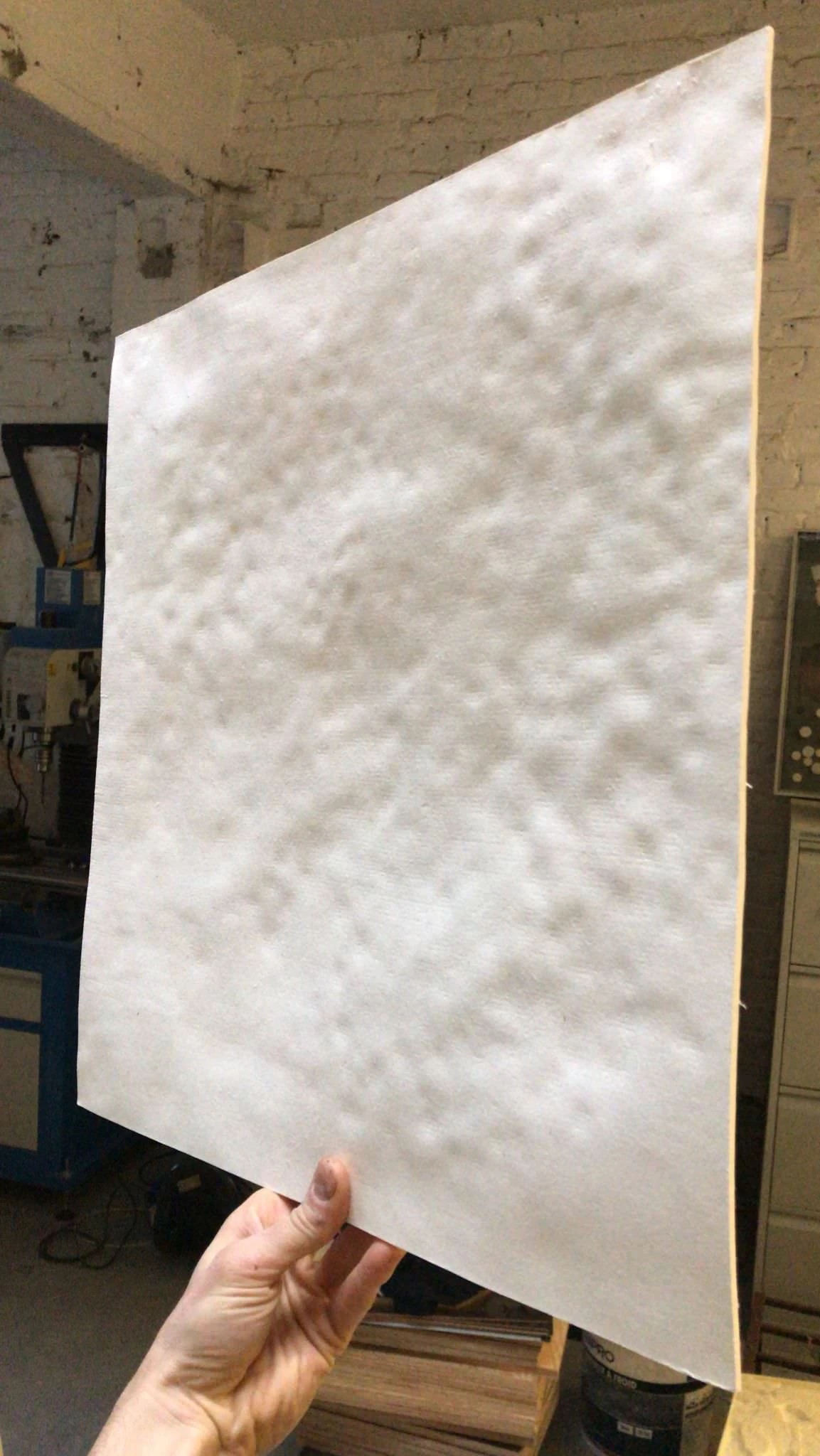
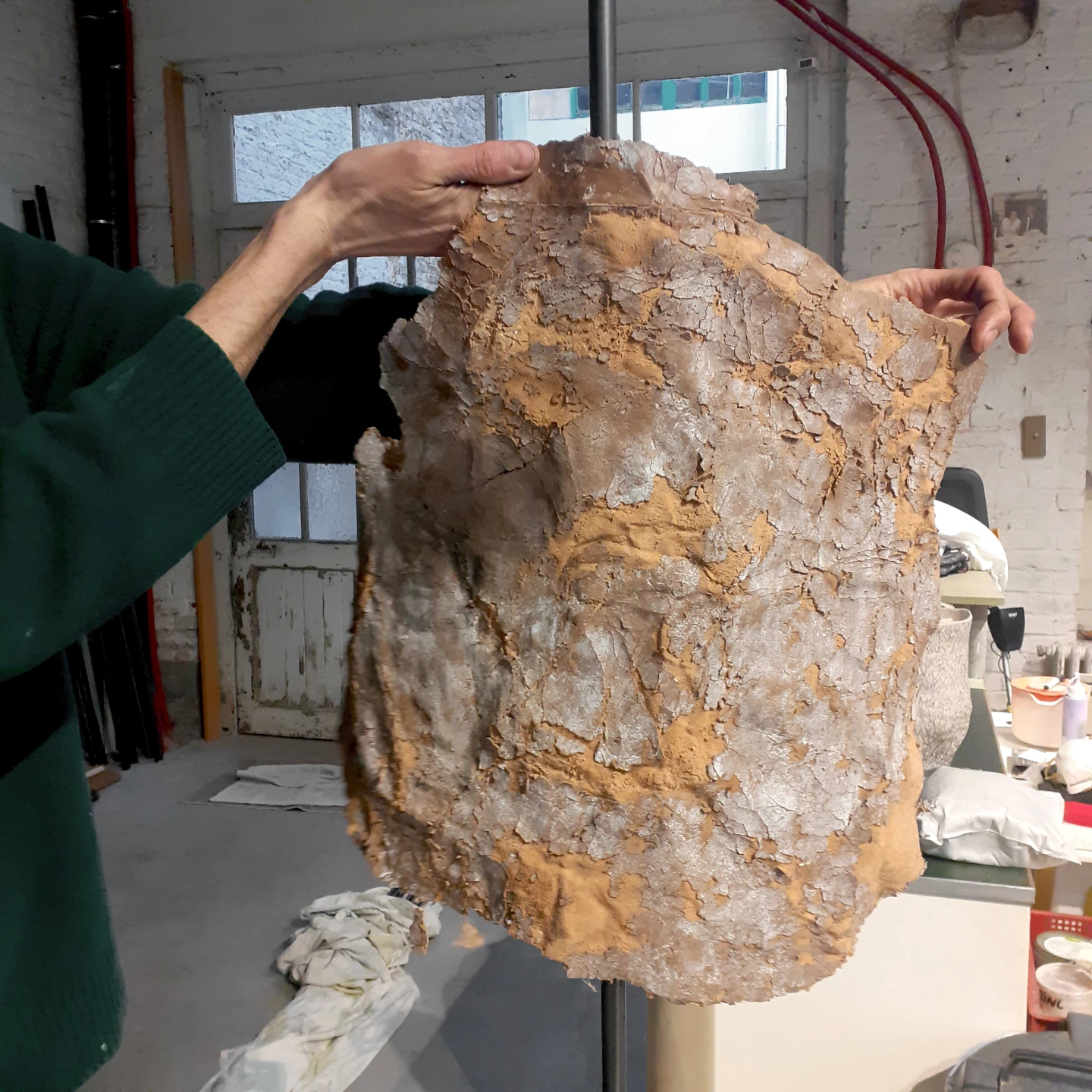
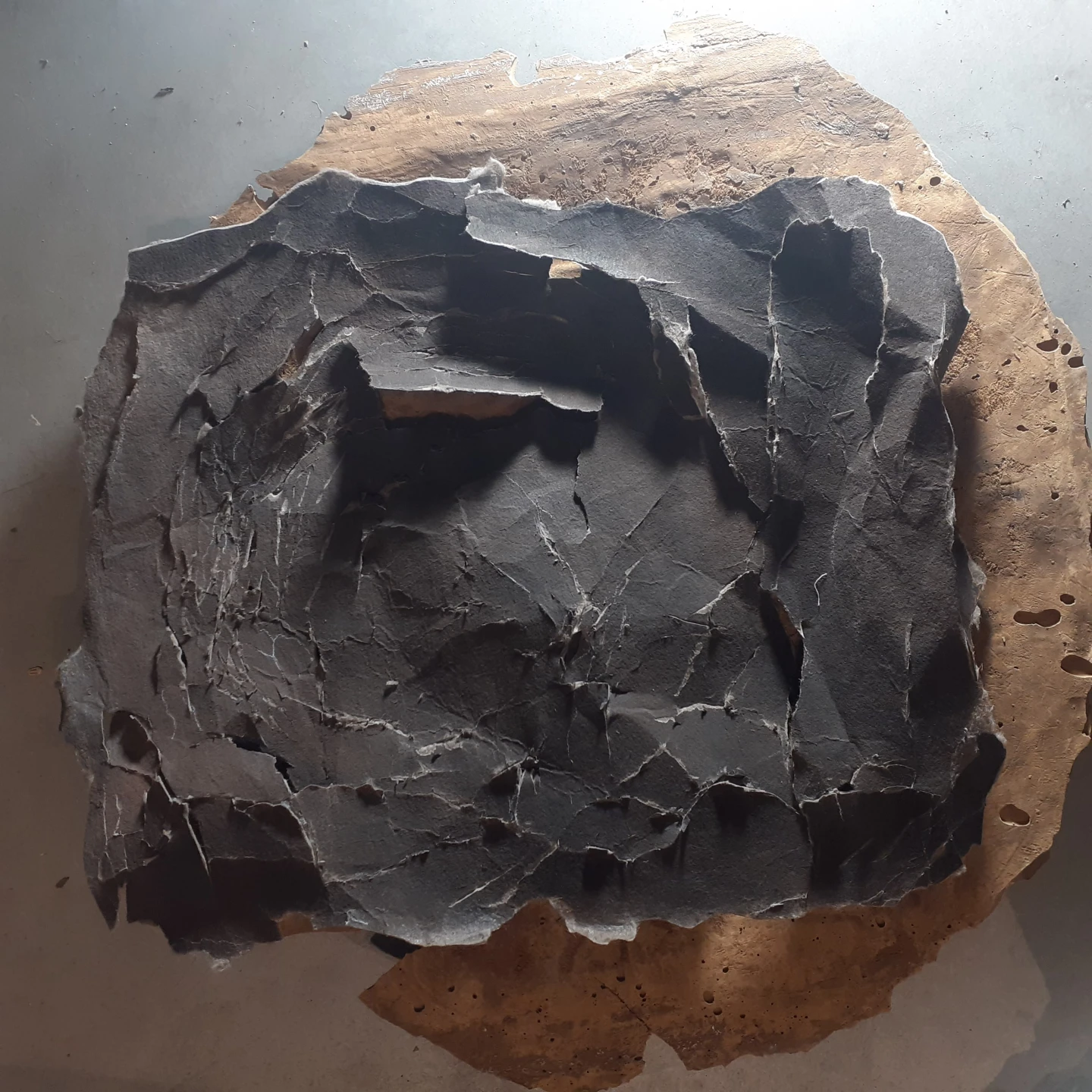
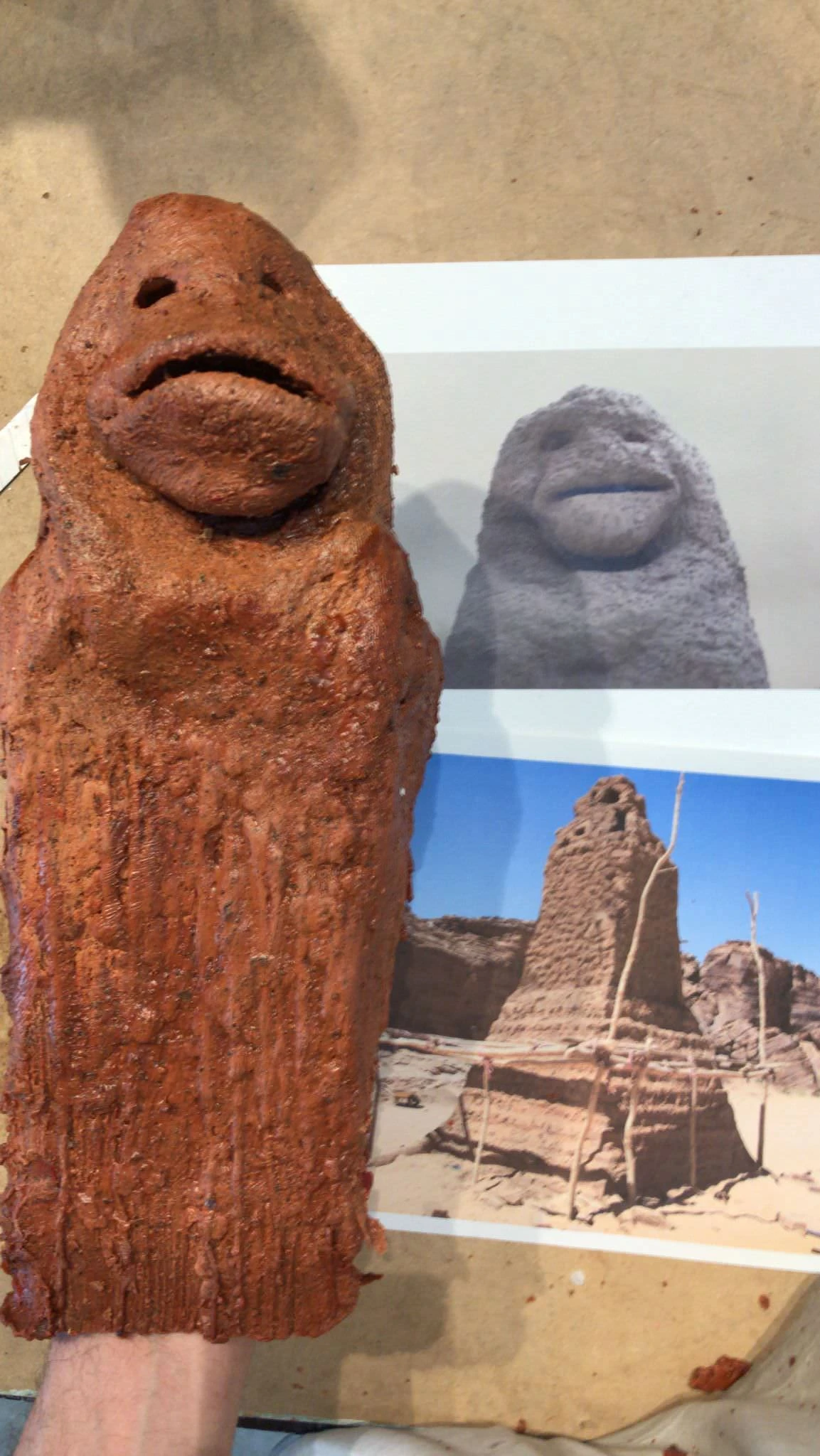
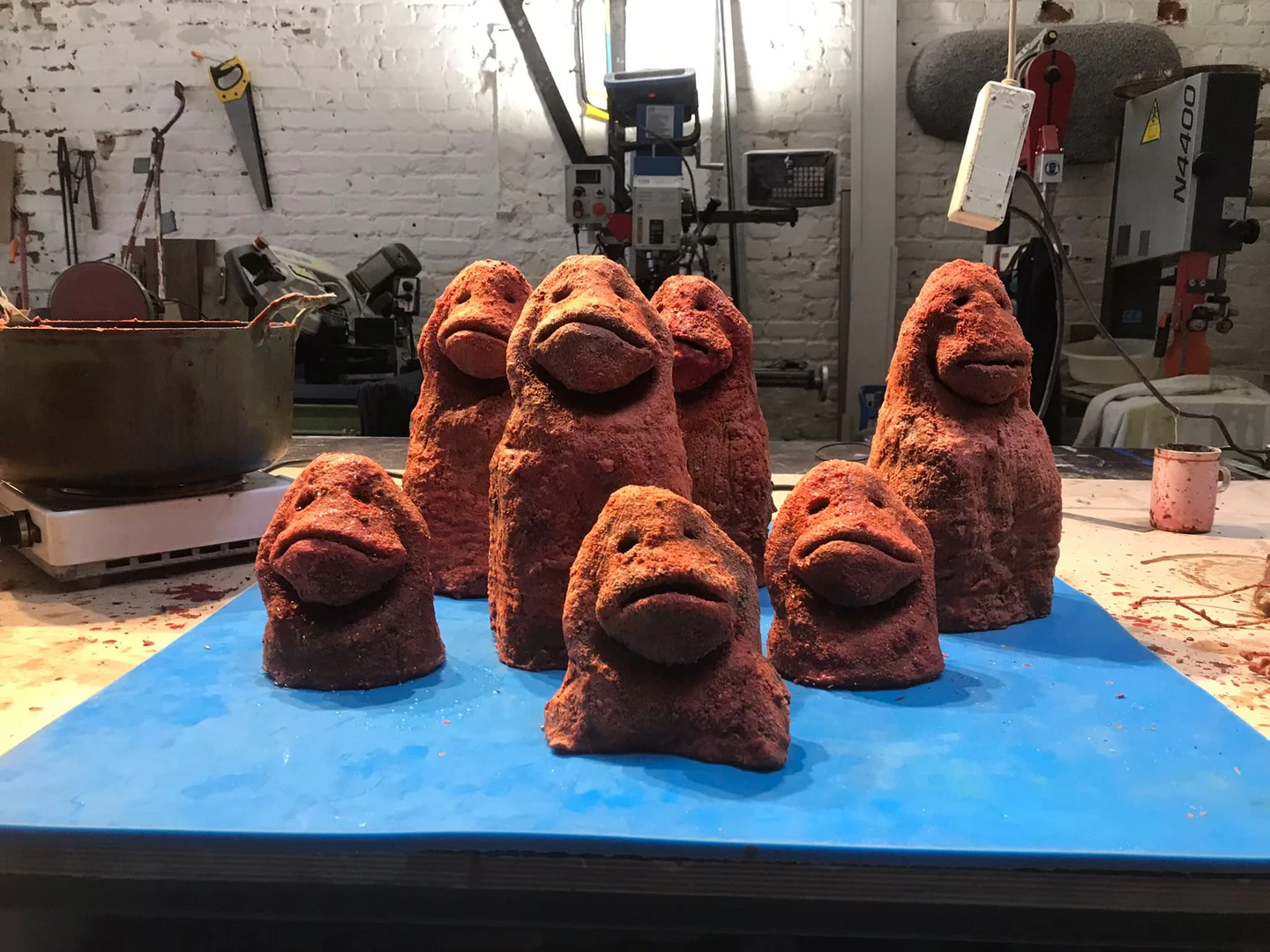
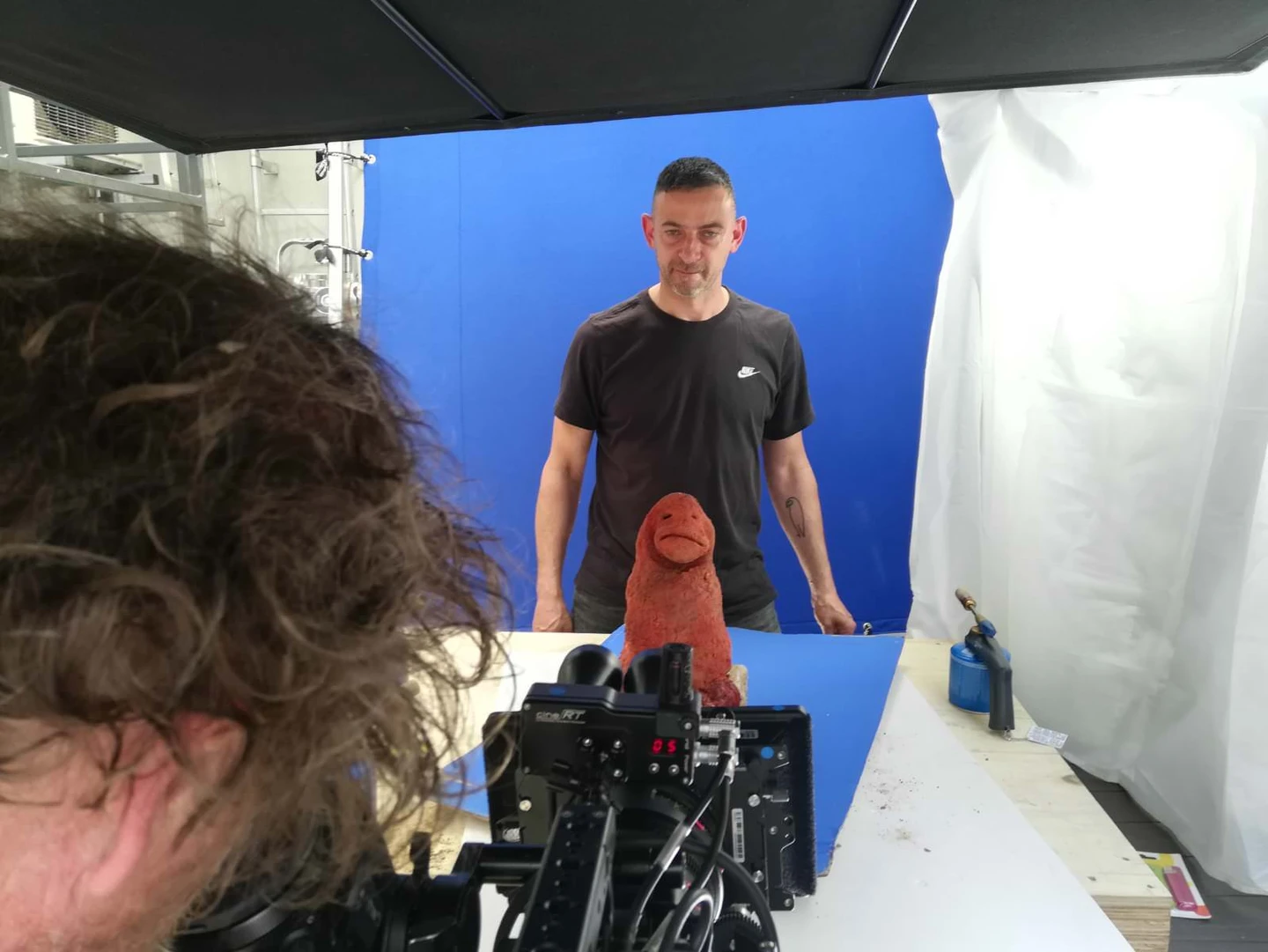
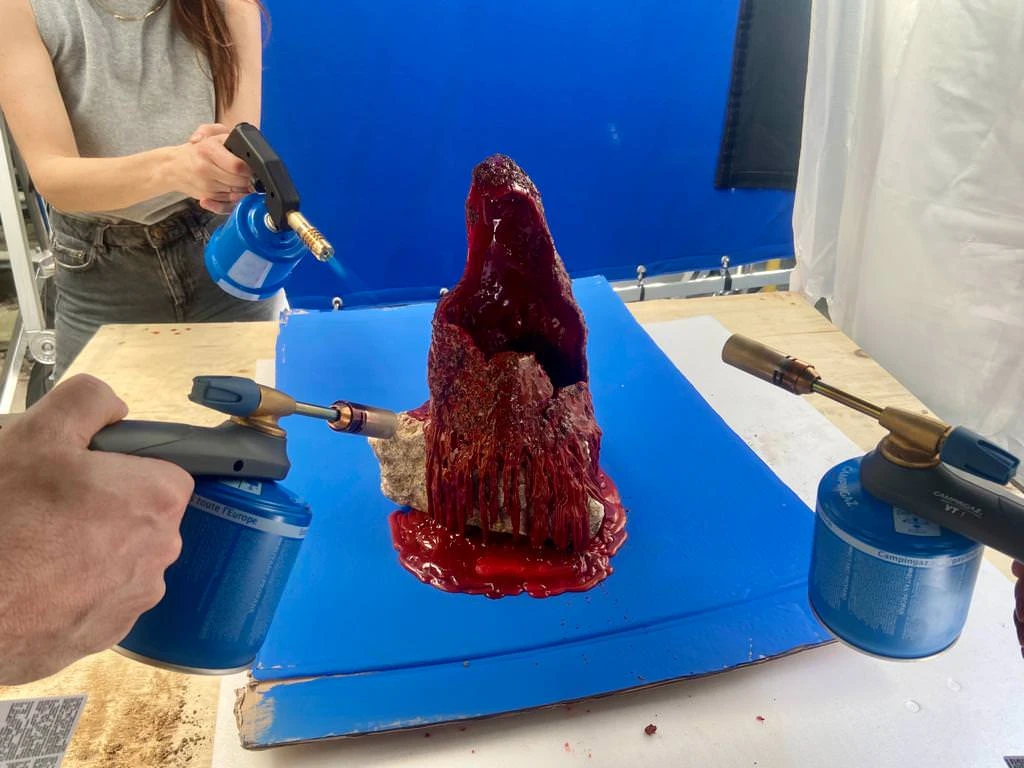
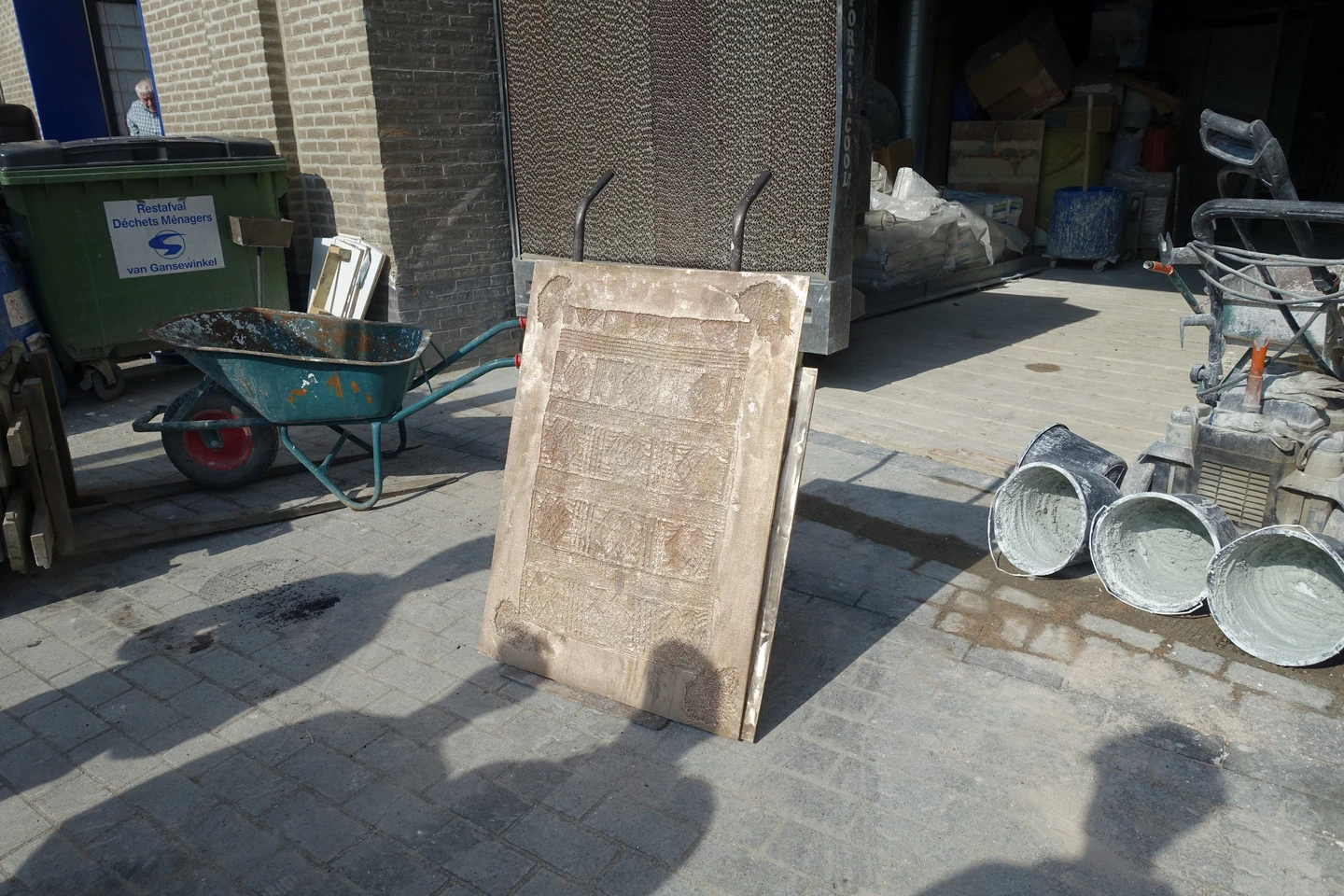
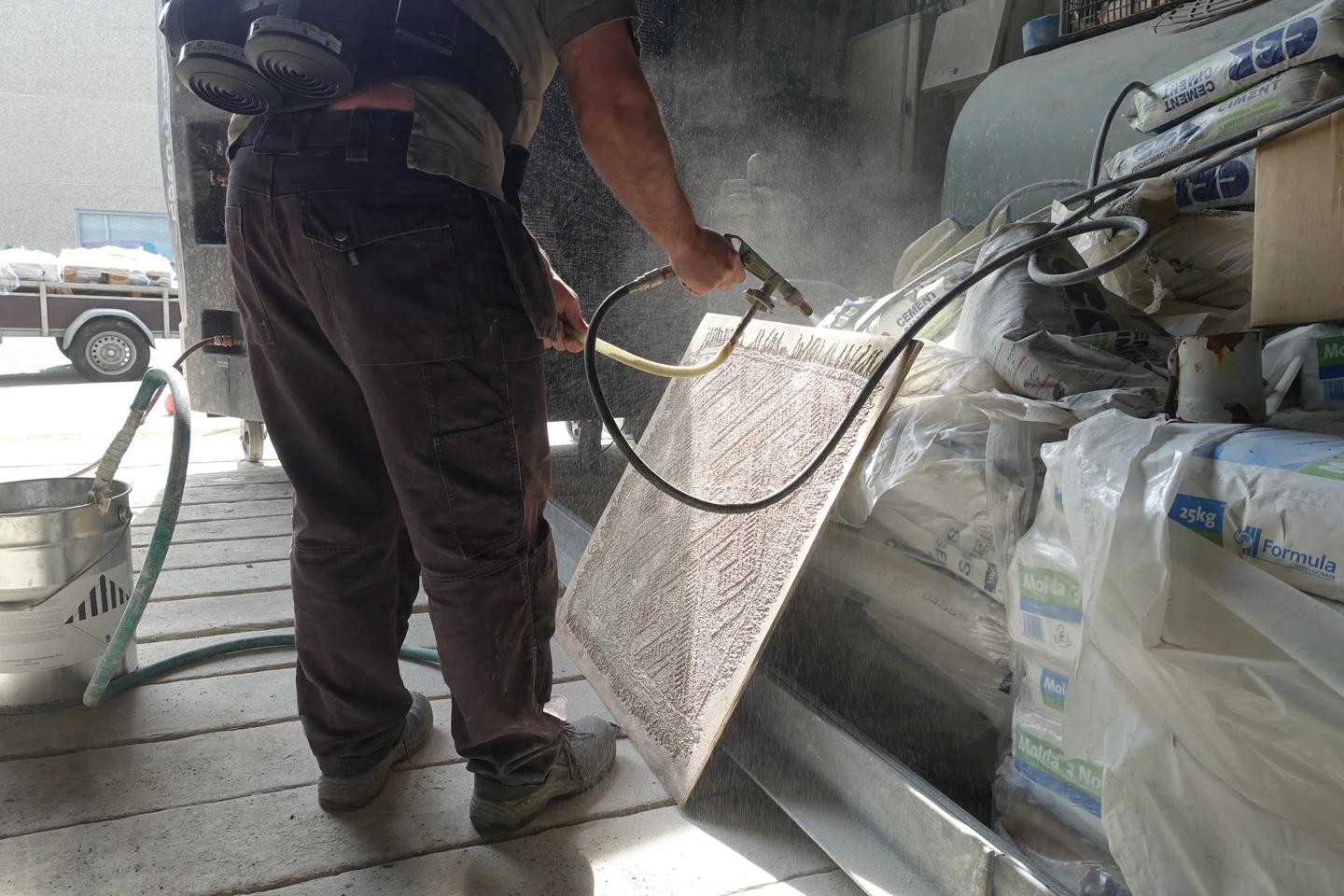
To this extend, Ali asked us to oversize the bullet impact in order to allow the viewer to see the scars and feel the 'skins' layers of the wounded artwork. We combined the reading of the restauration file and paper historian consultancy with some empirical experiments to achieve a credible result.
-
-
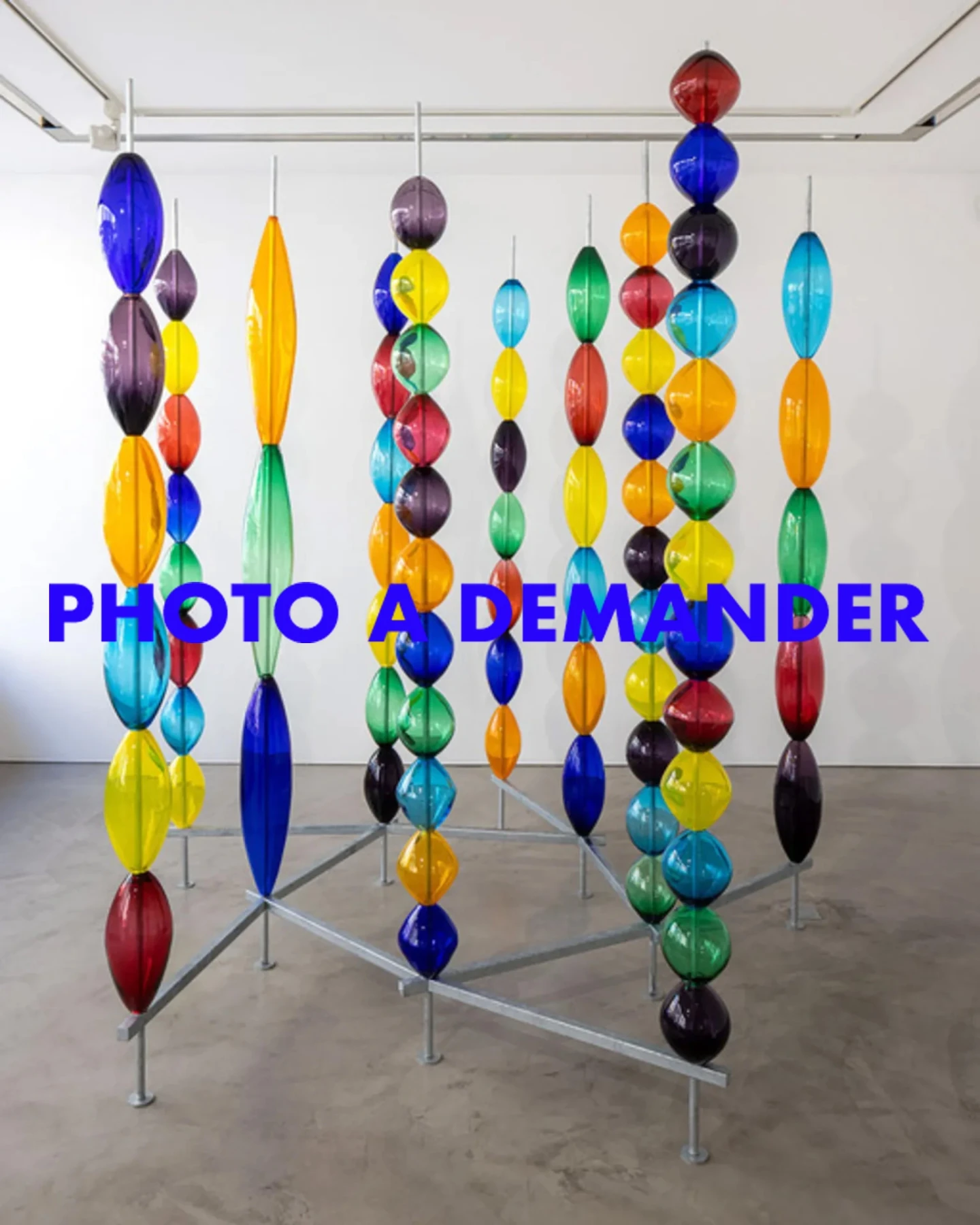
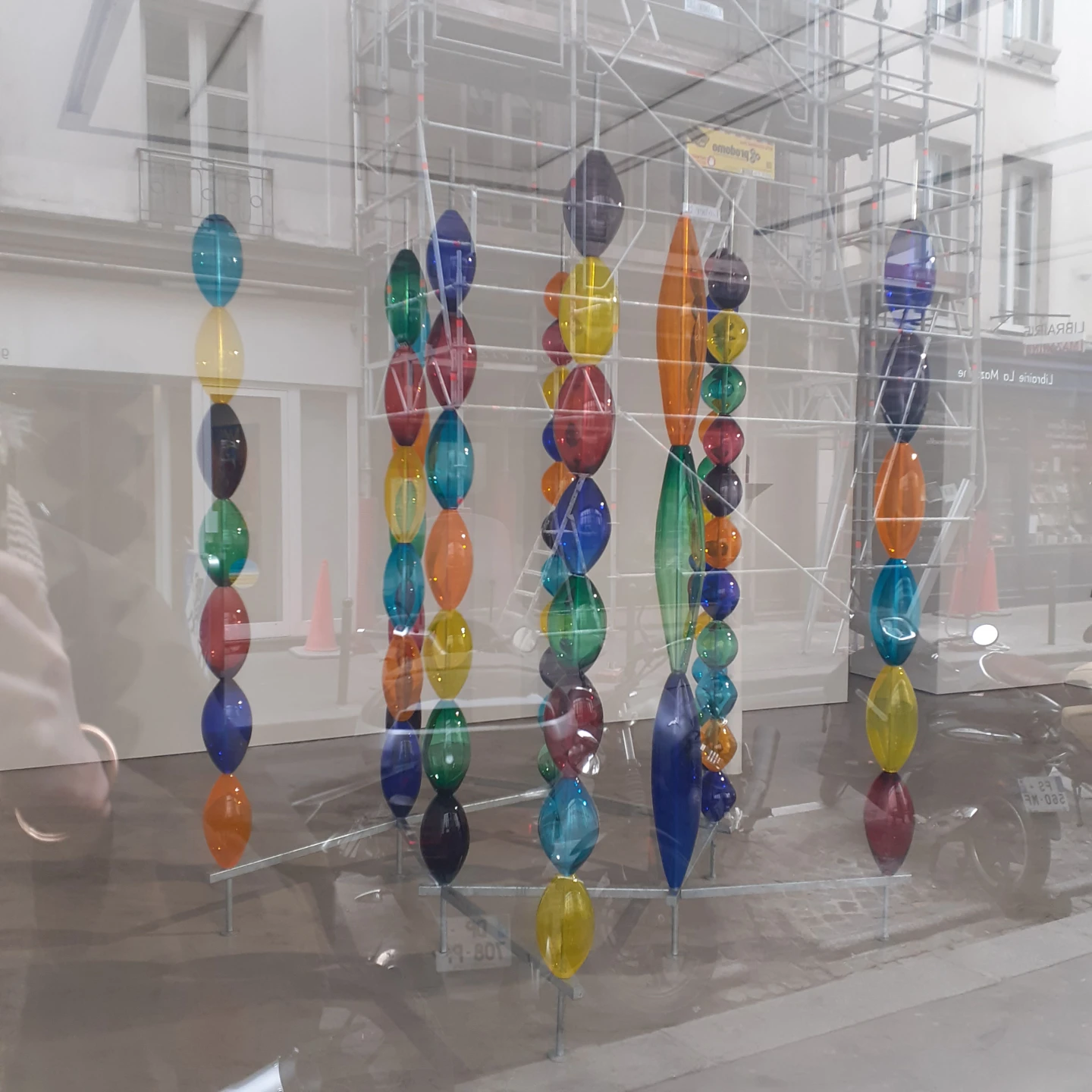
Madad Tayf
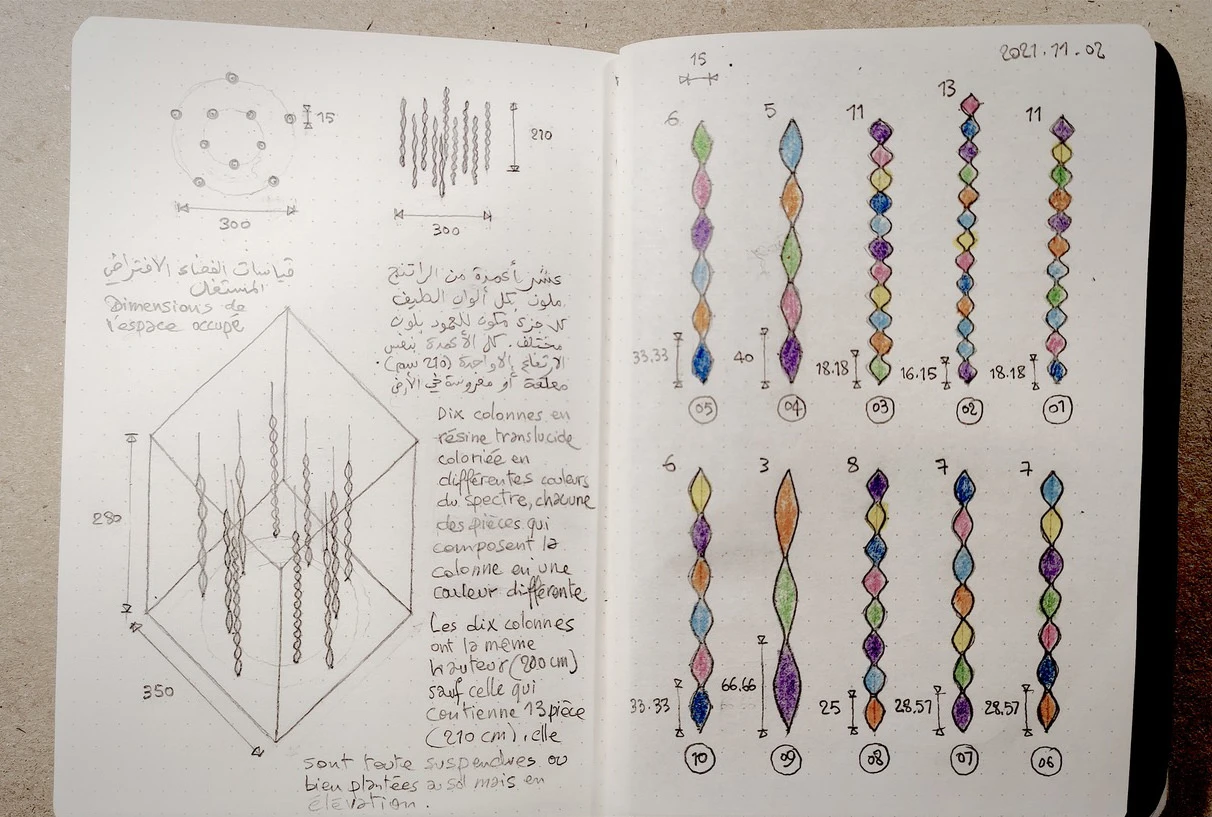
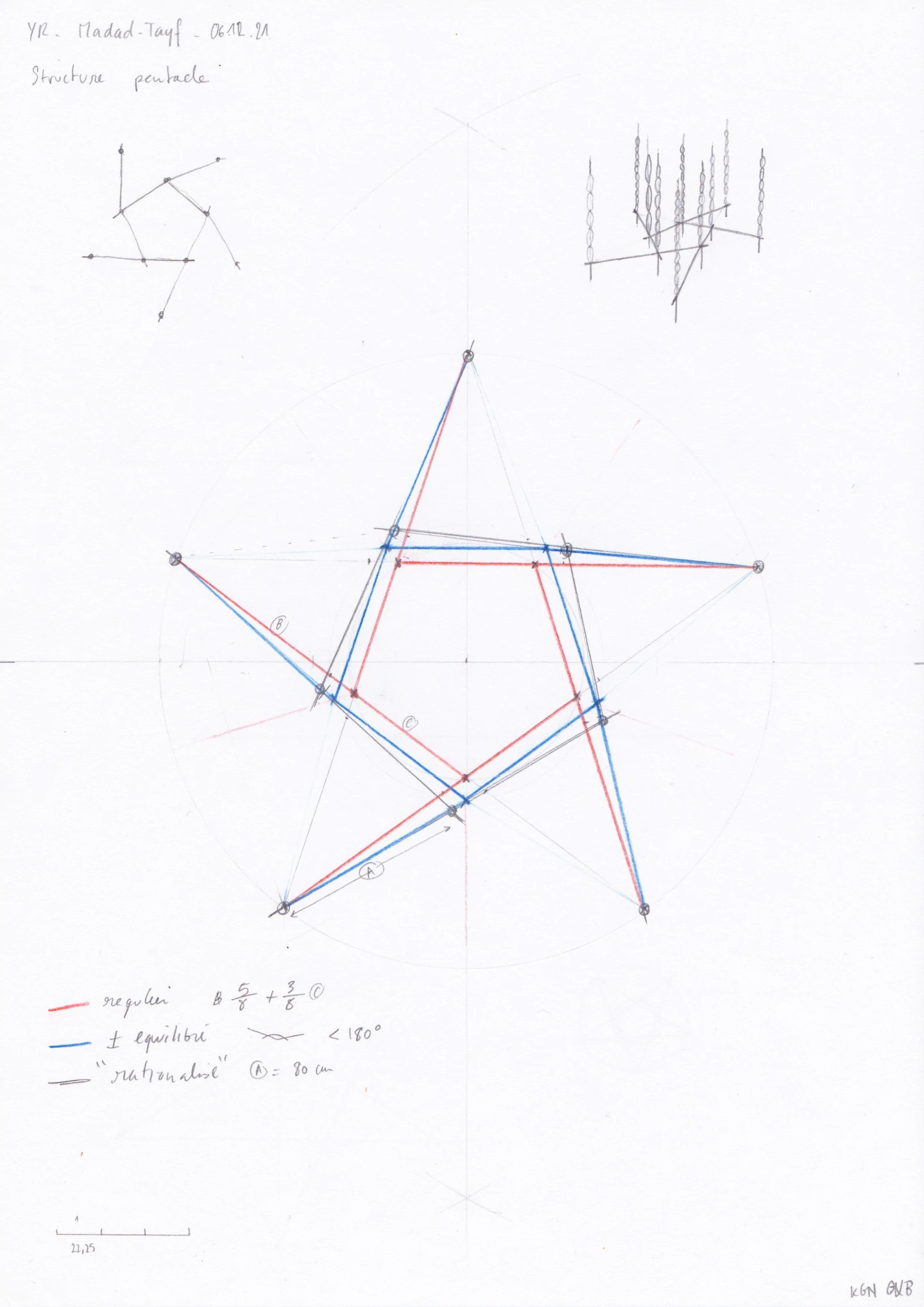
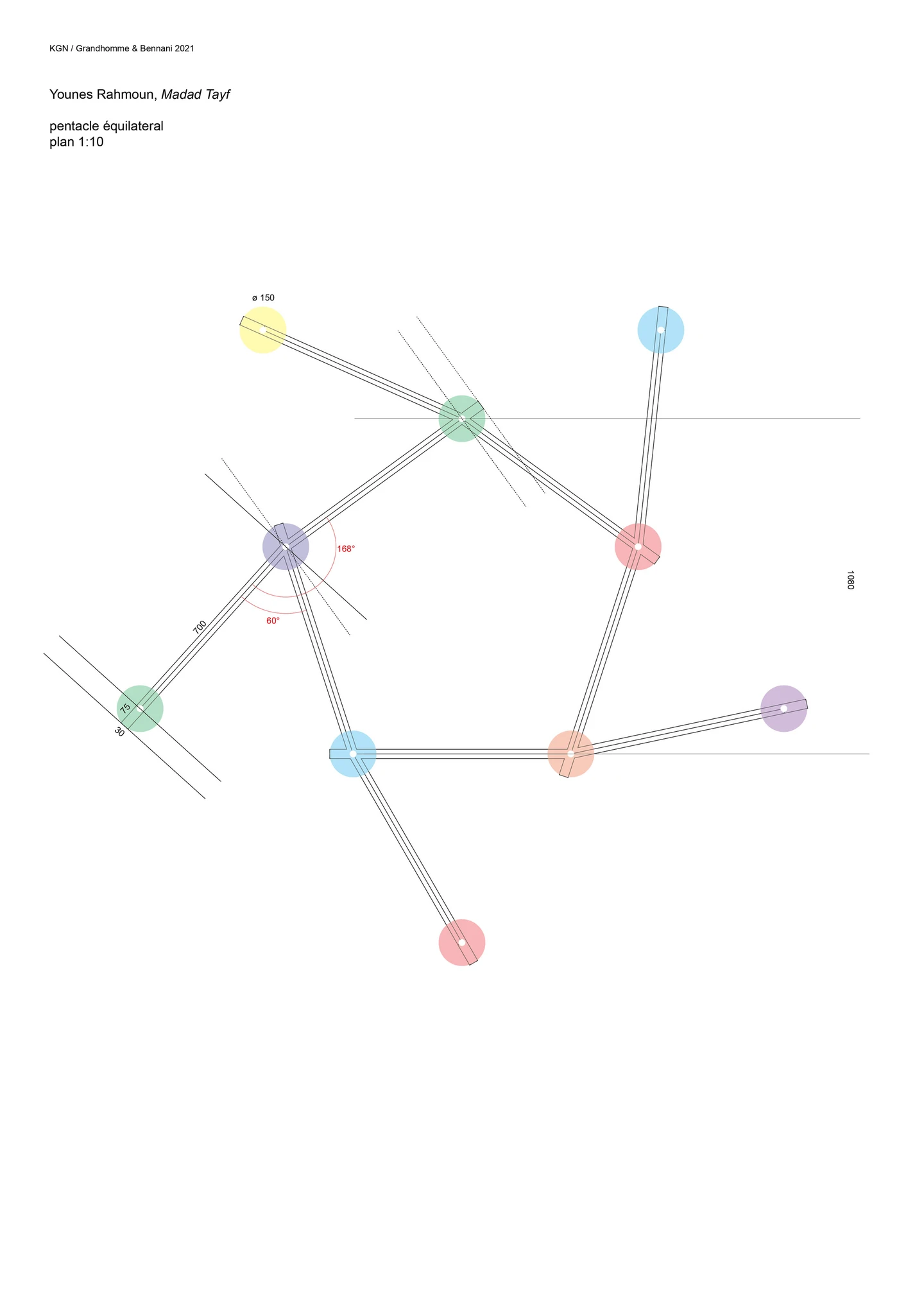
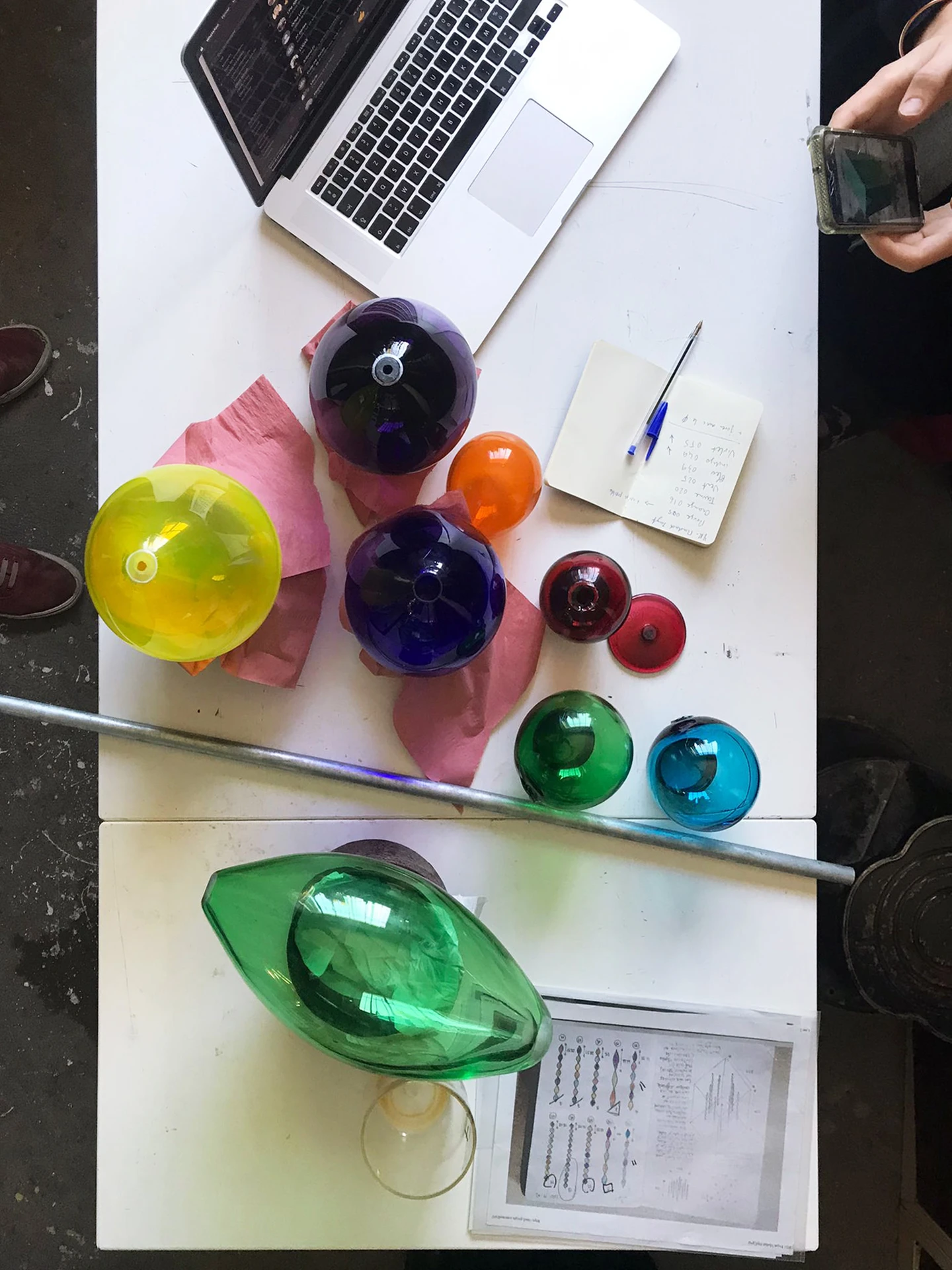
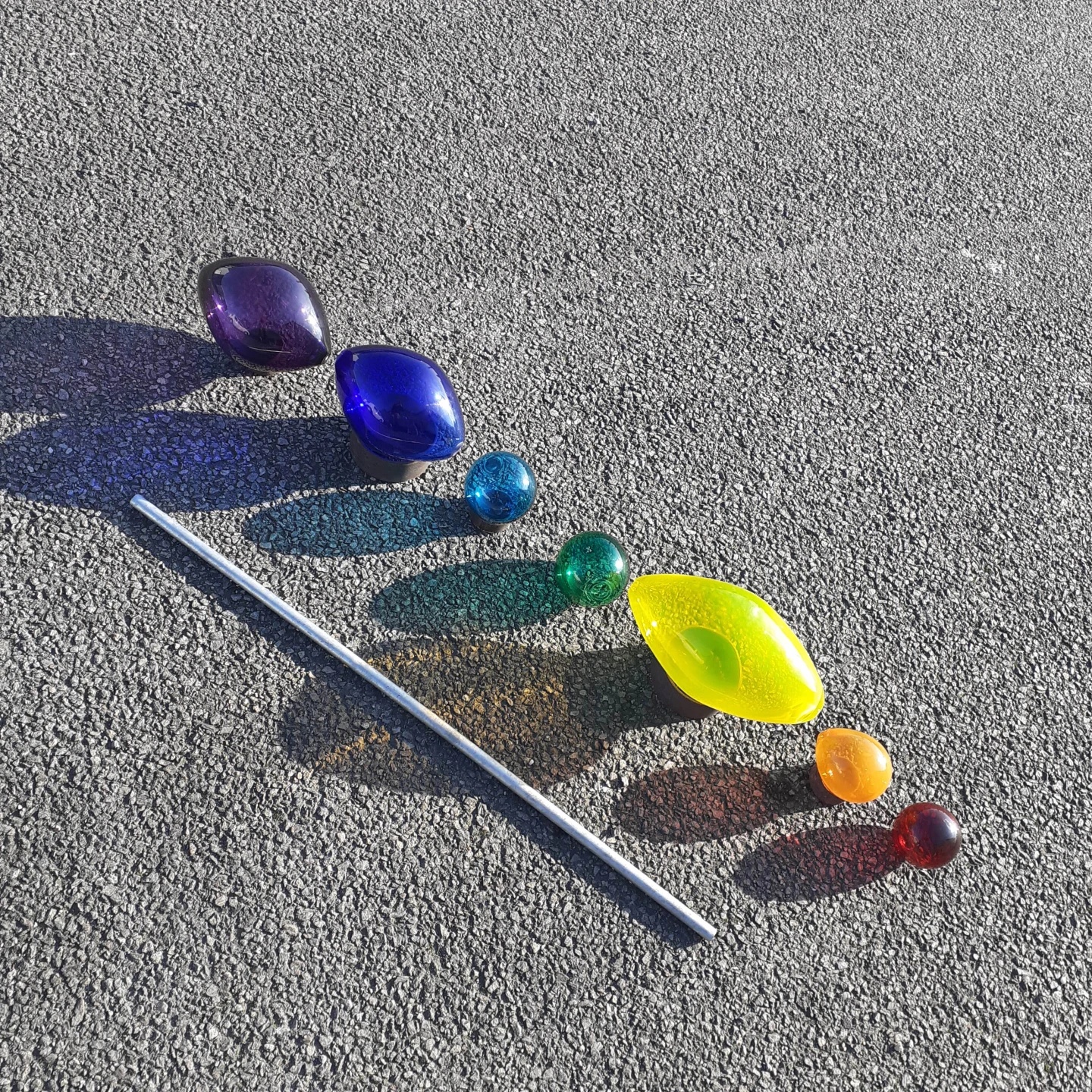
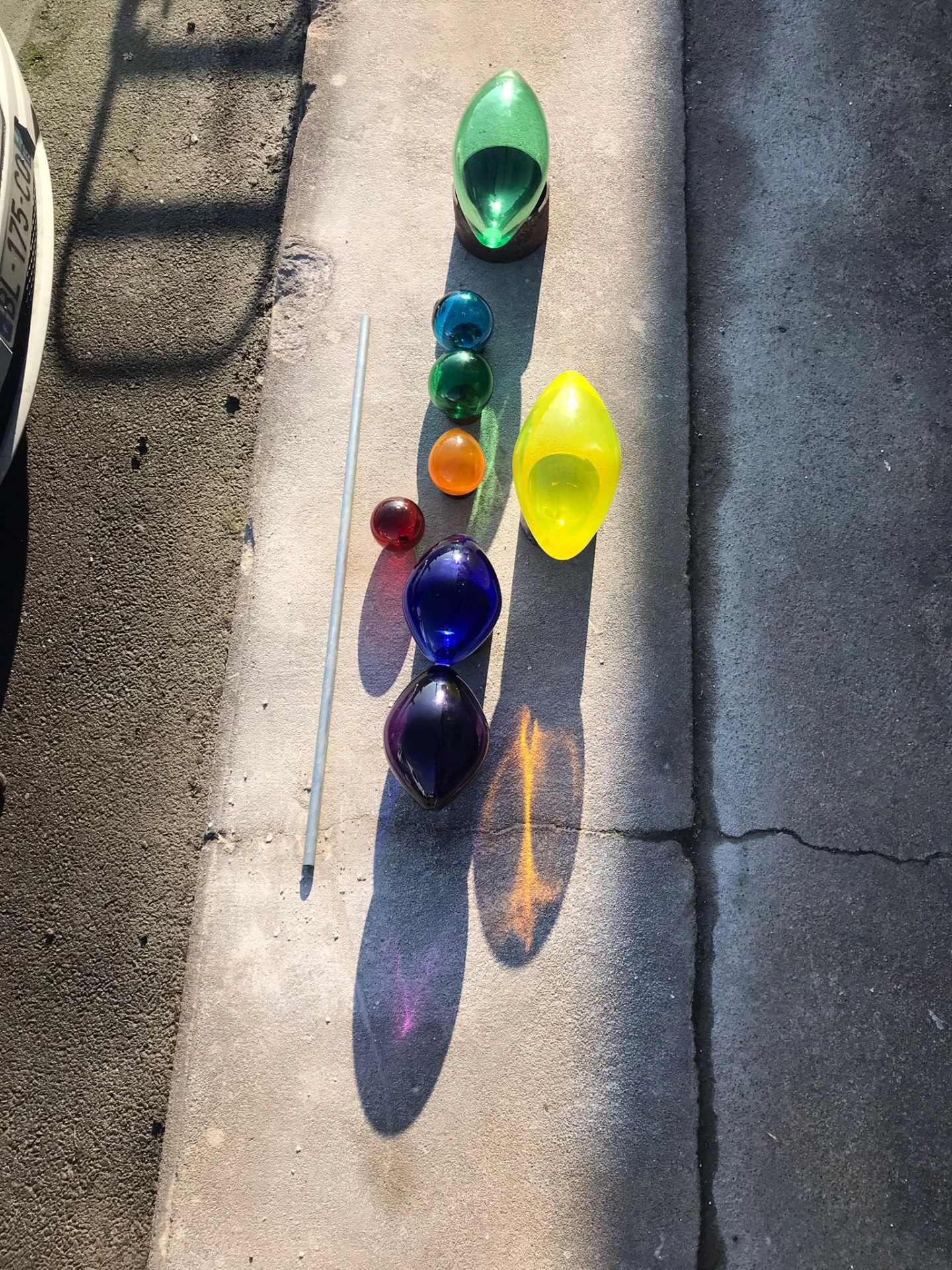
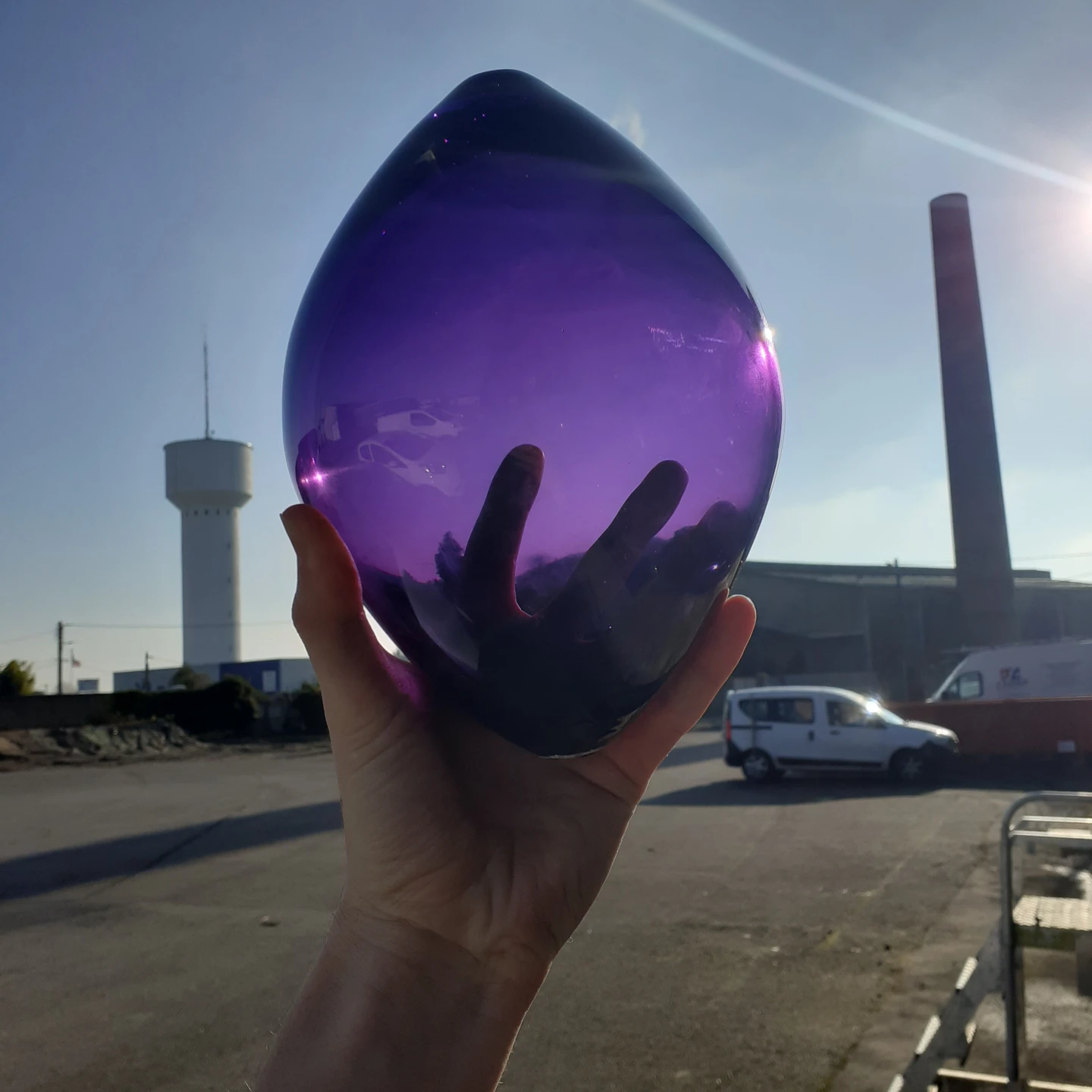
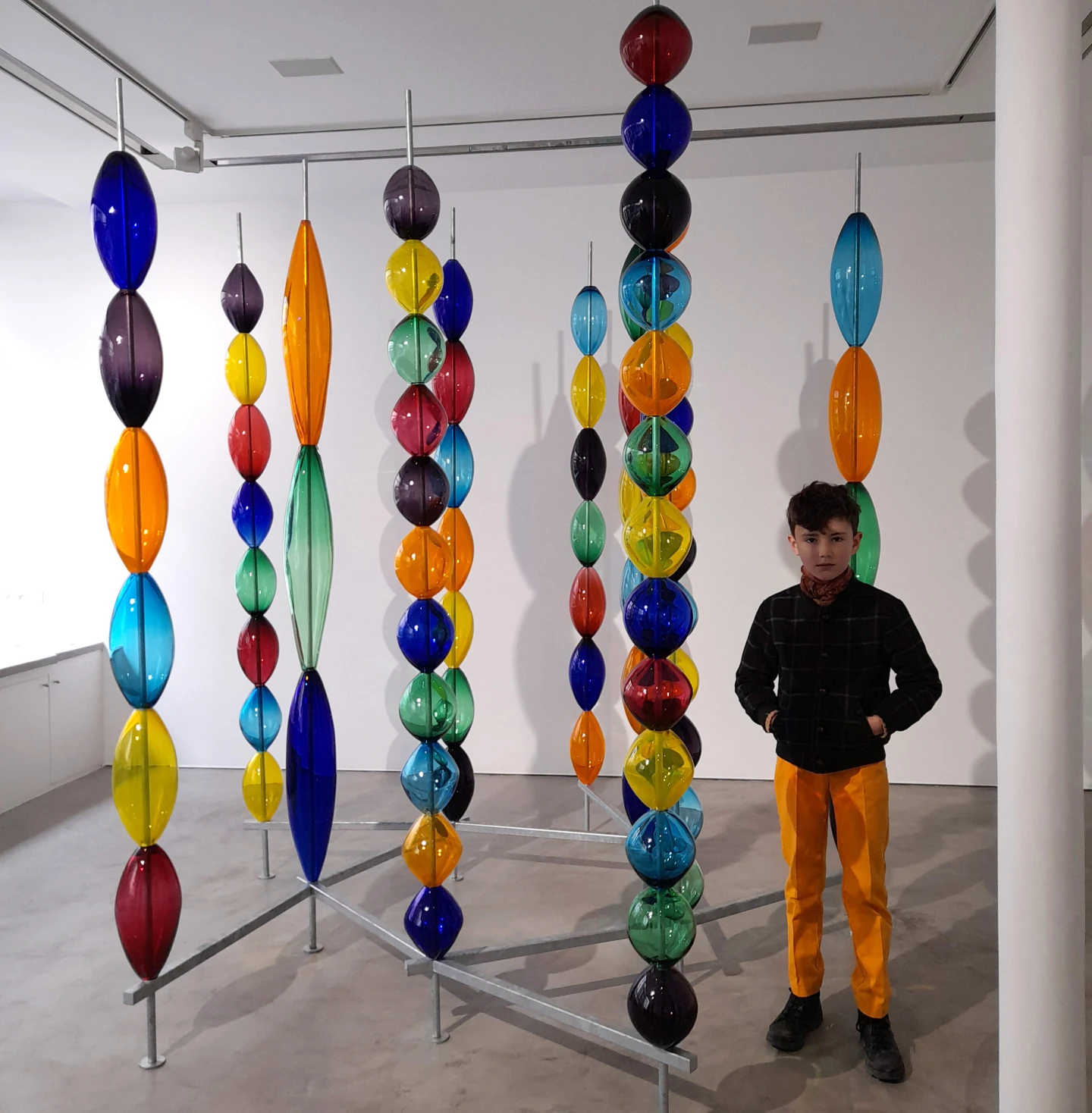
Galerie Imane Farès Production, Sculpture 2022Aide à la conception et matérialisation du projet Fayd Tayf de Younes Rahmoun
en collaboration avec KGN (Jean-Daniel Bourgeois).
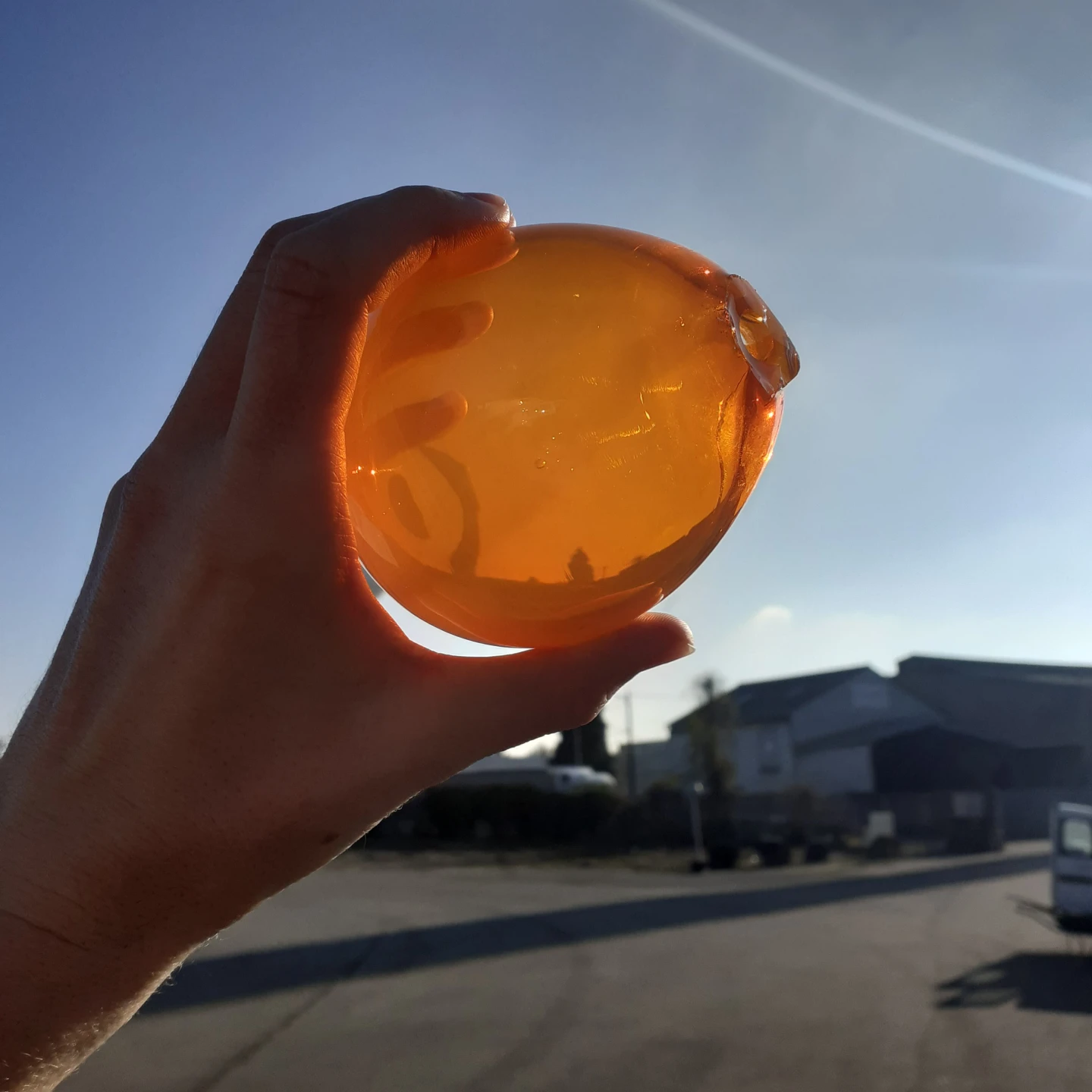
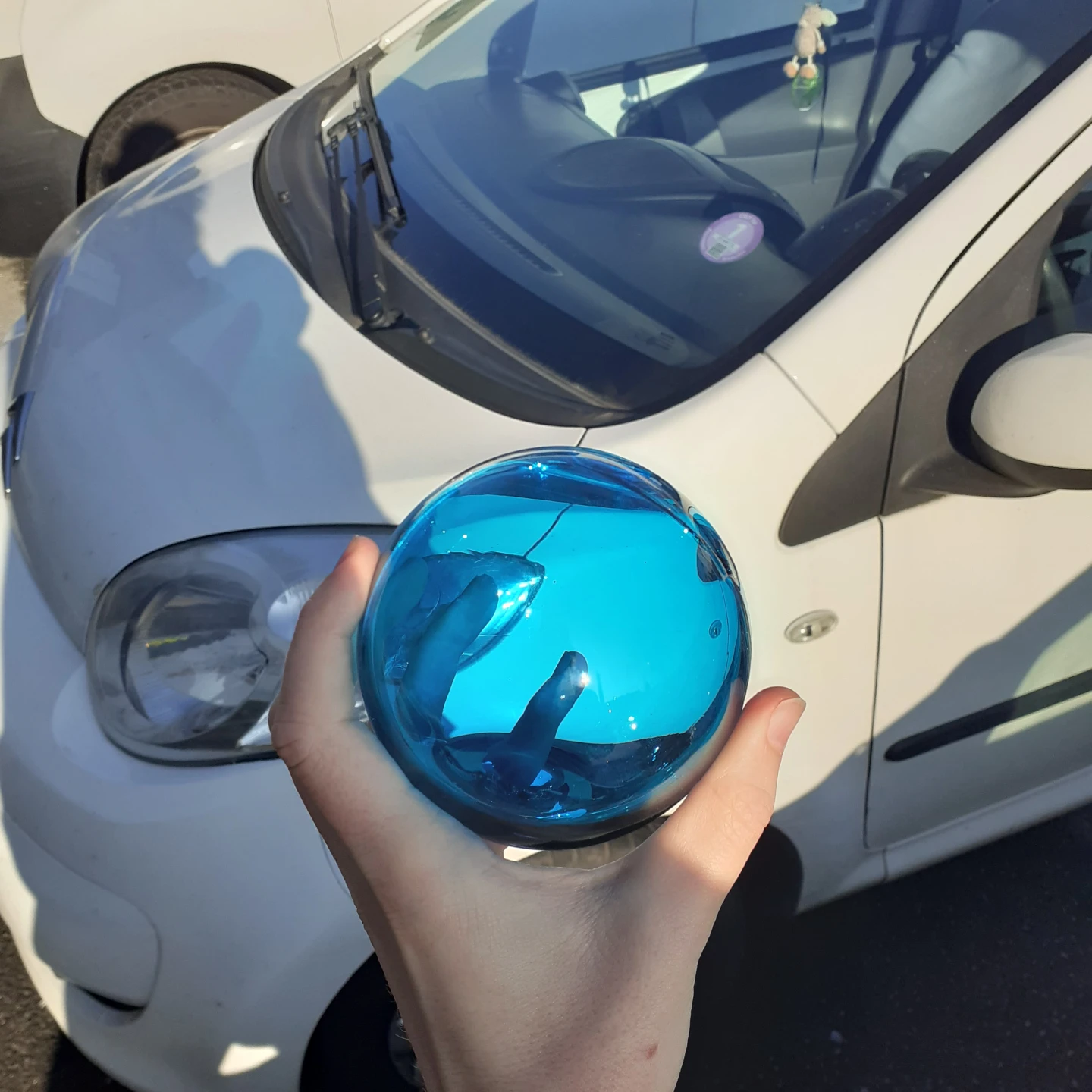
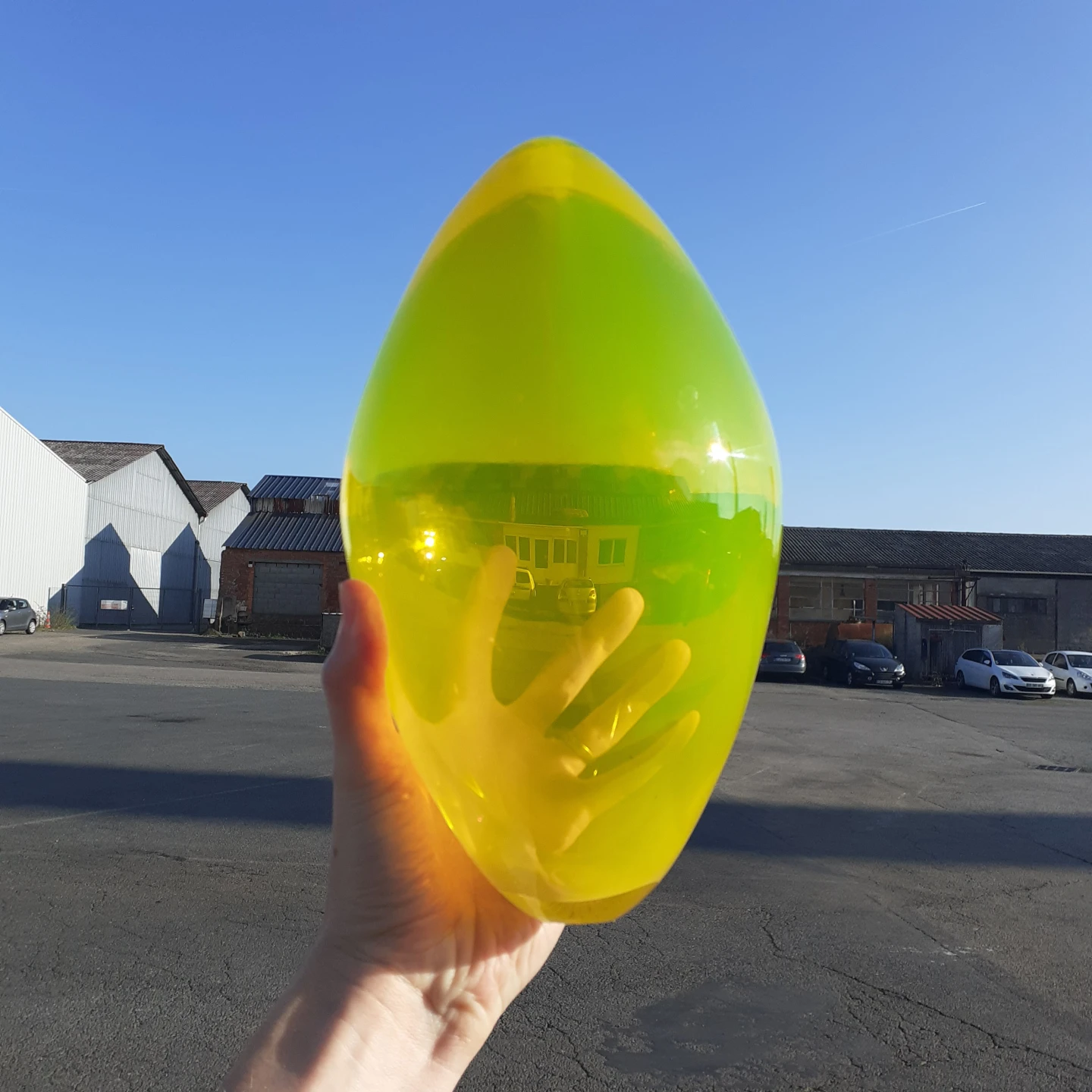
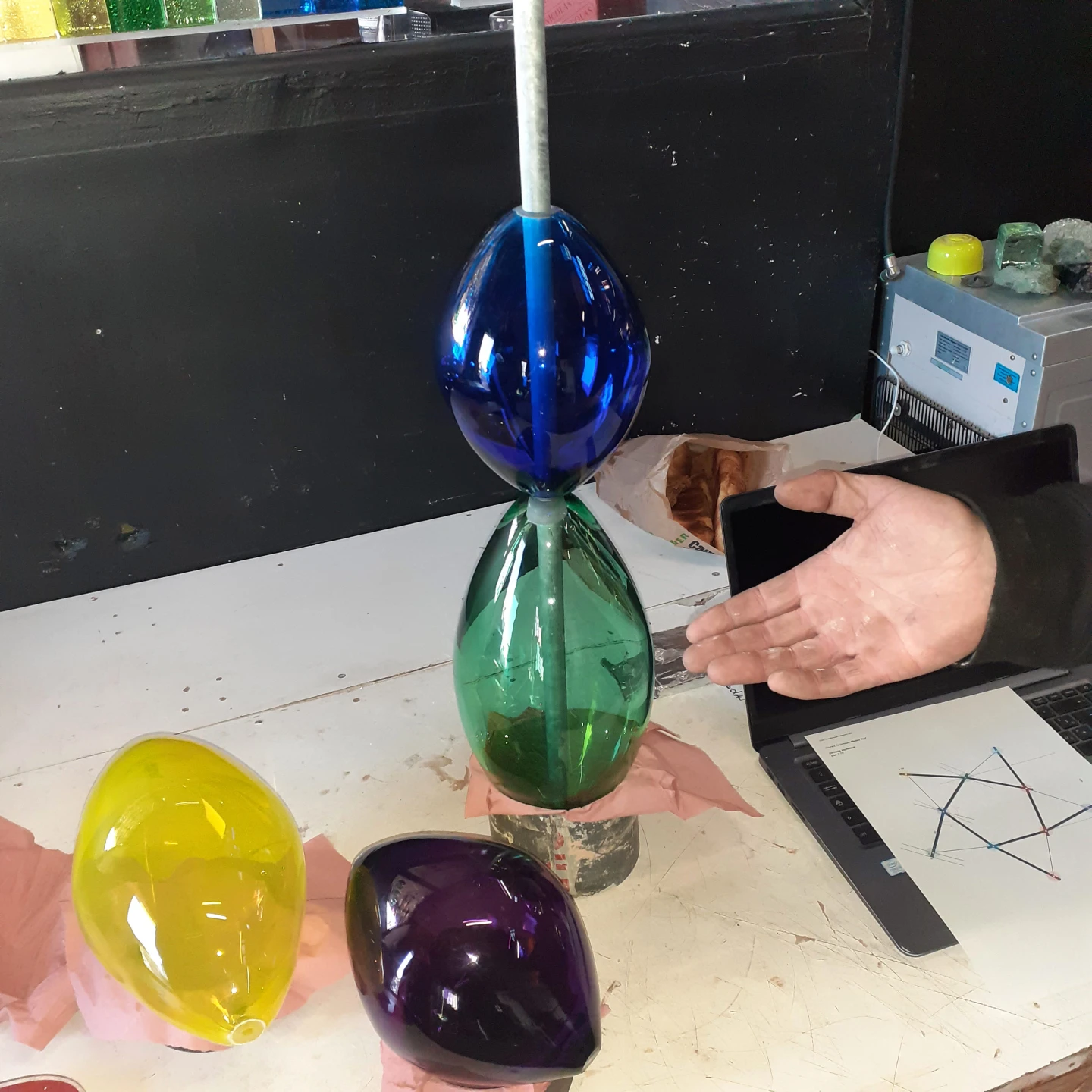
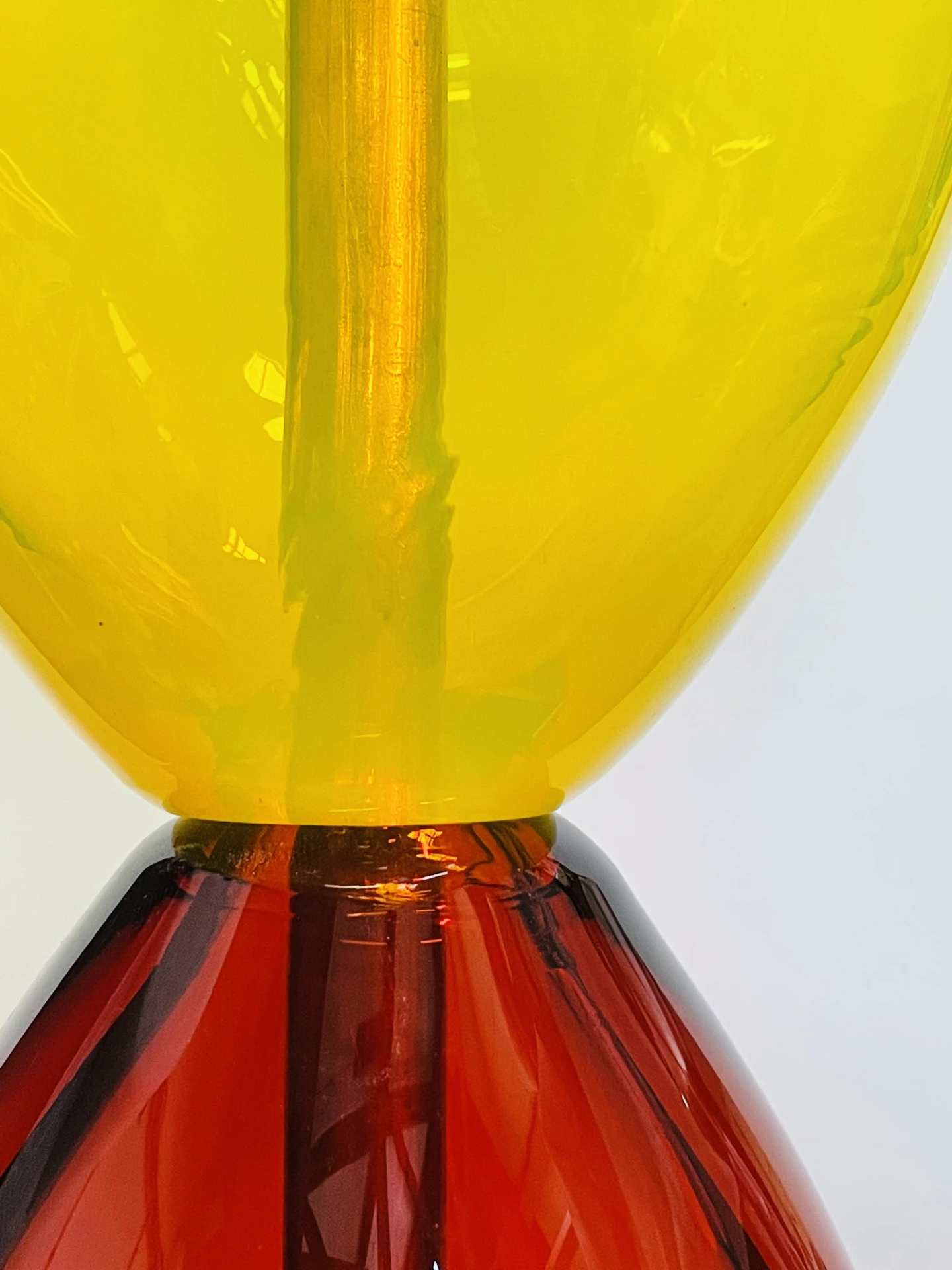
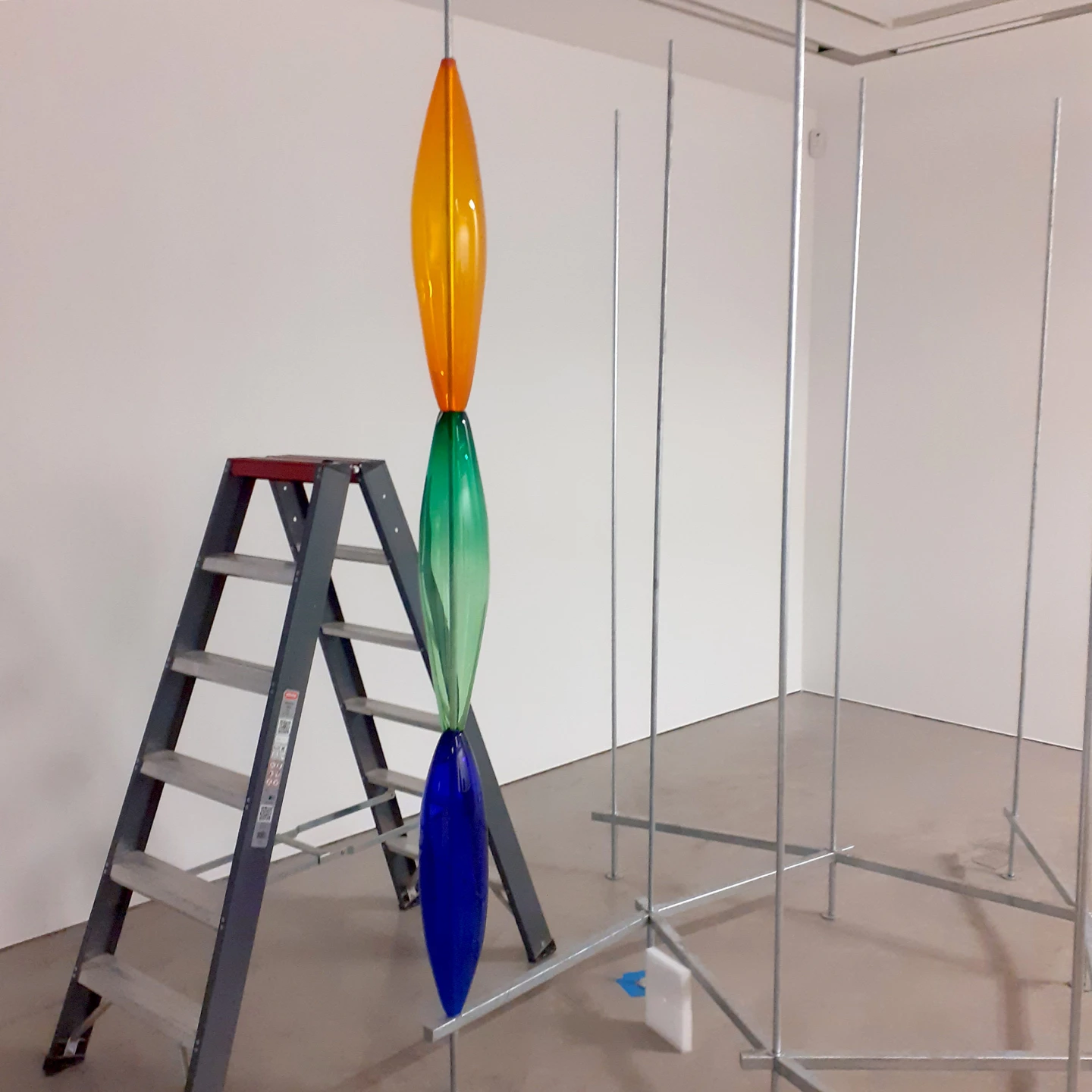
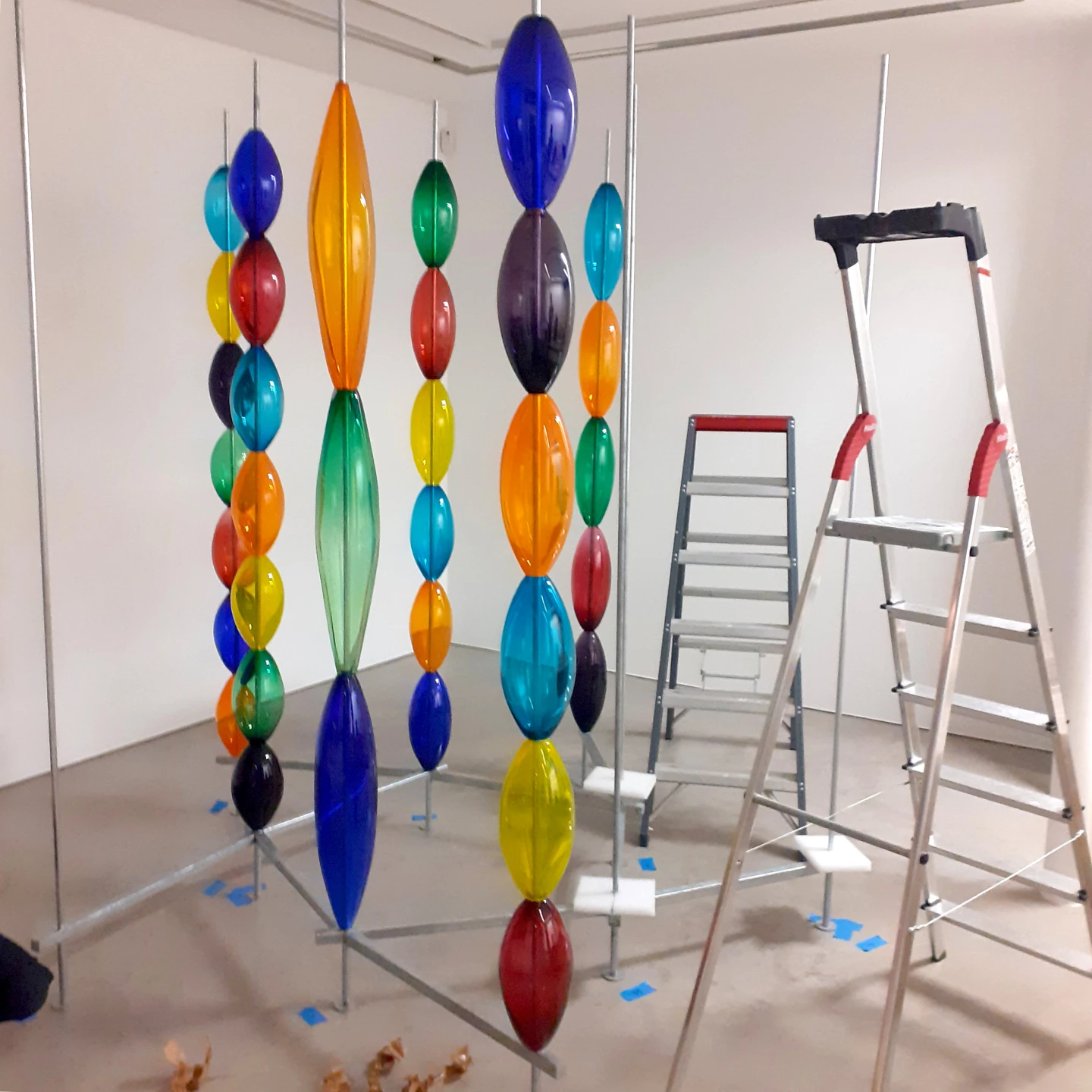
Réalisation de 77 volumes en verre de couleur + 7 volumes en verre clair
d'après le schéma de Younes Rahmoun.
Soufflage à la volée (sans moule) en partenariat avec Arcam Glass.
Suivi de production et mise en caisse par J-D Bourgeois et I. Bennani.
Fabrication de caisses de transport, emballage et livraison à la Galerie Imane Farès, Paris.
Oeuvre unique -
-
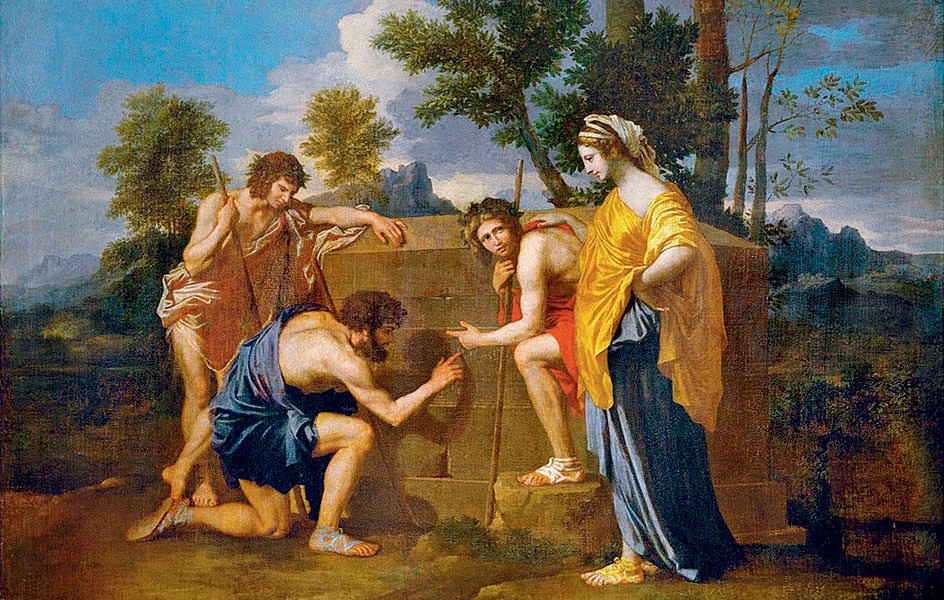
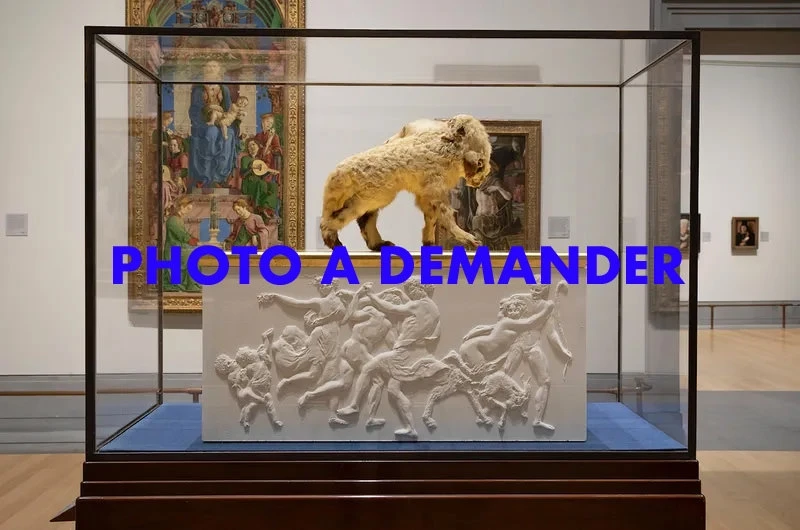
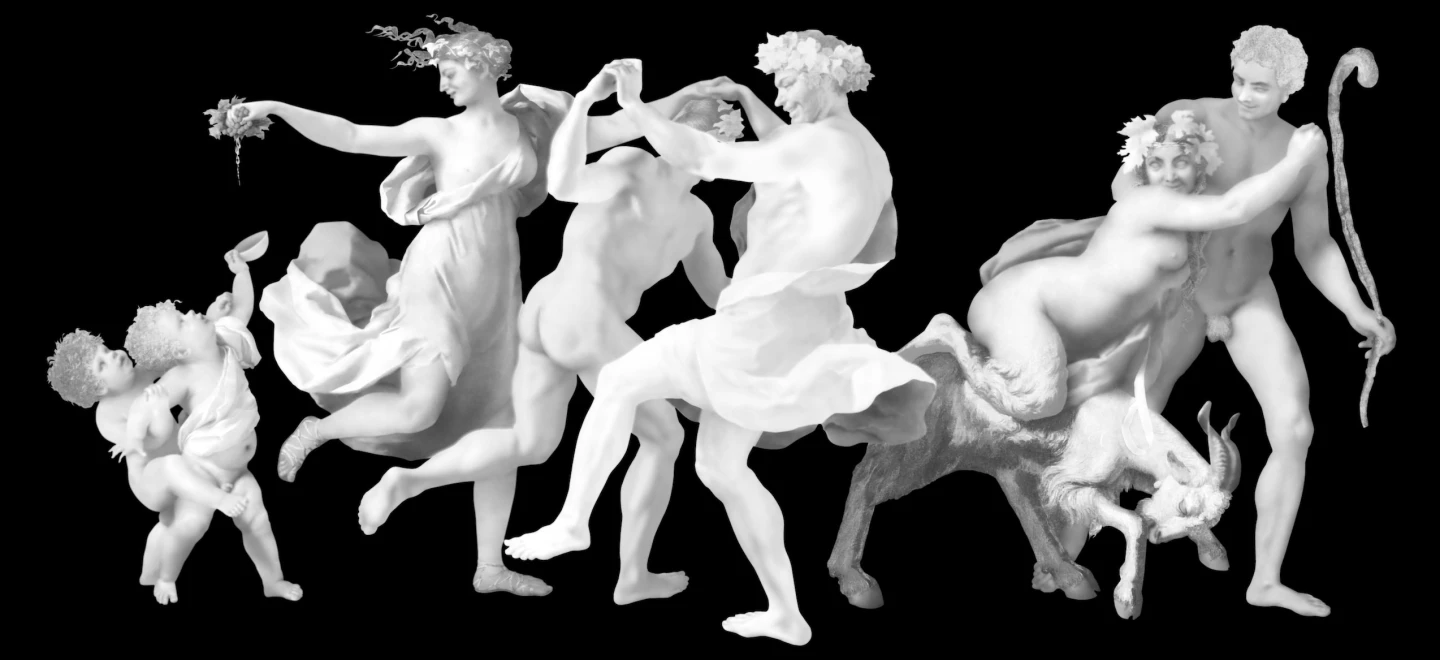
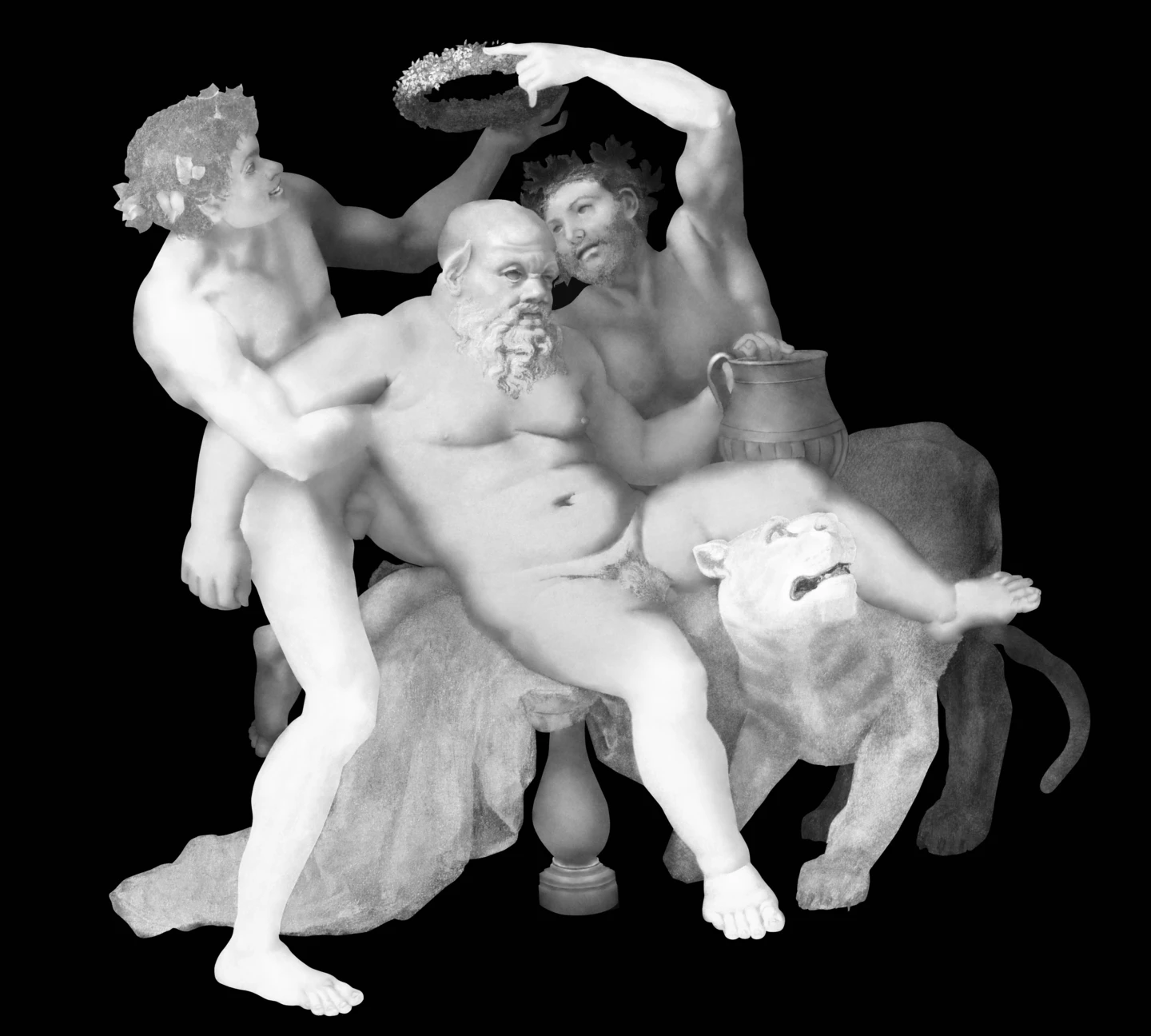
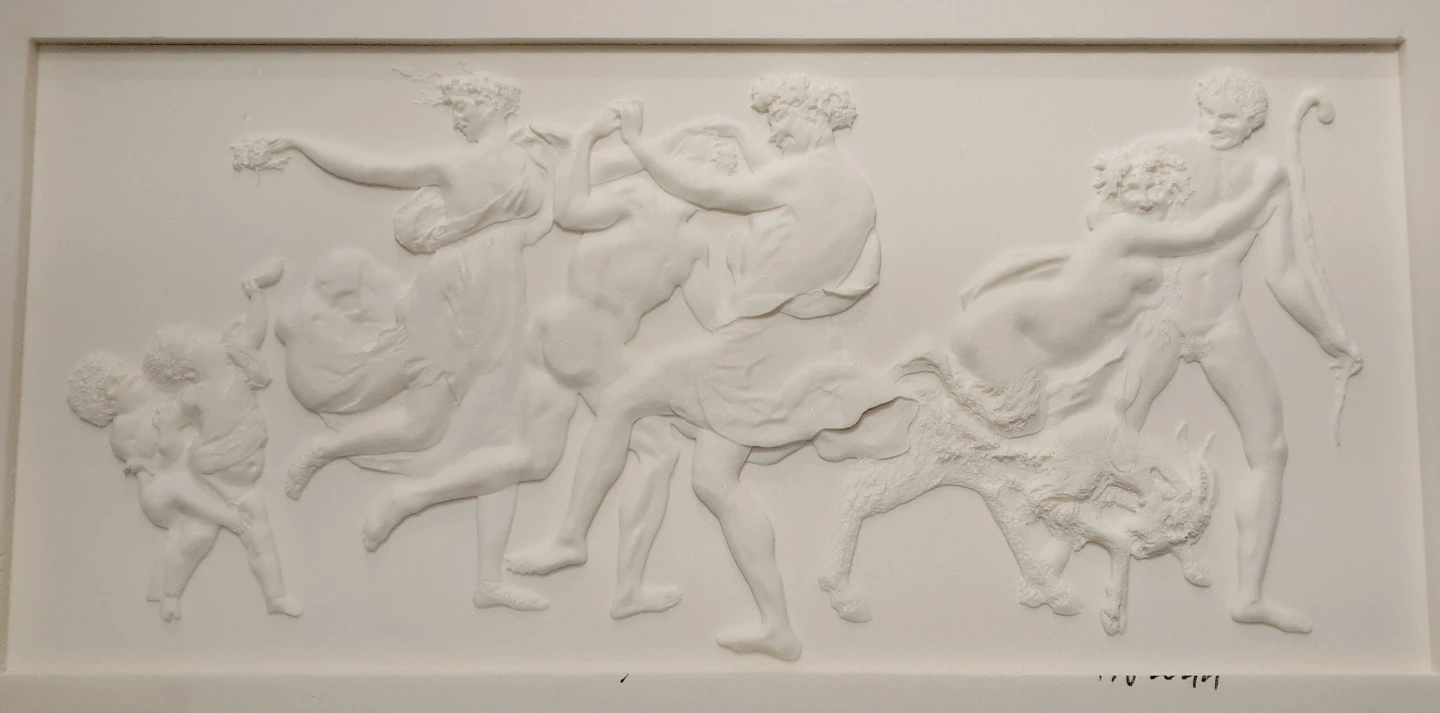
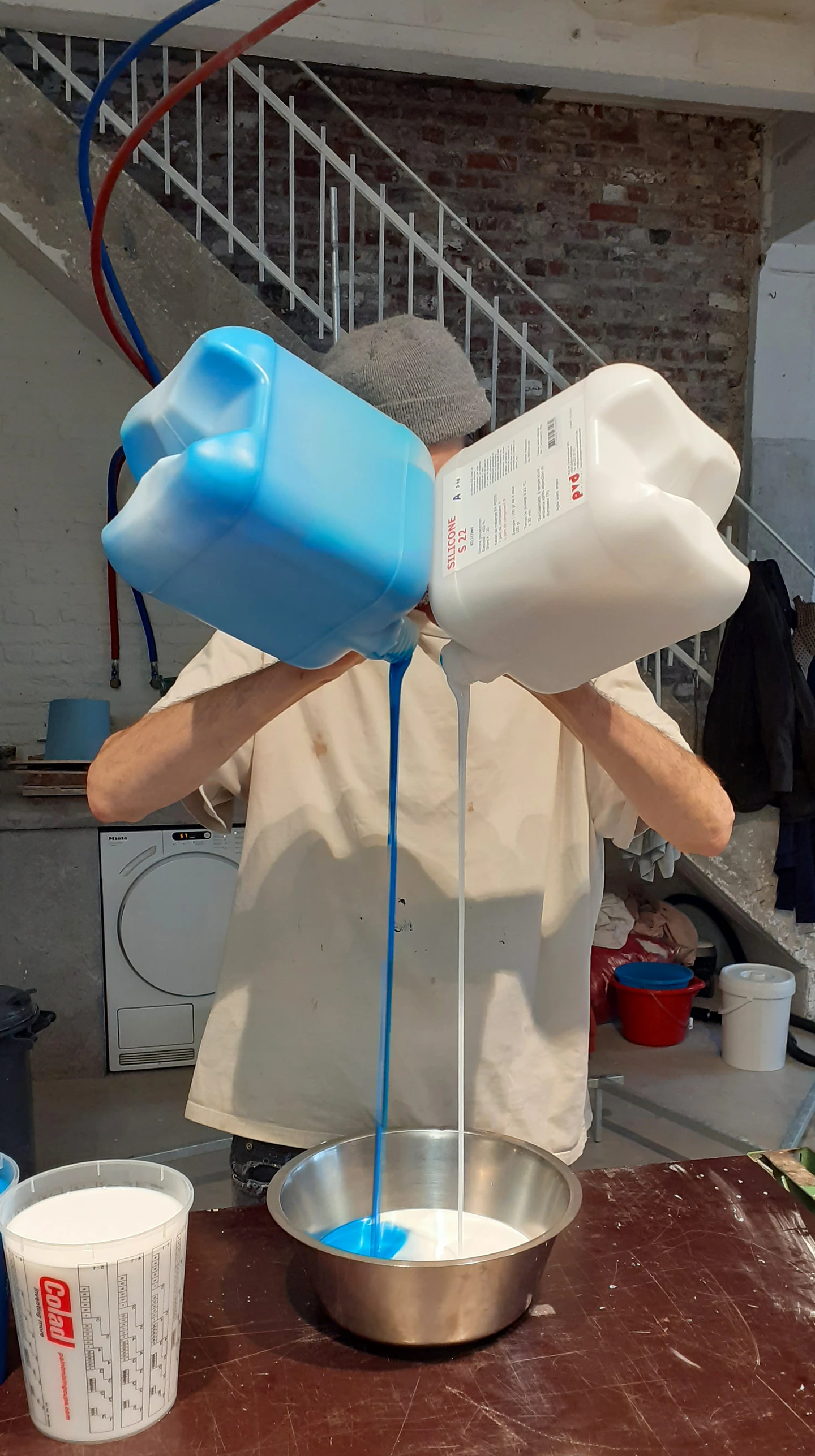
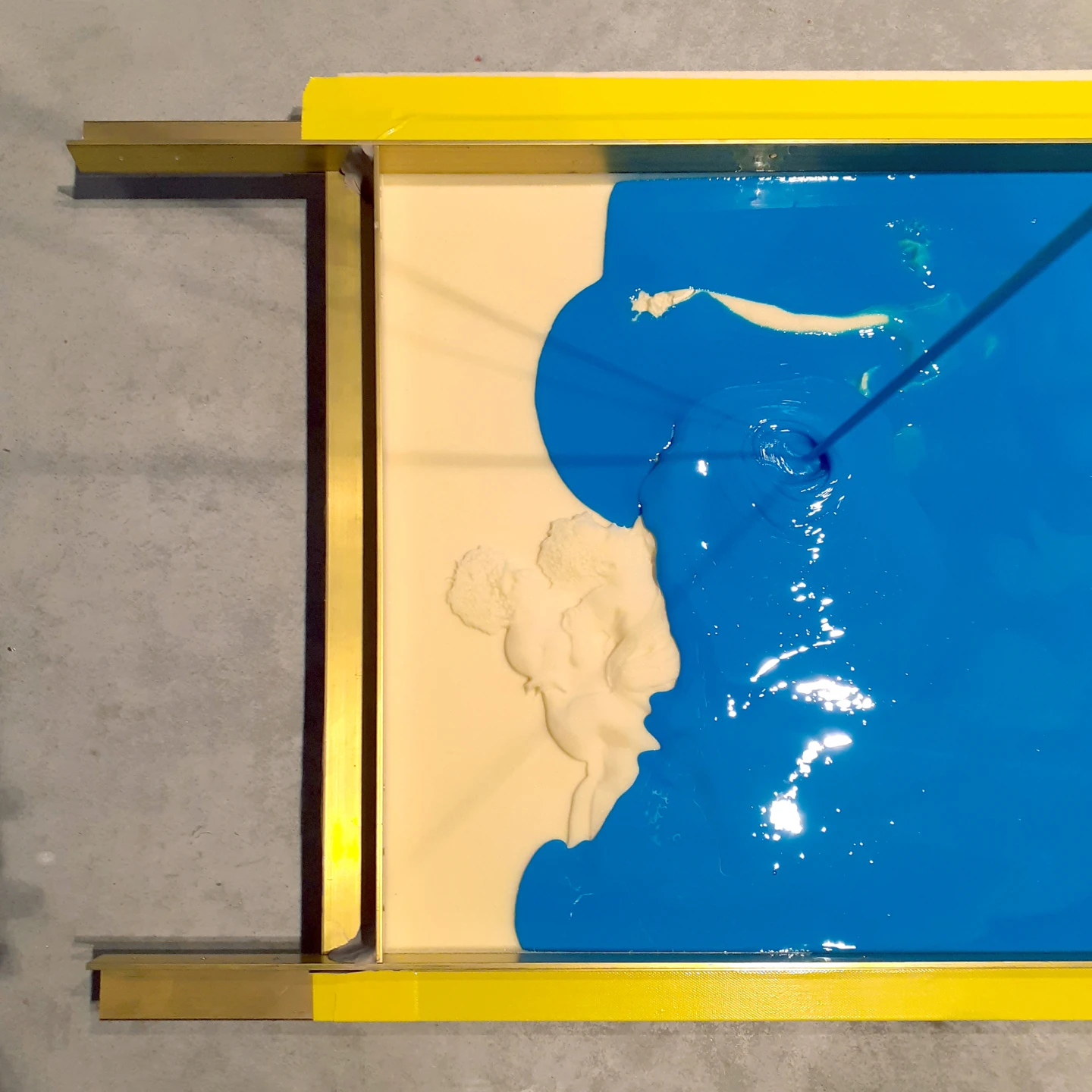
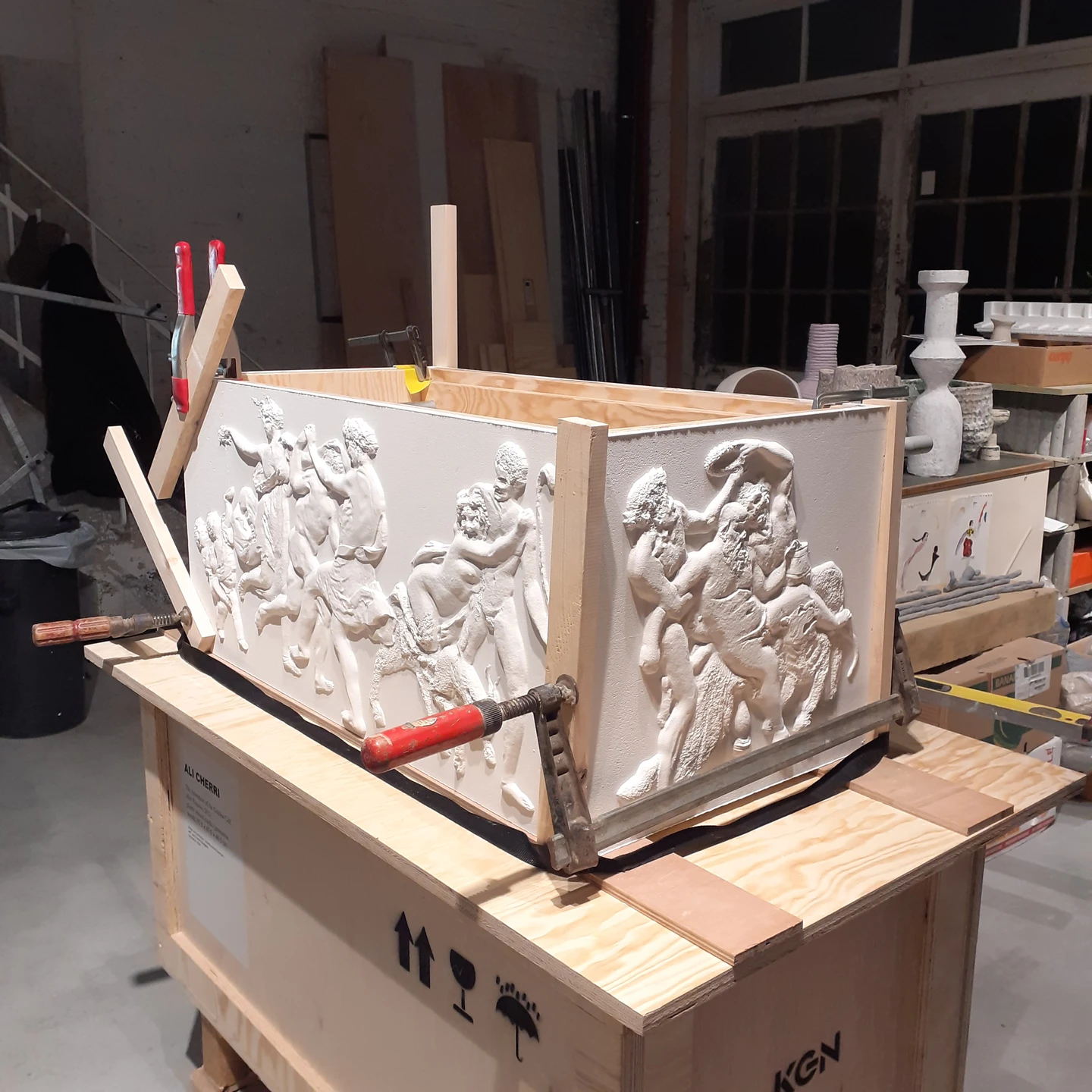
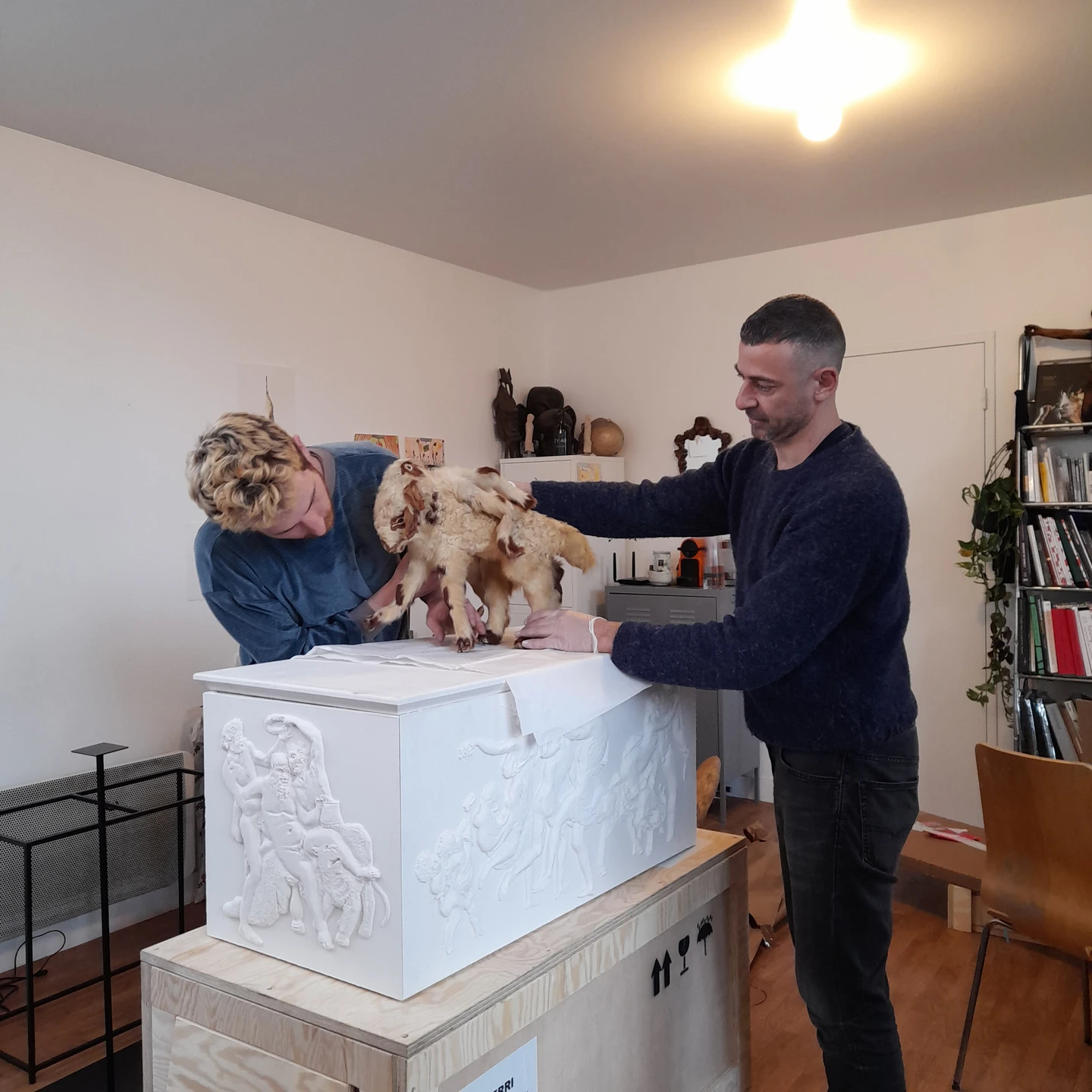
The Adoration of the Golden Calf after Poussin (bas-relief pedestal)
The National Gallery, Galerie Imane Farès Production, Sculpture 2022The plinth with bas-relief carvings refers to the figures and sculpted idol of a golden calf depicted in a work by Poussin.
The Adoration of the Golden Calf after Poussin, 2022
Installation composée d’un cabinet contenant un piédestal en jesmonite, bois et feuille d’or, et un agneau naturalisé à huit pattes et deux têtes. 188 x 137,5 x 63,5 cm (cabinet) | 100 x 45 x 50 cm (piédestal) | 43 x 44 x 32 cm (agneau naturalisé)
Œuvre unique -
-
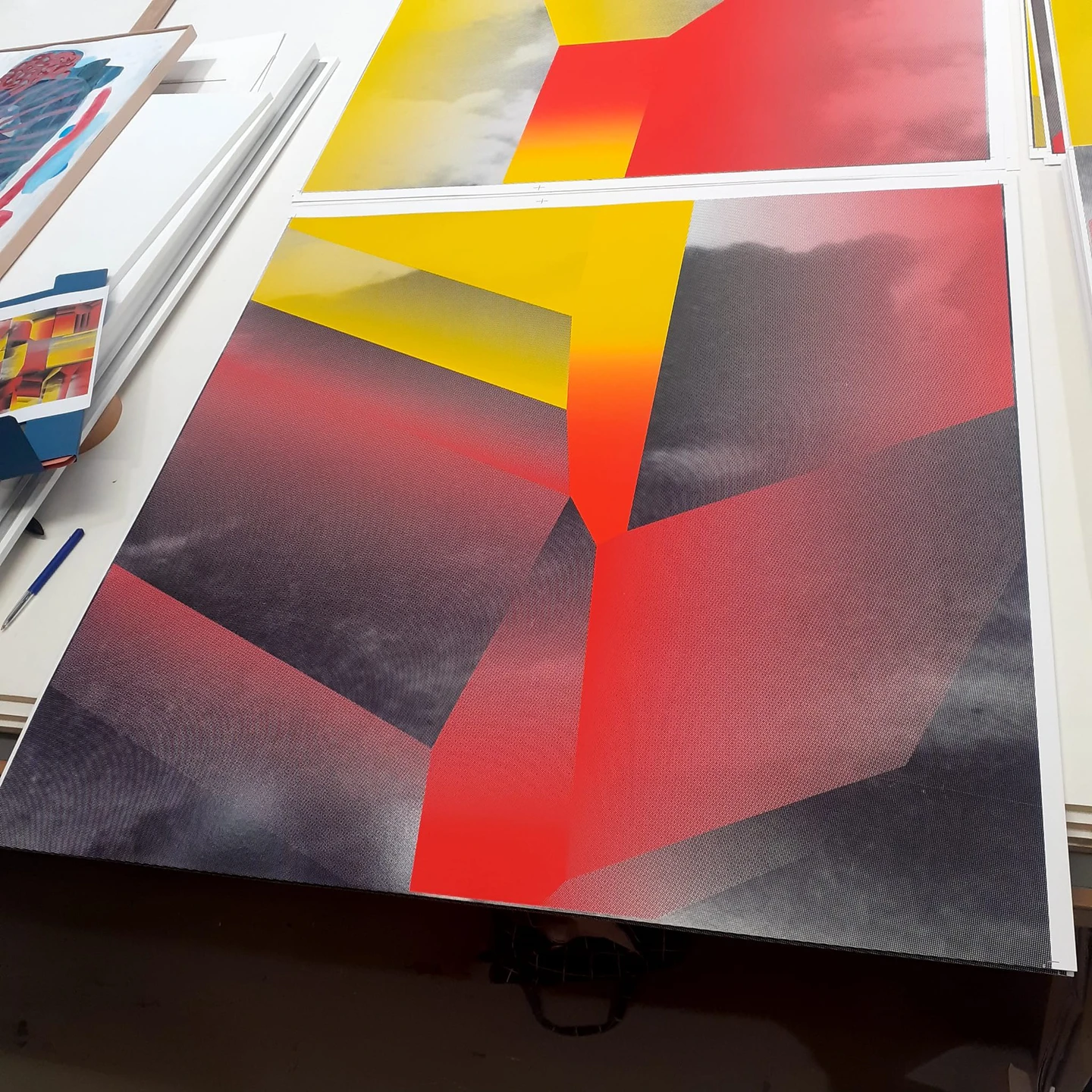
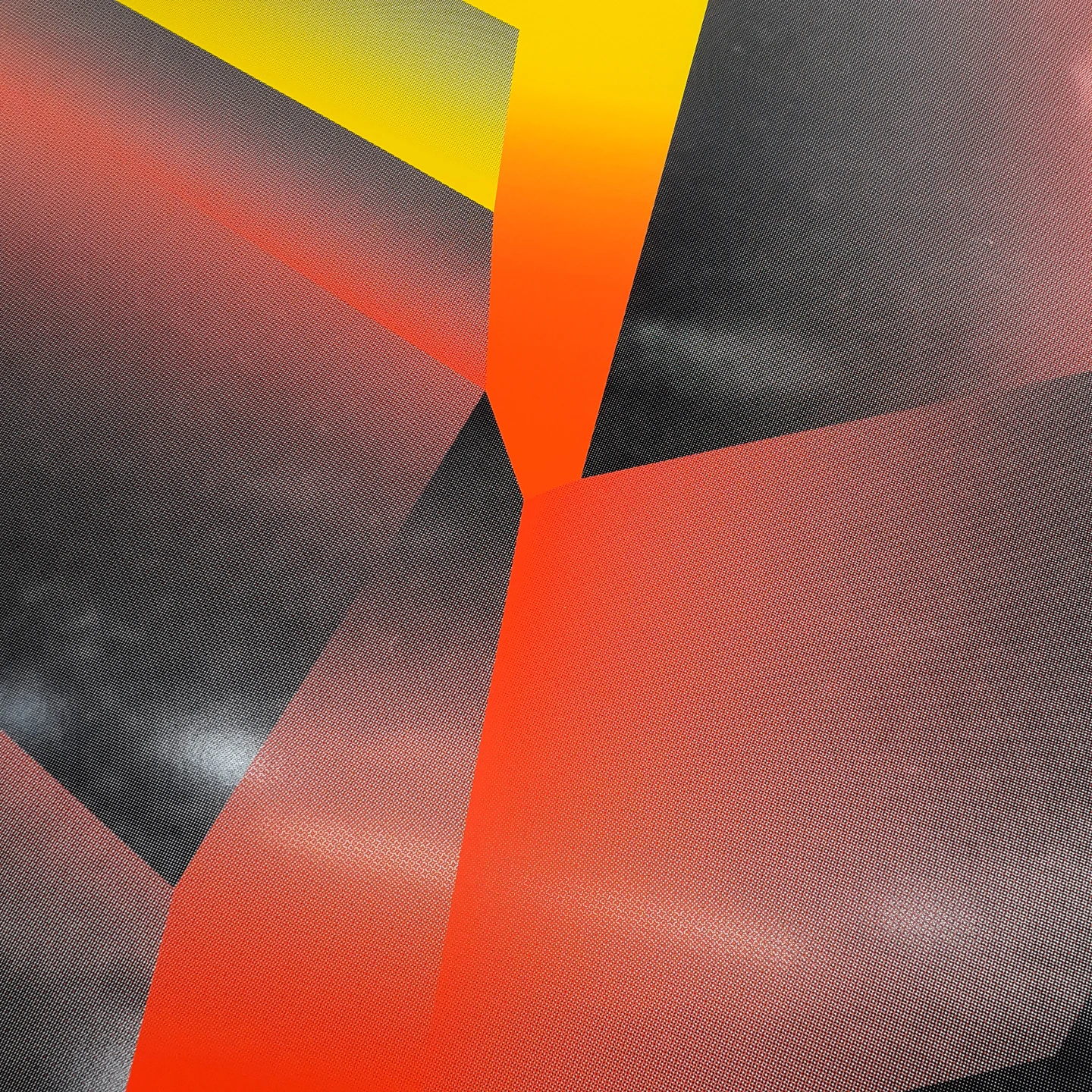
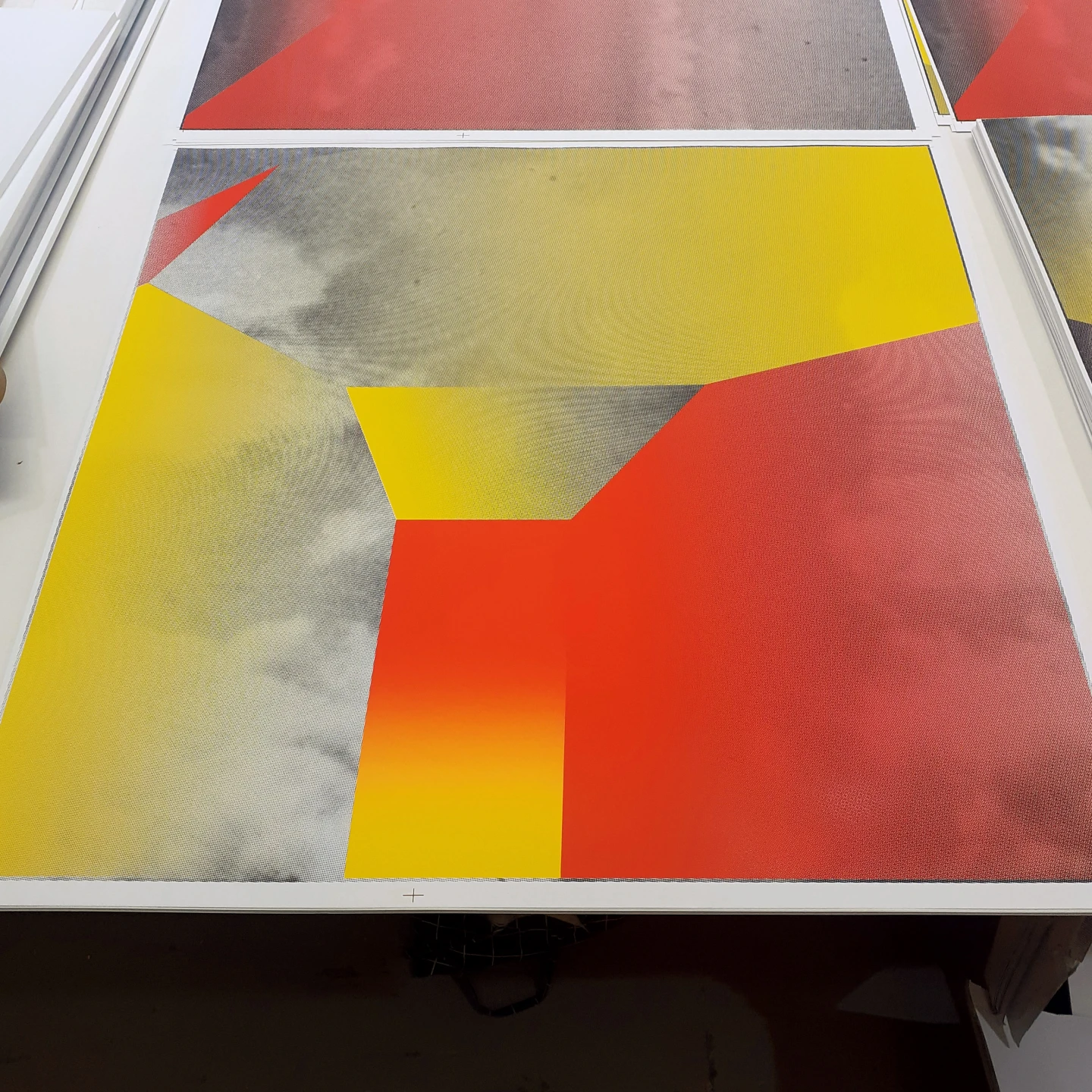
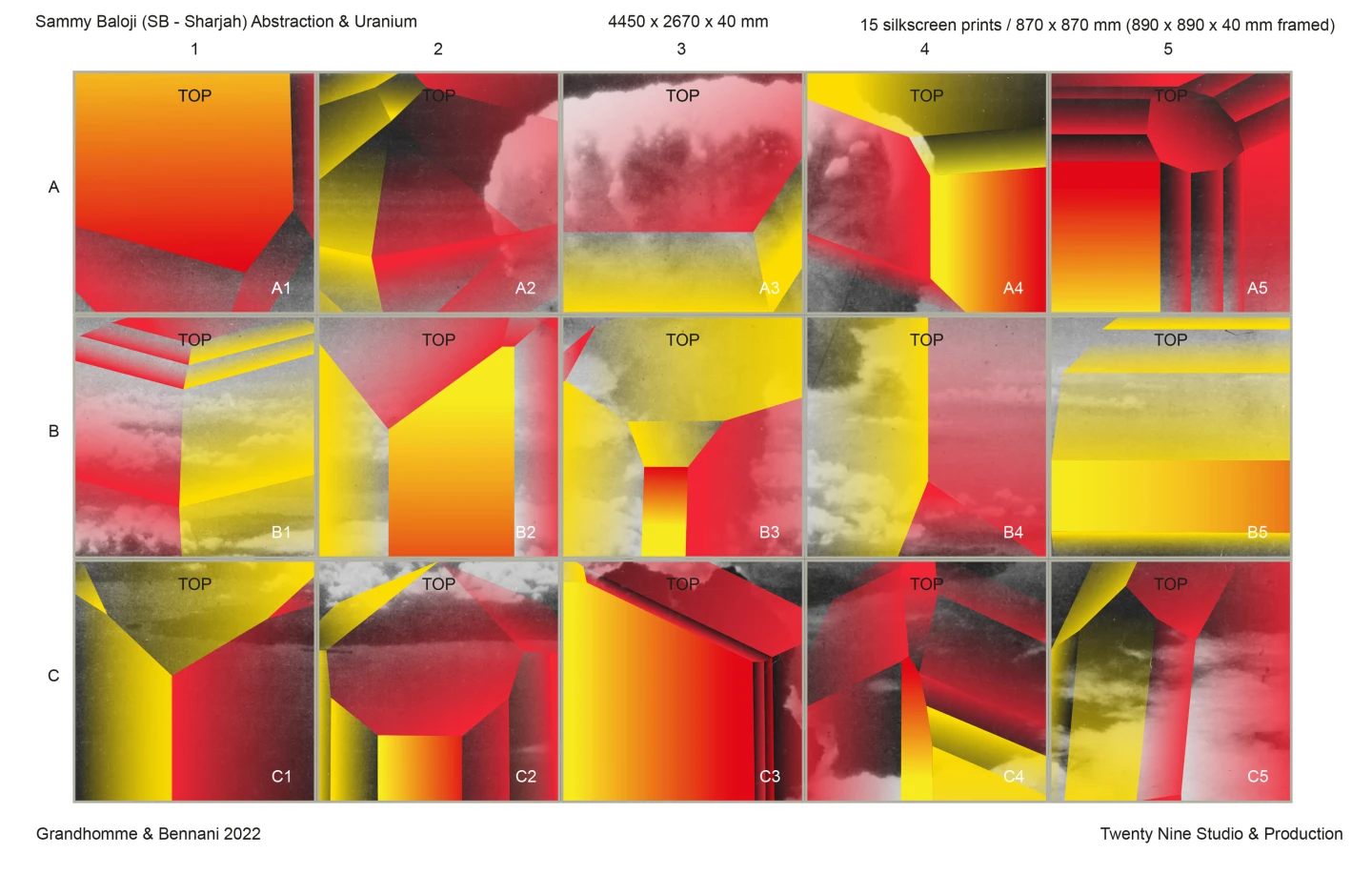
Shinkolobwe’s Abstraction
Sharjah Art Foundation Graphics, Print 2022Conception graphique et suivi de fabrication.
Sammy Baloji’s photographic and sculptural assemblages braid together the pre- and post-colonial histories of the Democratic Republic of the Congo by examining the industrial and cultural heritage of the Katanga region. Shinkolobwe’s abstraction (2022) is an installation comprising historical documents and archive-based evidences of the competing interests of the Soviet Union and the United States to gain access to the Belgian Congo uranium in the 1940s and 1950s in Shinkolobwe, the largest uranium resource in the world. It parallels this history of resource exploitation with the generation of student activists, whose revolutionary thinking to decolonise the country is charted in Pedro Monaville’s recent book Students of the World (2022).
-
-
The Dam
KinoElektron Production, Movie 2022 -
-
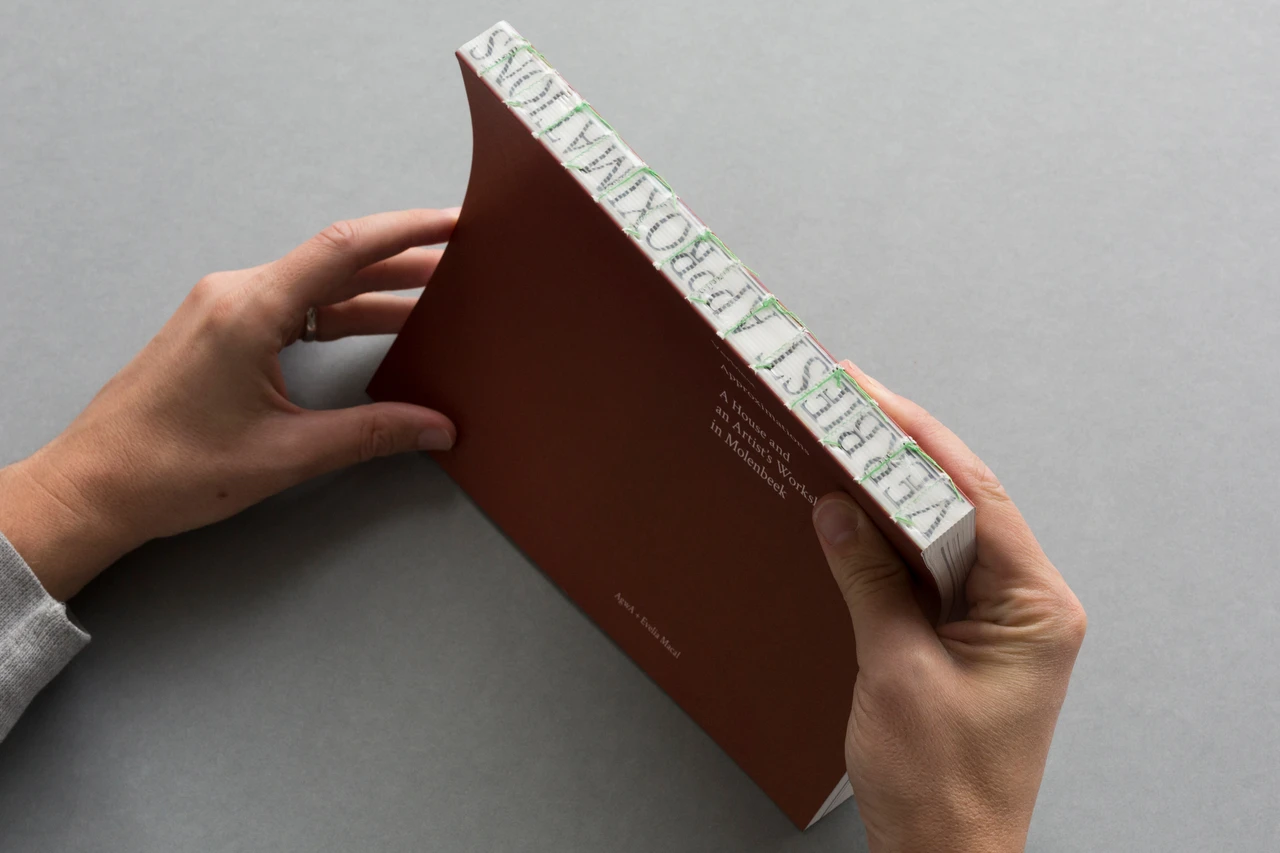
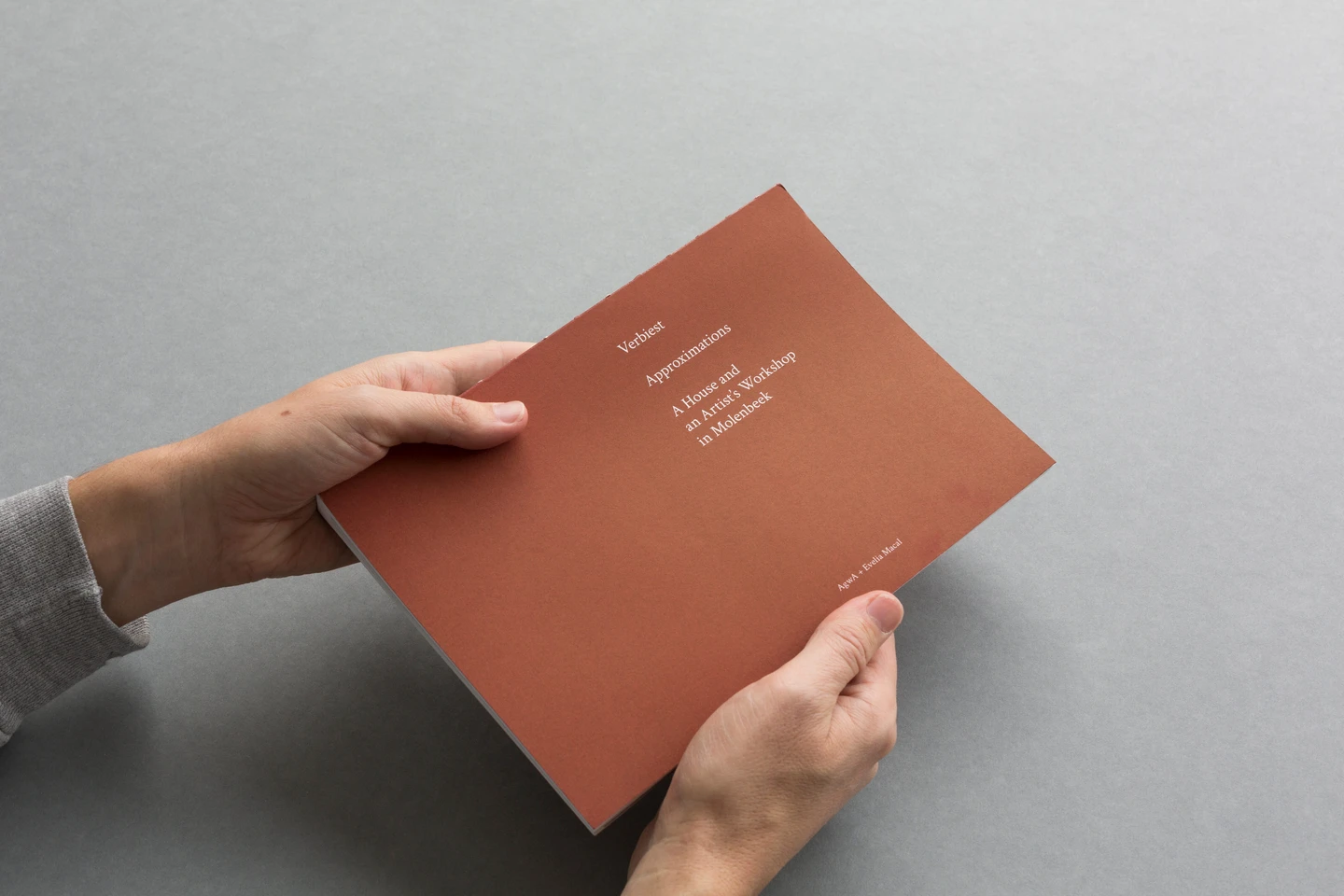
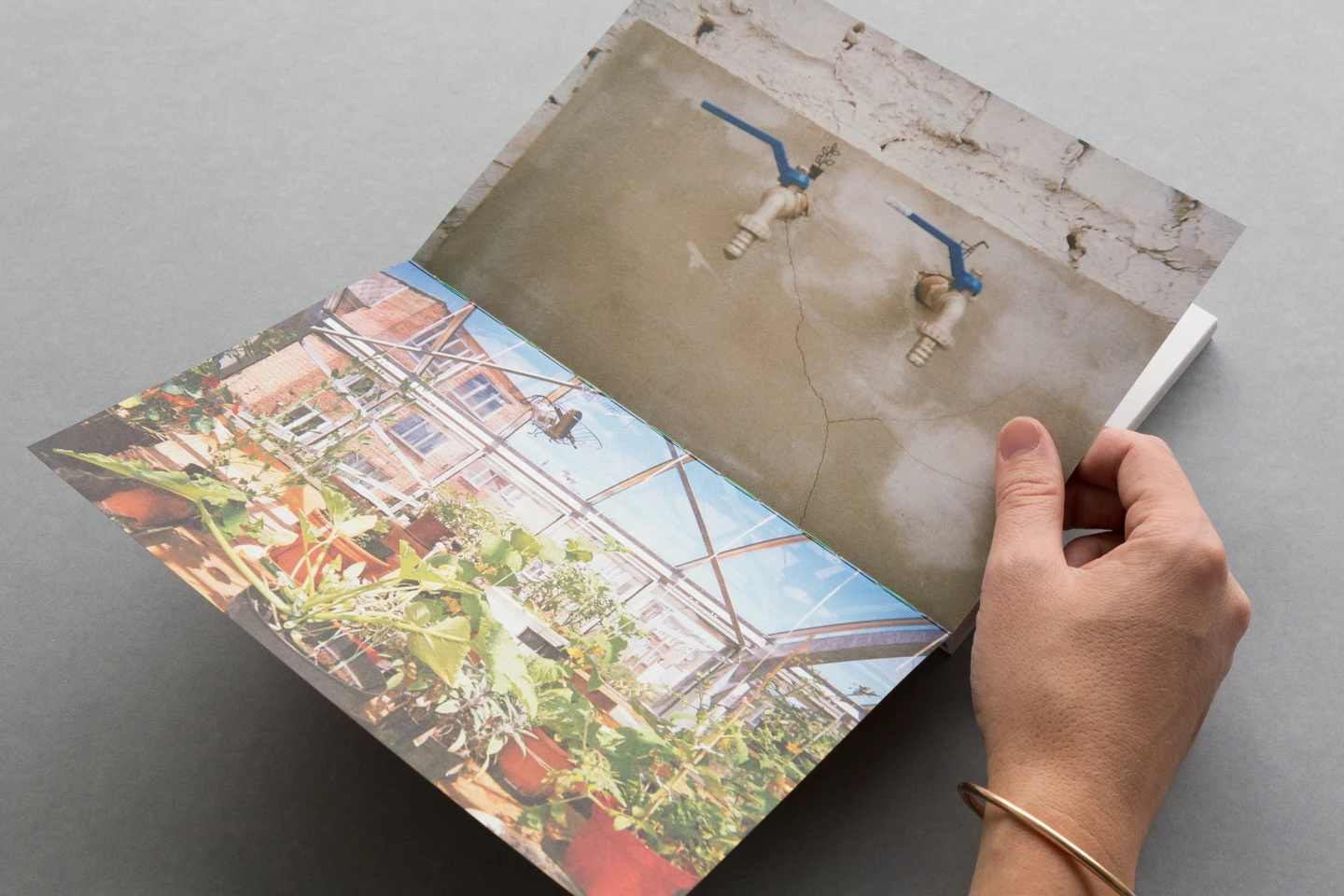
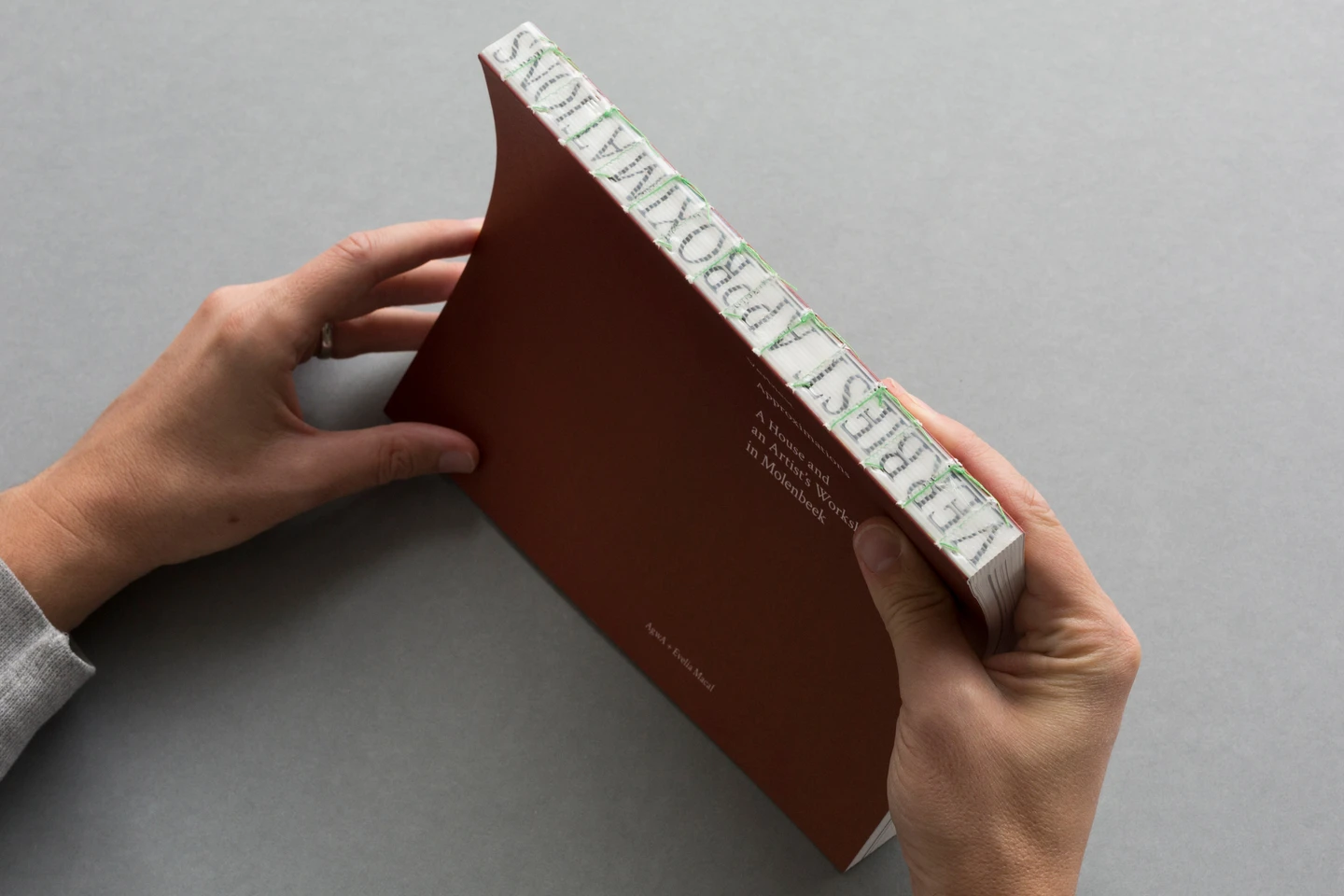
Verbiest Approximations
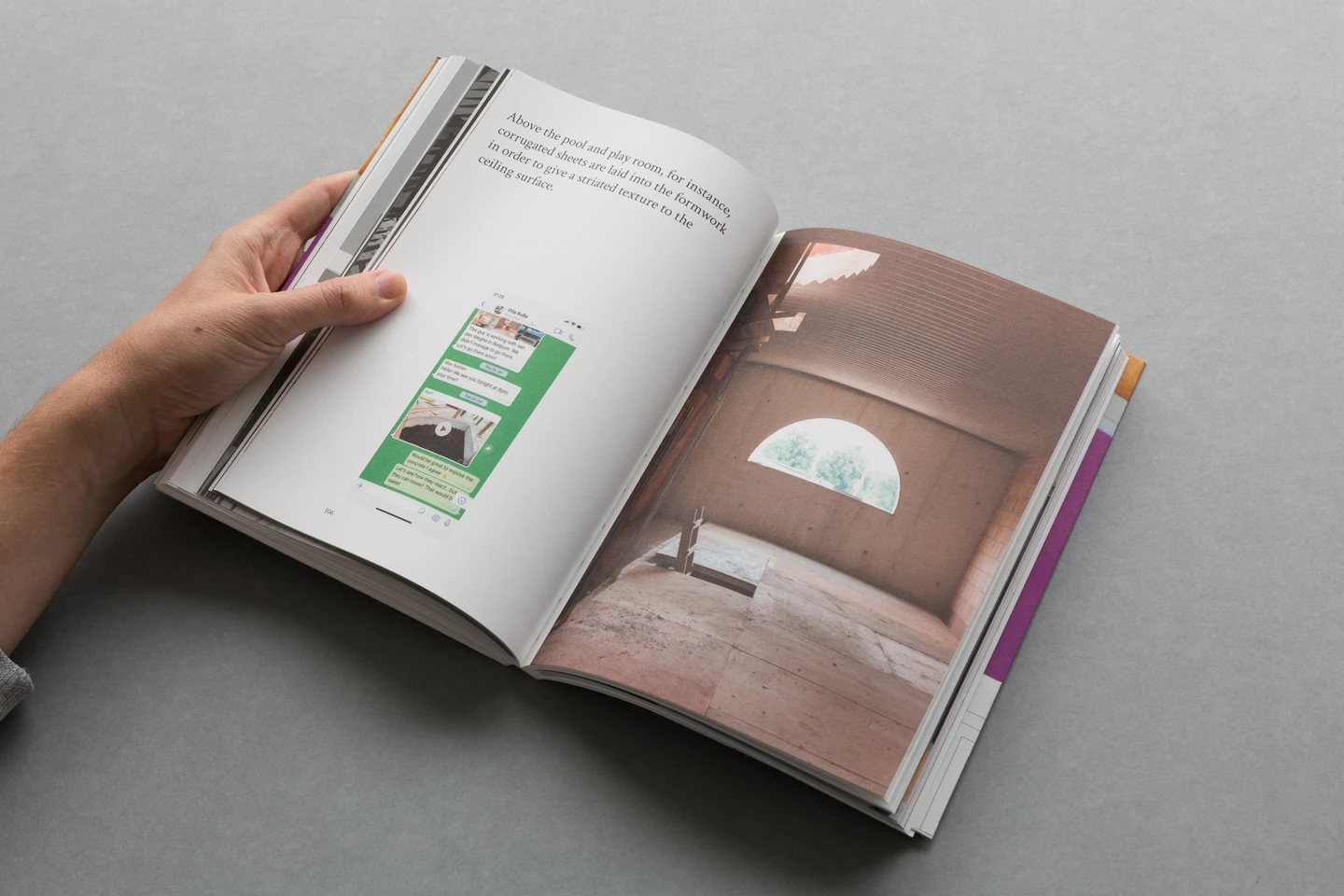
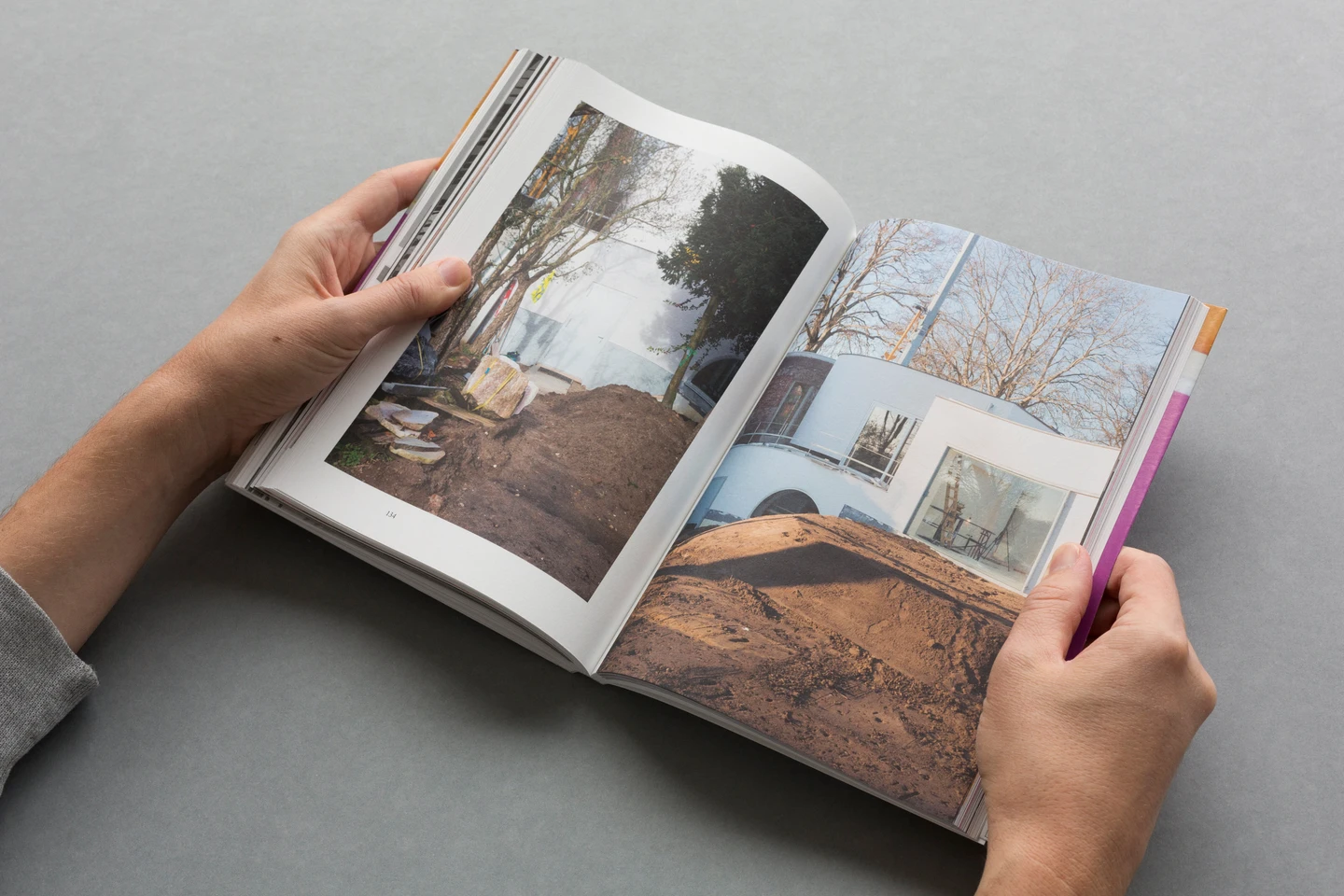
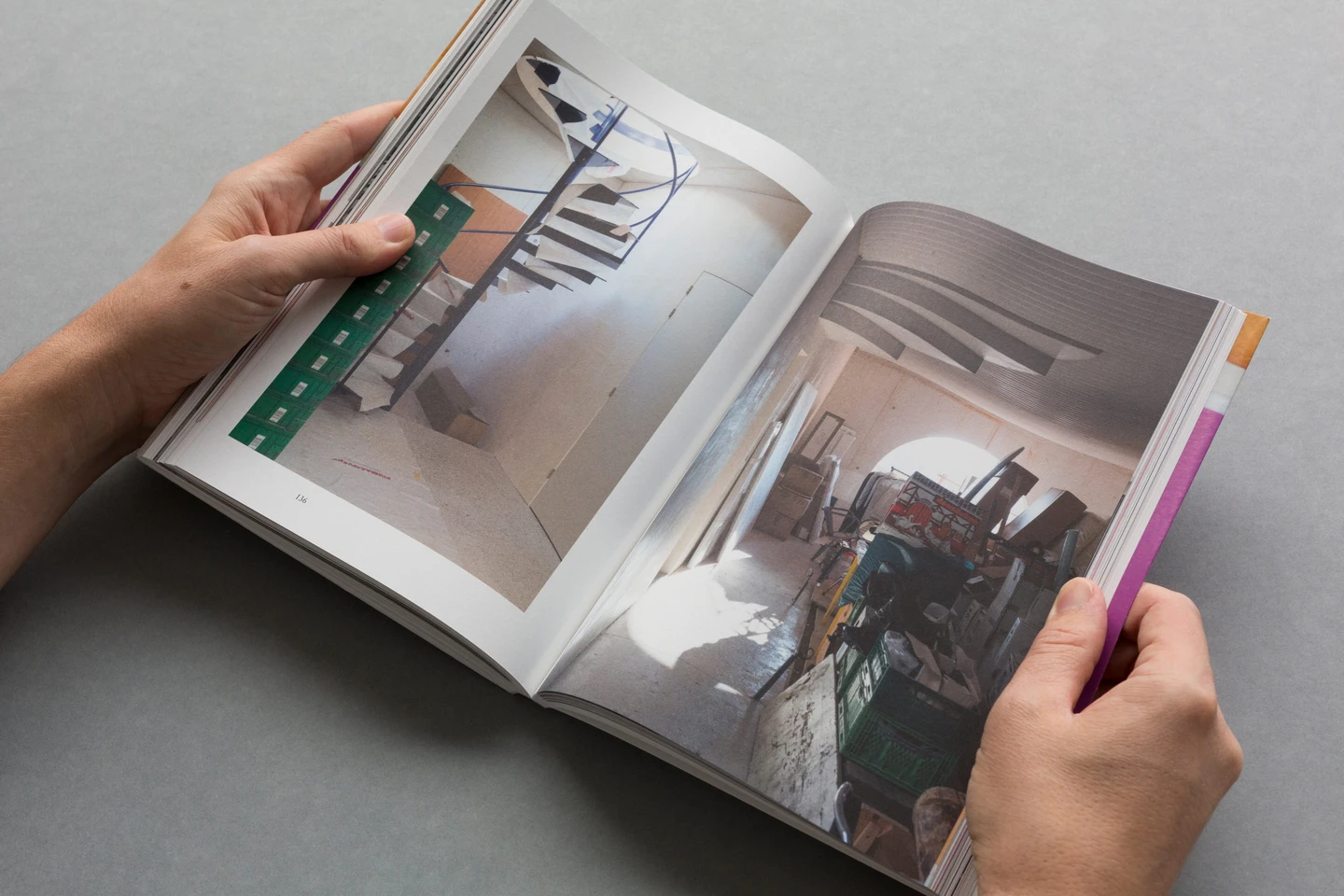
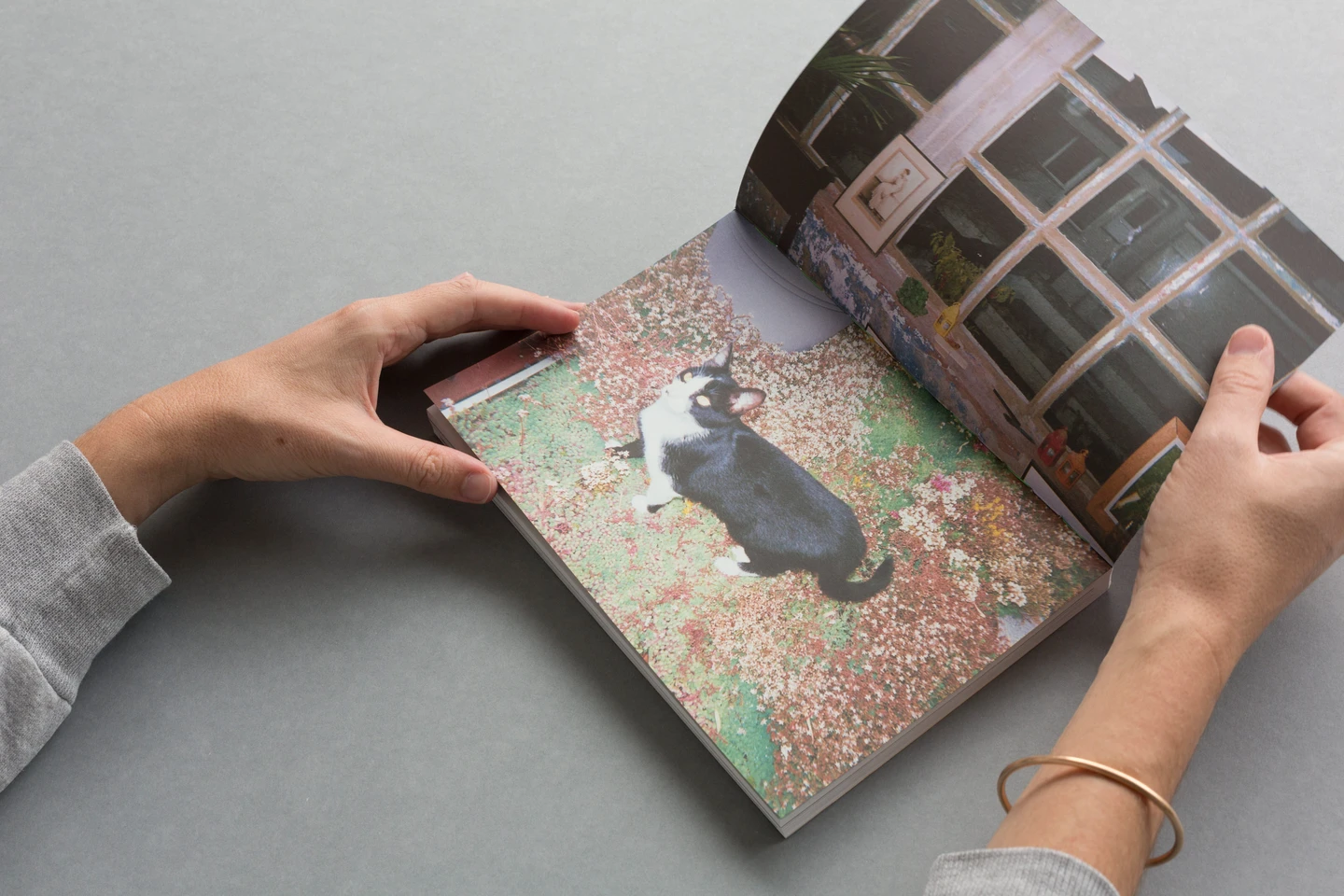
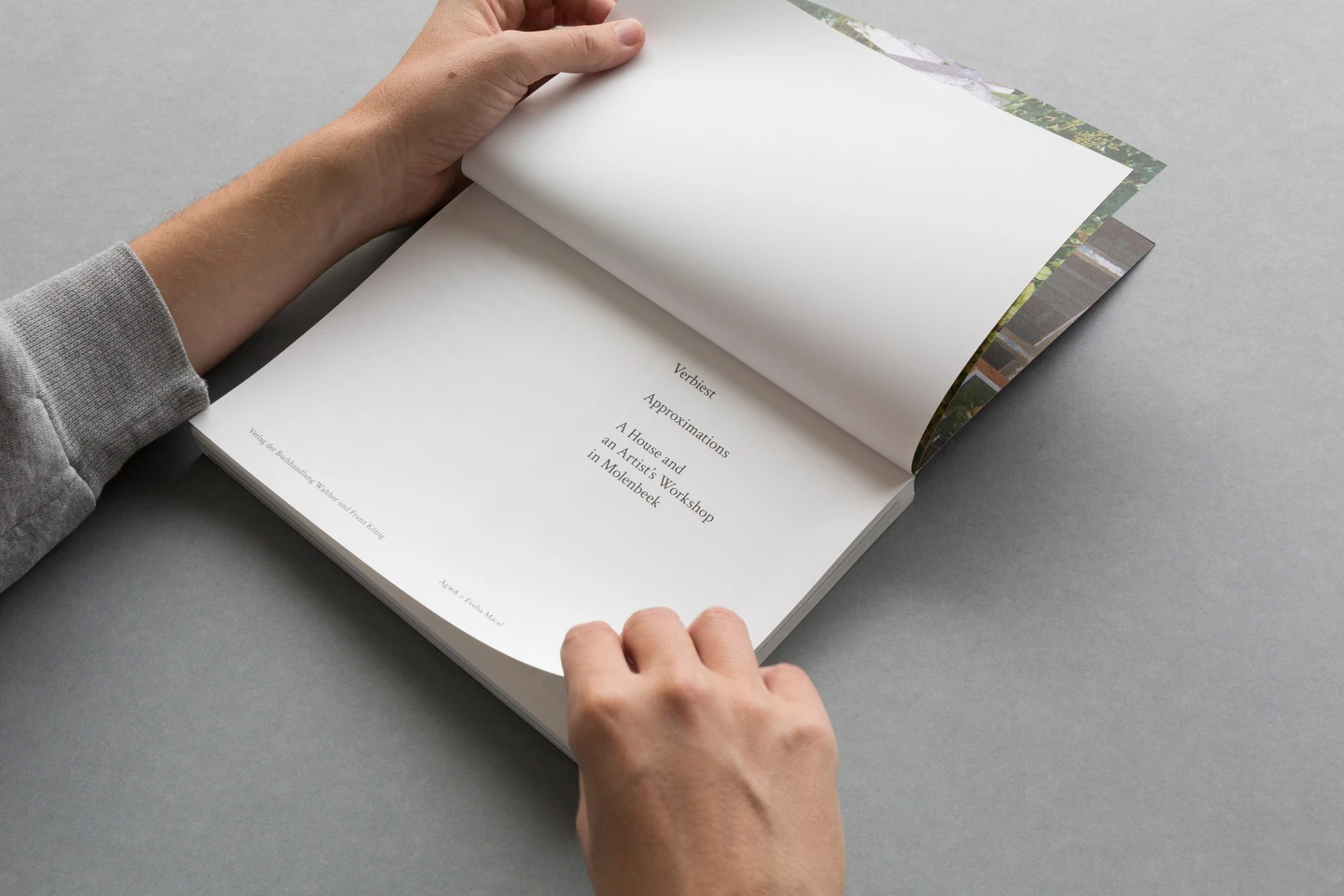
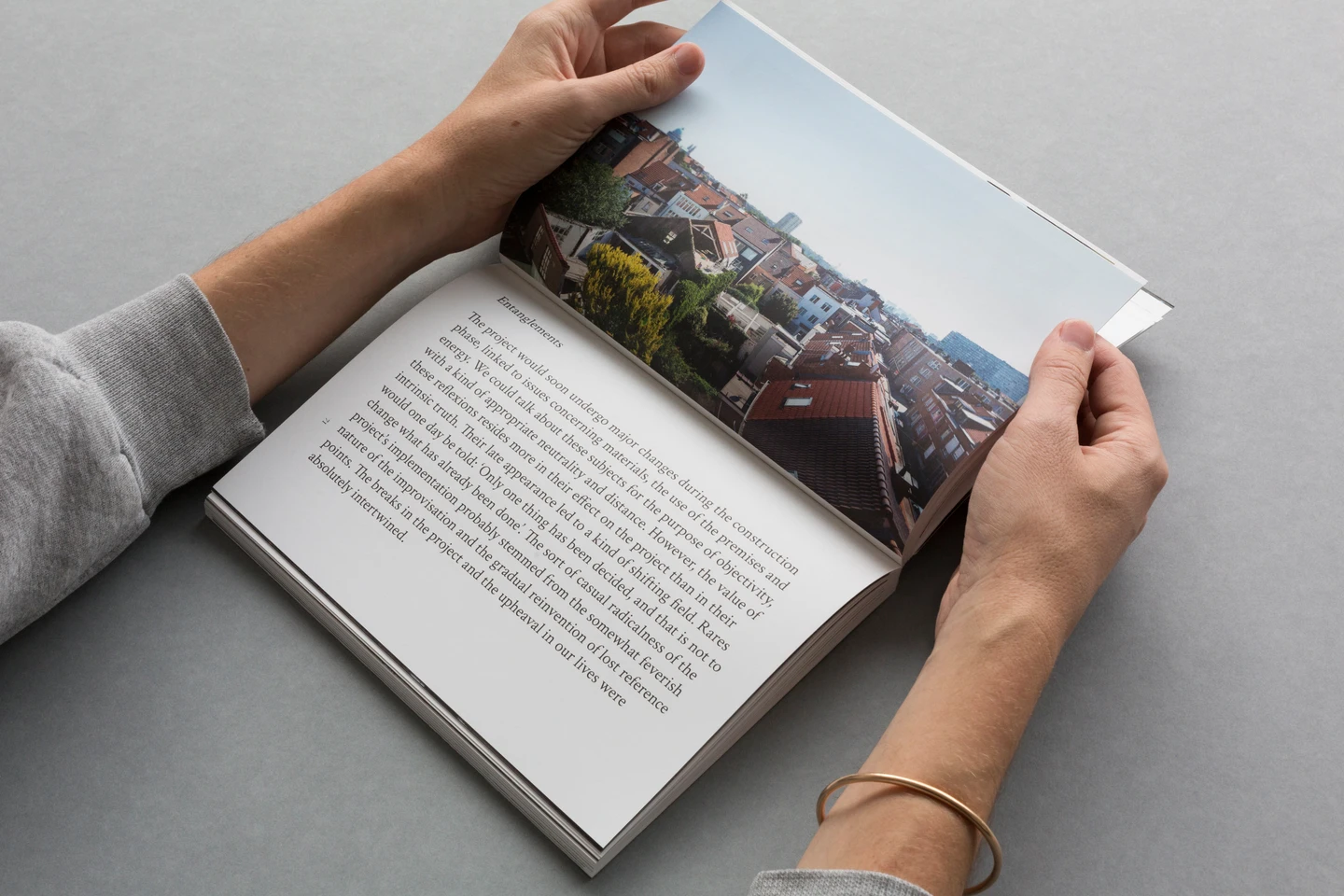
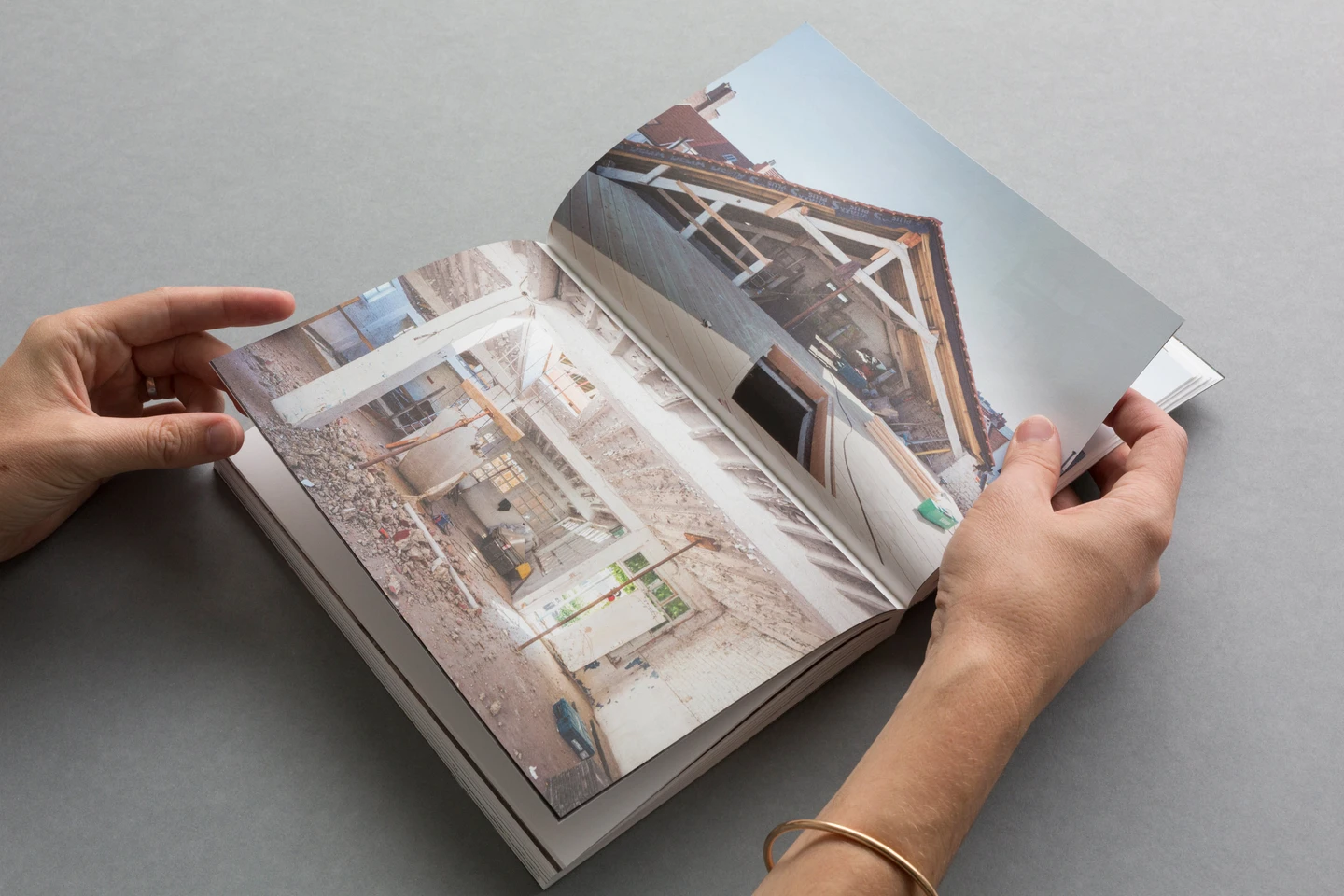
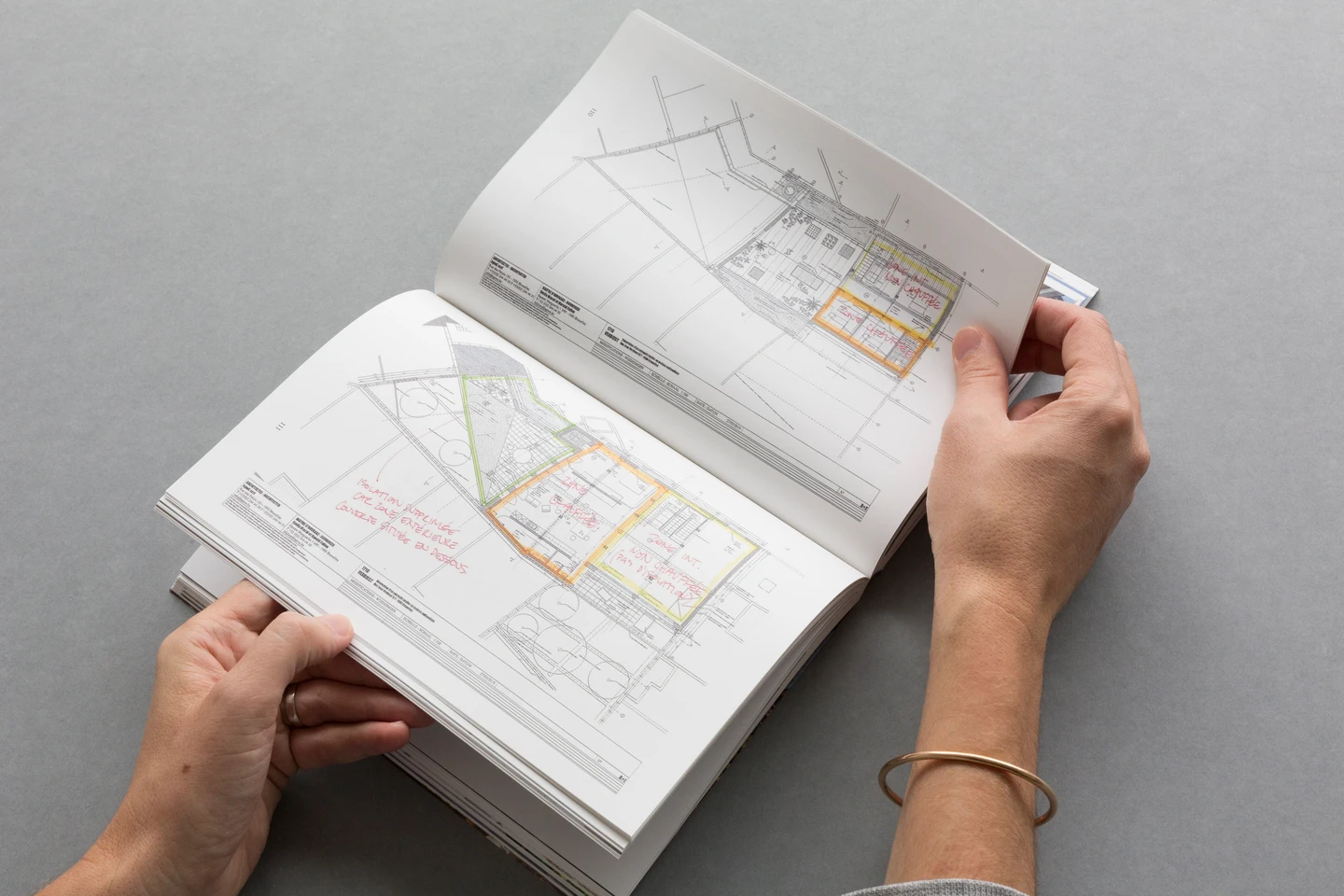
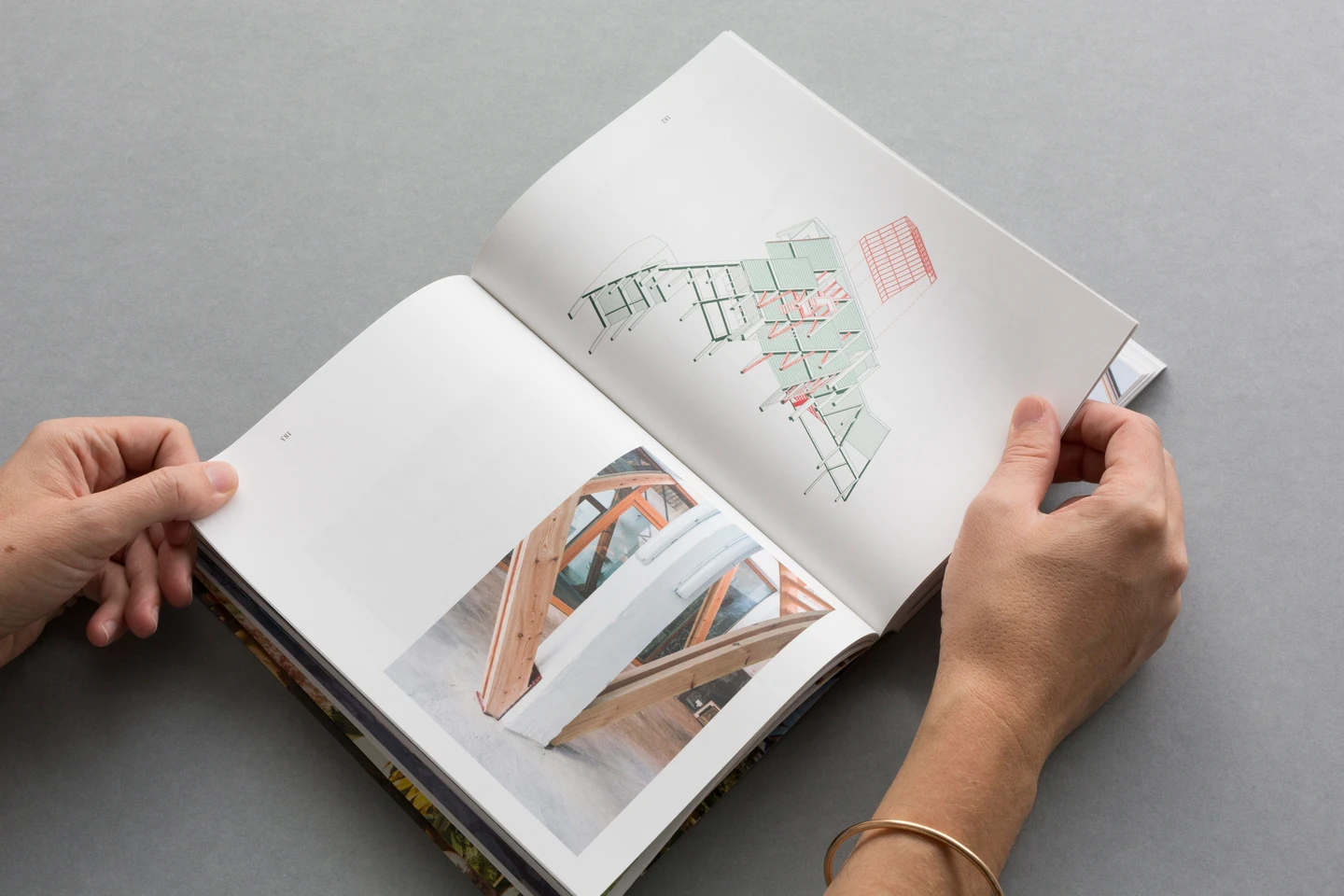
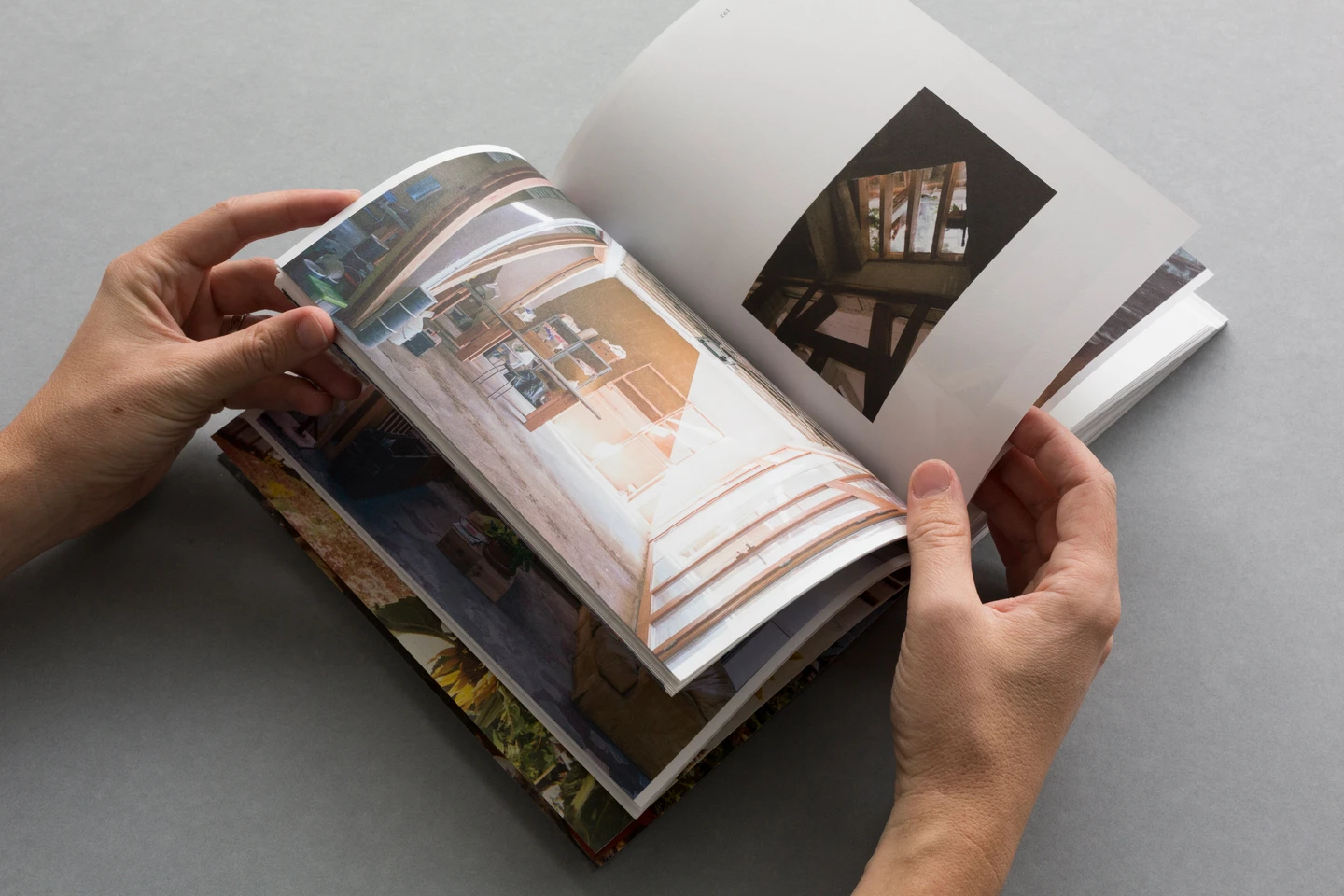
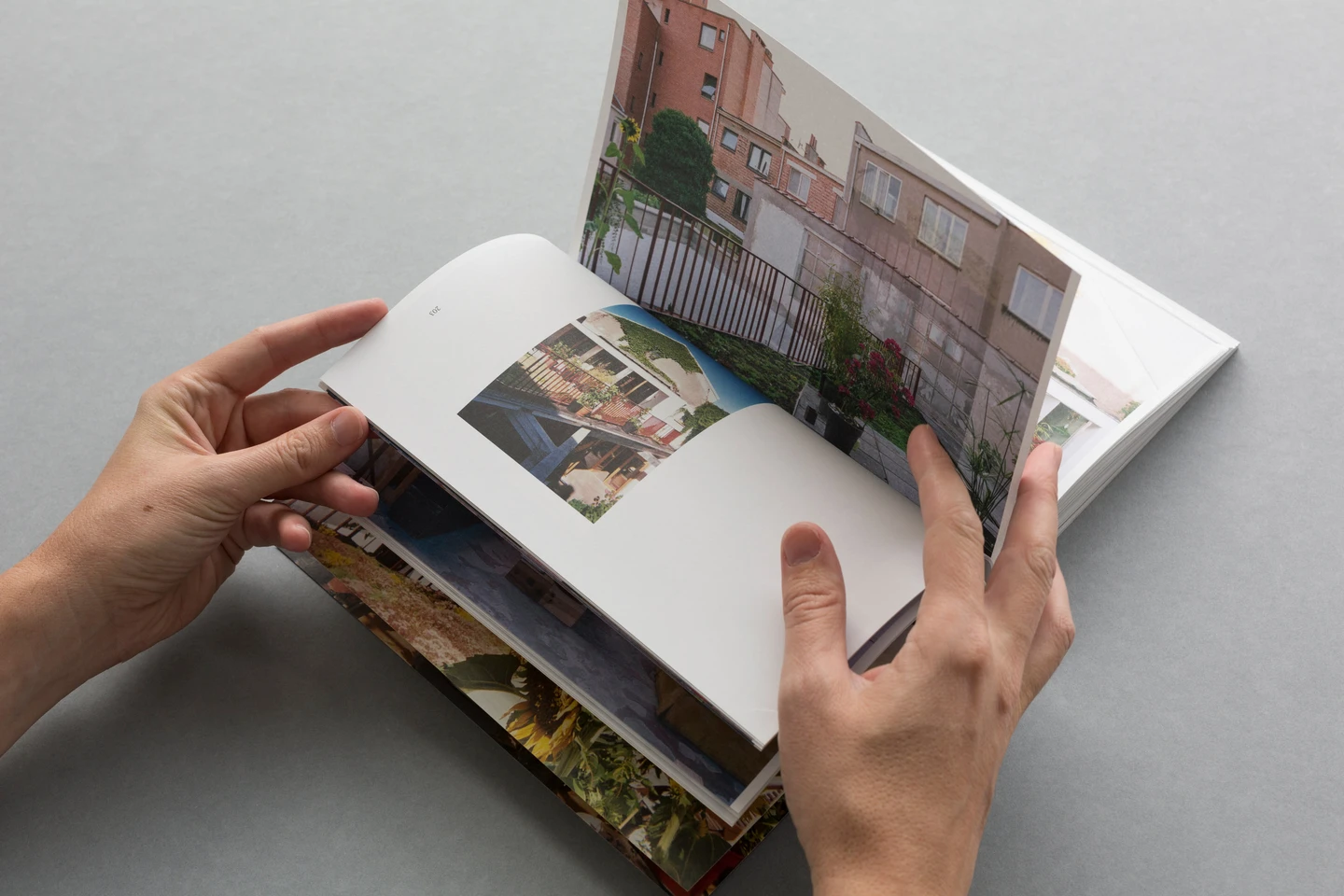
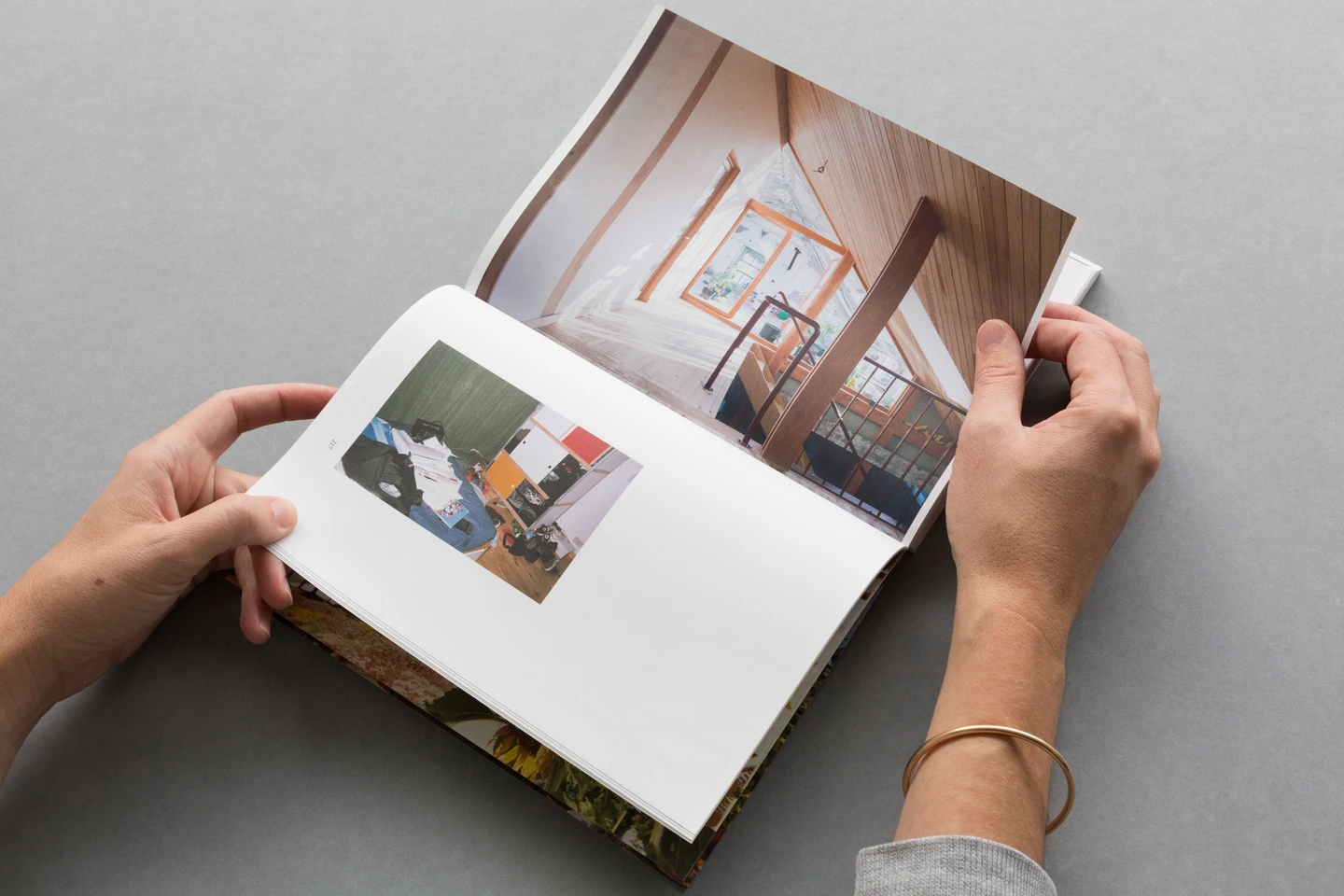
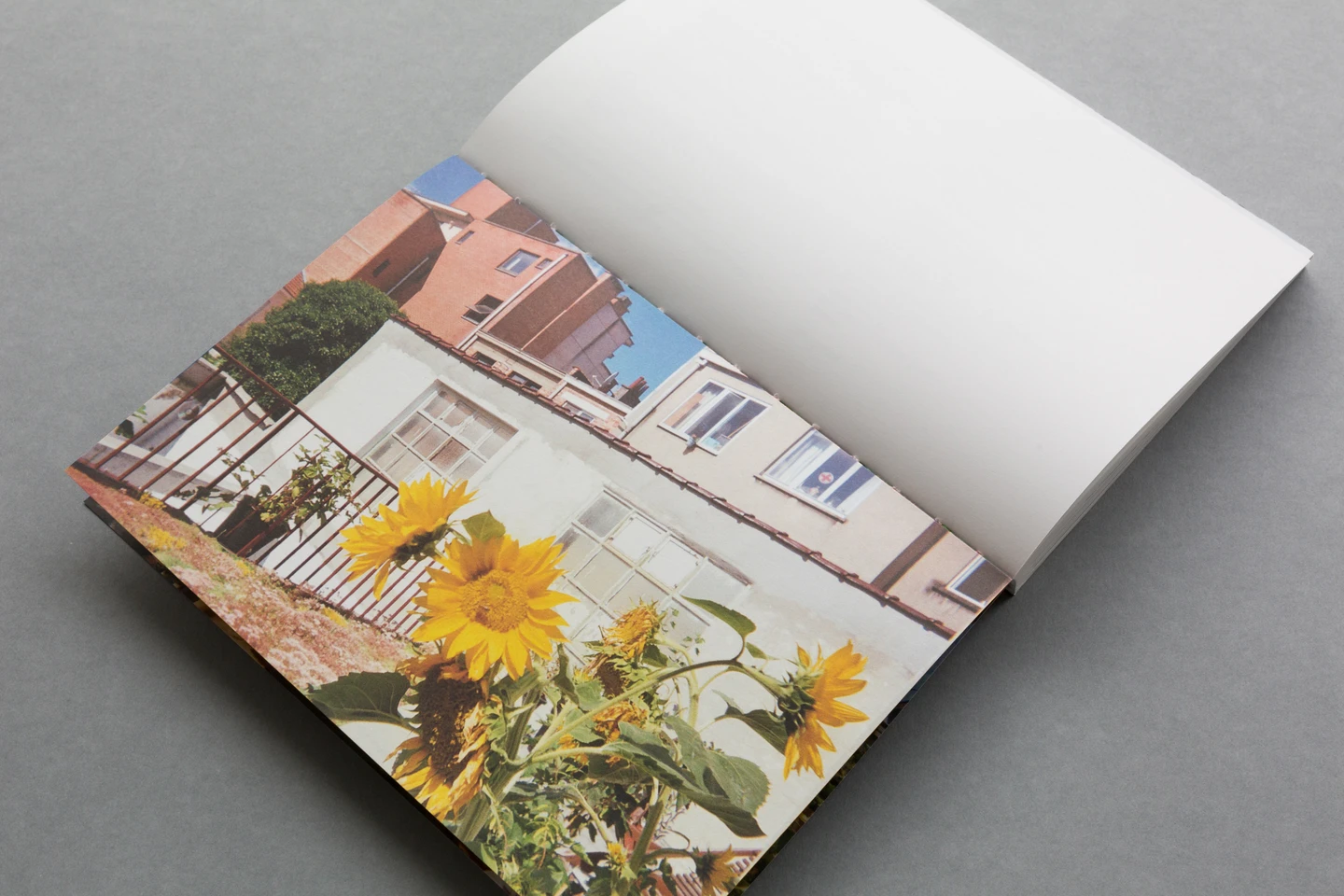
AGWA, Verlag Der Buchhandlung Walther und Franz König Editorial, Book 2022This books unfolds the design and realisation process of Verbiest, an architect’s house and an artist’s workshop in Molenbeek (Belgium) by Brussels- based architecture office AgwA with Maria Evelia Macal Guerra. A set of unpublished work documents including sketches, scale models, plans, and pictures is combined with a set of texts by AgwA’s partner Harold Fallon. The theoretical position of a project at the heart of a practice can be sensed in these writings.
Beyond the singularity of this project, the book demonstrates the critical relevance of construction, energy, and circularity in architecture theory and discourse. The book is supported by the KU Leuven Department of Architecture and has been double blind peer reviewed.
-
-
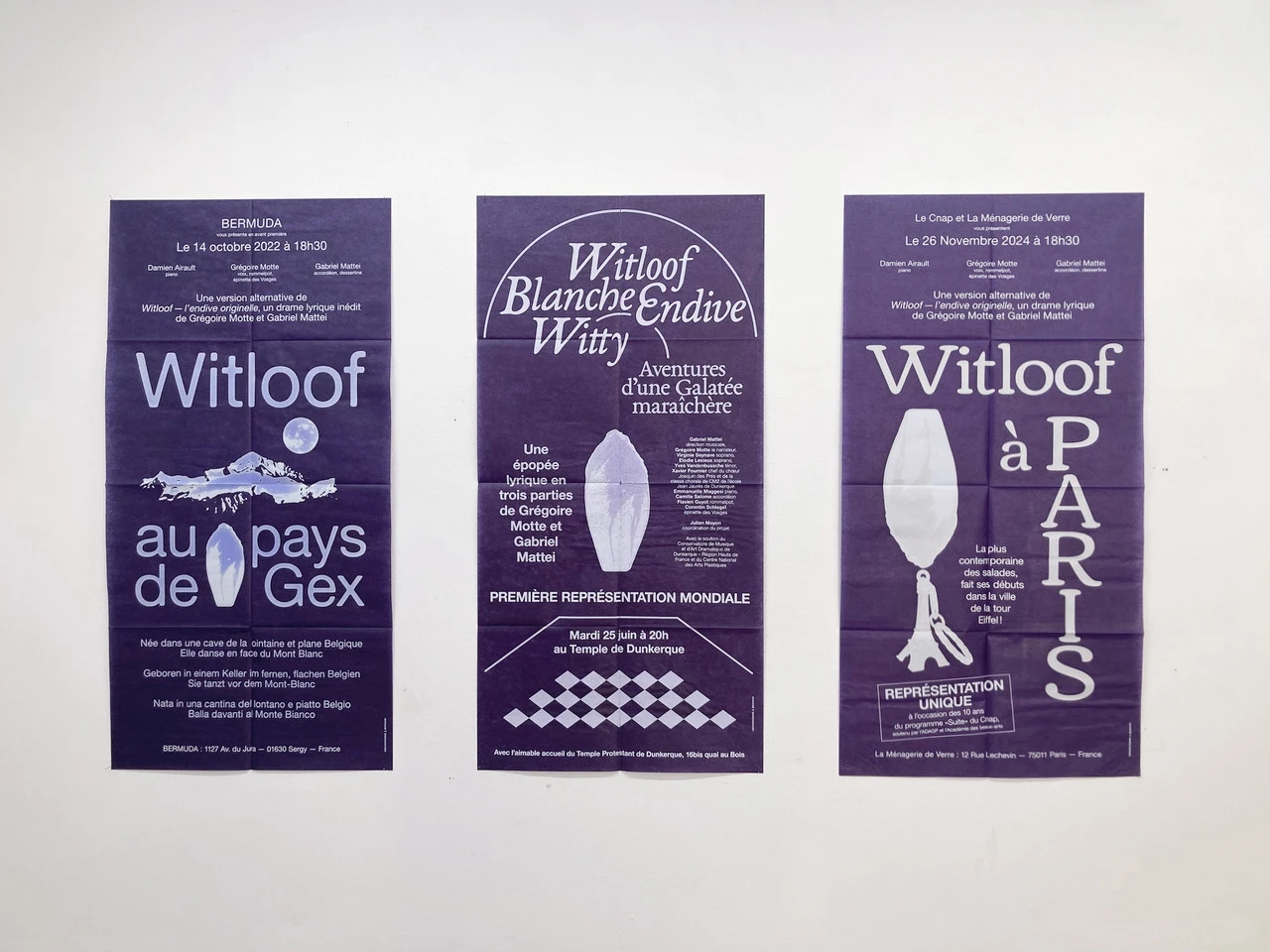
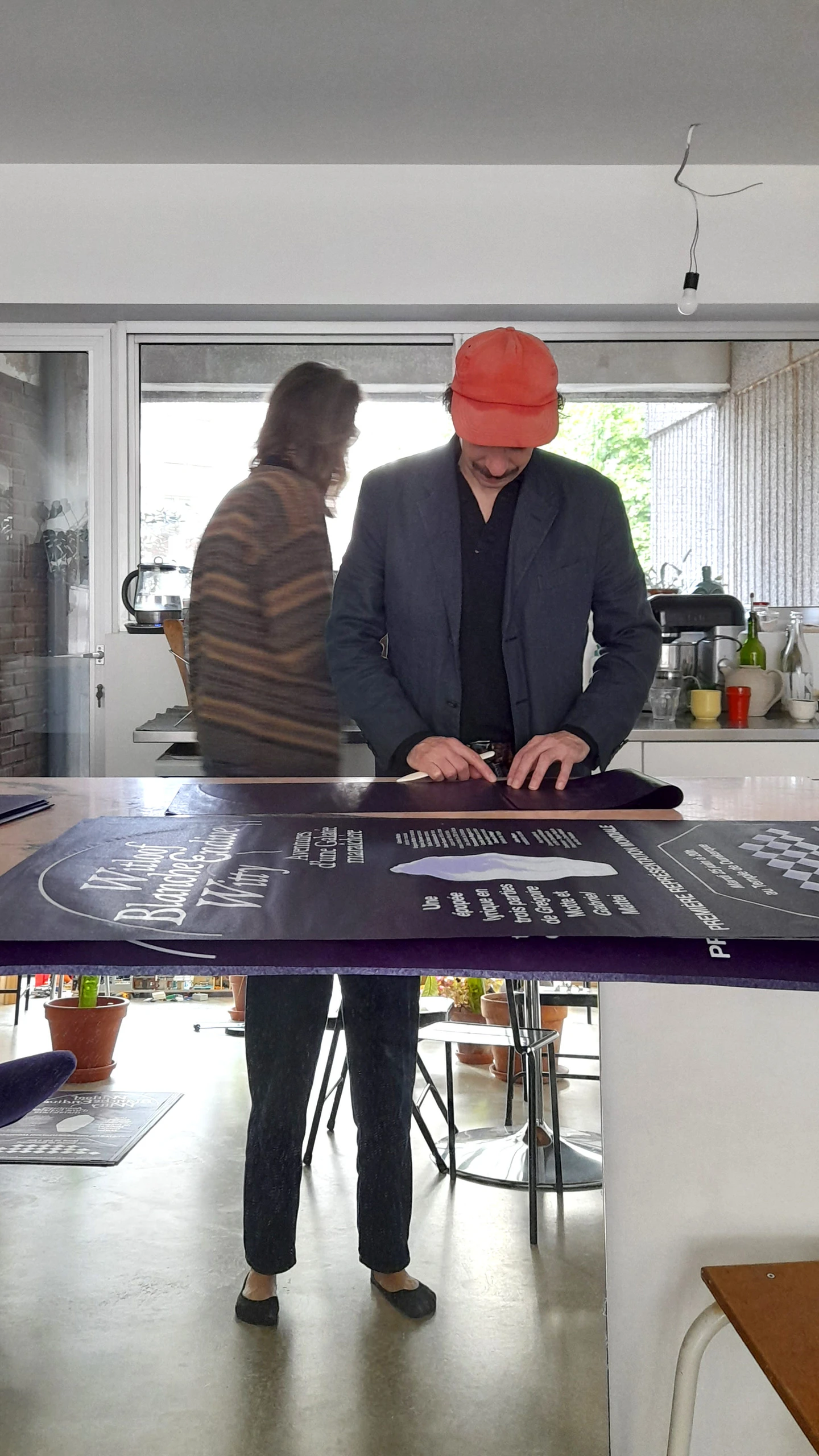
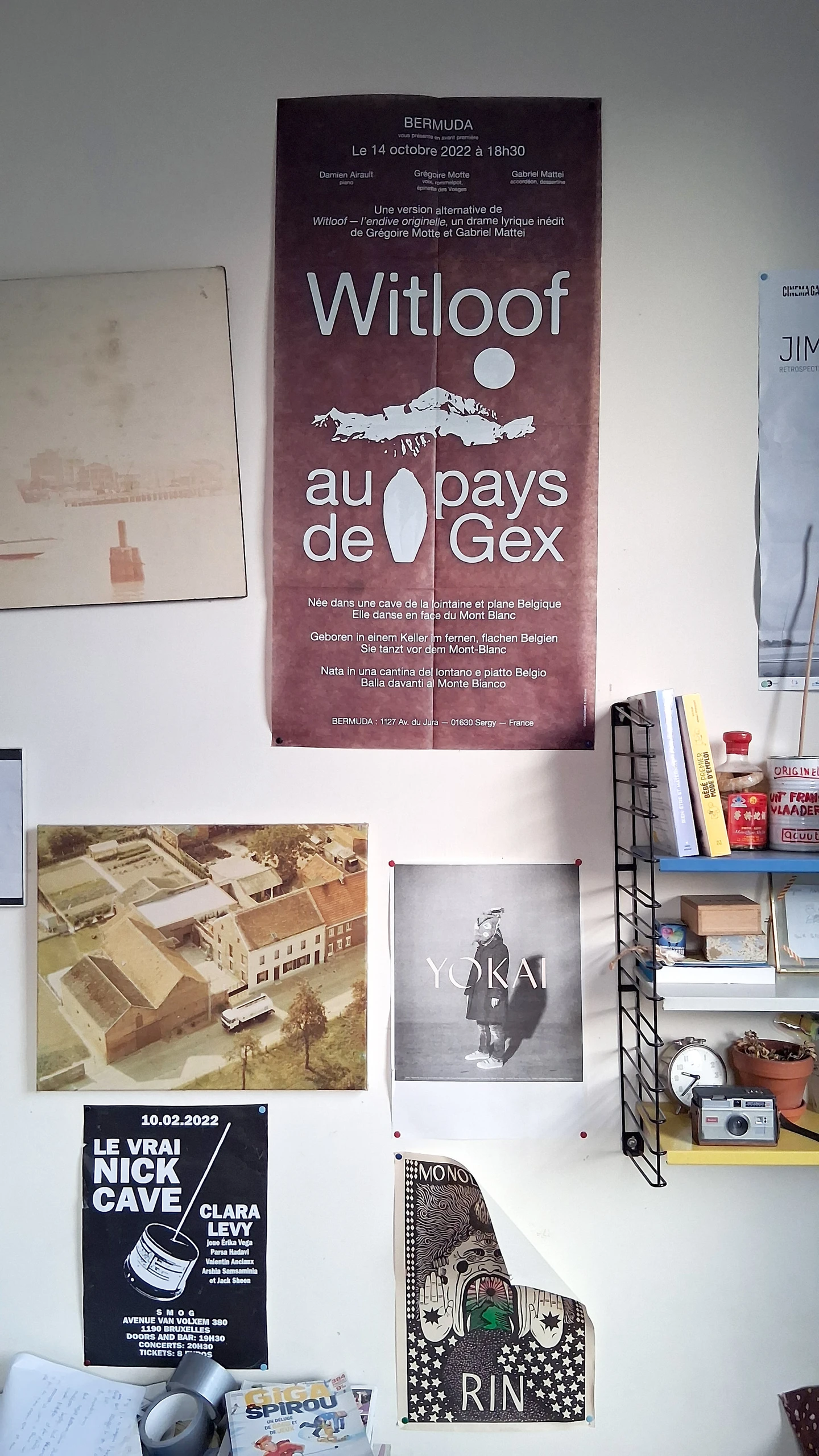
Witloof
Bermuda Graphics, Poster 2022Je trouverais bien de regrouper les 3 affiches:
Witloof, l'épopée sérigraphique.
Je trouverais intéressant d'expliquer la réaction entre l'encre et le papier au cours des 3 éditions. -
-
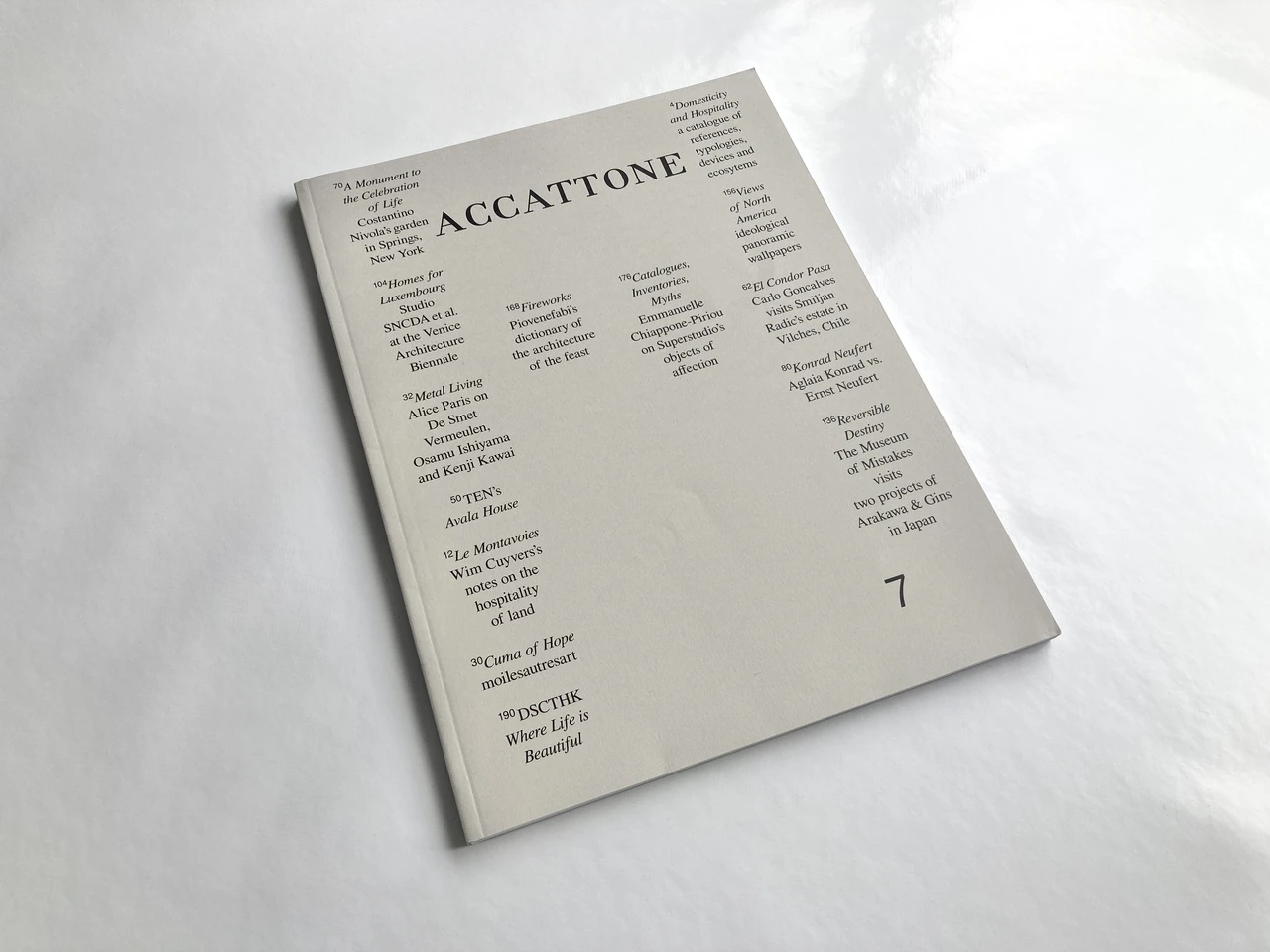
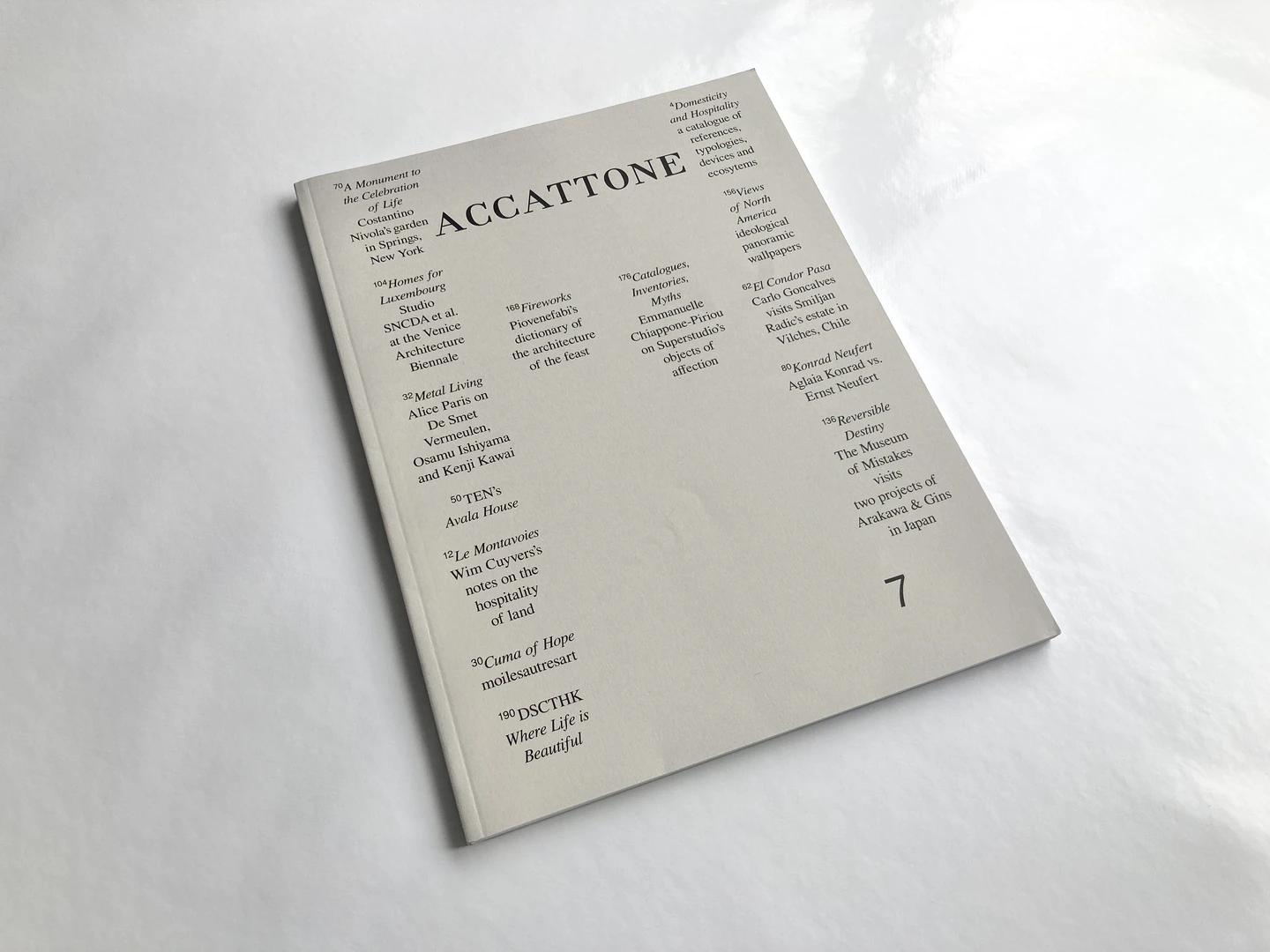
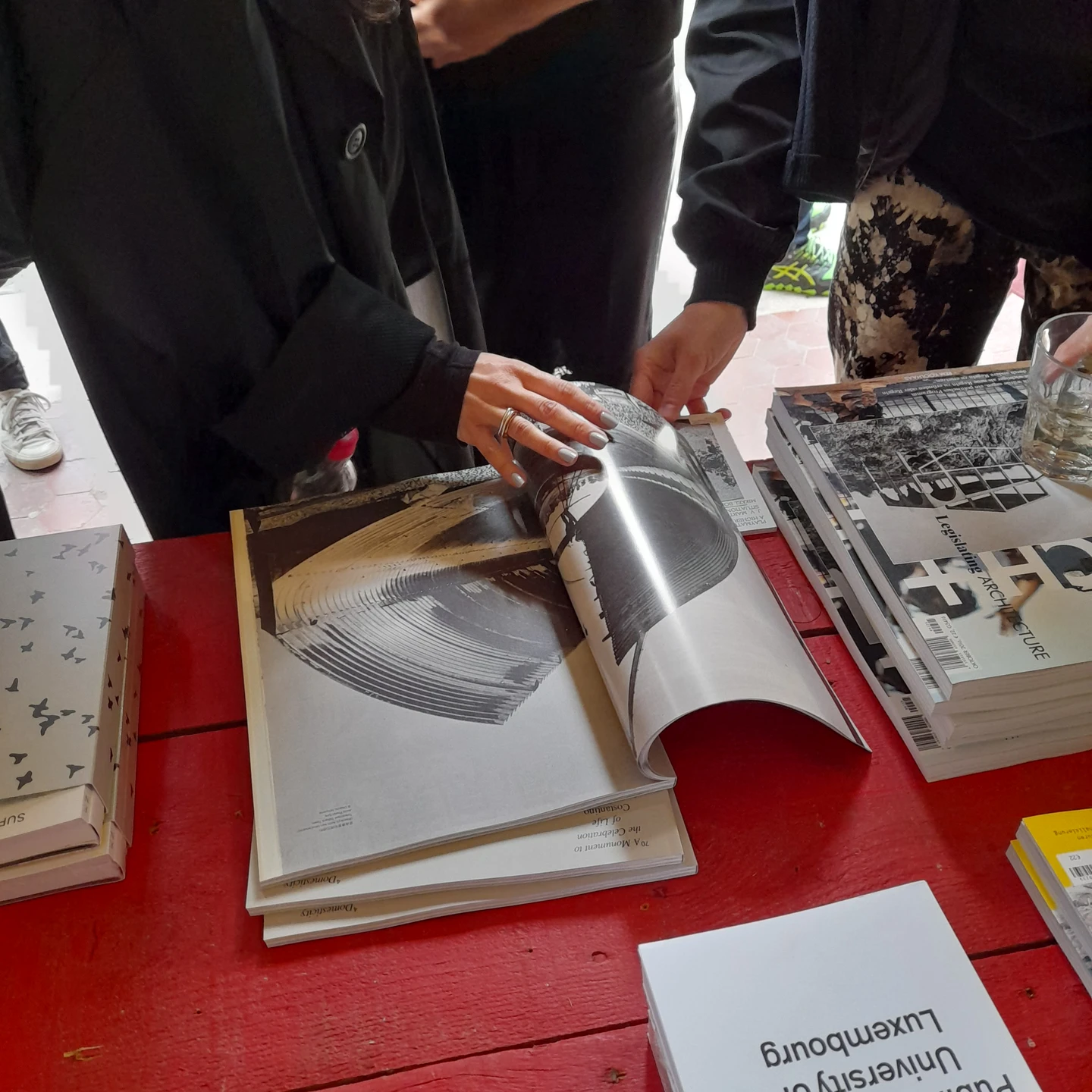
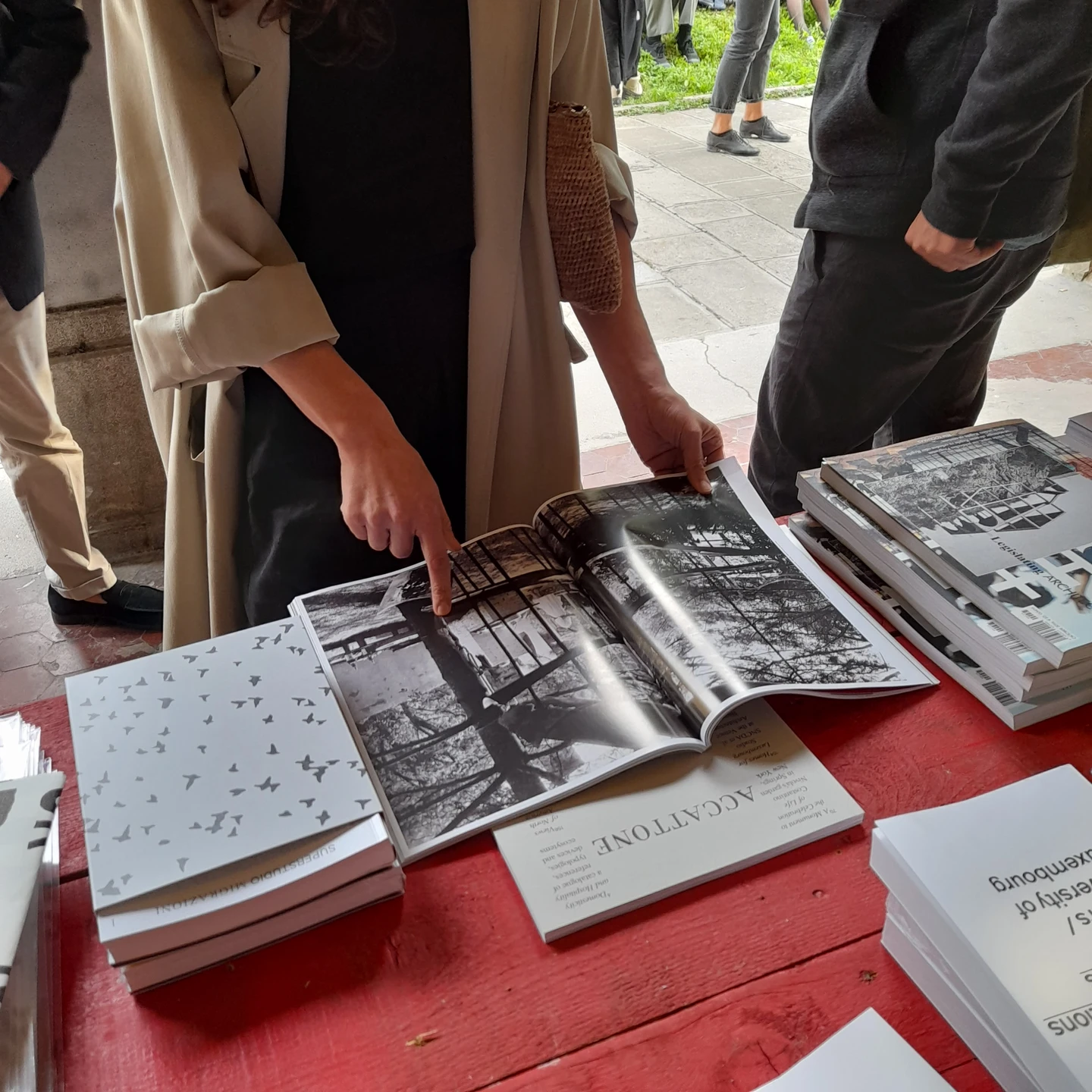
ACCATTONE 7
Accattone Editorial, Magazine 2021Accattone 7 deals with open-air domesticity and the diplomatic hospitality of land. It presents intellectual and architectural projects, both contemporary and historical, for alternative modes of living.
-
-
Grand Dessein du Rationalisme
Accattone, EPFL Editorial, Book 2021Grand Dessein du Rationalisme is a hybrid publication that gathers 18 architecture projects from the student collectives of Roberto Gargiani’s Superstudio at the École polytechnique fédérale de Lausanne, 2020–2021, and a series of 13 theoretical, practical and historical reflections on (antagonistic) rationalism in architecture by Marco Assennato, Jean-Louis Cohen, Massimo De Angelis, Natalie Donat-Cattin, Roberto Gargiani, Silvia Groaz, Boris Hamzeian, Marson Korbi, André Kempe & Oliver Thill, Éric Lapierre, Francesco Marullo, Point Supreme, Ten Studio, Christophe Van Gerrewey and Adrien Verschuere.
-
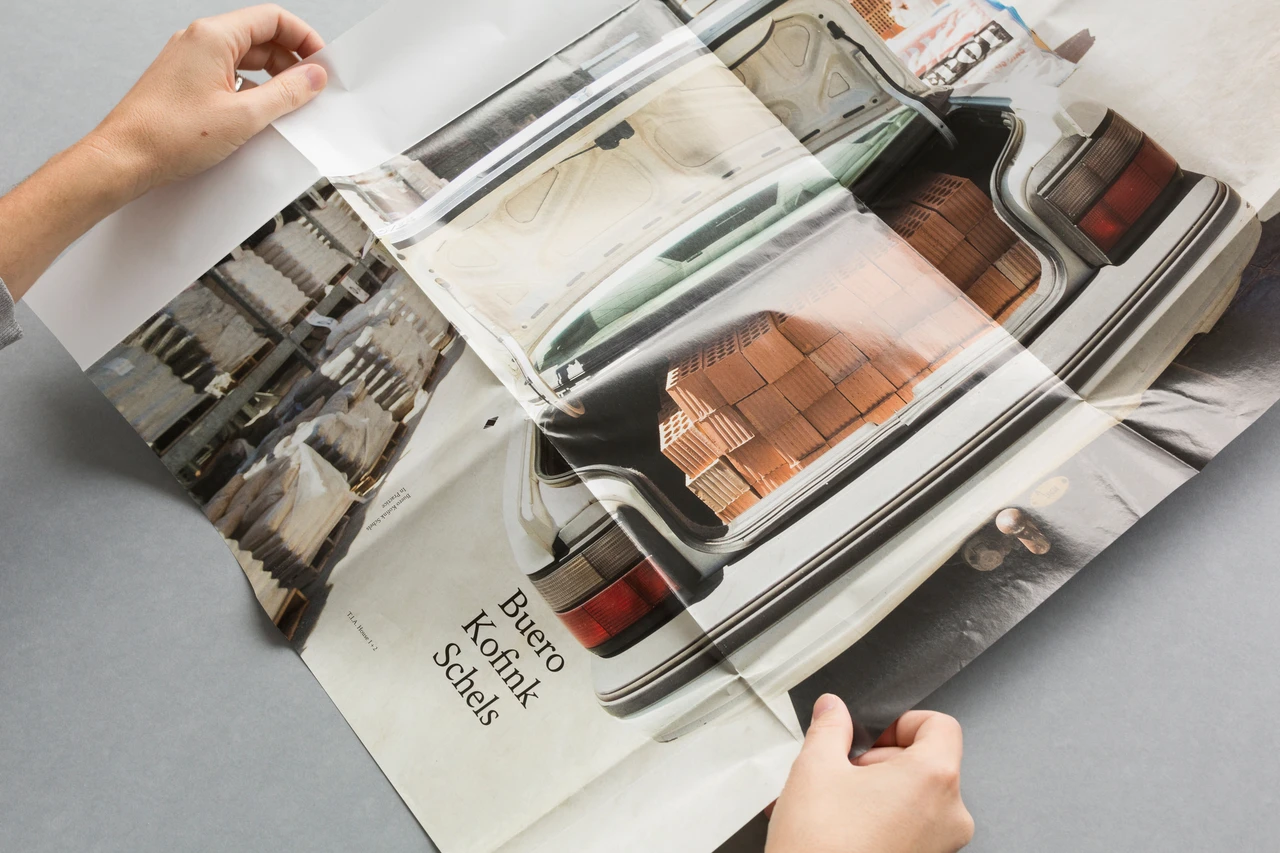
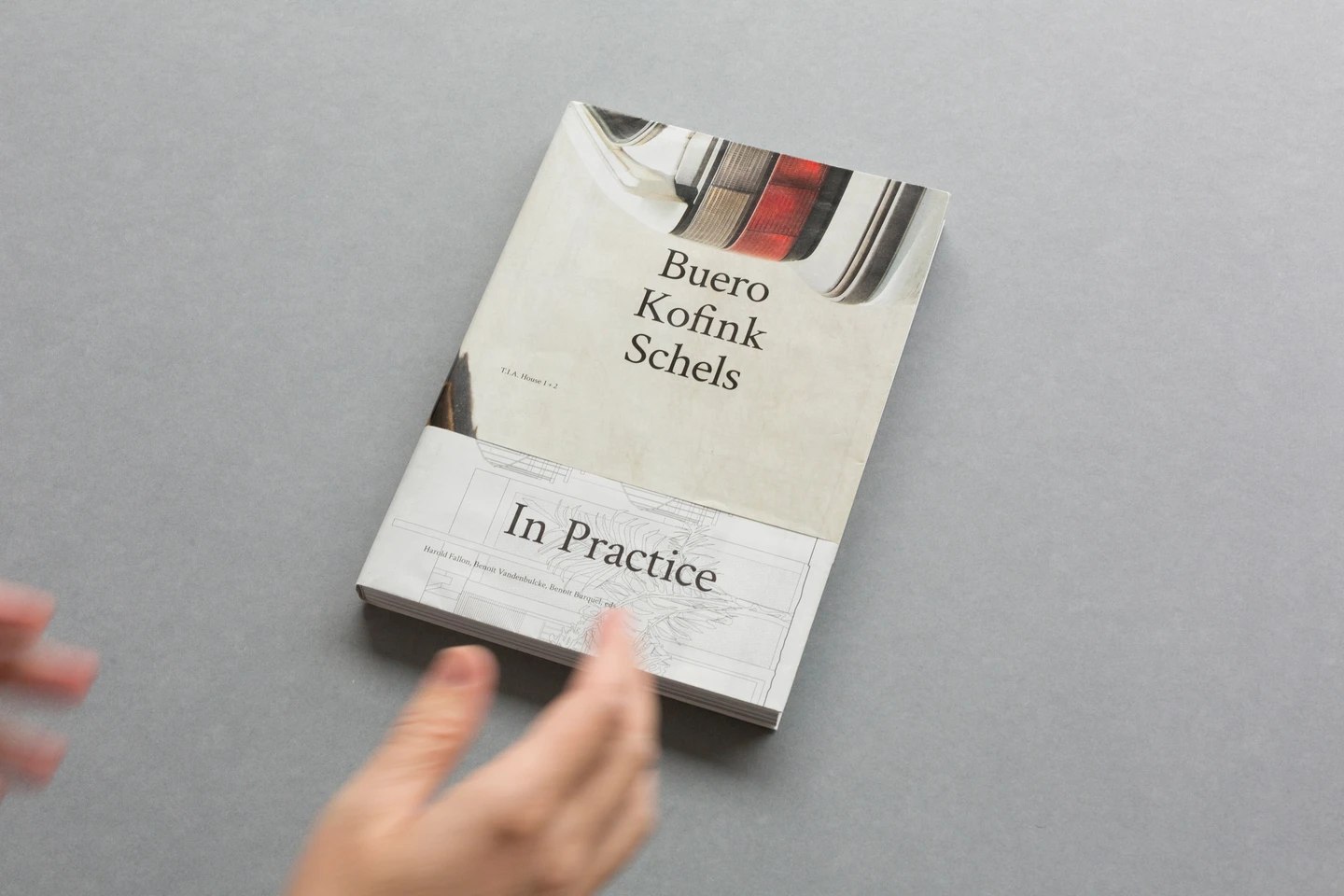
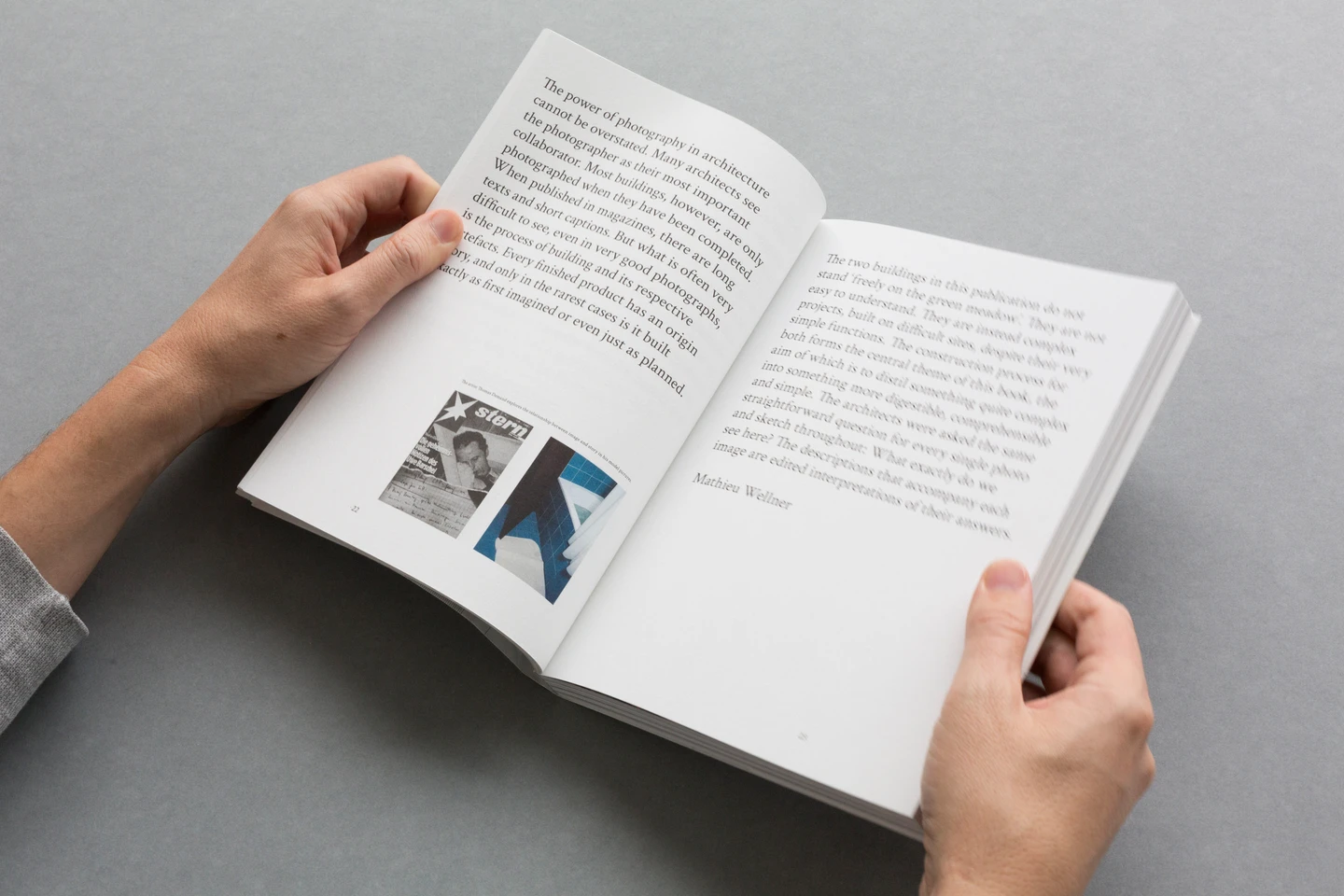
Buero Kofink Schell in Practice
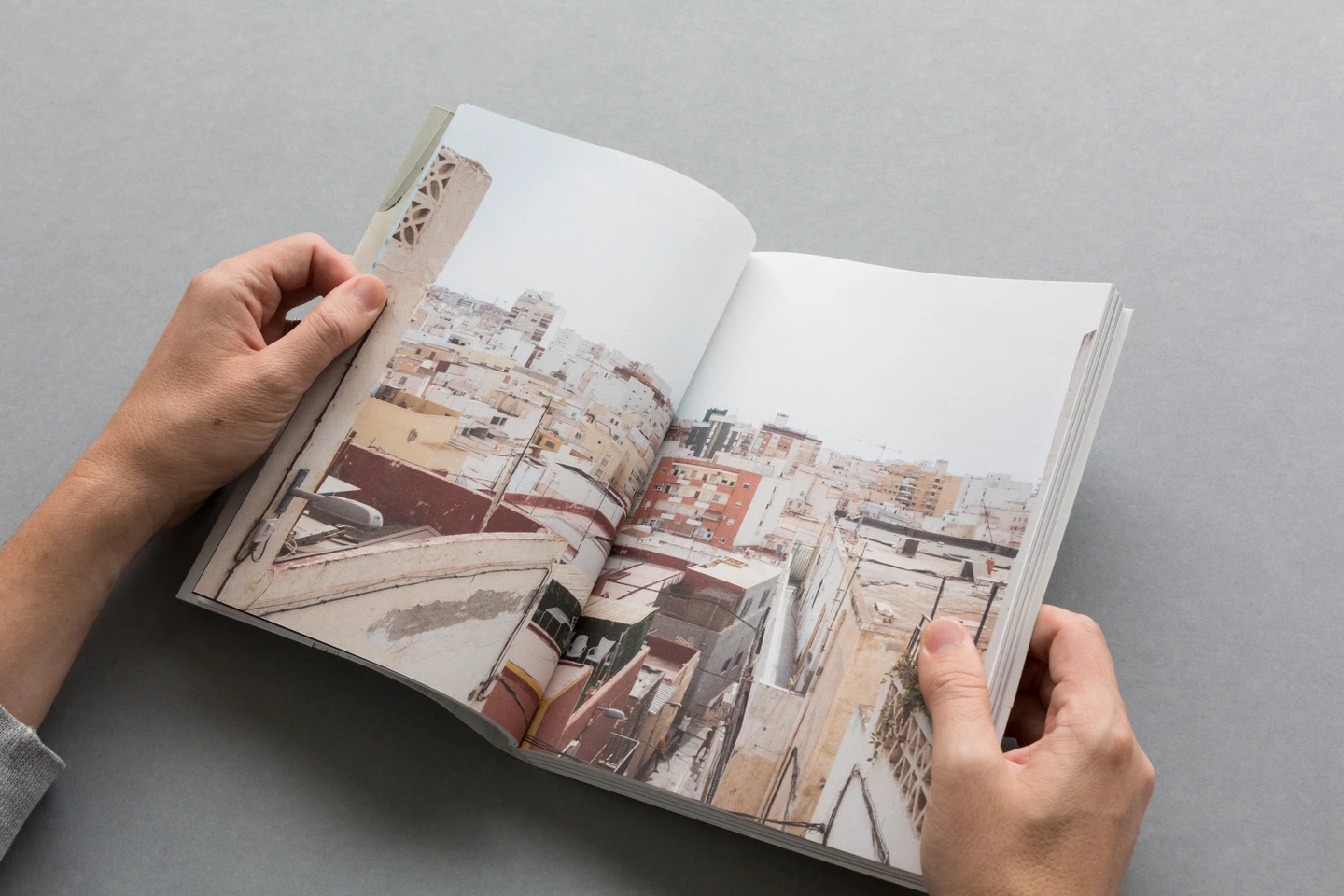
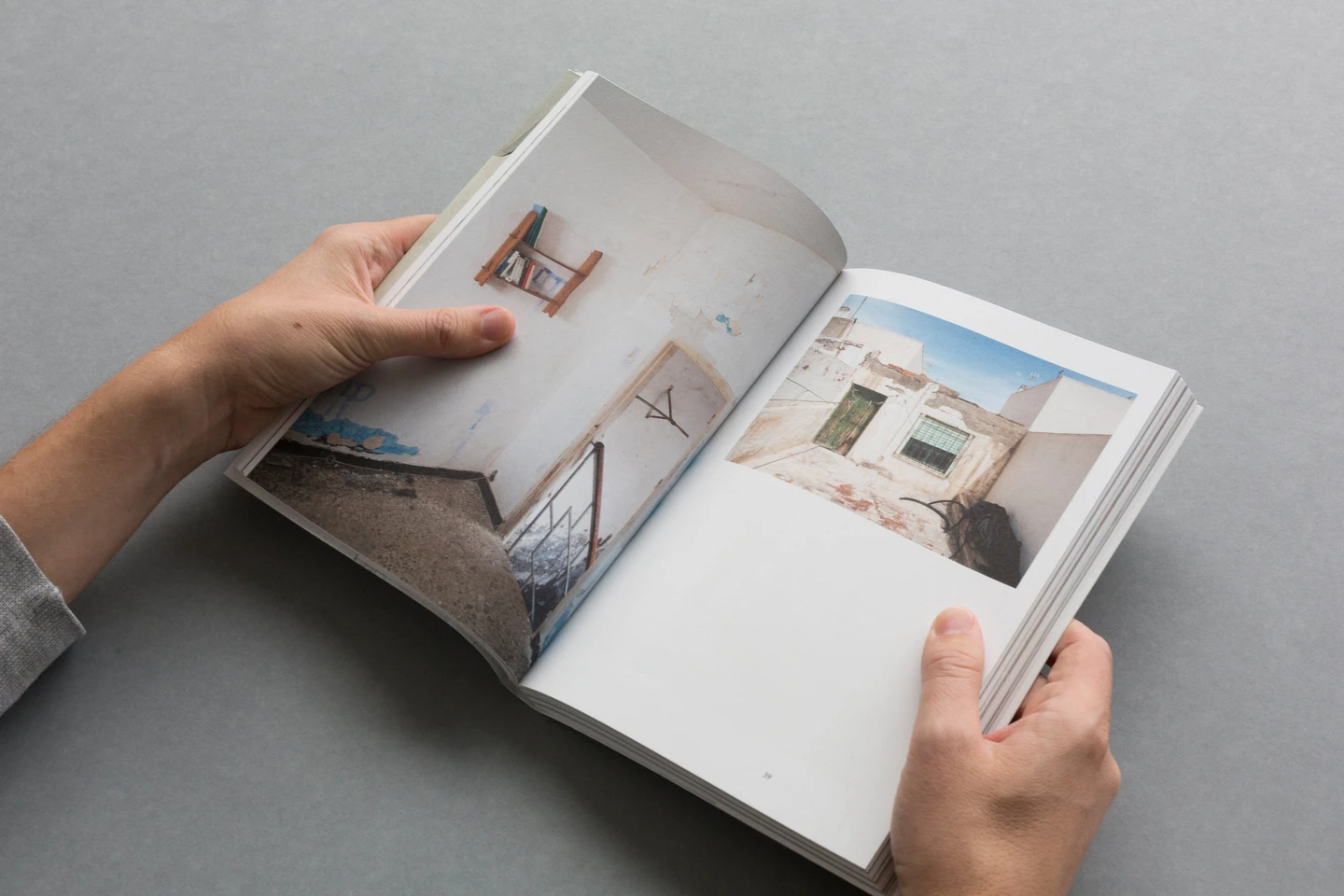
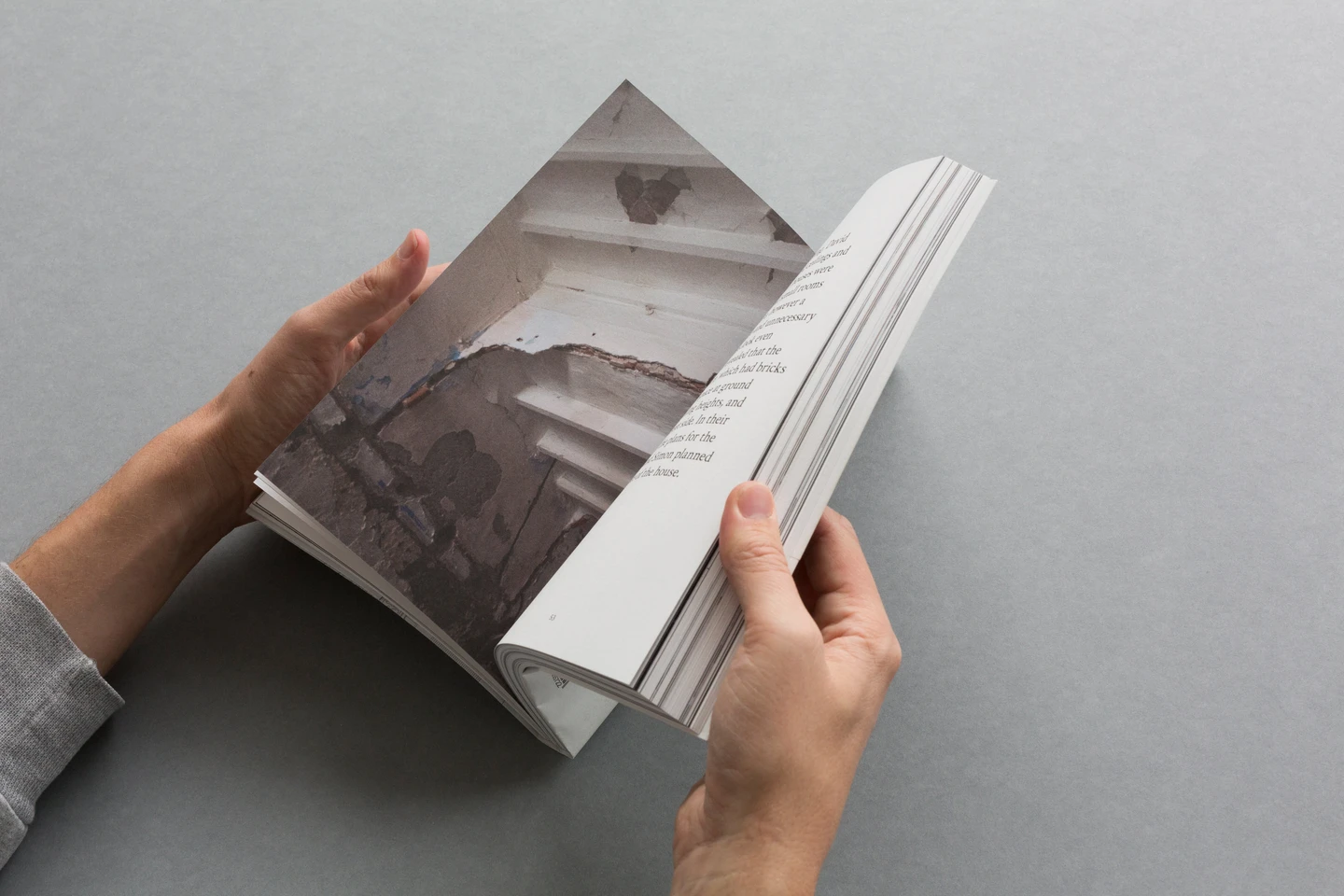
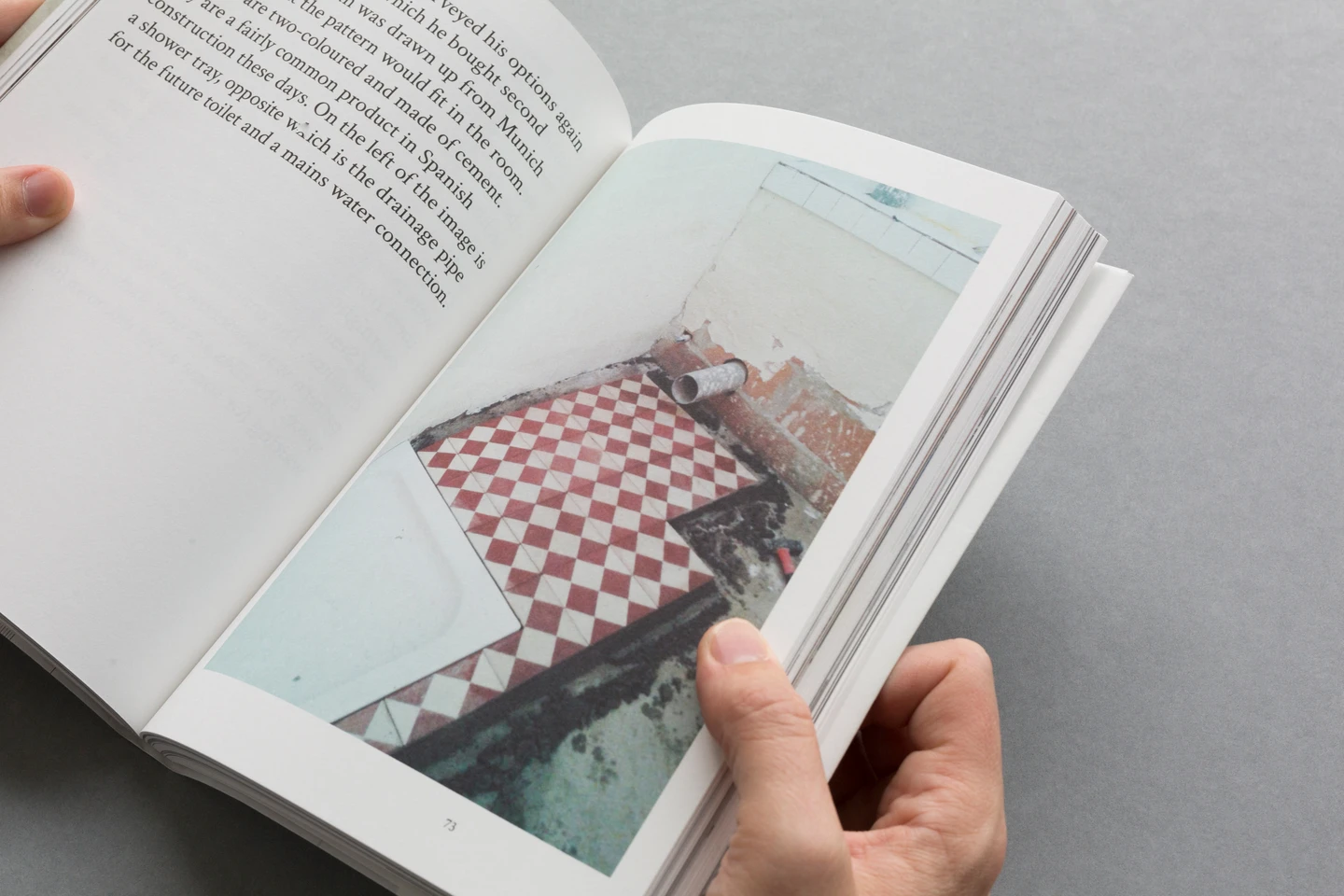
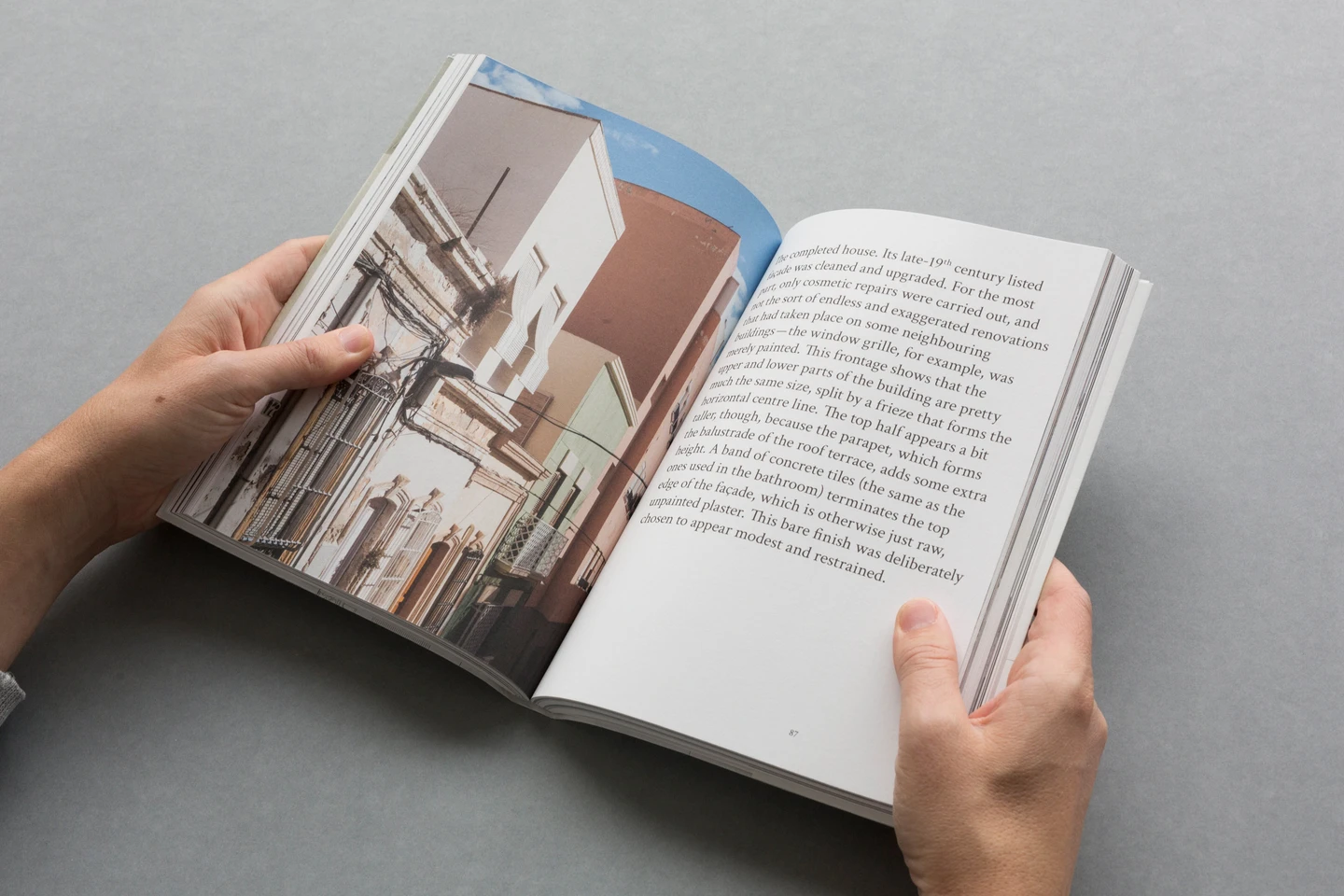
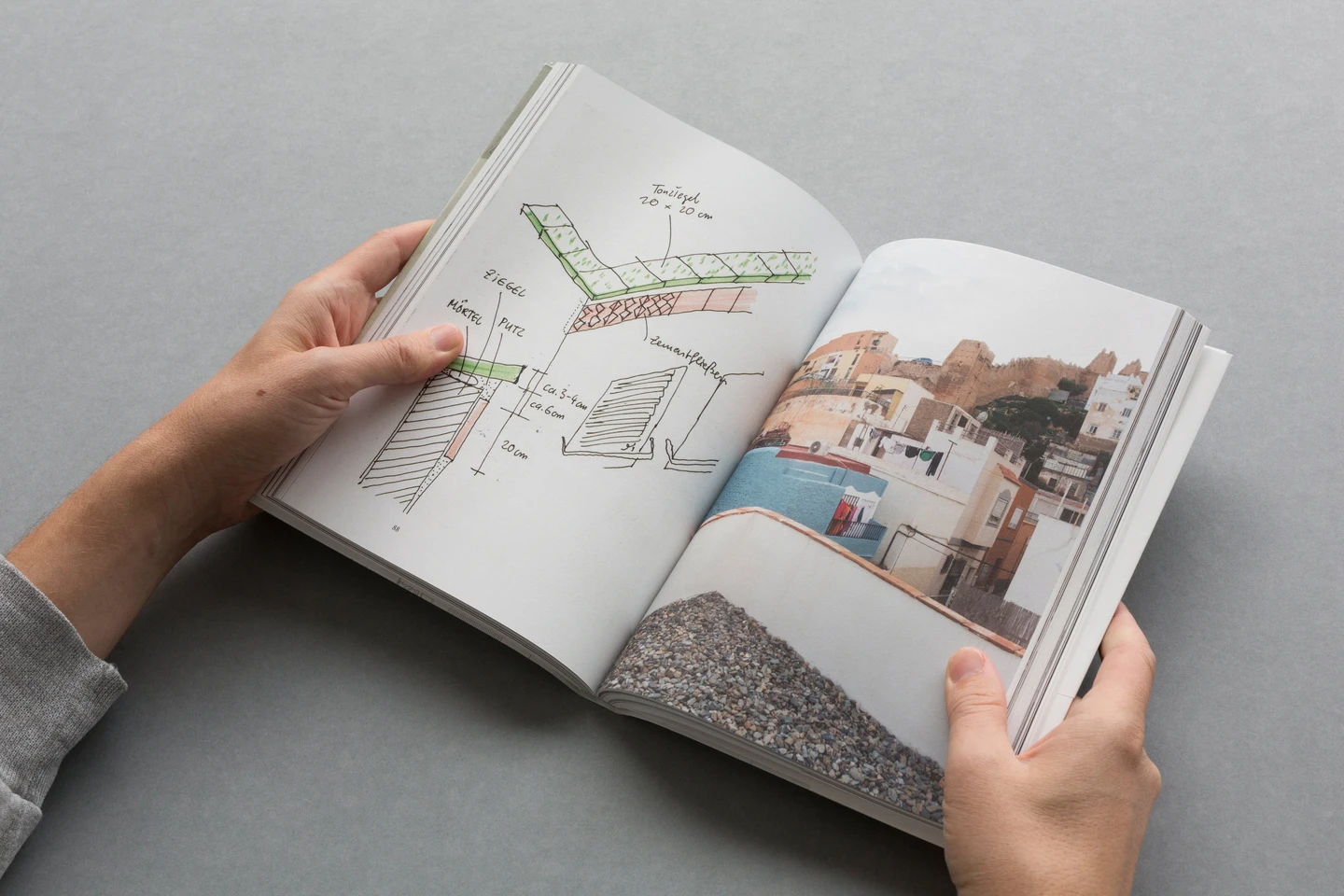
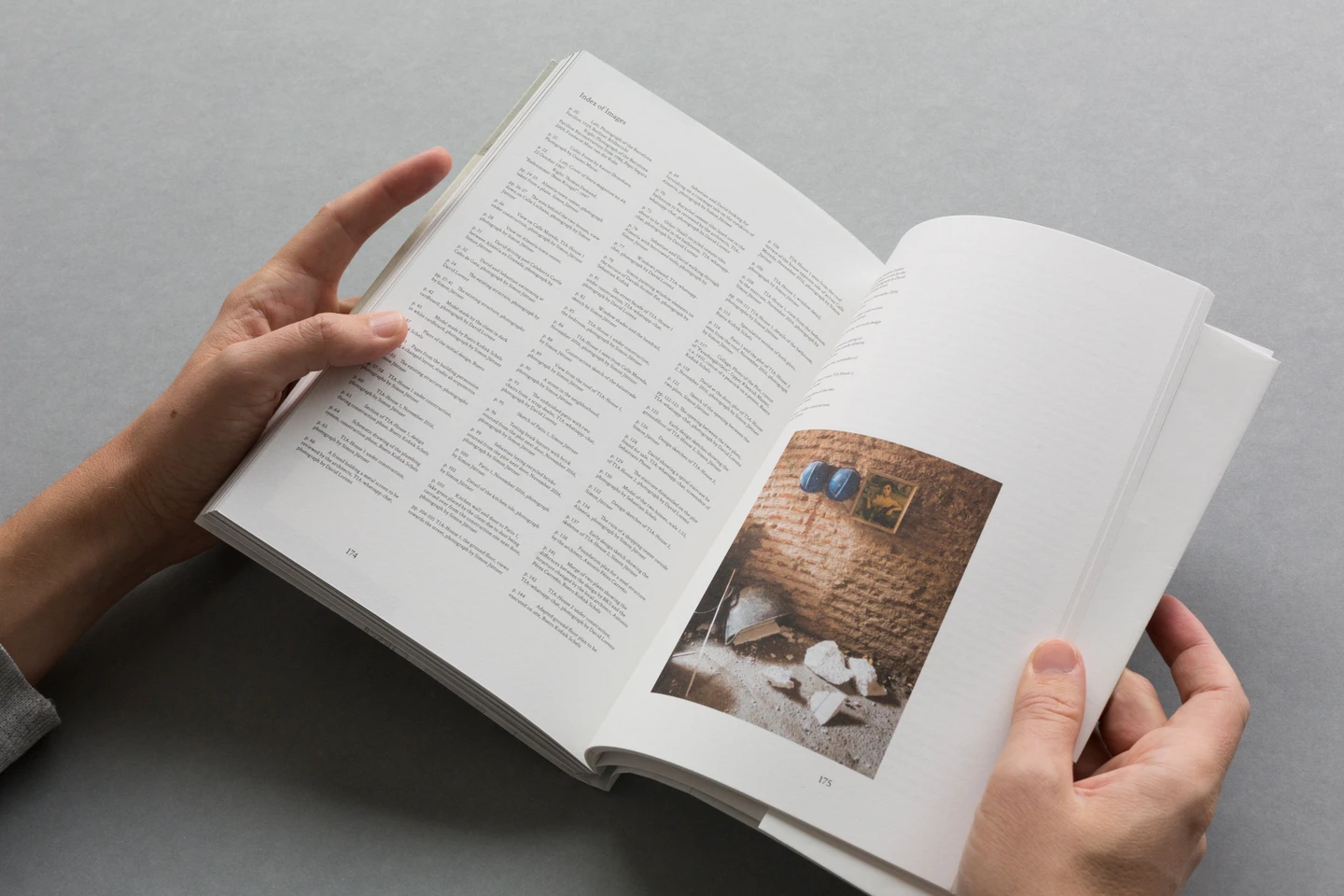
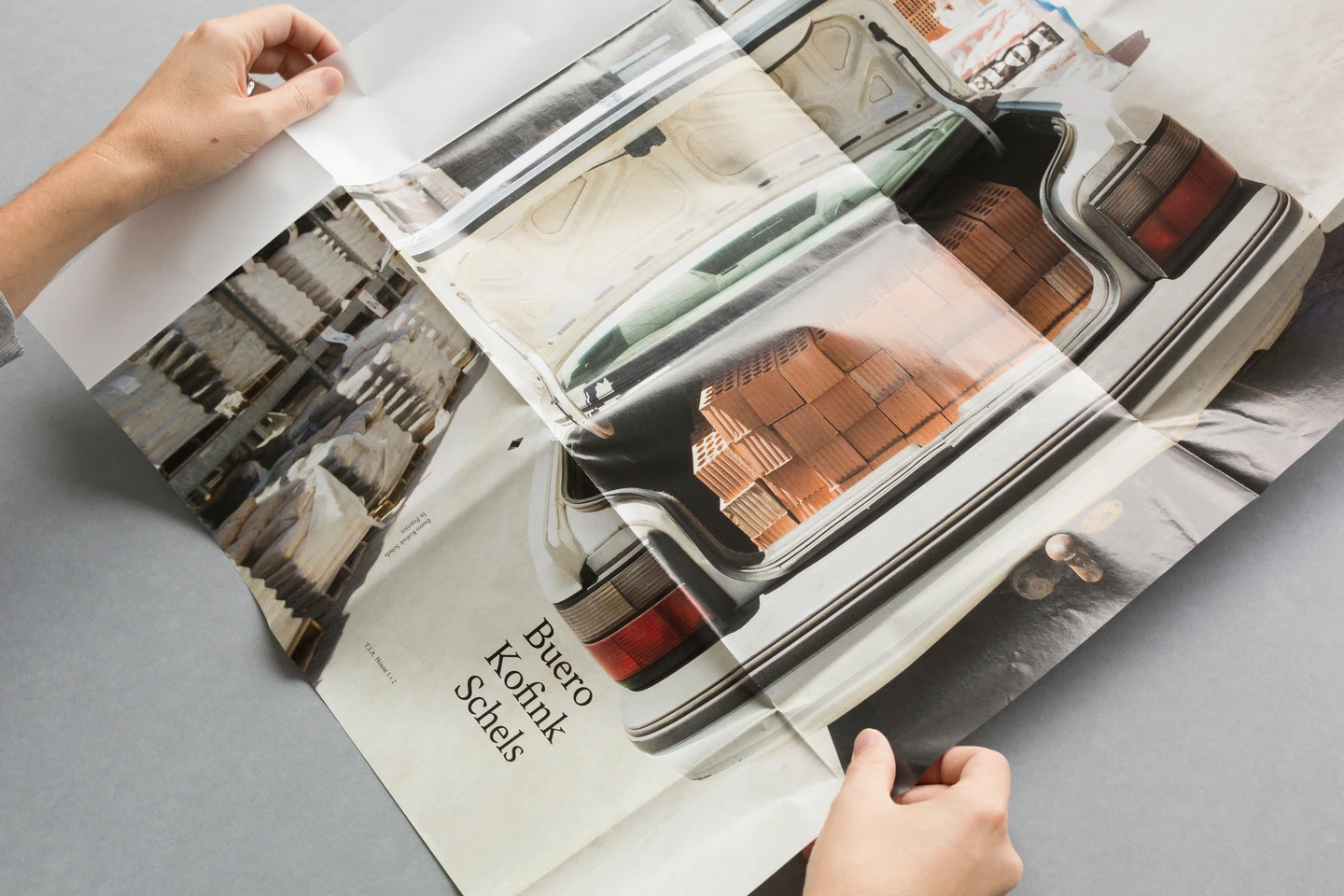
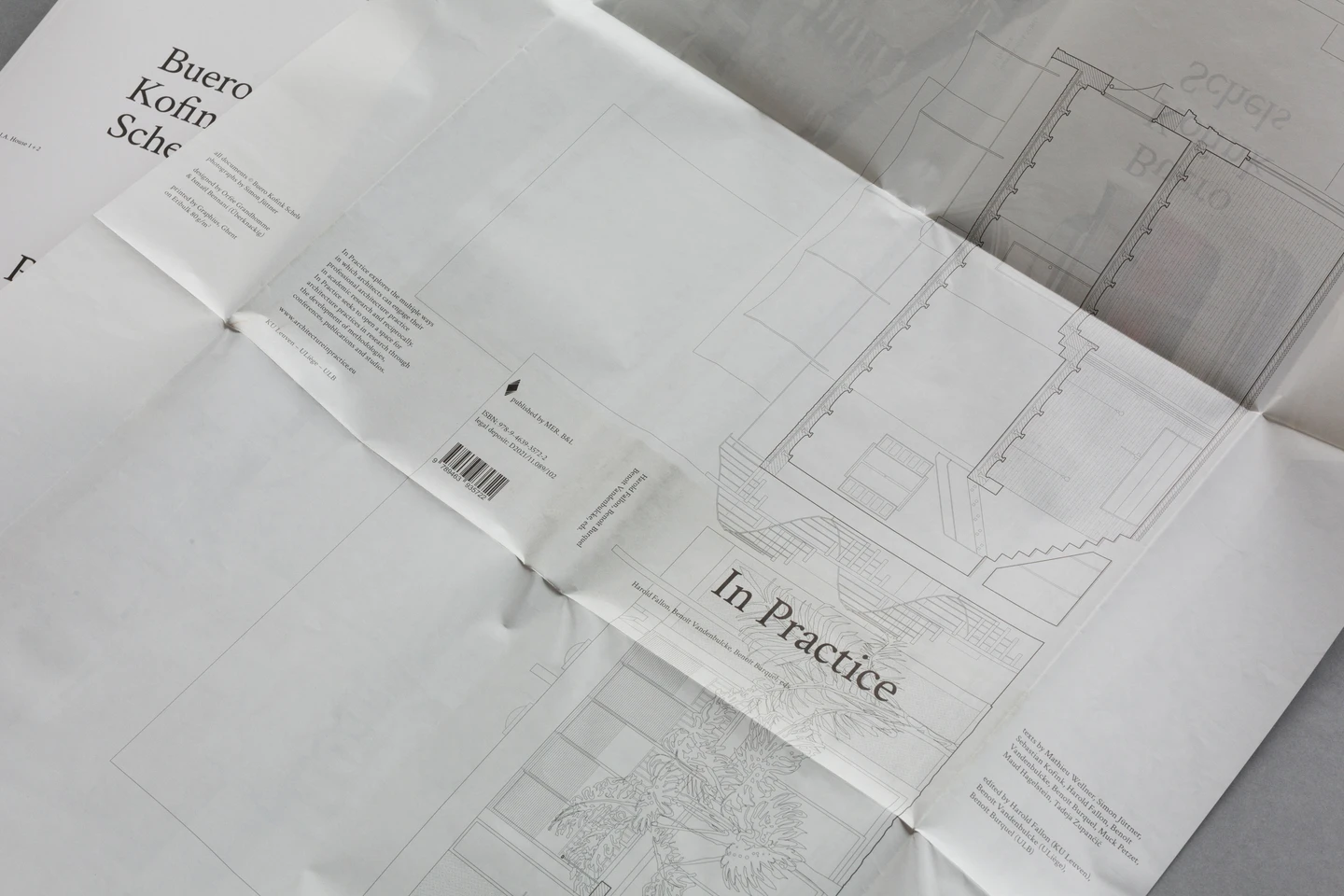
KULeuven, Uliège, ULB, MER. B&L Editorial, Book 2021In this book, Matthieu Wellner and Buero Kofink Schels (architects Simon Jüttner and Sebastian Kofink) unfold the design process of T.I.A. House 1+2, a project they developed and built in the city of Almeria on the southern Spanish coast.Using a series of unpublished documents, sketches, scale models and snapshots, they examined the critical value of real-time improvisation within the profession of architecture. Three additional contributions bring new insights on practice-based research and image theory.
The publication is the result of a collaboration between KU Leuven, Vrije Universiteit Brussel (ULB) and the University of Liège within the research group "Architecture in Practice", which investigates the ways in which architectural practice and academic research can enrich each other.
-
-
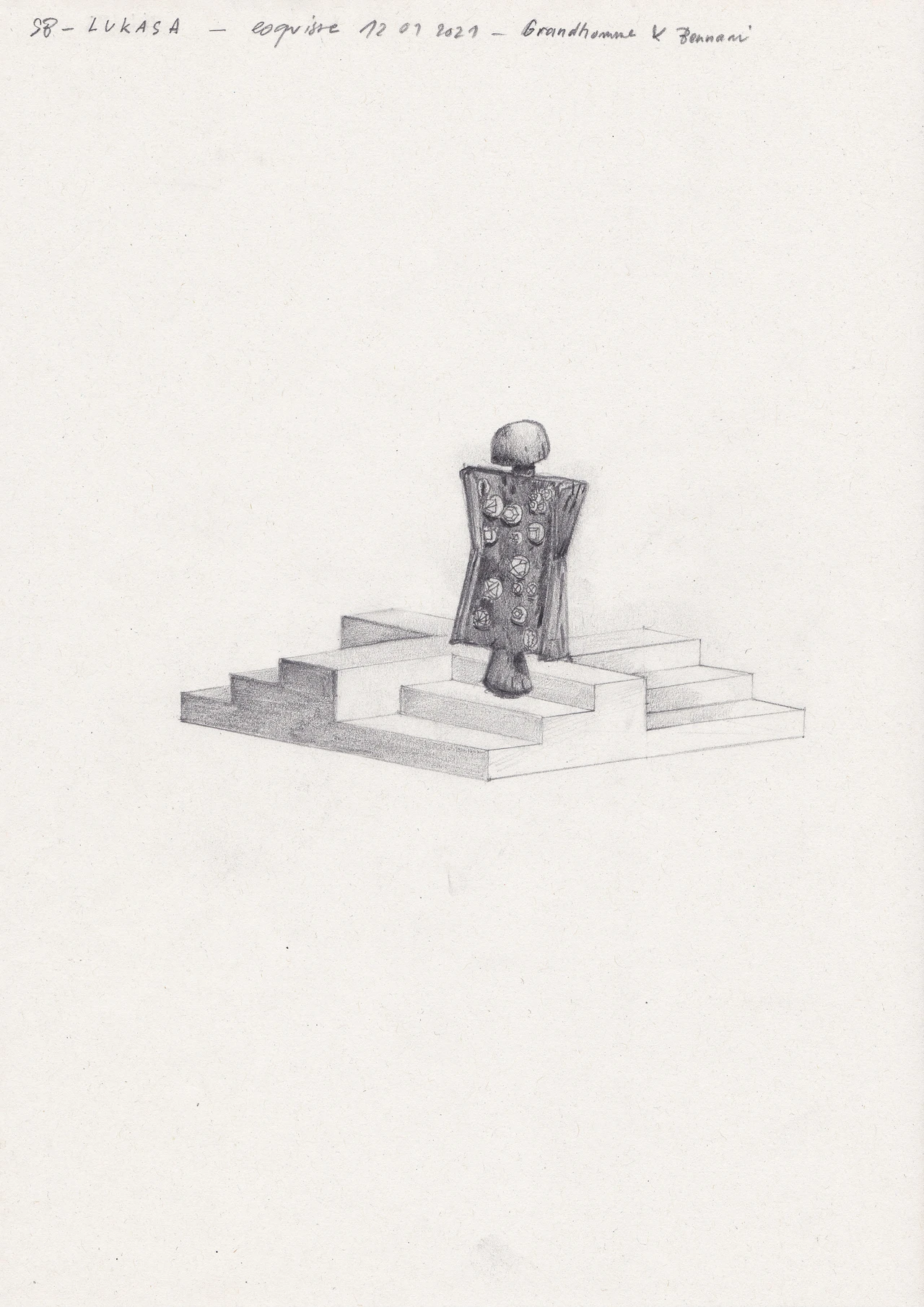
The Long Hand’
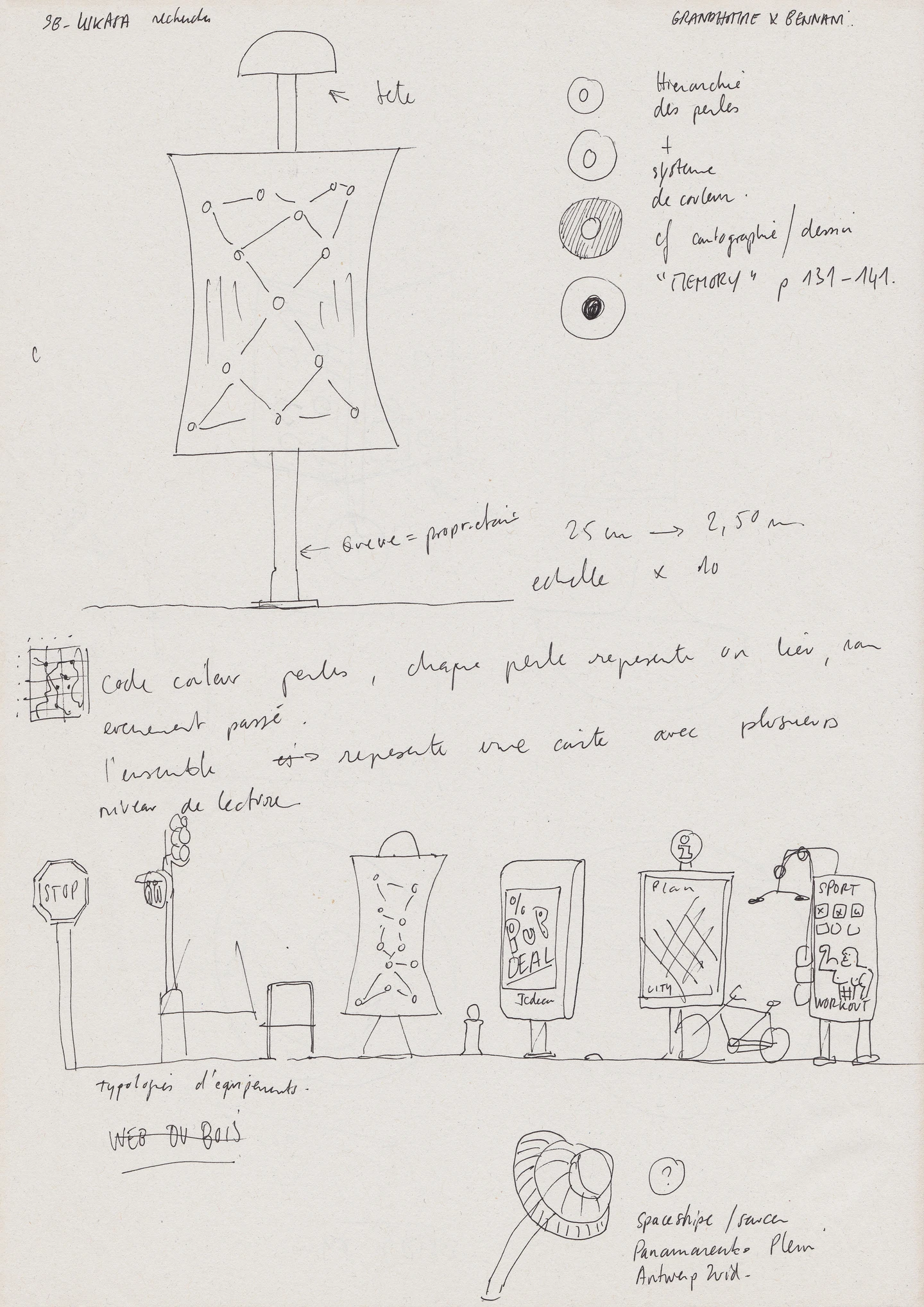
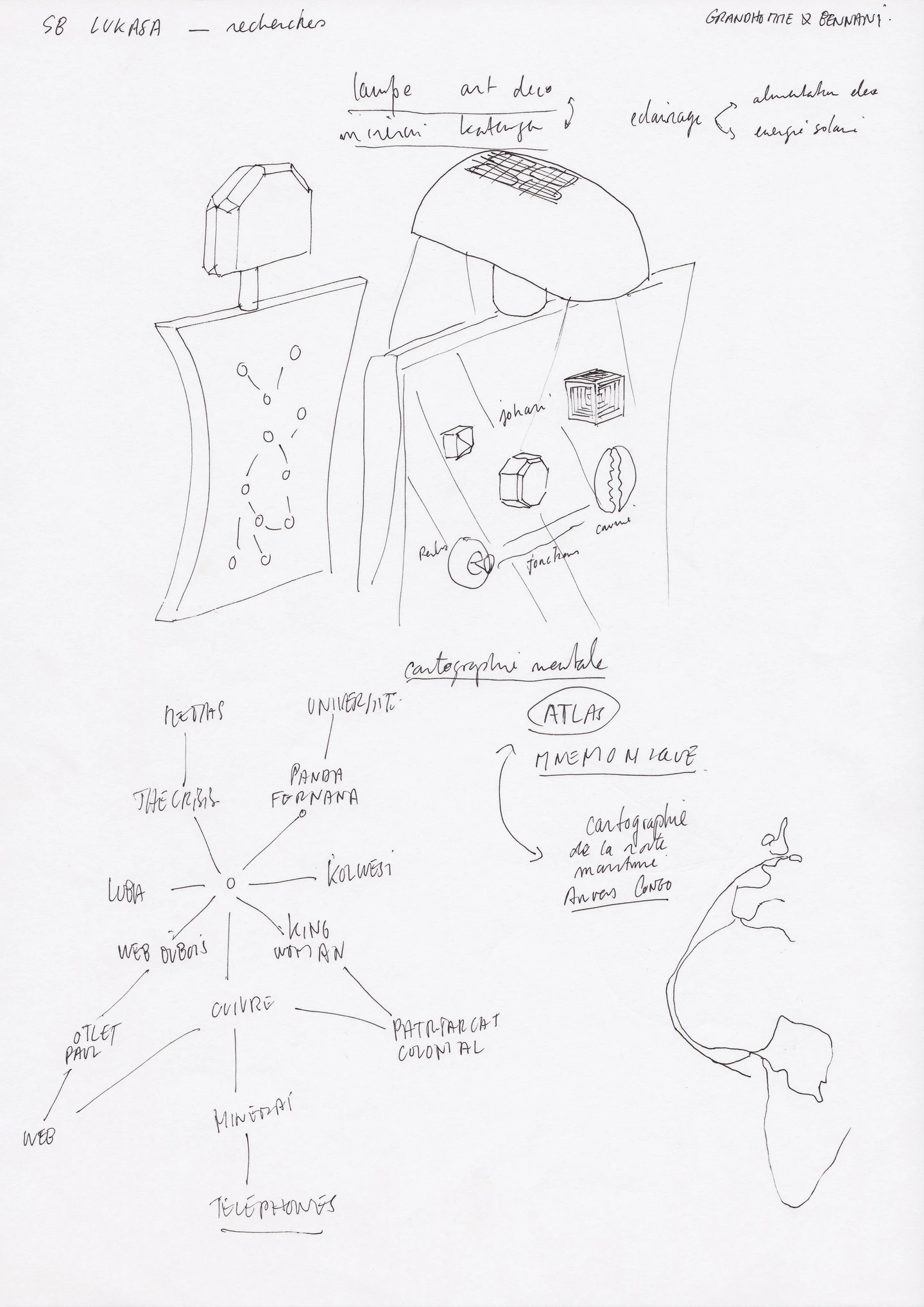
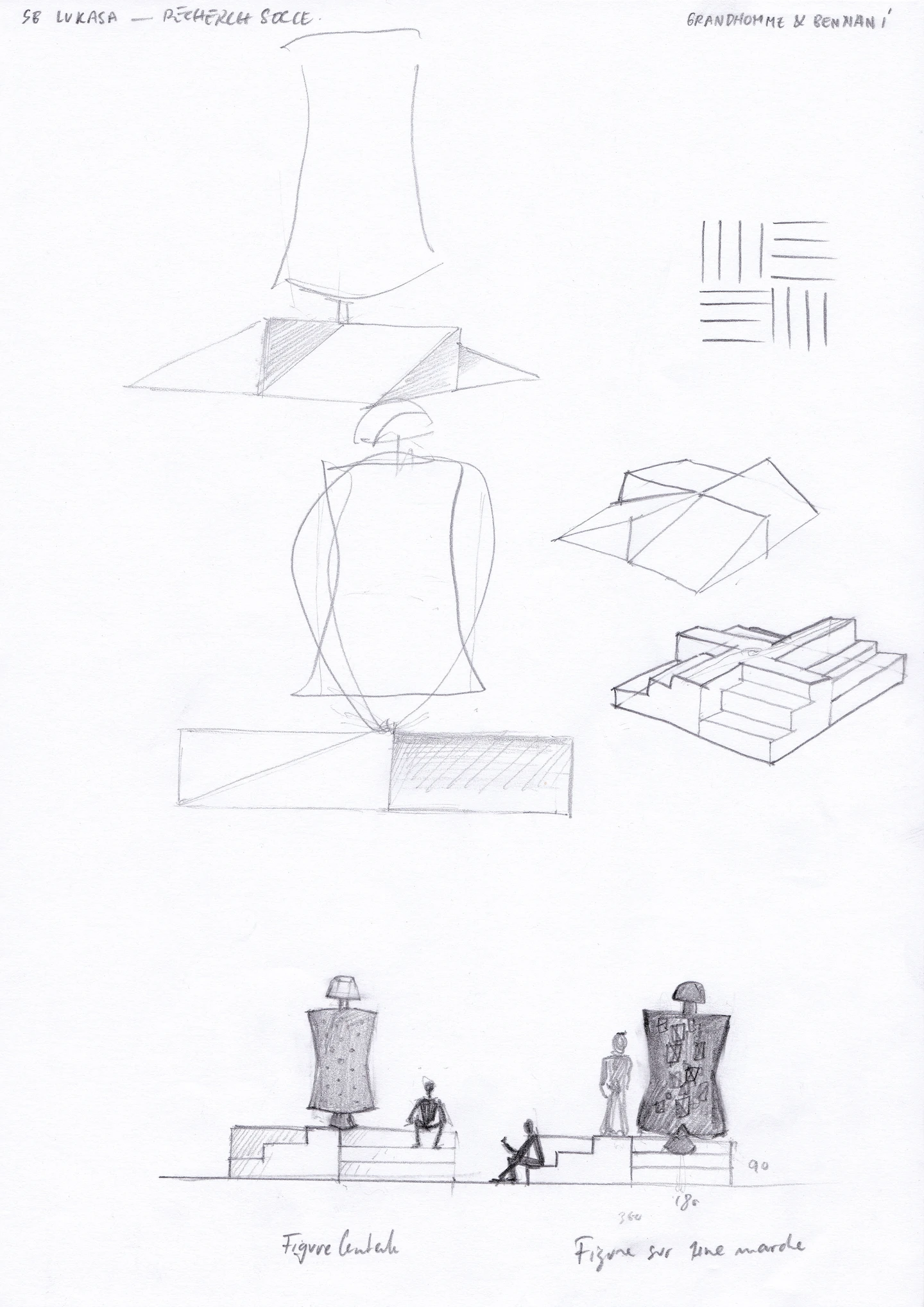
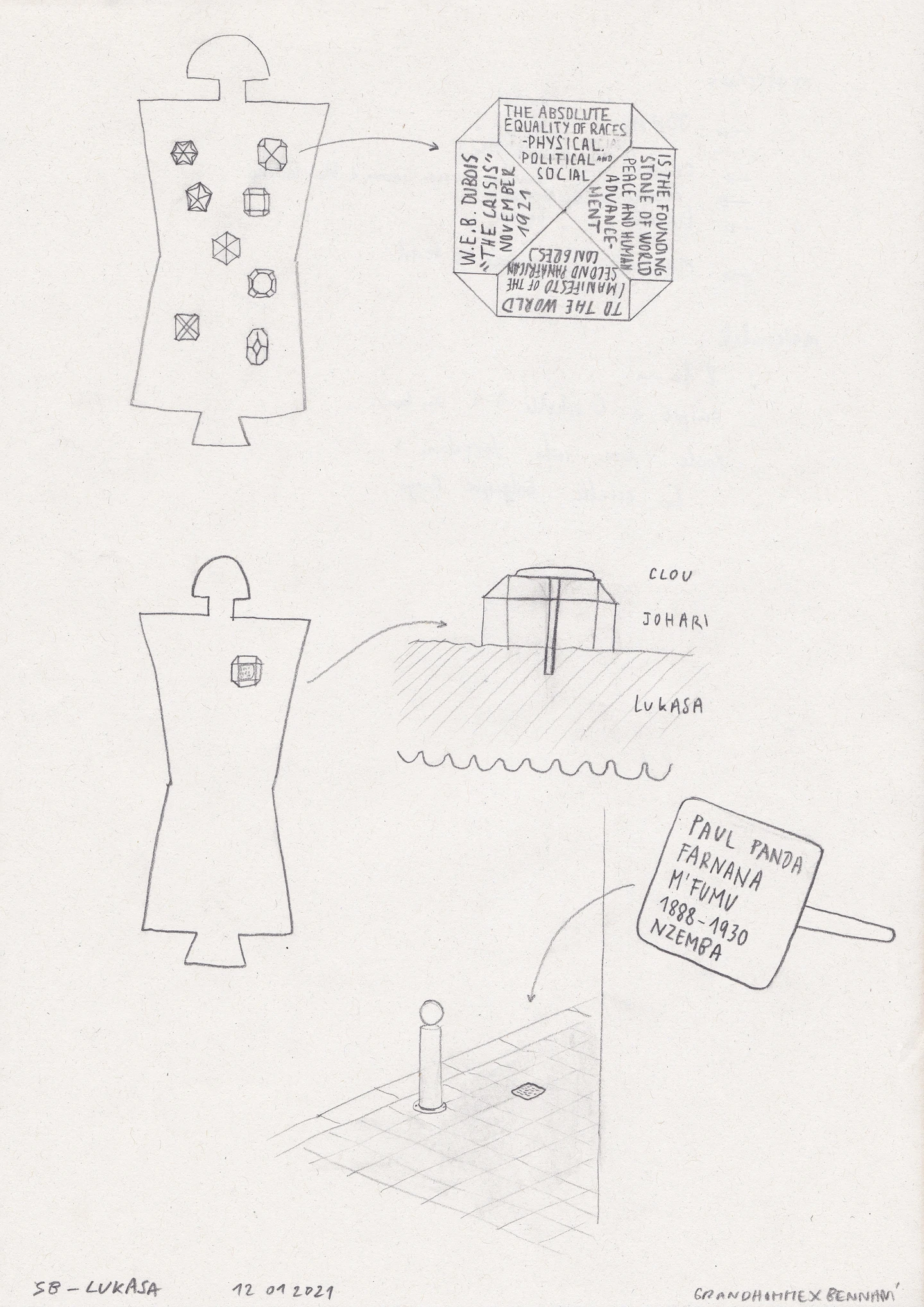
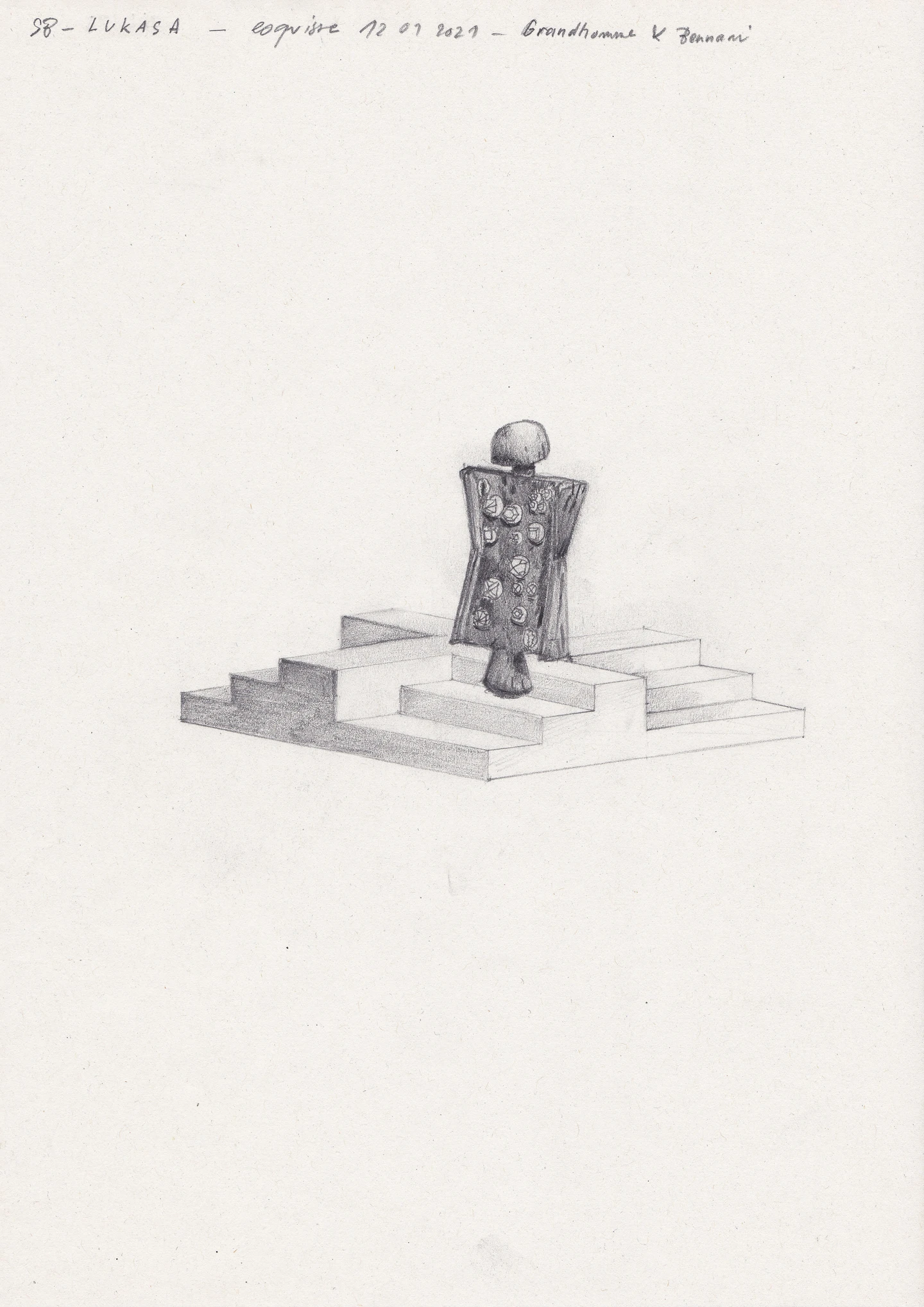
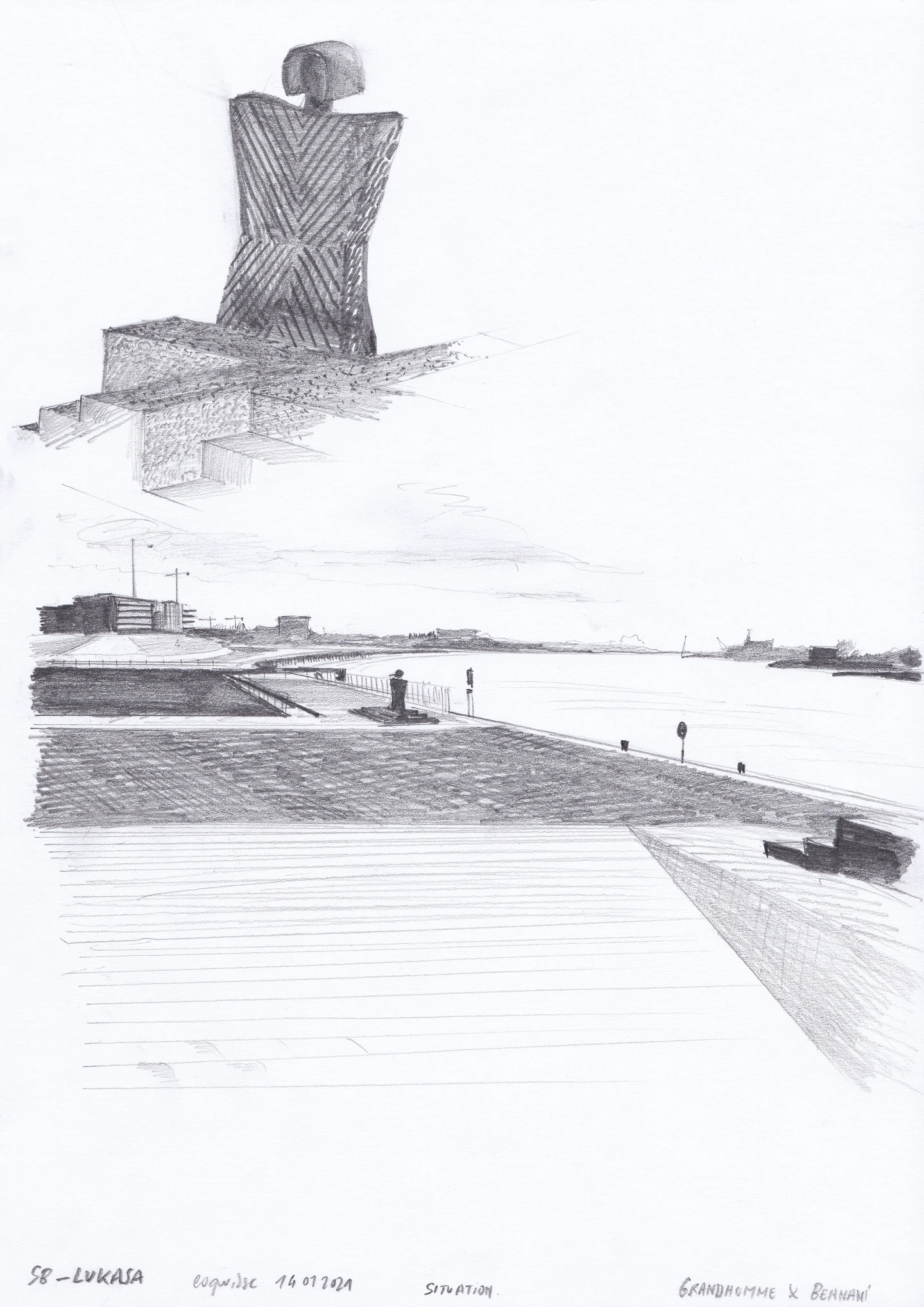
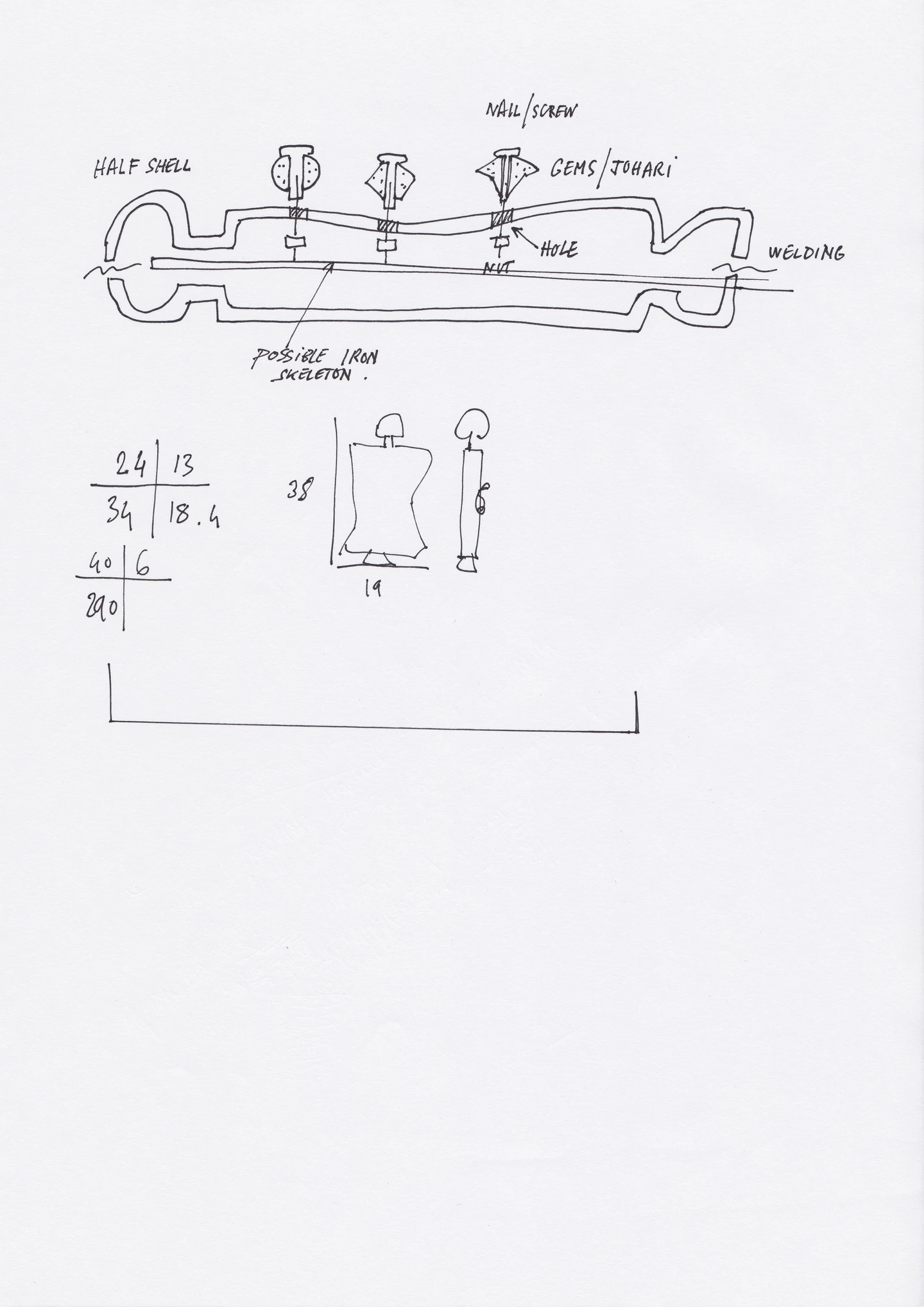
Galerie Imane Farès Production, Sculpture 2021Research sketches in discussion by Sammy Baloji, Ismaël Bennani & Orfée Grandhomme, 2021
L'inauguration était le 3 juin 2022 - Quelle date mettre?
-
-
Johari - Brass Band
Imane Farès Production 2020ça serait bien d'expliquer que les fotos sont issues d'échange, parfois toi, JD, Xavier... Mais pas Sammy c'est embêtant?
Parler du temps court et intense de ce projet
Bien mettre en avant JDTexte FR :
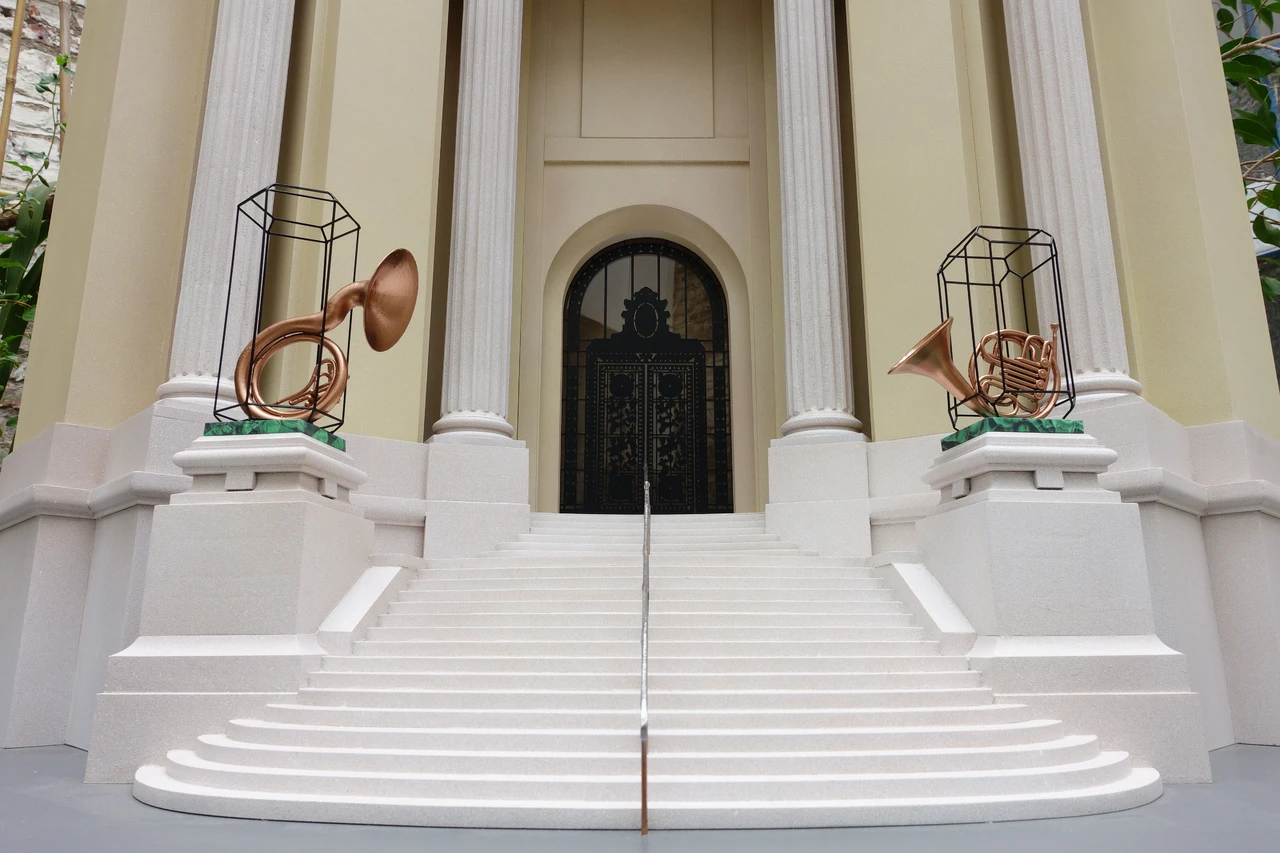
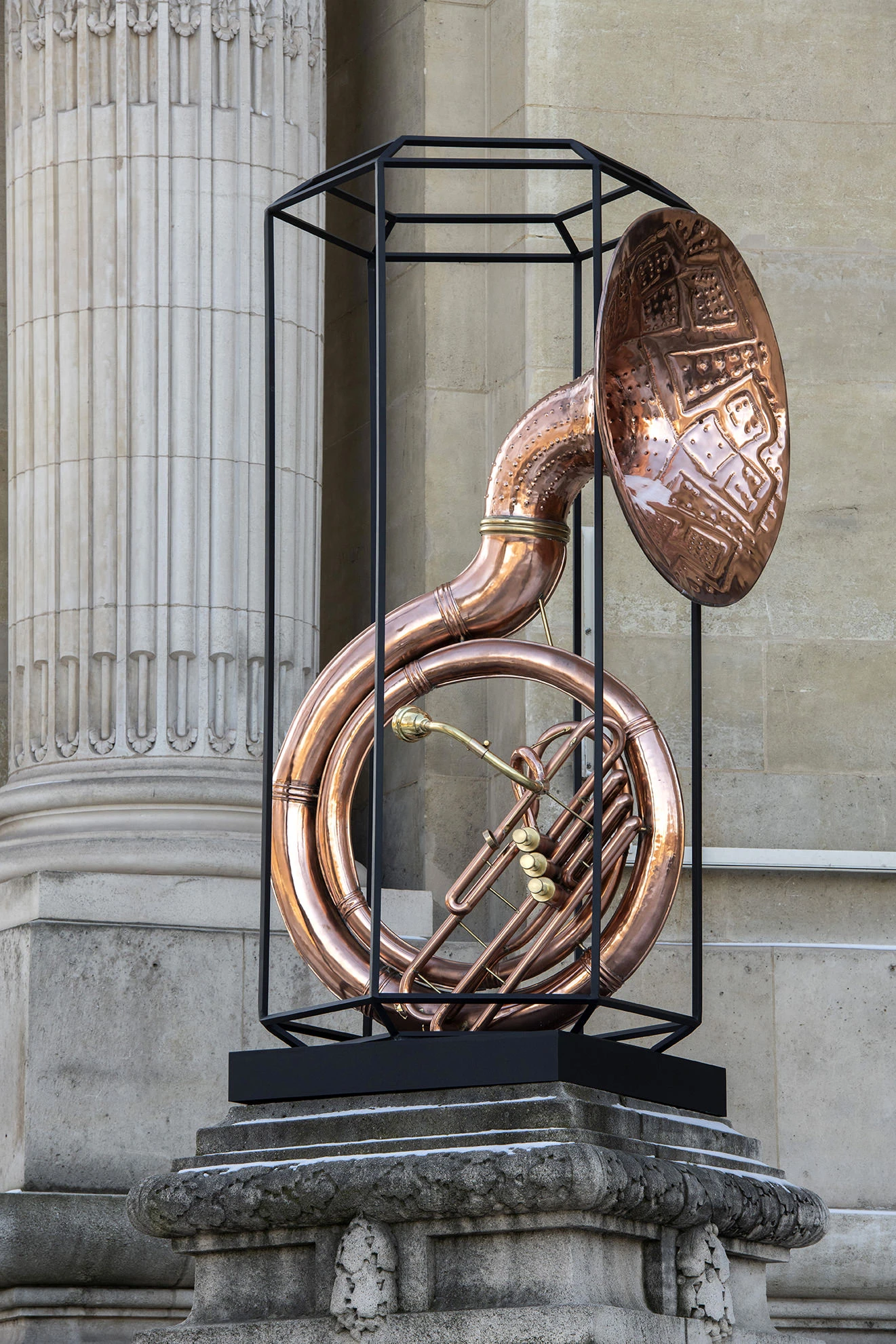
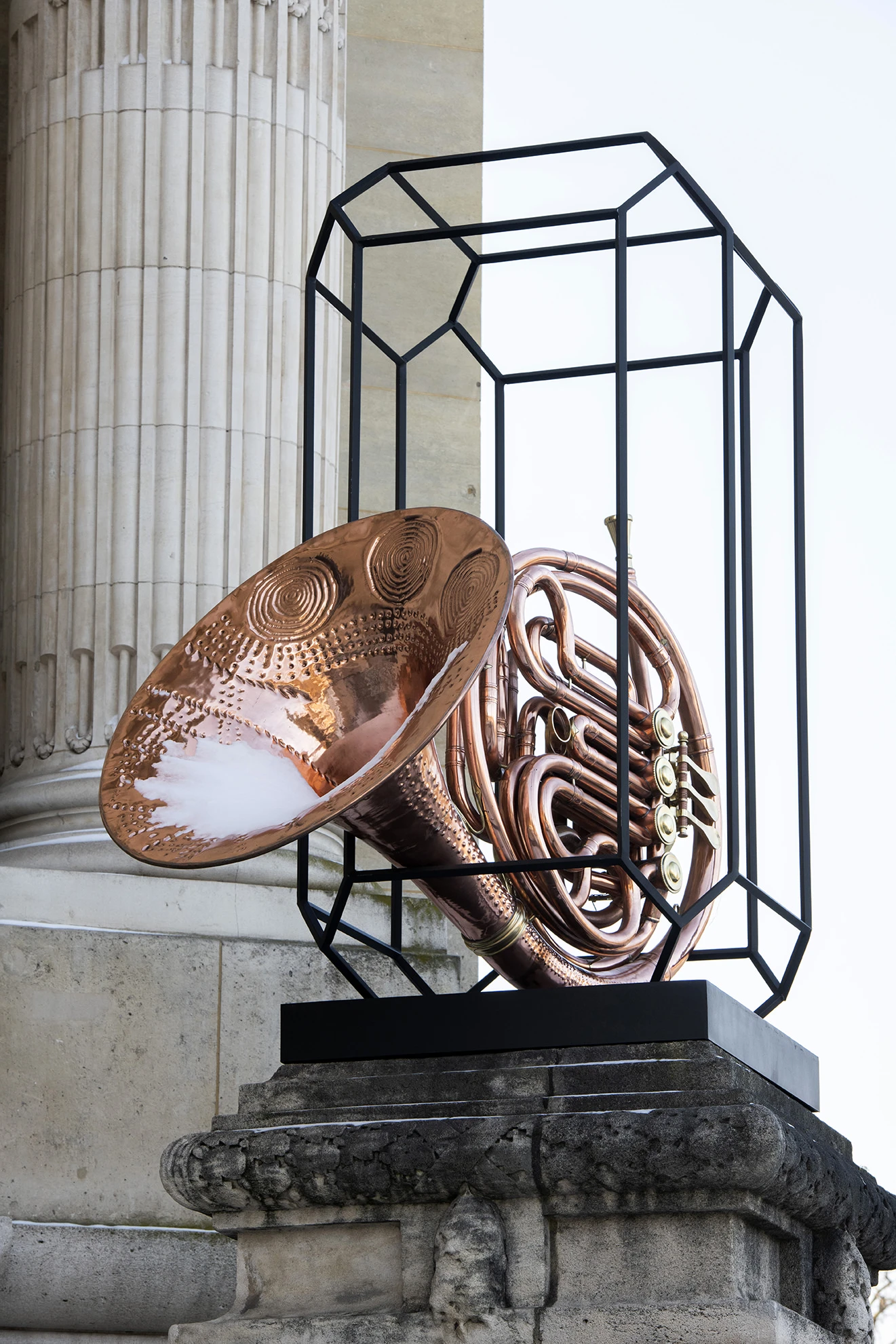
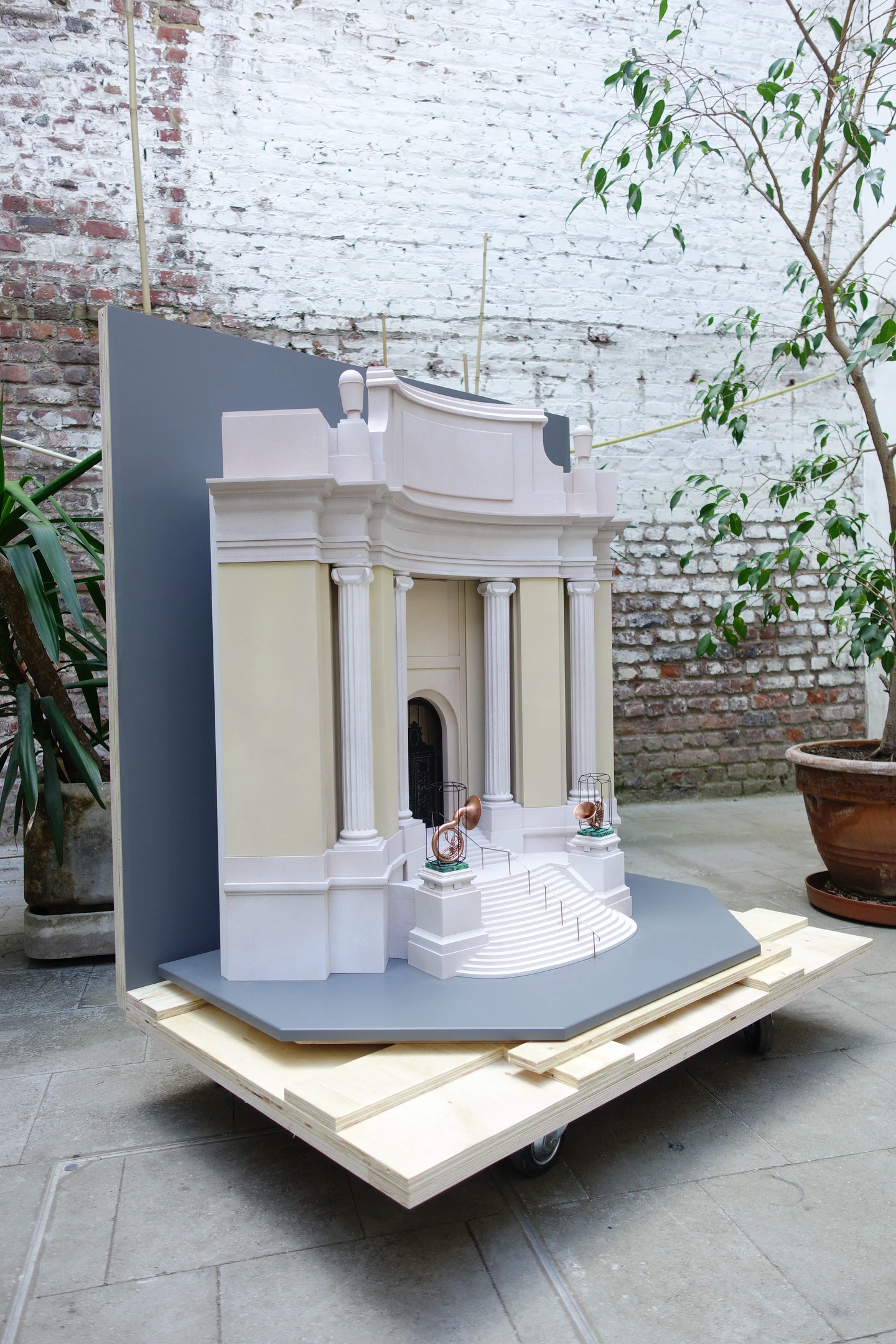
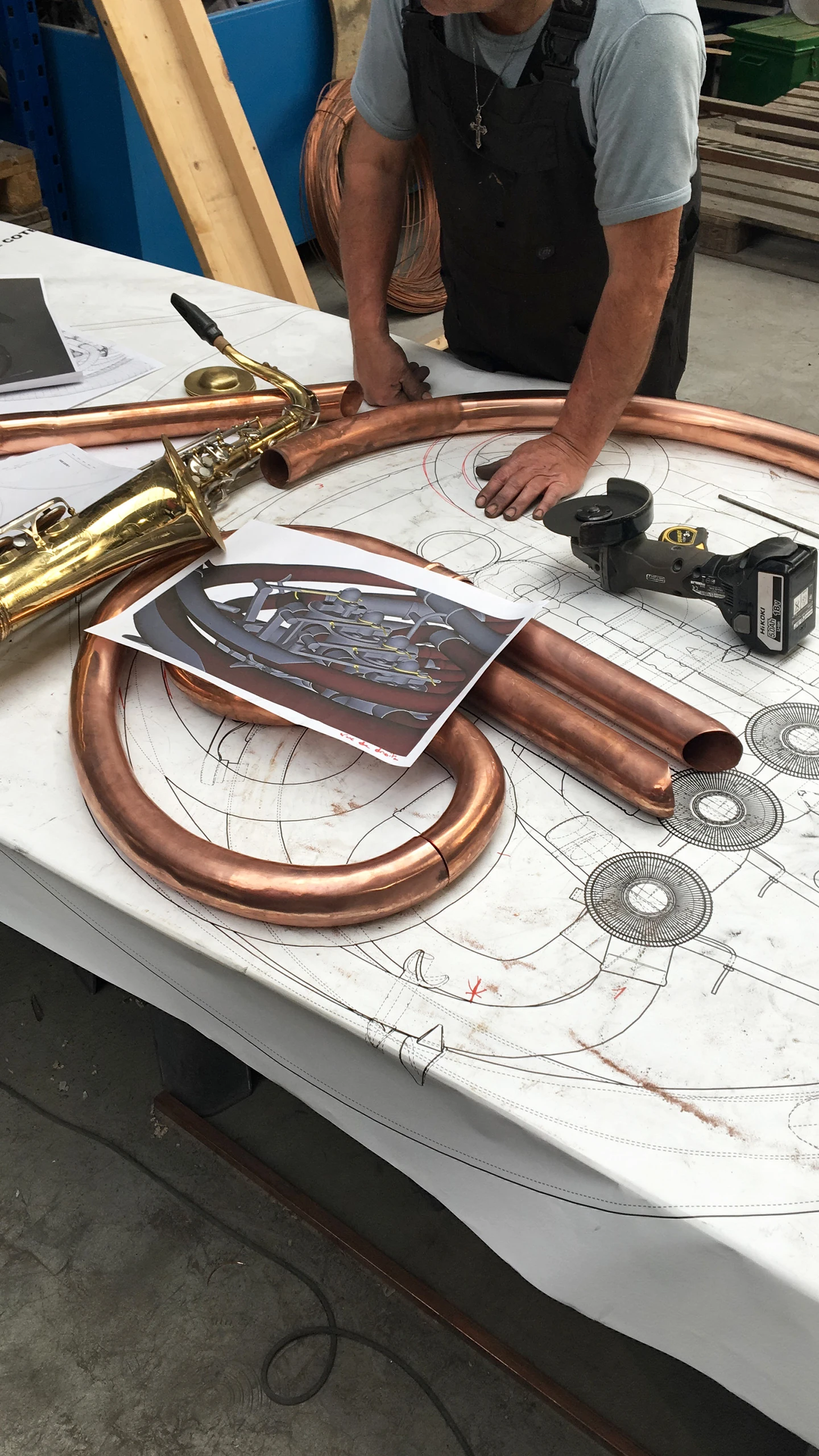
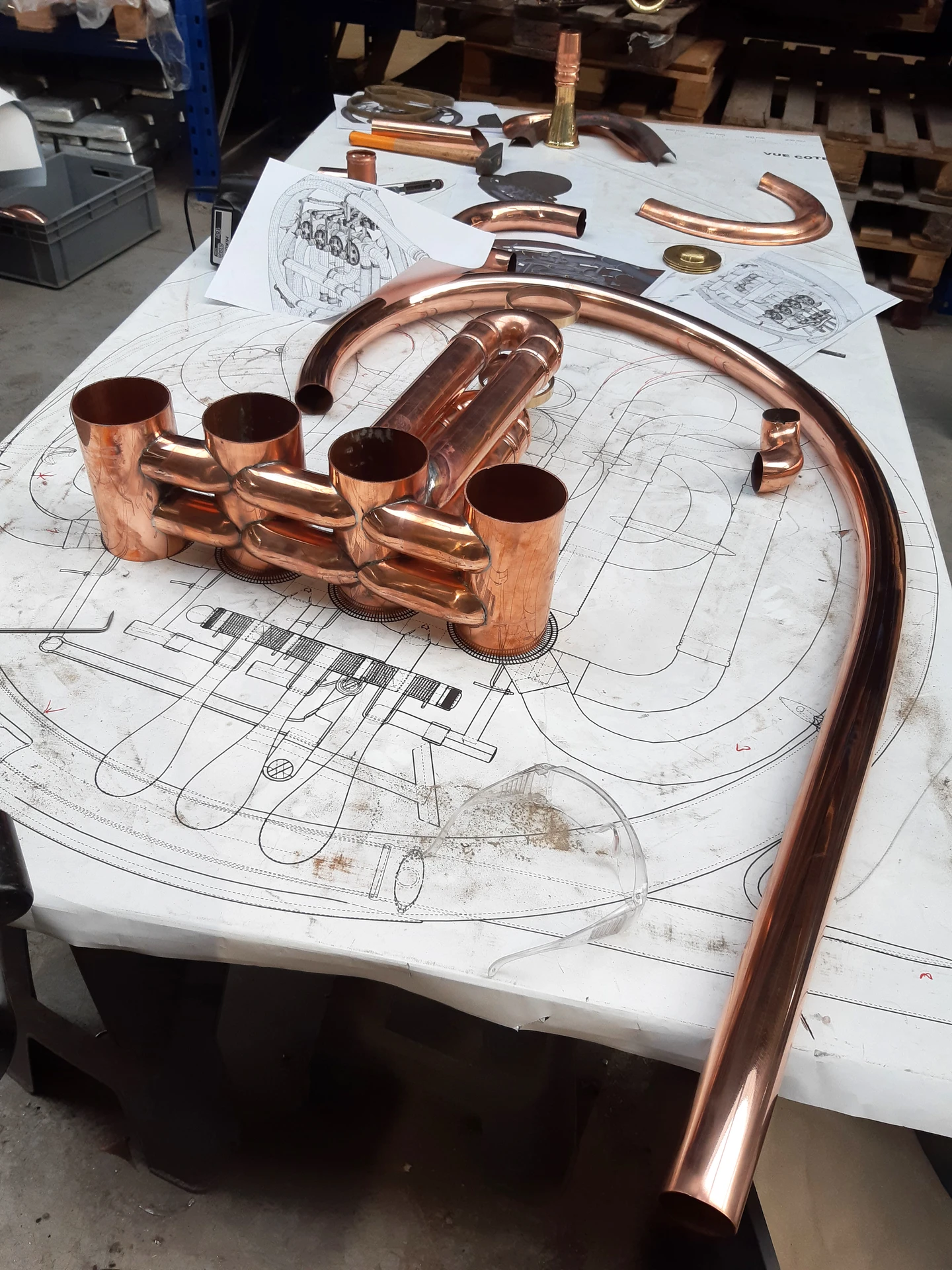
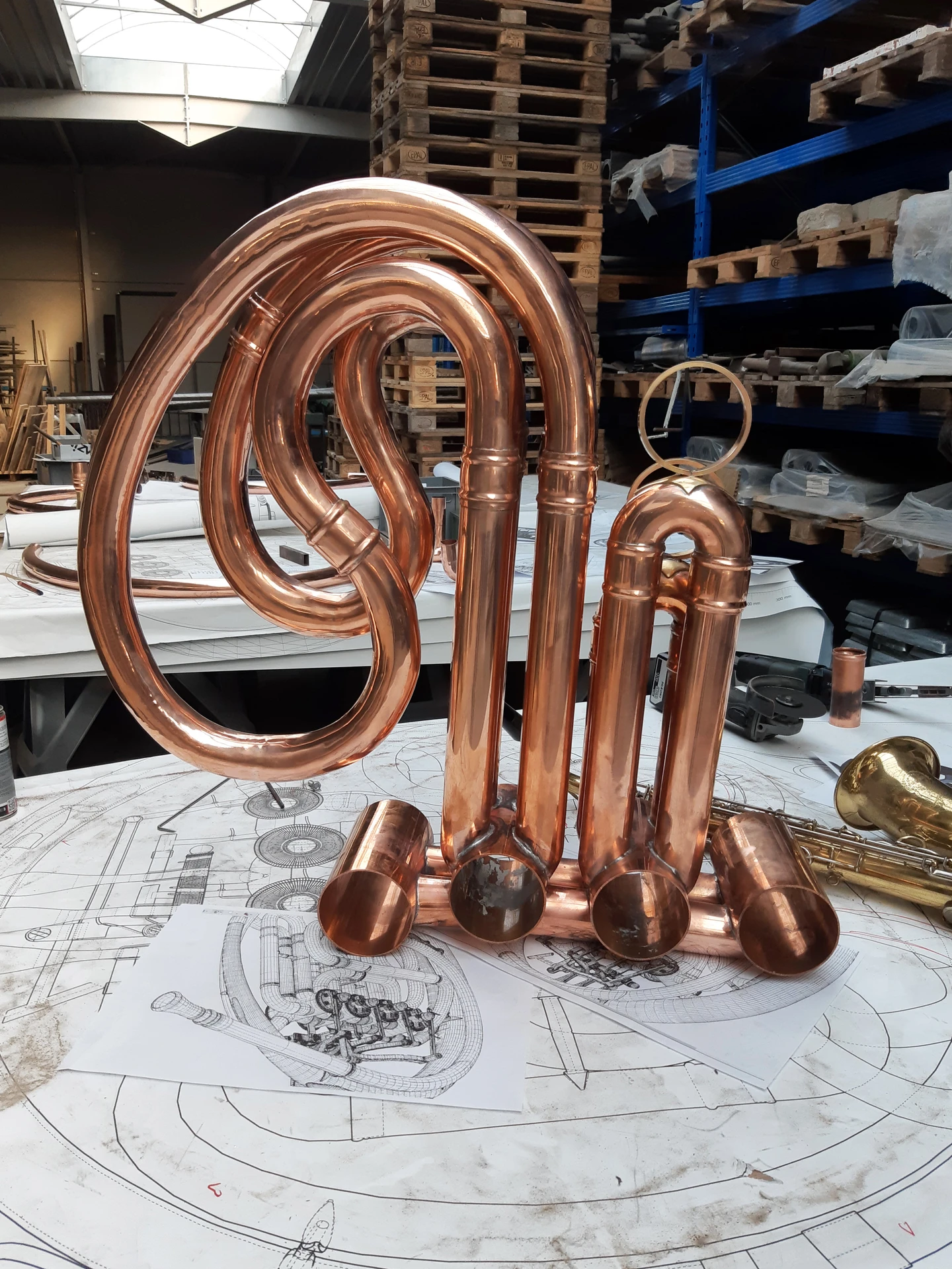
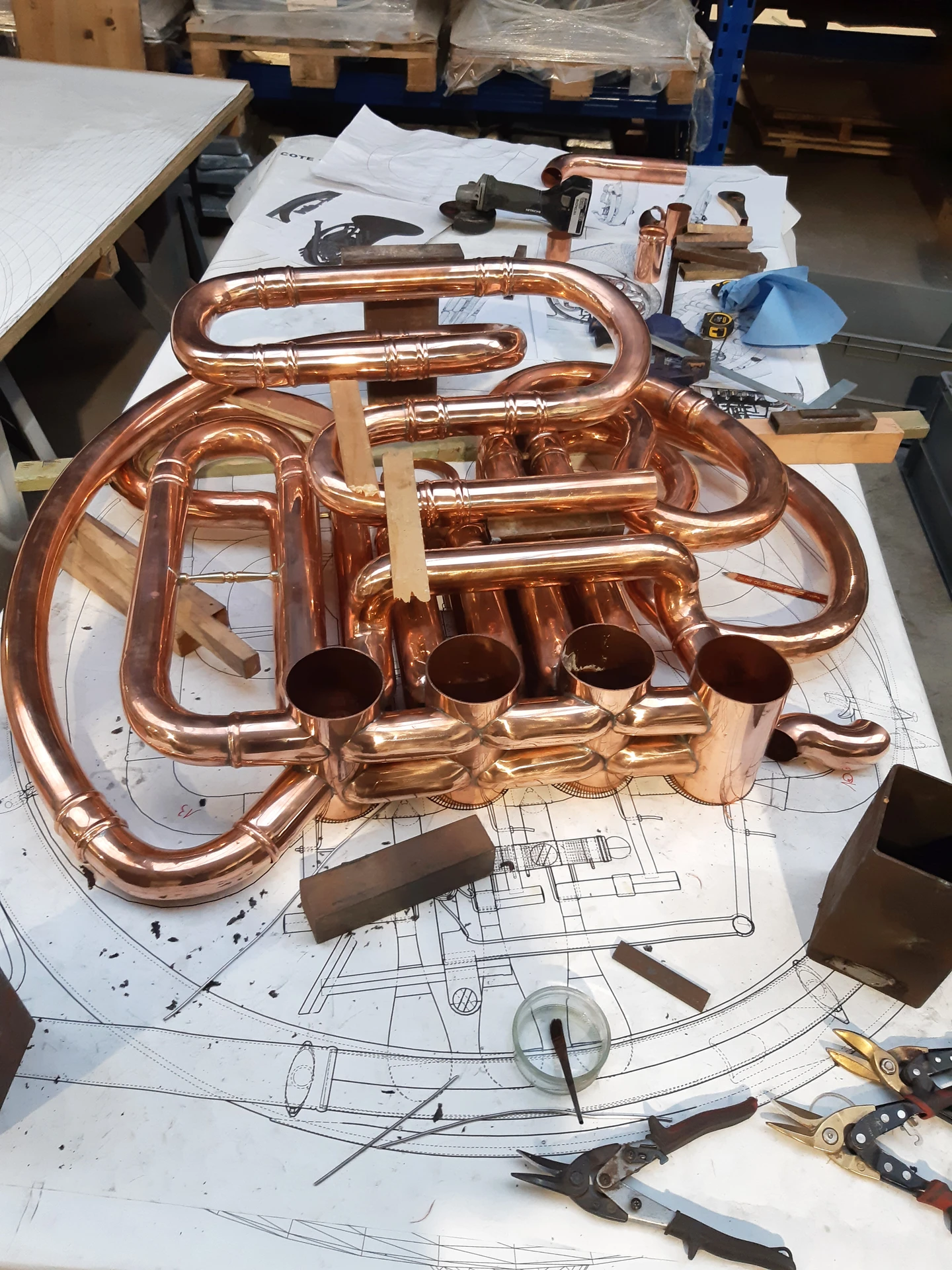
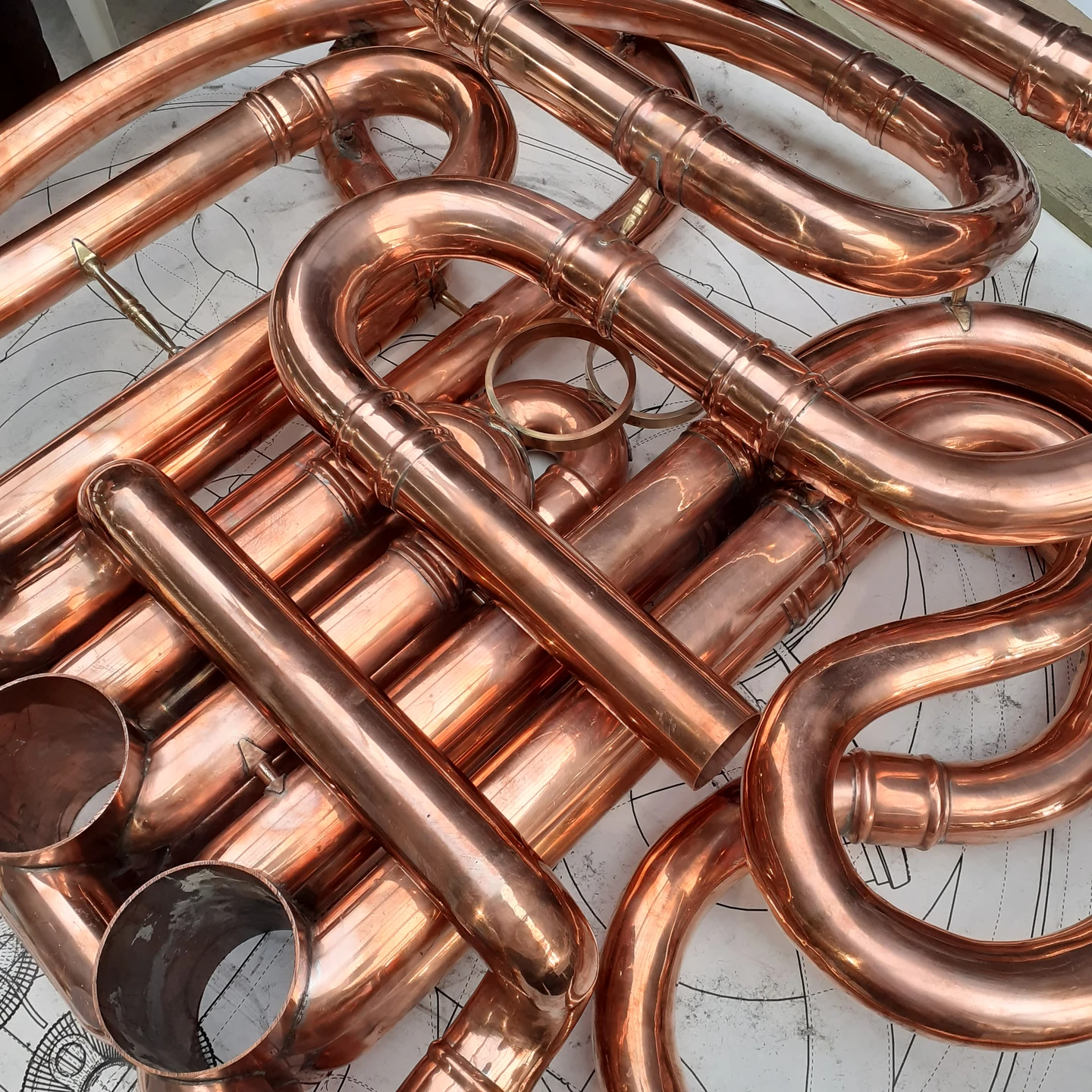
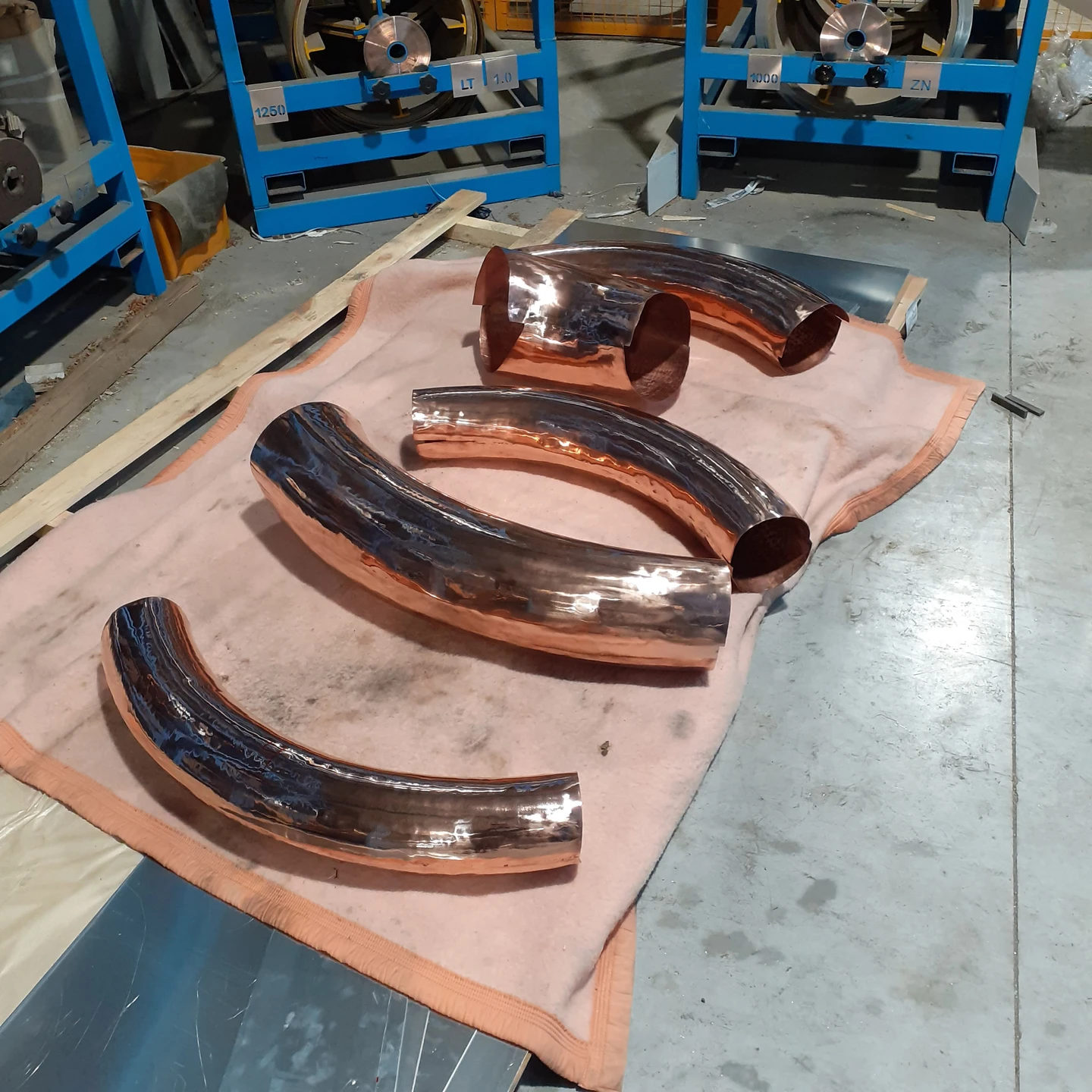
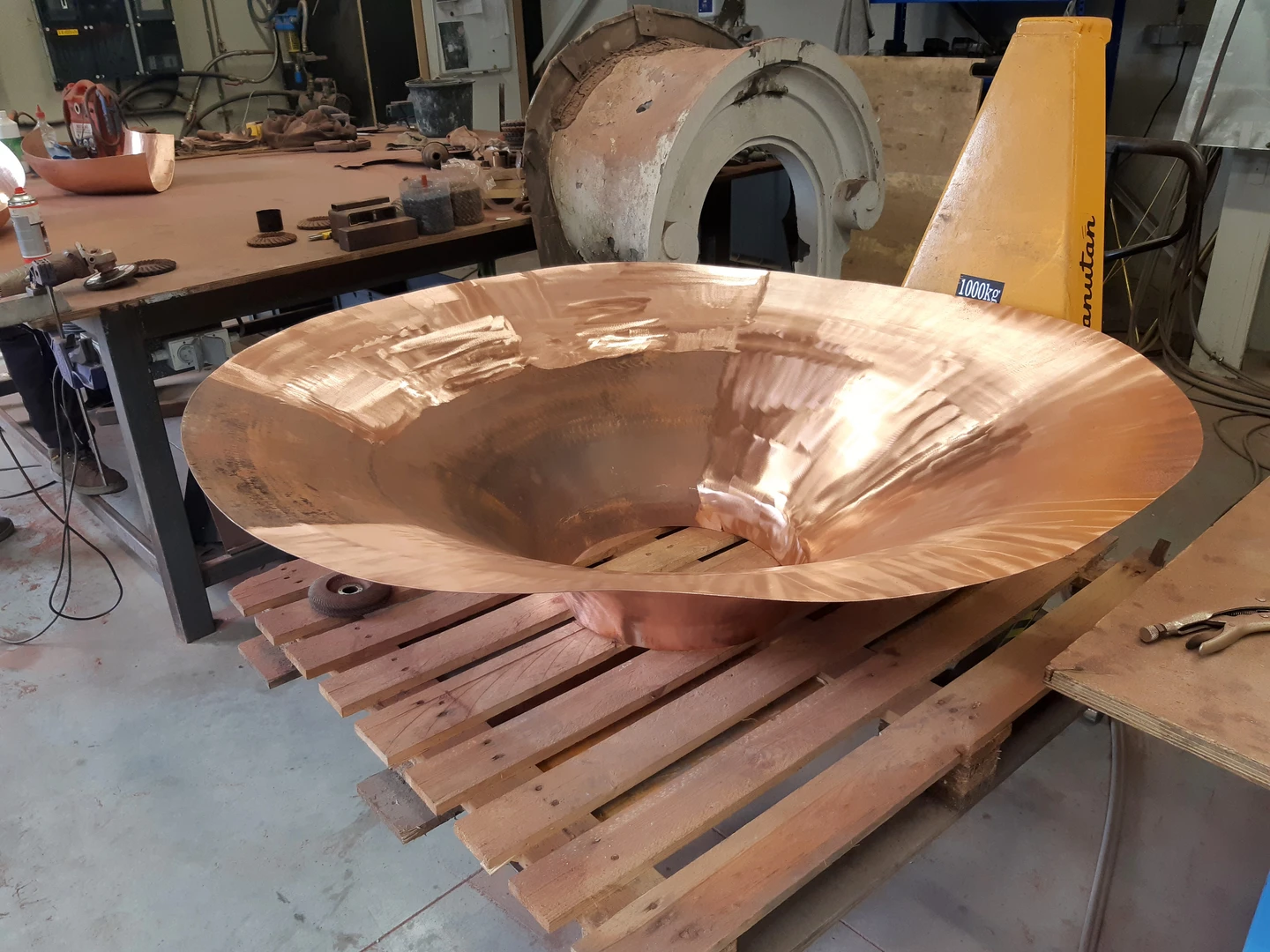
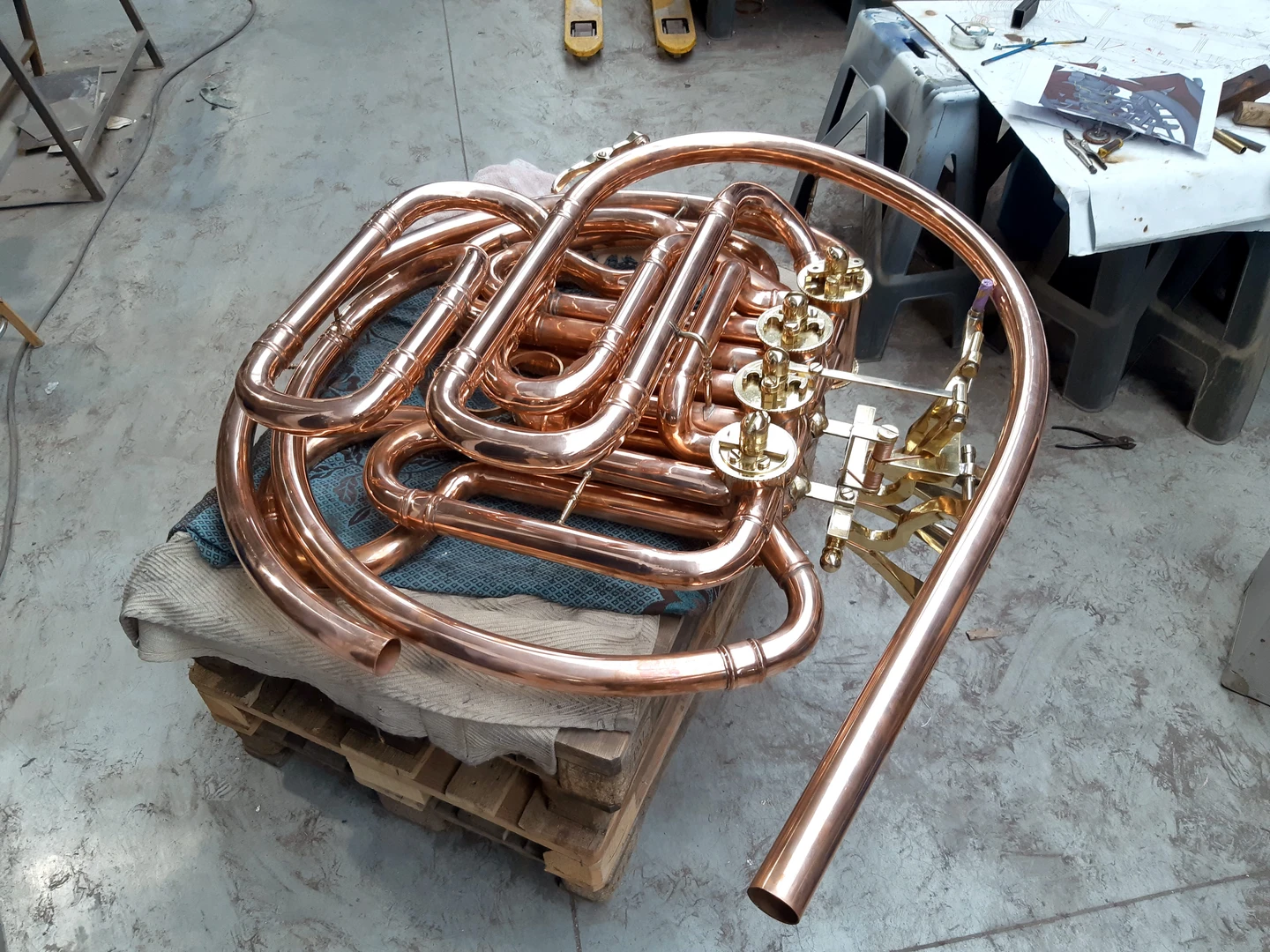
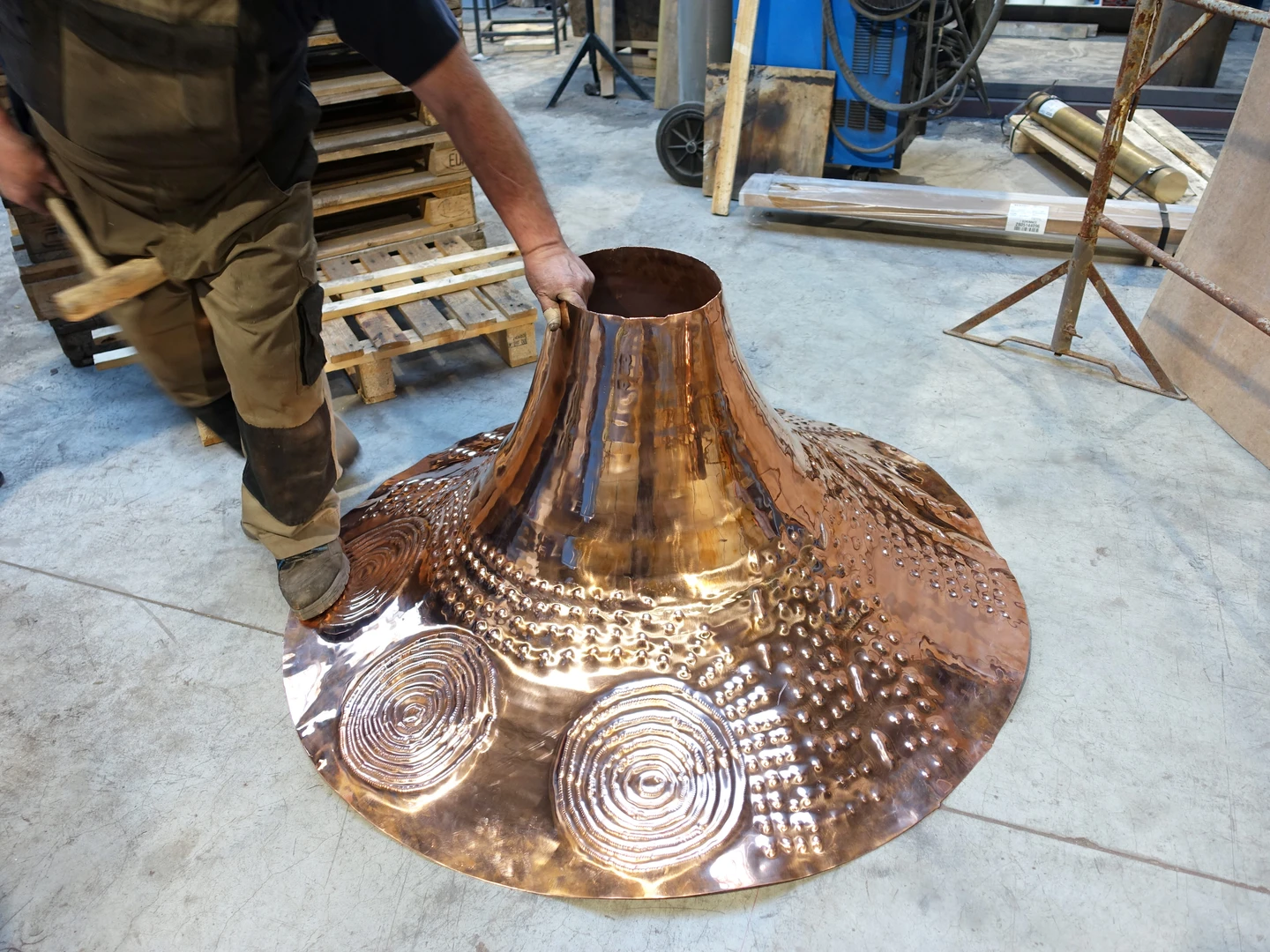
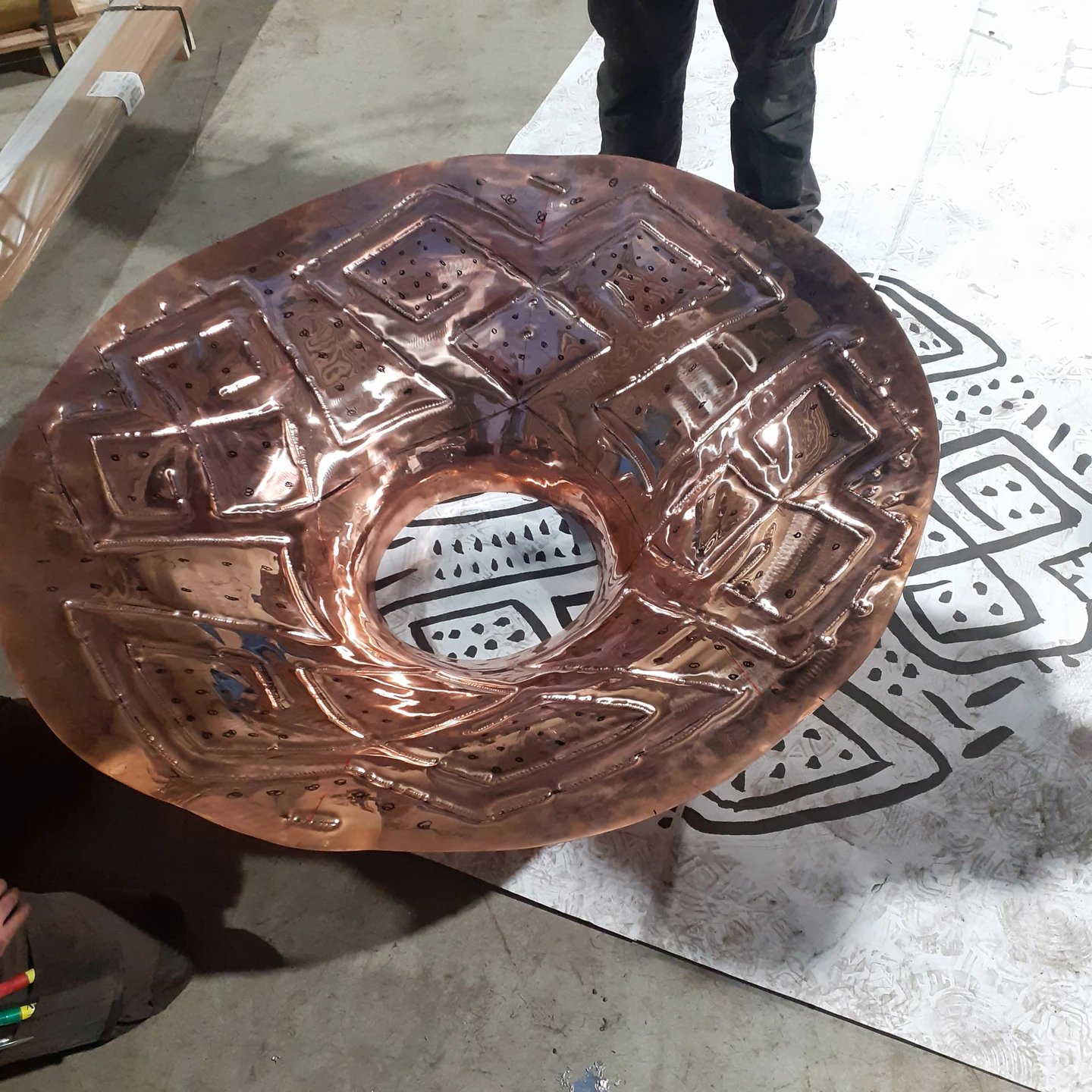
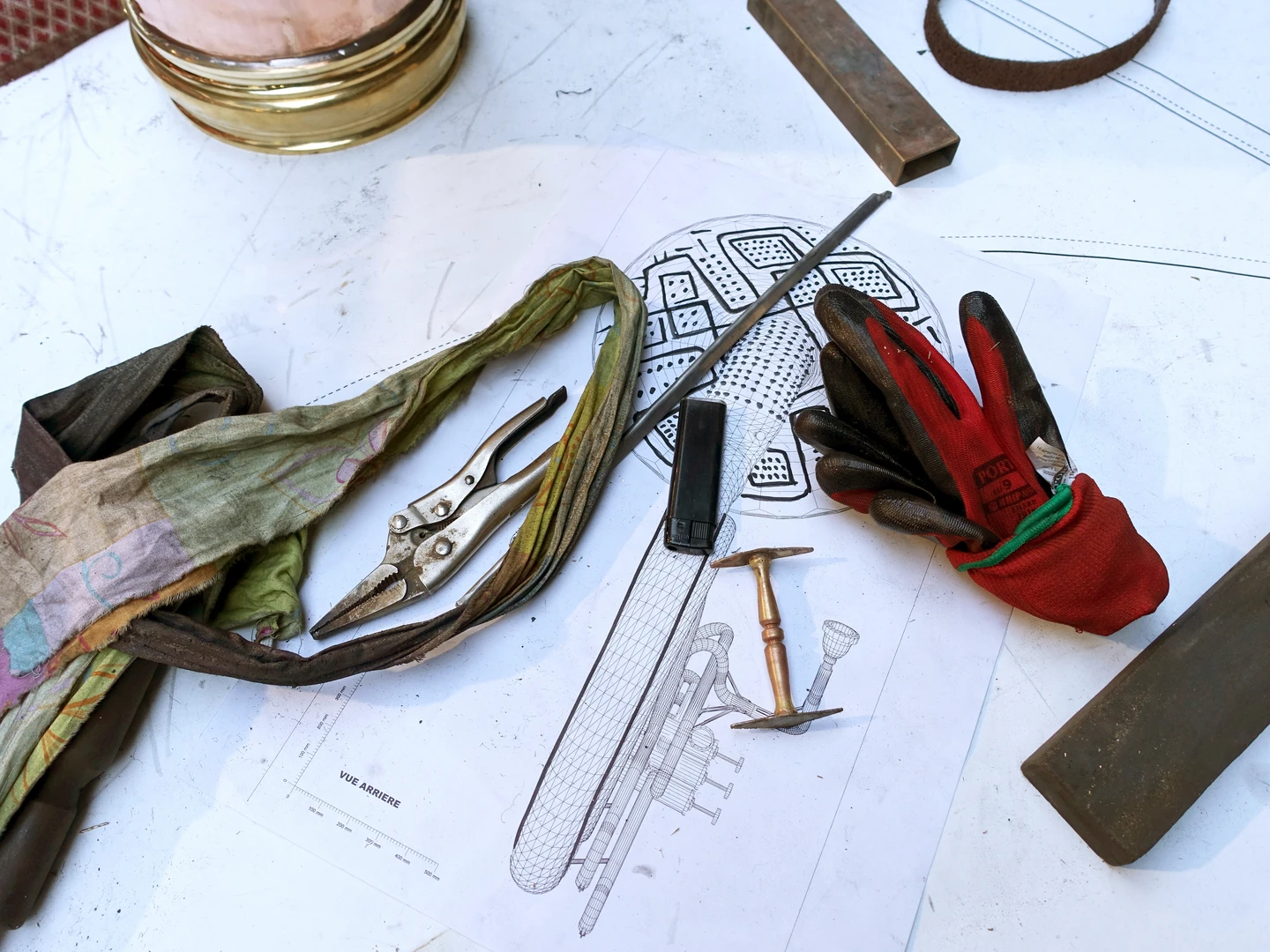
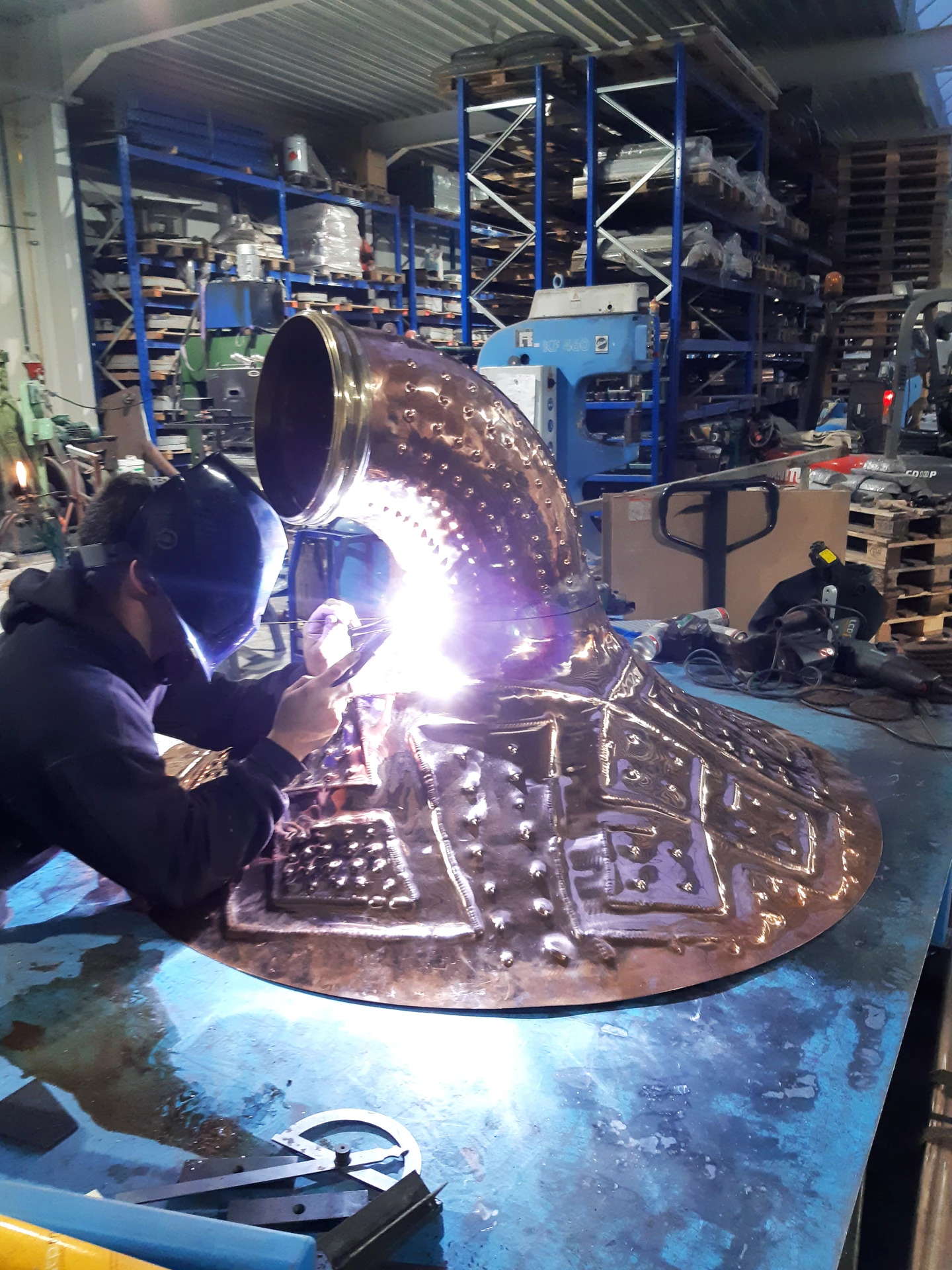
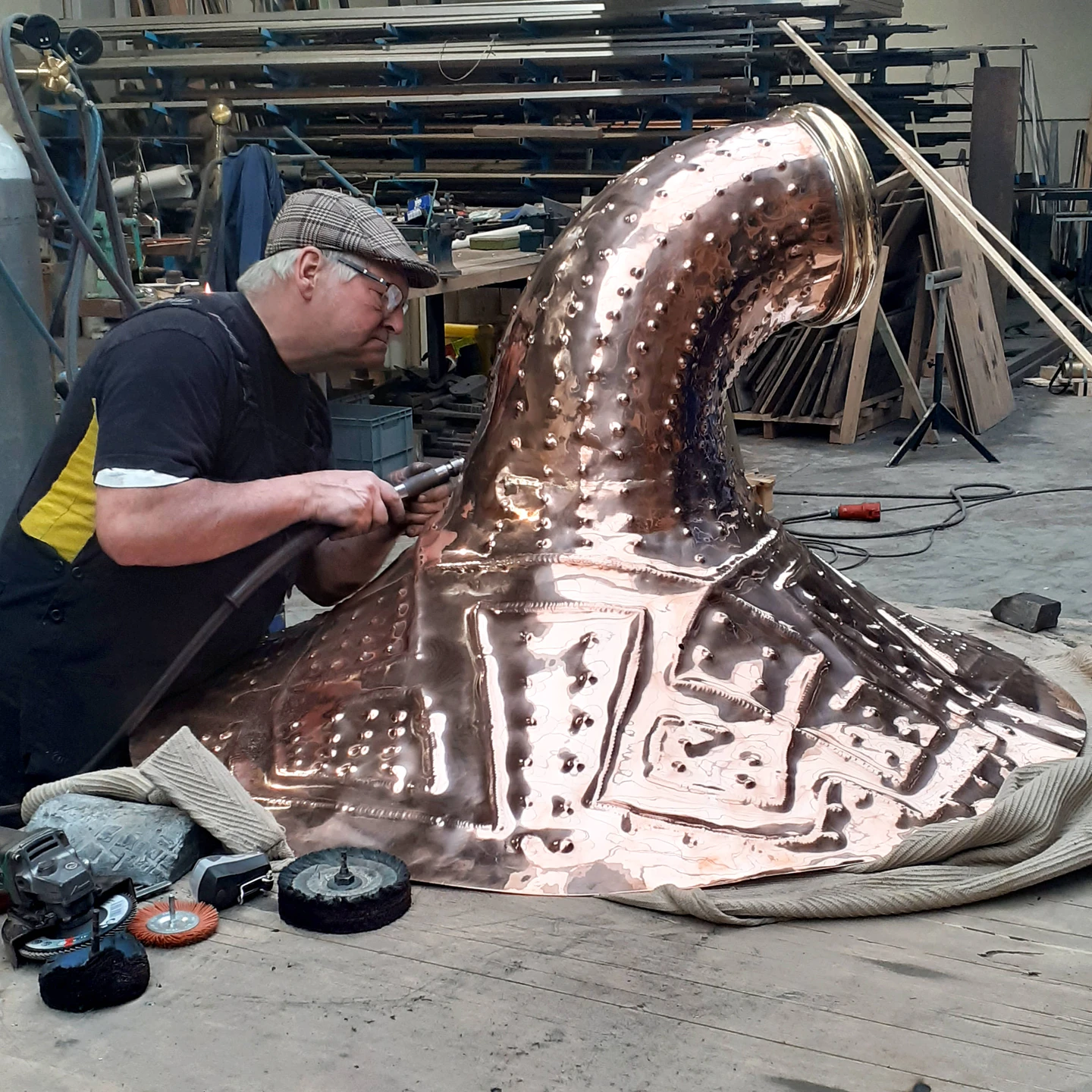
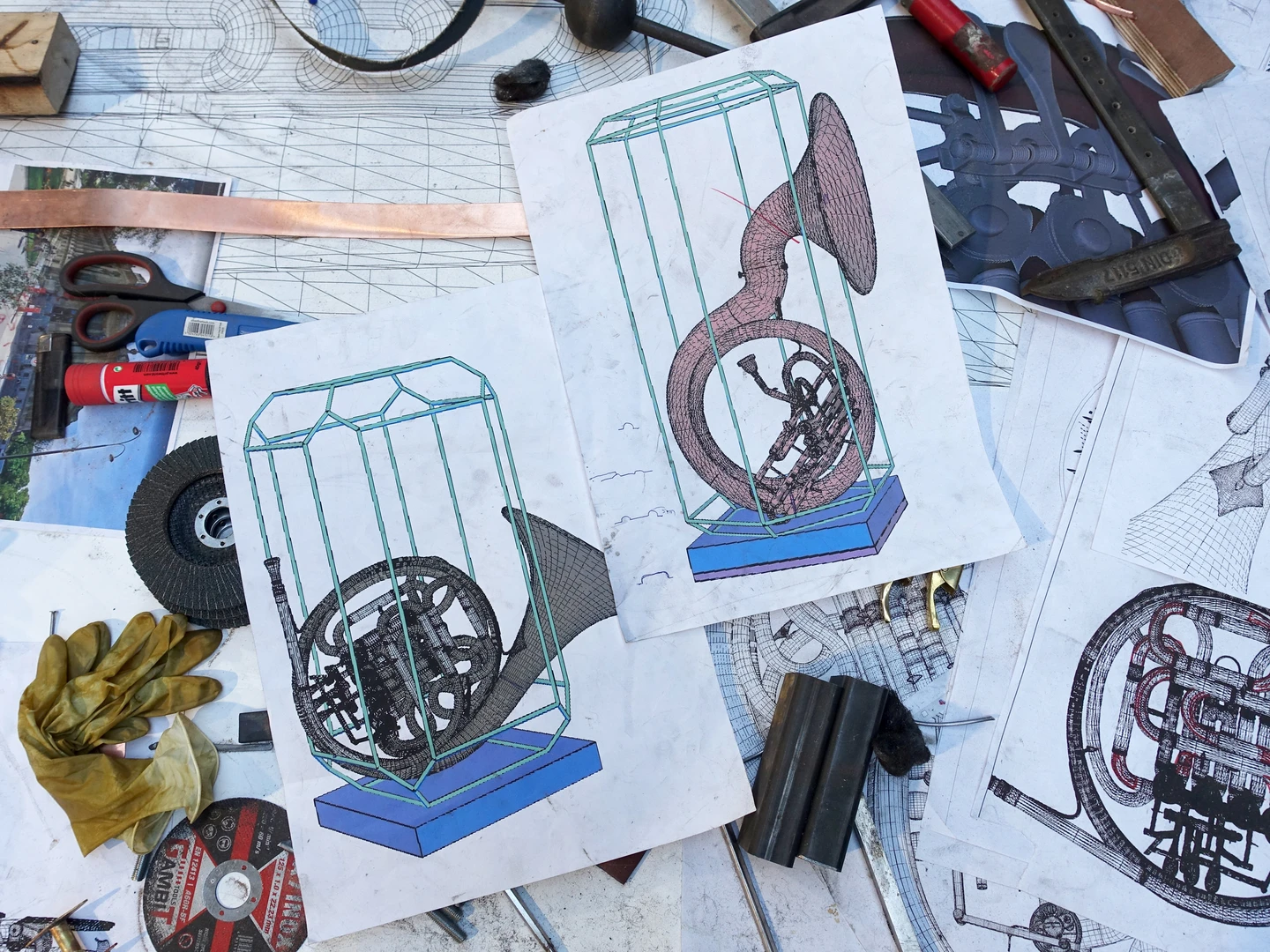
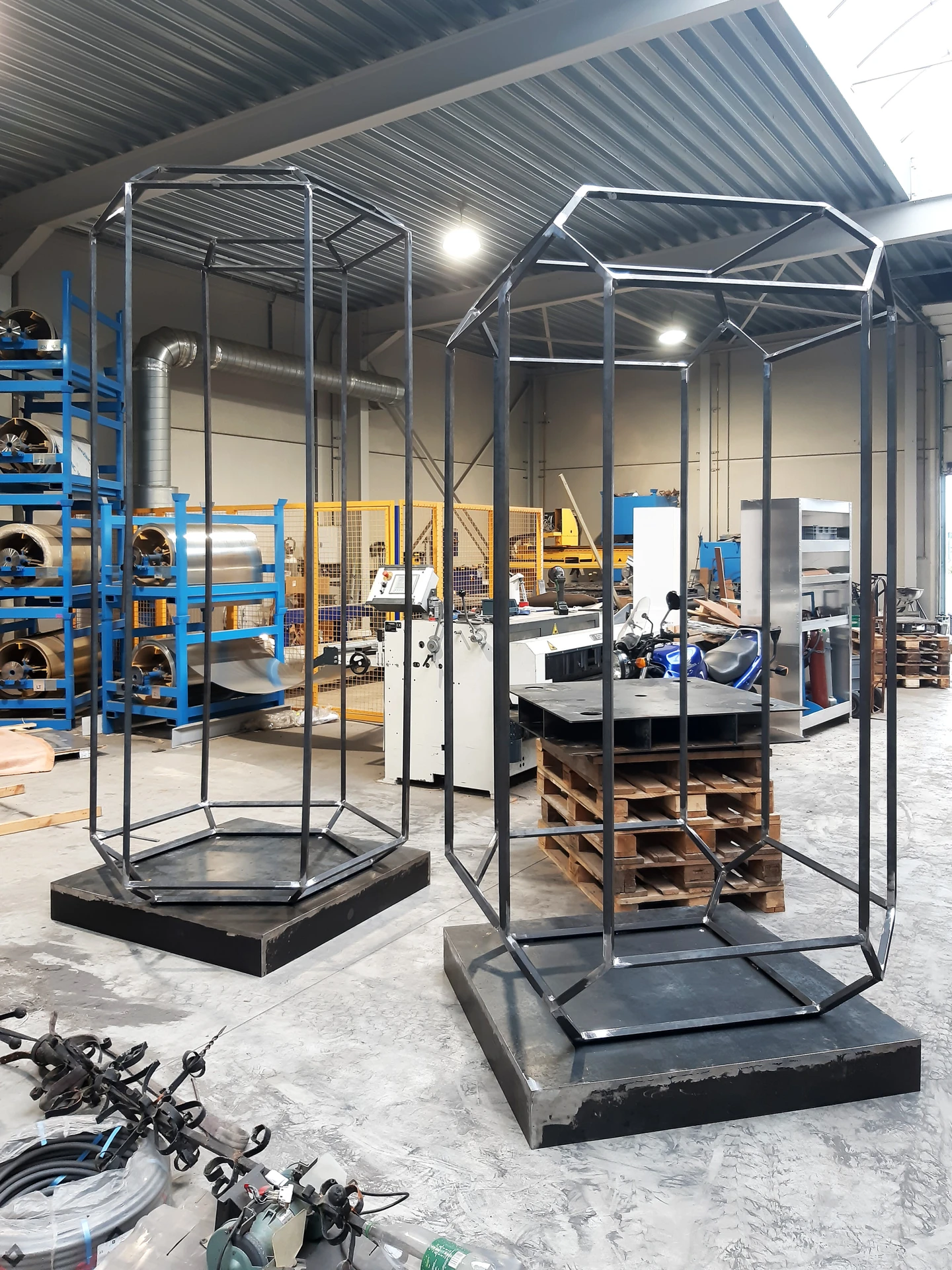
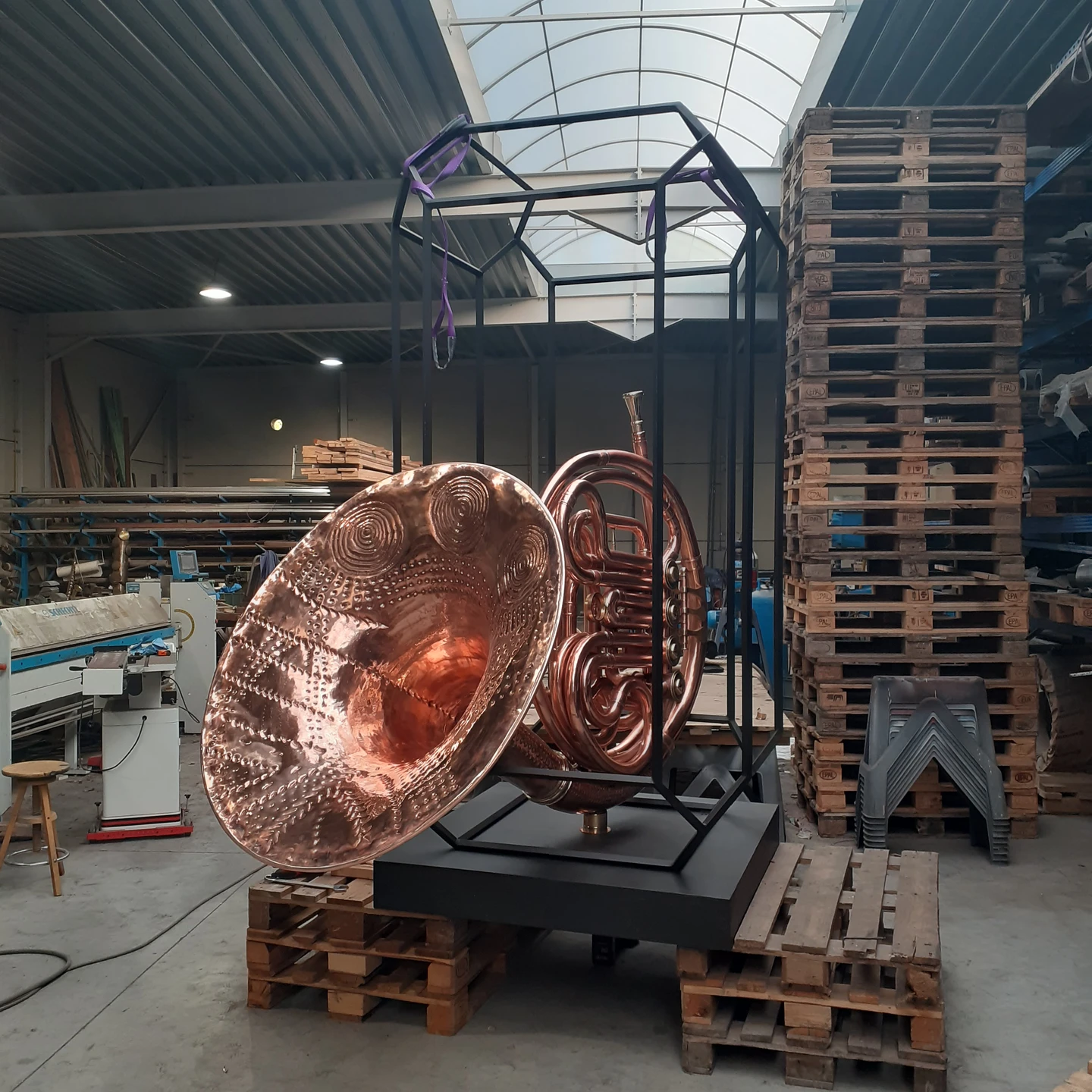
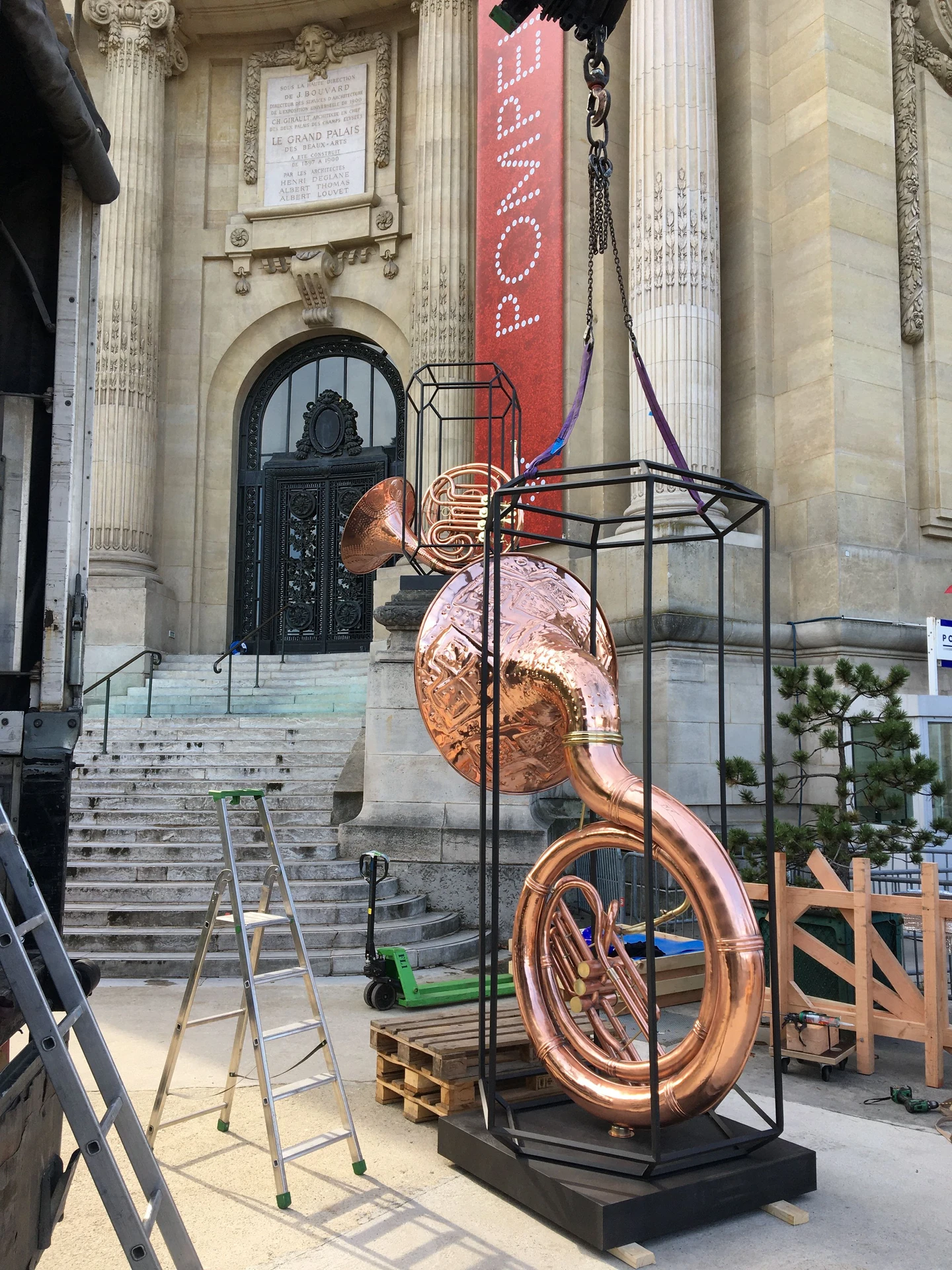
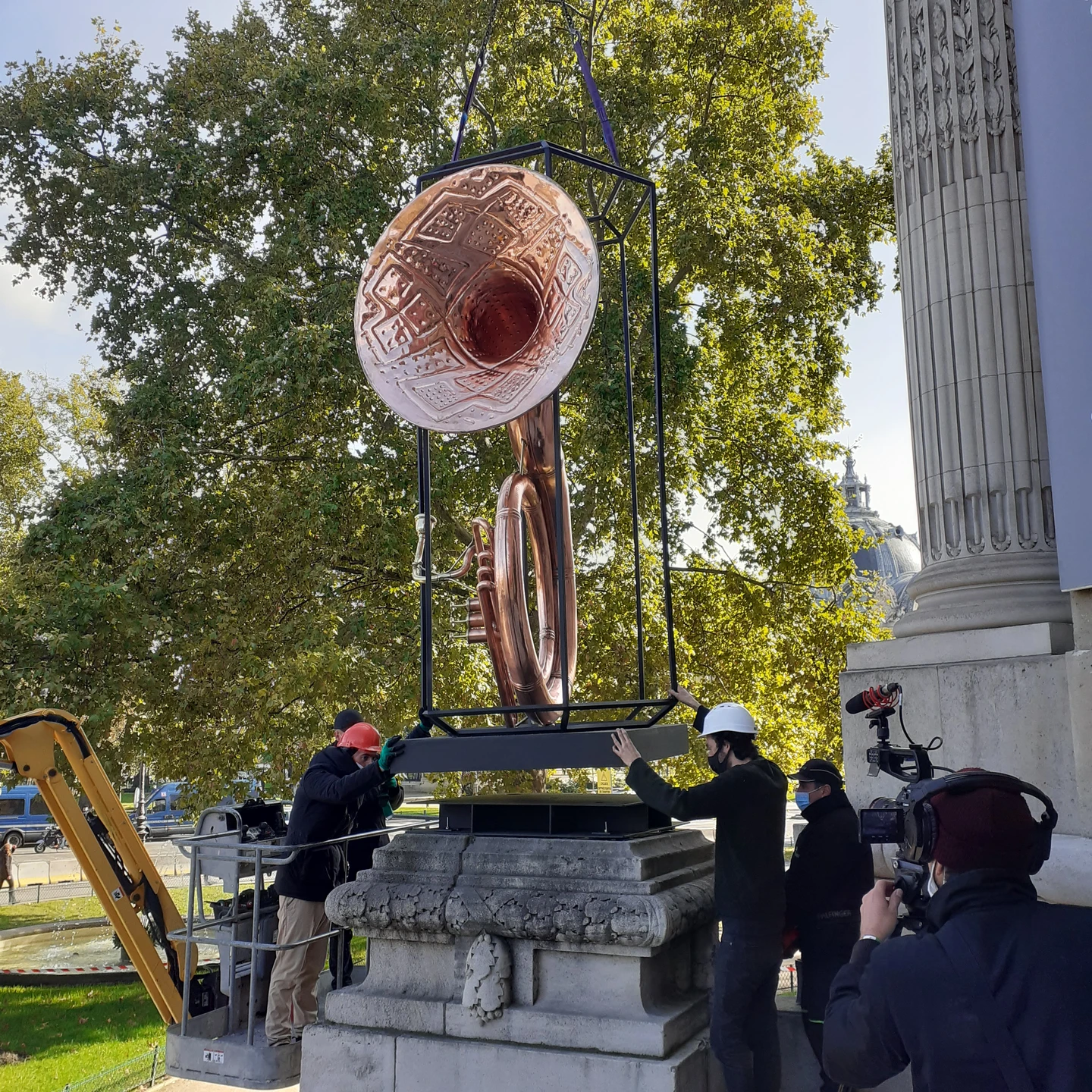
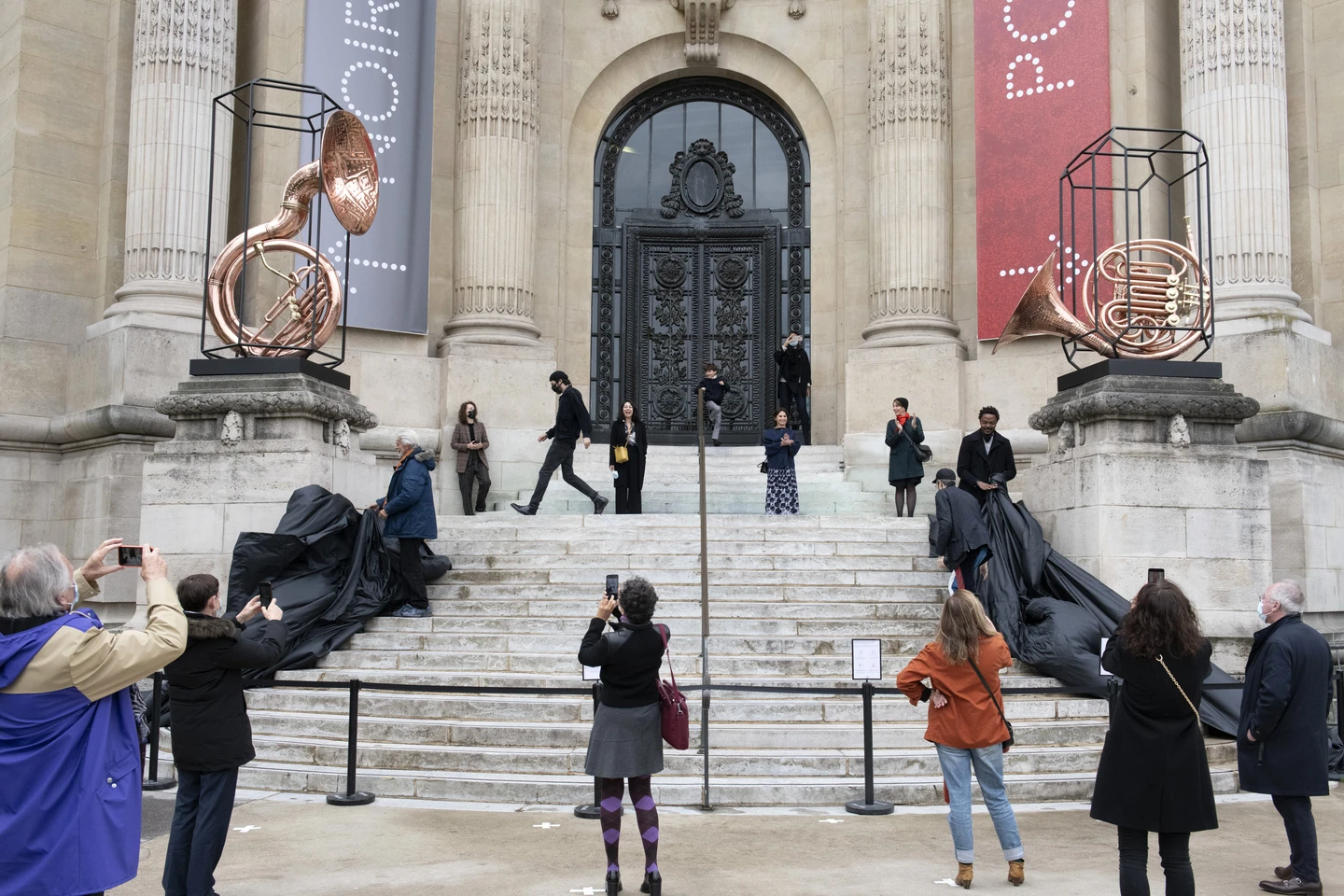
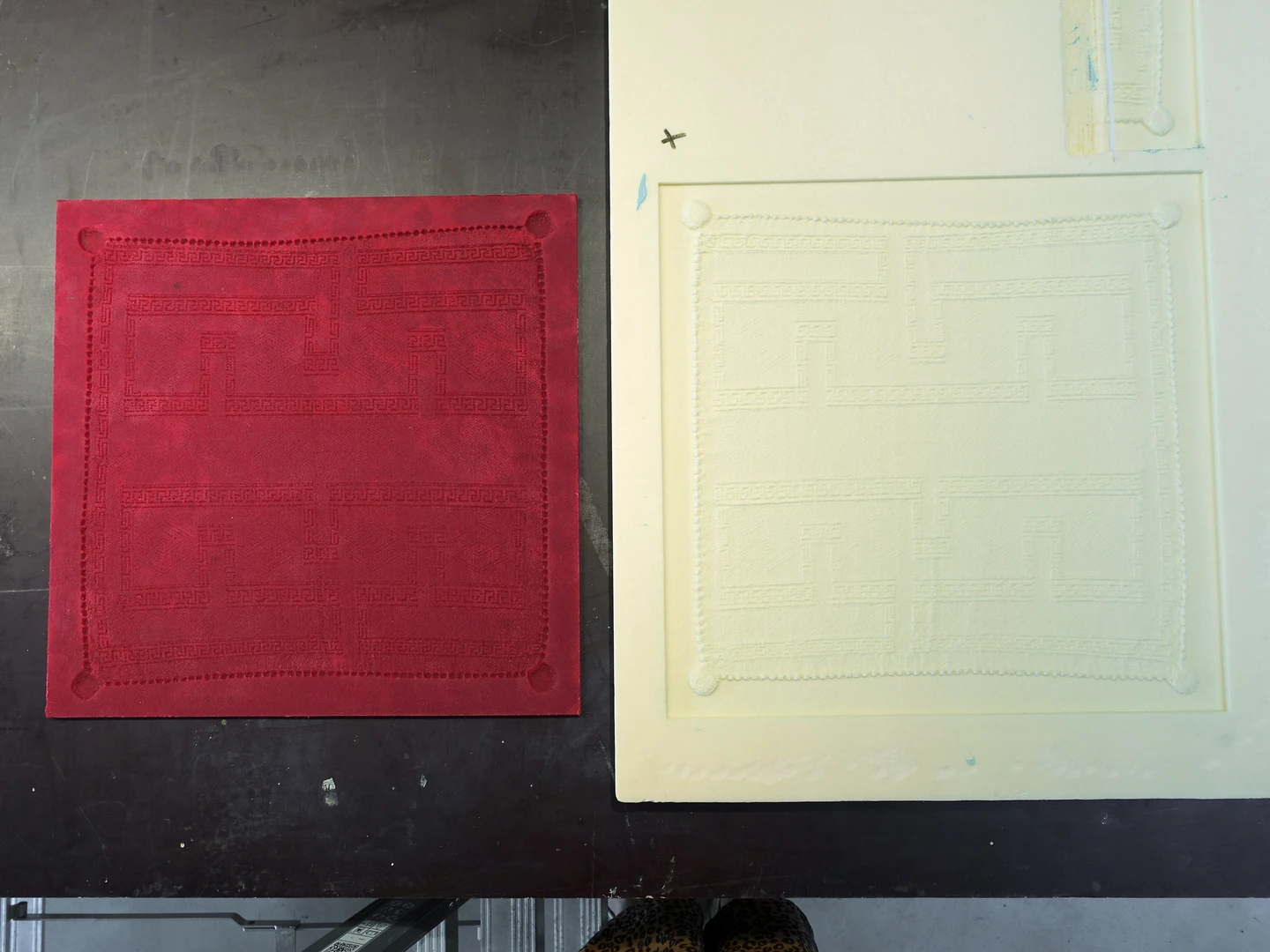
Commandées par la Rmn - Grand Palais, ces deux sculptures ont été conçues pour les piédestaux de la façade du Grand Palais, côté Champs-Elysées-Clemenceau. Prenant la forme d’un Sousaphone et d’un cor, elles sont inspirées des instruments de musique abandonnés après la défaite du corps expéditionnaire français en Louisiane au XIXe siècle, puis récupérés par les esclaves pour créer les Brass Bands.
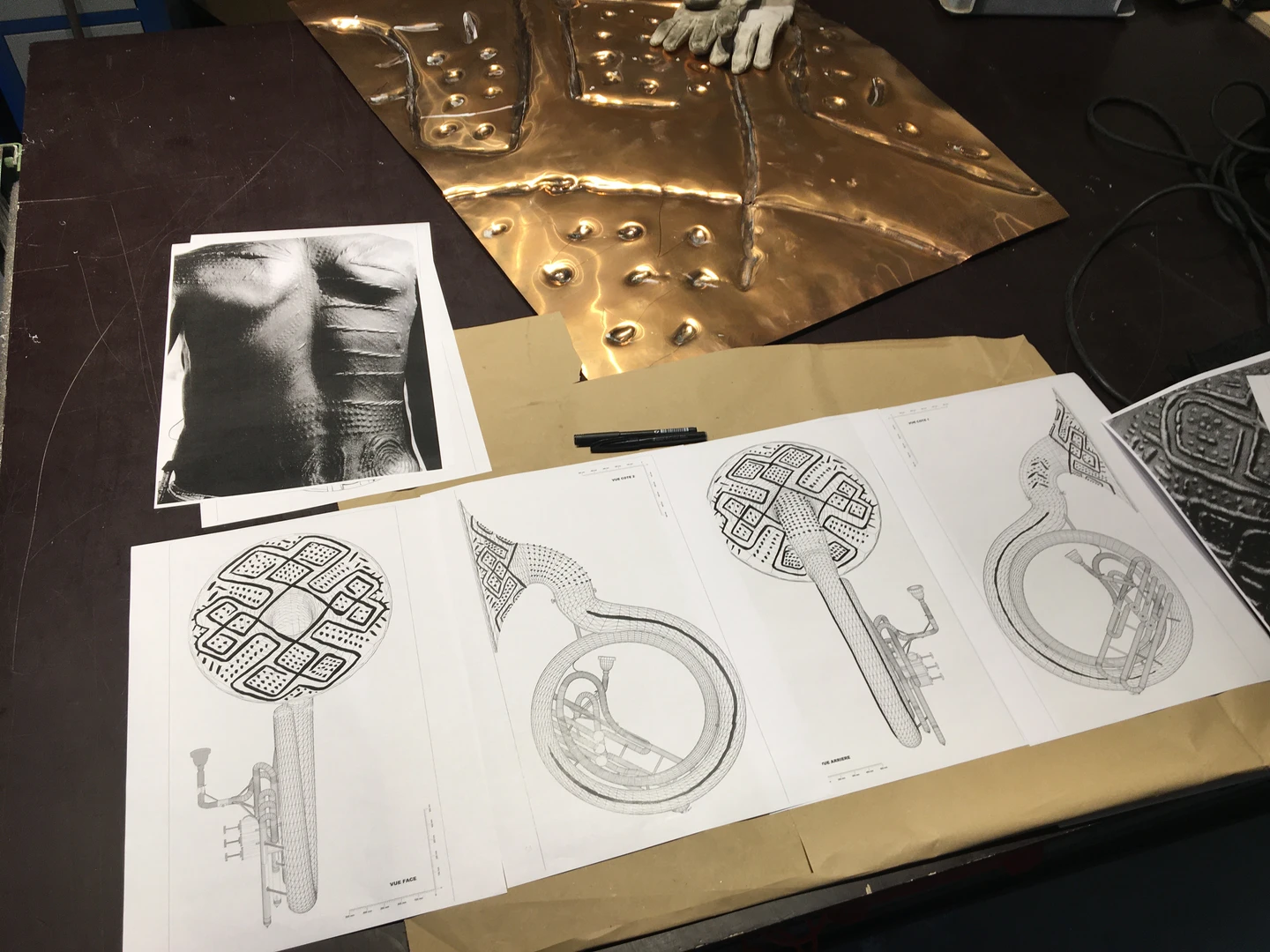
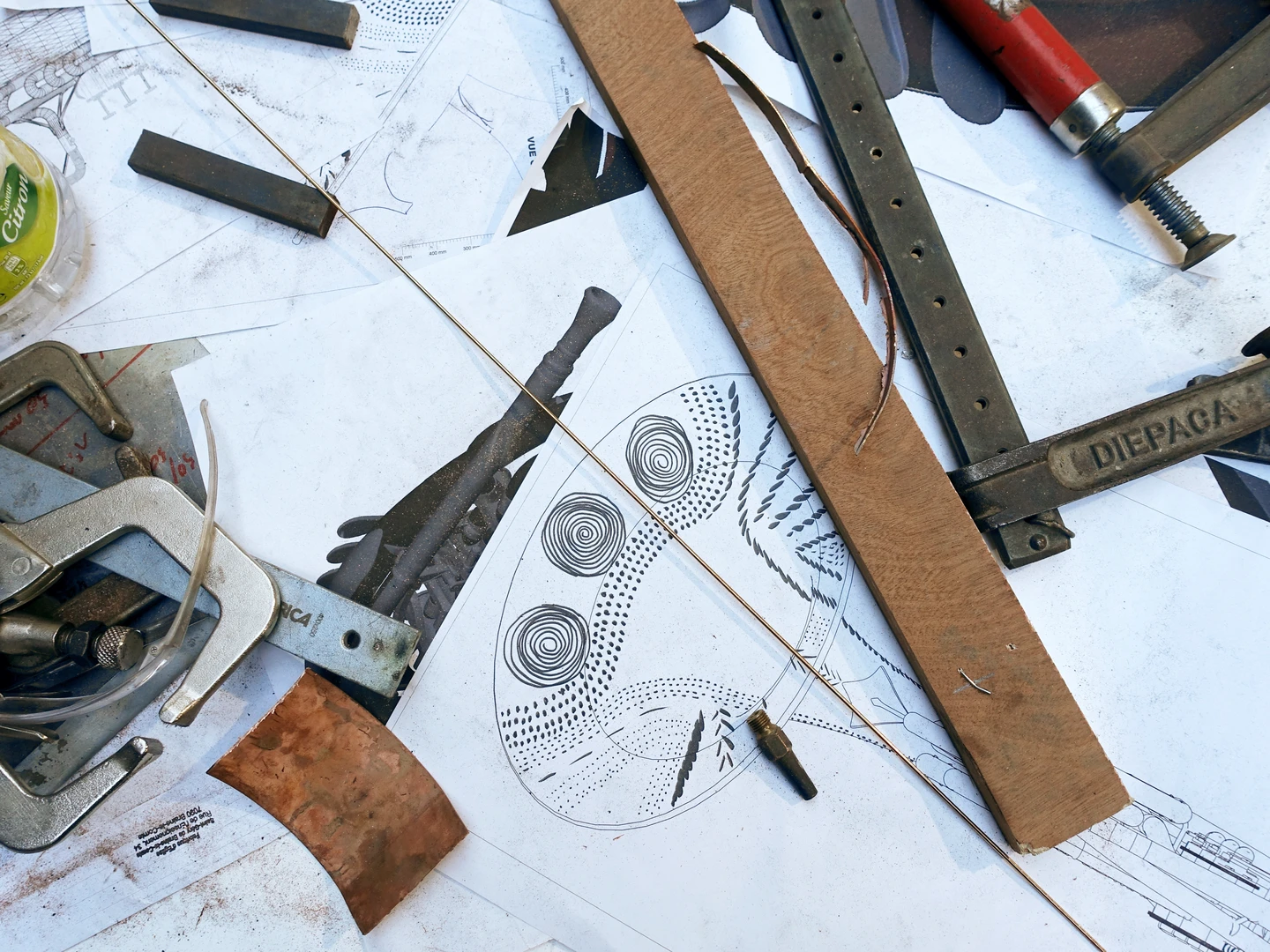
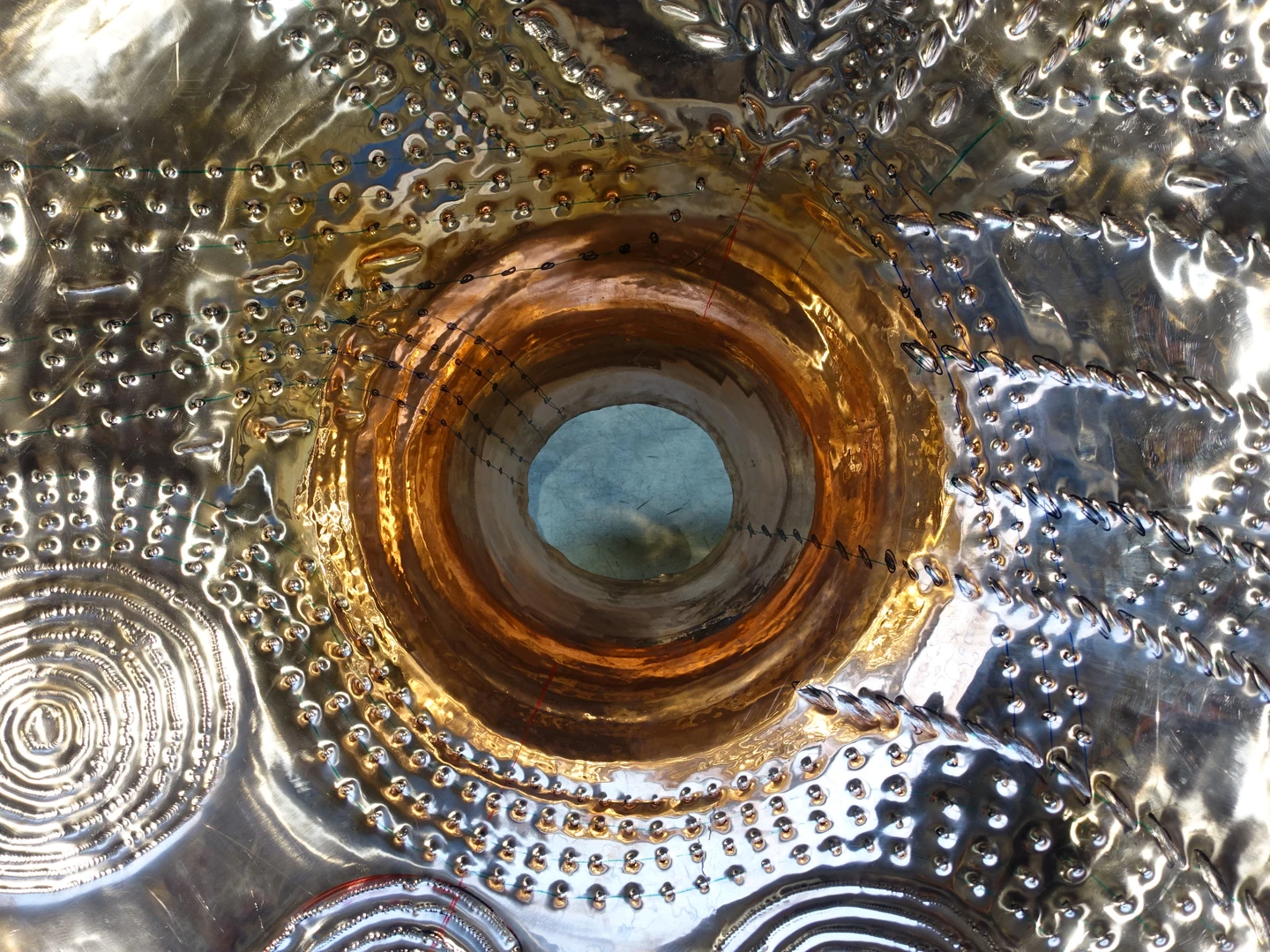
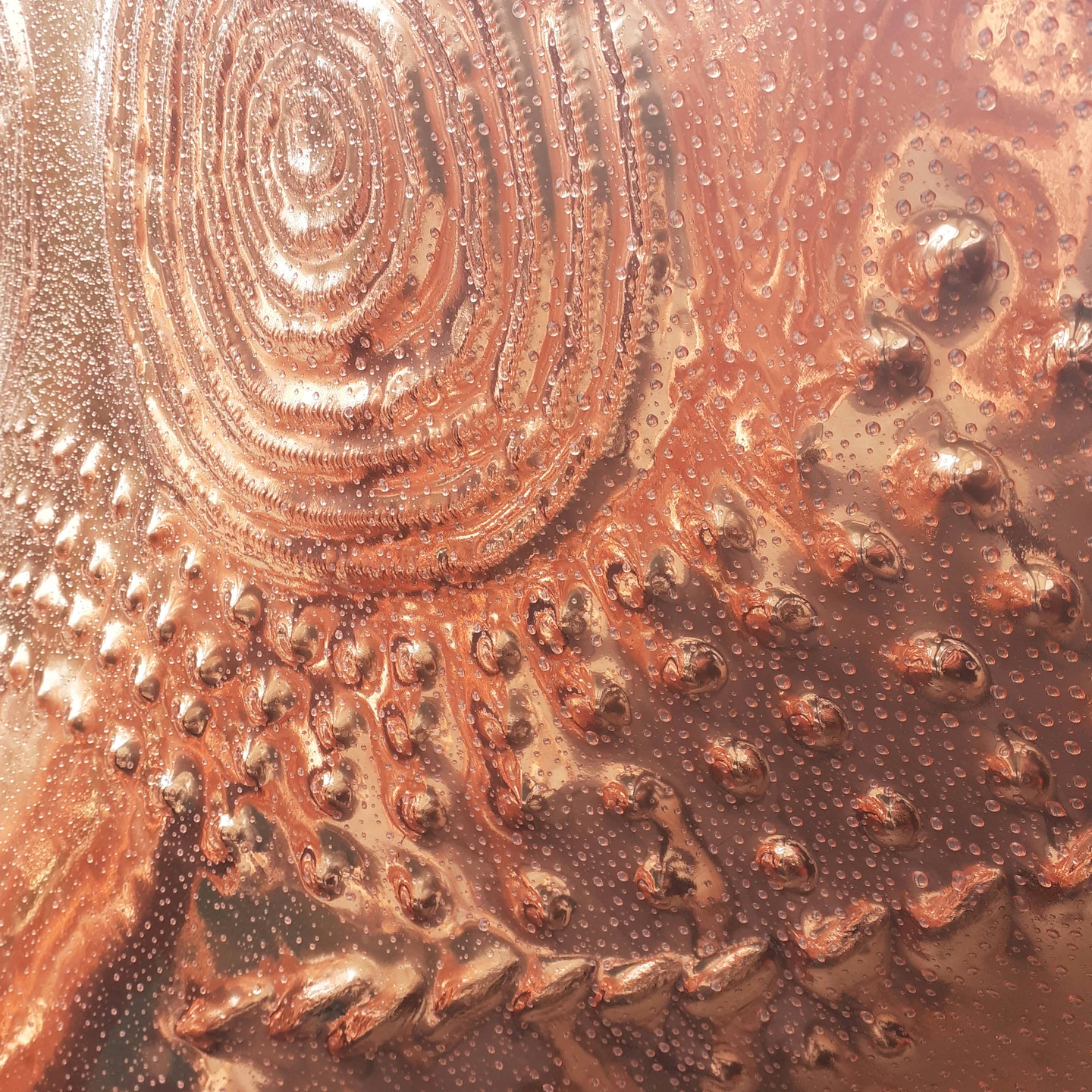
Ces deux sculptures monumentales en cuivre sont scarifiées par l’artiste, faisant écho aux pratiques traditionnelles congolaises éradiquées par la présence coloniale. Elles sont placées dans des structures métalliques qui évoquent la forme des minéraux du Katanga, une province congolaise riche en ressources naturelles qui ont été fortement exploitées par les entreprises internationales depuis 1885. Johari - Brass Band est un symbole triomphant de la réappropriation par l’Afrique de sa propre histoire. -
-
Raamwerk in Practice
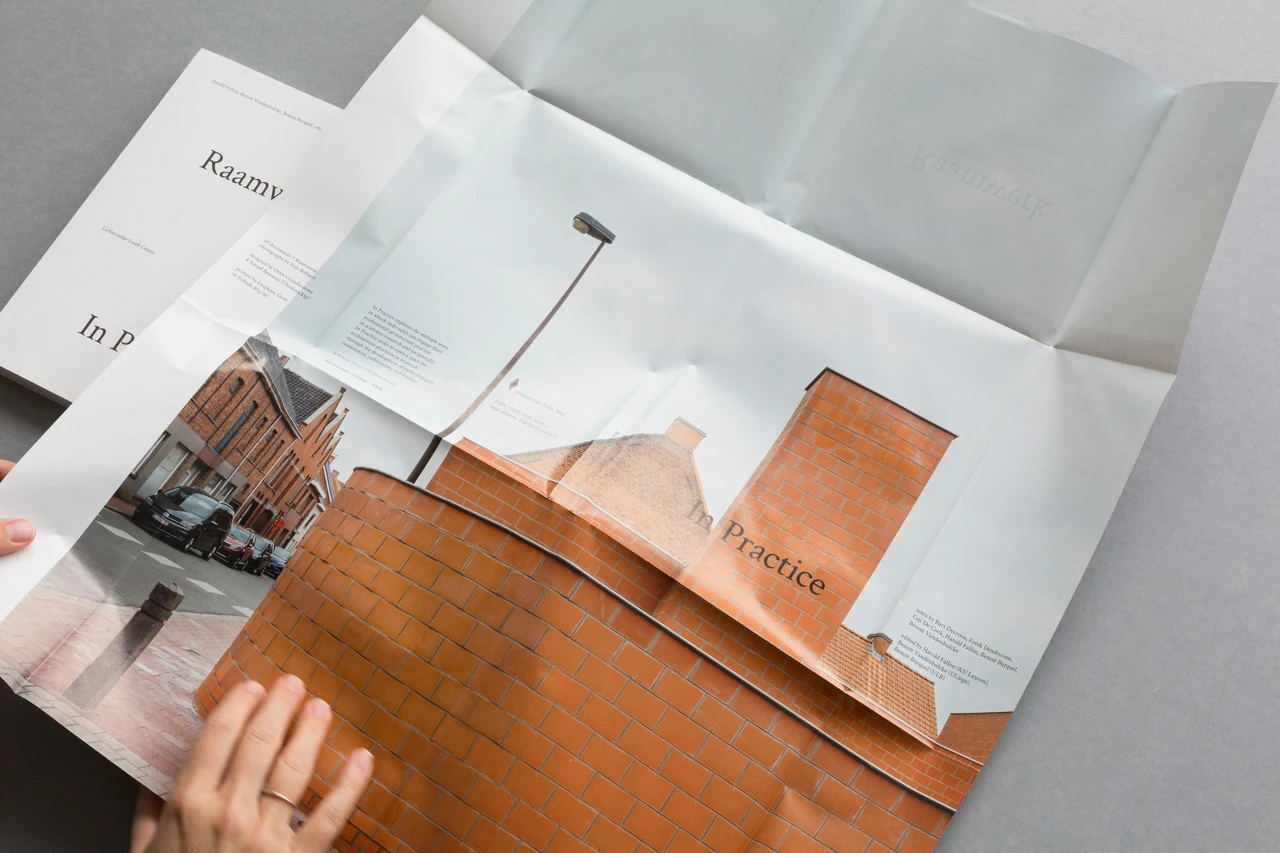
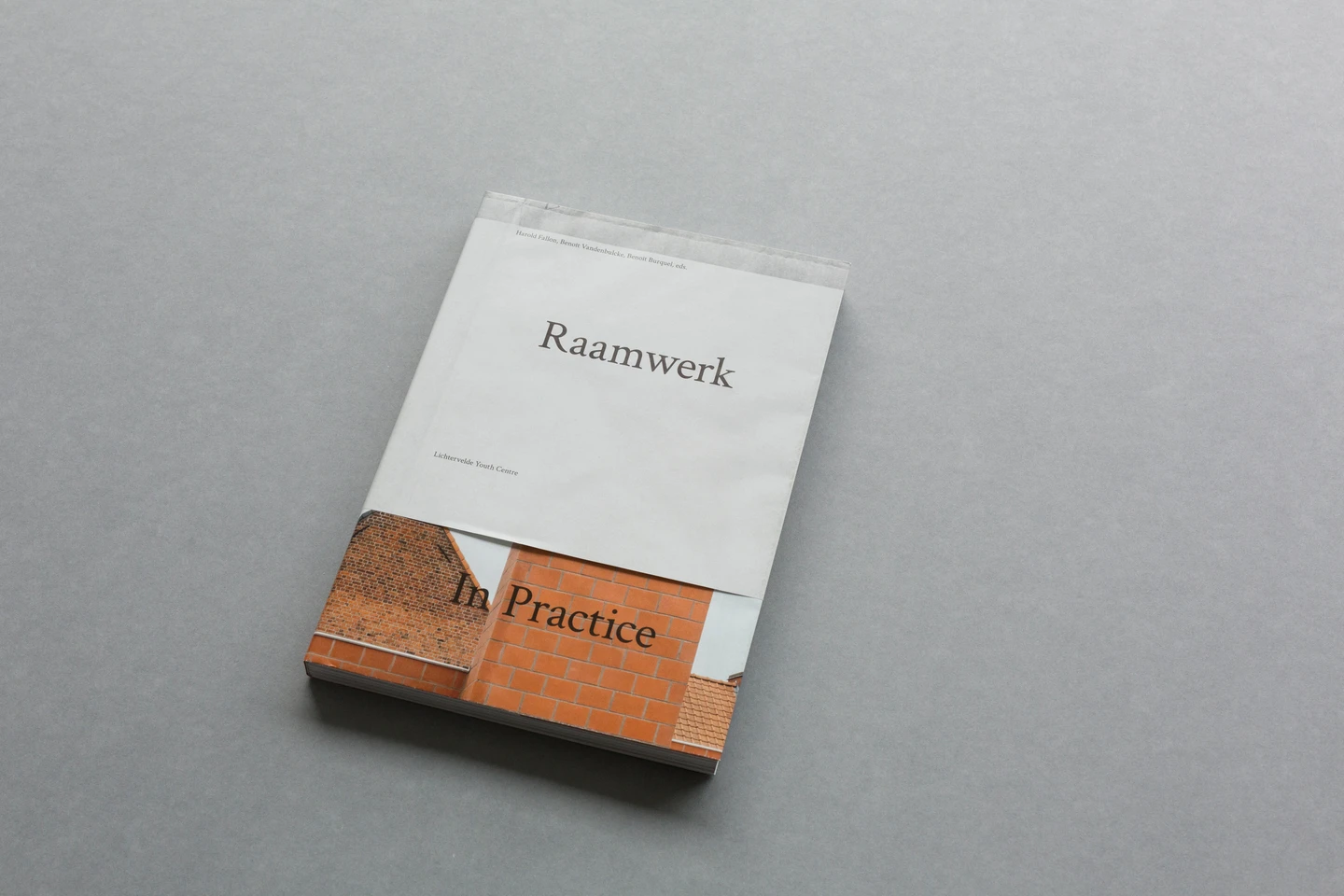
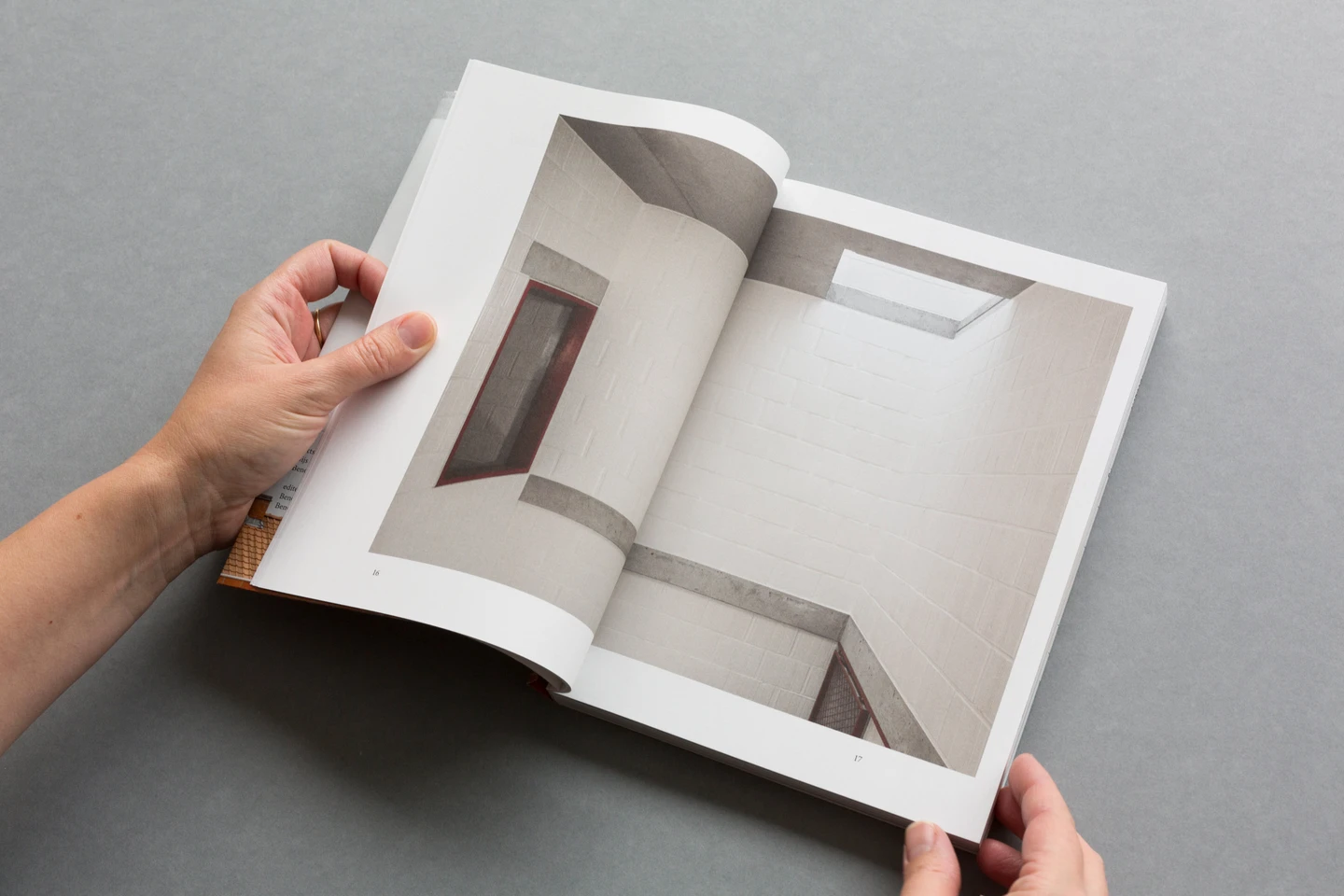
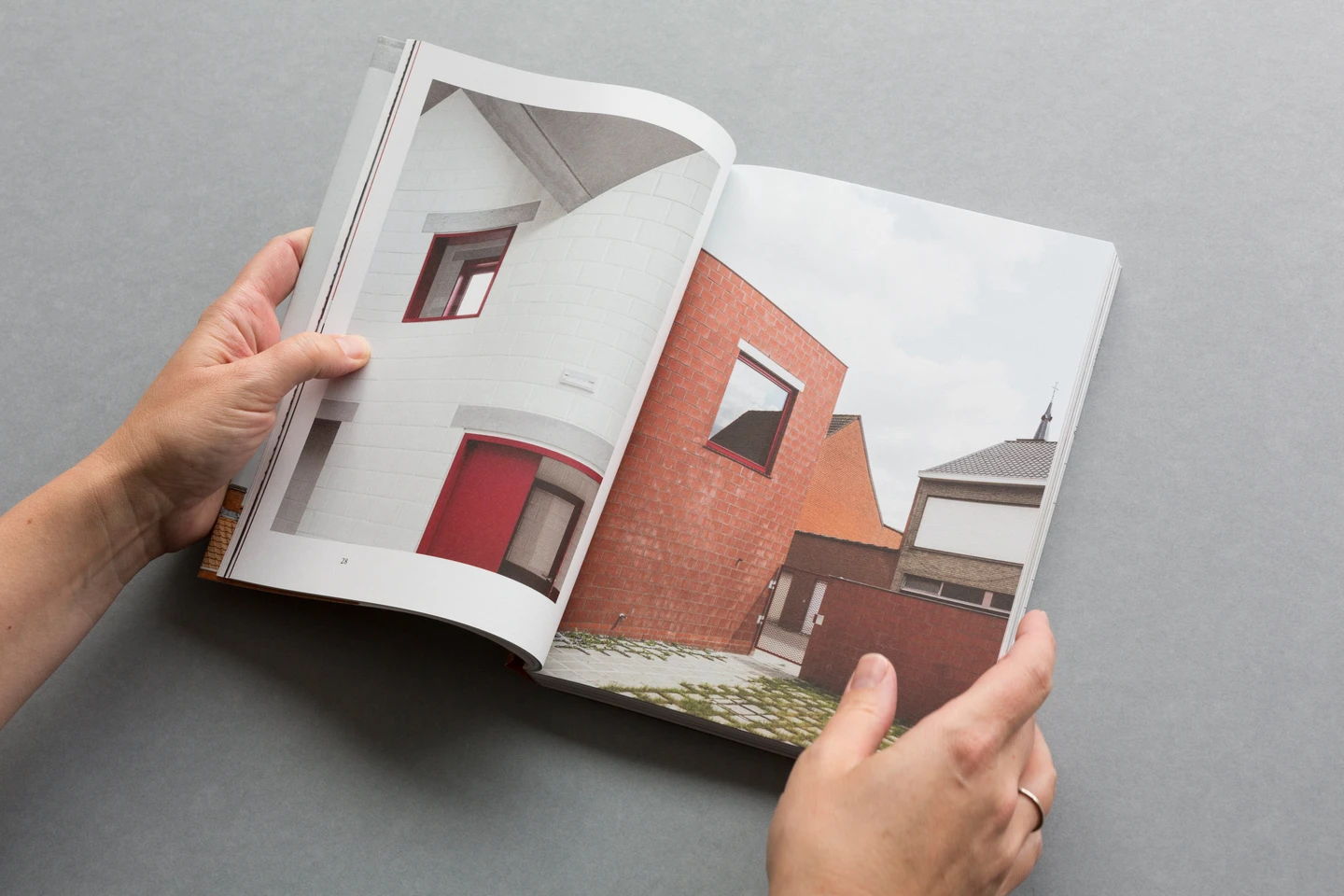
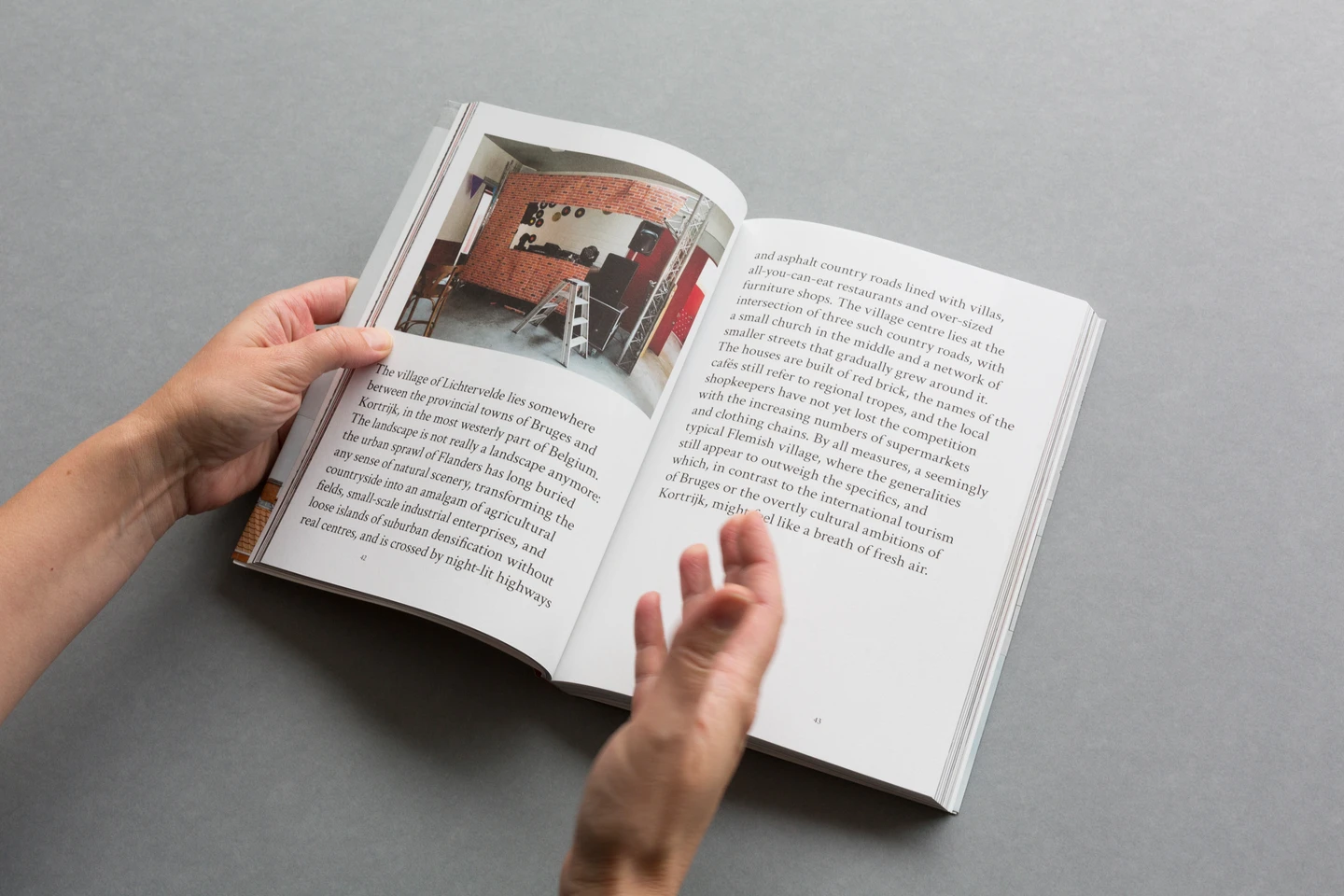
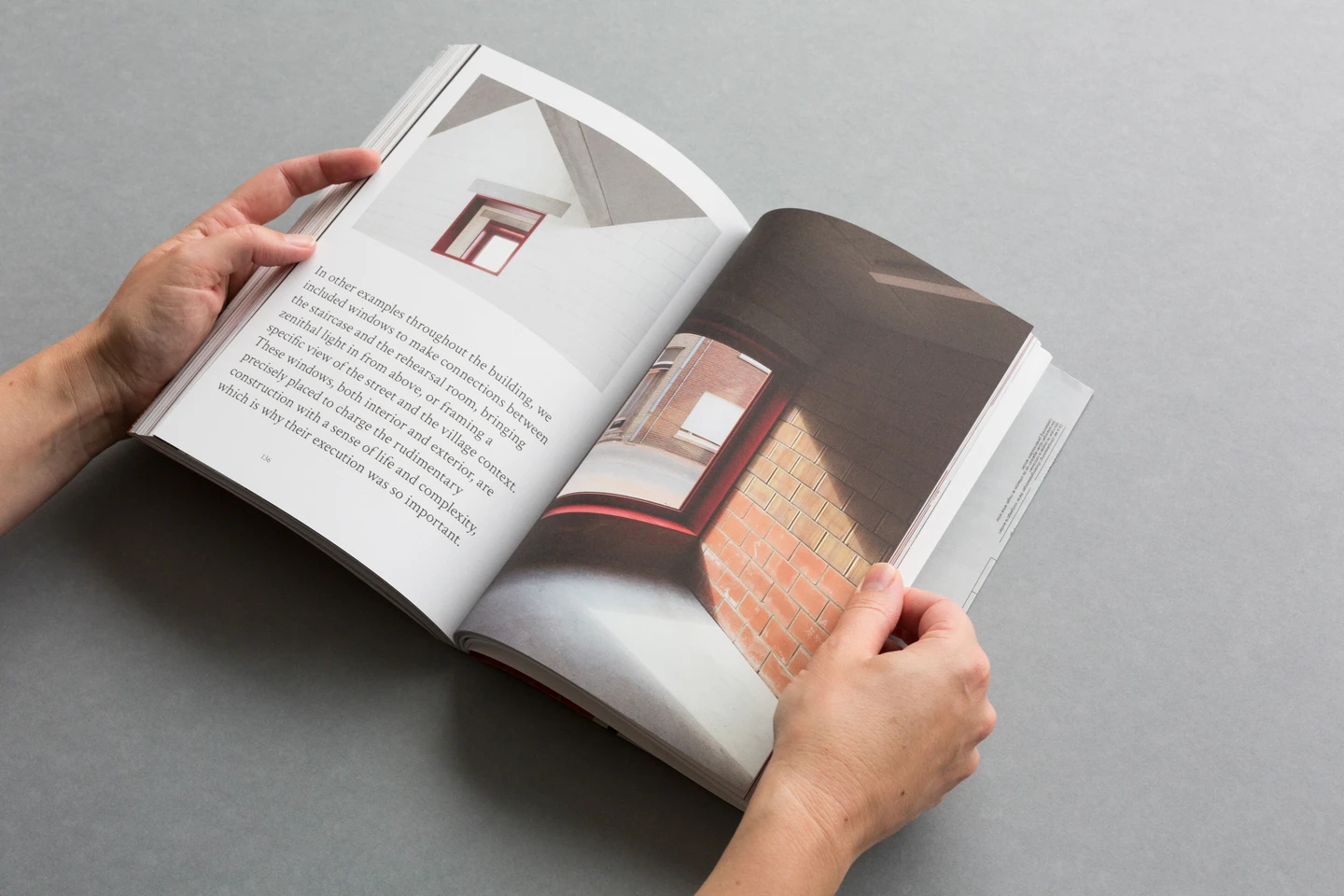
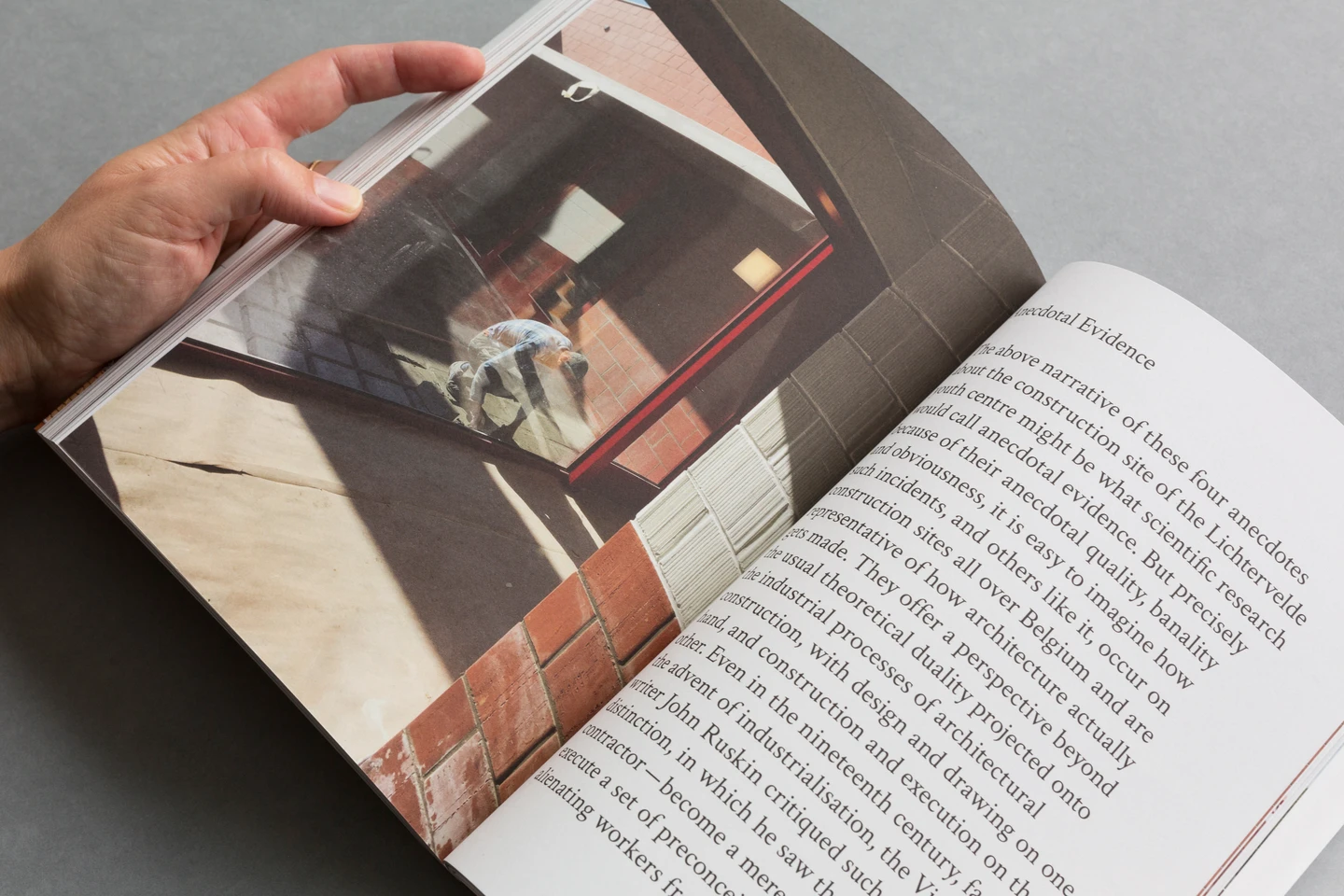
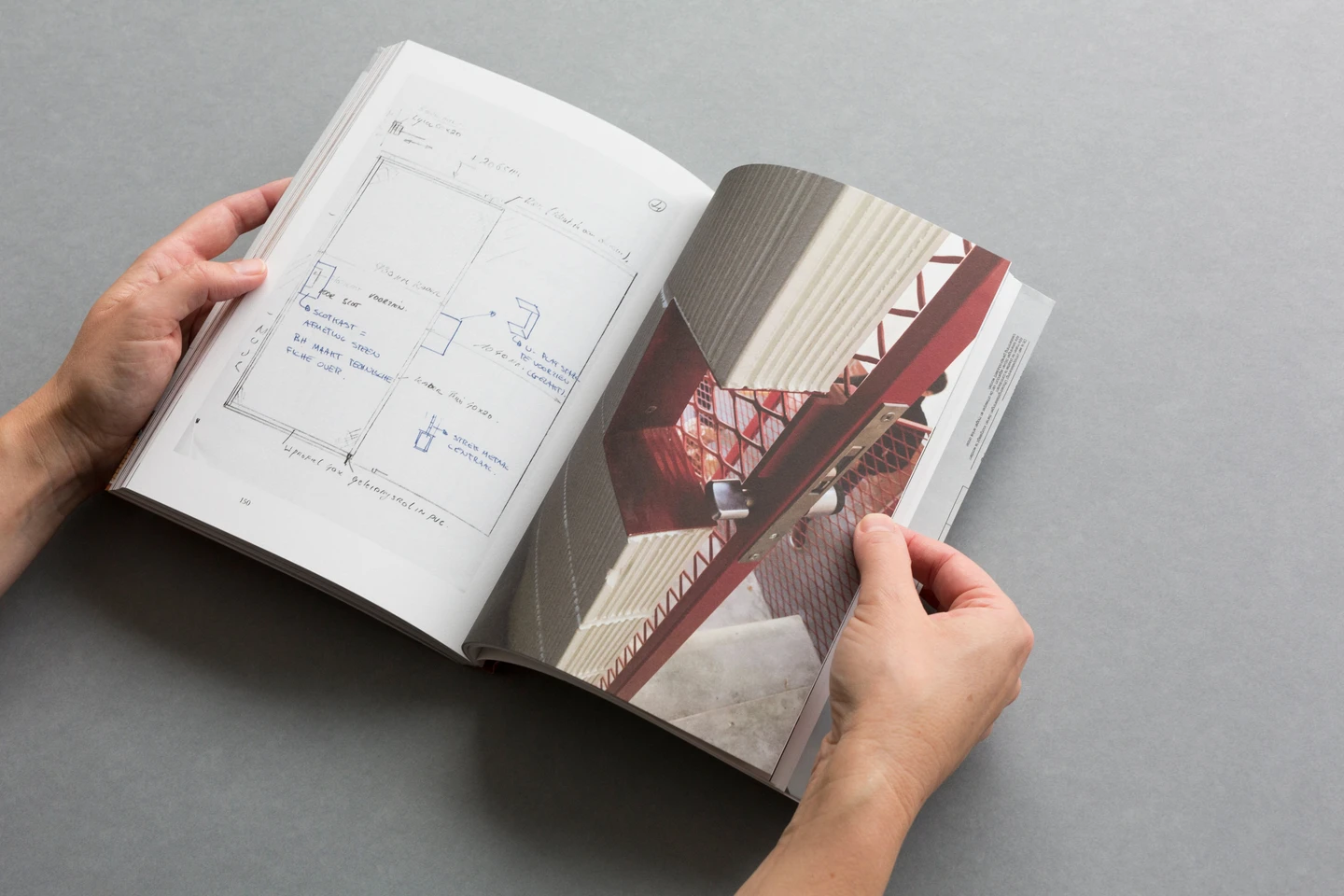
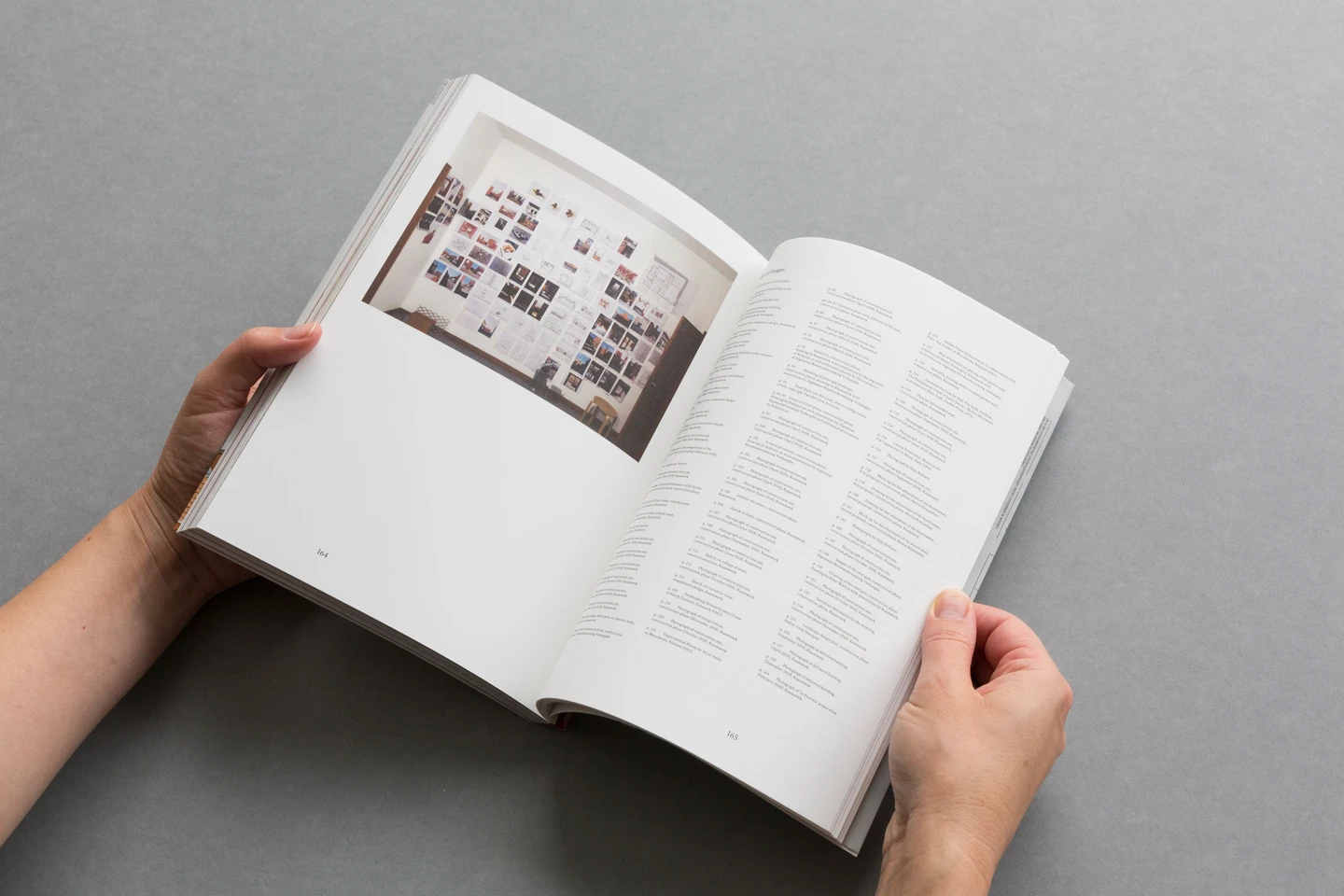
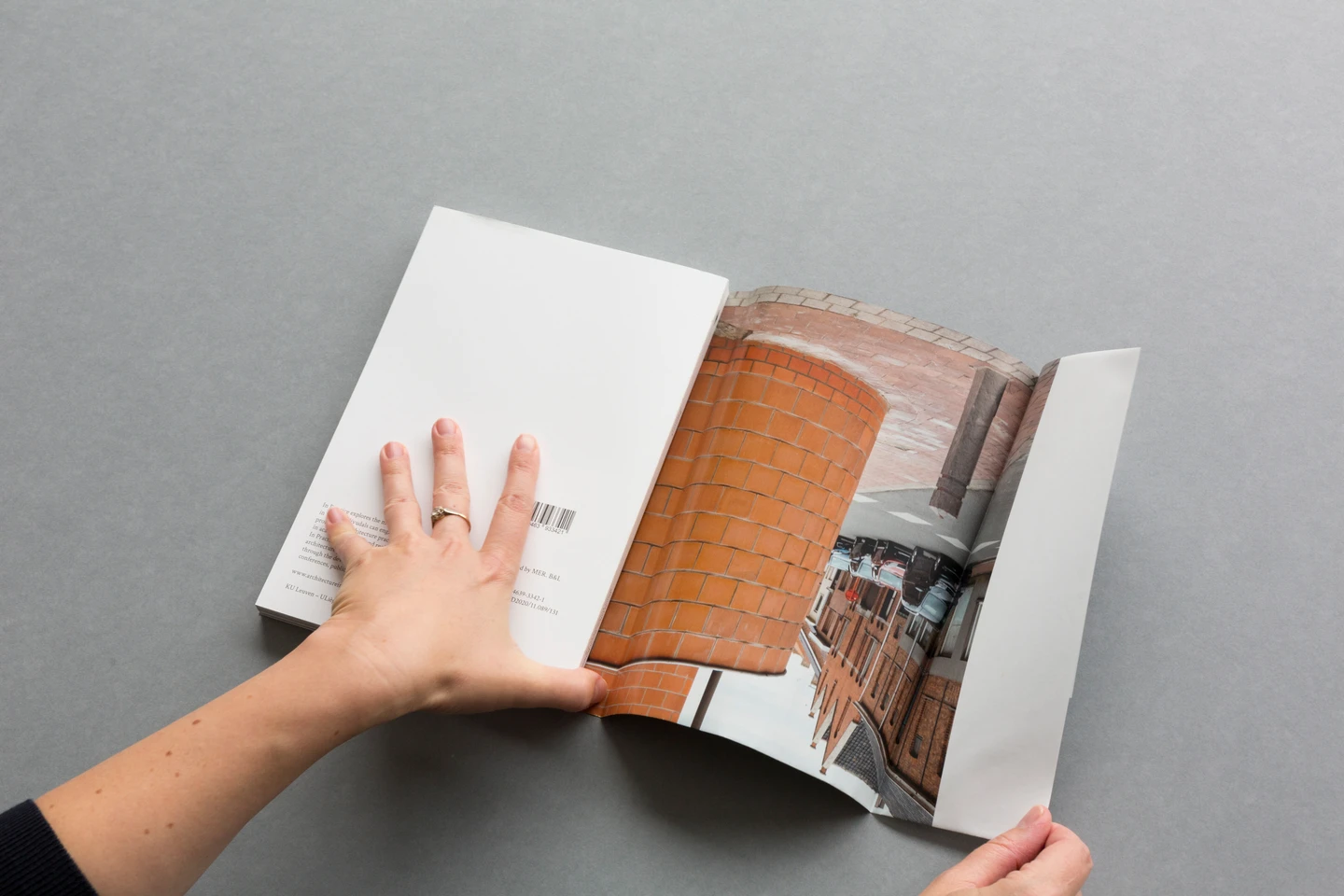
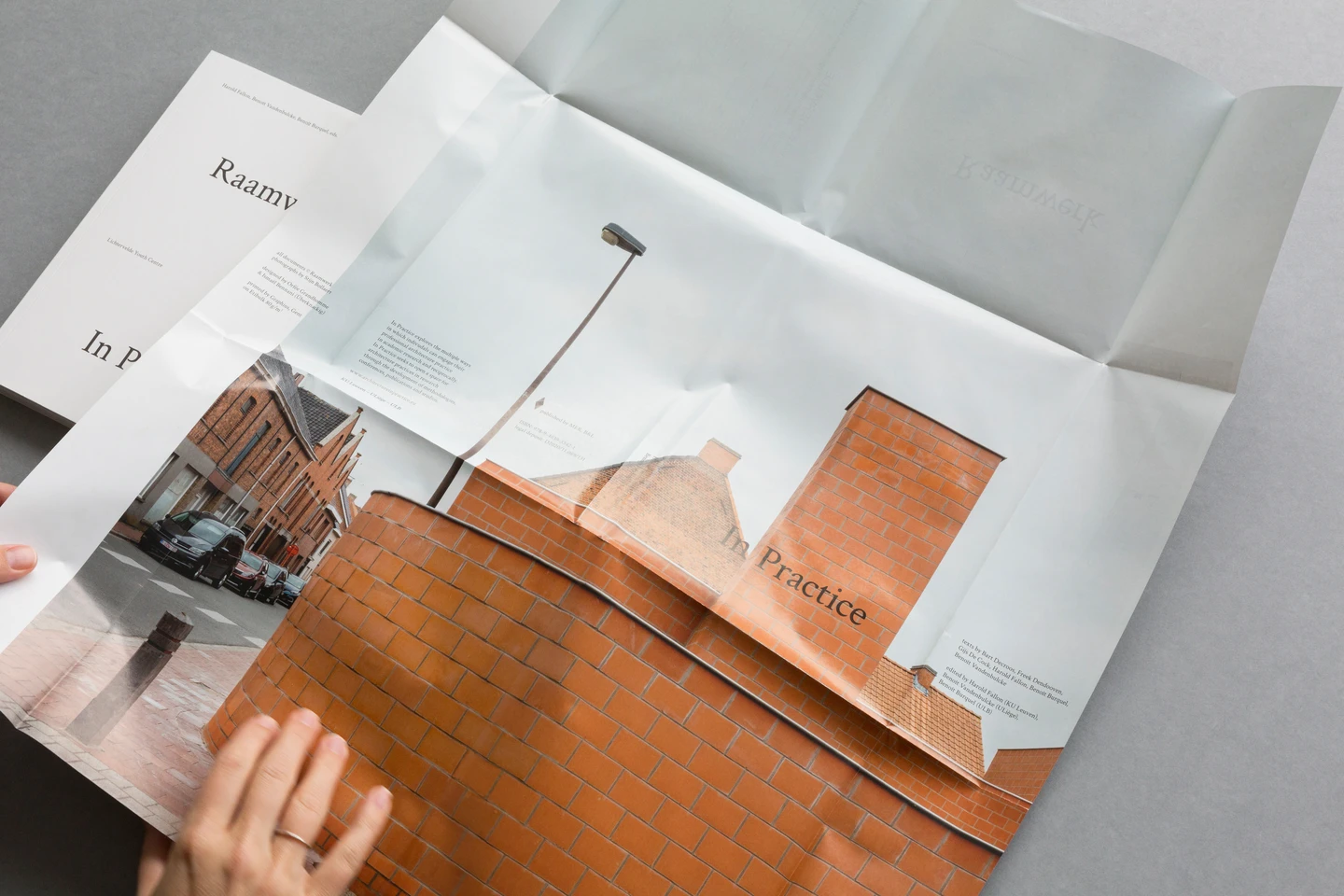
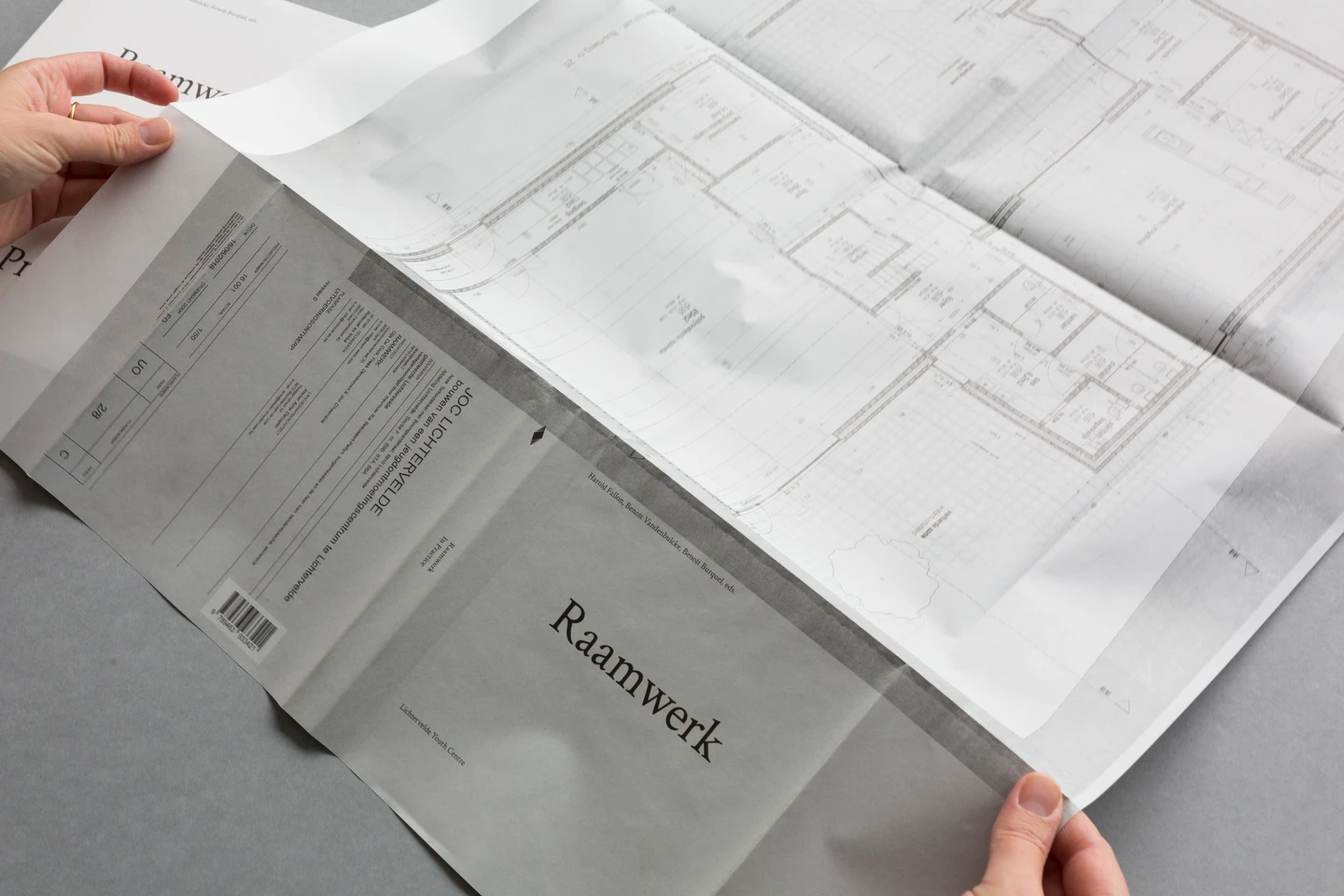
KULeuven, Uliège, ULB, MER. B&L Editorial, Book 2020The authors Bart Decroos and Raamwerk (architects Gijs De Cock and Freek Dendooven) unfold the design process of Lichtervelde Youth Centre, through a set of unpublished work documents including sketches, scale models, plans, and pictures. With contributions by Harold Fallon, Benoît Vandenbulcke and Benoît Burquel.
-
-
Copper Negative of Luxury Cloth
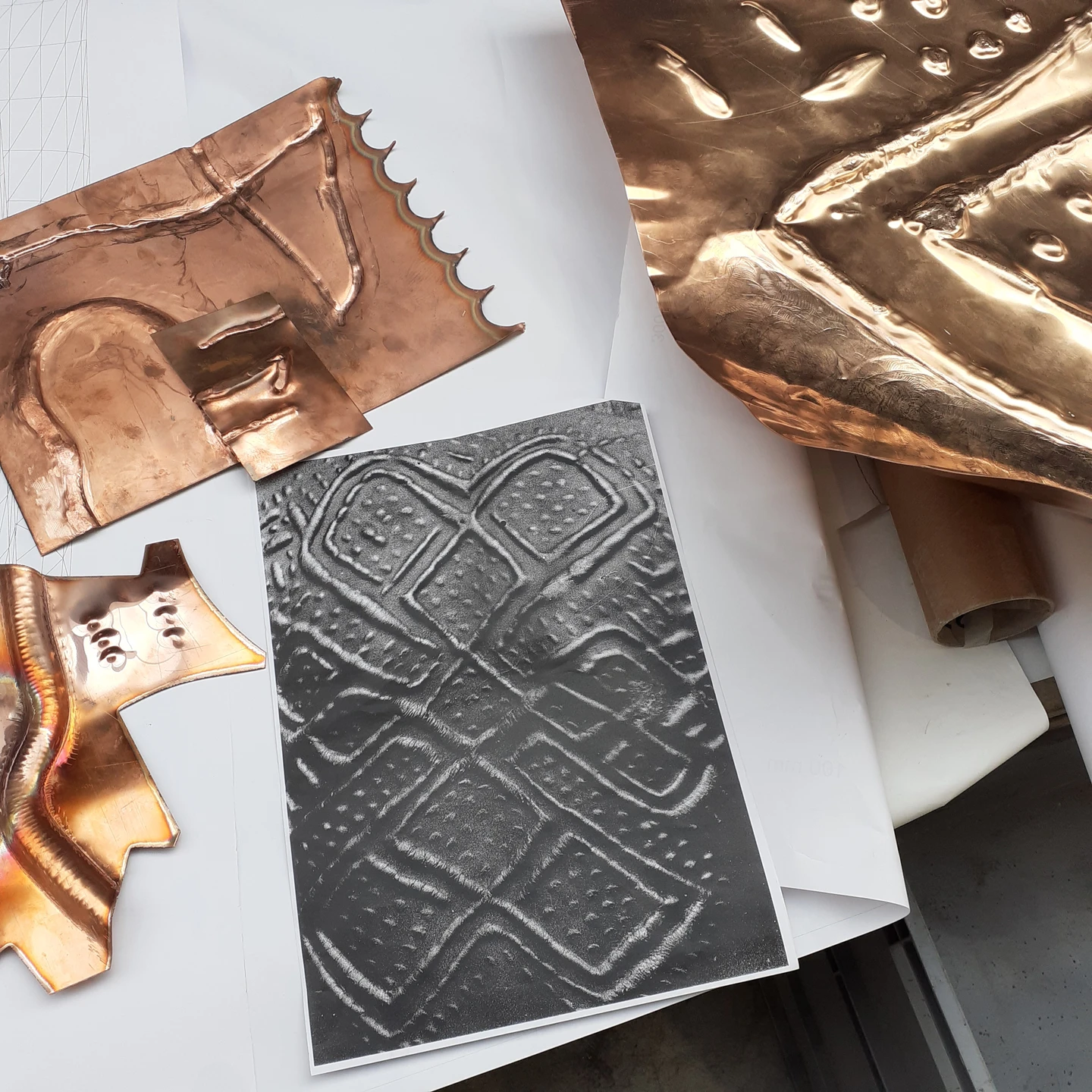
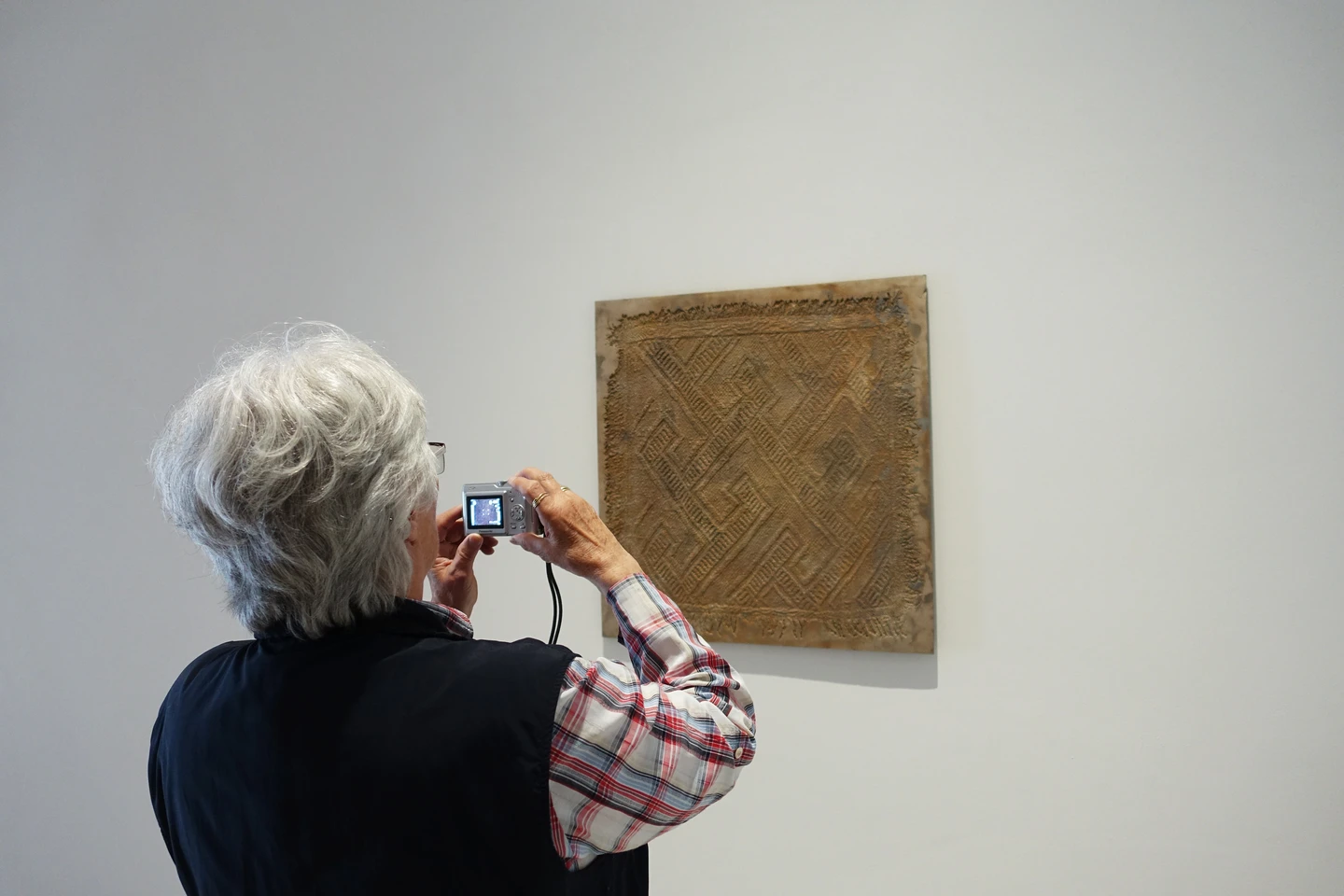
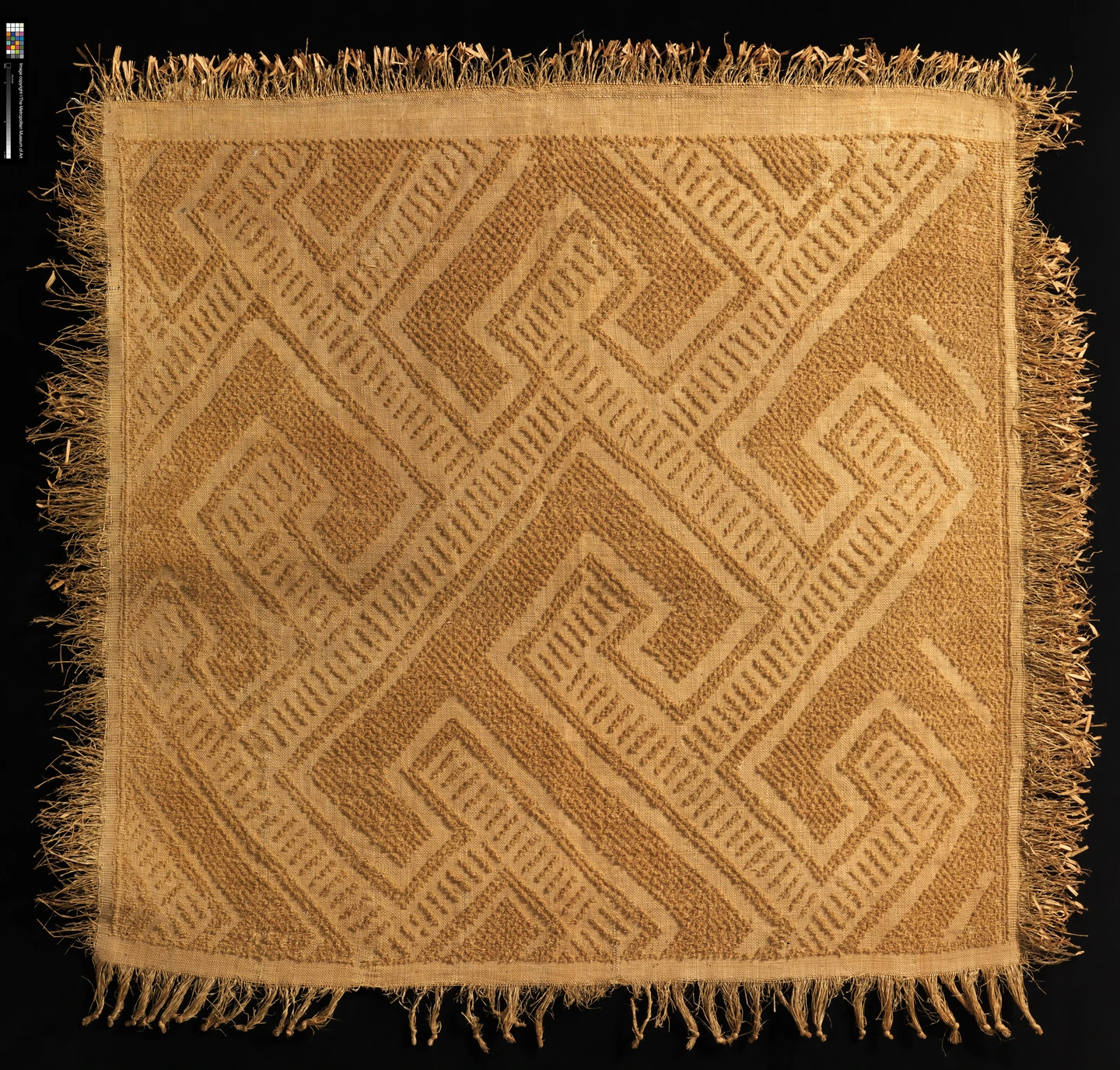
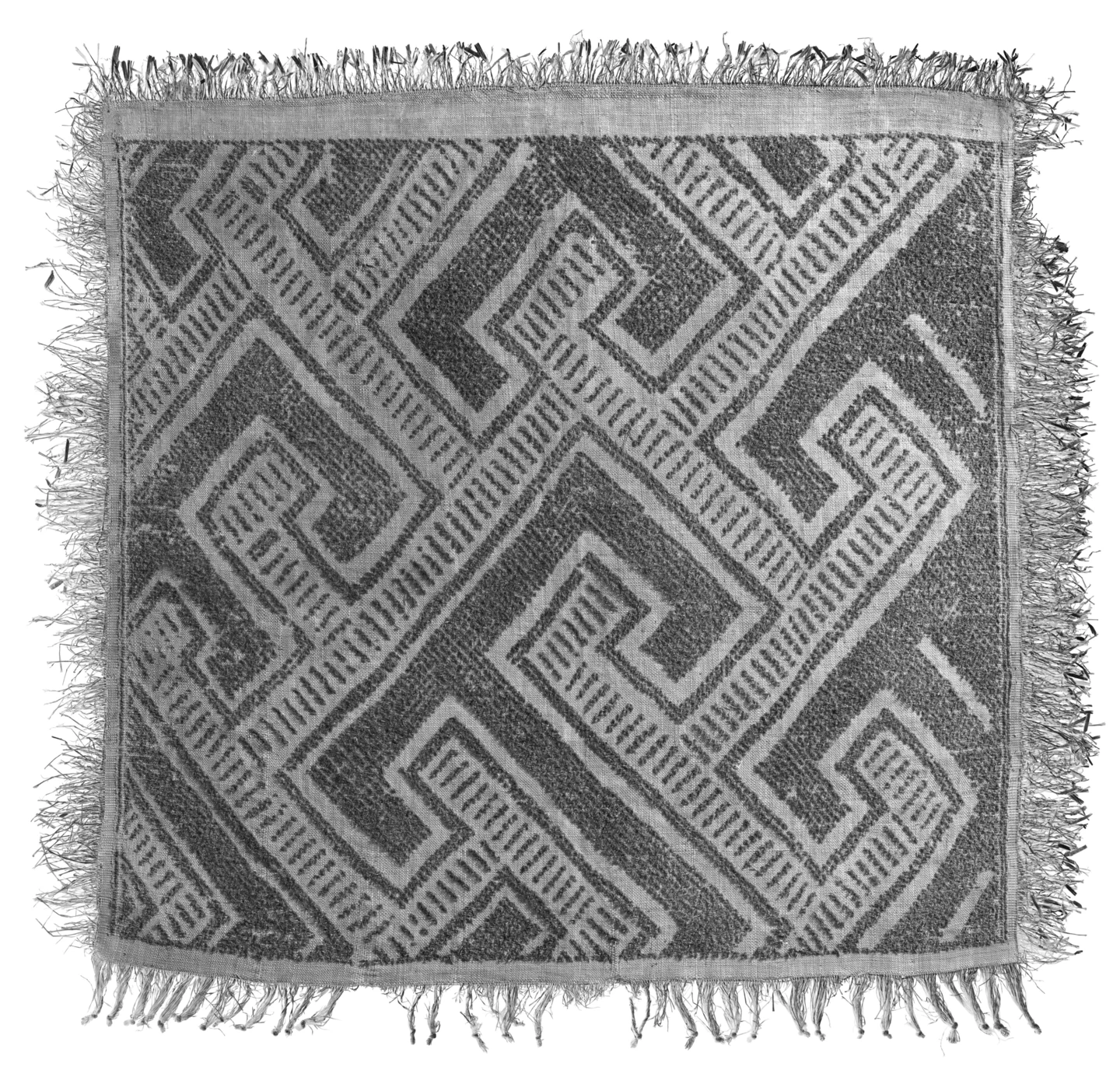
Gallerie Imane Farès Production, Sculpture 2020Copper Negative of Luxury Cloth, Kongo Peoples; Democratic Republic of the Congo, Seventeenth-Eighteenth Century, courtesy of the artists and Axis Gallery, New York
artsy
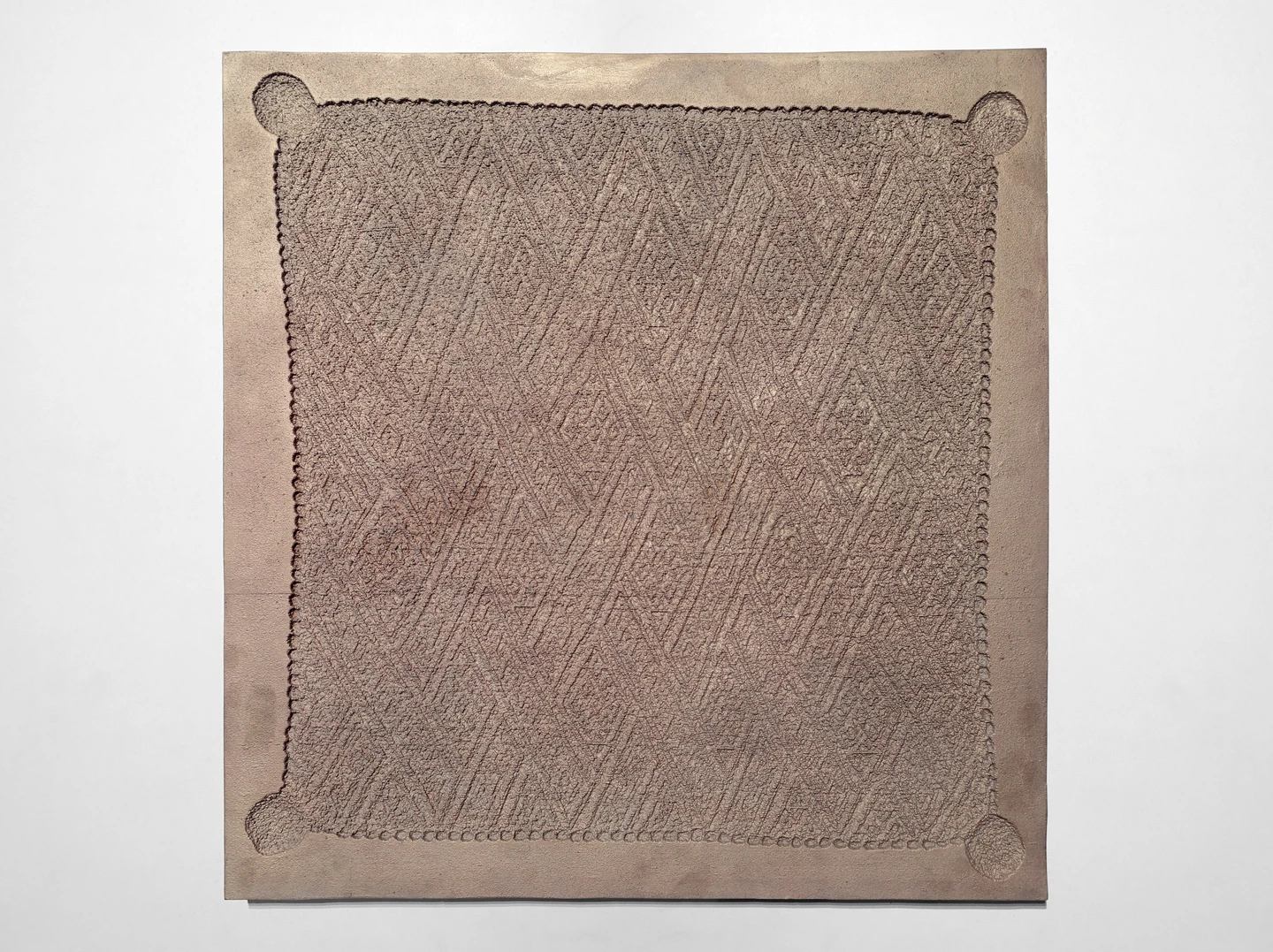
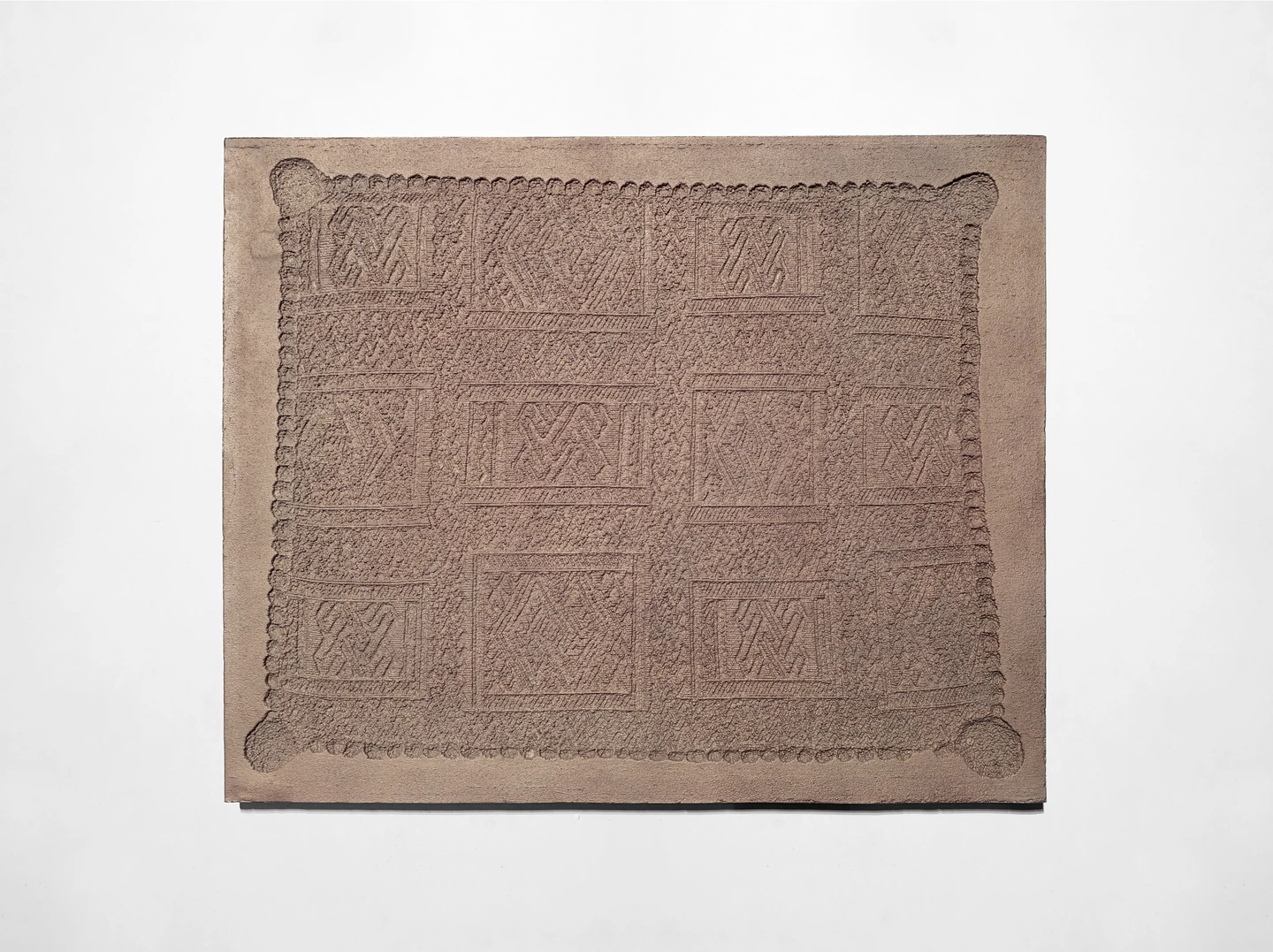
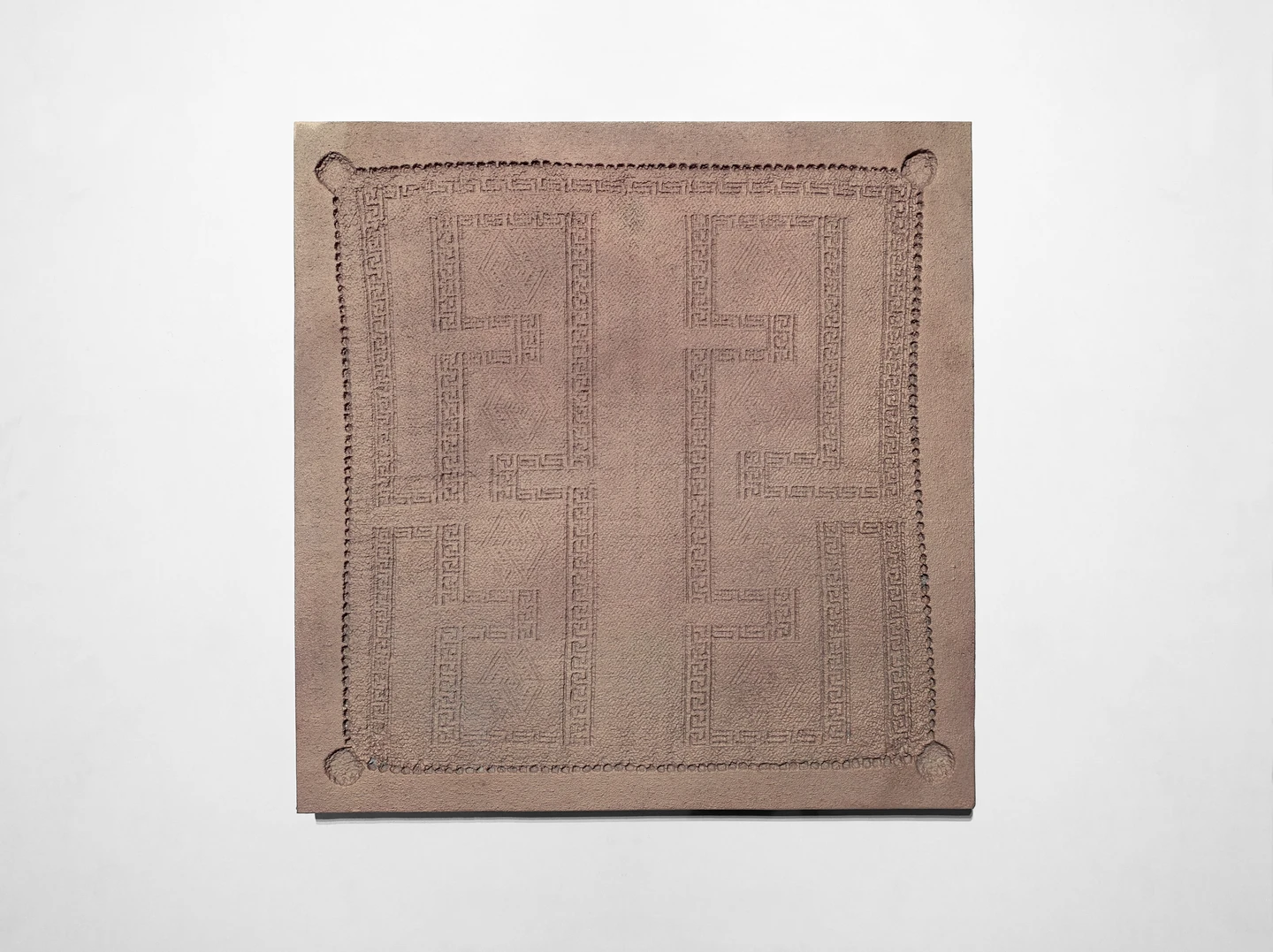
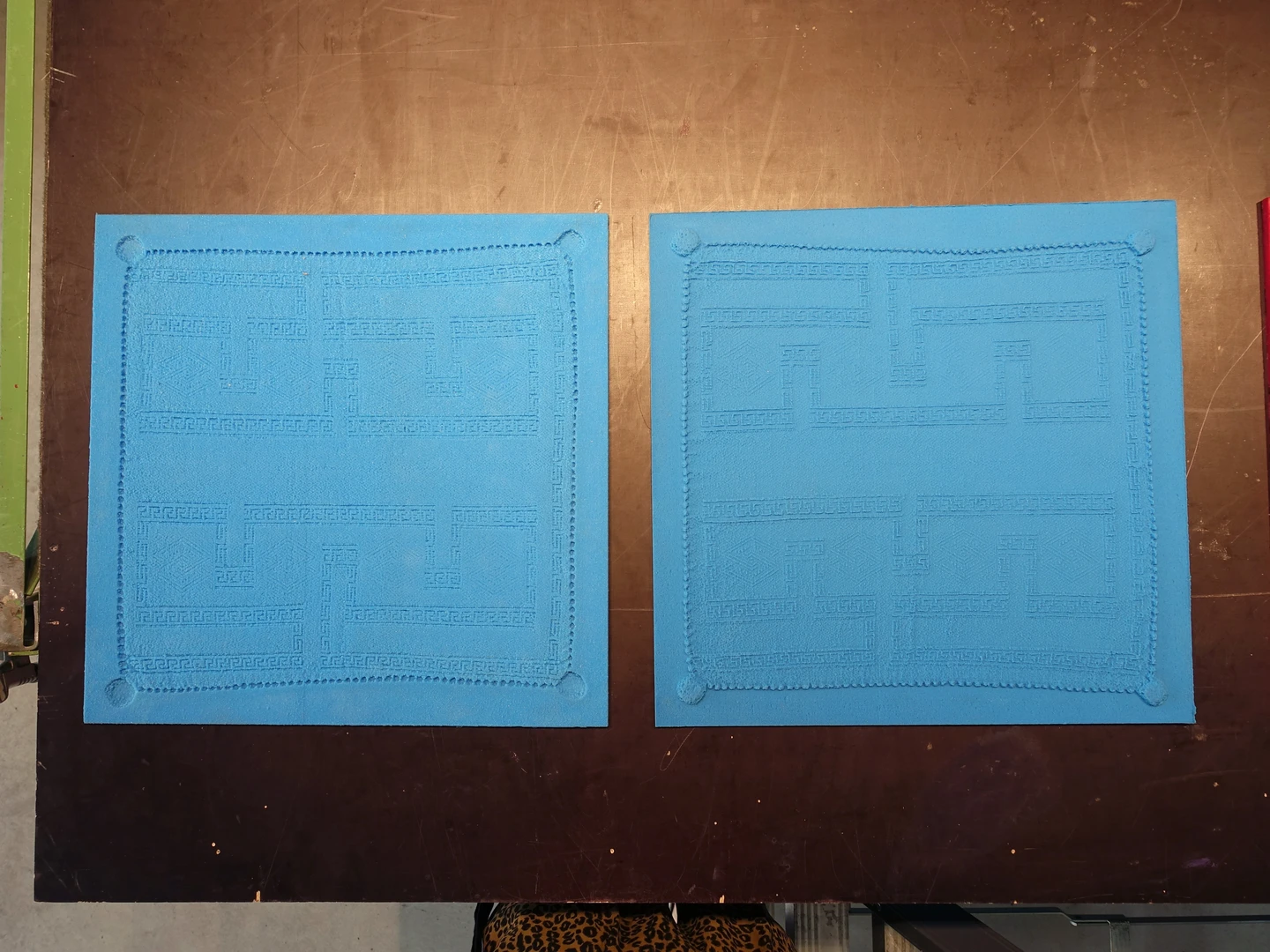
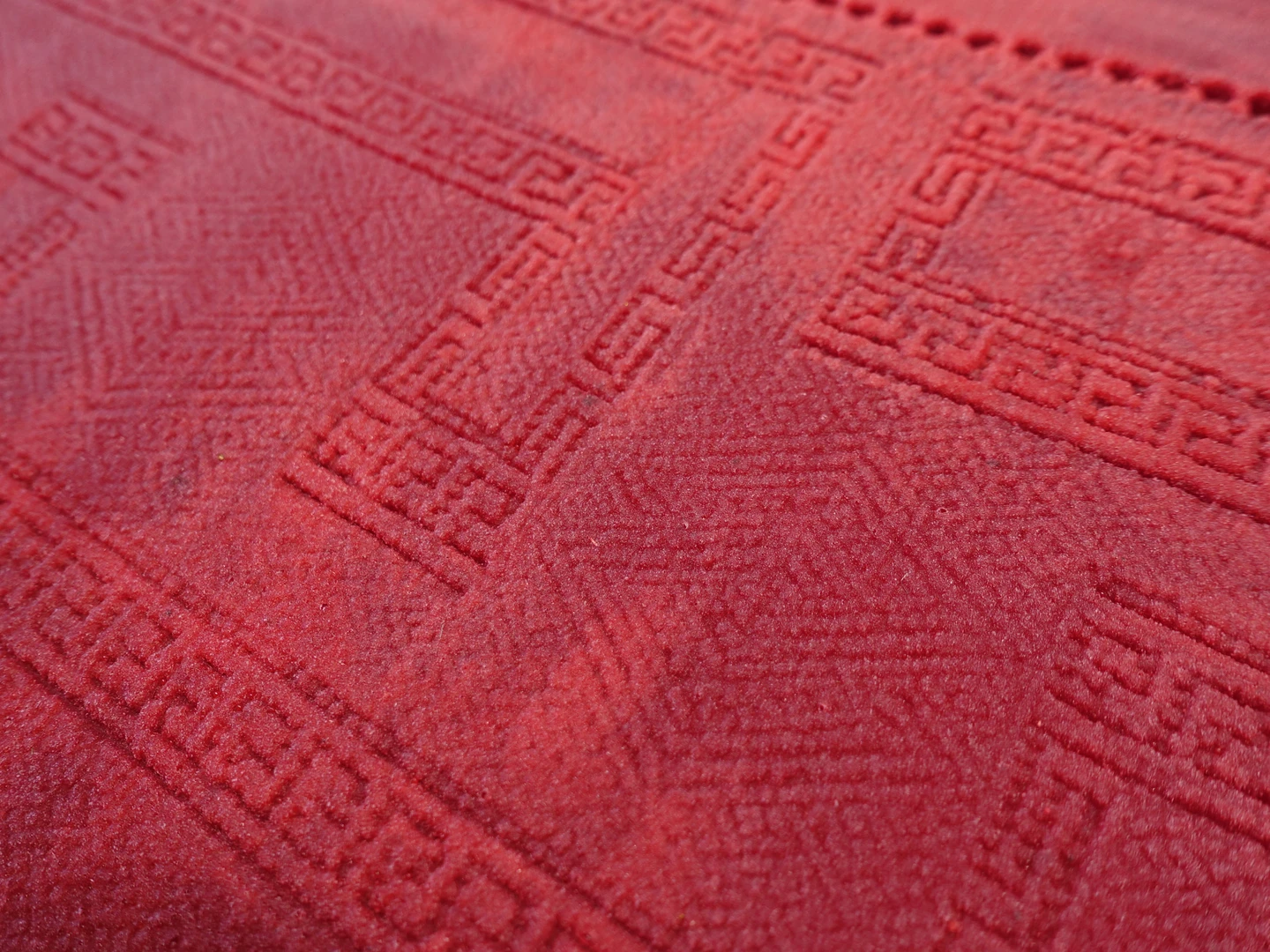
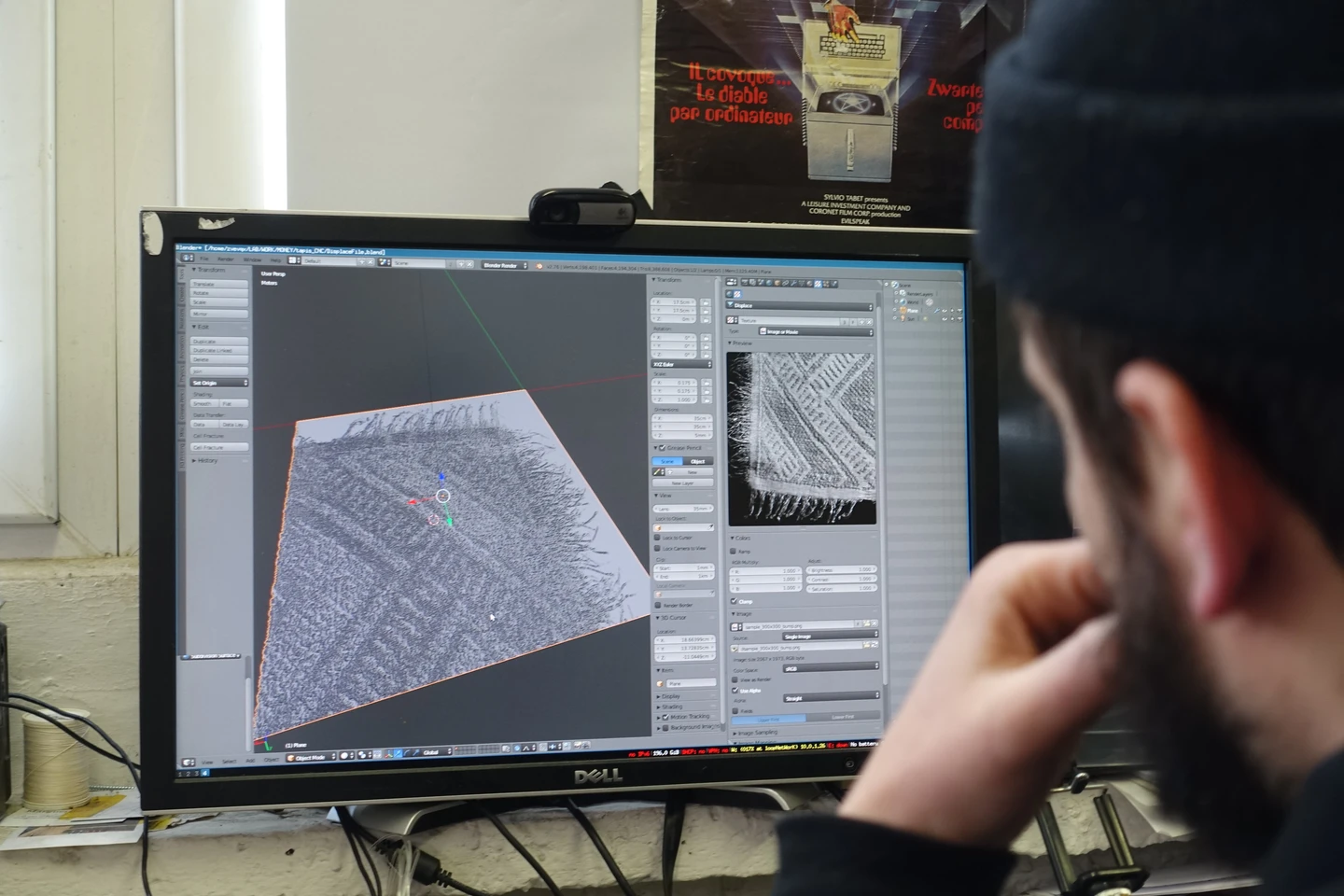
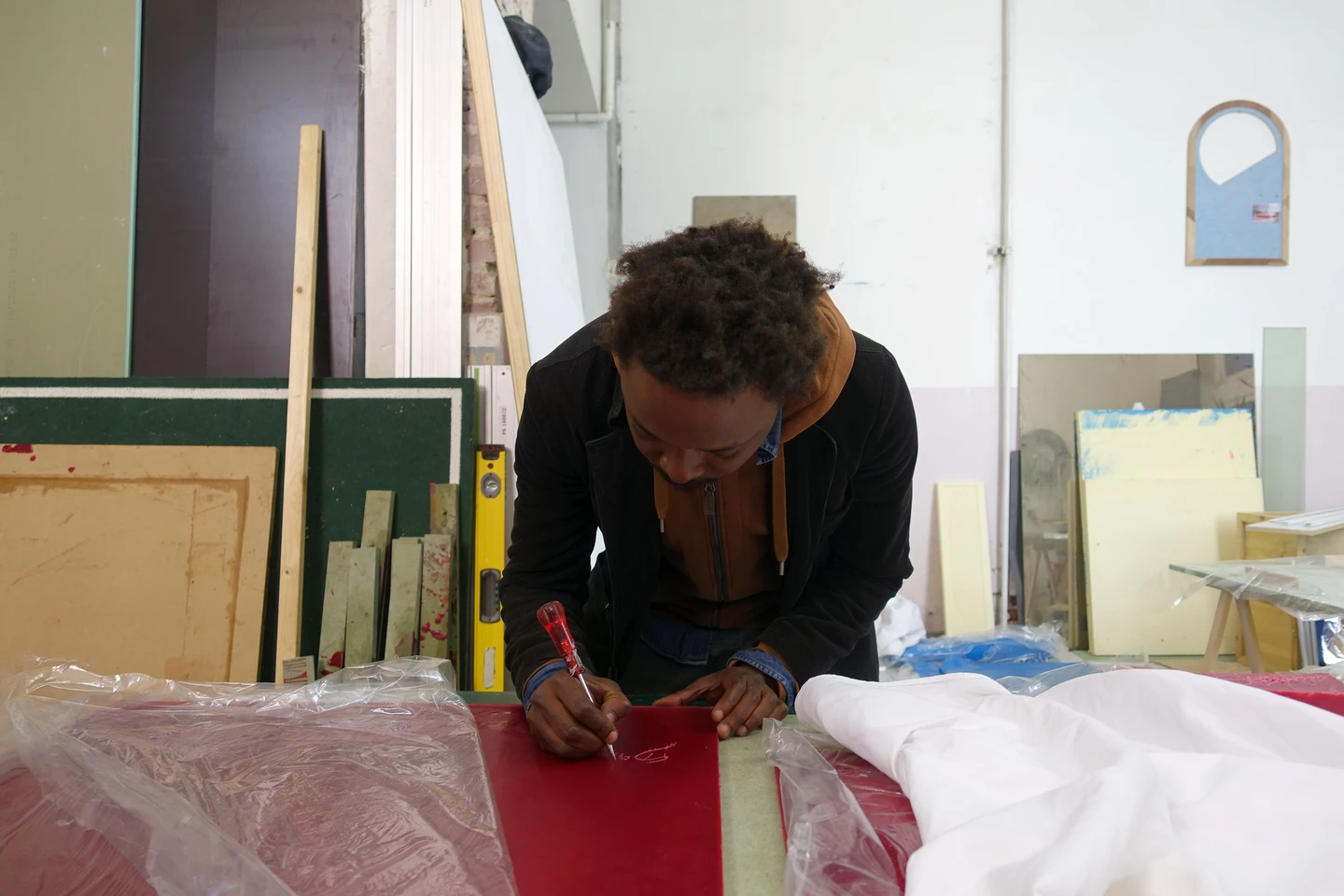
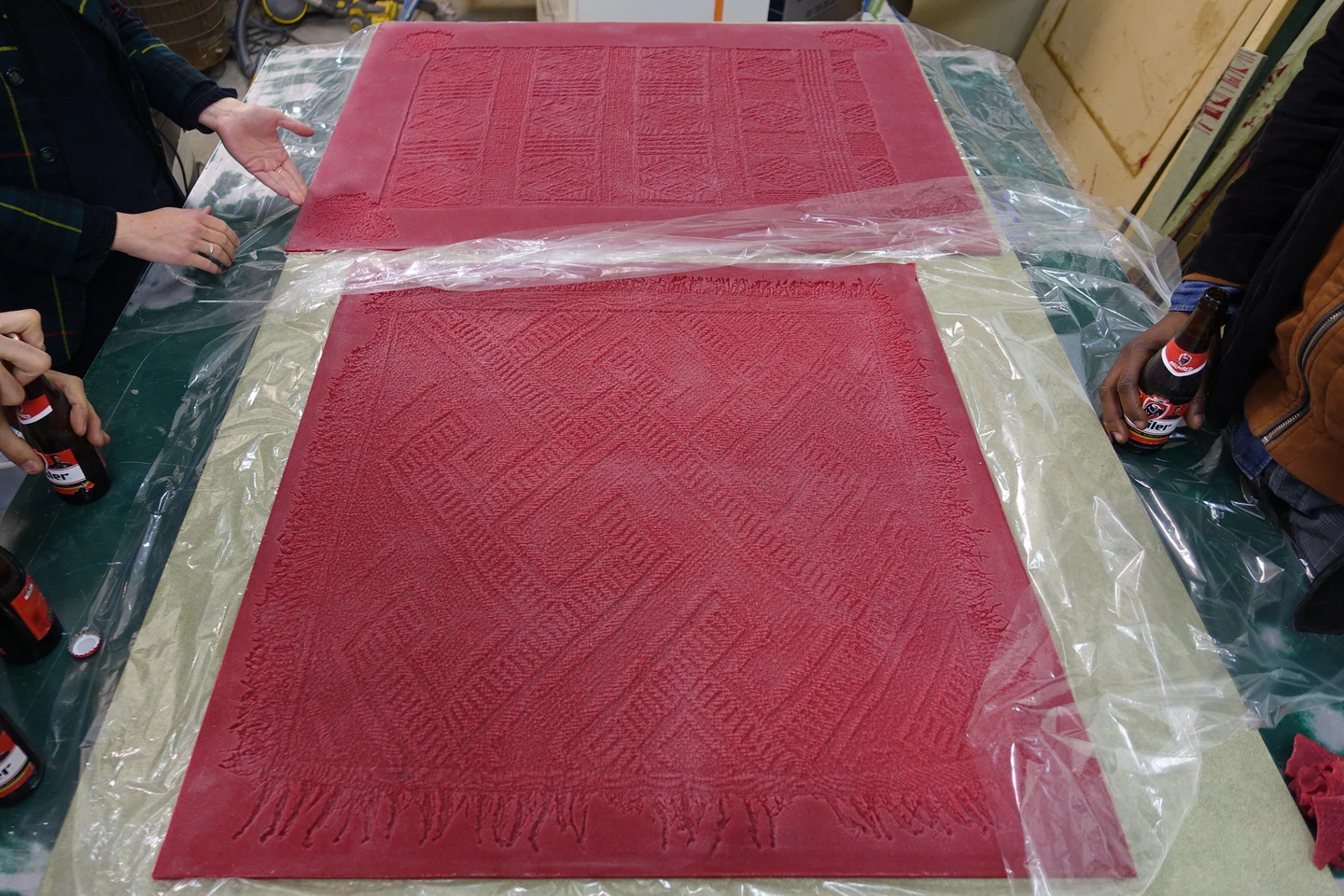
This series of bronze wall sculptures replicates the motifs borrowed from Kongo fabrics, weavings made of raffia fiber, emblems of social prestige intended for royalty and nobility. From the details of their geometric patterns were produced a series of transfers on bronze plates. The artist was particularly interested in the patrimonial trajectory of these objects: initially integrated into the collec-tions of the Cabinets of curiosities of the first Roman museums of the Renaissance, they were transferred in the 19th century to museums of ethnography.Production has been film: *Of the Moon and the Velvet, Sammy Baloji, Video, 10’ 47’’, 2022. Editing by Luca Mattei, Sound Mo Laudi, Production Twenty Nina Studi, Brussels
museodellecivilta
The film Of the Moon and the Velvet by Sammy Baloji documents the production of bronze sculptures made by the artist since 2017, beginning from photographic negatives of the textures of Congolese fabrics, of which more than 20 examples (2 of which are exhibited in showcases at the entrance of Palazzo delle Scienze) are preserved in the collections of the Museum of Civilizations. Baloji interprets the production process of his sculptures – which includes the 3D printing of fabric casts, the fusion of copper and tin, and the final casting and molding – as an attempt to recover the craftsmanship of the Kingdom of Congo dating back to the precolonial era and dispersed at the beginning of the Atlantic slave trade. This knowledge is introduced, in filigree, by the words of the scientist Galileo Galilei (who in 1611 was at the Collegio Romano, the original location of these fabrics in Rome): in speaking of the moon and its craters, observed with the telescope in the same years in which fabrics circulated in the various European courts, Galilei com- pares them to velvet, a term of comparison used to describe the Congolese fabrics at the time. The video also contains another quote, that of the Portuguese explorer Duarte Pacheco Pereira (1460-1533) who states: «in this Kingdom of Congo they make fabrics with palm fibers with a surface like velvet». The circuits of precolonial and colonial history therefore project these fabrics onto the stars, which seem to live multiple lives and assume multiple meanings, bringing the complexity of African and European history to the center of the film and reflecting onto it the connections between material culture, intellectual speculation, political, and economic interests. ML -
-
An artist who happens to be from Syria
Goethe Institut Editorial, Book 2020De publicatie An artist who happens to be from Syria reflecteert over de hedendaagse kunstscène in Europa die voortdurend gevoed en beïnvloed wordt door nieuwkomers. De lezer wordt uitgenodigd om weerspiegelingen te ontdekken over de diverse artistieke uitingen van een dynamische kunstscène met wortels in Syrië.
-
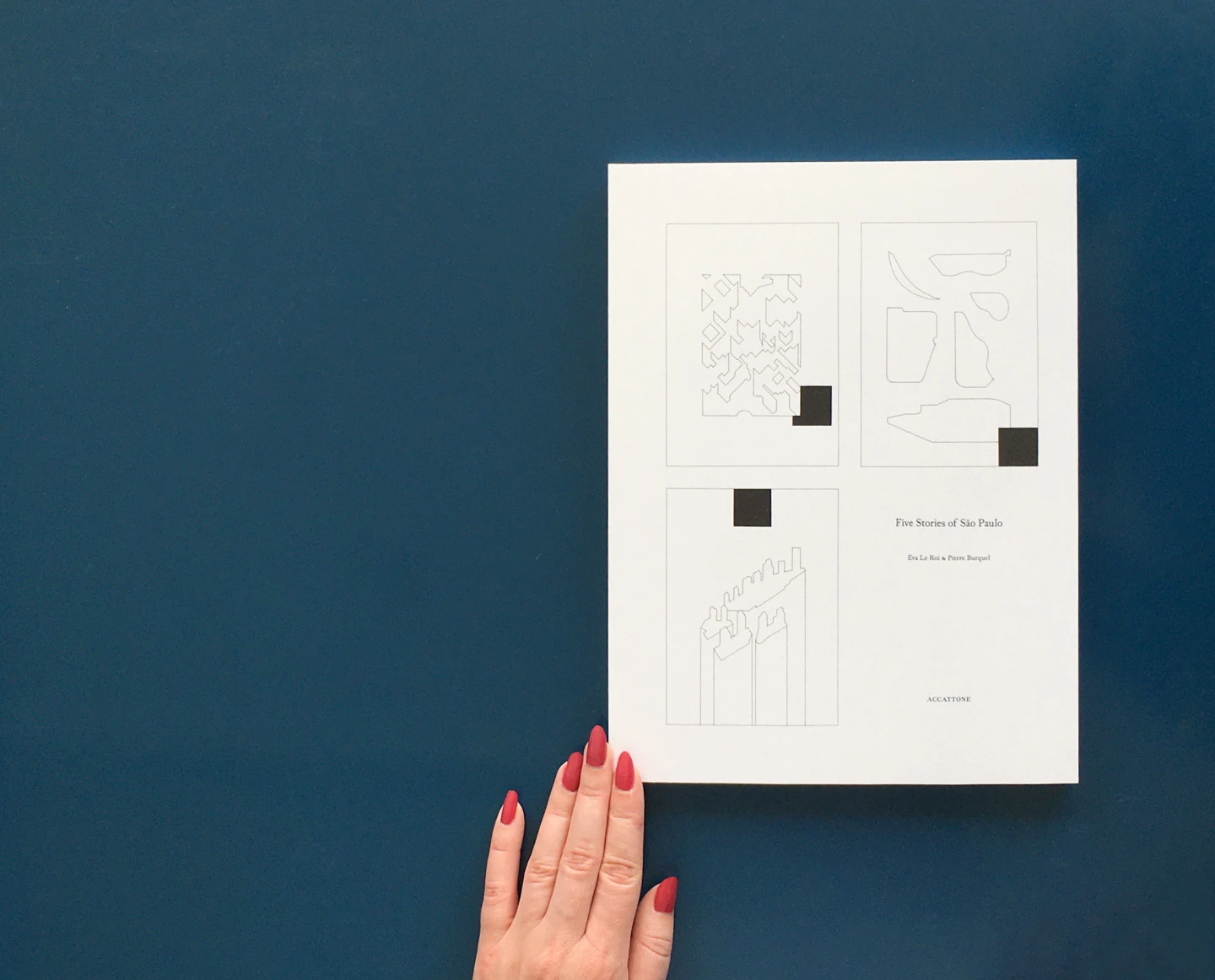
Five Stories of Sao Paulo
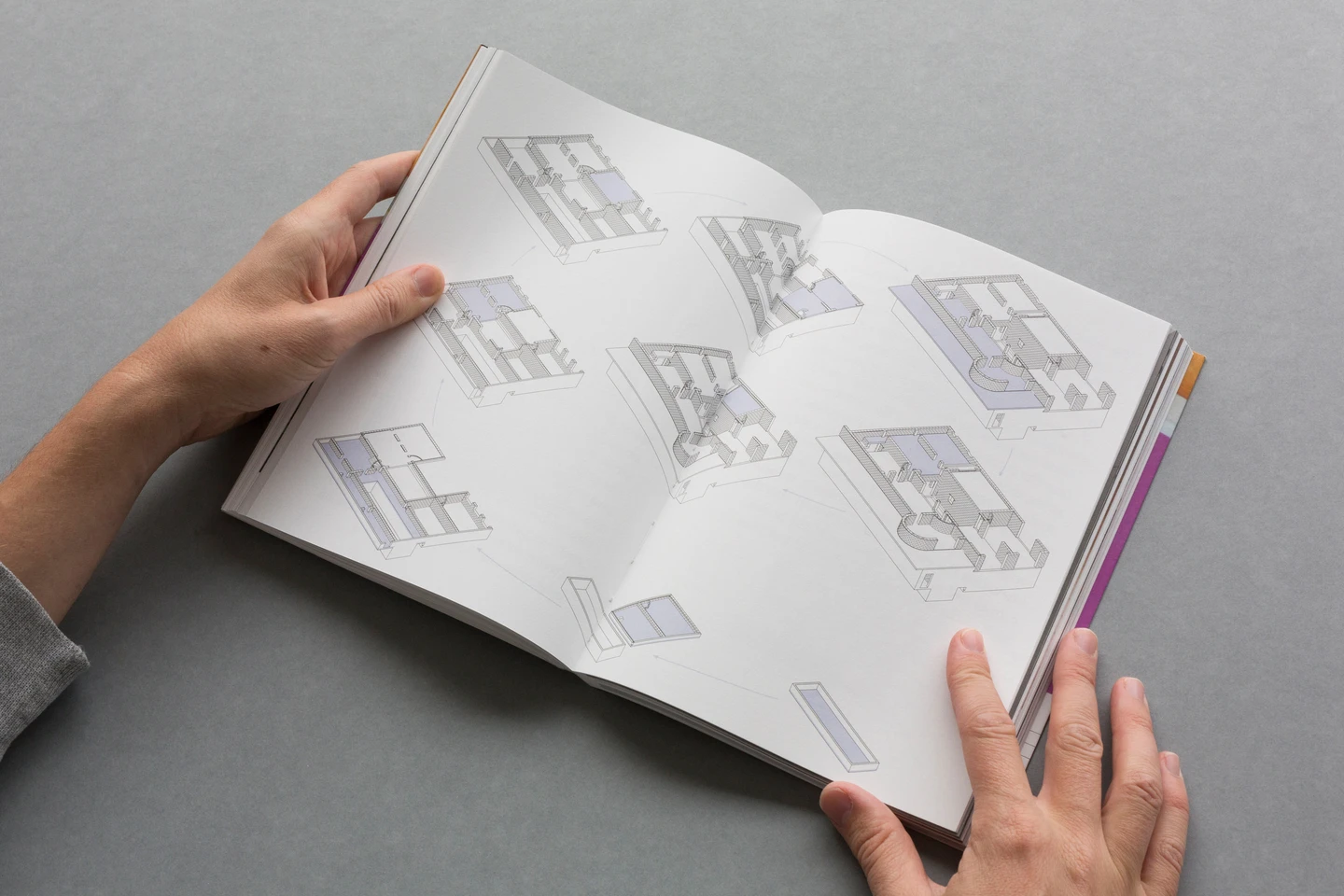
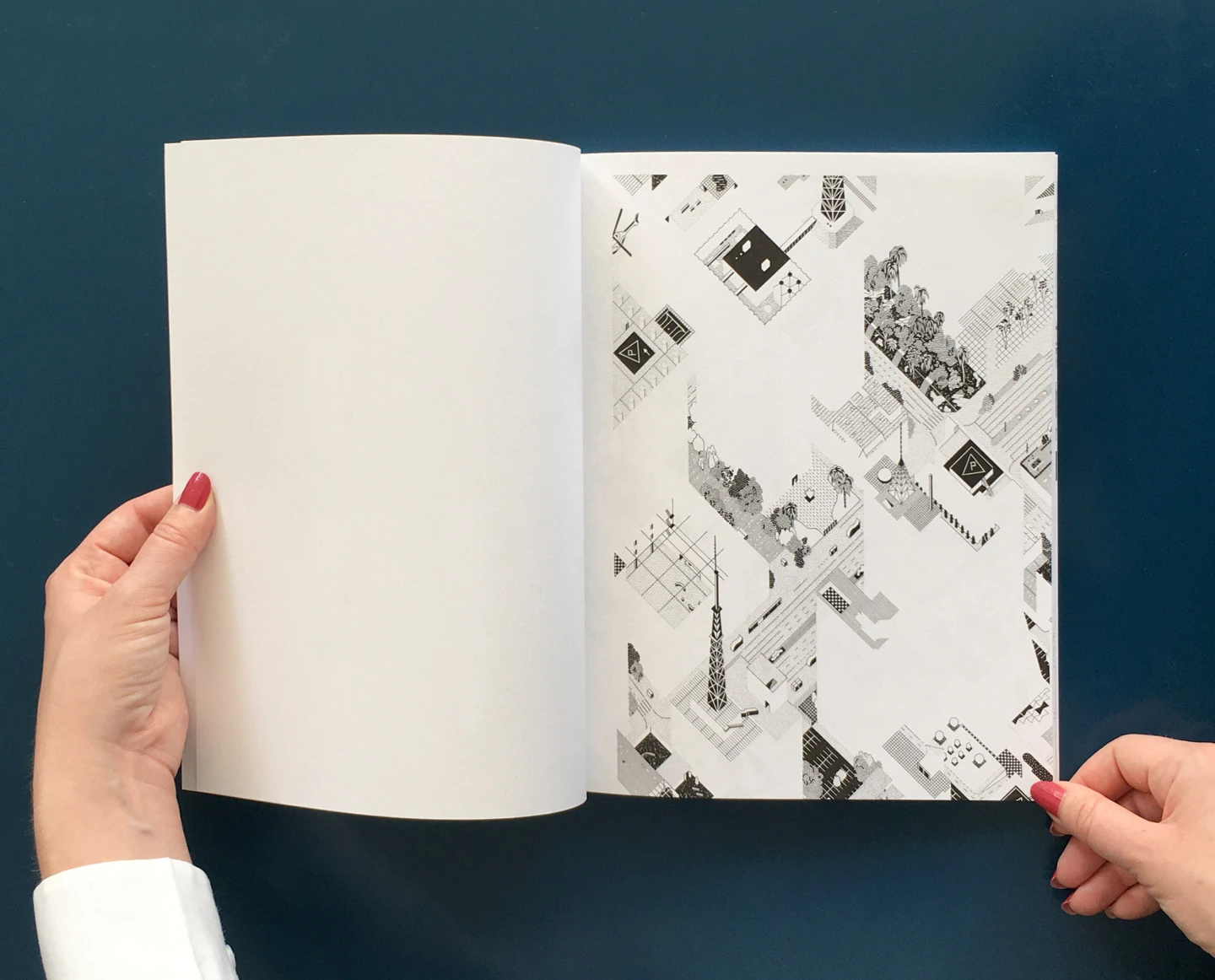
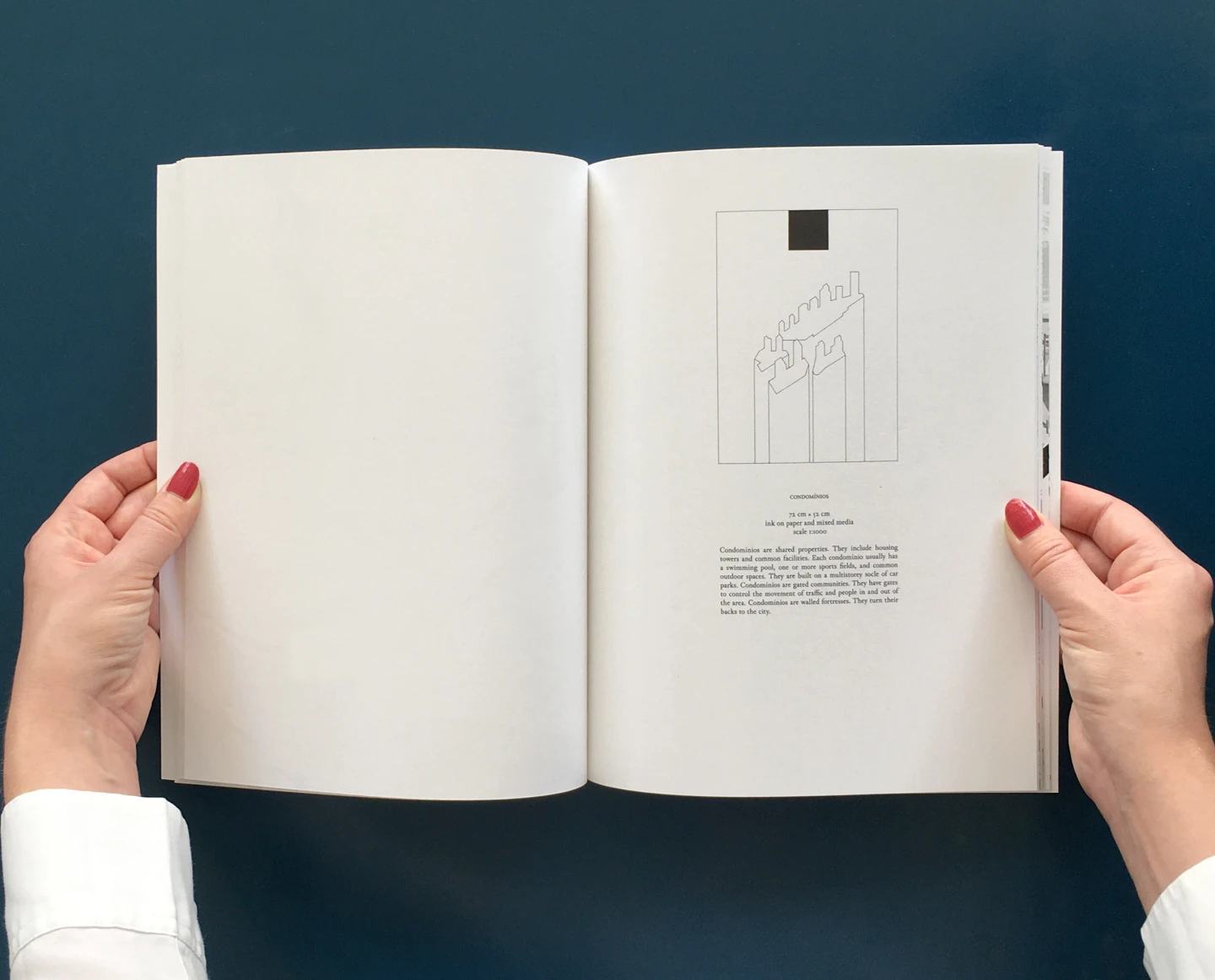
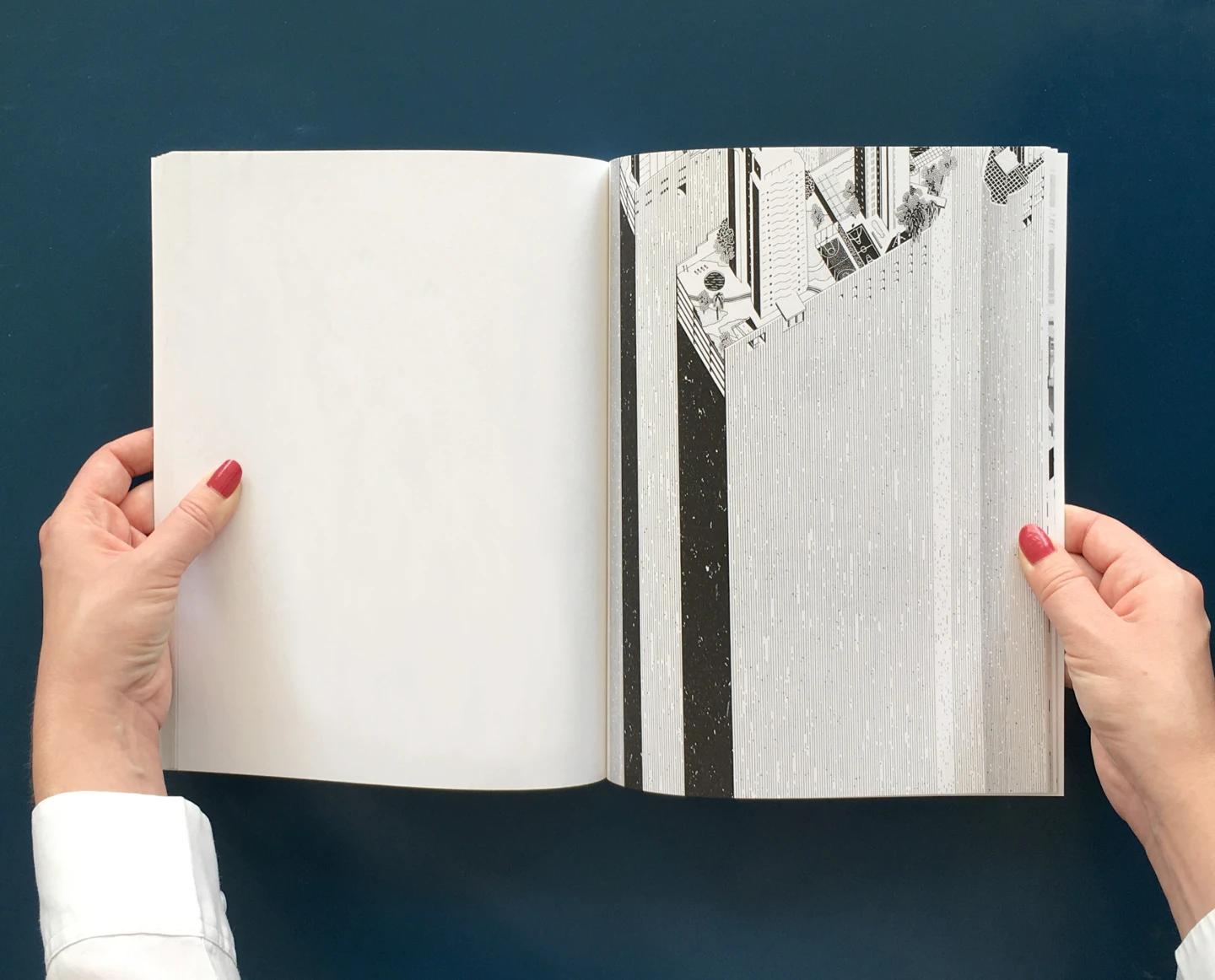
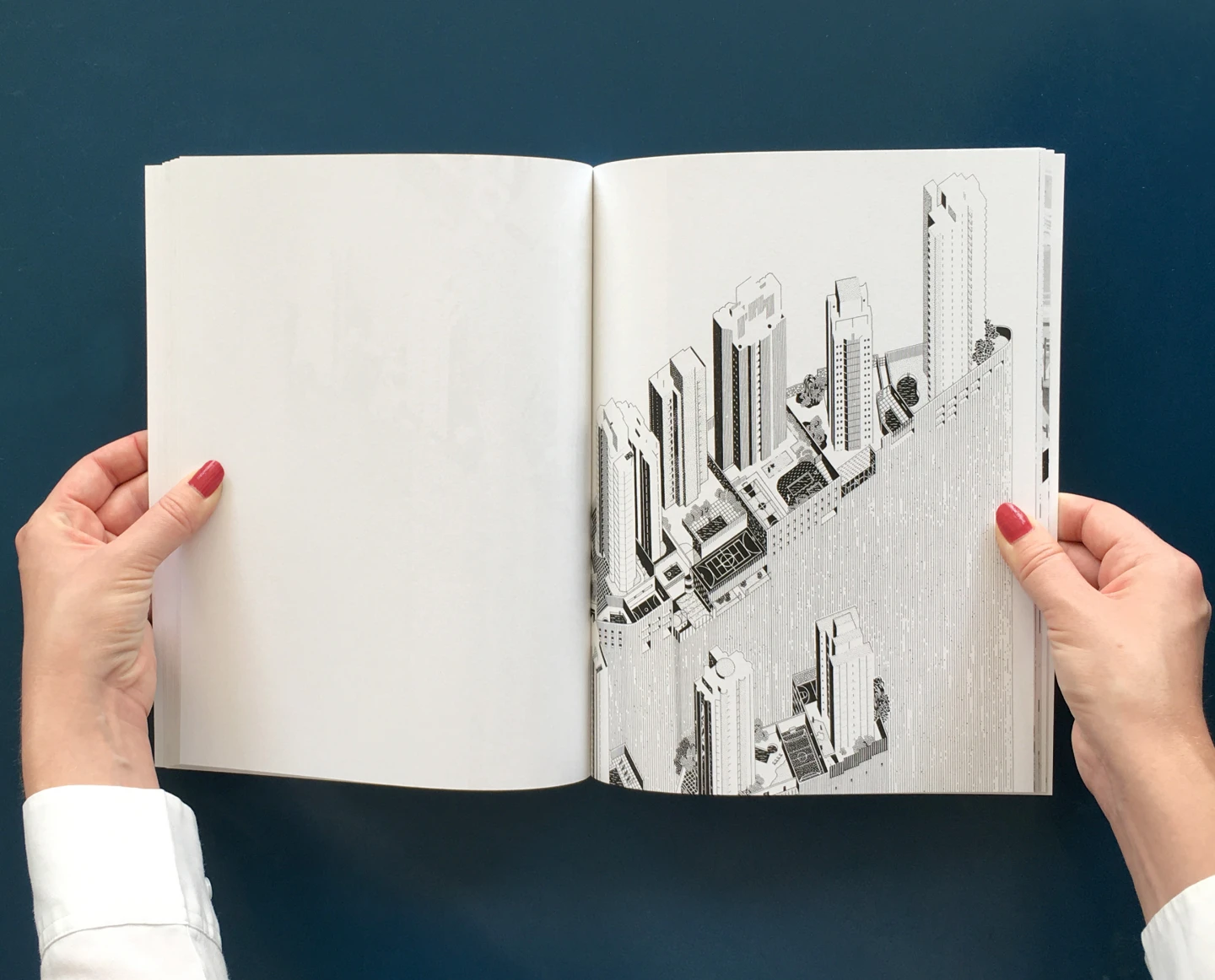
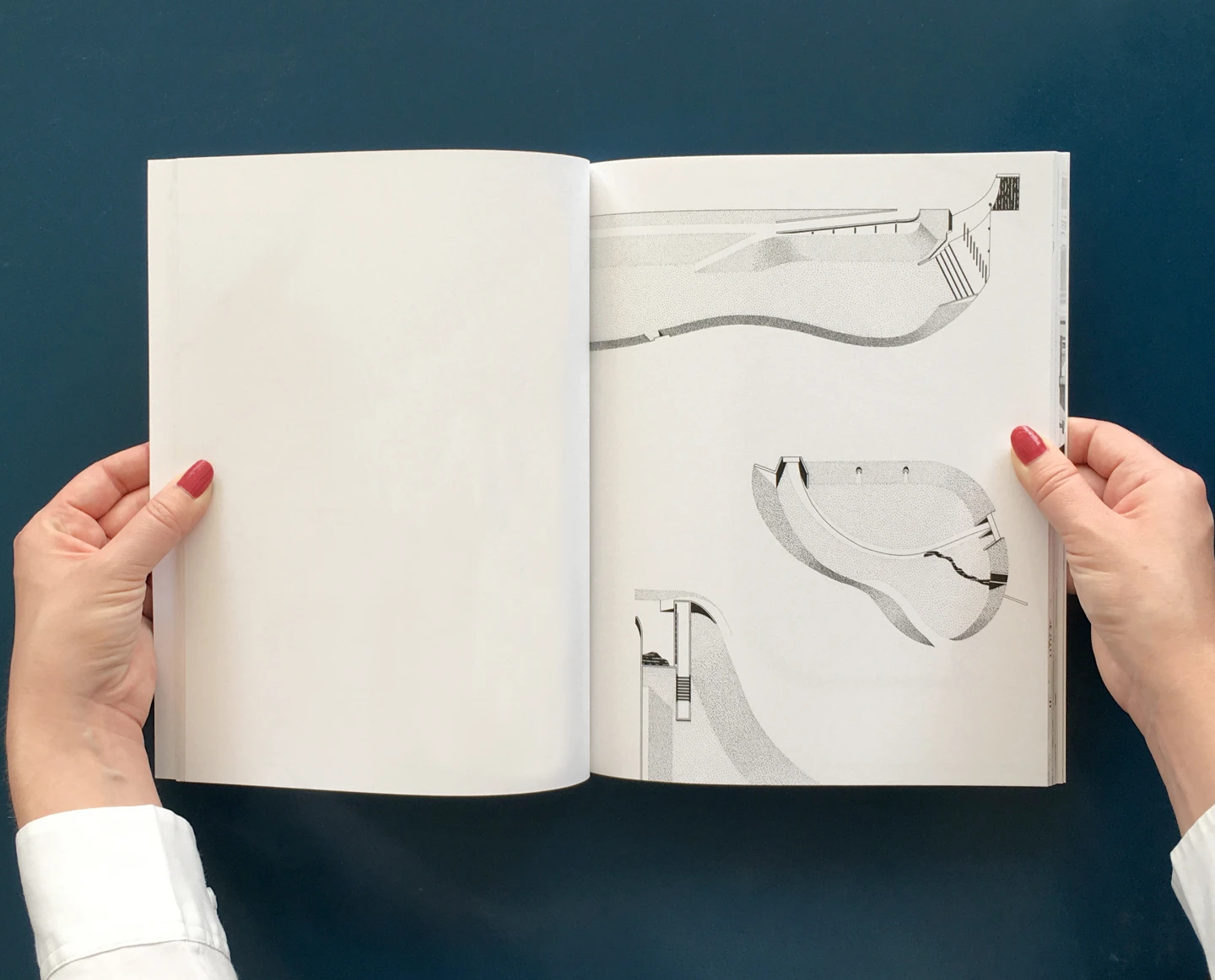
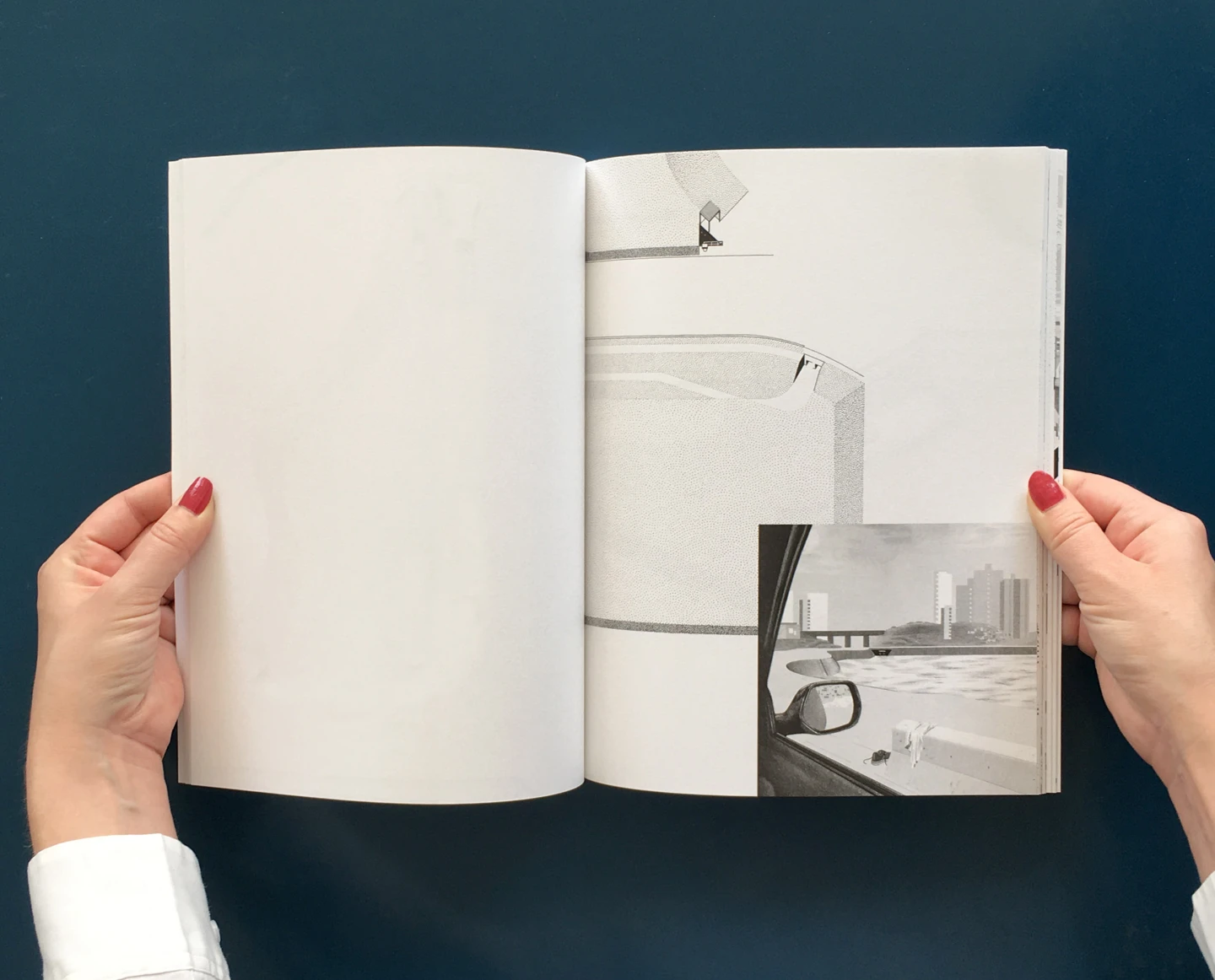
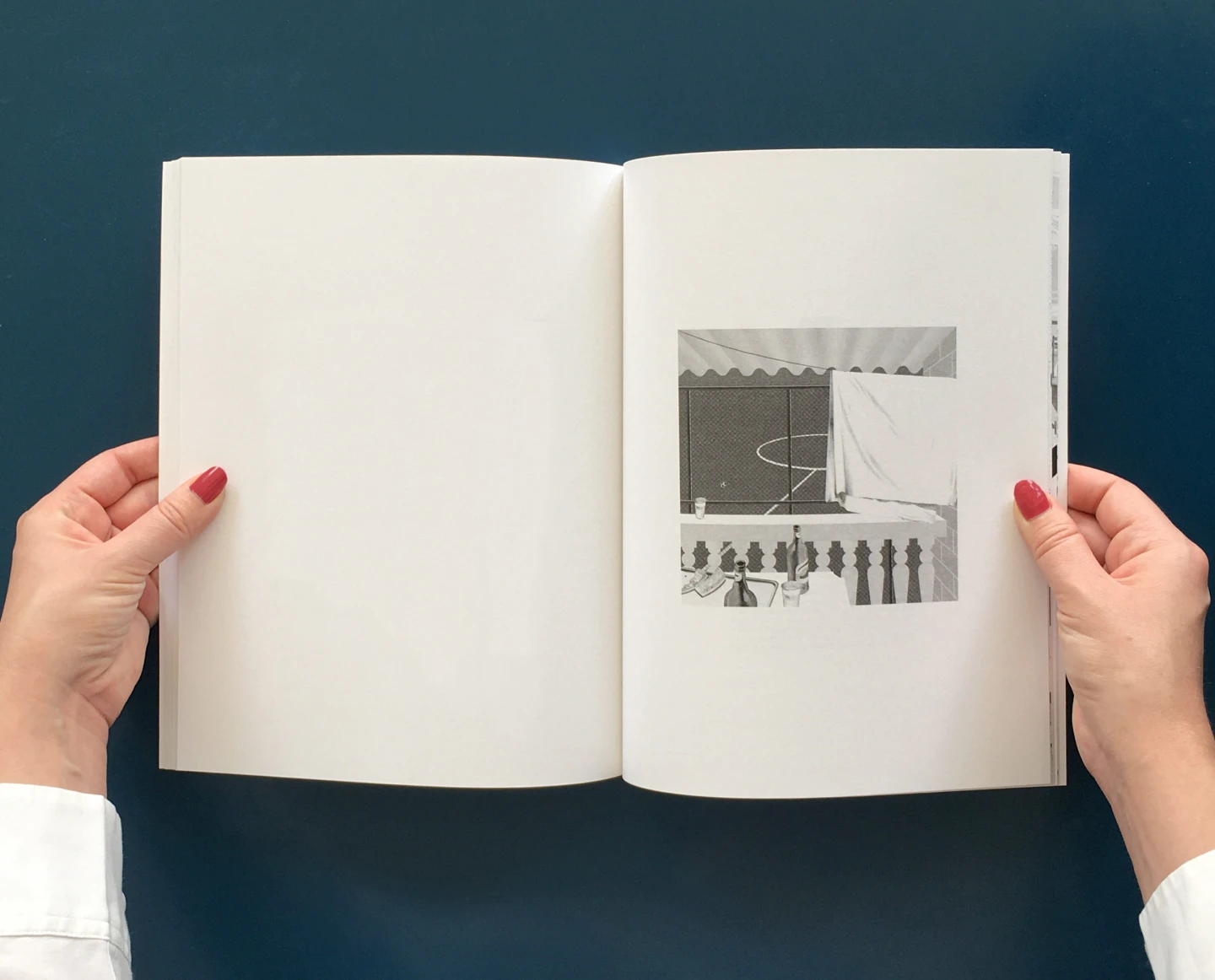
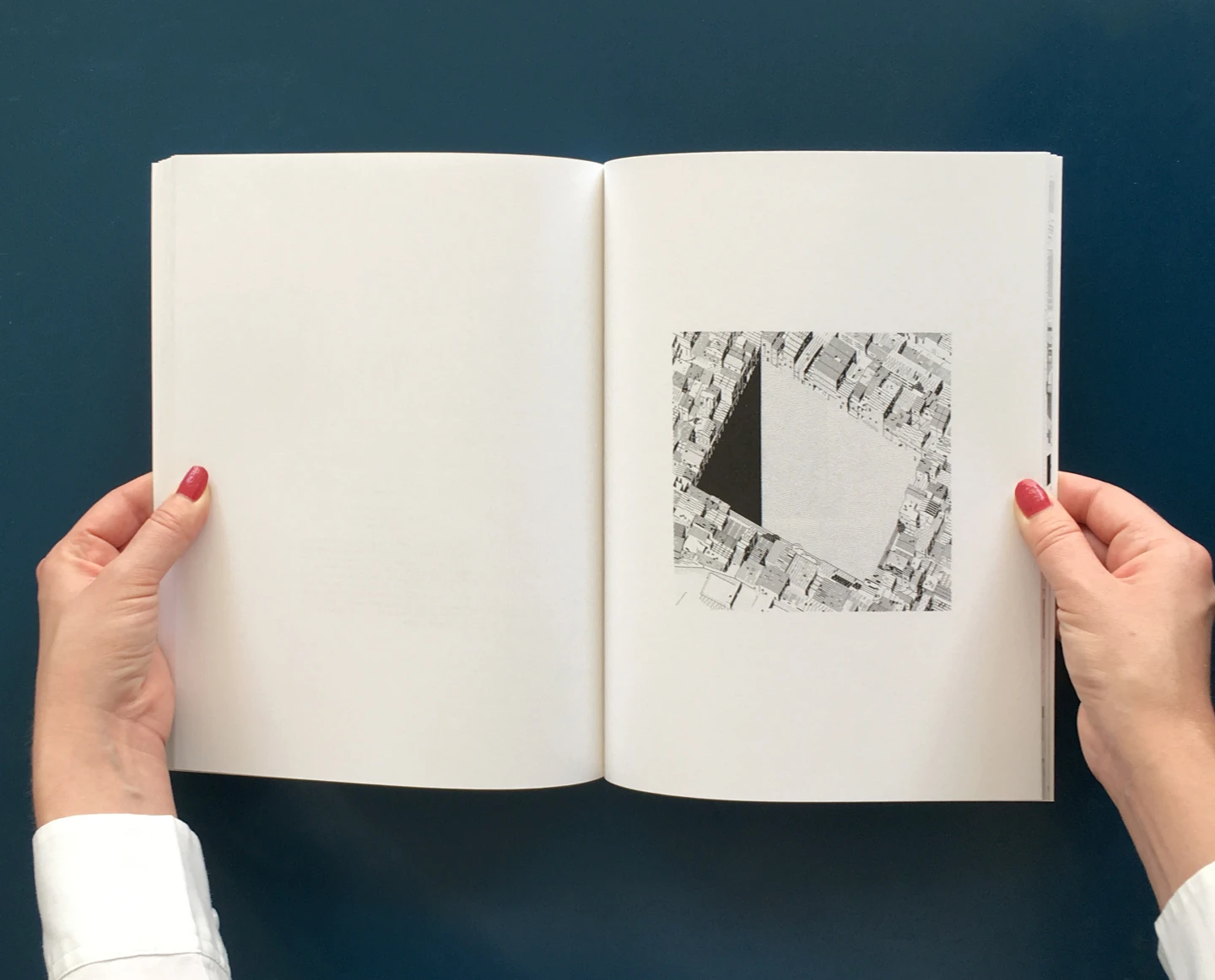
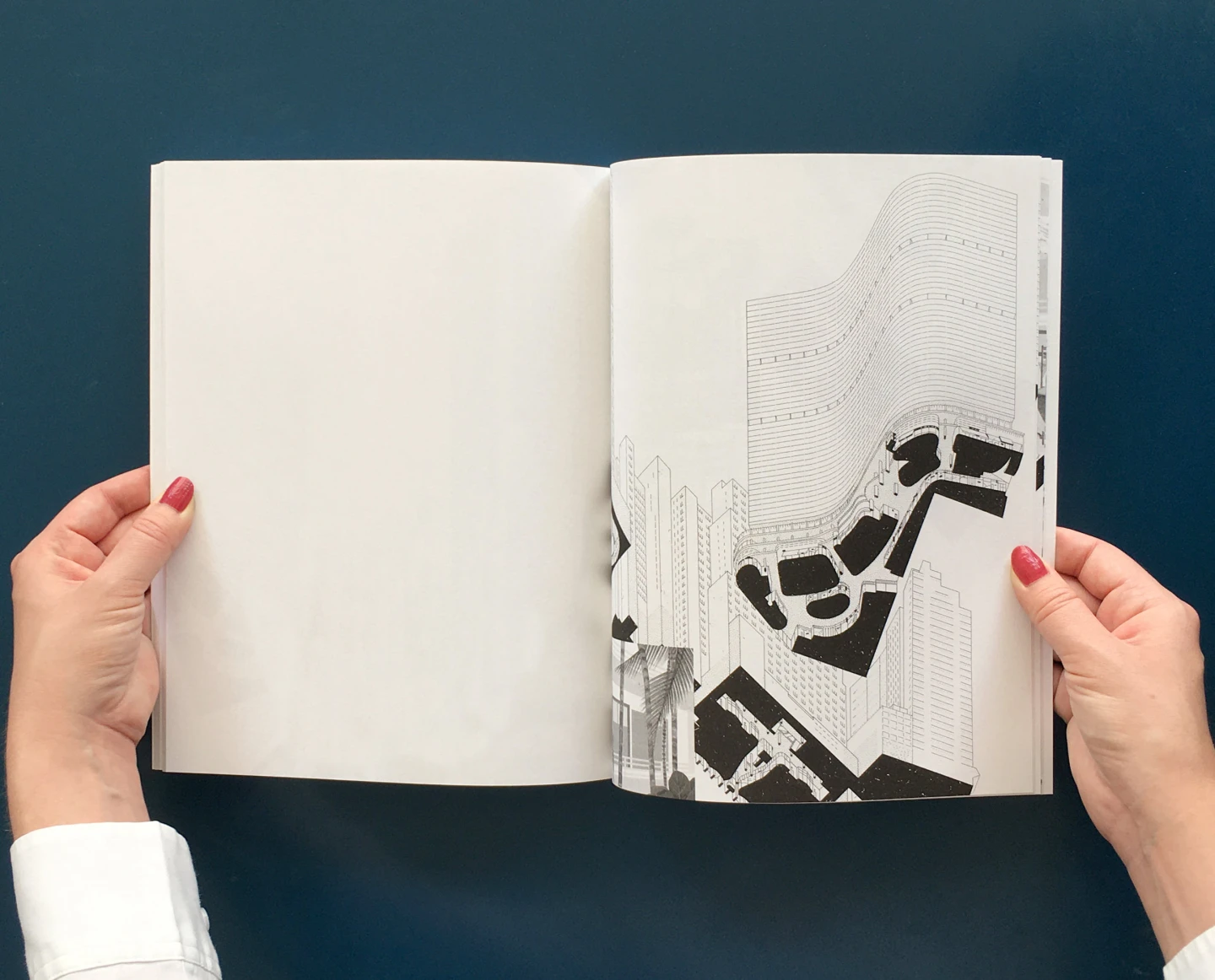
Accattone Editorial, Book 2020In summer 2019, artist Eva Le Roi and architect Pierre Burquel travelled to São Paulo to research its particular urban conditions. Five subjective axonometric drawings on a 1:1000 scale ensued: Telhados, Piscinões, Condomínios, Campos and Galerias.
The book Five Stories of São Paulo, designed by Ismaël Bennani and Orfée Grandhomme, reproduces these drawings on their original scale. -
-
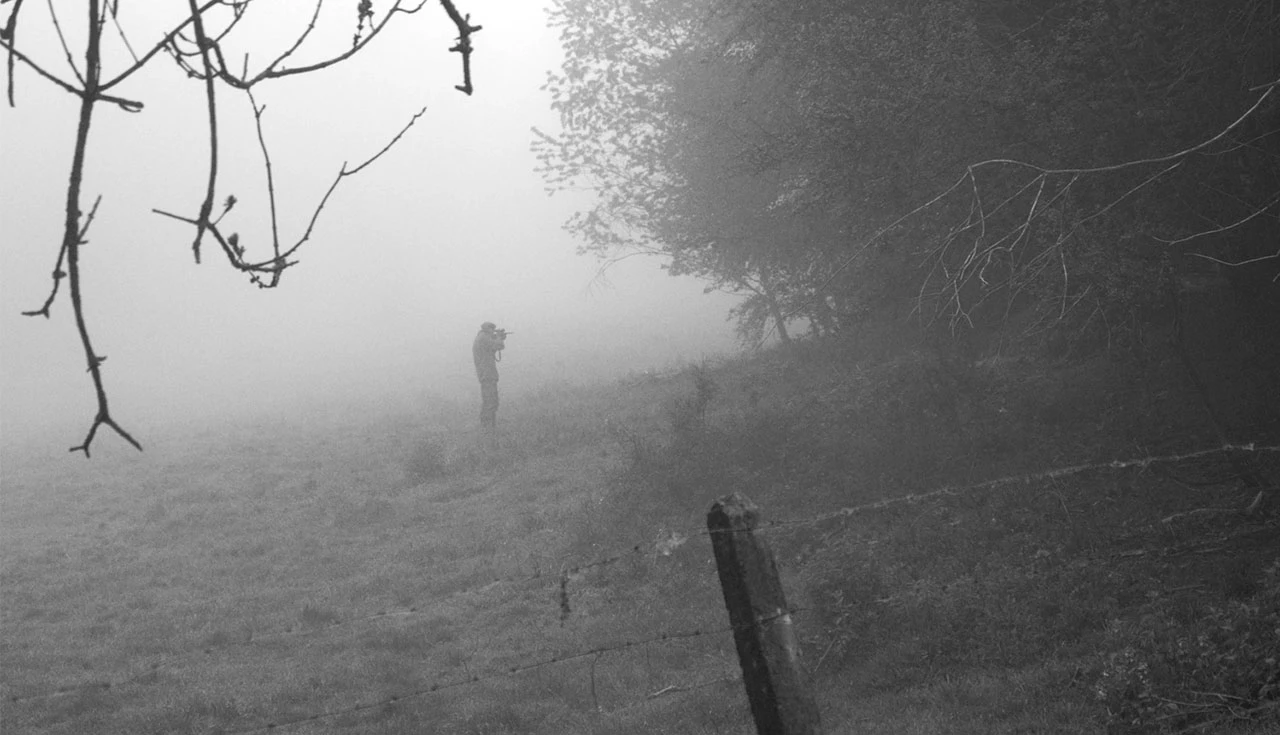
Traquer
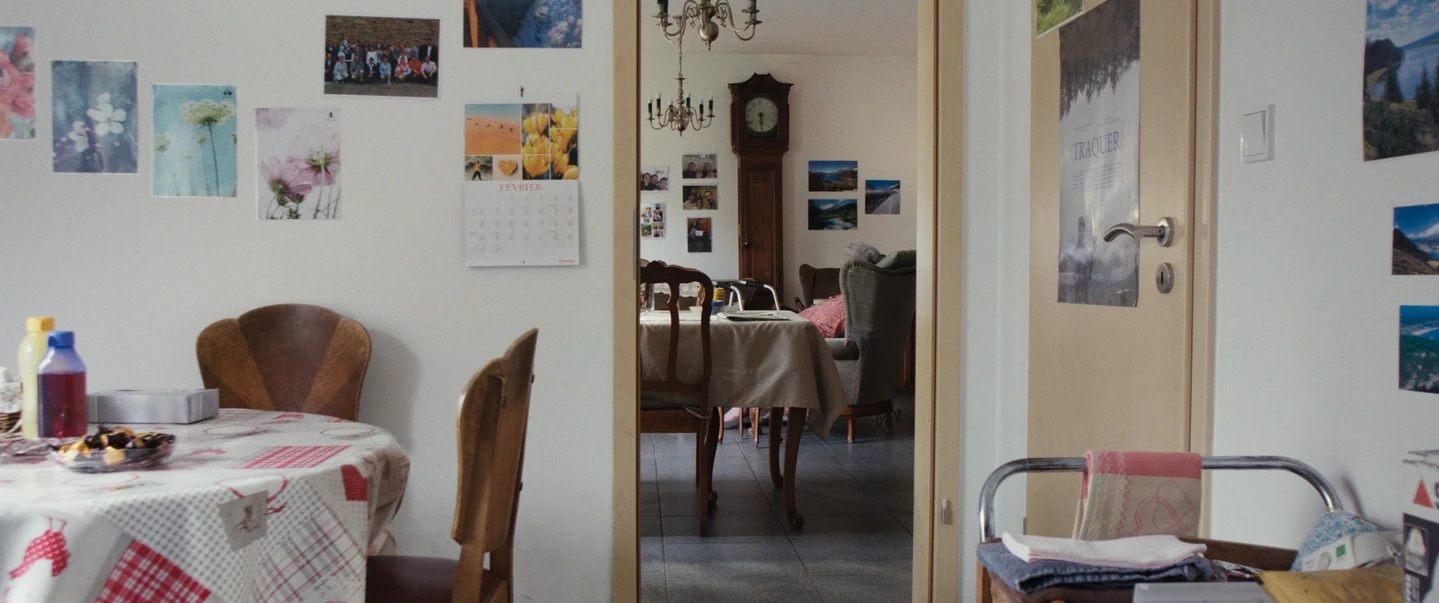
Naoko Films Graphics, Movie 2020Une jeune adulte va filmer son cousin plus âgé, qui l’a fascinée toute son enfance. Les années ont creusé leurs différences et figé les souvenirs. En prenant la chasse comme point de départ, les deux cousin.e.s dialoguent sur cette passion qui les oppose, en vue de dépasser ce qui les sépare maintenant qu’ils sont devenus adultes. Une double traque commence : lui avec les animaux, elle avec lui et ses propres souvenirs; lui armé d’un fusil, elle d’une caméra.
Teaser: https://vimeo.com/481367744
-
-
ACCATTONE 6
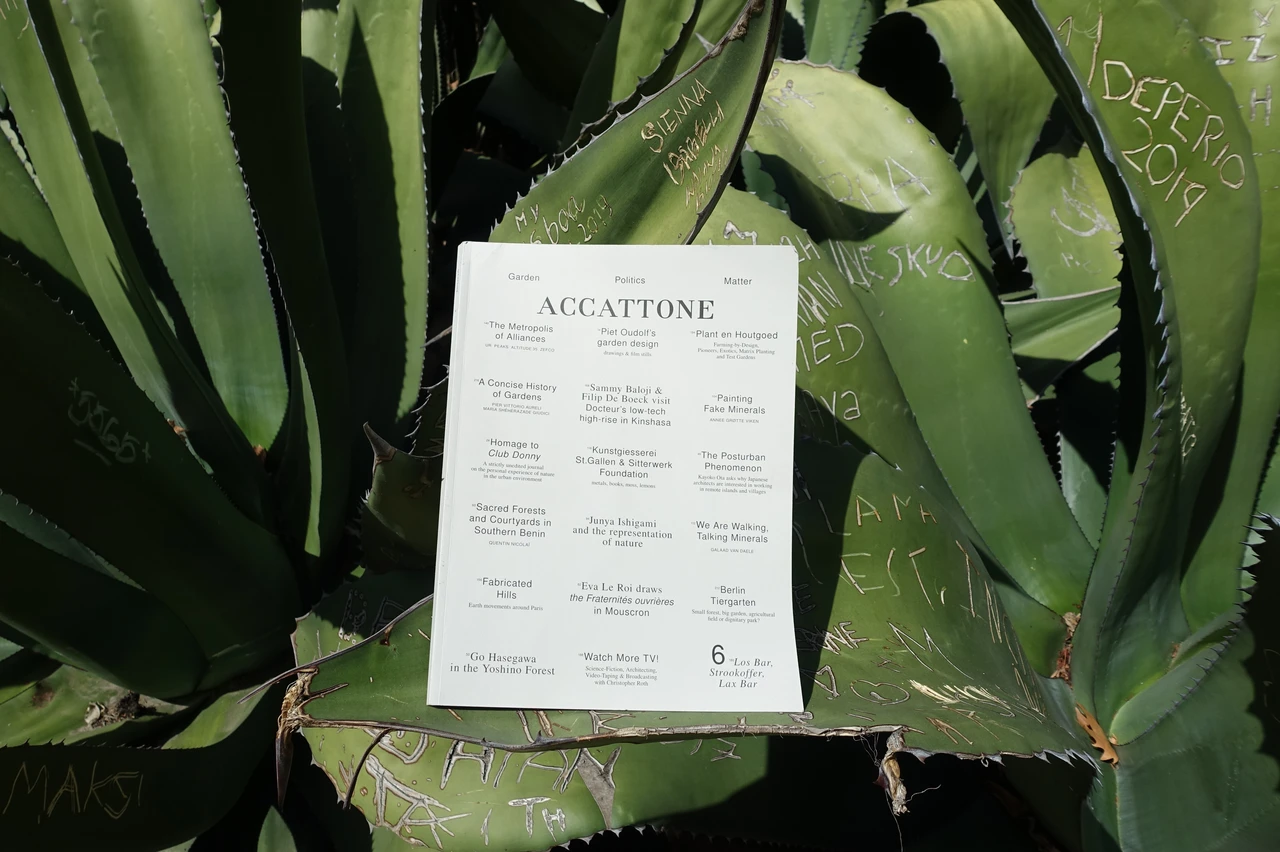
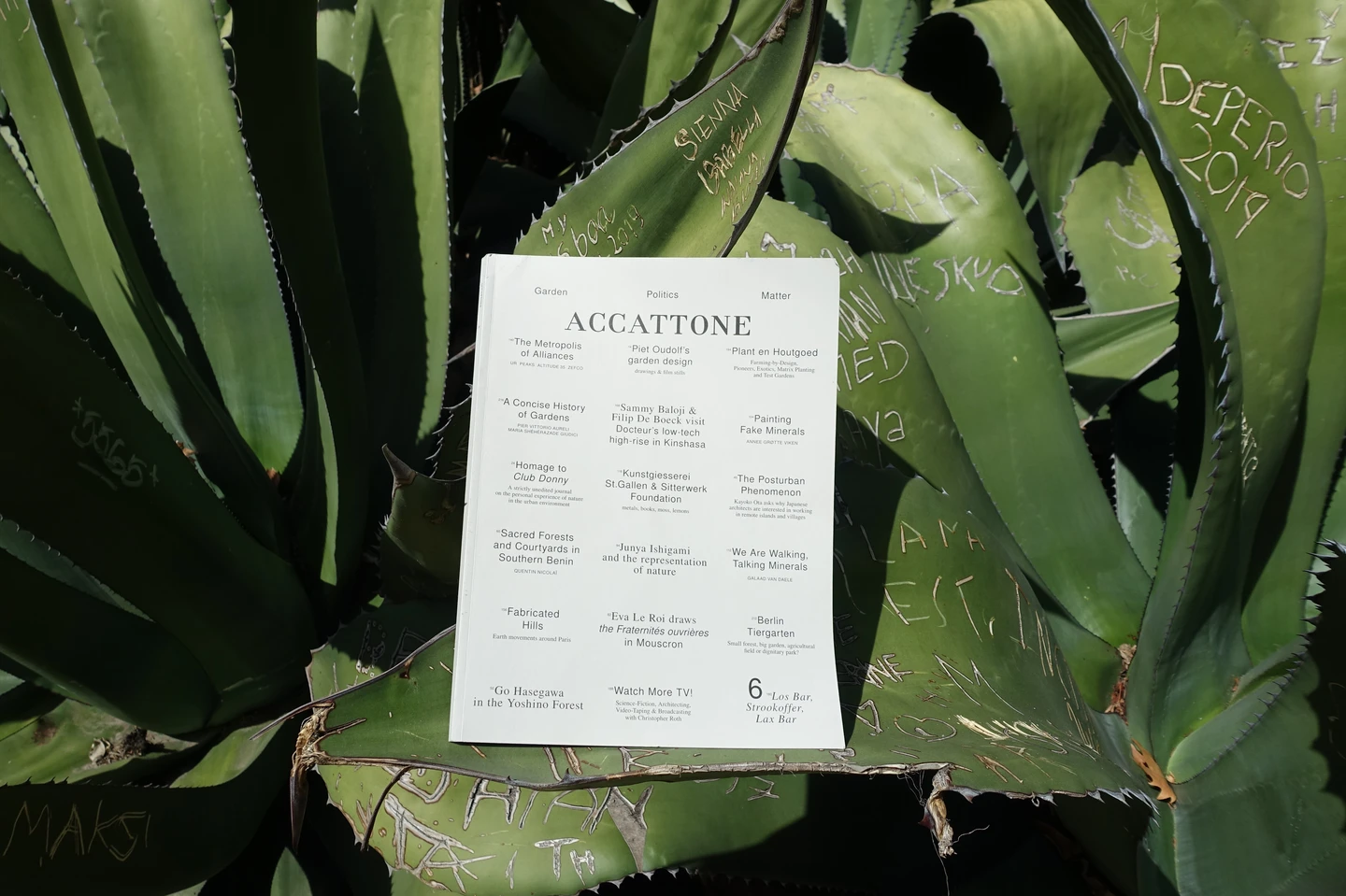
Accattone Editorial, Magazine 2019Accattone #6 explores a renewed relationship with land, matter, ‘nature’ and localities against the backdrop of the new climate regime.
-
-
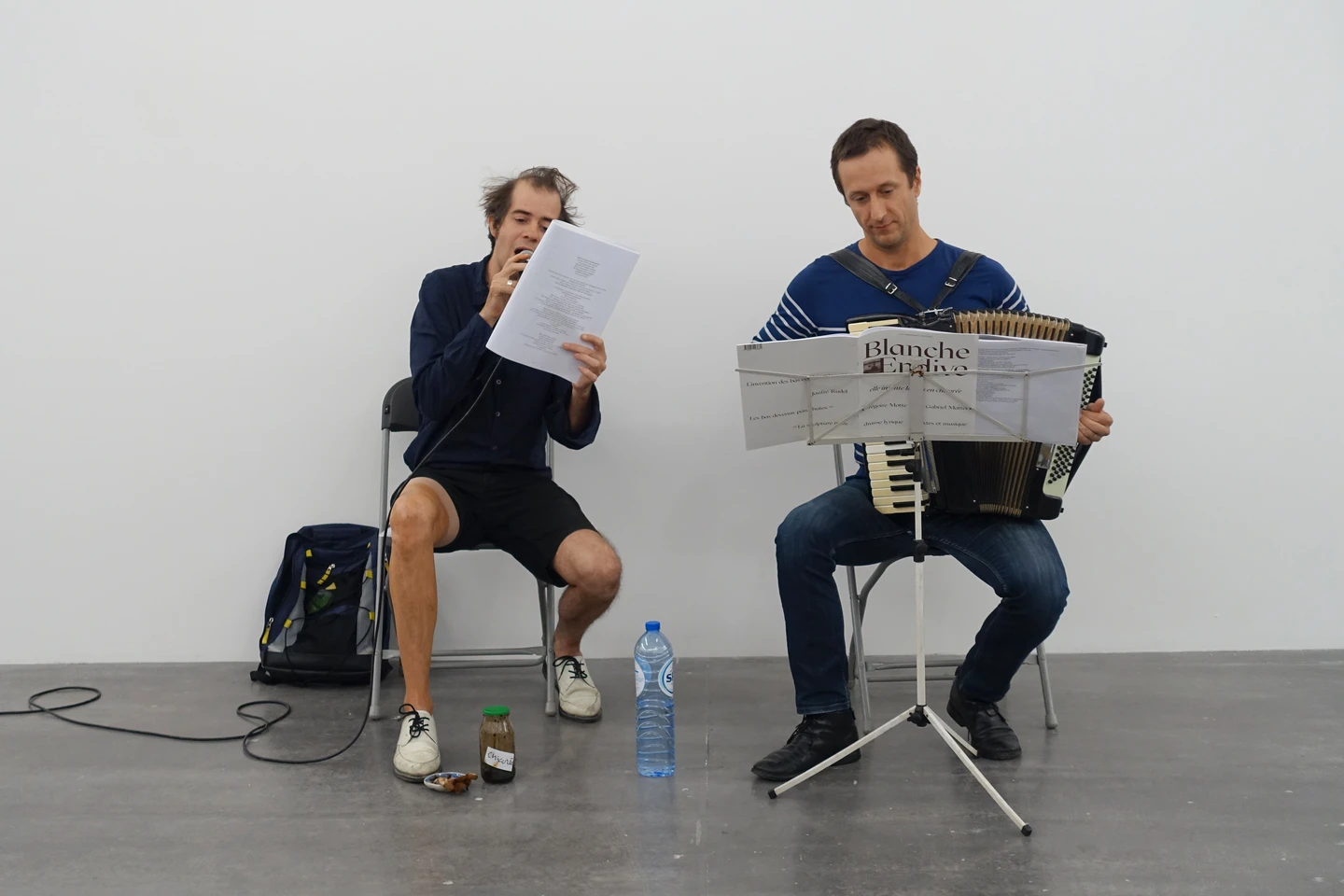
Blanche Endive – Elle invente les bas de chicorée
Les Commissaires Annonymes Editorial, Score 2019Blanche Endive est le livret d’une opérette troubadour pour récitants, chœurs d’enfants, accordéon, dessertine et épinette des Vosges.
Un « drame lyrique sur celle qui inventa les bas de chicorée » : le livret d'une opérette troubadour pour récitants, chœurs d'enfants, accordéon, dessertine et épinette des Vosges.
Blanche Endive a été écrit par le compositeur et chef d'orchestre Gabriel Mattei à partir d'un livret de l'artiste Grégoire Motte rédigé en parallèle à la composition musicale et en vers libres. Reprenant des thèmes centraux à l'imaginaire de Motte, la composition s'articule autour de quatre histoires entremêlées : l'invention des bas en chicorée (1942), l'histoire du troubadour Jaufré Rudel et de la Princesse lointaine, la transformation des bas de nylon en parachutes et le moulage raté d'une jambe de Miss Valenciennois.
Chef d'orchestre et compositeur formé à Paris et à Vienne, directeur de l'Orchestre métropolitain de Strasbourg (Orchestre m) et du Kammerensemble Kehl-Strasbourg, Gabriel Mattei (né en 1975) partage ses activités entre la direction d'orchestre et la création musicale dans les domaines du théâtre et des arts visuels.
Le livre contient:
- un texte de présentation de l’œuvre par le curateur Damien Airault
- une épopée troubadour de Grégoire Motte en quatre actes
- les partitions des pièces musicales et jingles de Gabriel Mattei
Blanche Endive a été développé dans le cadre du programme de recherche de l’École Supérieure d’Art d’Annecy Alpes, DSRA de Grégoire Motte.
Le premier enregistrement de Blanche Endive a eu lieu en mai 2019 avec la participation des chœurs de l’école de musique Lille Centre.
-
-
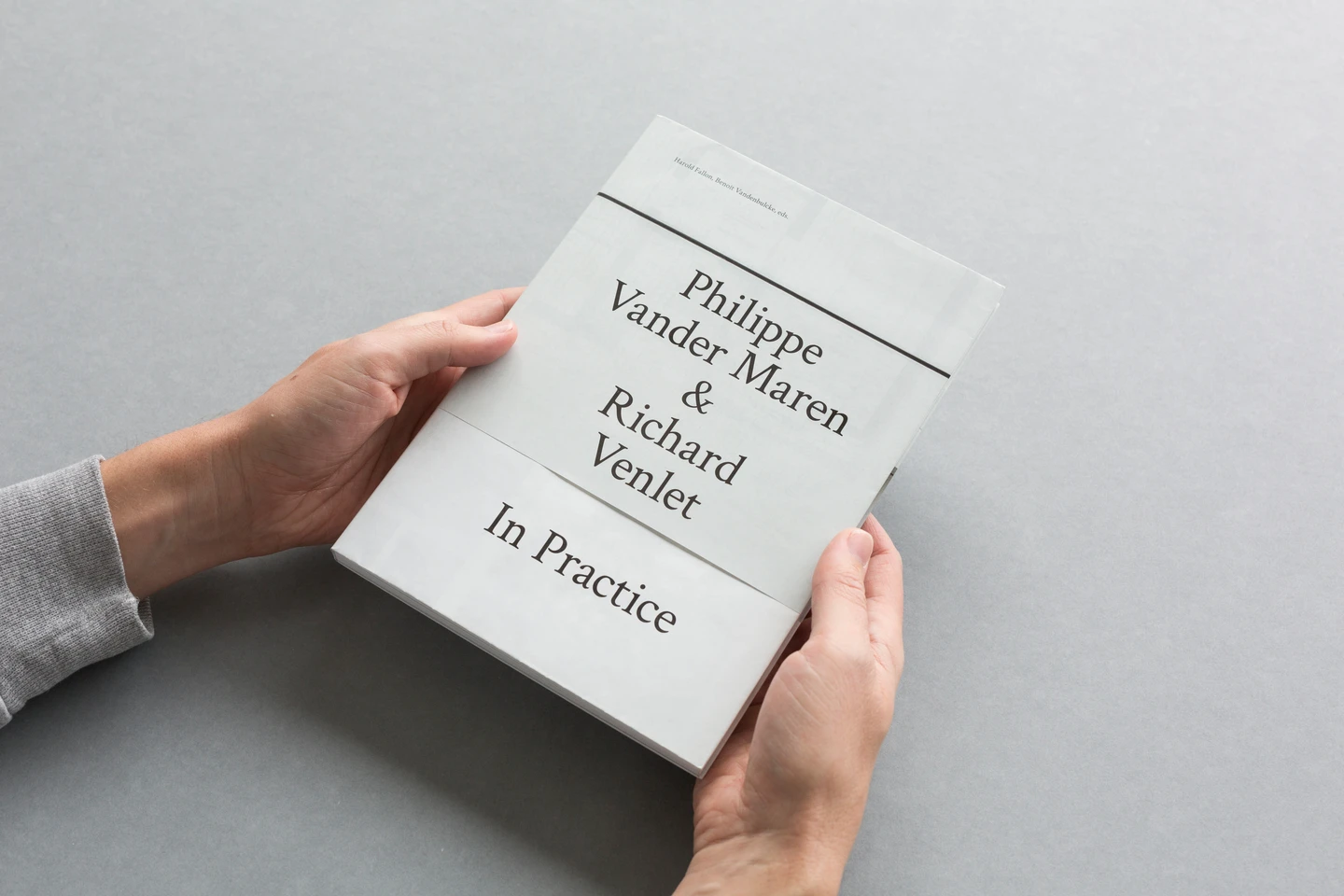
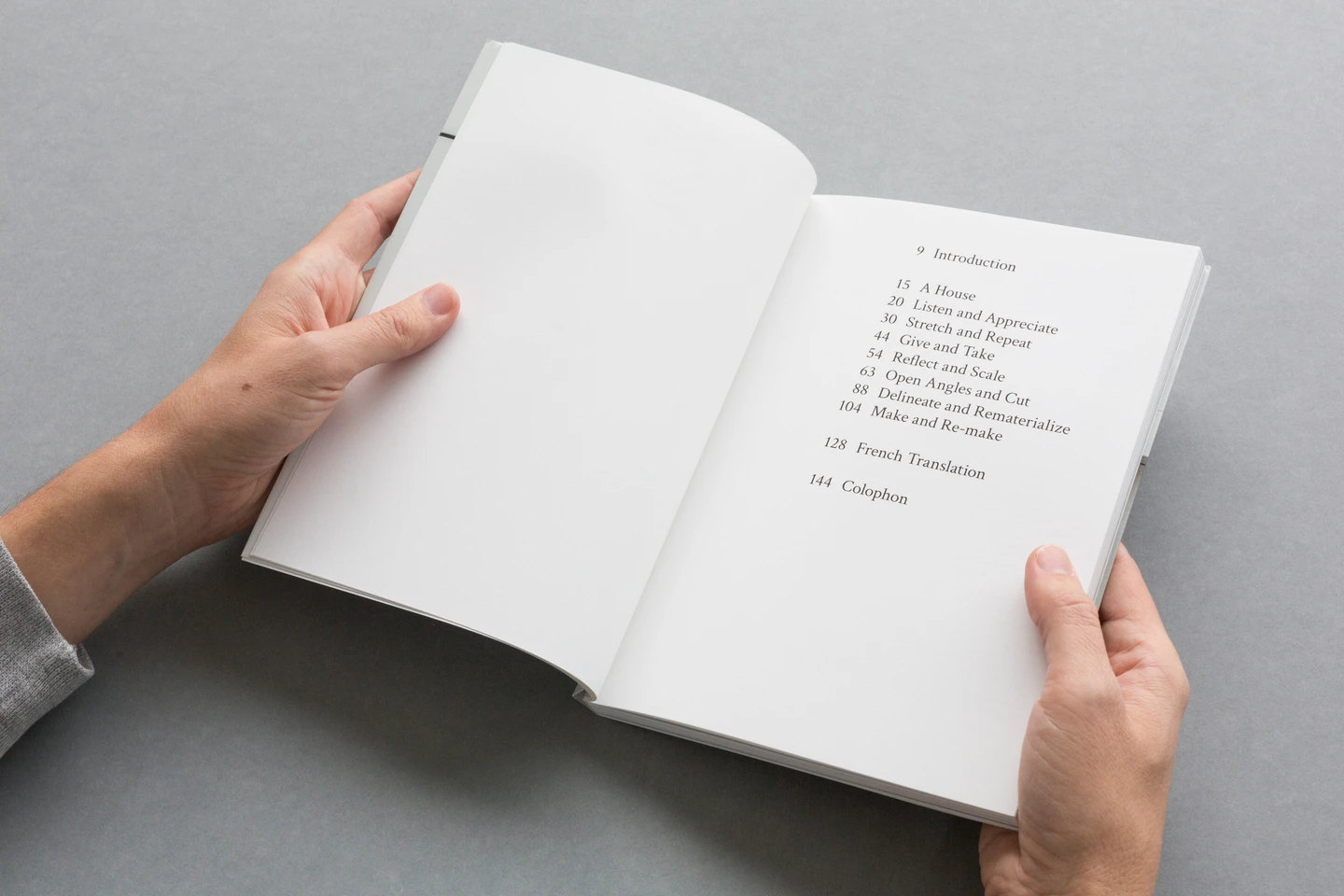
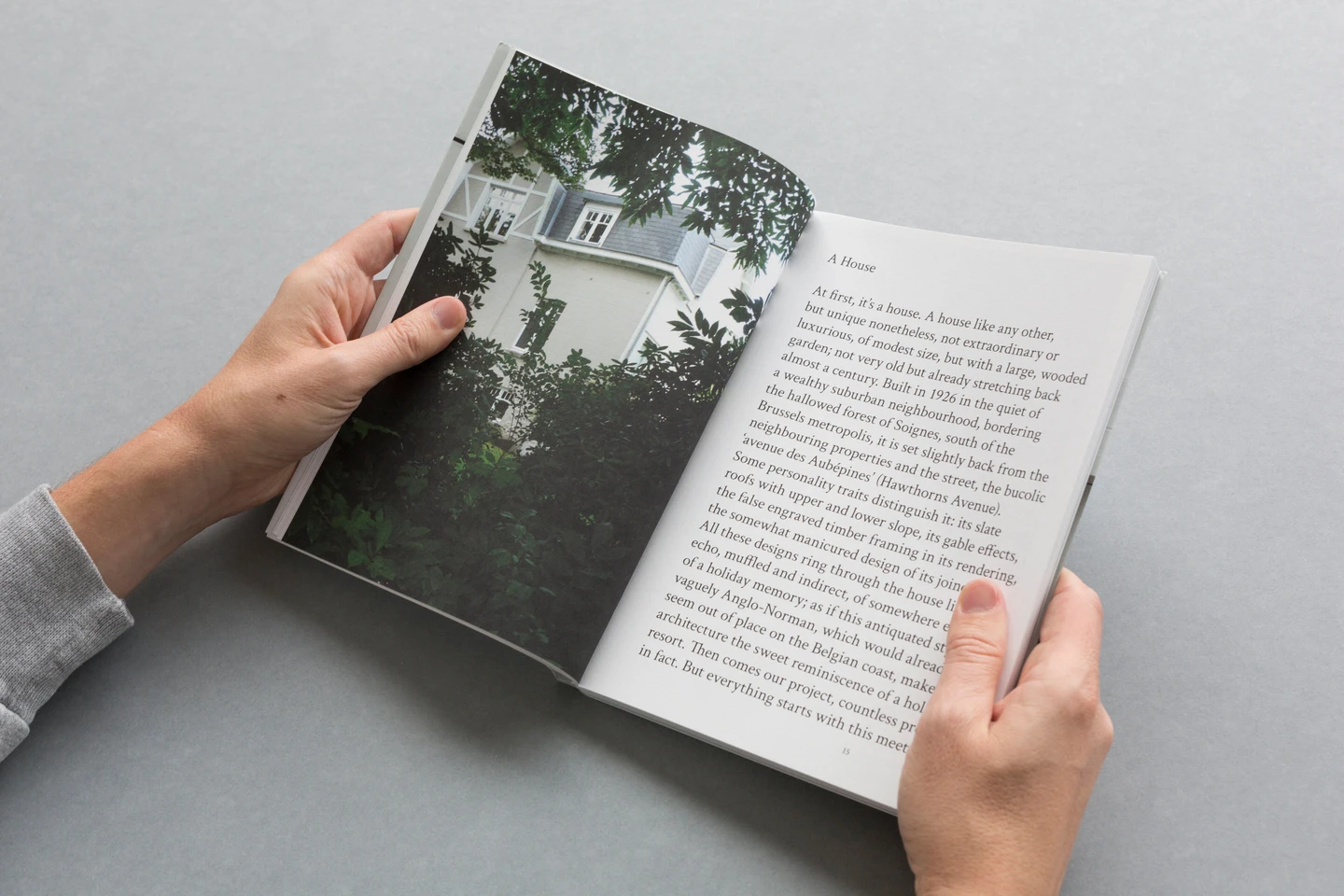
Philippe Vander Maren & Richard Venlet in Practice
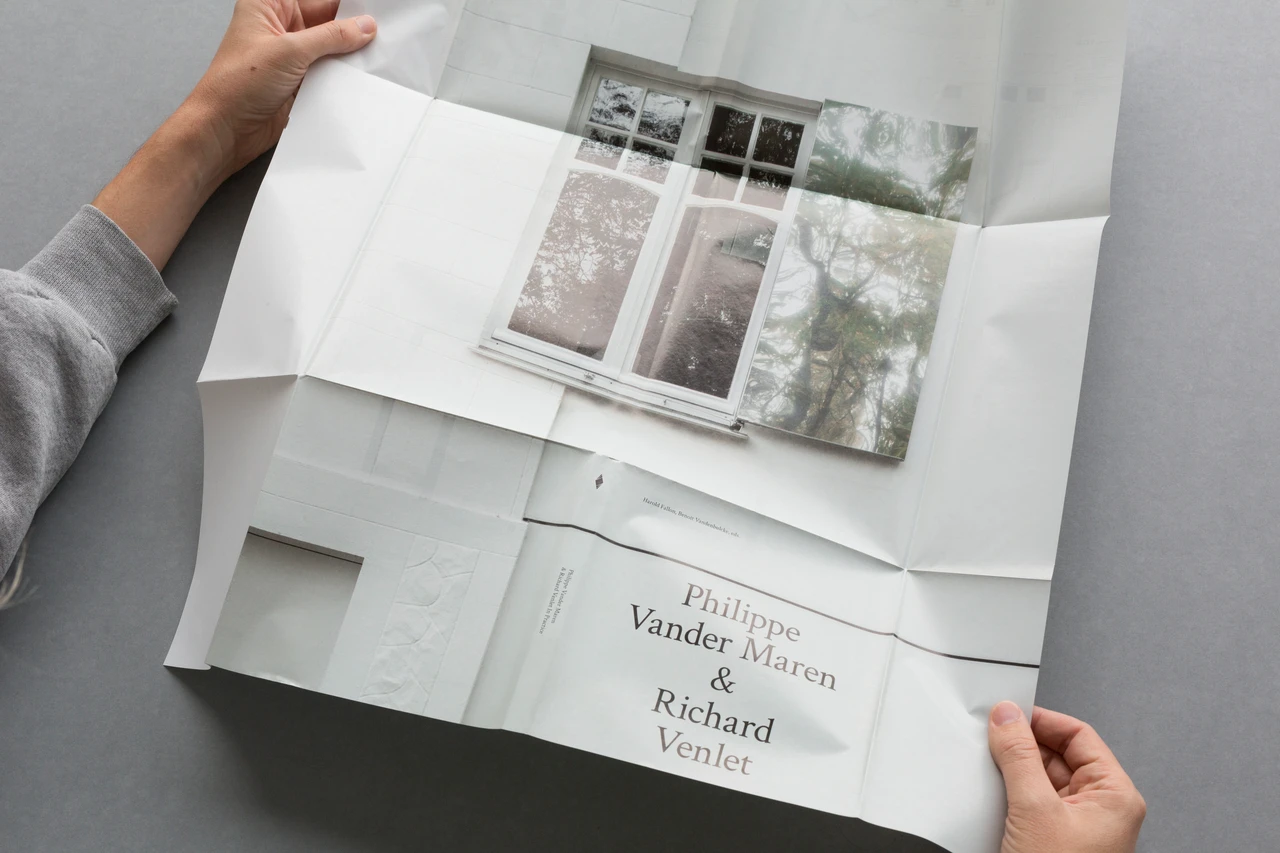
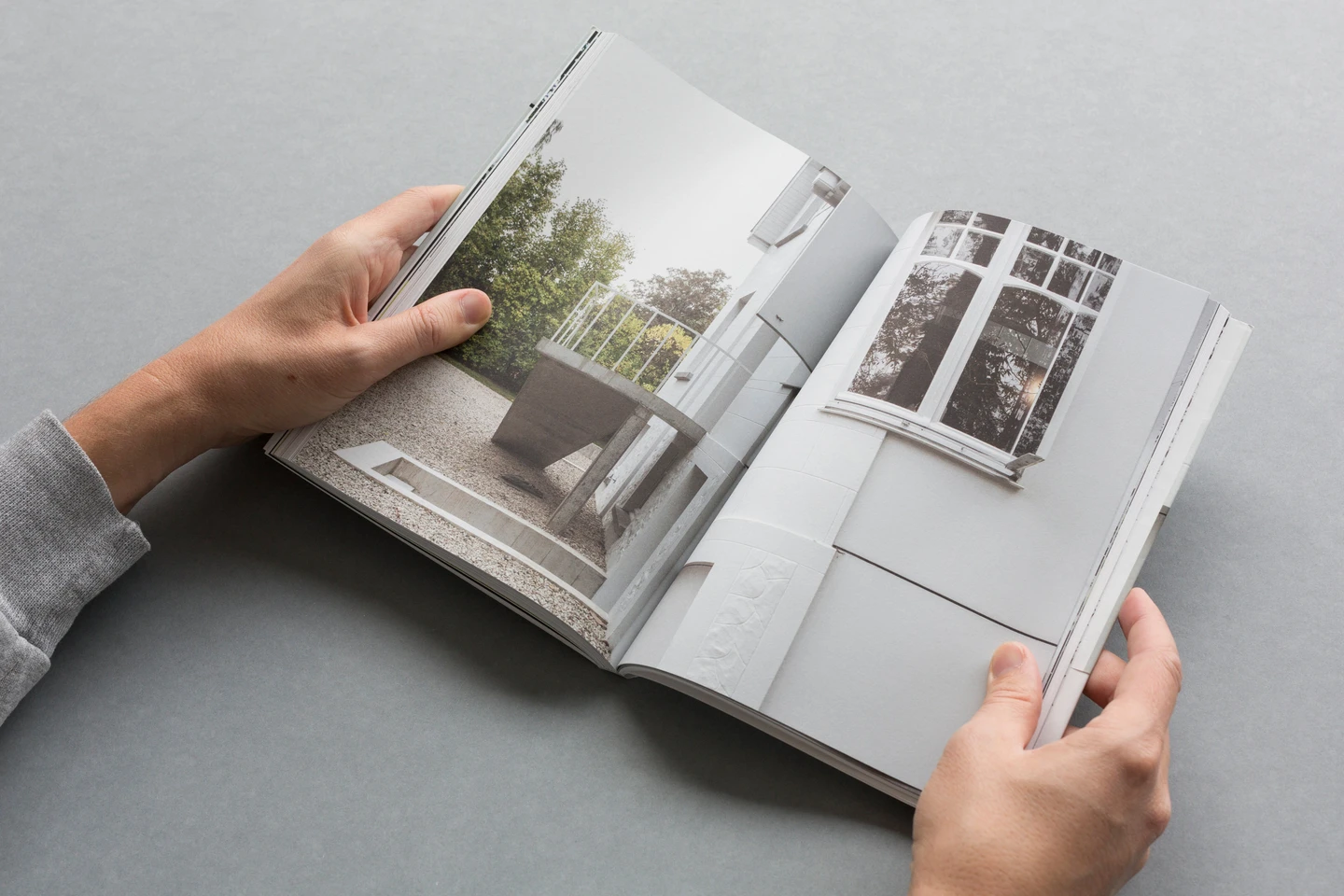
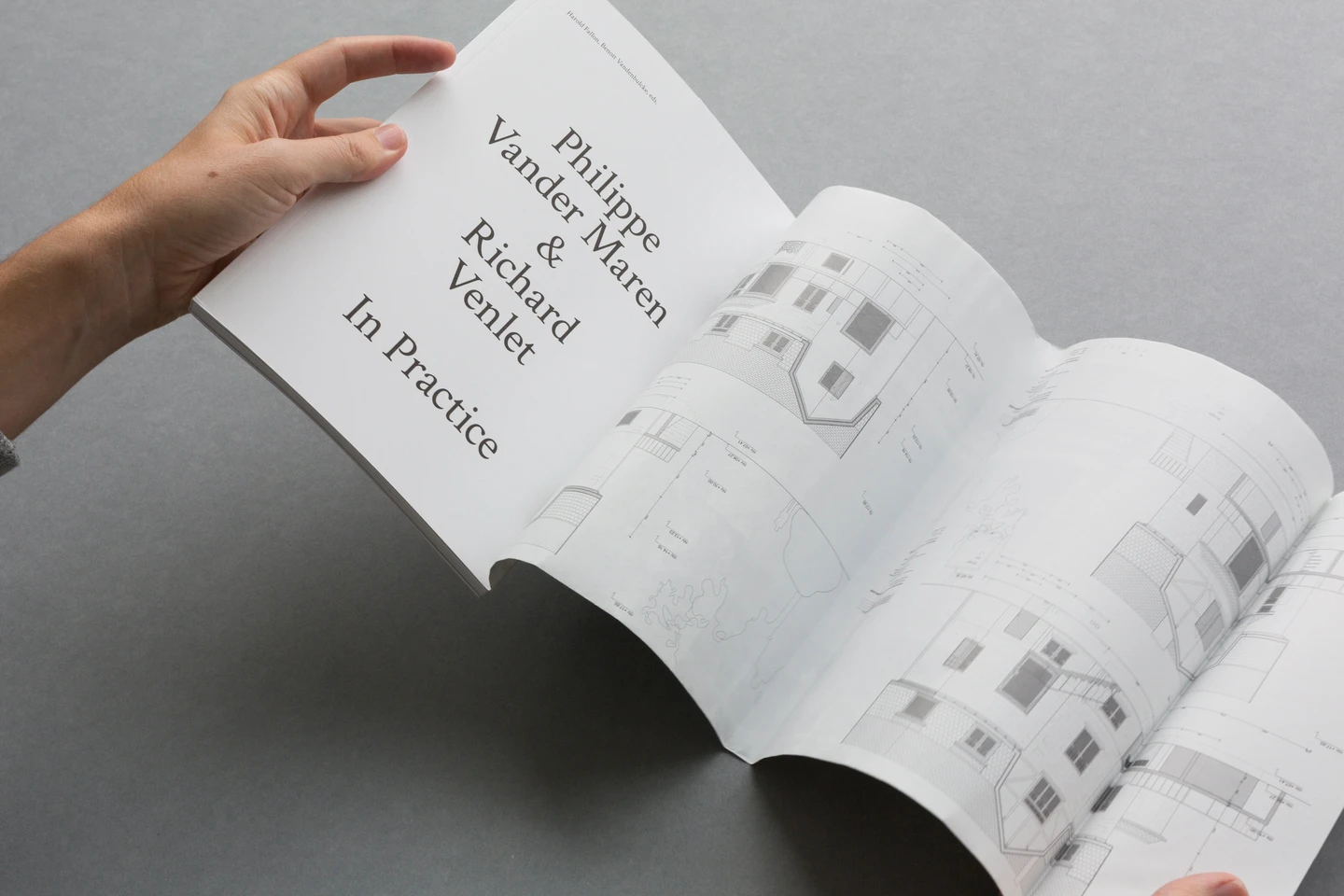
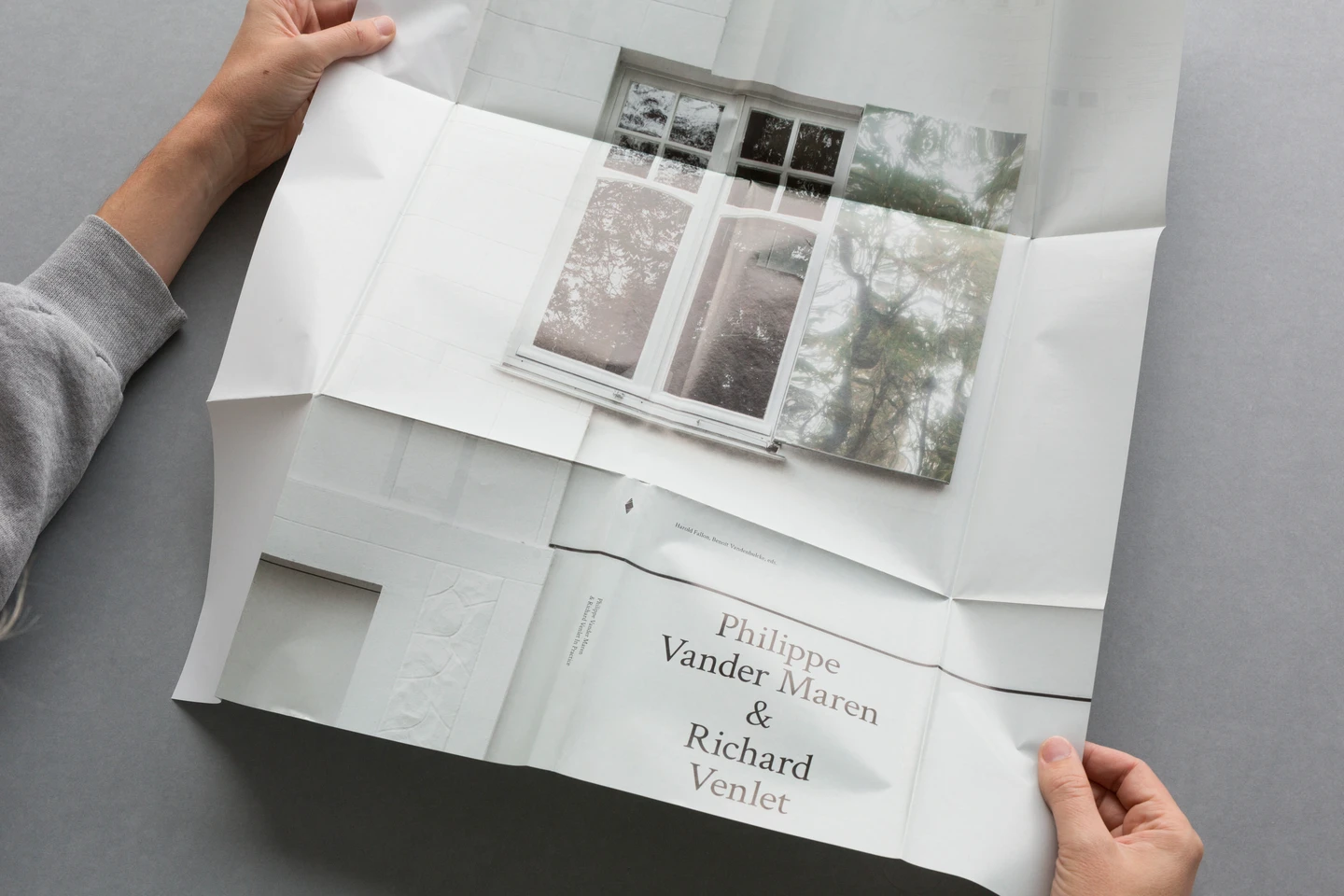
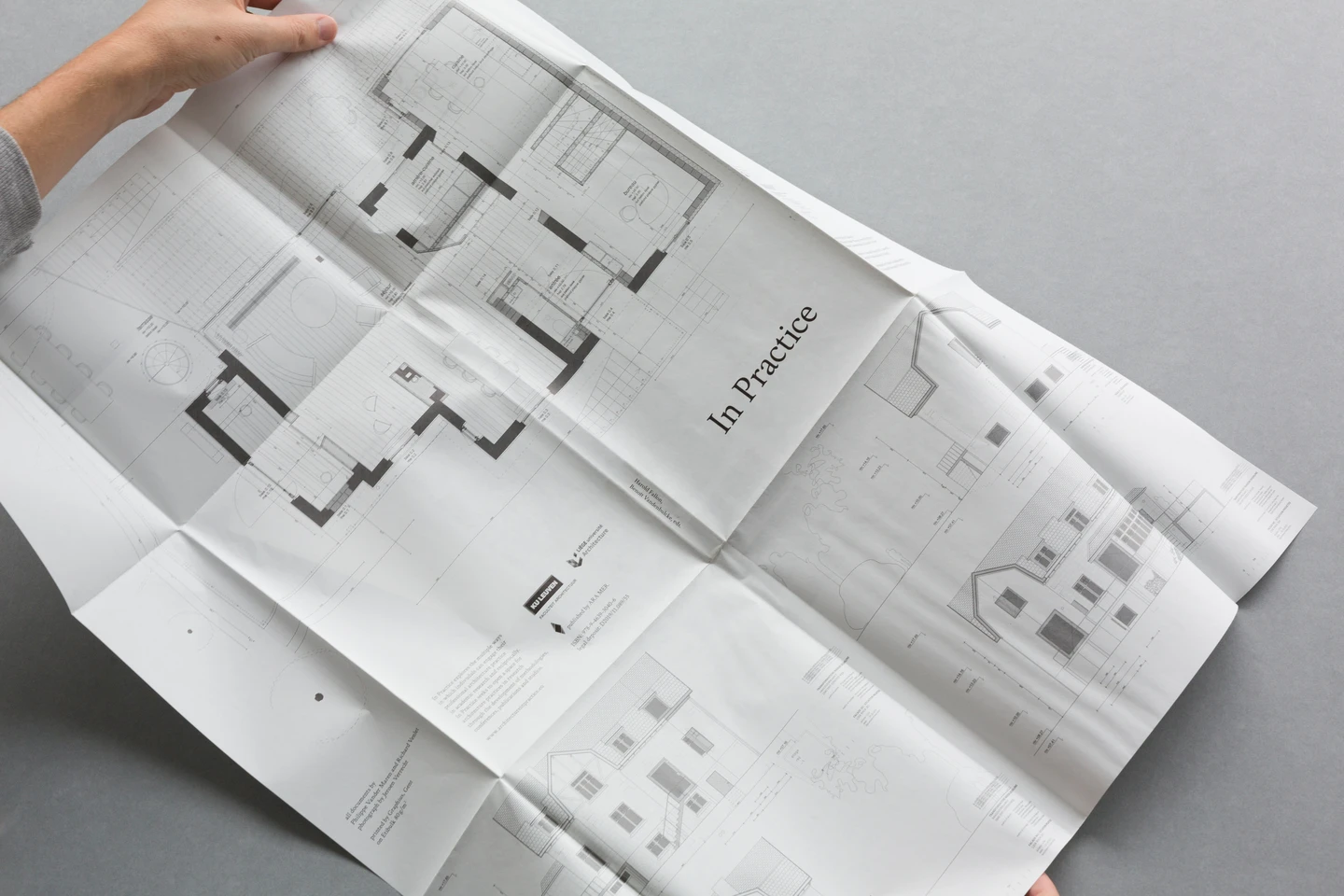
KULeuven, Uliège, ULB, MER. B&L Editorial, Book 2019In this book, Philippe Vander Maren, Richard Venlet and Pierre Chabard explore and explicit the design process of House D through a set of unpublished work documents such as sketches, scale models, series of annotated plans, collages and pictures. They retrace the collaboration with the client, the exchanges between the architect and the artist, the moments of discovery of essential features of the design, the similarities and dissonances with architectural precedents. This book was produced following the In Practice conference in Liège, Galerie Opéra, on June 12th 2018. The first book of the series was an initiative of Harold Fallon (KU Leuven) and Benoît Vandenbulcke (ULiège). The book was double blind peer reviewed.
-
-
Baby
Grandiose, ESAAA Editorial, Book 2019 -
ACCATTONE 5
Accattone Editorial, Magazine 2018Based entirely on the work of Armin Linke, Accattone #5 explores photography in relation to the major architecture of public and private institutions: the infrastructure of the Roman Empire, neoclassical Athens, the United Nations headquarters, neo-liberal corporate environments and the fragile European institutions in Brussels.
Monuments are carefully crafted to convey determined sets of aesthetic codes and political values, incorporated in a purportedly eternal and total character. Photography can challenge the power of such representations by bringing out their inherent glitches, small cracks and everyday ambiguities. It can reprogramme architecture. -
Une fille d'Ouessant
Michigan films, Mains d'œuvres Graphics, Movie 2018The island of Ouessant is off the very tip of Brittany, making it the last bit of land before America. All its men used to work at sea and the island was therefore almost exclusively populated by women. The film's director, as she immerses herself in the life of the island, plunges into the footage, and, somewhere between dream and reality, she identifies with Barba, a girl from Ouessant whose father disappeared at sea without a trace. How, then, can she grieve? The film adopts the form of an ethnographic tale, halfway between an anthropological documentary, a holiday video and a work of fiction.
-
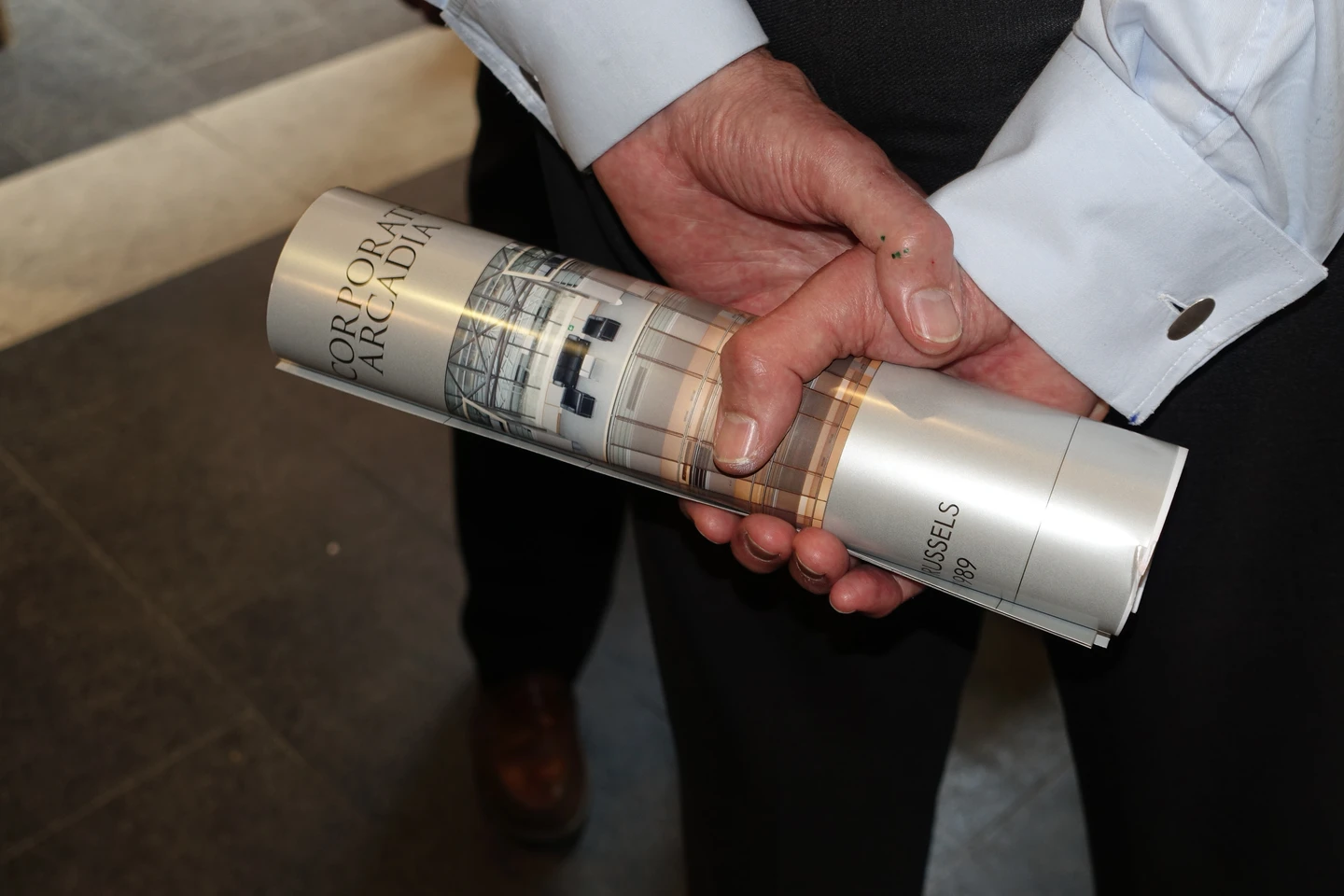
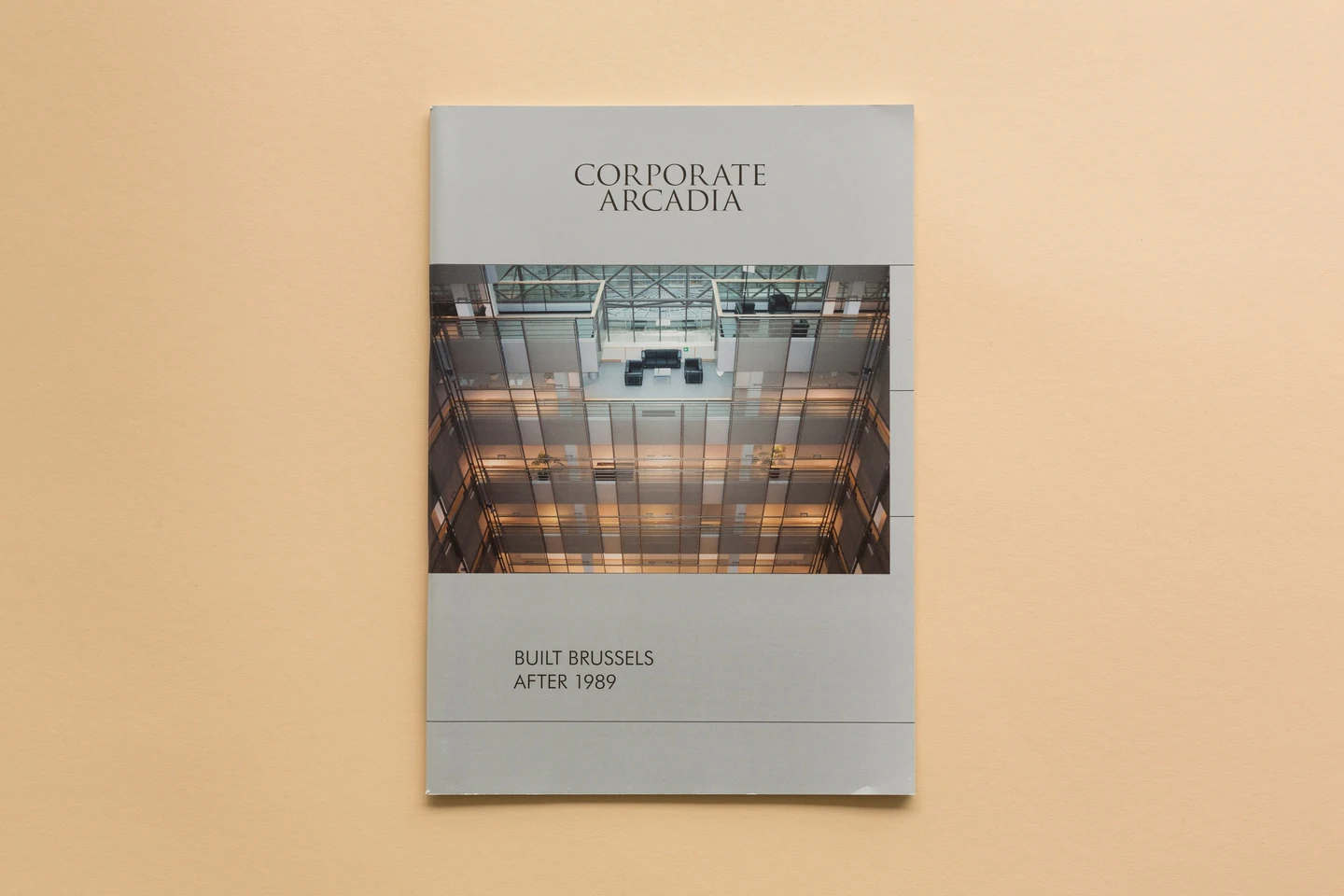
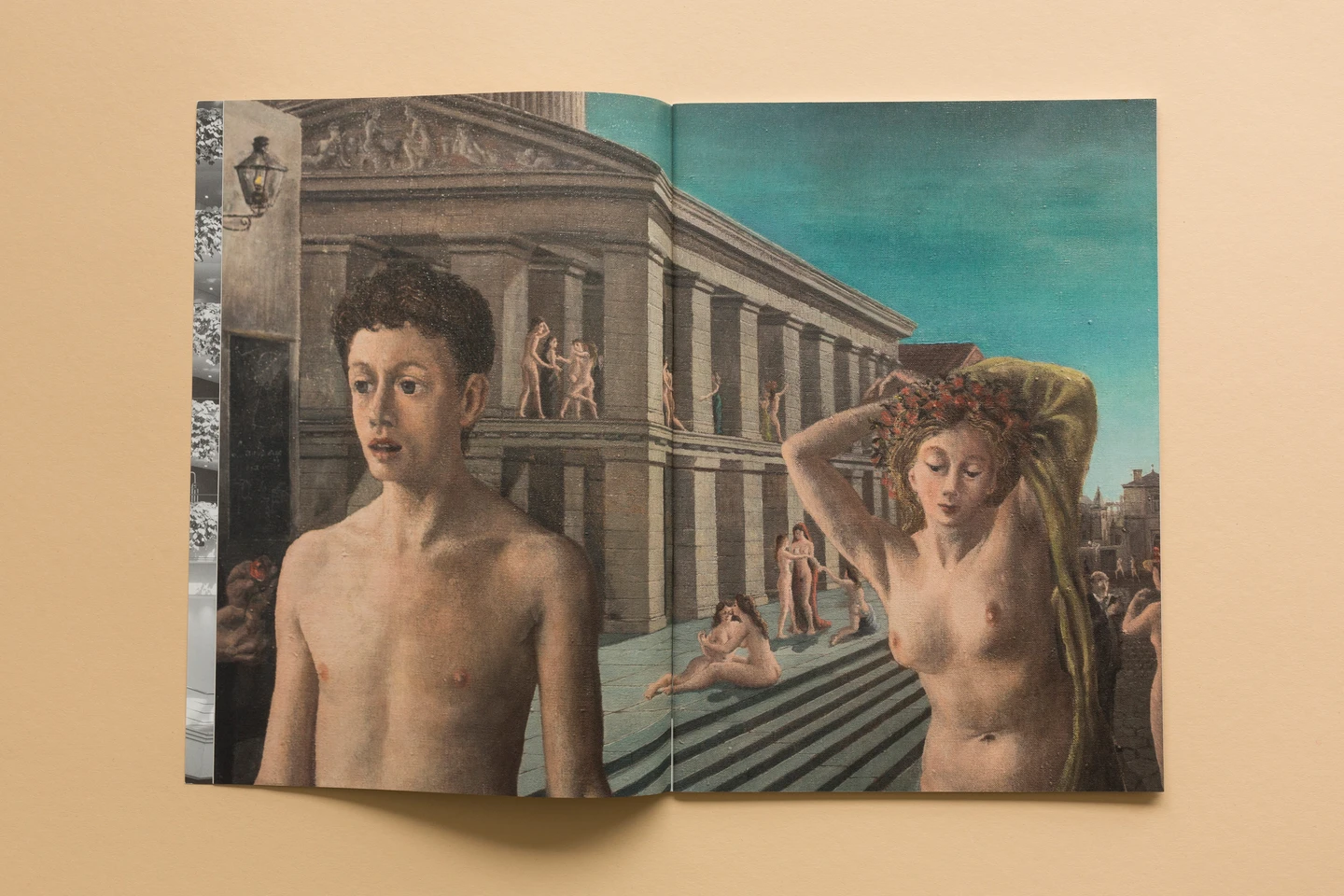
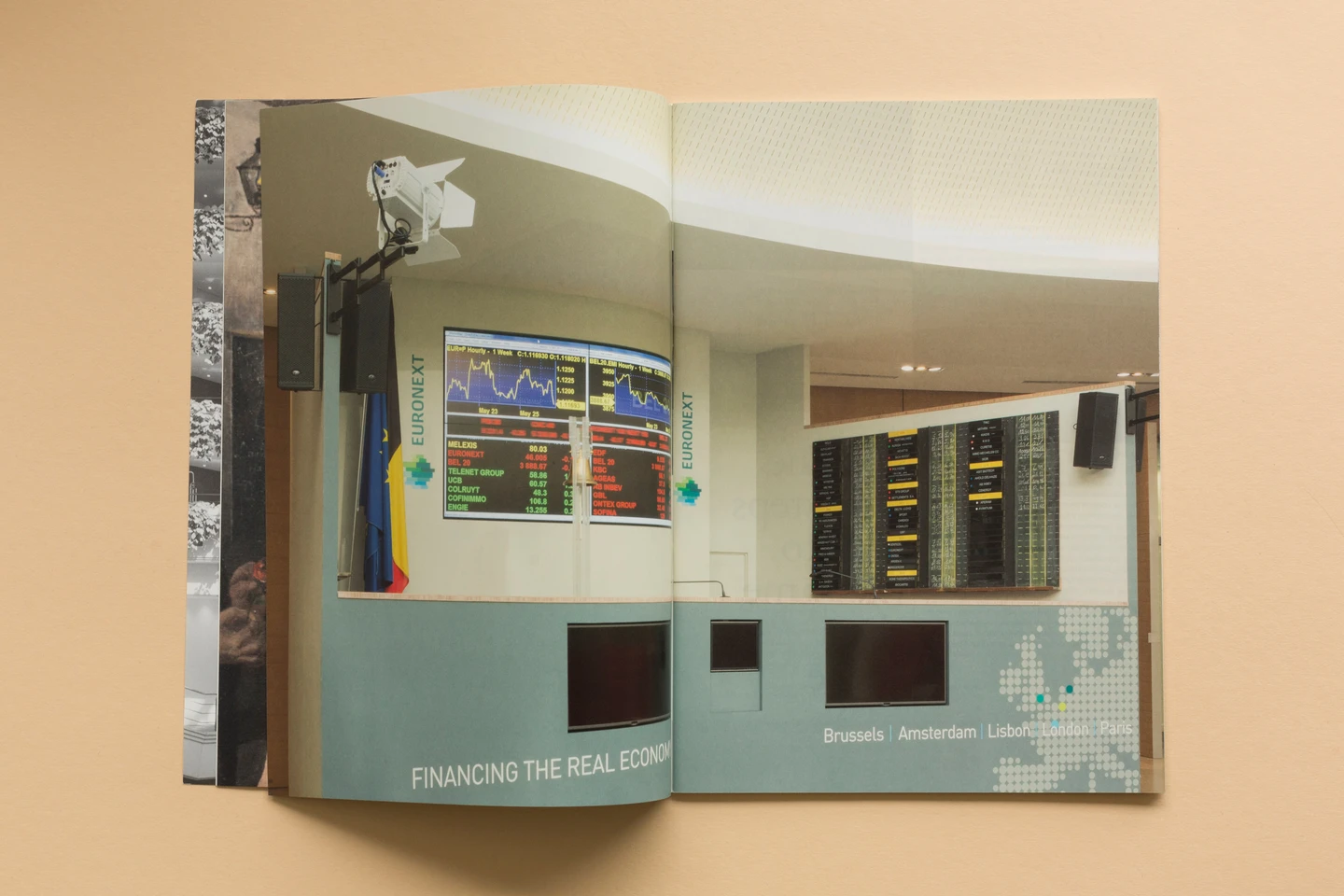
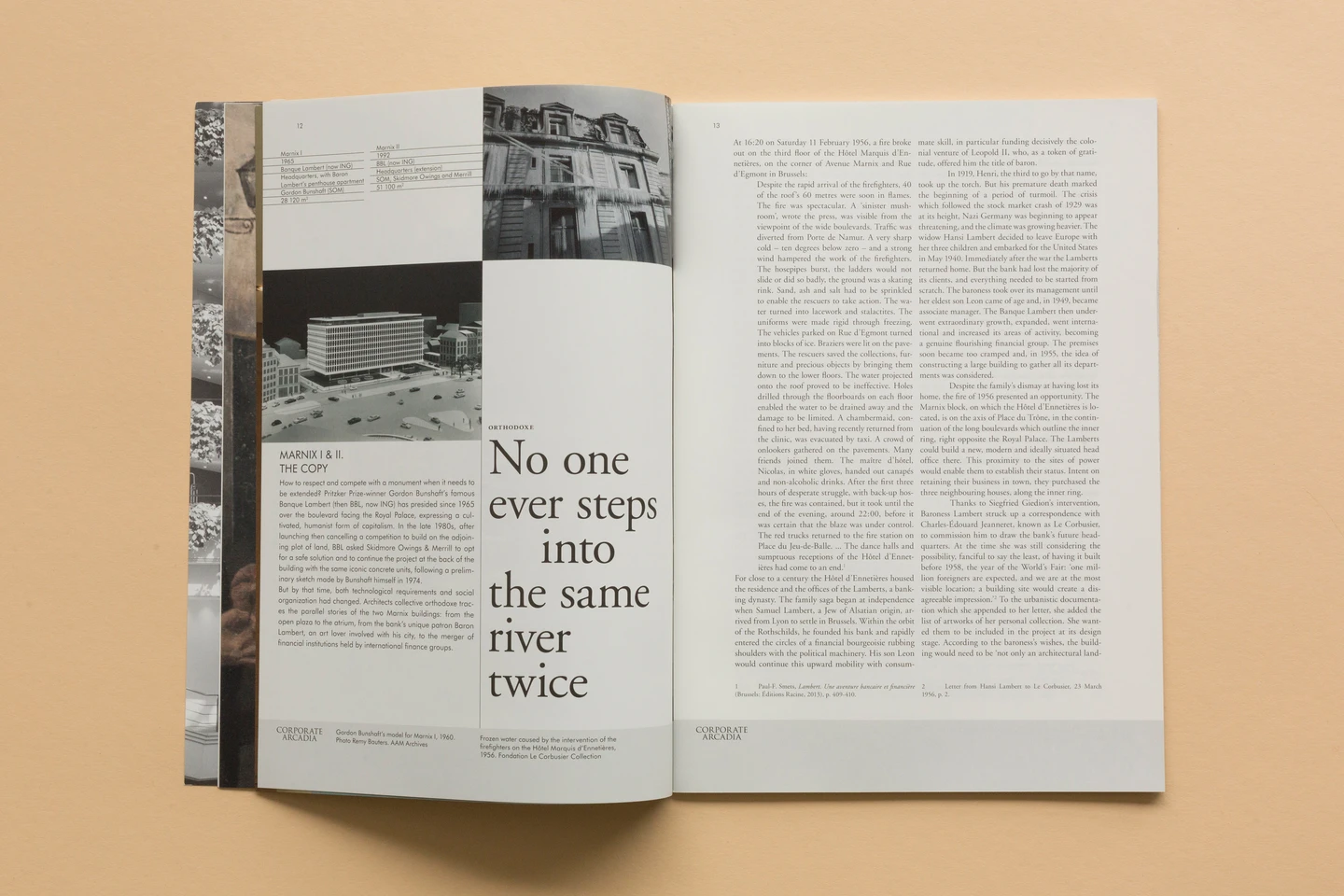
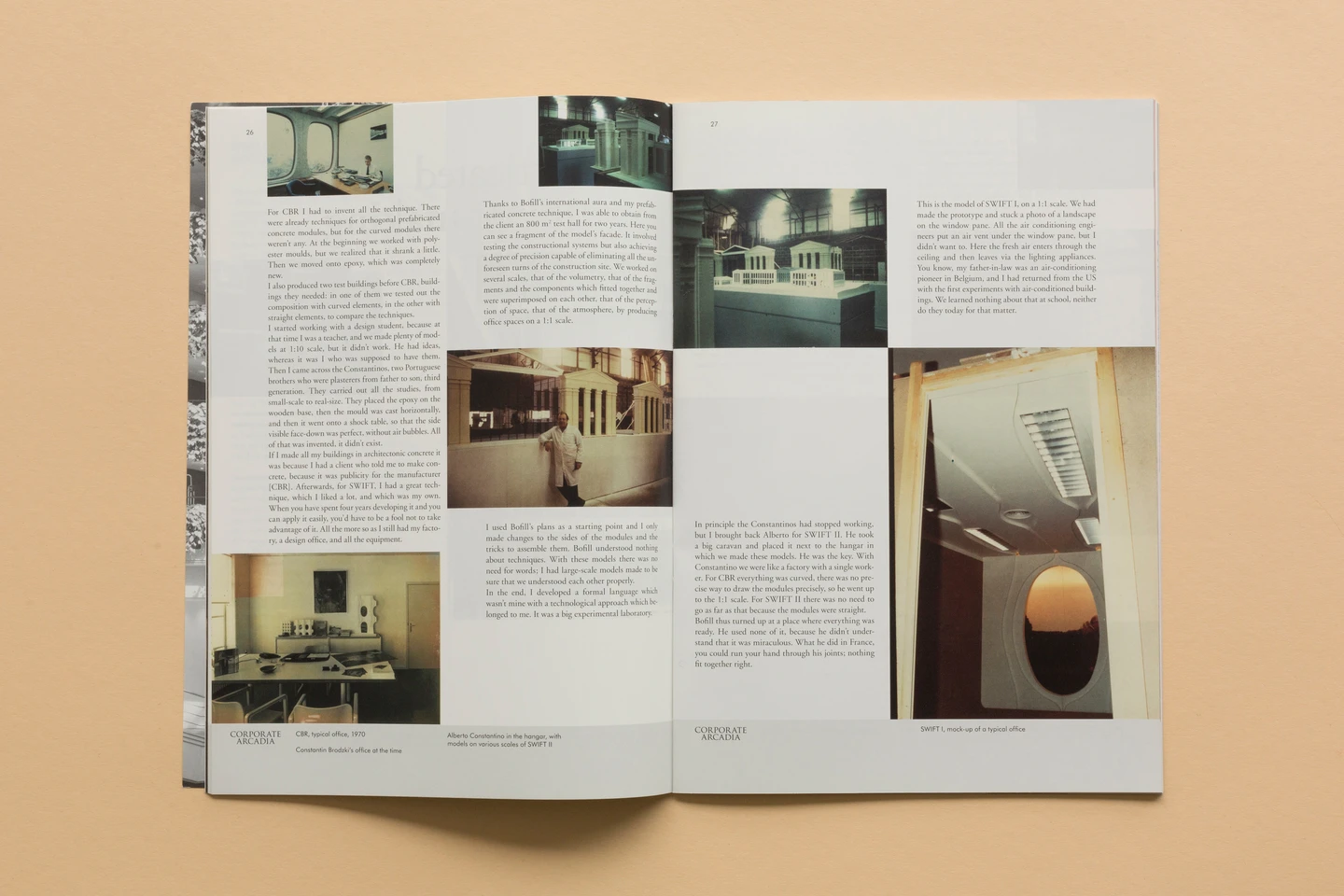
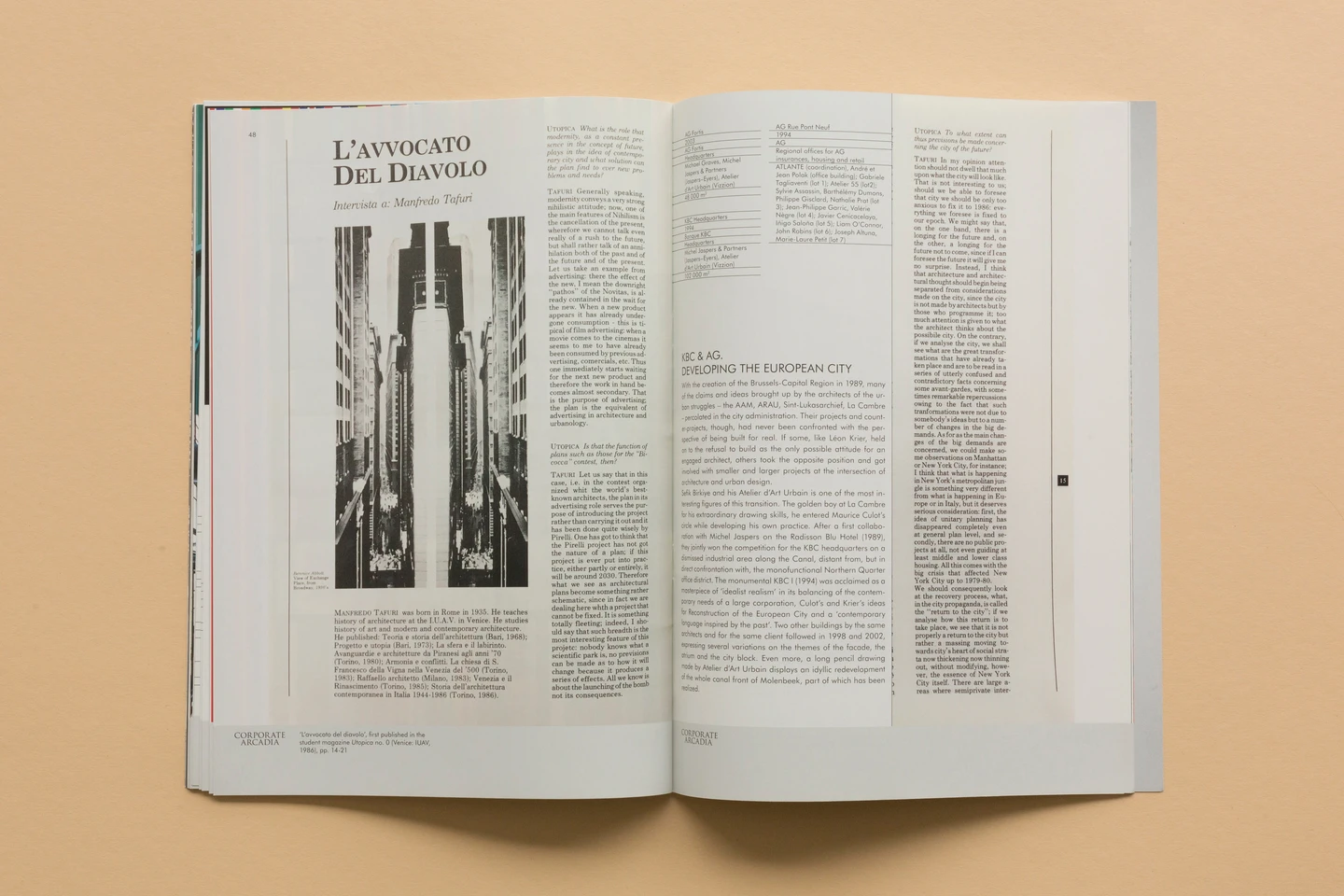
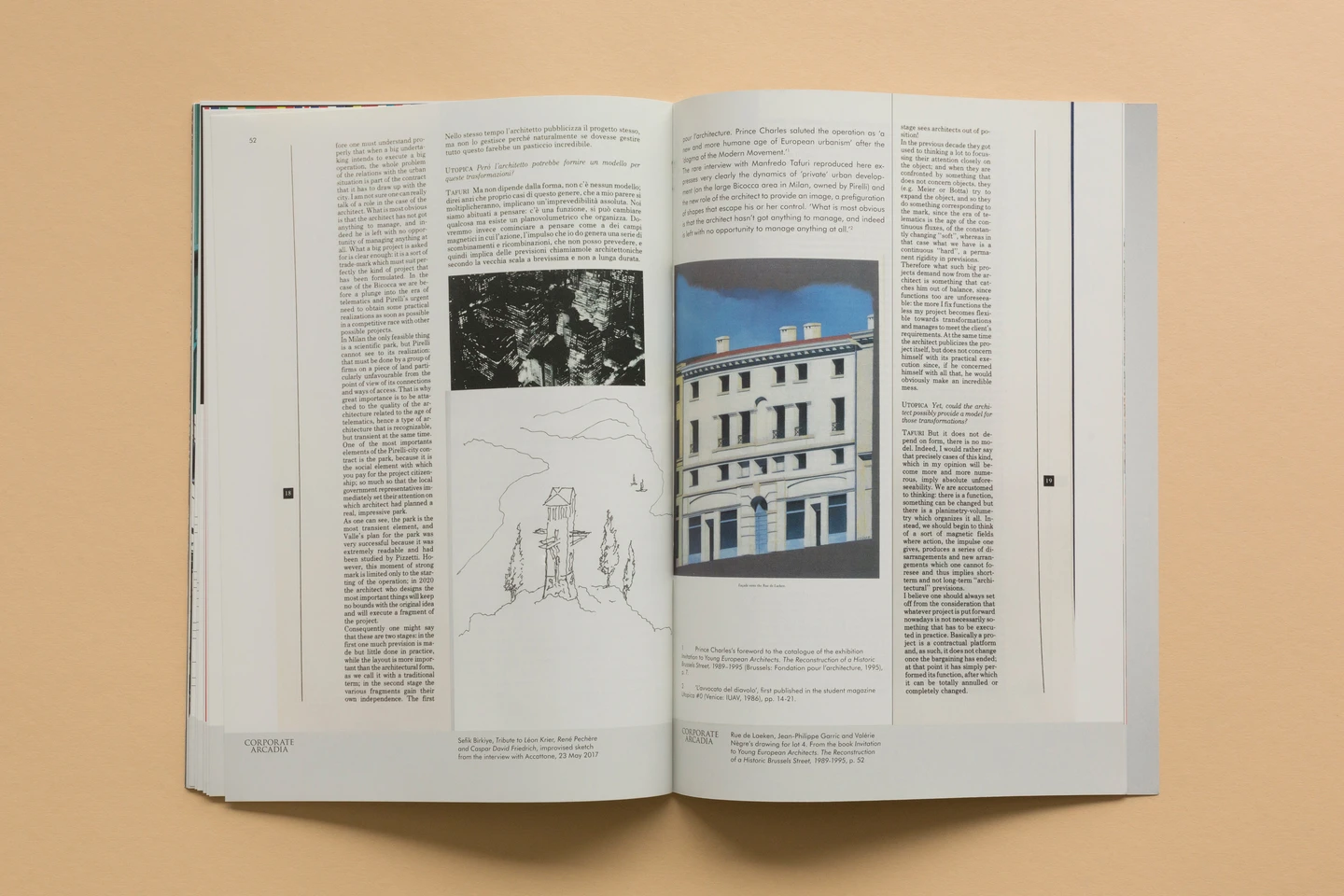
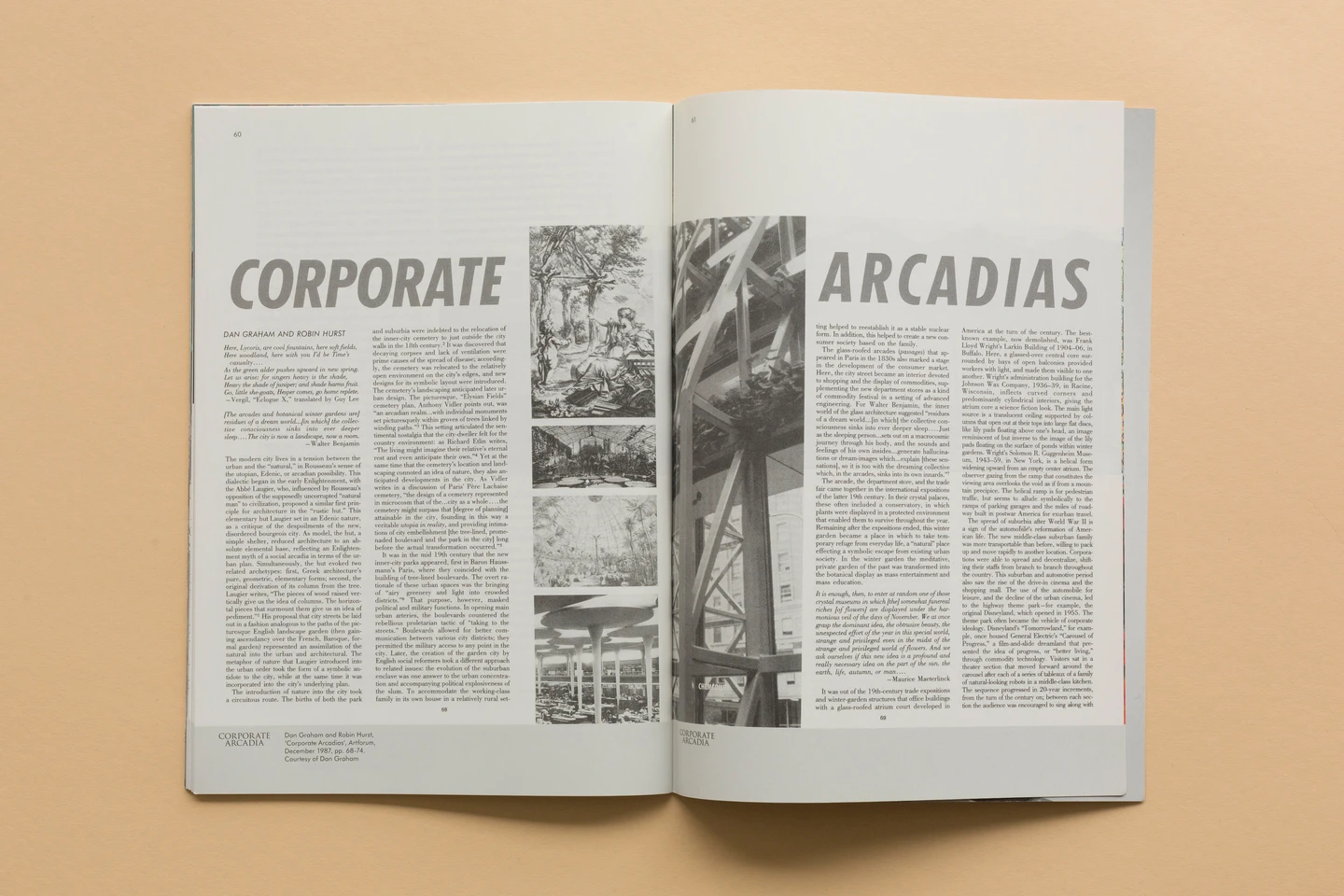
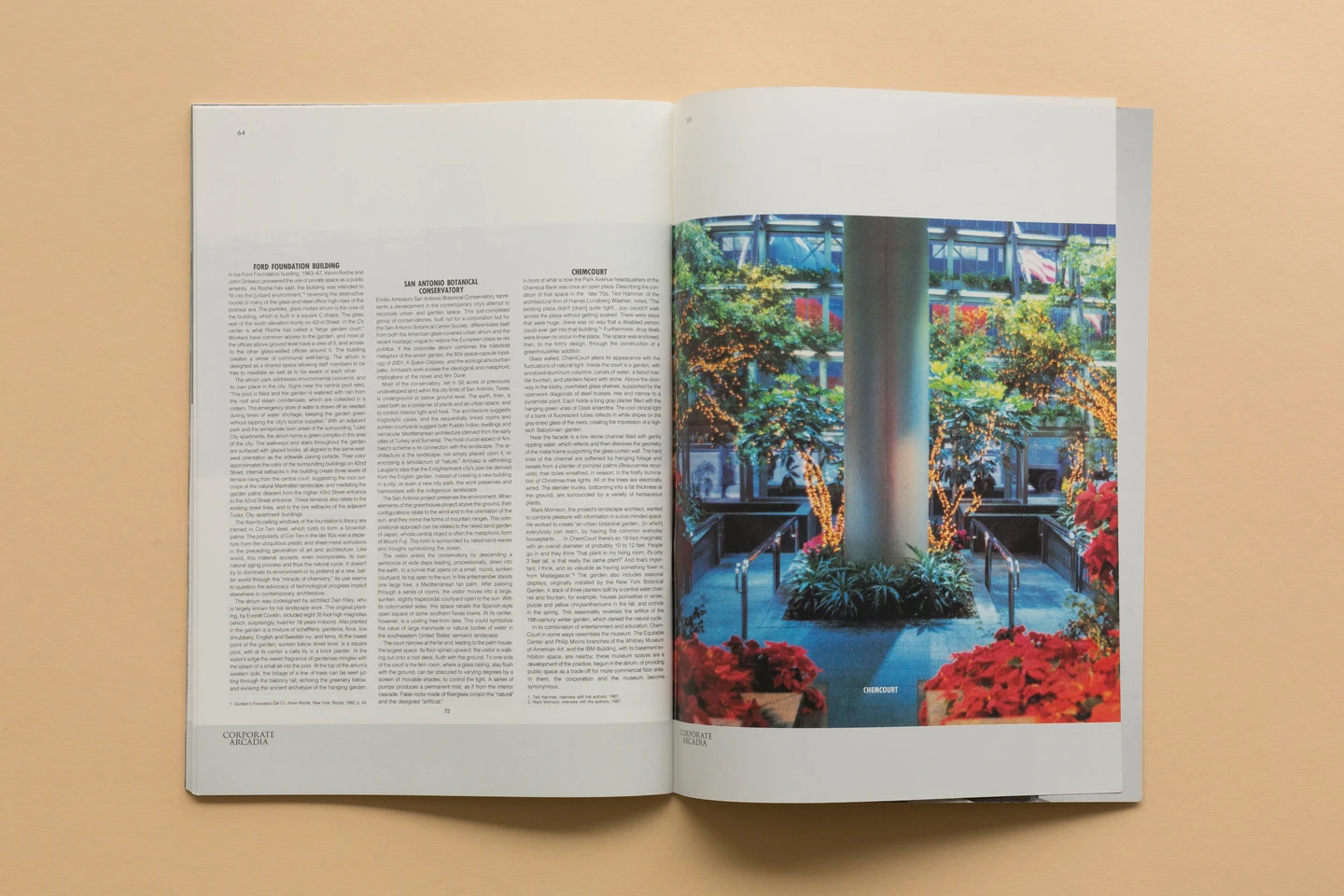
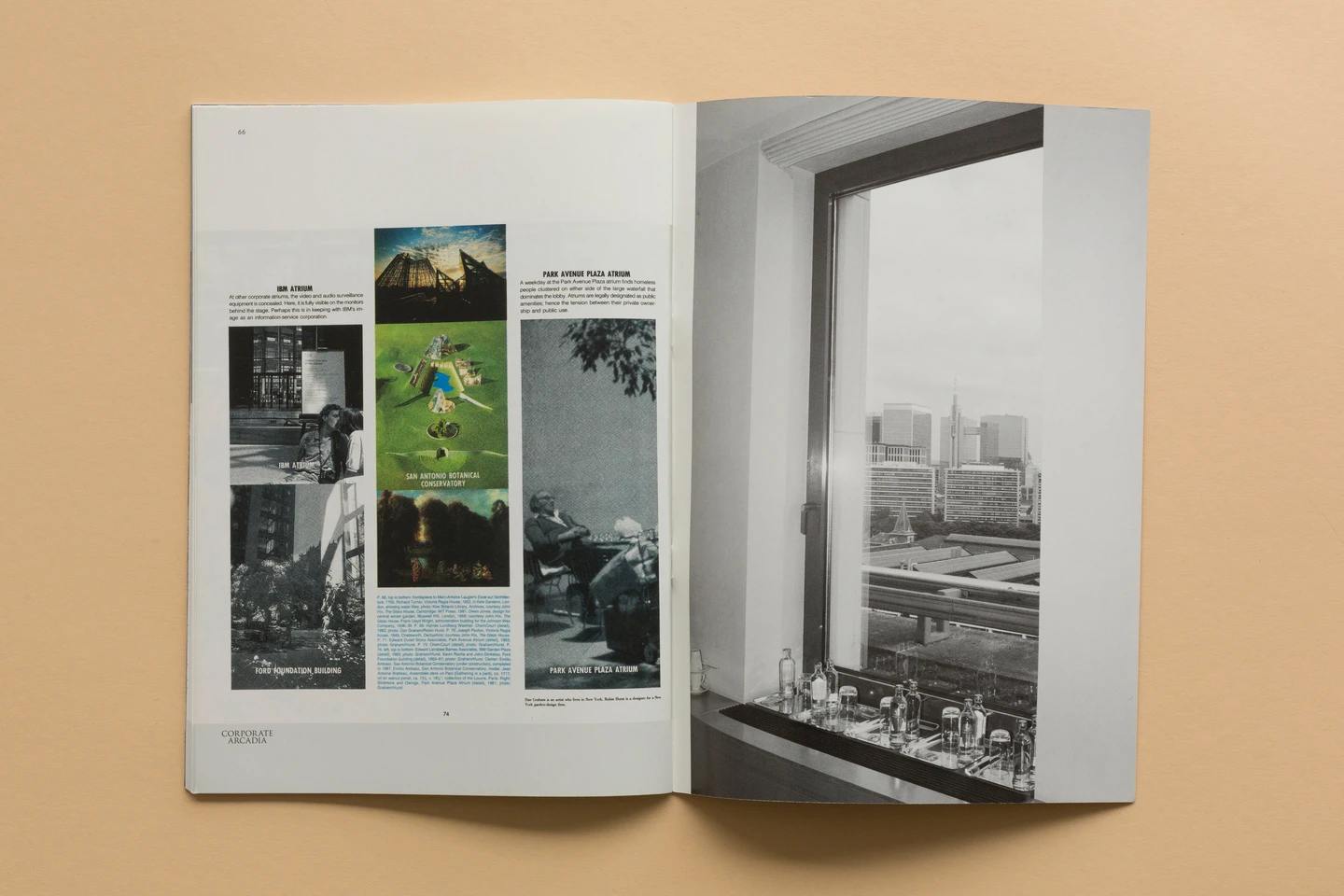
Corporate Arcadia
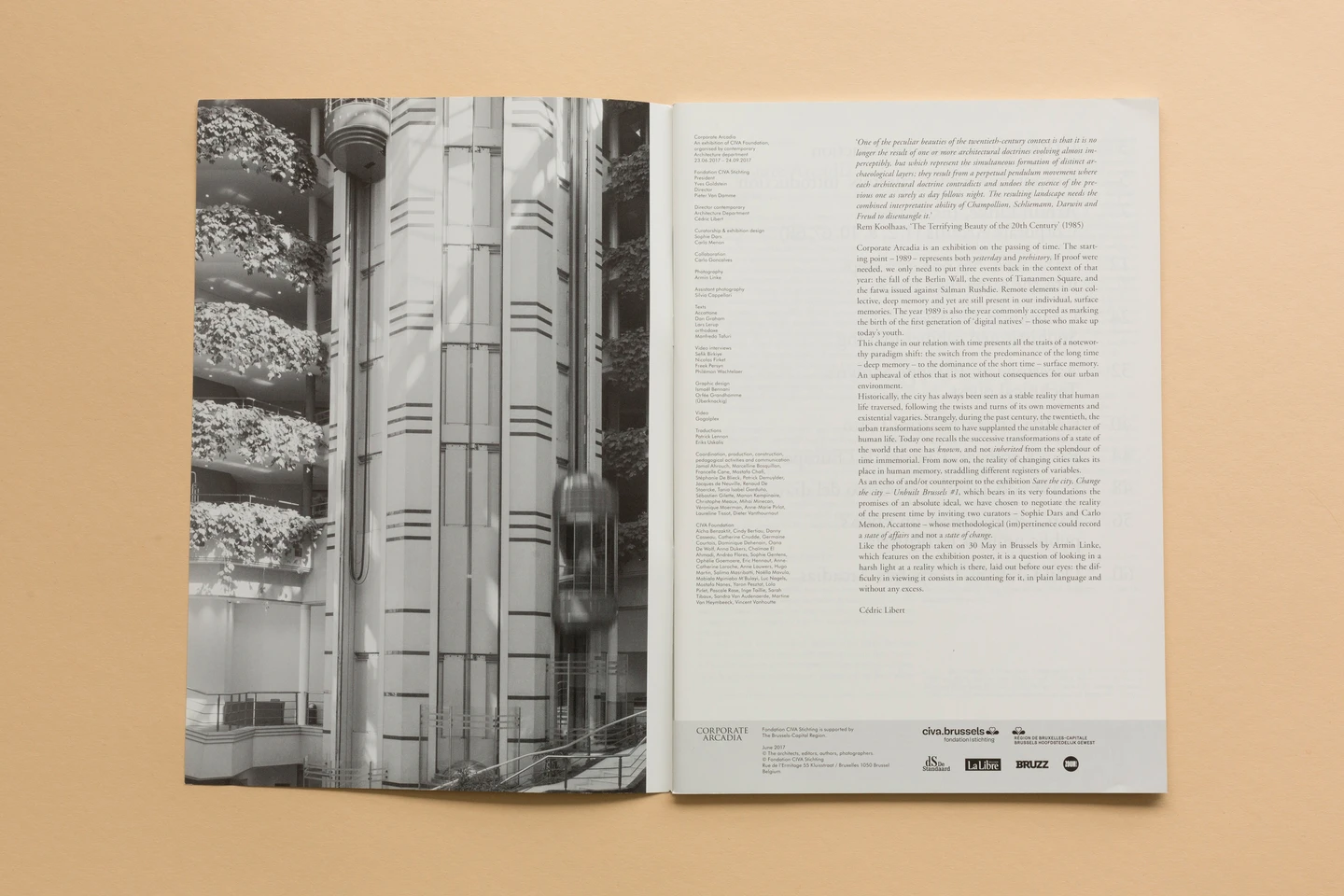
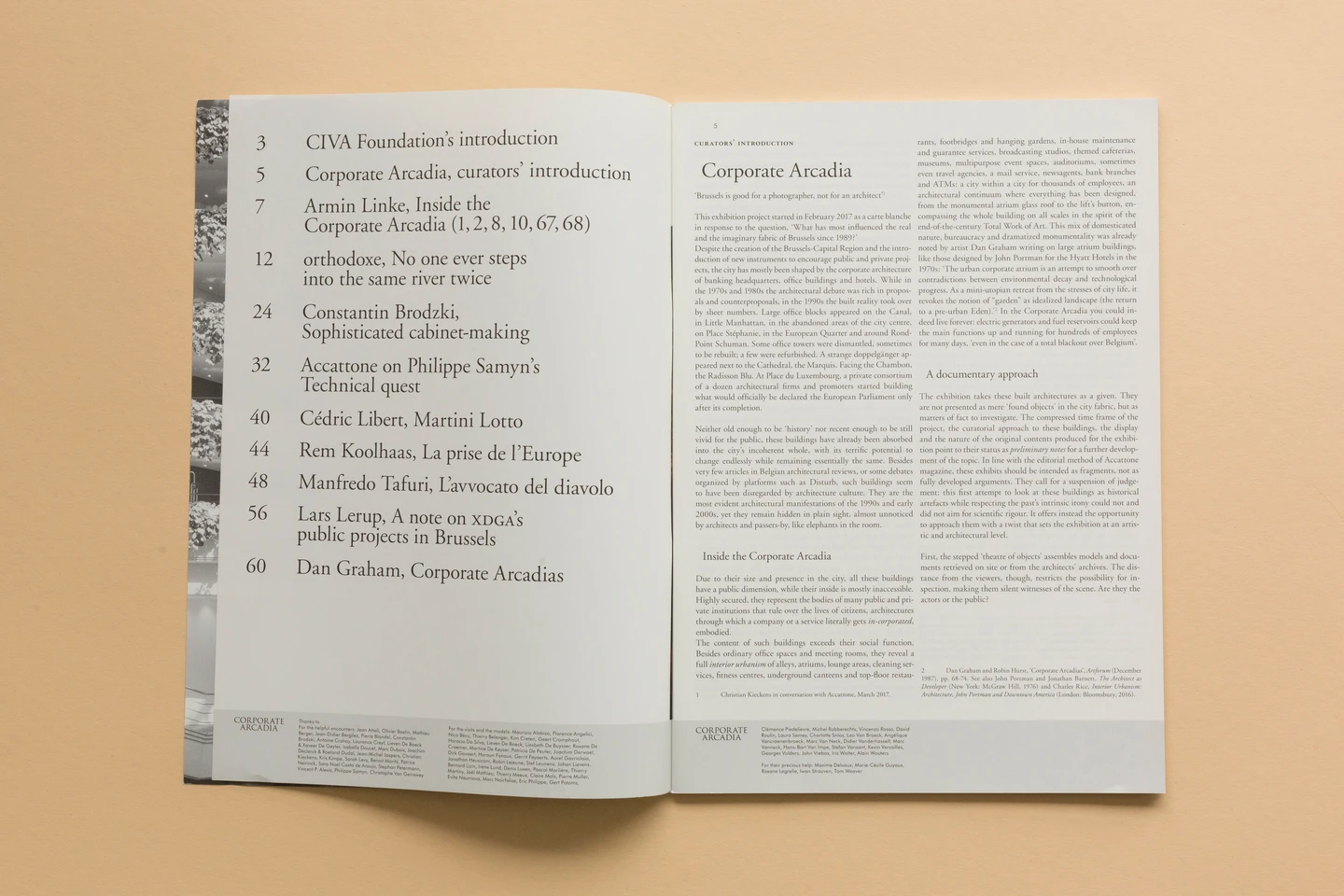
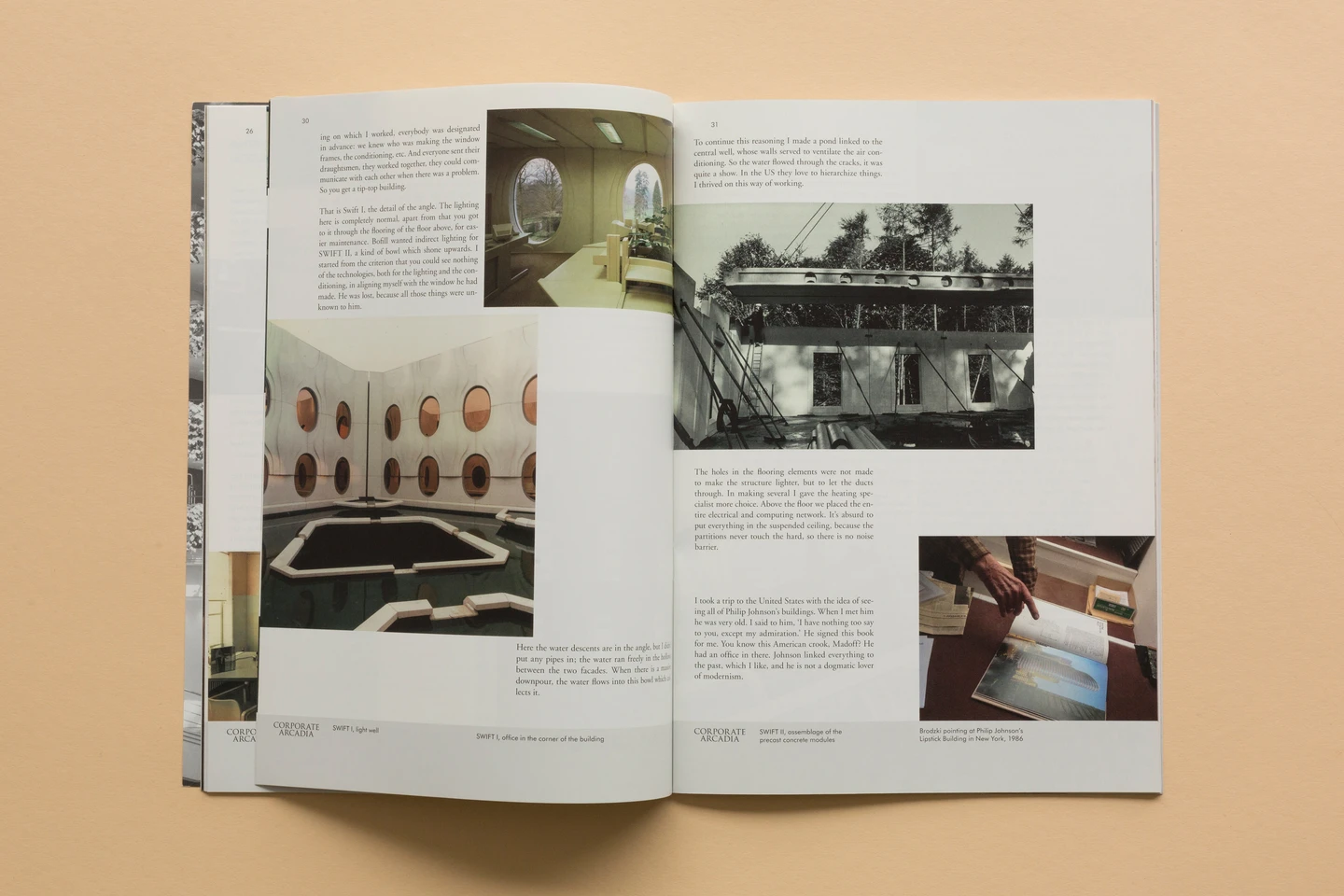
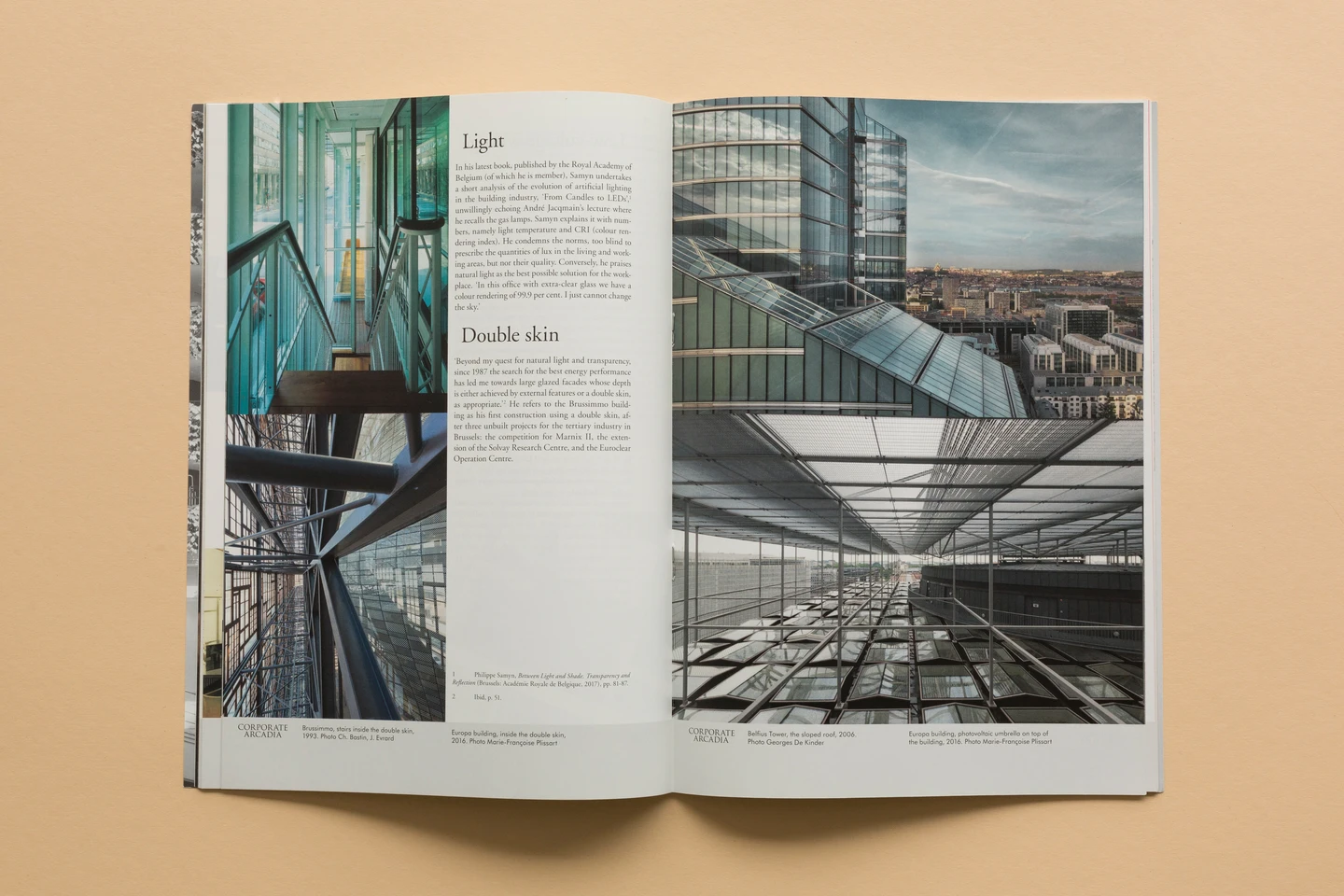
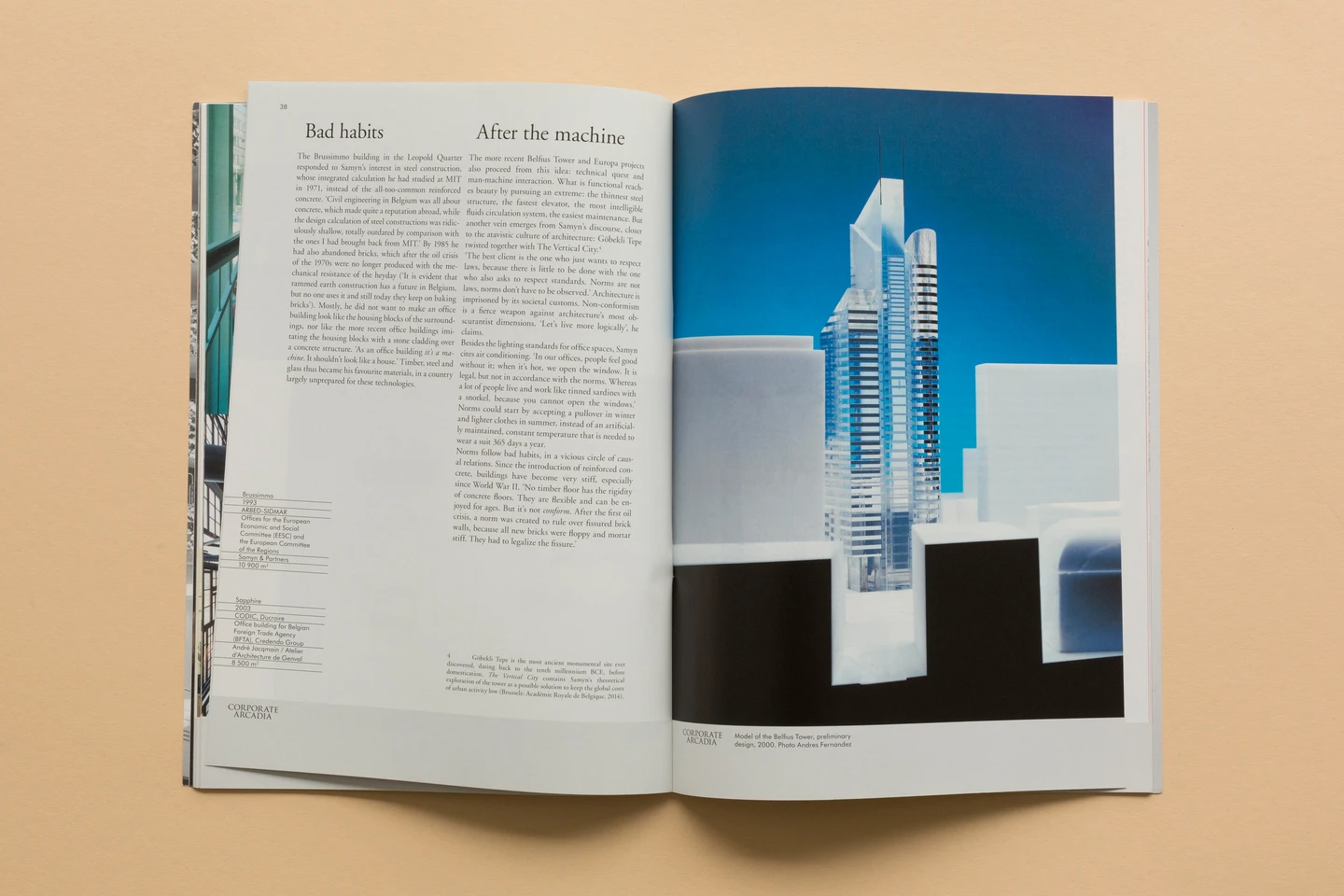
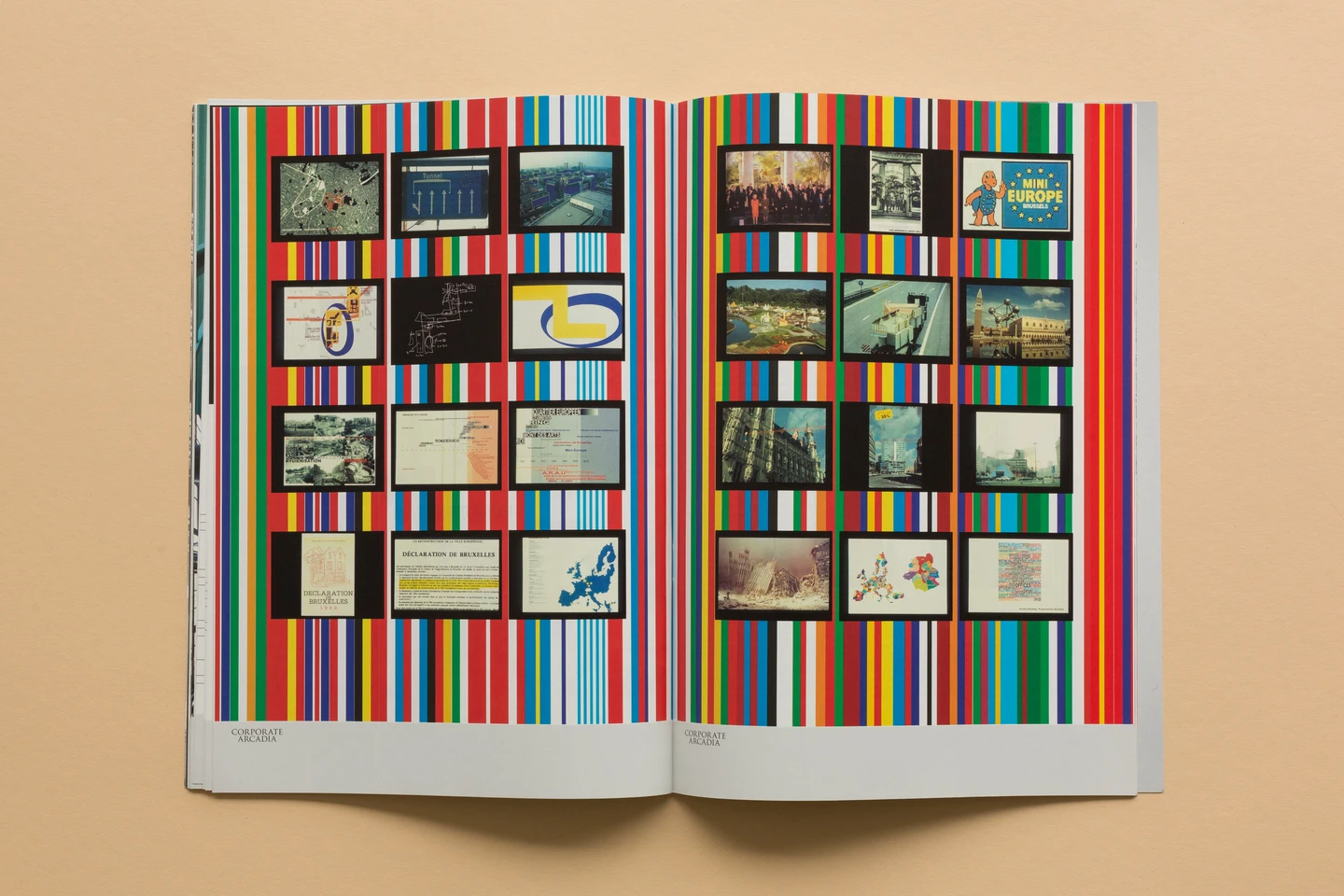
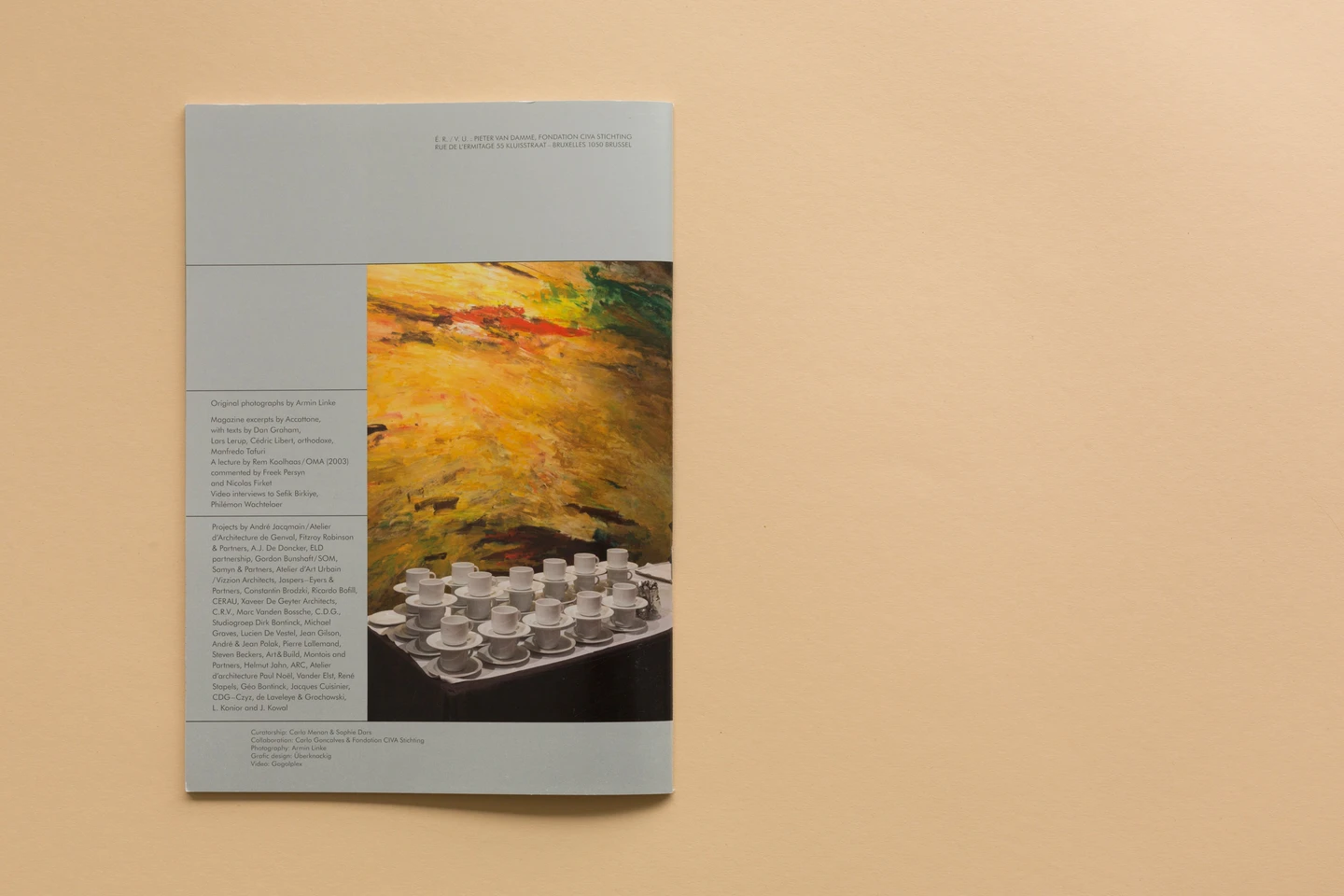
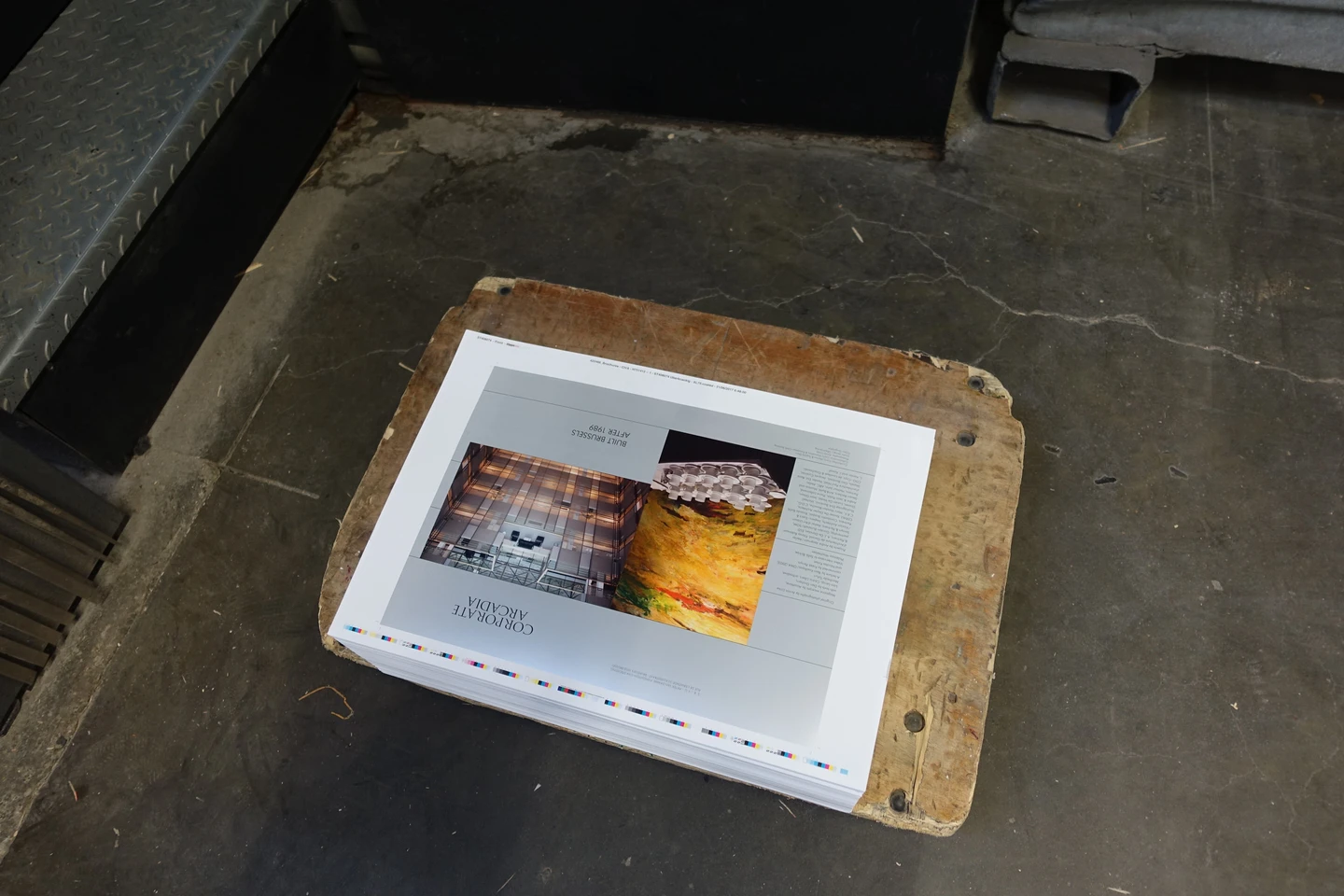
Accattone Graphics, Editorial 2017Magazine produced within the exhibition Corporate Arcadia, curated by Sophie Dars & Carlo Menon and commissioned by the CIVA’s Contemporary Architecture Department, Brussels, 23 Jun — 24 Sep 2017. Then hosted at TU Delft, Faculty of Architecture and the Built Environment, Department of Management in the Built Environment, 7 — 22 Dec 2017.
Corporate Arcadia looks at what is usually disregarded by architecture culture: the corporate architecture of banking headquarters, office buildings and hotels that has mostly shaped the city of Brussels in the 1990s and early 2000s. It does so with a twist:
1/ Armin Linke’s photographic work from inside the Corporate Arcadia reveals the hidden activities of fifteen institutions and at the same time ‘restores beauty to these invisible sites’, overlapping architecture, interior design and social functions.
2/ Magazine excerpts and videos offer thematic insights and counterpoints in the form of seven ‘double figures’, letting emerge multiple dimensions and critical knots.
3/ Models and documents retrieved on site or from the architects’ archives are called to perform as embodied figures on a stepped theatre of objects: if their position is static, the concepts they carry are mobile, open to interpretation and recombination.Links:
Press kit
CIVA website
TU Delft videos -
-
Ekibondo
Garage MCA Graphics, Production 2017 -
-
Copper Negative of Luxury Cloth
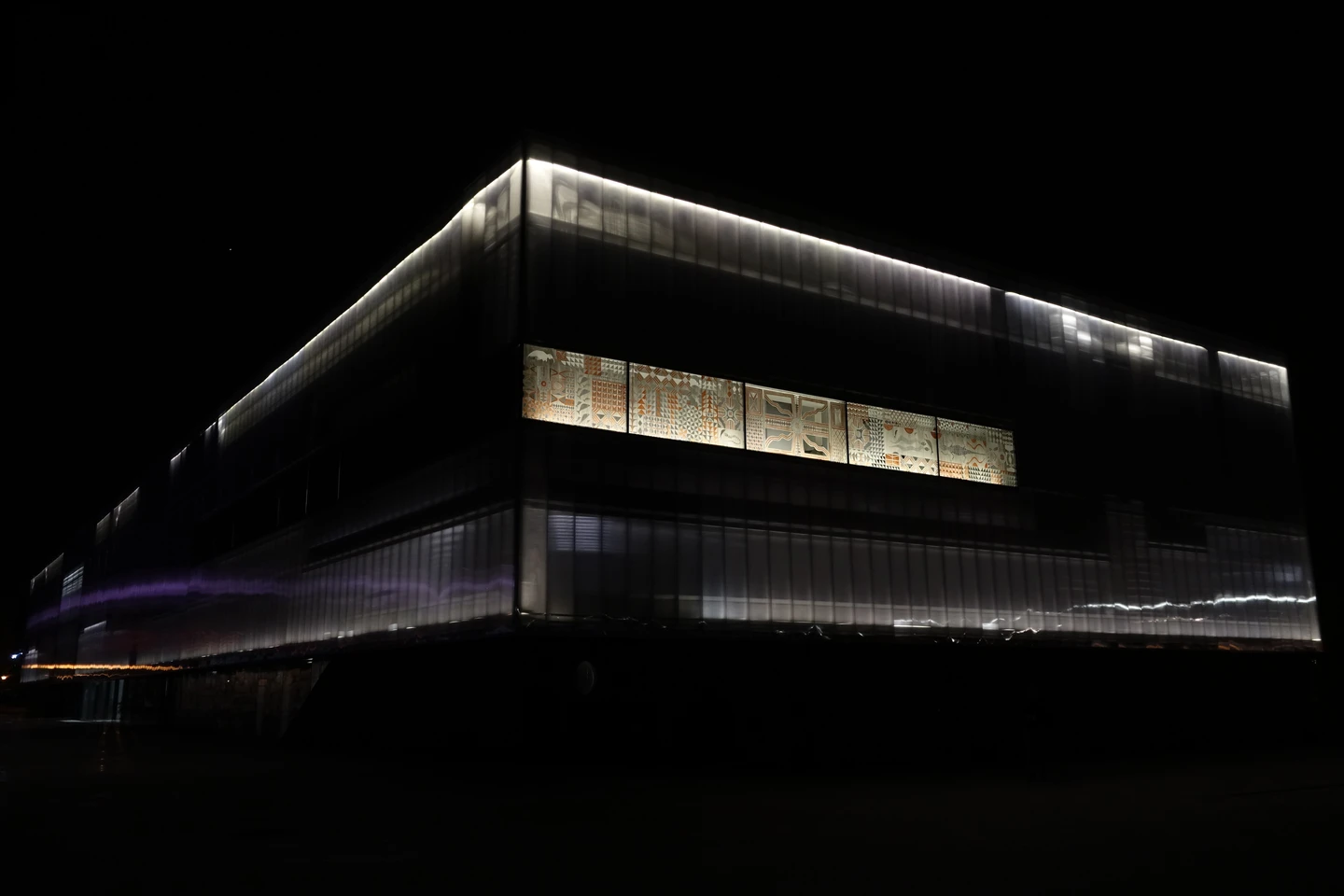
documenta Production, Sculpture 2017Deux bas refliefs en bronze représentant des négatifs de tissages en rafia du peuple Kongo du XVIIe et XVIIIe siècle.
(Repertoriés dans le catalogue de l'exposition au Metropolitan Museum, NYC - photographies 'originales' du musée Pigorini, Rome)
Initialement partie de l'installation 'Frangment of Interlaced Dialogues' Sammy Baloji, Documenta 14, Kassel 17
Fig. 18, inv. 1709, 66 x 65 cm
Fig. 98, inv. 1876, 51 x 79,4 cm (ref. Inventaire GIF SB0151.2 - 74 x 101 cm?)Traitement des photographies 'originales' du musée Pigorini, Rome, pour conversion en fichier 3D
Suivi de productionVitrines with historical letter and seven mats of raffia fibers
(Kongo Peoples; Kongo Kingdom, Democratic Republic of the Congo, Republic of the Congo or Angola, seventeenth–nineteenth centuries)
Raffia and pigment
Dimensions ranging from 55 × 54 cm to 73 × 128 cm
Six works: Nationalmuseet, Copenhagen; one work: Royal Museum for Central Africa, Tervuren, Belgium -
-
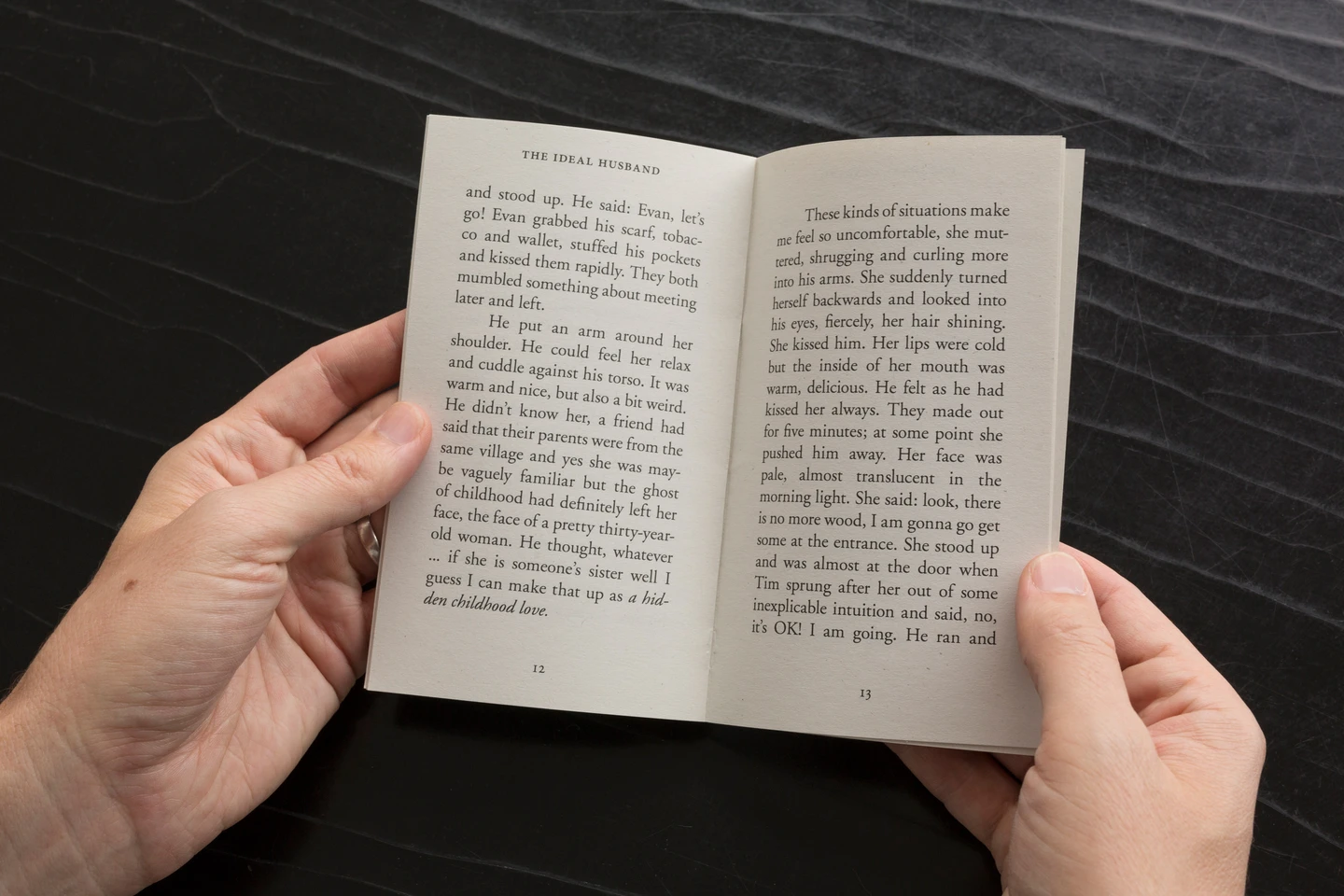
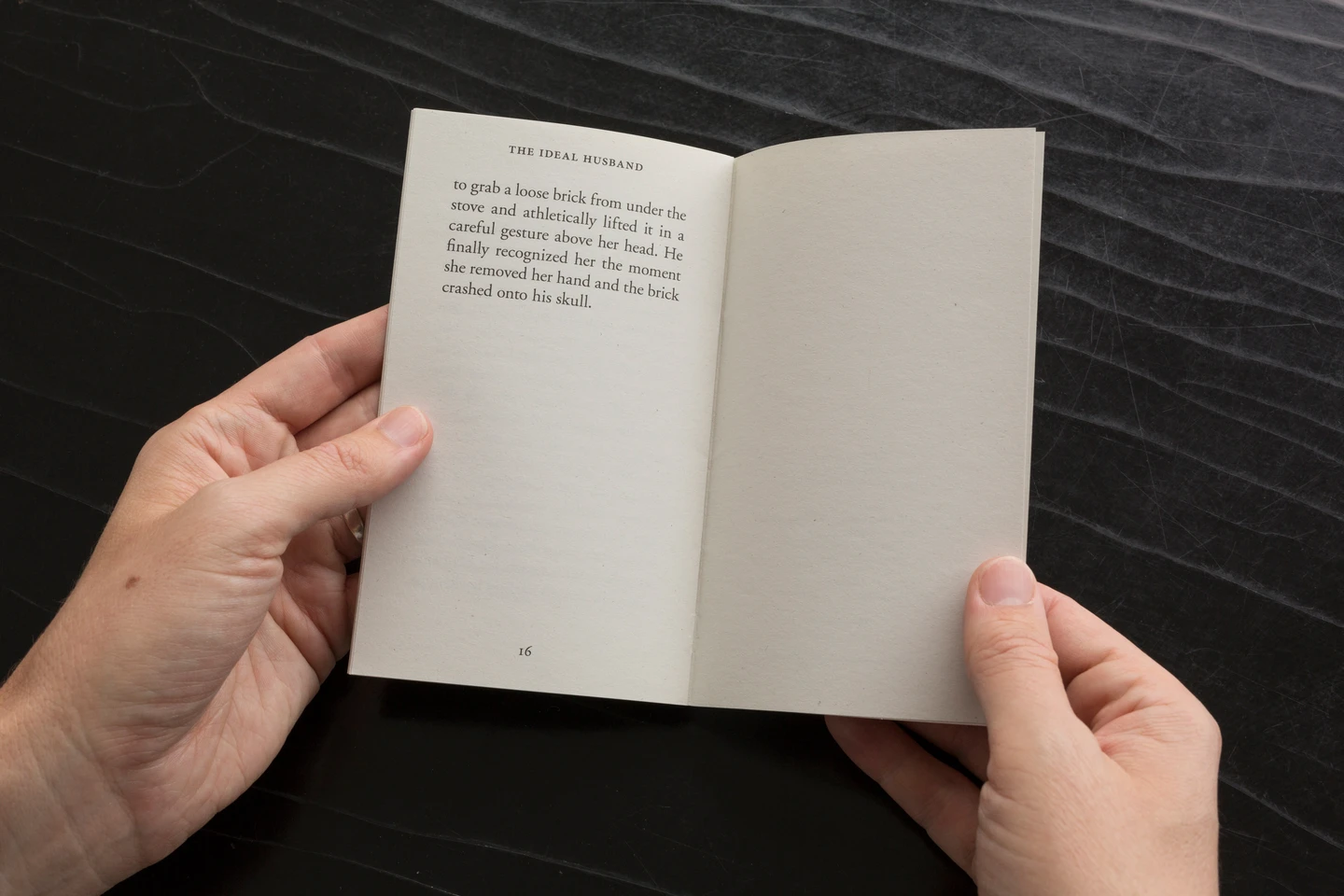
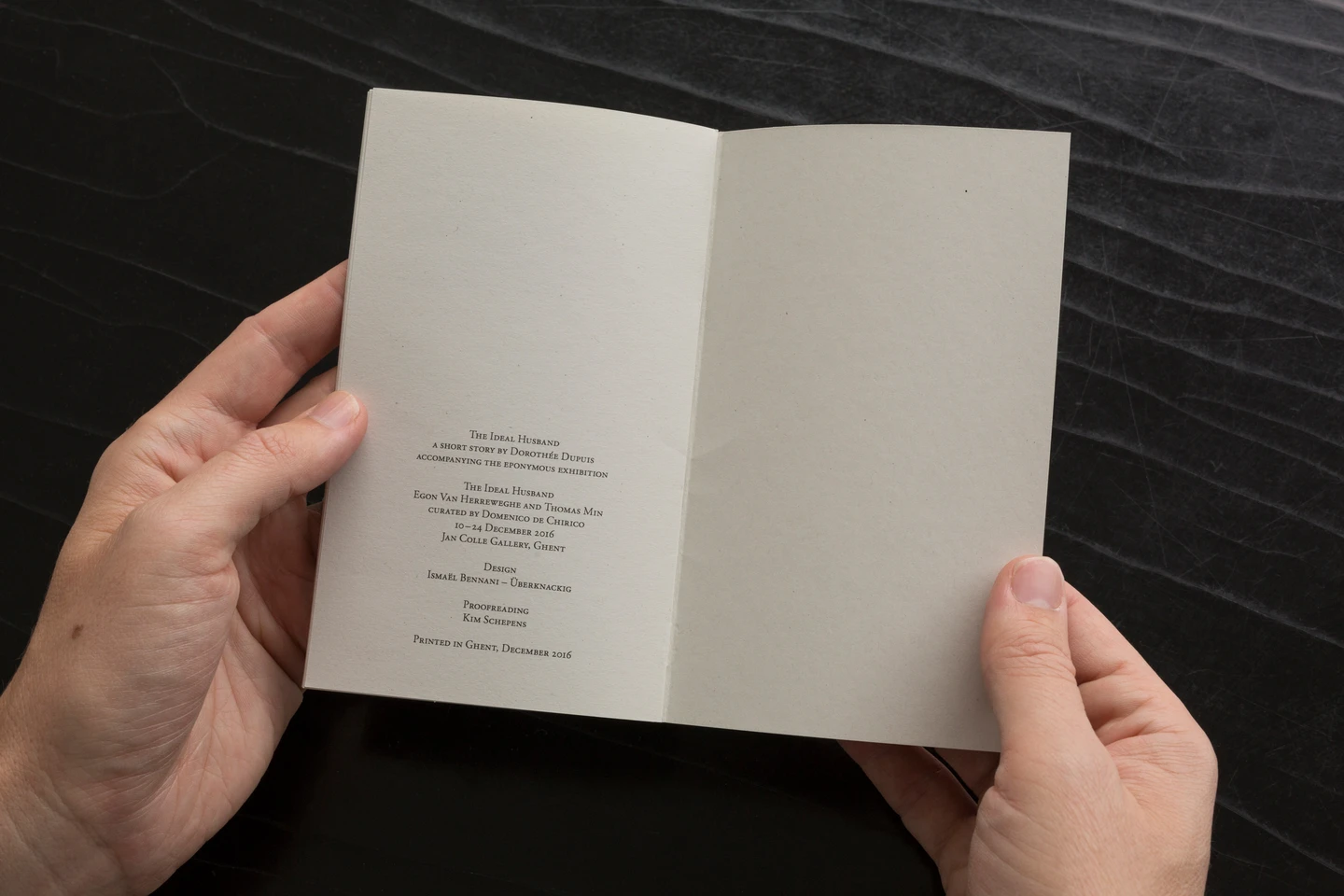
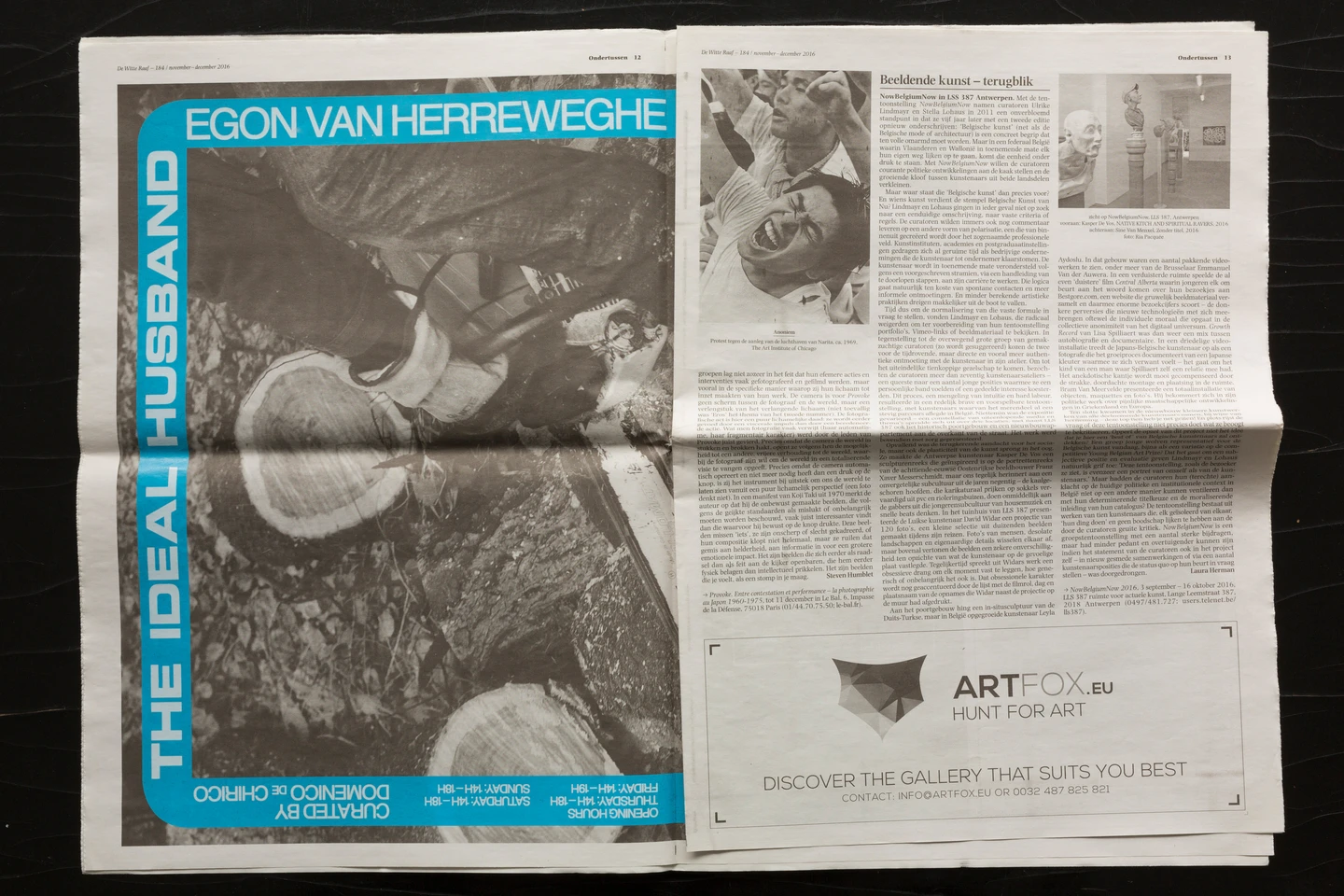
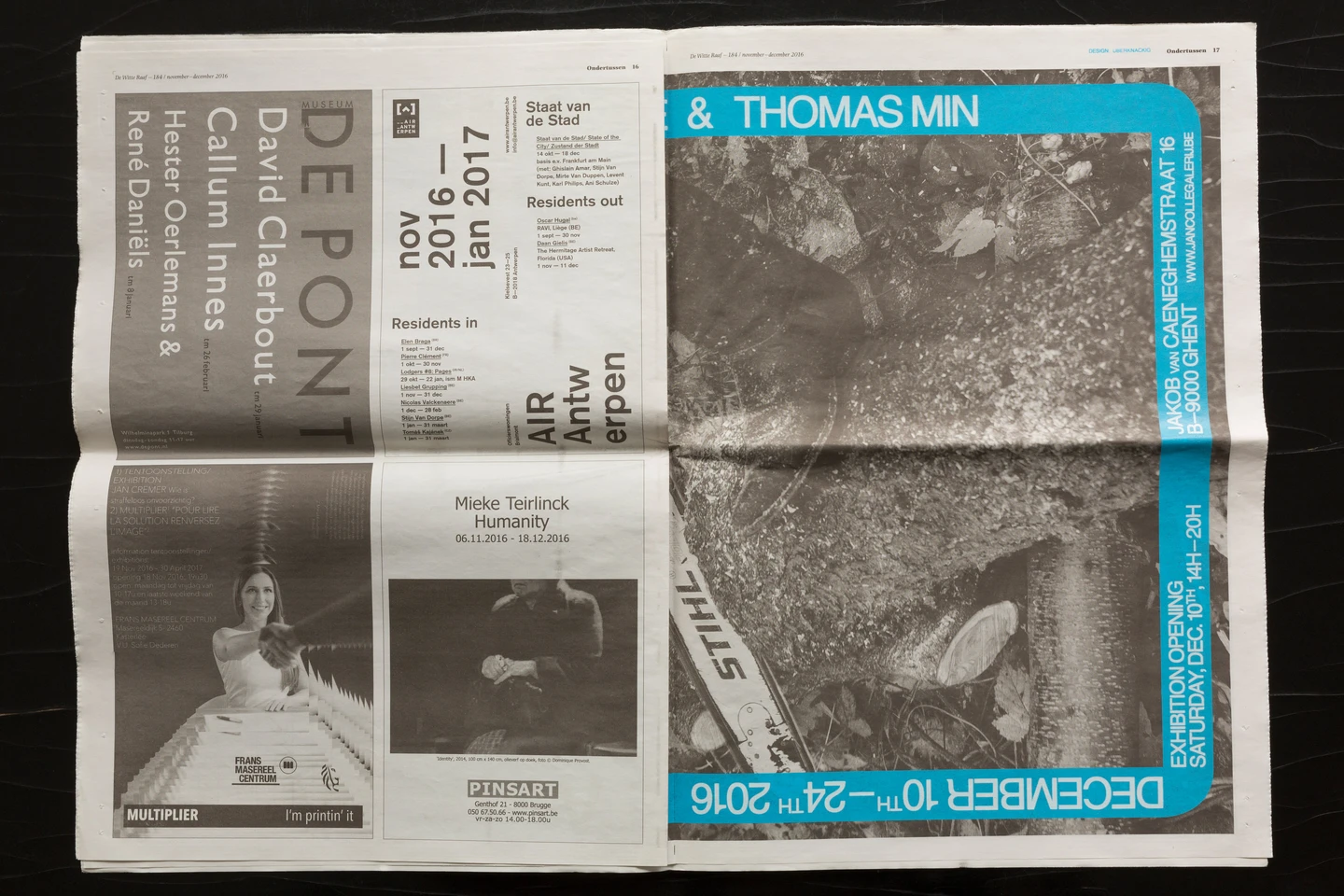
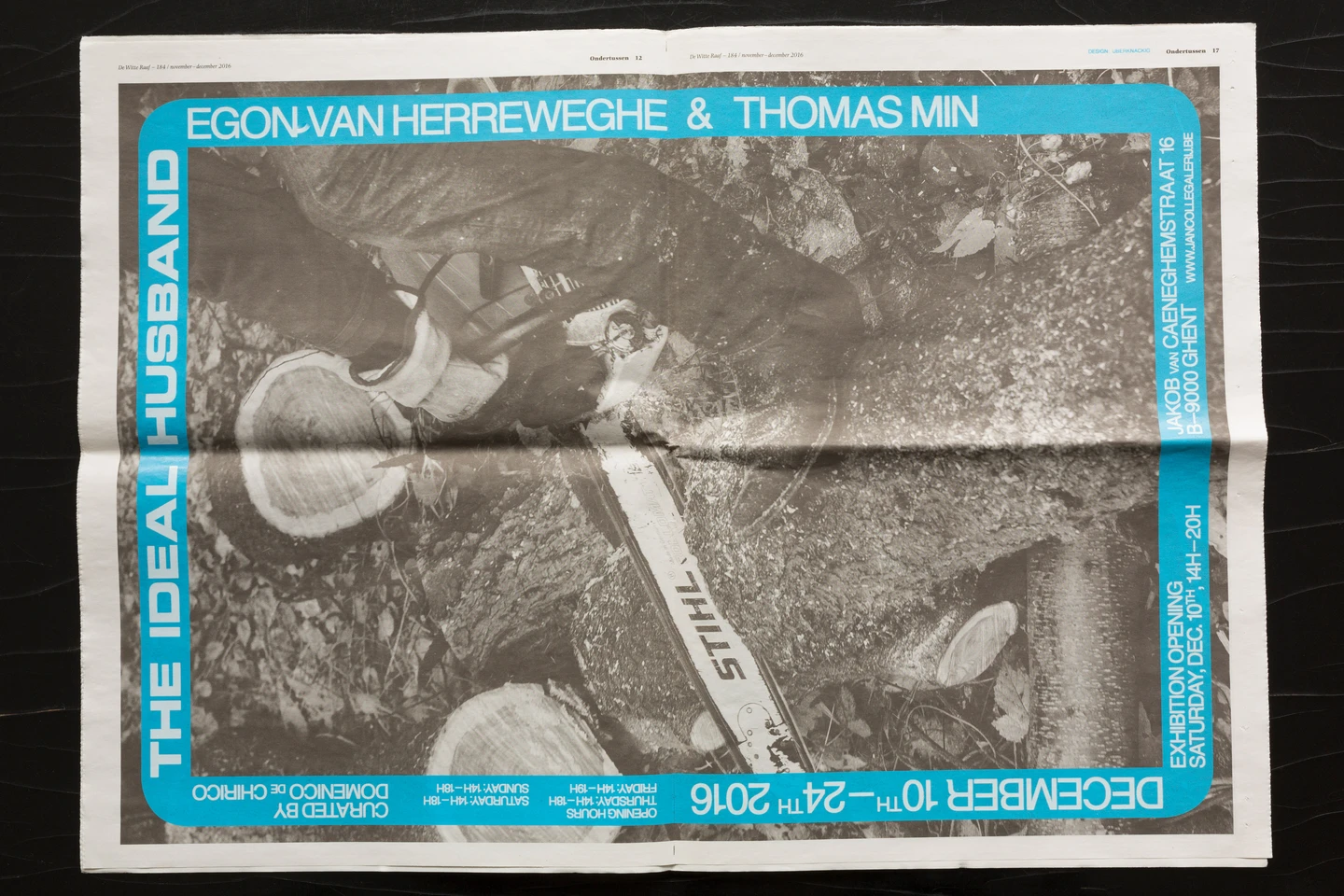
The Ideal Husband
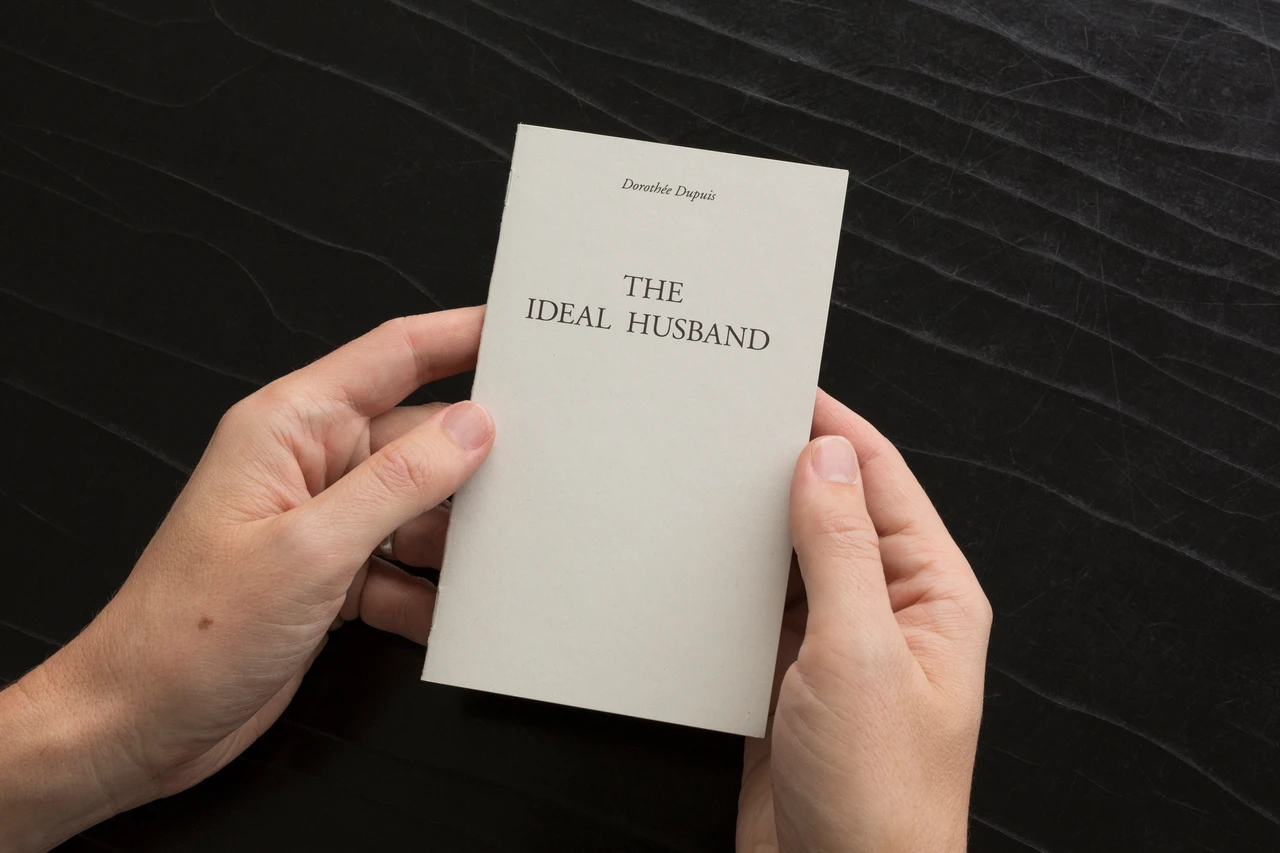
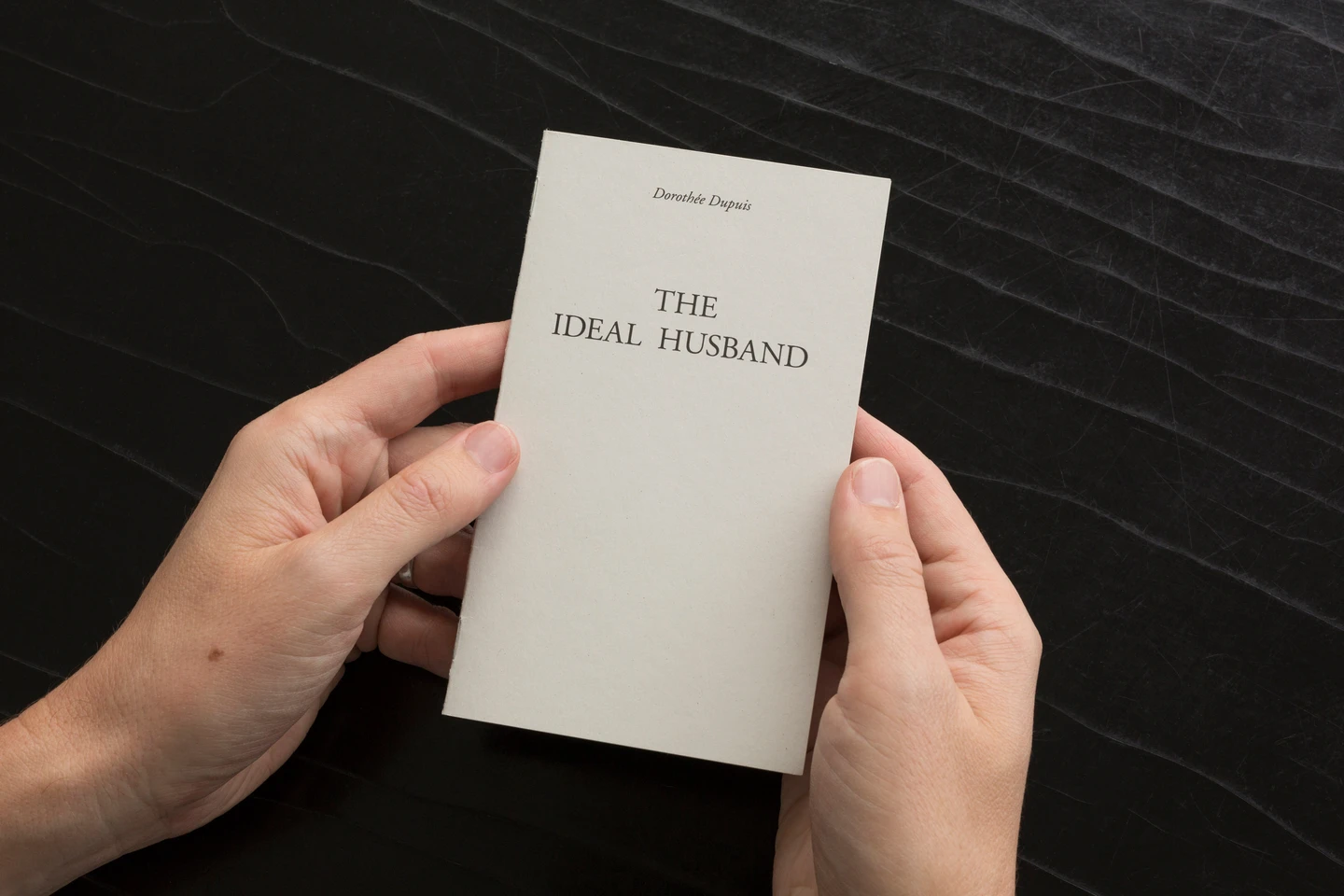
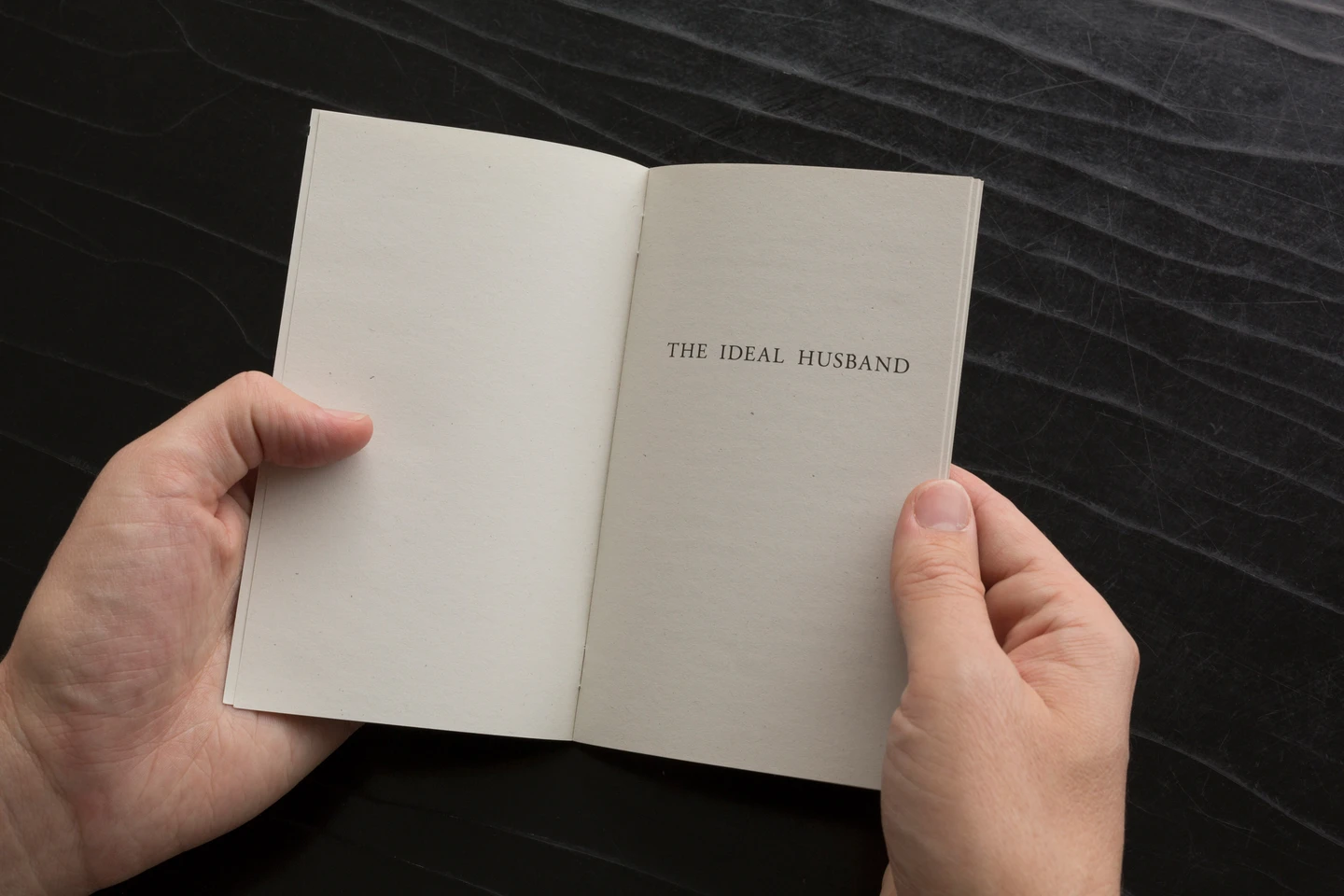
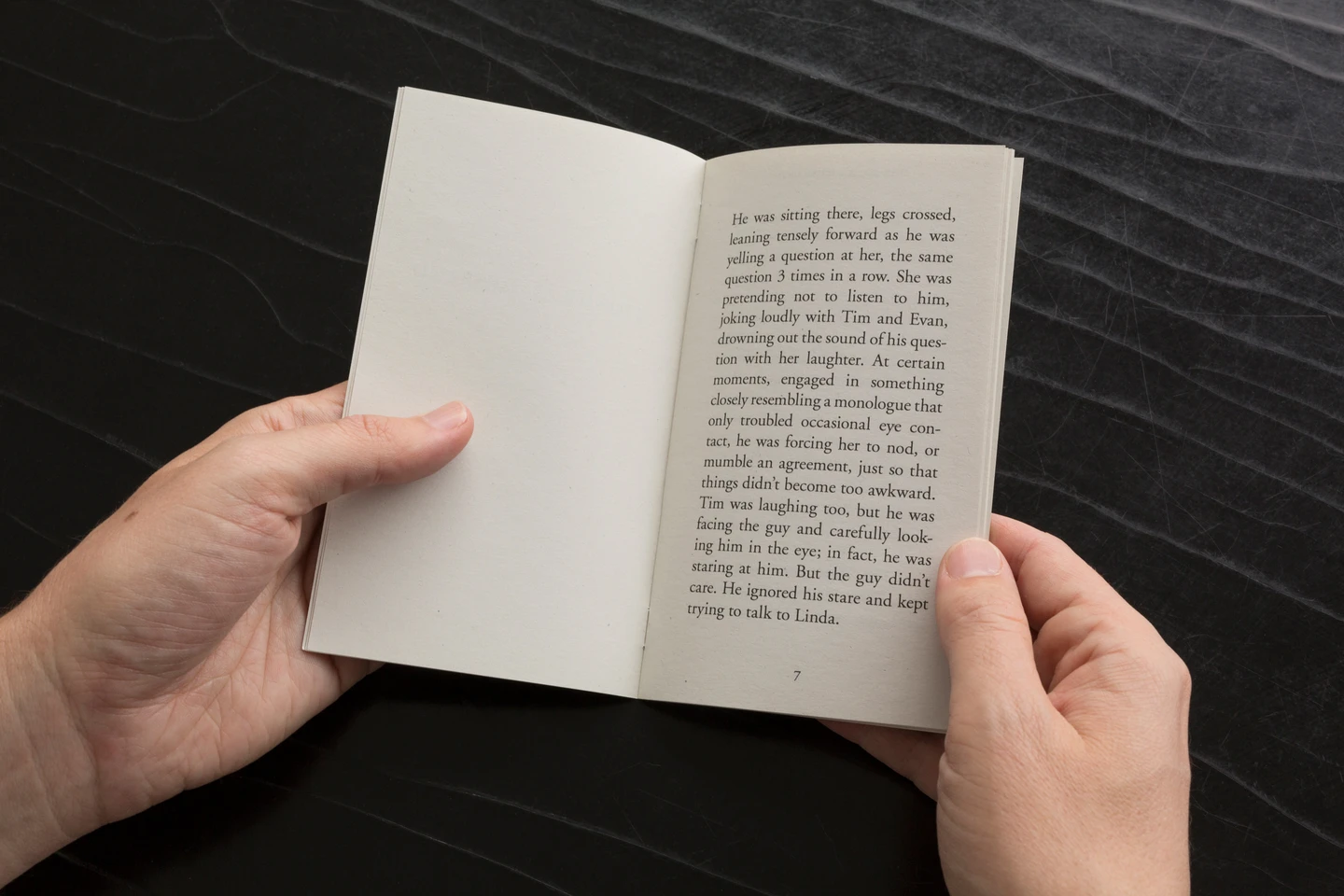
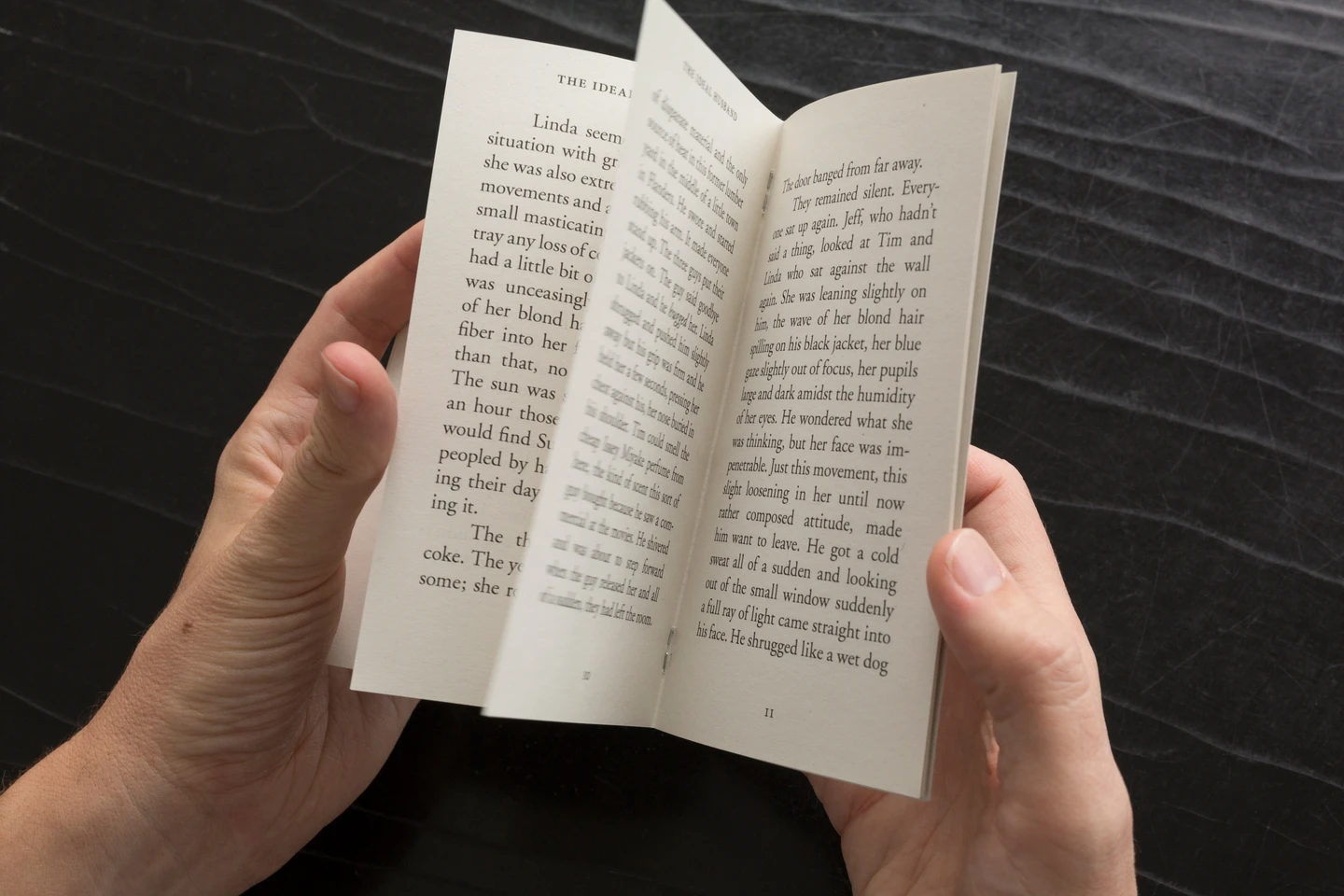
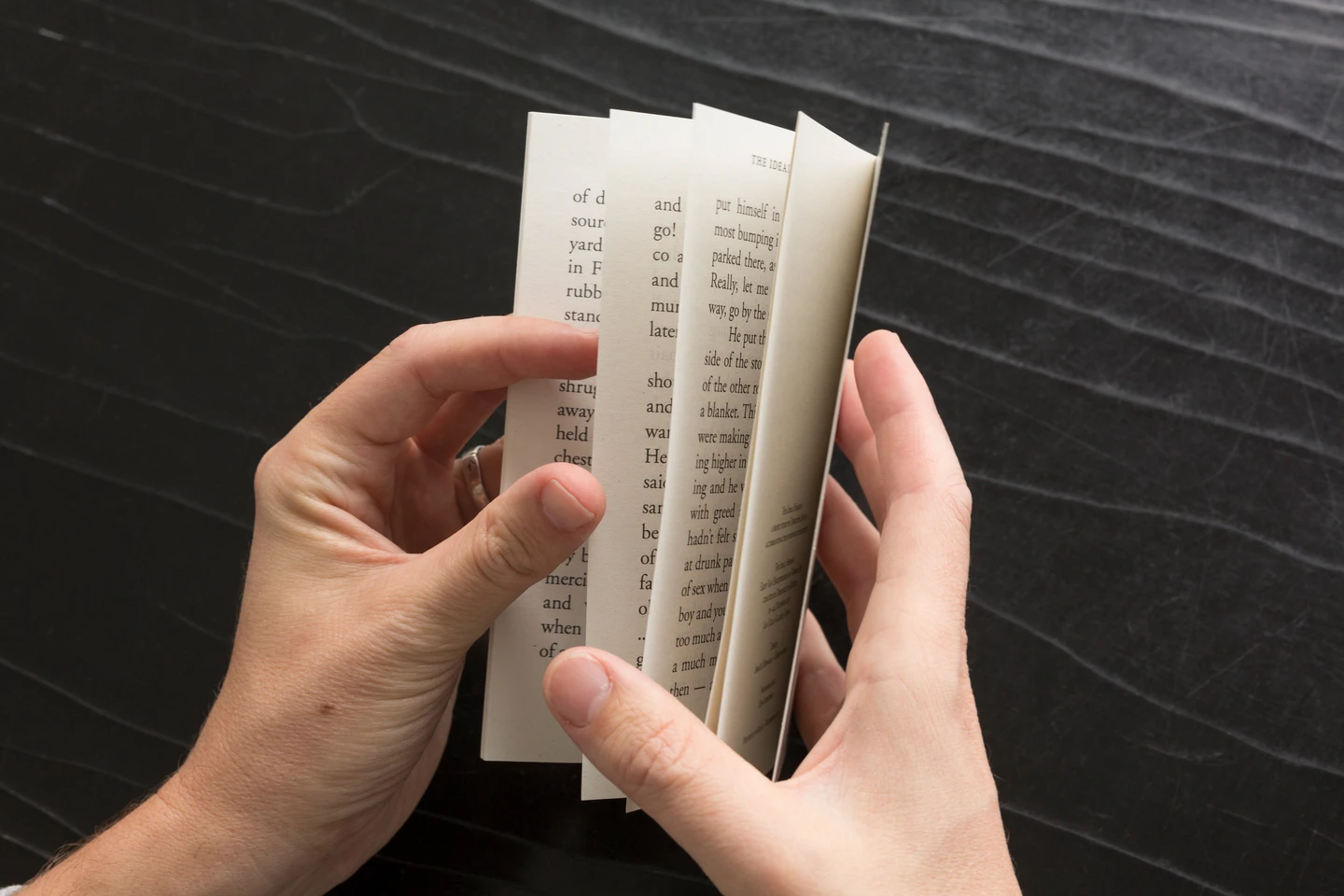
Editions Menard Editorial, Ephemera 2016The Ideal Husband is a short story written by Dorothée Dupuis at the request of Thomas Min and Egon Van Herreweghe in response to the eponymous exhibition from 10 to 24 December 2016, curated by Domenico de Chiricoin at Jan Colle Gallery, Ghent, Belgium.
Texte source:
"The Ideal Husband is a short story written by Dorothée Dupuis at the request of Thomas Min and Egon Van Herreweghe in response to the eponymous exhibition in Jan Colle Gallery in December 2016." — The Authors
Contributed by EVH. -
-
Ekibondo
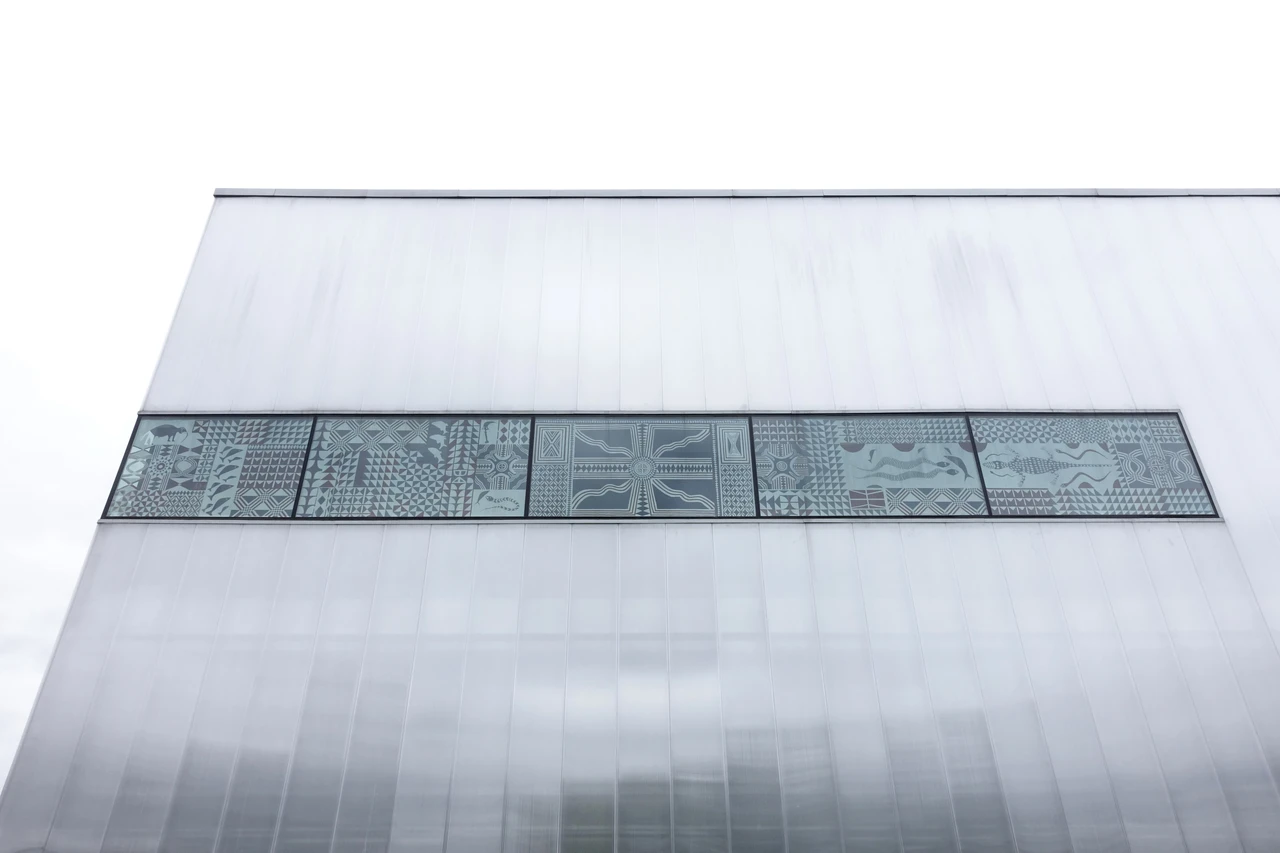
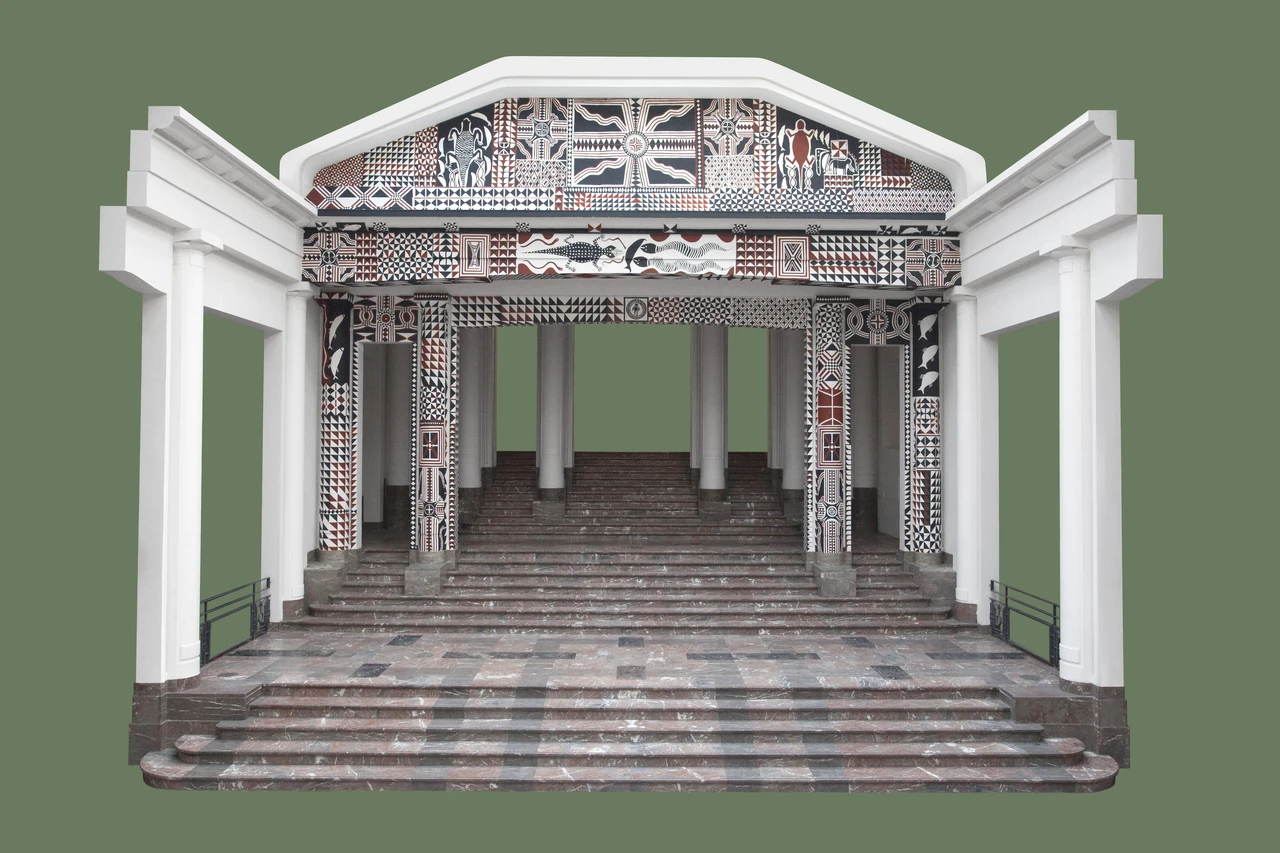
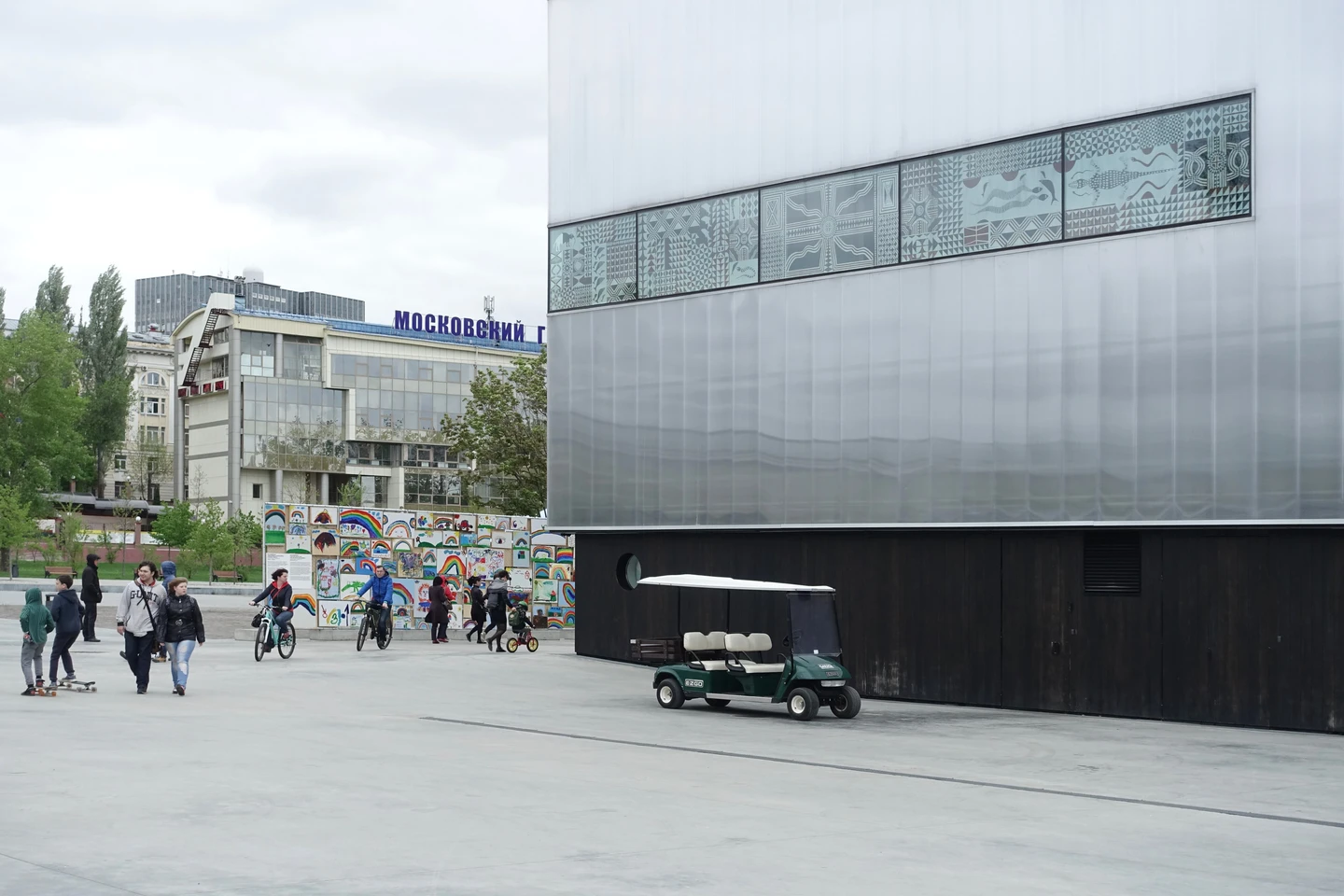
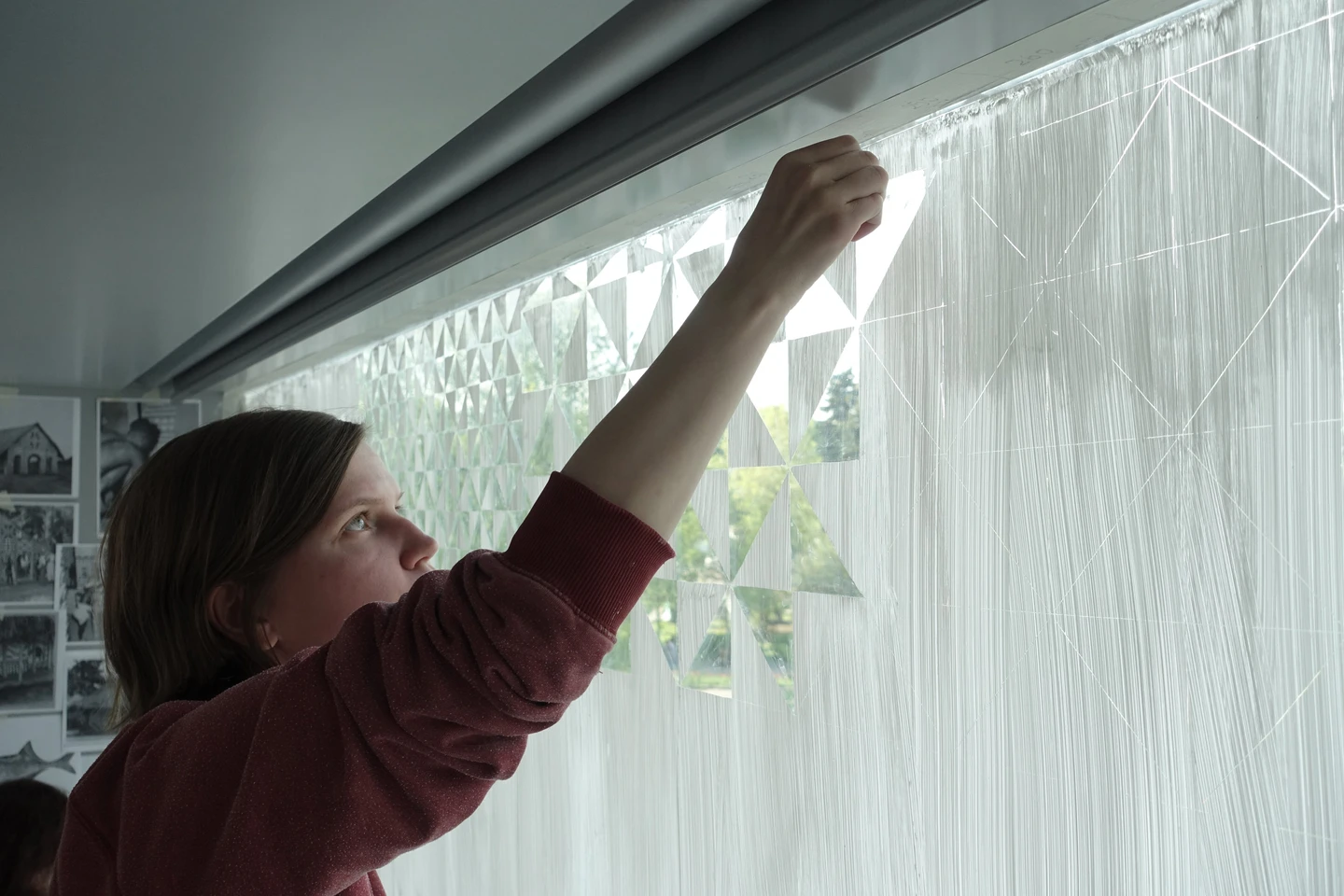
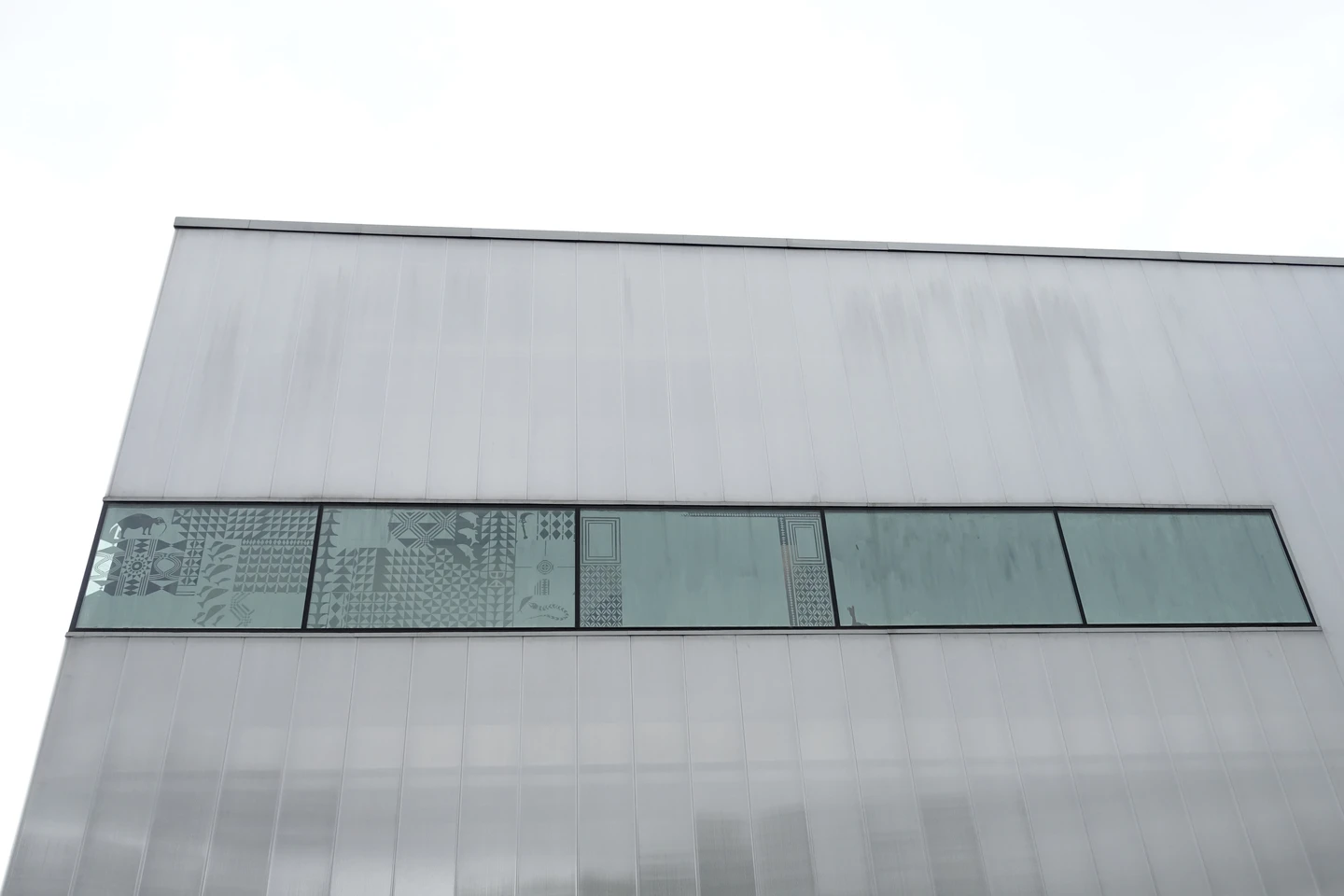
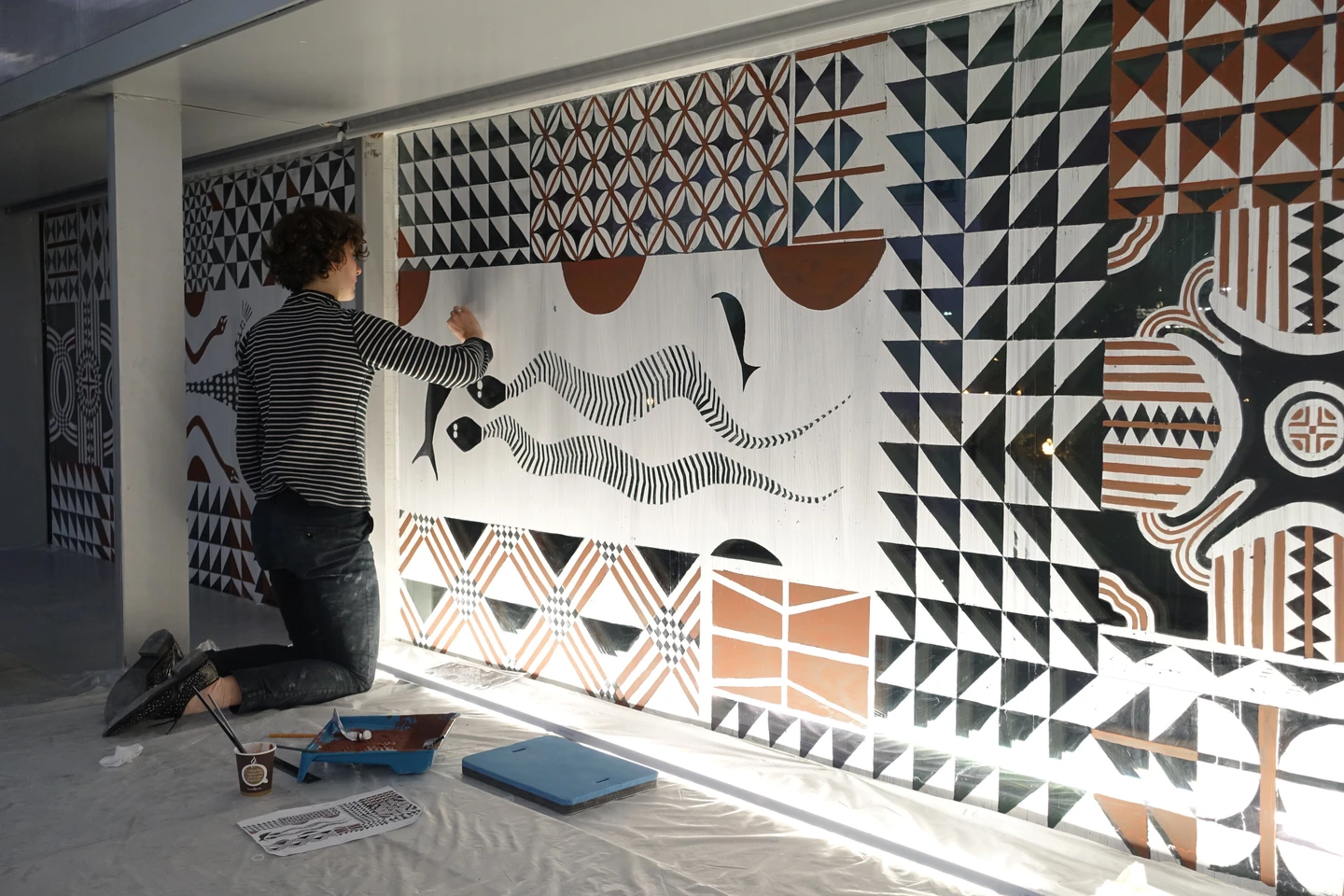
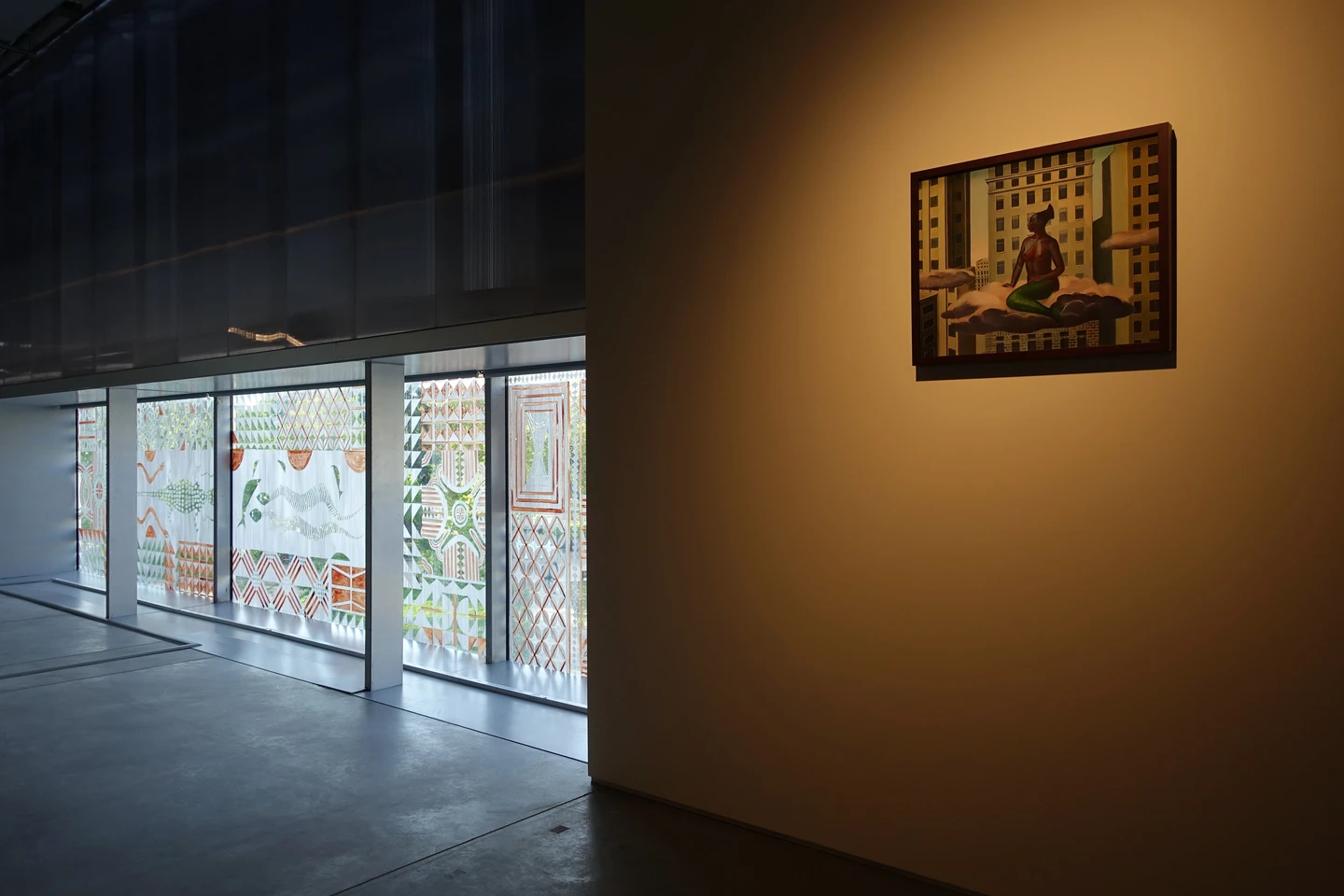
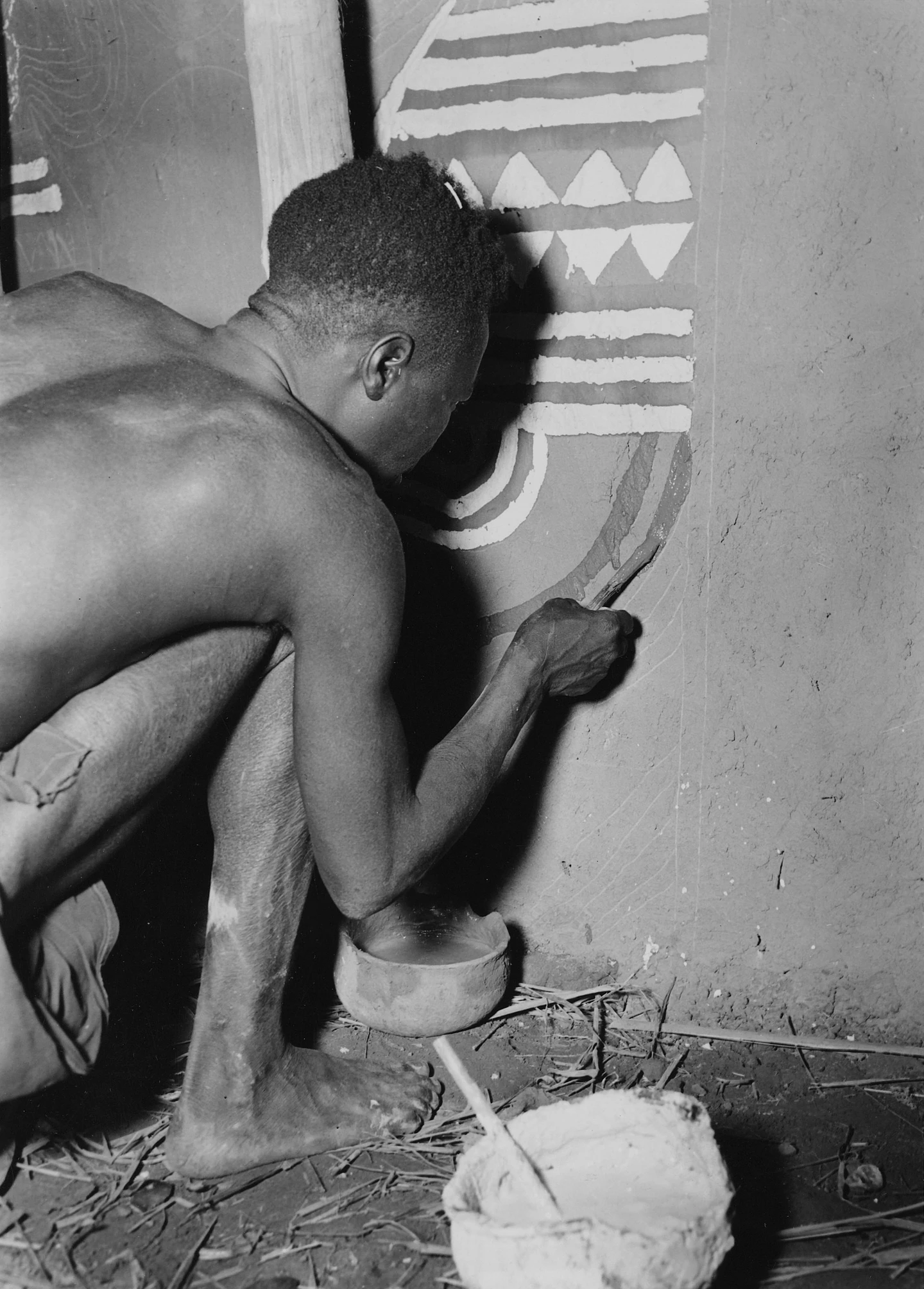
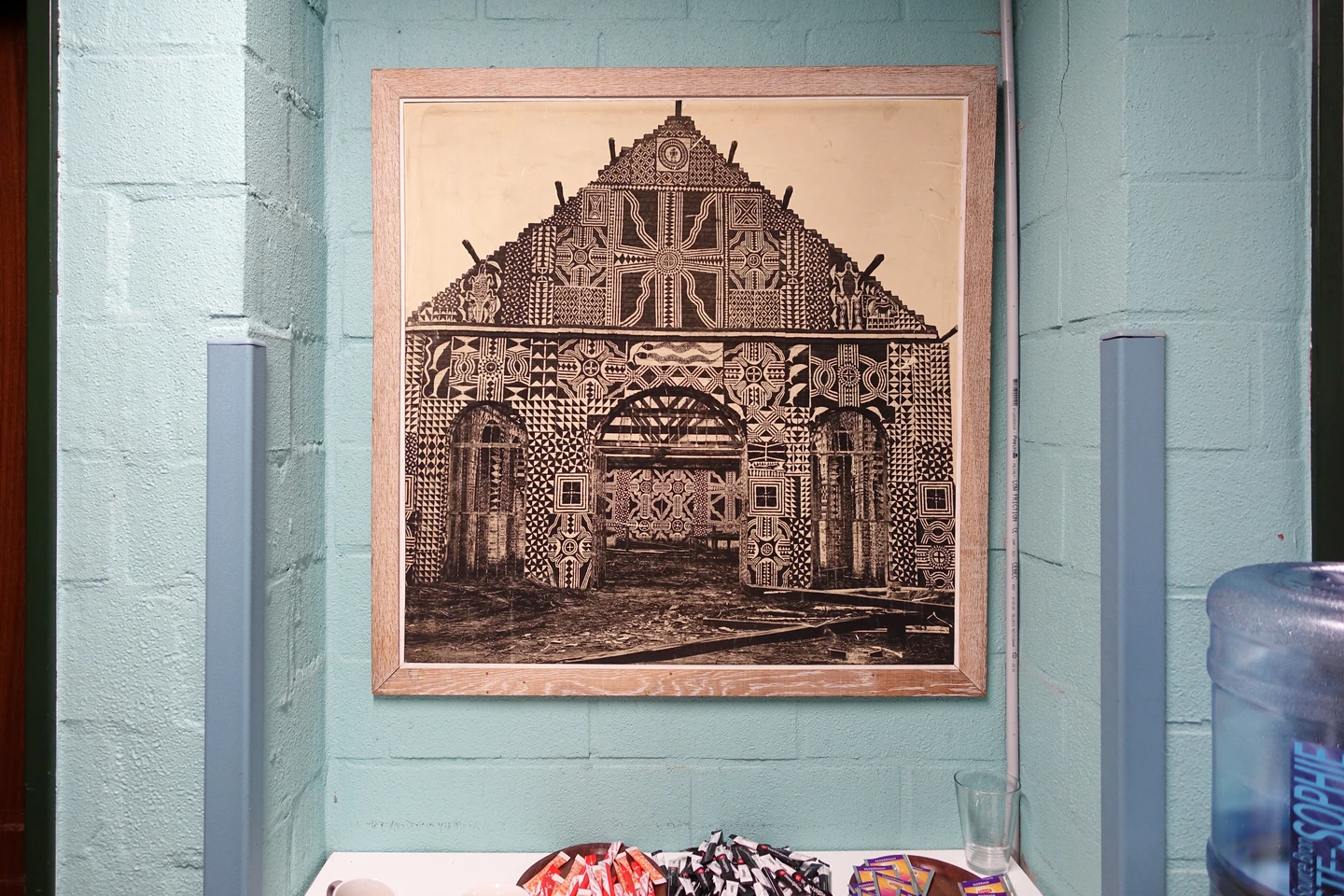
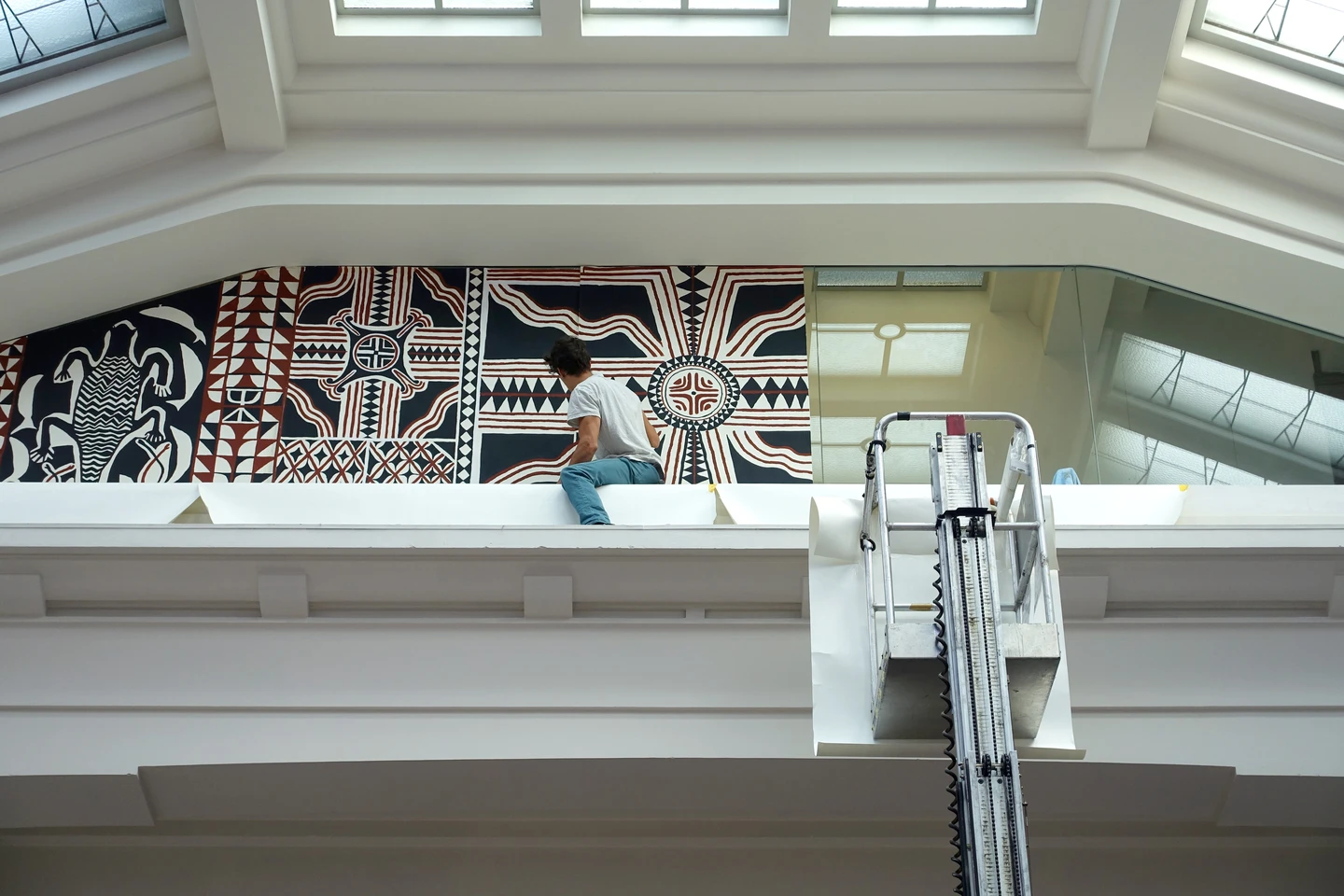
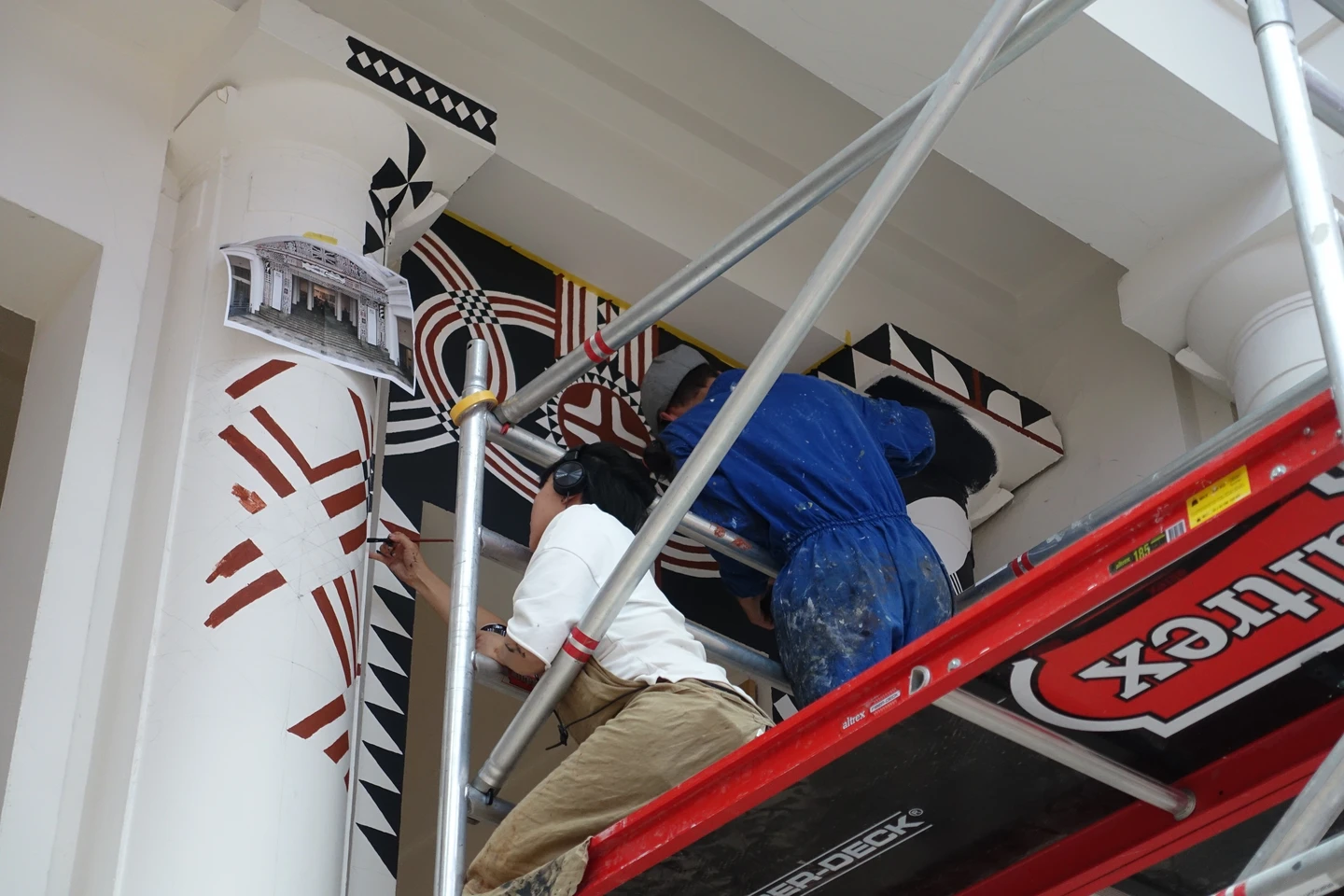
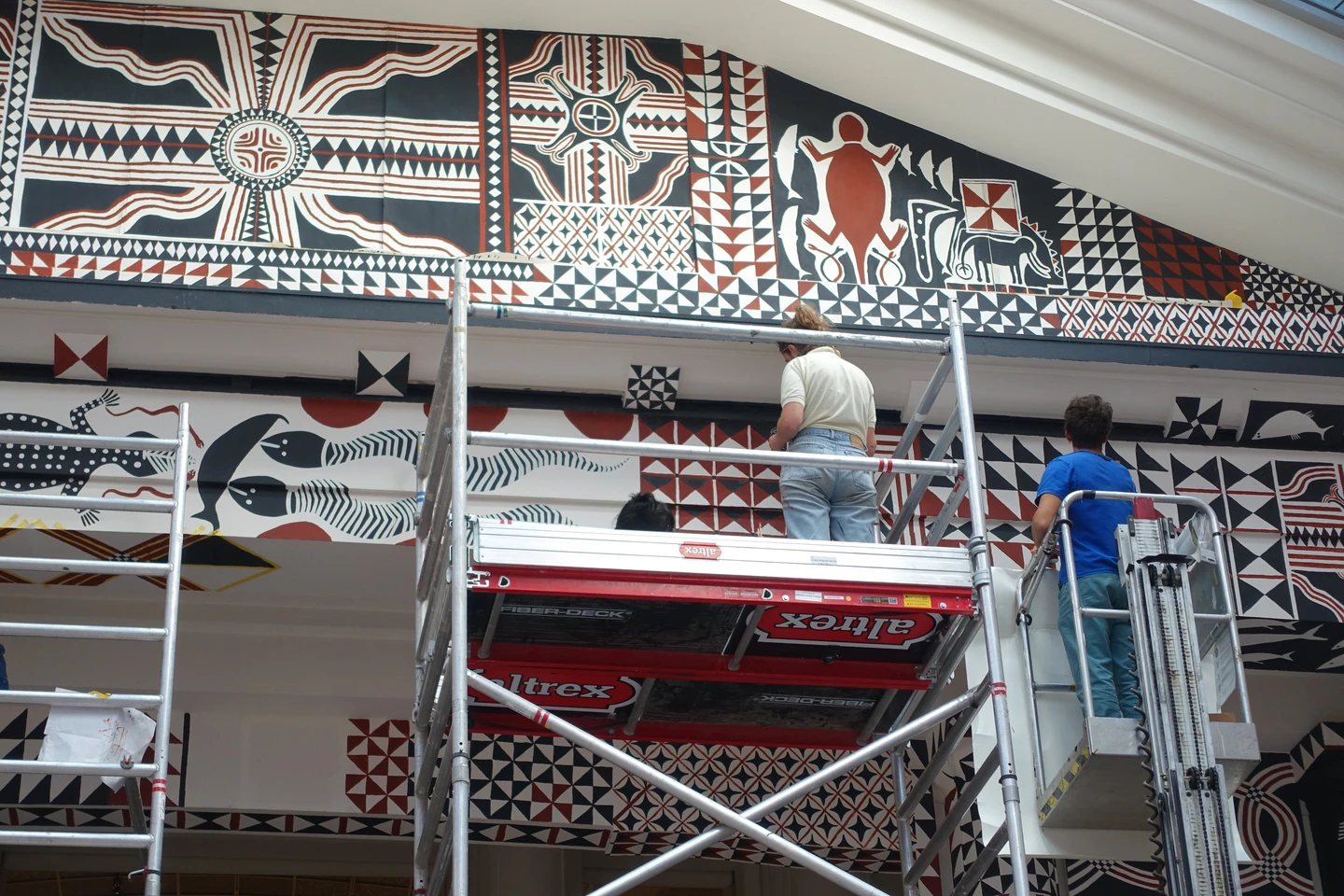
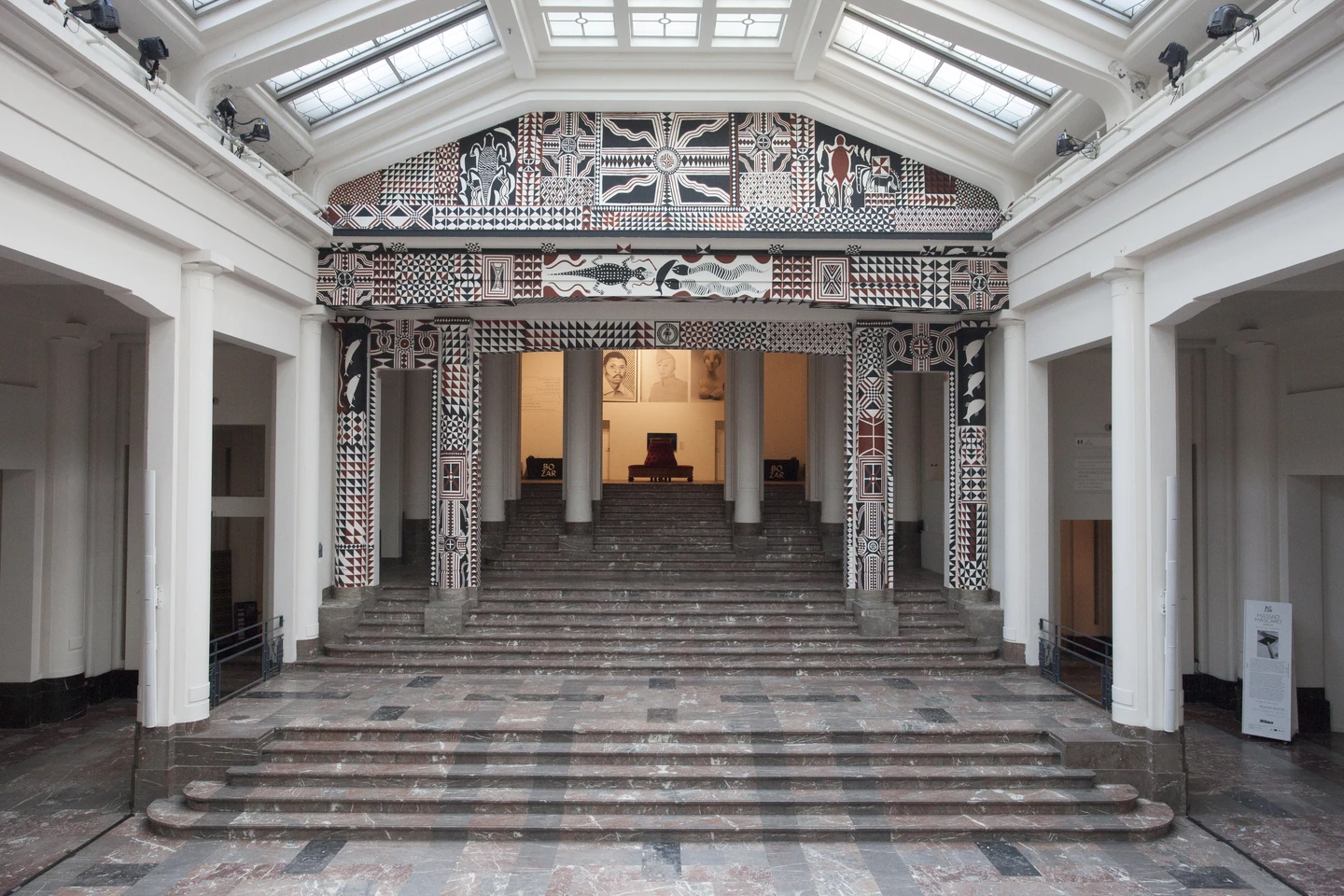
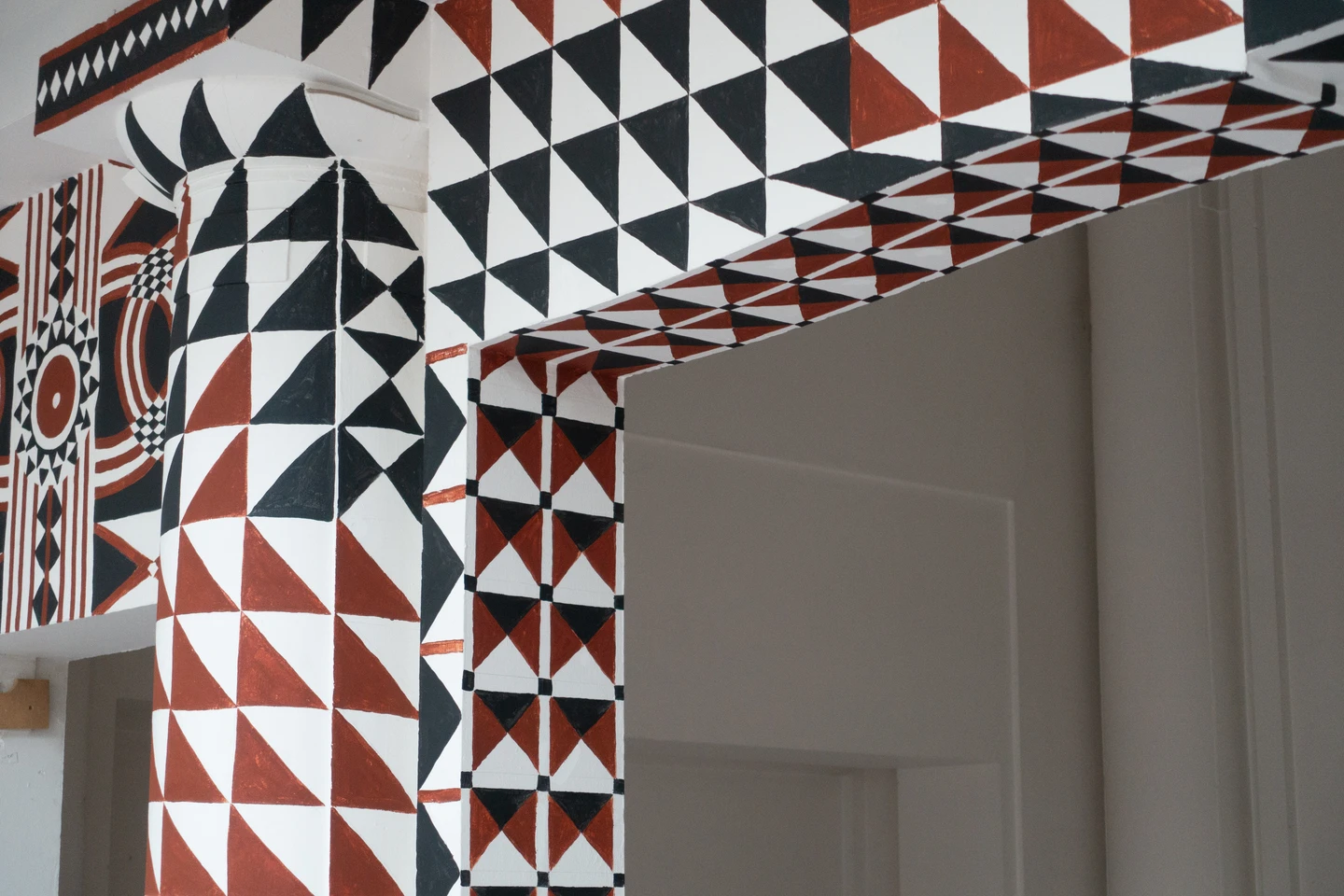
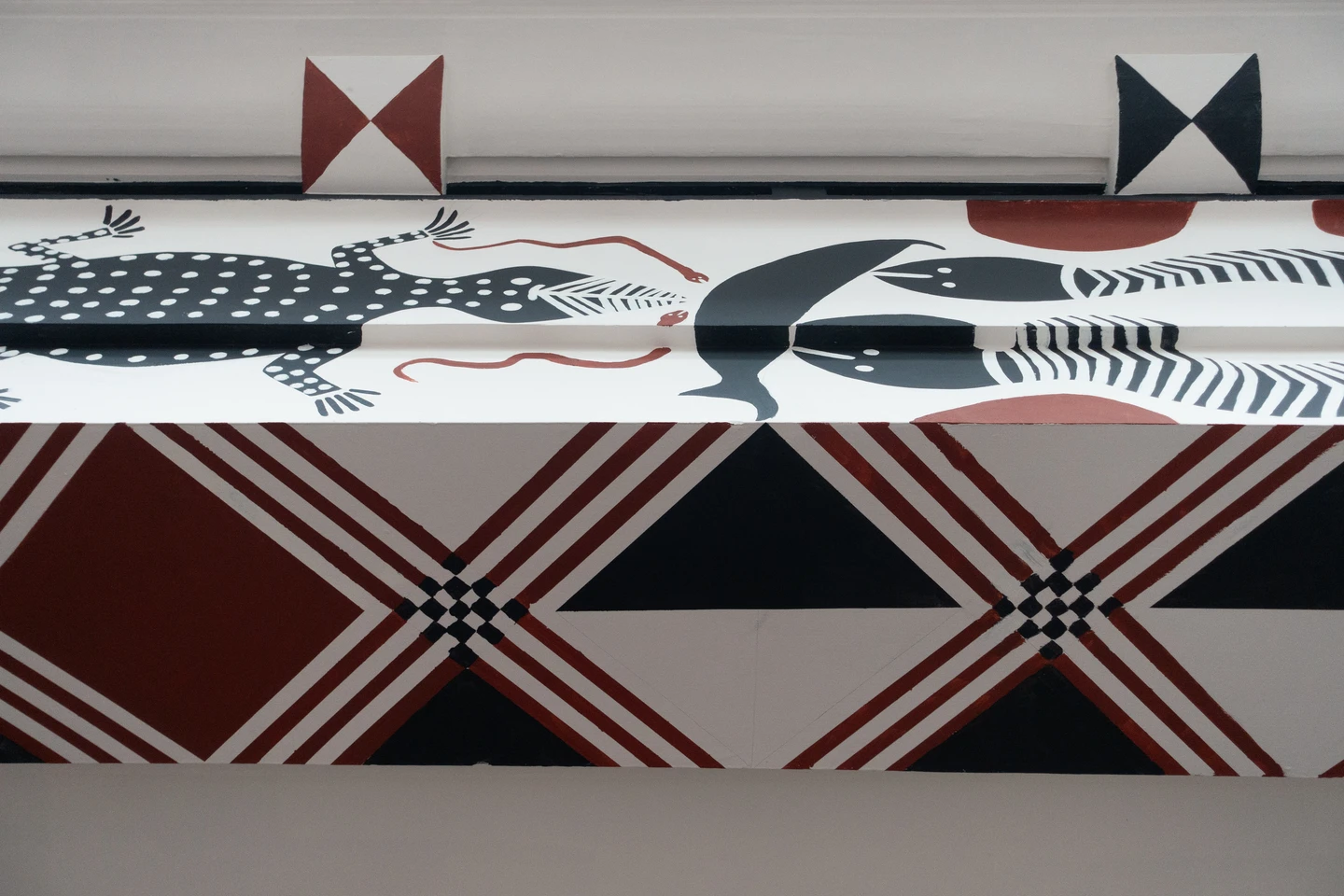
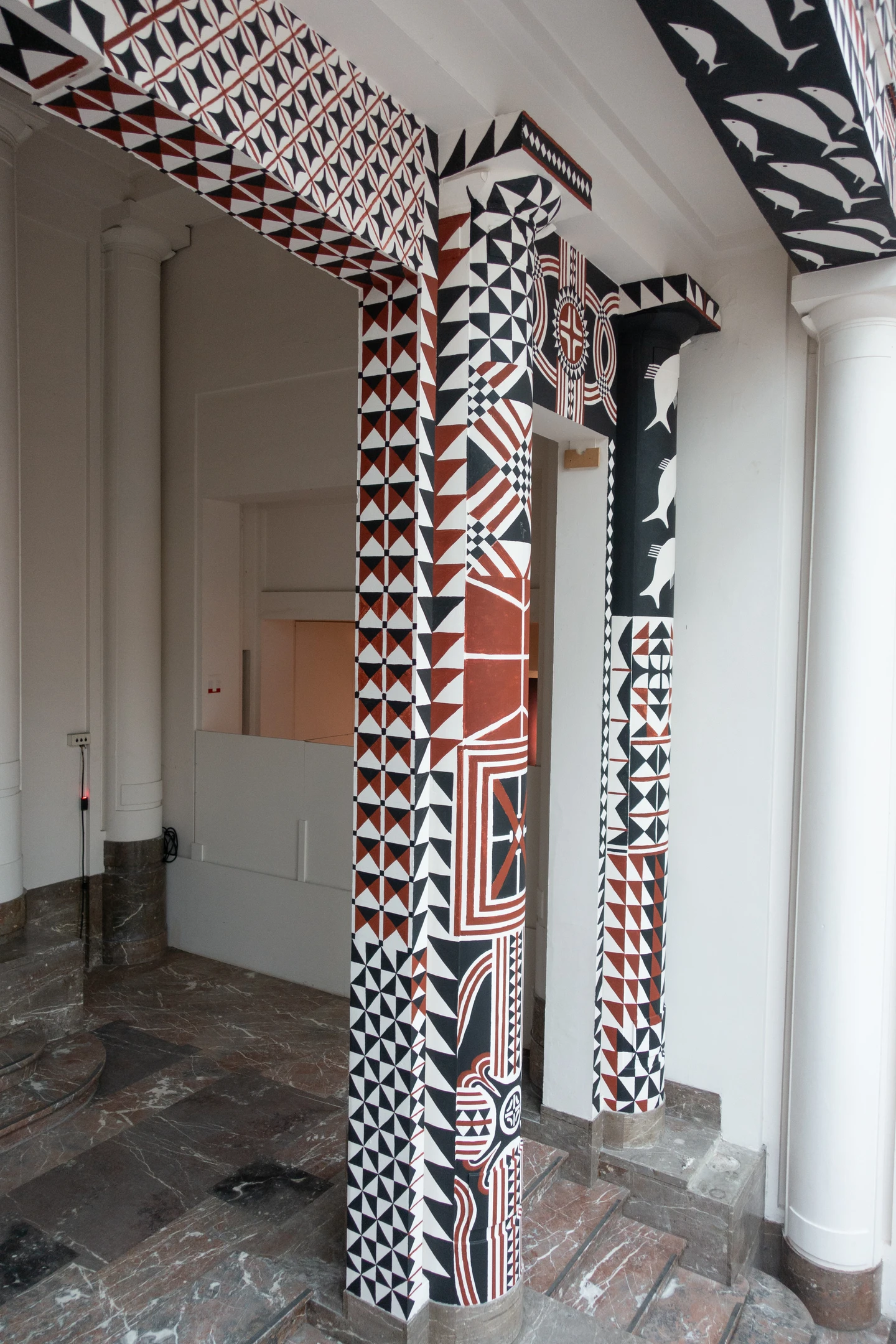
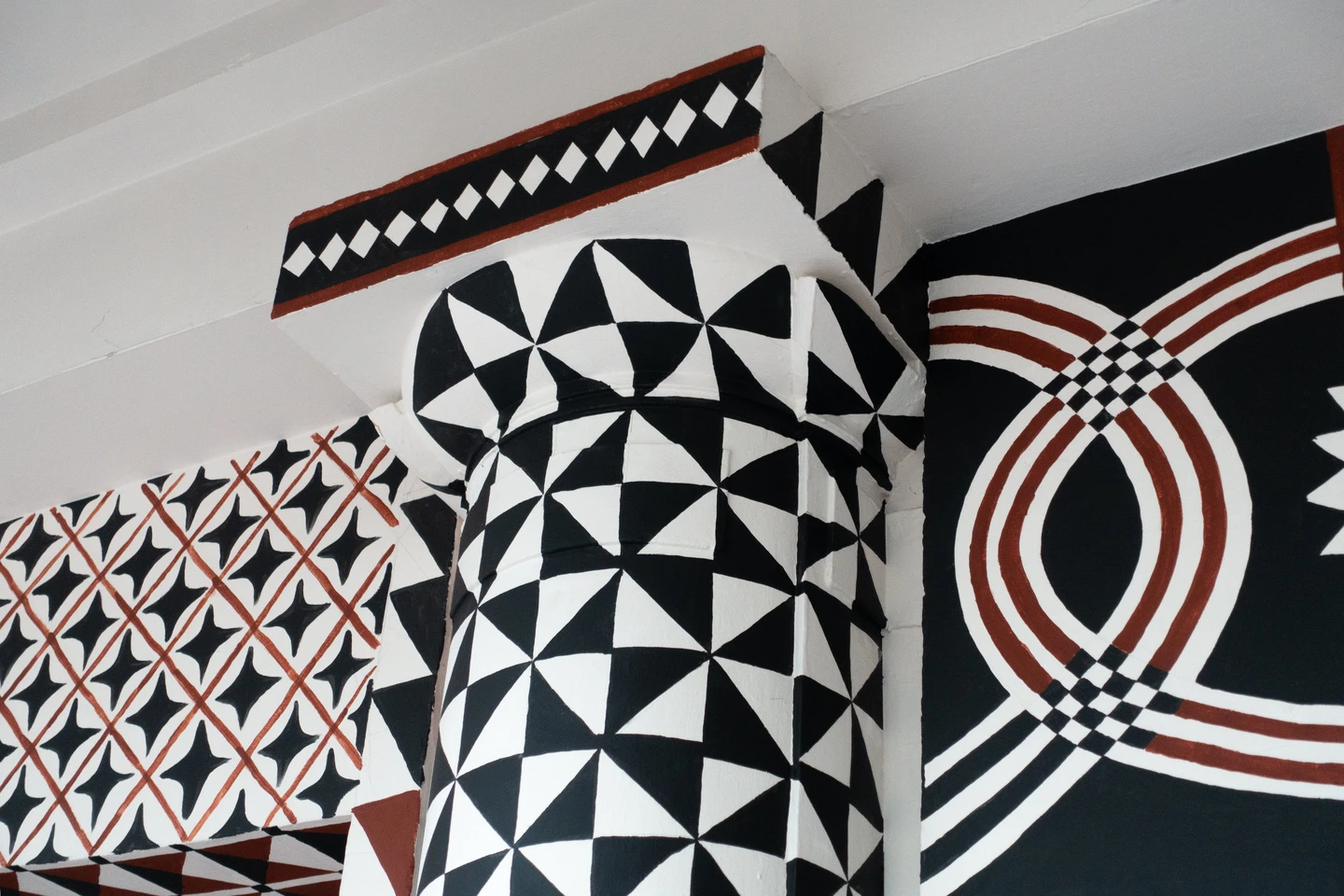
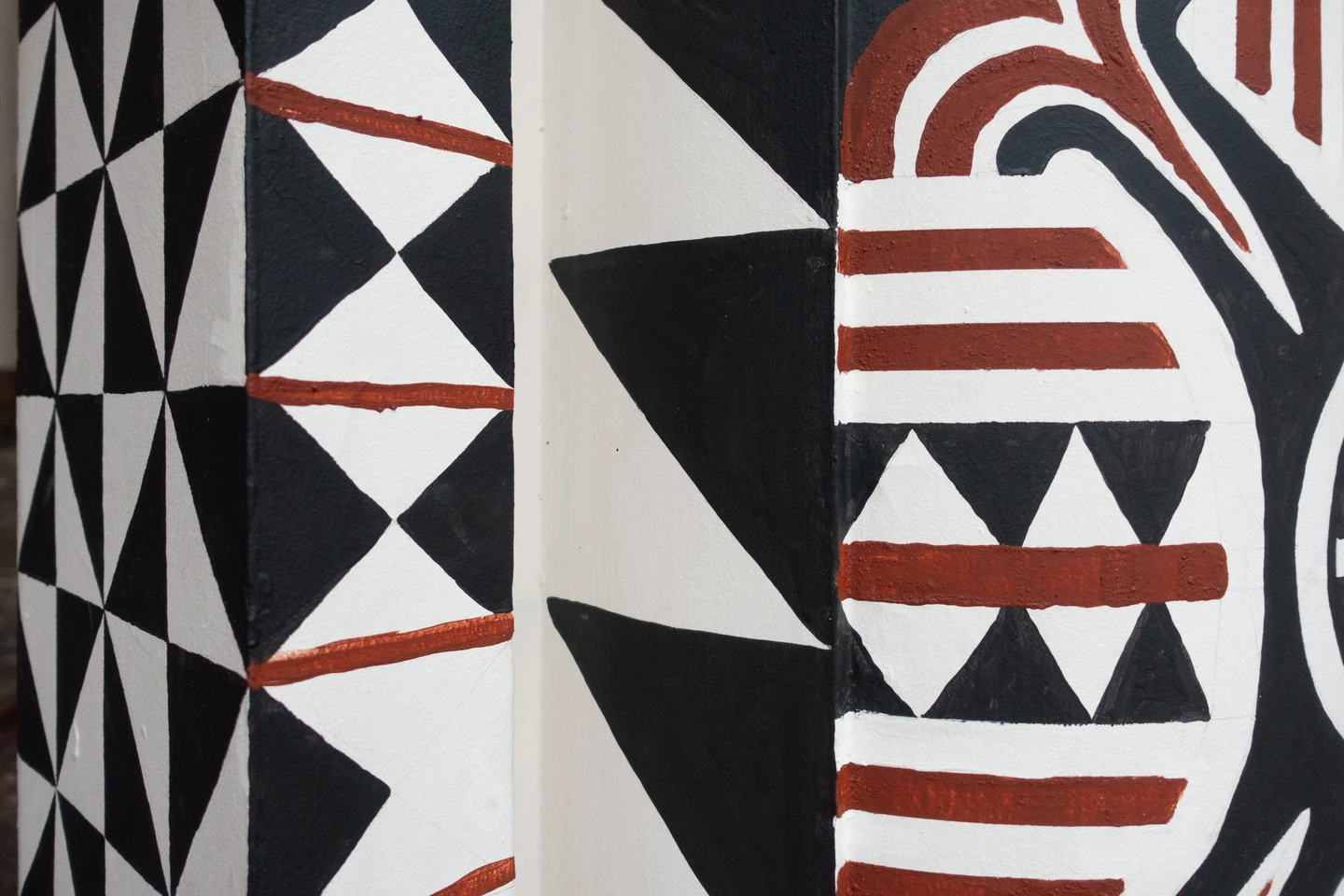
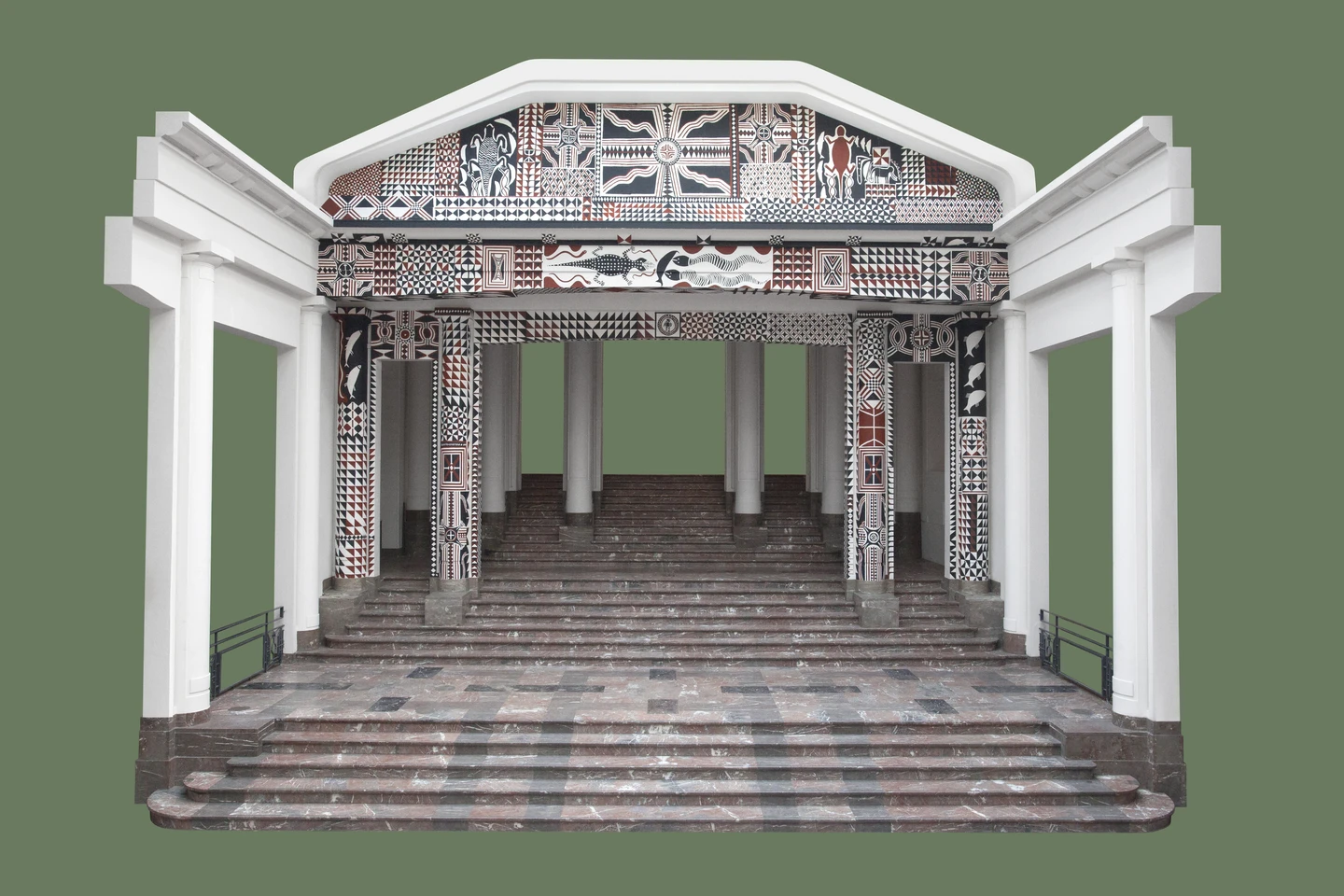
Bozar Graphics, Production 2016Installation in process in the Horta Hall, proposed by artist and exhibition curator Sammy Baloji. The work is inspired by traditional motifs of the Justice Hall of Niangara, DRC, which had been commissioned to local painters by the Belgian colonial administration back in 1903.
-
-
ACCATTONE 4
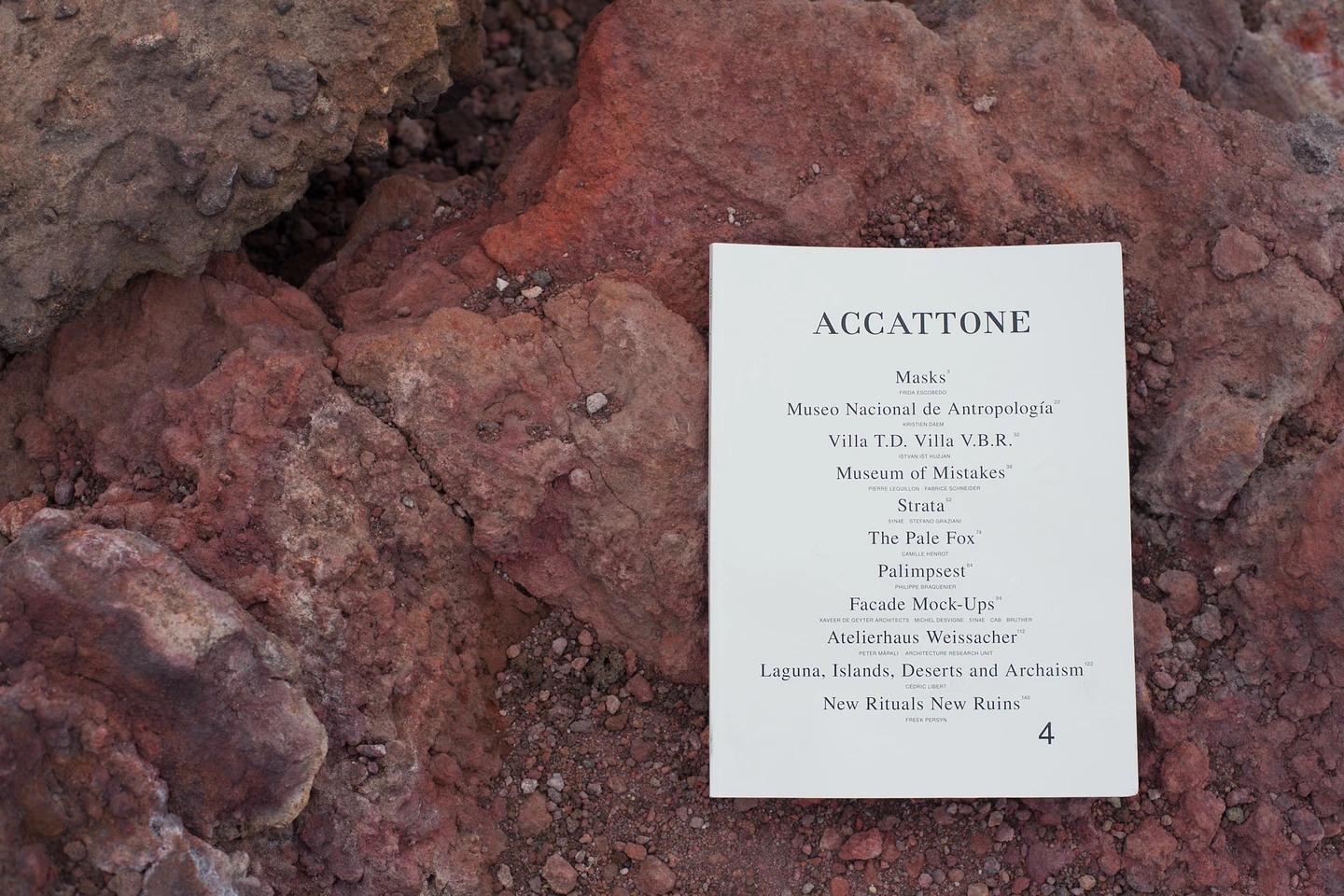
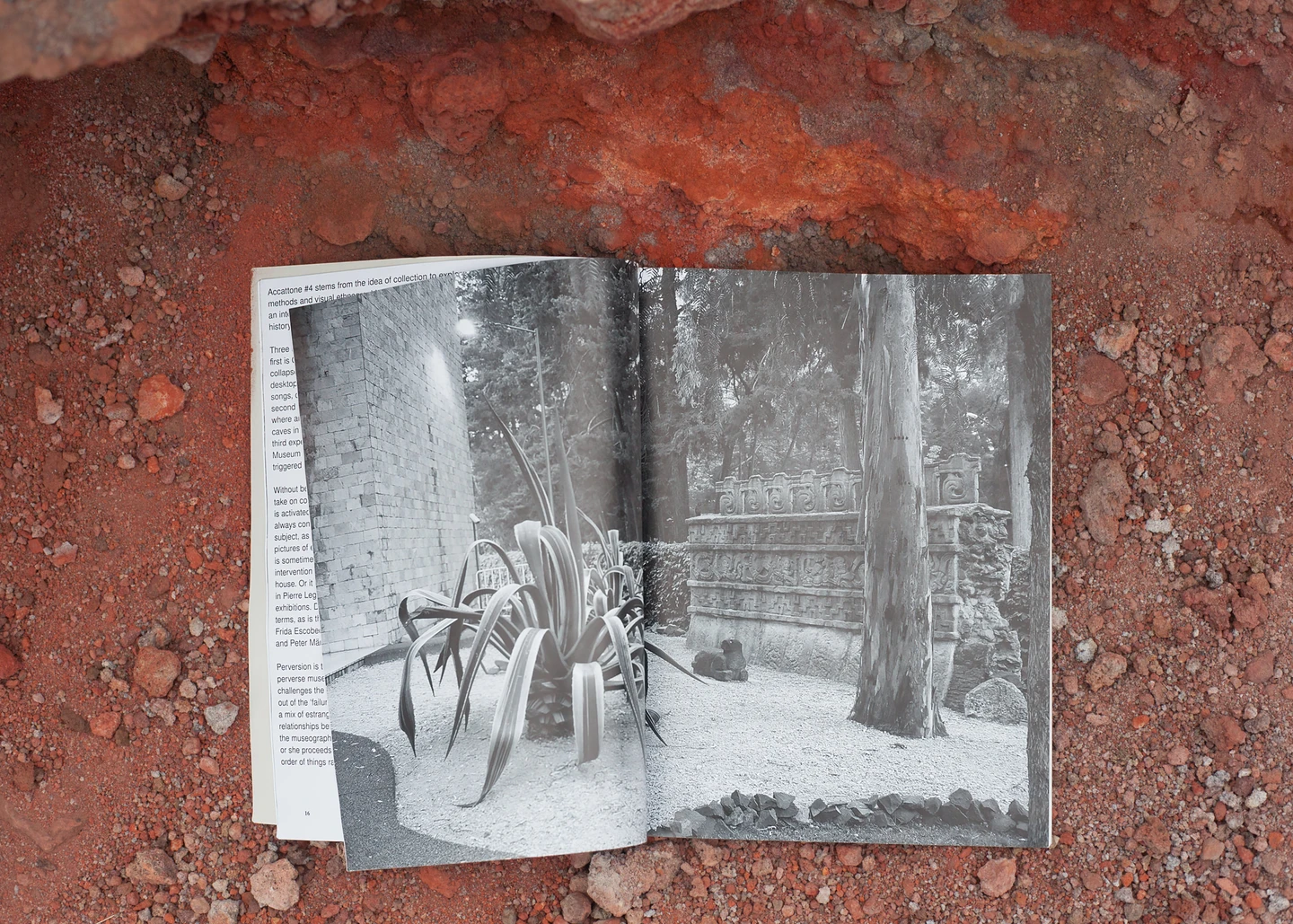
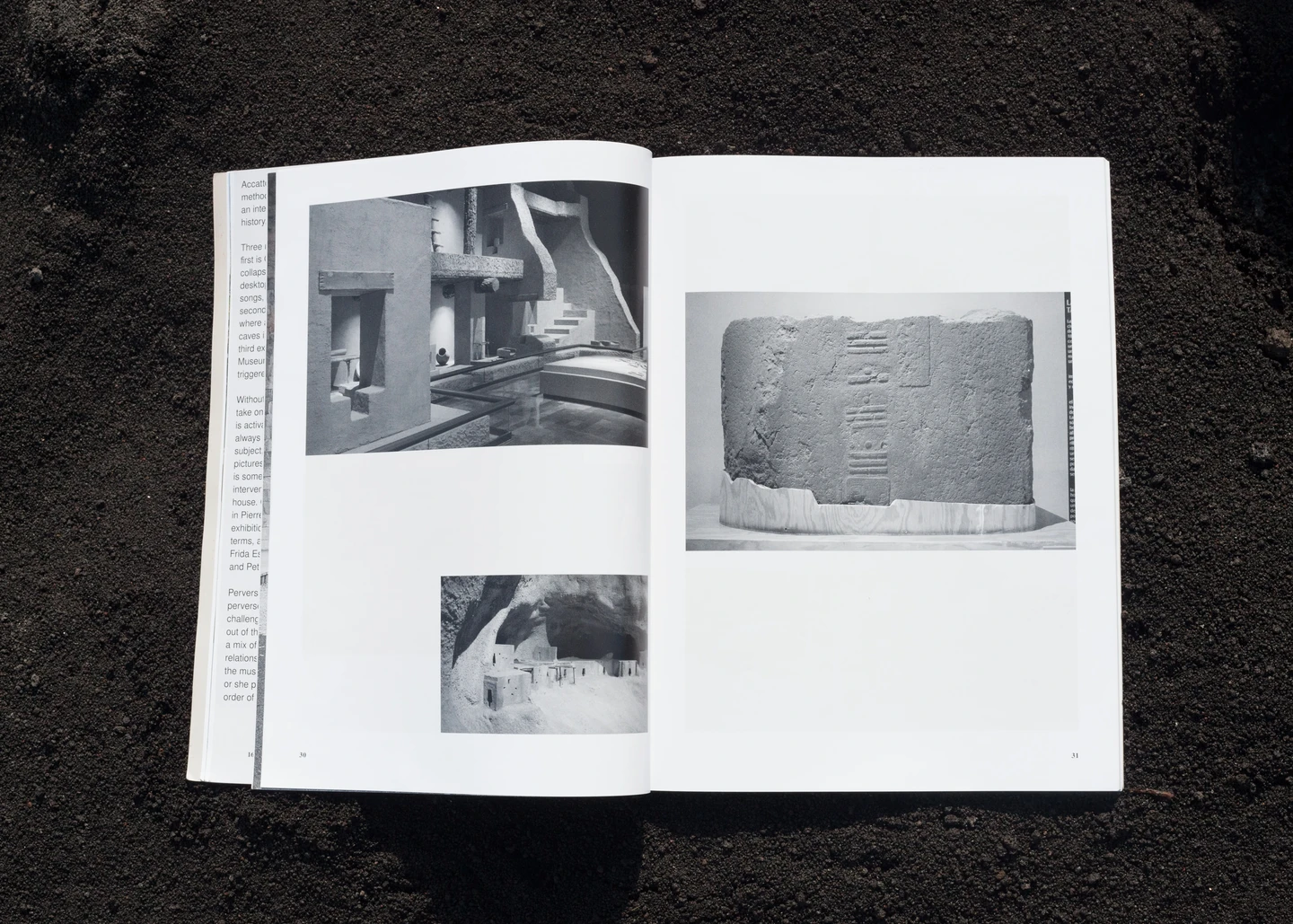
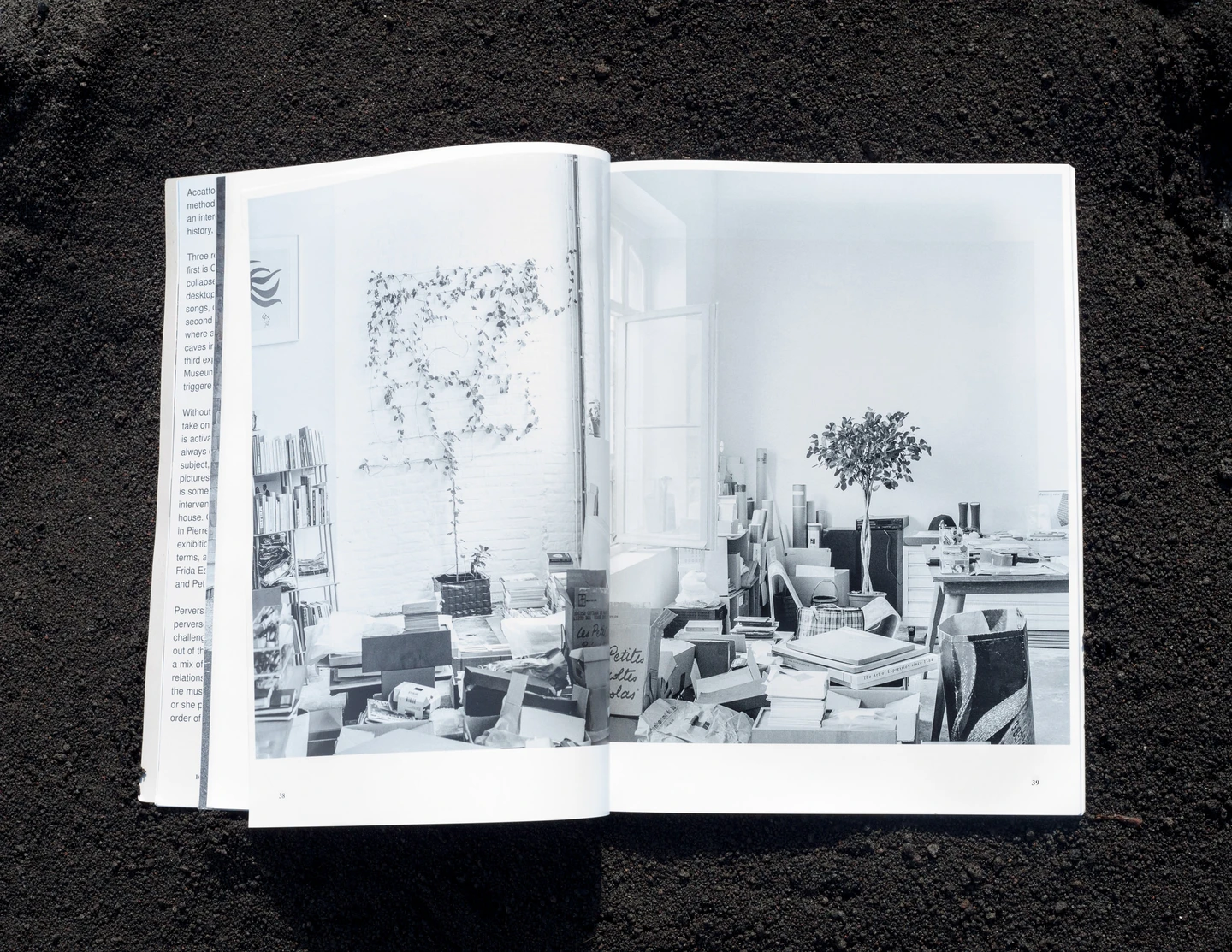
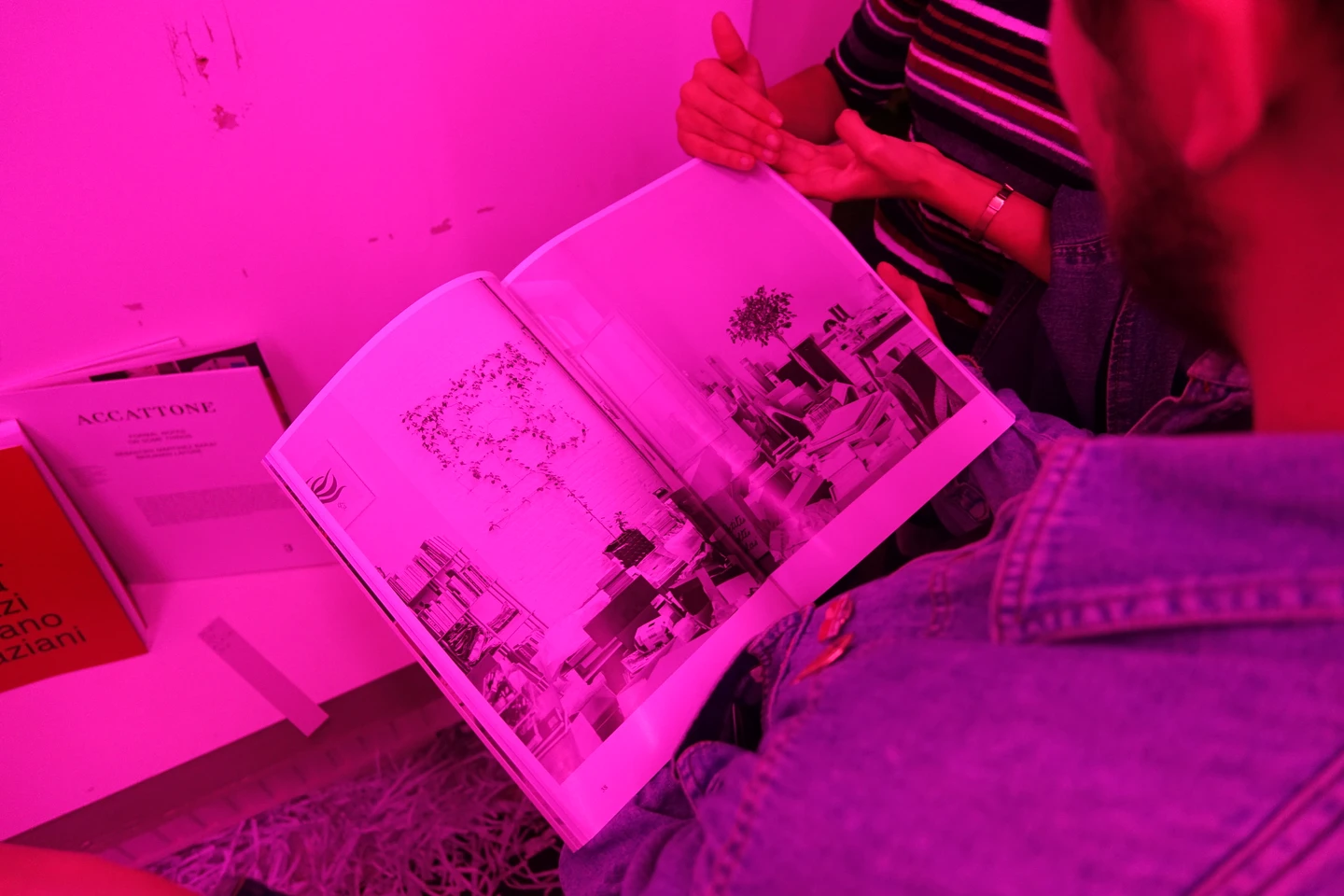
Accattone Editorial, Magazine 2016Accattone #4 draws on the idea of collection to explore mythical methods and visual ethnographies in contemporary practices, with an interest in the compression, into a single artefact, of long periods of history, power relations, memories and everyday experience. It features anthropology museums, underground data centres and minor collections performed in private houses, double-sided masks and architectural strata in a floor slab or a facade, totemic mock-ups on a 1:1 scale and metaphors in the desert.
-
-
DSCTHK
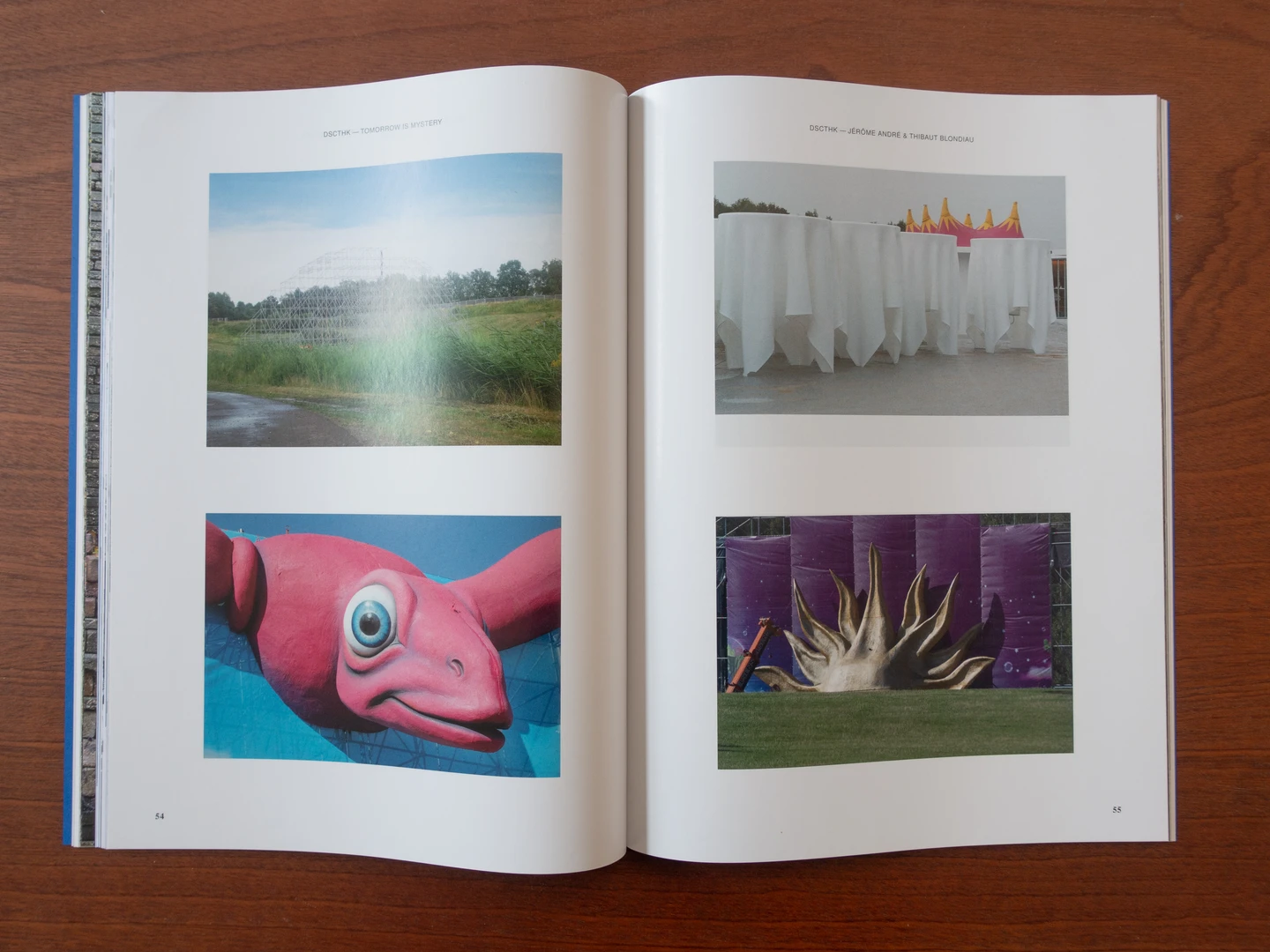
Thibaut Blondiau & Jerôme André Graphics, Print 2016PLAGE ARRIERE par DSCTHK Un projet de Jérôme André et Thibaut Blondiau avec la participation de Uberknackig. http://www.dscthk.be/ Au départ, il y a un archipel de discothèques et de festivals, essaimés sur tout le territoire. Dès que le soleil se couche, les oiseaux de nuits voguent d’un îlot à l’autre. Chaque lieu est un refuge imaginaire, avec ses codes, tandis que sur la route, les souvenirs, les parcours, les images et les mots s’accumulent sur la plage arrière de la voiture. A la lumière du jour, les artifices se figent pour dessiner un sorte de champ lexical obligé du divertissement et de l’ailleurs fantasmé. Ainsi, l’image du soleil appelle celle de la plage, le sable fin en découle forcément; En y plantant des palmiers, on s’assure que l’exotisme nous emmène le plus loin possible du bureau. Certes ces constructions d’images relèvent d’un packaging conditionné par et pour l’imaginaire collectif. Mais peu importe, ce qui vaut, c’est le refuge imaginaire, la plage arrière. Il n’est pas nécessaire que le bateau navigue, pour avoir l’idée du voyage. Dès lors, le soleil peut à nouveau se coucher et la nuit se réveiller.
-
-
Wallpaper
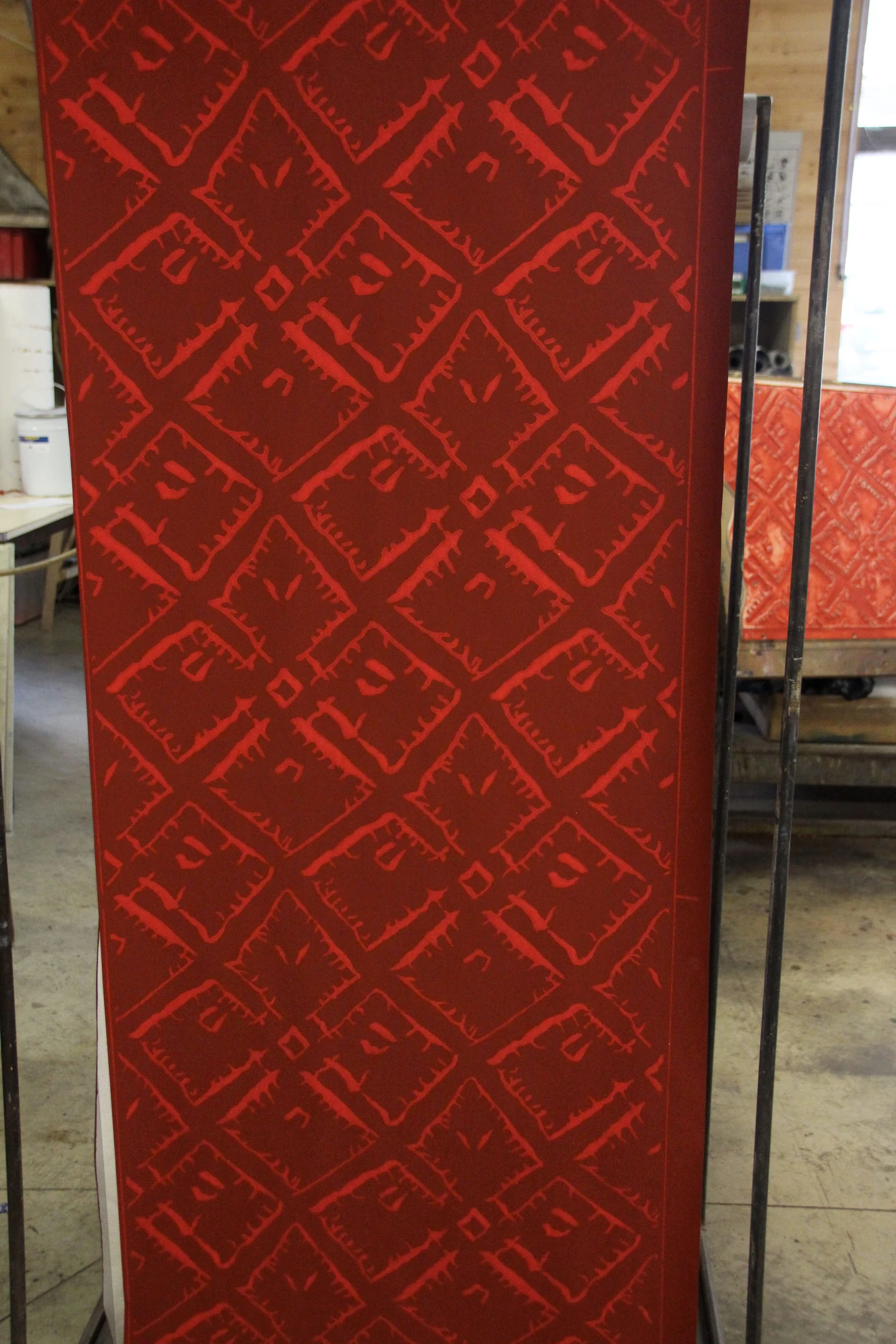
Galerie Imane Farès Graphics, Print 2016Part of the exhibition 802. That is where, as you heard, the elephant danced the malinga. The place where they now grow flowers, Sammy Baloji, 2016
-
-
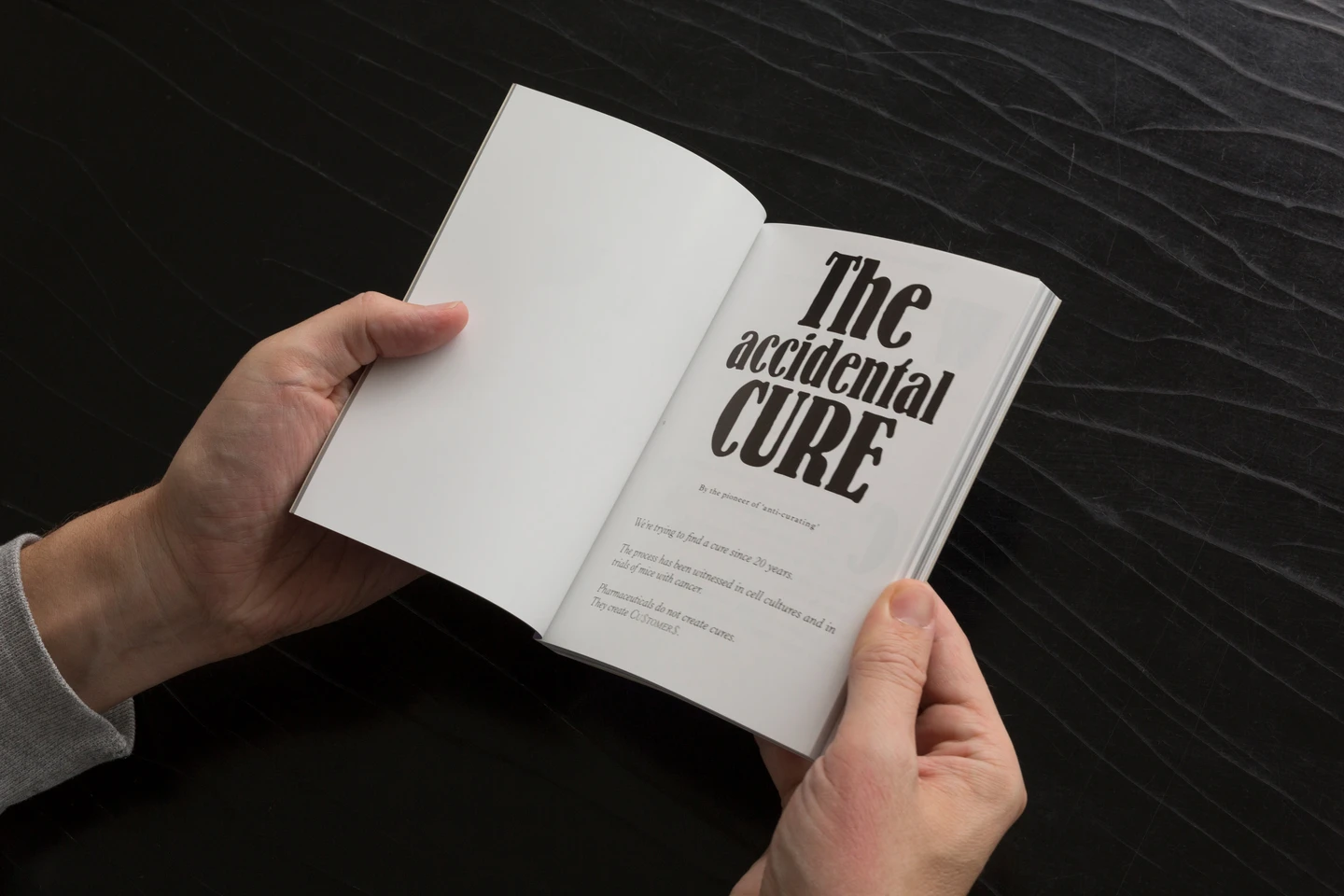
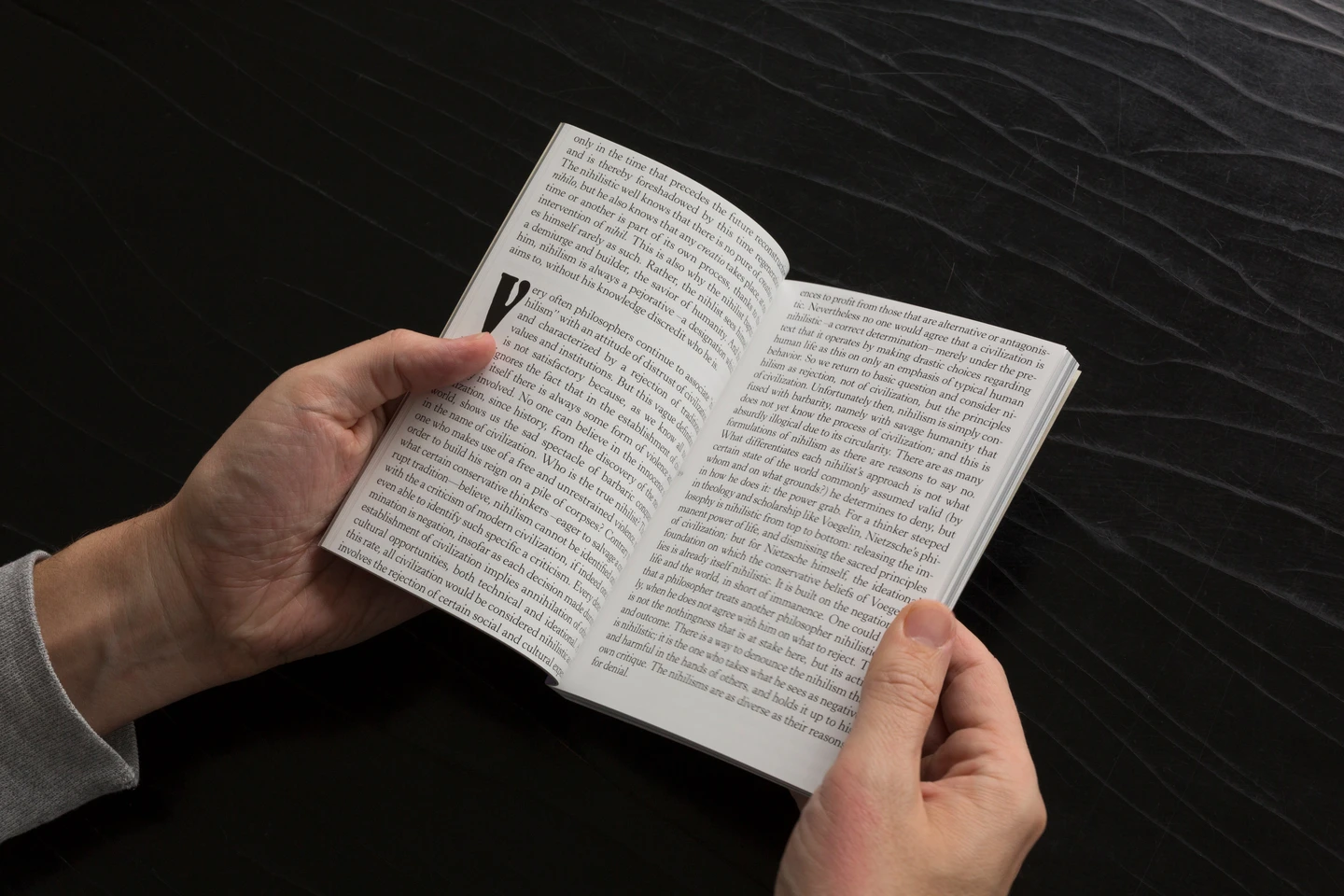
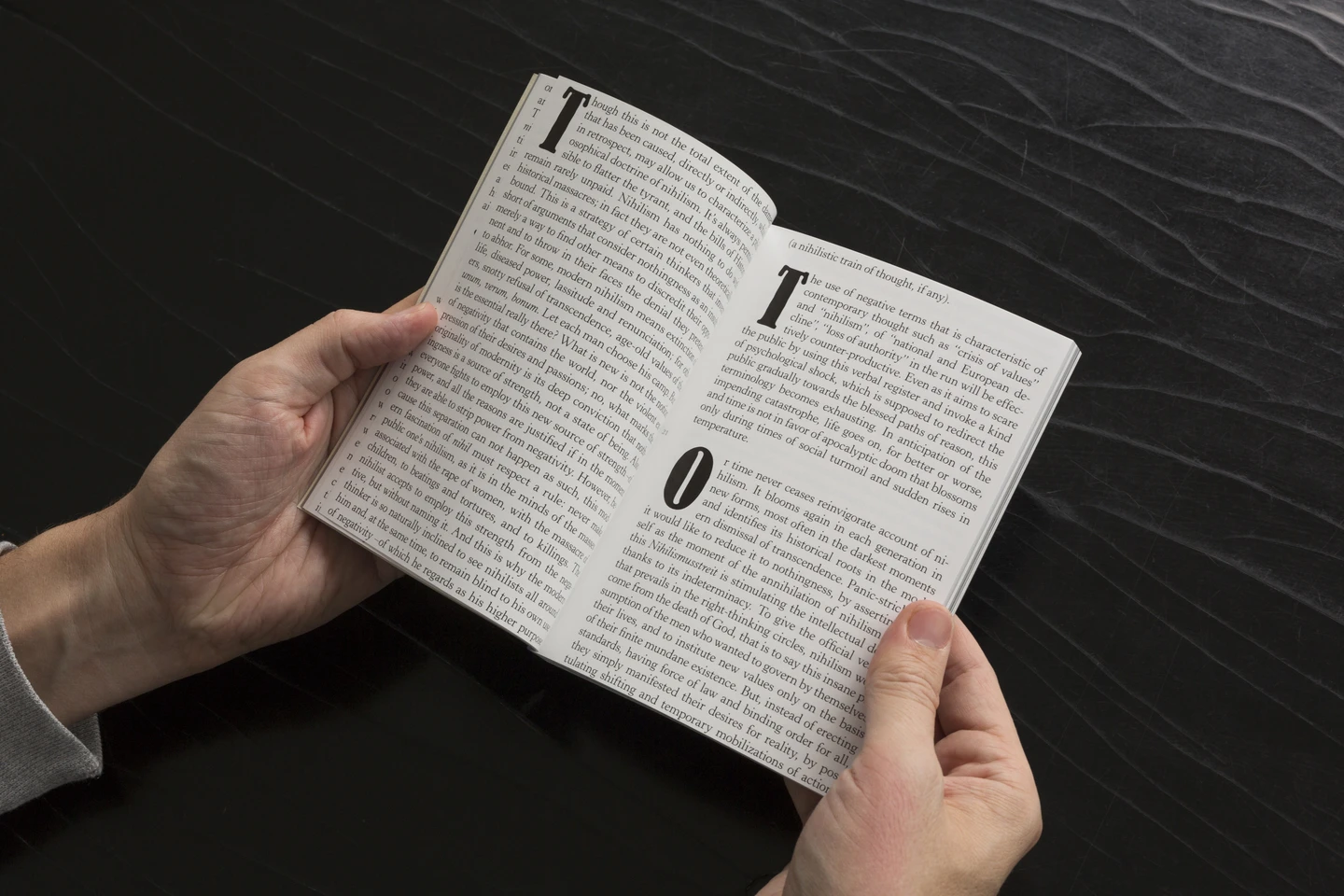
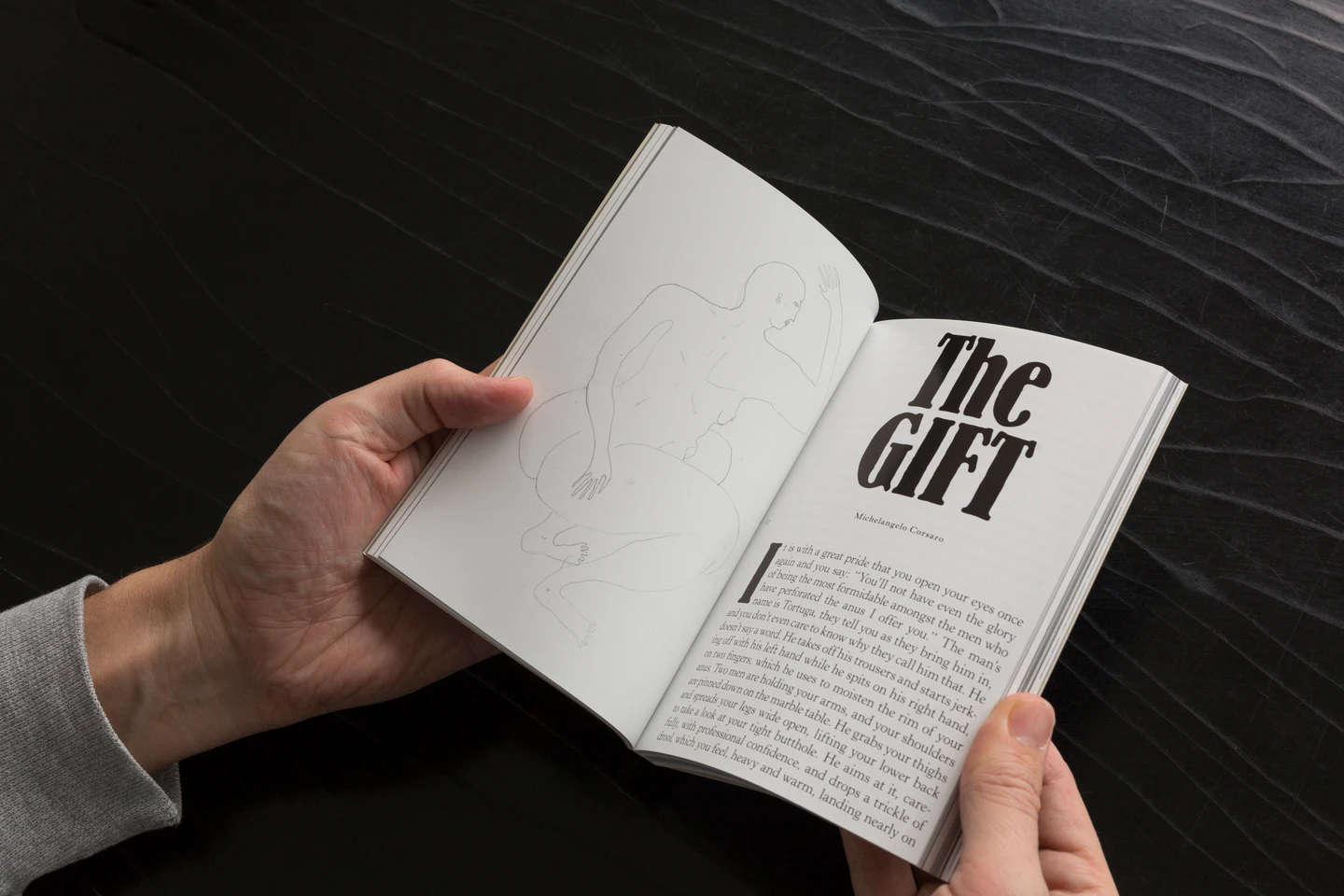
The Cure
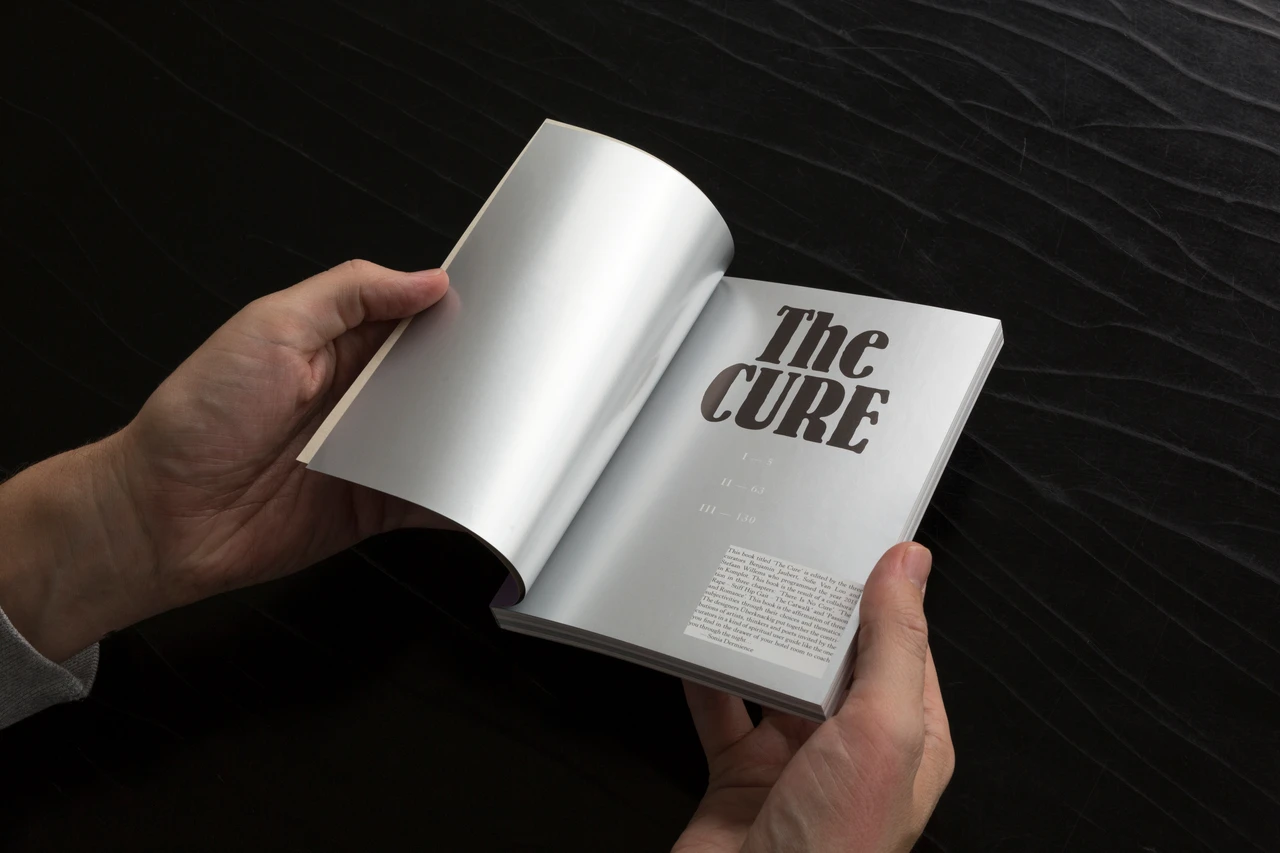
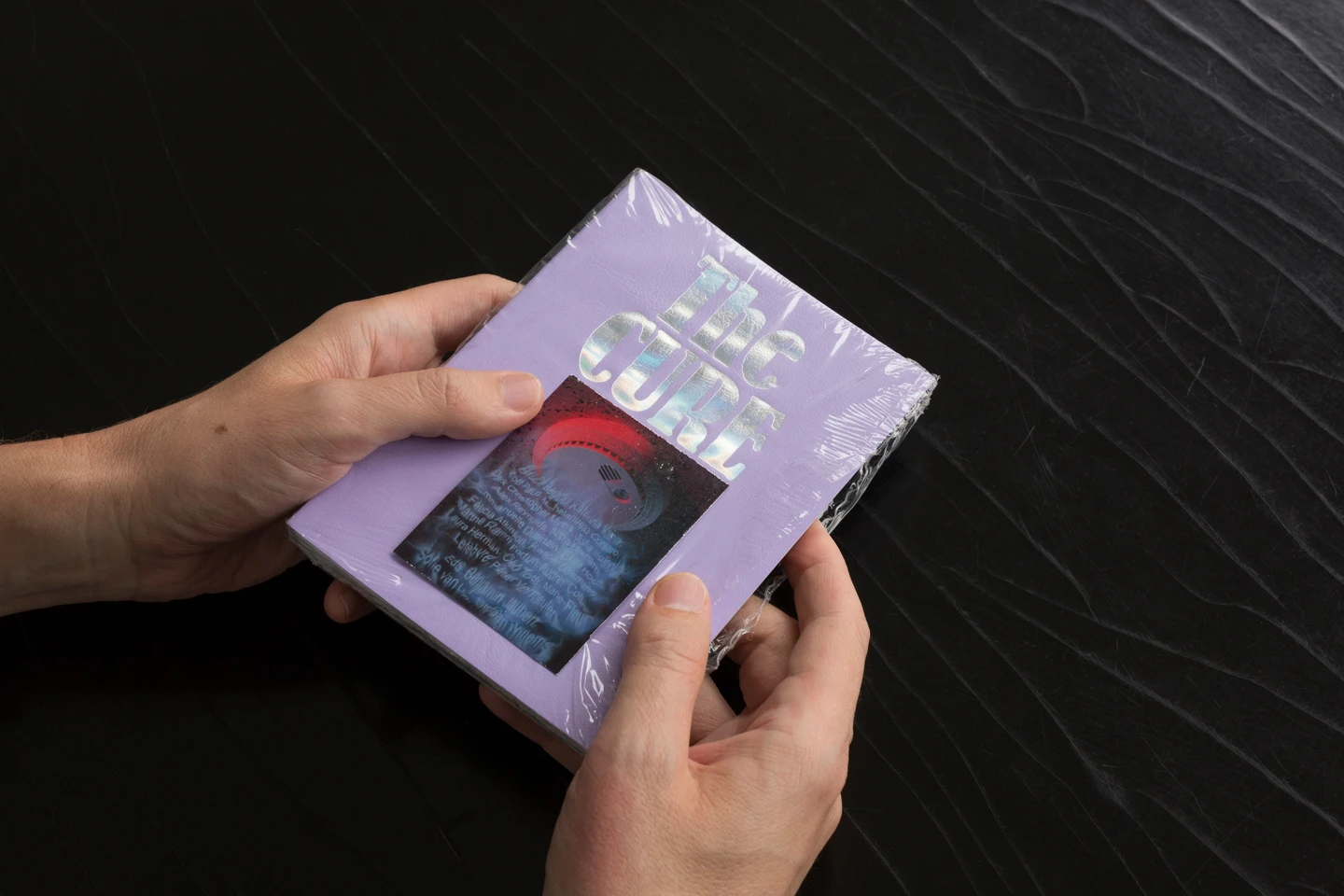
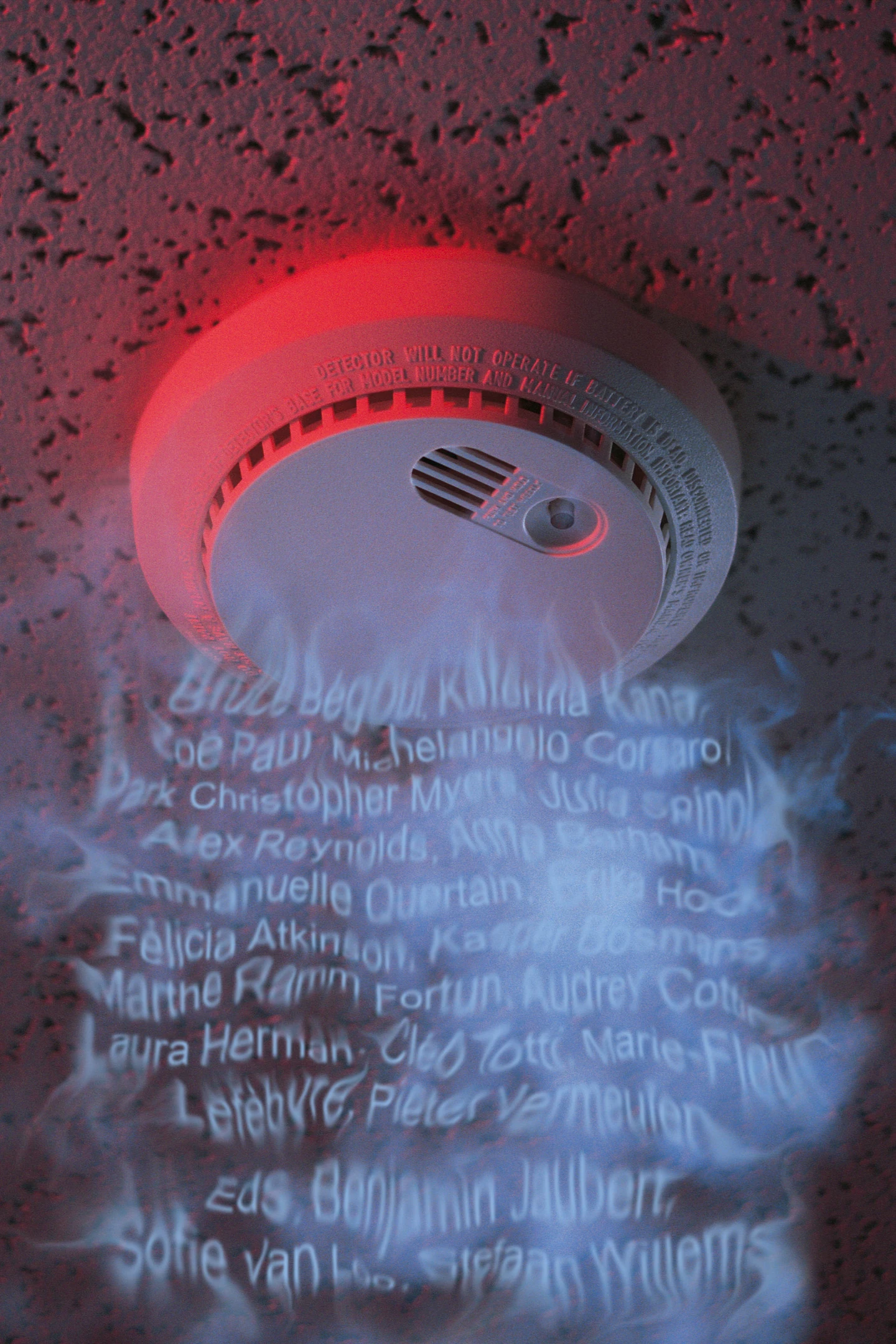
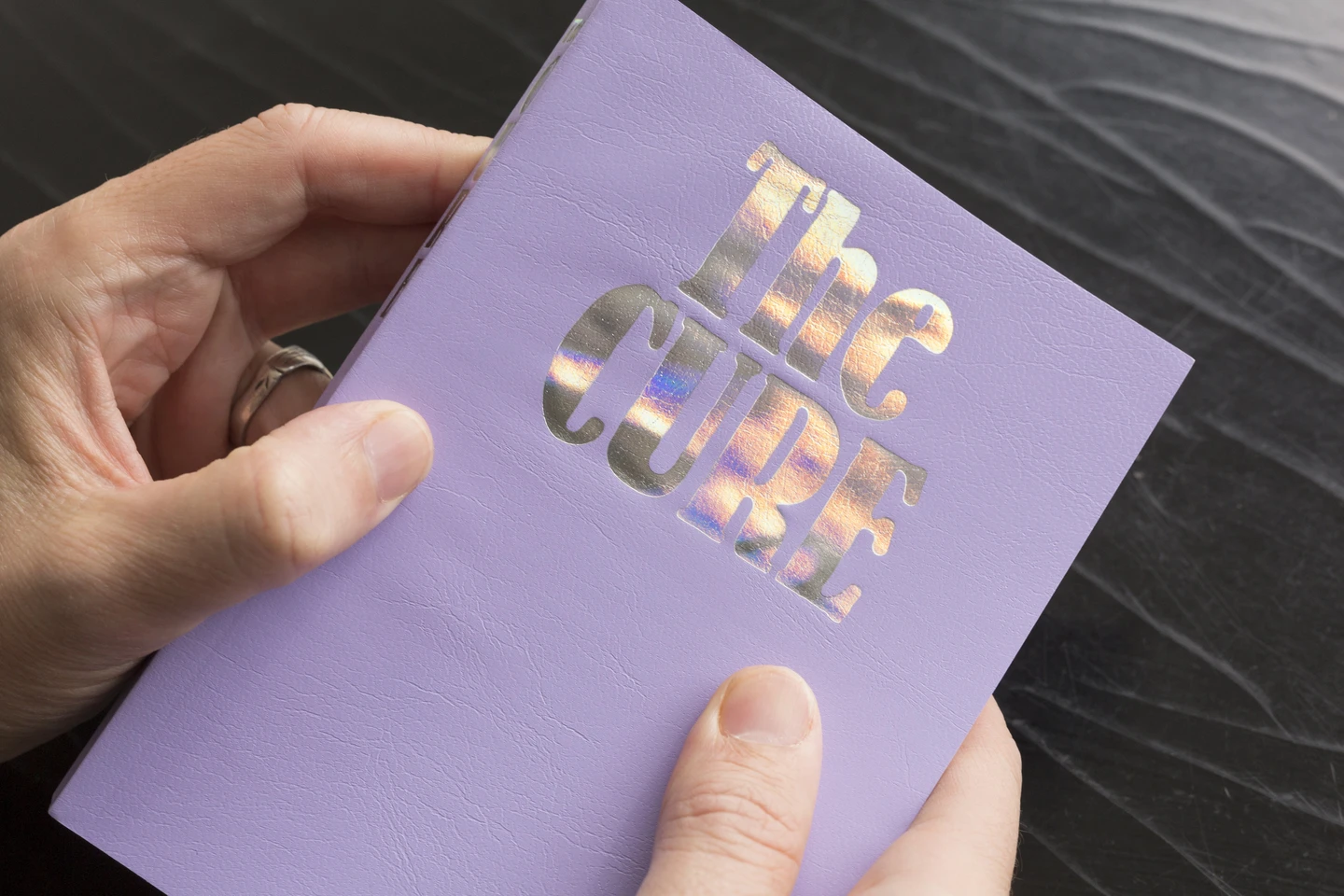
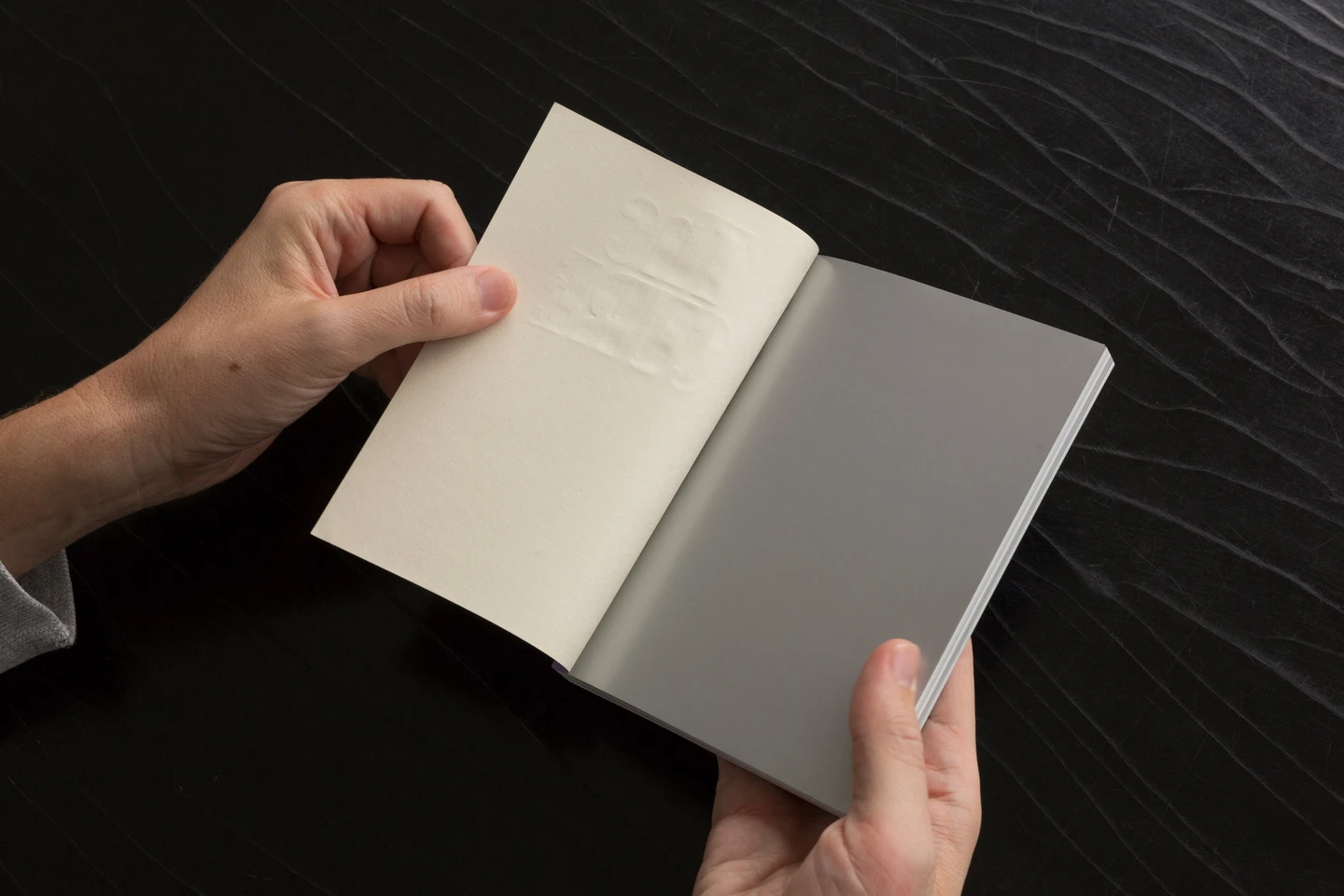
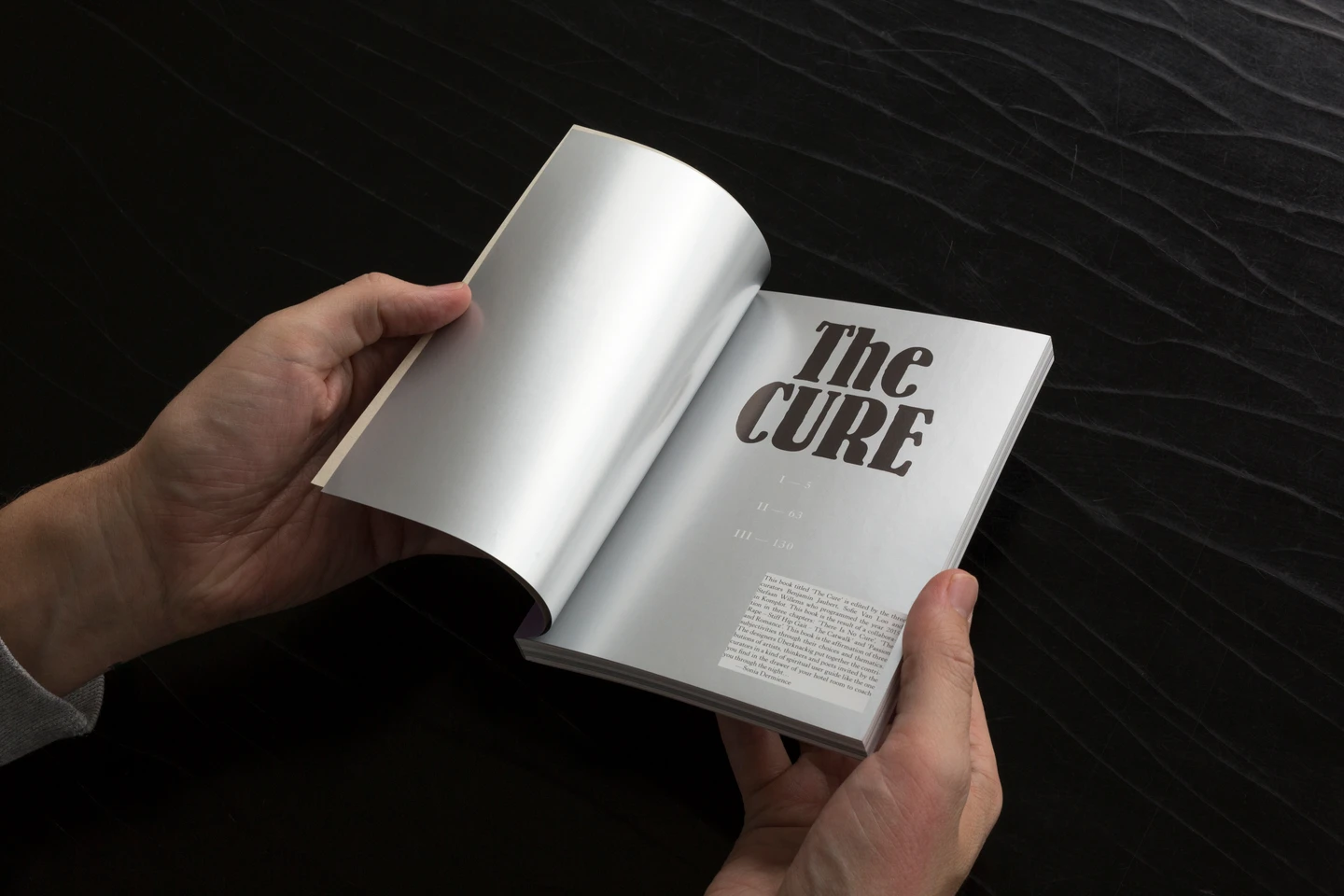
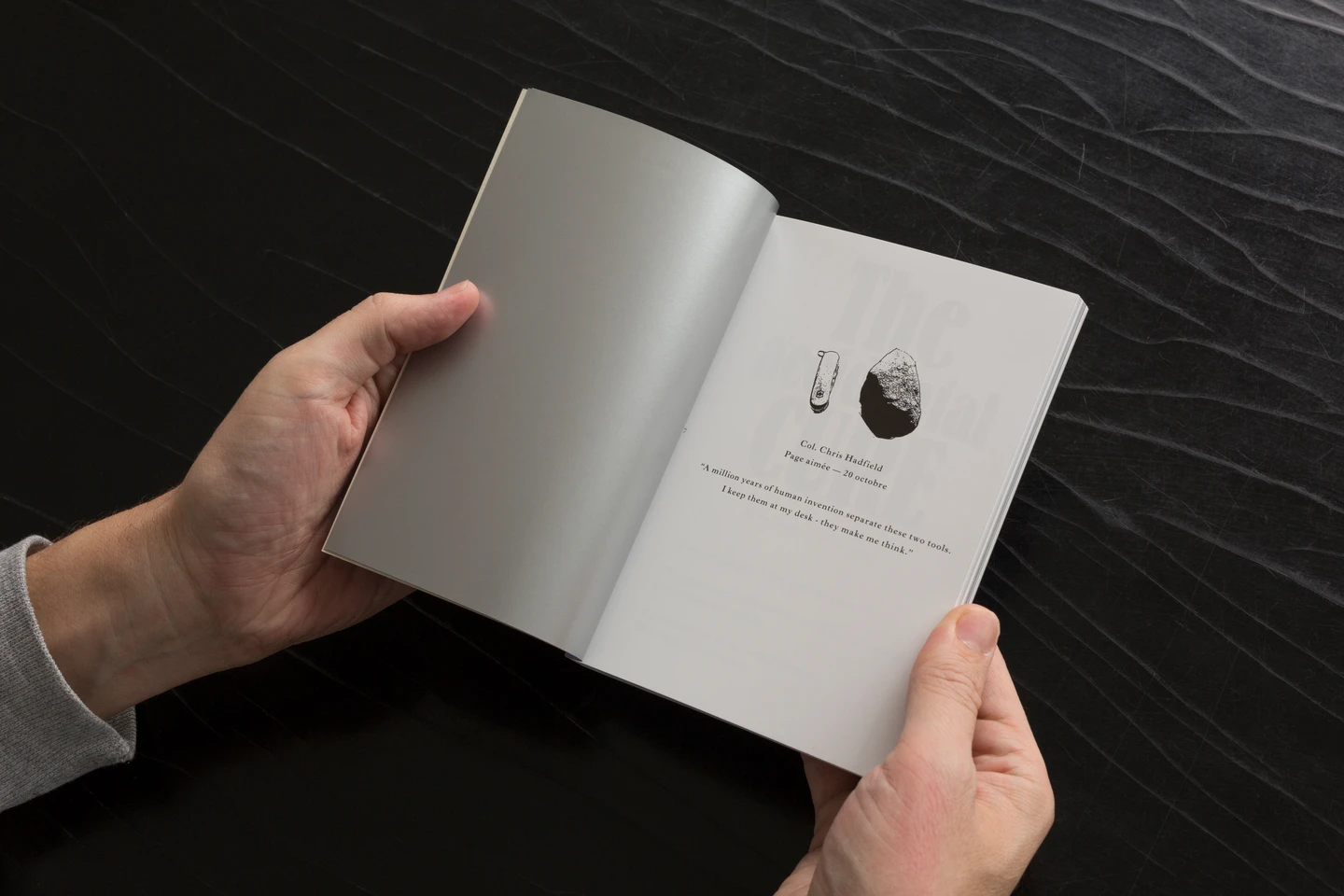
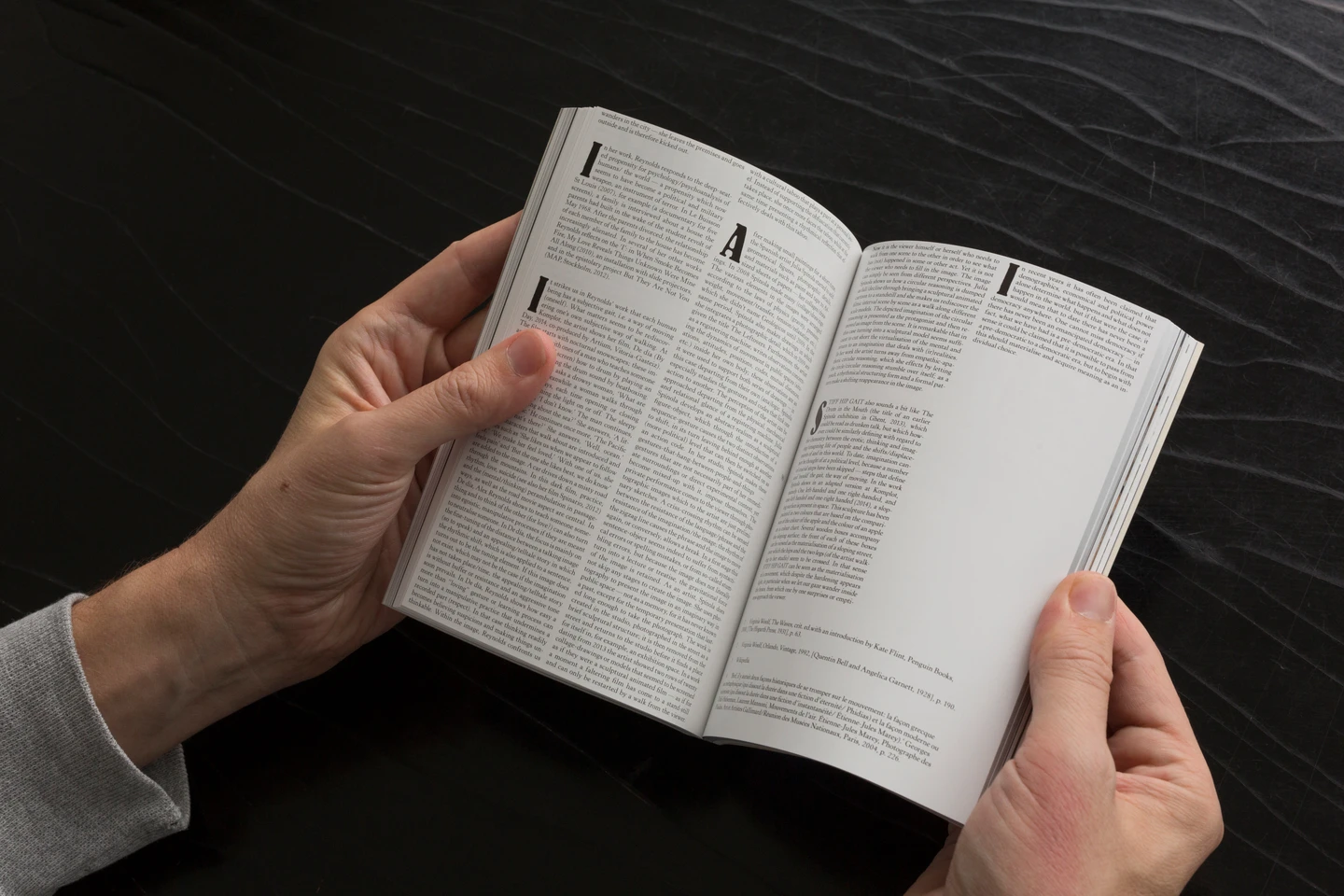
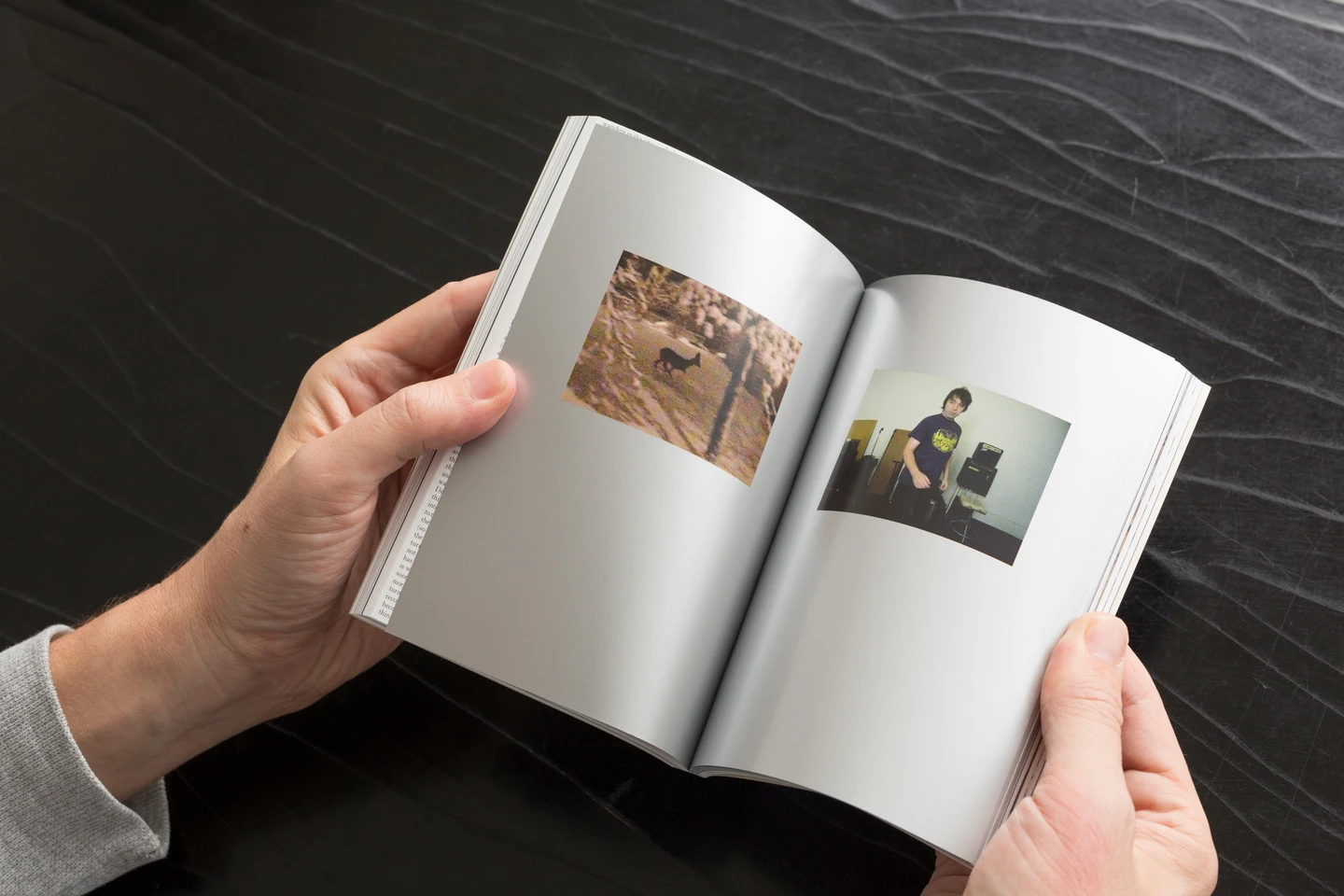
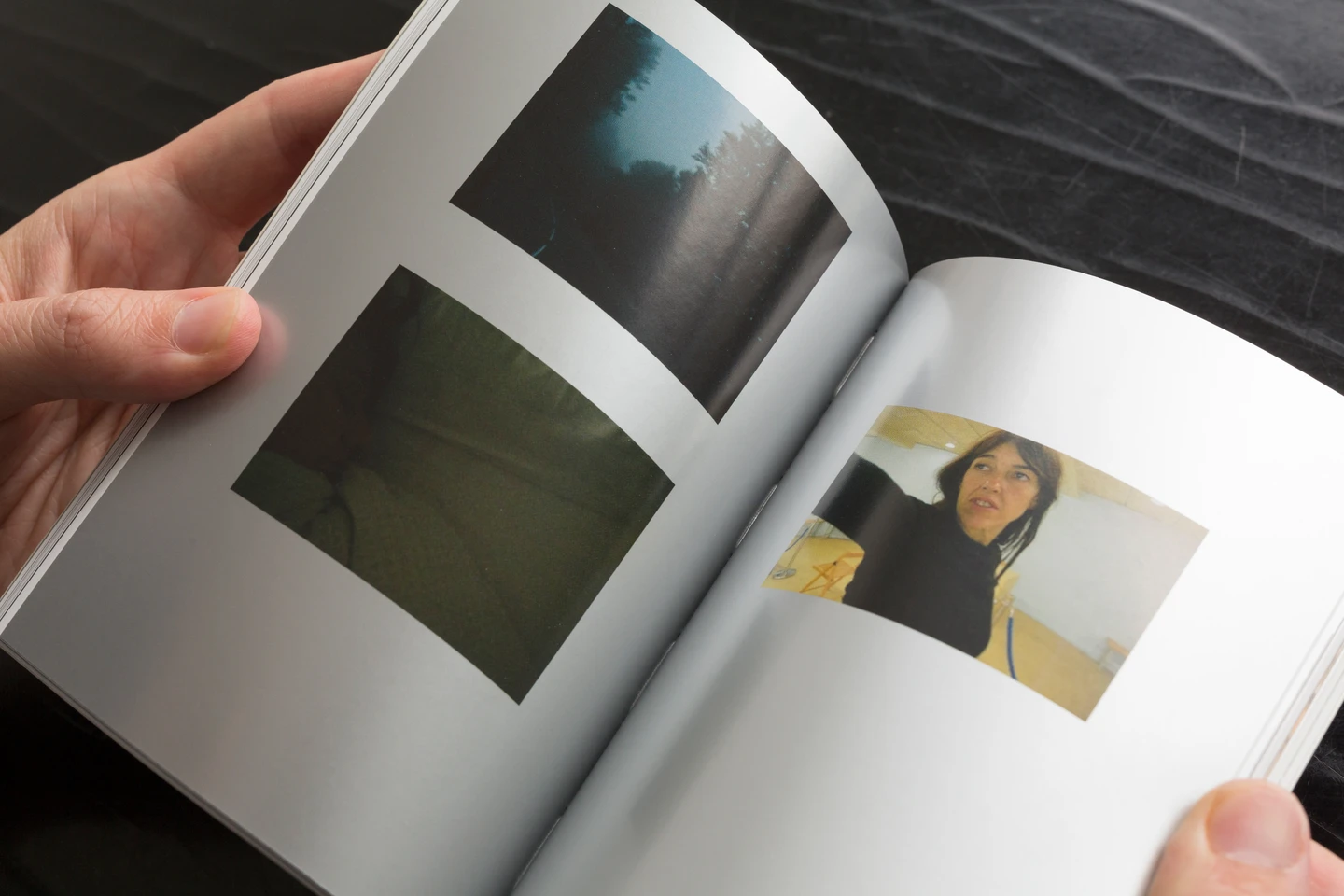
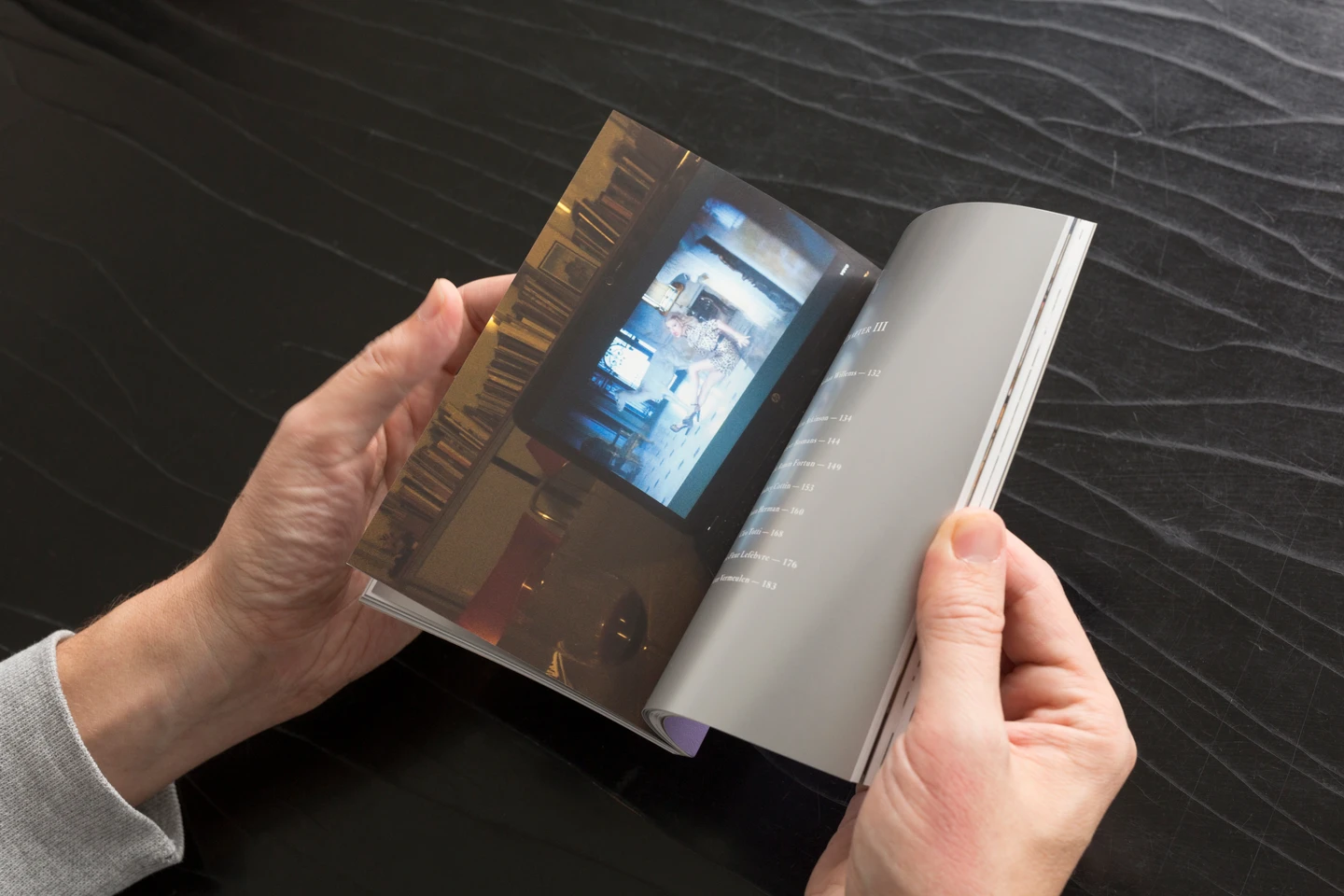
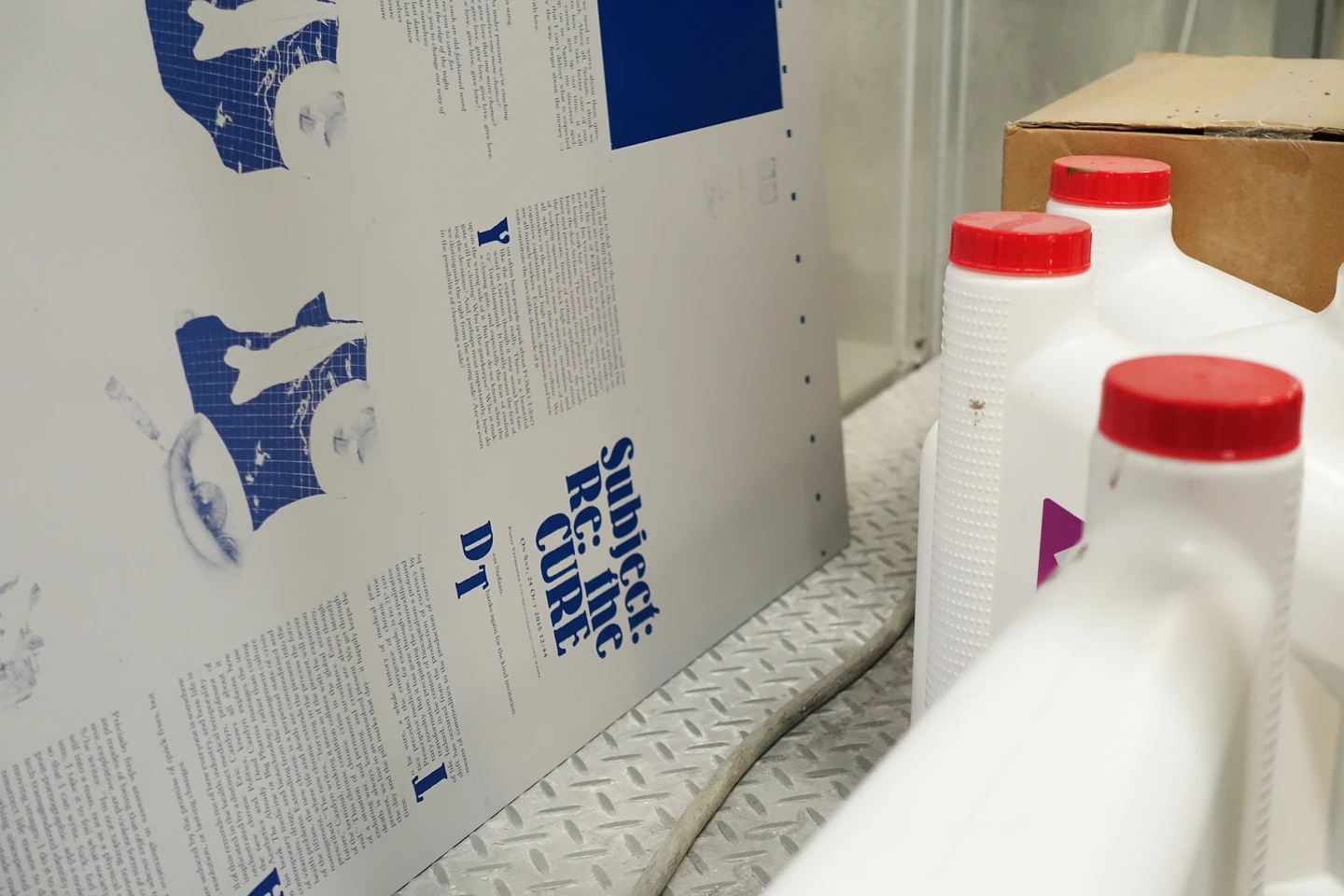
Komplot Editorial, Book 2015This book titled ‘The Cure’ is edited by the three curators Benjamin Jaubert, Sofie Van Loo and Stefaan Willems who programmed the year 2015 in Komplot. This book is the result of a collaboration in three chapters : ‘There Is No Cure’, ‘The Rape – Stiff Hip Gait – The Catwalk’ and ‘Passion and Romance’. This book is the affirmation of three subjectivities through their choices and thematics. The designers Uberknackig put together the contributions of artists, thinkers and poets invited by the curators in a kind of spiritual user guide like the one you find in the drawer of your hotel room to coach you through the night…
-
-
ACCATTONE 2
Accattone Editorial, Magazine 2015Accattone #2 draws on several themes from the first issue — material shifts, models and model-like buildings, the role of images in the design process — to address specific methods and approaches which challenge established codes: bricolage, minor architecture, personal narratives and collections.
-
-
ACCATTONE 3
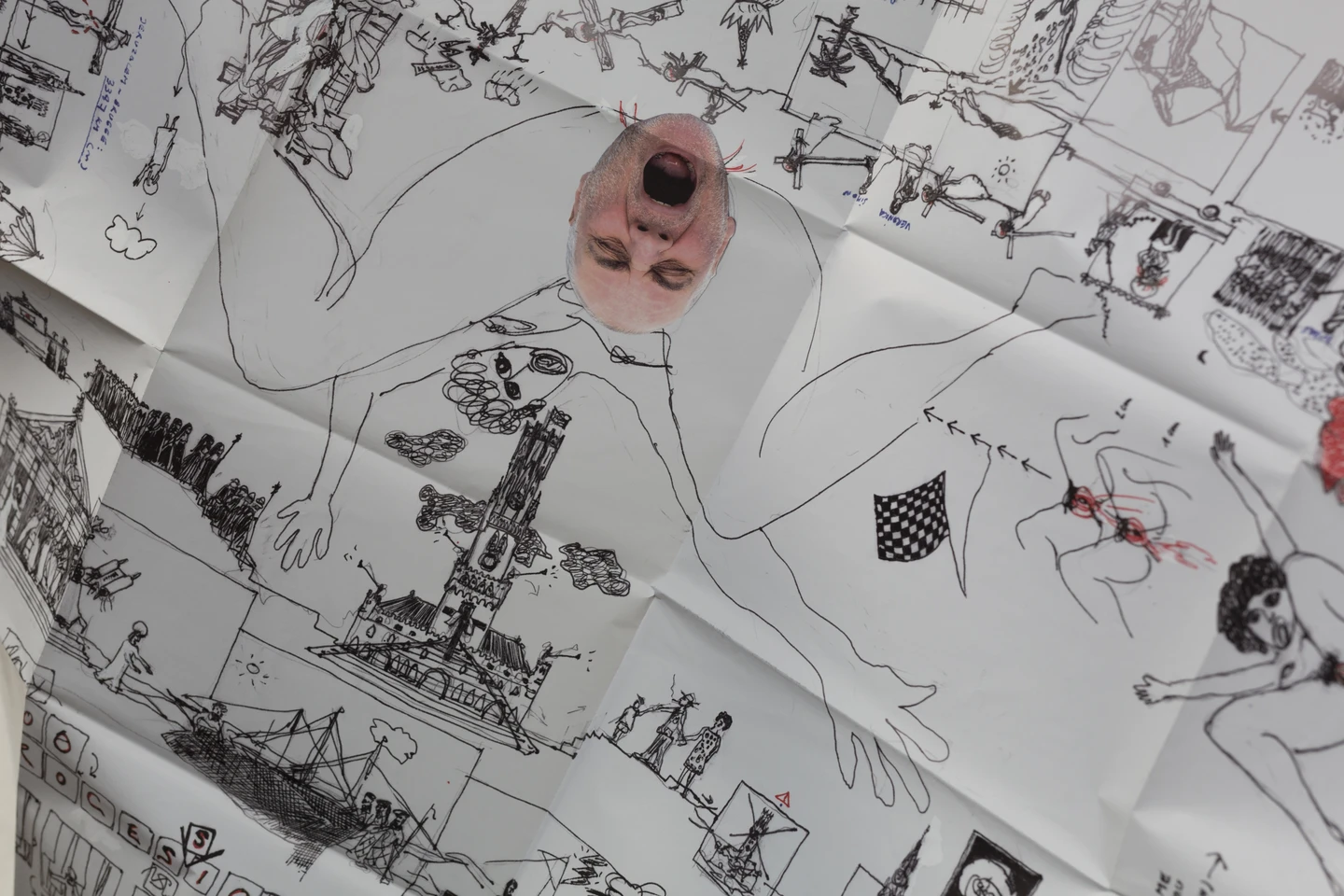
Accattone Editorial, Magazine 2015Accattone #3 is both an autonomous object and a continuation of Accattone #2. It consists in a 96 x 64 cm poster folded into an 8-page publication where architects Martinez Barat Lafore present a collection of 137 images and quotations inherent to their conceptual and built work.
-
TRUST
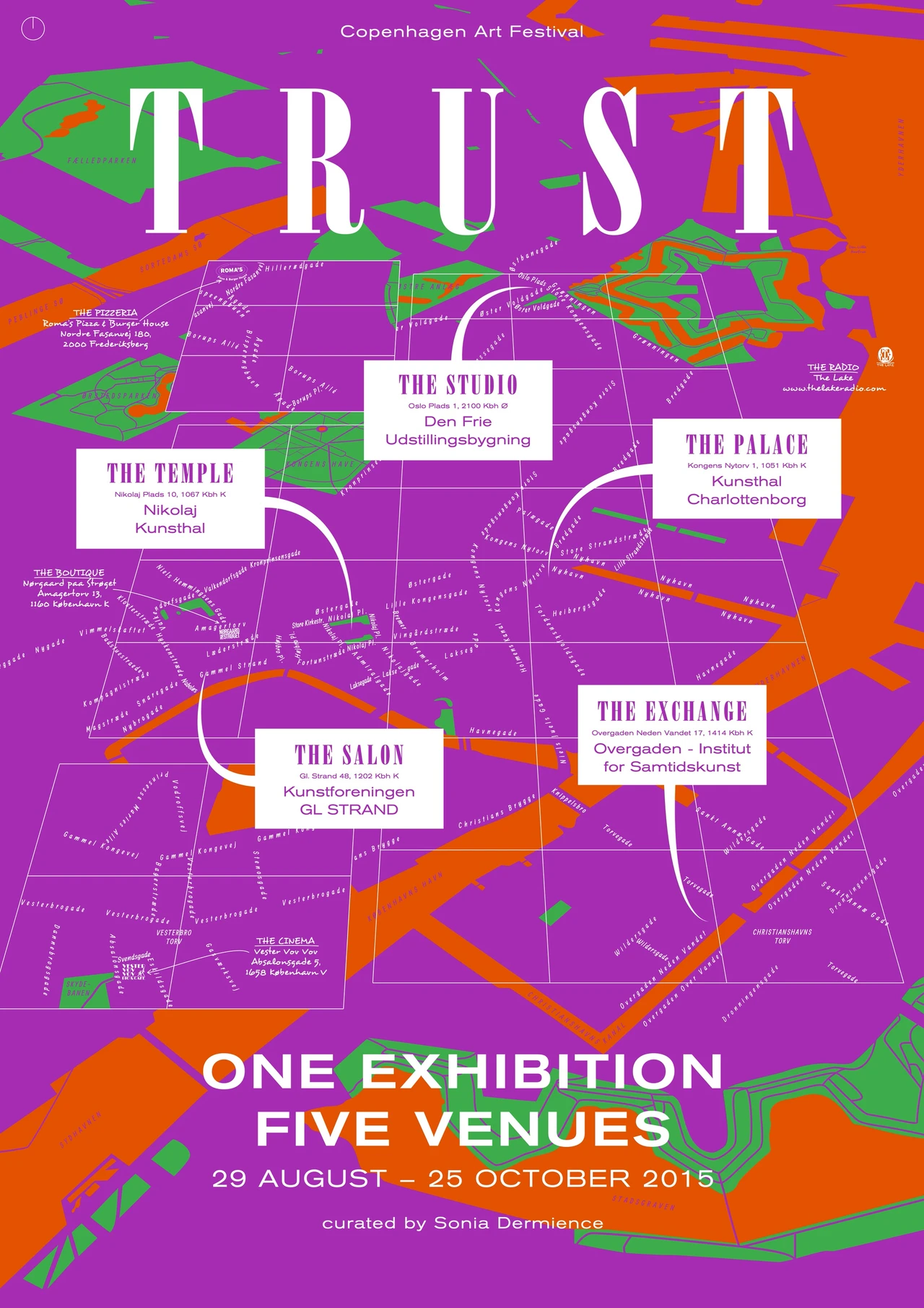
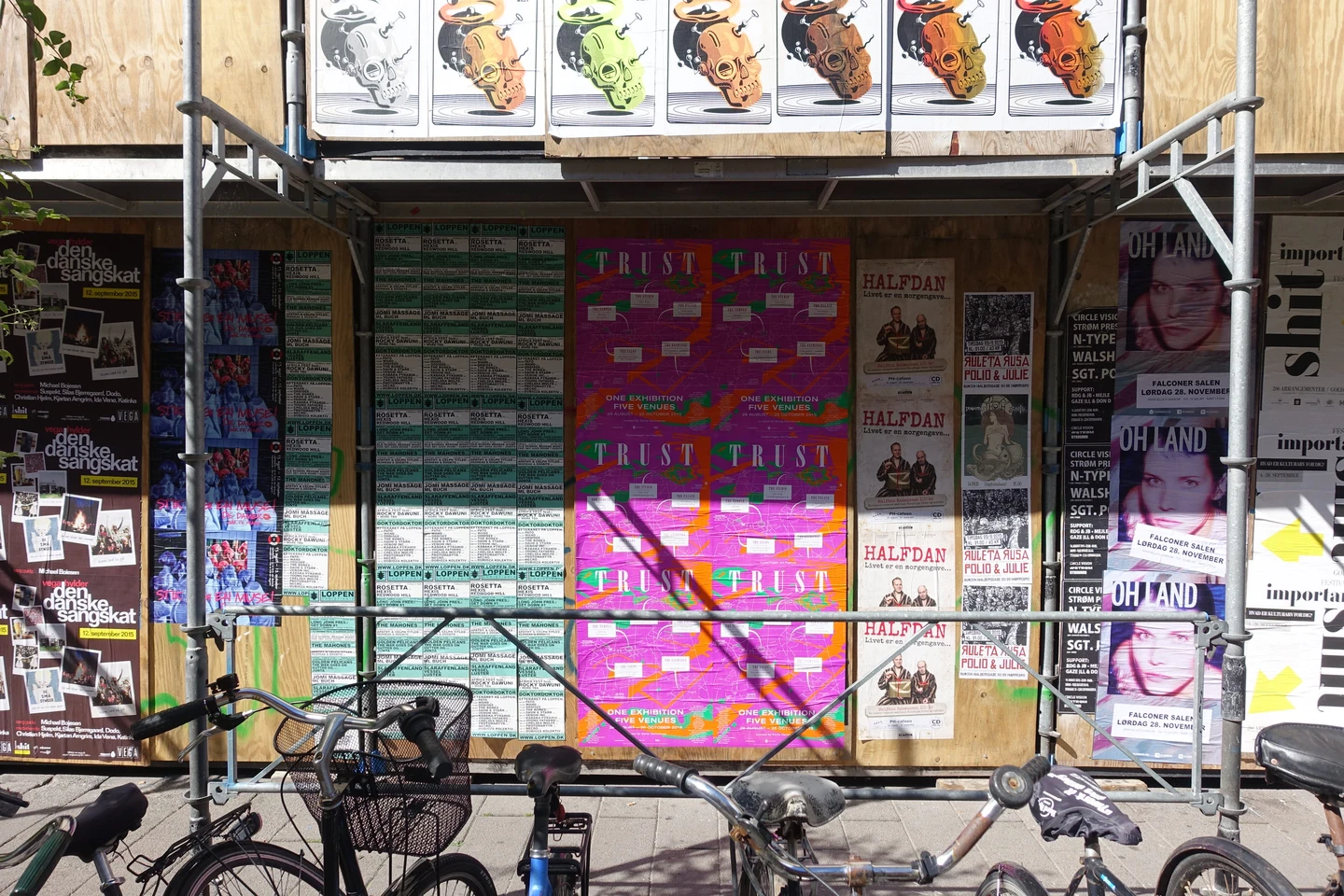
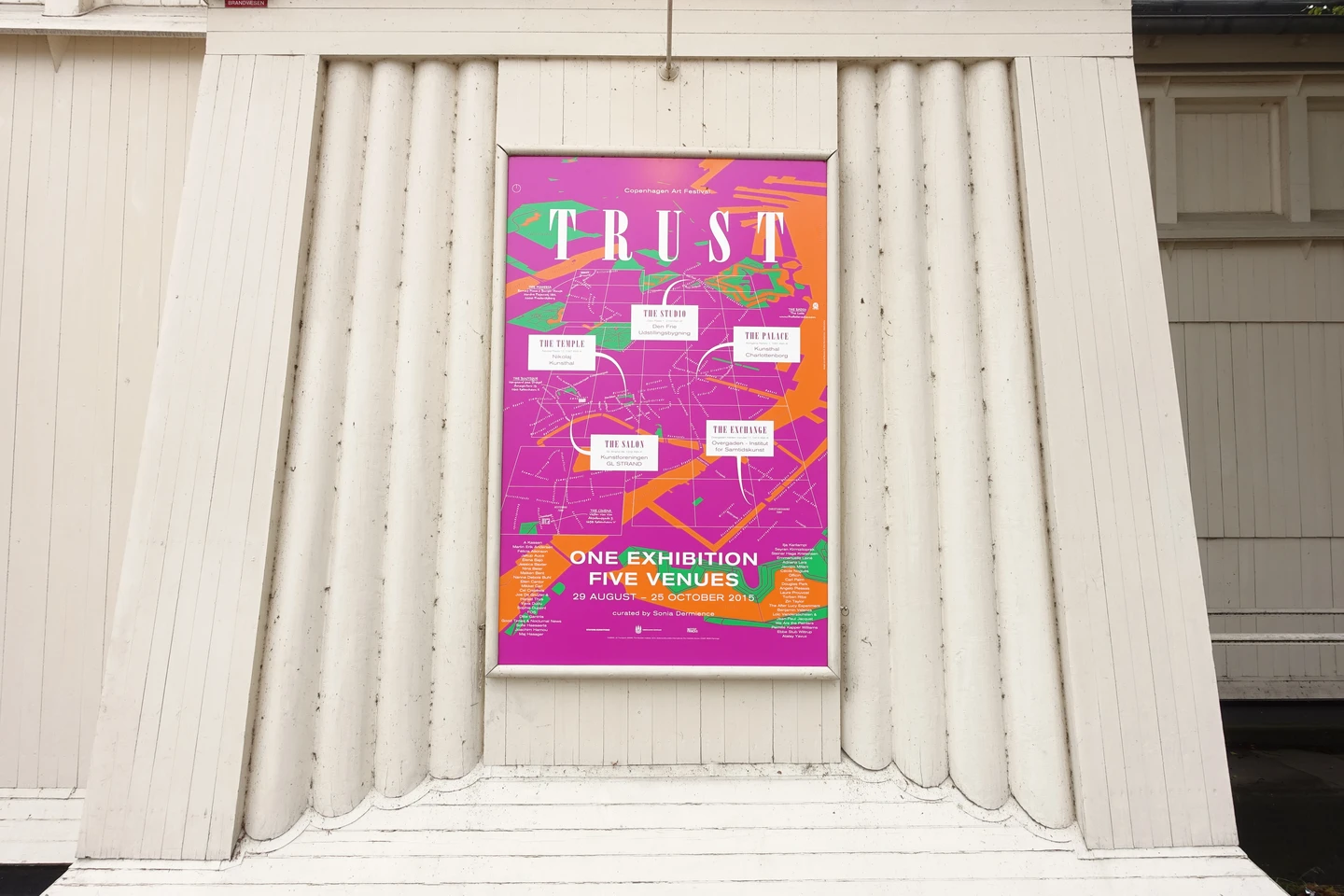
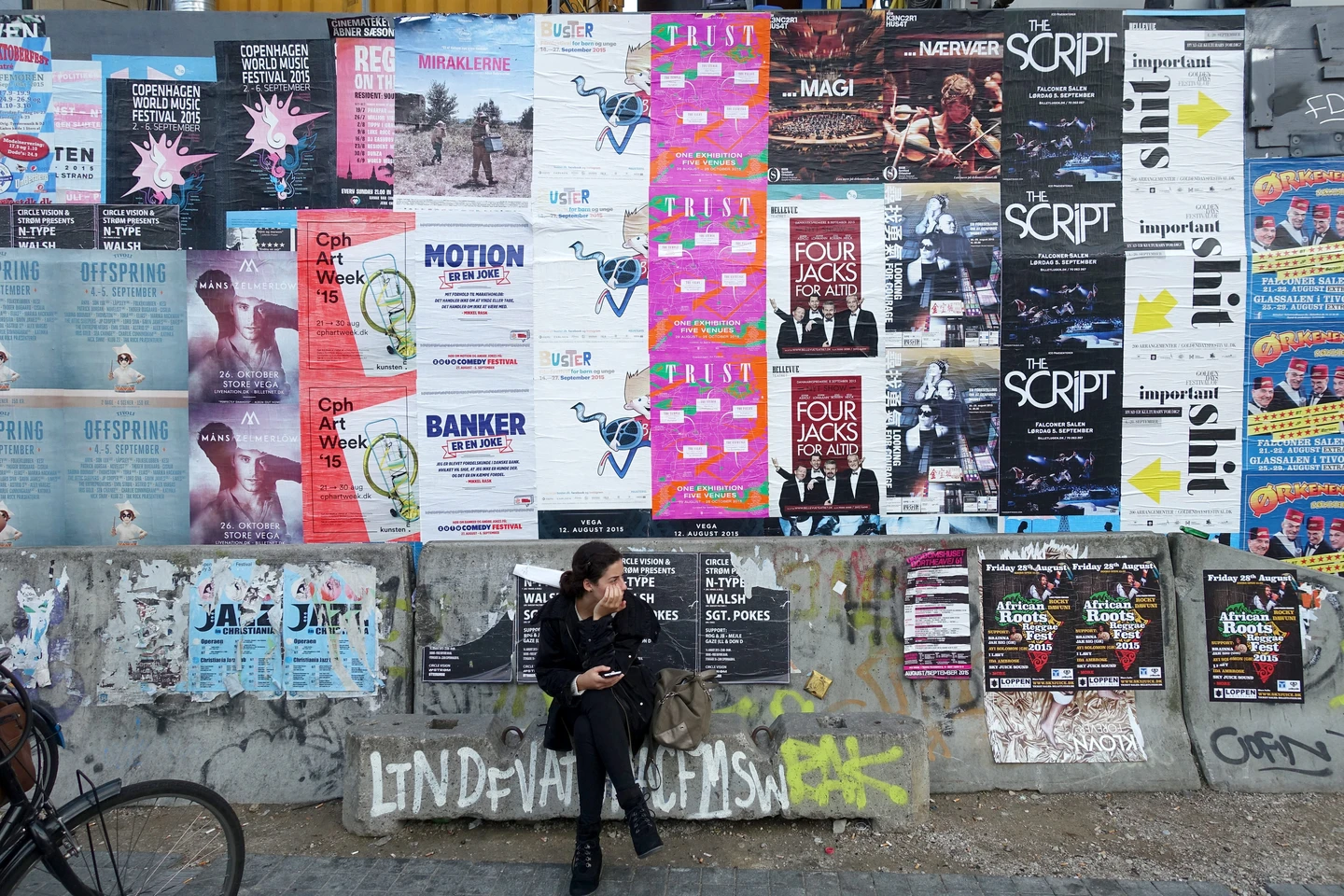
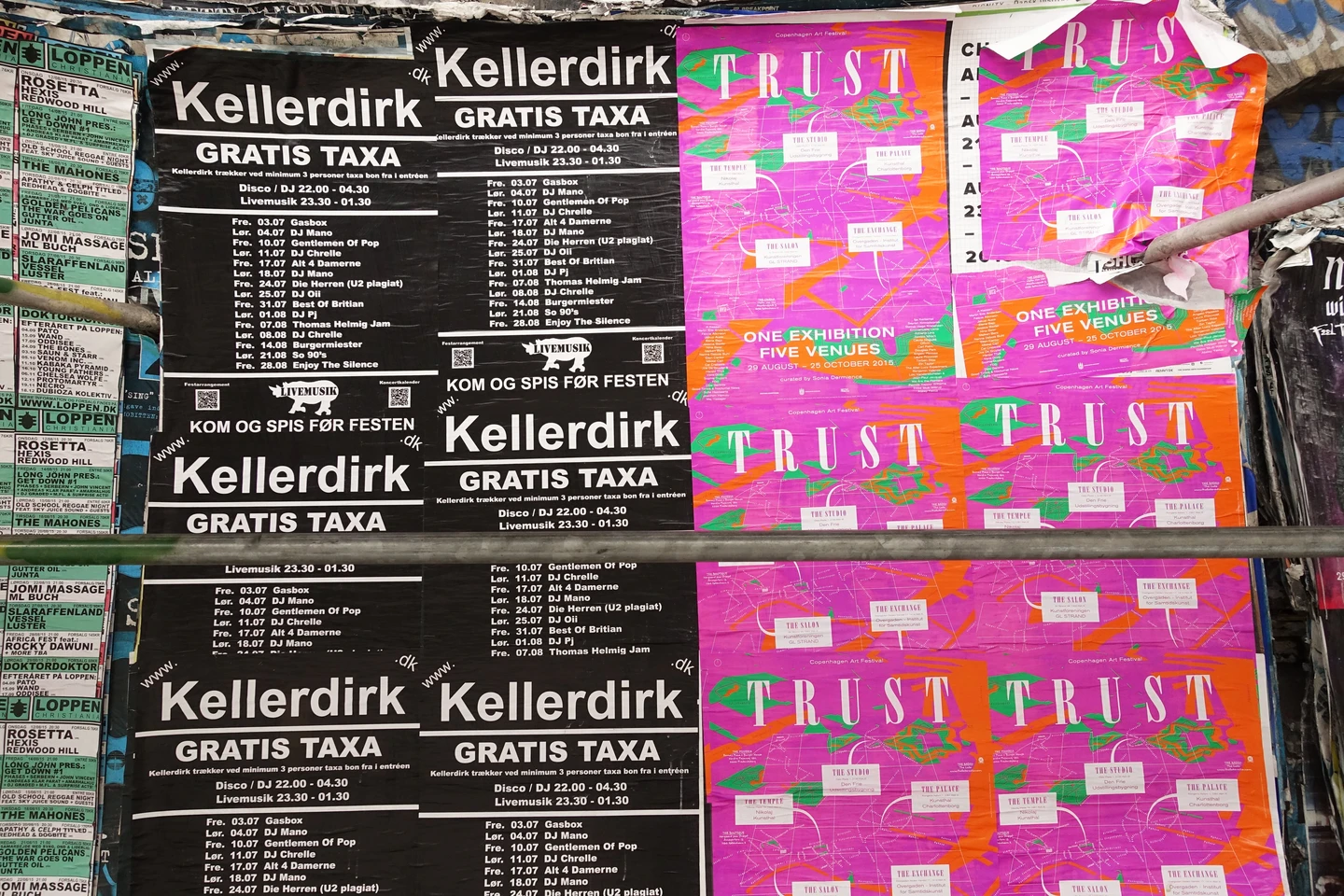
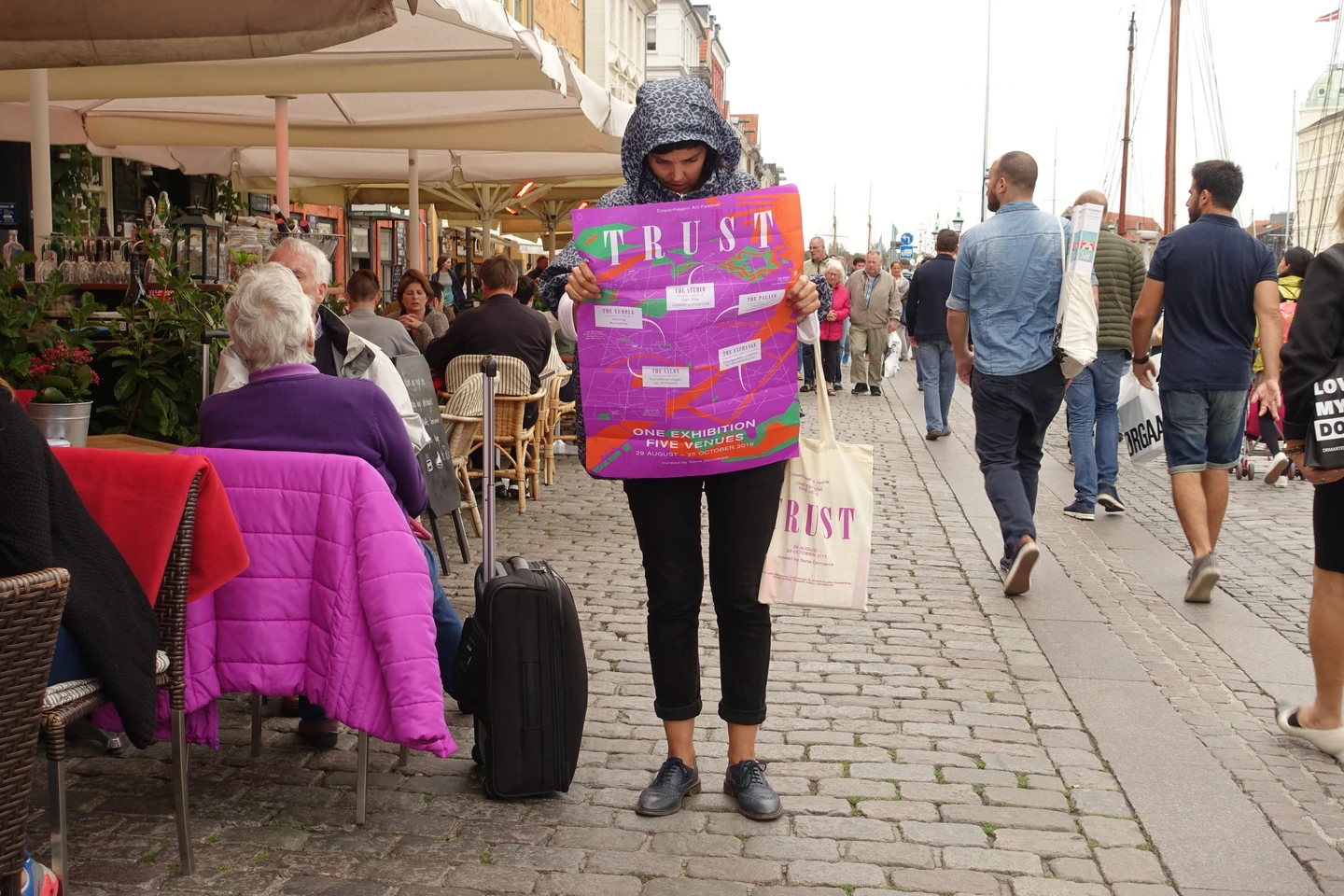
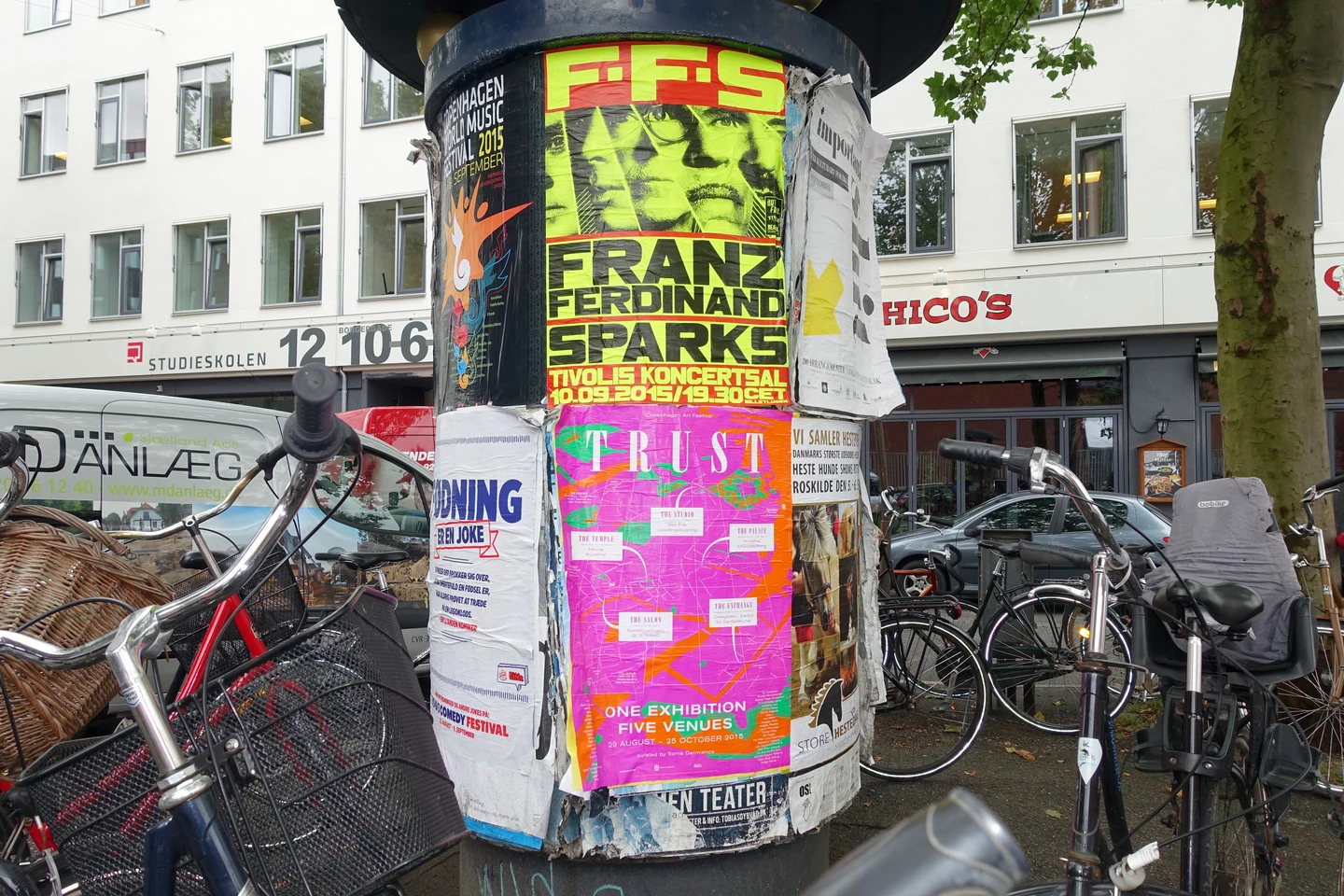
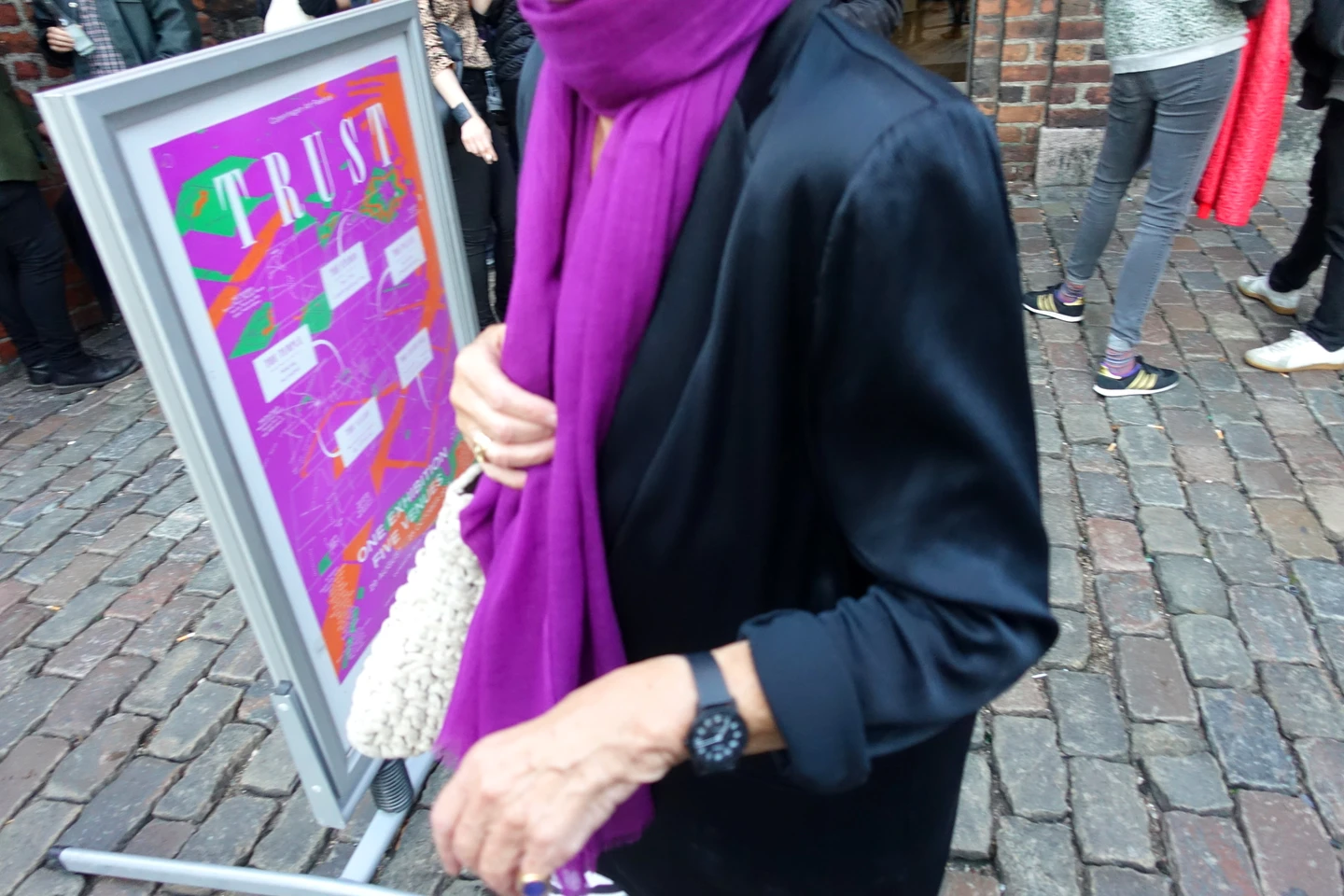
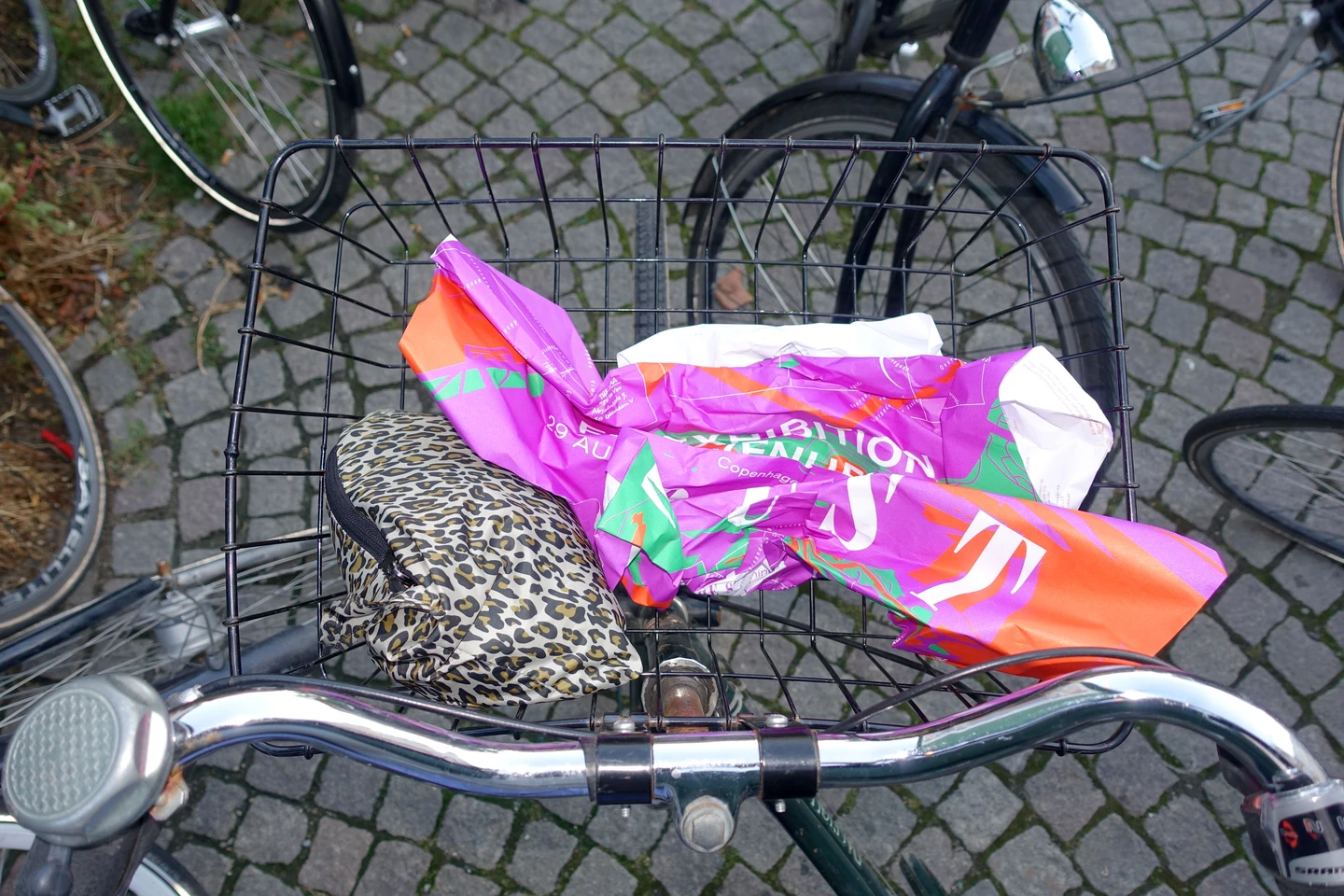
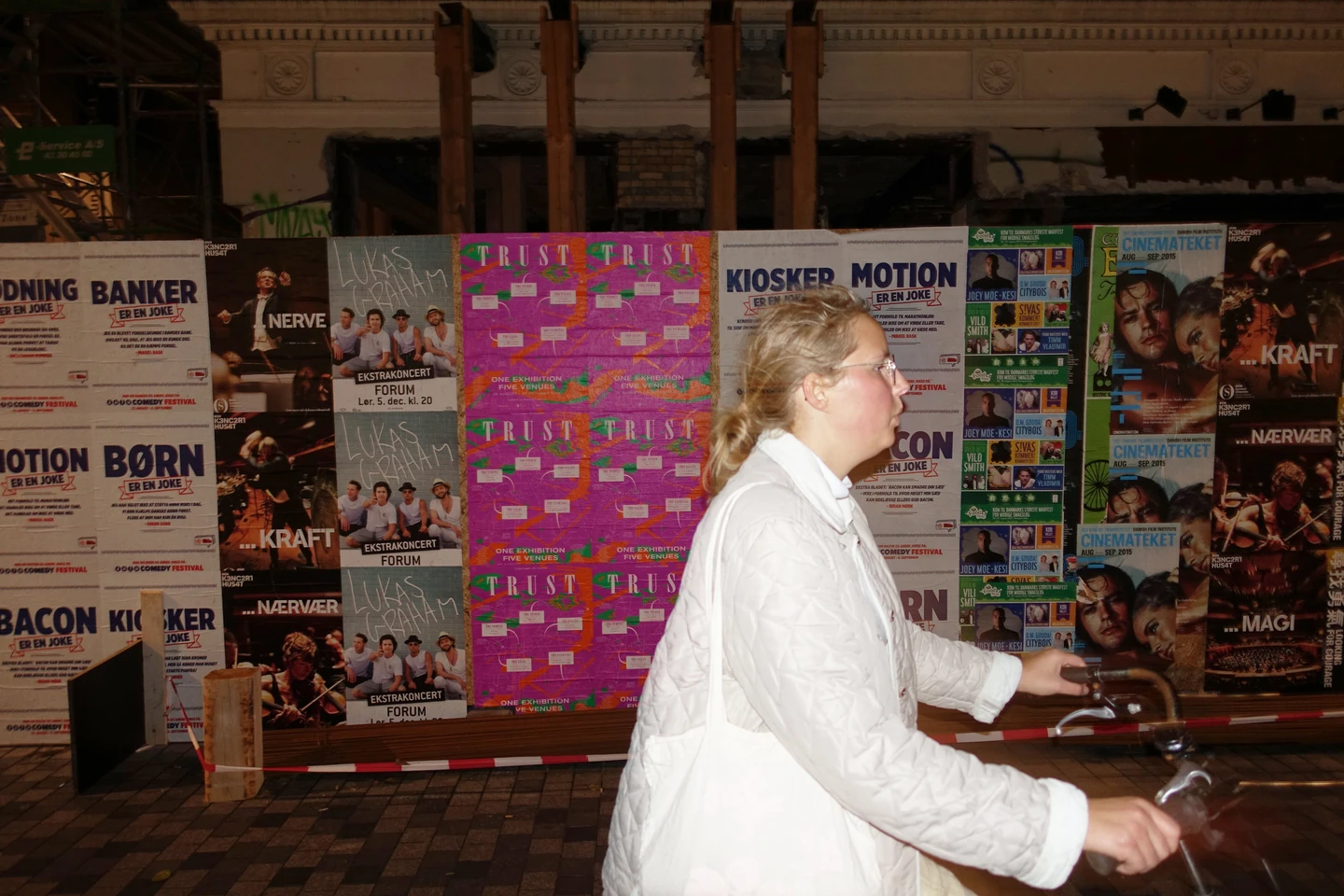
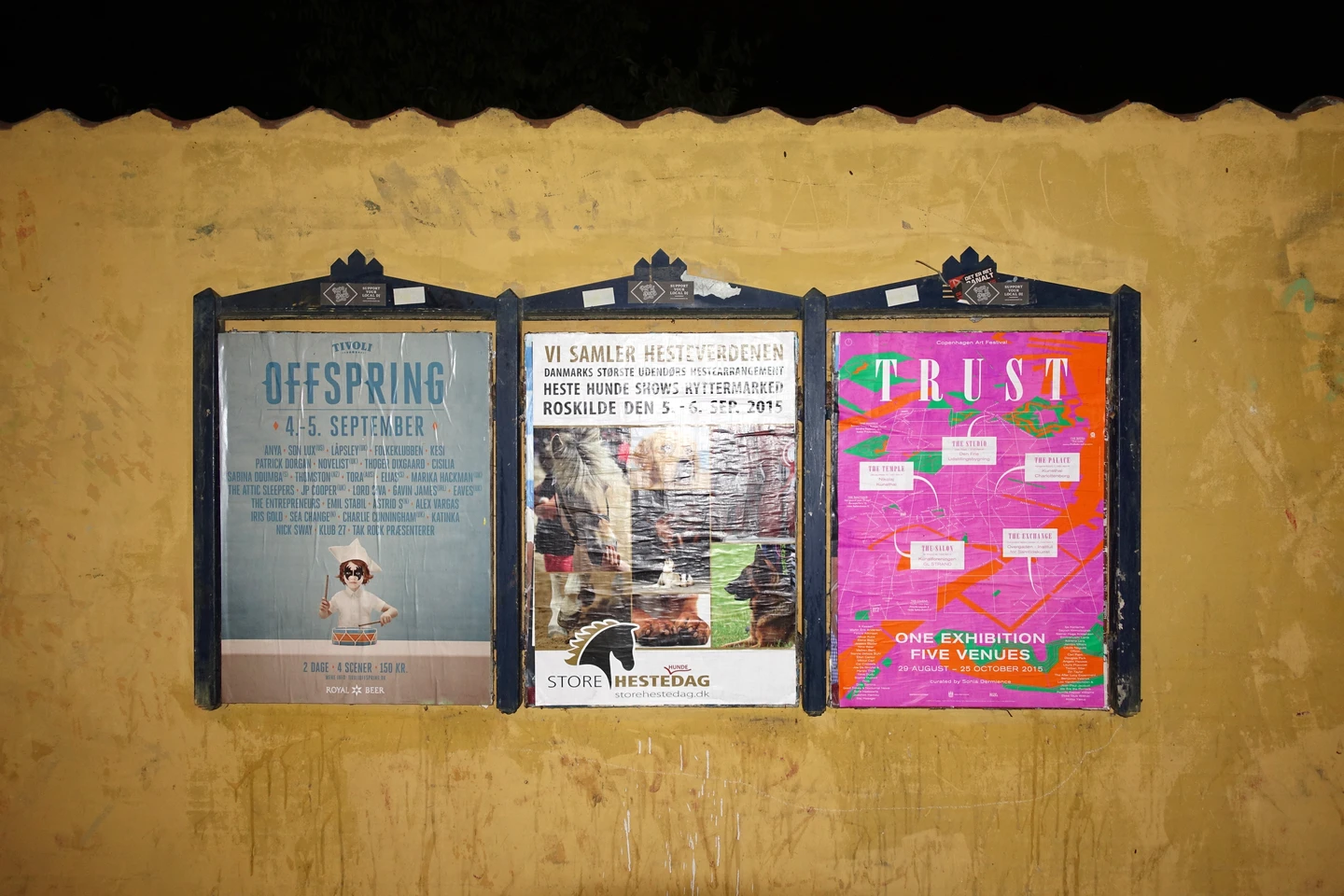
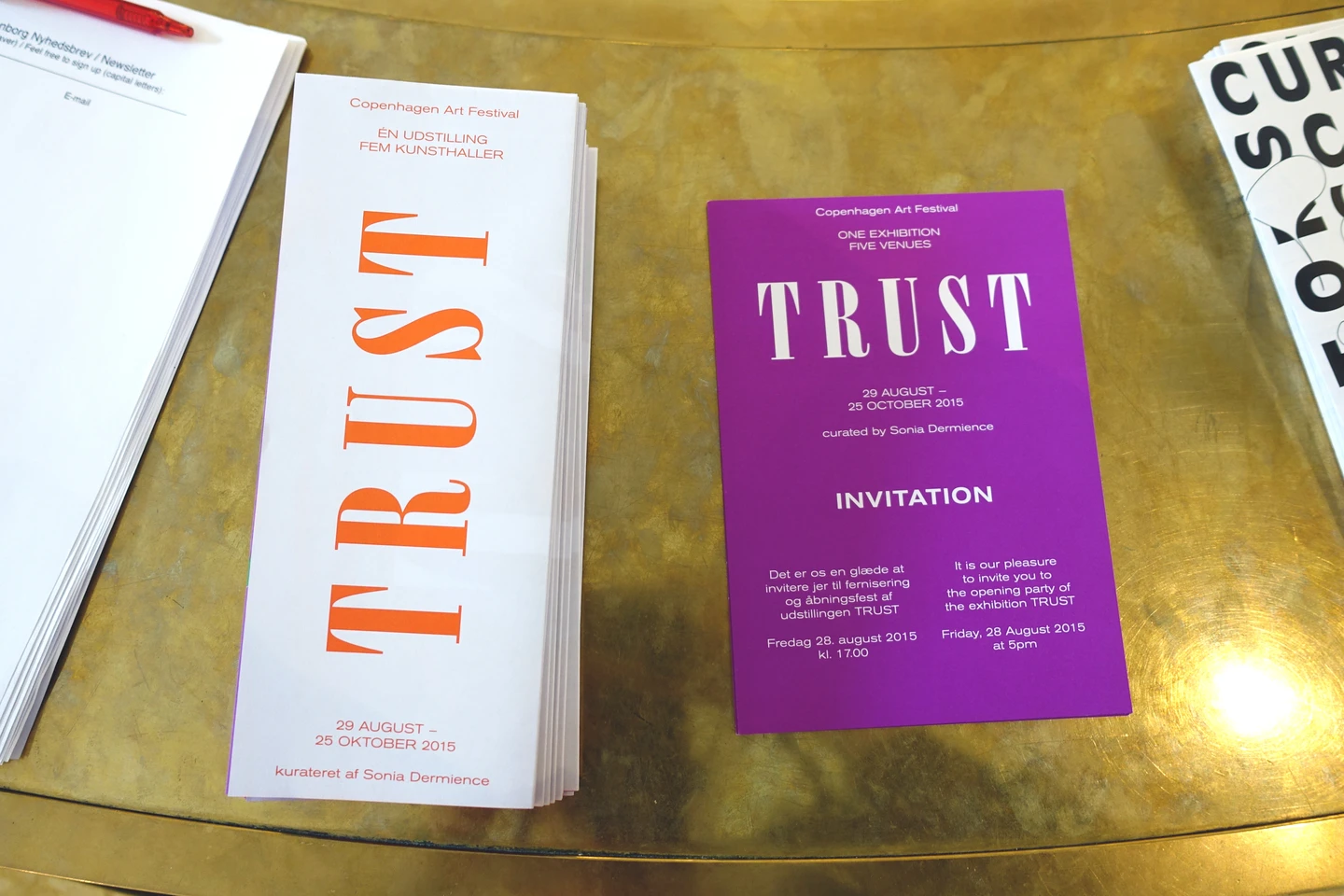
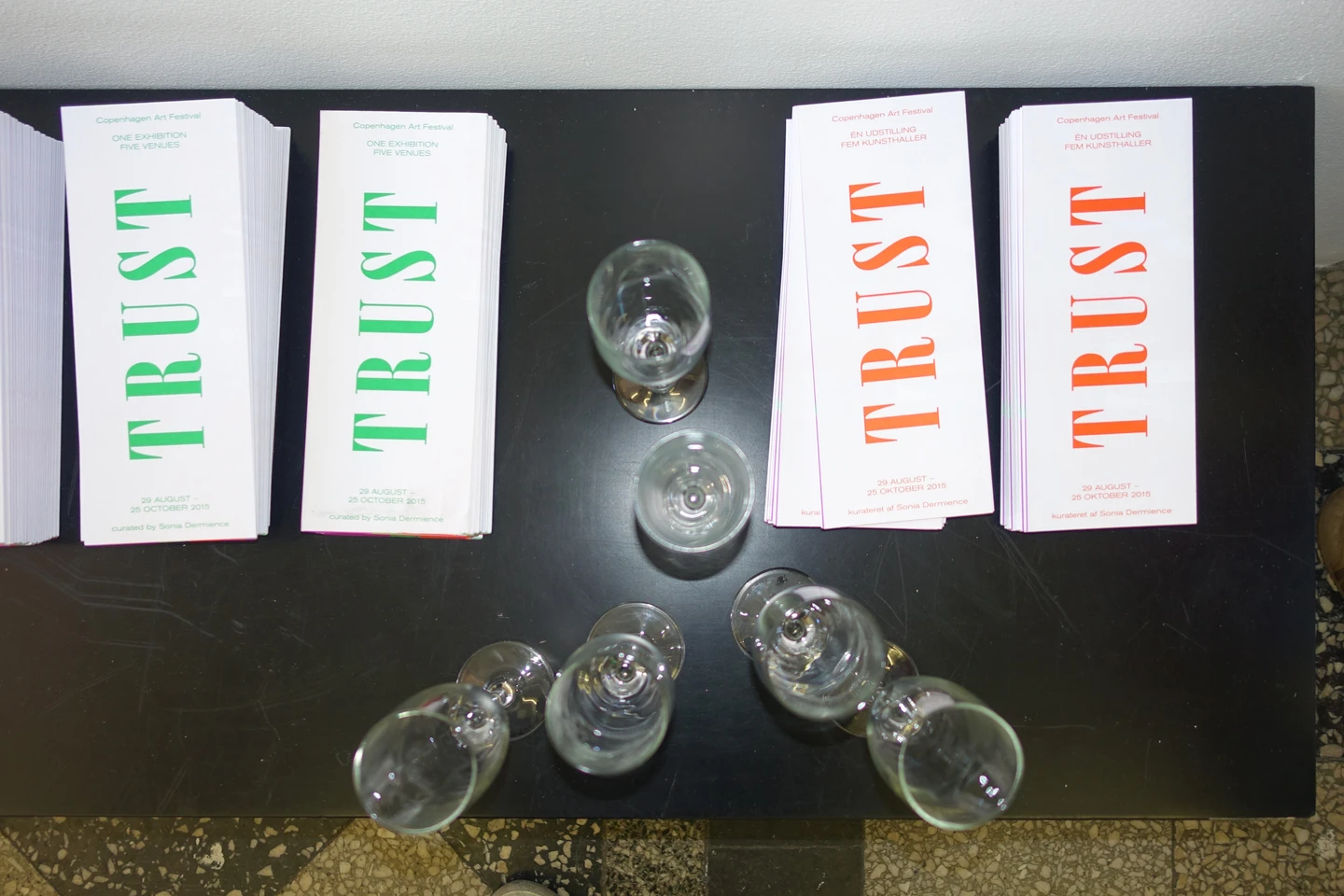
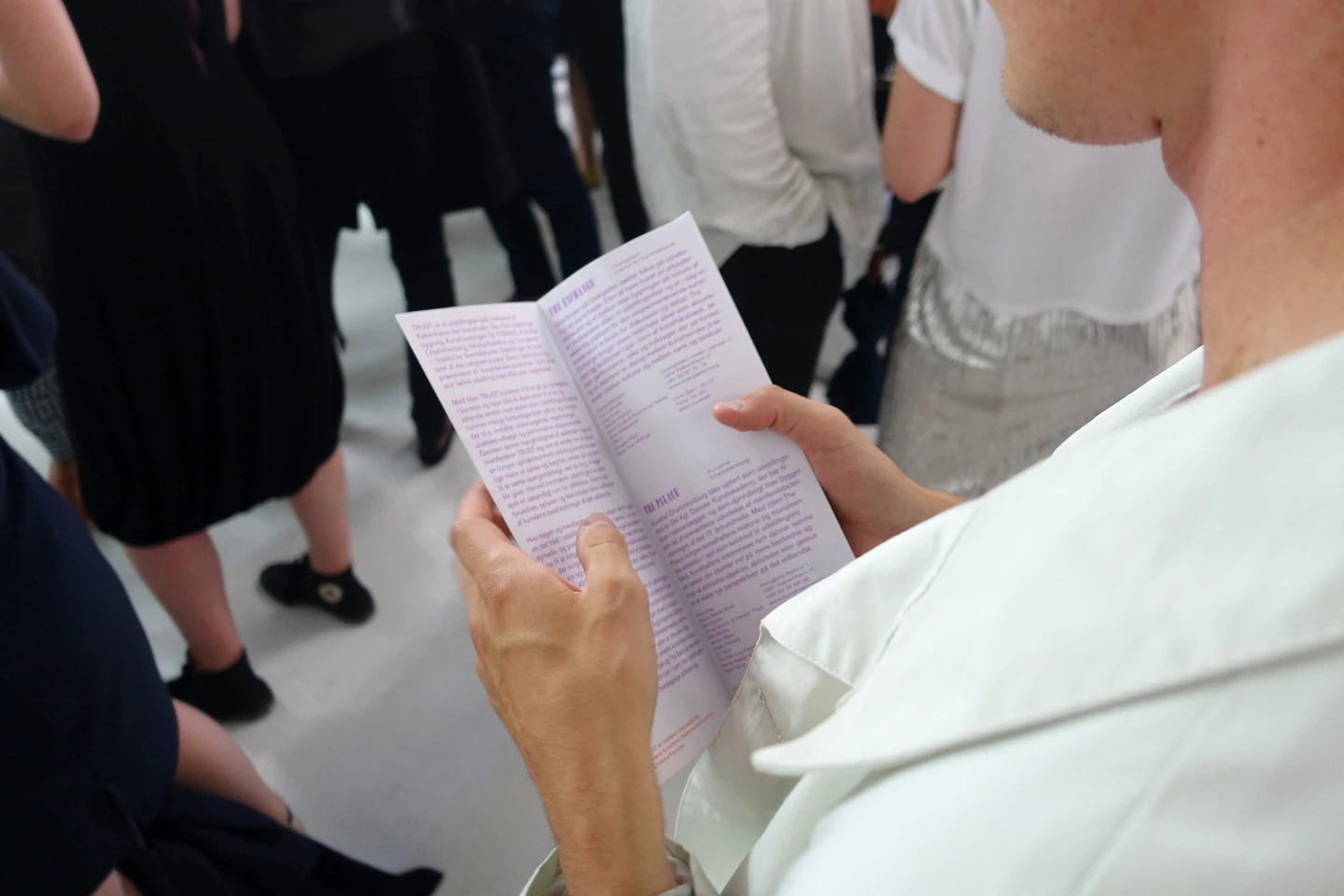
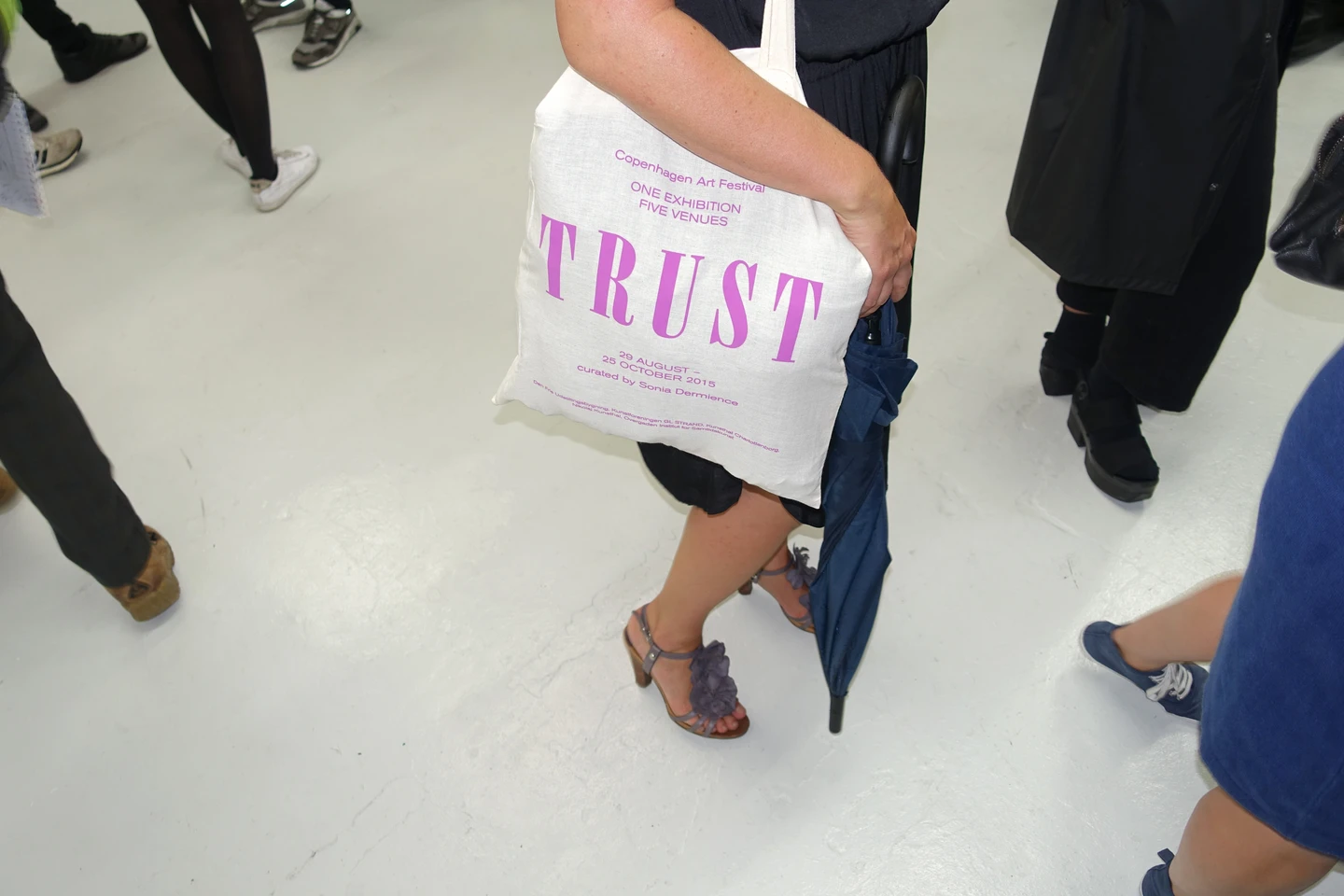
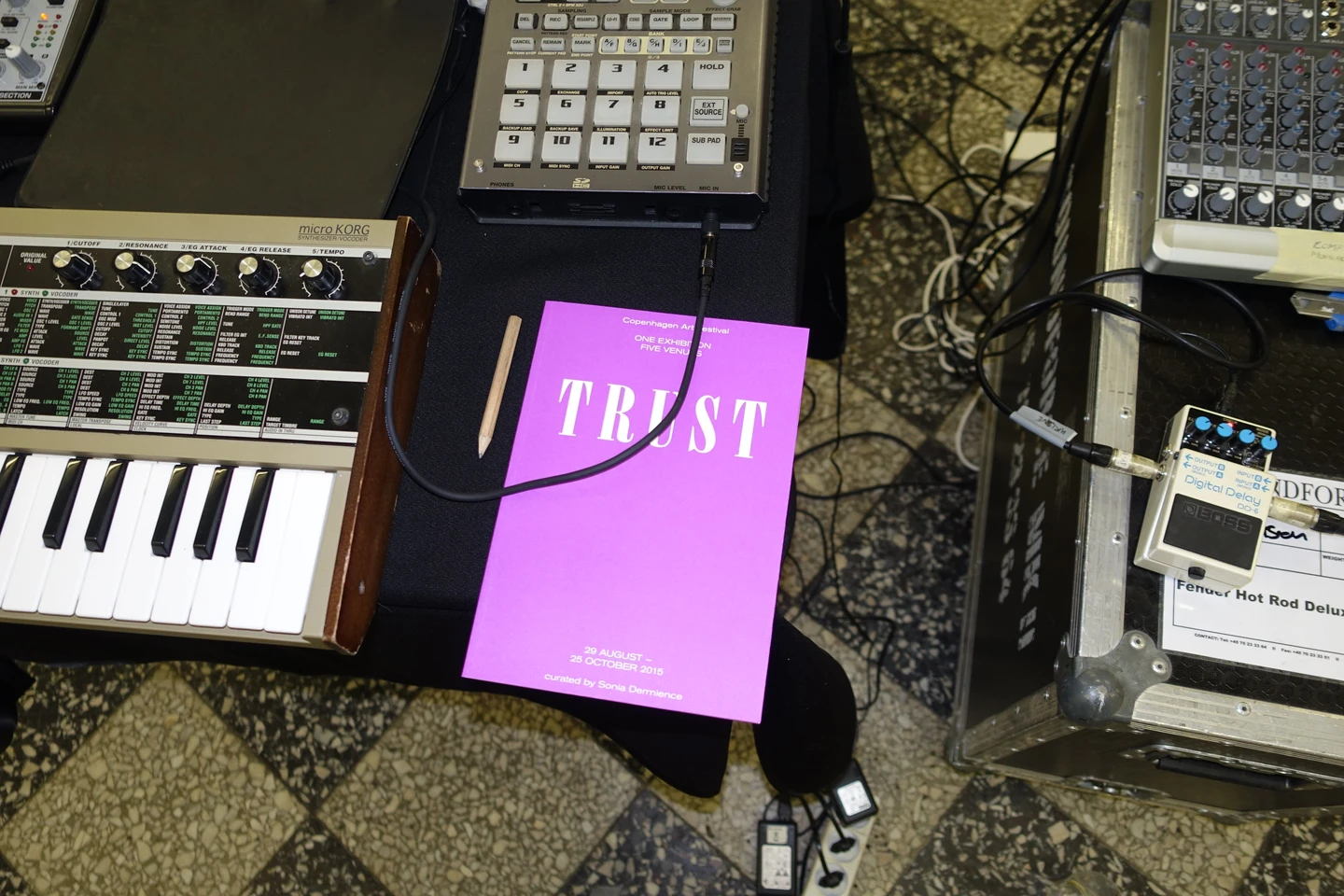
Copenhagen Art Festival Graphics, Print 2015Copenhagen’s five art centres proudly present the grand opening of the joint exhibition TRUST – a sparkling programme of events and opening speeches with a wealth of performances at the exhibition’s many venues. The opening lasts from the afternoon to late at night, culminating in a blast of an after party. Den Frie Udstillingsbygning, Kunstforeningen GL STRAND, Kunsthal Charlottenborg, Nikolaj Kunsthal, Overgaden Institut for Samtidskunst Den Frie Udstillingsbygning, Kunstforeningen GL STRAND, Kunsthal Charlottenborg, Nikolaj Kunsthal, and Overgaden – Institut for Samtidskunst is now opening the major joint exhibition TRUST. Operating on a large scale, the exhibition manifests itself as a unique art event crossing borders and boundaries with an ambitious range of national and international contemporary art. With 41 participating artists, TRUST will fill the city of Copenhagen with investigative registrations, poetic statements and performative experiments at the five art venues and in public space. The heading for the exhibition is trust – trust in one another and trust in art’s way of making us see the well known in a new perspective. Through a multitude of aesthetic idioms, the aim of the exhibition is to create renewed interest in art as an important space for reflection and as way of sensing and making sense of the world. As a result TRUST is formulated around the city and its scenography of well-known institutions – for instance, the shop, the church, the castle, the pizzeria –just as everyday life and everyday objects form a consistent strand running through the exhibition. The exhibition is curated by Belgian Sonia Dermience and one of her strategies is an elaboration on the different identities of Copenhagen’s five main art venues. Each of the five institutions has been assigned a name that functions as a subtitle for the individual exhibition and refers to the institution’s special history and identity. TRUST can also be experienced at Nørgaard Paa Strøget, Roma’s Pizza & Burger House, The Lake Radio and Vester Vov Vov.
Sonia Dermience (BE) founded Komplot in Brussels in 2002, a curatorial collective concerned with nomadic creative practices. Under the name of Catherine Vertige, she conducted extensive research into post ’68 collaborative art practices in Belgium with seminars and the two documentary films Sad In Country. In 2009 Komplot founded ’The Public School Brussels’. Since 2010 Komplot is located in a converted warehouse dedicated to exhibitions, residencies and studios. Komplot published three issues of YEAR magazine between 2011 and 2013. Recently, Sonia Dermience reinitiated an individual curatorial practice with this exhibition, TRUST taking place in five kunsthals in Copenhagen.
In 2010 the five main art centres in Copenhagen joined forces to win a competition to create a festival of contemporary art launched by the Danish Arts Foundation. The festival was curated and realised in a unique collaboration between them, and took place in autumn 2012. For the festival the art centres formed an association Copenhagen Art Festival – the organization behind TRUST.
-
-
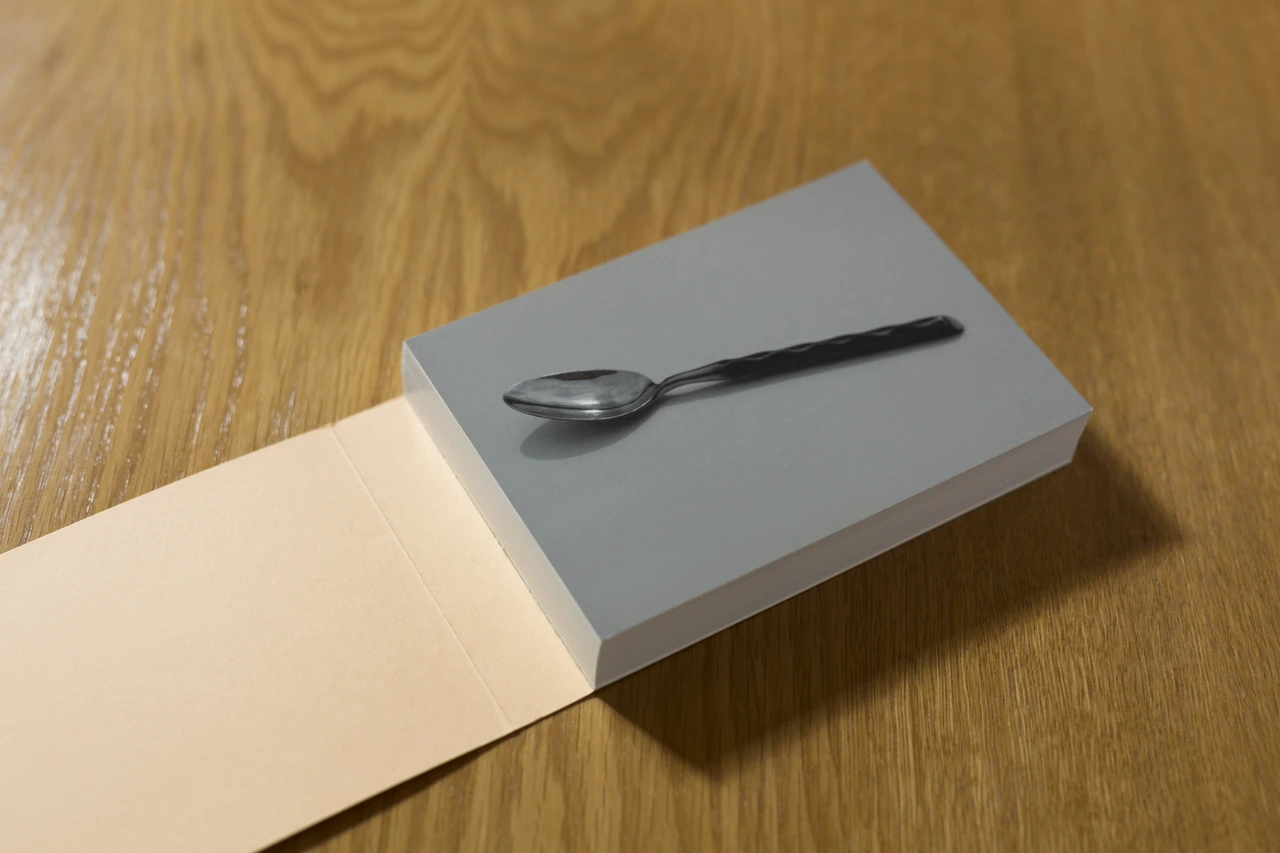
Stolen Spoon
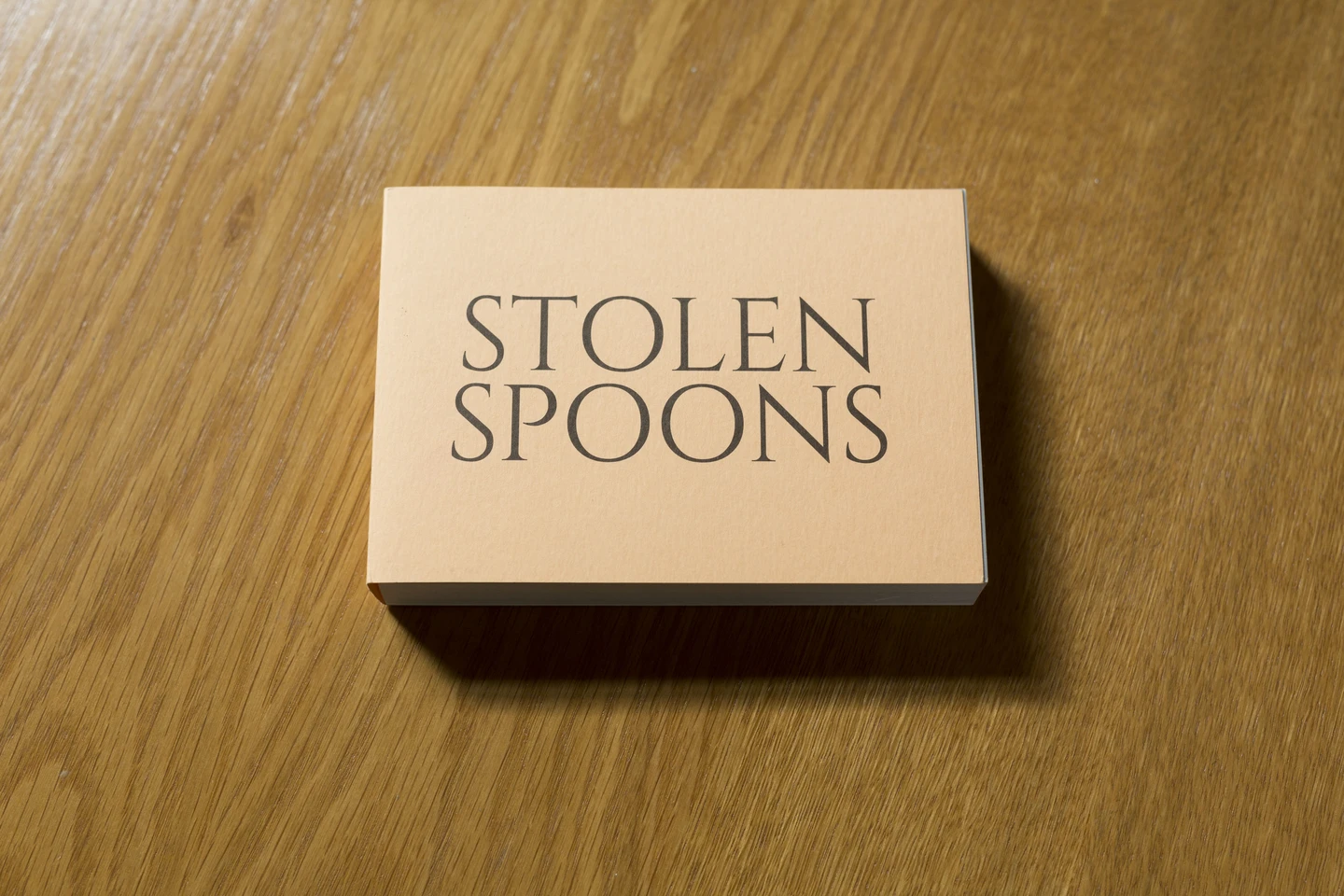
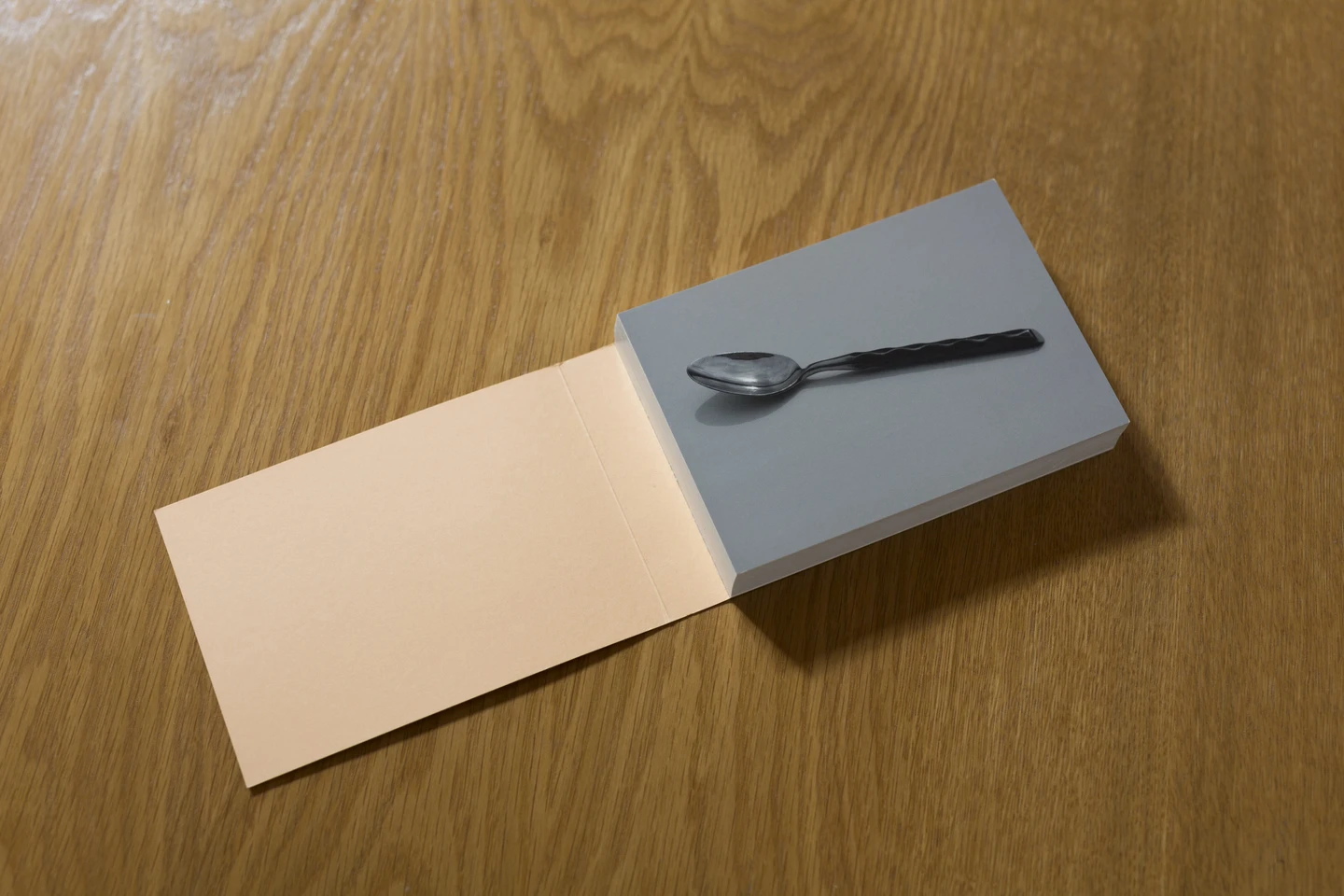
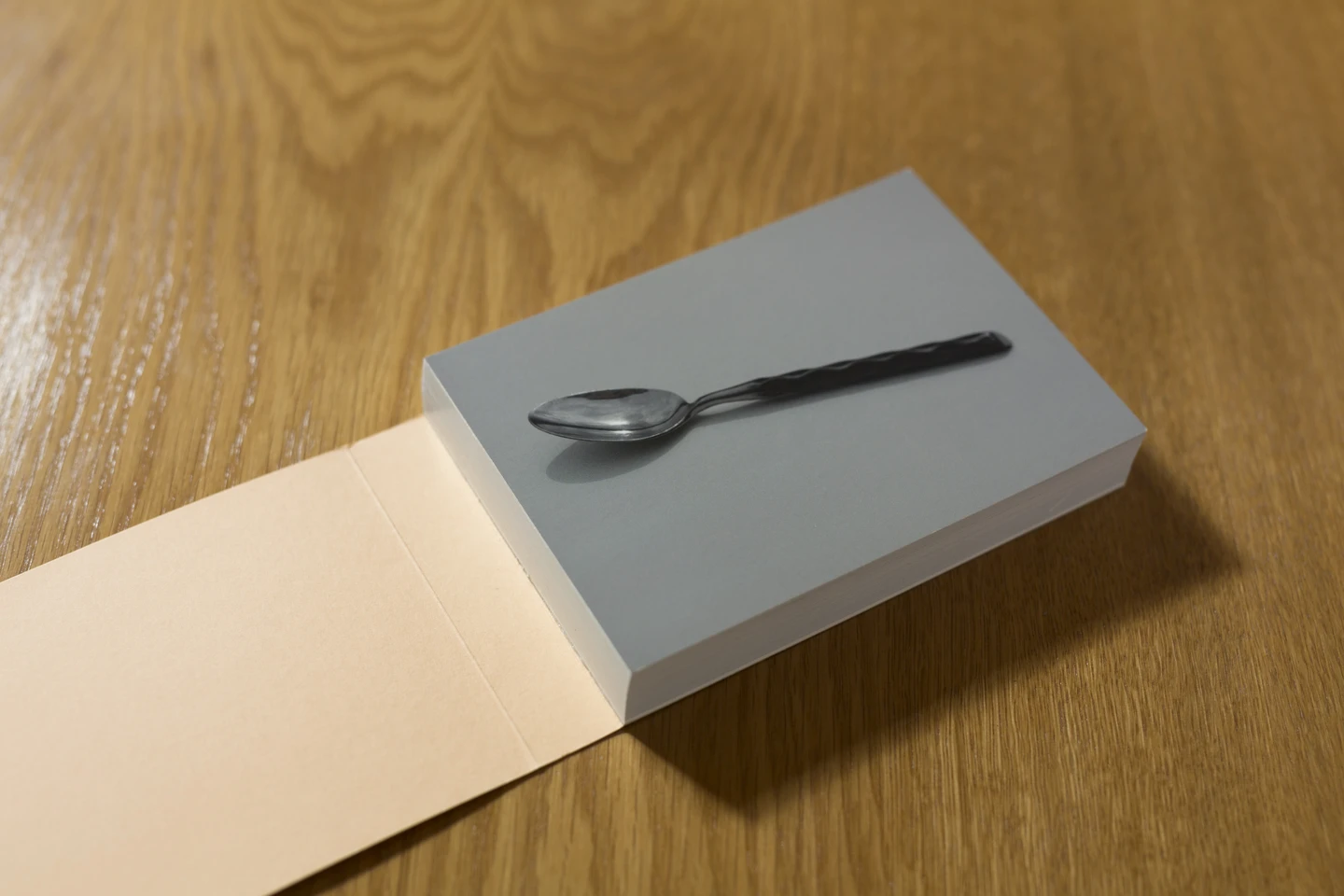
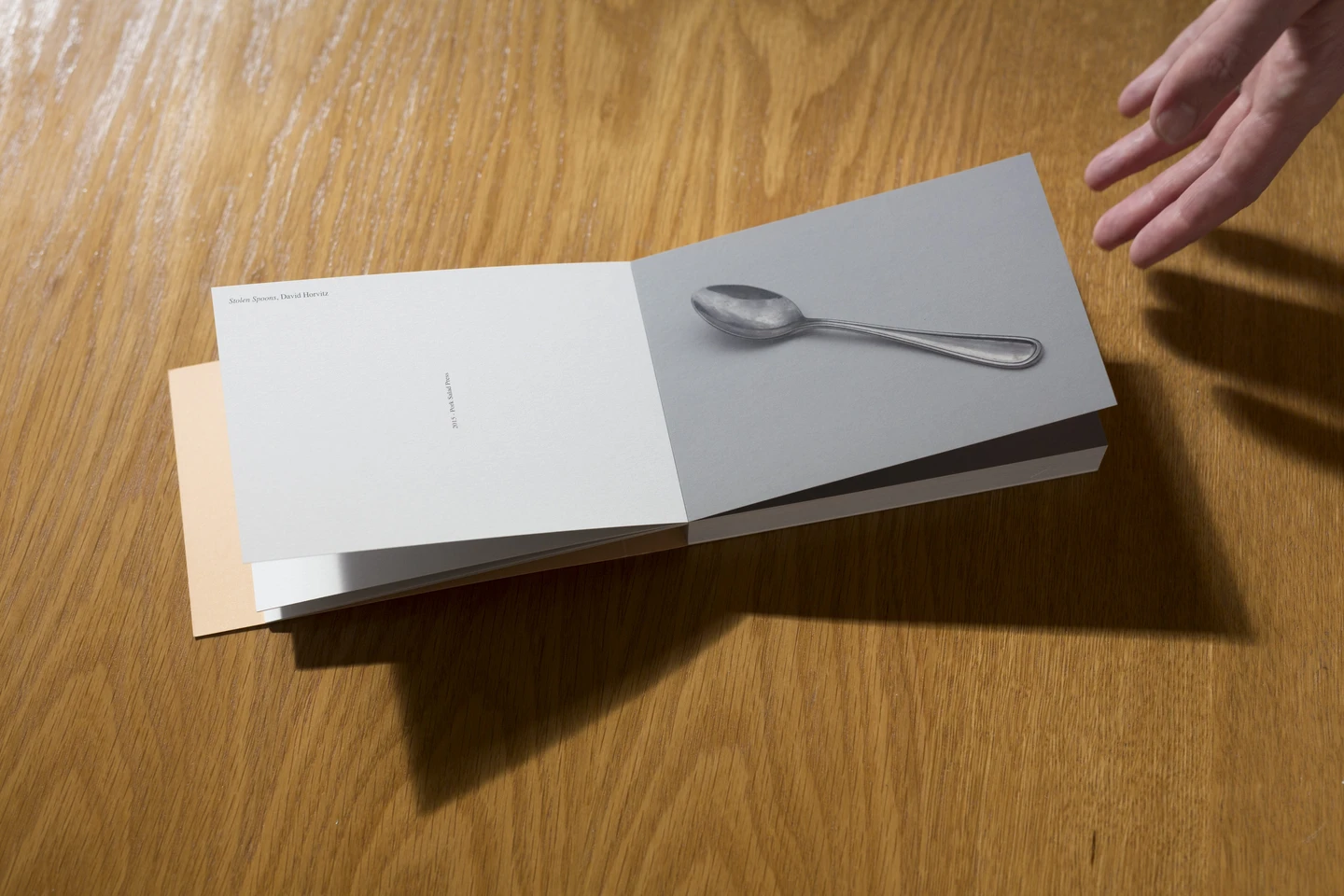
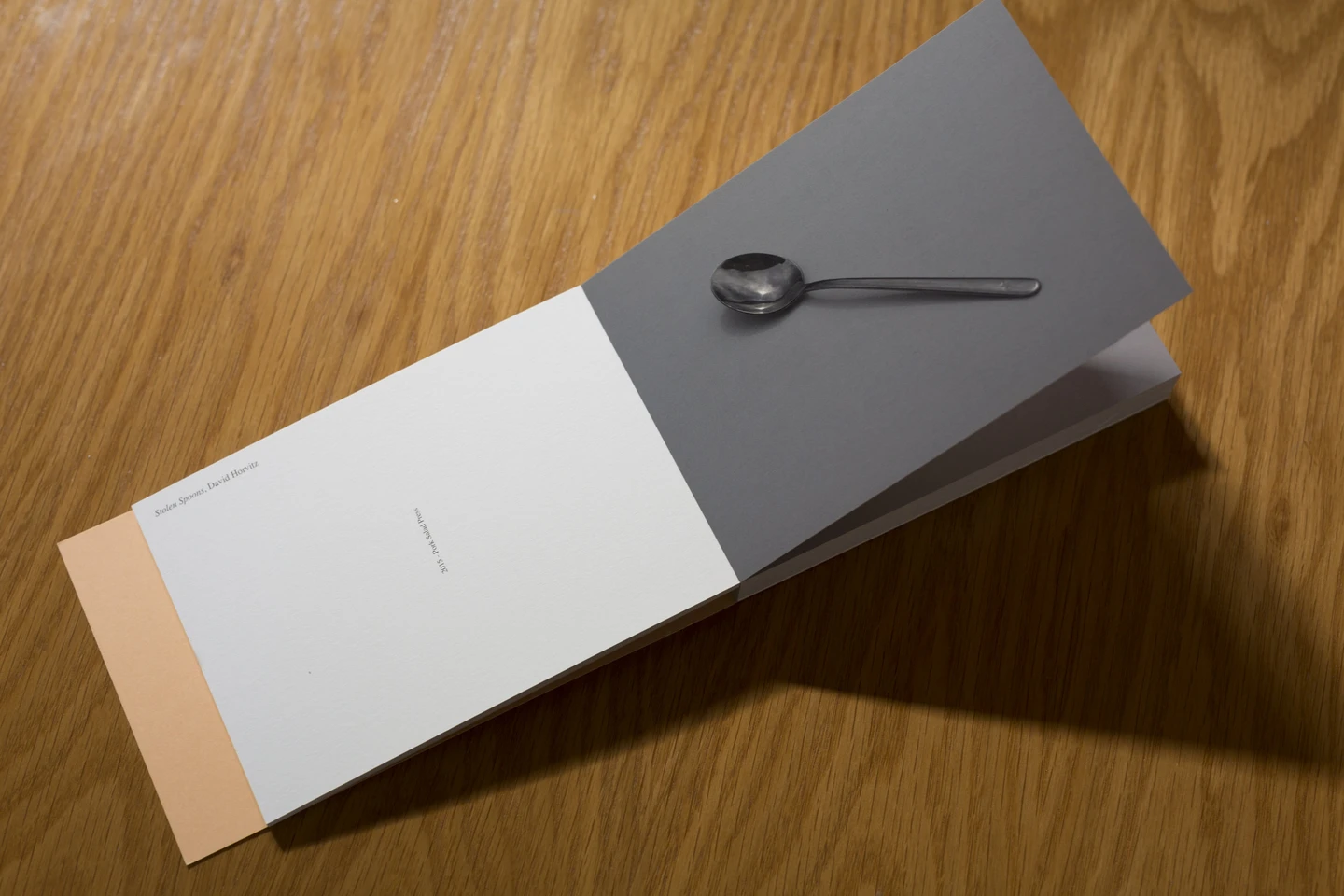
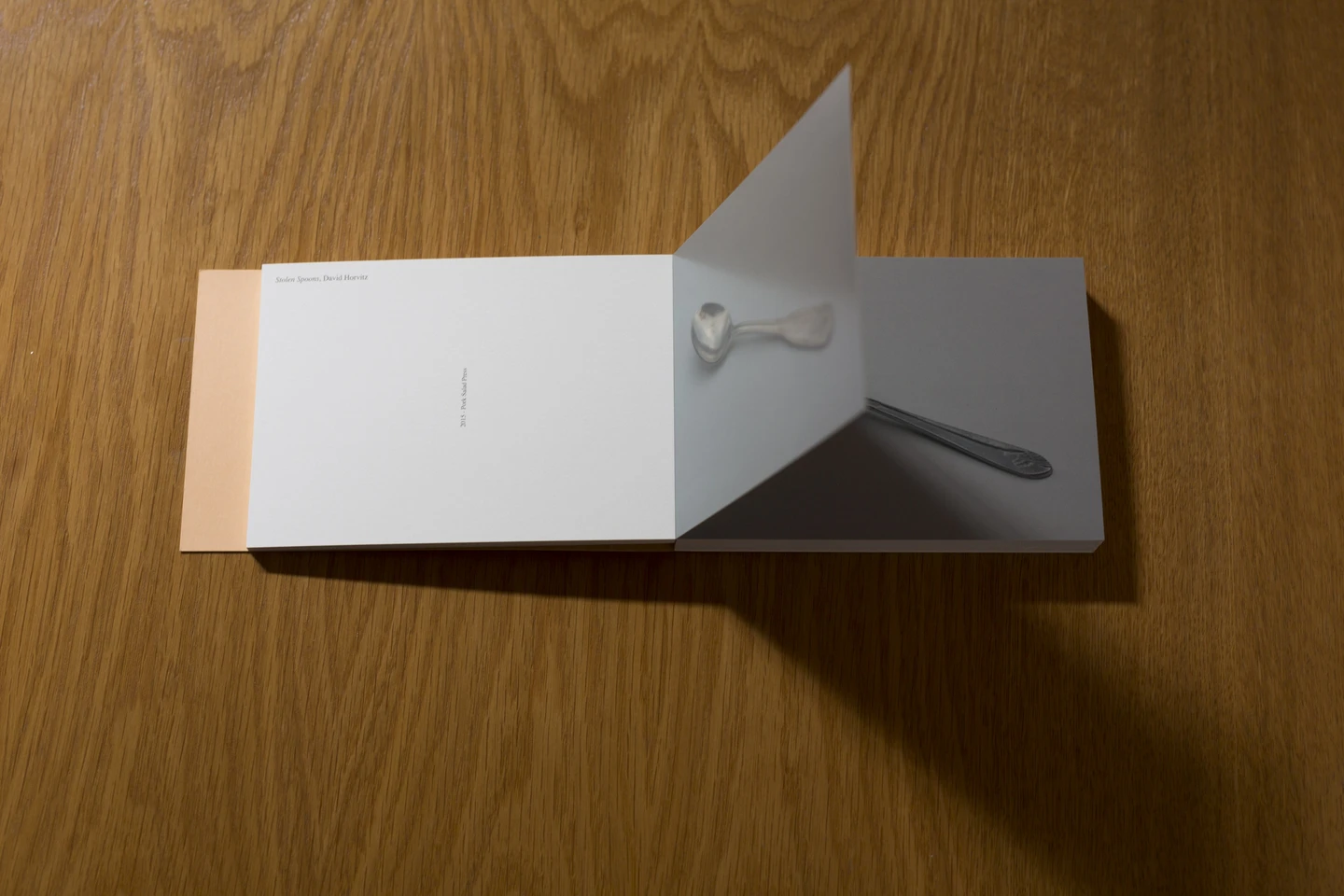
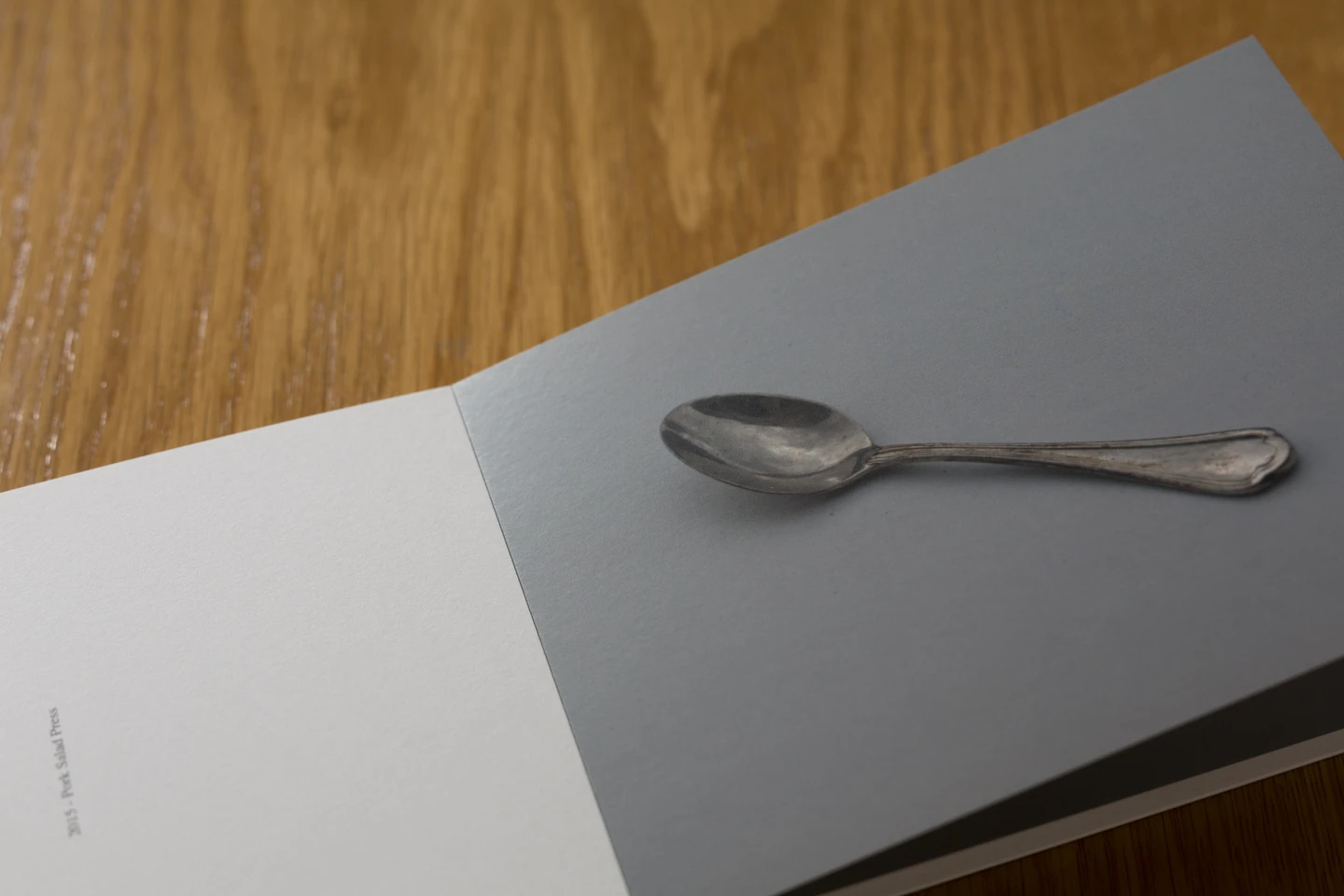
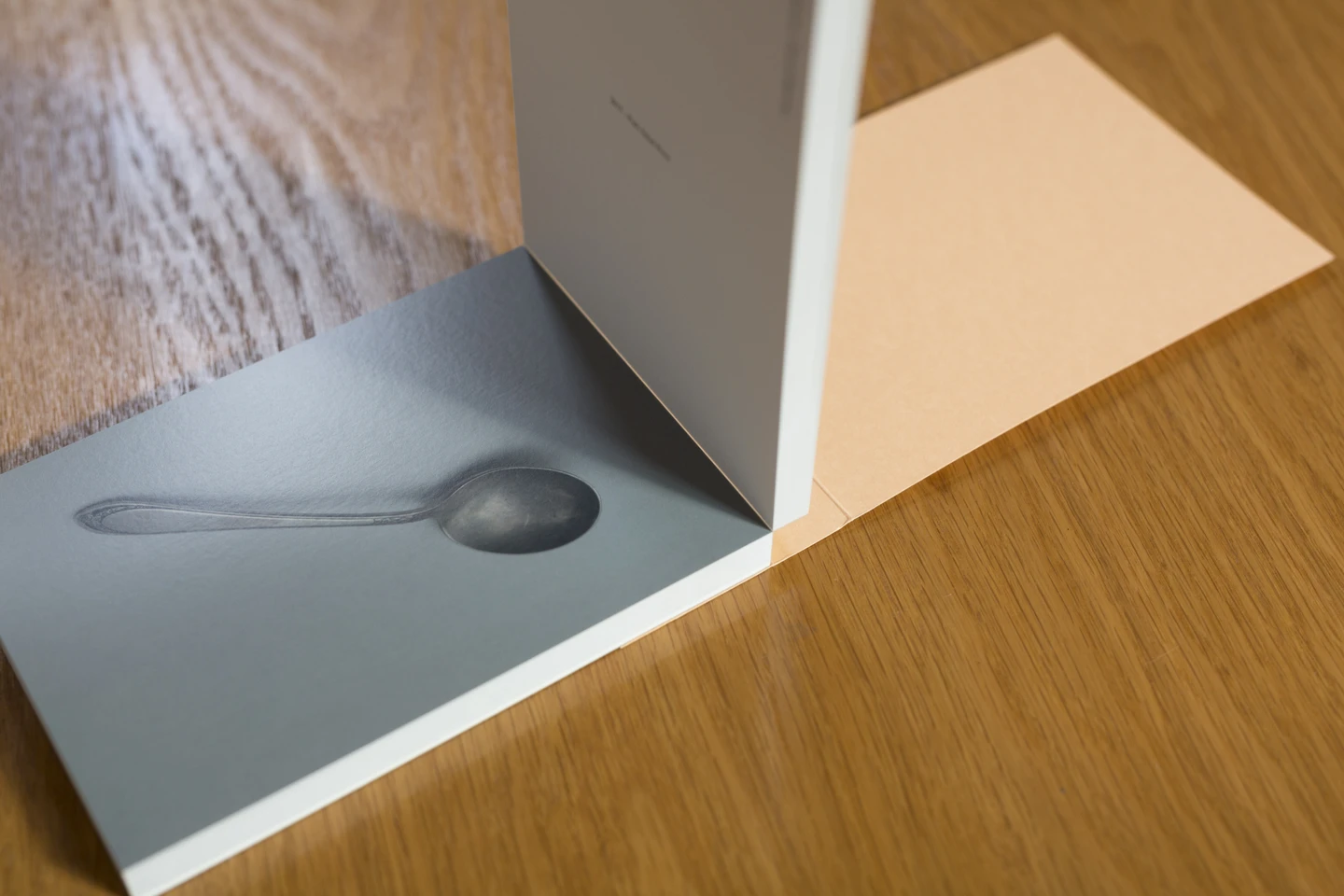
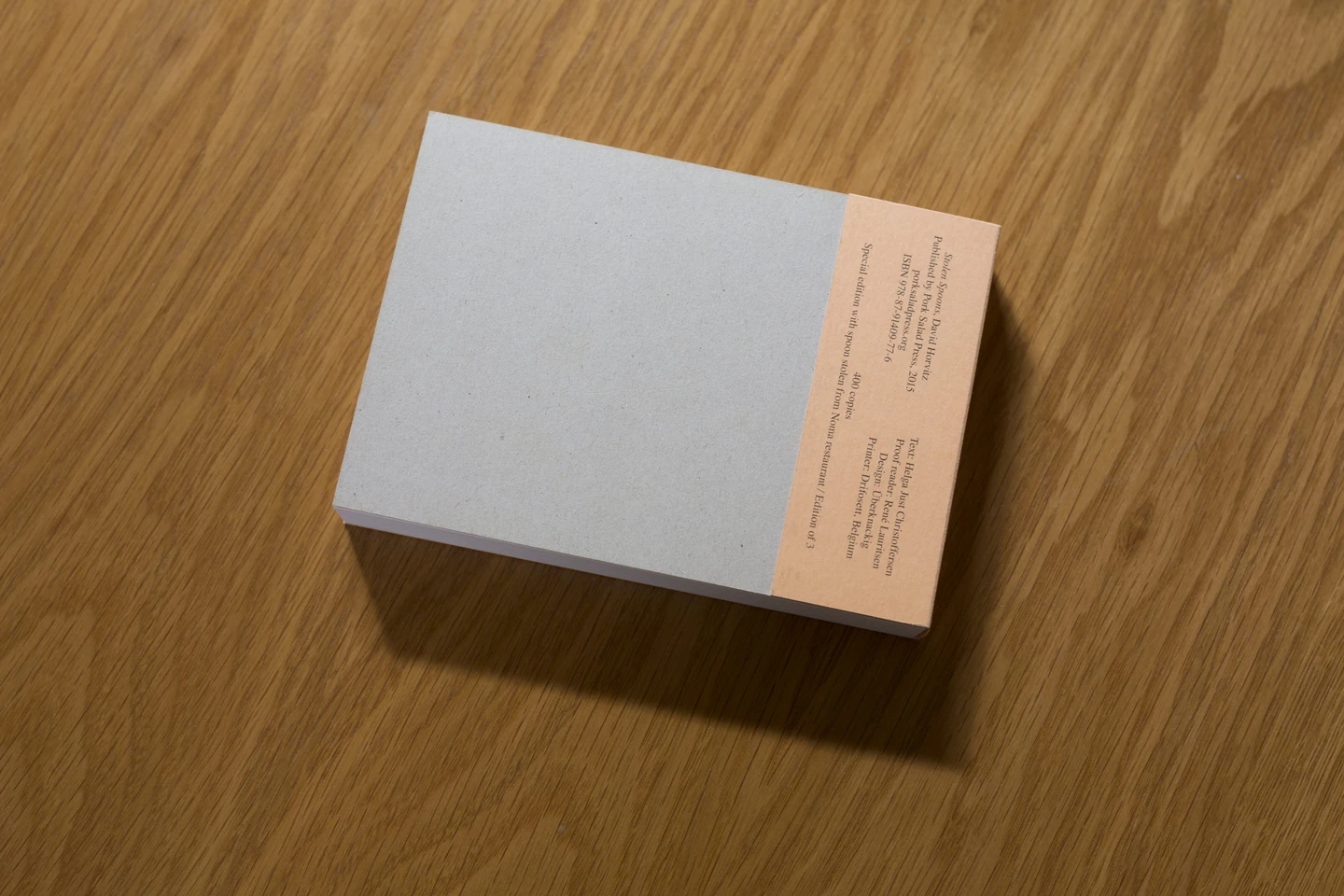
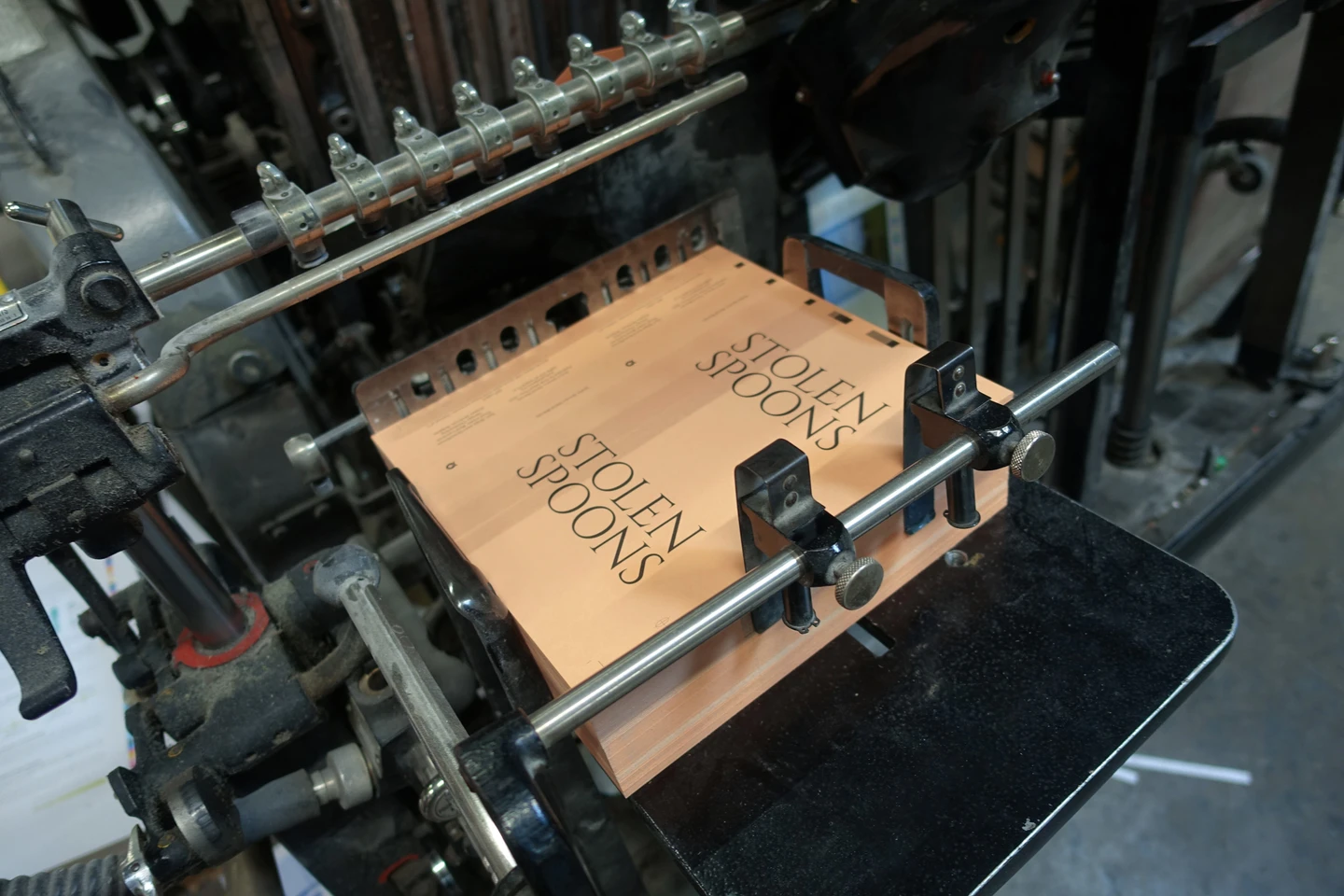
Pork Salad Press Editorial, Book 2015Un texte sur le site de David Hovitz (un peu long et je ne sais pas si on peut l'utiliser, un bout?
I have an Asics box in my bedroom that is completely full of stolen spoons. They were all carefully slid into the pocket of David Horvitz during meals around the world, in one discrete and by now surely skillfully mastered movement. Terminating their service as utensil, Horvitz removed them from their habitat, making them one of an infinite amount of seemingly insignificant small objects that invisibly change hands or disappear around us constantly. In the box the spoons take on another life as the material remnants of time and travel, as a physical lexicon of the idea and function: spoon and as the accumulation of dispersed parts that are brought back together. Some of them are generic in form and function, even identical, pointing to the fact that a meal in New York and Beijing might be served with utensils that come from the same block of steel and once laid side by side on the production line. Others clearly differentiate themselves in material and design. Regardless, Horvitz questions whether the spoons in the box are actually dispersed or recuperated, and just imagine their journey.
I have a curious story from my childhood that now resides in this box of spoons. For work my father often traveled around Europe back when Scandinavian Airlines was the company of choice for business travels and the standard onboard still of the kind that called for solid tableware. For every travel he undertook he returned with two spoons, forks and knives, and they were quietly snug into our kitchen drawer. While I remember disliking the knife and fork because of their miniature feel, this particular spoon was perfect and I preferred it to any other we had. Over the years my childhood spoon collection grew and I remained puzzled about this ritual of my fathers, I never ask him why: it was not done as a joke, I am sure not from a specific consideration of me, not out of need and by someone who so clearly did not care to own many things. Over time, it grew into a lesson of sorts, about the qualities that we find in objects around us, to the point that we consider the most random or ordinary so perfect and its promise so desirable that we do things that does not make sense, like continuing to slide spoons into our pockets.
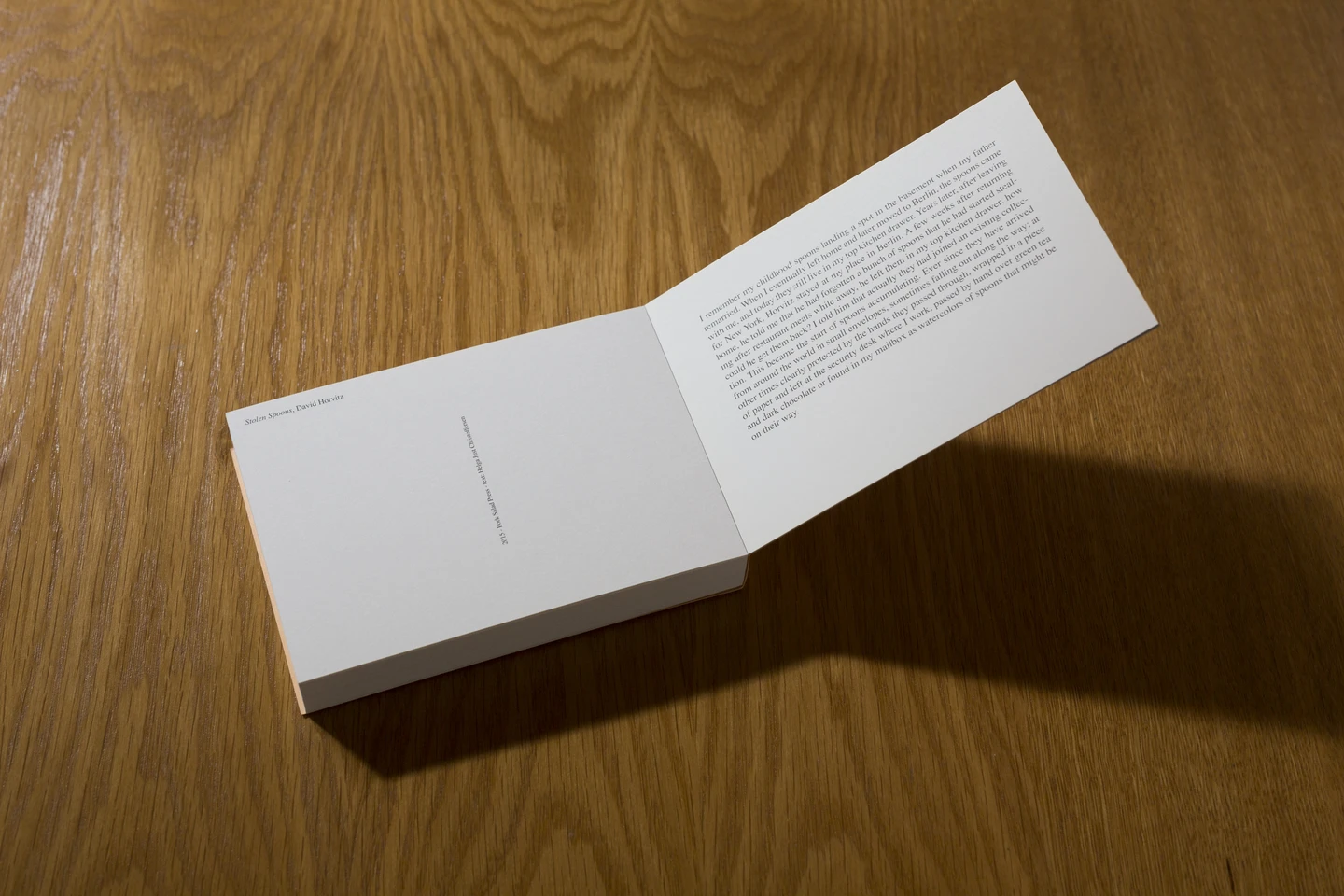
My father remarried and change landed my childhood spoons a spot in the basement. When I eventually left home and later moved to Berlin, the spoons came with me and today they still live in my top kitchen drawer. Years later Horvitz stayed at my place in Berlin. A few weeks after returning home to New York, he told me that he had forgotten a bunch of spoons that he had started stealing while away, he left them in my top kitchen drawer, how could he get them back? I had to let him know that in fact they had only joined the collection. This became the start of spoons accumulating. These days they arrive from around the world in small envelopes, sometimes falling out, other times clearly protected by the hands they passed through along the way, wrapped in a piece of paper and left at the New Museum security desk, passed by hand over green tea and dark chocolate or found in my mailbox as watercolors of spoons that might be on their way. -
-
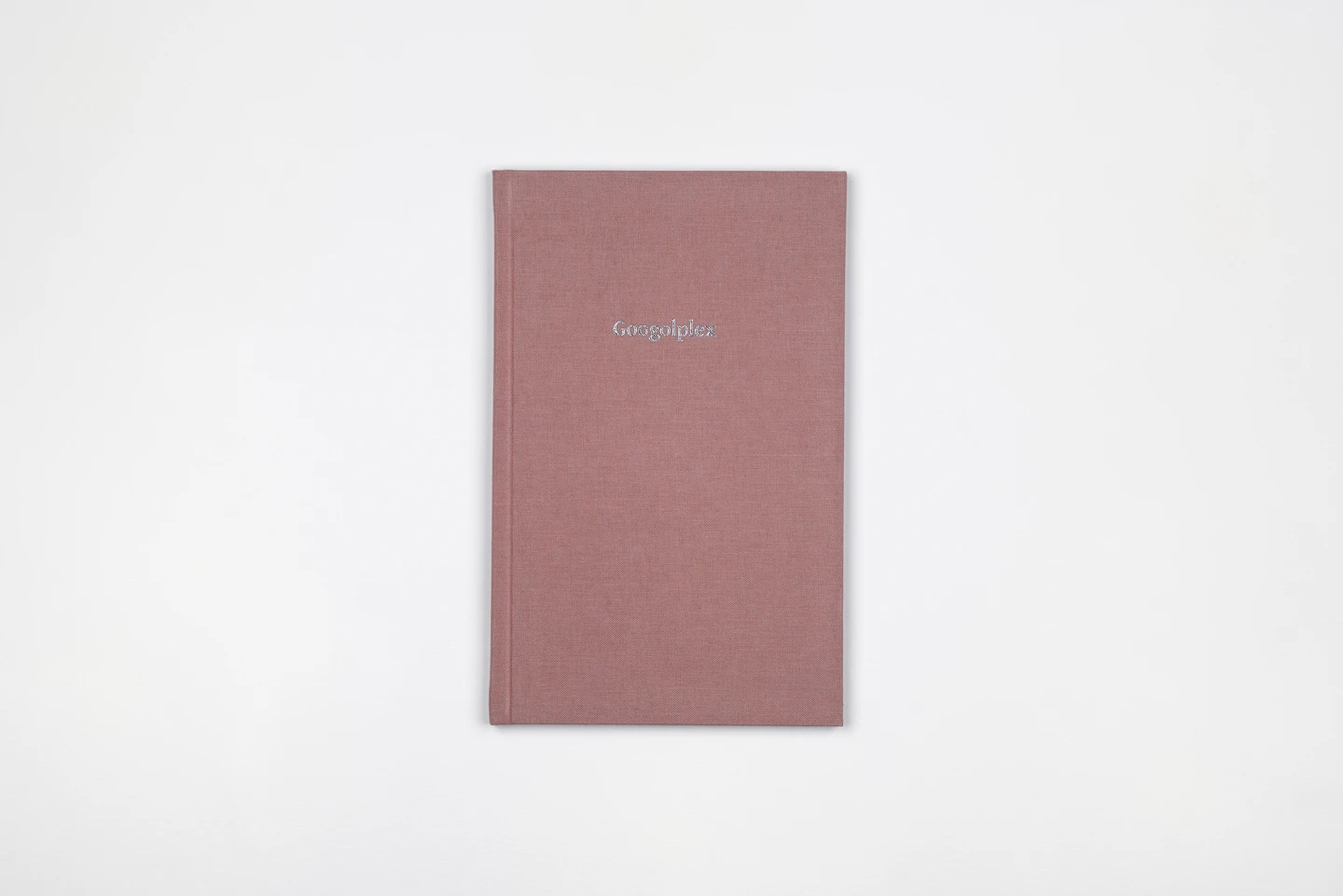
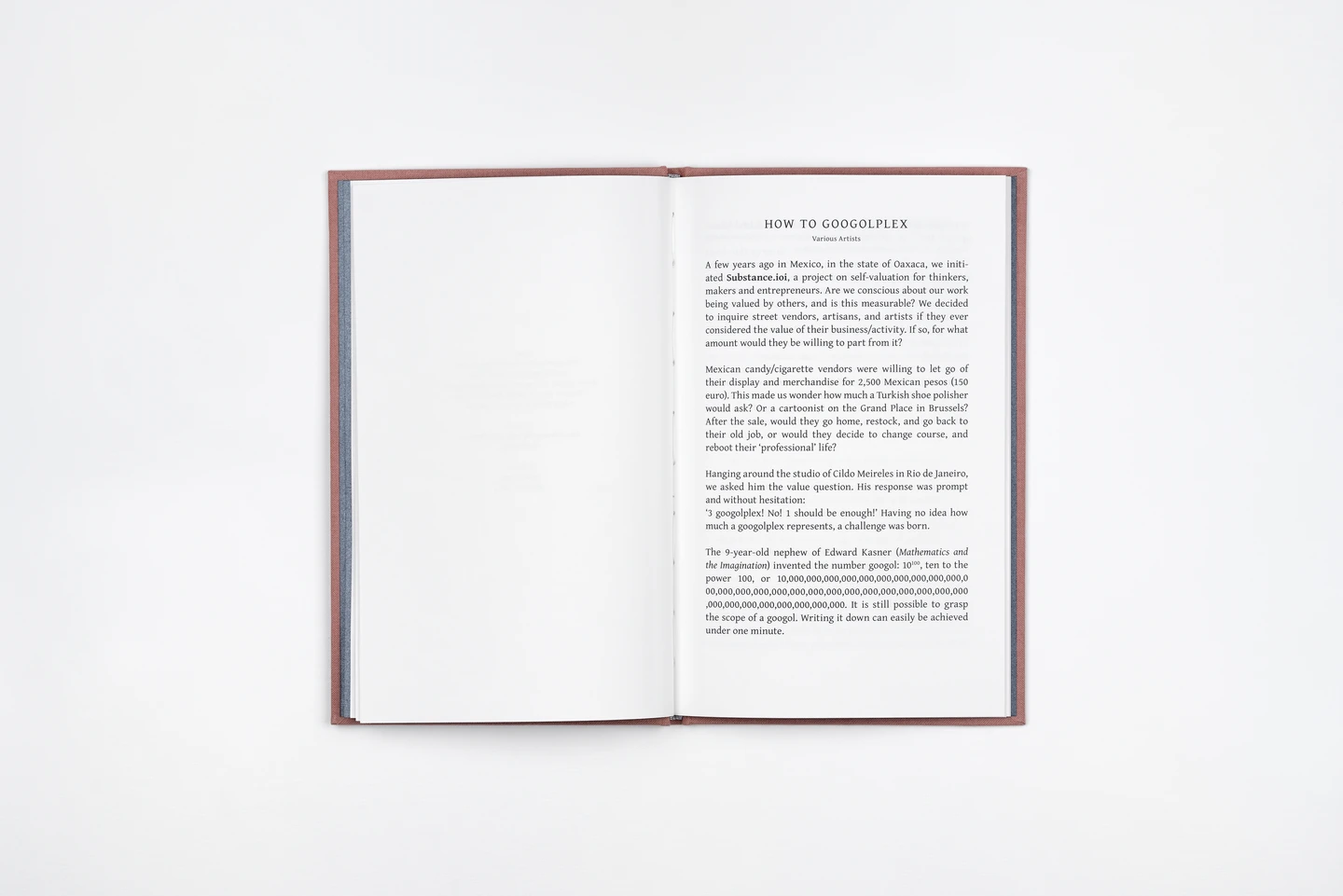
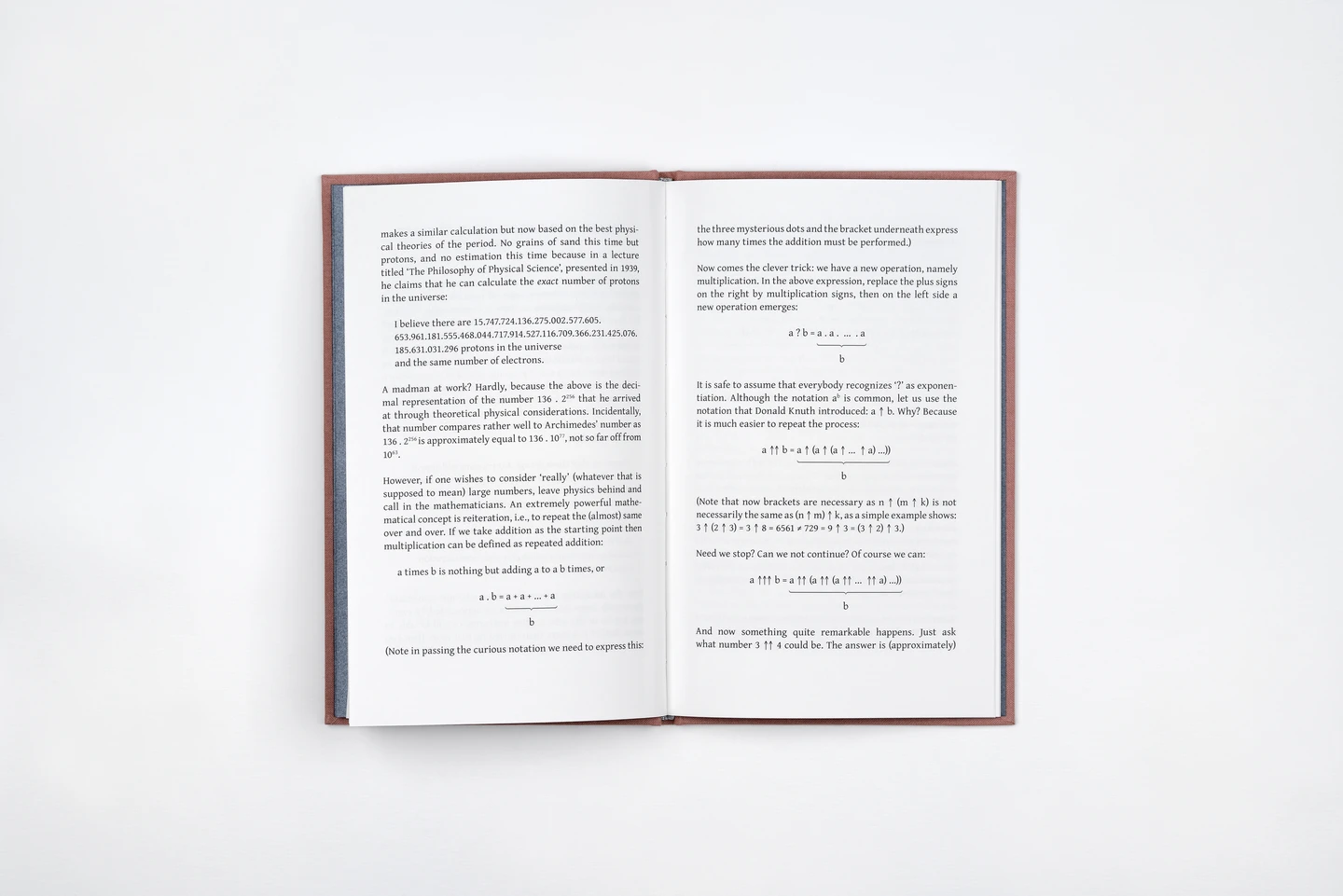
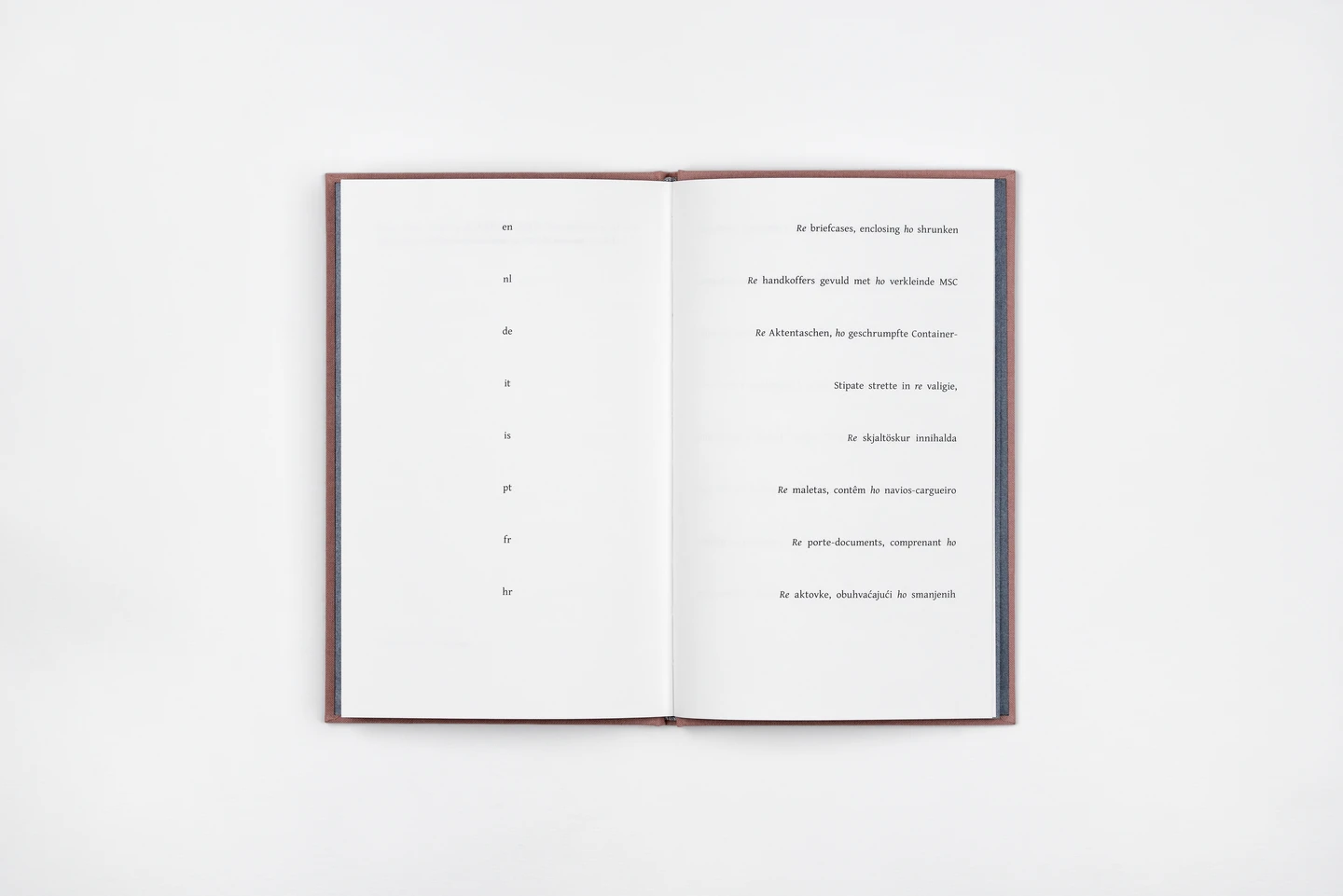
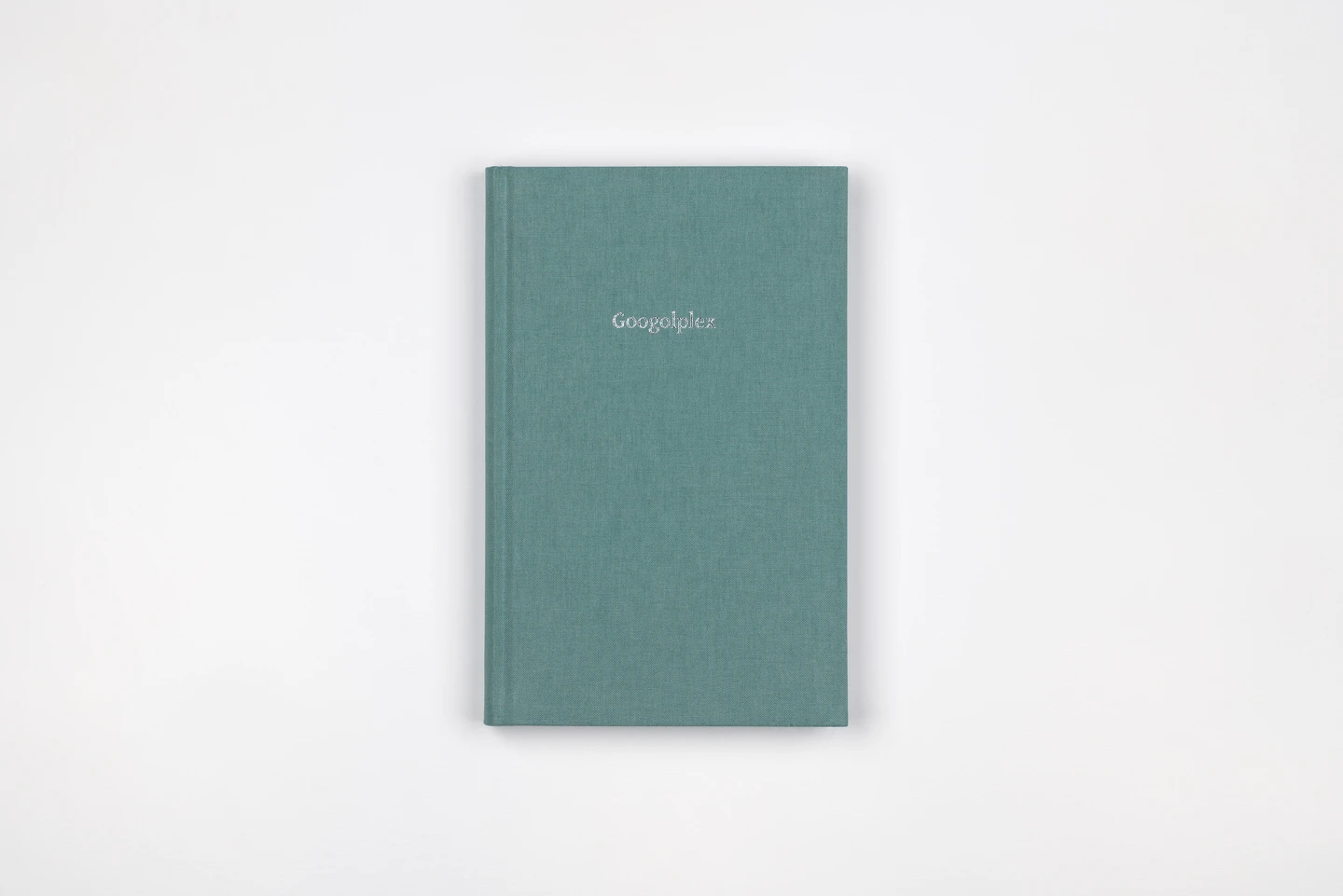
Googolplex
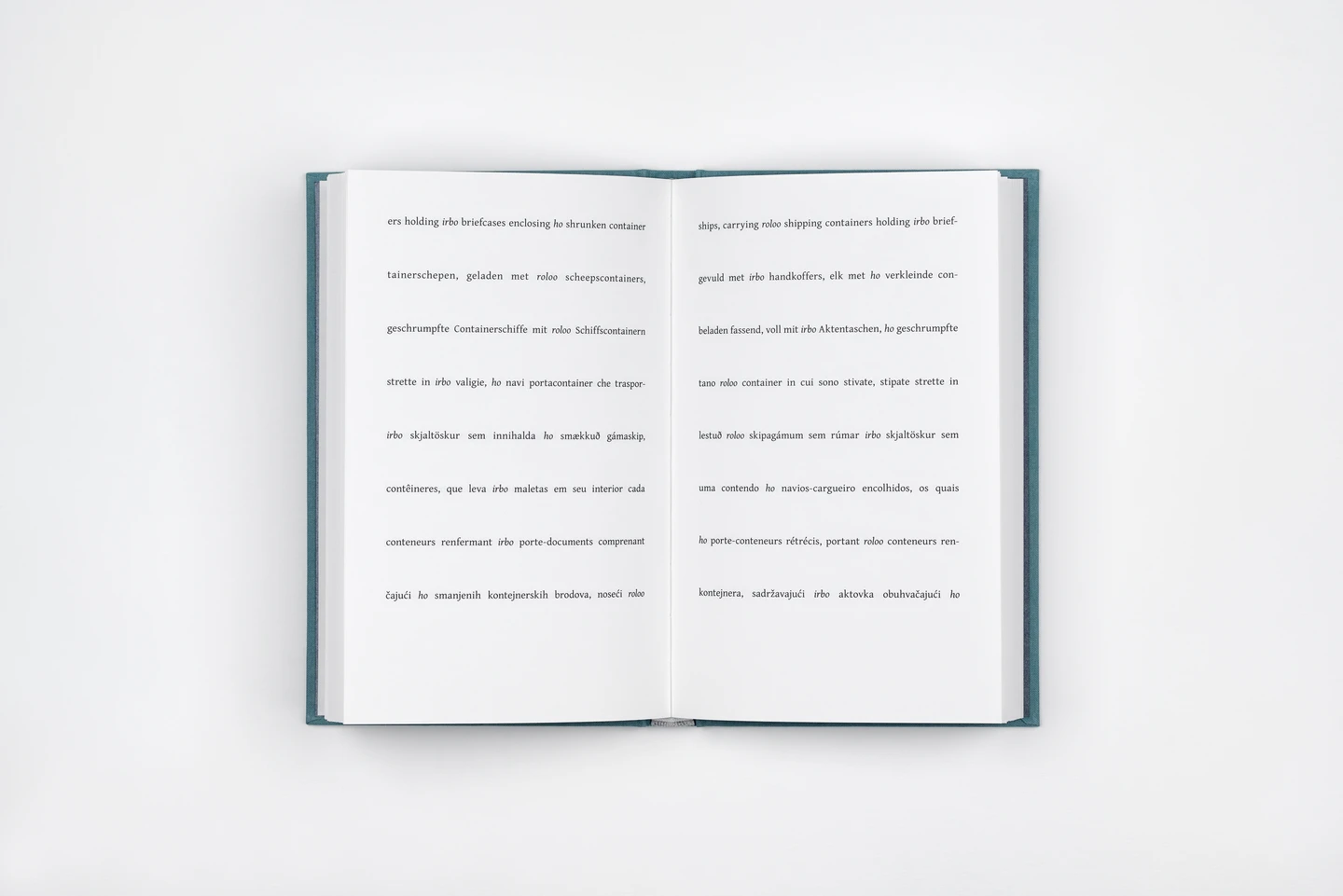
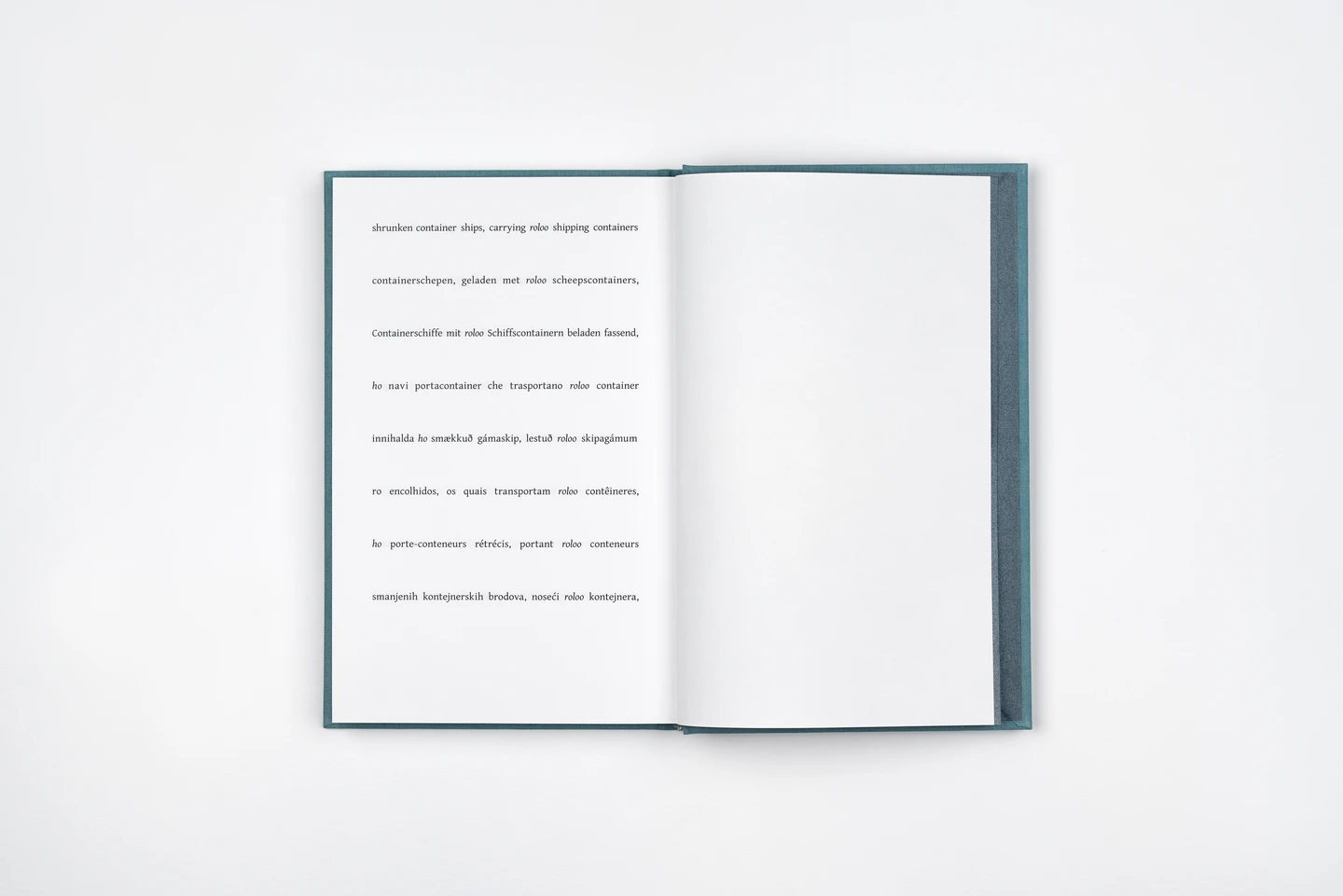
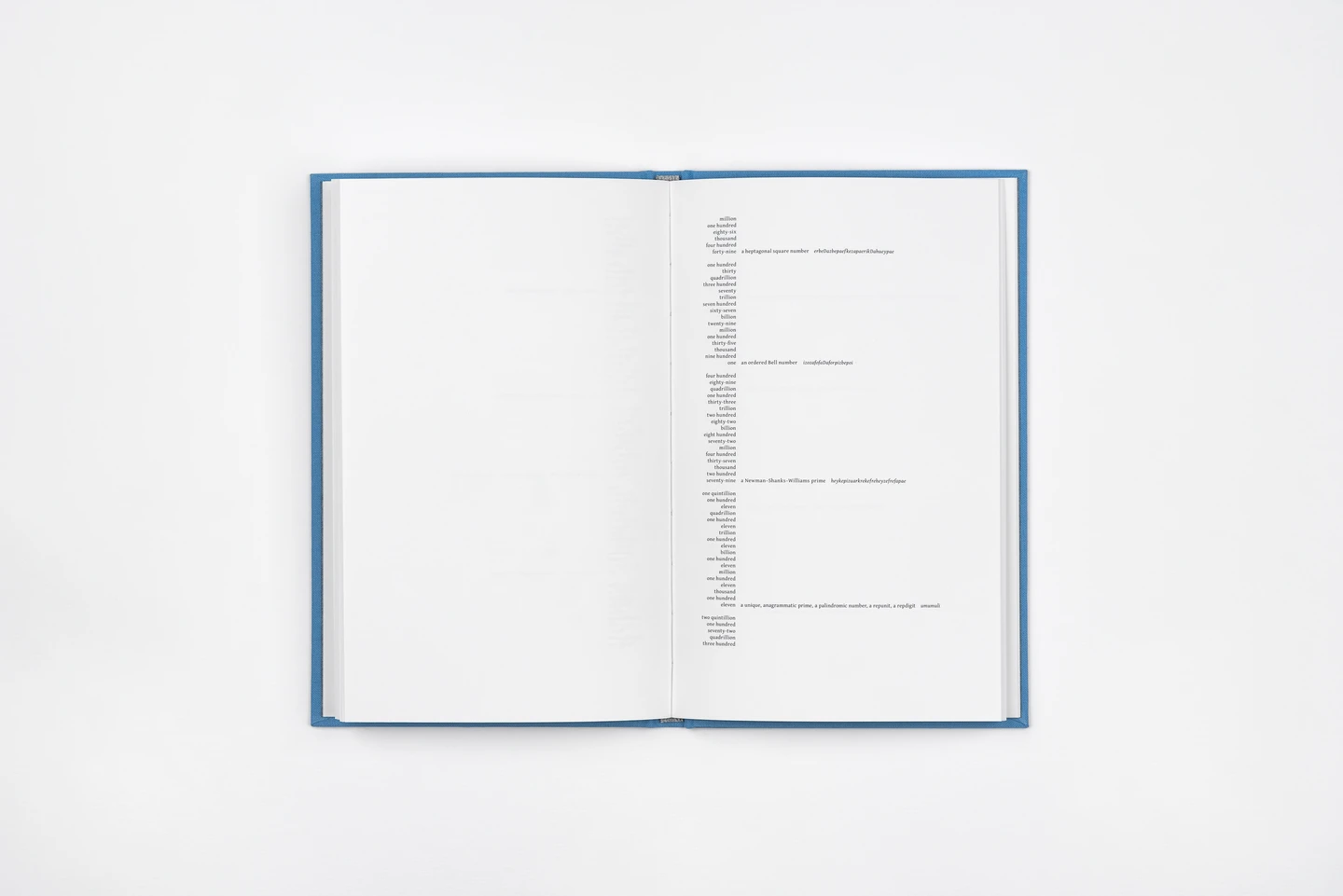
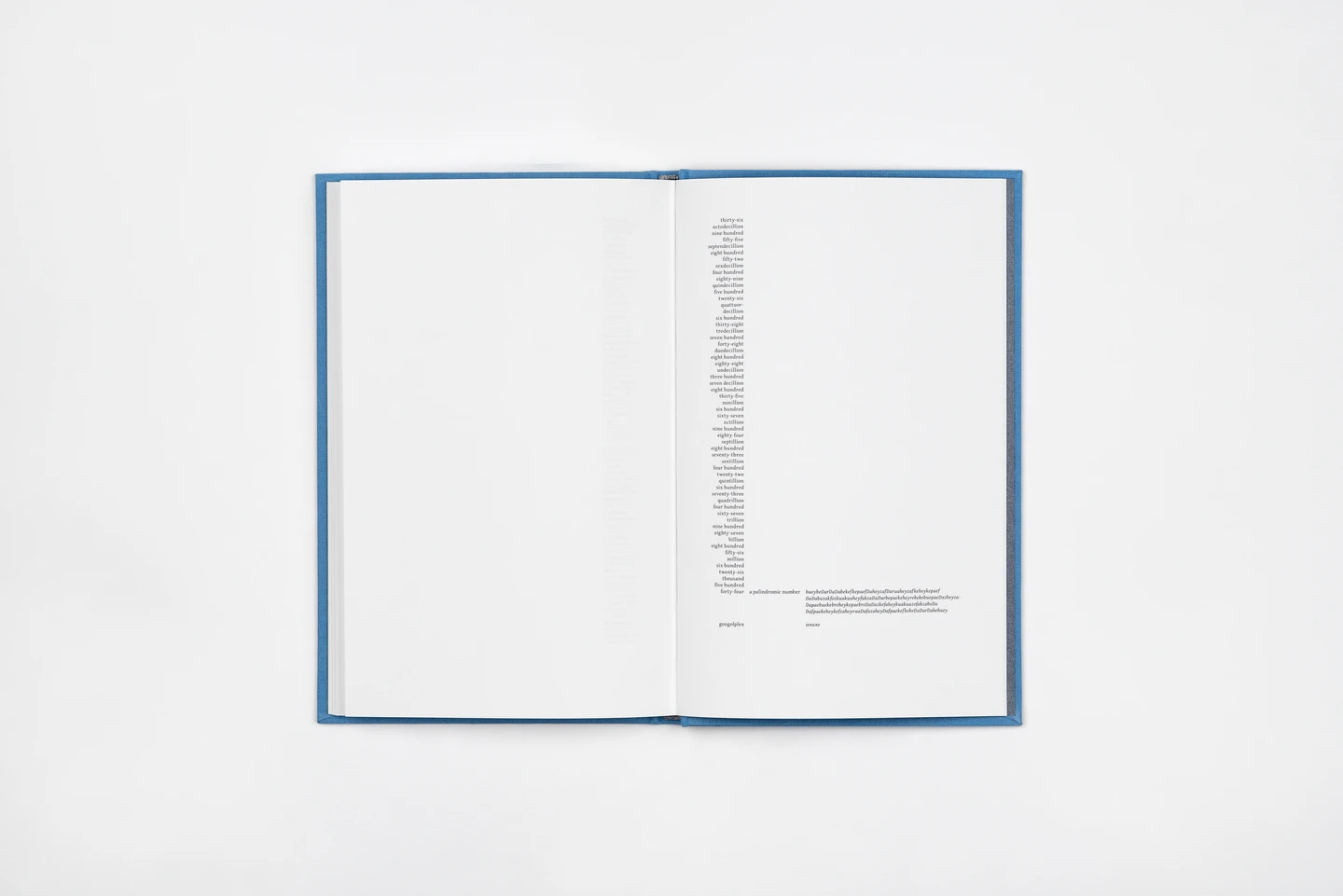
Galleria Continua Editorial, Book 2015 -
-
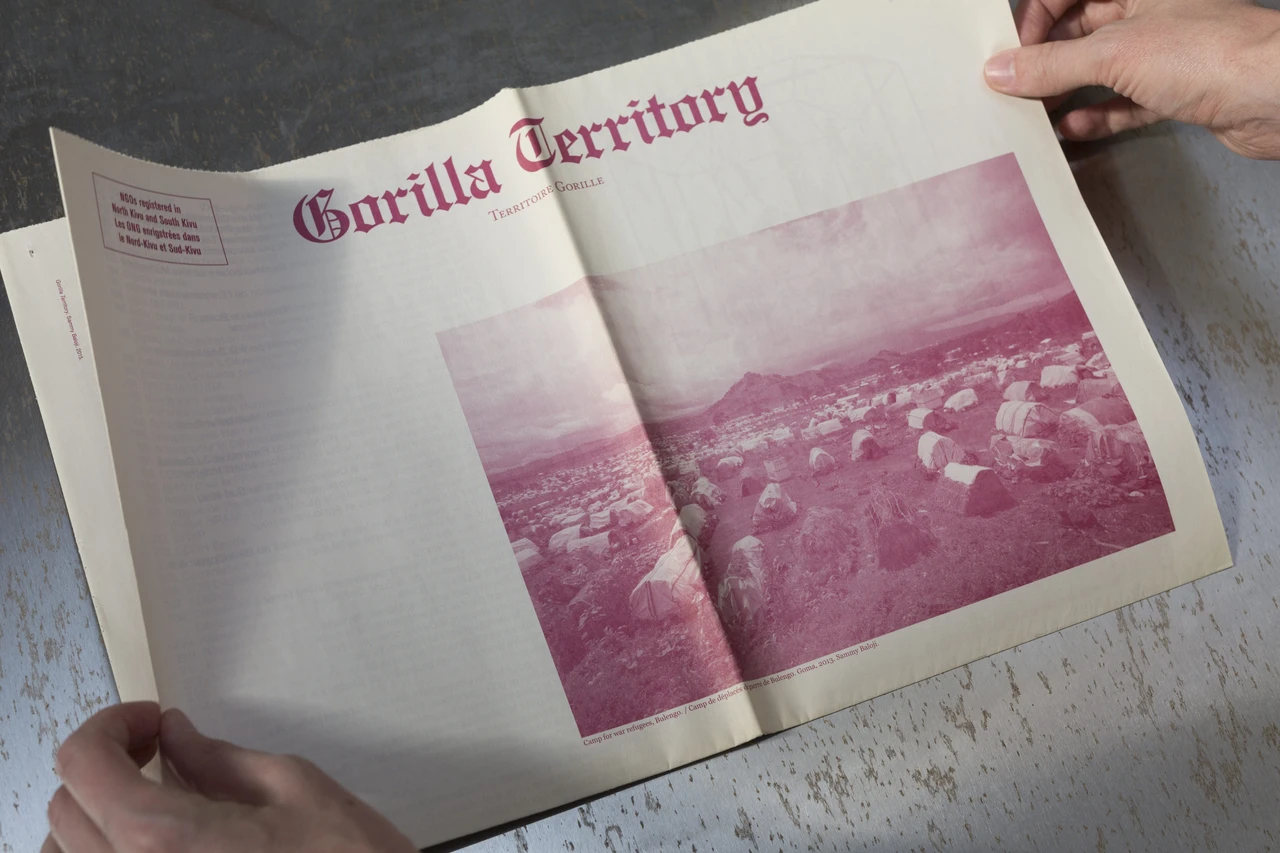
Gorilla Territory
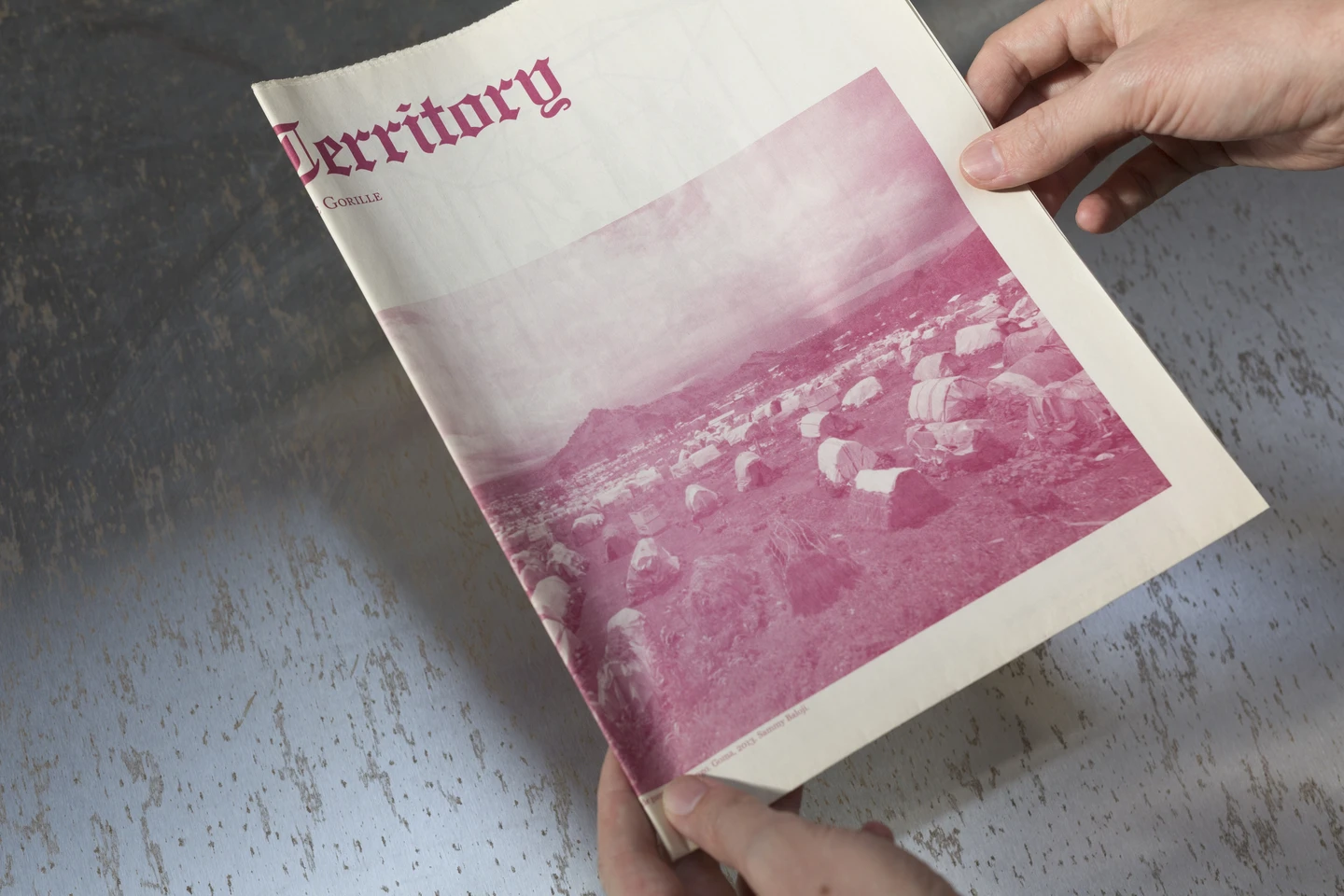
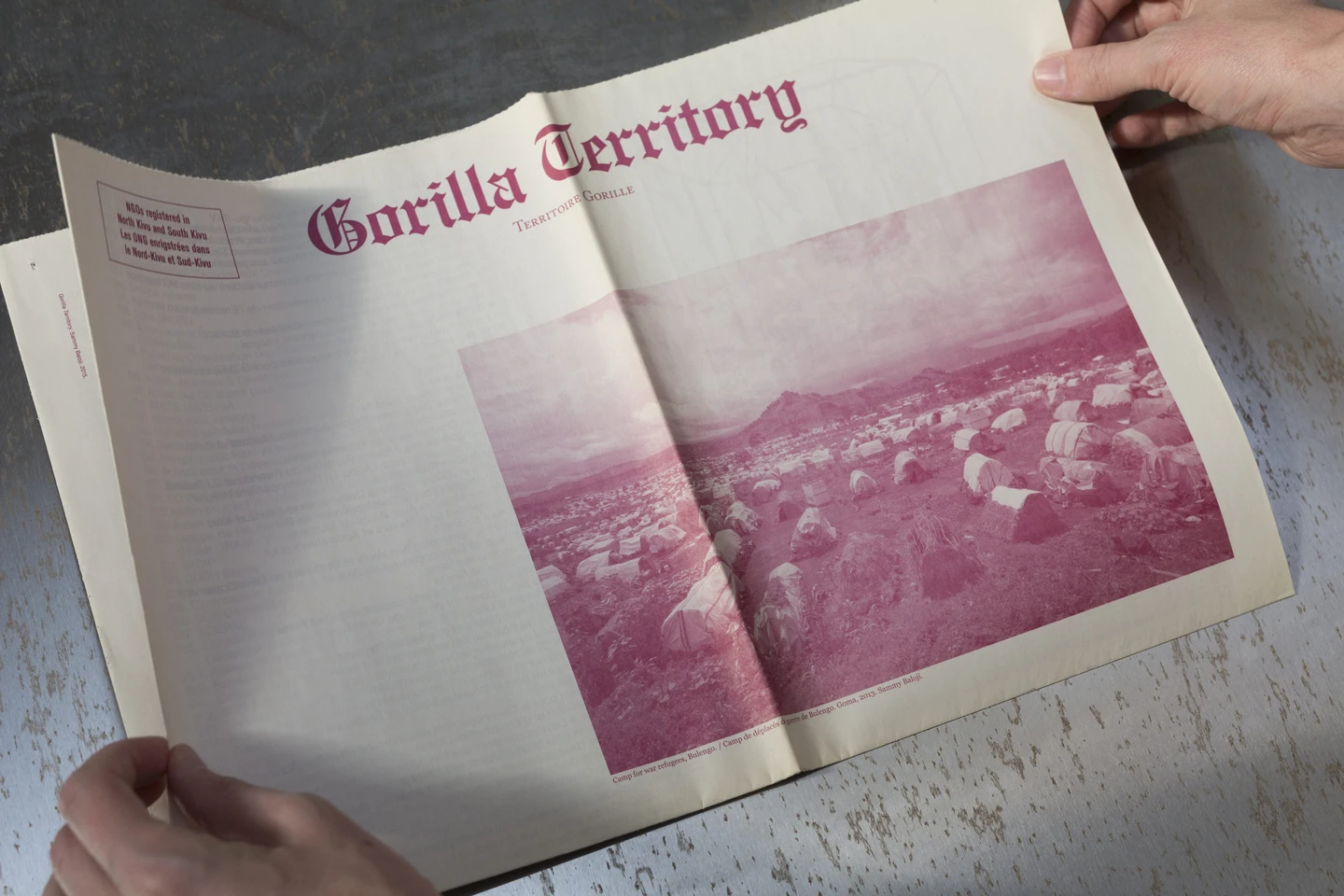
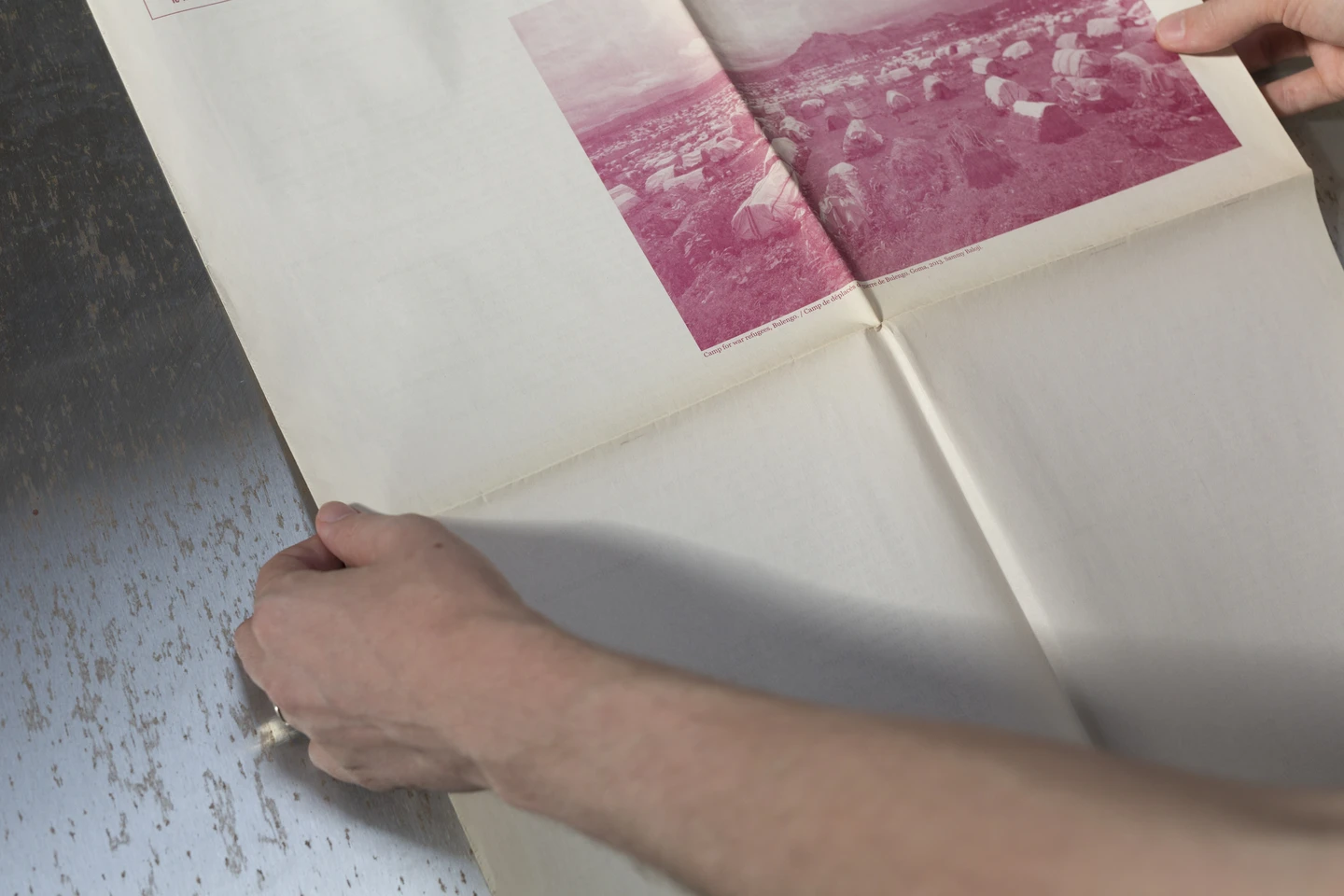
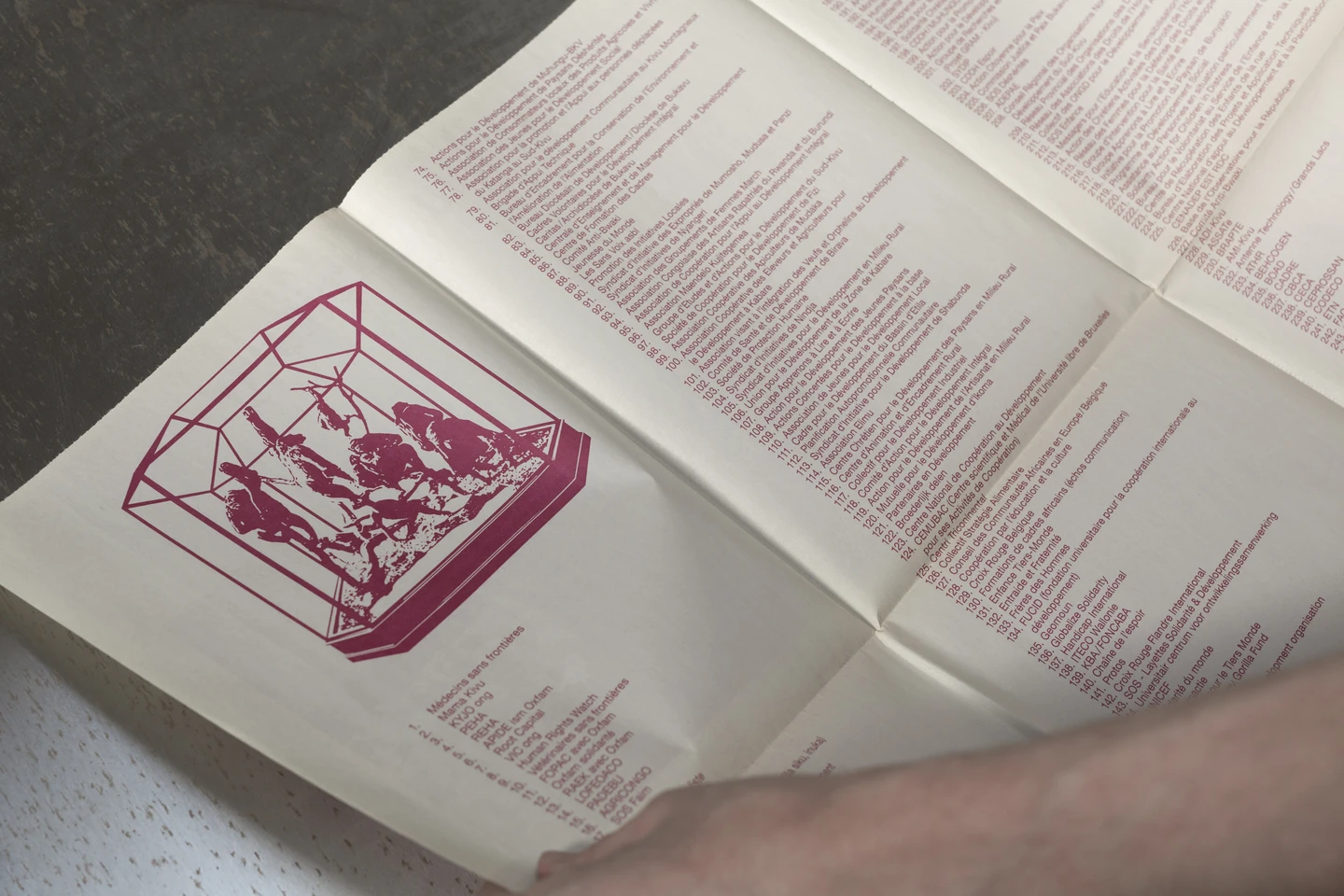
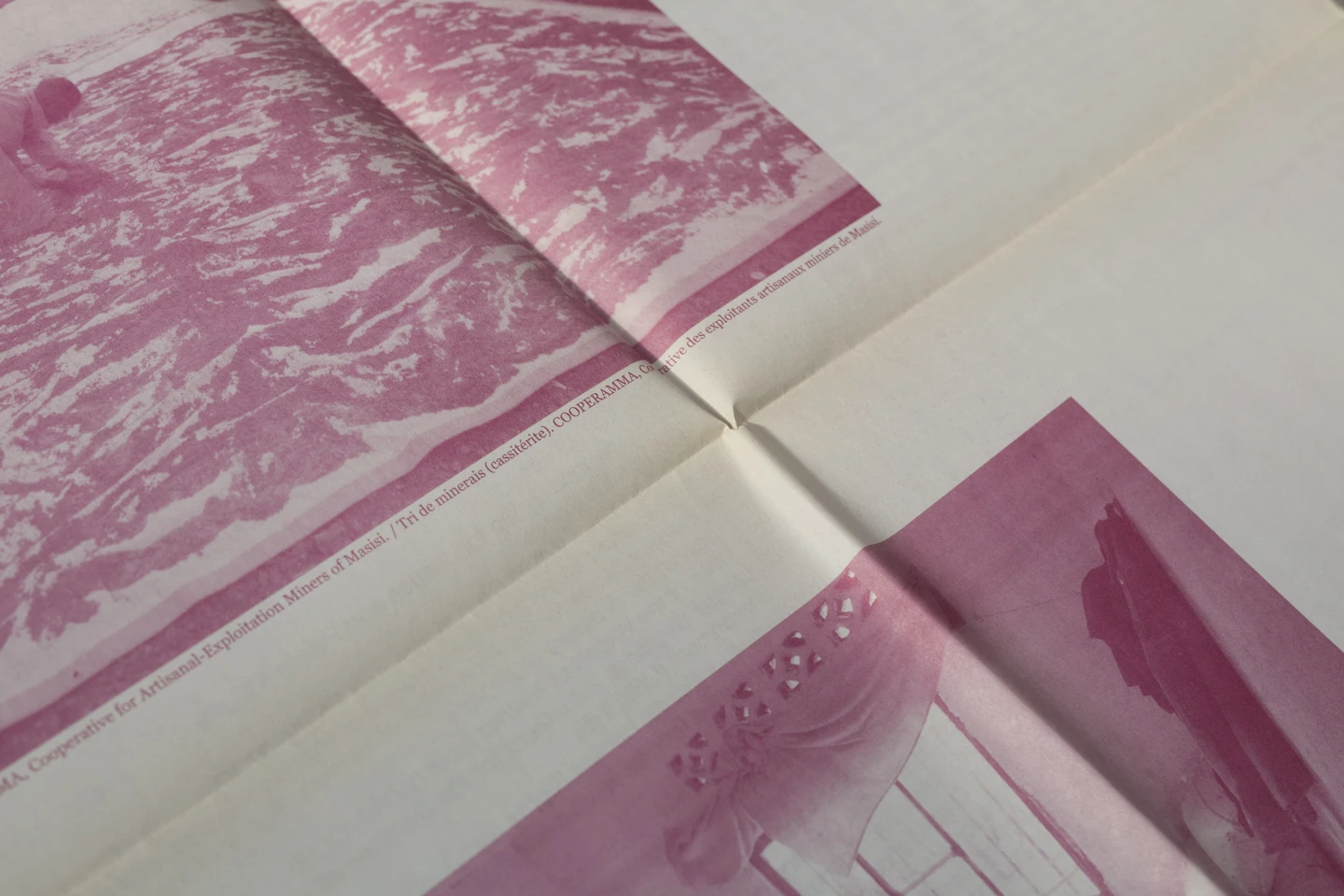
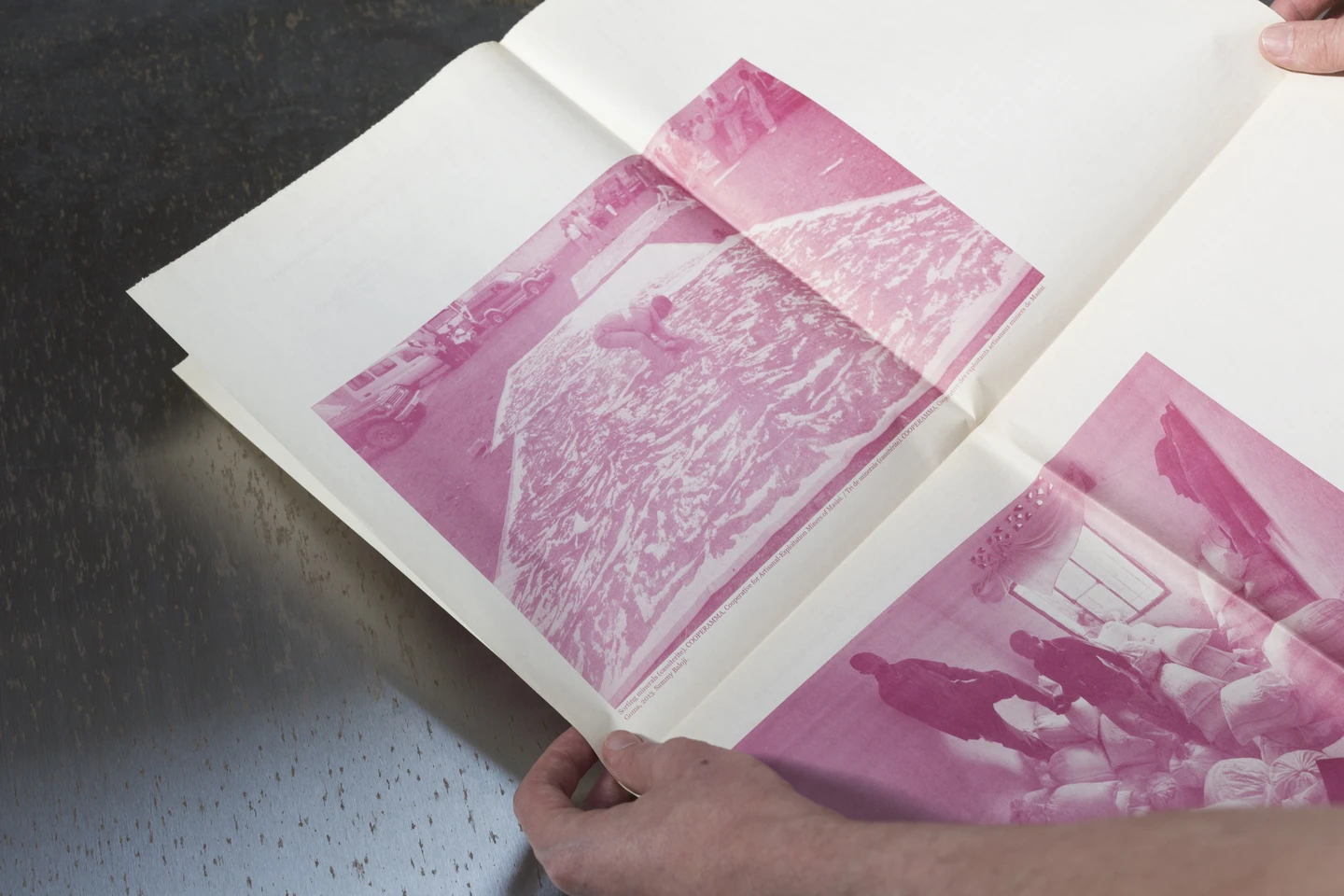
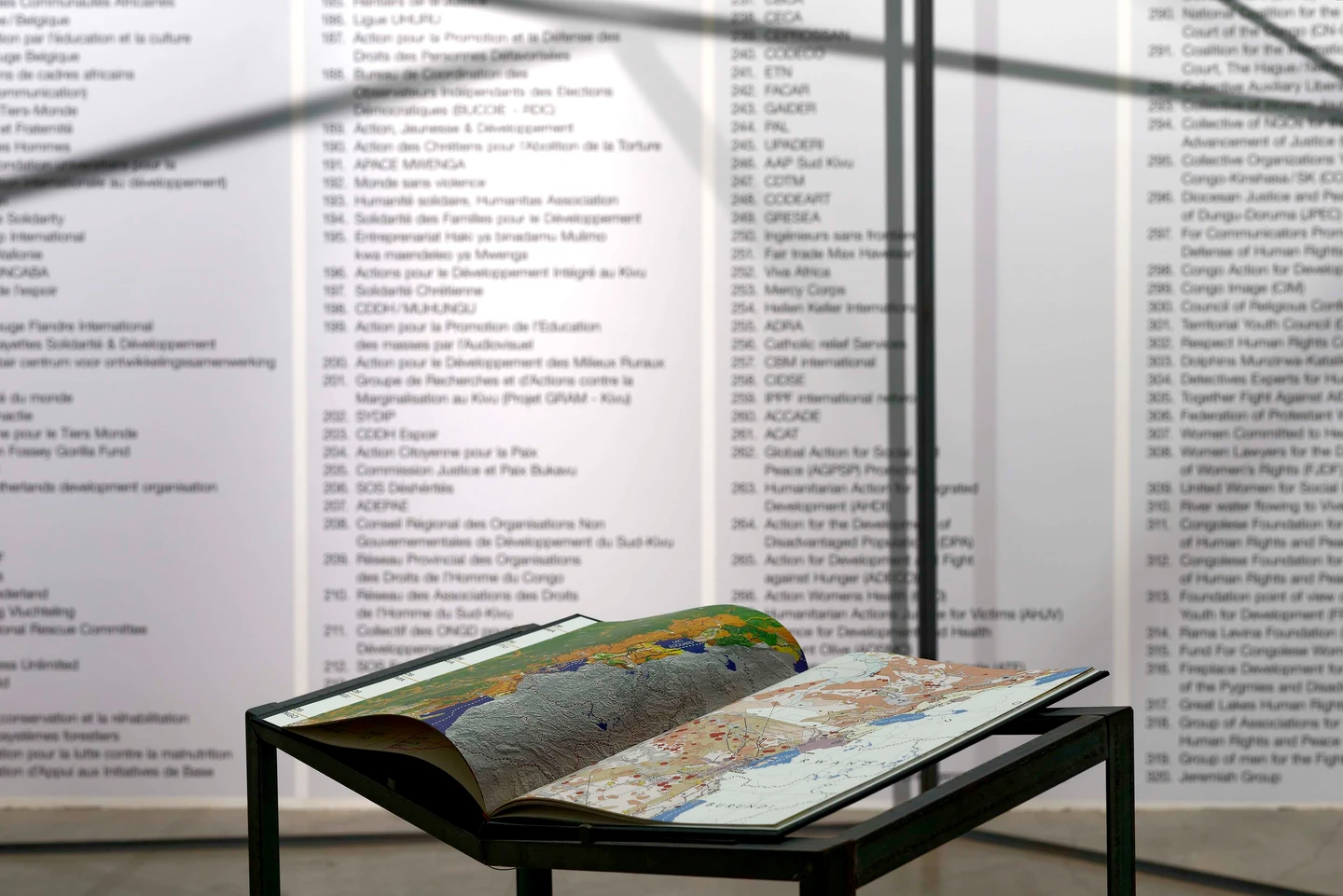
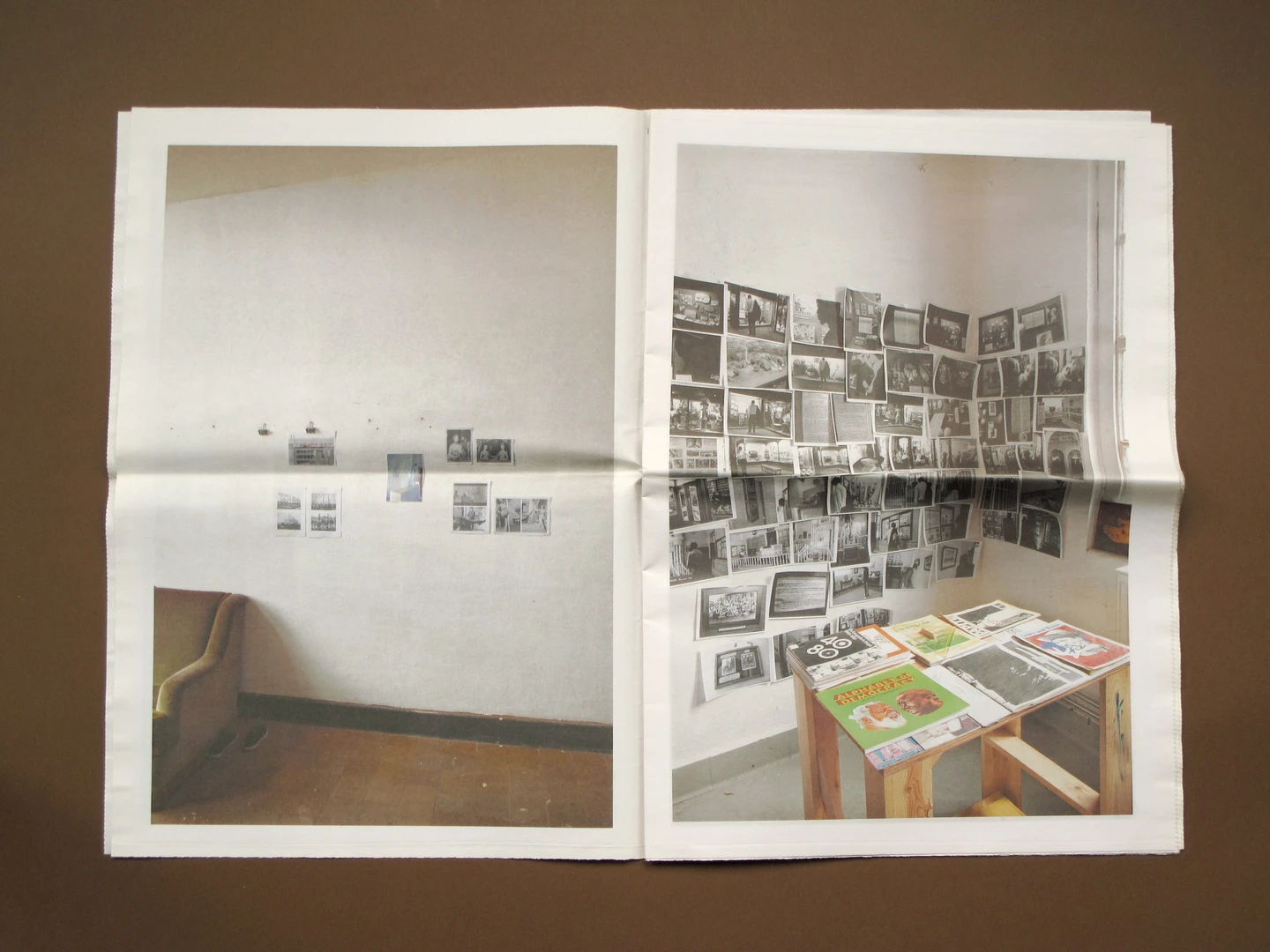
Axis Gallery Editorial, Ephemera 2015In the realm of Sammy Baloji’s Hunting & Collecting project, we designed this edition as a lacunary newspaper gathering Sammy’s photographs of Goma war refugees camp and of miners sorting and packing minerals, the list of the NGOs registered in North Kivu and South Kivu, and an illustration based on the Hall of gorillas diorama from the MRAC Tervuren. It was printed in one colour on a broadsheet format on a coldset rotary press in Nivelles, Belgium.
-
-
Hunting & Collecting
Editorial, Book 2015Hunting and Collecting, 2015
Installation comprenant The Album, une série de collages photographiques (40 x 55 cm chacun) et une sculpture en métal (400 x 550 cm), et Hunting & Collecting, un livre d’artiste (32 pages, 37,5 x 31 cm), une impression photo listant les ONG du Nord et Sud Kivu (dimensions variables) et des photographies d’archives courtesy American Museum of Natural History, New York et Royal Museum for Central Africa, Tervuren
Œuvre uniqueun livre de trente-deux pages, le dessin du parcours en Afrique du commandant Pauwels réalisée par Chrispin Mvano, la carte utilisée par Carl Akeley lors de l’une de ses expéditions en Afrique, ainsi que les dessins des études minéralogiques effectuées par la compagnie minière congolaise Gécamines.
-
-
Les Bêtes Sauvages
red shoes, Michigan Films Graphics, Movie 2015Sur le site d'Eléonore:
Society’s impact on the animal kingdom and the animals’ unique ways of adapting are revealed in three dramatized tales of the feral—wild animals descended from domesticated ones—each as original and playful as it is perverse.
sur le site de Grégoire:
On the border between France and Belgium, the population of foxes increased in a extraordinary way. In Brussels, the Rose-ringed parakeet colonized the parks of the city. In Colombia, hippopotamuses imported from Africa live now in wild nature, terrorizing the population. These animals were moved from their natural environment by the men and breed quickly, producing ambivalent reactions in their new environment. -
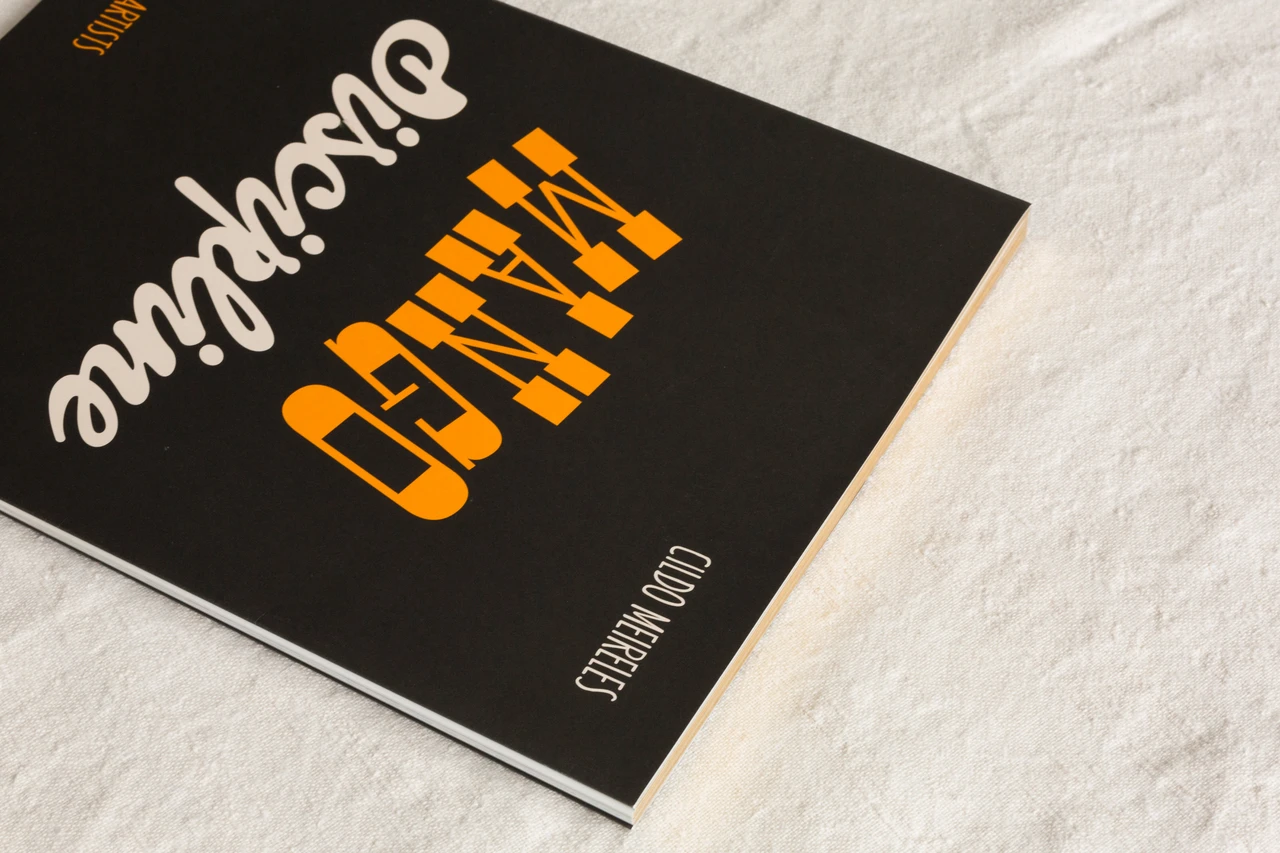
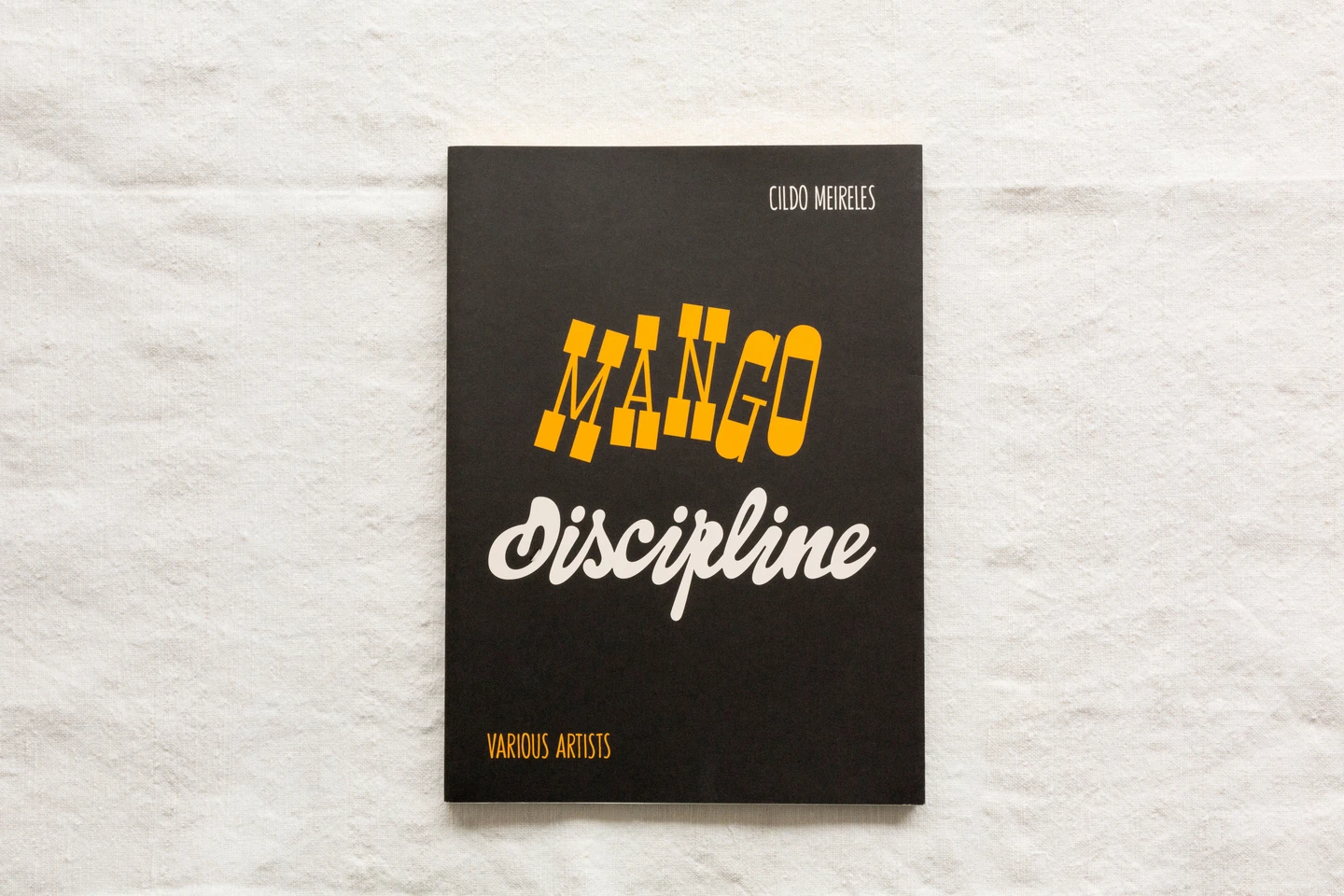
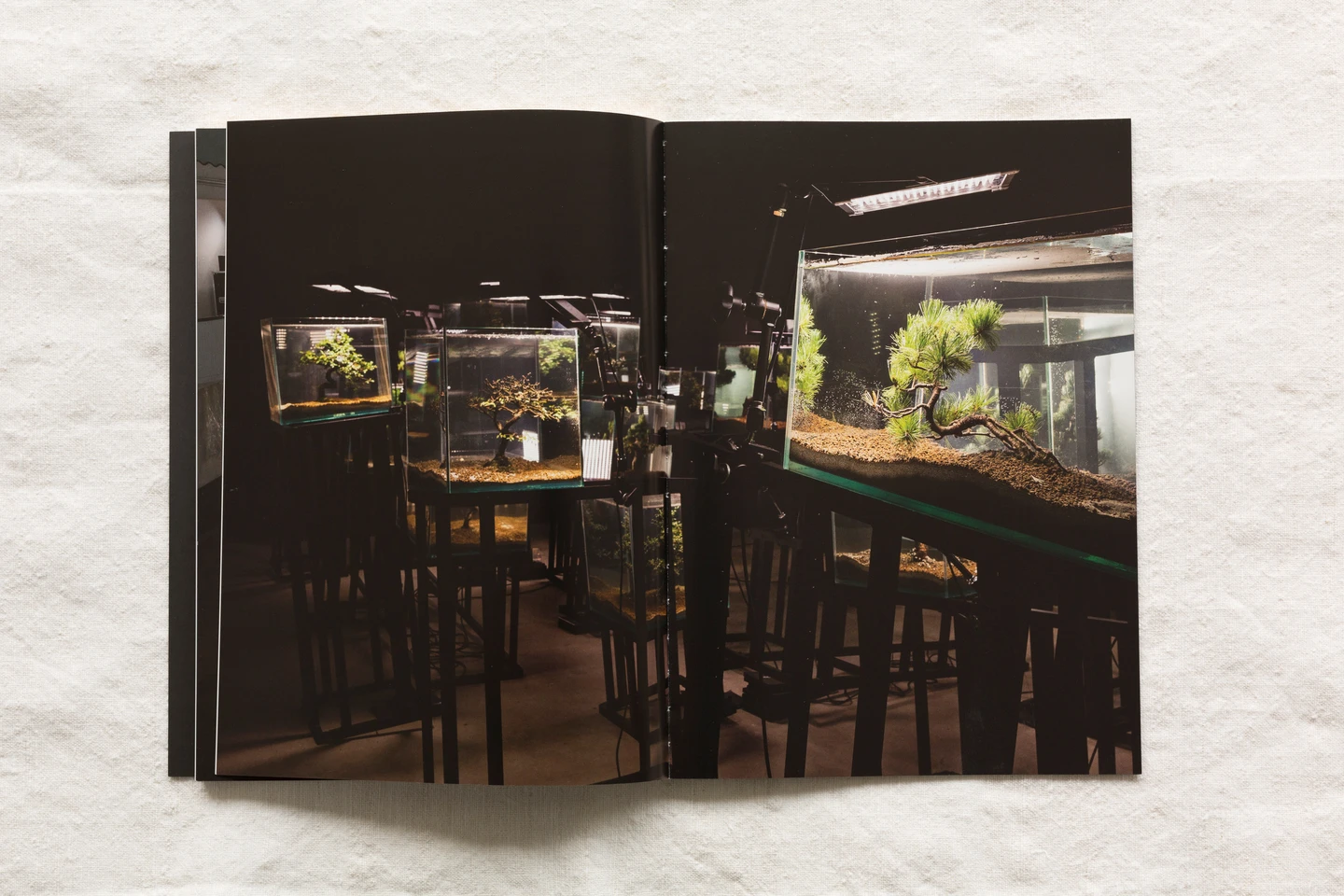
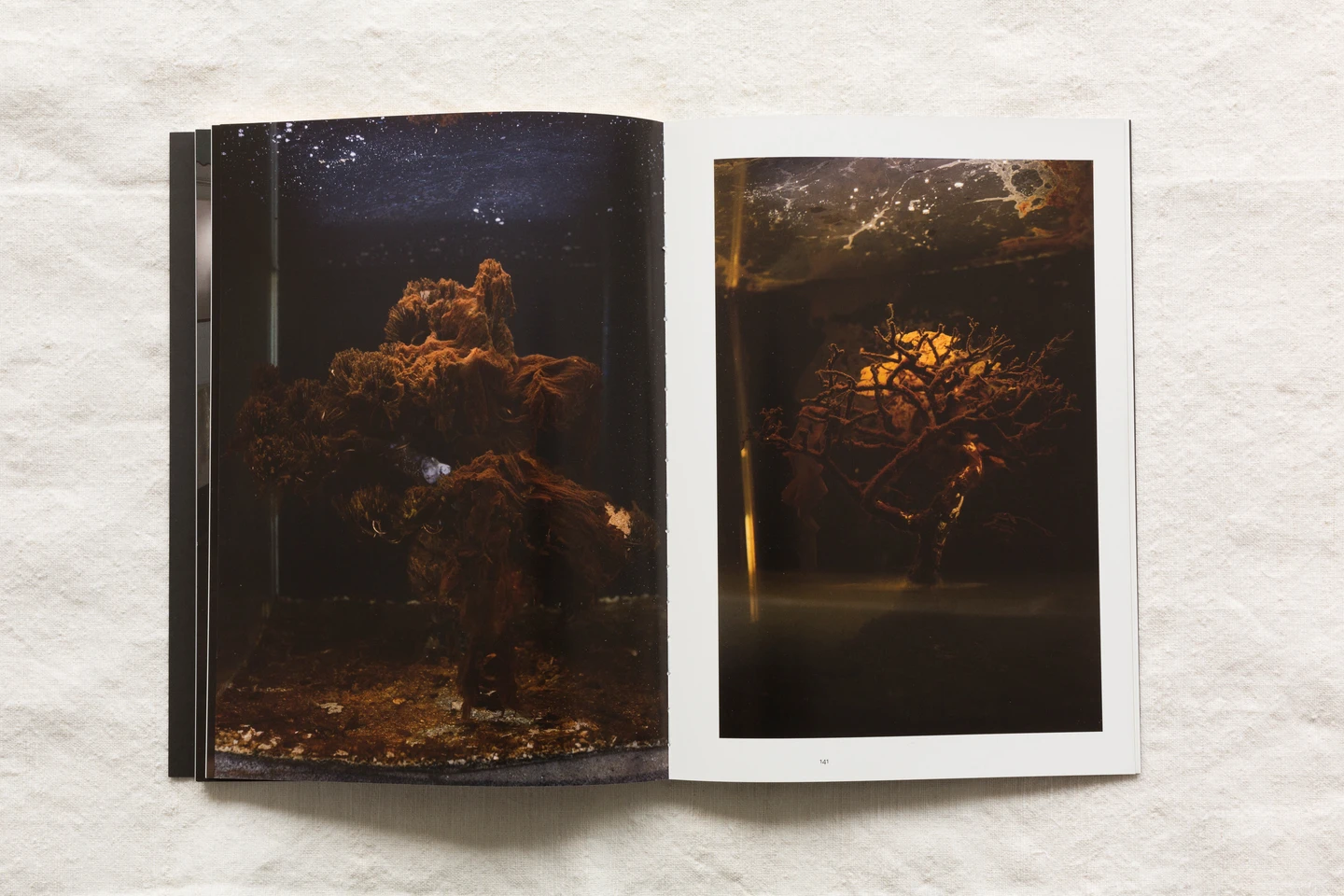
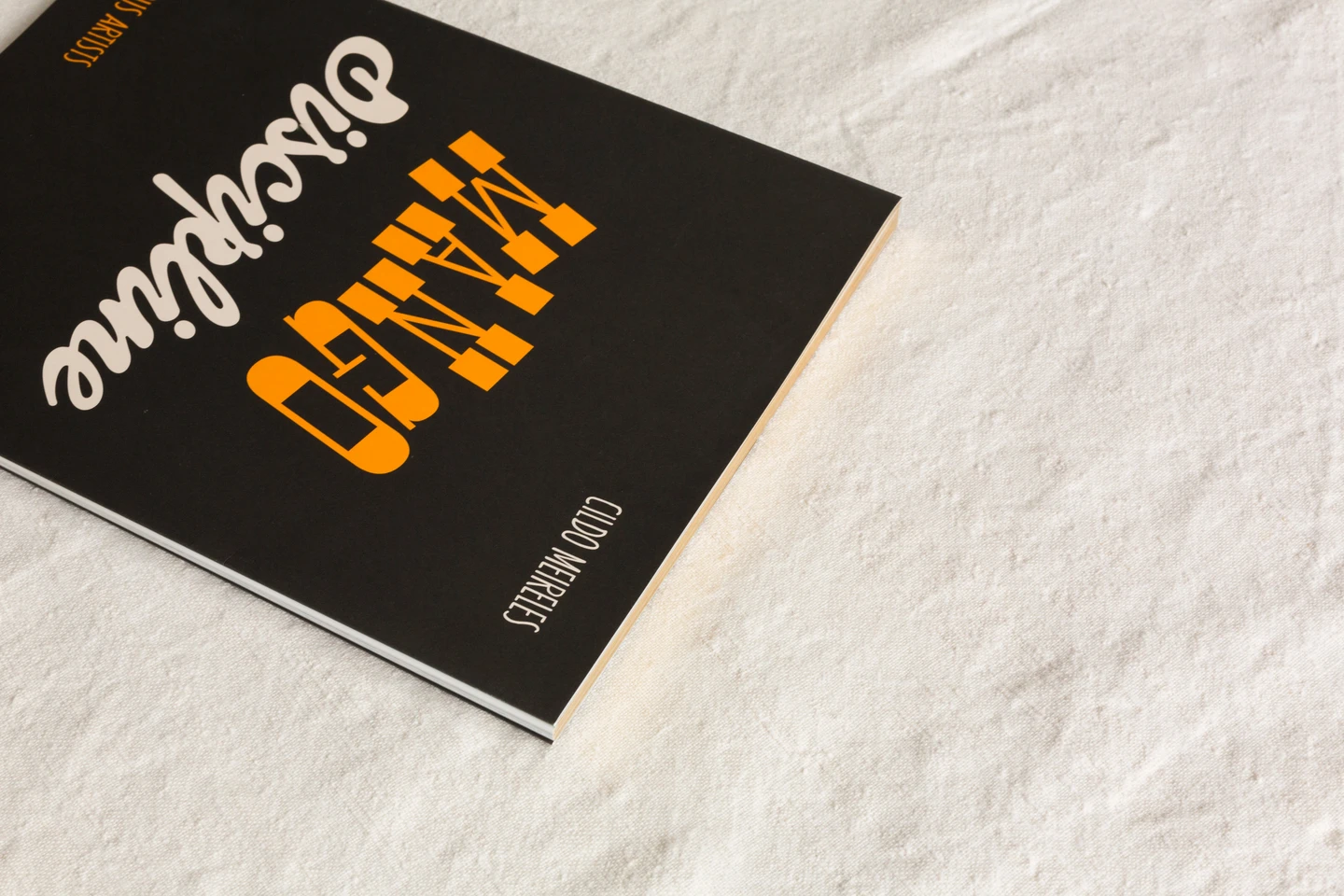
Mango Discipline
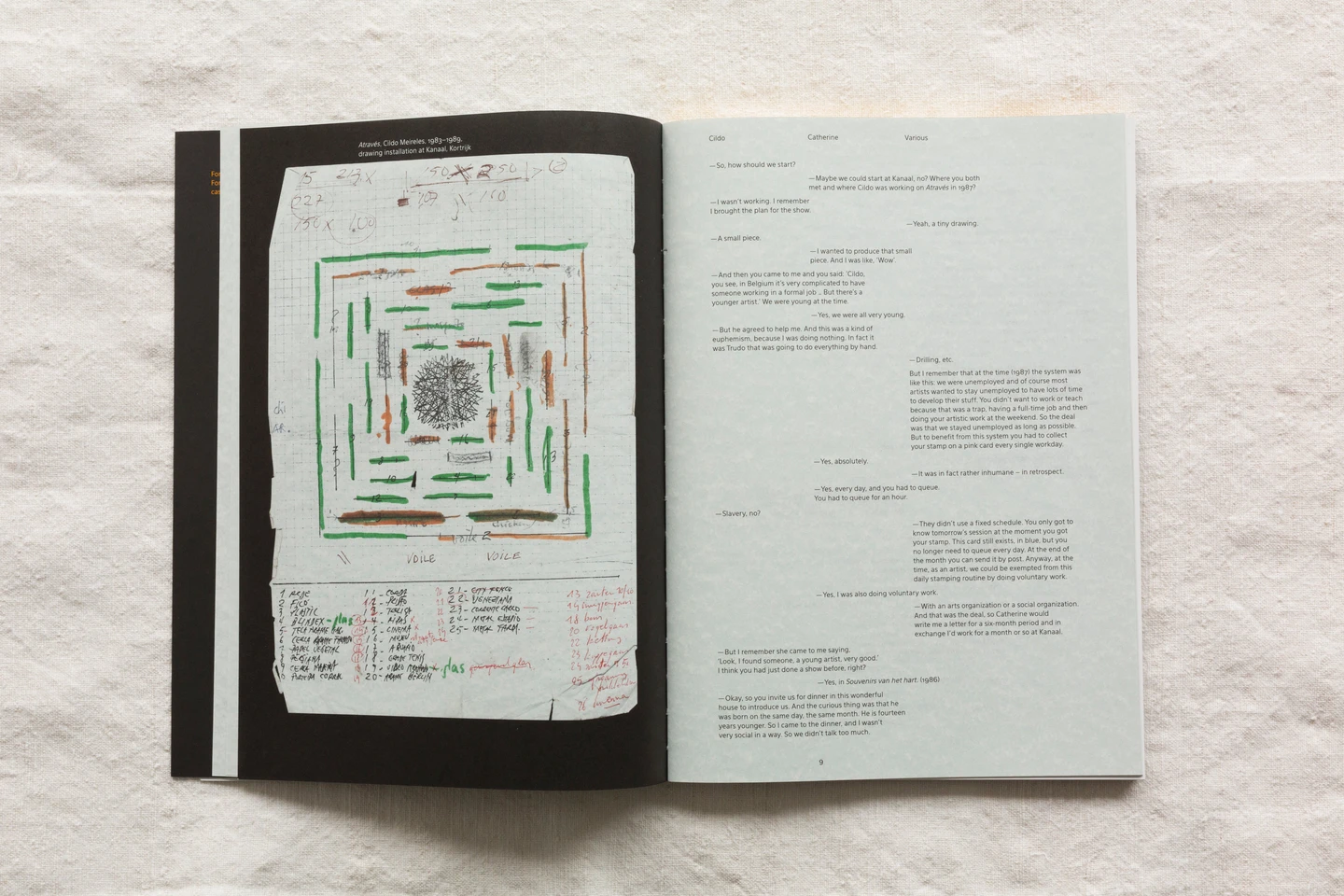
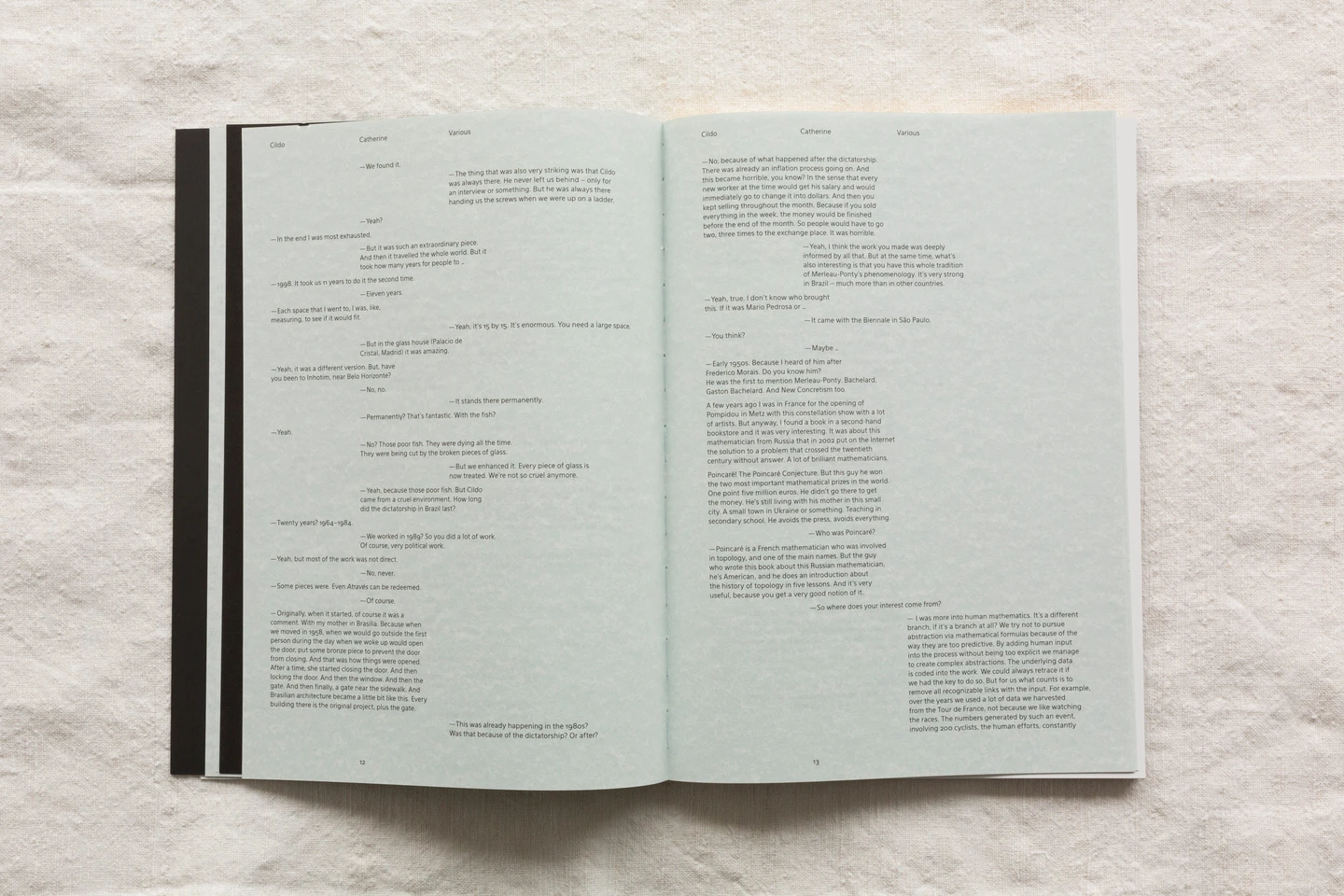
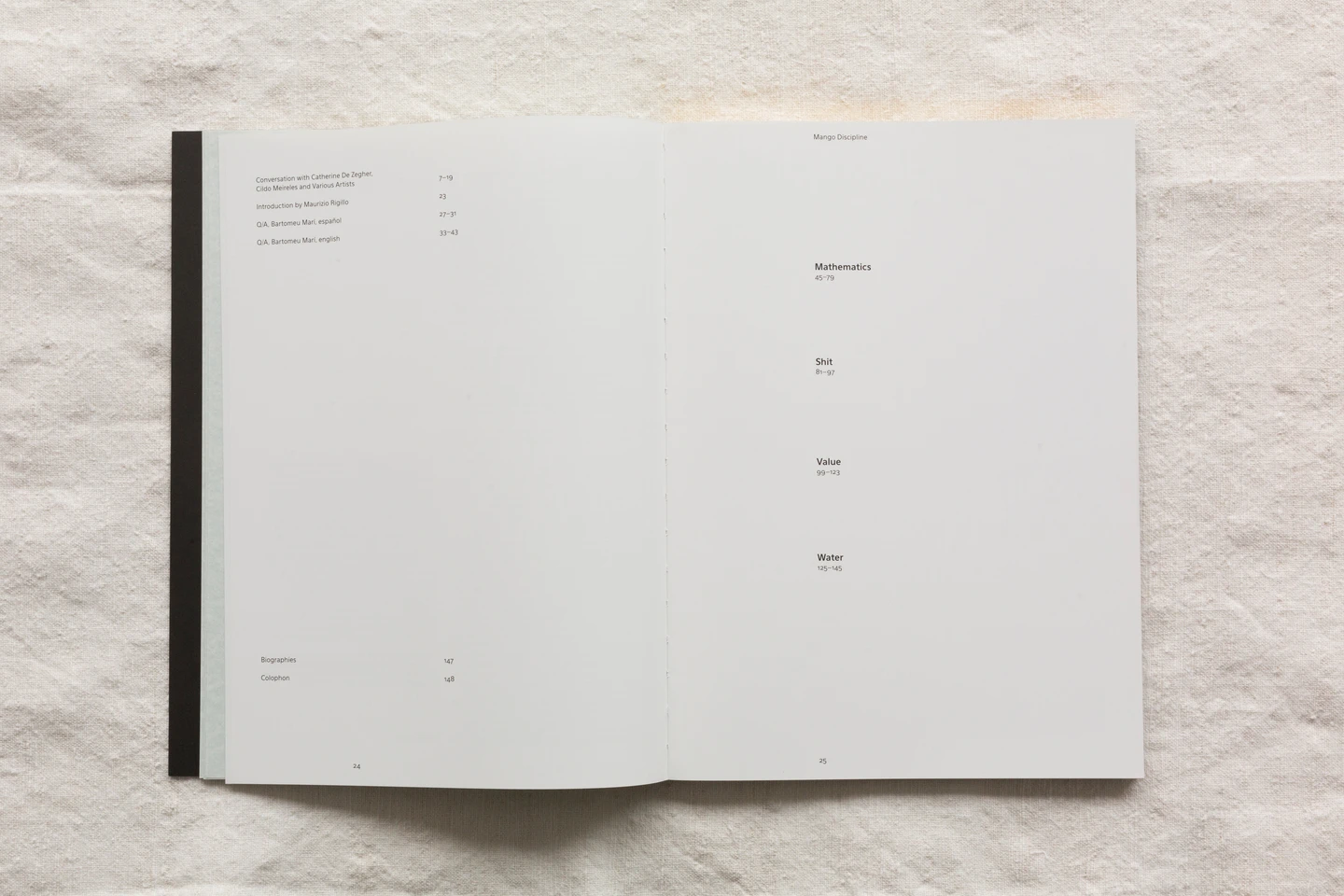
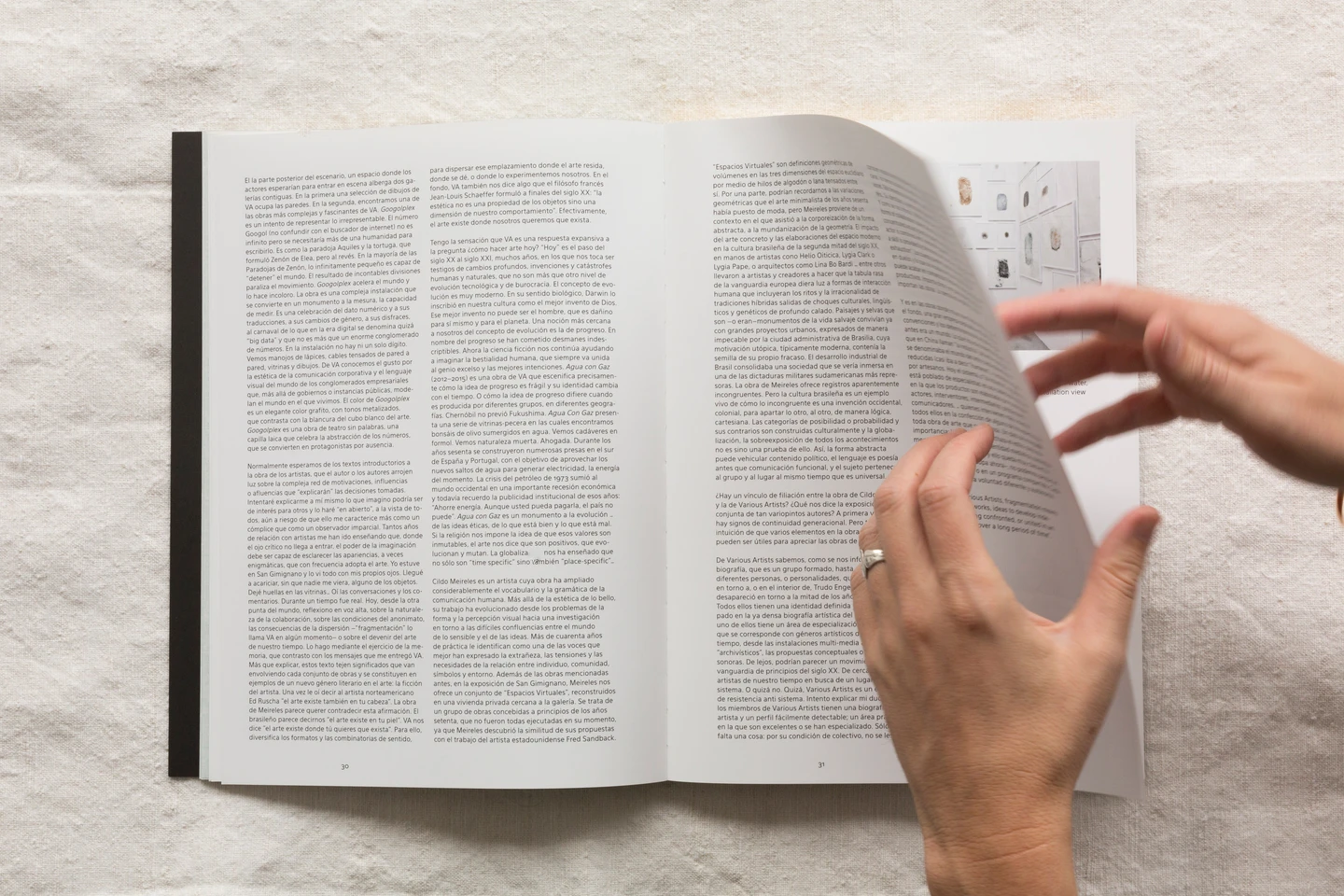
Galleria Continua, nadine Editorial, Book 2015 -
-
V+ Architecture Documents on Five Projects
A+, Bozar Books, Lannoo Editorial, Book 2015 -
ACCATTONE 1
Accattone Editorial, Magazine 2014Accattone #1 features artists and architects dealing with found forms, state transformations and 1:1 scale models.
-
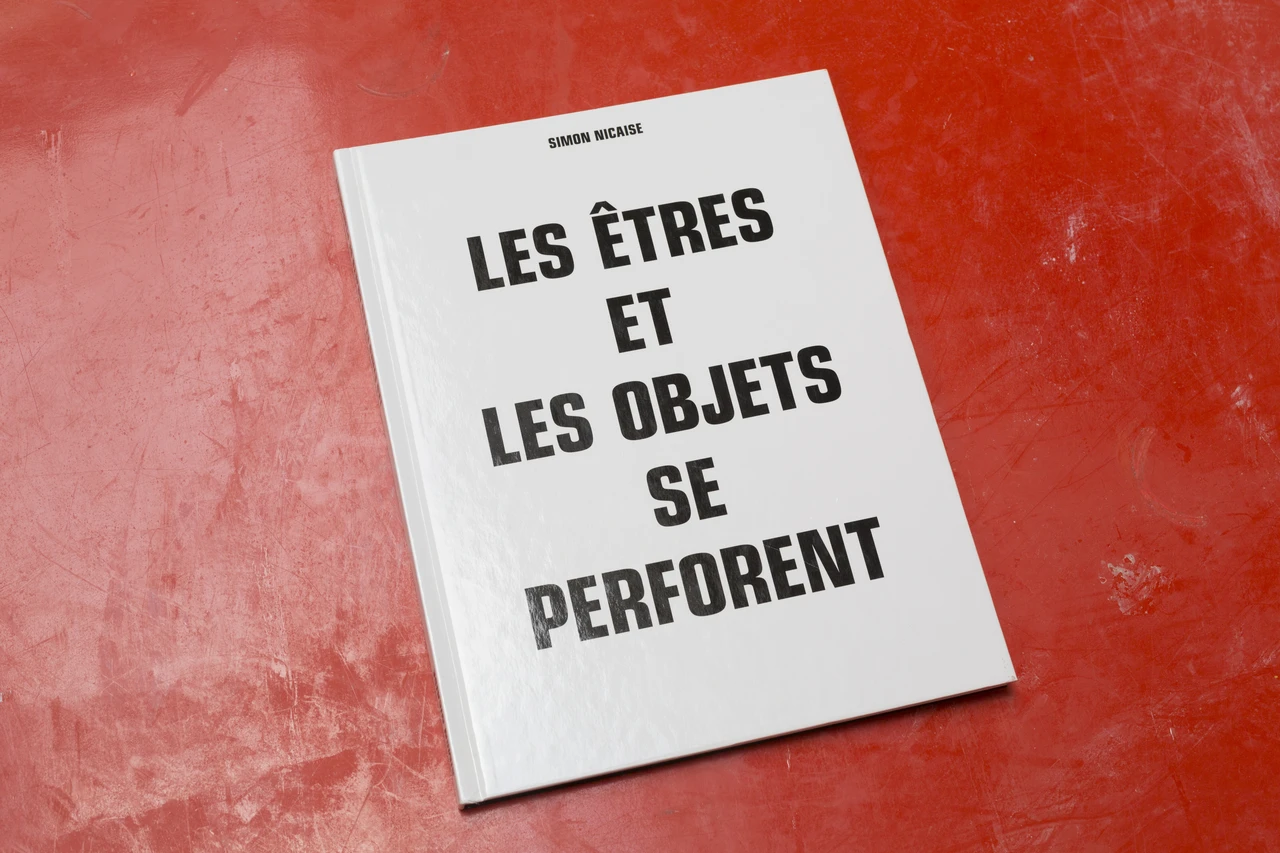
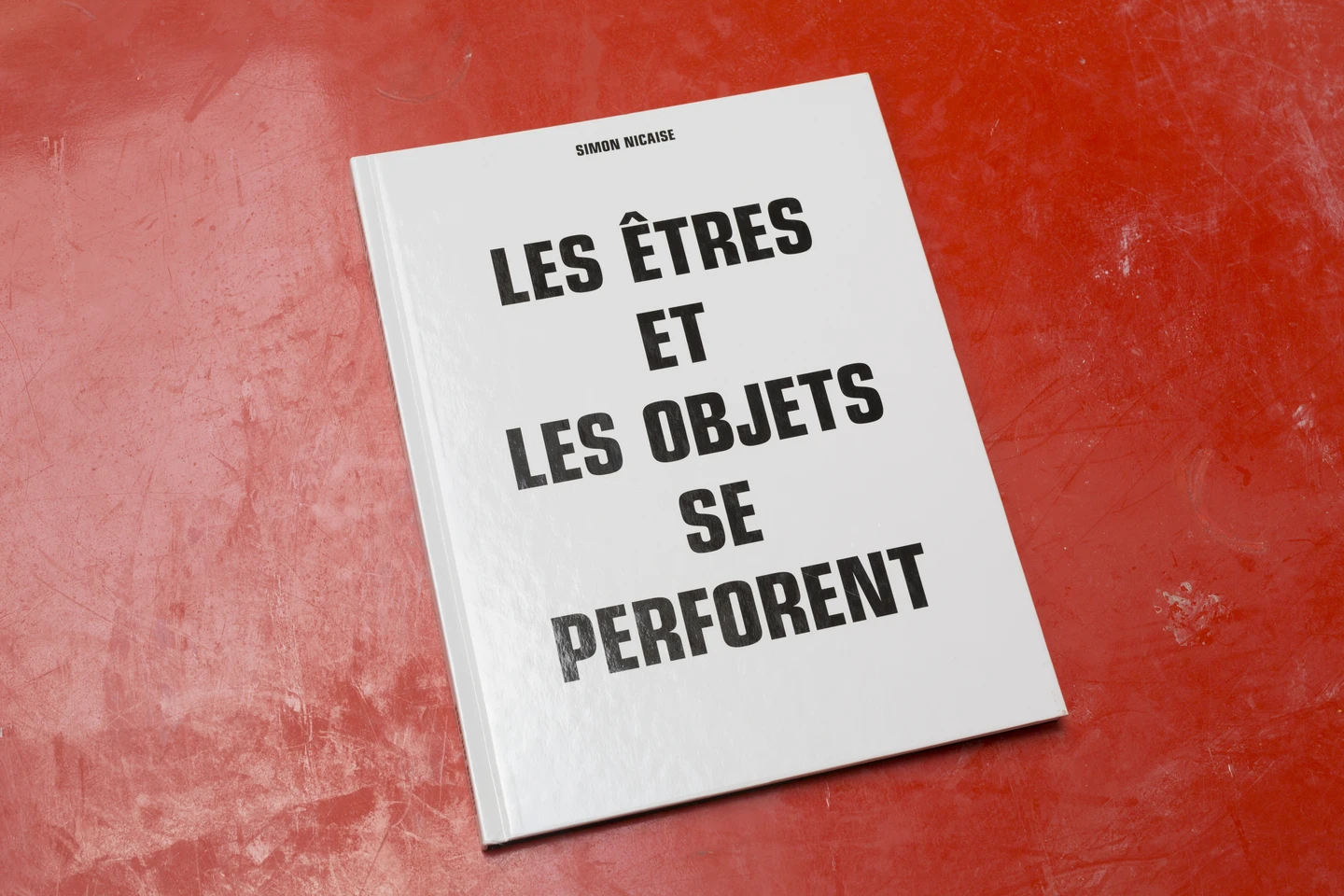
Les êtres et les objets se perforent
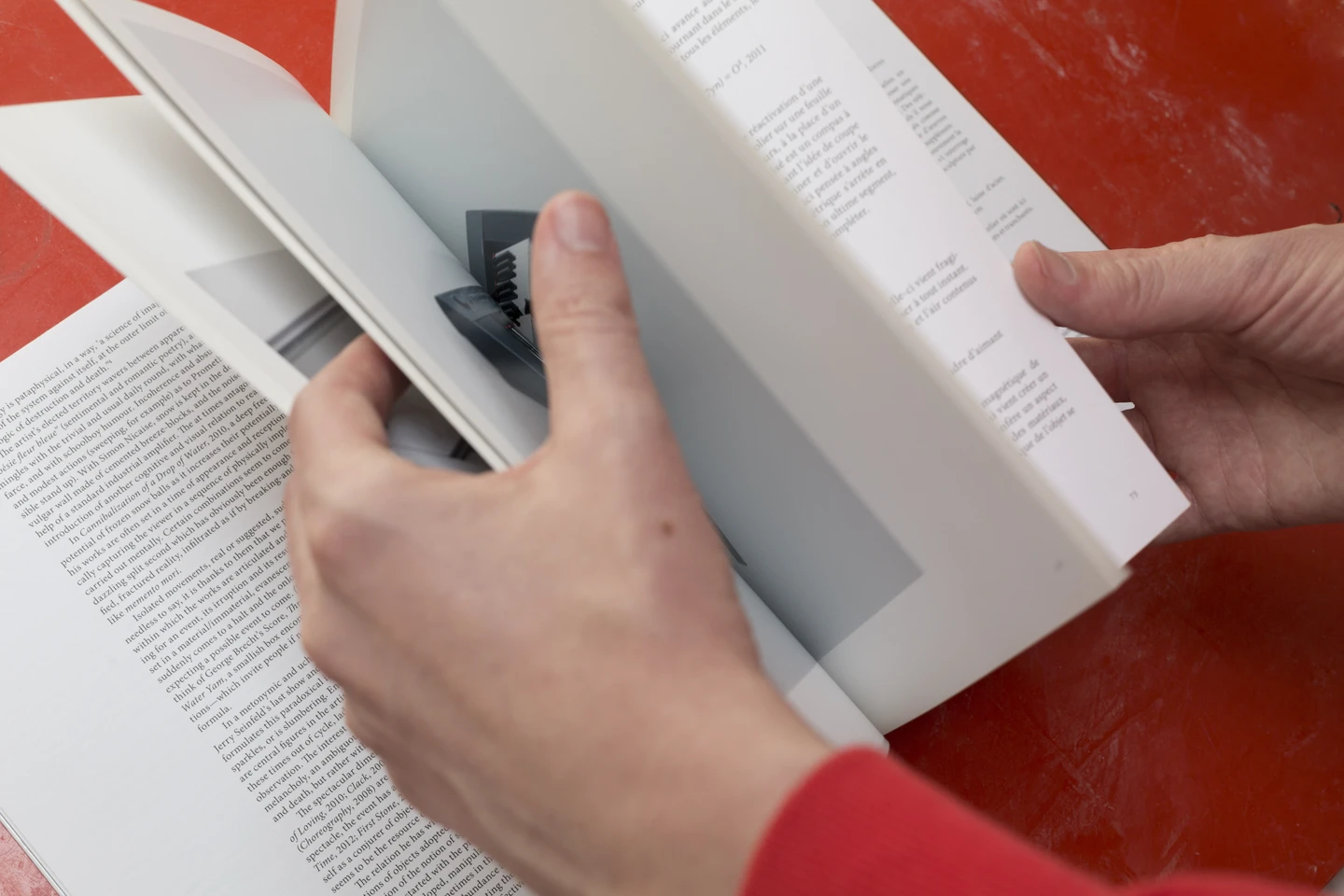
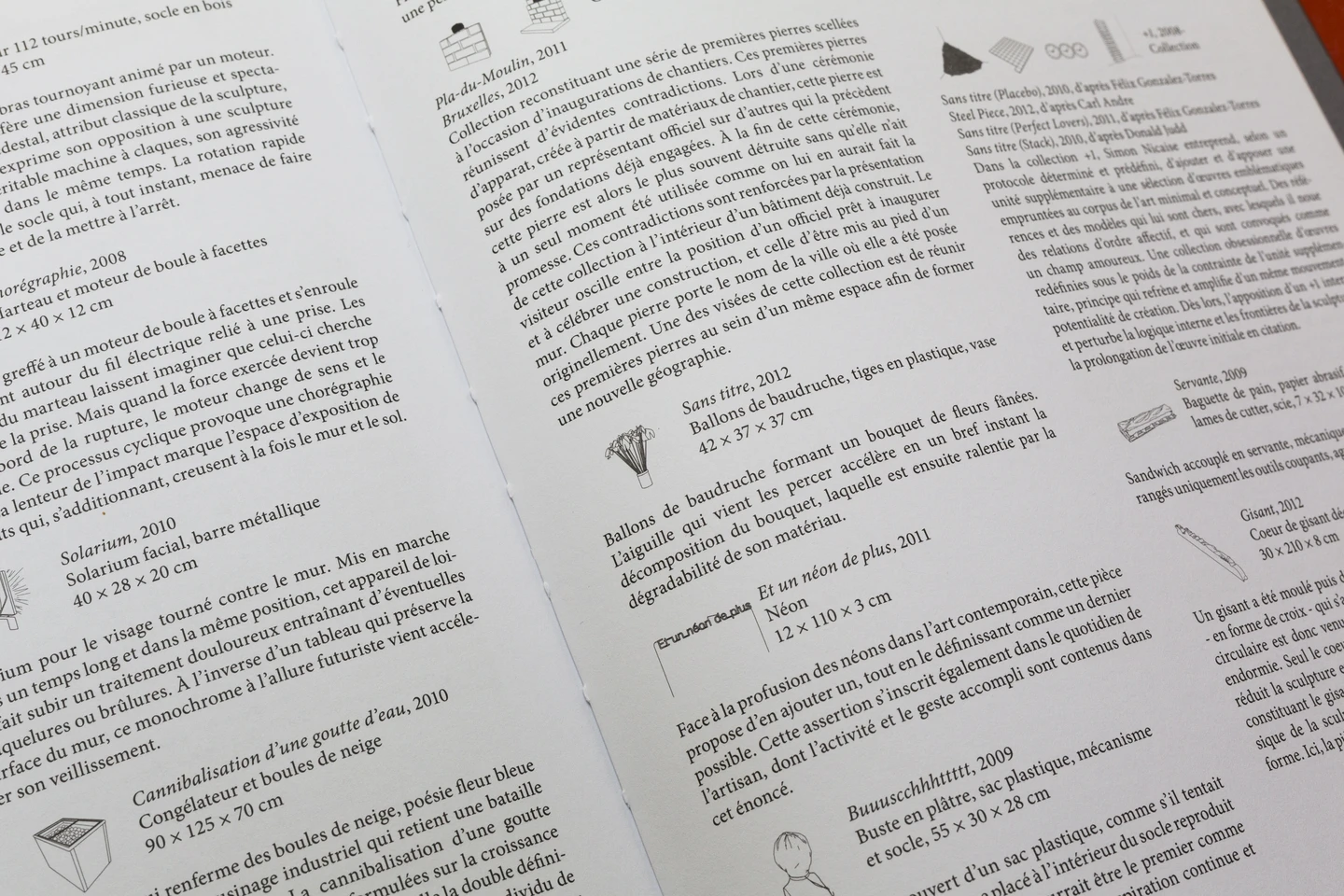
Bodson Gallery, Galerie Dominique Fiat Editorial, Book 2014Premier ouvrage consacré au travail sculptural et performatif du jeune artiste français.
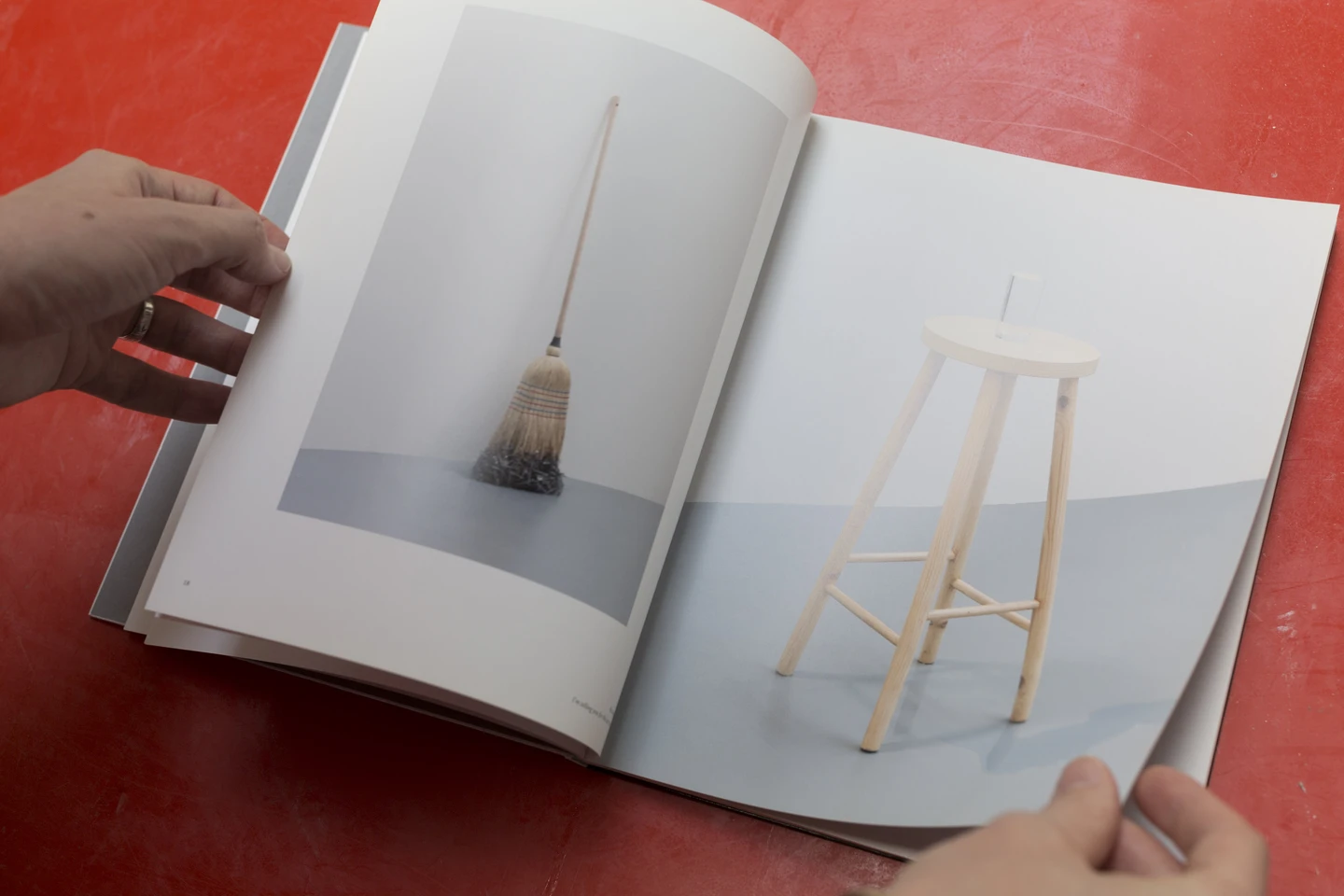
Les êtres et les objets se perforent réunit les œuvres majeures de l'artiste, depuis ses premières expositions jusqu'aux pièces les plus récentes.
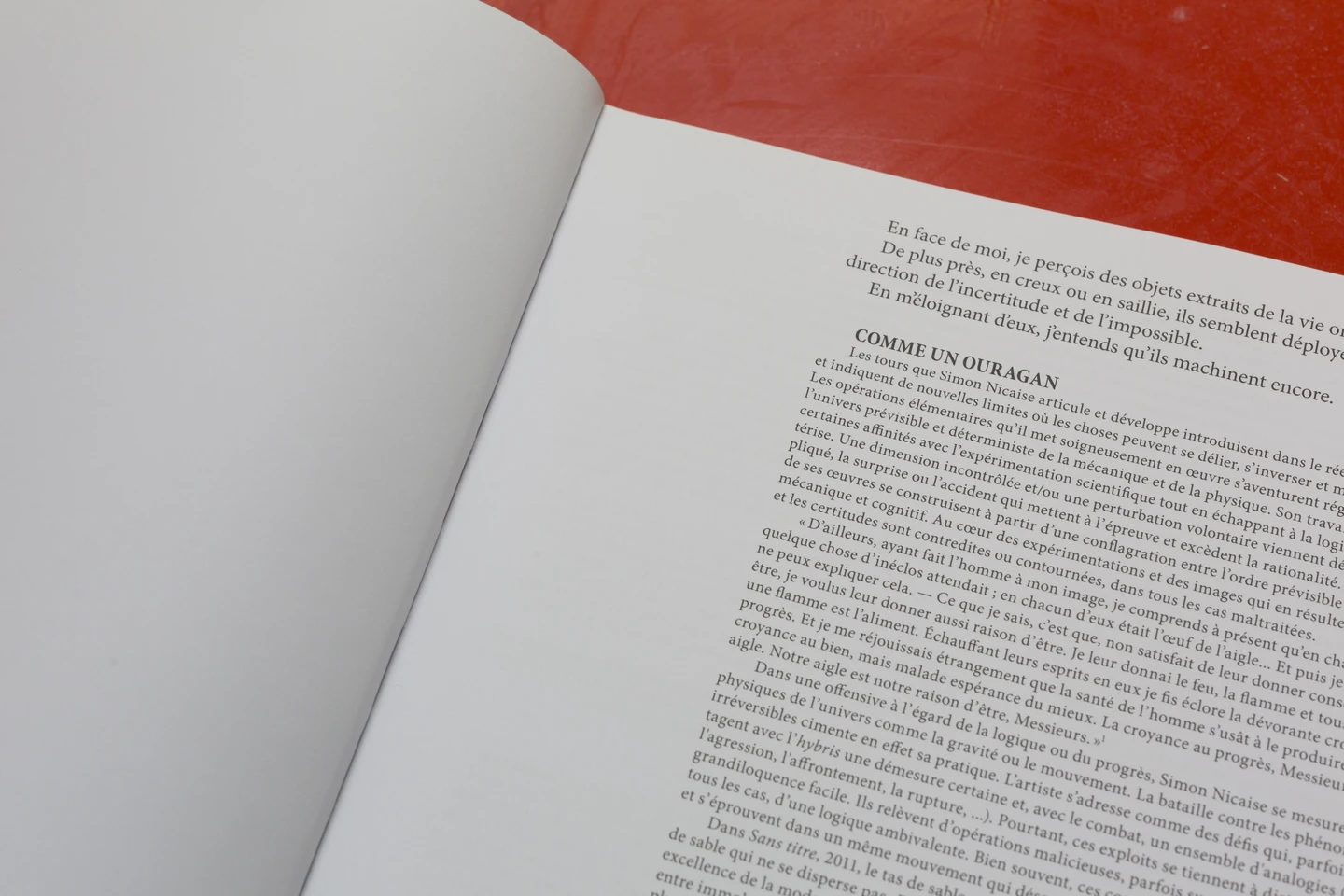
L'essai de Lionnel Gras, historienne de l'art et curatrice d'expositions, propose un ensemble de mouvements transversaux qui se présentent comme autant d'entrées pour appréhender la richesse du travail de Simon Nicaise. L'analyse détaillée met en perspective les notions-clefs du travail : la construction, le geste, l'événement, l'accident, l'entropie, le système, la fiction, ou encore l'appropriation. L'auteure expose et prolonge les enjeux esthétiques qui sous-tendent la pratique de l'artiste, utilisant des images et des outils d'analyse aussi divers qu'inattendus. Son approche est naturellement enrichie par le souvenir de conversations régulièrement partagées avec l'artiste et une fréquentation continue de ses œuvres. Au fil du texte, des mélodies rythment la pensée critique.
« Le territoire d'élection de l'artiste oscille entre des registres apparemment rivaux : la candeur ingénue, la poésie fleur bleue et la machination tragique. La poésie se mêle parfois au quotidien trivial, au dévalué, au grotesque, à la farce et à l'humour potache. L'incohérence et l'absurde donnent lieu tout aussi bien à des actions anti-héroïques ou modestes (balayer par exemple) qu'à des gestes à l'allure prométhéenne (faire tenir l'impossible). Chez Simon Nicaise, la neige se conserve au congélateur, la première pierre est déposée sur un vulgaire mur de parpaings cimentés et le bruit de la mer nous est livré à l'aide d'un amplificateur industriel standard. Le rapprochement, parfois antagoniste, d'objets conduit à mettre en place un autre rapport cognitif et visuel à la réalité, comme une nouvelle lucidité peut-être. »
Lionnel Gras
Le travail de Simon Nicaise (né en 1982 à Rouen, vit à Paris) se développe essentiellement dans les champs de la sculpture et, plus récemment, celui de la performance. Simon Nicaise détourne fréquemment des objets du quotidien qu'il transforme et charge de tensions pour révéler, entre autres, la fragilité de l'instant et du sens.
Simon Nicaise participe à de nombreuses expositions dans des institutions et centres d'art en France et à l'étranger (Allemagne, Belgique, Suisse), dont notamment Seconde Main au Musée d'Art Moderne de la ville de Paris en 2010. Il est lauréat du Prix Jeune Création en 2009 puis du Prix Sciences-Po pour l'art contemporain en 2011. -
-
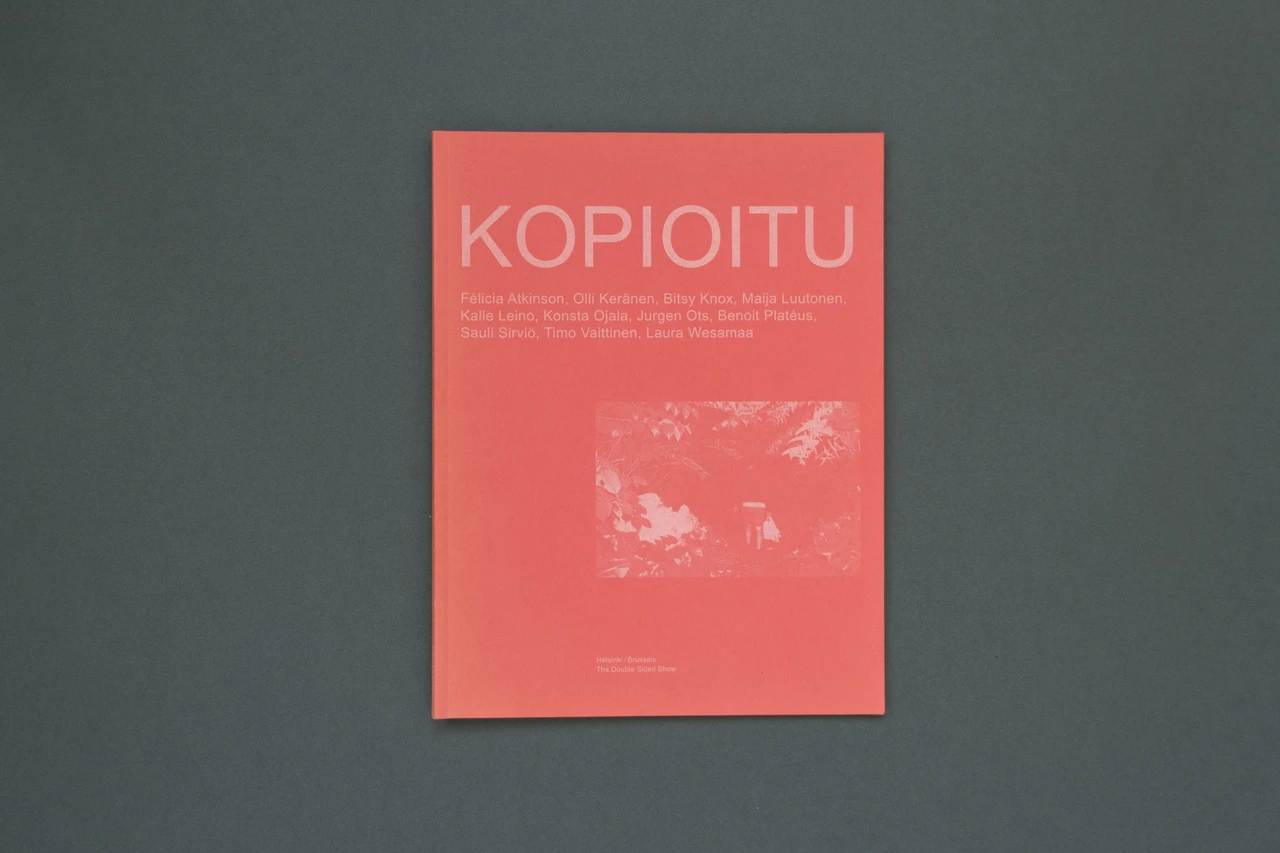
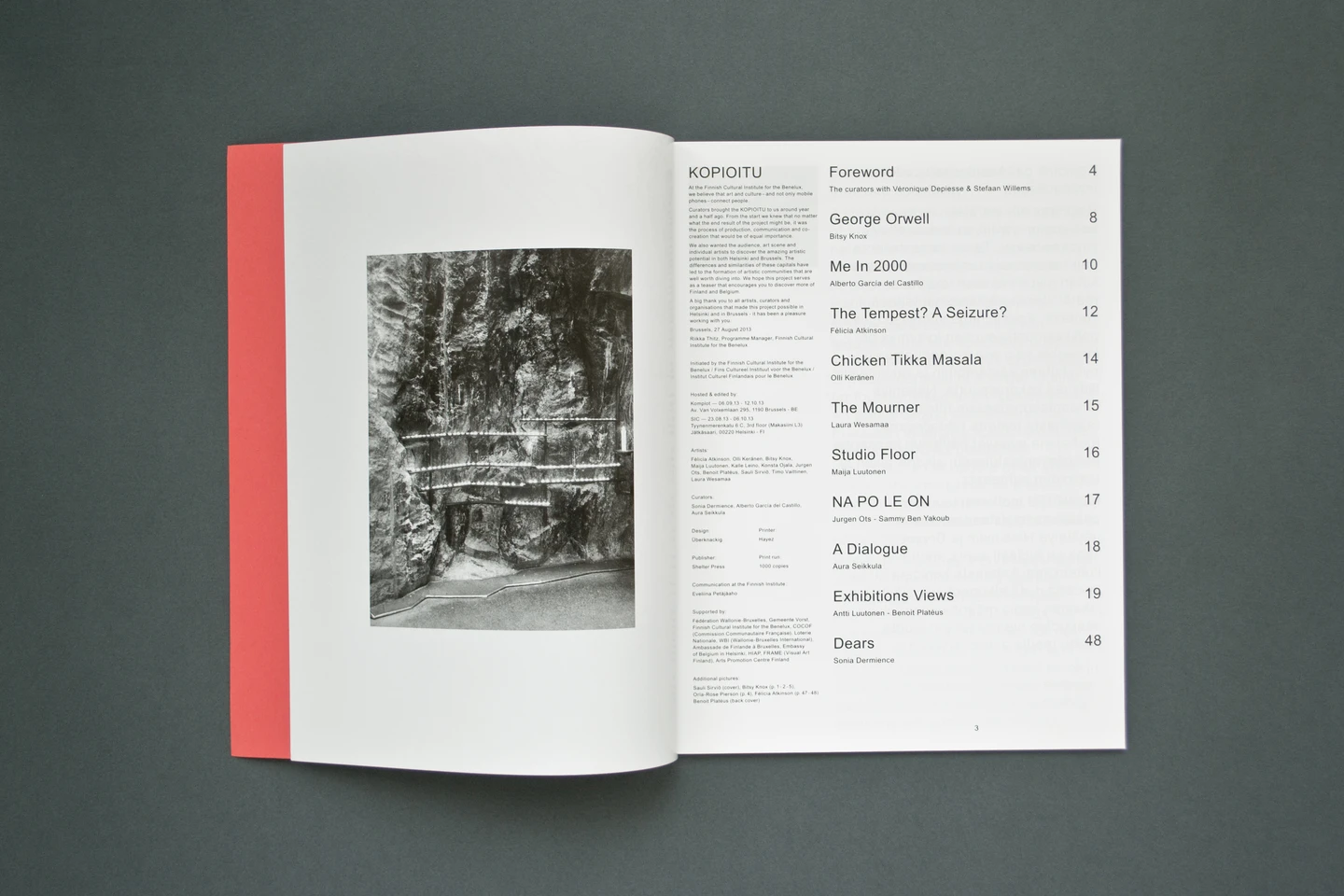
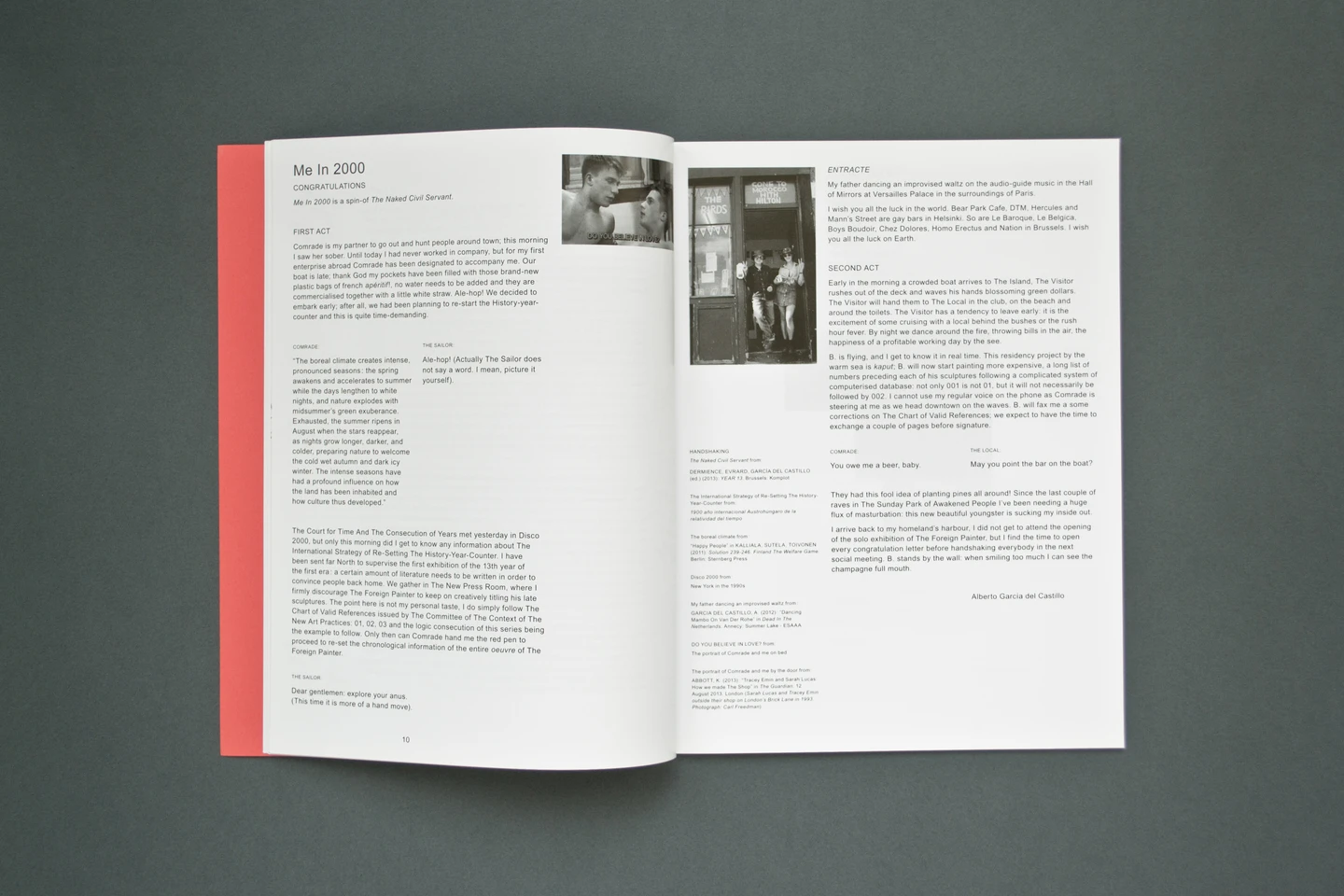
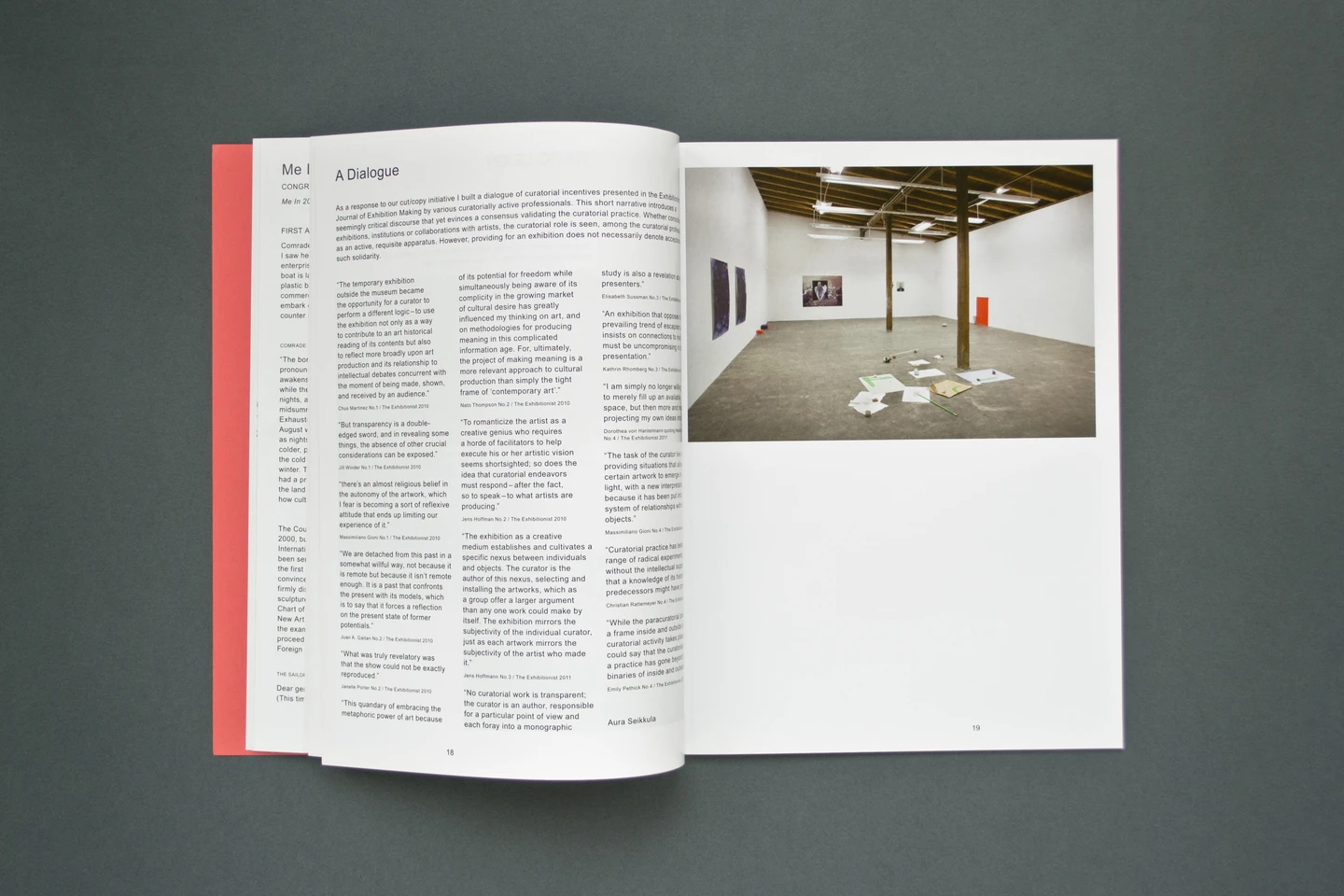
KOPIOITU
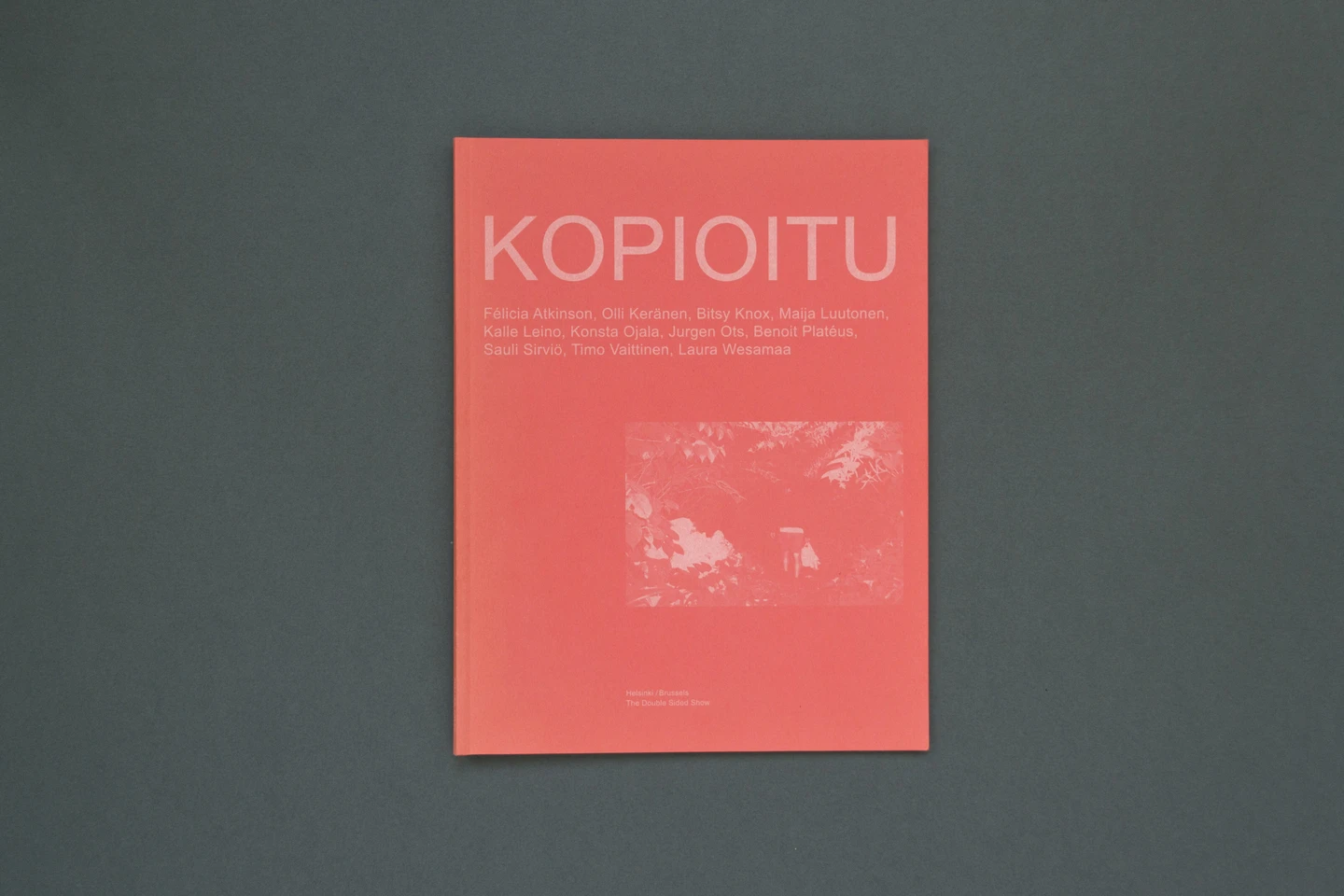
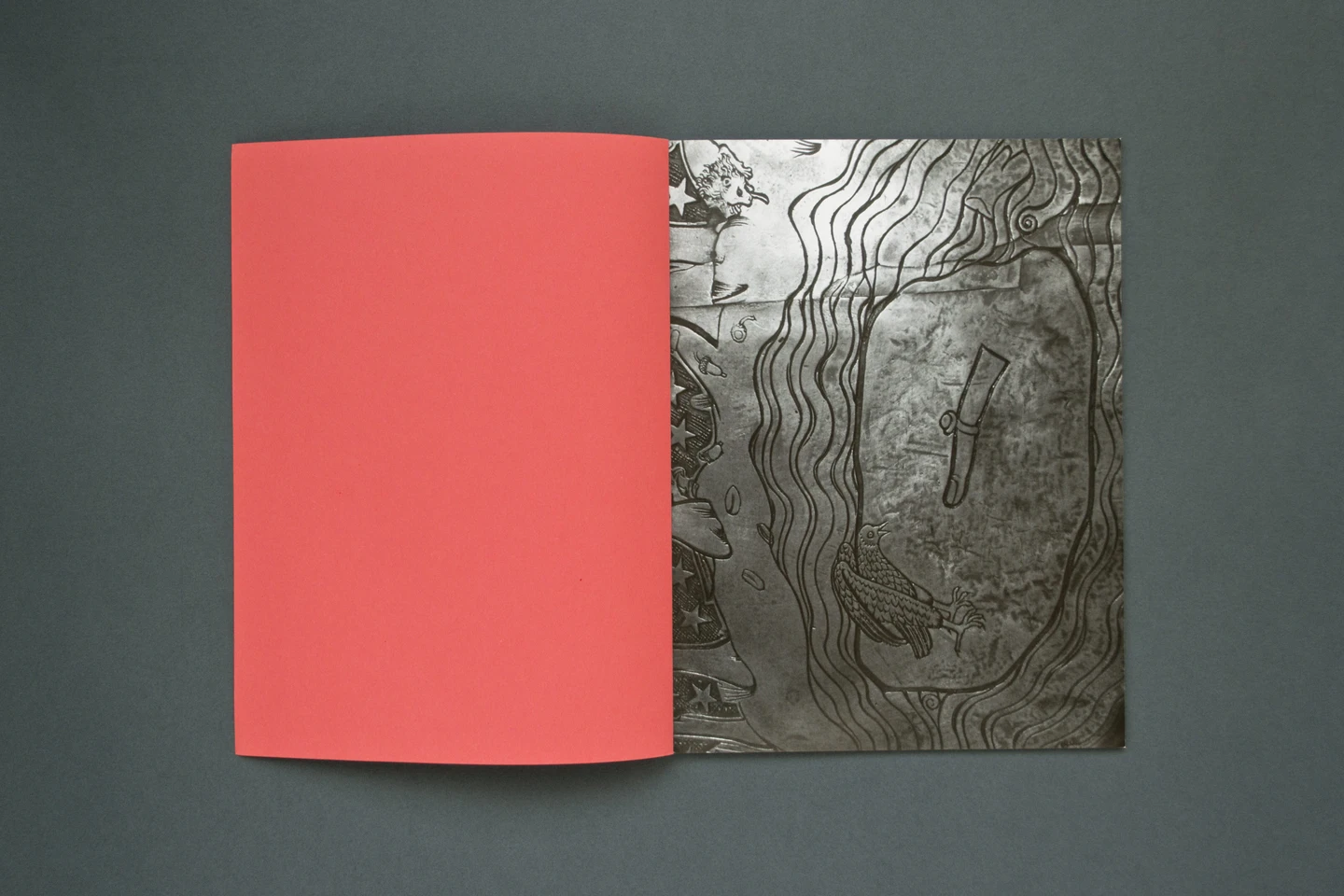
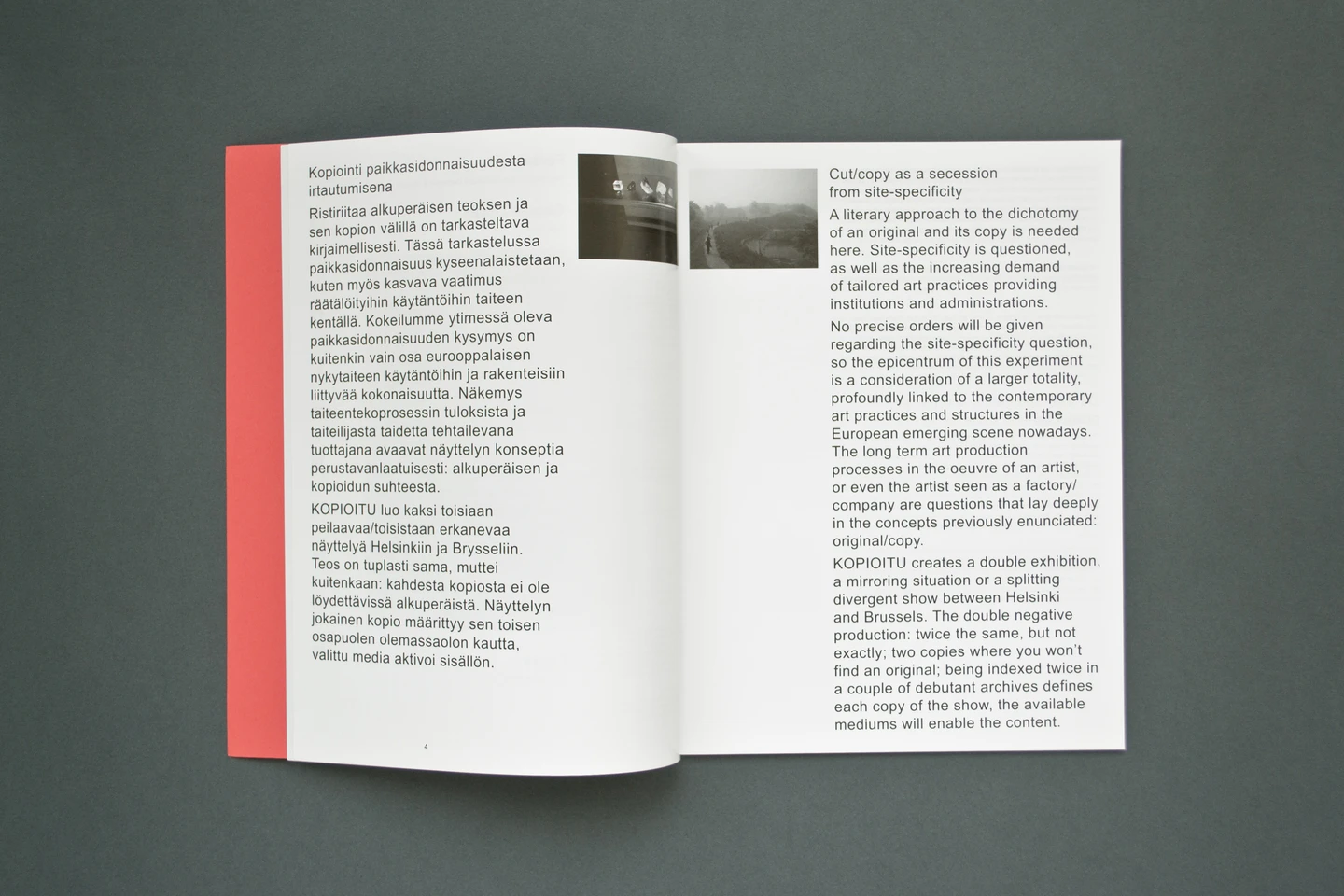
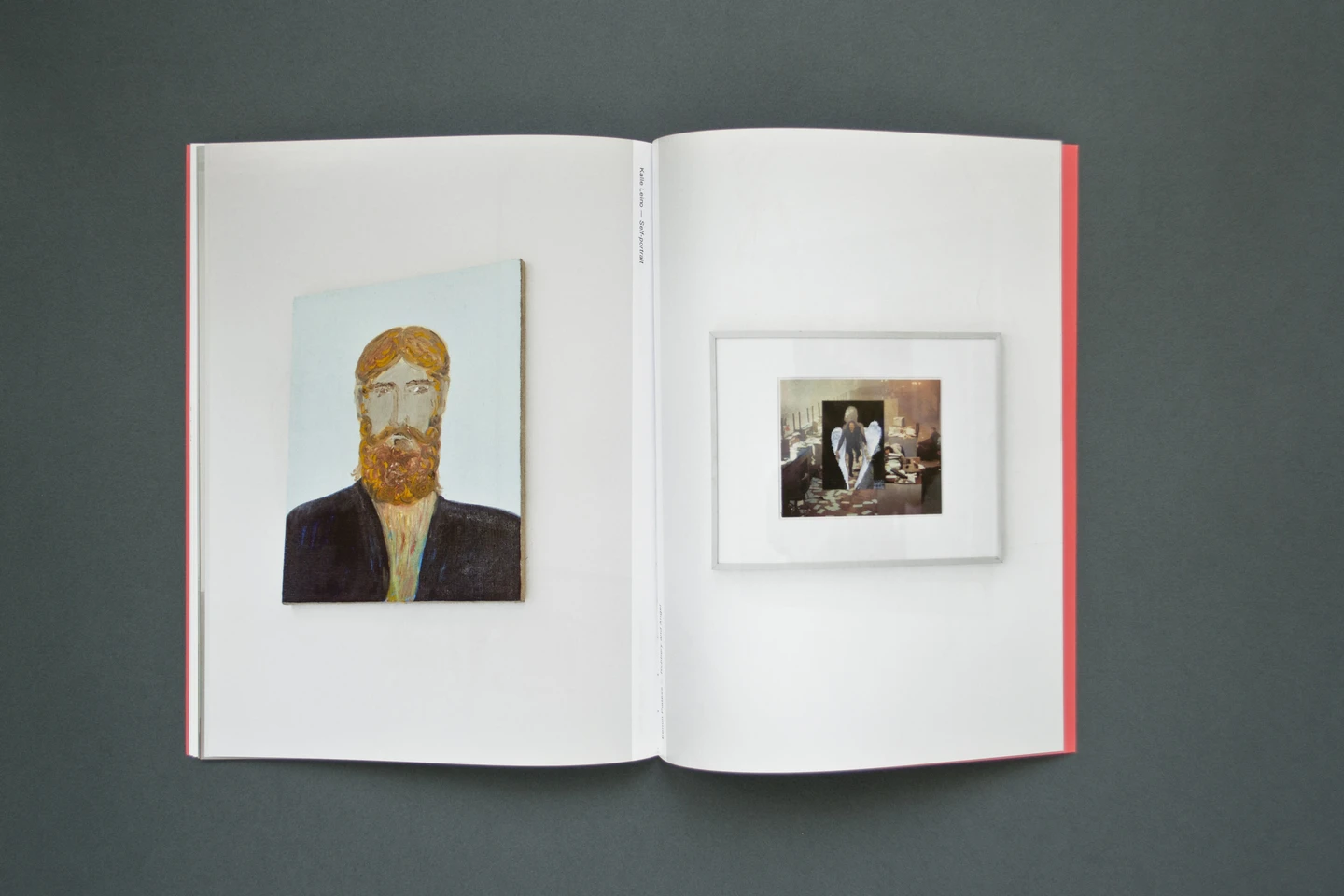
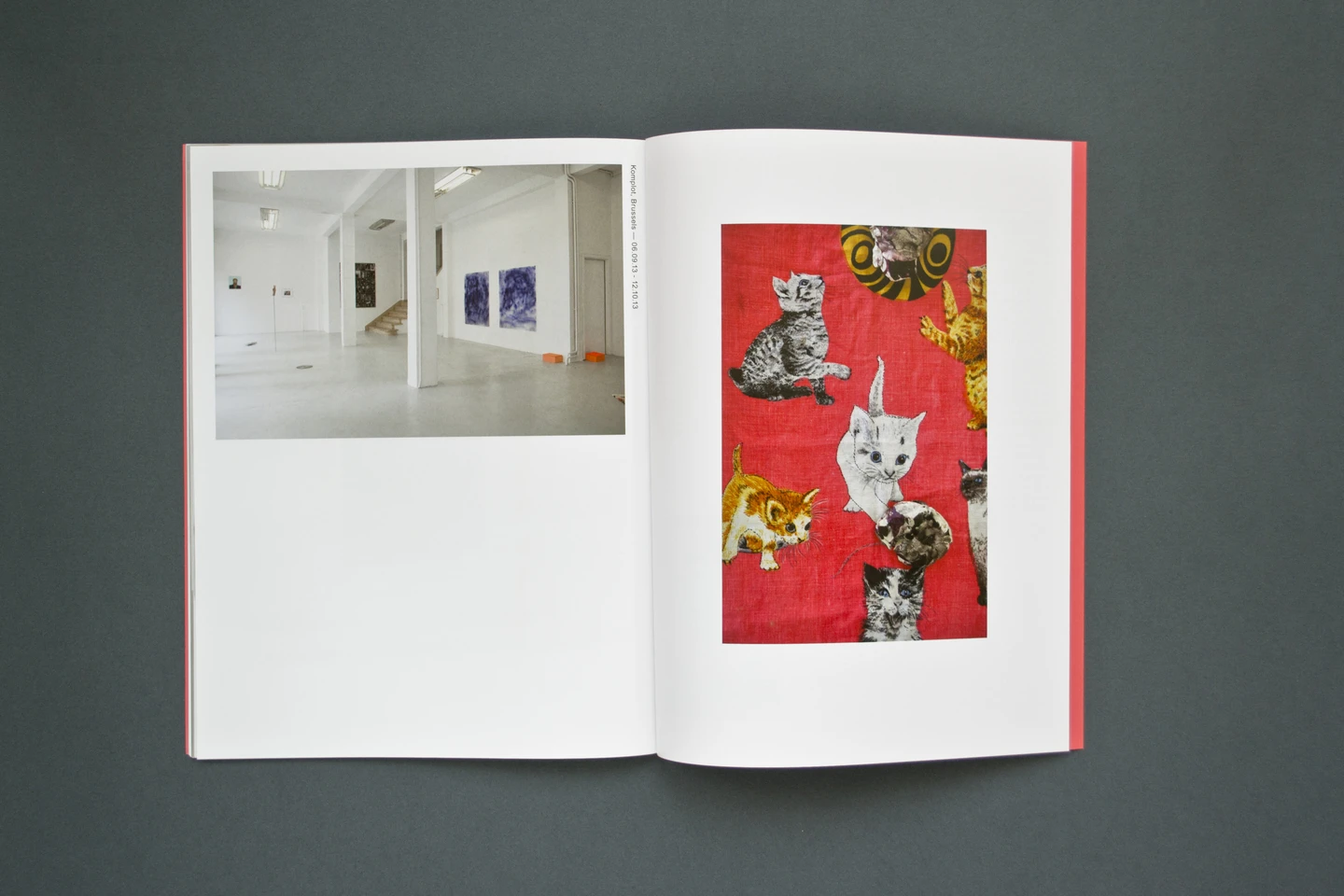
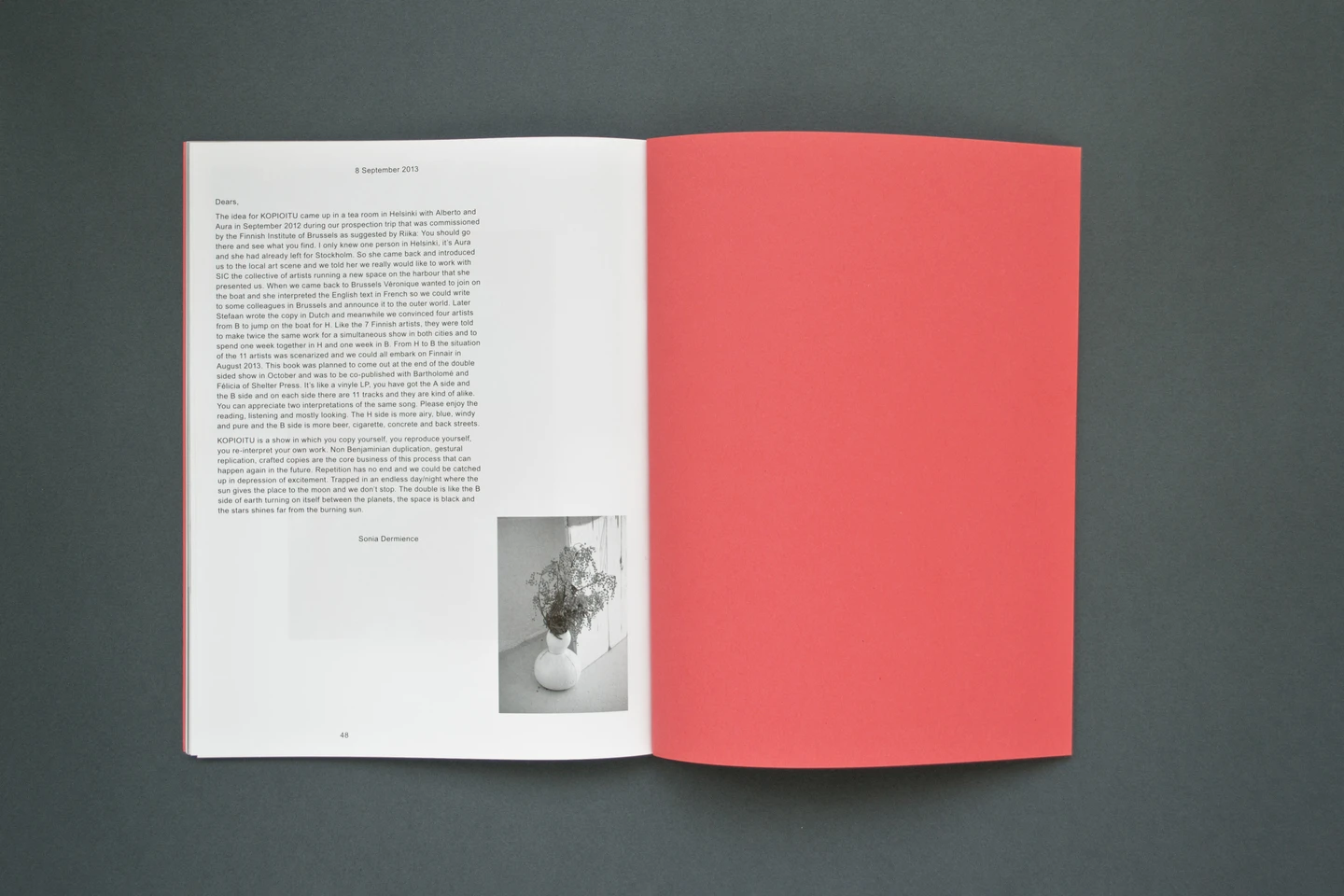
Finnish Cultural Institute for the Benelux, Shelter Press Editorial, Book 2014KOPIOITU proposes the notion of cut/copy as a secession from site-specificity. A literary approach to the dichotomy of an original and its copy is needed here. Site-specificity is questioned, as well as the increasing demand of tailored art practices providing institutions and administrations. No precise orders will be given regarding the site-specificity question, so the epicentrum of this experiment is a consideration of a larger totality, profoundly linked to the contemporary art practices and structures in the present emerging European scene. KOPIOITU creates a double exhibition, a mirroring situation or a splitting divergent show between the galleries Sic (Helsinki) and Komplot (Brussels). This is double negative production: twice the same, but not exactly.
Cut/copy as a secession from site-specificity
A literary approach to the dichotomy of an original and its copy is needed here. Our labor heads towards a plural presence of objects in a given non-continuous space; we aim to build temporary living spaces on an island and in a former forest, but the traces of this experience are unpredictable. Site-specificity is questioned, as well as the increasing demand of tailored art practices providing for projects, art spaces, towns and neighborhoods:
-Could you please make something here, from here, for here and about here?
-But, darling, there are Mc Donald restaurants on every main square!
No precise orders will be given regarding the site-specificity question, so the epicenter of this experiment is a consideration of a larger totality, profoundly linked to the contemporary art practices and structures in the European emerging scene nowadays. The long term art production processes in the oeuvre of an artist, or even the artist seen as a factory/company are questions that lay deeply in the concepts previously enunciated: original/copy.
Double negative is a new economy of production
Considering sculptures as arranged objects that produce awkward compositions questions the great lack of dissident presences in the clean European streets crossing and forming in ninety degrees. This specific regard to the artwork conducts our own ecology of means and disputes the consideration of the archive. A tight production budget will cover people's living, and a tighter one the double negative production: twice the same, but not exactly; two copies where you won't find an original; being indexed twice in a couple of debutant archives; goodbye Fed Ex!
Creating a double exhibition, a mirroring situating or a splitting divergent show between Helsinki and Brussels is a challenge. Do not expect to find two resembling Hollywood sceneries, but accept that the multiple interests and conditions in these two sites will define each copy of the show, the available mediums will enable the content.
The transportation of artworks will be avoided in all parts of the process, which will conclude in the construction of an archive or a document that allows to reproduce the exhibition to the infinite. All the works produced in Brussels will stay there, and so will those made in Helsinki for archive and reproduction possibilities for the artists to do a new copy anywhere else, something like the PDF file you need to reprint this text. -
-
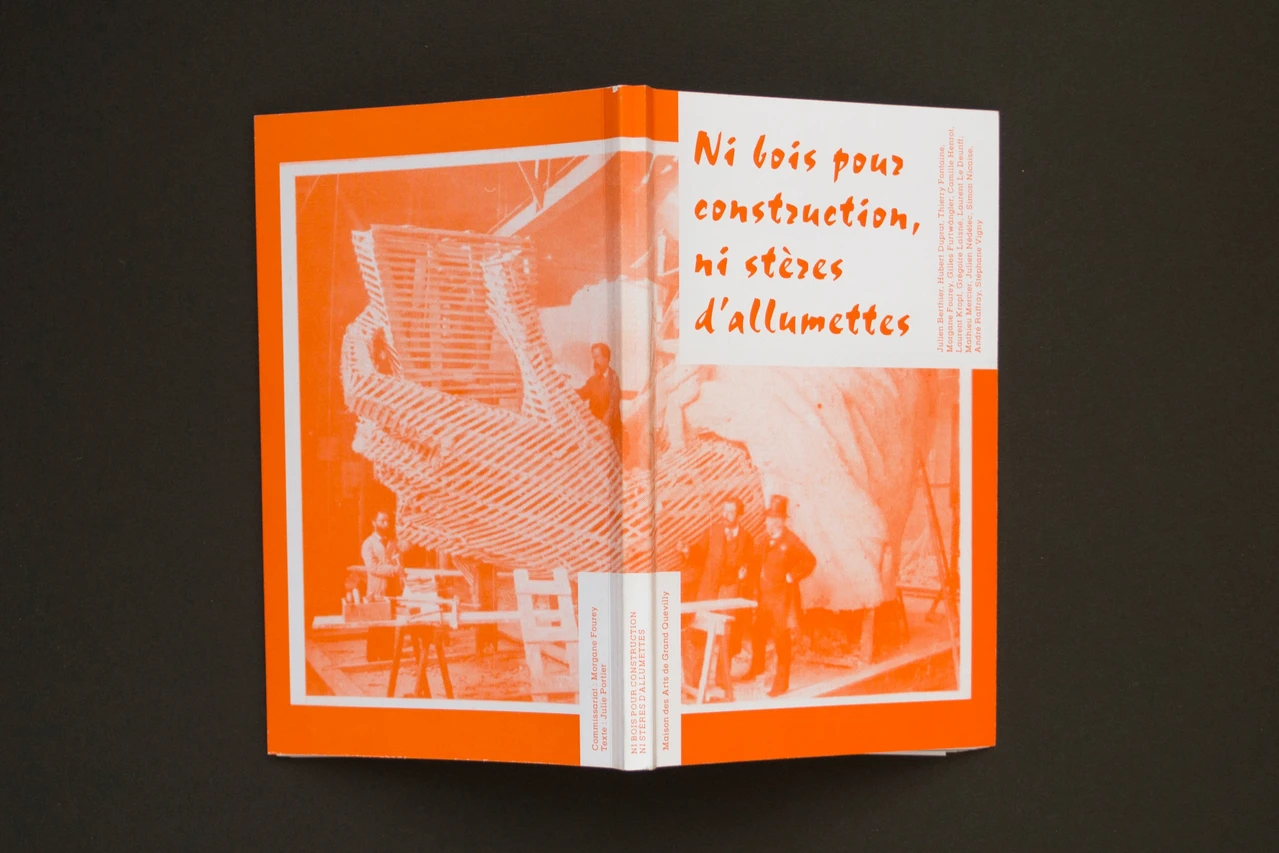
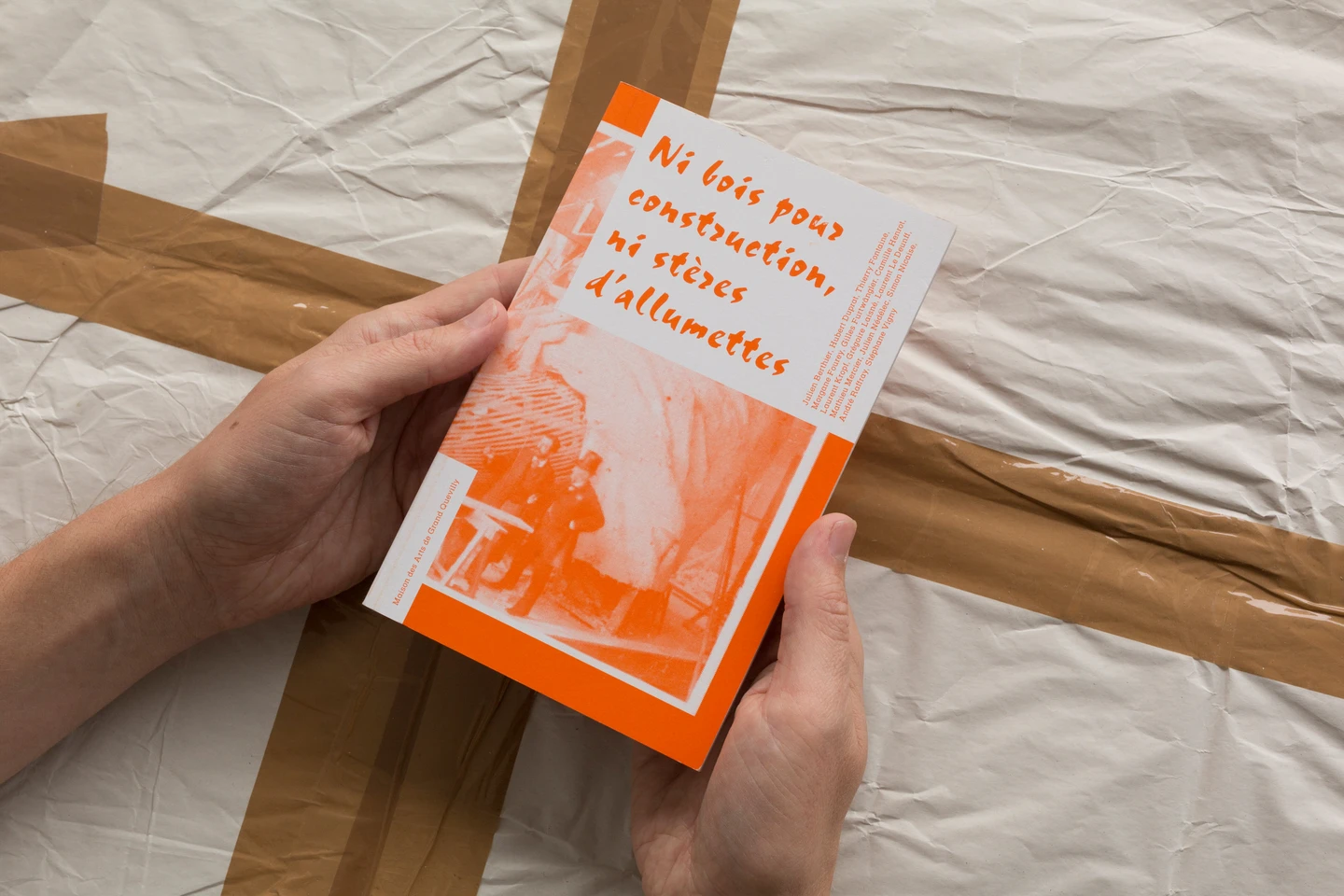
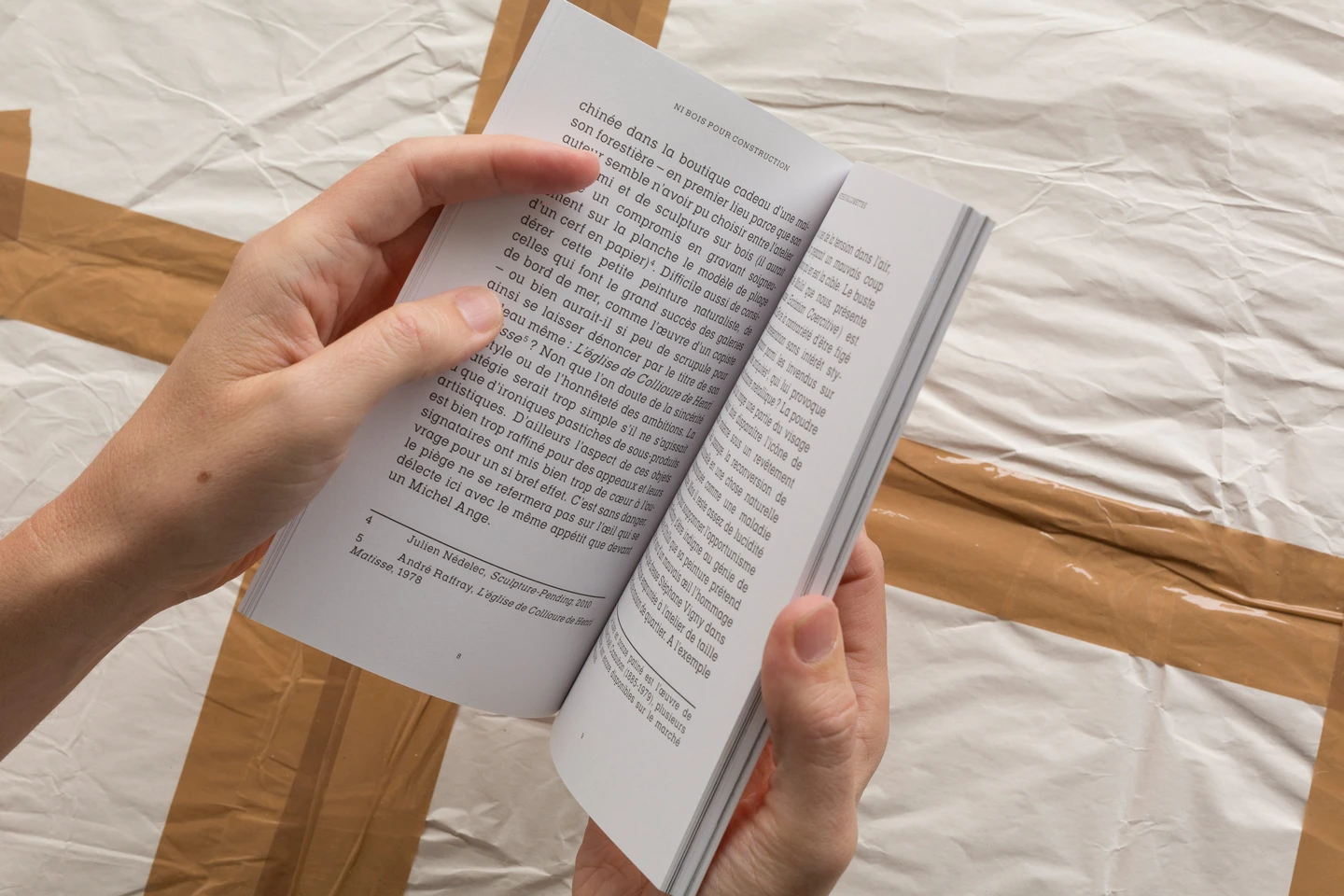
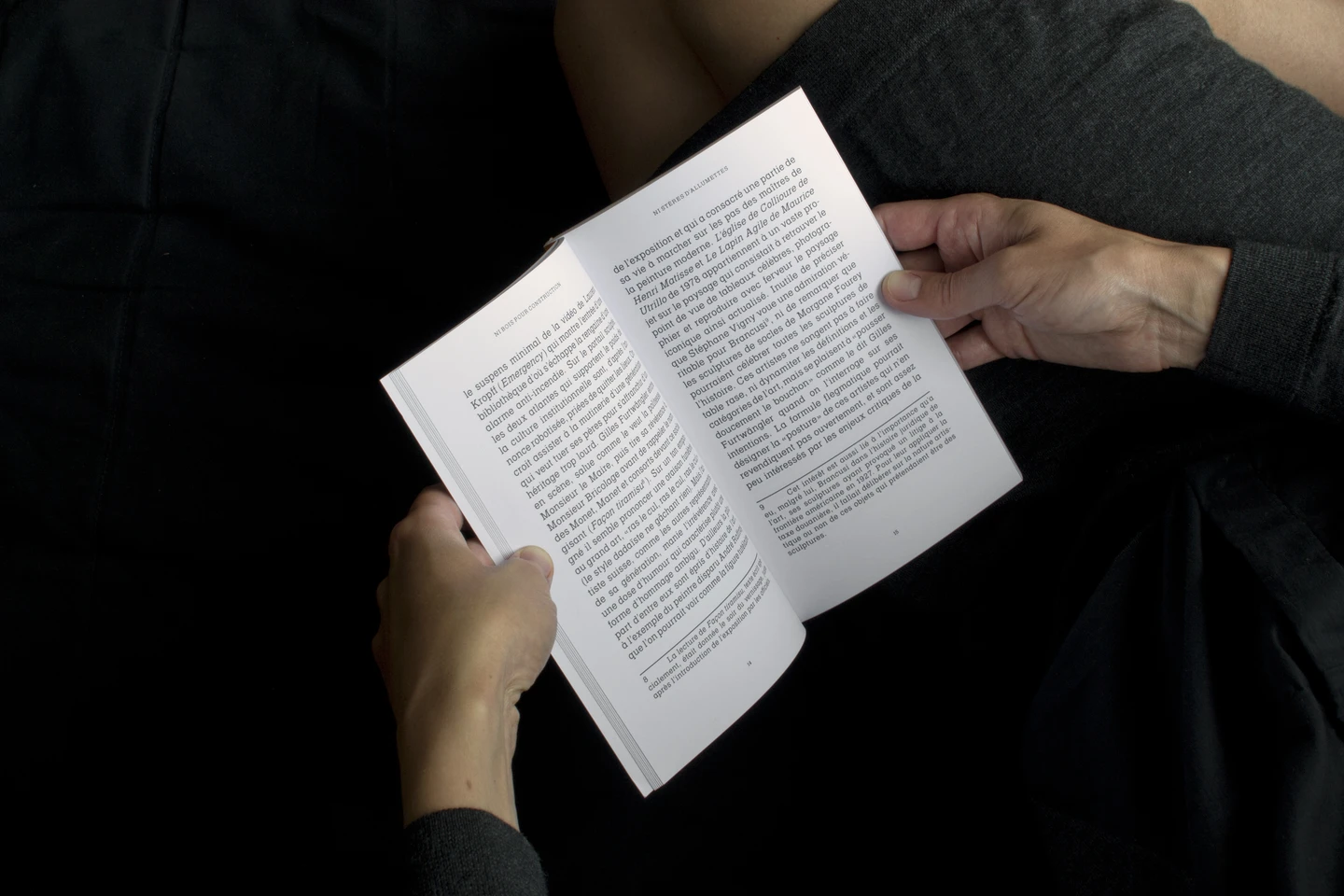
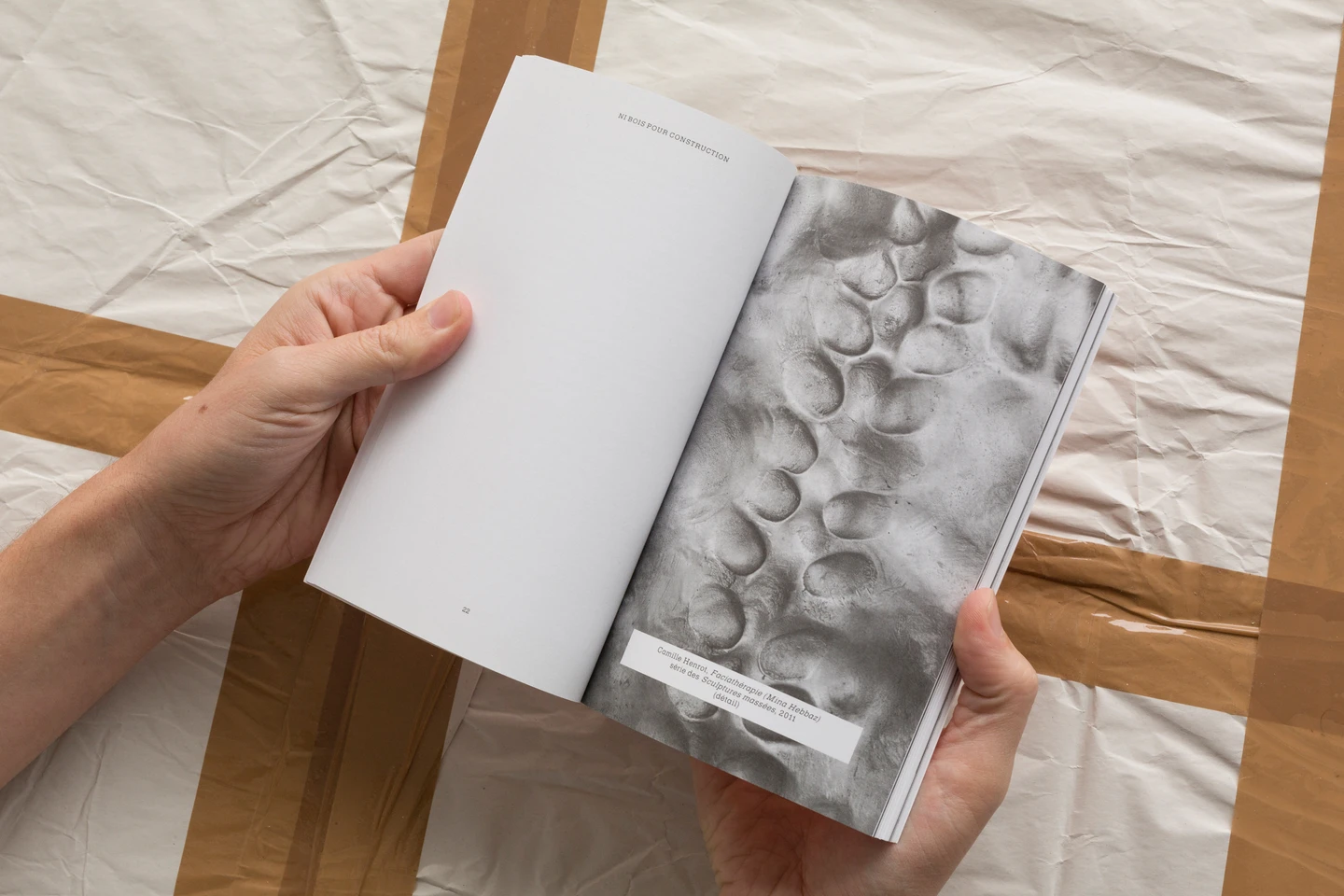
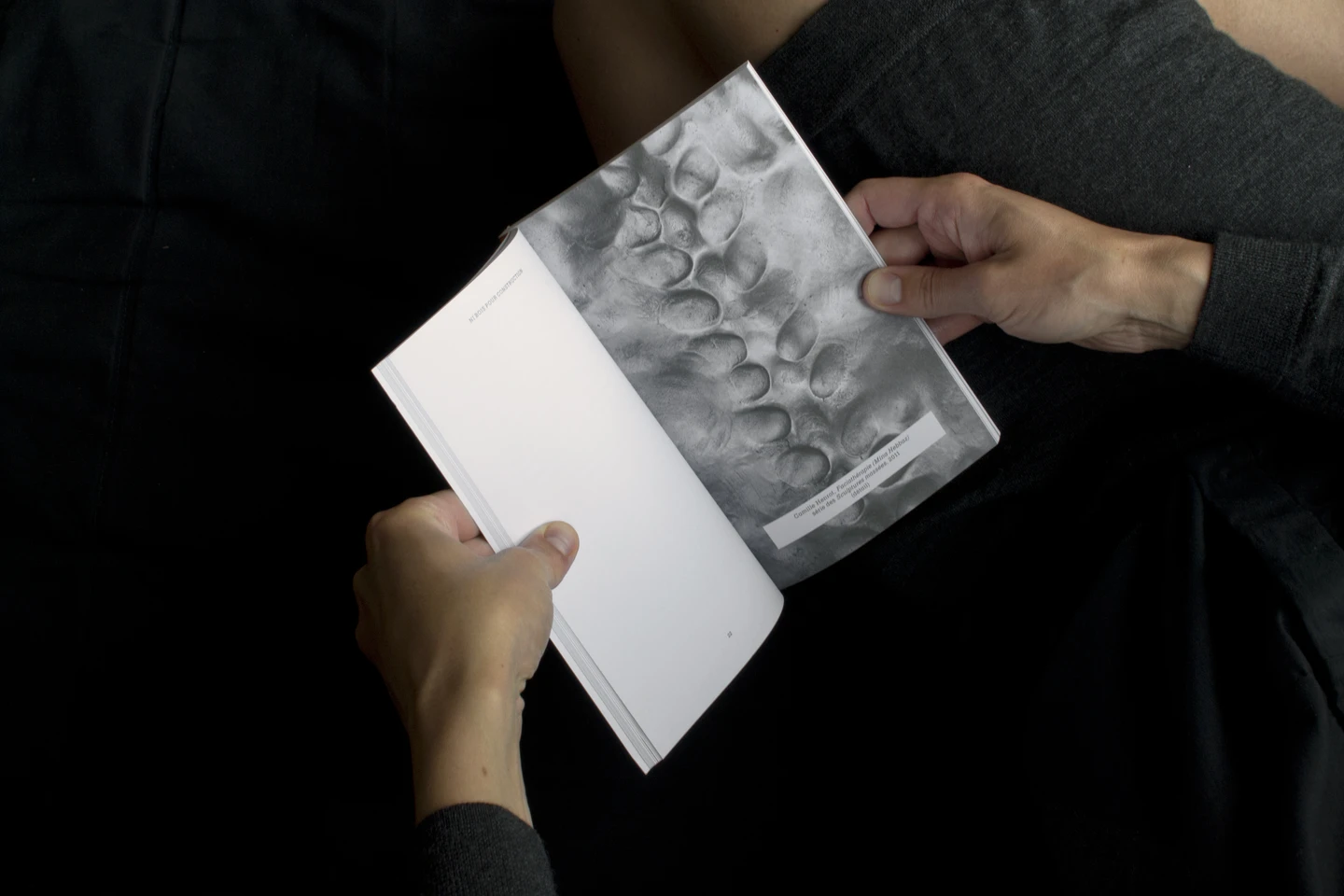
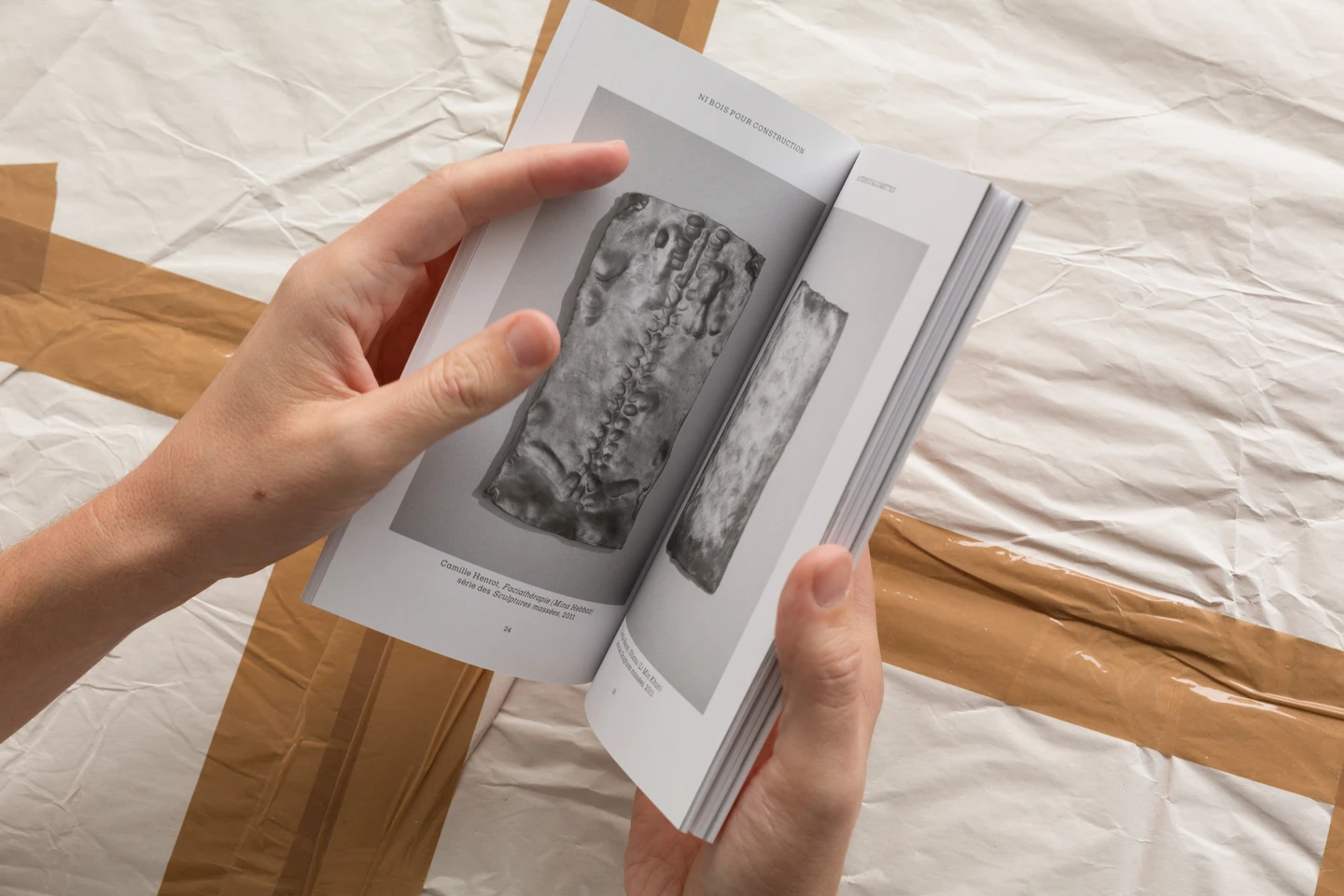
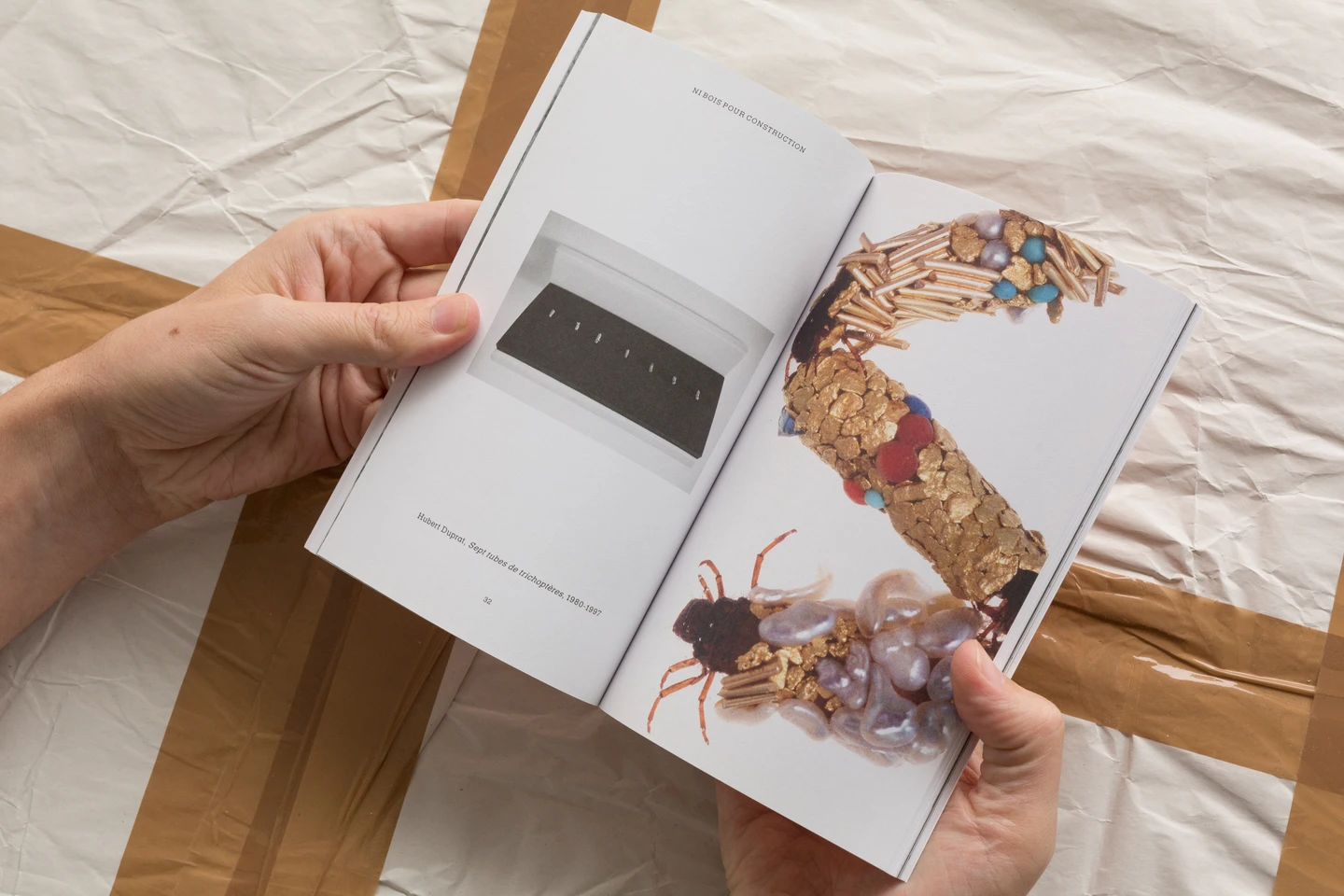
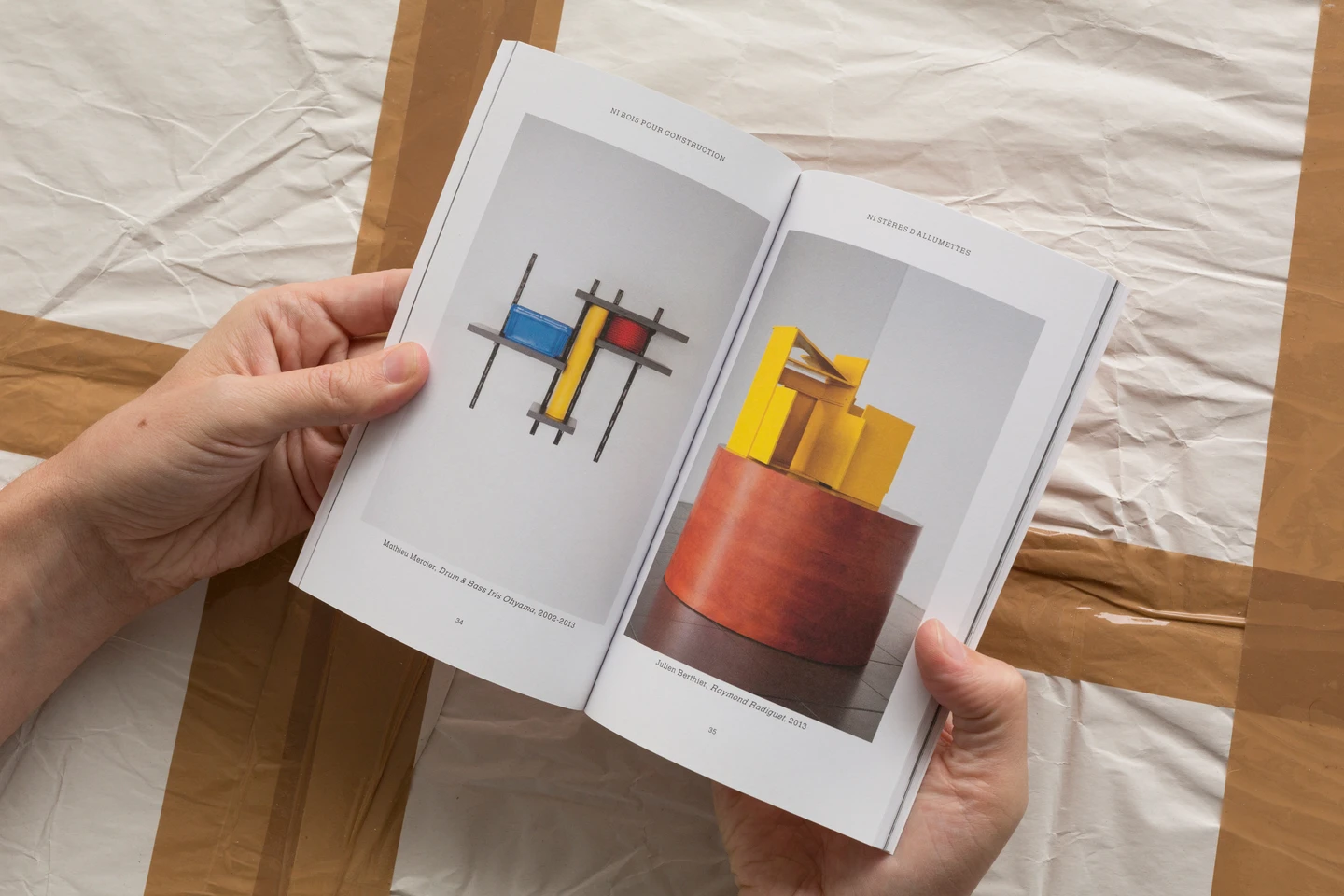
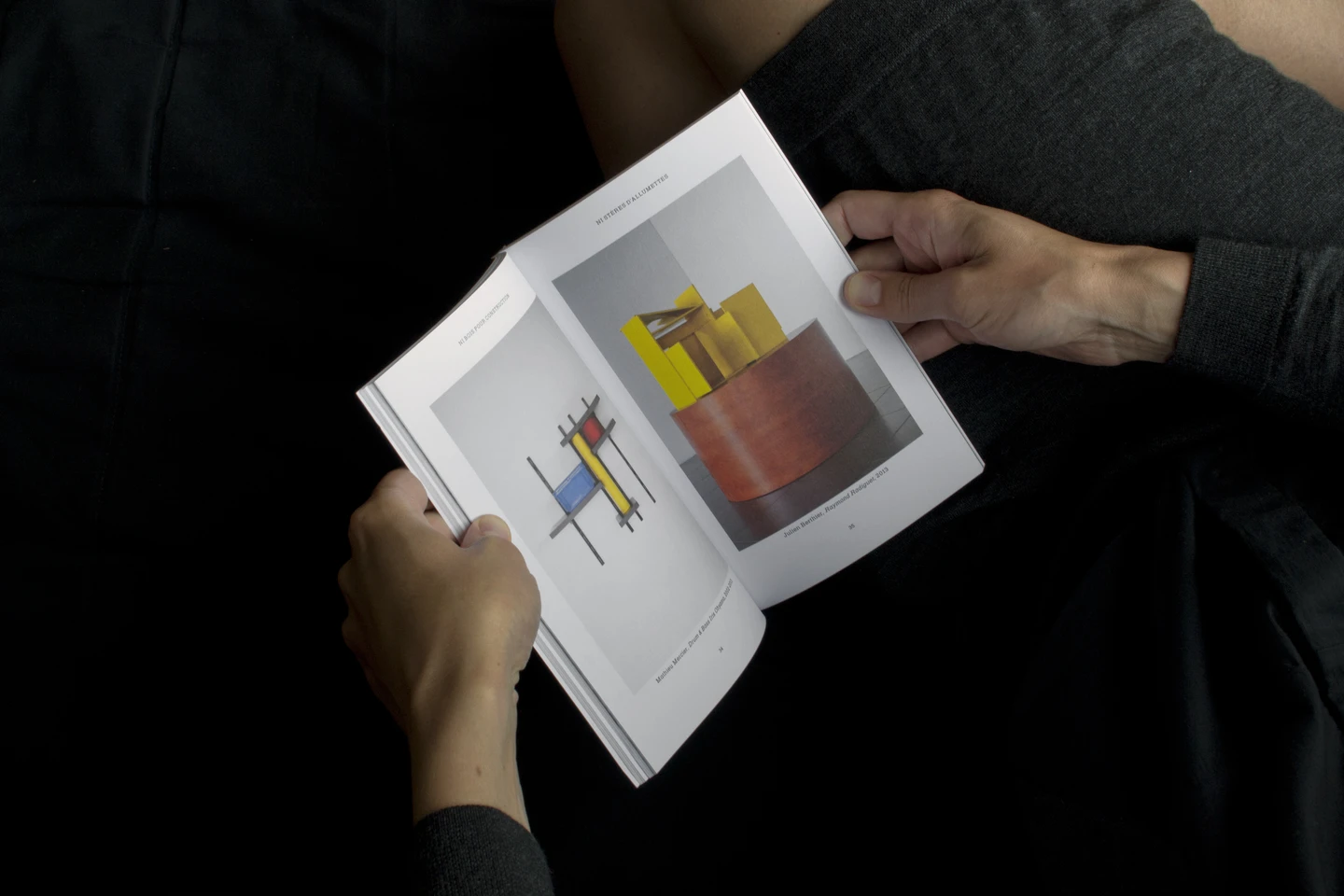
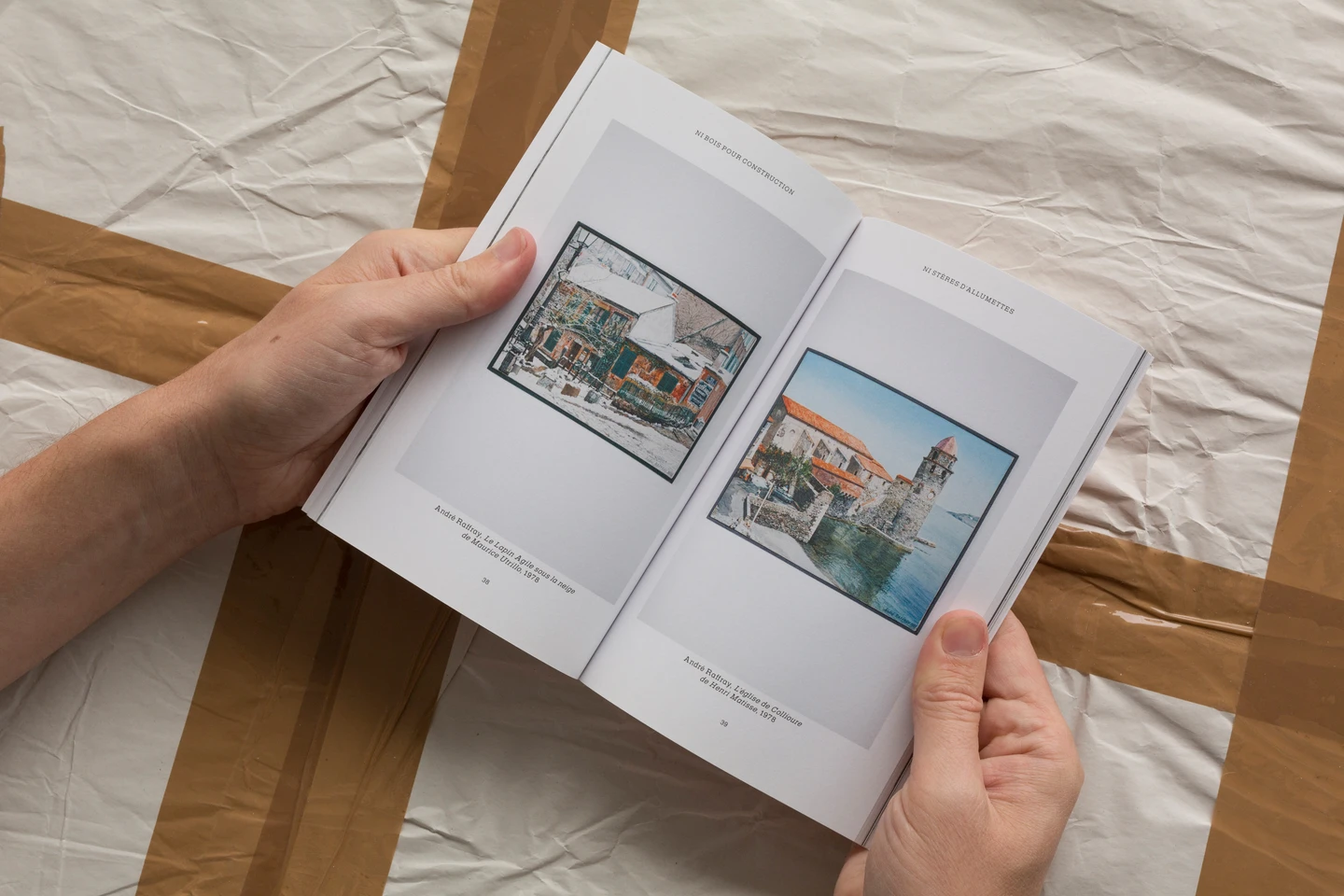
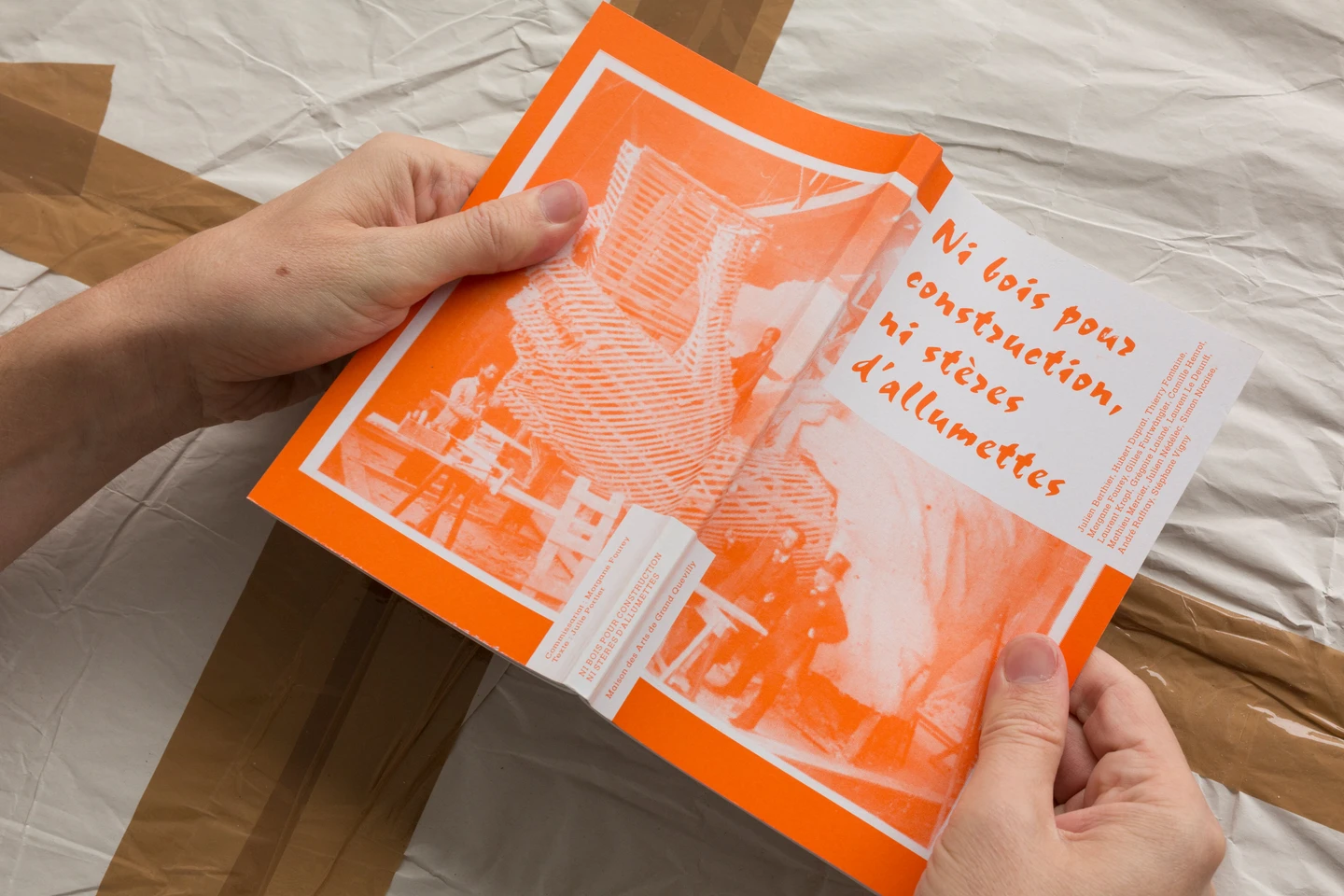
Ni bois pour construction, ni stères d'alumettes
Morgan Fourey, Maison des Arts de Grand Quevilly Editorial, Book 2014Catalogue réalisé avec le soutien de la ville de Grand Quevilly / Haute Normandie
A l'occasion de l'exposition: "Ni bois pour construction, ni stères d'alumettes" du 18.12.2013 au 02.02.2014
à la maison des Arts de Grand Quevilly
https://morganefourey.com/Ni-bois-pour-construction-ni-steres-d-allumettes -
-
Year 13
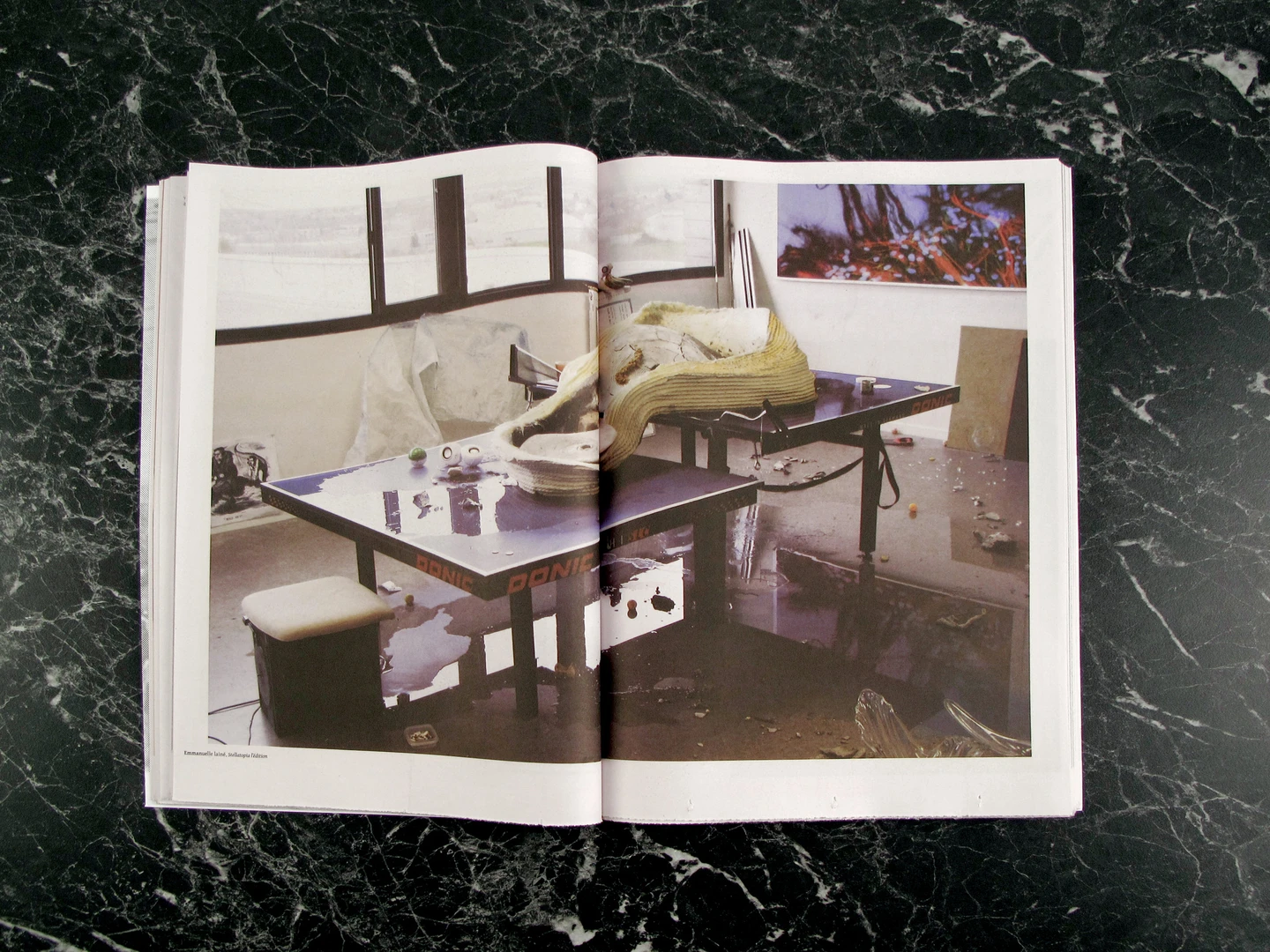
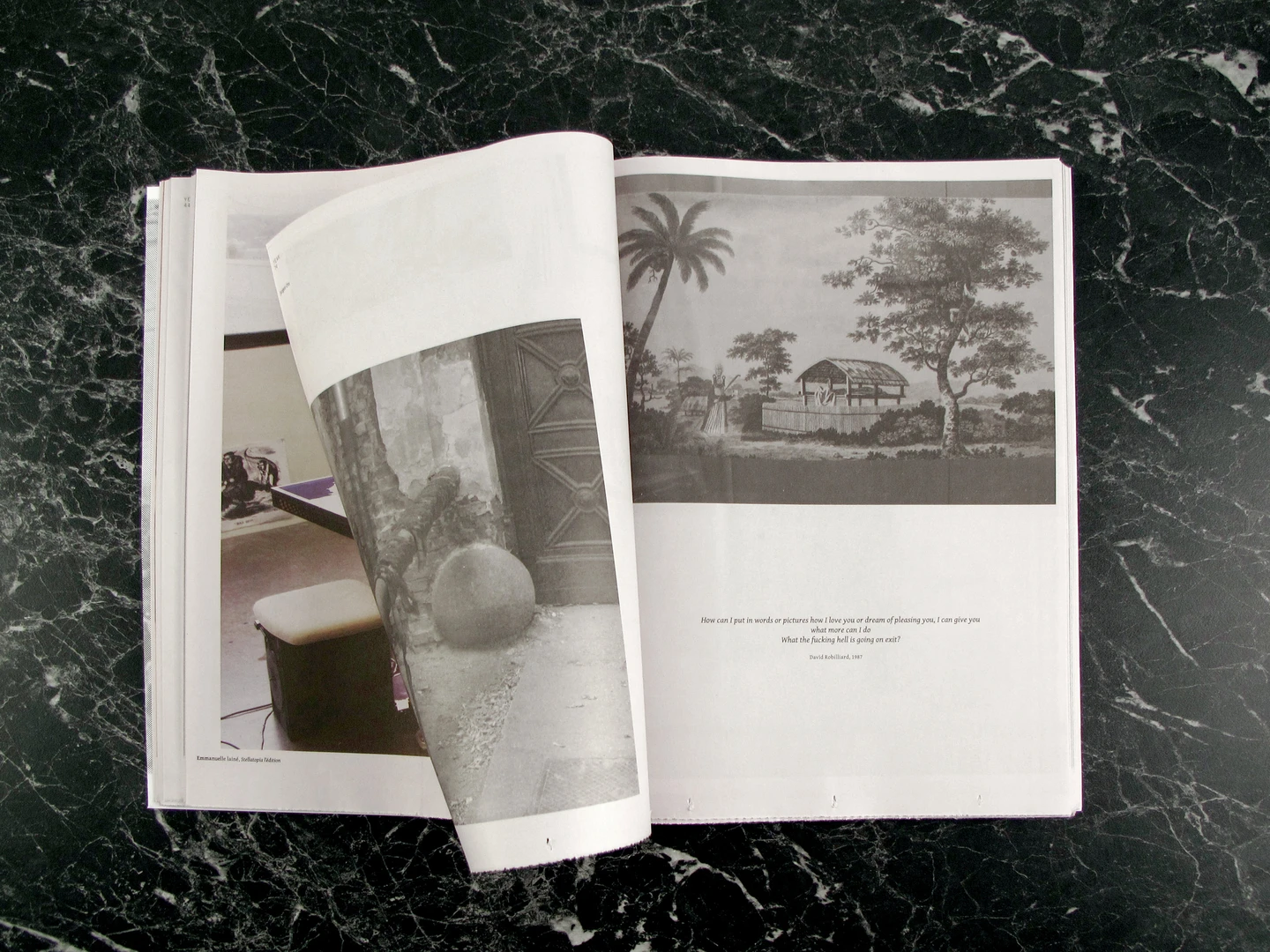
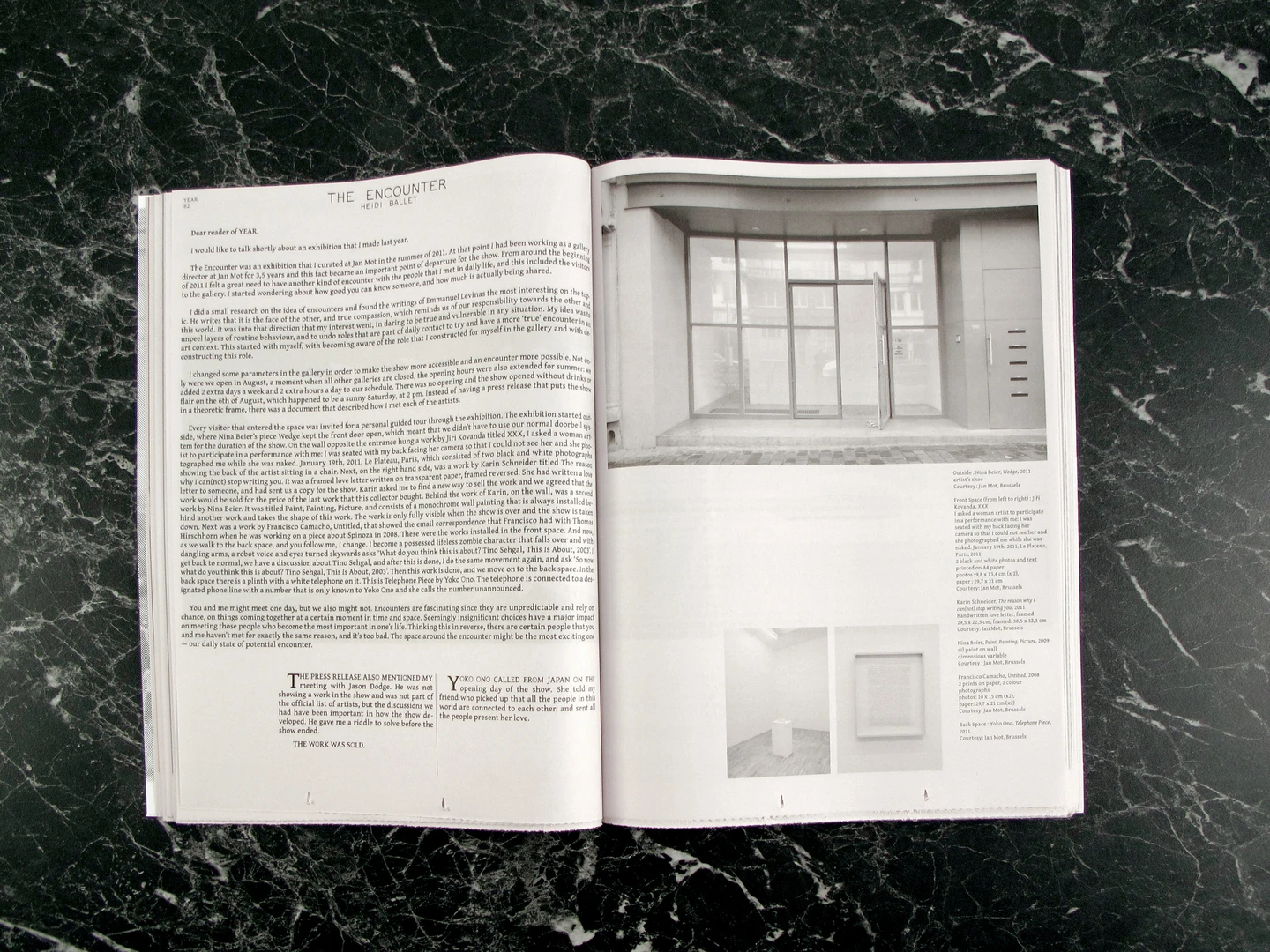
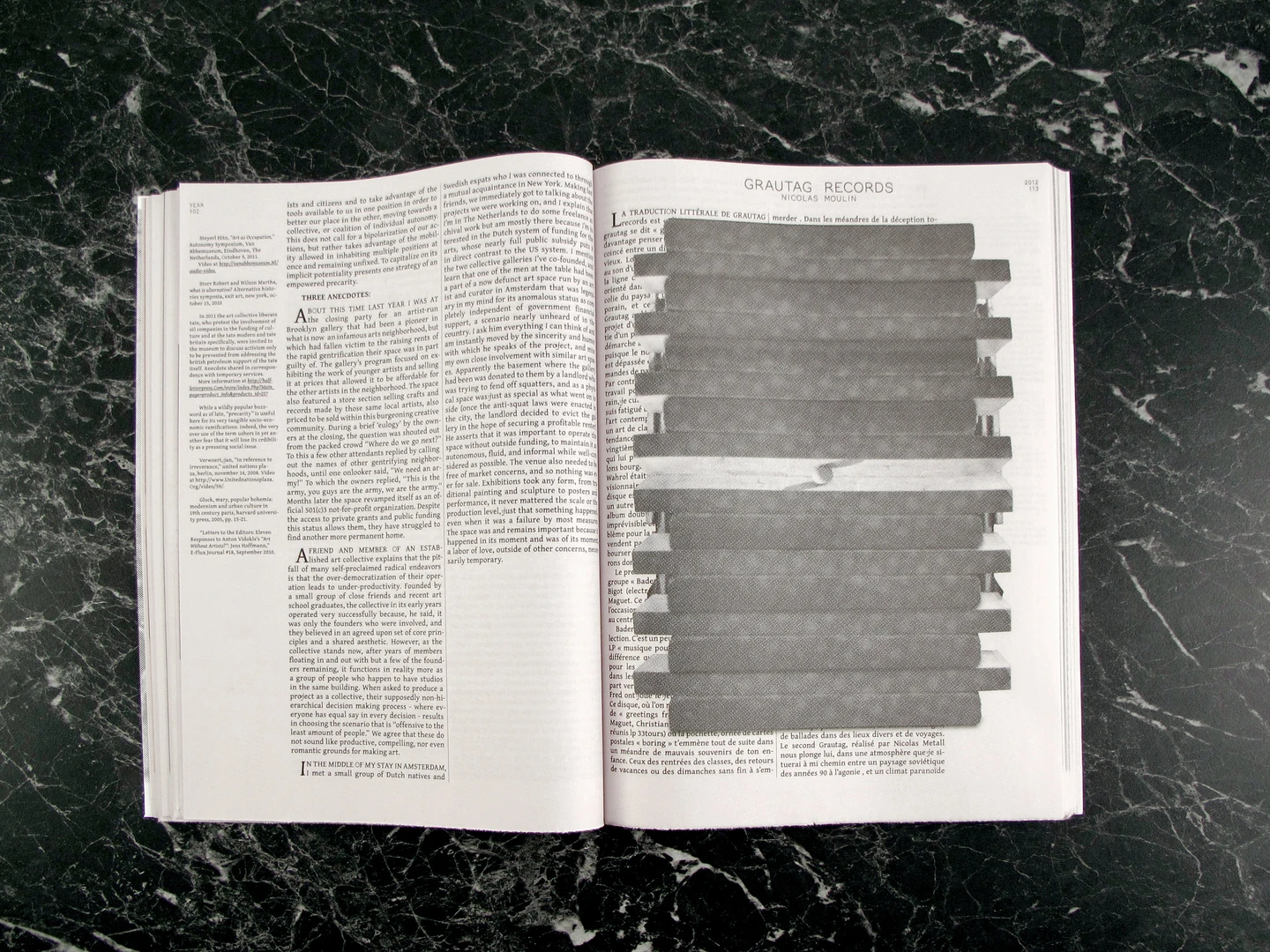
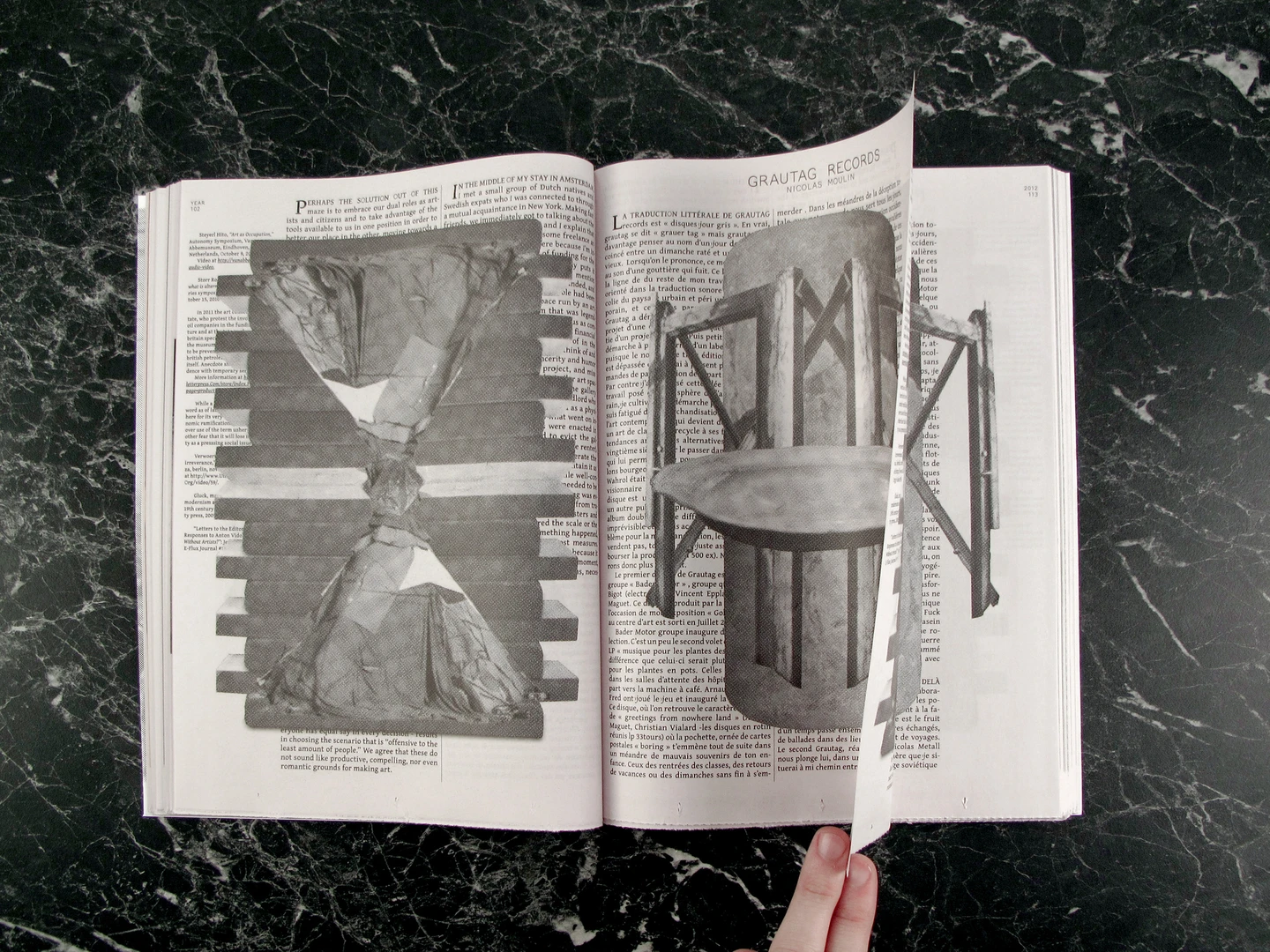
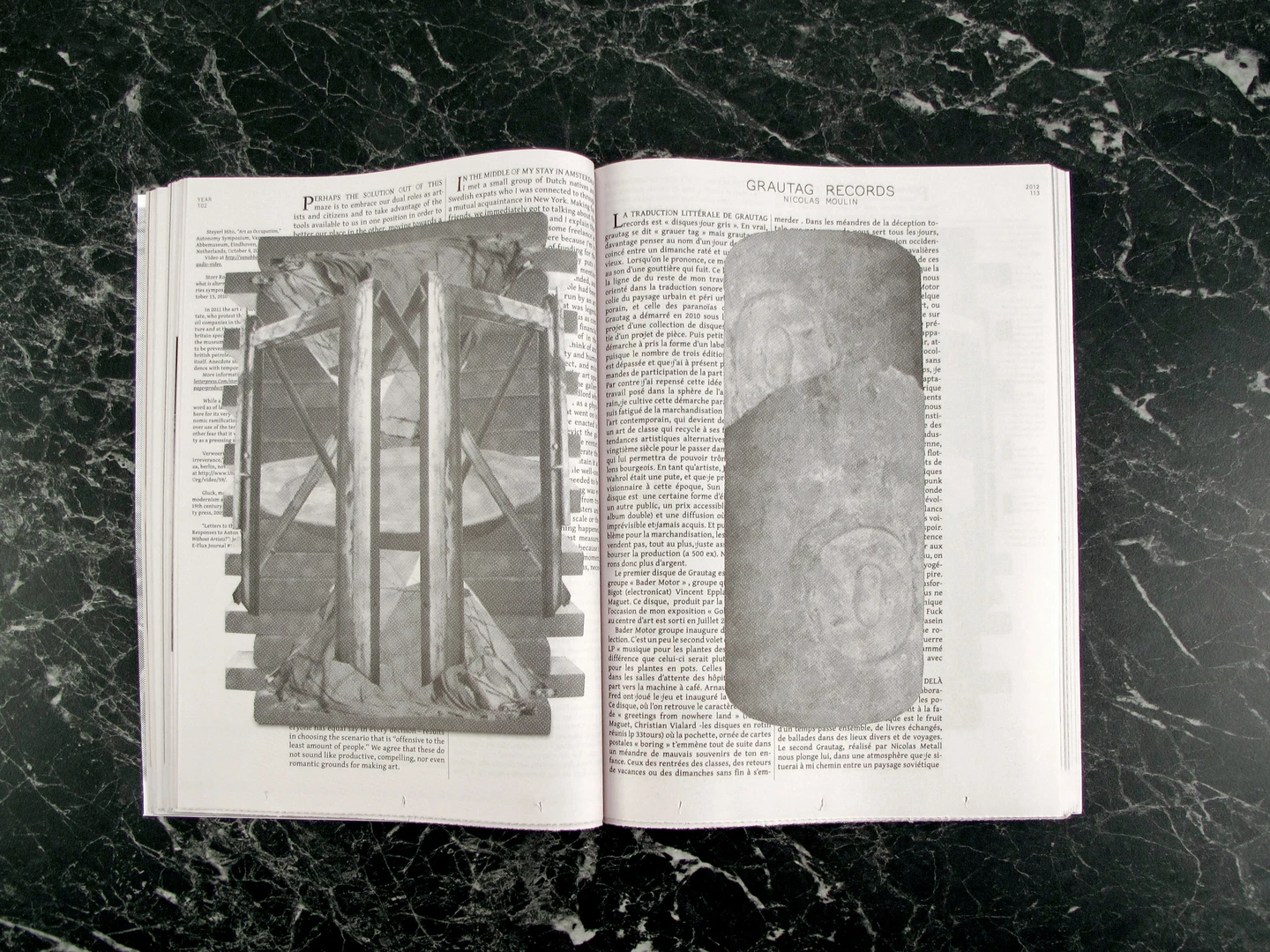
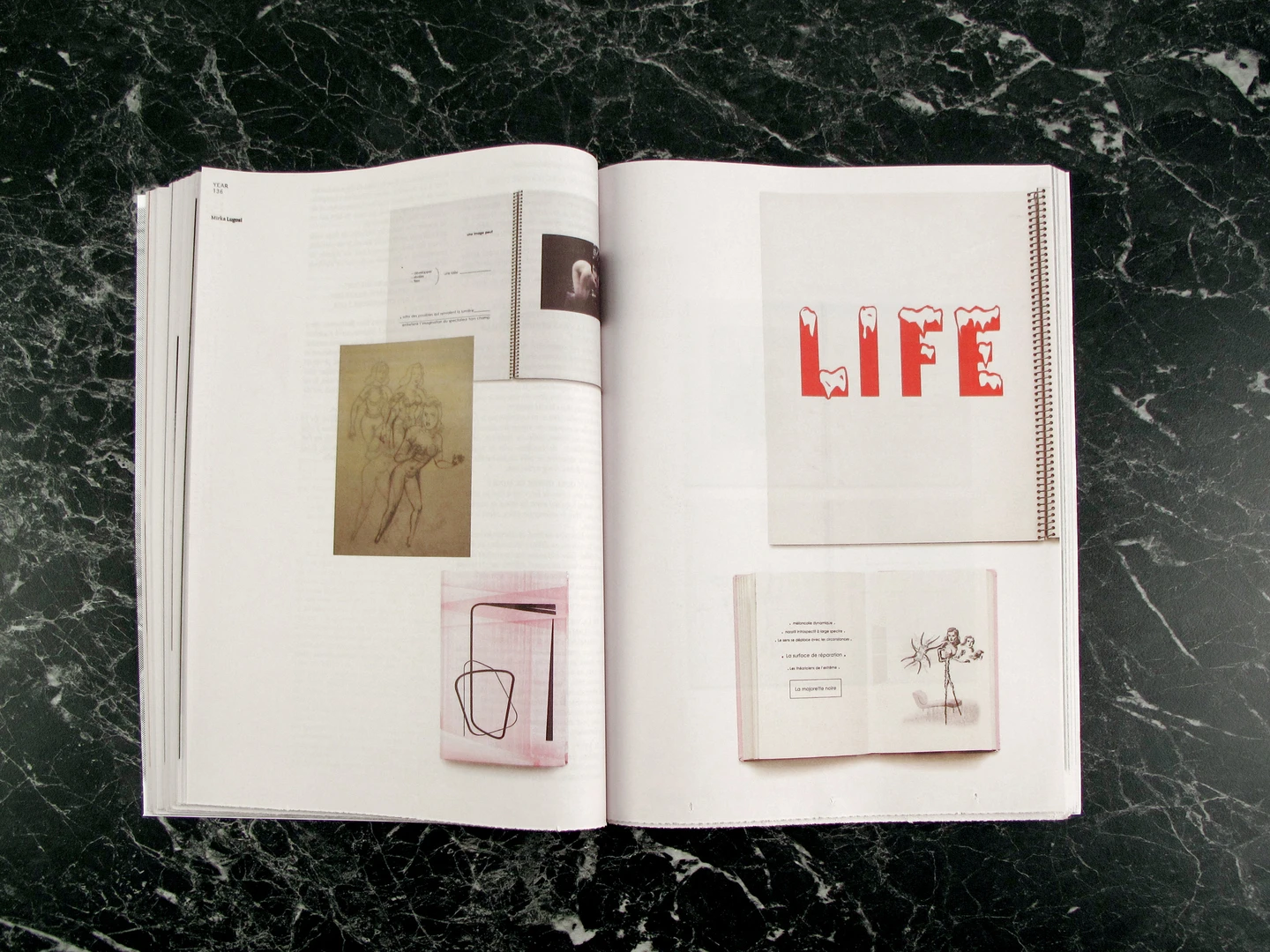
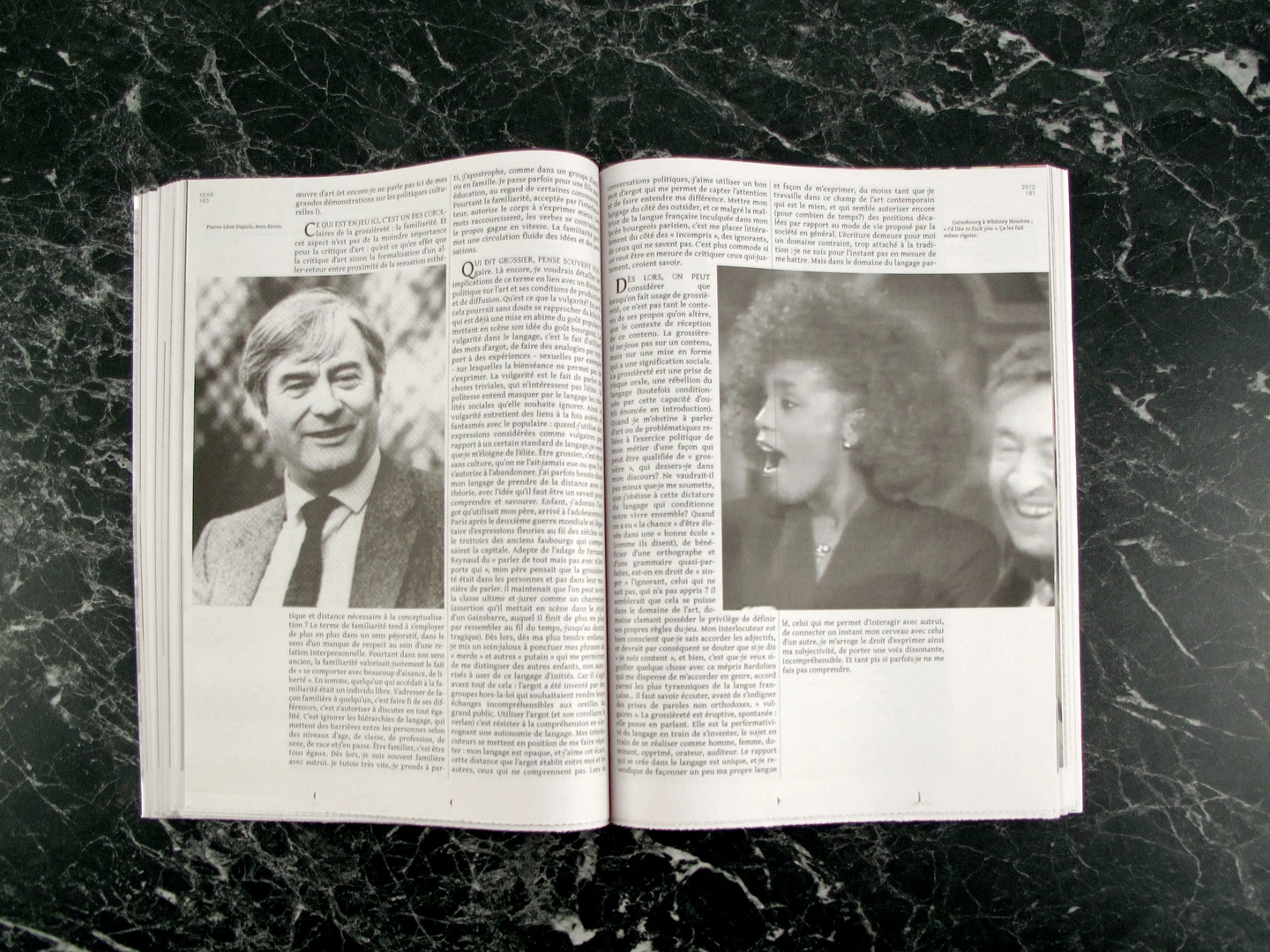
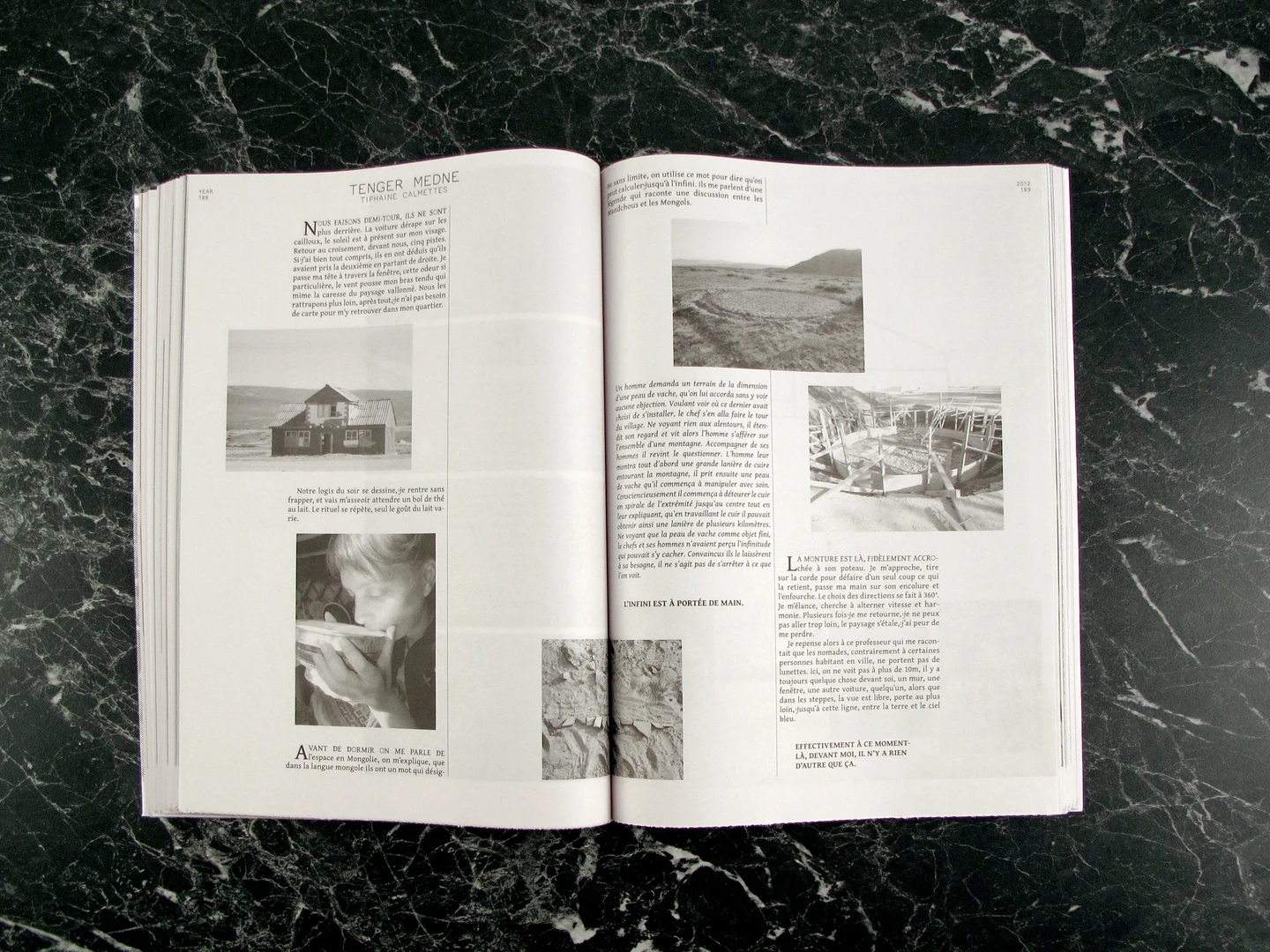
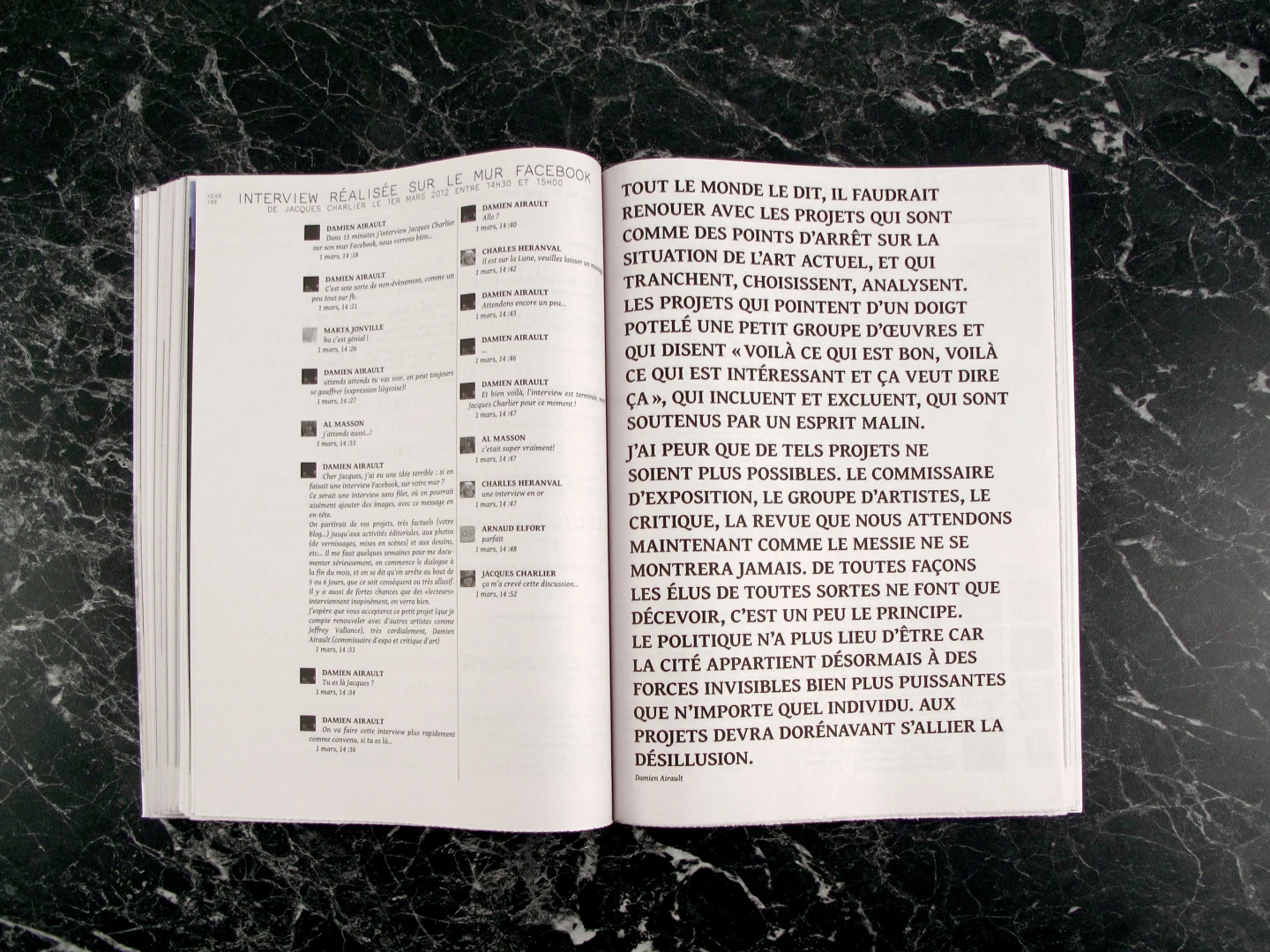
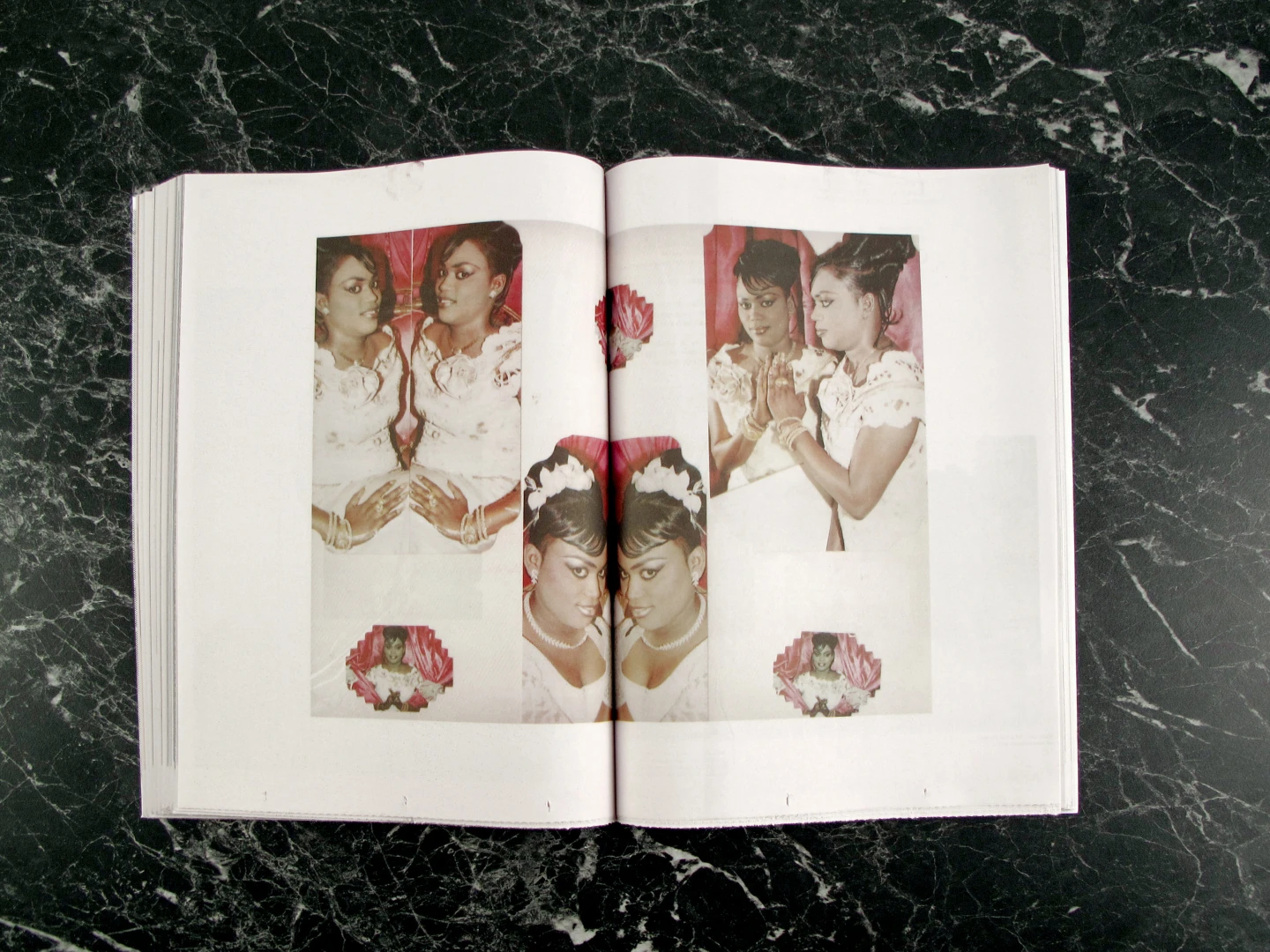
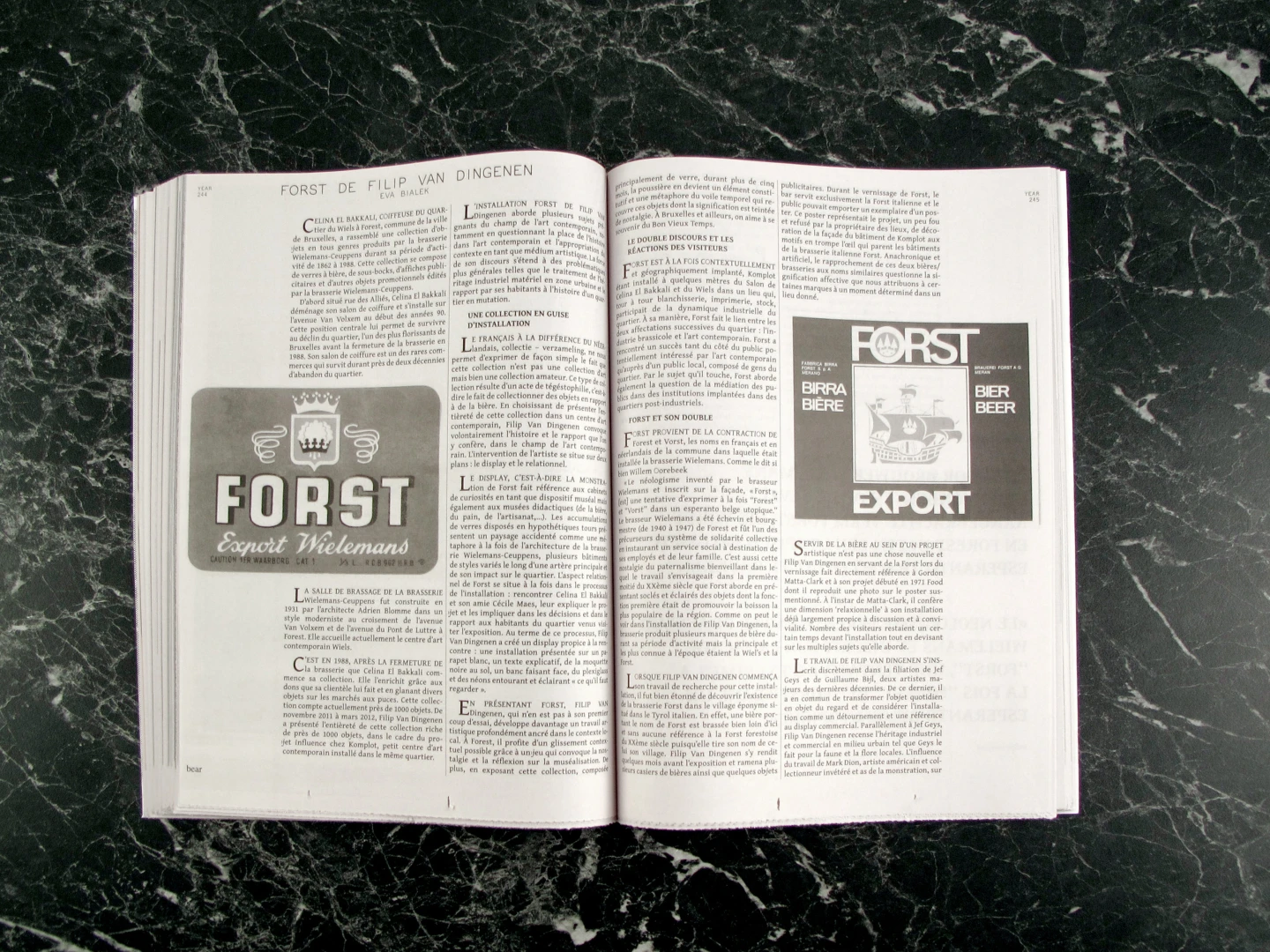
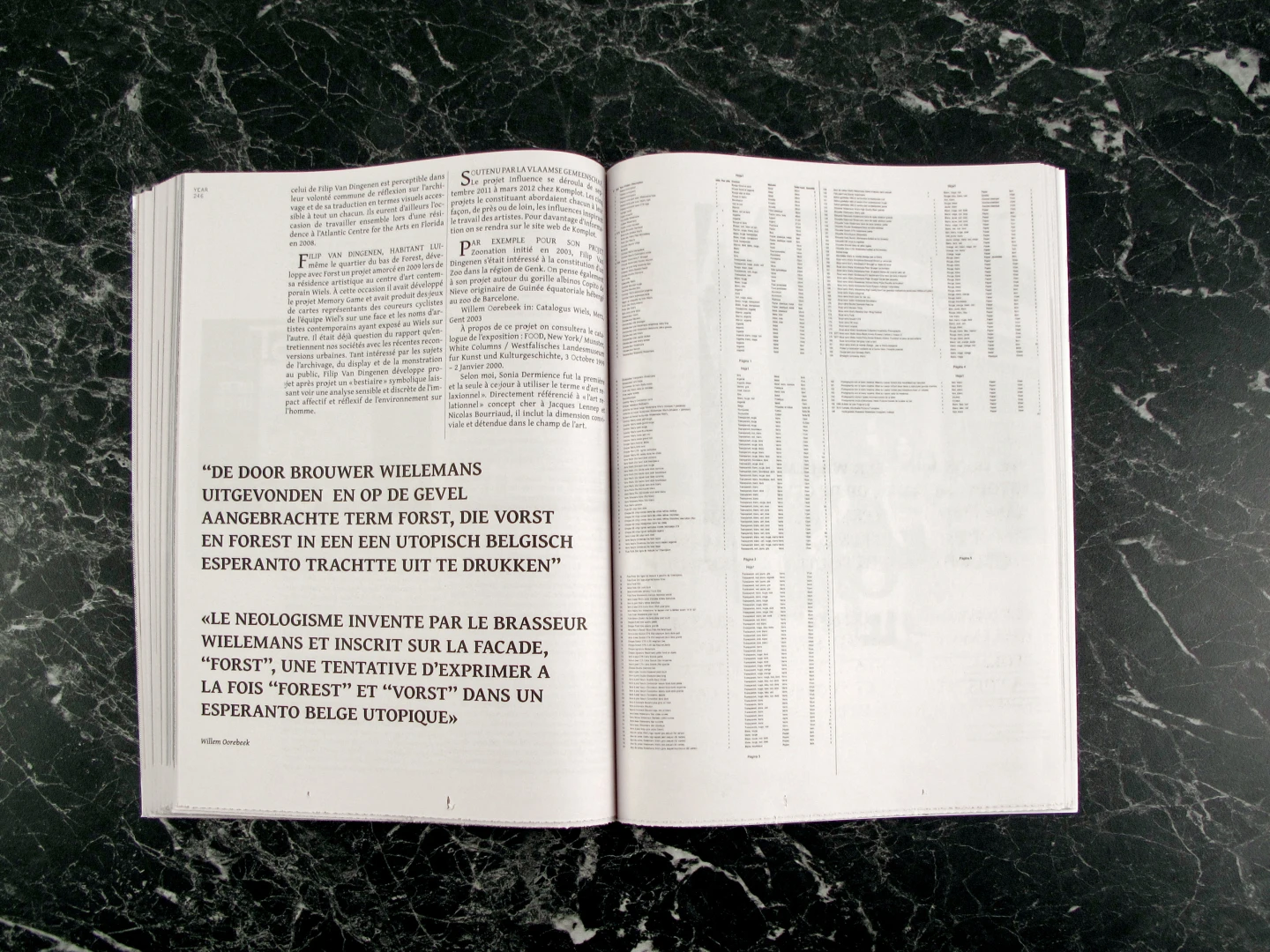
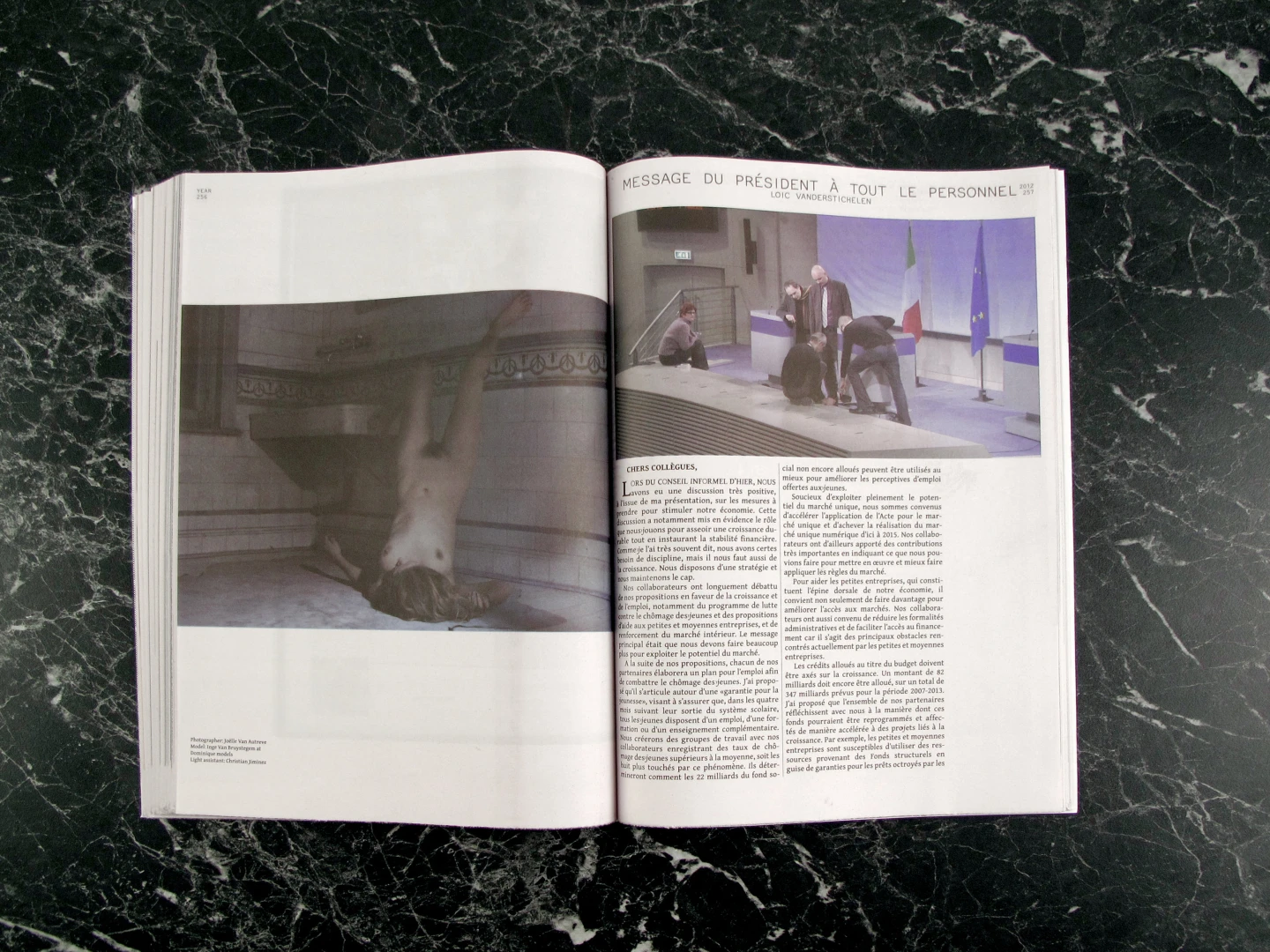
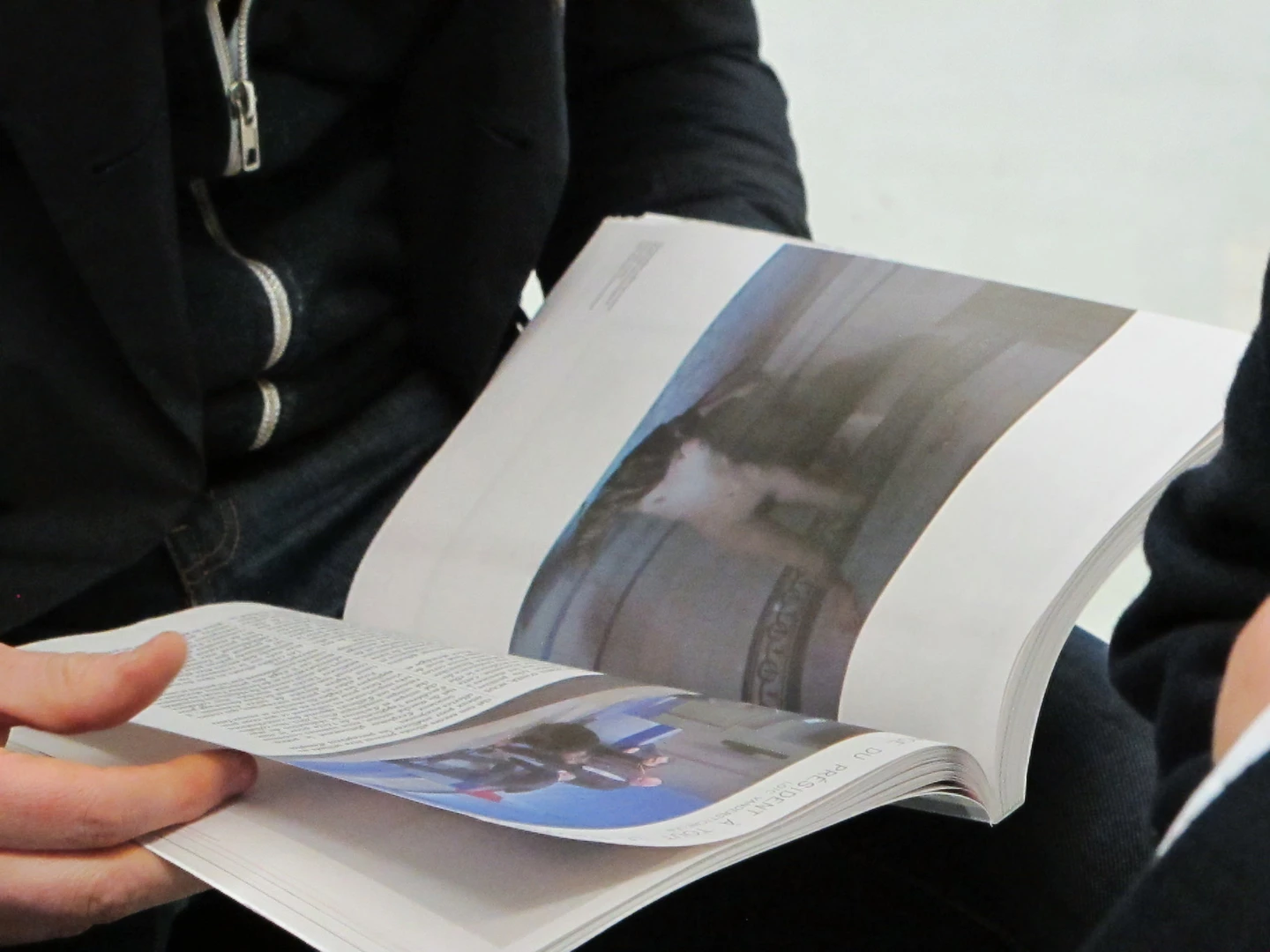
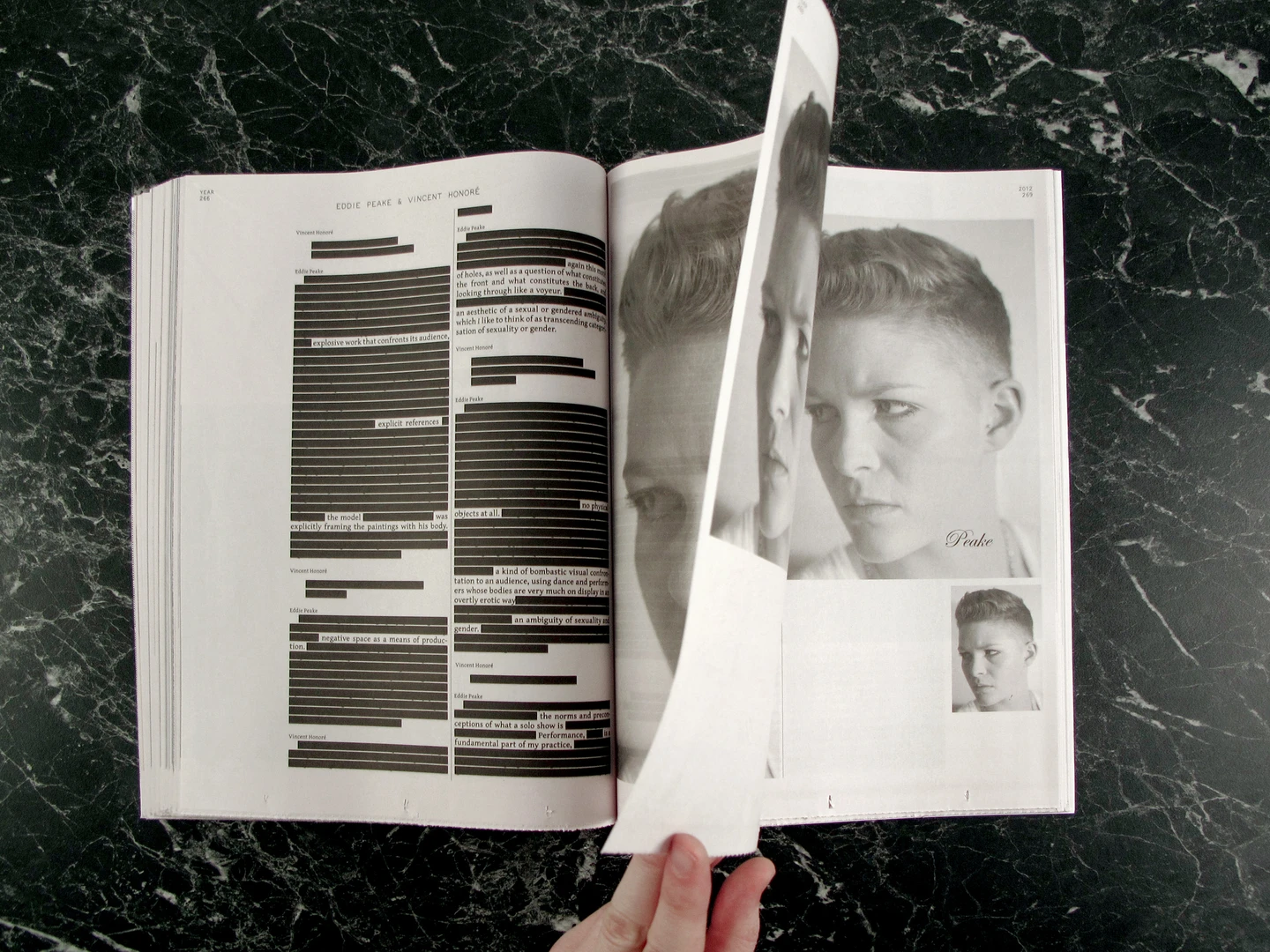
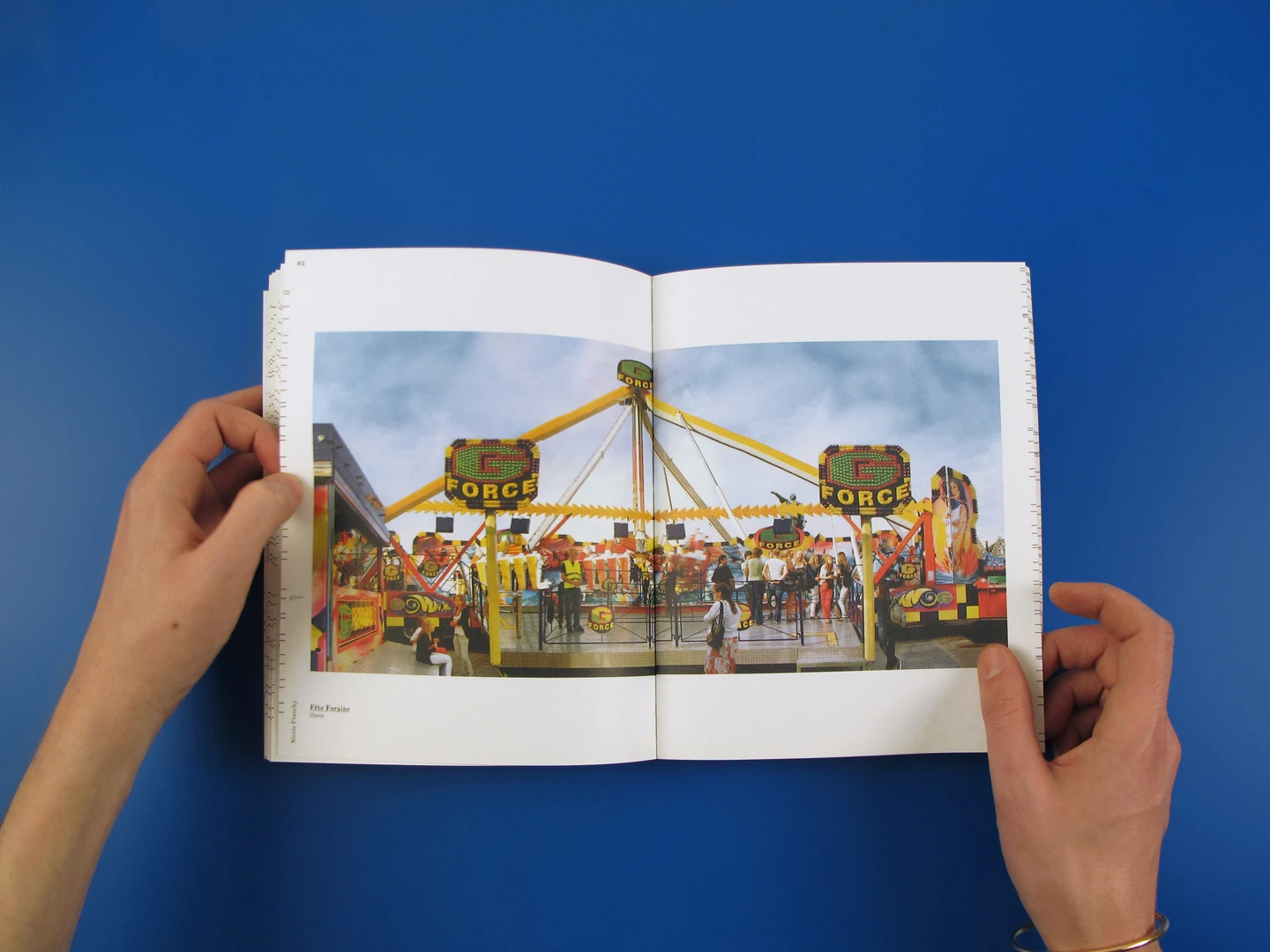
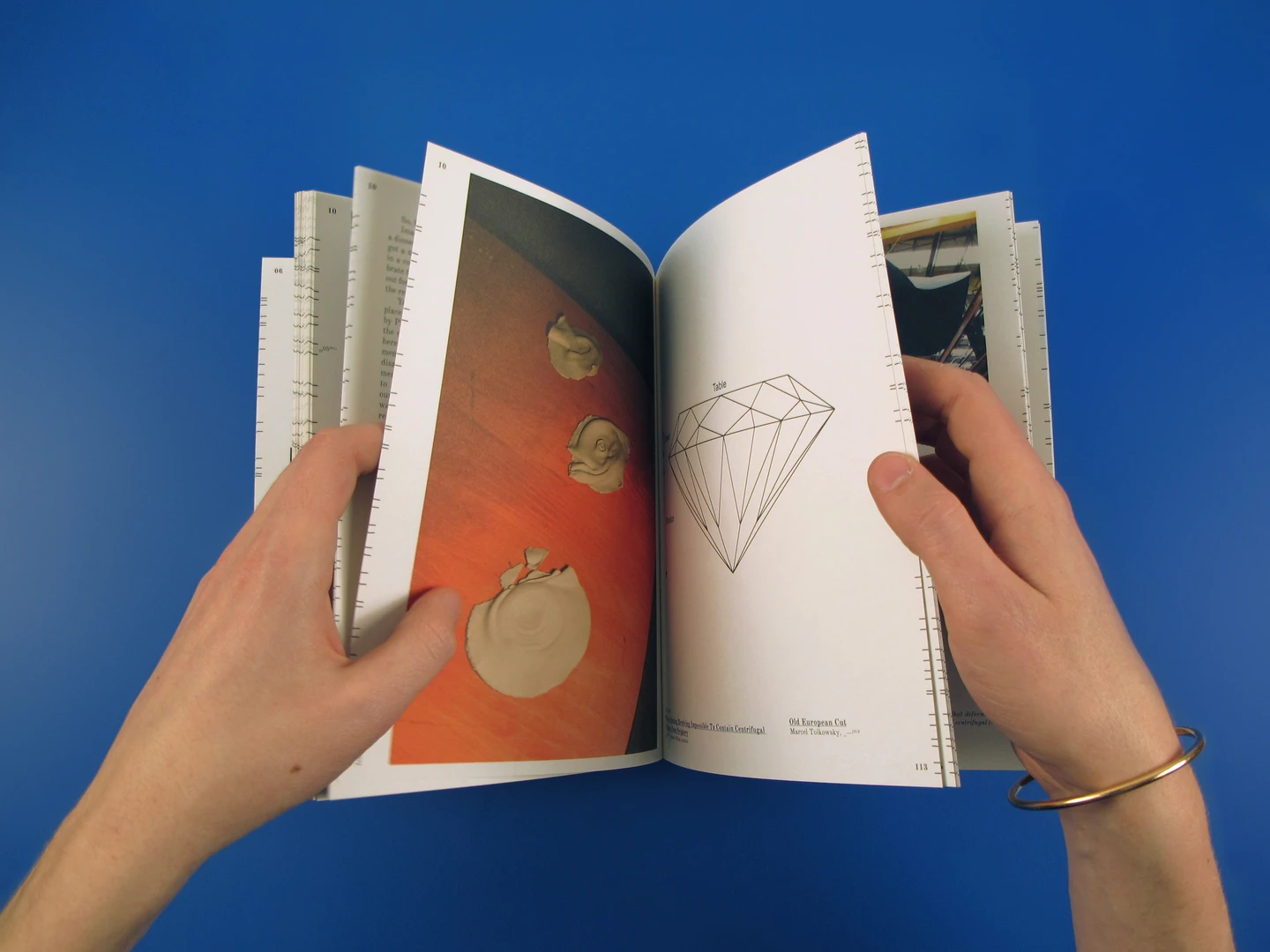
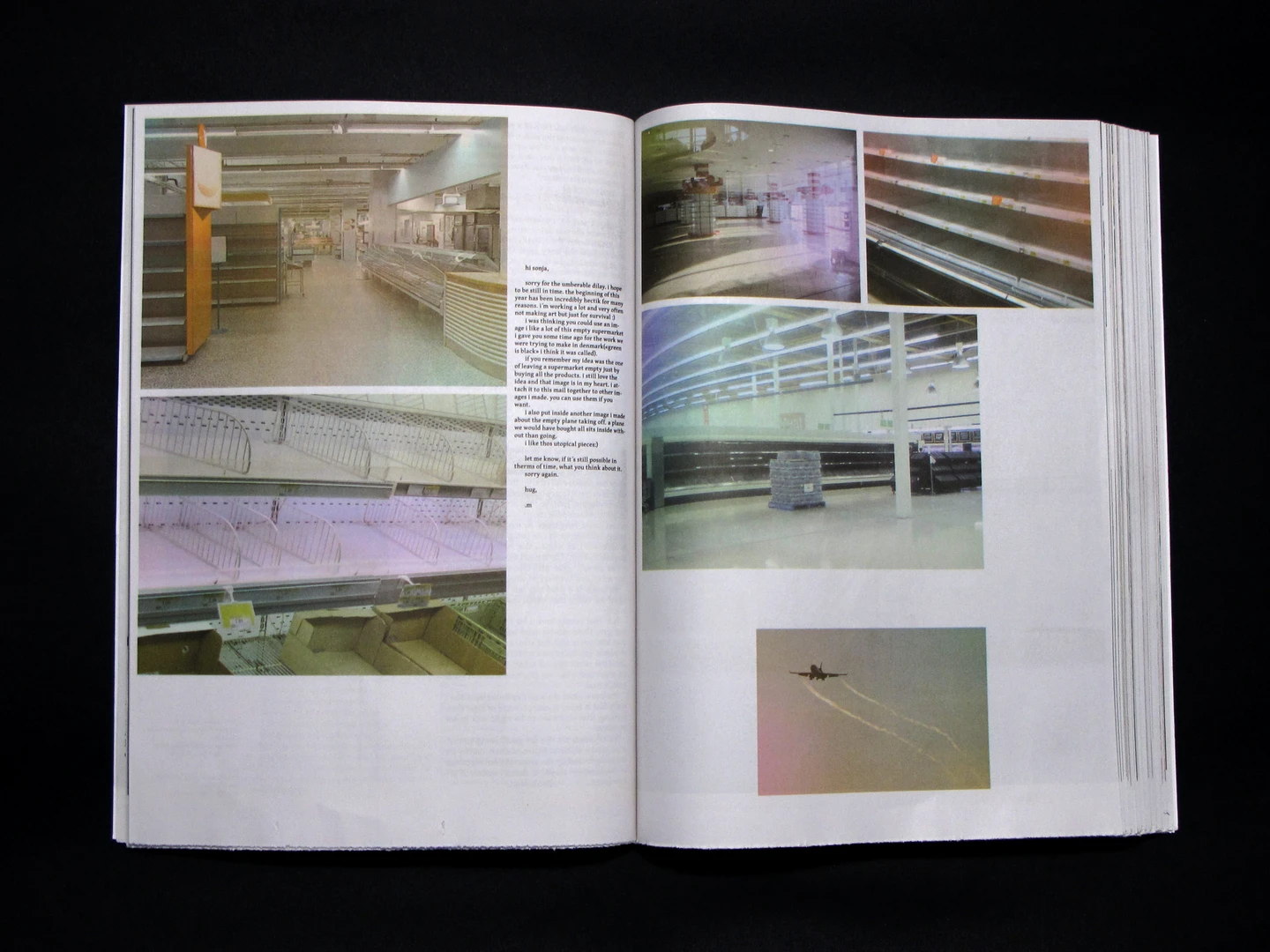
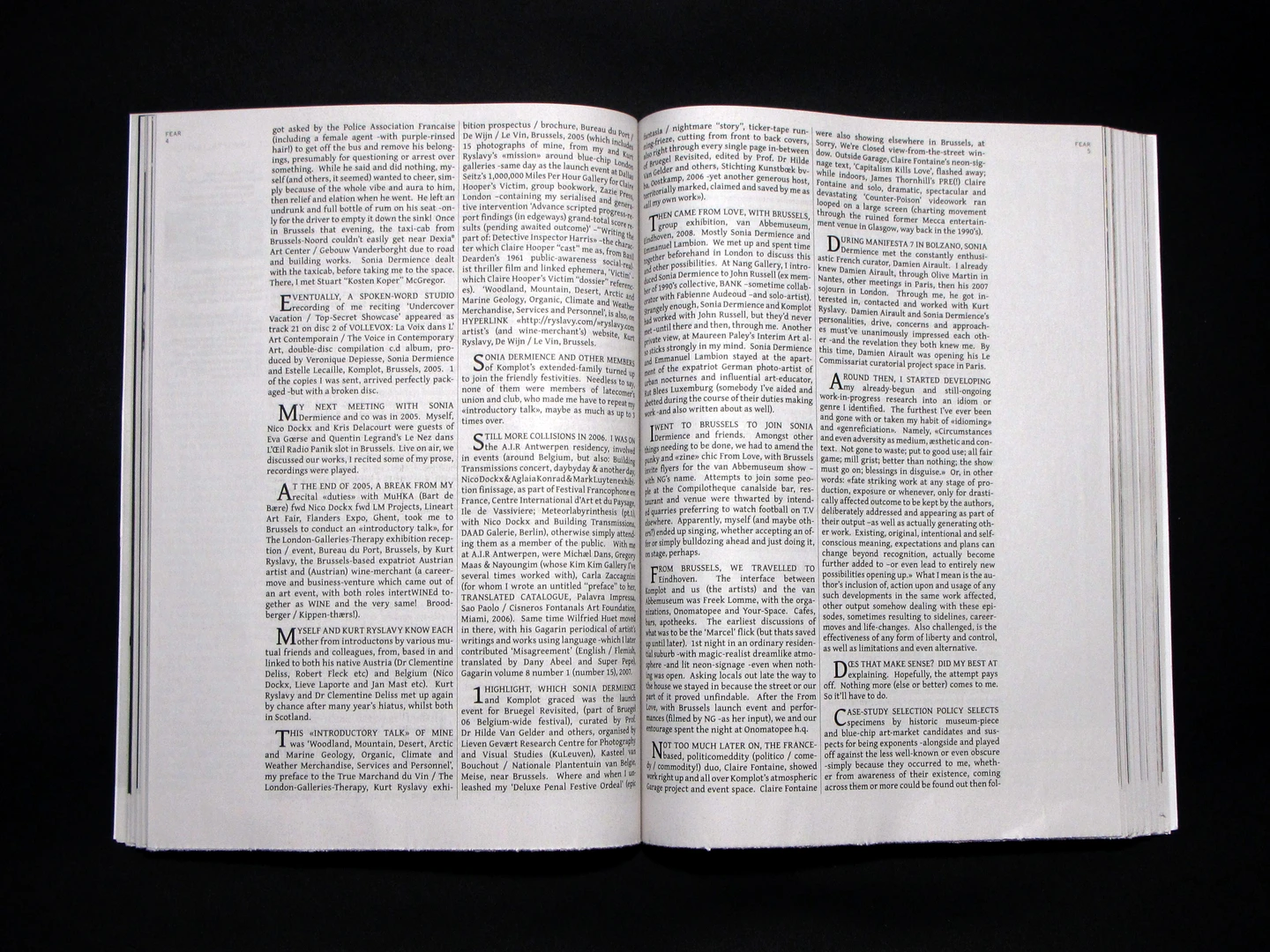
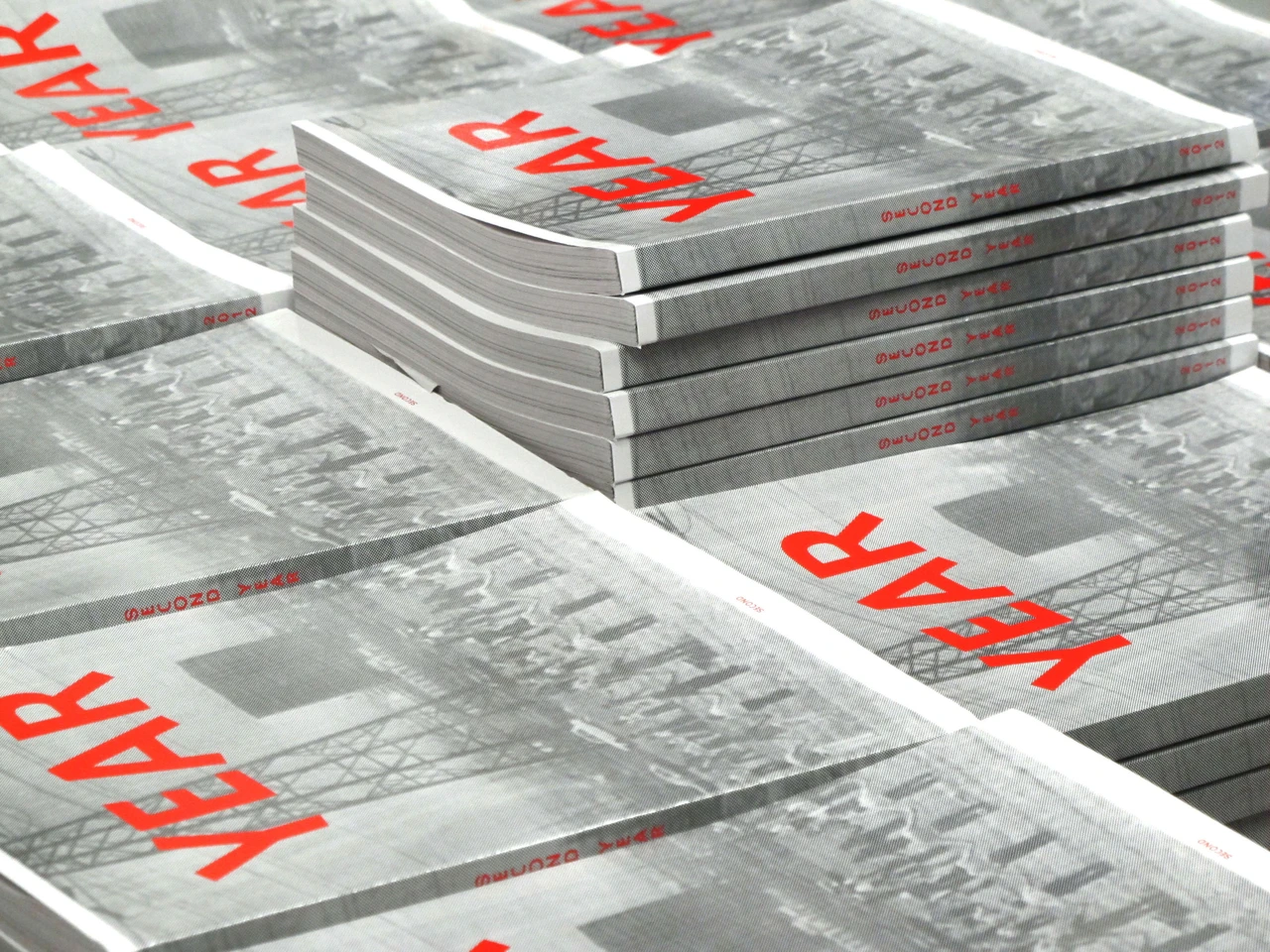
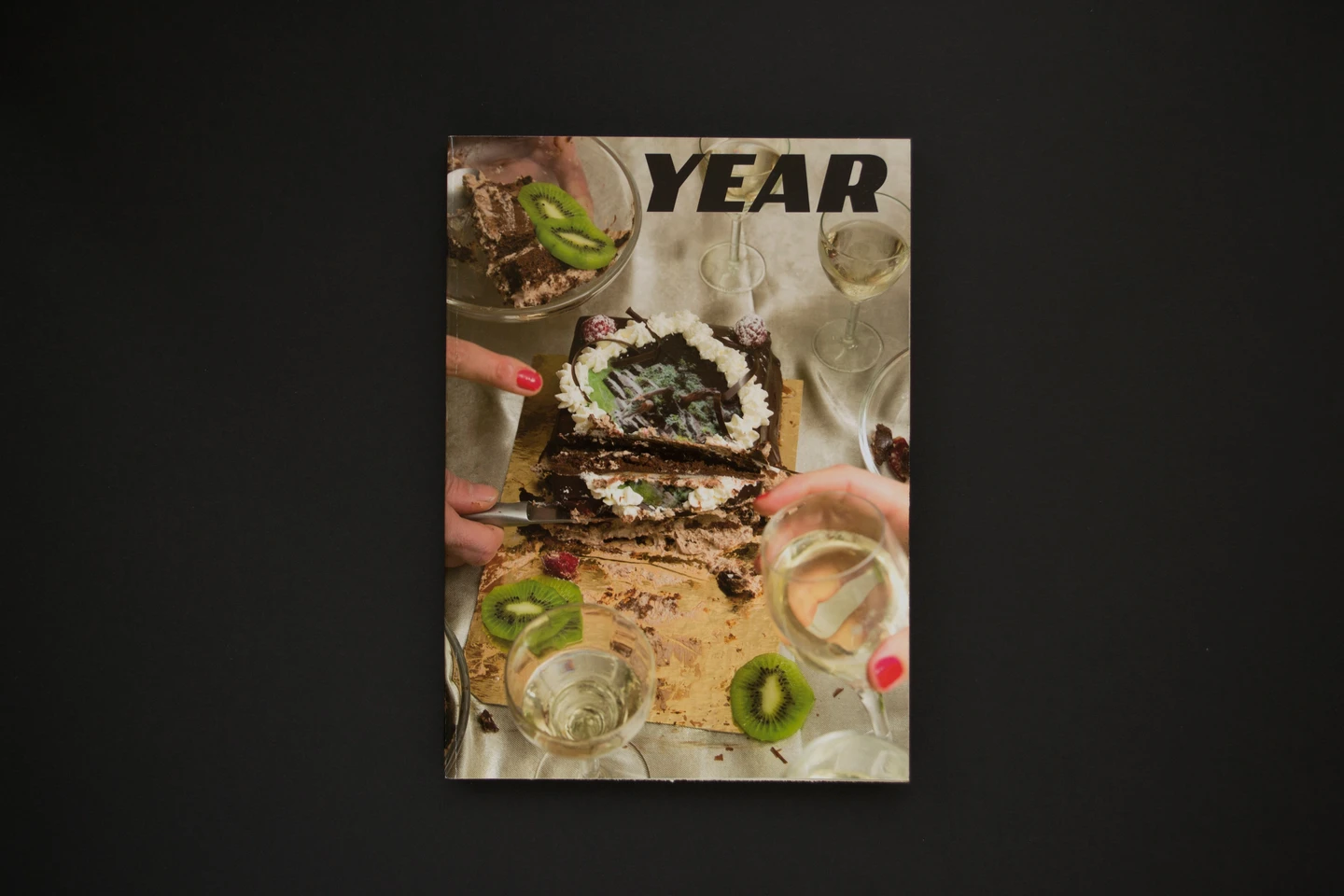
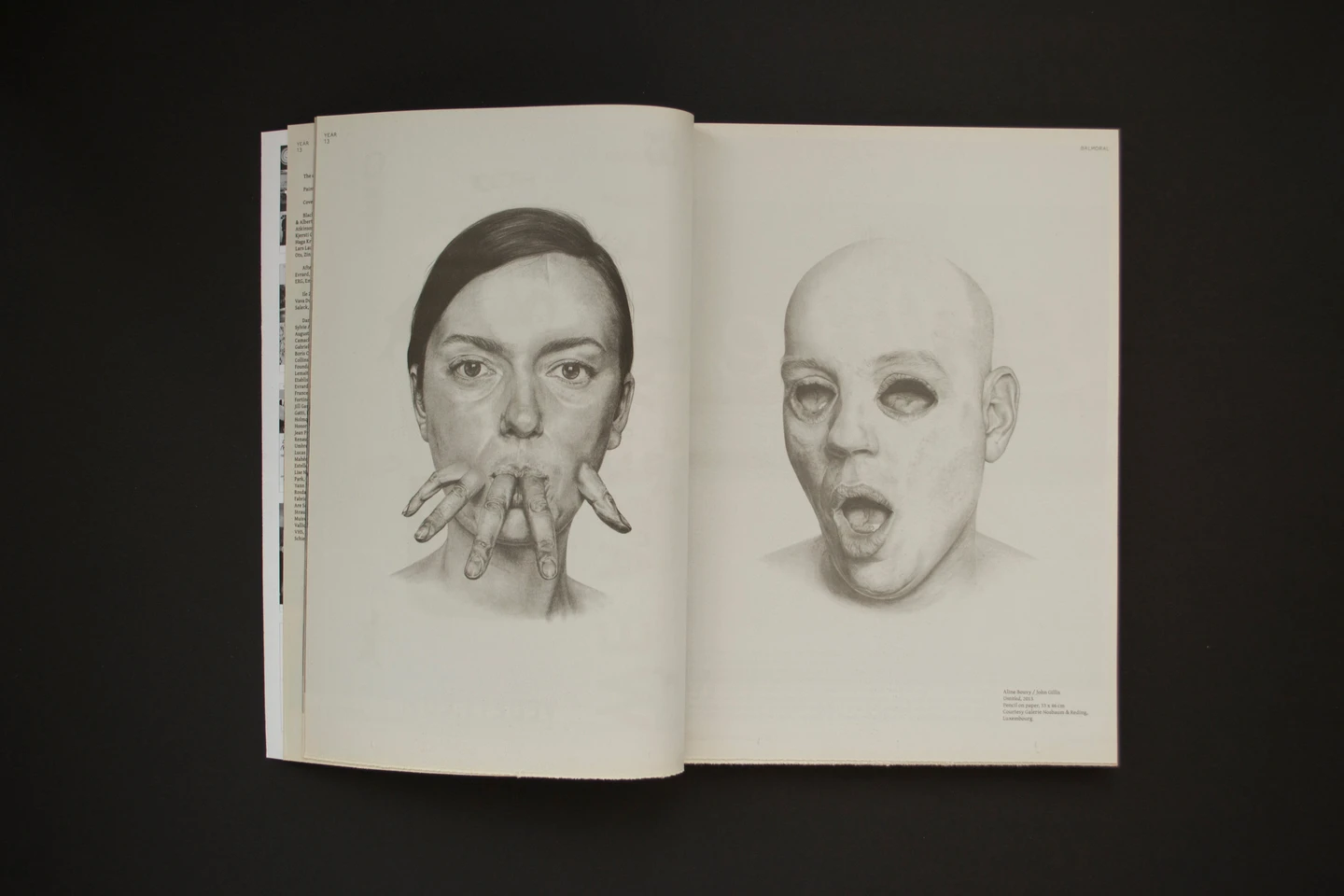
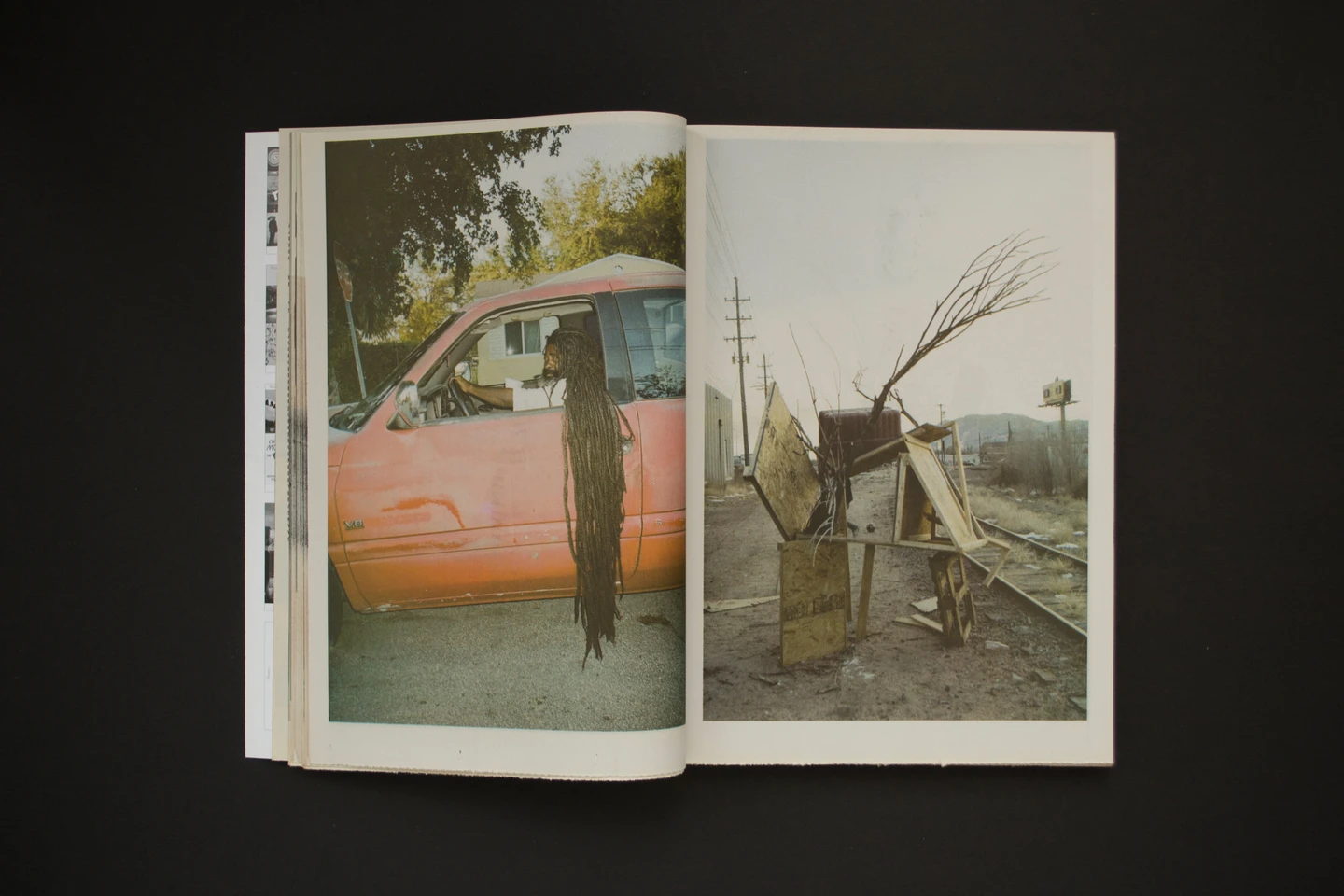
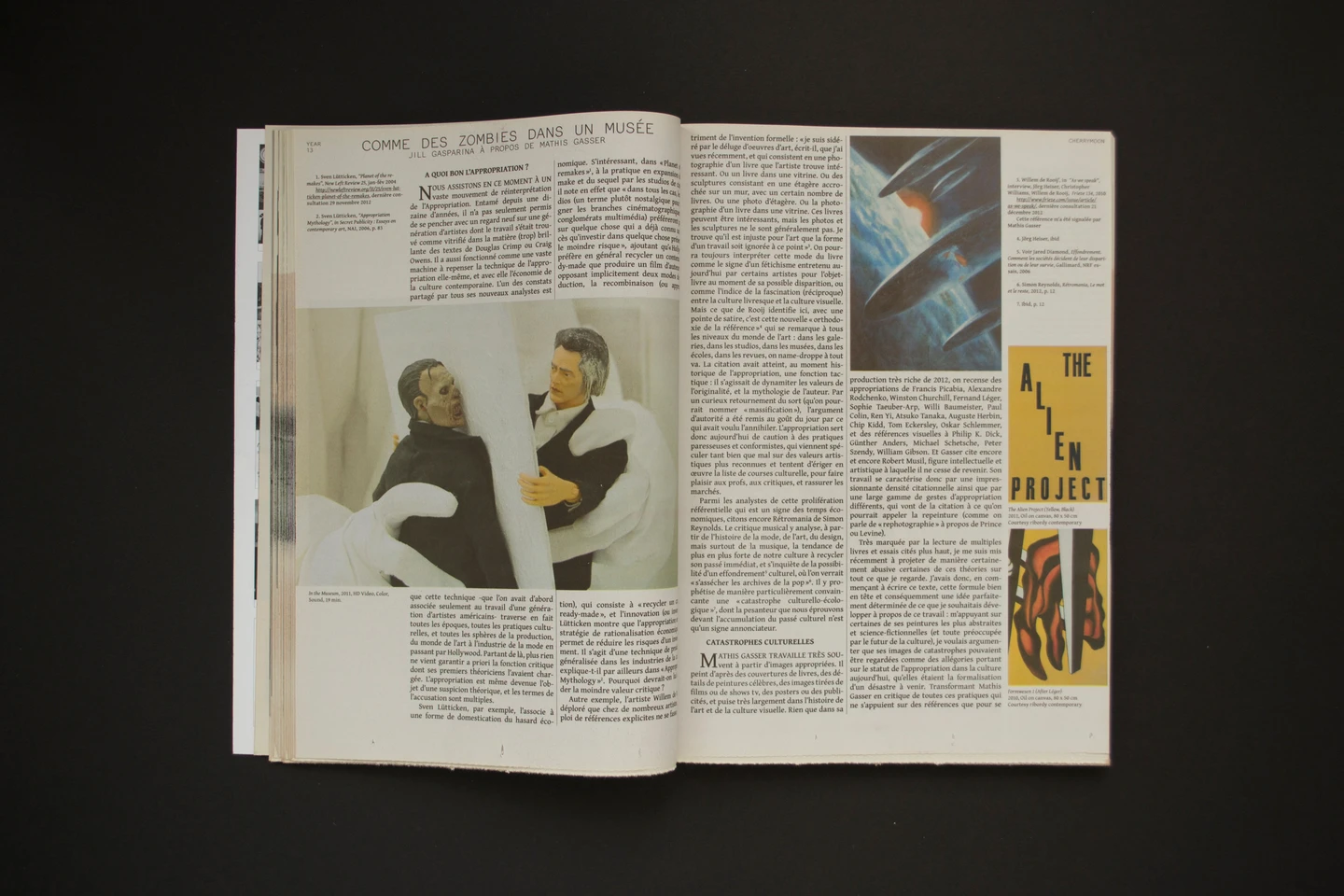
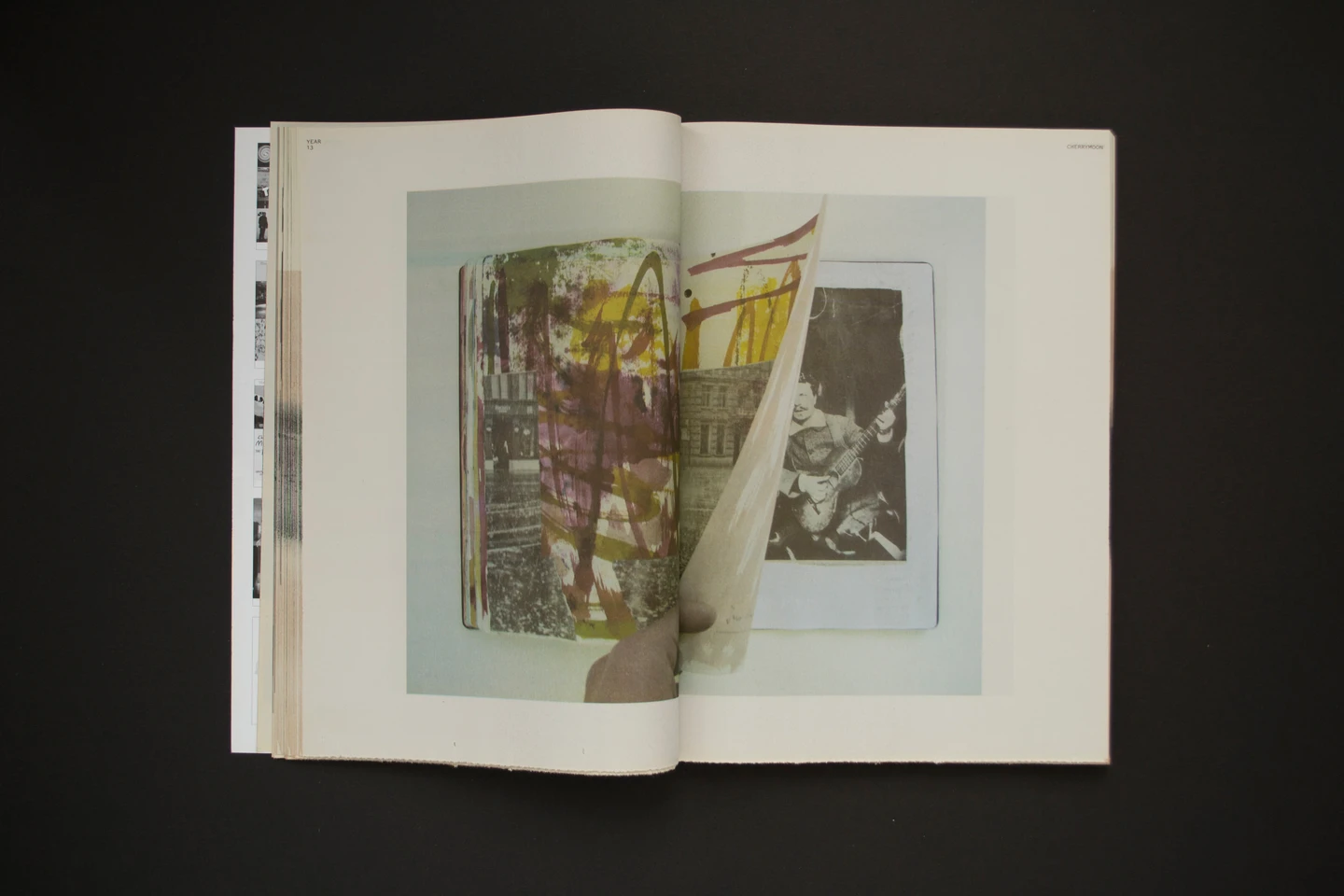
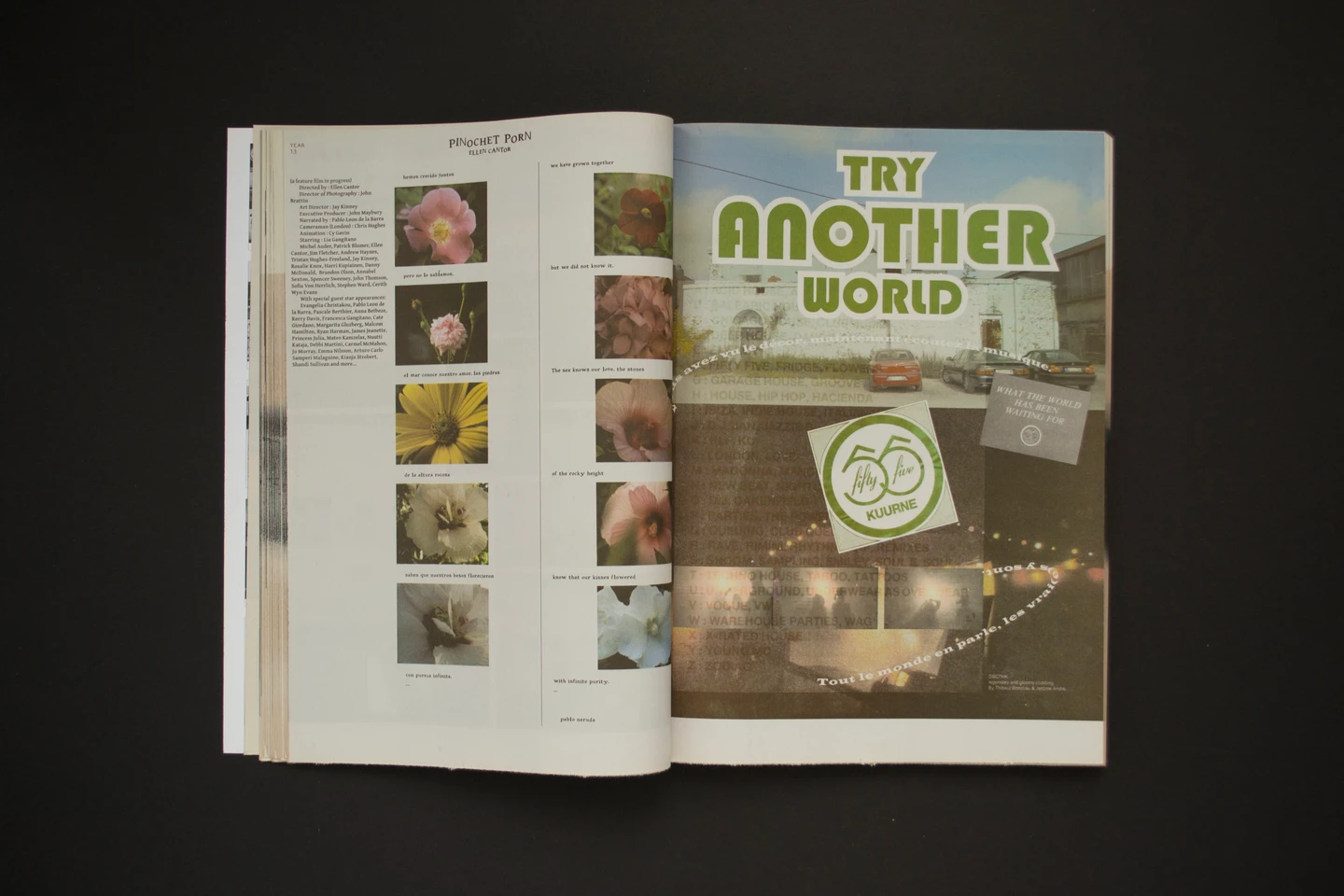
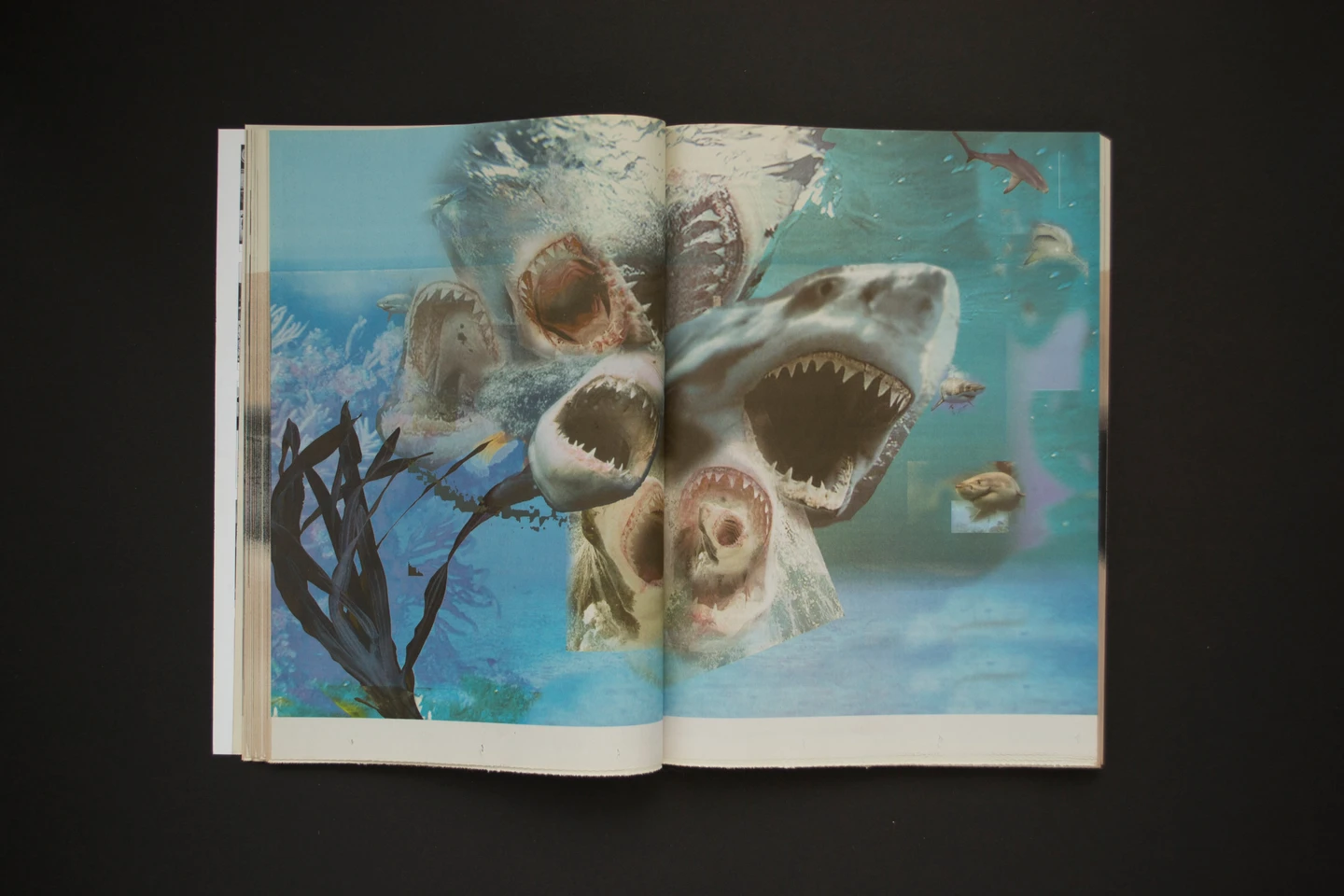
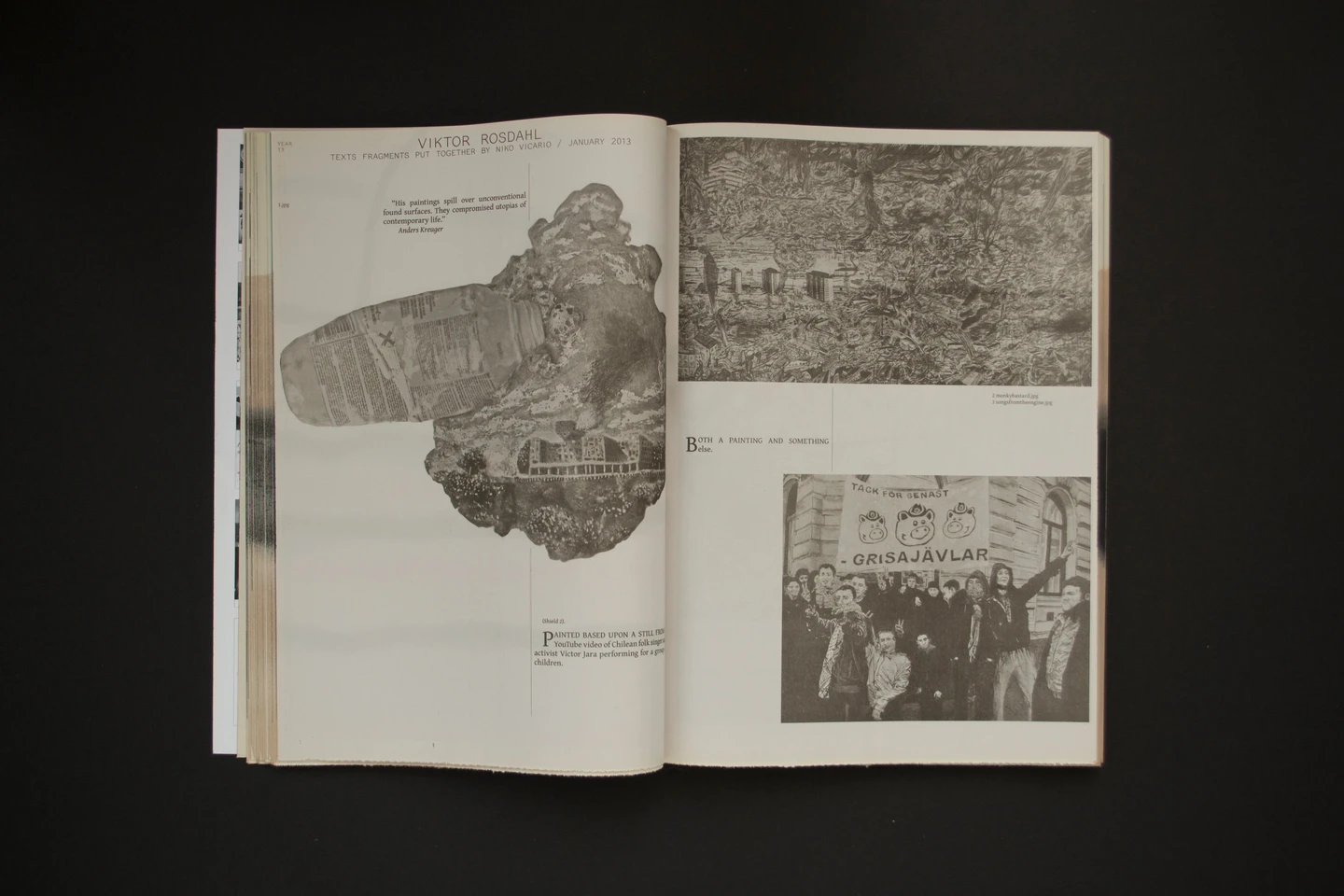
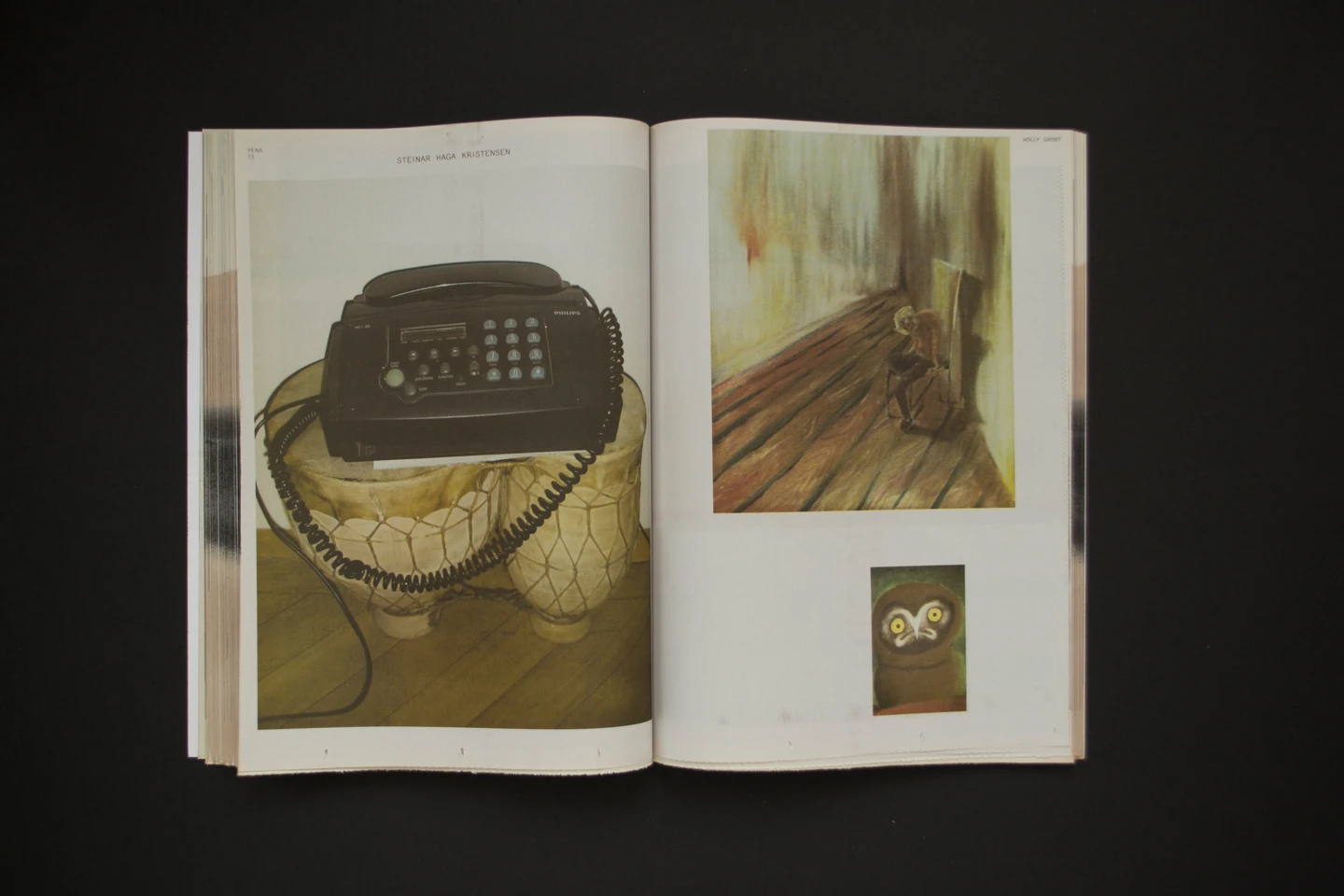
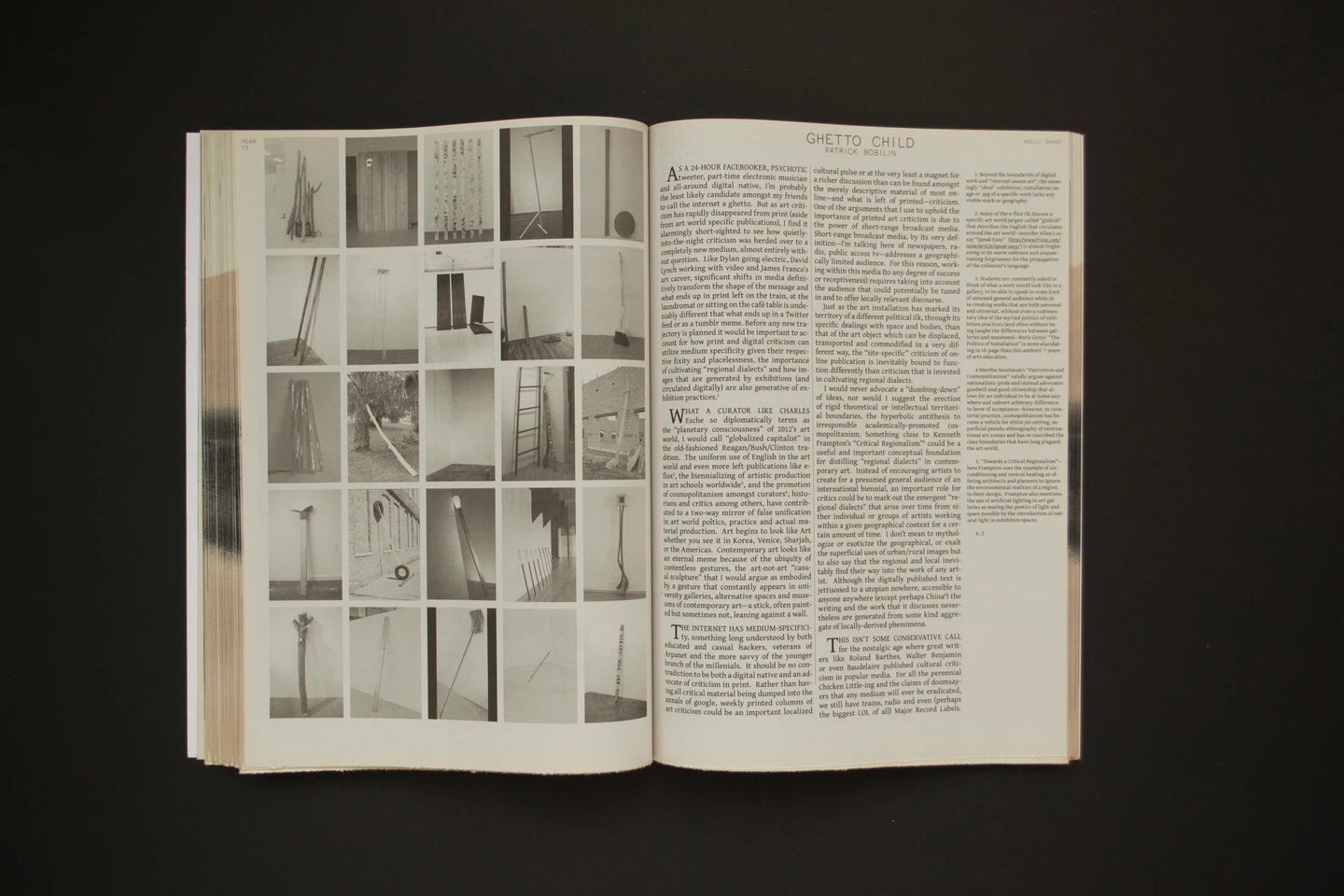
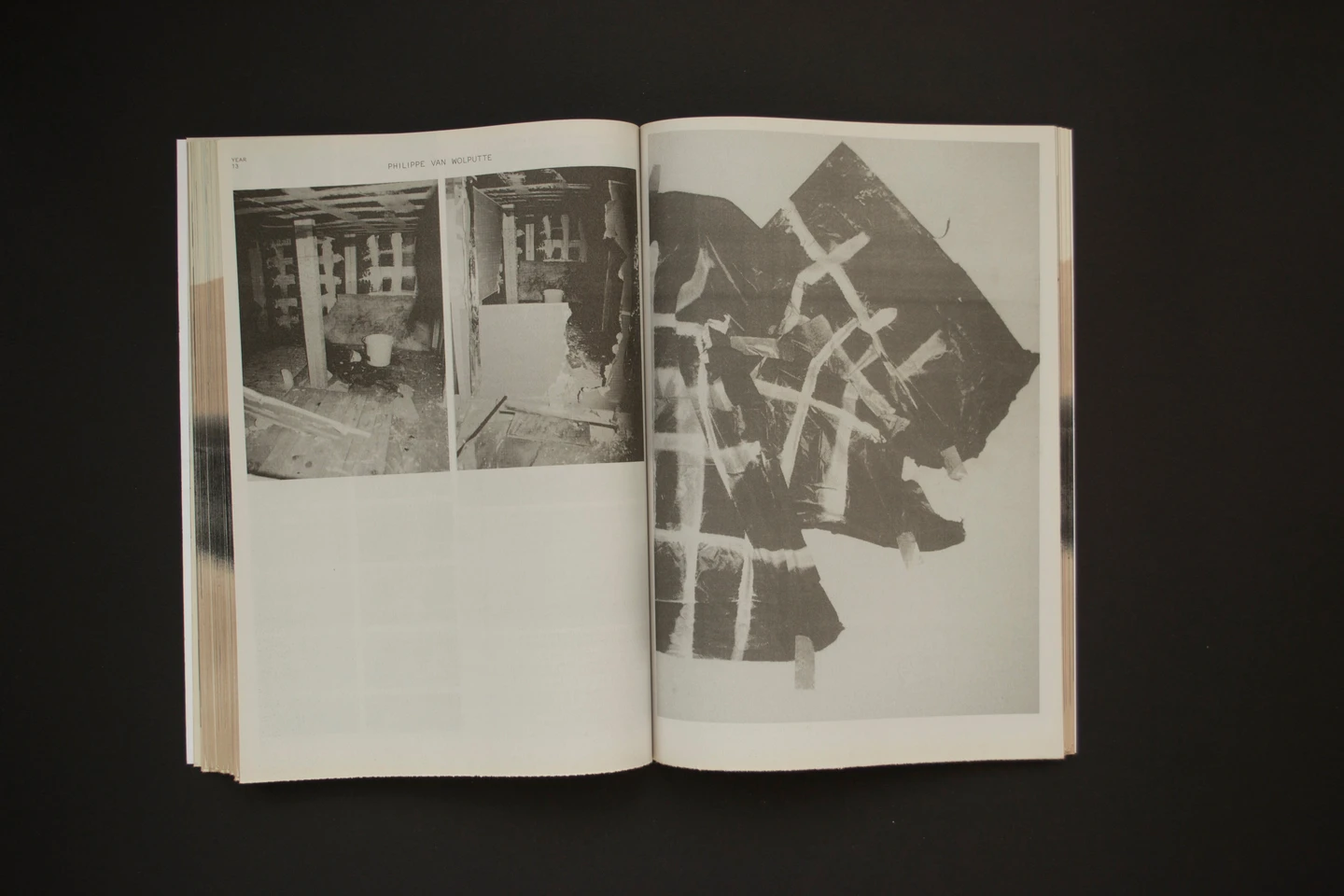
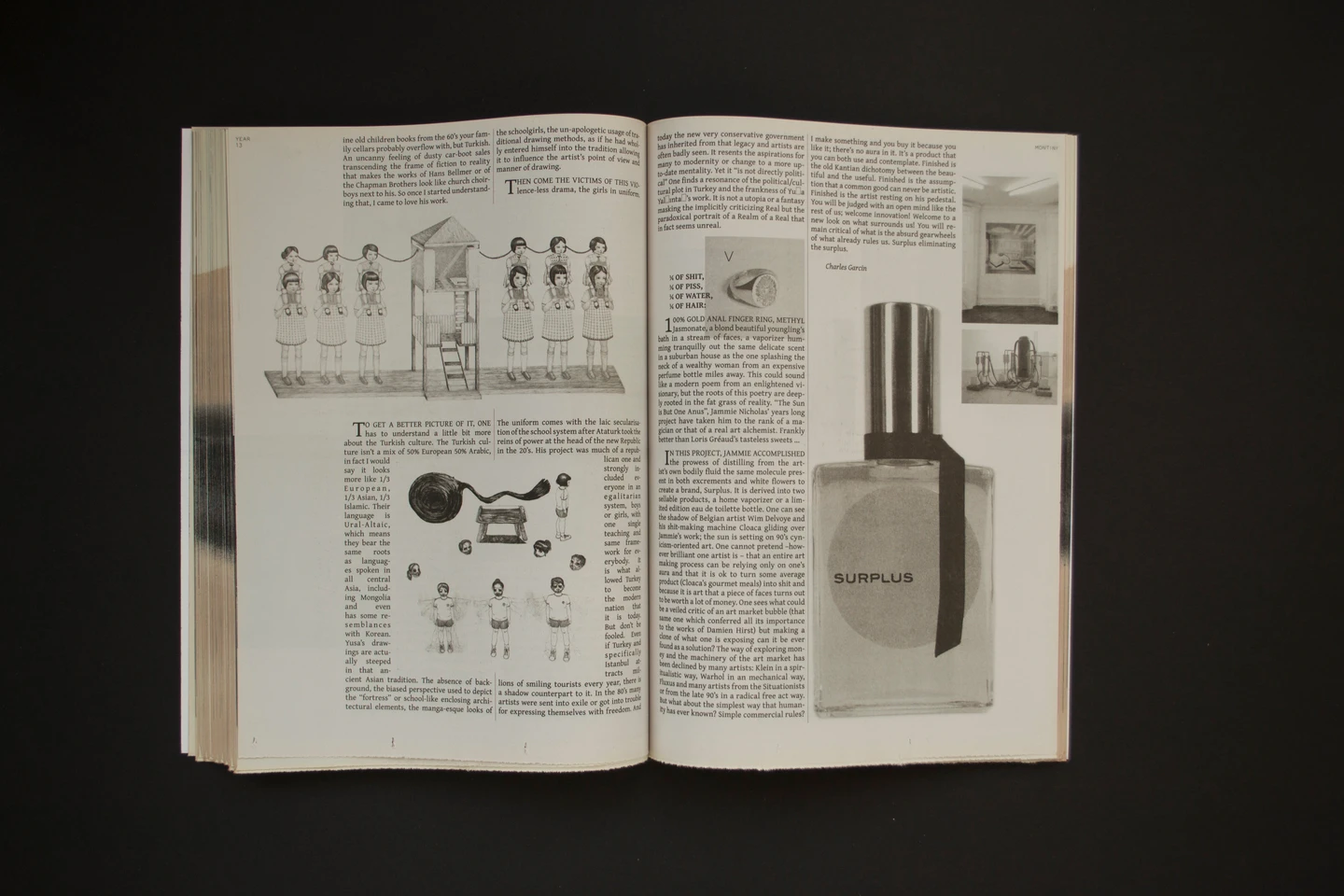
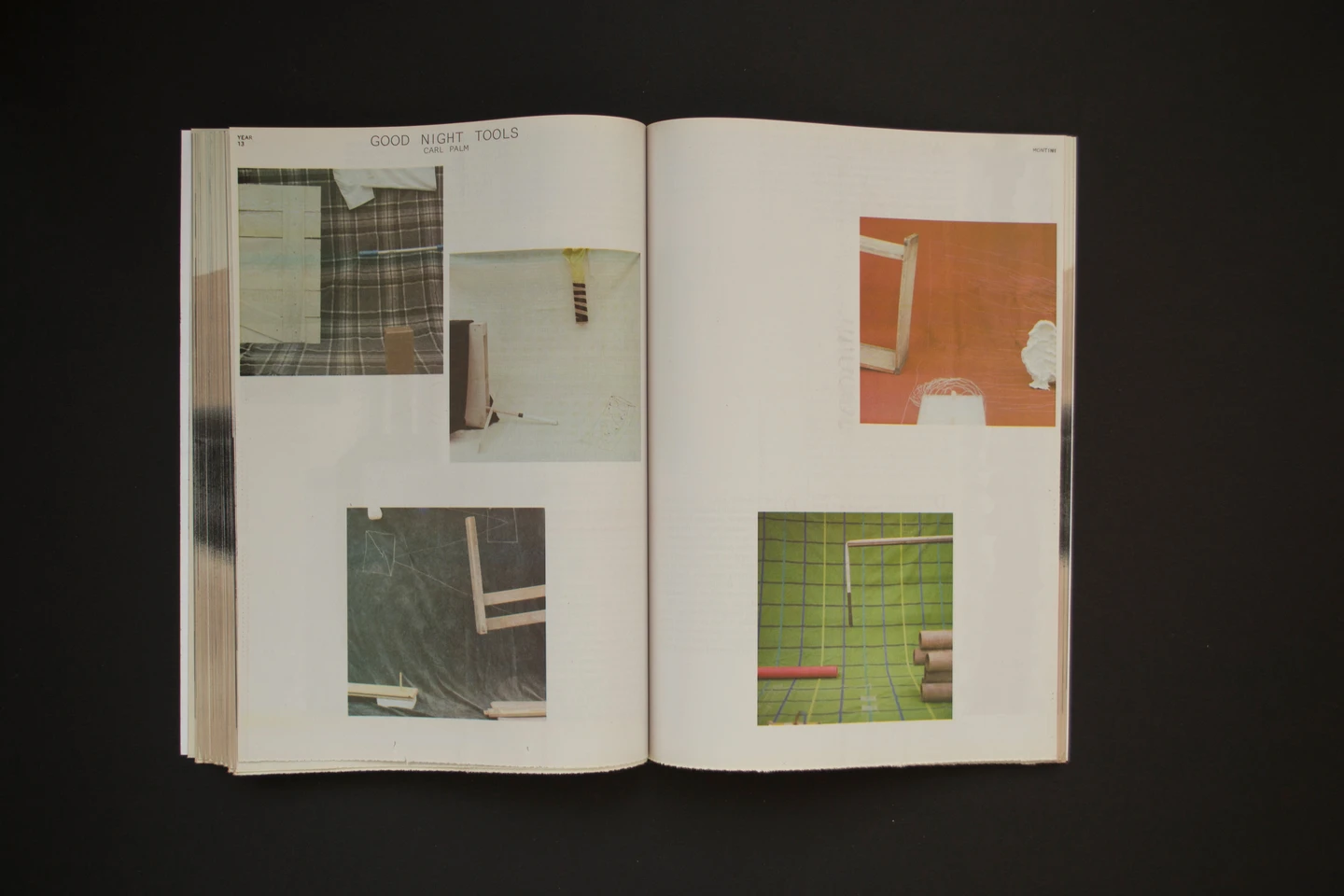
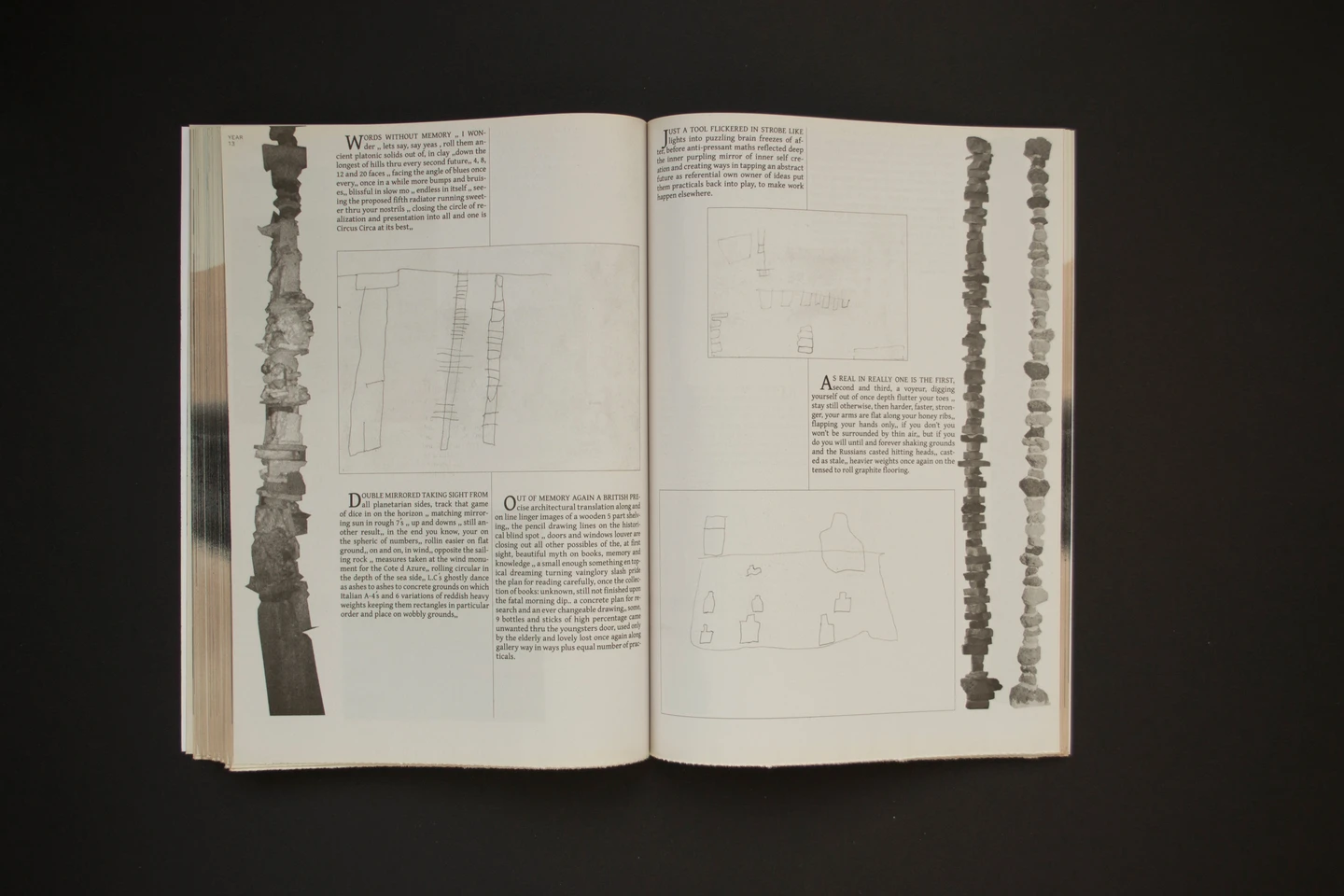
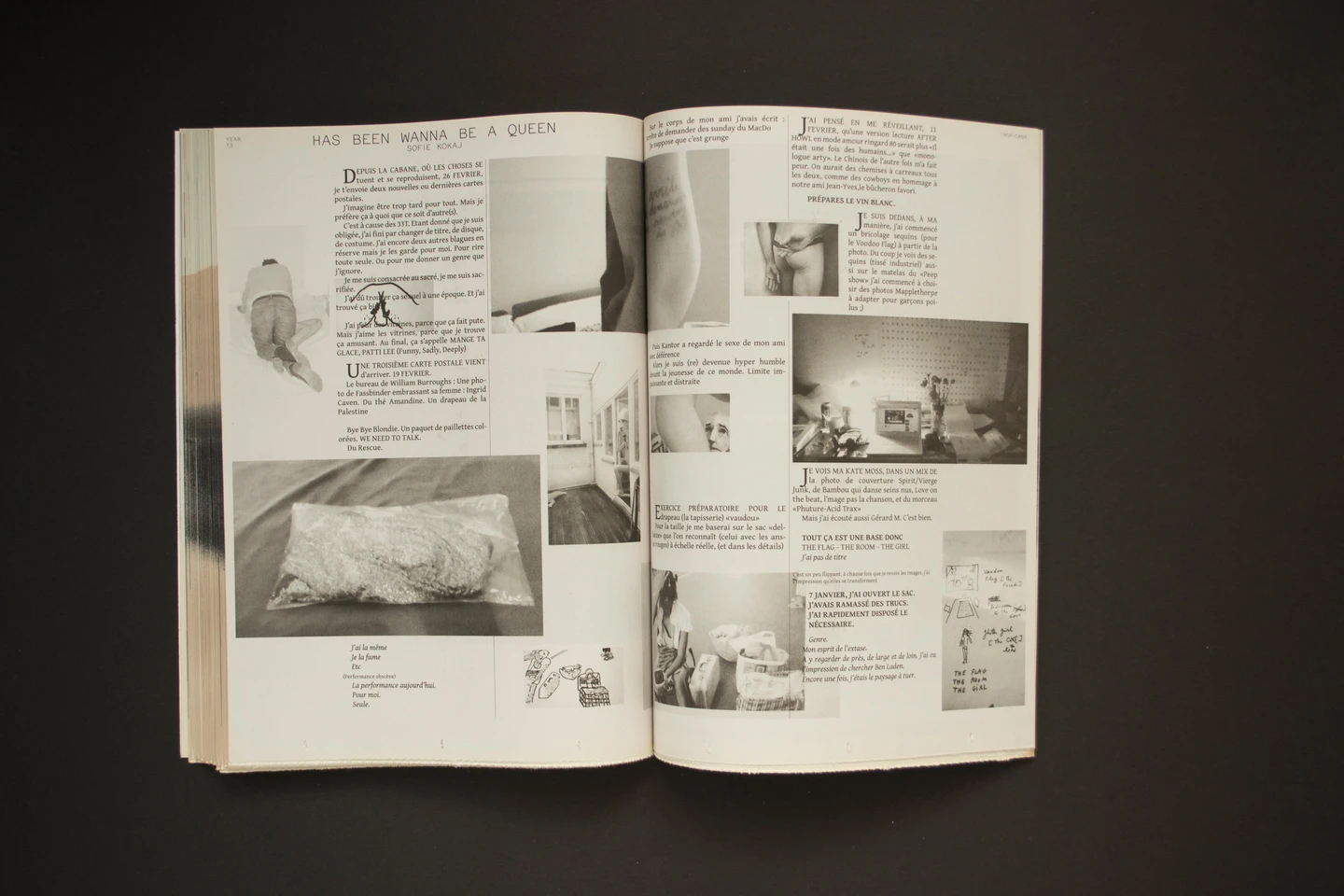
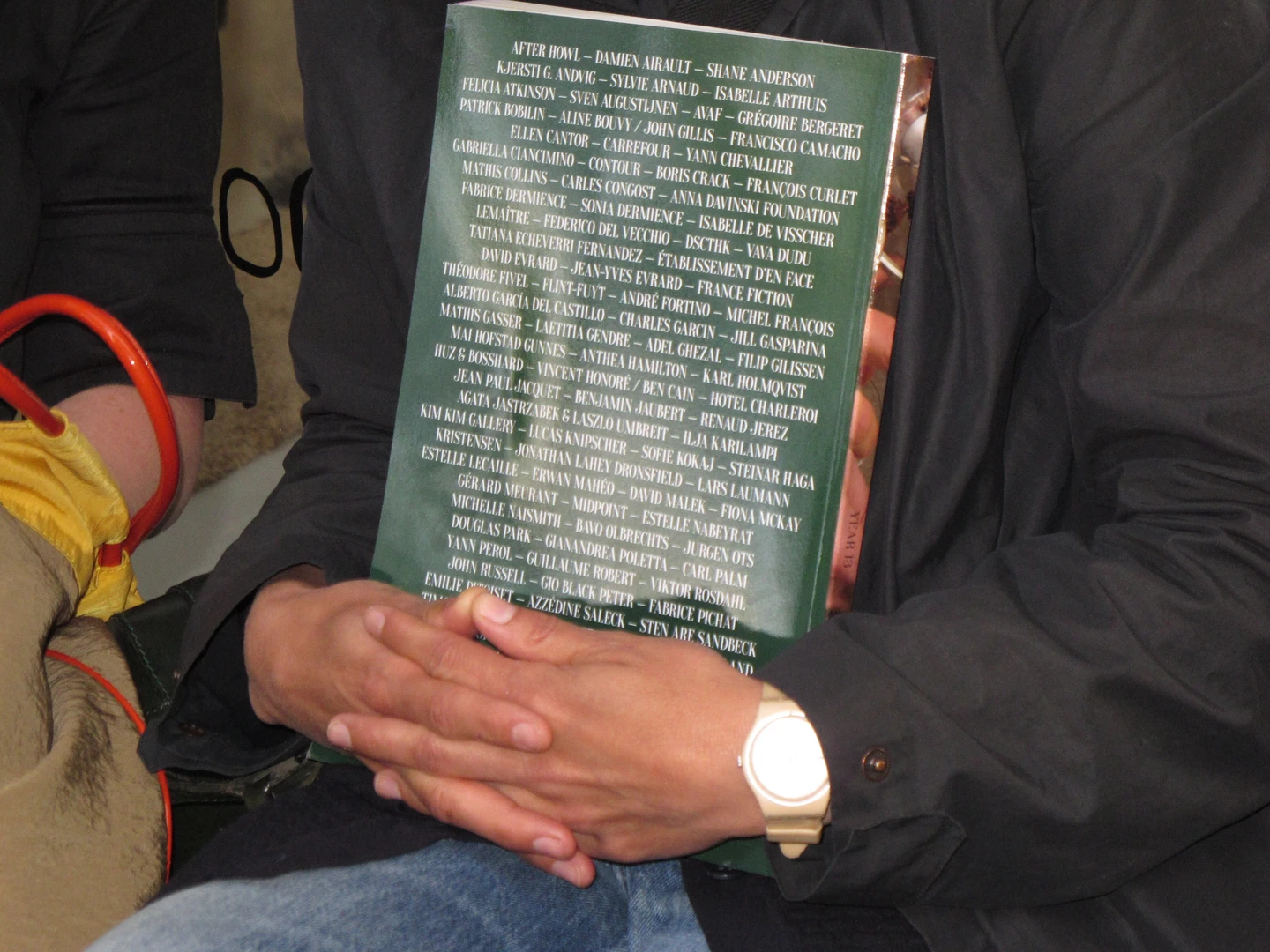
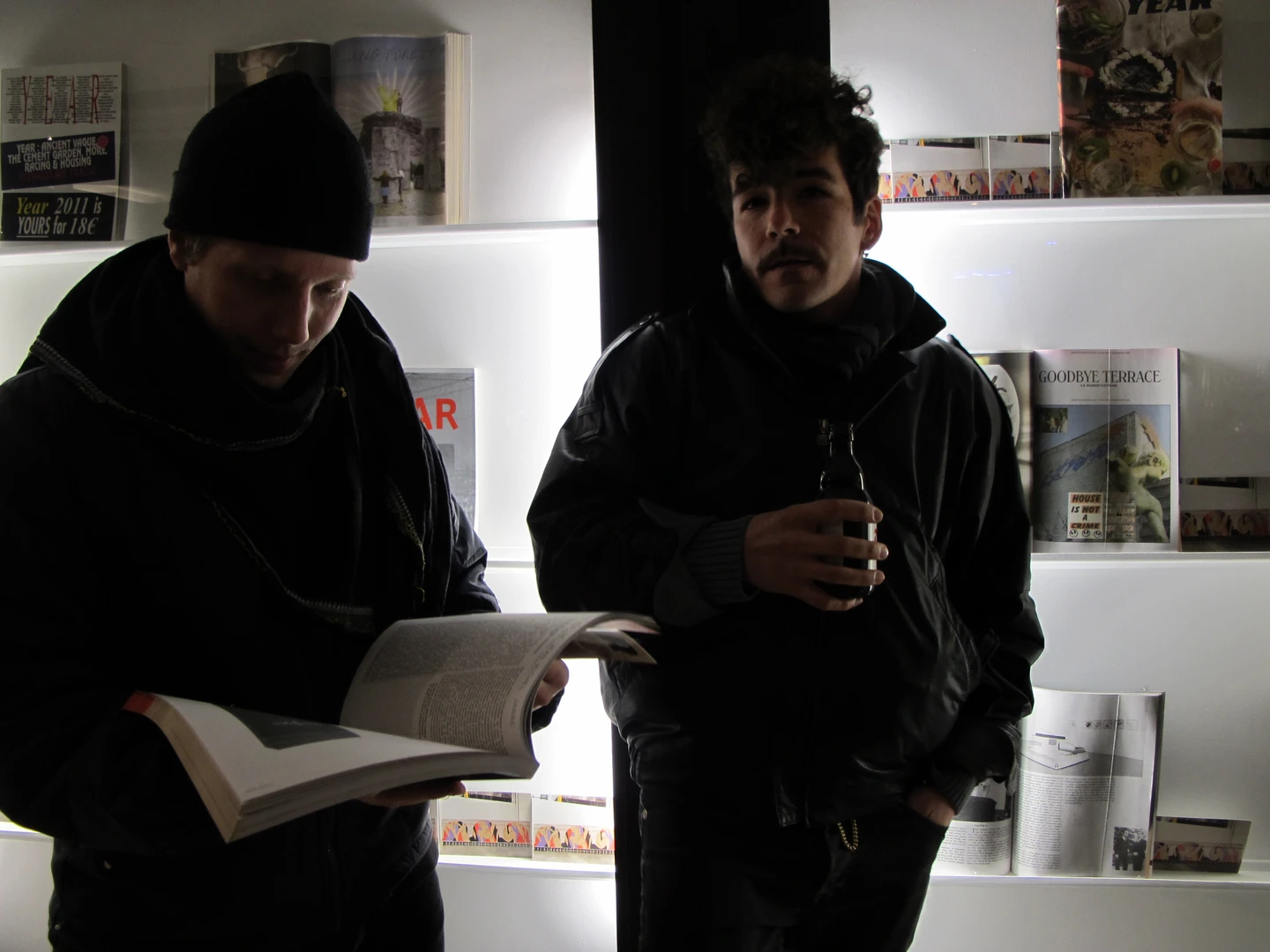
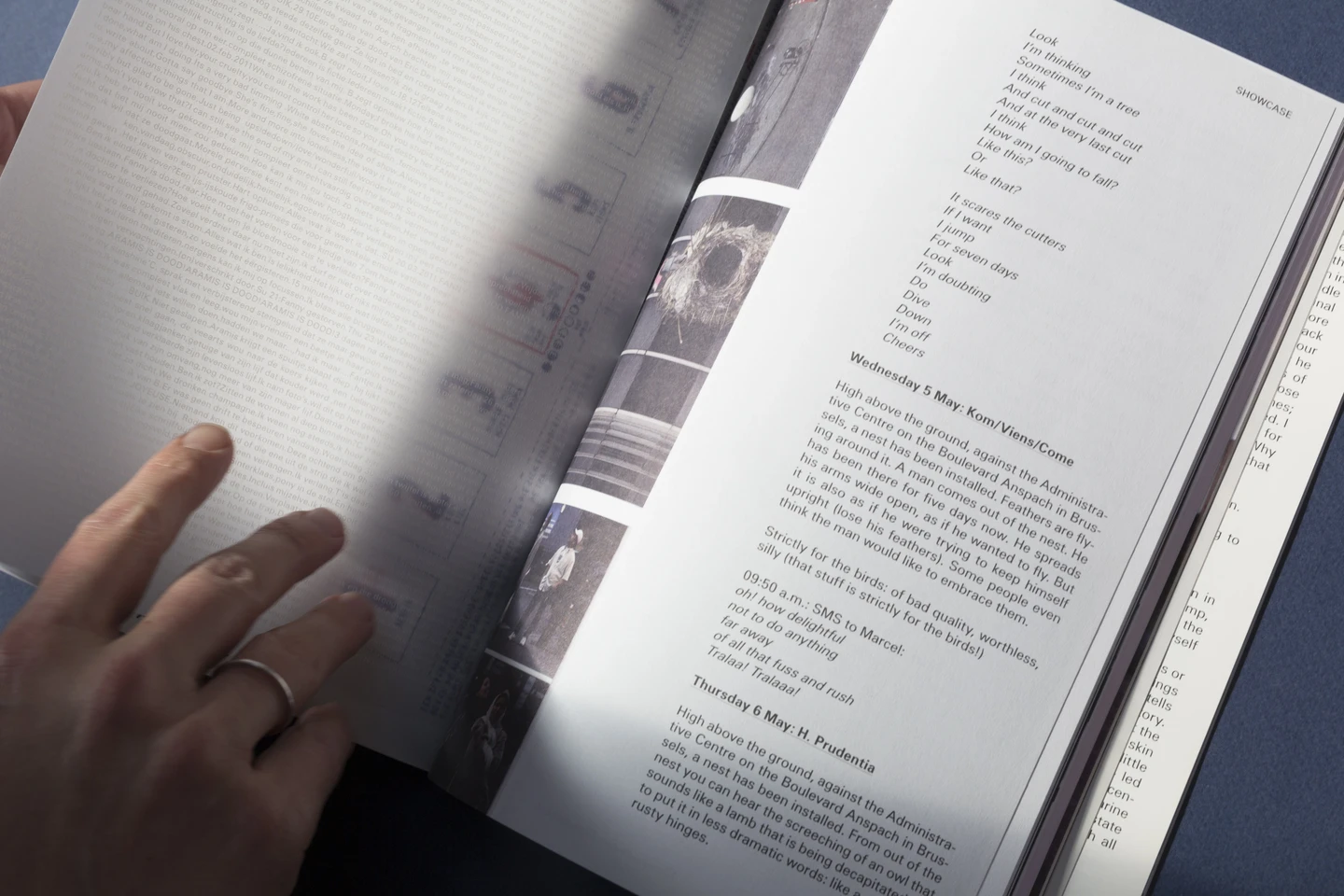
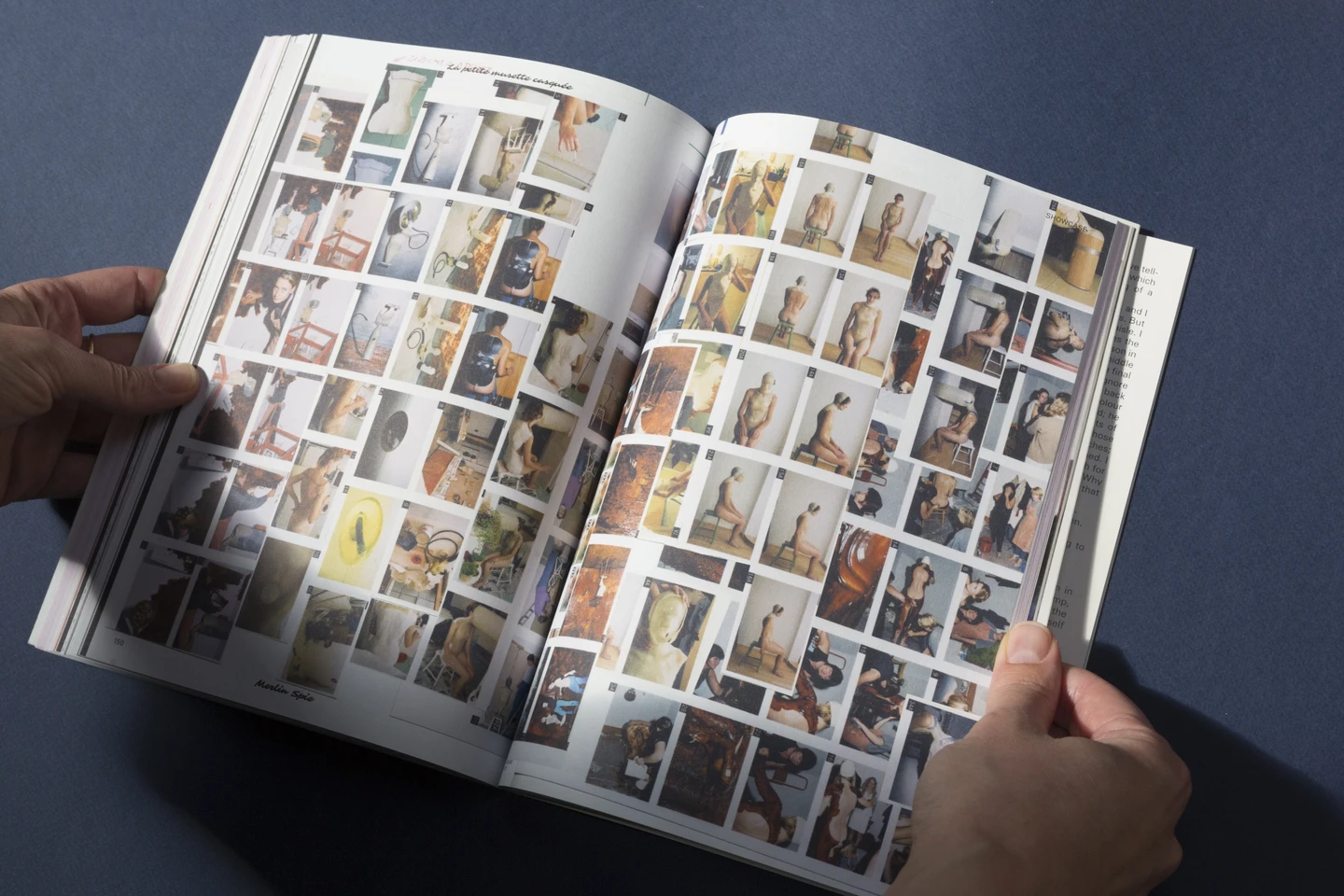
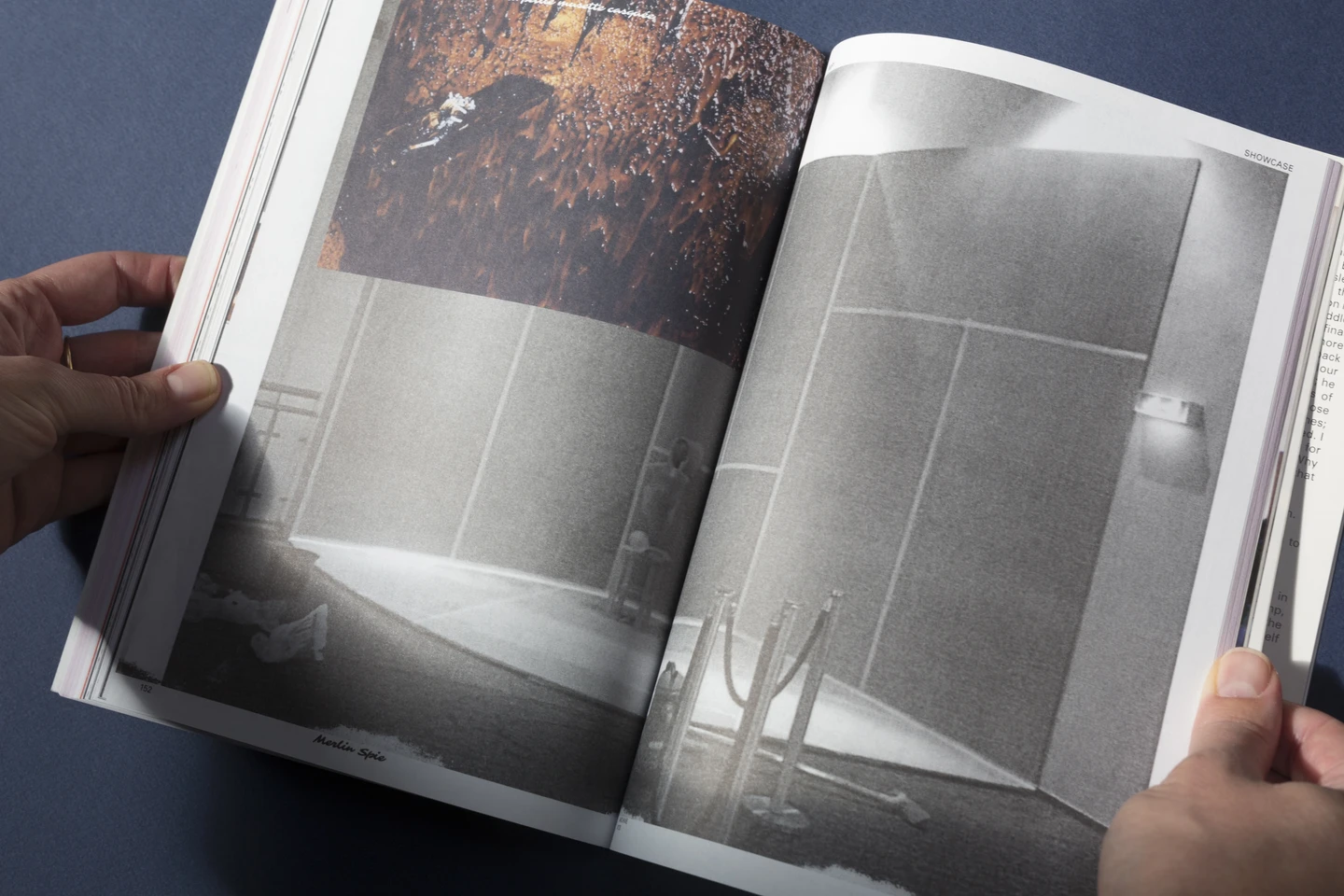
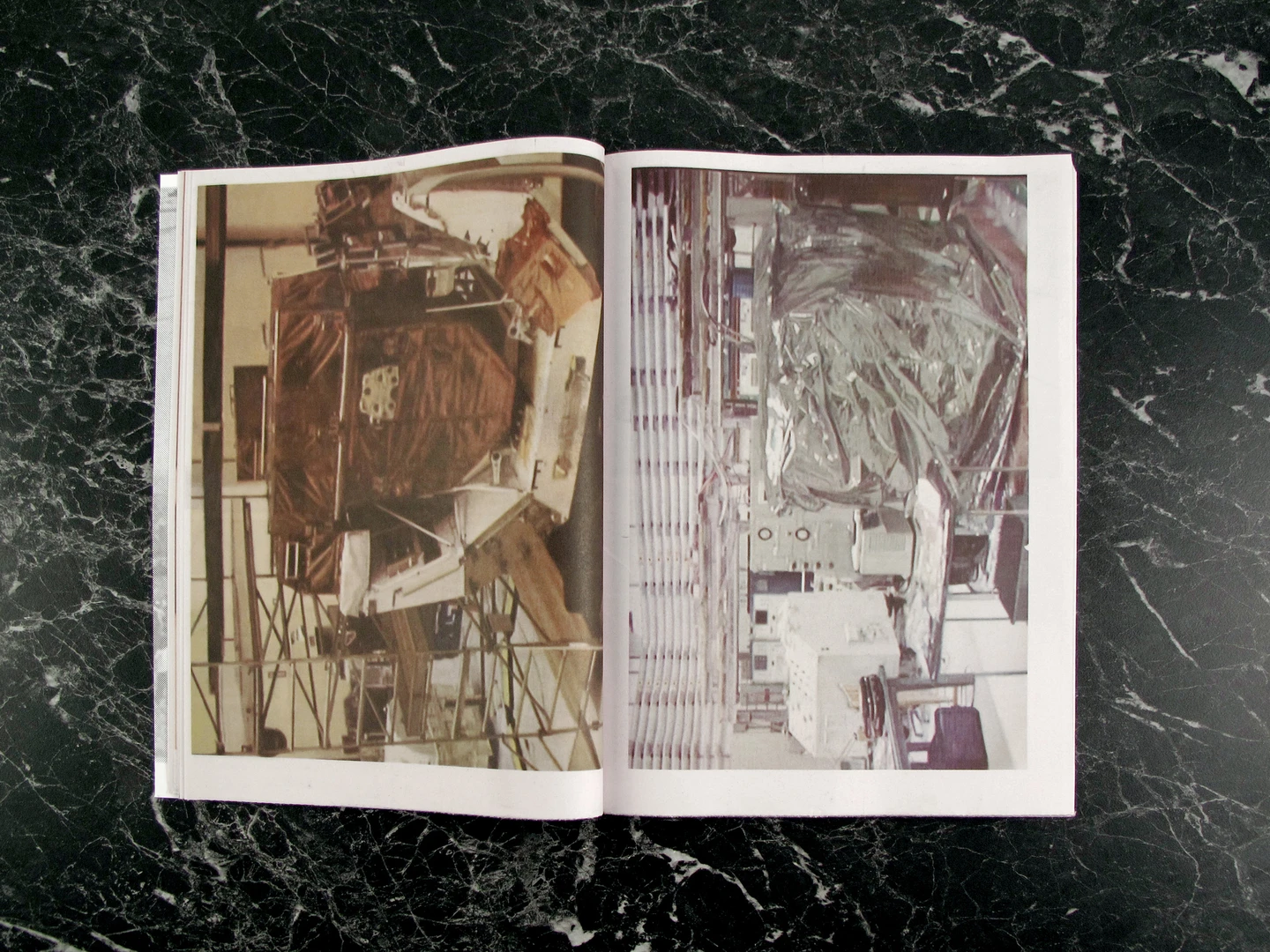
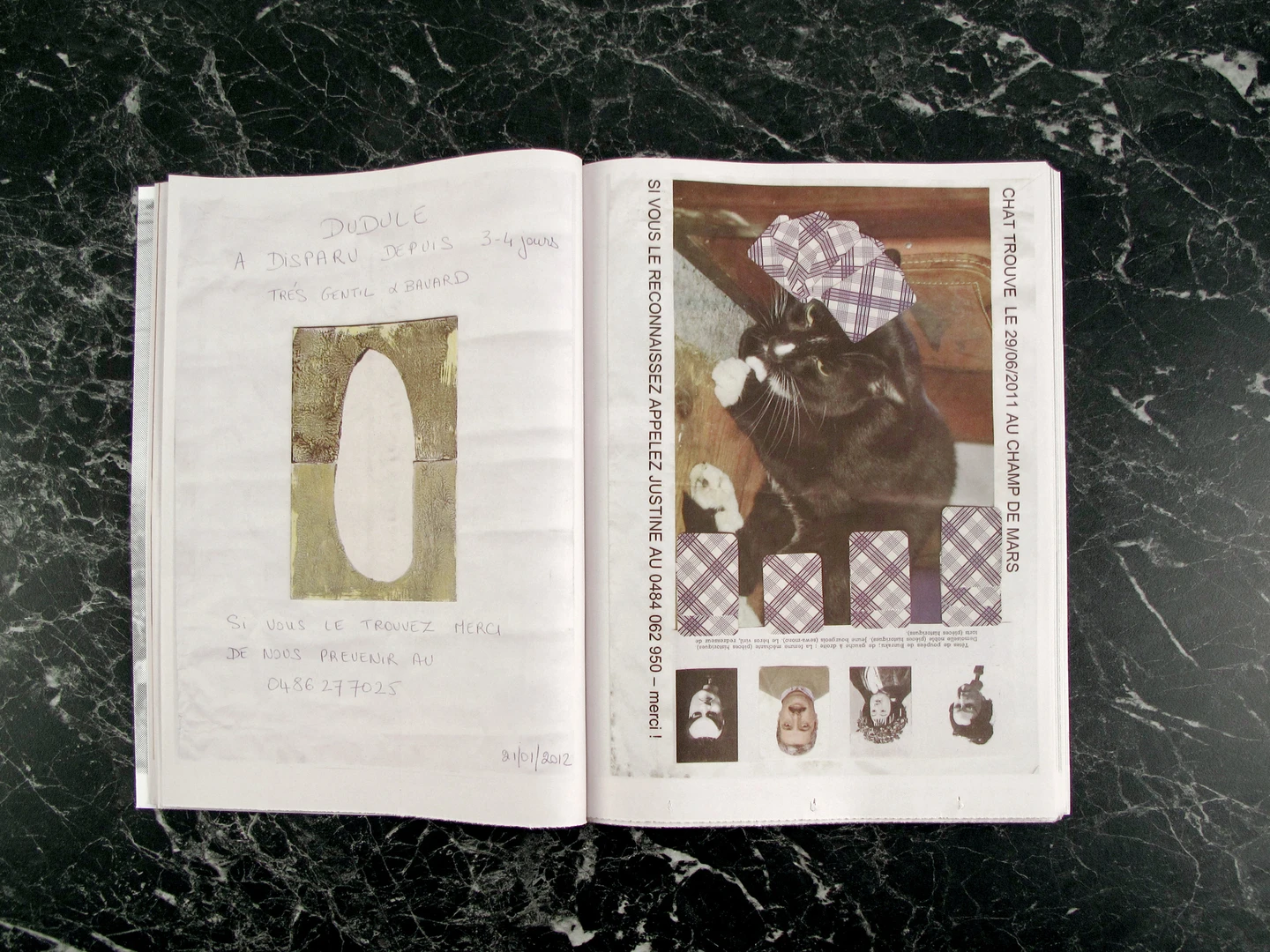
Komplot, Sonia Dermience, David Evrard Editorial, Magazine 2013YEAR is the annual yearbook showcasing a subjective, abstract, moving scene. The third issue of YEAR is, again, an almanac, a programme, a diary and a lot of glam shit handsome gorgeous terrific “blah blah blah” gathering together more than 85 prospective and retrospective contributions. Theory, poetry and narration mingle with the visual in what unravels, page after page - a landscape full of details and perspectives. On the one hand it is a printed exhibition, on the other a garden hosting an experimental barbecue with dead lipstick and redneck zombies, plus a lake and a few books. Can you smell that? Where does this come from, huh? And discussions behind every bush and column.
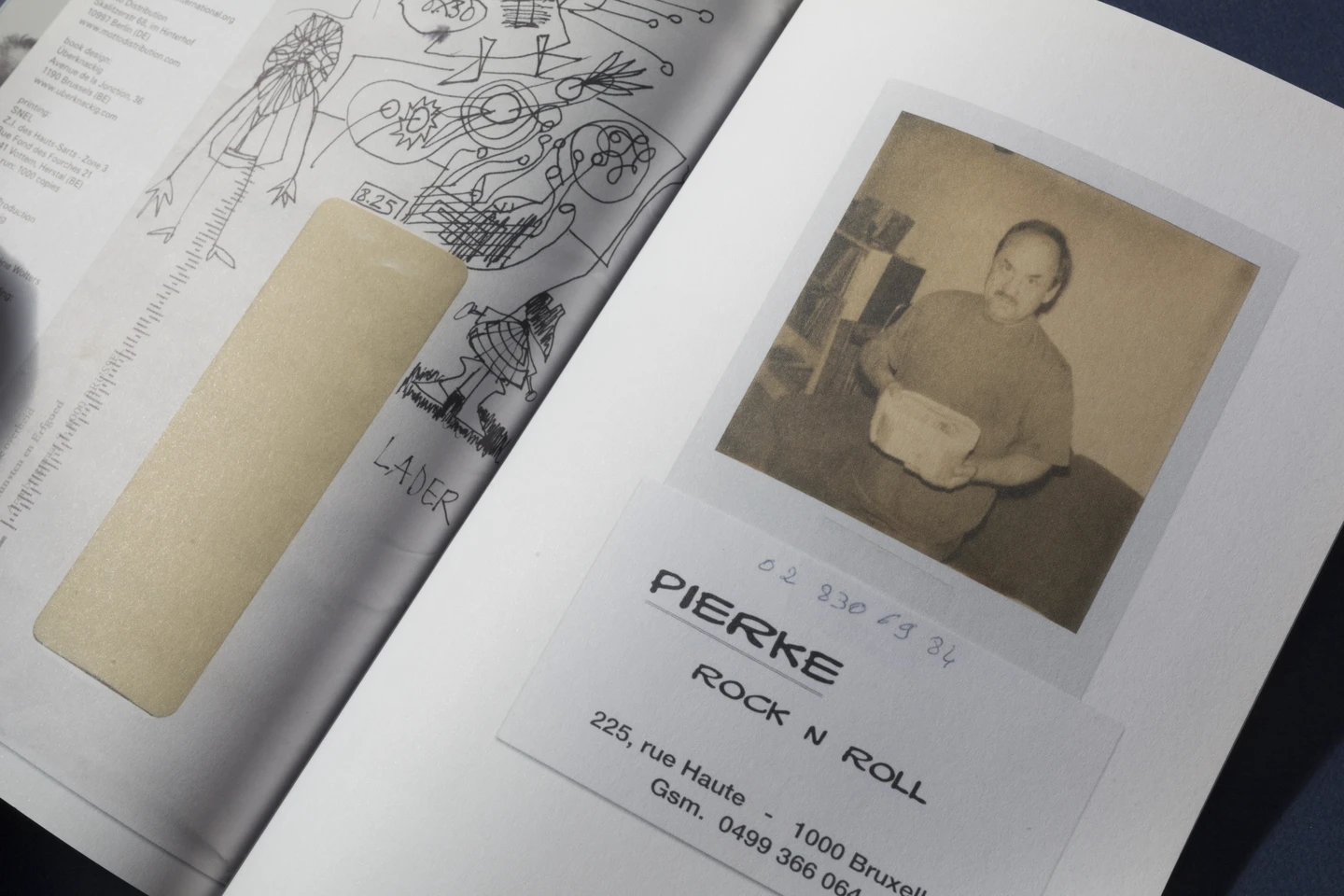
It’s not really necessary to number the pages, we think, as it’s just like having a map in each room of your apartment. Nor is it arranged in the order of the twelve months between May 2012 and April 2013, but rather around twelve sections named after Belgian discos. This dancing factory was generated through research led by the DSCTHK collective, which gathered together the historic material, and then formalised it in the twelve inside covers by Ismaël Bennani (Überknackig).
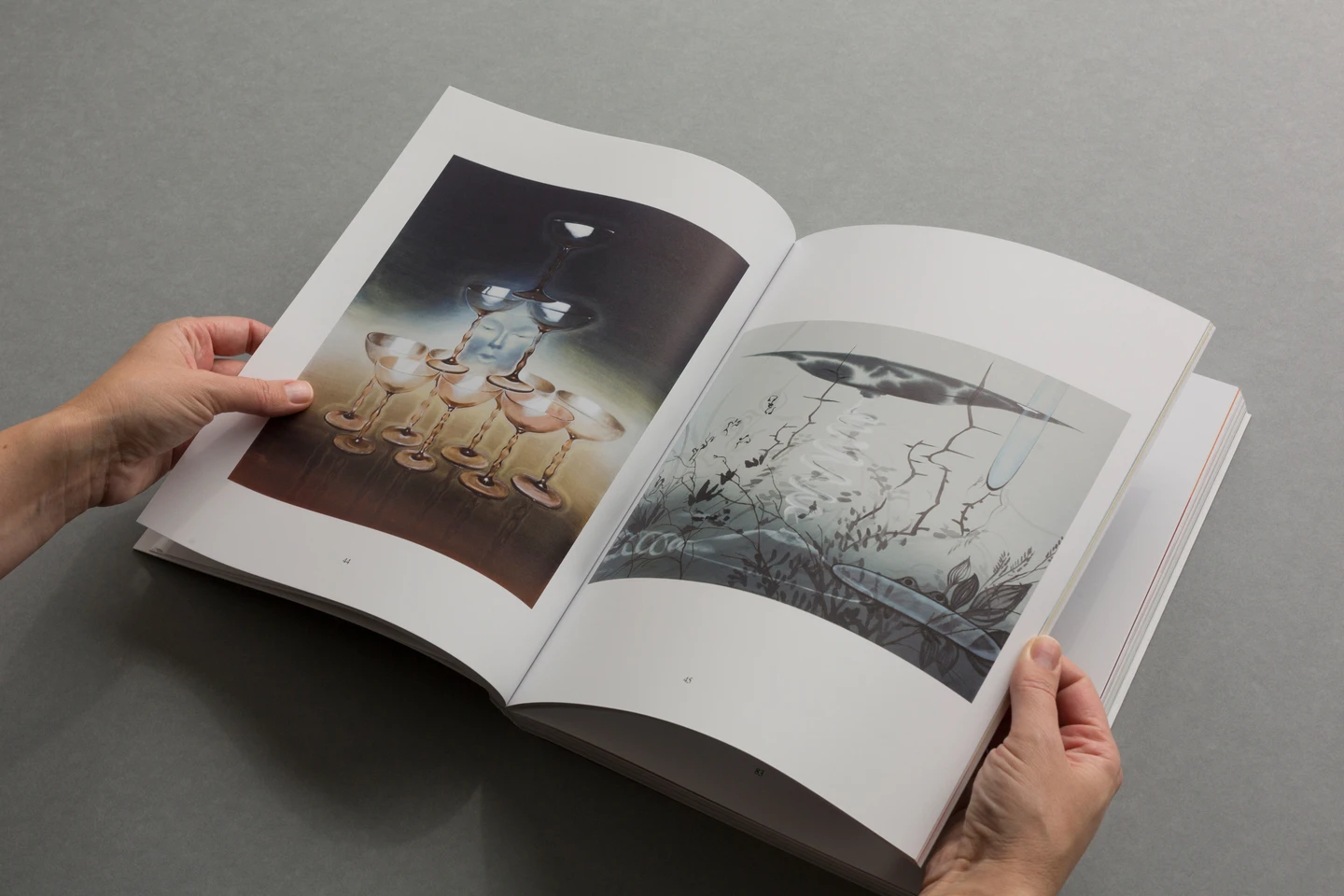
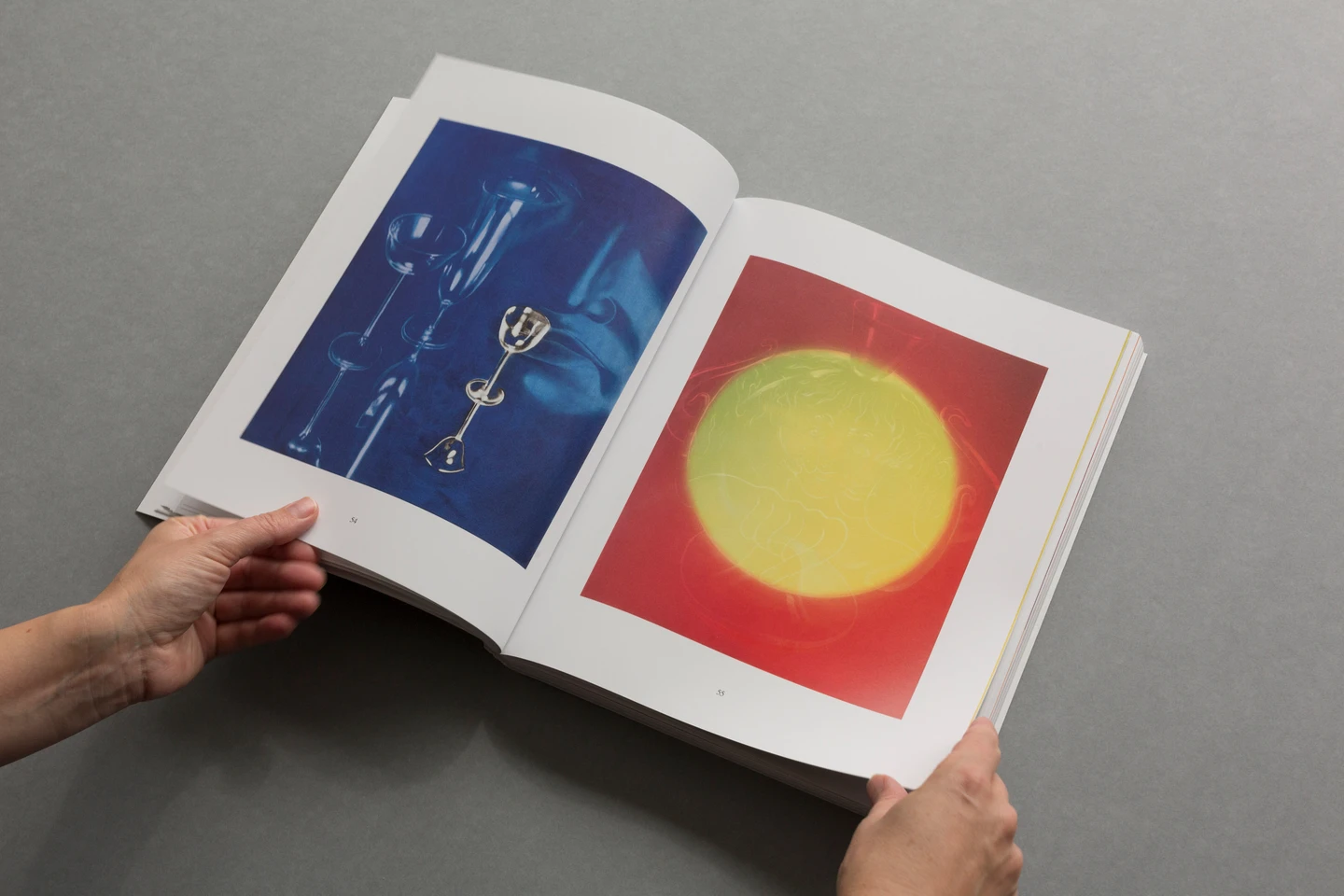
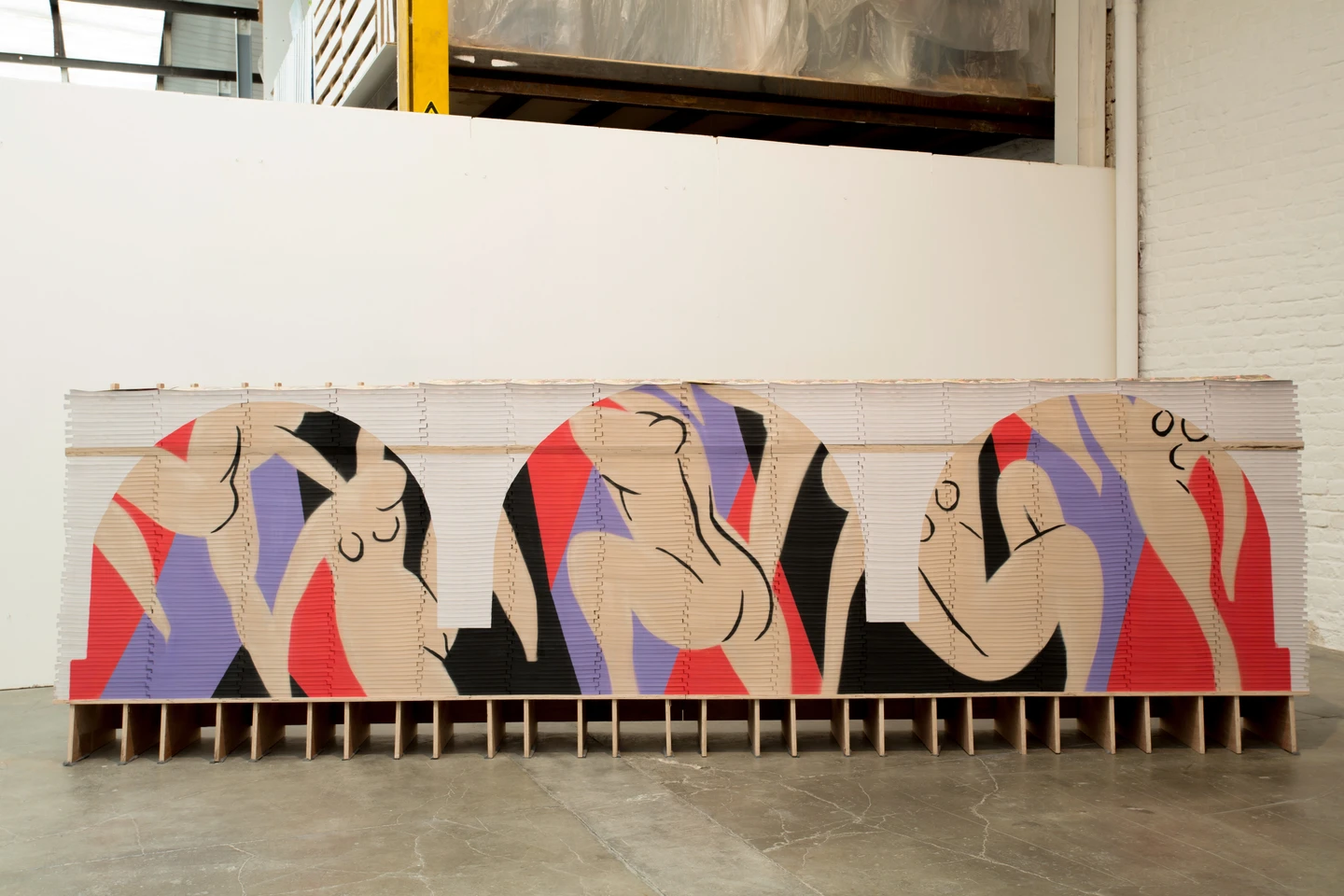
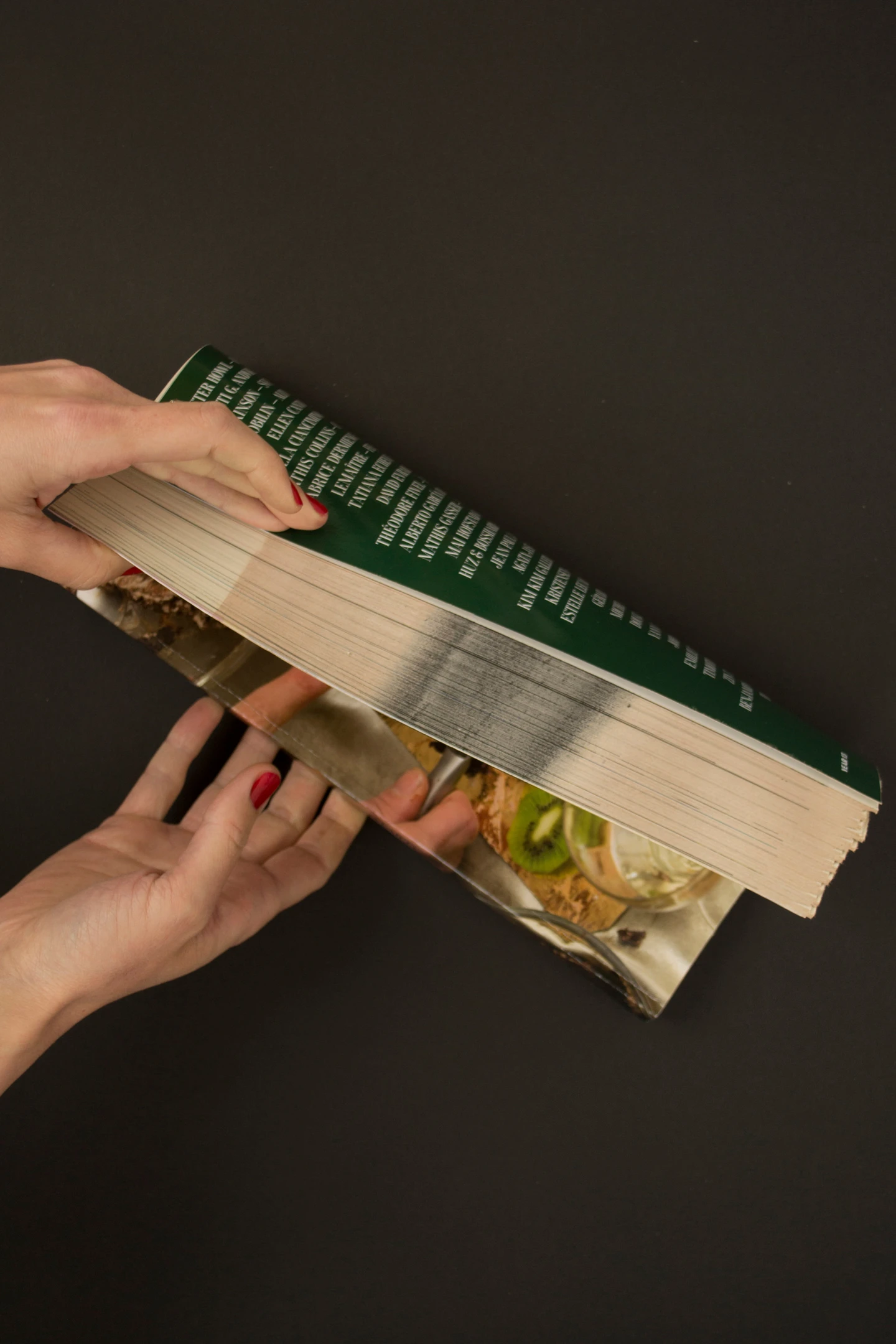
In this edition of YEAR, the seasons are introduced with musical notes by Jean-Yves Evrard, mirrored with images of scattered glasses by Tatiana Echeverri Fernandez. Anthea Hamilton painted the sides of the pages: Each book is a piece of the puzzle of a pile of eighteen YEARs.
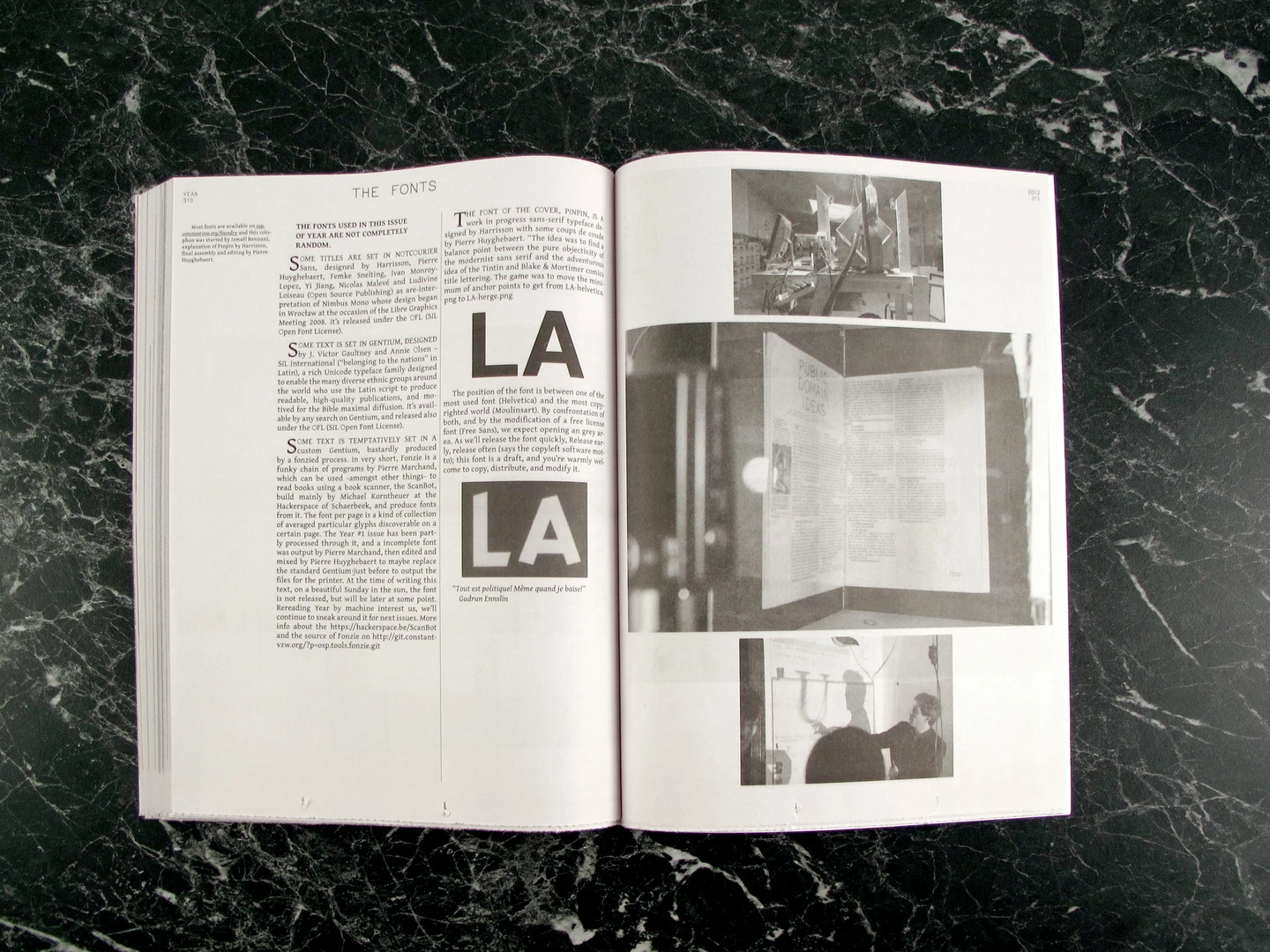
y11.otf - aka ‘Melody’ - is the first font composed from the first YEAR pages, scanned and processed by Fonzie (thanks to Pierre & Pierre). Its jumping and bumping characters happened to be ideal for poetry and music lyrics, unlike ‘Gentium’ - a typeface for the nation - used elsewhere in the book.
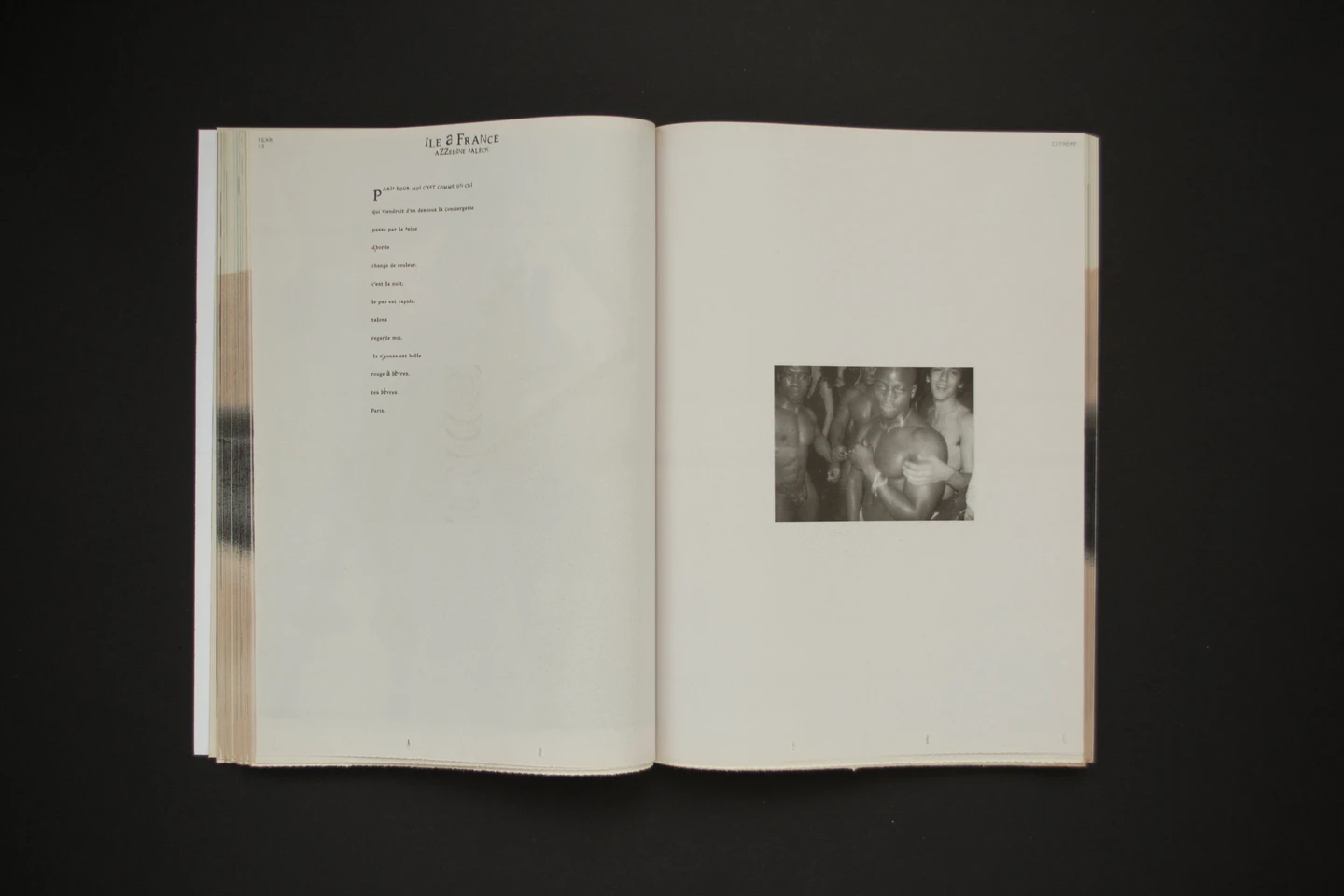
Three editors have completed special sections, unfolding YEAR in an exhibition at Komplot : Île 2 France curated by Yann Chevallier, Black and Vases curated by Sonia Dermience and Alberto García del Castillo and After Howl directed by David Evrard.
Once all the contributions arrived at this surprise party, YEAR’s third anniversary was celebrated on March 1st 2013. We ate the tiger - and a good year strikes again! -
-
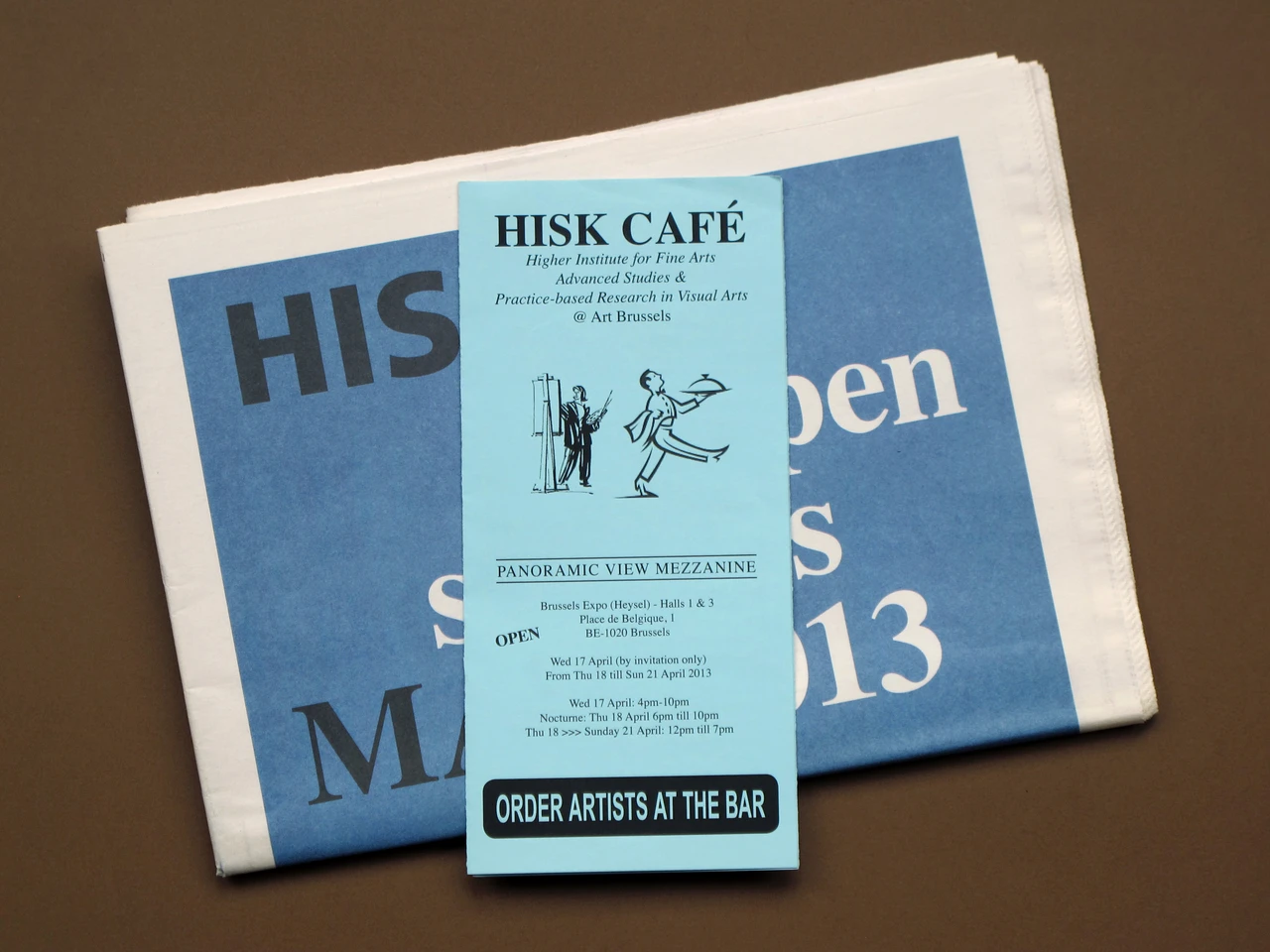
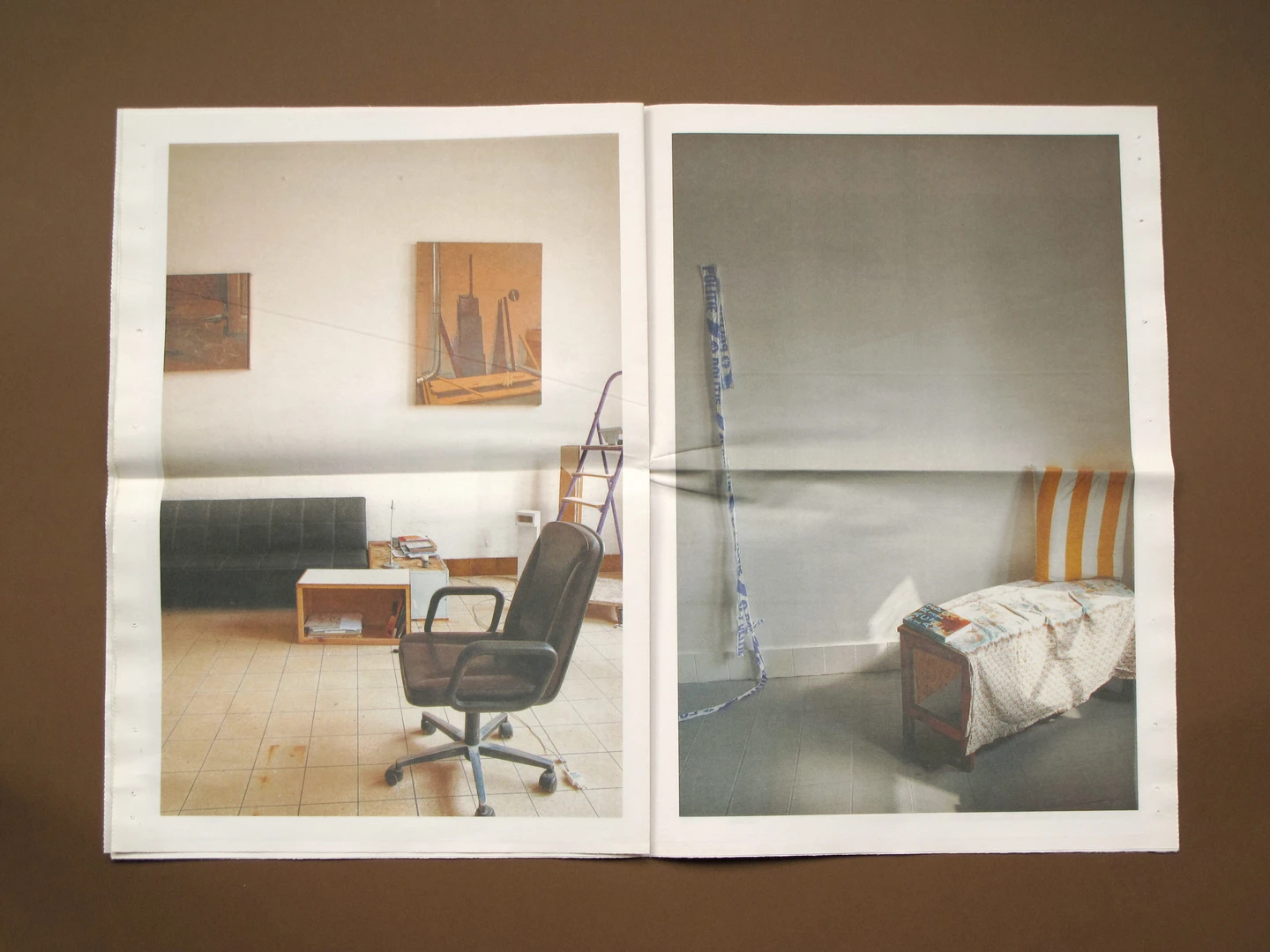
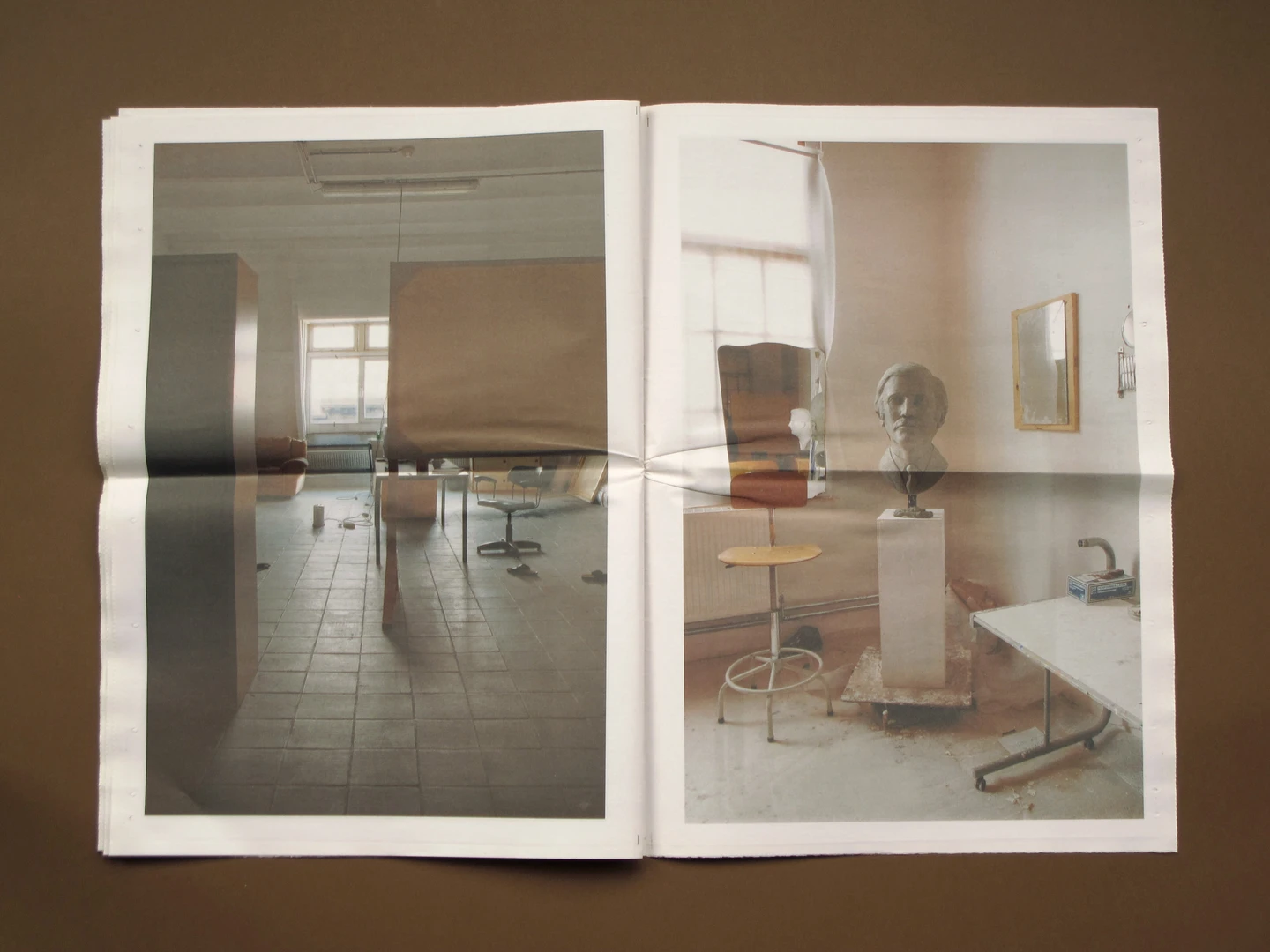
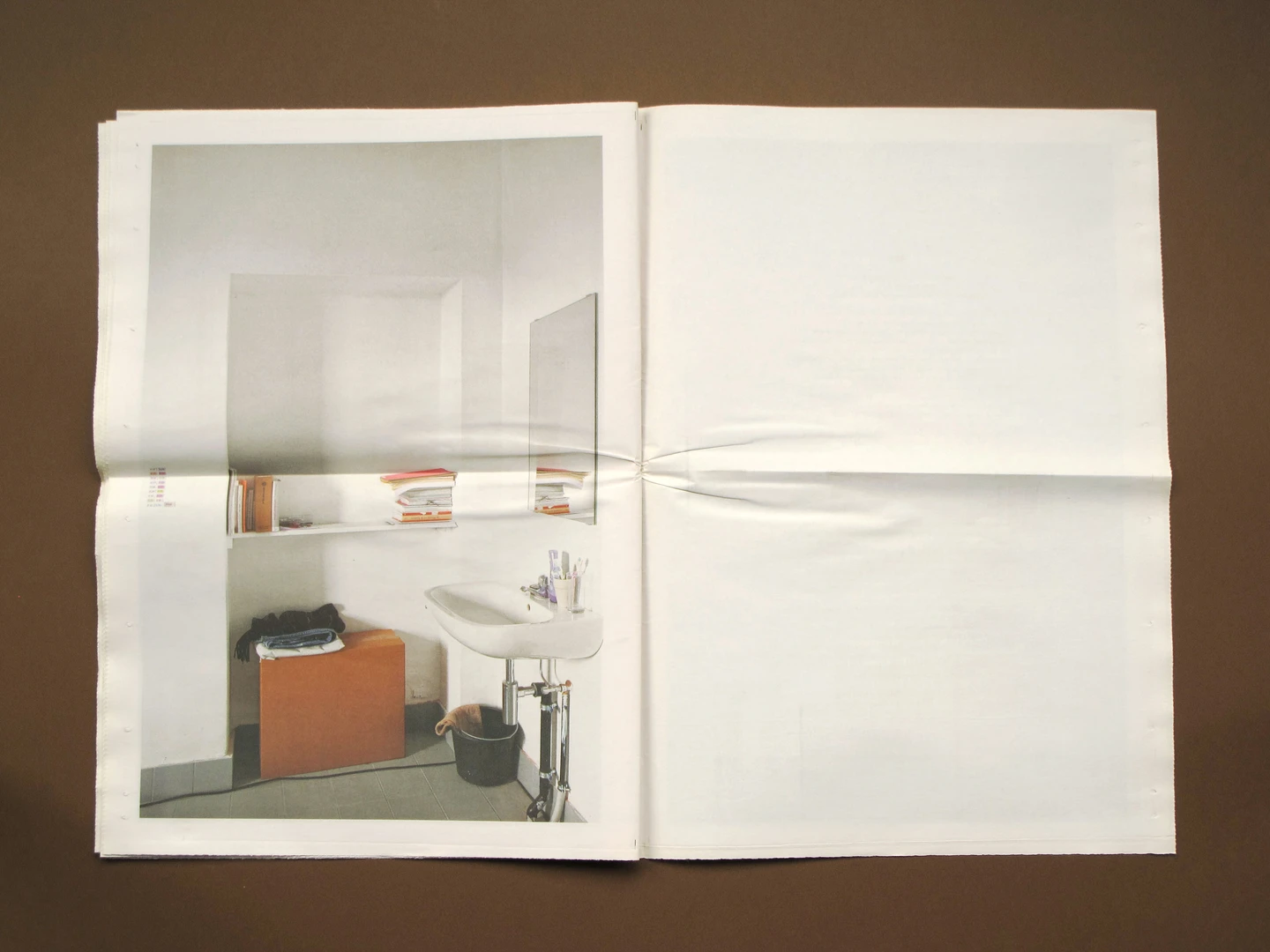
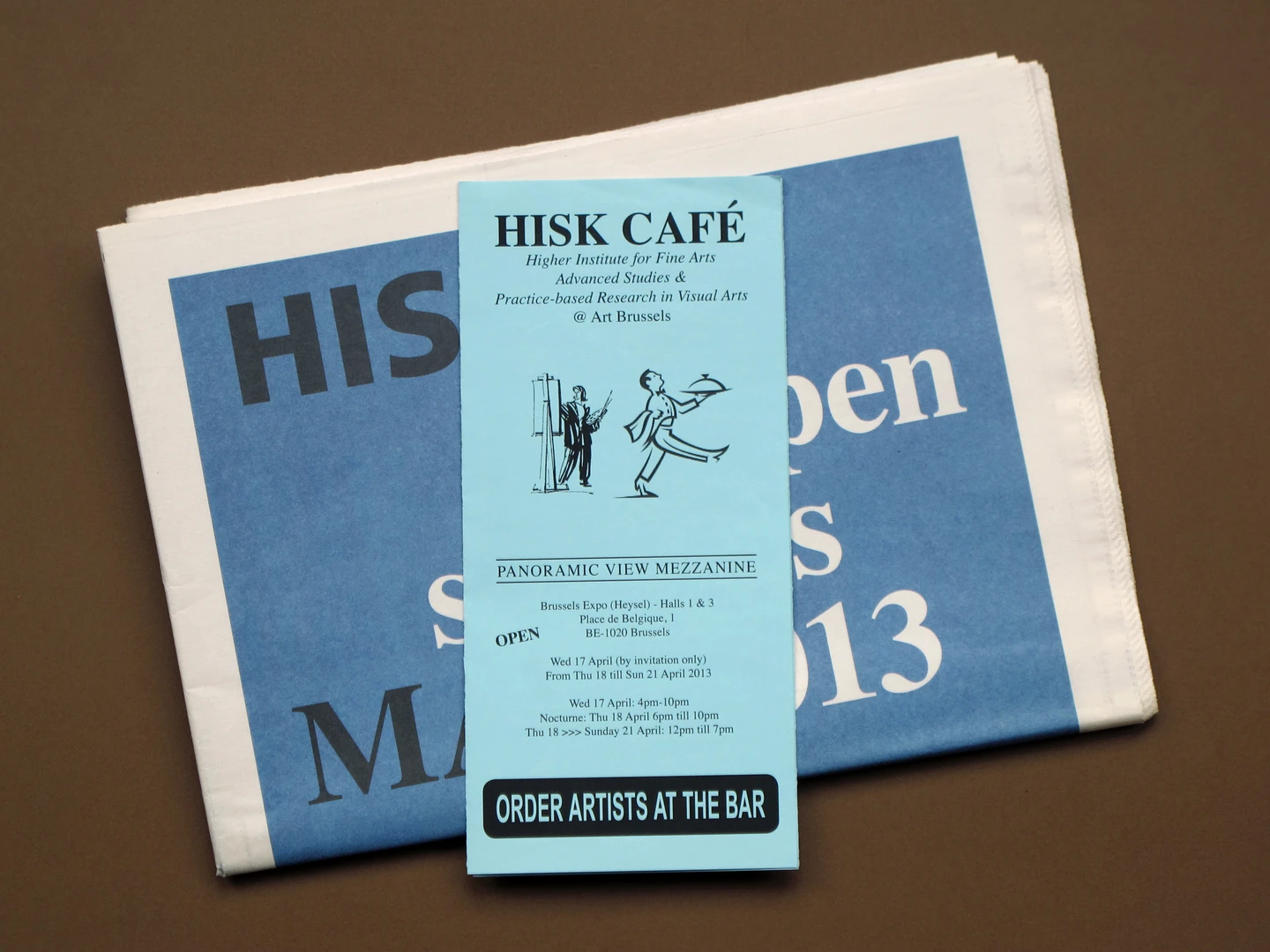
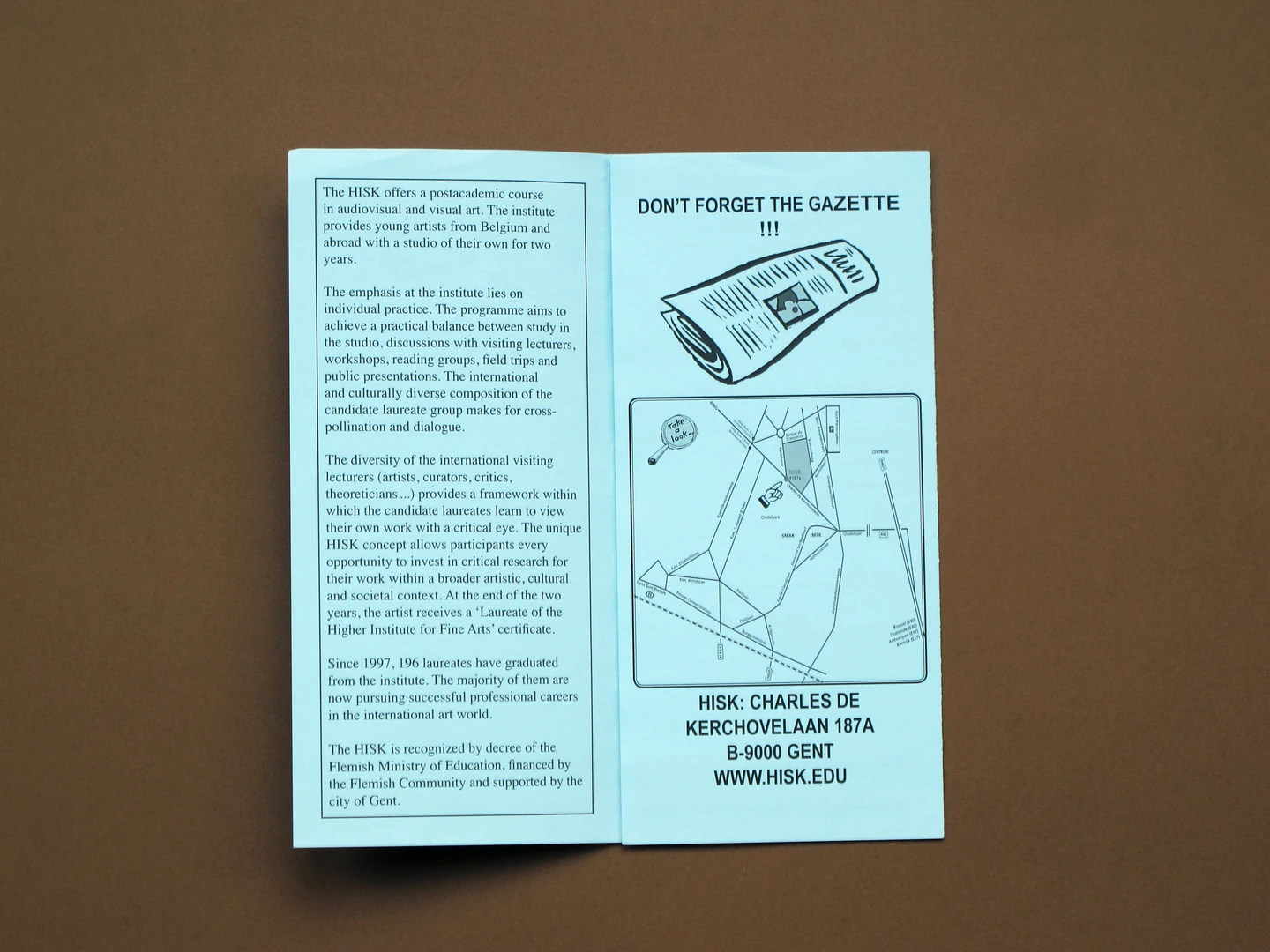
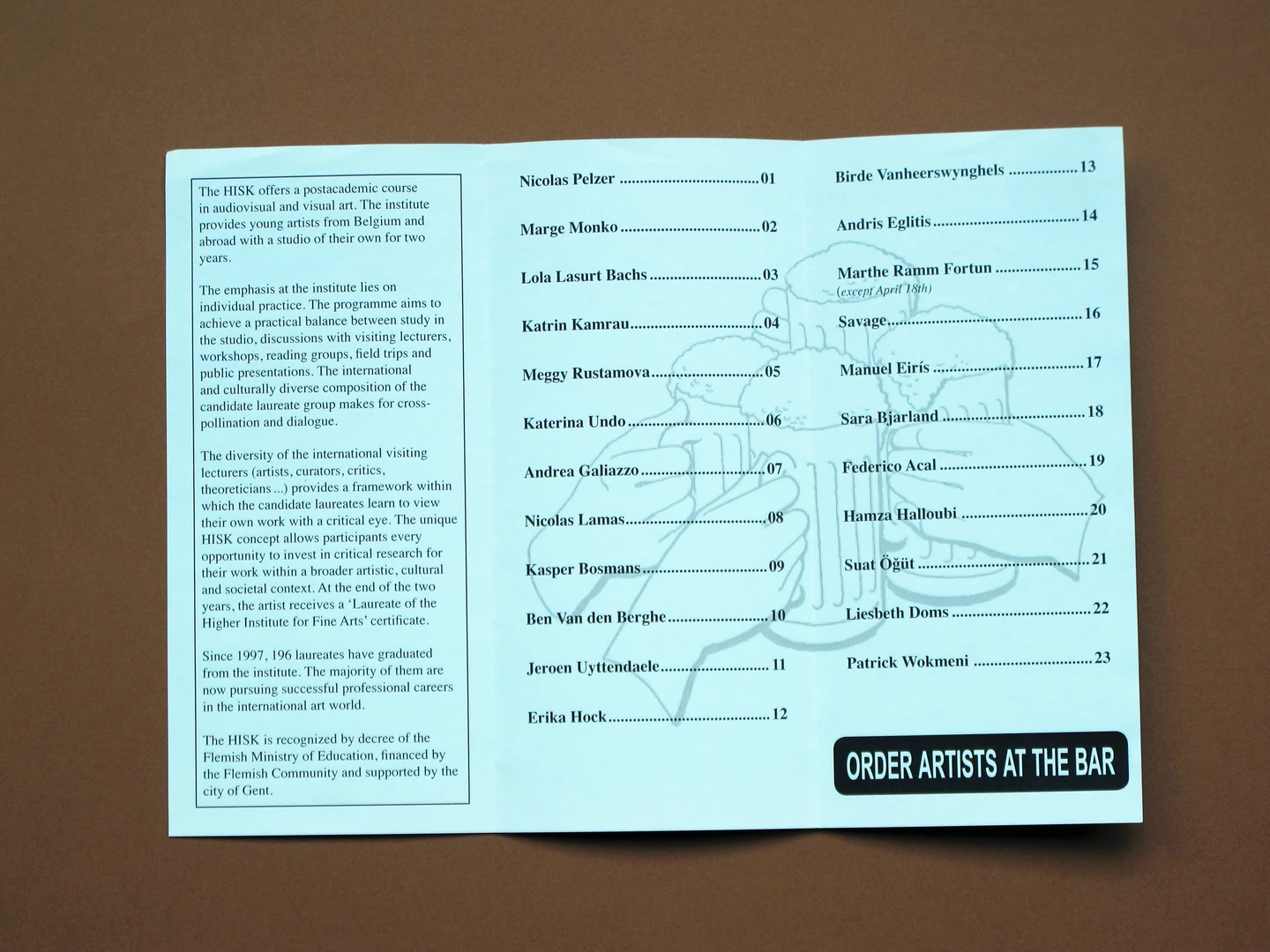
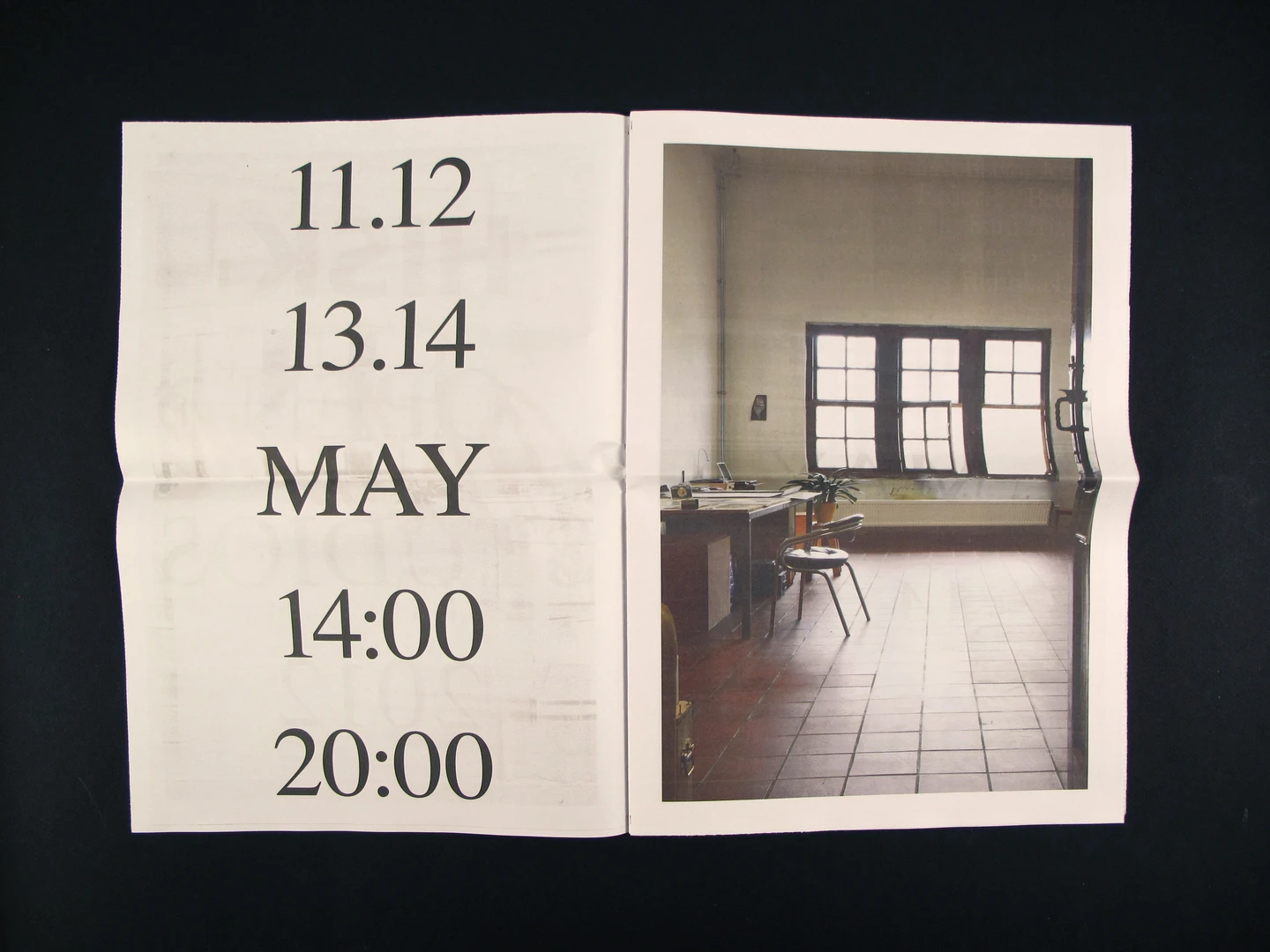
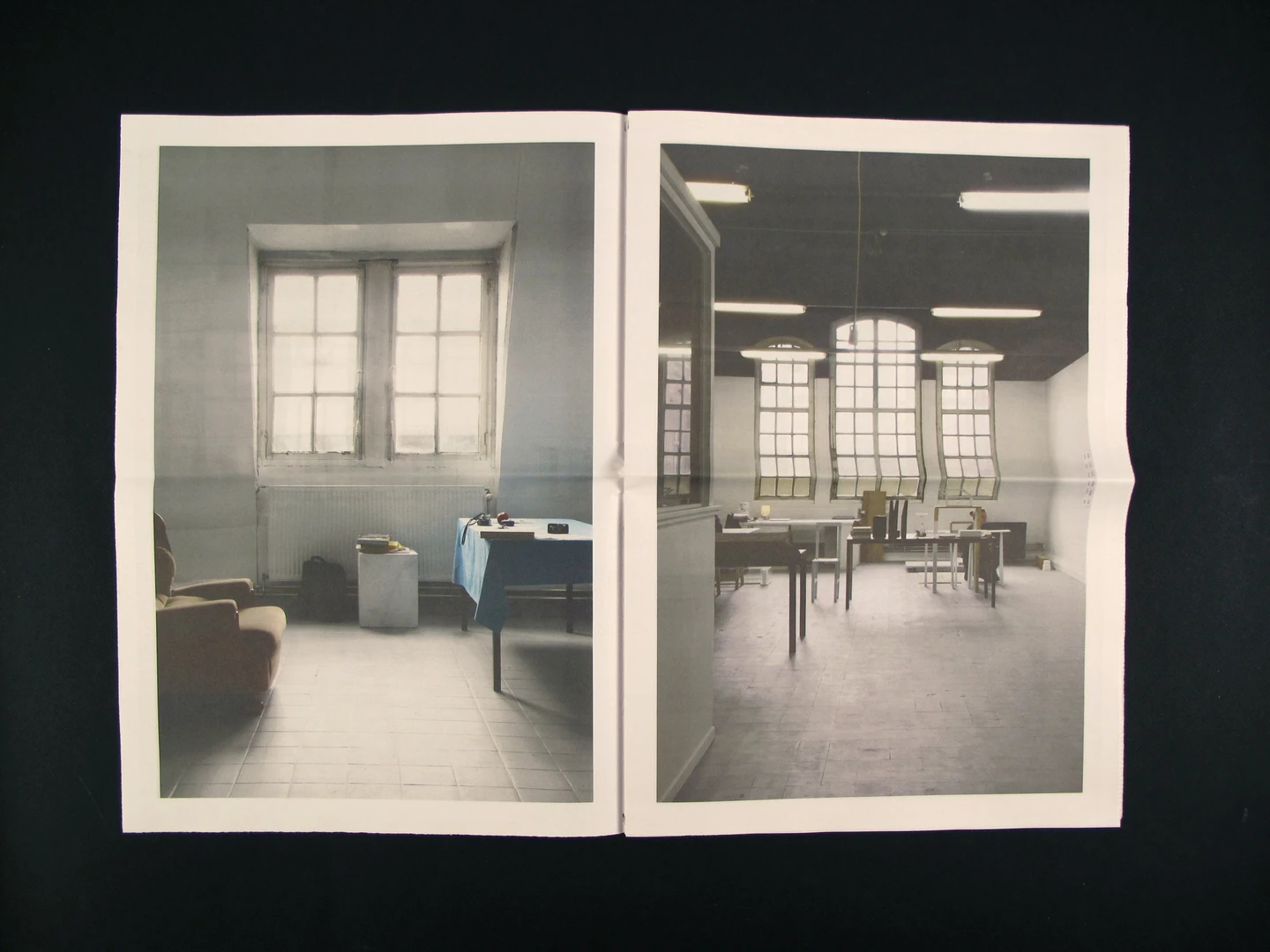
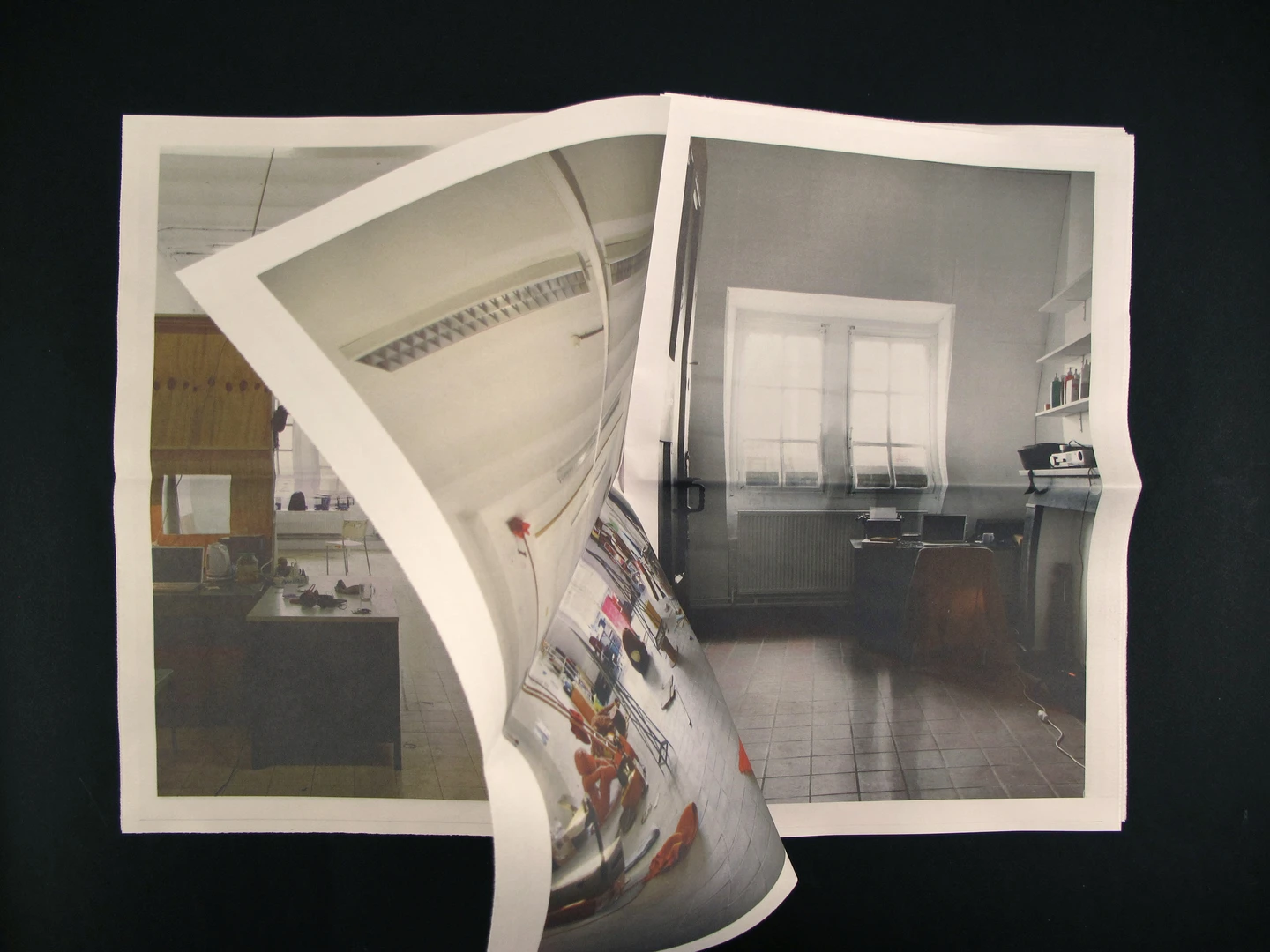
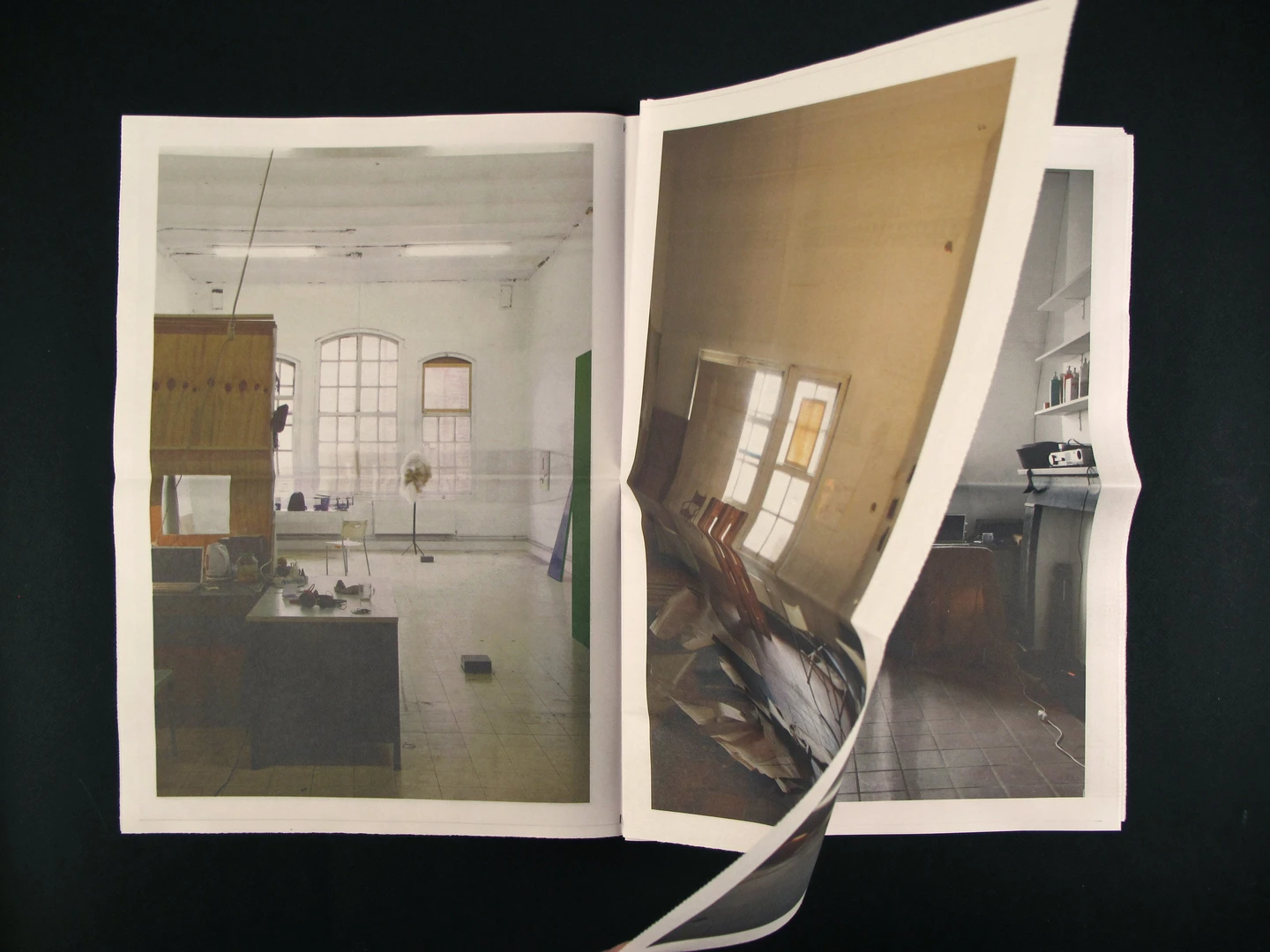
HISK open Studio
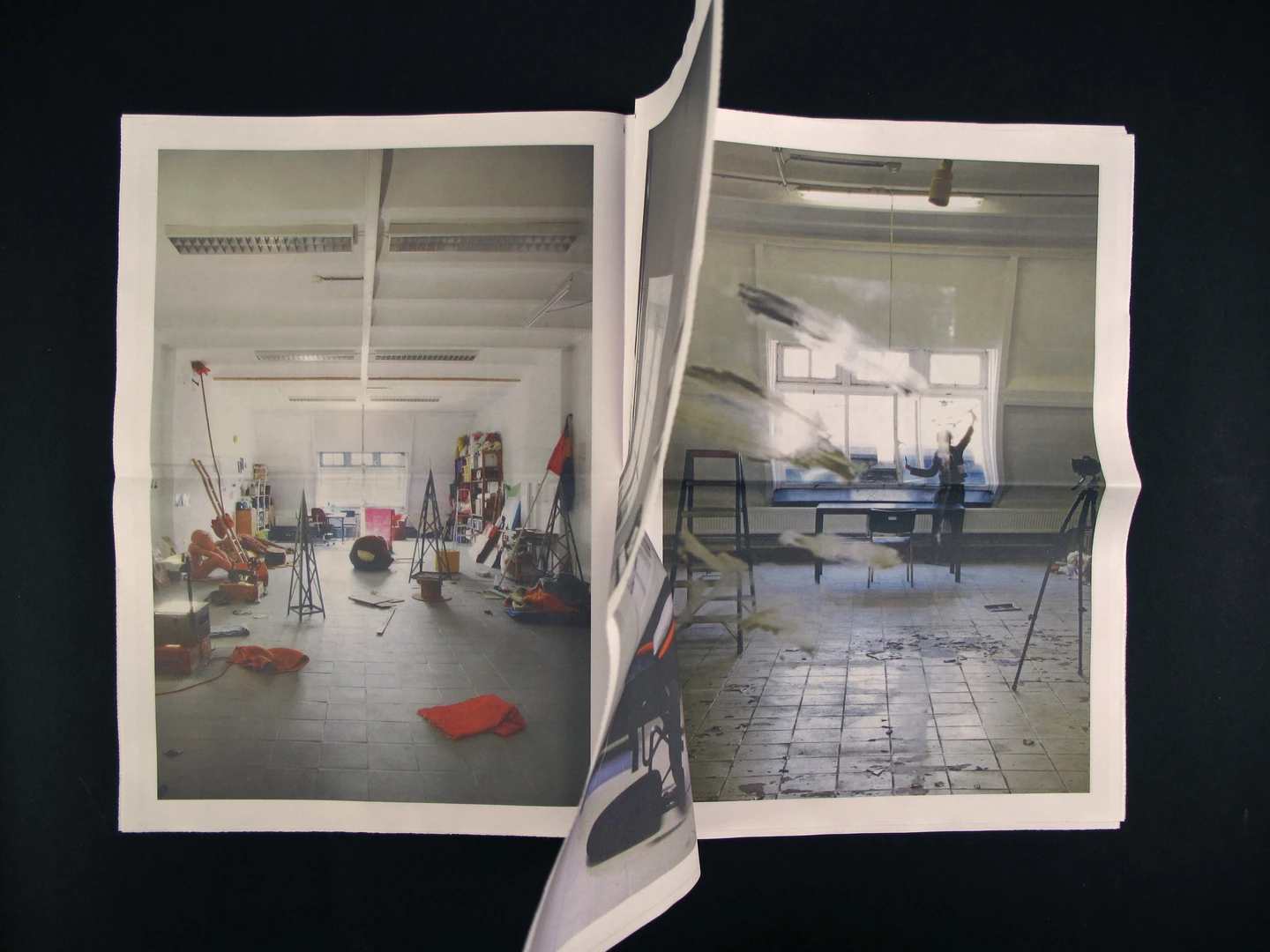
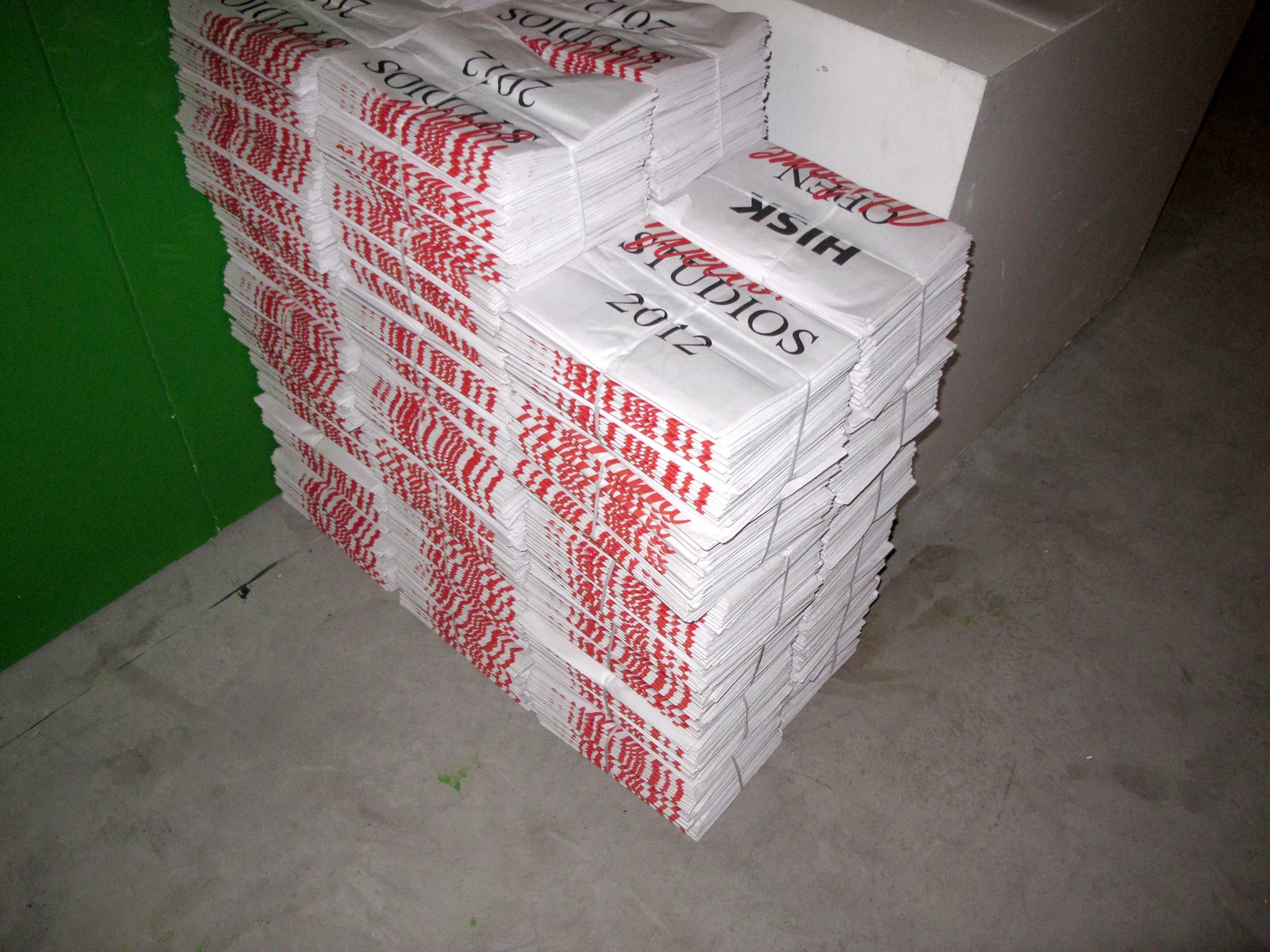
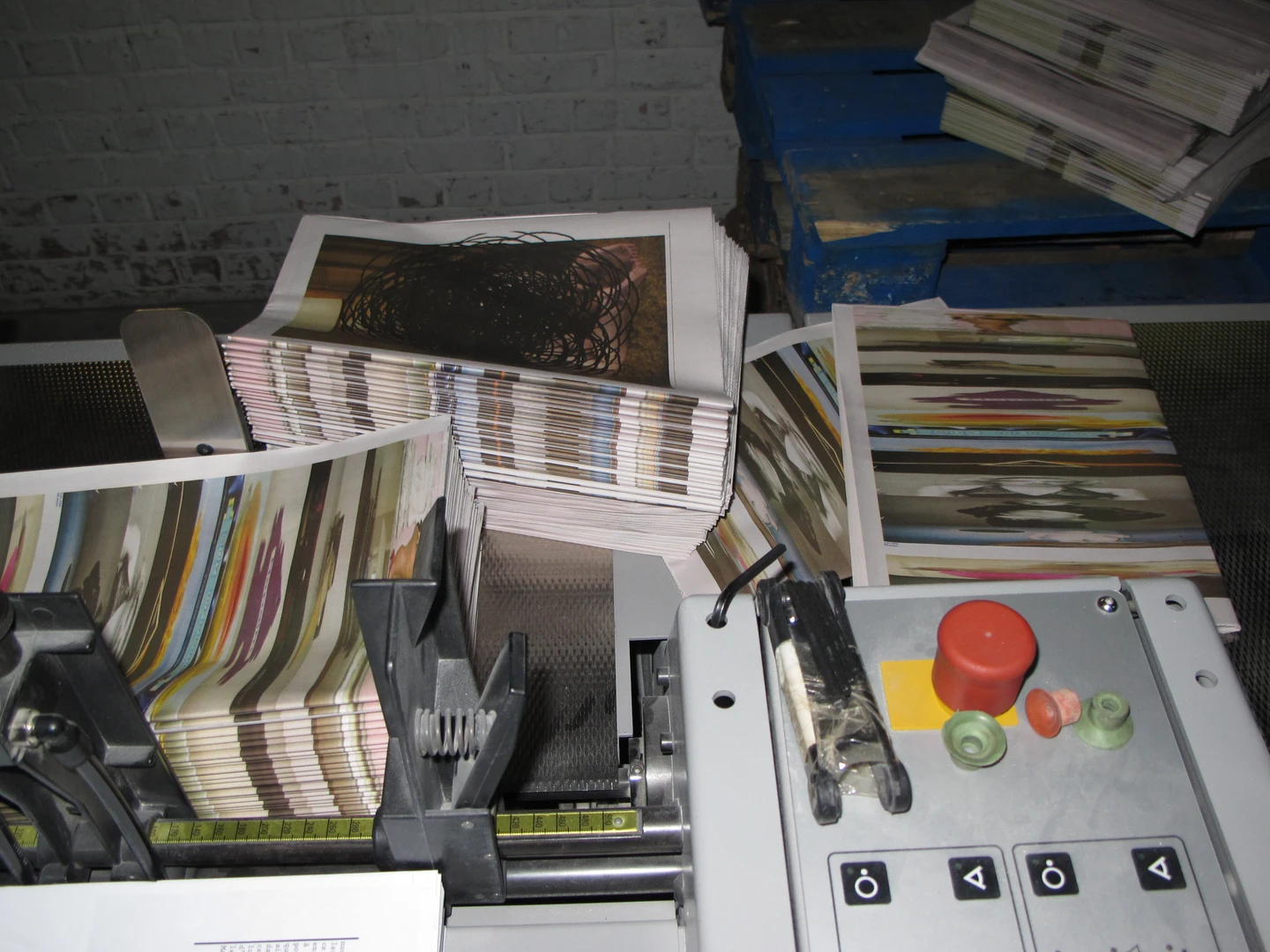
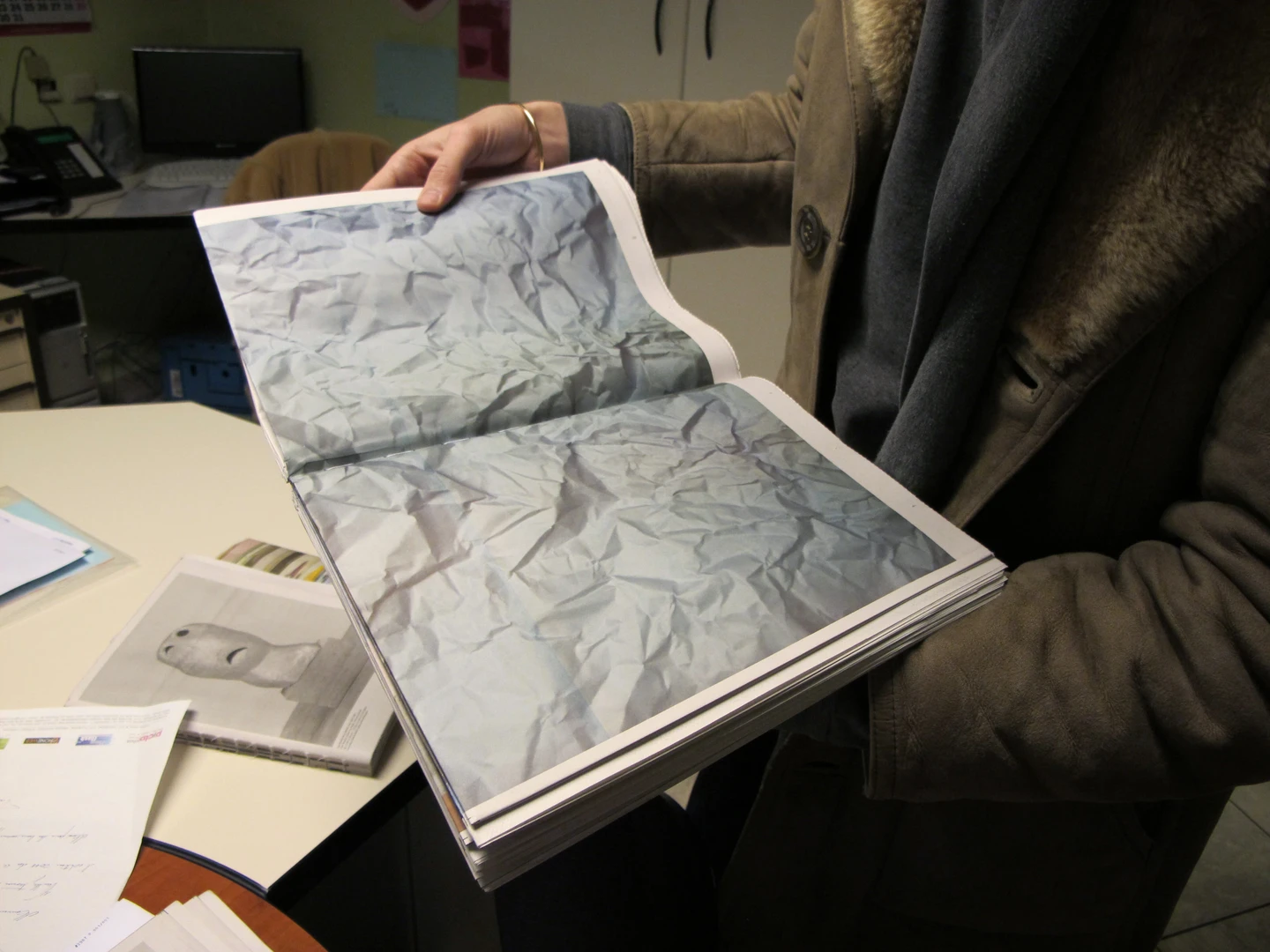
HISK Editorial 2013HISK Open Studio, 11-14.05.2012
Hoger Instituut voor Schone Kunsten Vlaanderen, Gent
Advenced Studies & Practice-based Research in Visual Arts -
-
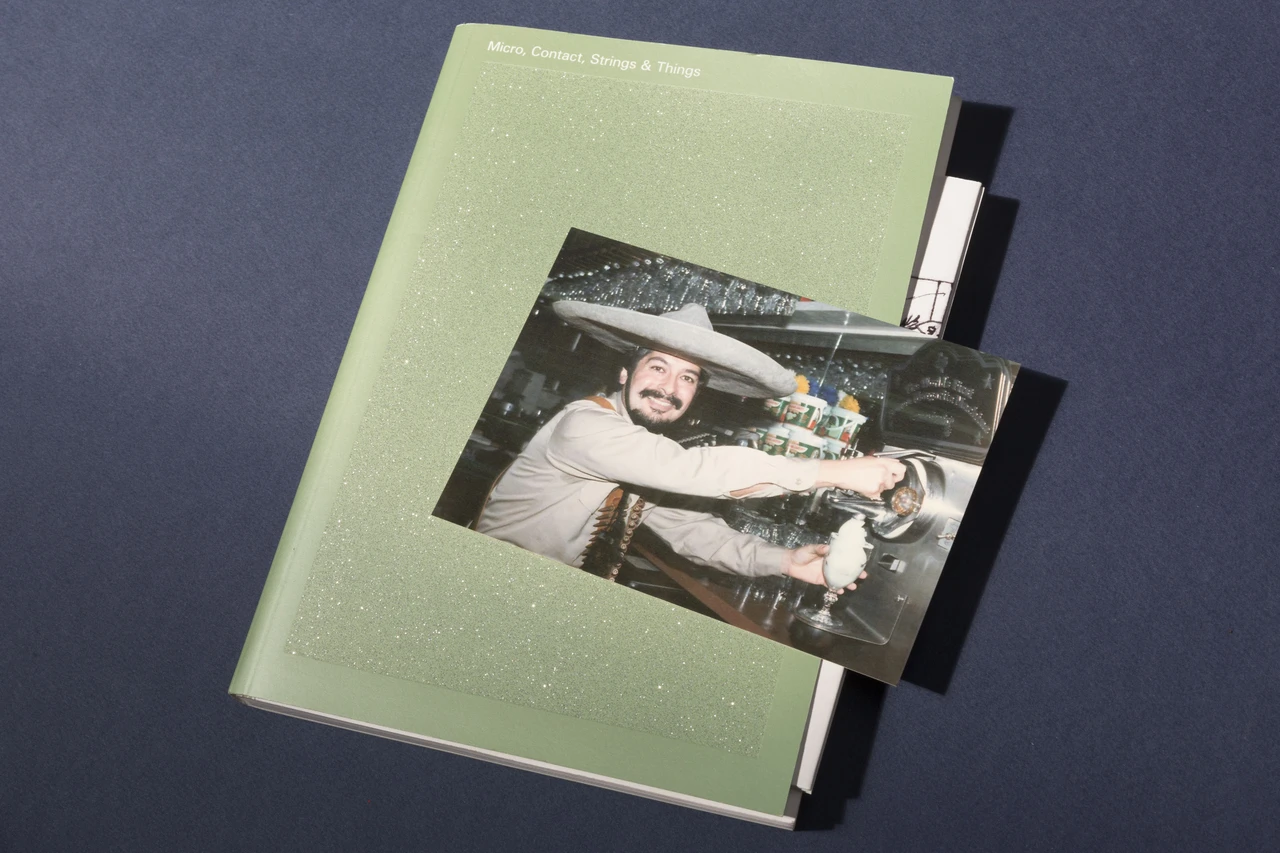
Micro, Contact, Strings and Things
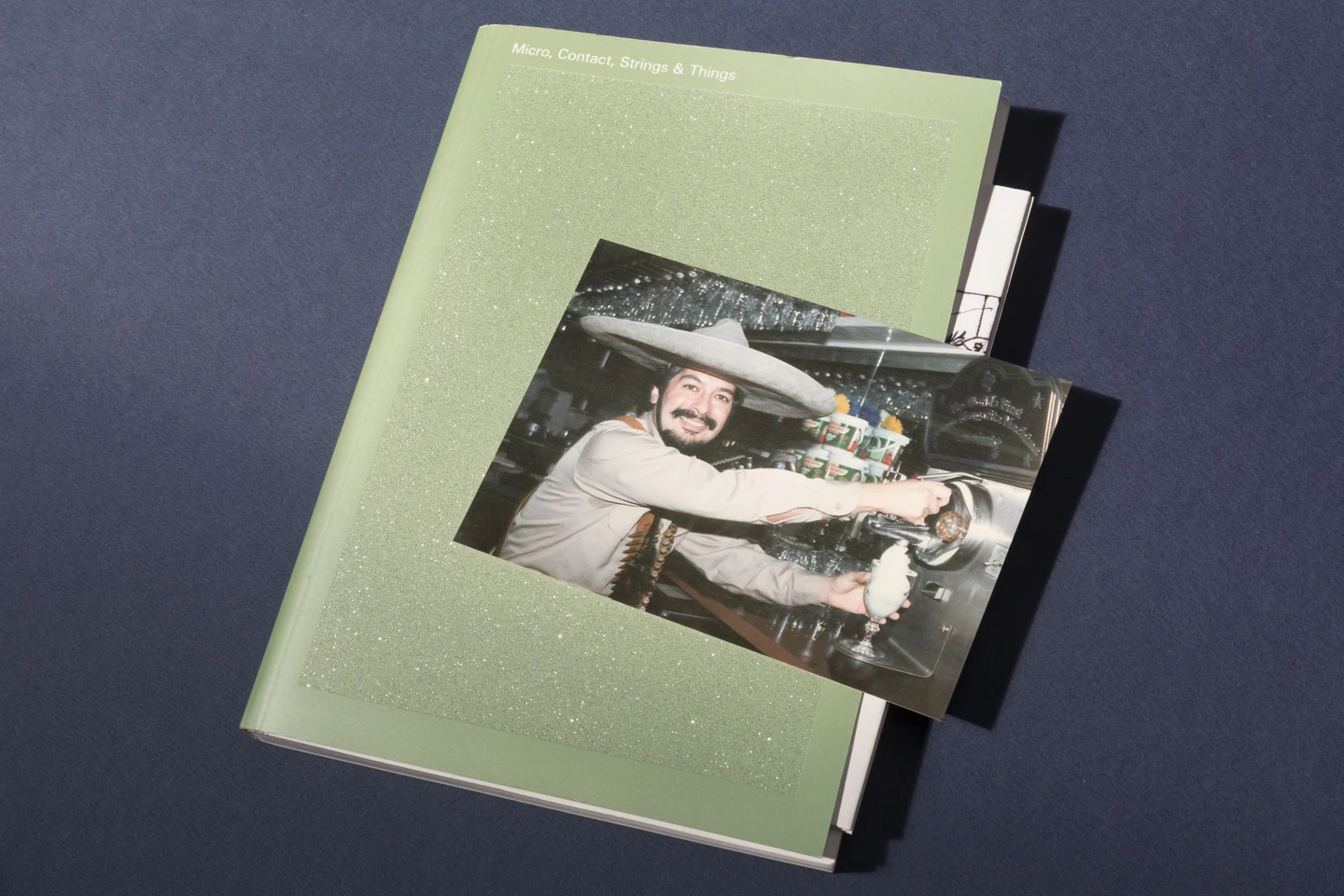
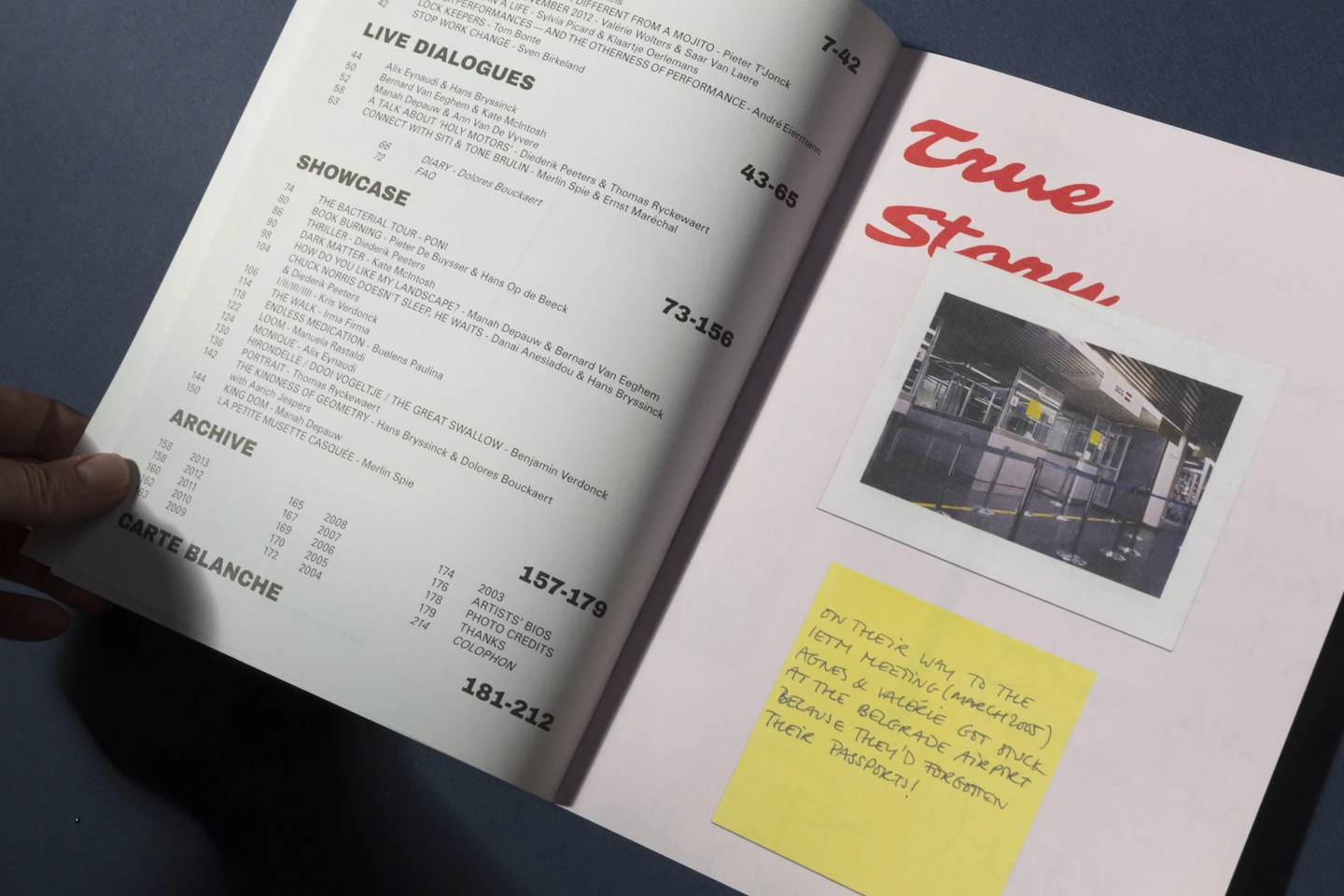
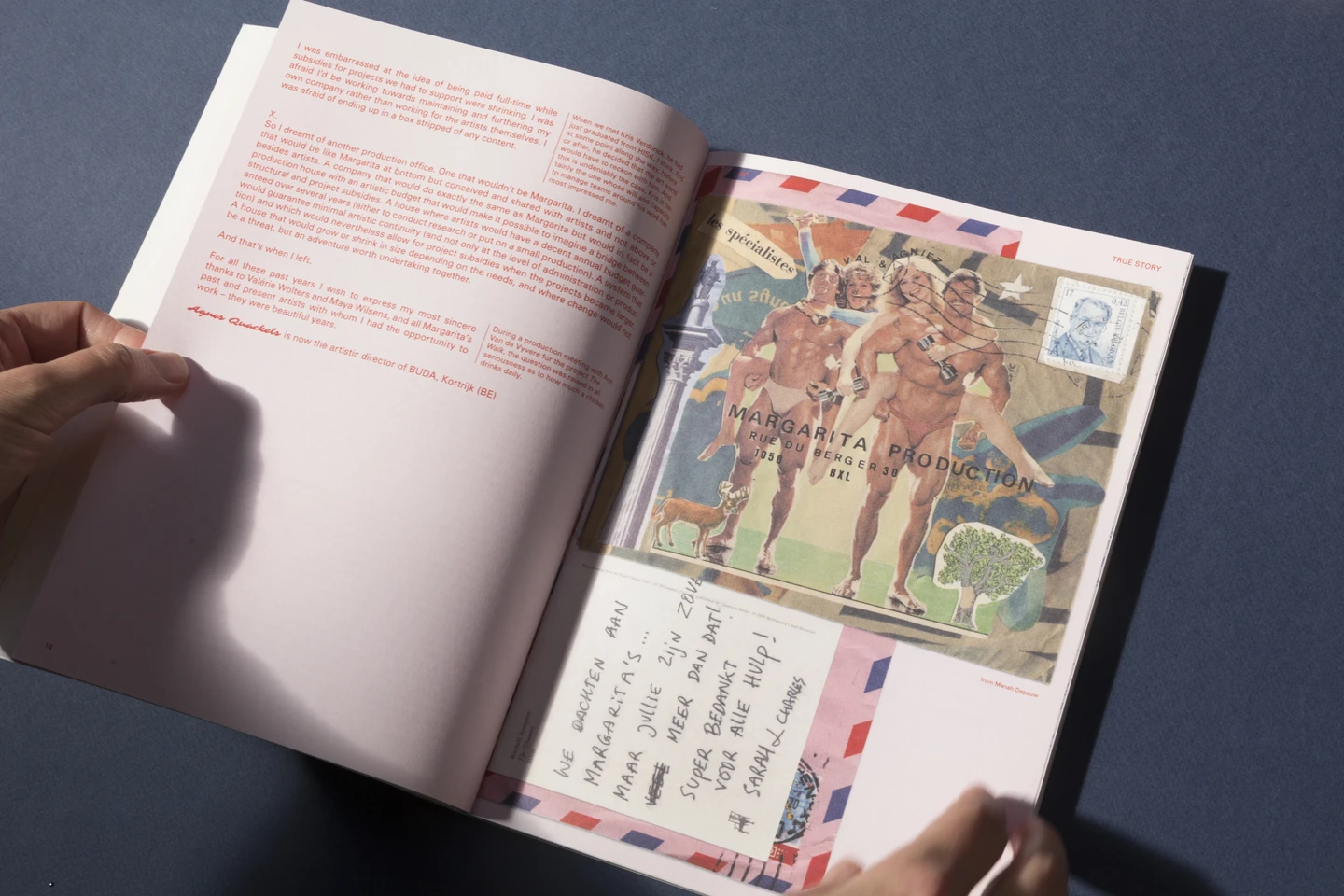
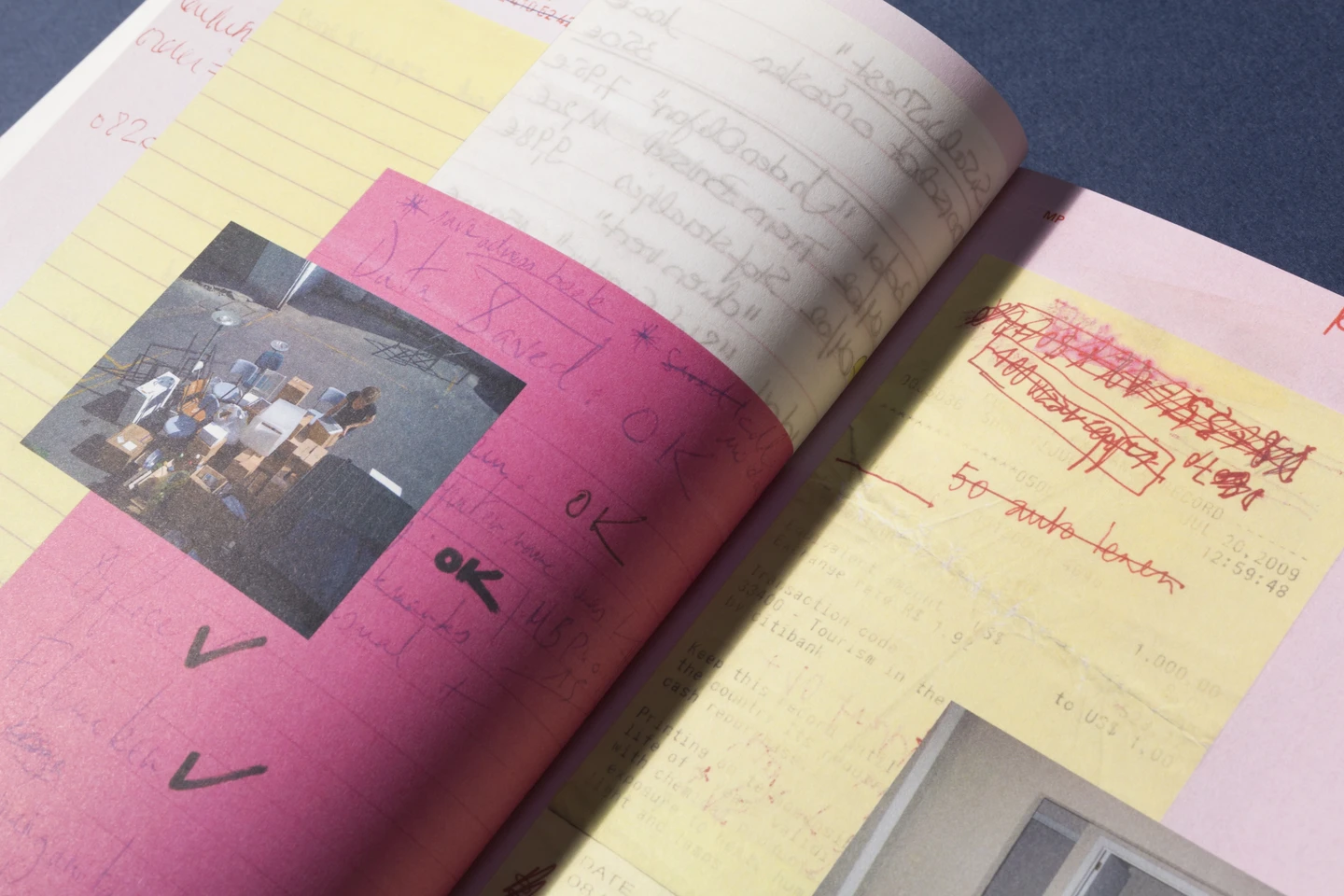
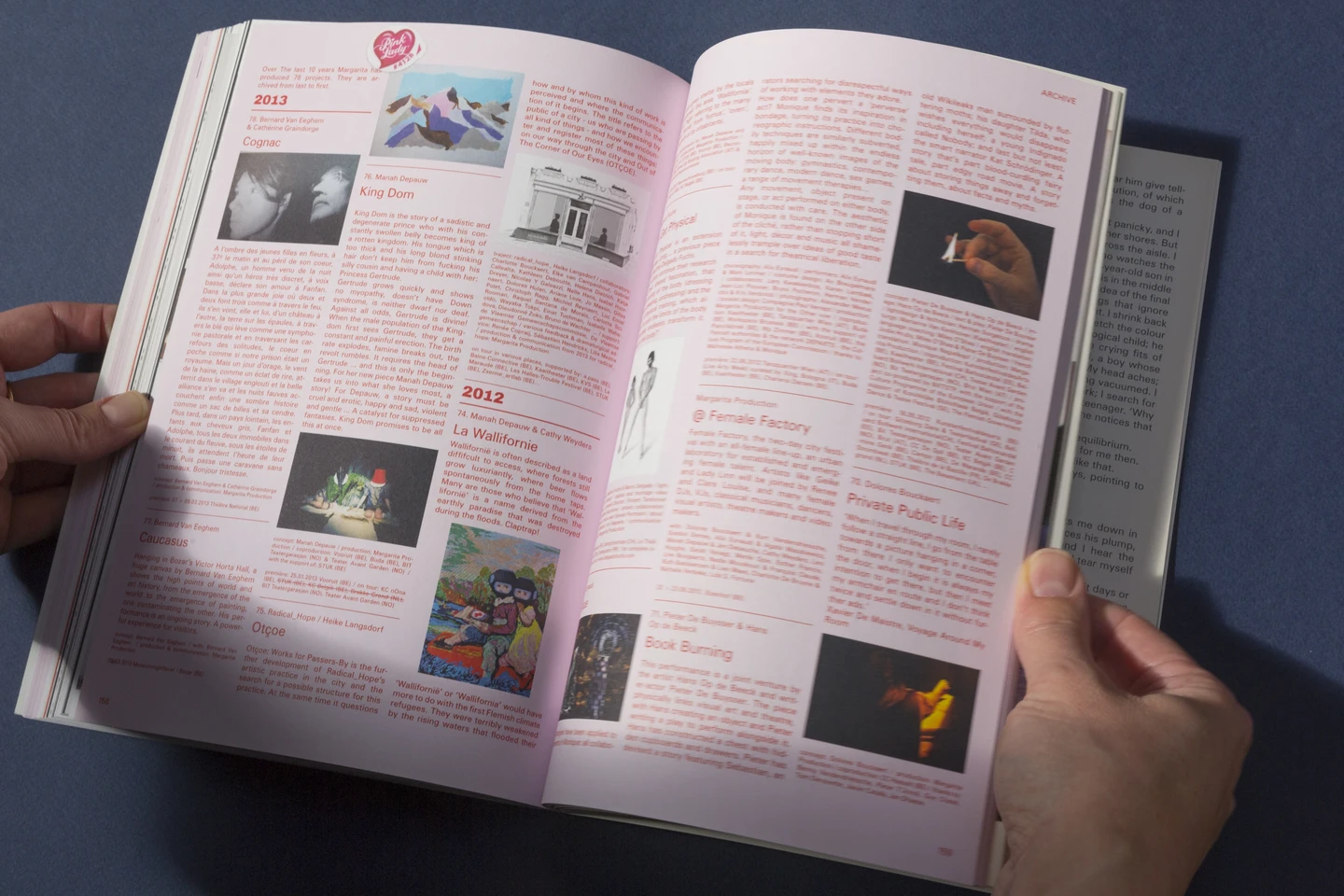
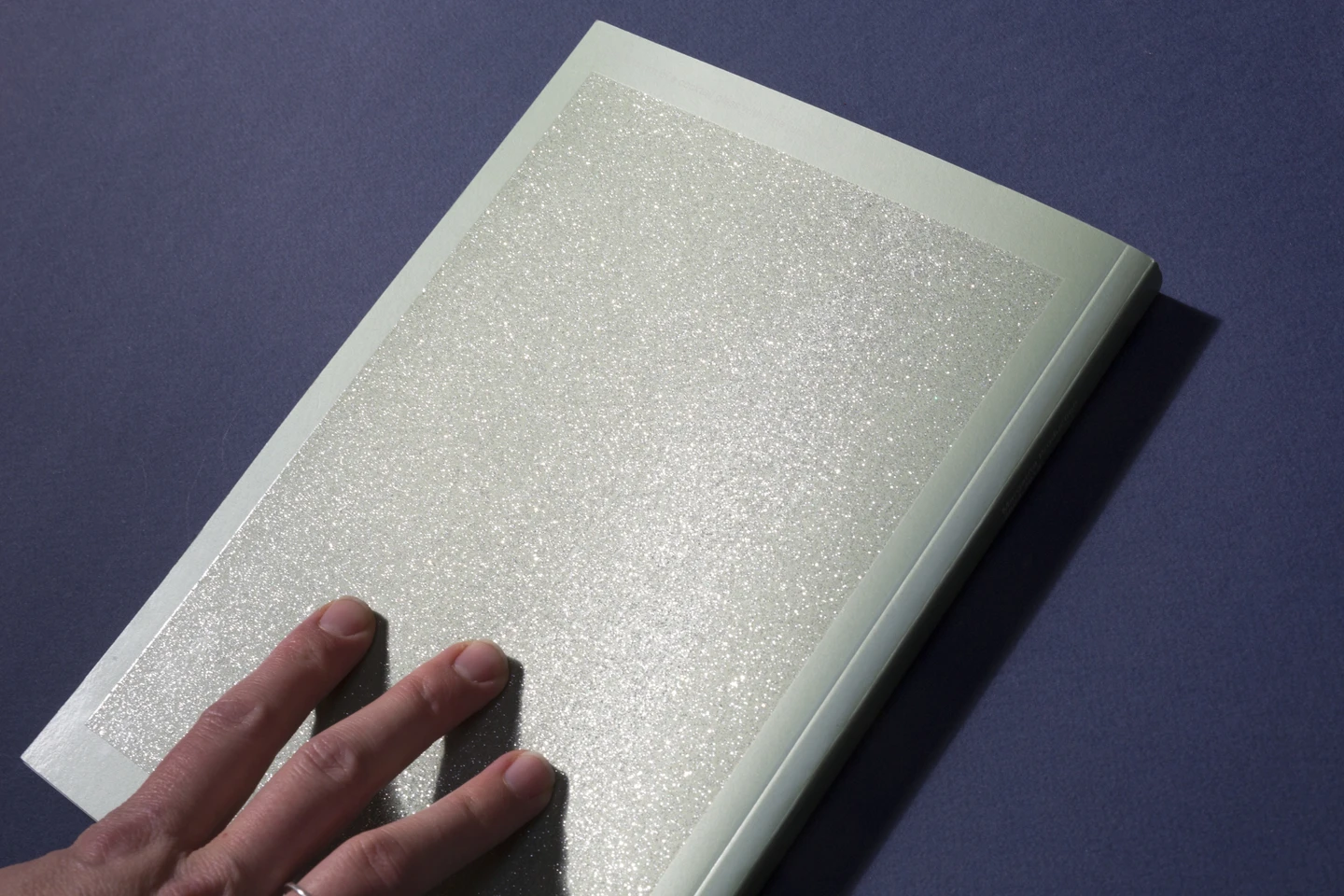
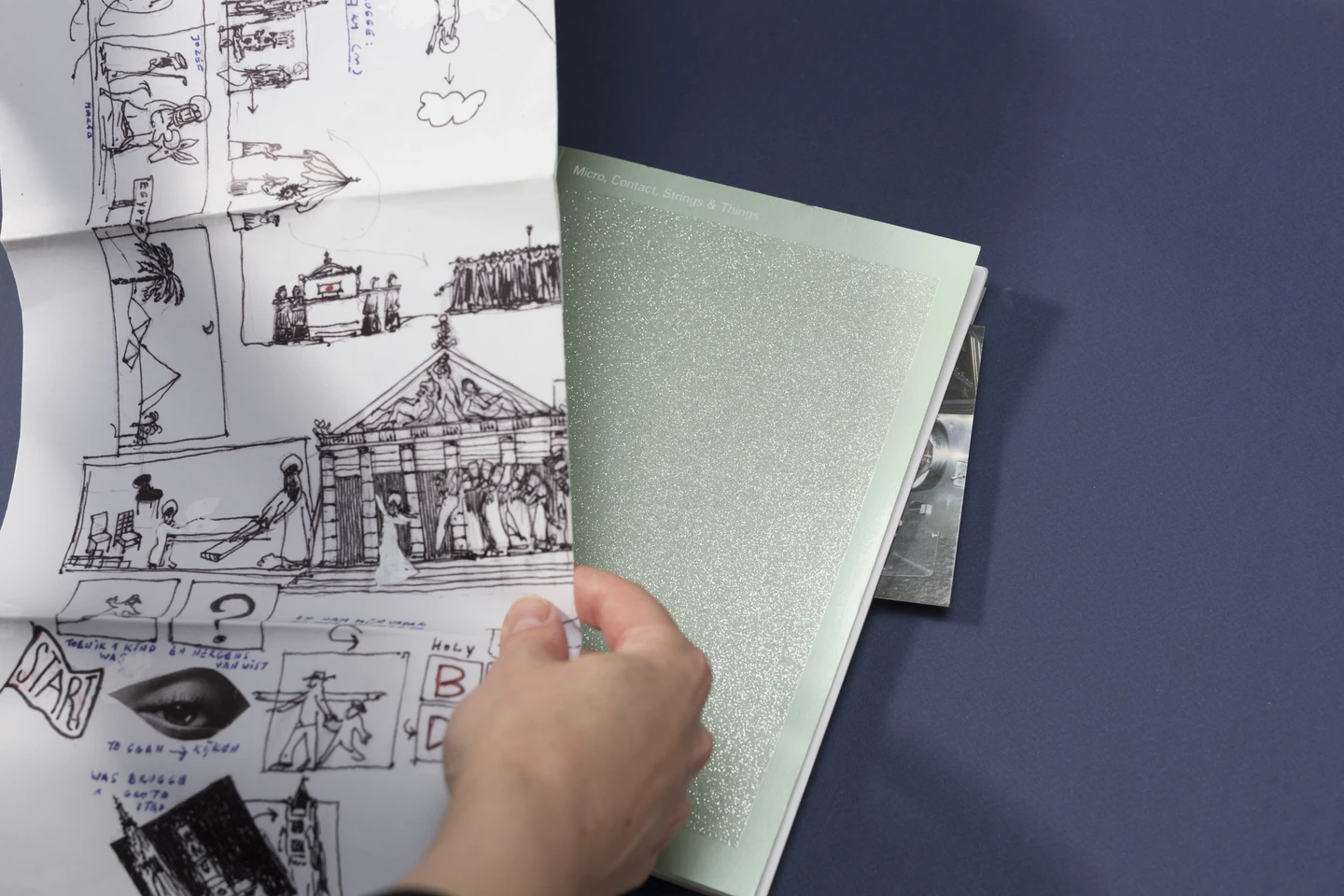
Margarita Production, MER. Editorial, Book 2013This publication shows how an alternative management company functions, and howit offers possibilities to a dozen talented artists to profile themselves in an original way. An extensive archive provides a chronological overview of all 78 completed projects and collaborations set up by Margarita Production between 2003 and 2013.
“Micro, contact, strings & things is a publication that reads like an inspirational sketchbook which shows us a unique image of an altered art practice by a young generation performing artists.” Julie Rodeyns, H art
“With its design of Überknackig that is chic and cheap - that glitter cover! - this publication feels like a poetry book, that friendship booklet that we gave to each other in school and that's appropriate: Above all Margarita remains a class populatedby fellow artists.” Ive Stevenheydens, Agenda, BDW
-
-
Wiels Témoignages
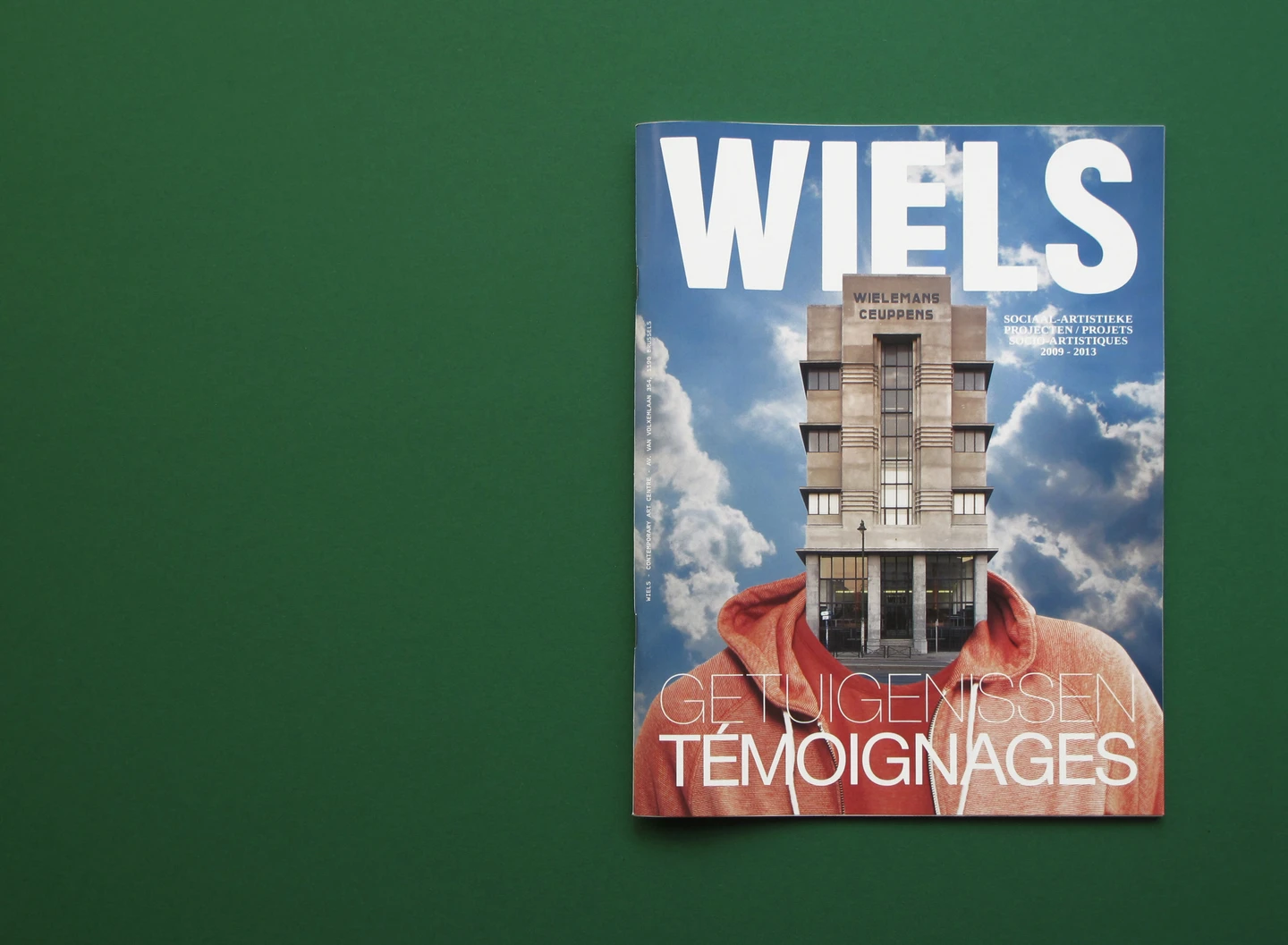
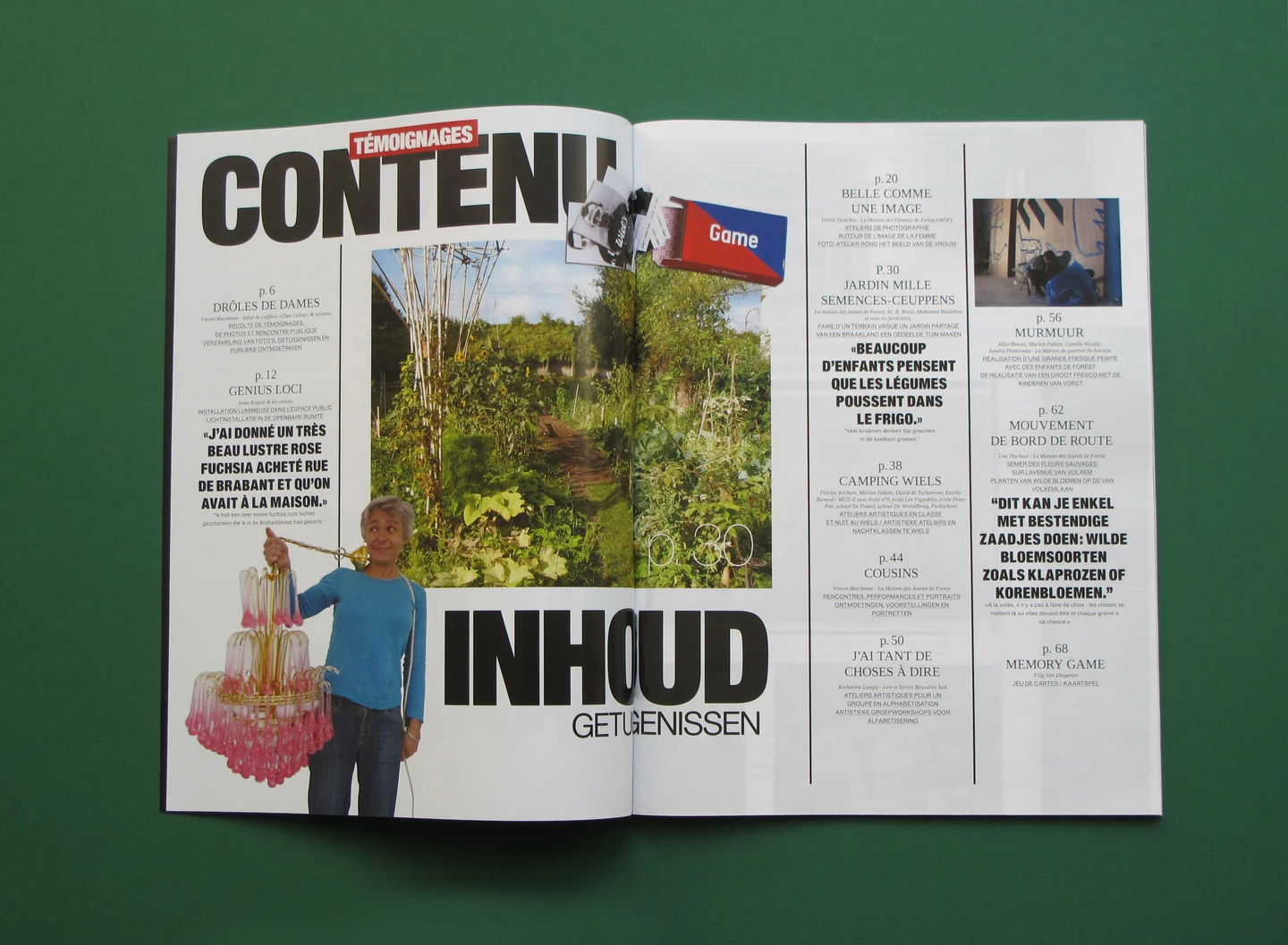
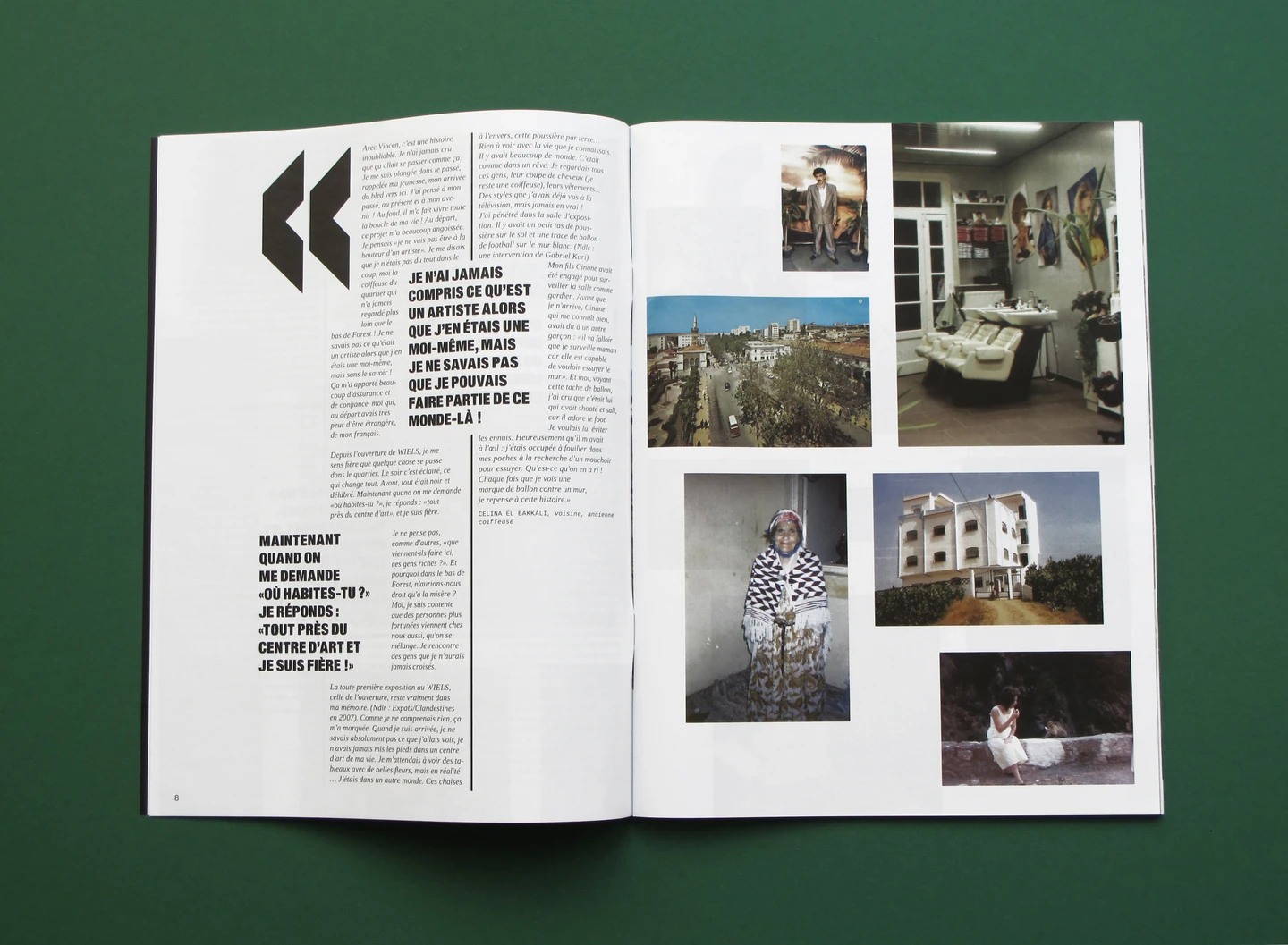
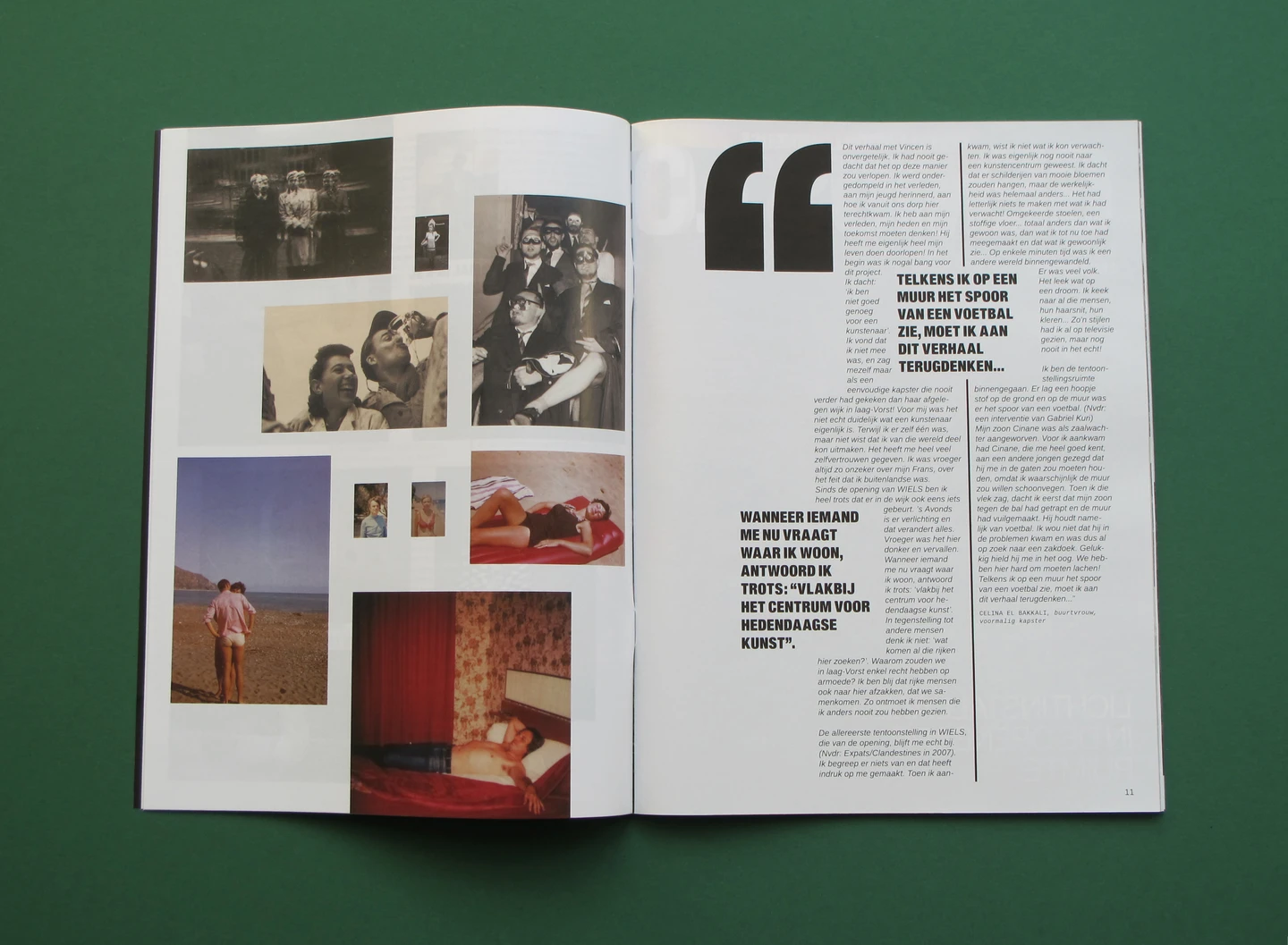
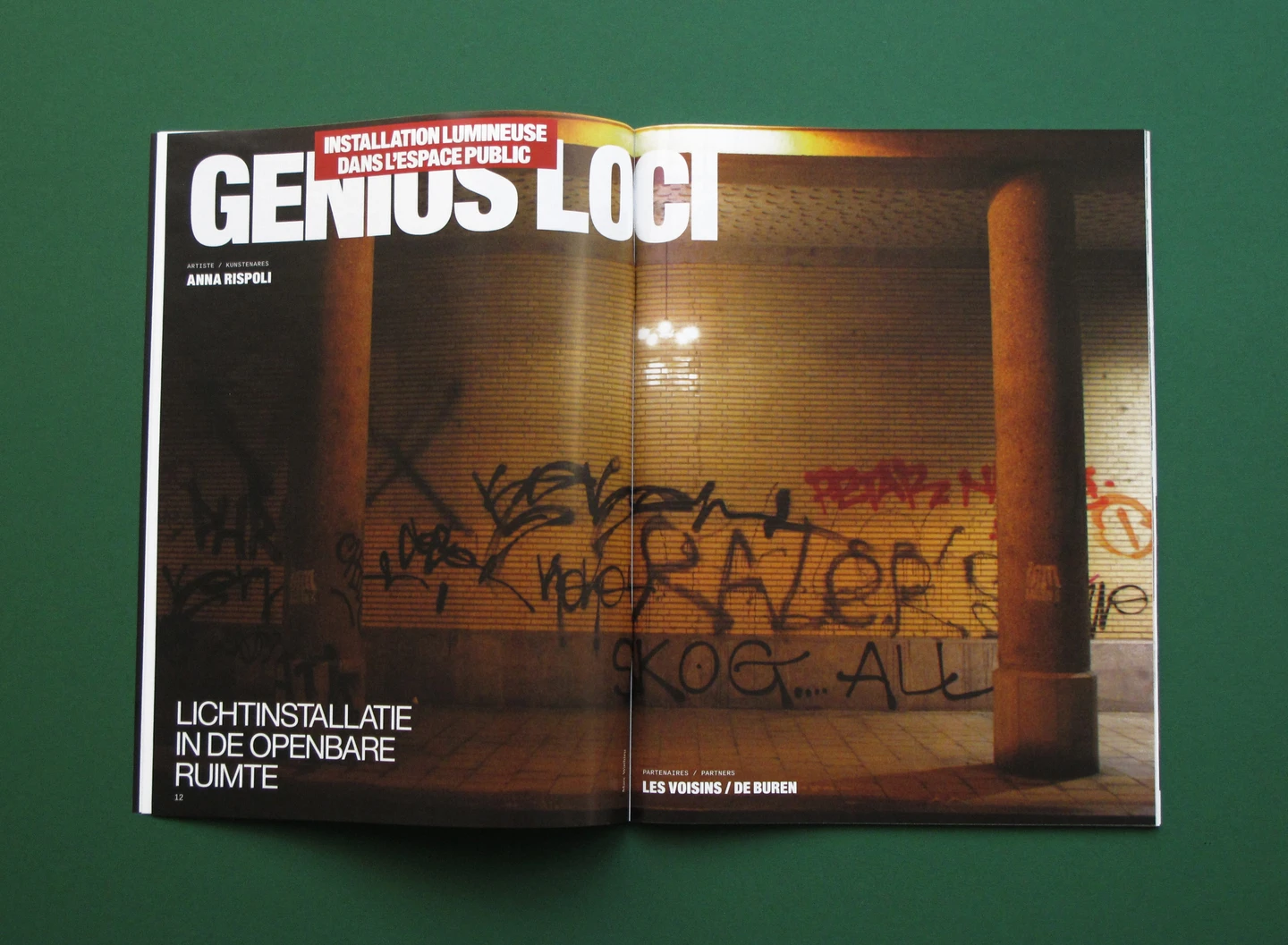
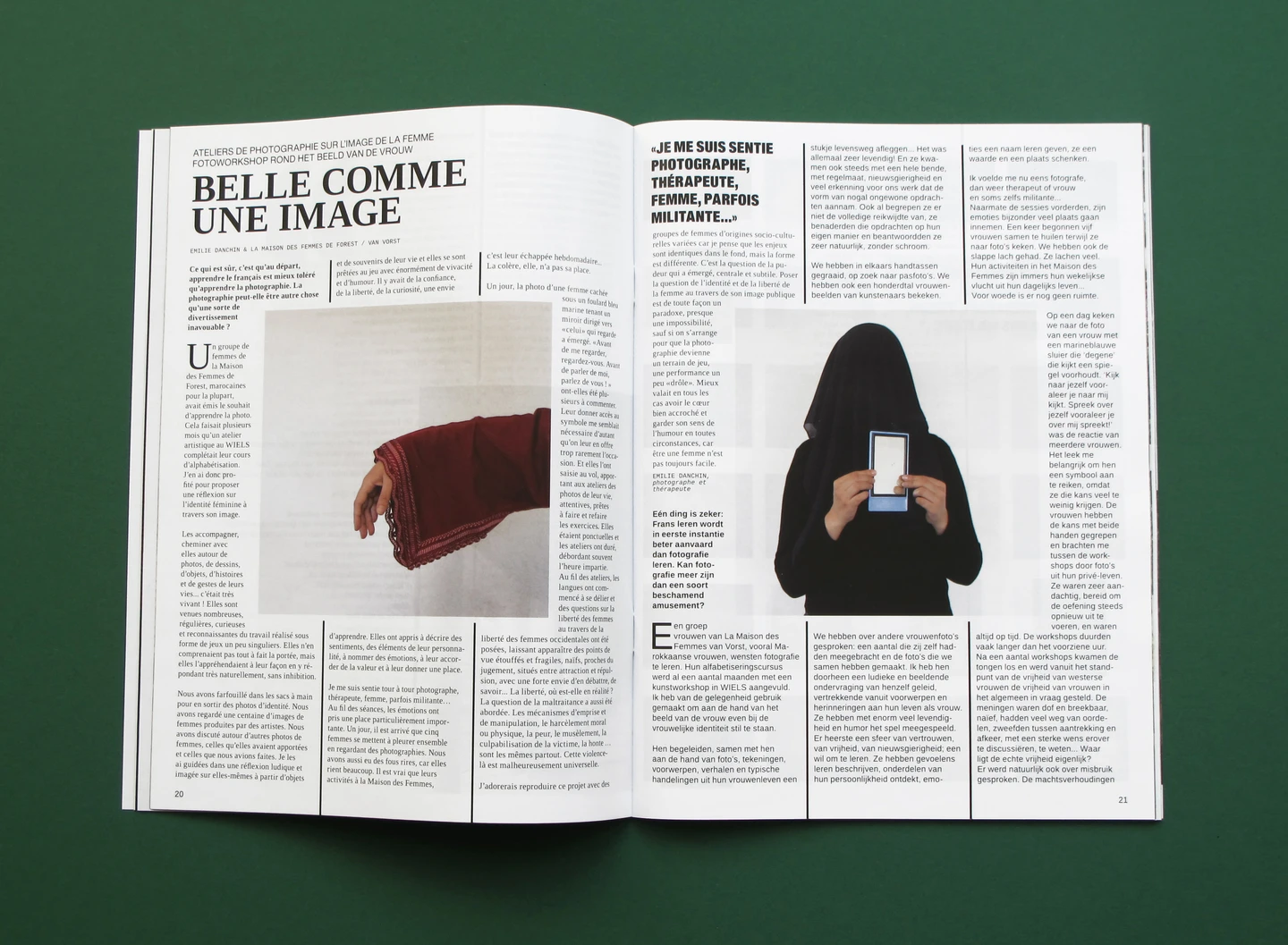
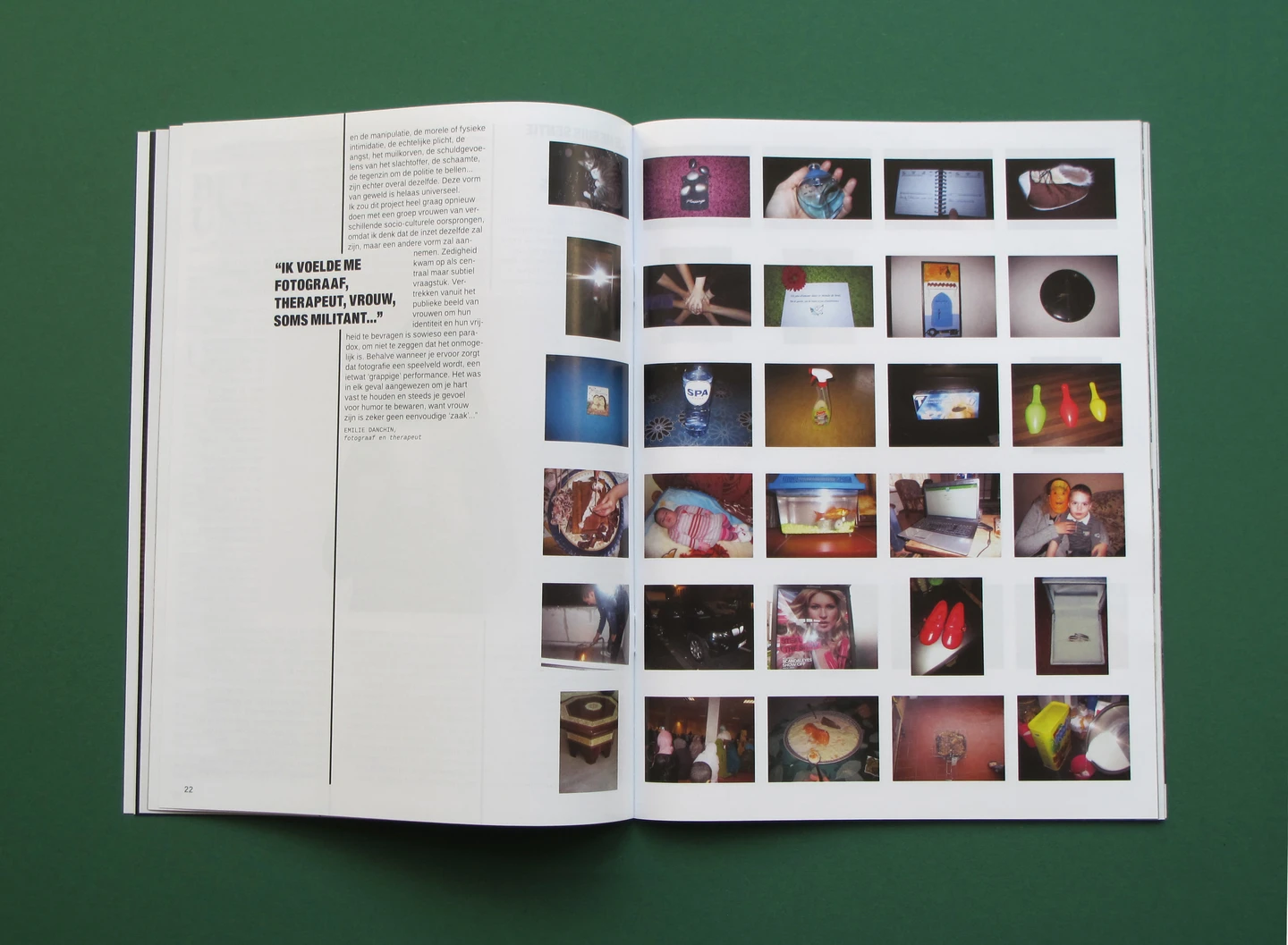
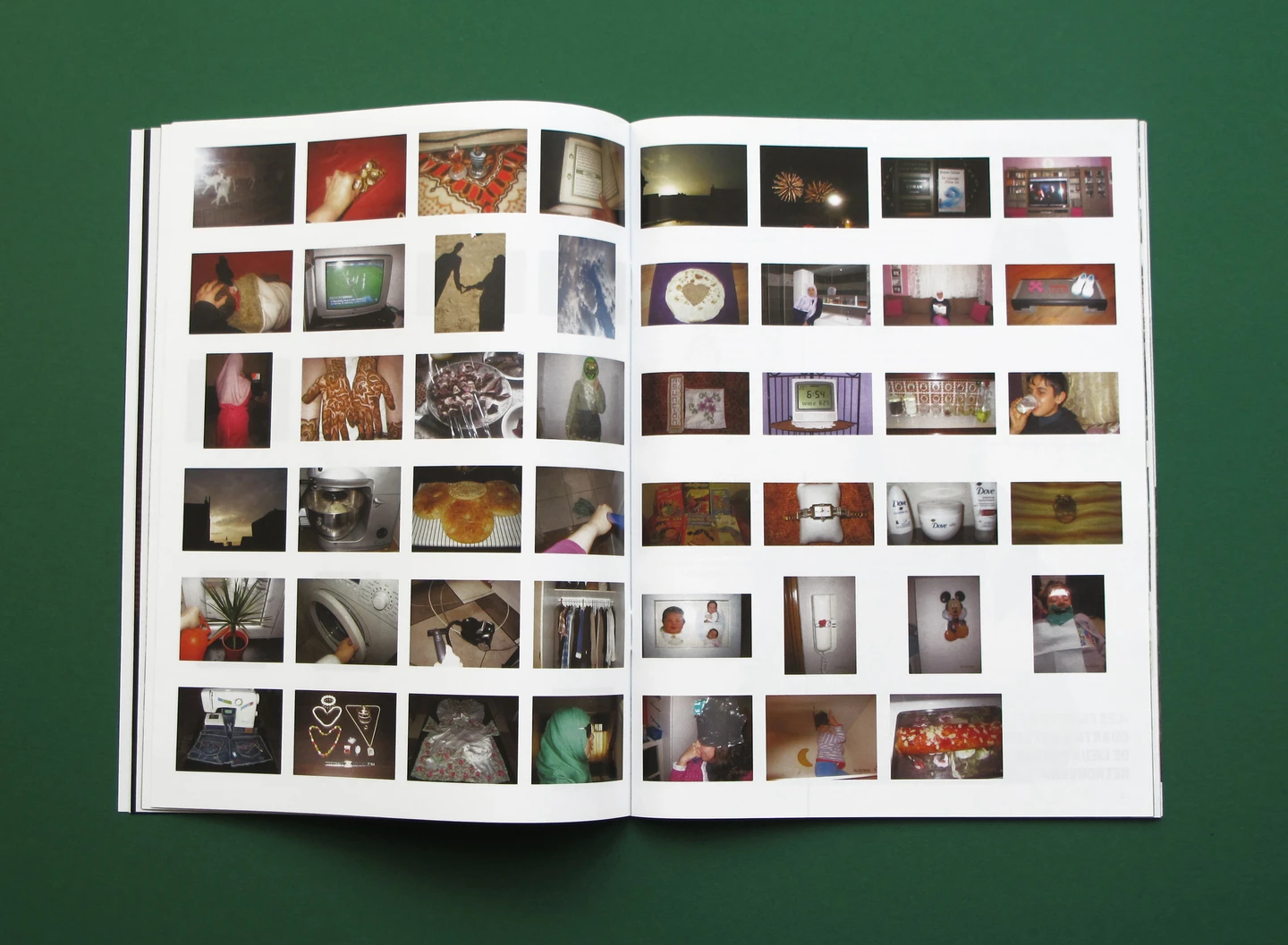
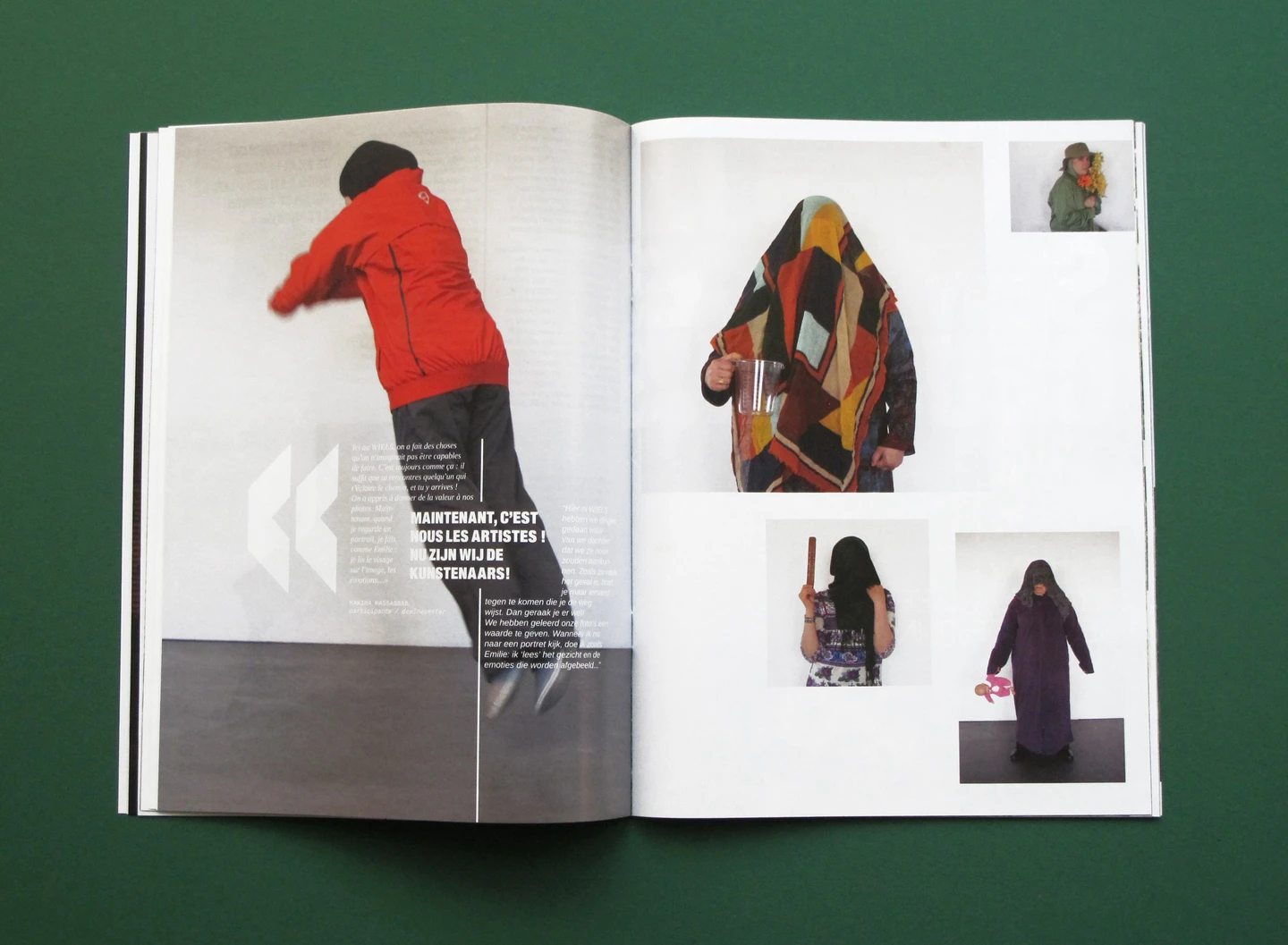
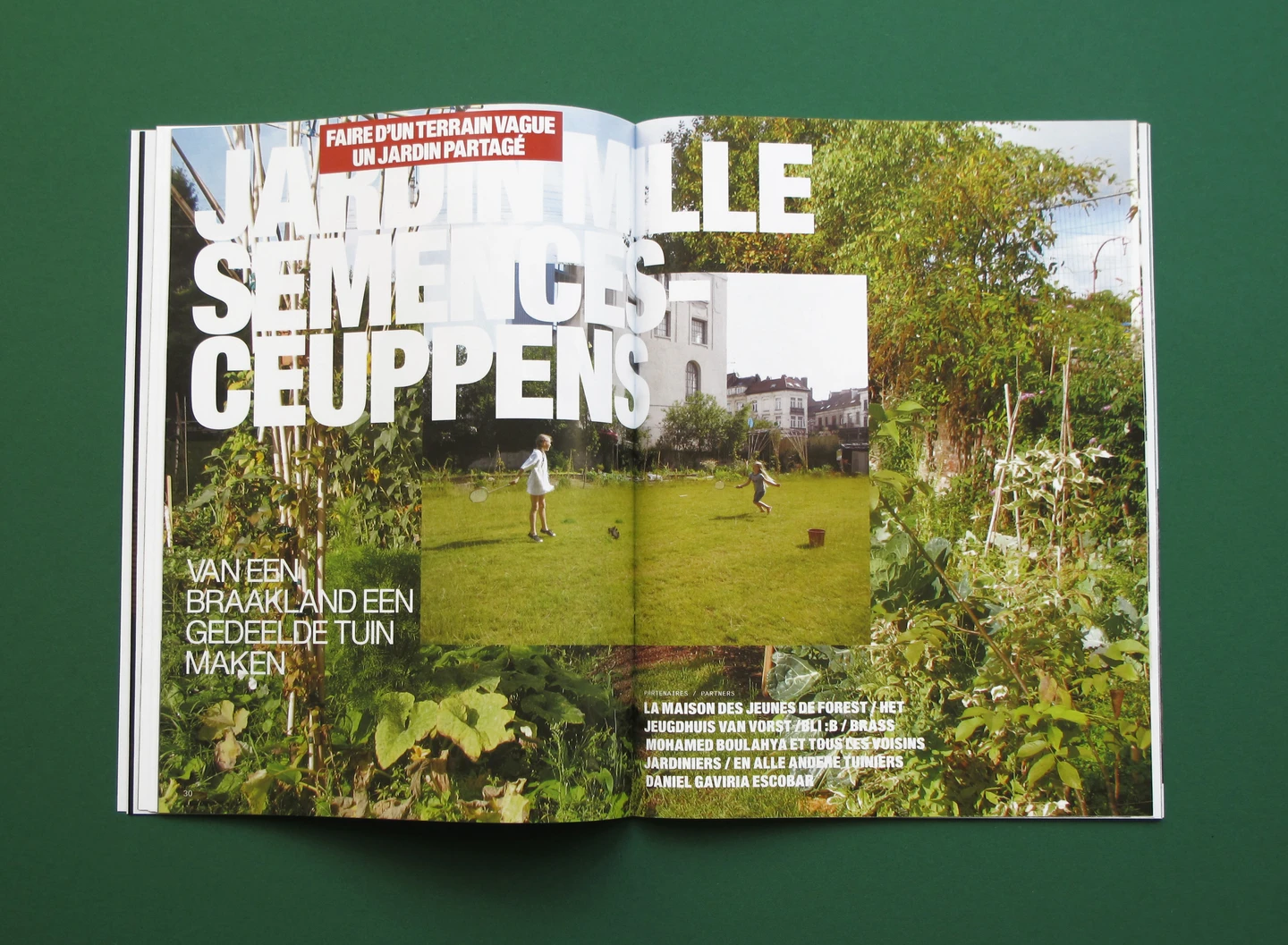
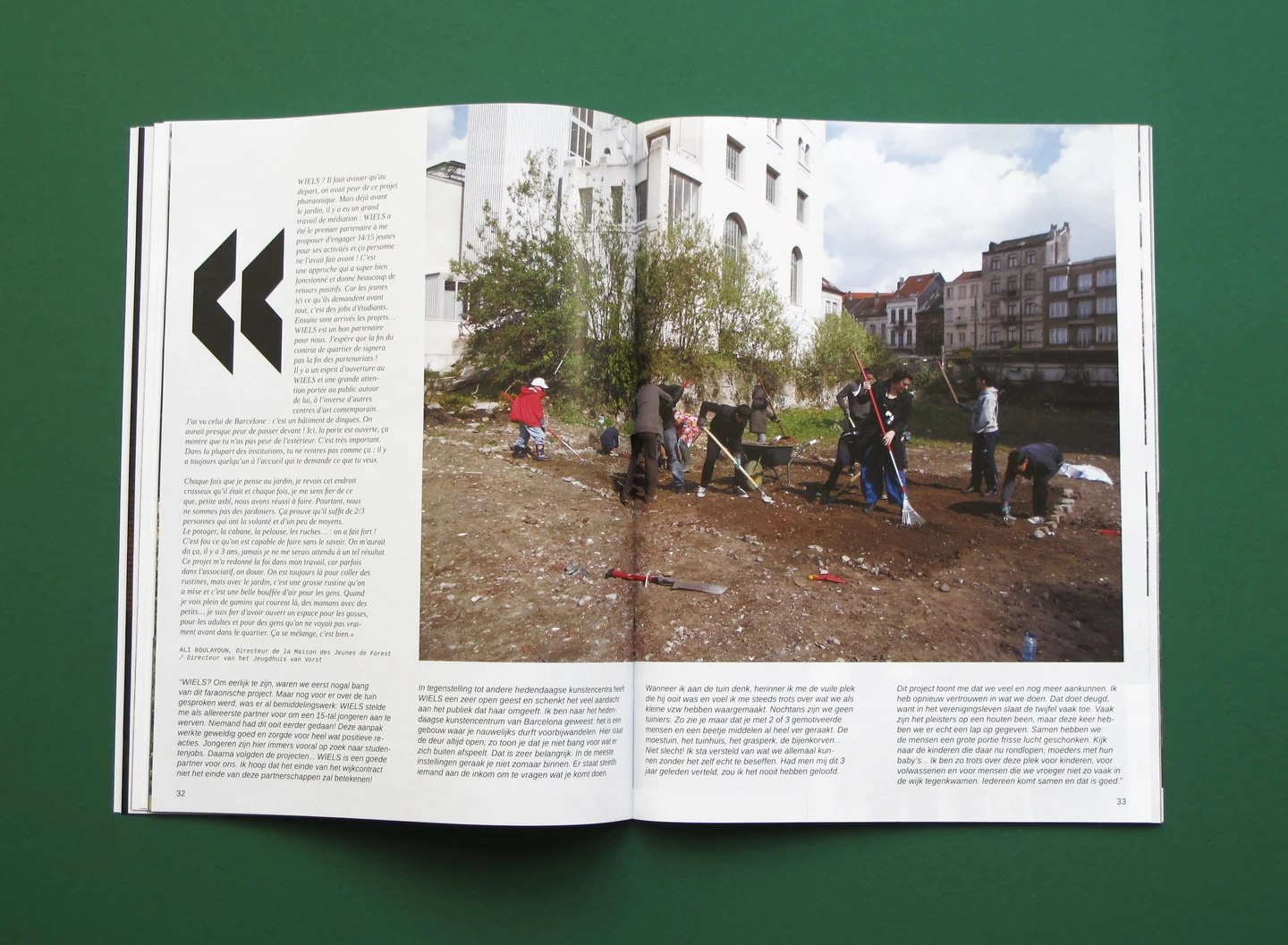
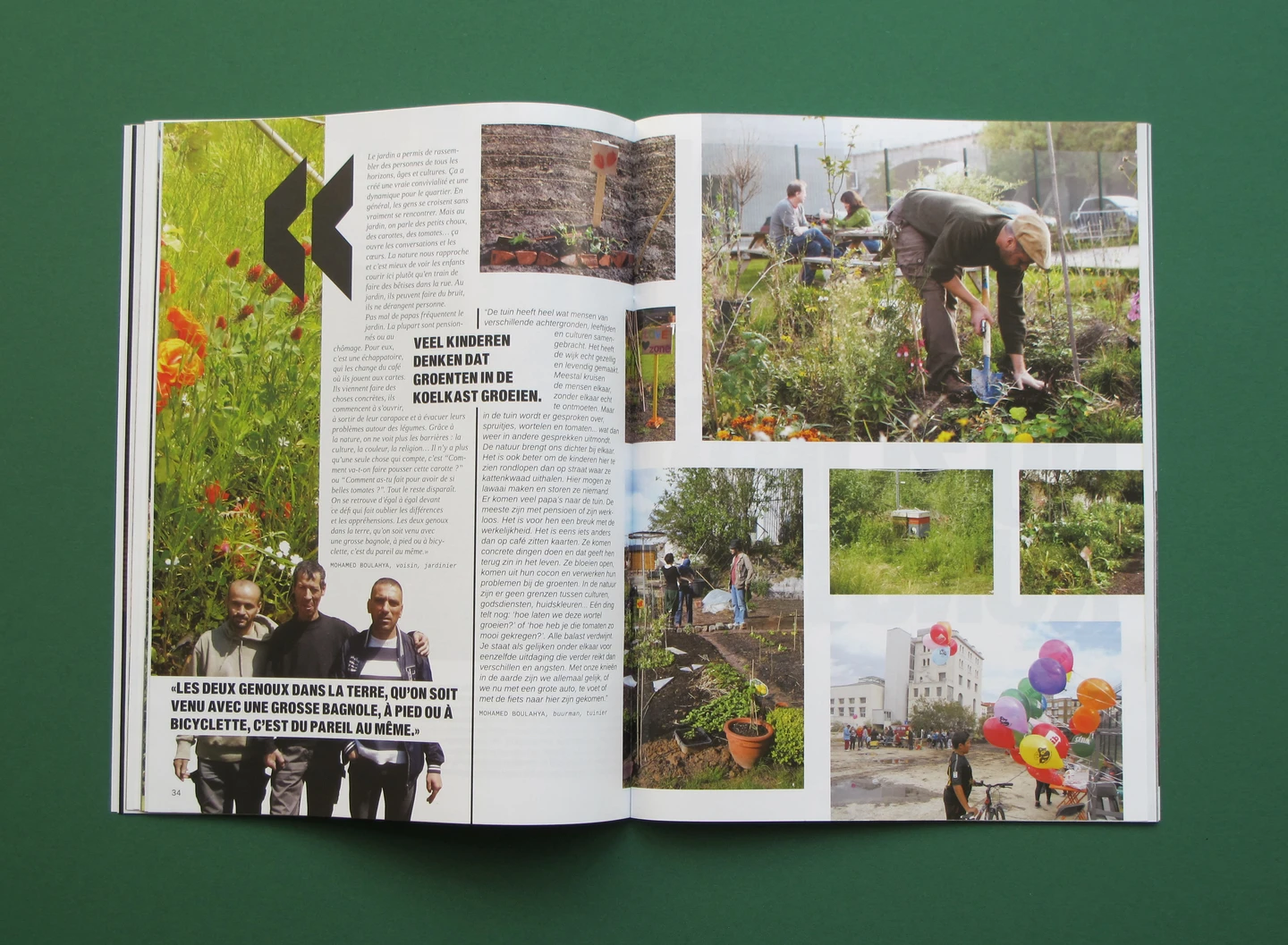
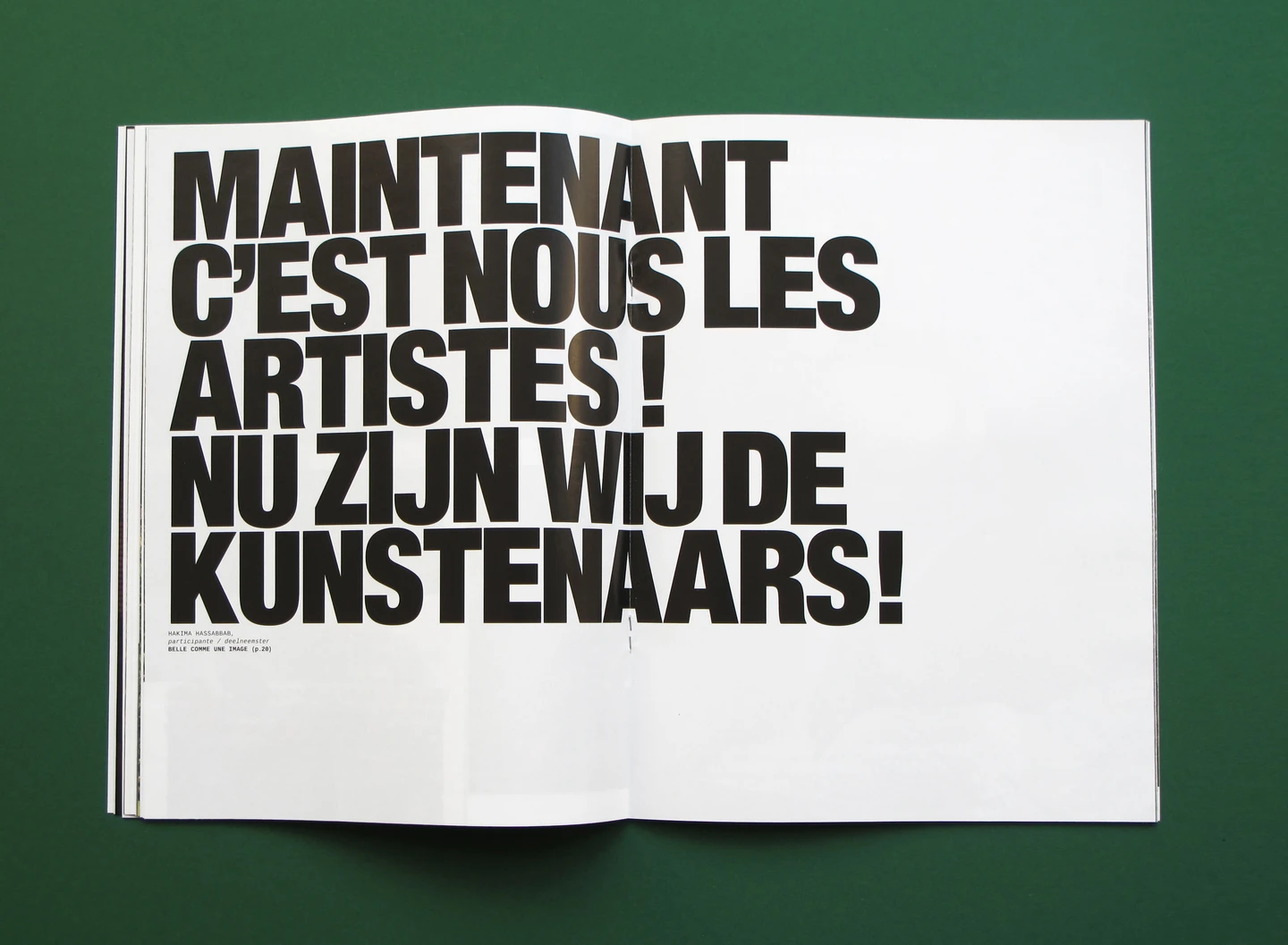
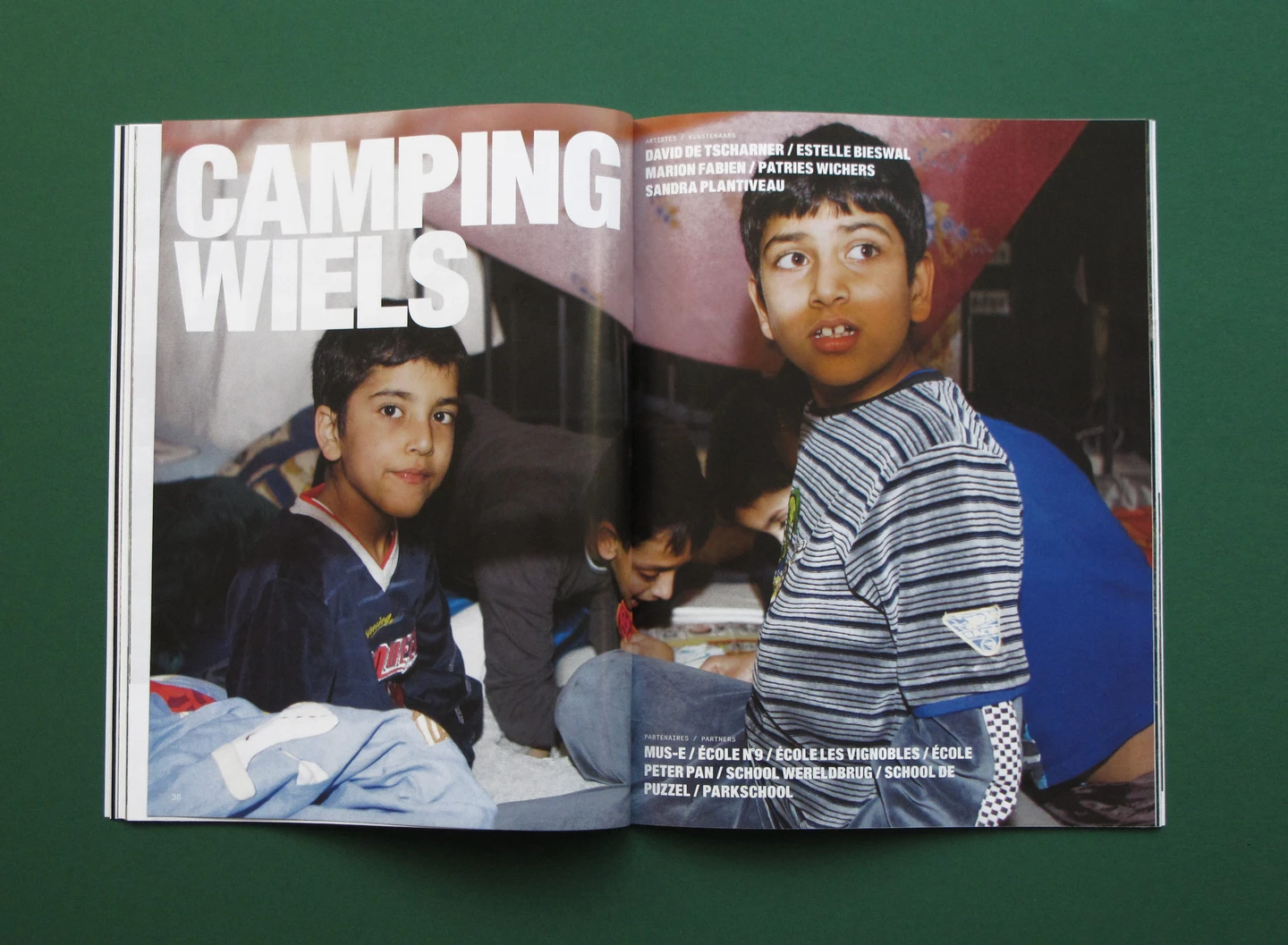
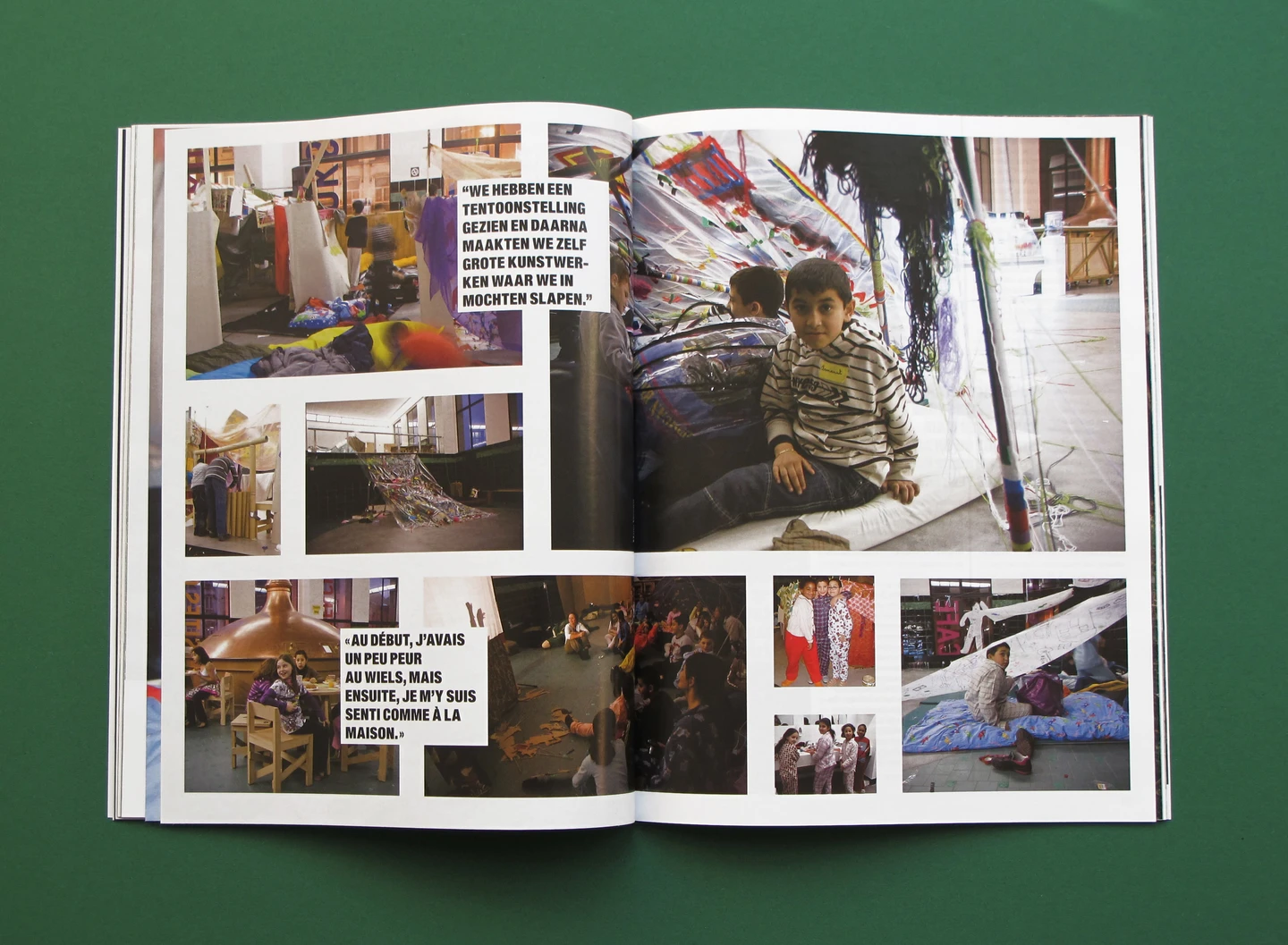
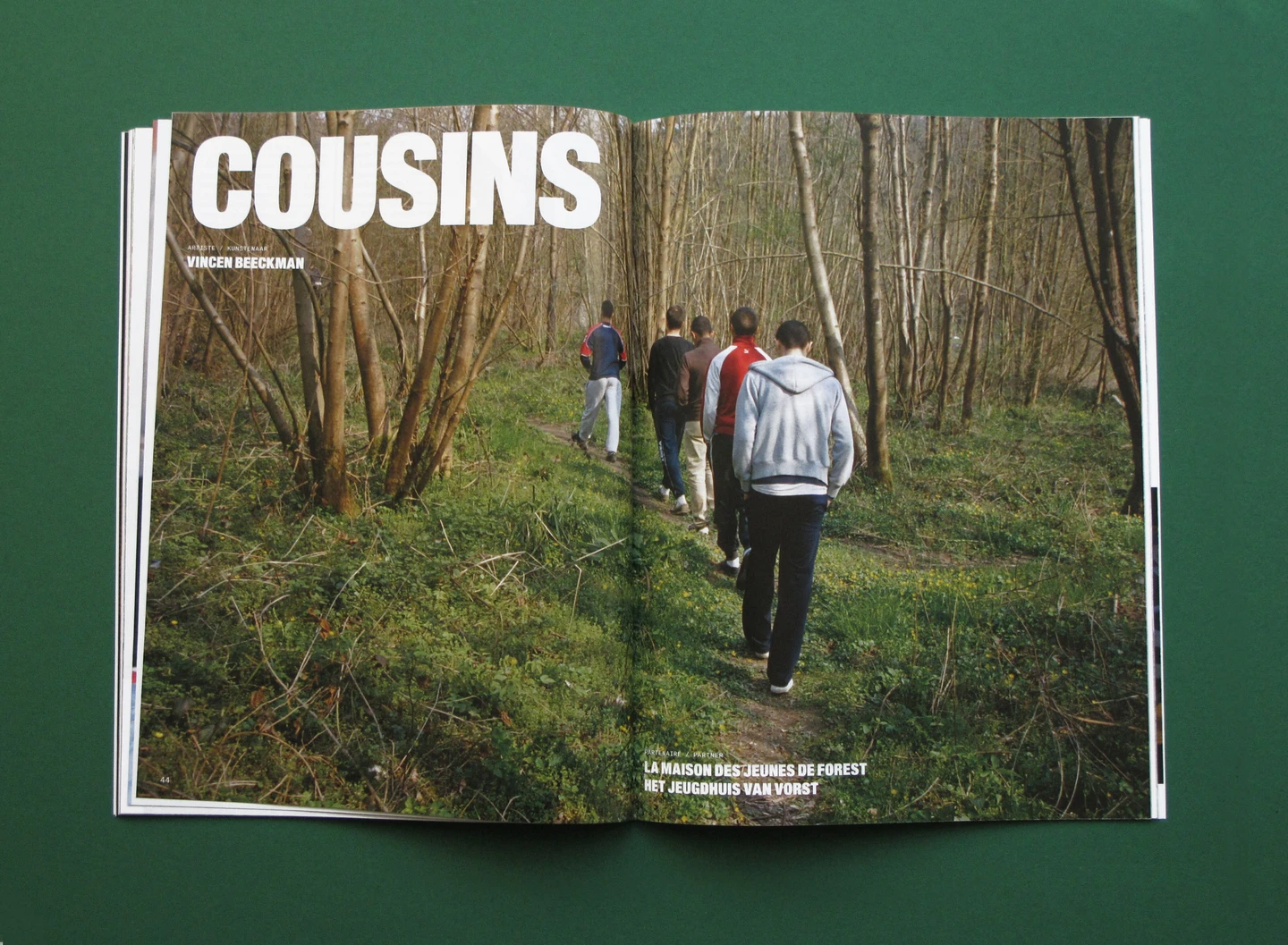
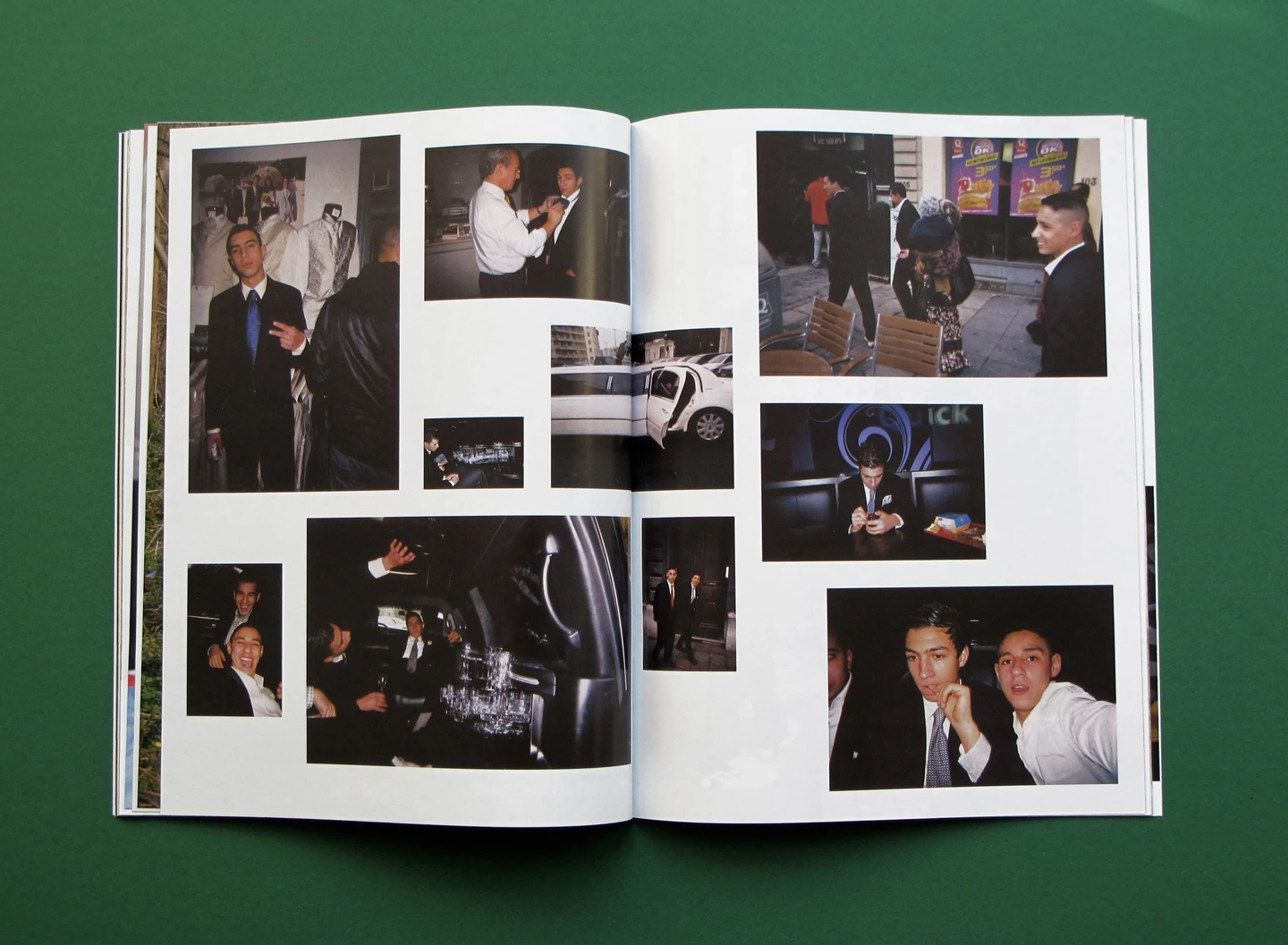
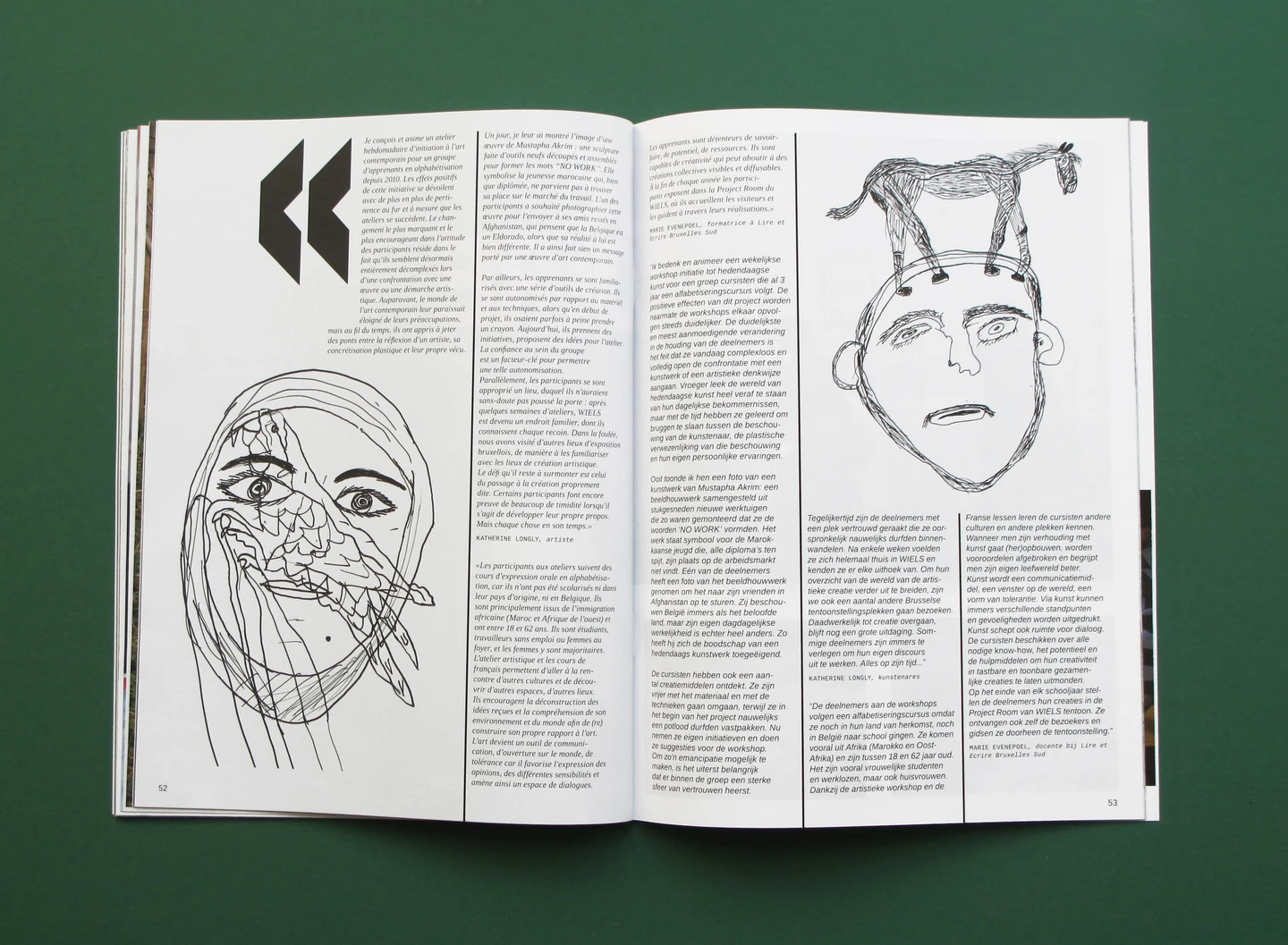
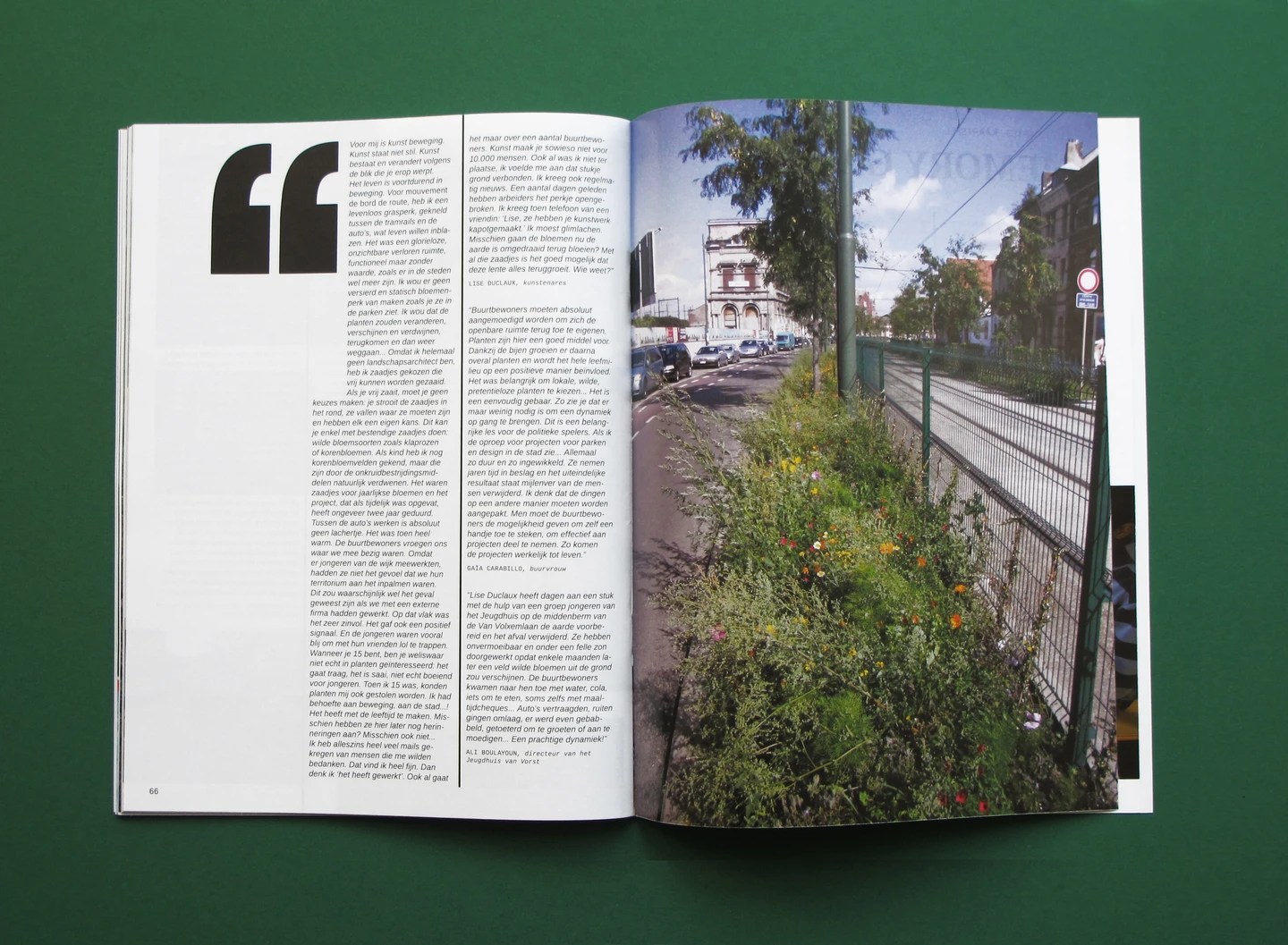
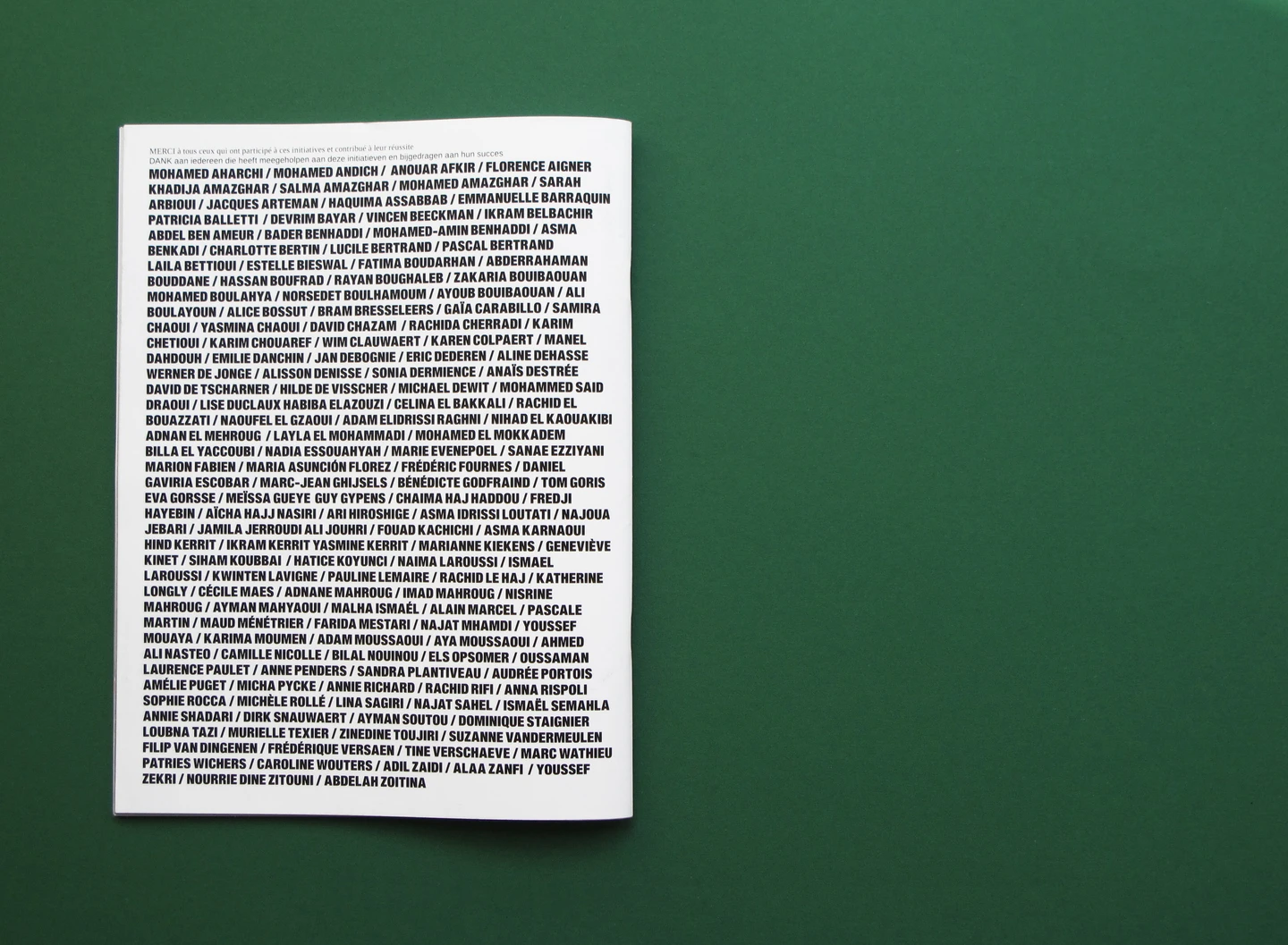
WIELS Editorial, Magazine 2013WIELS Centre for Contemporary Art has published a publication about the socio-artistic practices it undertook between 2009 and 2013: from a lighting installation in a public space, to transforming a vacant lot into a shared garden, to creating a large fresco depicting the children of Vorst.
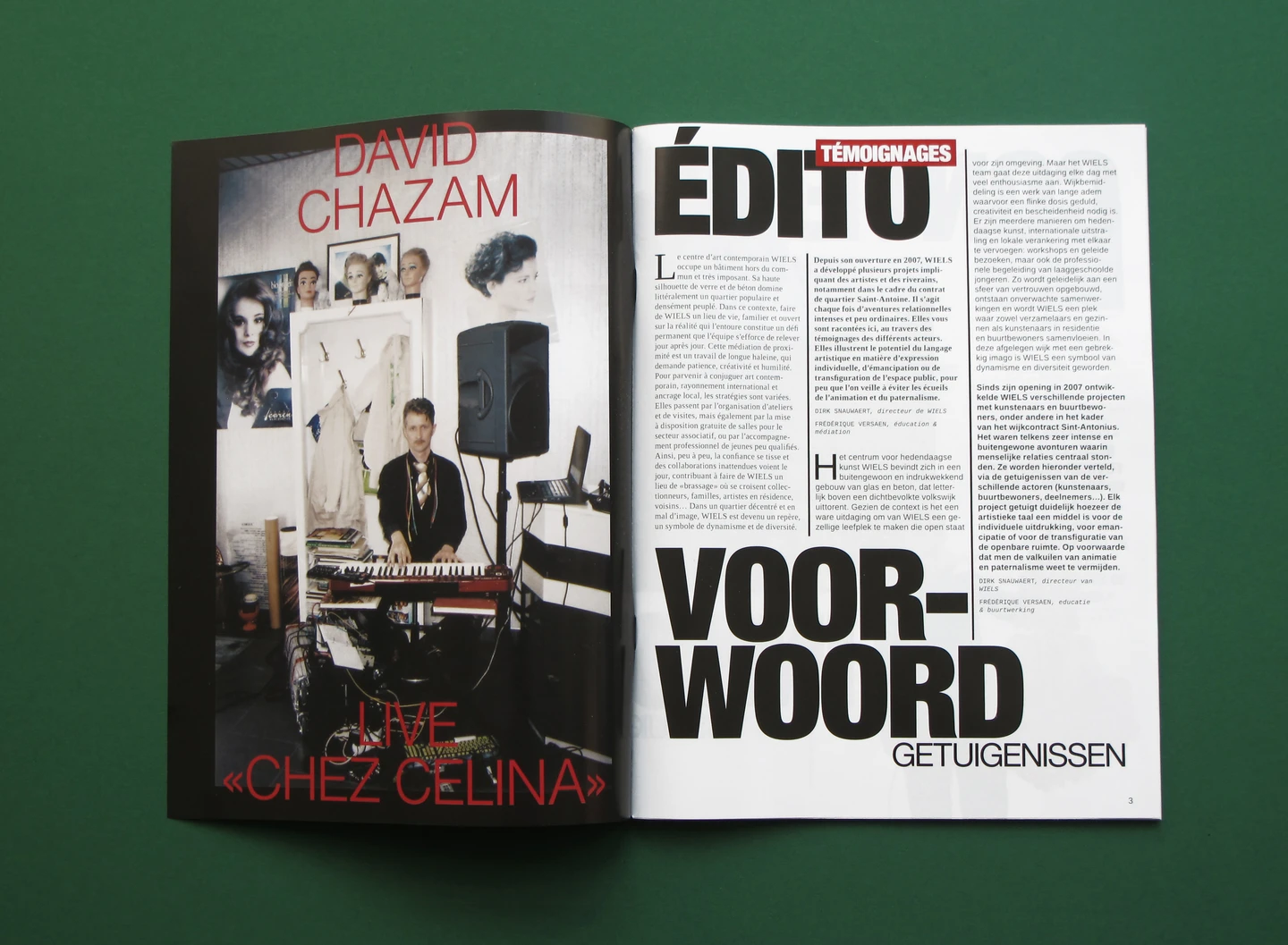
Below is the foreword to "Getuigenissen/Témoignages" (Testimonials/Testimonials) by Dirk Snauwaert, director of WIELS, and Frédérique Versaen, education and community development officer, in which they contextualize their socio-artistic work.
-
-
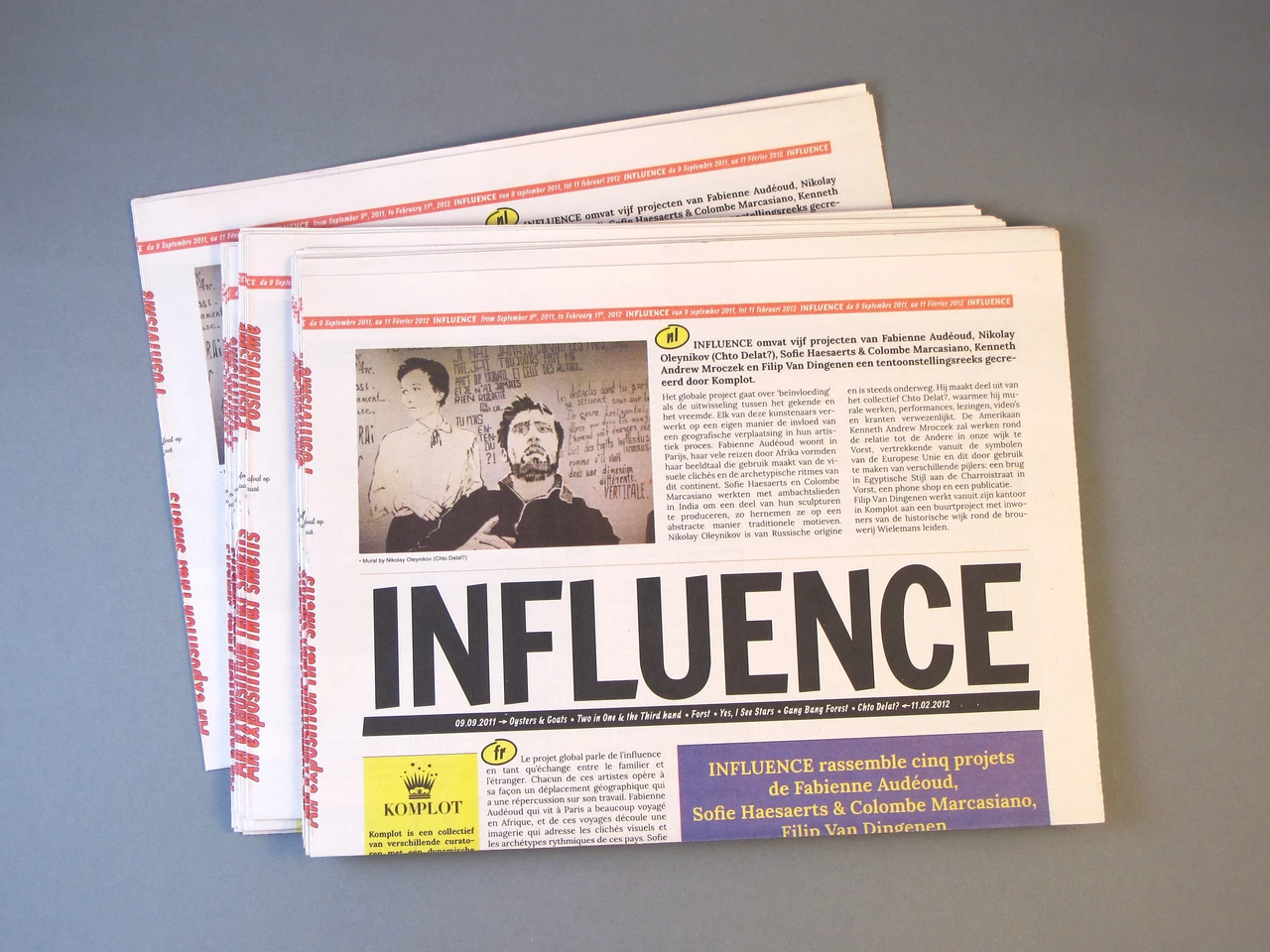
Influence
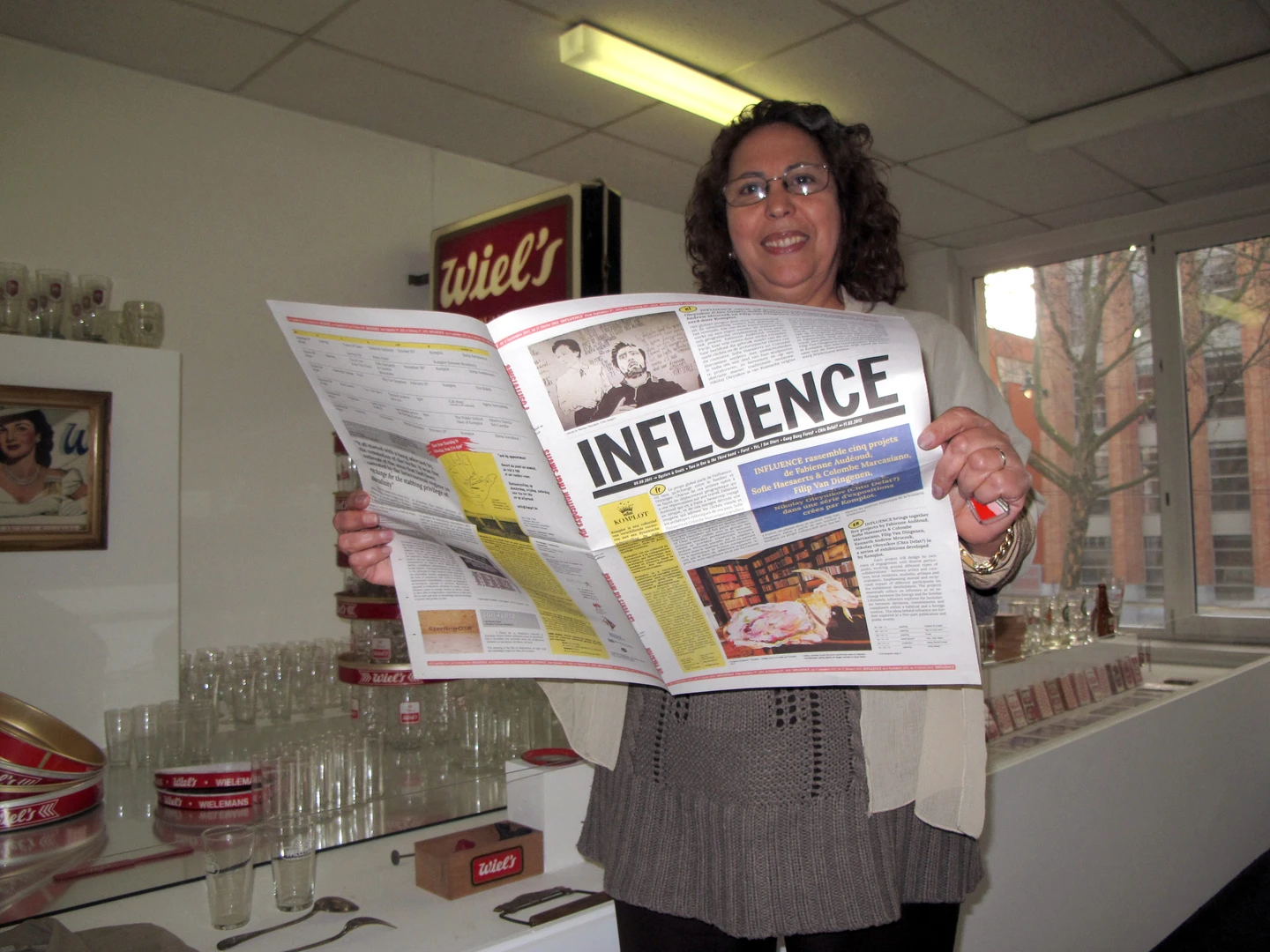
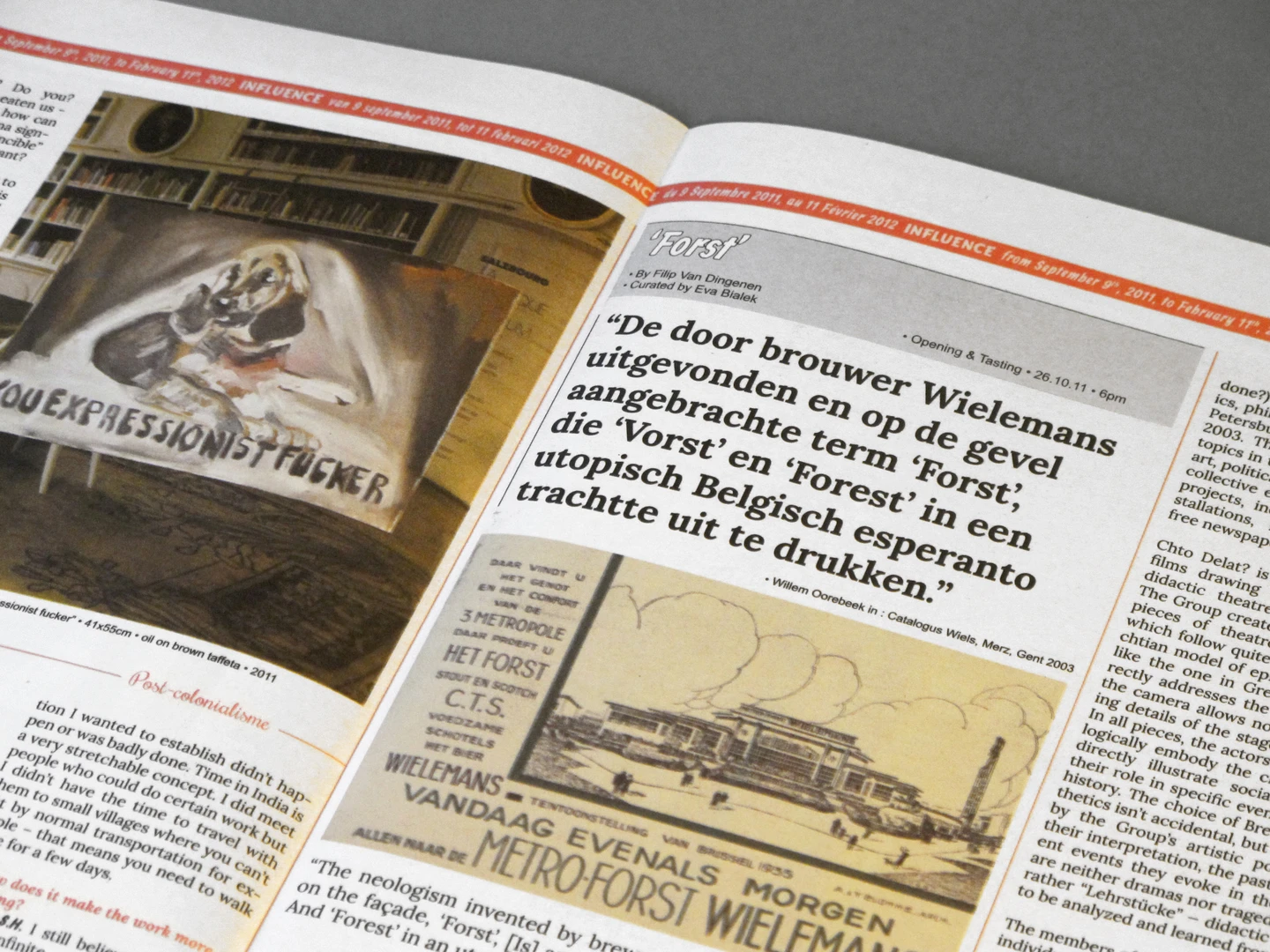
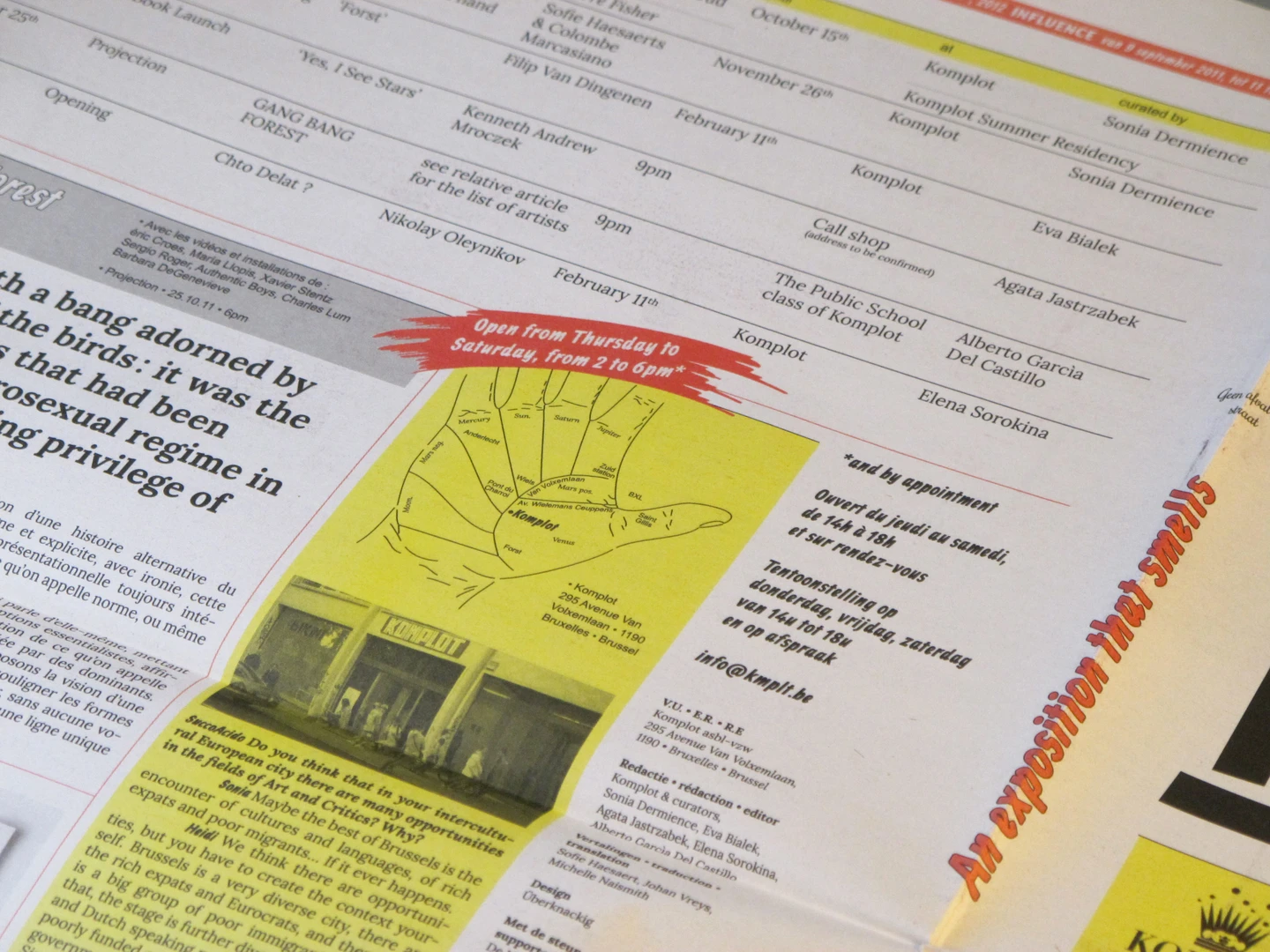
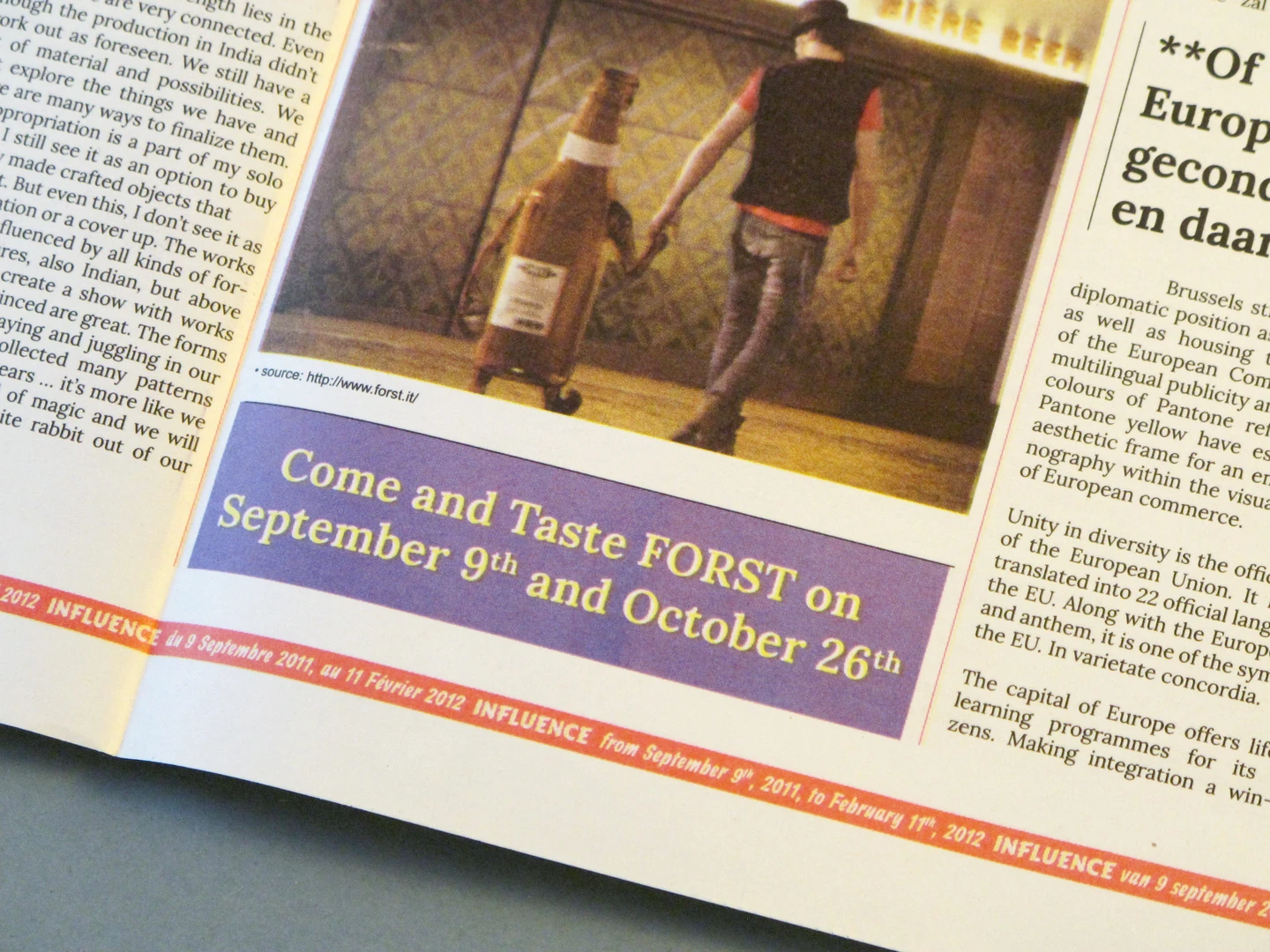
Komplot Editorial 2012Influence I : fabienne Audéoud 'Oysters and Goats'
INFLUENCE brings together five projects by Fabienne Audéoud, Chto Delat?, Sofie Haesaerts & Colombe Marcasiano, Kenneth Andrew Mroczek and Filip Van Dingenen in a series of exhibitions developed by Komplot. Each project will design its own rules of engagement with divers participants, evolving around different types of collaborations - between artists and curators, local residents, students, artisans and craftsmen. Emphasizing mutual and reciprocal impact of different participants on the exhibitions' development, the projects essentially reflect on influence as an exchange between the foreign and the familiar. Ultimately, all projects exlore the boundaries between decisions, commitments and compliance within a habitual and a foreign context. The ideas behind the projects are further explored in publications and public events. -
-
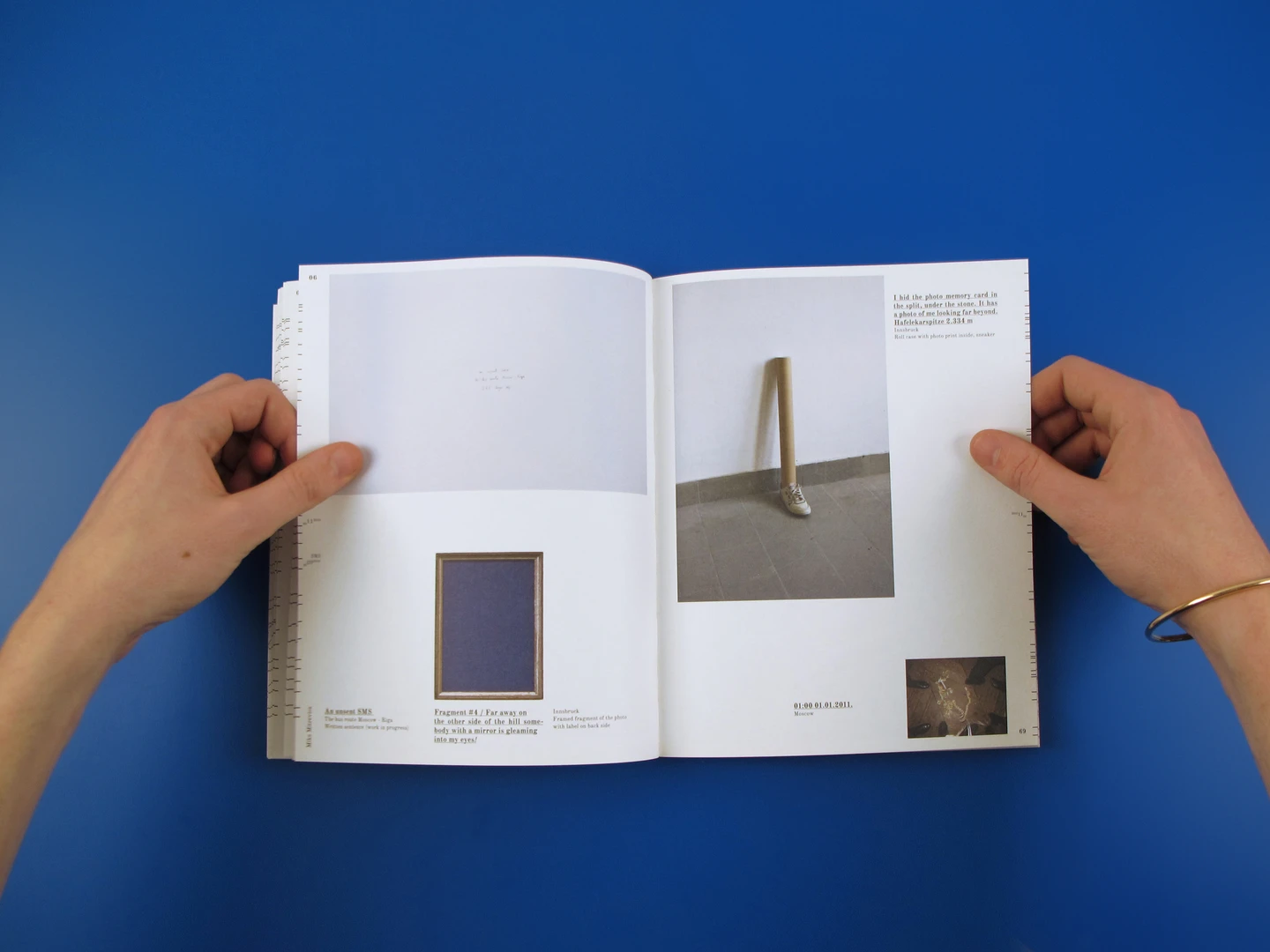
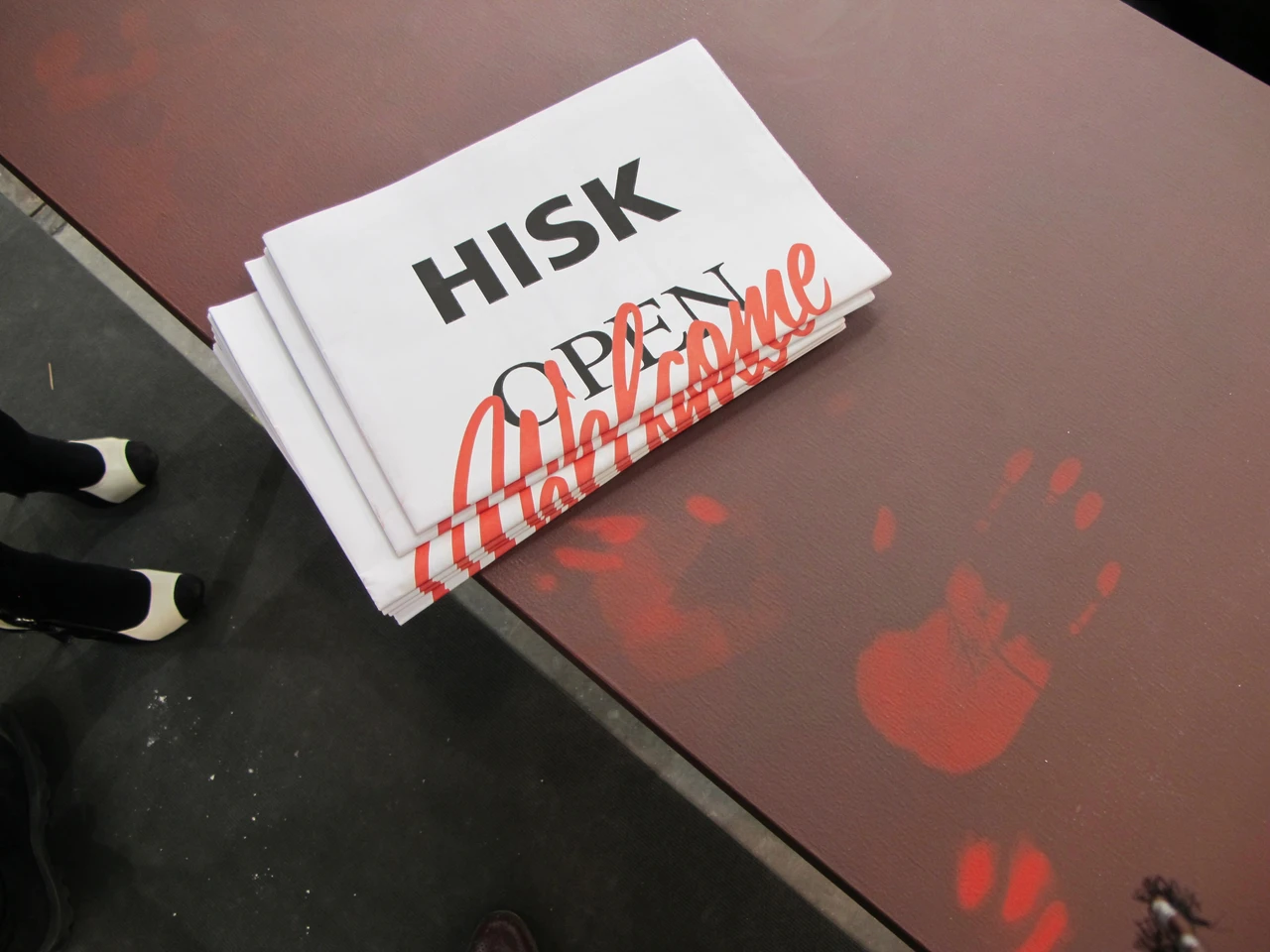
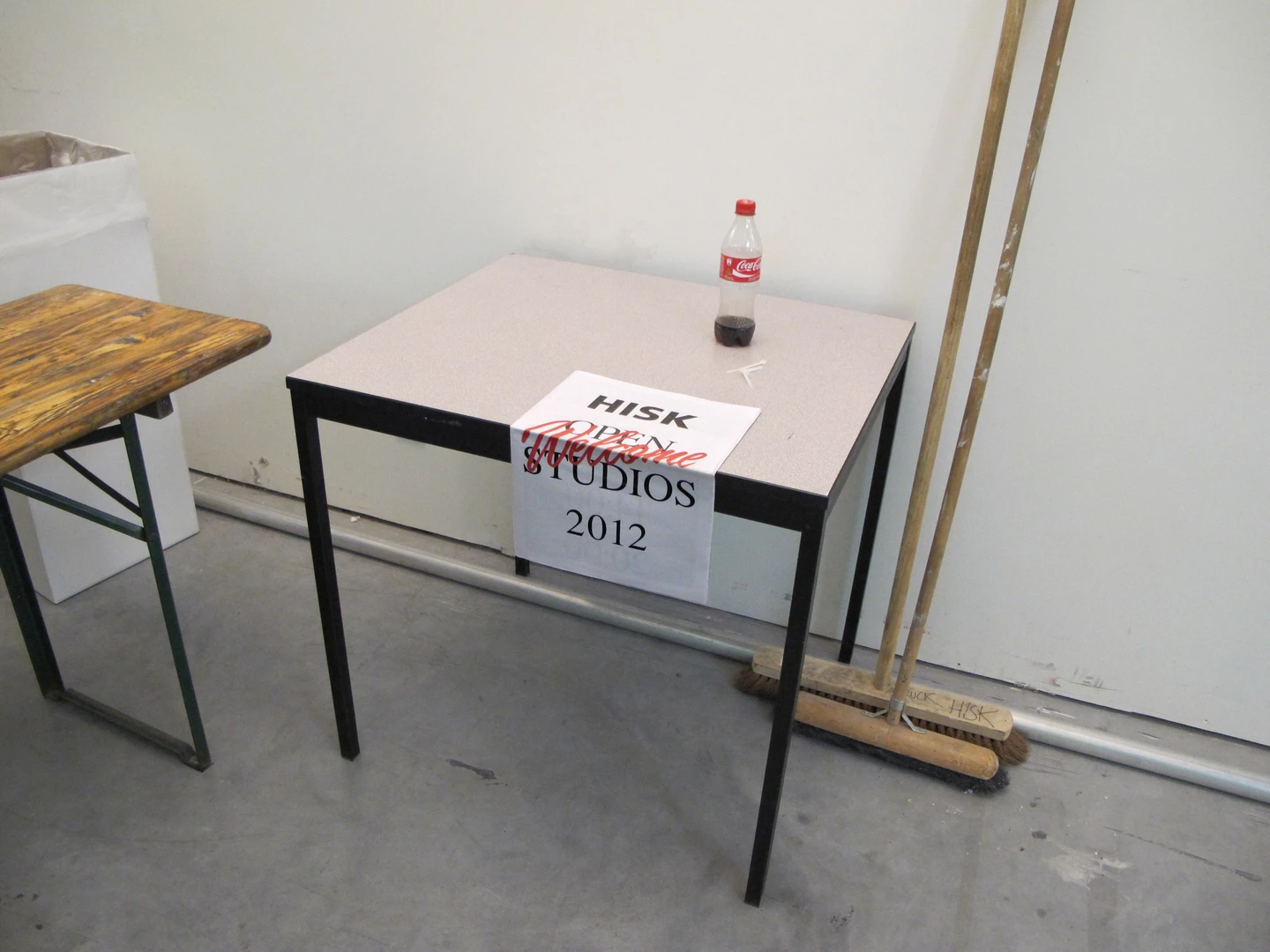
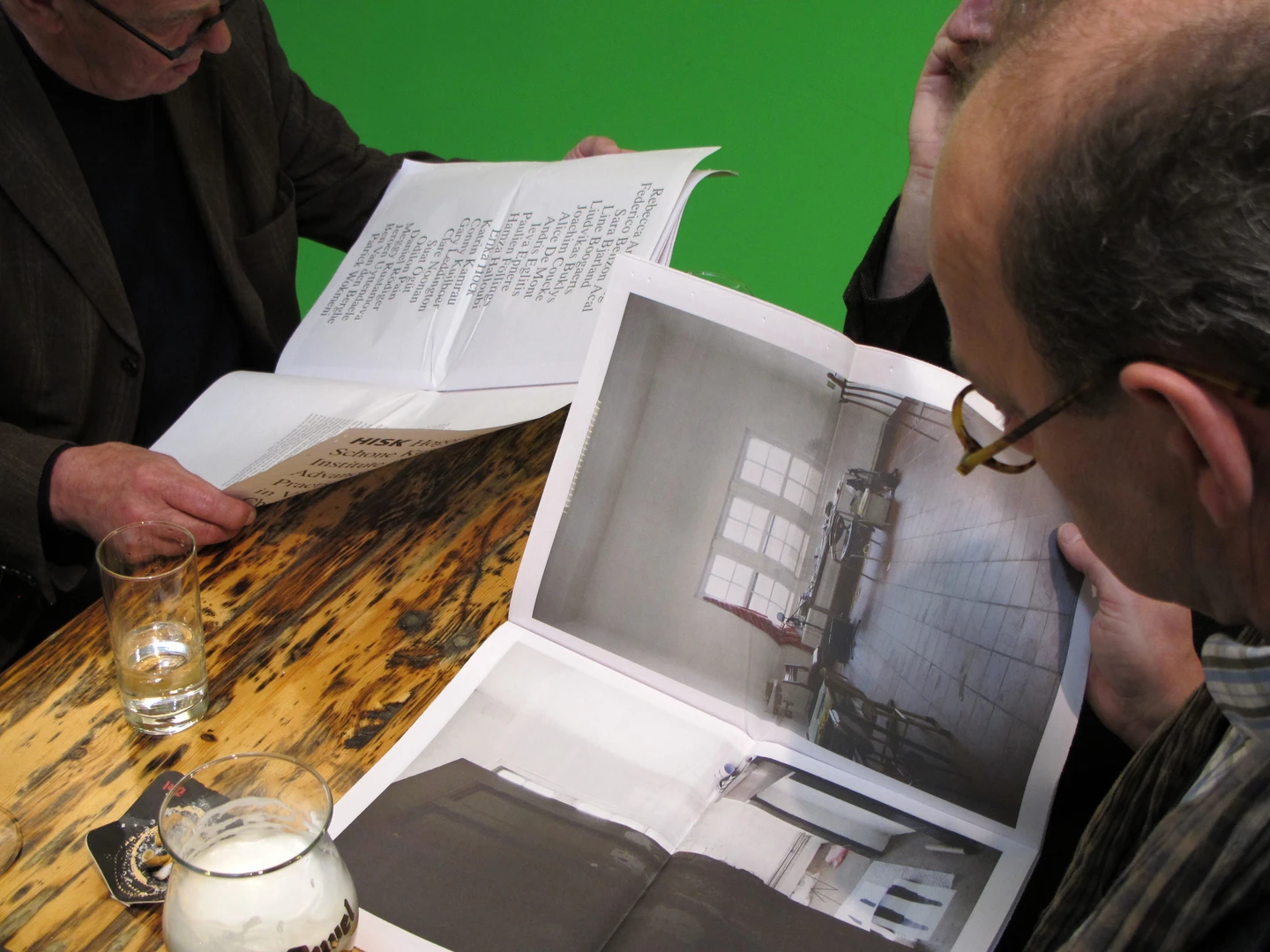
HISK Open Studio
HISK Editorial 2012HISK Open Studio, 11-14.05.2012
Hoger Instituut voor Schone Kunsten Vlaanderen, Gent
Advenced Studies & Practice-based Research in Visual Arts -
-
Year 12
Komplot, Sonia Dermience, David Evrard Editorial, Magazine 2012-
![]()
-
![]()
-
![]()
-
![]()
-
![]()
-
![]()
-
![]()
-
![]()
-
![]()
-
![]()
-
![]()
-
![]()
-
![]()
-
![]()
-
![]() ) - p.55,
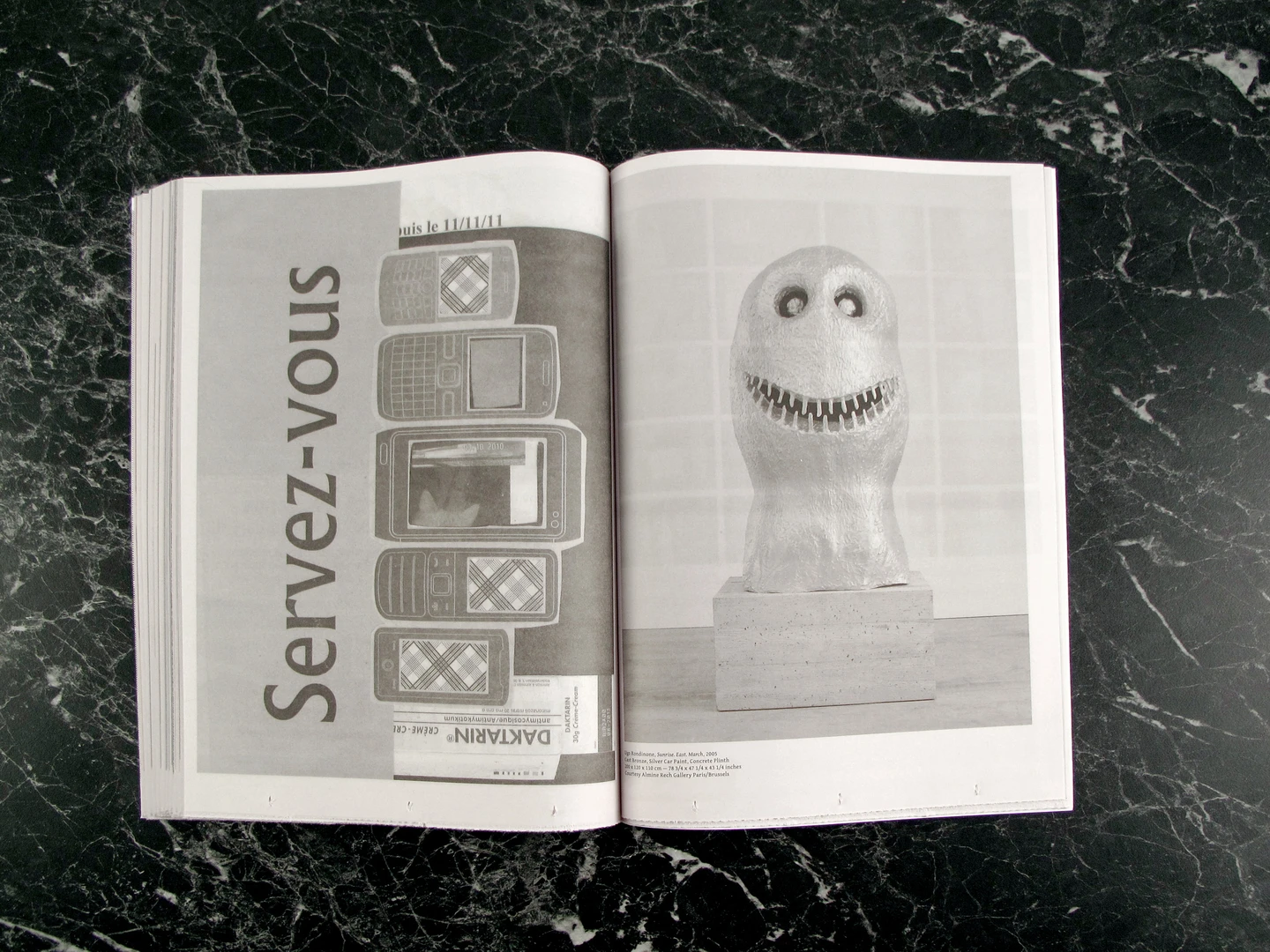
) - p.55, Sunrise. East. May , Ugo Rondinone, 2005" style="cursor: pointer;" /> -
![]()
-
![]()
-
![]()
-
![]()
-
![]()
-
![]()
-
![]()
-
![]()
-
![]()
-
![]()
-
![]()
-
![]()
-
![]()
-
![]()
-
![]()
-
![]()
-
![]()
-
![]()
-
![]()
-
![]()
-
![]()
-
![]()
-
![]()
-
![]()
-
![]()
-
![]()
-
![]()
-
![]()
-
![]()
-
![]()
-
![]()
-
![]()
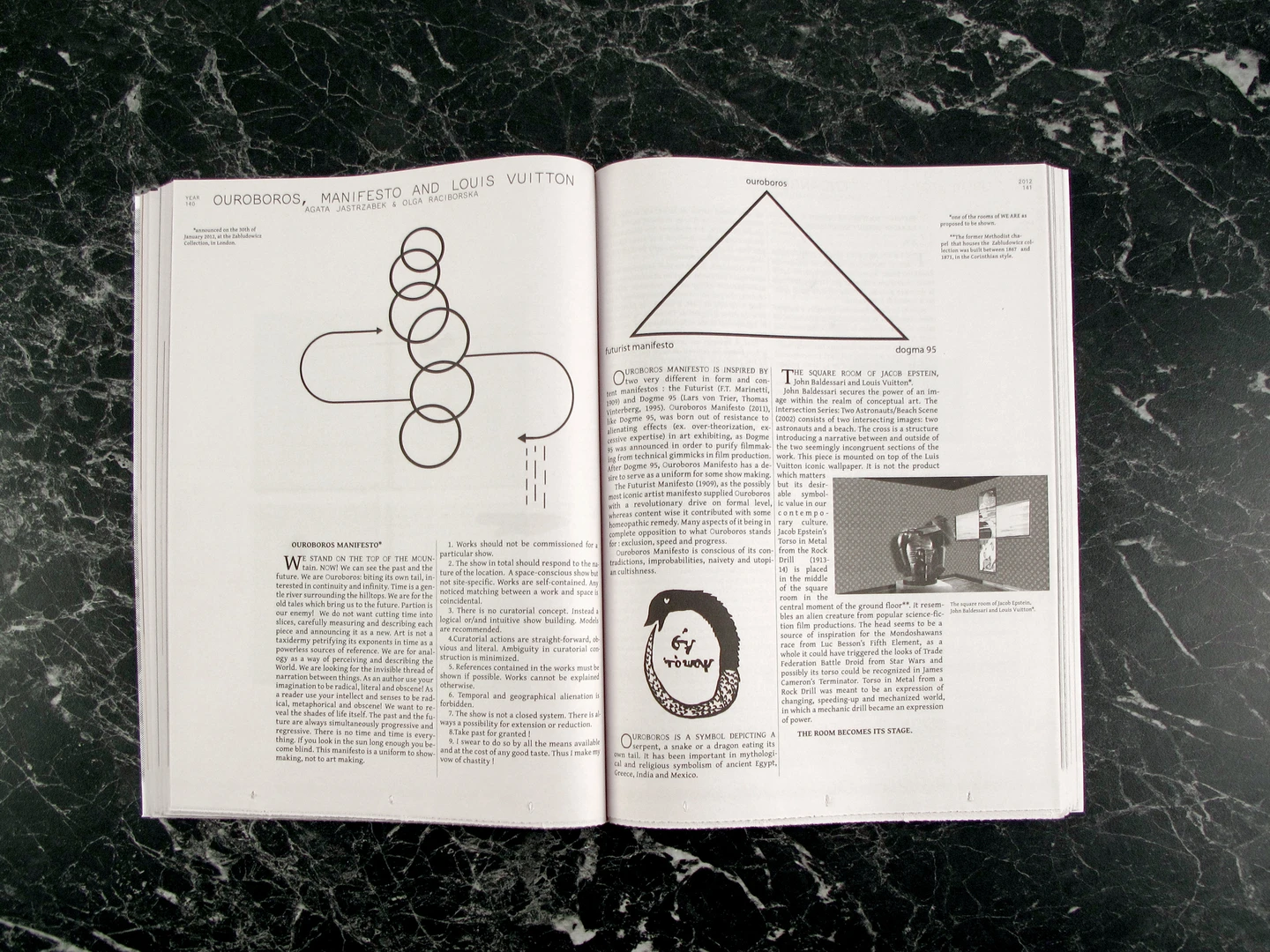
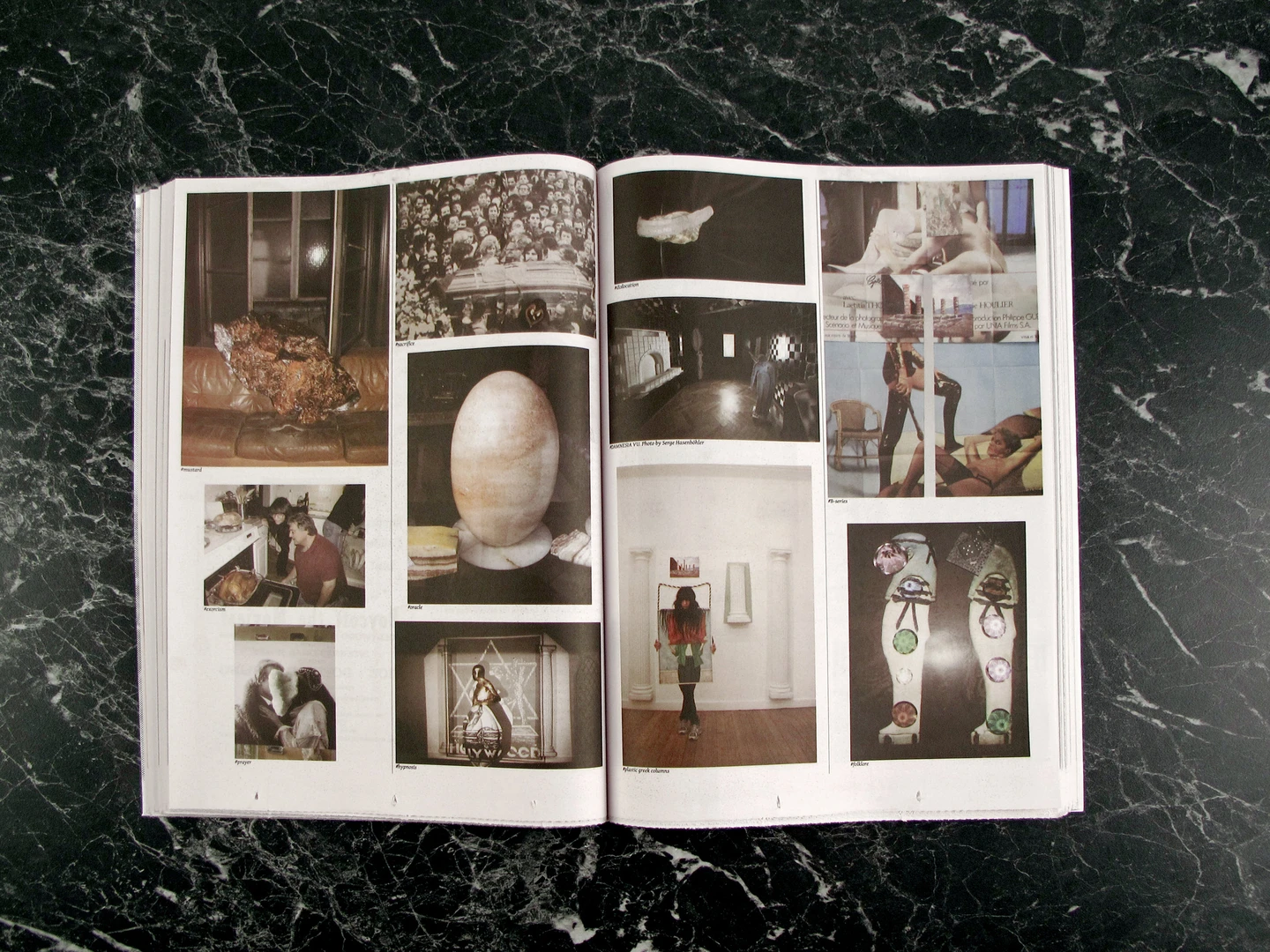
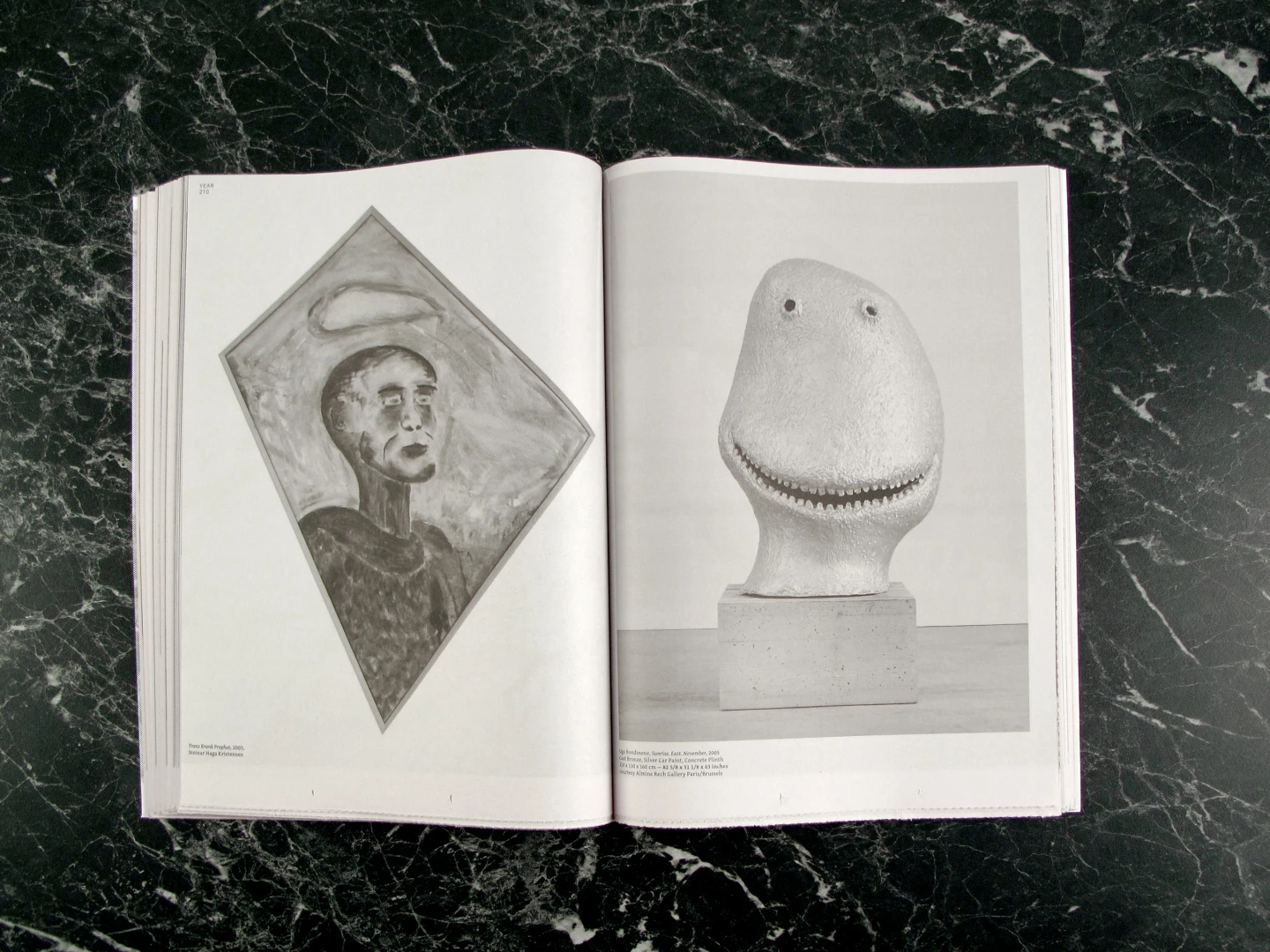
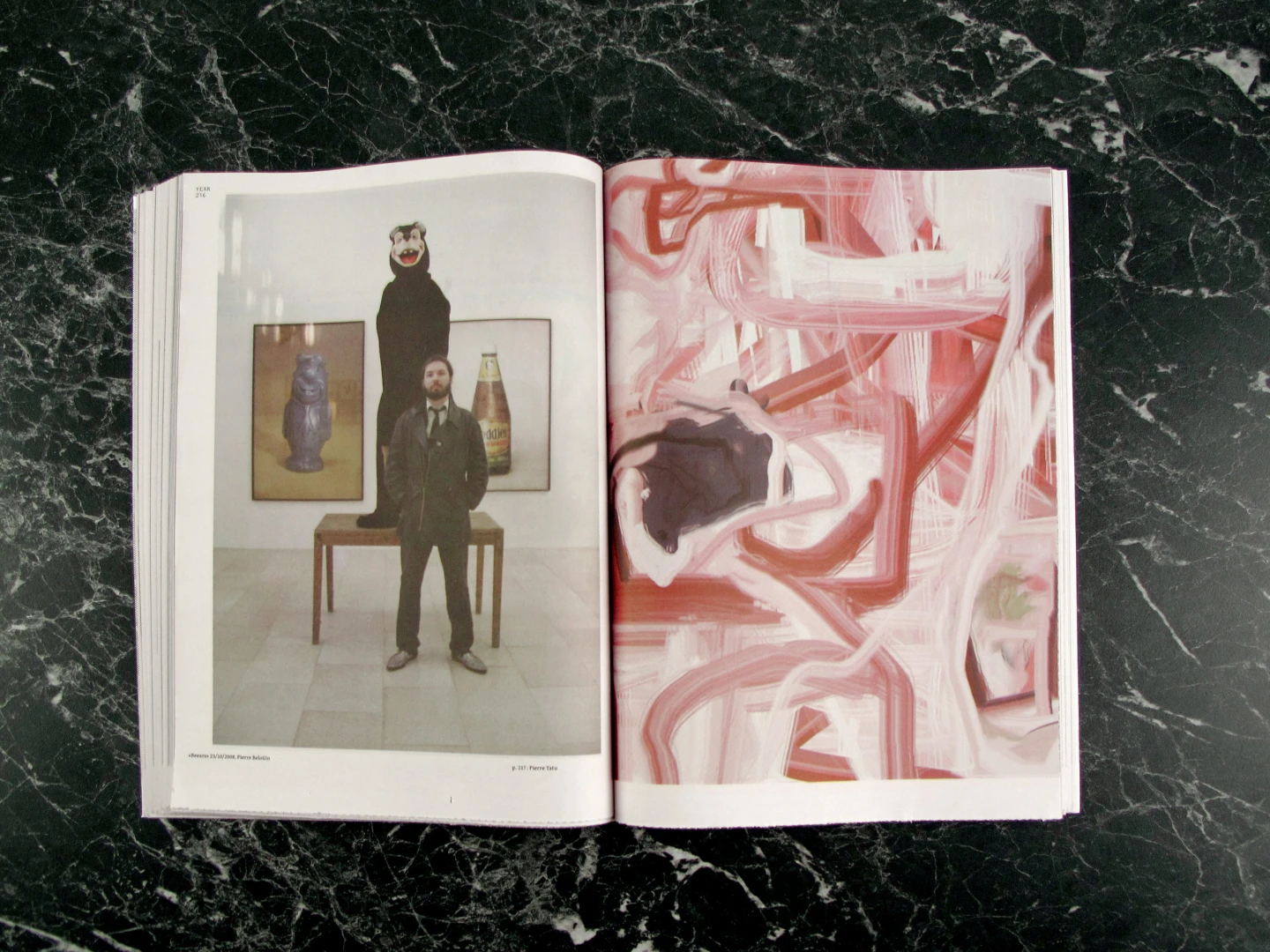
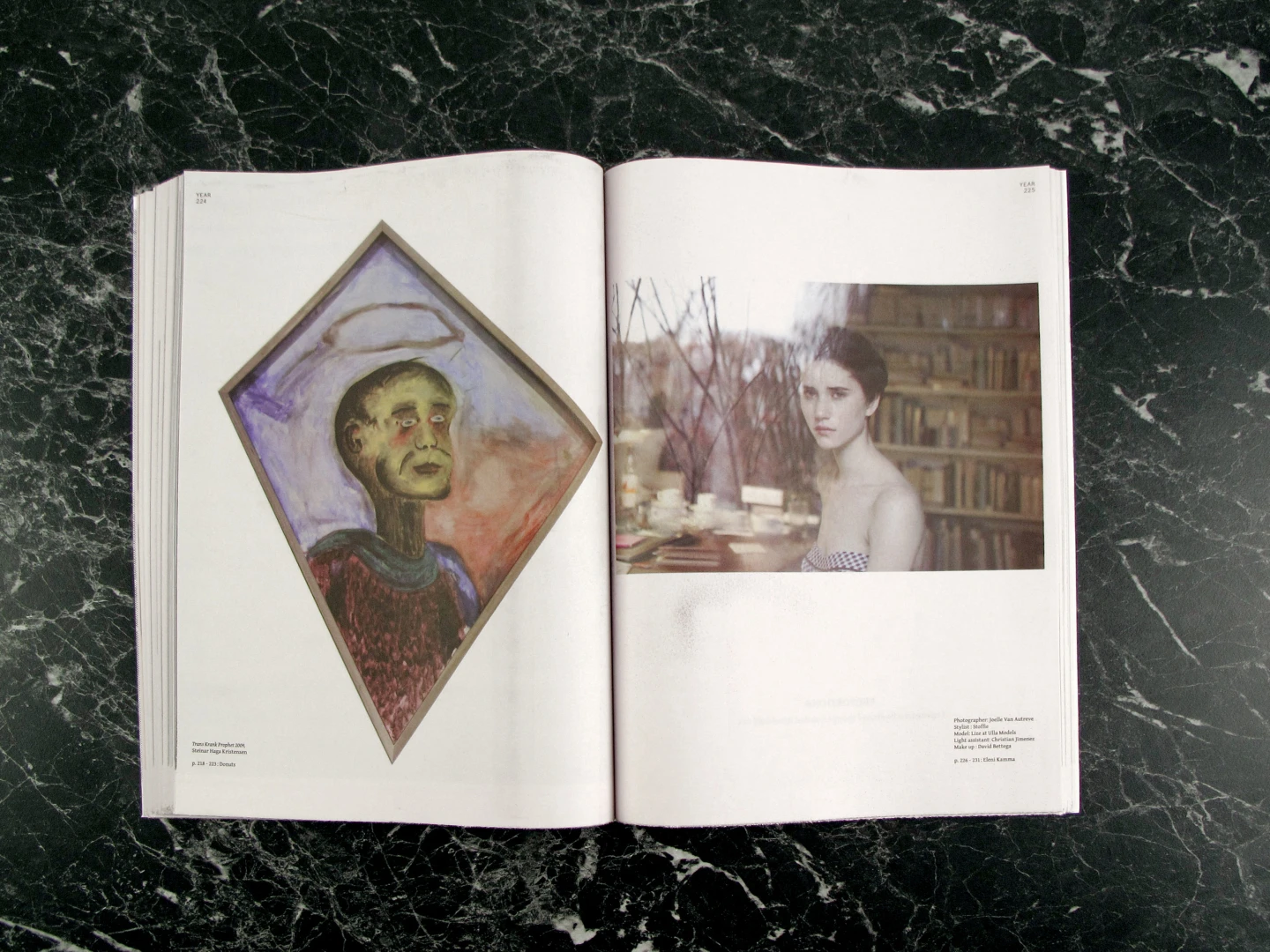
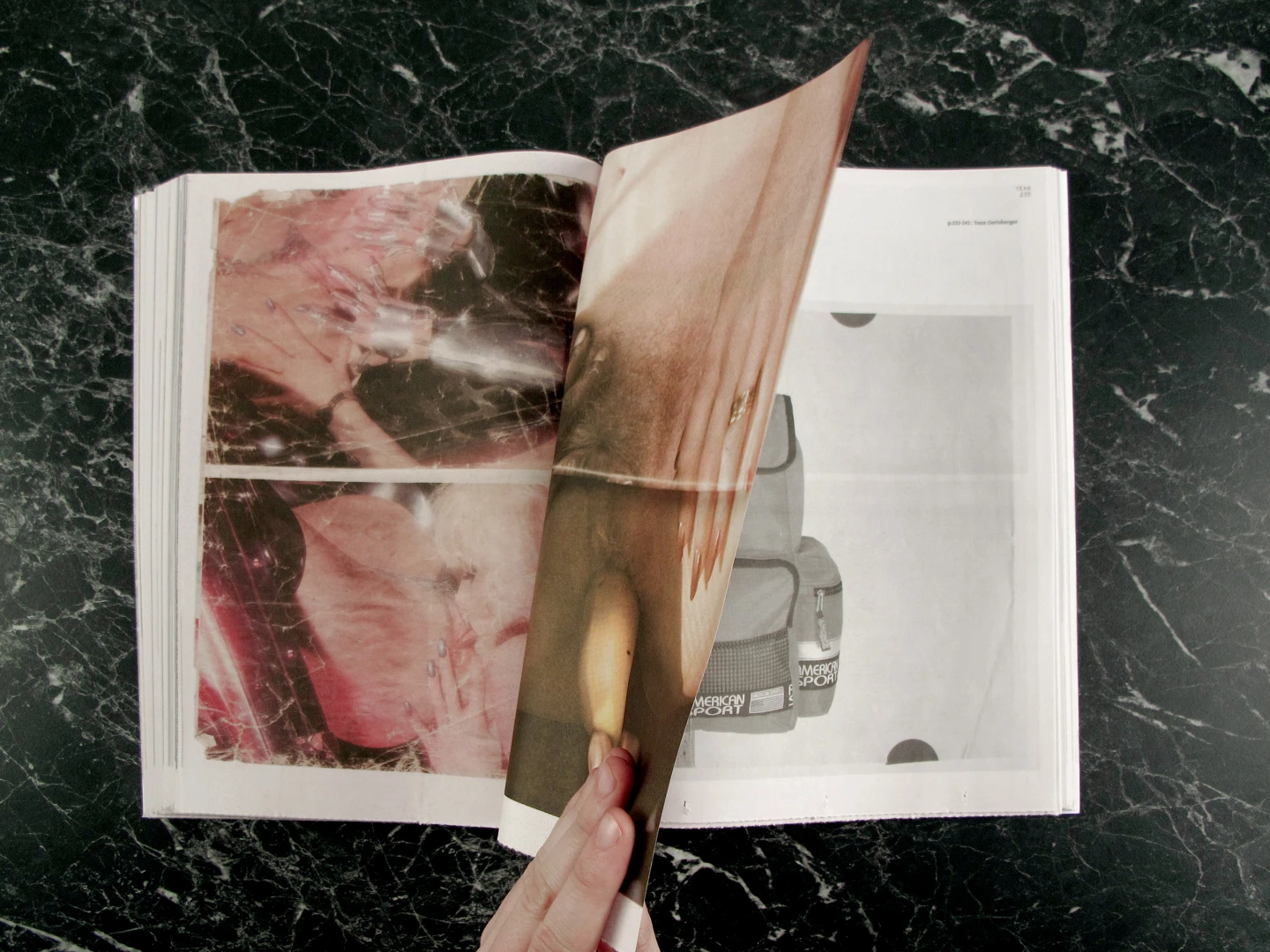
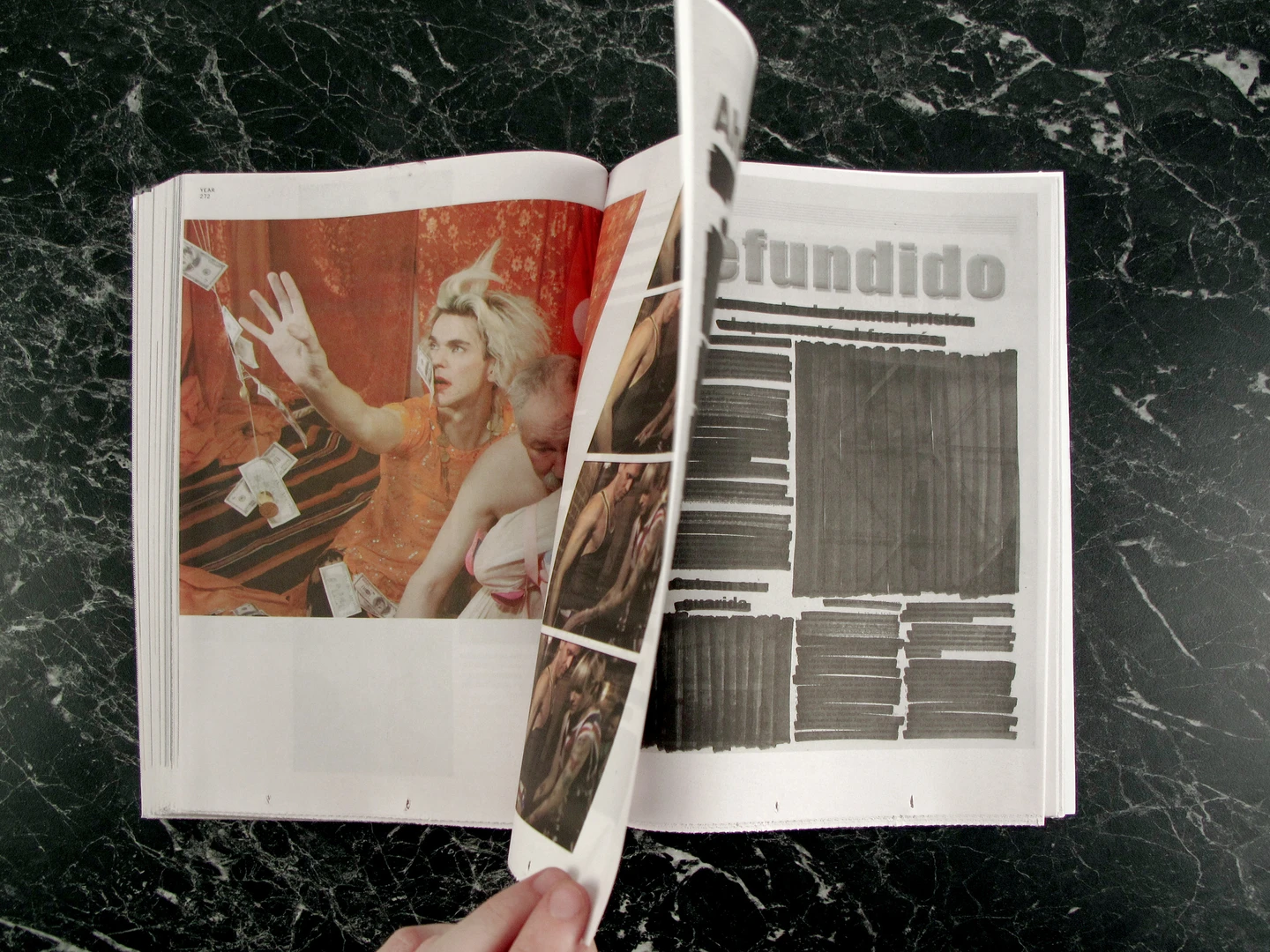
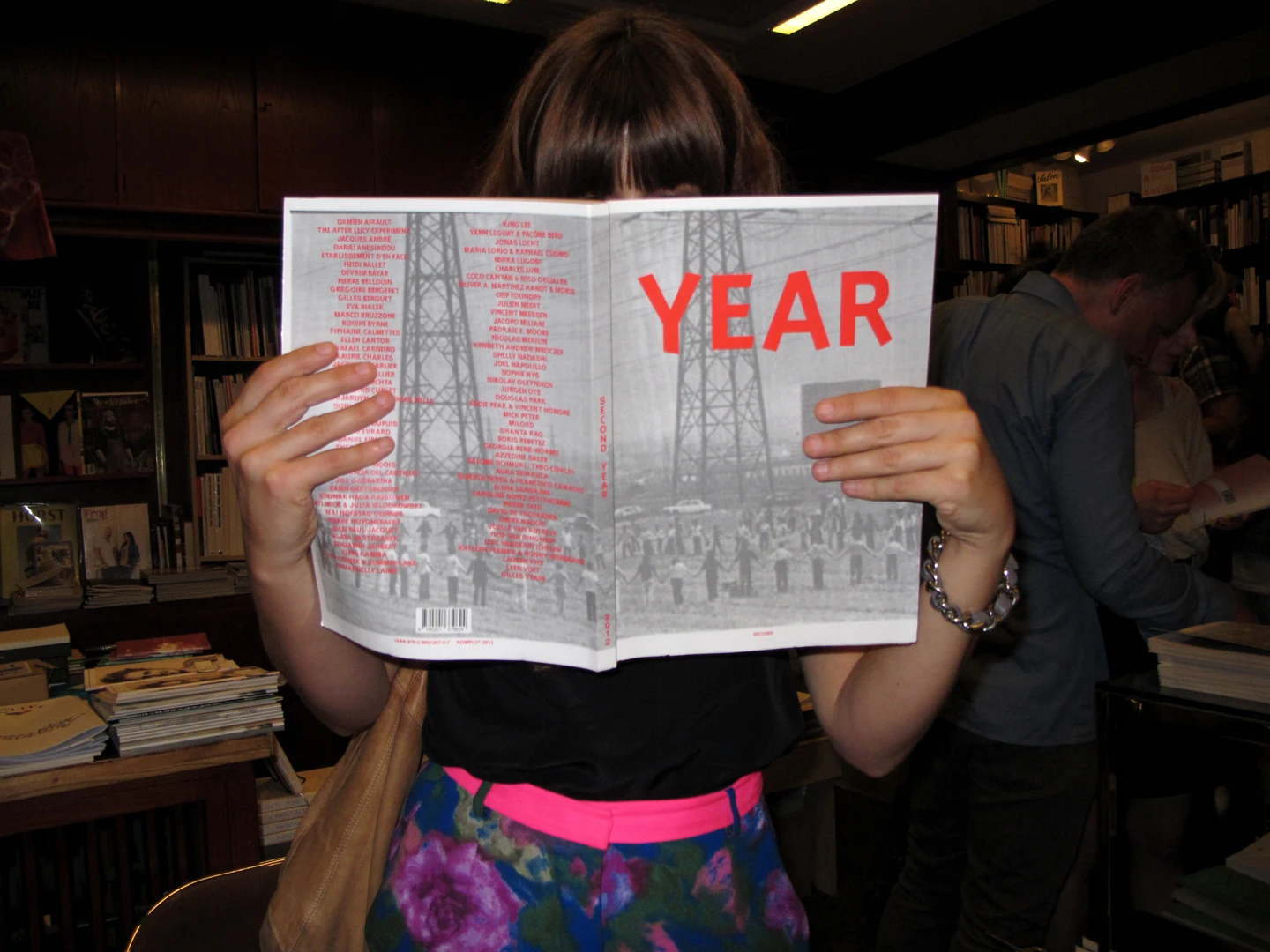
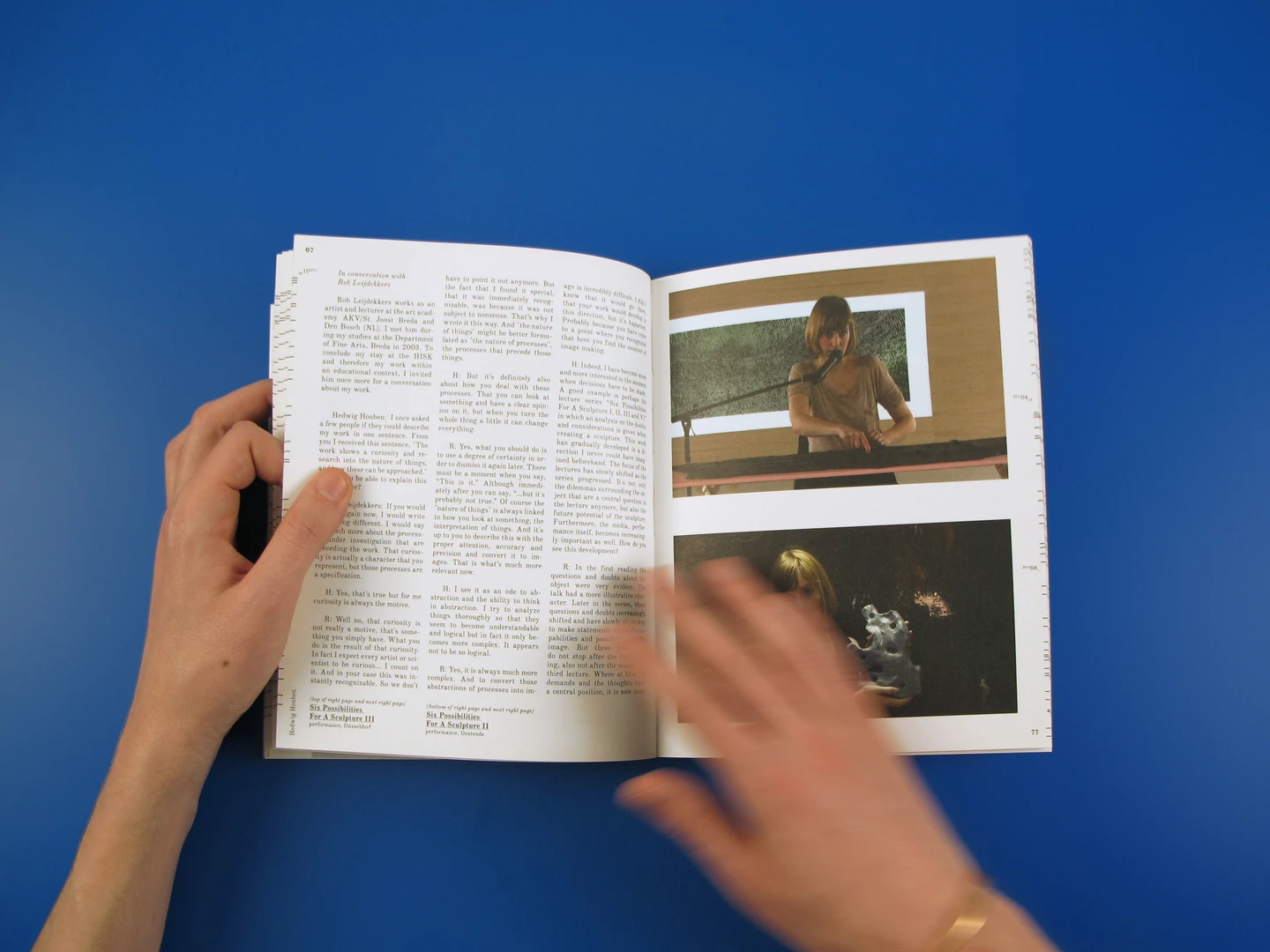
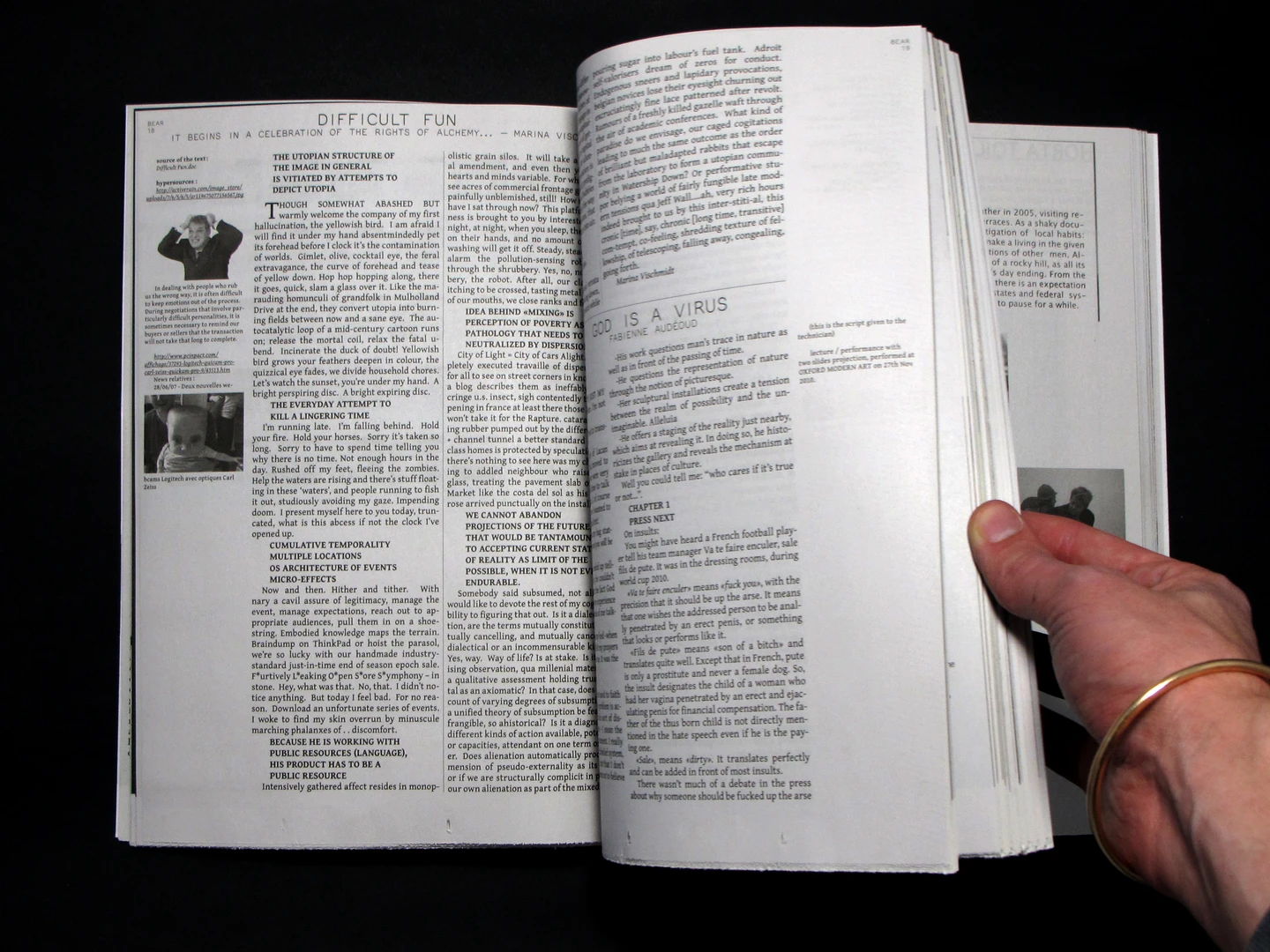
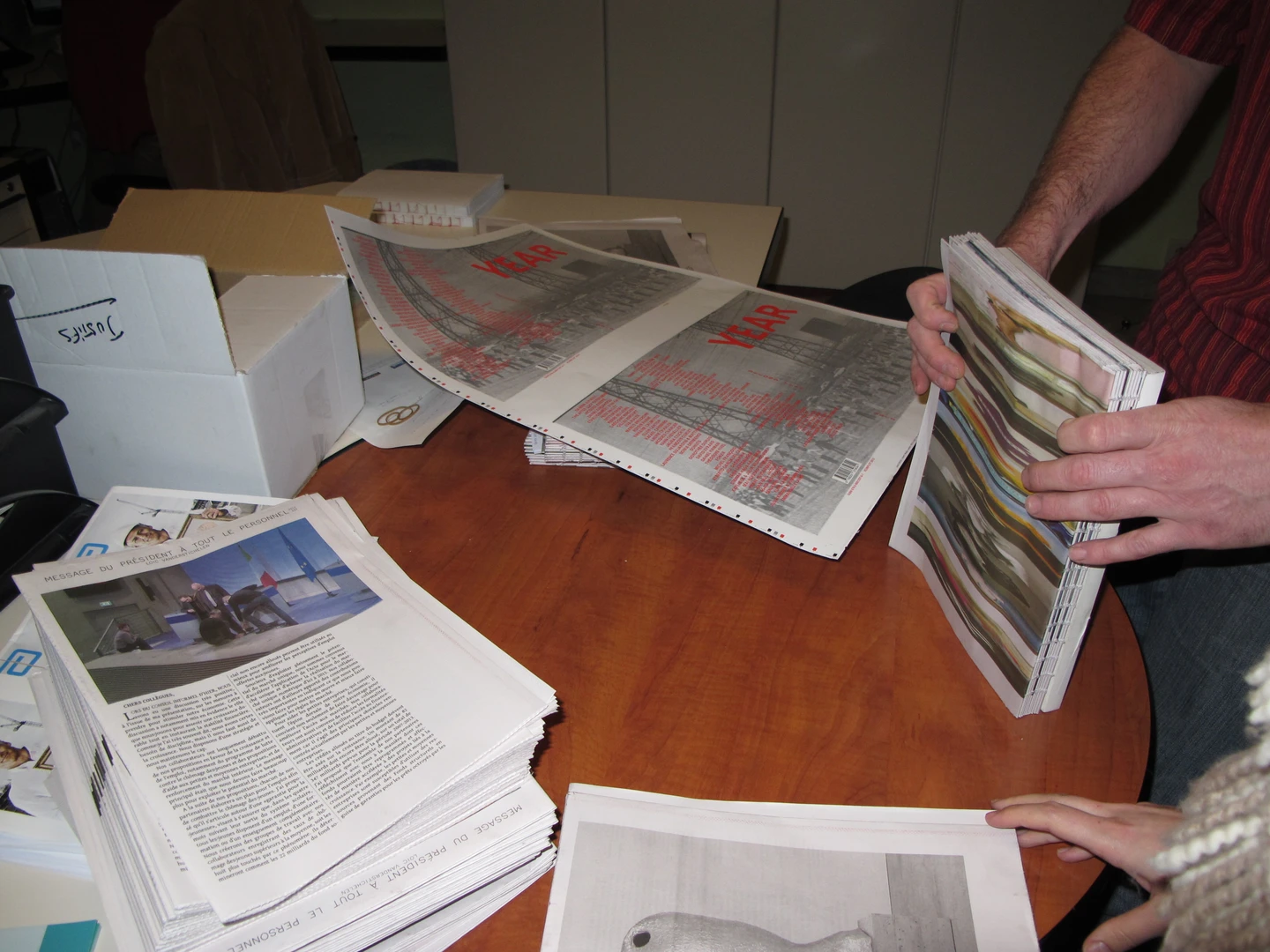
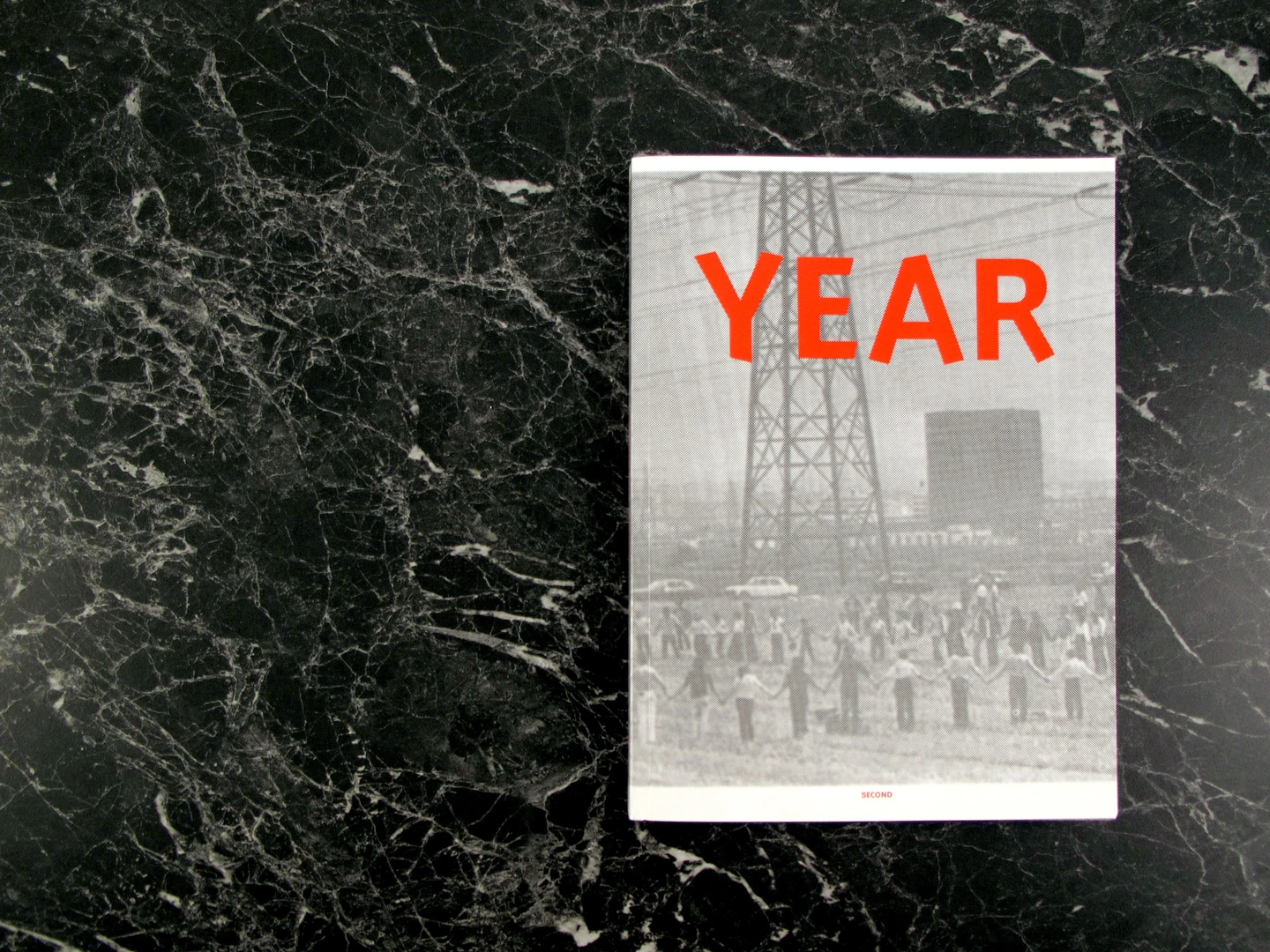
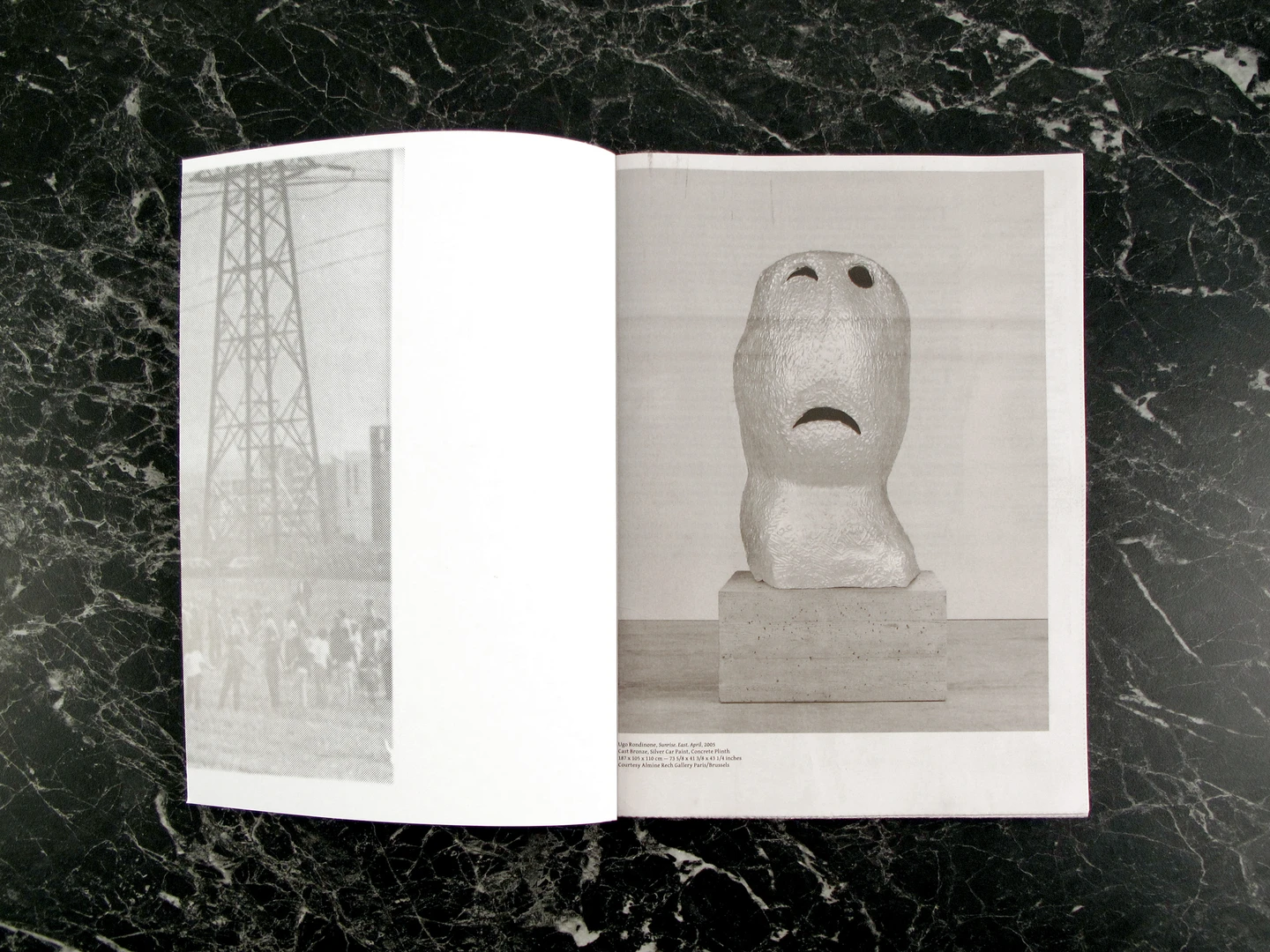
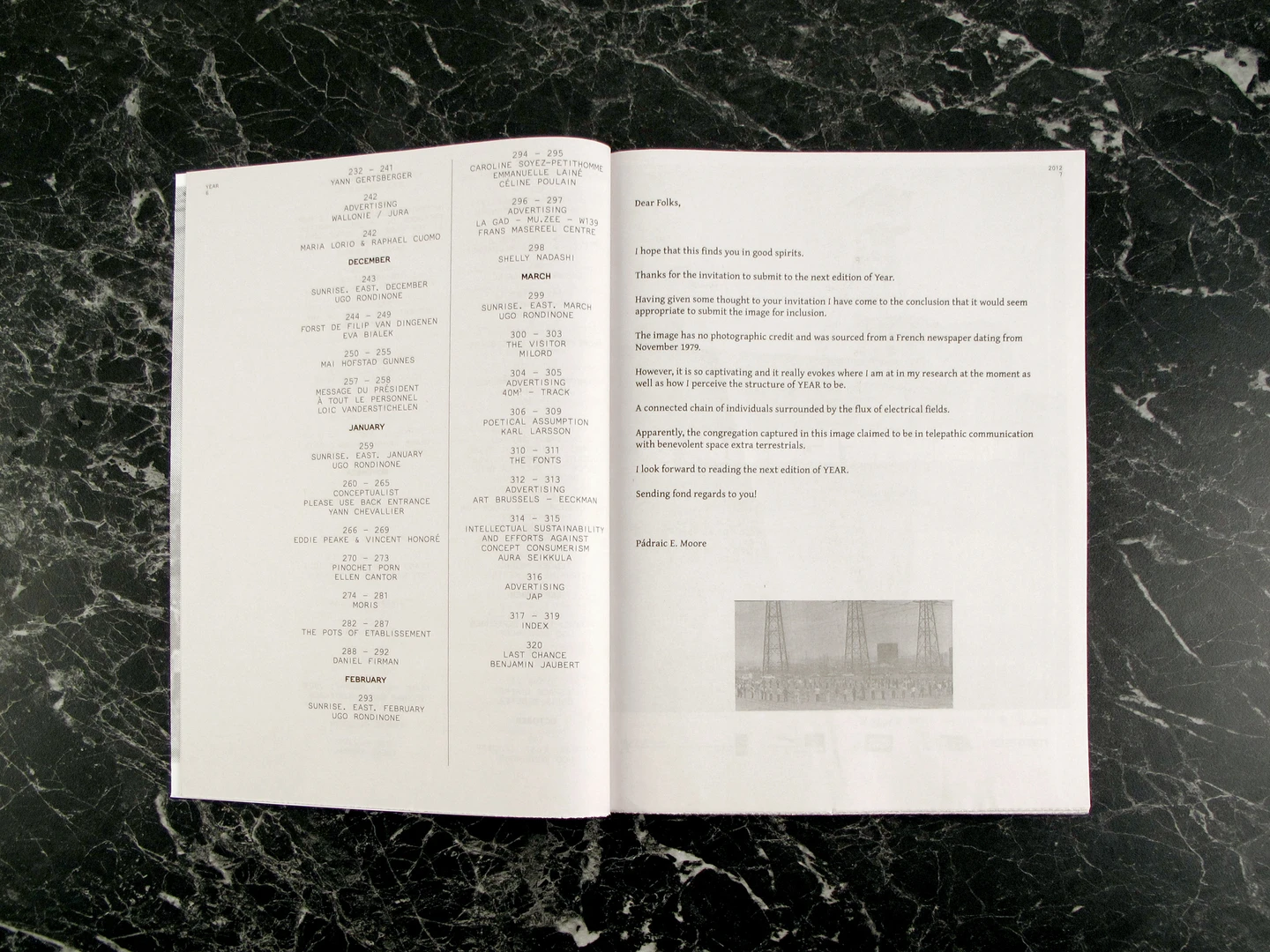
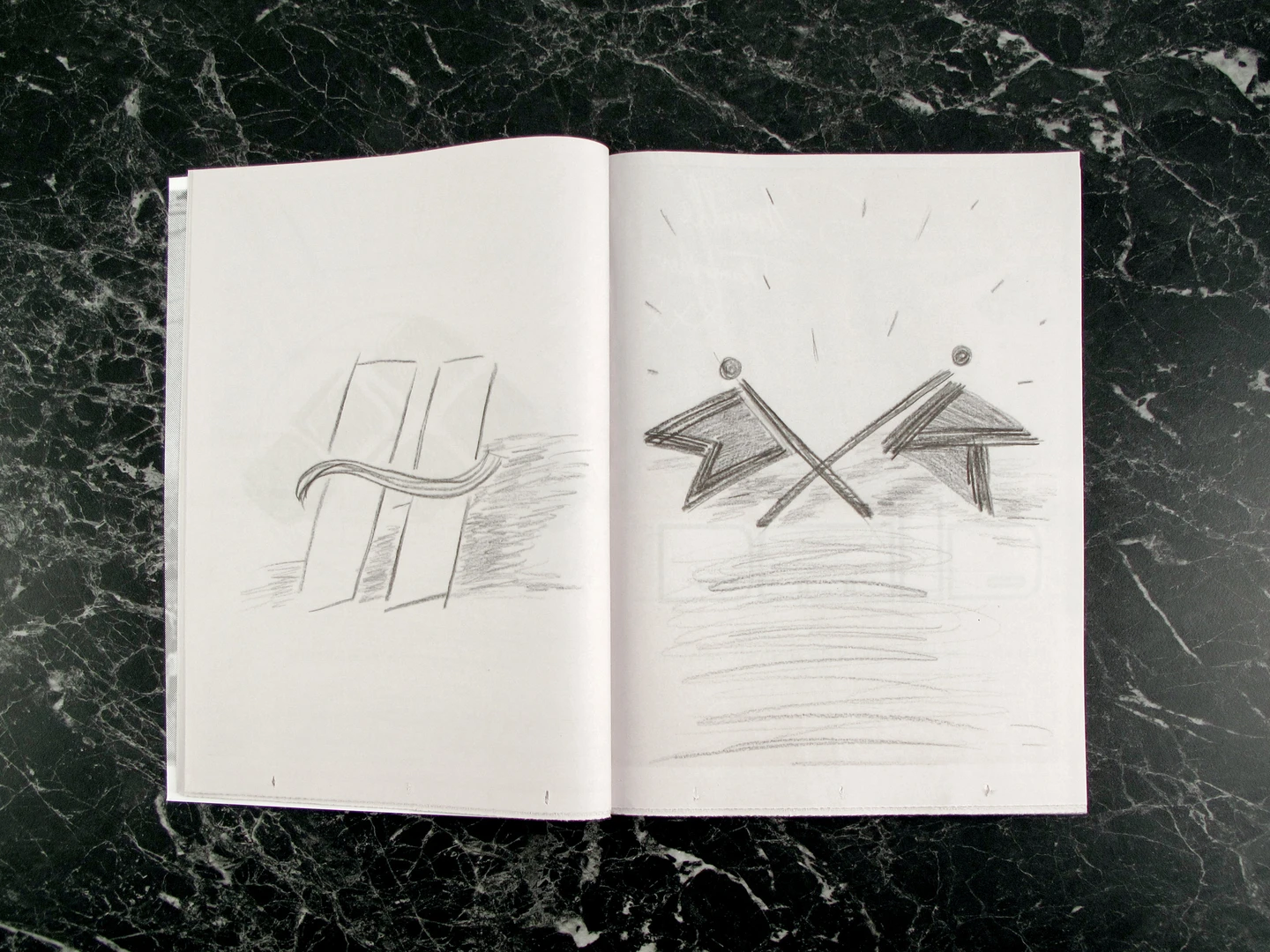
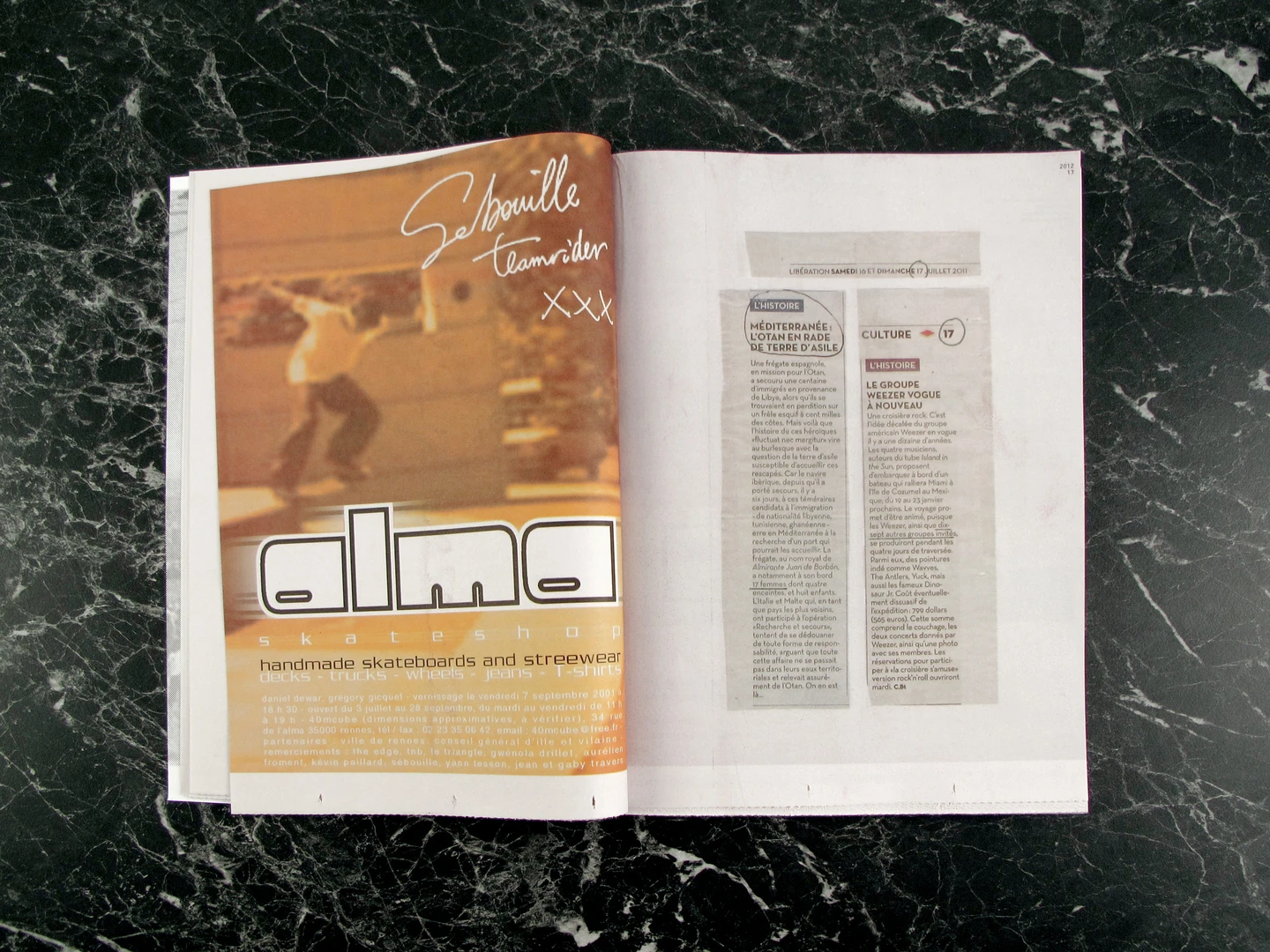
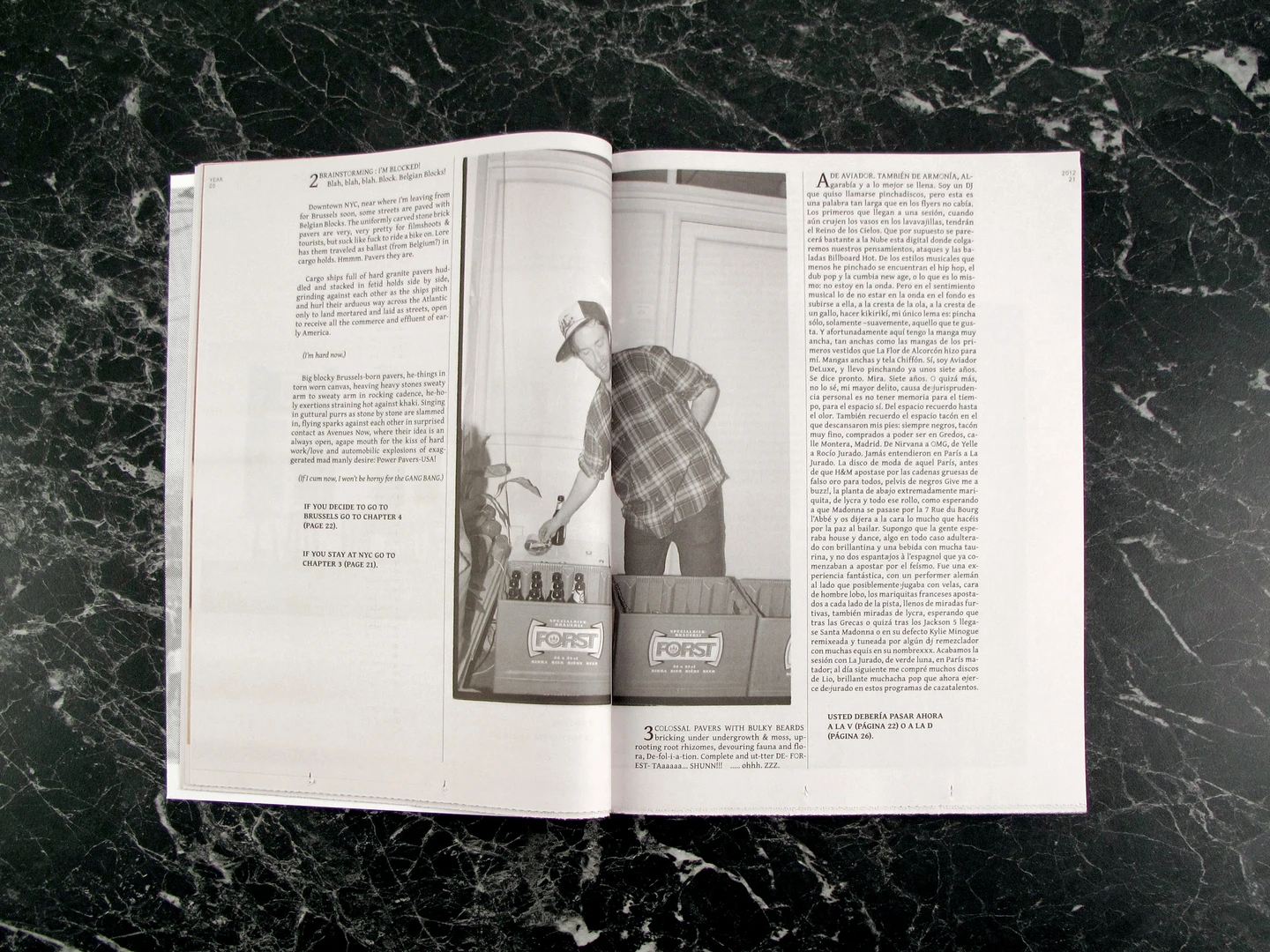
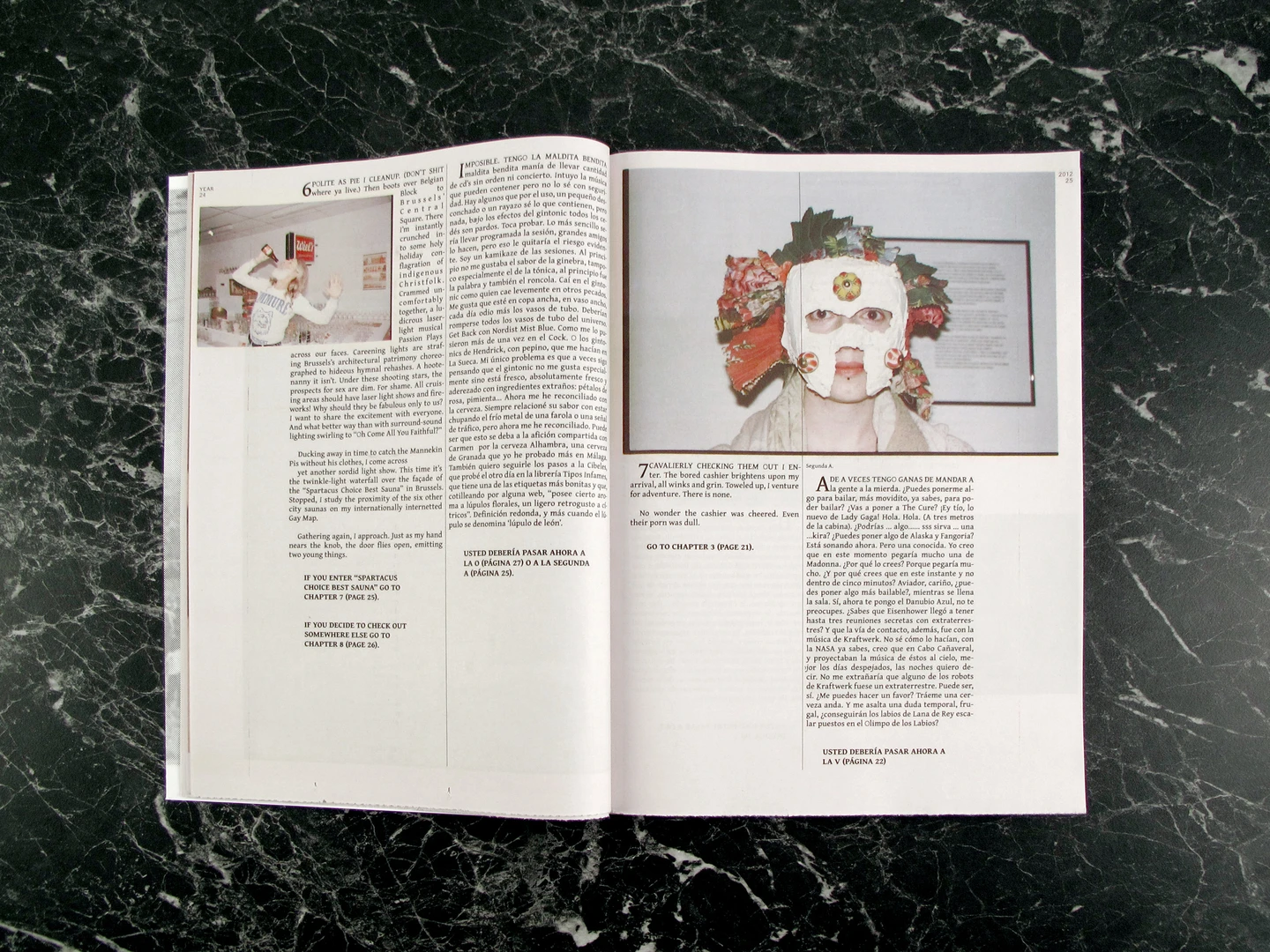
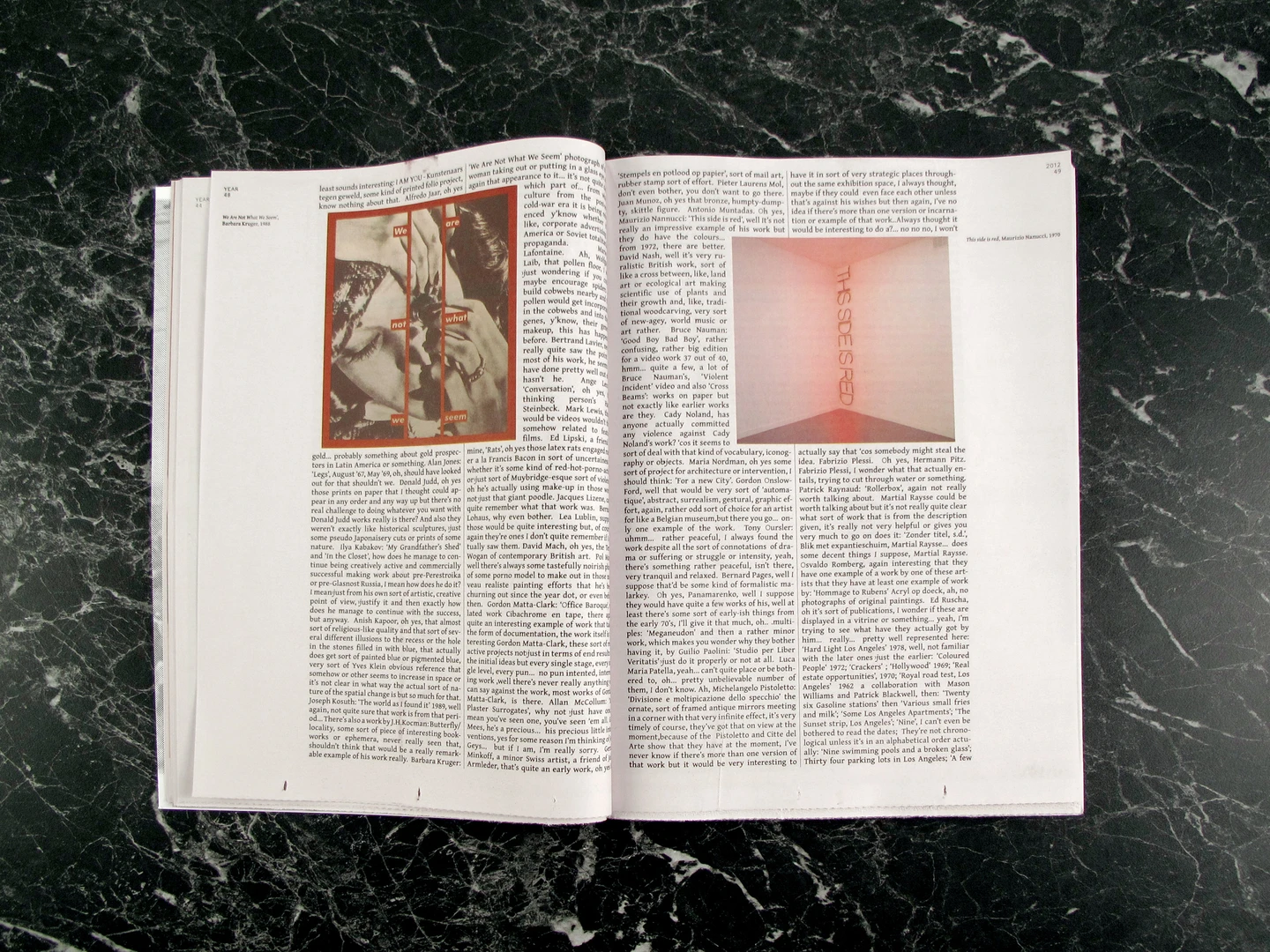
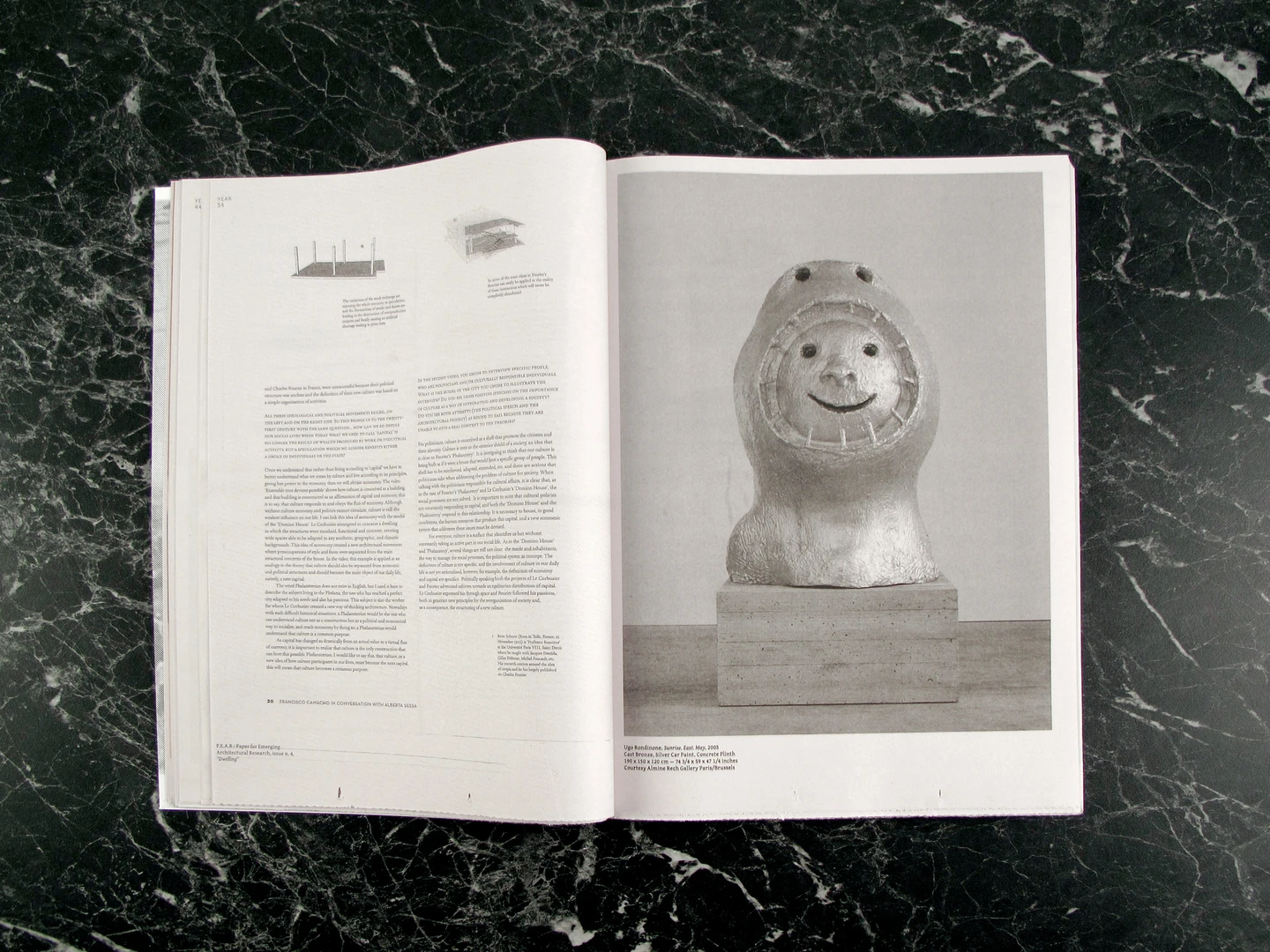
This second YEAR is still an almanac, a choral book revealing behind the stage. Seasons are information. Hey, look at what has been done, should be or will be or never be. This issue is like talking with images. You can connect one page to another. Text can be spare, descriptive or exhaustingly disruptive. What have you done means what it will be. We asked people about what’s in their mind from the past or for the future and that creates an all present. Last time, we talked about no future, now we are no present. YEAR is still a chain reaction, organizing its content in the form of sequences. YEAR is still an experimental constellation.
The time of manifestos and propaganda is back! From the everyday or larger issues of sociability and historicity. It takes the shape of a collage of disparate sources in time and place. Advertisement, propaganda and manifestos are the ultimate forms for abstraction and engrained subjectivity like space from outer space. Porn and insults, unreal kind of novellas, advertisement as public space, again, opposed to archives, distinction opposed to evaluation, again, narrative to order, cool to distance, taste to energy, again, beauty to sense, sense to idea, idea to experience, experience to life and life to style and style to knowledge and knowledge to power and power to all perversive shit. Still.
As an author use your imagination to be radical, literal and obscene! As a reader use your intellect and senses to be radical, metaphorical and obscene! -
-
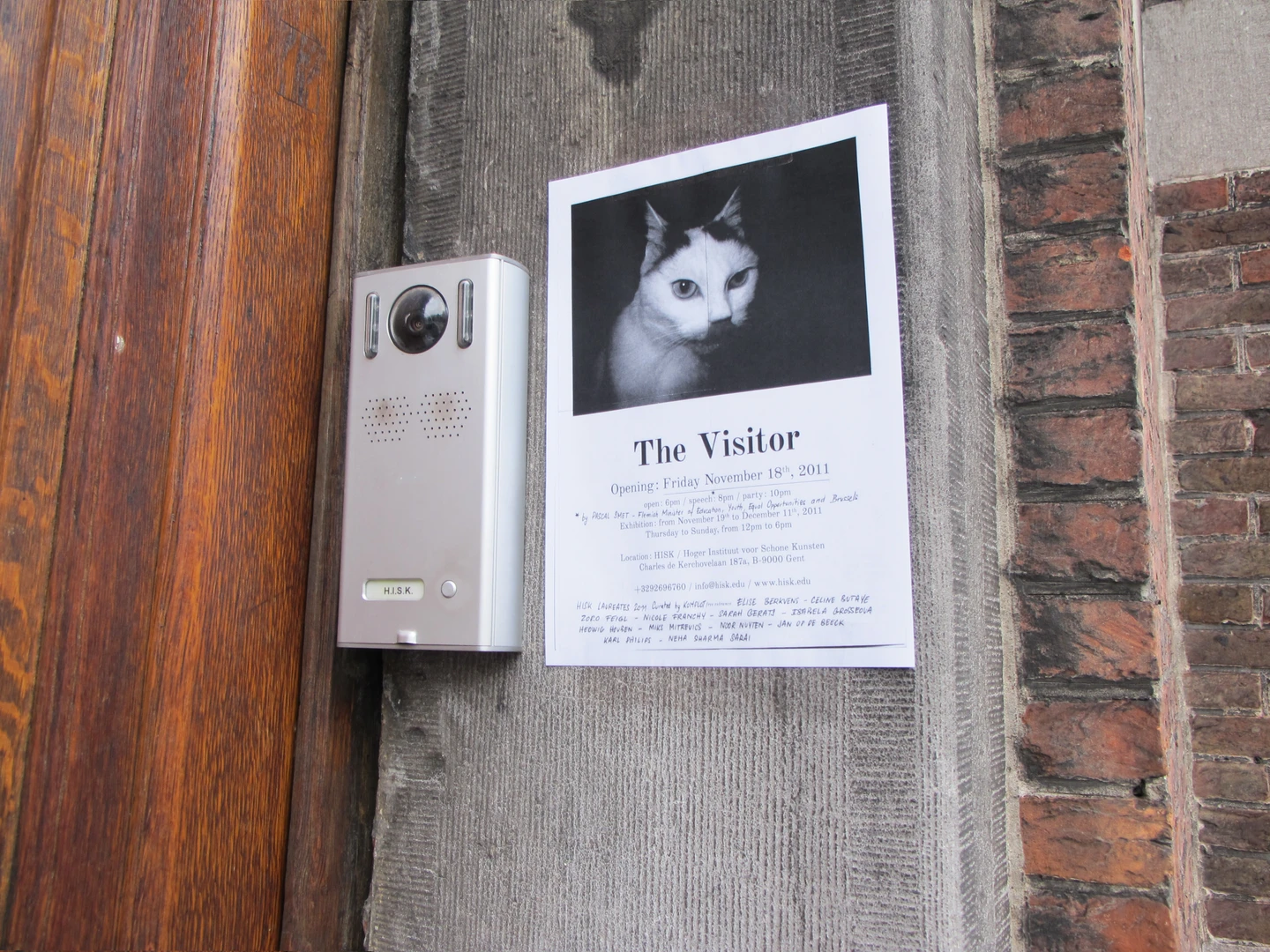
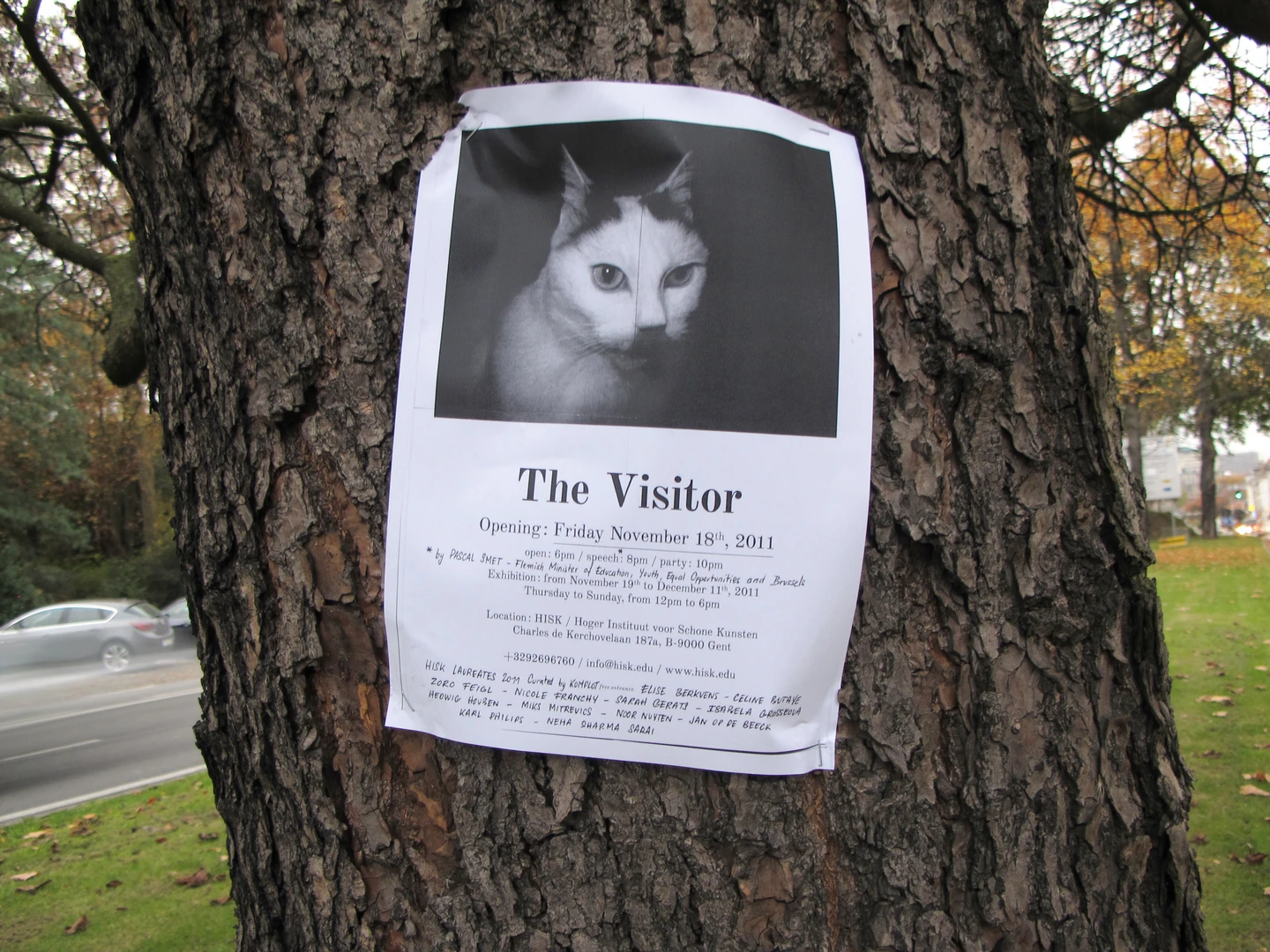
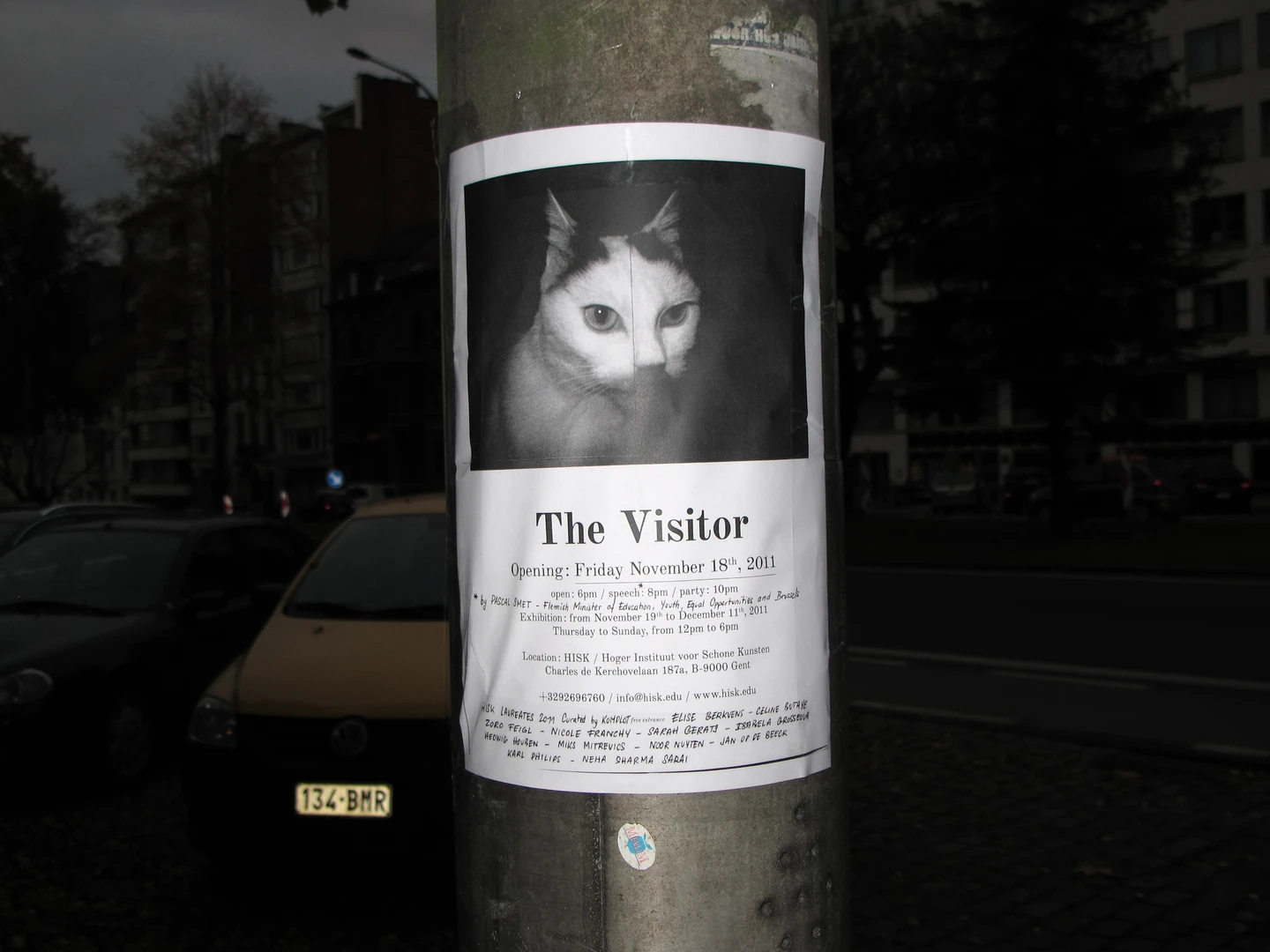
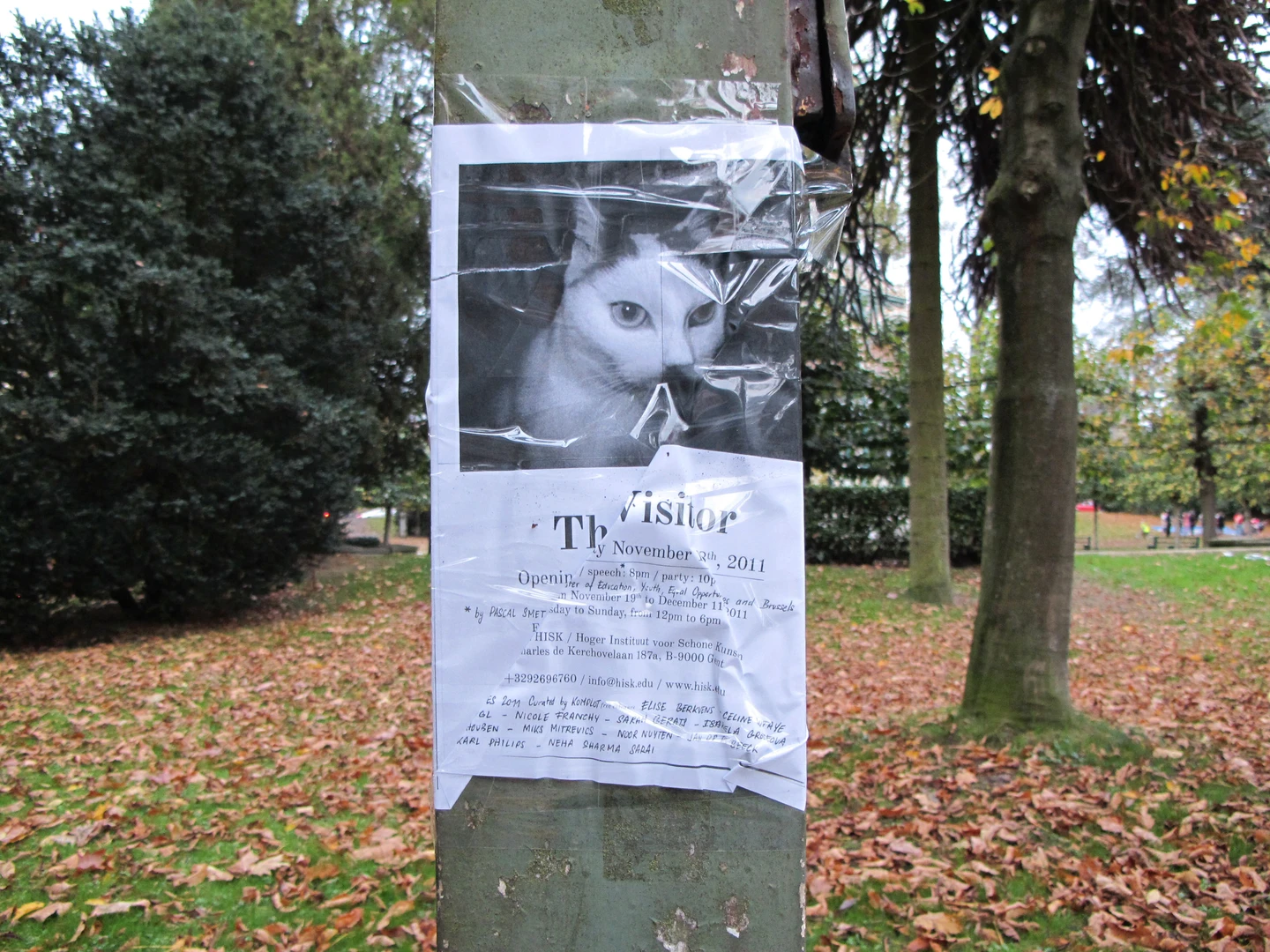
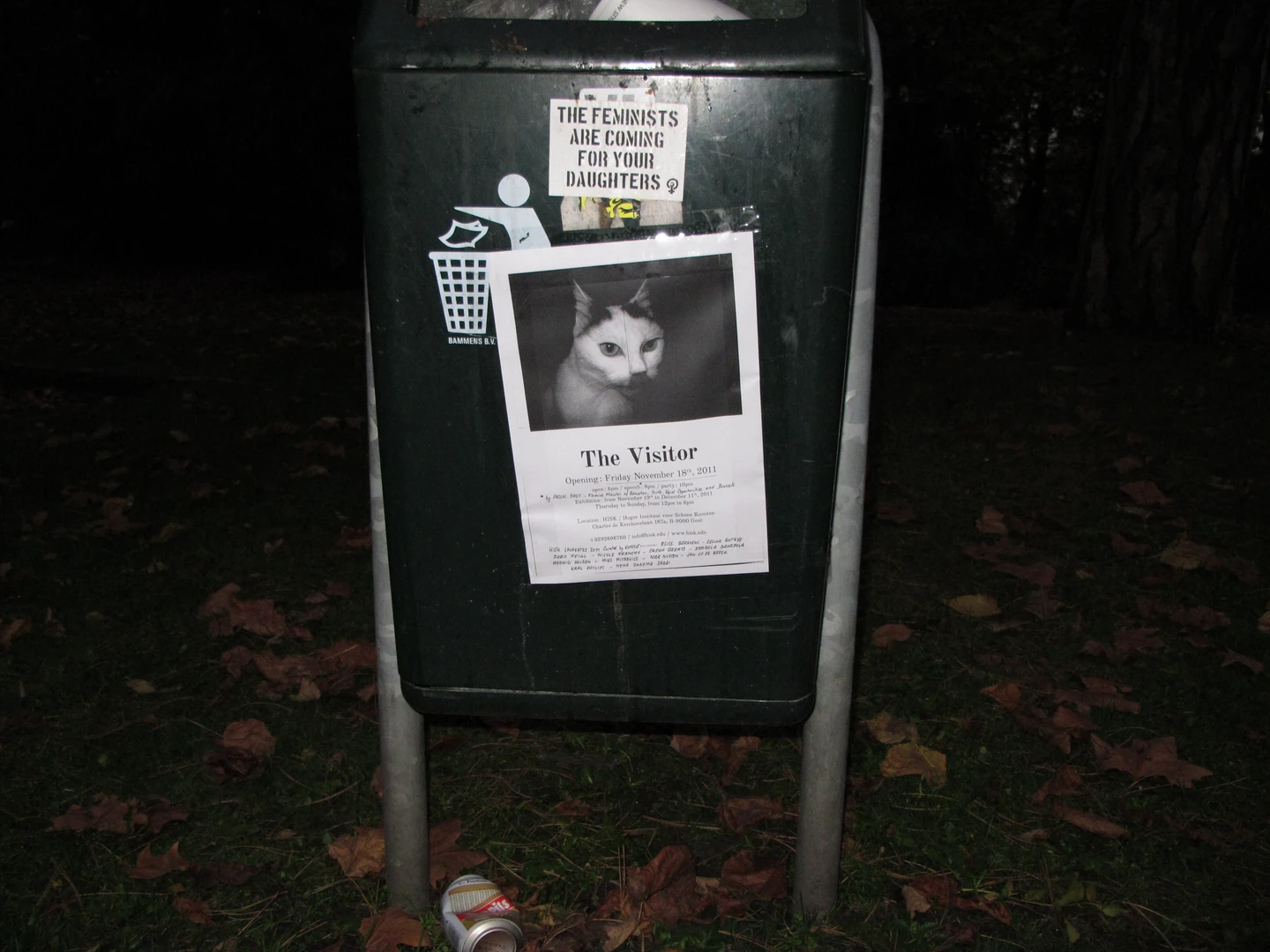
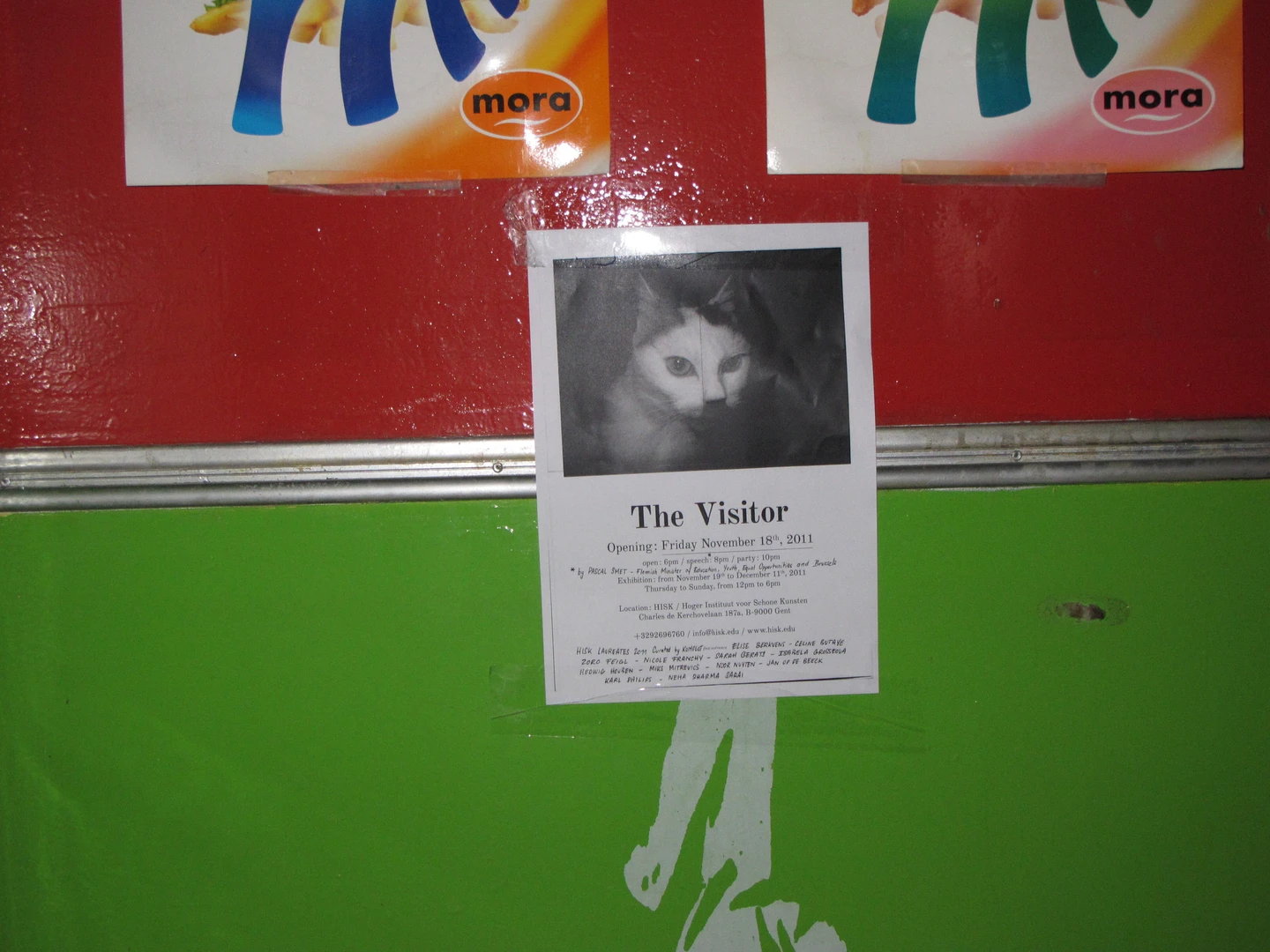
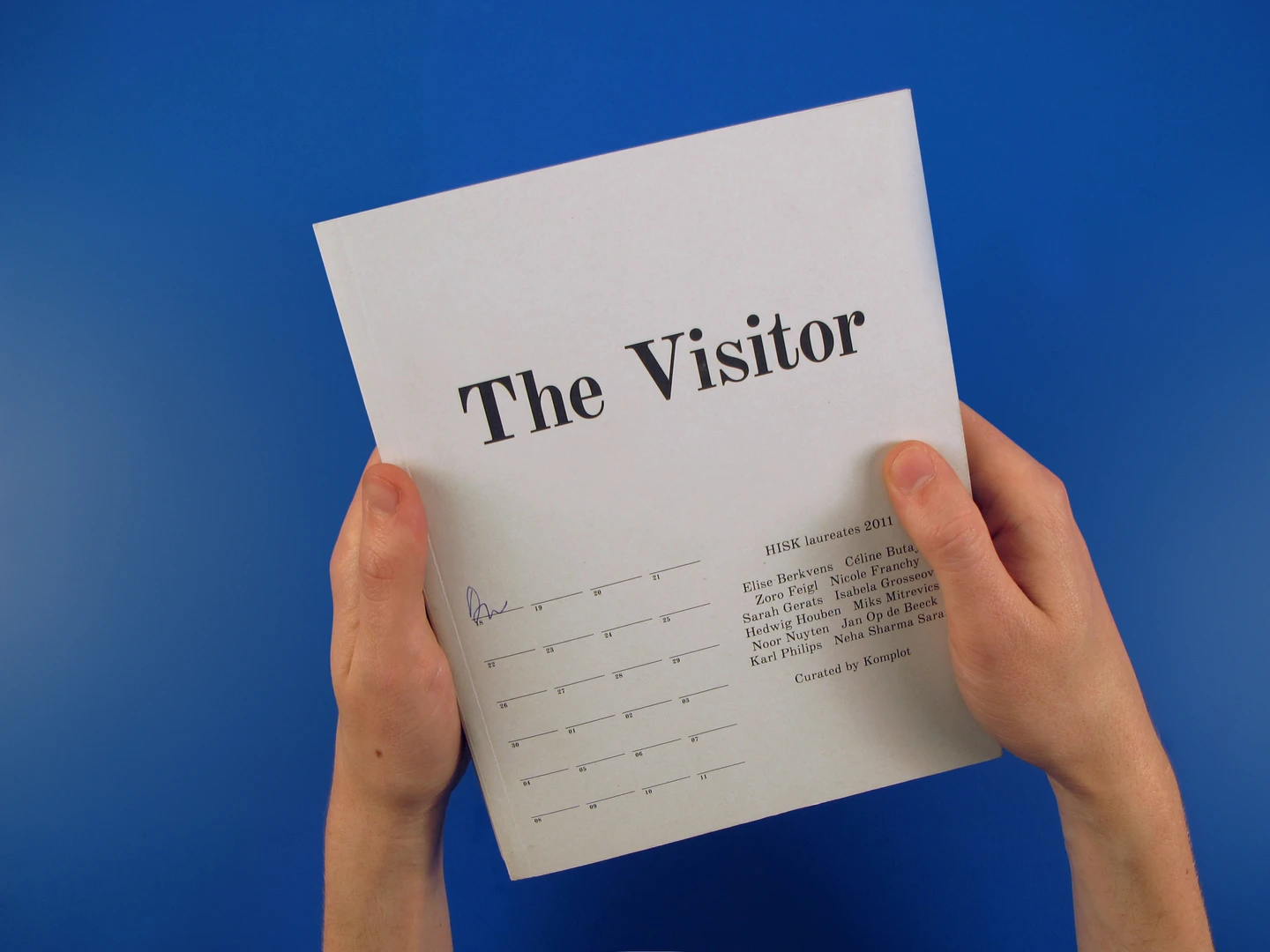
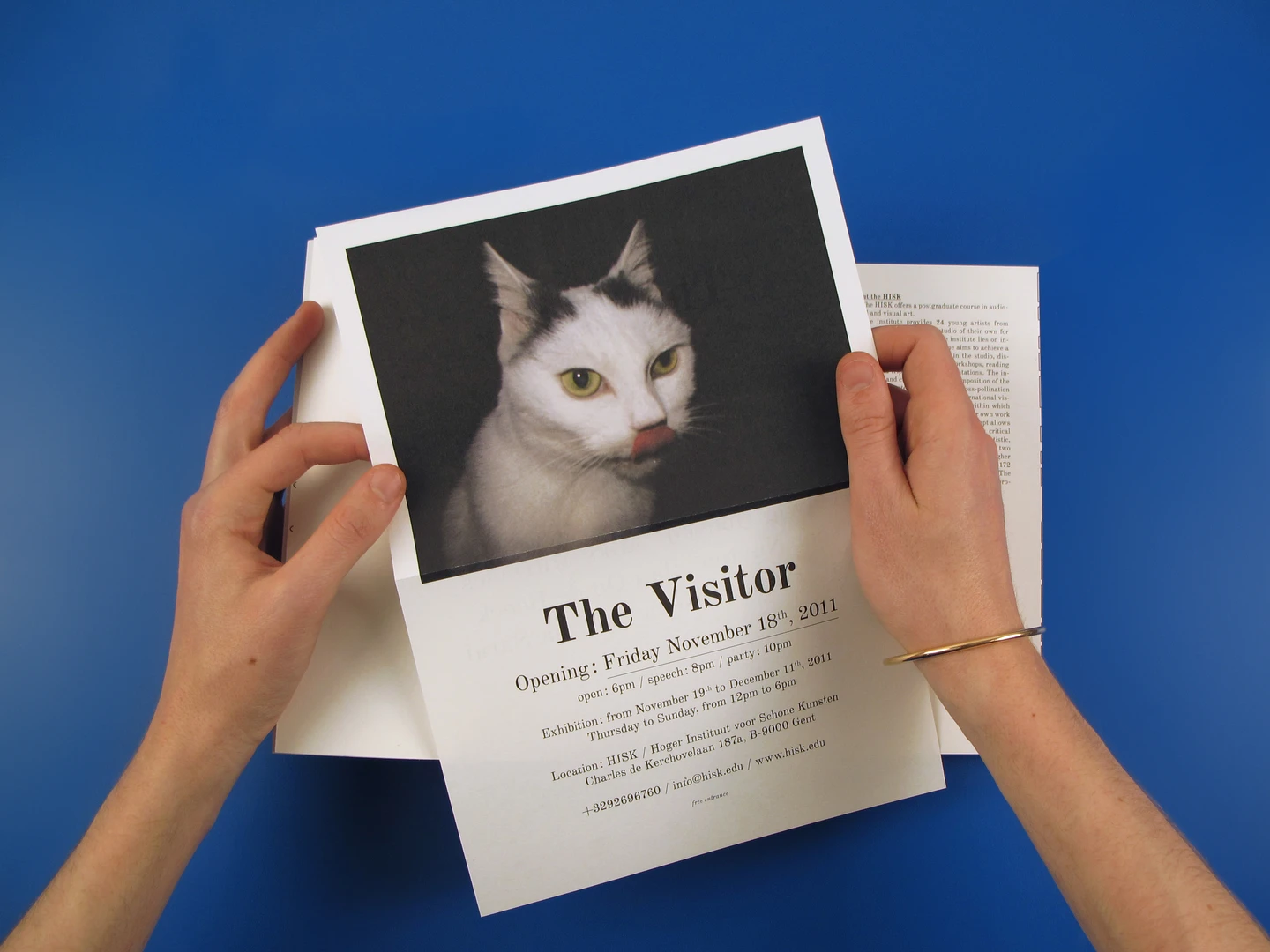
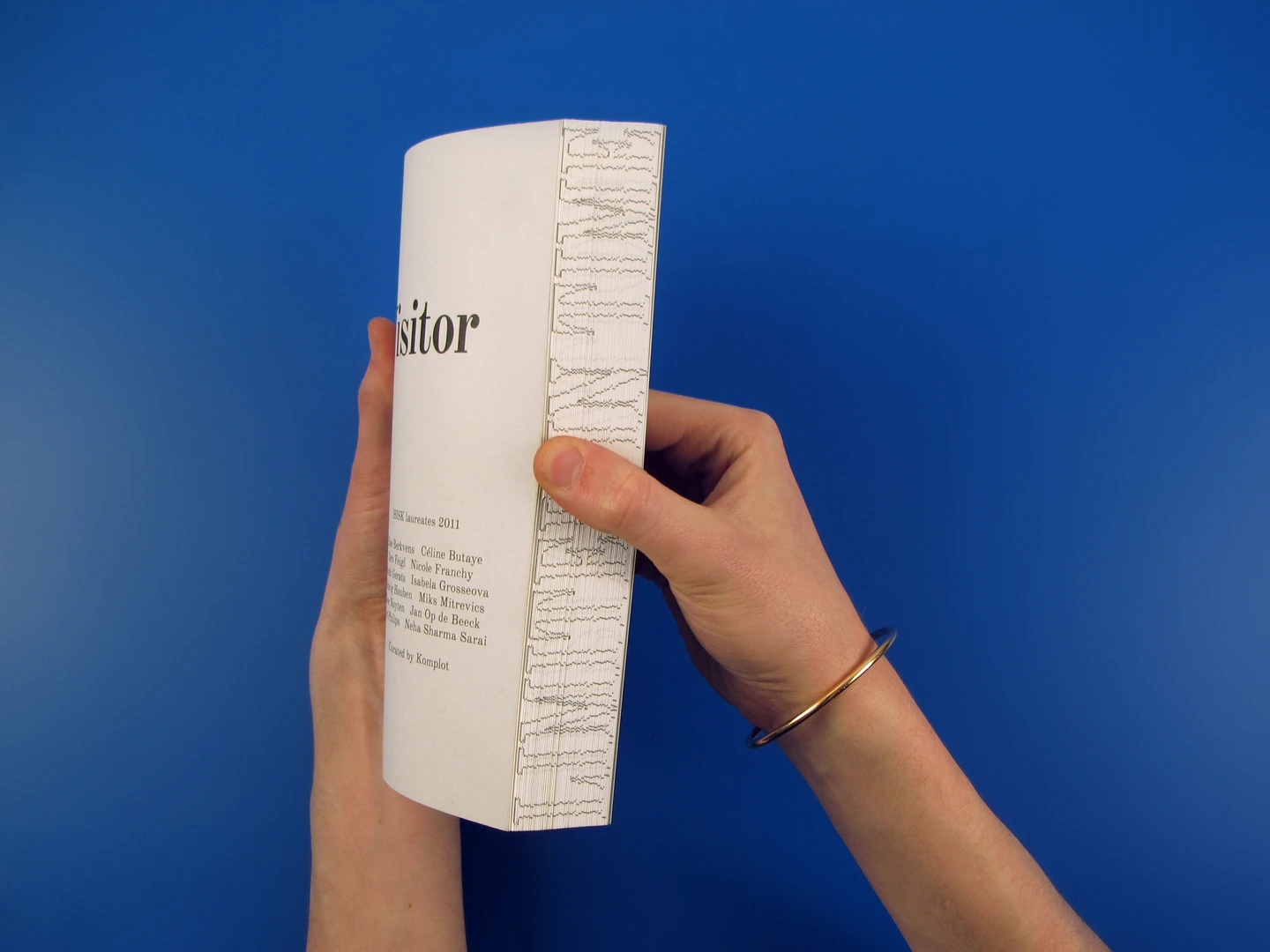
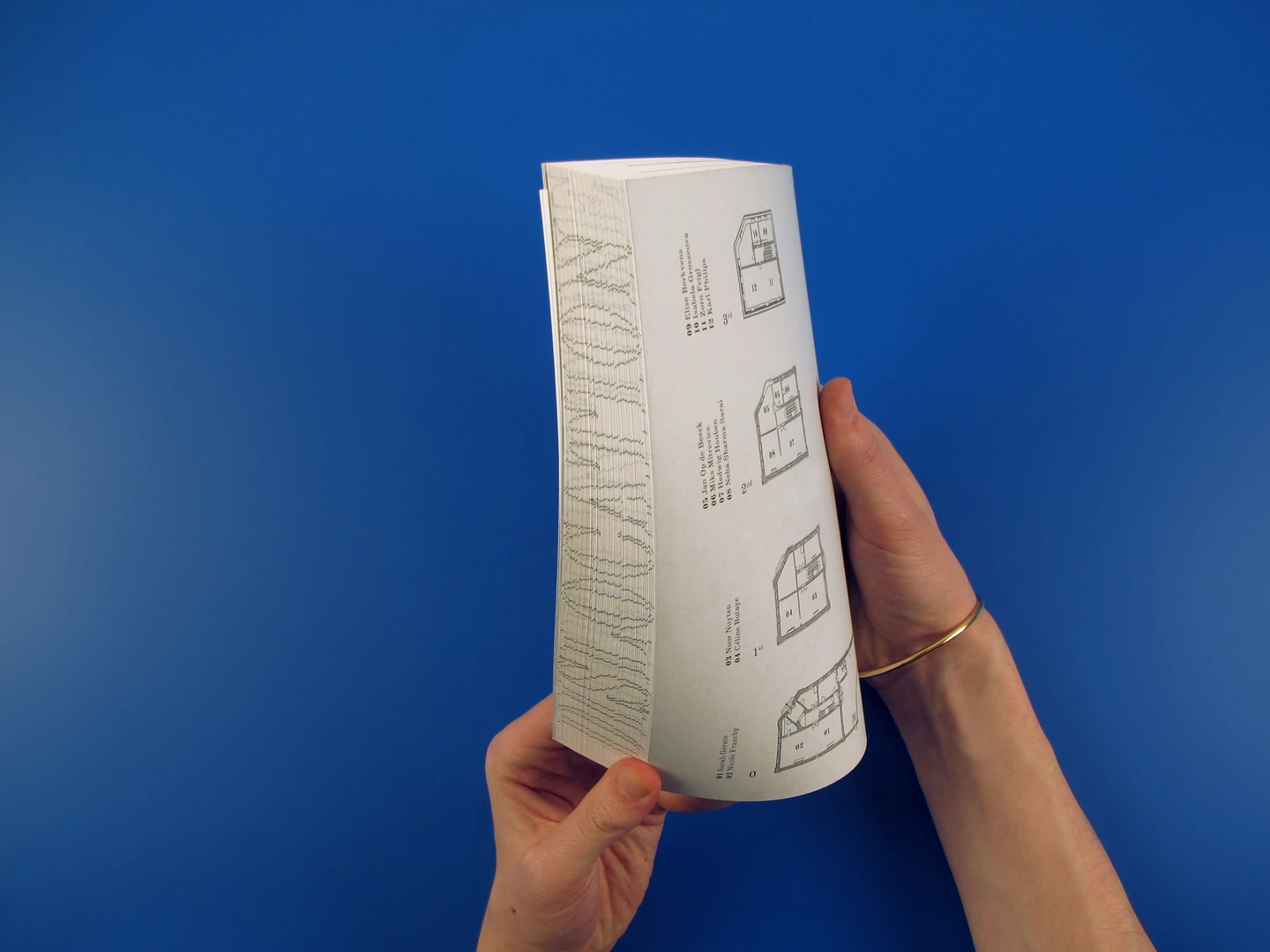
The Visitor
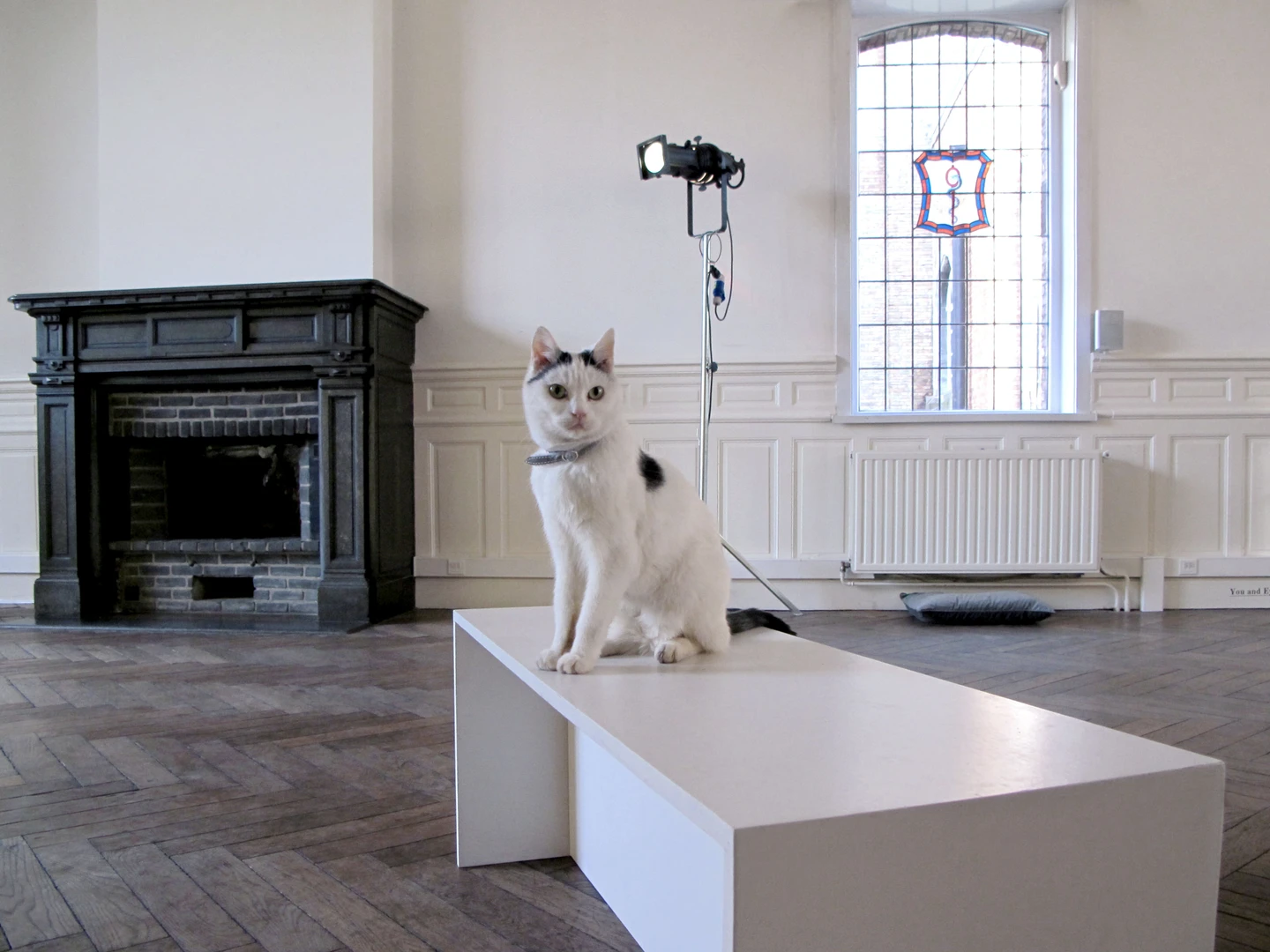
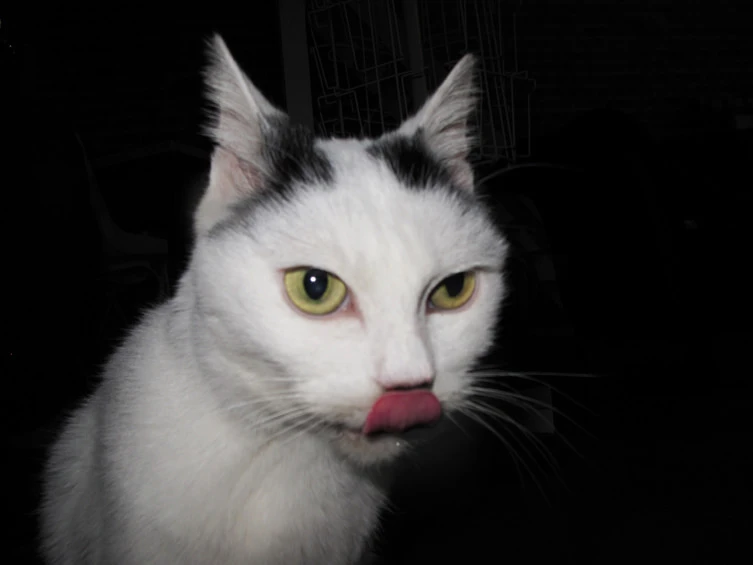
HISK Editorial, Book 2011Acknowledging the individual practices od each artist, the curators have taken the HISK's front building as their starting point. The Former officer's mess as their can be seen as an oversized bourgeois family house - with its wooden floors, fireplaces and high ceilings - and each artist has been given a room of their own for the duration of the exhibition. Instead of any overarching theme, the artists' individuality is highlighted whithin the building's framework. For the duration of the exhibition the HISK is pleased to welcom a spacial feline guest, Milord the cat, found at a local animal shelter. Milord's meanderings amongs the artworks on display will symbolically bind together the show as a whole. His particular view of the exhibition, recorded via a webcam that he will wear around his neck, can be viewed by the public on the HISK website.
Milod's behavior at the shelter was quite surprising. He stoud on his 2 back feet in front of the glass door leading to the shelter's entrance hall, deep in thought. Next morning we noticed he had health problems: his nose, eyes, and ears were oozing profusely. His previous adopters had returned him for this reason. After two weeks with us, he was already better. Two more weeks at Komplot, being pampered by artists and curators there, he arrived to the Hisk in top form. On opening night, he was fantastic, strolling serenely among the hundreds of the public's legs with his catcam; he perfectly fulfilled his role as The Visitor. But even though we had committed to adopting him permanently at the end of the exhibition (despite his bad habits of stealing food), we were inform that he naturally followed Willem XXX, within he formed a very close bond during the month the exhibition lasted. He leaved is last few years suroonded by care, love and art.
-
-
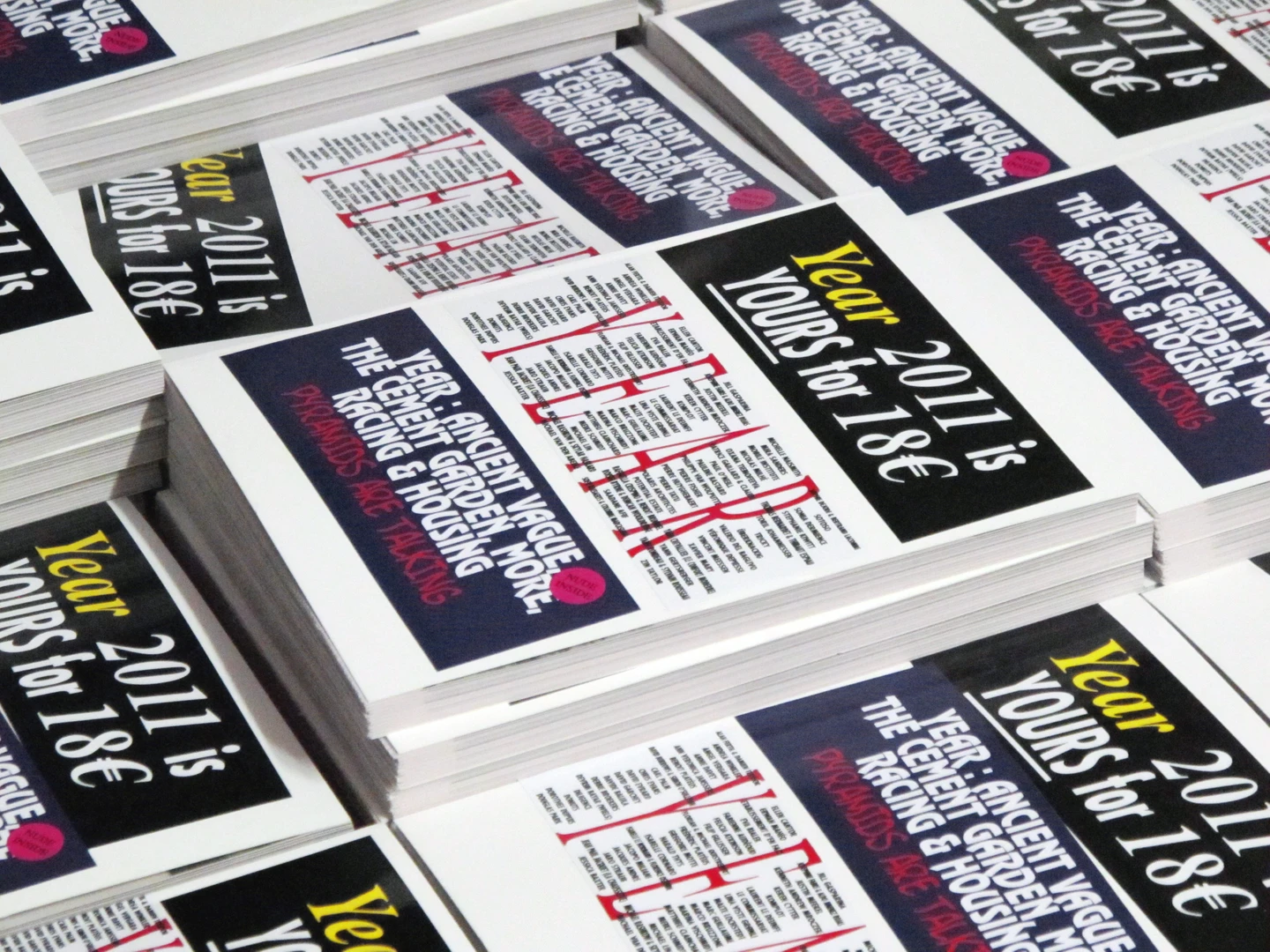
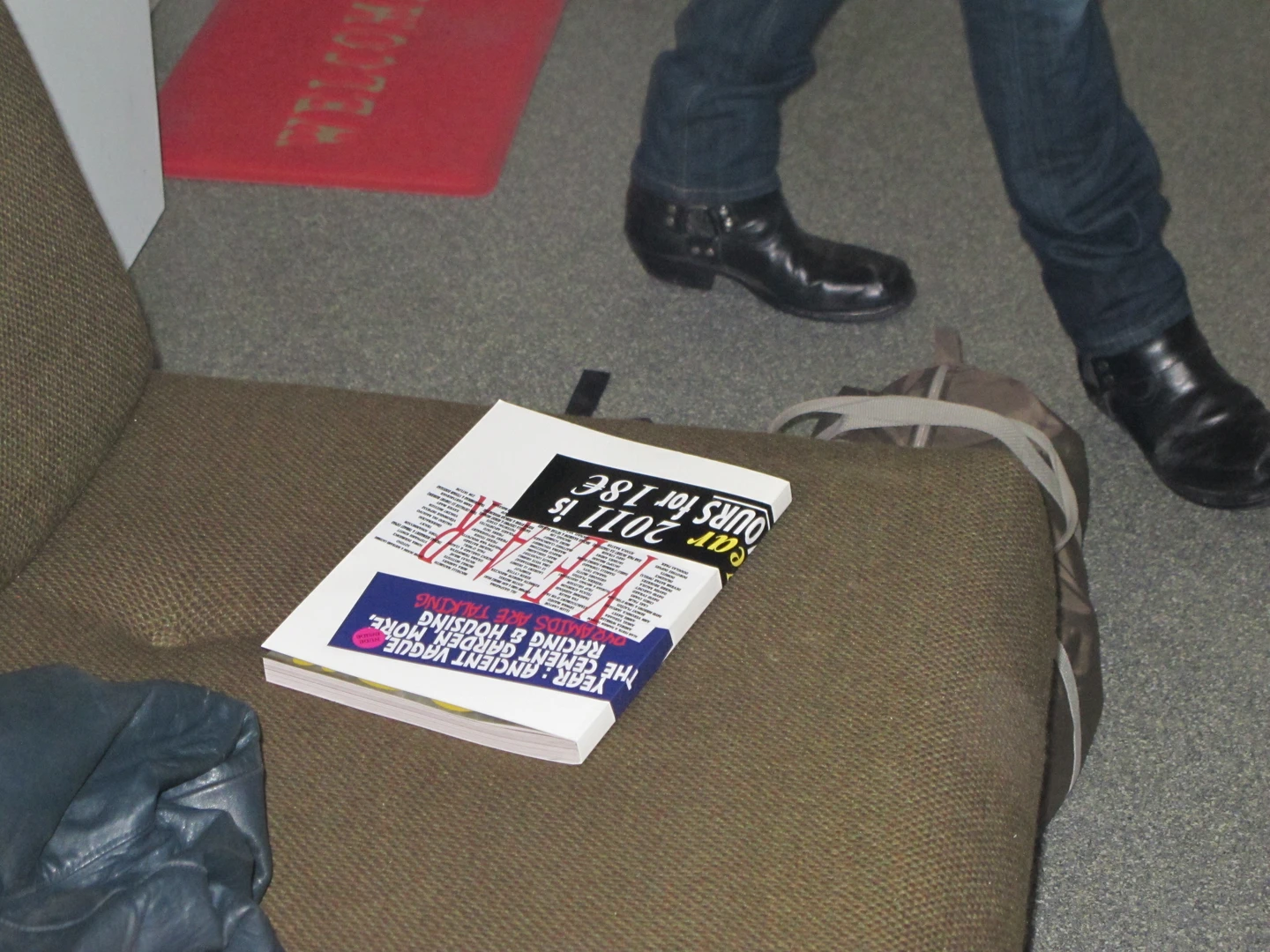
Year 11
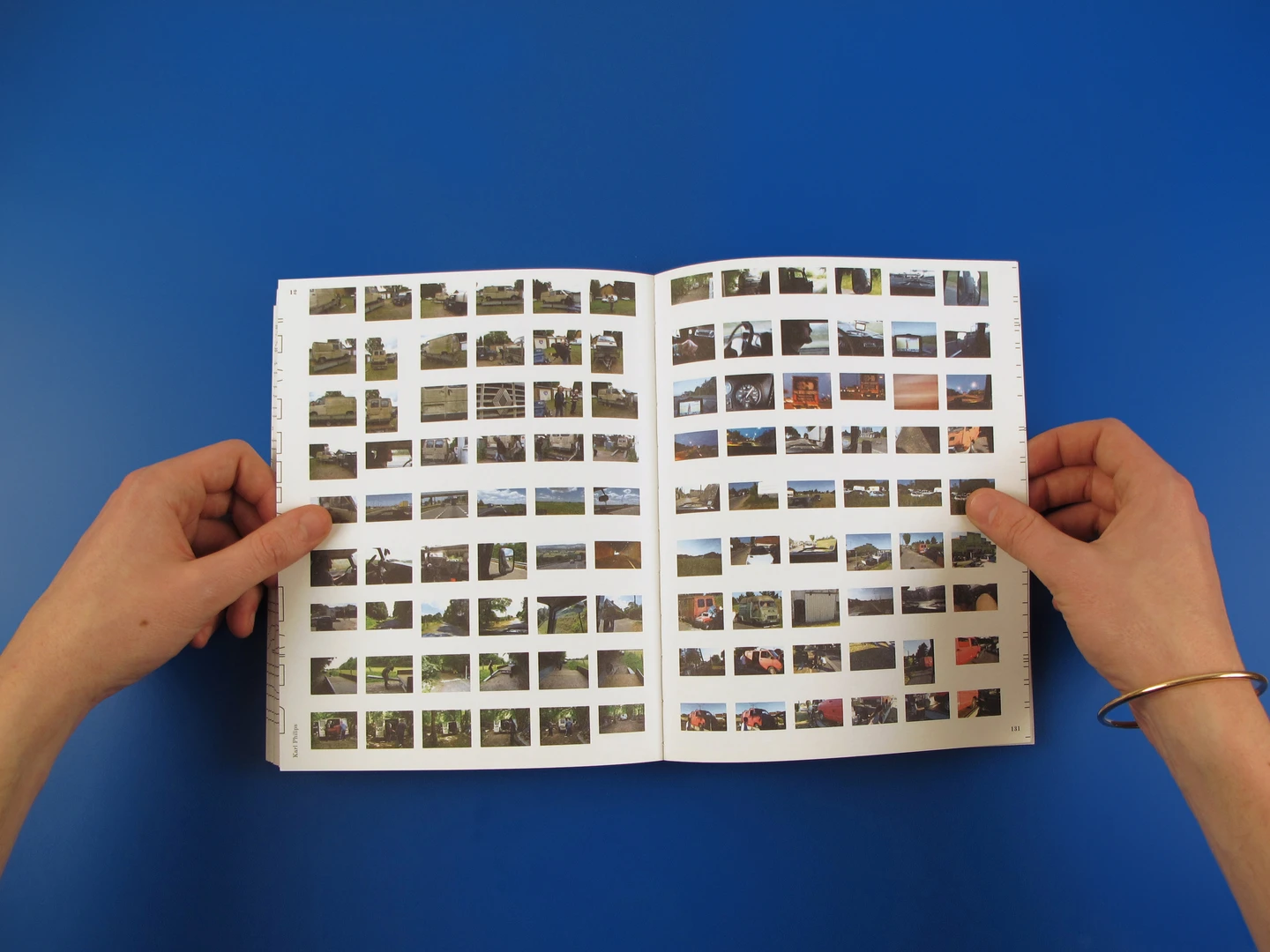
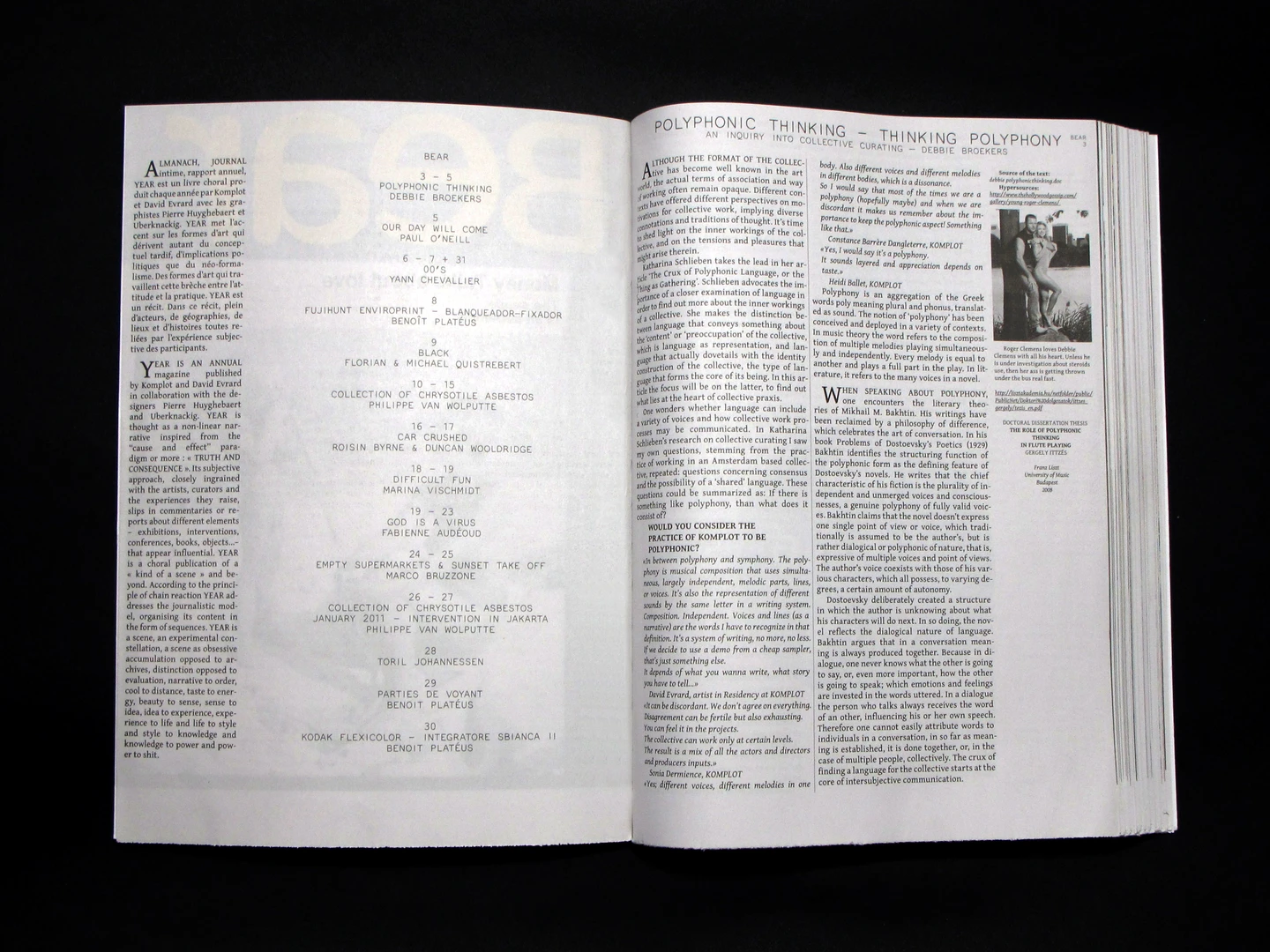
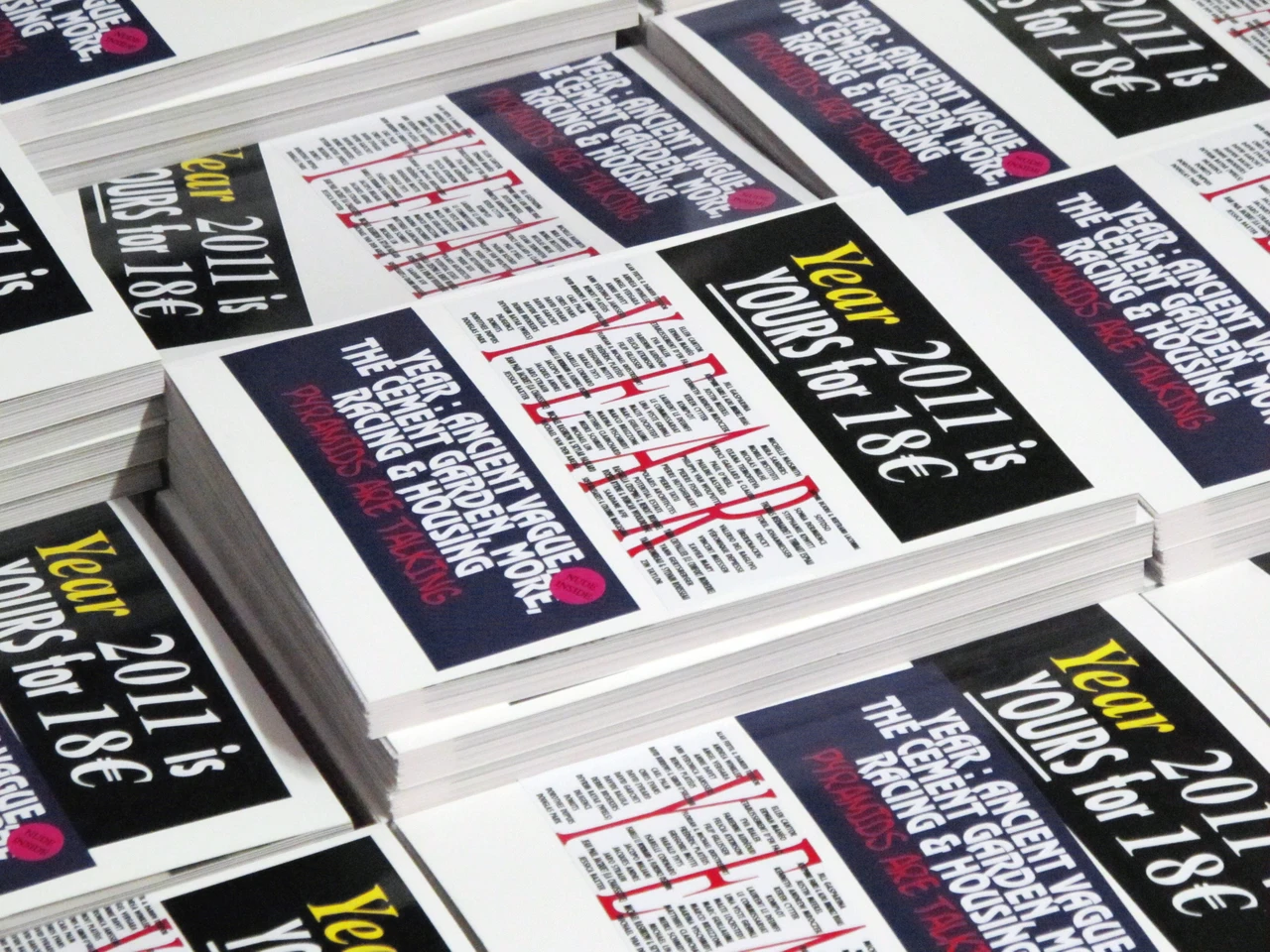
Komplot, Sonia Dermience, David Evrard Editorial, Magazine 2011YEAR is an annual magazine published by Komplot and David Evrard with the designers Pierre Huyghebaert and Uberknackig. YEAR is thought as a non-linear narrative inspired from the cause and effect paradigm or more. Its subjective approach, closely ingrained with the artists, curators and the experiences they raise, slips in commentaries or reports about different elements – exhibitions, interventions, conferences, books, objects...– that appear influential. YEAR is a choral publication of a kind of a scene and beyond. According to the principle of chain reaction YEAR addresses the journalistic model, organizing its content in the form of sequences. YEAR is a scene, an experimental constellation.
-
-
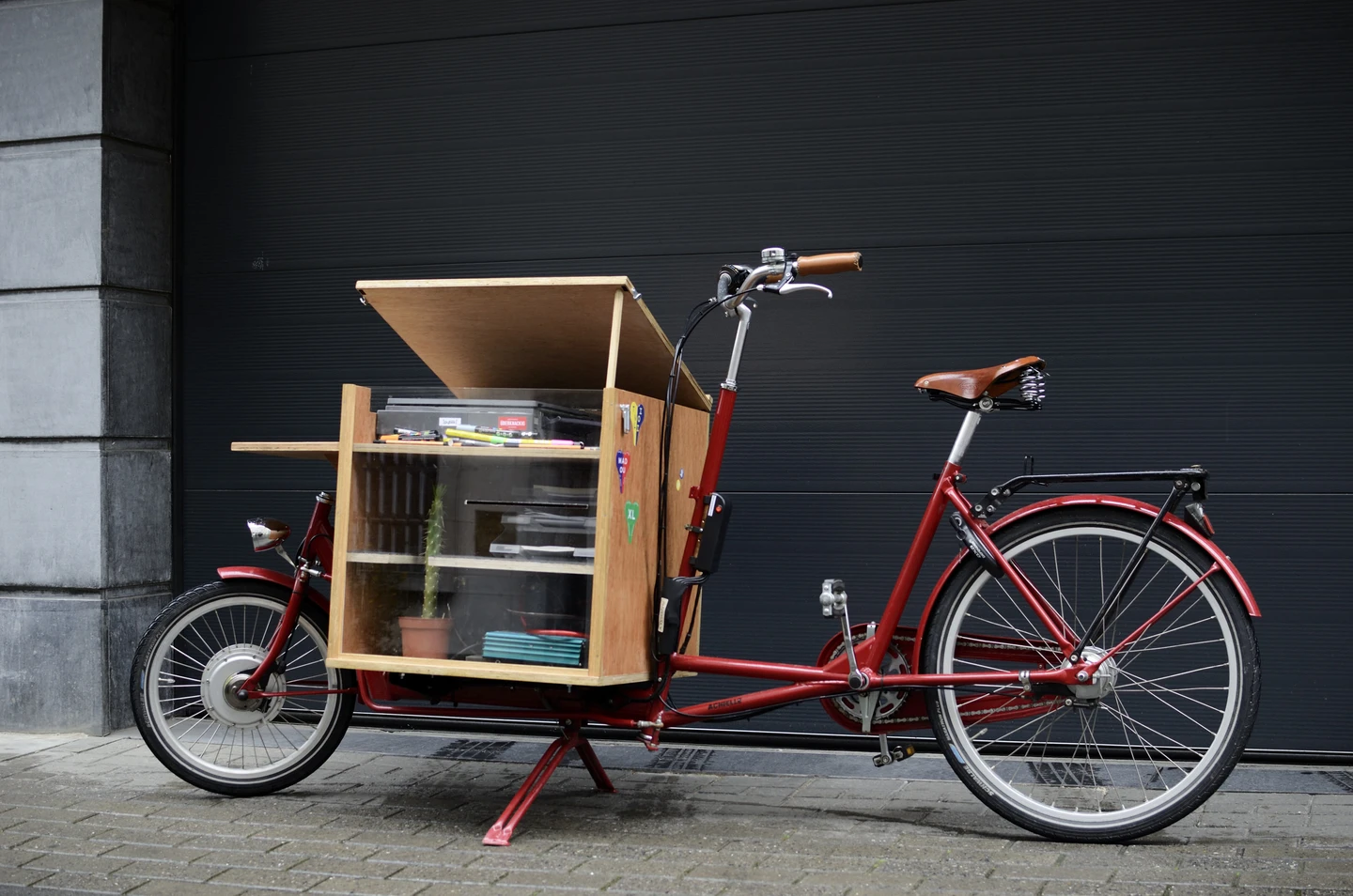
Burovélo
BRAL Production, Social 2011 -
-
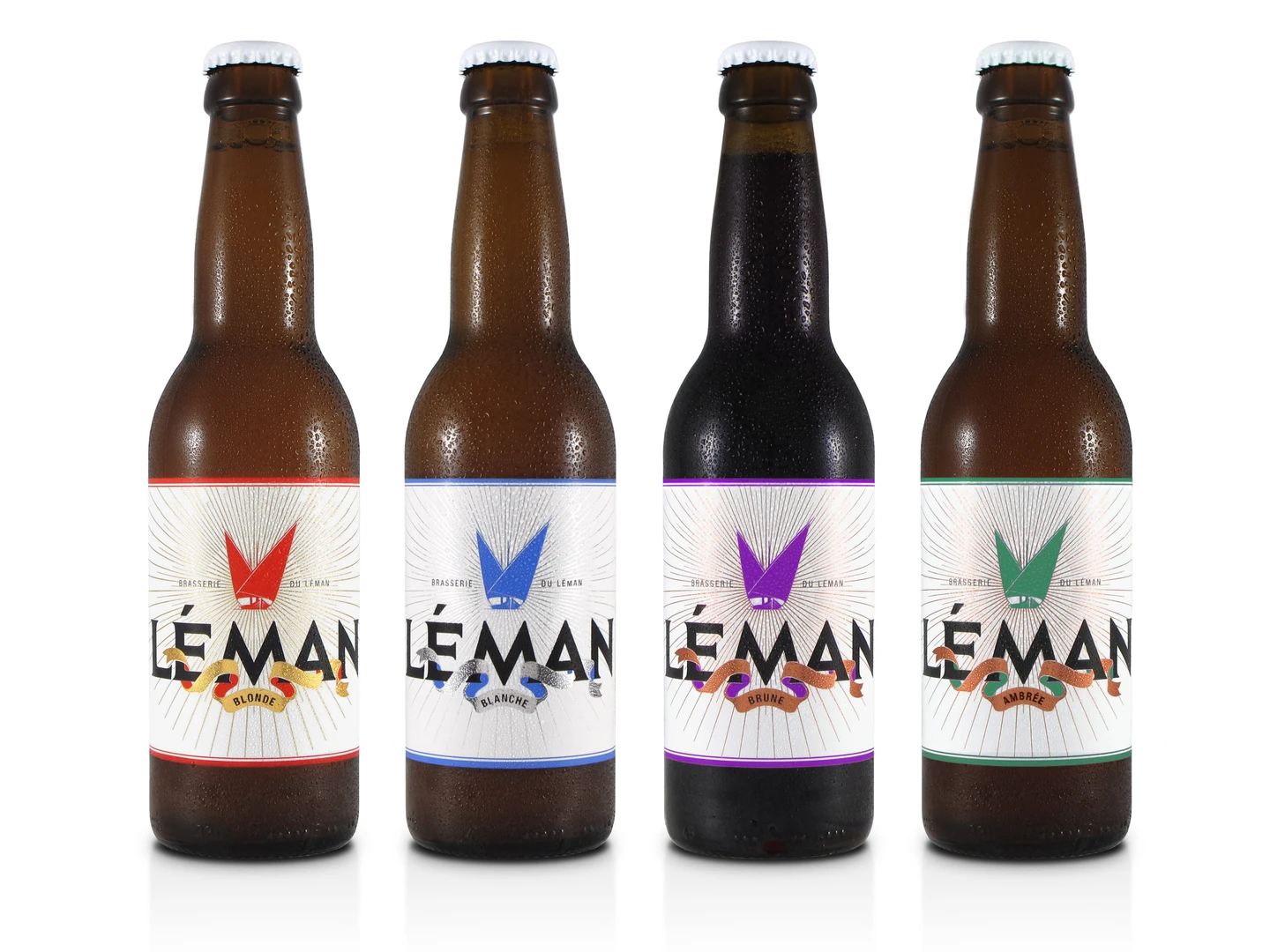
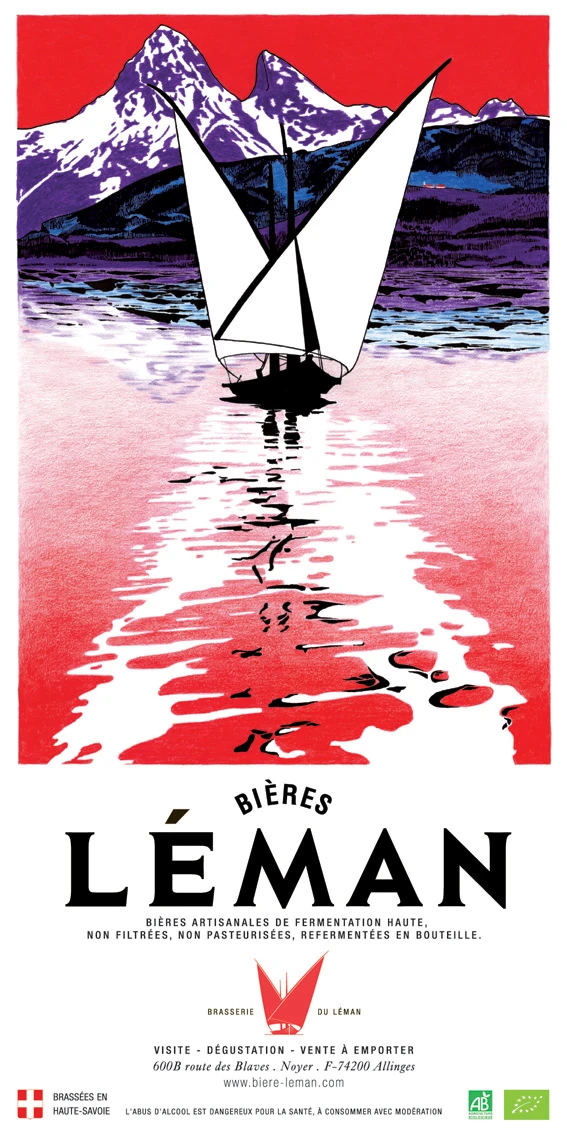
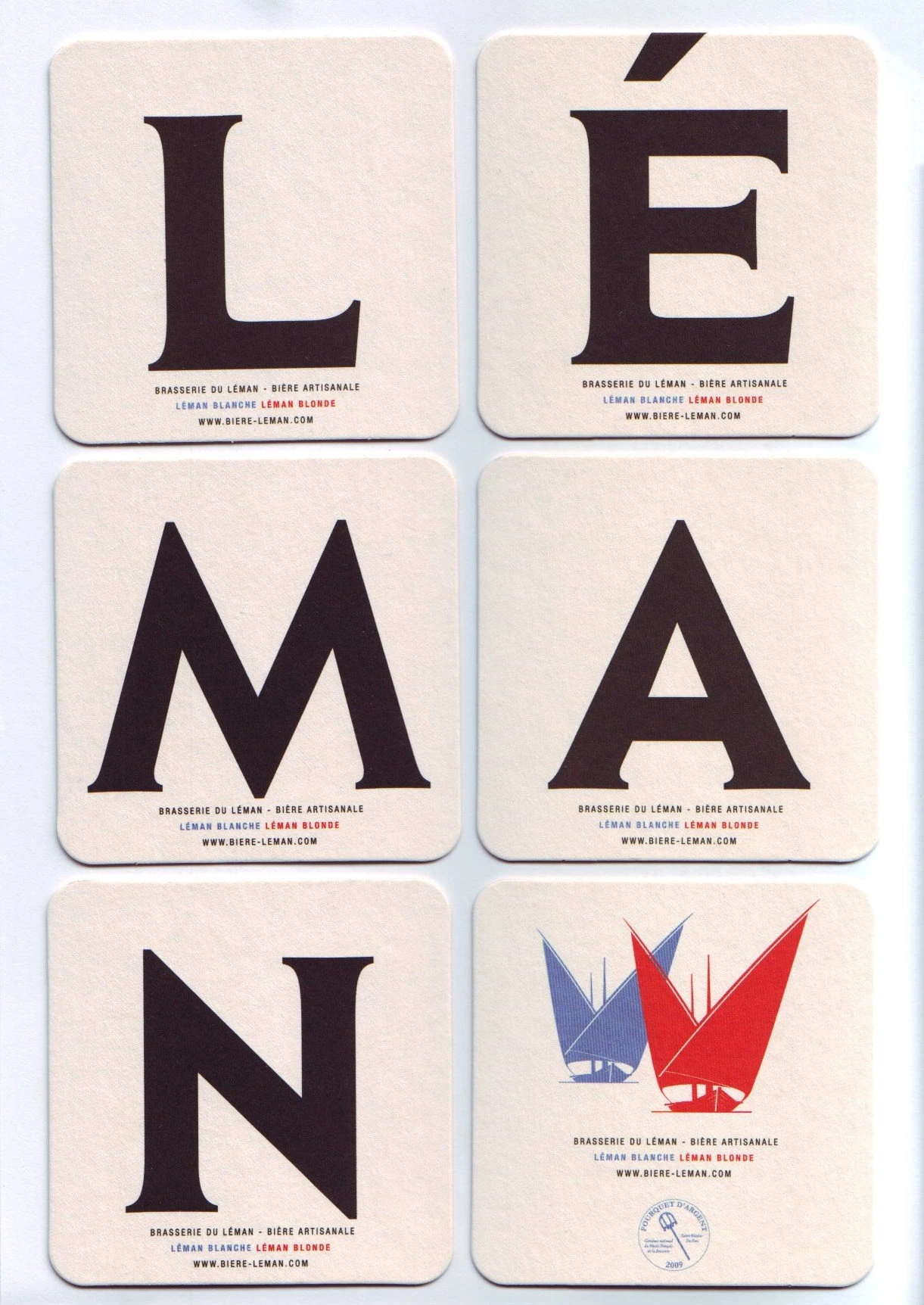
Bière du Léman
Brasserie du Léman Graphics 2009 -
















 ) - p.55,